Wednesday, November 25, 2026

Home Blog Page 140

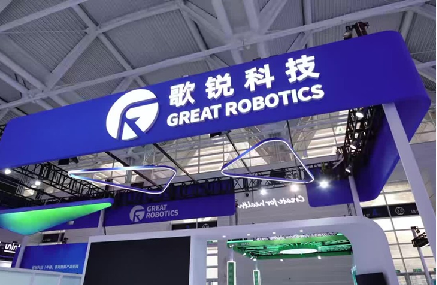
Great Robotics Showcases World’s First Autonomous Spinal Surgery

0

chinadaily.com.cn | Updated: 2025-11-19    

 The 17th Annual Congress of the Chinese Orthopaedic Association, one of the world’s most influential orthopedic gatherings, concluded on Nov 16 in Tianjin after bringing together global experts under the theme “Smart Ortho, Pioneering Frontiers”. The event’s standout moment came when Great Robotics demonstrated its NewDawn AI-Powered Endoscopic Surgical Robot Platform, performing the world’s first public, fully autonomous spinal surgery.

 From assisted to autonomous: The next surgical shift

 Where surgical robots have often been limited to isolated tasks, the industry is rapidly moving toward integrated platforms that unify preoperative planning, real-time imaging, robotic execution, and postoperative assessment into one seamless workflow.

 Great Robotics has delivered a compelling vision of this future with its NewDawn robotic platform. By uniting AI-driven planning, real-time 3D imaging, and dual-robotic execution into a single digital loop, it delivers a new standard of precision and autonomy.

Professor Zhou Yue, MD, Chinese chairman of International Society for Minimal Intervention in Spinal Surgery, described the system as “transformative”. “NewDawn deeply integrates AI, robotics, and intraoperative imaging into a ‘perception-decision-execution-validation’ digital loop, transforming surgery from an experience-based practice into a quantifiable, replicable, and optimizable science,” he said.

 Professor Liu Xinyu, MD, vice-president of Qilu Hospital of Shandong University, and director of the hospital’s spine surgery department, emphasized its broader impact: “NewDawn is the first orthopedic robot that supports force-feedback control and participates throughout the entire surgery. It doesn’t just assist the surgeon — it collaborates. This redefines what’s possible in orthopedics.”

 Live demonstration: Two arms, one intelligent system

 The live demonstration was a highlight of the congress. With a single command, NewDawn’s dual robotic arms worked in unison — one identifying anatomy with sub-millimeter accuracy, the other performing surgical actions smoothly and autonomously.

 Professor Ma Xuexiao, MD, vice-president of Orthopedic Hospital under the Affiliated Hospital of Qingdao University, said: “NewDawn gives us the confidence to make minimally invasive surgery a standard across all orthopedic procedures – not just a specialty skill. This allows large medical institutions to deliver high-quality outcomes consistently and at scale.”

 Beyond localization: A step toward technological sovereignty

 In a competitive market, Great Robotics has chosen to build not just a device, but a complete smart-surgery ecosystem.

 The NewDawn robotic solution incorporates an all-electric mobile imaging system, including – the NewDawn 3D – which providing 0.16mm ultra-high-definition scanning and low-dose real-time registration. Its AI planning module automatically generates patient-specific surgical plans, while the dual-arm robot with force feedback ensures sub-millimeter accuracy. A postoperative assessment module then delivers quantitative feedback through multi-modal data fusion. This integrated, full-process design represents a shift from device assistance to true platform empowerment.

 Professor Ding Yu, MD, director of the department of orthopedics at the Six Medical Center of PLA General Hospital, emphasized the strategic implications: “NewDawn moves beyond import substitution. It represents technological sovereignty – mastery over core algorithms, the software ecosystem, and system integration. This secures China’s medical data safety, enables independent iteration, and allows rapid customization to local clinical needs. Hospitals aren’t just buying a product; they’re joining a Chinese-led smart surgery ecosystem.”

 The annual congress offered a clear vision of the future: the transition from mechanical assistance to intelligent, digital surgery is underway. With platforms like NewDawn, China is not just keeping pace – it is helping write the next chapter in surgical innovation.

Article inline ad

Sino-European Finance Summit Calls For Strengthened Dialogue Across Financial Markets

0

Xinhua | Updated: 2025-11-20

FRANKFURT – Participants at a finance summit held here on Wednesday called for enhanced dialogue and cooperation across financial markets between China and Europe.

 With the theme “Bridging Capital: A New Silk Road for Financial Investment,” the Sino-European Finance Summit brought together nearly 200 representatives from the political, financial, legal, and real economy sectors.

 Chen Longjian, Country Head of the Bank of China Frankfurt Branch, called for deeper mutual understanding of market needs and regulatory frameworks, and efforts to establish a more stable and comprehensive foundation for long-term cooperation.

 Thomas Richter, CEO of the German Investment Funds Association (BVI), noted that BVI had recently collaborated with the Bank of China on an “Investment in China” guide to help European institutions better understand and access China’s capital markets.

 “We have mutual interests in our respective markets. This is a key starting point for creating an environment and framework for mutual exchange,” Richter said.

 Wang Bo, deputy general manager of the Shanghai Stock Exchange, said that financial collaboration is not a one-way endeavor but rather a “shared path.” He encouraged both sides to deepen trust, align regulatory standards, link financial products, and jointly develop market ecosystems.

 Nicolas Zippelius, a member of the Committee on Foreign Affairs and the Committee on Economic Cooperation and Development of the German Bundestag, said the co-hosting of the summit by BVI and the Bank of China sent a “powerful signal” of Europe’s and Germany’s commitment to maintaining an open dialogue with China on the future of financial markets.

 Zippelius pointed to key areas of potential cooperation, including continued market opening, joint global development initiatives, and strengthening shared standards. He advocated for “ongoing but evolving cooperation” based on principles of openness, sustainability, and innovation.

 The summit aims to provide a platform for asset managers, banks, stock exchanges, and regulators to exchange views on the challenges and opportunities in EU-China financial cooperation, underscoring both sides’ willingness to expand collaboration amid global economic uncertainty.

Article inline ad

Stanchart: Investors Confident About Stocks, RMB

0

By Shi Jing in Shanghai | China Daily | Updated: 2025-11-20

Despite geopolitical headwinds, international investors are confident about the improved valuations of Chinese stocks and further internationalization of the renminbi amid the country’s continued economic growth, said Bill Winters, group chief executive of multinational bank Standard Chartered.

 International investors have realized that some of the technologies developed in China are “extremely competitive in any global context”, including the open-source artificial intelligence models, electric vehicles, clean energy and other new economy areas, Winters said in an interview during a four-day visit to Shanghai in late October.

 There is more room for the Chinese stock market to rise, especially since the valuation of A shares has been relatively lower compared to international peers.

 “Chinese companies can produce best-in-class goods, but that is not reflected in equity values. The performance of Chinese companies in the context of a difficult geopolitical situation is reassuring,” he said. The “very strong export figures” over the past few months also serves as solid proof of China’s manufacturing resilience, according to Winters.

 The stress on innovation, technology self-reliance, a social safety net, and support for the private economy, which have been underlined in the communique released after the fourth plenary session of the 20th Central Committee of the Communist Party of China, will address the imbalance in China’s economic development. All these will increase consumer confidence and further consolidate the country’s continued economic recovery, he added.

 At the same time, expanding the offshore renminbi market by offering a full suite of yuan-denominated investment options to international investors and central banks, is an important step to promote the internationalization of the Chinese currency.

 Benjamin Hung, president of international at Standard Chartered, said the RMB had made substantial progress over the past few years in making it more investable and hedge-able.

 International investors can access China assets via the stock connect and bond connect programs while hedging through the swap connect with interest rate derivatives, he said.

 But in general, the world is still very underweight on China. Though the country accounts for 17 percent of global GDP, only about 3 percent of capital is allocated to China assets. While three years ago, Chinese stocks were deemed “uninvestable” due to problems including property market uncertainties, all these have been broadly digested. On top of that, there are the “DeepSeek moments” in the tech sector and better policies for economic growth, said Hung.

 Therefore, many international investors have become cornerstone investors in recent large IPOs such as CATL, he added.

 The visit to Shanghai in October marked the second time that Winters has come to China this year.

 During the recent trip, he met Shanghai Mayor Gong Zheng, who reiterated the city’s support for international financial institutions. Standard Chartered is welcome to conduct innovative financial businesses in Shanghai and step up their financial support for outbound Chinese companies, said Gong.

 Standard Chartered China’s offshore businesses, which support Chinese companies in expanding their overseas footprint, have shown strong growth momentum over the past few years. Therefore, the bank opened a new technology center in Guangzhou in 2022 to complement the teams it had in Tianjin for many years, according to Winters.

 Supply chain finance was another focal point of Winters’ latest trip.

 On the one hand, advancements have been made regarding the technologies and data applied in supply chain finance. On the other, the supply chain itself has been undergoing some changes amid international trade complexities. Helping Chinese companies better fit into the global supply chain will be one major target for Standard Chartered in the years to come, he said.

 According to Lu Jing, CEO of Standard Chartered China, Chinese companies usually encounter supply chain problems in financing when they go abroad, as they need solutions to manage their overseas working capital, interest rate and foreign exchange risks.

 In addition, small and medium-sized enterprises are playing an important role in today’s cross-border supply chains and they also need financing support from financial institutions. Multinational banks with an extensive international network have advantages in this respect to offer them one-stop solutions, she said.

 shijing@chinadaily.com.cn

Article inline ad

Shanghai’s Chongming Charts Course For High-Quality And Sustainable Growth

0

By Shi Jing in Shanghai | chinadaily.com.cn | Updated: 2025-11-19

The development of the modern agricultural industry, shipbuilding, green transition, and tourism has served as major economic drivers for the Chongming district in northeastern Shanghai during the 14th Five-Year Plan (2021-25) period, said local officials during a news conference on Wednesday.

 As the largest rural area in Shanghai, Chongming has provided one-third of the city’s total local agricultural product supply. The district has invested up to 5 billion yuan ($703 million) in 33 modern agricultural projects during the past five years. A total of 80 agricultural technology projects have been landed in the district. Over 90 percent of the farmland in Chongming is home to various green and quality agricultural products.

 Therefore, the district’s annual agricultural output is estimated to approach 5.56 billion yuan in 2025, Li Jun, Chongming’s Party secretary, said.

 Seed, infrastructure, and biological technologies are the three major pillars for the development of the agricultural industry in Chongming. An ecosystem featuring the combination of research platforms, supportive policies, and industry incubators has initially taken shape in the district, Li said.

 Chongming has also seen its capacity for advanced manufacturing significantly improved over the recent five years, with the shipbuilding industry one of the best examples, Li said.

 By the end of this year, the industrial output of the marine equipment industry in Chongming is expected to reach 90 billion yuan. The district now accounts for 20 percent of the world’s liquefied natural gas ship market share. Hudong-Zhonghua Shipbuilding (Group) Co Ltd secured the world’s largest LNG ship order in 2024.

 China State Shipbuilding Corp’s Jiangnan Shipyard received 80 percent of the world’s total ultra-large ethane carrier orders and another 70 percent of the world’s quay cranes market share. These have helped the shipbuilder to maintain the world’s top position for 28 consecutive years, according to Li.

 The green transition has been steadily advanced in Chongming. In 2025, energy consumption per unit of GDP is expected to decrease by 13.5 percent compared with that in 2020. The proportion of electricity generated from renewable energy in total social power consumption will reach 32 percent by the end of this year, Li said.

 By reducing 68 percent of the application materials, the time that residents spend opening their homestay tourism businesses in Chongming has been shortened by 75 percent in the past five years. Therefore, a total of 1,127 homestay inns have been registered in the district. The disposable income per capita for rural residents in Chongming came to 40,612 yuan in 2024, a surge of 37.9 percent from that in 2020.

 Chongming’s GDP approached 44.9 billion yuan in 2024, up 17.5 percent from that by the end of 2020. The added value of industrial companies with a minimum annual turnover of 20 million yuan each topped 58.4 billion yuan, up 29.2 percent from that in 2020.

Article inline ad

Global Fashion Conference In Guangdong Releases Vision For Textile Industry

0

By Qiu Quanlin in Guangzhou | chinadaily.com.cn | Updated: 2025-11-19    

A vision for the global textile and apparel industry was released recently during an international fashion conference in Humen township of Dongguan, Guangdong province, advocating for the establishment of a multi-level consultation mechanism to address risks and challenges faced by the industry.

 The 2025 Global Fashion Conference, held on Sunday, brought together industry elites, designers, scholars, and business representatives from 25 countries and regions, including Italy, the United Kingdom, Spain, Egypt, Japan, Thailand, Cambodia, Myanmar, and Vietnam.

The vision, agreed upon by major textile and apparel industry organizations from around the world, systematically proposes joint consultation for cooperation, sharing of results, and collaborative development as the action path. It also promotes collaboration among industry, academia, and research to accelerate technological empowerment in the textile and apparel industry.

 The organizers said the vision clarifies the direction for the transformation and cooperation of the global apparel industry in a complex era of change and marks a crucial step forward for all parties in practicing the concept of fashion transformation and diverse coexistence.

 The event was organized by the China National Textile and Apparel Council and hosted by the China National Garment Association and the China Textile Information Center.

Dongguan is a textile and apparel manufacturing base in the Guangdong-Hong Kong-Macao Greater Bay Area. It has introduced policies to promote AI integration into the textile and apparel industry chain, according to Liu Guangbin, vice-mayor of Dongguan.

 In response to the global industrial changes, for example, the city introduced policies to grant rewards of up to 1 million yuan ($140,605) to each local enterprise undergoing digital transformation.

 “By deepening the integration of industry and research, we will continue to introduce high-end, environmentally friendly, and intelligent textile fabrics,” said Liu.

Article inline ad

From Manufacturing Hub To Innovation Center

0

China Daily | Updated: 2025-11-19

 From left: Cissy Wang, general manager of CSL Behring China; Denis Depoux, global managing director of Roland Berger; Samantha Zhu, chairperson of Accenture Greater China; Wu Dongming, CEO of DHL Express China.

Editor’s Note: As China steps up efforts to boost domestic demand and drive consumption-led growth, foreign corporations are uniquely positioned to seize the opportunities presented by this transformative period. China Daily examines how these companies are aligning with China’s new round of high-standard opening-up policies, embracing emerging tech innovation trends and expanding their presence in a market that increasingly values high-quality development and upgraded consumption.

 Q1 The 15th Five-Year Plan (2026-30) draft recommendations emphasize high-quality development and the modernization of industrial systems. How do you view China’s long-term economic resilience and growth potential? How will your company seize opportunities in the Chinese market to achieve shared growth with China’s economy?

 Wang: As a global biotechnology leader with over 40 years of presence in China, we view China’s long-term economic resilience and growth potential with great confidence. As the world’s second-largest pharmaceutical market, China is strategically vital for CSL. The draft recommendations of the 15th Five-Year Plan align closely with CSL’s mission to deliver innovative, high-quality biopharmaceuticals that improve and save lives. We see tremendous opportunity in contributing to China’s healthcare modernization goals. CSL is investing in expanding access to our plasma-derived therapies, including Albumin, where we are one of the market leaders, and we are actively exploring ways to bring more of our global portfolio to Chinese patients. We are also deepening partnerships with local stakeholders to support clinical research, regulatory innovation, and sustainable supply chains.

 Depoux: China’s unwavering commitment to high-quality development demonstrates its determination to transition from pure volume growth toward a more sustainable and efficient economic model, underpinned by technology and innovation. Significant advances in technology and innovation have further transformed China from a manufacturing hub into a global innovation center. During the 14th Five-Year Plan (2021-25) period, China has emerged as a leader in industries such as renewables, EVs and digital commerce, and is now accelerating progress in AI, humanoid robots, and quantum technology. The ongoing push for scientific and technological strength will foster a more vibrant innovation ecosystem, with the private sector playing an increasingly active role.

 Zhu: China has established a very solid and resilient foundation in the past decades for leading high-quality development. We believe China will have a strong start in the 15th Five-Year Plan period. In an environment marked by constant changes, focusing on technology and innovation is the path forward for high-quality development. Technologies led by AI Plus present an unprecedented opportunity. Our research has pointed out that the room for growth and improvement is quite big: while AI adoption is advancing — 46 percent of Chinese enterprises are scaling generative AI — only 9 percent have realized significant value. Accenture has been operating in China for nearly 40 years and will continue to be committed to helping companies harness China’s strengths in AI, big data and emerging technologies to further unlock new growth with AI-led transformation.

 Wu: China’s long-term economic resilience and growth potential remain robust, underpinned by its strategic focus on high-quality development and industrial modernization under the 15th Five-Year Plan. As China further opens and transitions toward advanced manufacturing and digitalization, new opportunities will emerge across sectors, particularly in green technologies, digital trade and cross-border e-commerce. DHL Express is committed to aligning our strategies with China’s development agenda, focusing on investing in smart logistics solutions, automation, and green operations to support China’s industrial upgrading and low-carbon goals. We’ll continue to leverage our international network and deep Customs expertise to ensure Chinese businesses can navigate international complexities smoothly and scale up their global presence.

 Q2 The plan calls for advancing high-level scientific and technological self-reliance and fostering new quality productive forces. How do you view China’s policy direction in innovative and emerging industries? How will your company’s R&D or technological innovation in China align with and contribute to this development process?

 Wang: China’s biotech boom has further elevated the market’s global significance, transforming it from the “world’s factory” into a premier innovation hub for cutting-edge R&D and top-tier talent. As a leading supplier of lifesaving treatments for millions of patients with life-threatening medical conditions, we place innovation at the heart of everything we do and are increasingly expanding our innovation footprint in China. Our goal is to align with China’s priorities by fostering local partnerships, supporting clinical research, and collaborating with academic institutions and healthcare providers as a trusted partner to accelerate the development of new therapies. By integrating CSL’s global expertise with China’s dynamic innovation landscape, we aim to drive new quality productive forces, focusing on high-quality medicines, talent development, knowledge exchange and sustainable industrial growth.

 Depoux: Accelerating technology and innovation remains a key Chinese government priority for the coming five-year period. Amid rising geopolitical tensions and global uncertainty, China is strategically enhancing its economic self-reliance, with technology serving as a crucial lever. The commitment to advancing high-level scientific and technological capabilities is expected to propel China toward global leadership in cutting-edge fields including AI, biotechnology, humanoid robots, hydrogen energy and advanced ICT, etc. Furthermore, China’s significant productivity deployment worldwide will continue reshaping global supply chains and driving the new globalization. At Roland Berger, we support our clients in leveraging these new technologies, exploring emerging opportunities, building more resilient business models and redesigning their supply chains while maintaining their core identity and values.

 Zhu: China is a key player in the global innovation economy, and is one of the leading countries in innovation. China has entered the top 10 of the World Intellectual Property Organization’s Global Innovation Index for the first time. The policies and measures to further accelerate innovation and boost total factor productivity, expand market access in key industrial sectors and improve services will help the country deliver broad-based growth in a sustainable way. In particular, we can see that both foreign and Chinese companies quickly mobilize themselves to ride the latest wave of technological innovation led by AI, to better create value, respond dynamically to change and build resilience. Already we are seeing businesses make significant investments in AI with applications permeating across industries and functions, from R&D to manufacturing and from customer interactions to supply chain management.

 Wu: Such a direction is a strategic and forward-looking vision. DHL Express is focusing on developing and deploying AI-powered predictive analytics and leveraging big data to enhance supply chain visibility and resilience for our Chinese customers. We also view green transition as the most significant opportunity for innovation. In China, we are aggressively investing in and deploying new energy vehicles for our pick-up and delivery fleet, and we are implementing smart energy management systems in our facilities. This allows us to contribute directly to the green dimension of the nation’s industrial modernization.

 Q3 China is committed to high-level opening-up and high-quality Belt and Road cooperation. How do you view China’s role in global industrial and supply chains? How does your company position itself as a key participant in China’s new pattern of openness?

 Wang: At CSL, we see China not only as a key market, but also as a strategic partner in our global operations. For over 40 years, we’ve developed deep local expertise and robust supply capabilities, establishing ourselves as a reliable, high-quality supplier ensuring patient access. We are actively enhancing local supply chain resilience, investing in technology transfer and collaborating with Chinese partners on regional and global health initiatives. Our ambition is “to deliver enduring patient impact in areas of high unmet medical need”, so that for China, this commitment translates into ensuring patients benefit from the best of CSL’s global innovation, while simultaneously empowering the nation to play a greater role in shaping the future of biopharmaceutical development and distribution.

 Depoux: In a period marked by market volatility and growing protectionist tendencies in certain economies, China’s commitment to multilateralism, free trade, inclusiveness and the support for WTO reform offers crucial strategic stability to the international system. China is taking a pragmatic approach by deepening integration with Asian and other Global South countries. At the same time, it has adopted a more assertive posture in global affairs, utilizing policy tools such as export controls to navigate a complex geopolitical landscape. These developments underscore an ongoing evolution in globalization, and China is playing a key role in shaping its next phase. For international businesses, this opens a multifaceted growth pathway. The opportunity extends beyond selling to China and embraces the “in China for China” and “in China for Global” approaches by leveraging its vast domestic market and new international cooperation corridors.

 Zhu: As China is embracing high-level opening-up and initiatives to facilitate cross-border cooperation, we can see that more Chinese companies are setting forward-looking goals, enhancing operational resilience and moving up the value chain amid a competitive global landscape, rather than focusing only on short-term fixes to production and supply challenges. Chinese companies are investing in some lagging areas like AI-powered supply chain visualization, real-time monitoring, scenario planning and rapid decision making. In the new wave of technological and business evolution, Accenture has been helping clients build digital maturity across their organizations, making them more agile with data and AI, and bridging innovation with real impact.

 Wu: China’s role in global industrial and supply chains is evolving from being the “world’s factory” to a stabilizer and enabler of worldwide supply chain resilience. With its complete and strong industrial ecosystem, growing emphasis on green and digital trade, and expanding influence across Asia and beyond, China is positioned to shape the next phase of globalization. We’ll continue leveraging our global network and digital tools to help Chinese companies, especially SMEs, access international markets efficiently. In line with China’s vision for high-quality development, we are introducing greener logistics solutions. Through these initiatives, we are not just adapting to China’s opening-up, we are helping accelerate it, creating shared value and strengthening our role as a bridge between China and the world.

 Q4 The plan underscores green development and shared prosperity. How does your company pursue sustainable operations in China while contributing to the Chinese society, local partnerships, and inclusive growth?

 Wang: Sustainability and inclusive growth are essential to our mission and long-term strategy, both globally and here in China. In China, CSL is pursuing sustainable operations by improving environmental performance, optimizing energy, reducing waste and embedding sustainability throughout our product lifecycle. Beyond this, we are also deeply committed to contributing to the Chinese society through partnerships supporting healthcare access, public health education and talent development. We work closely with stakeholders to expand access to life-saving treatments like Albumin, and we support initiatives that improve affordability and availability for patients across China.

 Depoux: At Roland Berger, sustainability is deeply anchored in the firm. We believe in sustainable growth and are convinced that taking care of the planet is not just a trend, but a necessity. Roland Berger is on a path to achieving net zero emissions in line with our commitment to the Paris Agreement goals. Our ultimate goal, validated by the SBTi, is to achieve net zero emissions by 2040. We invest in research on topics including energy transition, smart mobility solutions, emissions reduction, supply chain risks and sustainability. Yet, our most significant contribution lies in collaborating with stakeholders to advance the sustainability agenda. This entails supporting clients in decarbonizing their operations through our specialized solutions and comprehensive decarbonization toolkit. We’ll further assist clients in developing and deploying technical innovations. Additionally, we actively participate in the public discourse on climate action — striving to influence both perspectives and behaviors.

 Zhu: We deeply understand that the high-quality growth in a company or in a society is not only about economic growth, it’s also about enabling social and environmental resilience. Our mission is to deliver on the promise of technology and human ingenuity, and we leverage our capabilities and assets, working with our employees, clients, non-profit partners and other stakeholders to participate in and help at many social well-being and green development dimensions. For example, we developed industrial work assistant powered by AI and AR for employees with intellectual disabilities on the assembly line of Inclusion Factory. Also, we have joined hands with a foundation to help more than 1,000 rural women develop digital mindsets and e-commerce skills since 2017.For sustainability, we have been closely working with the World Economic Forum to publish a series of reports on renewable energy to help shape a new business model and release multi-value as the country pursues dual carbon goals.

 Wu: We applaud China’s steadfast commitment to green development and shared prosperity. We are not just delivering parcels, but also delivering on our promise to grow responsibly, support the communities we operate in and contribute to a future that is both green and inclusive. Our approach is guided by a clear environmental, social and governance roadmap to reduce our carbon footprint. We aim for over 60 percent of our fleet in China to be electric by 2030. We are also investing in energy-efficient facilities equipped with smart energy management systems, solar panels, and LED lighting to minimize our operational carbon footprint. We are also helping customers with our green produce to contribute to environmental protection and aligning with their own ESG goals.

 Q5 China’s new “Shopping in China “initiative is part of a broader drive to deepen opening-up and boost inbound consumption. From your perspective, how does this program reshape opportunities for companies operating in China’s consumer market, and what would you recommend travelers visiting the country have on their “must-buy “list?

 Wang: The initiative signals deeper opening-up and economic dynamism. Underpinning this initiative is the Chinese government’s unwavering commitment to continuously optimizing the business environment and attracting foreign investment. A more prosperous market creates deeper opportunities for multinational companies like CSL to expedite the introduction of high-value global innovations, allowing us to better address Chinese patients’ urgent unmet medical needs. CSL sees this as an opportunity to further integrate into China’s healthcare ecosystem. My “must-buy “item would probably be a piece of cutting-edge health tech or wellness product from one of China’s emerging consumer brands. Whether it’s a smart wearable for health monitoring, a traditional Chinese medicine product with modern packaging, or even a beautifully designed skin care item rooted in local ingredients — China’s fusion of tradition and innovation is truly impressive.

 Depoux: The “Shopping in China” initiative aims to bring more inbound purchasing. It is part of a broader initiative to make China more attractive to foreign visitors through the visa-free initiatives and expanded tax-refund policies, etc. There have been considerable efforts on social media to promote China to the world as a tourist destination. This strategy attracts more visitors who discover unique products in China’s vibrant retail environments, making Chinese goods increasingly appealing. One of my “must-buy” items if I were traveling to China would be a piece of technology, such as a Huawei foldable phone or a latest-generation DJI drone with AI features.

 Zhu: To adapt to the pace of change in the consumer sector and people’s longing for a good life becomes the anchor point for future innovation in a time of rapid technological advances. The behaviors playing out here in China — seeking digital innovations, emotional connection and meaningful differentiation, to name a few — are leading indicators. For example, as our latest Chinese consumer insight shows, the swift spread of AI is quietly reshaping both lifestyles and relationships. When exploring new solutions or looking for ways to improve their lives, 57 percent of consumers now turn to AI tools. Companies need to forecast the changing dynamic between technology and users, establish guardrails of technology usage, and align with people’s growing desire for more immersive and authentic experiences. Personally, I think those domestic brands with unique features and emotional aspirations — robot cleaners, digital wristbands, for example, and of course, Chinese cultural creative products like Labubu — could be on the list.

 Wu: The “Shopping in China” initiative opens a new, official channel to tap into the spending power of international tourists, students and business visitors who are physically in China. The initiative creates direct synergies with our core business, positioning us as an enabler in this new retail paradigm. We offer a seamless, reliable, and secure way for these tourists to ship their purchases, be it luxury items, cutting-edge electronics or unique guochao (China chic) products, directly to their home addresses abroad. We are, in effect, the essential last-mile link that extends the “Shopping in China” experience beyond China’s borders, ensuring customer satisfaction and completing the retail loop.


Article inline ad
0

By ZHU WENQIAN | chinadaily.com.cn | Updated: 2025-11-19

There has been a slew of ticket cancellations after Beijing issued travel alerts for Chinese citizens planning to visit Japan in the wake of Japanese Prime Minister Sanae Takaichi’s erroneous remarks over Taiwan, which drew strong protests from China. South Korea has now emerged as the most popular overseas destination for Chinese travelers.

 Over the weekend, flight booking data revealed that South Korea was the top destination for Chinese travelers heading overseas. There was a healthy demand for air tickets to Thailand, China’s Hong Kong Special Administrative Region, Malaysia, Singapore and Vietnam as well, according to Qunar, a Beijing-based online travel agency.

 Meanwhile, Tuniu Corp, an online travel agency based in Nanjing, the capital of Jiangsu province, said cancellations of group tours to Japan booked on its platform had been higher than usual. Shanghai-based travel agency Spring Tour said it is closely monitoring the situation. Spring Airlines, a Shanghai-based budget carrier operating multiple flights between Shanghai and various Japanese cities, has canceled some of its flights.

 Spring Airlines said the flight cancellations were in line with its previous plans. Asked whether subsequent Japan-bound flights would be curtailed or canceled, the carrier said it will closely track and evaluate ticket change and cancellation patterns before making a decision.

 Multiple major domestic airlines, including Air China, China Southern Airlines, China Eastern Airlines, Hainan Airlines and Sichuan Airlines, have issued public notices stating that passengers holding tickets issued for travel before Dec 31 are eligible for free refunds or rescheduling for flights to and from Japan.

 Chinese Foreign Ministry spokeswoman Mao Ning reiterated China’s firm position to defend its core interests and international justice at a regular news briefing in Beijing on Tuesday. “Japan must retract its erroneous remarks, repent and change course, offering a clear and satisfactory answer to the Chinese people,” Mao said.

 The Foreign Ministry issued a travel advisory on Friday, noting that public security in Japan has remained unstable since the beginning of this year, with a high incidence of illegal and criminal cases targeting Chinese citizens. The ministry solemnly reminds Chinese citizens to avoid traveling to Japan in the near term, as Japanese leaders recently made provocative remarks on the Taiwan question, which have seriously undermined the atmosphere for China-Japan personnel exchanges and posed significant risks to the personal safety and lives of Chinese citizens in Japan.

 China’s Ministry of Education and Ministry of Culture and Tourism released similar alerts on Sunday.

 Liu Yuxing, a senior university student, said she and her friends decided to change their travel destination after seeing the reminder issued by the culture and tourism ministry. “We originally planned to travel to Osaka, Japan, before the Spring Festival of 2026. We haven’t booked the flights yet. Now we are discussing changing to a tour to Hong Kong and Macao,” Liu told Beijing Business Today.

 This ongoing downturn in Chinese outbound travel to Japan has taken a toll on Japan’s tourism industry and relevant sectors. China has consistently ranked among the top sources of tourists visiting Japan. Shares of Japan’s major tourism-related stocks declined on Monday and Tuesday.

 Japanese beauty and cosmetics company Shiseido saw its shares drop nearly 3 percent more on Tuesday. Japan Airlines lost around 1 percent during the trading. Isetan Mitsukoshi Holdings, one of the largest department store groups in Japan, edged down 0.43 percent. Shares of Japanese sportswear firm Asics Corp fell 1.87 percent. The Nikkei 225 Index also declined 3.22 percent on Tuesday.

 China is Japan’s largest trading partner and its largest source of imports, according to China’s General Administration of Customs.

 Japan’s Nomura Research Institute said on Sunday that a significant decline in the number of Chinese tourists visiting Japan could lead to a 0.36 percent drop in Japan’s GDP. Preliminary calculations indicated that the resulting economic loss was expected to reach 2.2 trillion Japanese yen ($14.18 billion).

 zhuwenqian@chinadaily.com.cn

Article inline ad

Luxury Brands Rise As LVMH Takes Notice

0

By Wang Zhuoqiong | China Daily | Updated: 2025-11-19

Bernard Arnault, CEO of LVMH, made a visit to China last month — the third year in a row — continuing his strategic focus on the region’s luxury market. However, this year’s trip marked a notable turn. It is reported that Arnault spent time in Shanghai visiting emerging local luxury brands Songmont and Laopu Gold.

 His itinerary, which included purchasing handbags from Songmont and calling Laopu Gold “exquisite and interesting”, has sparked significant industry speculation, drawing attention to the growing strength of homegrown Chinese luxury brands.

 The CEO’s trip signals a shift in the Chinese luxury landscape, as domestic brands continue to gain ground. Songmont, a Chinese handbag brand, has participated in Paris Fashion Week for two consecutive years thus far.

 Laopu Gold, a rising player in the jewelry sector, has drawn attention for its unique blend of craftsmanship and cultural storytelling — traits increasingly sought after by domestic luxury consumers.

 Homegrown Chinese luxury brands have posted impressive sales growth, outpacing some of the world’s largest luxury houses. According to market research and information services provider Big-One Lab, China’s top five domestic luxury brands in categories such as handbags, apparel and cosmetics have seen faster growth than major international competitors.

 Laopu Gold’s half-year revenue surged 251 percent to 12.35 billion yuan ($1.74 billion) this year and profits grew 285.8 percent to 2.26 billion yuan year-on-year. Laopu Gold’s average store growth generated 459 million yuan in sales during this period, with same-store sales rising 243 percent. Its overseas market, though accounting for only 12.9 percent of total revenue, has jumped 455.2 percent, showcasing its internationalization strategy.

 The rise of local luxury is not merely driven by price or accessibility. Chinese consumers are increasingly prioritizing craftsmanship, innovation and cultural identity. Wu Kunming, founder of the high-end goose down apparel brand Guvet, highlighted this transformation in consumer behavior.

 “The definition of luxury among Chinese consumers is undergoing a fundamental transformation,” Wu said. “It’s no longer just about replacing foreign brands with domestic ones. Consumers are seeking products that reflect their values, aesthetic sovereignty and cultural identity.”

 Wu said that in recent years, particularly in high-end functional categories like outdoor gear, winter wear and professional apparel, consumers are beginning to prioritize the intrinsic attributes of products — things like materials, technology and experience. Guvet continues to deepen its omnichannel expansion strategy. By November, the brand had opened 12 physical stores and reached an online record with launch day omnichannel sales exceeding 110 million yuan.

 Despite the rise of domestic competitors, global luxury houses are expanding and recovering in China of late. LVMH, for instance, is reportedly ramping up its presence in the country with the launch of multistory flagship stores for Louis Vuitton, Dior, Tiffany and Loro Piana in Beijing next month. All four brands are part of the LVMH conglomerate.

 LVMH’s third-quarter earnings report showed a modest 1 percent year-on-year increase in global organic revenue, with China’s market returning to positive growth. Burberry posted a 3 percent increase in sales in China during the latest quarter, marking its first comparable sales growth in over a year.

 As Wu of Guvet said, Chinese brands are uniquely positioned to lead the next wave of luxury innovation.

 “We have returned to the essence of products — establishing international exclusive supply chains, partnering with research institutions to overcome technical challenges and integrating contemporary Chinese craftsmanship into our products,” he added.

 Wu said internationalization is not about actively “going global” — it’s about happening naturally.

 “We respond to a cross-cultural universal need. Chinese brands, with their agility and local relevance, are uniquely positioned to offer a new answer to the global luxury conversation.”

 wangzhuoqiong@chinadaily.com.cn

Article inline ad

AI Speeding Up Shift Of Construction Industry

0

By LIU KUN in Wuhan and CHEN MEILING in Beijing | China Daily | Updated: 2025-11-19

Artificial intelligence is transforming the construction sector, saving costs and enhancing efficiency and management, with its usage expected to further expand in the future, experts said.

 AI has been integrated throughout the lifecycle of construction, including cost estimation, construction management, and bidding and settlement.

 China Construction Third Bureau Digital Engineering Co Ltd said more than 70 percent of its new projects have applied AI.

 For example, when reviewing the design drawings of a large commercial building’s structure, AI was used to automatically identify conflicts between water, electricity, heating and ventilation.

 It can save designers time checking details with each other, and help avoid waste and delays during the construction phase from the very beginning, said Gao Zezhou, director of the AI research center of the company, at a recent building industry expo in Wuhan, Hubei province.

 At construction sites, AI video analysis systems automatically identify risks such as workers not wearing safety helmets, unauthorized entry, smoke and fire, and can send real-time alerts.

 Drones are used to collect data, completing real-scene 3D reconstruction of 240,000 square meters of a construction site within 25 minutes when building a community in Yichang, Hubei.

 Besides, the “quality hazard identification large model” helps identify typical quality defects by analyzing on-site images and assists in generating rectification notices. AI is also used in the review of bidding documents, Gao added.

 “AI excels most at solving several problems that traditional human labor cannot address such as real-time processing of massive data like spotting hidden dangers through thousands of videos, optimized decision-making for complex systems like giving the most ideal solution for multiple goals in cost, construction period and resources. It transforms the experiences of masters into knowledge that can be replicated and promoted,” he said.

 Gao said leading enterprises in the industry have generally entered the exploration and pilot phase of AI application. In the next three to five years, the adoption rate of AI in large-scale engineering projects will exceed 90 percent.

 During the construction of an exhibition and conference complex in Zhengzhou, Henan province, China First Metallurgical Group Co Ltd used AI to optimize the allocation of mechanical equipment to increase effective working hours. Steel components were coded and traceable to avoid losses, cutting costs by about 5.225 million yuan ($734,635), said Shi Jiaolan, deputy chief engineer of the company, at the expo.

 Li Yaqin, deputy general manager of digital building technology center of Central South Architectural Design Institute Co Ltd, said AI can generate high-quality renderings, aerial views and even interior visualizations in real time, with one-click adjustments to styles, materials and lighting ambiance.

 AI can also be integrated with the environmental analysis of architectural design. By analyzing wind environment, carbon emissions, noise and other factors, it provides decision-making recommendations to guide designers in optimizing design.

 Zhang Yue, general manager of the construction strategy business department of software and cloud service provider Yonyou Network Technology Co Ltd, said the application of AI in the construction industry is growing rapidly and he expects AI will be fully integrated into key business scenarios of the construction industry in the next three to five years.

 In addition, by establishing carbon emission models through AI, simulation calculations for architectural design can be conducted to realize low-carbon goals, he added.

 Contact the writers at chenmeiling@chinadaily.com.cn

Article inline ad

Maker Space Company Takes Center Stage At Shenzhen Faire

0

By Zhang Chenxu | chinadaily.com.cn | Updated: 2025-11-18

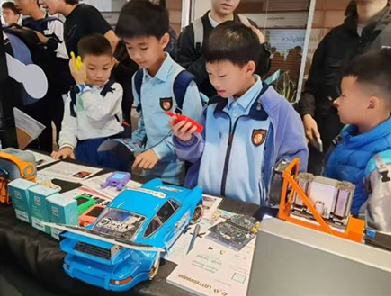
Mushroom Cloud Maker Space showcased a range of AI applications in hardware, education and ecosystem development at last weekend’s popular 2025 Maker Faire Shenzhen.

 The company brought a variety of interactive AI hardware projects to the event, including smart assistants, edge-AI devices, robotics and a mini automobile, displaying how artificial intelligence is steadily evolving from algorithms into tangible, real-world products that feature in everyday life.

 The AI Bunny smart assistant, for instance, is built on the Unihiker K10 board and integrates the “XiaoZhi” large language model. Equipped with a touchscreen, microphone and camera, it supports ready-to-use voice and image recognition. Its natural, chat-based interaction made it a popular stop for tech enthusiasts and schoolchildren visiting the exhibition.

During the Faire, Mushroom Cloud ran a beginner-friendly workshop that introduced newcomers to AI and embedded development through a simple “five-minute light-up” coding exercise.

 The workshop guided participants through the set-up of the development board and basic AI functions, and demonstrated how the AI assistant can generate embedded code from natural-language inputs to perform tasks such as voice-activated lighting and simple speech output.

 Beyond the interactive displays, the booth doubled as a location for laidback conversation. Over the course of the event, Mushroom Cloud co-founder and several product leads met with makers to exchange ideas on the future of AI-hardware integration.

 “This was more than an exhibition. It was a warm, inspiring space to meet peers and exchange ideas,” said one visitor.


Article inline ad