Wednesday, November 25, 2026

Home Blog Page 141

Entry Barriers Eased At Hainan FTP

0

By ZHONG NAN | CHINA DAILY | Updated: 2025-11-19

China will further ease market entry criteria for companies seeking to tap duty-free and preferential policies in its Hainan Free Trade Port, Customs officials said on Tuesday, ahead of the port’s island-wide special Customs operations on Dec 18.

 Speaking at a news conference in Beijing, Xin Yan, deputy director of the General Administration of Customs’ department of duty collection, said the rule requiring companies to derive at least 60 percent of their revenue from encouraged industries had been scrapped — a shift that will broaden eligibility and enable more firms to benefit from Hainan FTP’s preferential policies.

 Moreover, the scope of eligible imported production material and industrial parts has been expanded. In addition to bonded goods covered by the policy previously, “zero-tariff” imports have also been included, said Xin.

 To strengthen local processing activity, the government has revised the value-added calculation measure. The value of goods produced within the Hainan FTP can now be deducted from the cost of domestically sourced inputs — in effect allowing Hainan FTP-made products to be counted toward the value-added threshold, according to the administration.

 The recognition of such locally produced goods will be handled by relevant authorities in Hainan province.

 Xin said that the policy also broadens the application of cumulative value-added benefits. When bonded import goods undergo processing across multiple registered enterprises within the Hainan FTP — whether upstream or downstream in the production chain — the value added at different stages of the process can be accumulated.

 “This encourages companies to deepen industrial cooperation, extend value chains and expand production links within the free trade port,” she said.

 Gao Ruifeng, head of Haikou Customs, said that the necessary hardware and software conditions for the island-wide special Customs operations are now fully in place.

 Key facilities, including an international travel healthcare center, a smart supervision technology facility and a laboratory, have all been completed and put into operation as of September last year, said Gao.

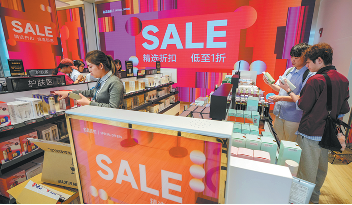
 Hainan also expanded its island-departure duty-free shopping policy on Nov 1. Following the latest adjustment, the island’s offshore duty-free list now covers 47 product categories, from mini drones and portable musical instruments to clothing and tea.

 Hua Zhenghong, deputy director of the GAC’s department of port control, said the policy adjustments will further meet the diversified shopping needs of travelers and will play a positive role in boosting domestic consumption and attracting inbound spending.

 She said that the Customs authorities will upgrade the duty-free supervision system for island departures, deploy intelligent monitoring equipment and tighten digital oversight.

 “All duty-free goods will be subject to full-process traceability, supported by dynamic risk-monitoring models to accurately identify and effectively curb illegal purchase activities,” said Pan Cheng, director of the GAC’s department of free trade zone and special control area.

 China announced in 2018 that it would develop Hainan into a pilot free trade zone while gradually exploring and steadily promoting the establishment of an FTP with Chinese characteristics. In 2020, a master plan was unveiled to build the island into a globally influential and high-standard FTP by the middle of the century.

 zhongnan@chinadaily.com.cn


Article inline ad

China, Germany Reach Outcomes After Discussions

0

Bilateral relations set to improve after high-level financial dialogue

By Wang Keju | CHINA DAILY | Updated: 2025-11-19

China and Germany have reached a series of outcomes during high-level financial talks in Beijing, a clear signal that both countries are moving to ease recent trade tensions and secure a stable foundation for mutually beneficial cooperation, analysts said.

 As the world’s second and third-largest economies, respectively, China and Germany will create a stabilizing effect across the European Union when they engage constructively, they added.

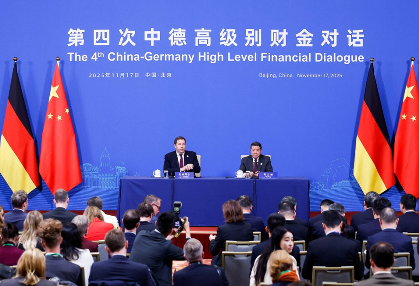
 Their comments came after Chinese Vice-Premier He Lifeng and German Vice-Chancellor and Minister of Finance Lars Klingbeil on Monday co-chaired the 4th China-Germany High-Level Financial Dialogue.

 Both sides are committed to bilaterally and multilaterally strengthening macroeconomic policy coordination, and jointly promoting global economic recovery and sustainable development, according to a statement released by China’s Ministry of Finance on Monday.

 The two nations also reaffirmed their support for a rules-based, fair, open, transparent, inclusive, equitable, sustainable and nondiscriminatory multilateral trading system, with the World Trade Organization at its core, as noted in the statement.

 The high-level talks took place during a period of increased tensions between the two nations.

 Earlier this month, Germany announced plans to reassess its trade policy toward China, with scrutiny spanning energy, raw material imports and Chinese investment in critical infrastructure. Berlin also voiced support for proposals by the EU to increase tariffs on foreign steel, including from China.

 The dialogue’s substantive outcomes, spanning financial market access, green transition cooperation, and bilateral trade and investment, reflect a concerted effort to re-anchor the relationship in shared economic interests, said Zhou Mi, a senior researcher at the Chinese Academy of International Trade and Economic Cooperation.

 China and Germany share a robust foundation for cooperation across various sectors in advanced manufacturing and green energy. The two countries should uphold the multilateral trading system and fair competition through frequent dialogues, Zhou said.

 German optics and optoelectronics manufacturer Zeiss Group is set to ramp up its local innovation capabilities in China’s Yangtze River Delta region and the Guangdong-Hong Kong-Macao Greater Bay Area.

 “China is a big market for all the players. The ecosystem we can find here is great,” said Martin Fischer, president and CEO of Zeiss China, adding that the company will be committed to further increasing localization in China.

 Preliminary data released by the German Federal Statistical Office in late October showed that China has regained its position as Germany’s largest trading partner during the January-August period, surpassing the United States.

 During the period, bilateral trade between Germany and China reached 163.4 billion euros ($189.5 billion), marginally higher than the 162.8 billion euros in trade between Germany and the US.

 With Germany representing both the EU’s largest economy and most influential voice, its approach could help shape the EU’s policy toward China, analysts said.

 The efforts by Berlin and Beijing to stabilize their economic ties through constructive dialogue could establish a critical foundation for greater stability in the broader China-EU relationship, said Gao Lingyun, a researcher at the Chinese Academy of Social Sciences’ Institute of World Economics and Politics in Beijing.

 According to a report released by the European Union Chamber of Commerce in China and global consultancy Roland Berger last week, “uncertainty” continues to loom over Chinese companies operating in Europe, with 81 percent of surveyed enterprises perceiving “rising unpredictability” in the EU’s business environment.

 In late October, Commerce Minister Wang Wentao held a video call with European Commissioner for Trade and Economic Security Maros Sefcovic at the latter’s request, and engaged in in-depth discussions on key bilateral economic and trade issues, including export control measures and the EU’s anti-subsidy investigation into Chinese electric vehicles.

 wangkeju@chinadaily.com.cn


Article inline ad

Hainan Launches Trial For Island-Wide Customs System

0

By CHEN BOWEN in Haikou | chinadaily.com.cn | Updated: 2025-11-18

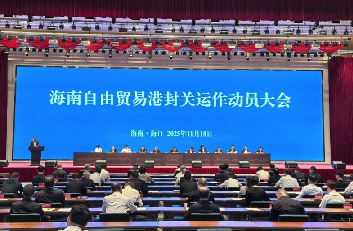
Hainan provincial authorities launched a trial of round-the-clock special customs operations on Tuesday, 30 days ahead of their official start. The trial was announced by Feng Fei, Party secretary of the province.

 The island-wide special customs operations are scheduled to take effect on Dec 18 as a key step in China’s efforts to increase economic openness.

 Under the new customs system, the proportion of imported goods eligible for zero-tariff status will increase sharply from 21 percent to 74 percent. This expansion will cover about 6,600 product categories, up from the current 1,900, and these goods can circulate tax-free among qualified businesses within Hainan Free Trade Port.

 The operations framework designates eight ports as first-line entry points for the expedited clearance of qualified imports. Another 10 second-line customs ports will handle goods moving from Hainan to China’s mainland.

 Goods manufactured by encouraged industries in Hainan that undergo at least 30 percent value-added processing will be eligible to enter the mainland without tariffs.

Article inline ad

China Hi-Tech Fair Sees 170b Yuan In Intended Deals

0

Xinhua | Updated: 2025-11-17

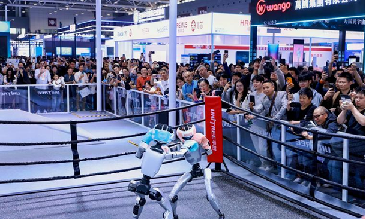
SHENZHEN — The 27th China Hi-Tech Fair (CHTF), one of the country’s largest technology exhibitions, concluded on Sunday in the southern Chinese metropolis of Shenzhen, facilitating 1,023 supply-demand matching and investment projects with an intended deal volume exceeding 170 billion yuan (about $24 billion).

 Themed “Technology Leads Development, Industry Integrates Fusion,” the three-day event attracted over 5,000 companies and organizations from more than 100 countries and regions, and received over 450,000 visitors.

 The exhibition featured the release of over 5,000 new products, technologies and innovative solutions. It set 22 major exhibition areas, including key equipment, AI and robotics, major national equipment, consumer electronics, low-altitude economy and commercial aerospace, representing global scientific frontiers and China’s innovation achievements.

 Inaugurated in 1999, the annual event is the largest and most influential science and technology fair in China.

Article inline ad

Alibaba Launches New App To Take Openai

0

By Fan Feifei | chinadaily.com.cn | Updated: 2025-11-17

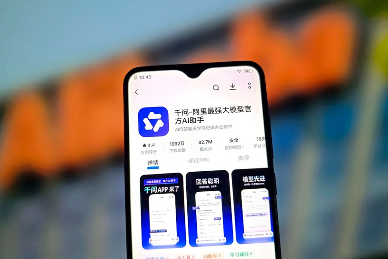
Chinese tech giant Alibaba Group Holding Ltd launched its new artificial intelligence-powered chatbot app called Qwen on Monday, opening it to general users in a bid to compete with OpenAI’s ChatGPT.

 The beta version of the app, an upgraded and renamed version of the previous app Tongyi, is now available on major app stores, with web and PC versions released simultaneously.

 An international version targeting global users will also be launched soon, aiming to rival ChatGPT overseas by leveraging Qwen model’s growing global influence.

 Alibaba said it aims to build a “personal AI assistant that can chat and get everything done” through launching the app and leveraging its most advanced AI models.

 The app has already demonstrated some task-handling capabilities. With a single instruction, it can complete a research report within seconds and generate a presentation.

 Alibaba also plans to integrate the services such as maps, food delivery, ticket booking, office tools, education, shopping and healthcare into the Qianwen app to further enhance its ability to handle multiple tasks.

Article inline ad

China Handles Over 160b Parcels In First 10 Months

0

By Luo Wangshu | chinadaily.com.cn | Updated: 2025-11-18

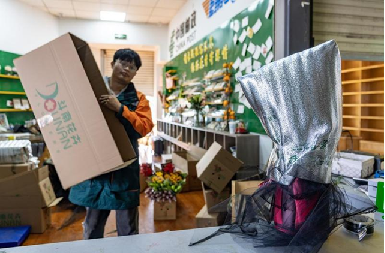
China’s parcel delivery sector continued its robust expansion in the first ten months of the year by handling more than 160 billion parcels, supported by resilient consumer demand, thriving e-commerce activity, and the steady improvement of logistics networks across the country, according to the State Post Bureau of China on Tuesday.

 According to the bureau, China handled a total of 162.68 billion express parcels between January and October, an increase of 16.1 percent from a year earlier. Industry revenue rose 8.5 percent to 1.217 trillion yuan during the same period, reflecting both steady demand and the sector’s ongoing efforts to enhance service quality and operational efficiency.

 Breakdown of the data shows that local same-city services processed 13.14 billion parcels, up 3 percent year-on-year, while larger cross-regional segments handled 146.12 billion parcels, posting a robust 17.6 percent rise. International services and those connecting Hong Kong, Macao and Taiwan maintained double-digit expansion, with 3.41 billion parcels shipped, a 12.2 percent increase from the previous year.

 In October, China’s parcel delivery sector processed 17.6 billion parcels, marking a 7.9 percent monthly increase.

 The sustained momentum comes on the heels of a record-setting 2024, when express delivery volume reached 174.5 billion parcels and industry revenue climbed to 1.4 trillion yuan, expanding 21 percent and 13 percent year-on-year respectively.

Article inline ad

New Strategic Plan To Enhance China’s Industrial Edge

0

By ZHENG YIRAN | China Daily | Updated: 2025-11-18

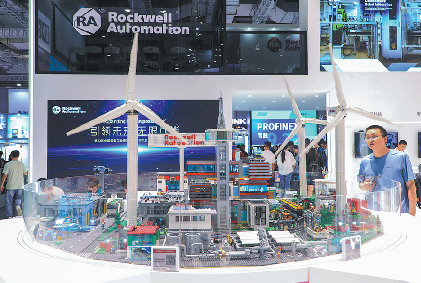
China’s 15th Five-Year Plan (2026-30) offers a clear direction for the country and opportunities for the world, especially in terms of intelligence, sustainability and green practices, said head of Rockwell Automation China.

 Ian Shih, president of Rockwell Automation (China) Co Ltd, said: “The plan is straightforward, giving multinational corporations clear directions to develop their businesses in China.

 “China’s economic resilience lies in the fact that the country covers over 600 sub-industries in the world. The completeness of the industrial coverage gives it a complete capability to serve not only the Chinese market, but also the global economy. This is a strong foundation supporting the Chinese economy moving forward.”

 Defined by the United Nations, China’s industrial system contains 41 major categories, 207 medium categories and 666 sub categories, from the exploitation of basic resources to high-end manufacturing, demonstrating the completeness of its industrial chain.

 Shih noted that, “more importantly, how do China’s industries continue to evolve leveraging the latest technology to become smarter, more sustainable, greener and consolidating its strength? As a chain leader of industrial services, we have the responsibility to support how this journey is moving forward”.

 Being in China since 1988, Rockwell Automation positions itself as a chain leader of industrial services, where the purpose is to collaborate with cross functional ecosystem partners, with the ability to focus on solving industrial and social challenges.

 Ian Shih

“China has long been an important part of our global business strategy. For nearly four decades, Rockwell Automation has witnessed and participated in China’s remarkable economic growth. The country’s continued efforts to promote high-standard opening-up and improve its business environment will further unleash innovation, create broader opportunities for multinational enterprises operating in China and contribute to the prosperity of the world economy,” Shih said.

 He noted that intelligence, sustainability, innovation and openness are the four core themes guiding Rockwell Automation’s recent development in China.

 “Building on these principles, Rockwell Automation has supported numerous Chinese companies in achieving digital-intelligent and green transformation, creating success stories with global impact.”

 Through initiatives such as the joint innovation hub by Caohejing high-tech park and Rockwell Automation, and the Climate Lighthouse initiative — both in Shanghai — Rockwell Automation is developing replicable models that can be applied more broadly, while sharing its expertise in low-carbon solutions with partners around the world.

 Wang Peng, an associate research fellow at the Beijing Academy of Social Sciences, said: “The collaboration between MNCs and local partners has shifted to a deep mode combining policy synergy, research and development co-creation and ecological integration. The collaboration not only accelerated China’s industrial transformation, but also provided a ‘China solution’ for global sustainable development.”

 Yu Fenghui, an independent financial commentator, said, “Through technical exchange and R&D co-creation, both parties have jointly overcome a series of key technological challenges, such as efficient battery technology and intelligent connected vehicles, promoting technological progress in related industries.”

 In addition, MNCs’ advantages in finance and technology combining Chinese companies’ market sensitivity and execution capability, enable them to better promote intelligent, green solutions in China and the rest of the world. This is a win-win situation, offering strong support for the global economy’s green and smart transformation, he added.

 zhengyiran@chinadaily.com.cn

Article inline ad

Efficiency, Innovation Key To China’s Appeal

0

China Daily | Updated: 2025-11-18

Editor’s Note: As China steps up efforts to boost domestic demand and drive consumption-led growth, foreign corporations are uniquely positioned to seize the opportunities presented by this transformative period. China Daily examines how these companies are aligning with China’s new round of high-standard opening-up policies, embracing emerging tech innovation trends and expanding their presence in a market that increasingly values high-quality development and upgraded consumption.

 Q1: The 15th Five-Year Plan (2026-30) draft recommendations emphasize high-quality development and the modernization of industrial systems. How do you view China’s long-term economic resilience and growth potential? How will your company seize opportunities in the Chinese market to achieve shared growth with China’s economy?

Satoshi Shimizu

Muji president and representative director

Shimizu: The long-term economic resilience of China’s economy stems from the domestic demand potential of the market, the advantages of a complete industrial supply chain, and the continuous deepening of the opening-up policy. China’s 15th Five-Year Plan continues to advocate for high-quality development, which not only points out the direction for economic upgrading, but also creates more development opportunities for foreign enterprises in China. Muji highly values these opportunities. We will continue to deepen our localization strategy: align with green development through natural materials and resource recycling, deeply understand the needs of Chinese consumers, integrate into local culture and craftsmanship, and grow together with China’s modern industrial system through high-quality products and services. We will contribute to delivering long-term value for people’s better lives.

 Xia Fuliang

President of Evonik China

Xia: China’s long-term economic resilience is underpinned by its vast domestic market, robust industrial base and strategic policy direction toward high-quality development. The 15th Five-Year Plan emphasizes industrial modernization, innovation, and sustainability — areas where Evonik is well-positioned to contribute and grow.

 Looking ahead to the 15th Five-Year Plan period, we see significant opportunities in strategic sectors such as new energy, environmental protection, advanced manufacturing and consumer-driven innovation. We will continue to invest in expanding production capacity in key locations such as Shanghai, Nanjing in Jiangsu province and Leshan in Sichuan province to support China’s green manufacturing. Innovation tailored to local needs is central to our strategy, with investment in new innovation facilities to accelerate local R&D and serve the broader Asian market.

 Alan Li

President of CBRE China

Li: China’s economy demonstrates long-term resilience and growth potential, evidenced by several key factors. First, export structures are diversifying, with strong growth in markets like the European Union, ASEAN and Africa, and double-digit growth in high-tech exports. This reflects the economy’s ability to adapt to external pressures. Moreover, China is prioritizing urban renewal as a new economic engine, shifting from quantity-driven expansion to quality-focused asset revitalization. Technological advancements in areas like AI and data centers are becoming major growth drivers, with emerging opportunities in the country’s developing regions.

 CBRE is seizing the opportunities presented by this upgrading economy, enhancing efficiency through cross-regional and cross-business collaboration, and actively serving newly emerging demands. We are also partnering deeply with local governments to provide expert services and advice, supporting high-quality industrial innovation and coordinated development.

 Jeroen Sterel

Director of Asia-Pacific region at Vaillant Group

Sterel: China’s economy continues to show resilience and adaptability as it moves toward high-quality growth. While progress differs across sectors, the focus on industrial upgrading and efficiency closely aligns with Vaillant’s commitment to reliable engineering and comfort solutions. As living standards rise and expectations for better home environments grow, we see opportunities to contribute through our strengths in system design, product quality and local collaboration. We remain confident in China’s long-term potential and are committed to steady, responsible growth.

 Q2: The plan calls for advancing high-level scientific and technological self-reliance and fostering new quality productive forces. How do you view China’s policy direction in innovation and emerging industries? How will your company’s R&D or technological innovation in China align with and contribute to this development process?

 Shimizu: In recent years, China has achieved leapfrog innovation in the internet of things and artificial intelligence. Many original technologies and solutions not only originate here, but also lead the world. This breakthrough not only allows us to clearly see the robust vitality and immense potential of China’s development, but also makes us feel the profound shifts in market demand. Beyond the new technologies, people’s pursuit of lifestyles is accelerating toward higher quality and greater comfort, with needs that are not only diverse, but also evolving rapidly. As a foreign brand rooted in China, Muji takes delight in such a dynamic market and the diverse needs of consumers. Looking ahead, we will continue to respond agilely to changes in Chinese consumers’ needs through local co-creation and R&D in China. At the same time, we will always uphold the brand’s original aspiration of “The Power of Nature”, ensuring our products not only align with local lifestyles, but also maintain the core values of simplicity and sustainability.

 Xia: China’s policy direction toward scientific and technological self-reliance and the development of new quality productive forces is highly aligned with Evonik’s innovation strategy, which is centered on sustainability. We see three strong signals from China’s innovation agenda — clearer innovation orientation, stronger green transformation and higher openness.

 Evonik is responding by reinforcing its local innovation ecosystem. We are building a robust network centered around our Shanghai innovation park, which includes multiple technology centers and focuses on key areas such as hydrogen energy, advanced manufacturing and healthcare. Our newly opened medical device competence center in Shanghai serves the entire Asia region. In early 2026, we plan to inaugurate both the Asia hydrogen center and the Asia skin research center, further strengthening our local innovation footprint.

 Li: China’s economy is undergoing a powerful trajectory of upgrading. As the nation transitions its economic drivers, technological innovation and consumer upgrades are key to unlocking high-quality growth, which also illuminates the path for the commercial real estate market in which CBRE operates. Strategic emerging industries, such as AI, biotechnology and high-end equipment manufacturing, are rapidly growing, creating renewed demand for office and industrial spaces that could support their further development.

 At CBRE, we’re also transforming commercial real estate through intelligent AI solutions to optimize investments, streamline operations and empower our workforce. Our in-house-developed design and visualization technology “CBRE Plans” transforms the historically slow, costly and cumbersome process of space design, programming and visualization into one that is agile and efficient.

 Sterel: China is already a highly innovative nation with a dynamic, fast-evolving ecosystem. The focus on developing new quality productive forces and applied technologies sets a clear direction for long-term competitiveness. In China, Vaillant’s strong R&D center enables us to combine global expertise and local insights, delivering a consistent, high-quality experience to consumers. Our goal is to turn engineering progress into everyday reliability that supports both industry and people’s comfort around the world.

 Q3: China is committed to high-level opening-up and high-quality cooperation with the Belt and Road Initiative. How do you view China’s role in global industrial and supply chains? How does your company position itself as a key participant in China’s new pattern of openness?

 Shimizu: China is not only the world’s largest demand market, but also a highly competitive production base. Its complete and efficient industrial supply chain provides critical support for the stability of the global industry. Muji greatly values the solid foundation of a comprehensive industrial supply chain and the open development landscape that the Chinese market offers. Since fully advancing its localization strategy in 2019, Muji has focused on promoting the implementation of “full-chain localization” by collaborating with high-quality local partners to jointly advance the R&D and sales of locally developed products. Looking ahead, we will further deepen and expand the scope of cooperation with China’s supply chain, striving to become an active force in driving the high-quality development of China’s consumer sector and deeply integrating into the broader landscape of China’s open development.

 Xia: In 2024, China accounted for 42 percent of global chemical output, surpassing the combined output of the United States, Japan and Germany. China continues to play a pivotal role in global industrial and supply chains — not only as the world’s largest chemical producer, but also as a strategic partner in high-end and green transformation.

 Evonik wants to grow with the Chinese market; therefore, we are increasing our local footprint by continuously expanding production capacities and innovation capabilities in the region, especially for sustainable products, with a focus on strategic industries such as e-mobility, renewable energy and healthcare. Specifically, we want to raise China’s share of global revenue from approximately 10 percent now to 15 percent by 2030. We also seek deeper cooperation with local partners and explore new business models, such as joint ventures and venture capital investment.

 Li: China is moving up in global supply chains, and its role is becoming even more critical. Once valued for low costs, China’s appeal now lies in industrial efficiency, innovation and talent. China has been the world’s largest consumer and producer of industrial robots for many consecutive years and boasts world-leading technological capabilities in industrial automation, intelligent manufacturing, new energy vehicles and other fields. China has become a global innovation hub and a key hub in the value chain.

 CBRE, a global real estate firm, has operated in China for nearly 40 years. We support multinational companies to localize and grow in China. We also assist Chinese enterprises in strengthening their operations and expanding their presence within the domestic and global markets through our integrated advisory, investment and transaction services. CBRE is playing a key role in promoting innovation, optimizing resource allocation, and fostering international cooperation in China’s opening-up environment.

 Sterel: As a global company, we see open and efficient supply networks as essential to bringing quality products to consumers on time and at a fair cost. Global supply chains are becoming more diversified, and China plays a central role with its mature industrial base and strong logistics capability. China’s continued openness has enhanced global connectivity and industrial collaboration. This openness supports shared progress across industries and helps companies like ours better operate in multiple markets.

 Q4: The plan underscores green development and shared prosperity. How does your company pursue sustainable operations in China while contributing to the Chinese society, local partnerships and inclusive growth?

 Shimizu: Muji has always conducted its business operations with “The Power of Nature” as its core brand philosophy. We respect nature and adhere to using natural materials or producing products in ways that avoid excessive disruption to nature. At the same time, we advocate using the fewest resources to create a better life. Therefore, sustainable development is not only our original aspiration, but also the core principle guiding our business operations. In China, we have consistently put this into practice. Represented by hemp cultivation in Heilongjiang province and the recycling and utilization of ocean-bound plastic, we deeply tap into local natural endowments and jointly build green supply chains with local partners. This reduces resource waste in the production process and injects momentum into regional economic development. Additionally, Muji empowers local communities by investing in production equipment, thereby building local capacity and improving quality. Looking ahead, Muji will continue to uphold the concept of inclusiveness and adopt a green business model to contribute to common prosperity.

 Xia: Sustainability has always been a core focus for Evonik — and it is fully embedded in our corporate strategy. We focus on three growth areas: bio-based solutions, the energy transition and the circular economy. This strategy is closely aligned with China’s sustainable development goals and is taking shape through a series of high-impact initiatives. For example, our new specialty-grade hydrogen peroxide plant in Leshan is designed to serve key industries such as solar panels, semiconductors and food packaging, supporting China’s green manufacturing transformation.

 Beyond environmental sustainability, we are also actively contributing to local development and rural vitalization of China. For example, using our membrane technology, we supported one of China’s largest livestock waste treatment projects. The initiative converts agricultural waste into bio-natural gas and organic fertilizer, improving rural living conditions and supporting green industry development.

 Li: At CBRE, we aim to achieve net-zero carbon emissions by 2040. This commitment applies not only to our own operations and the properties we manage for owners and tenants, but also to indirect carbon emissions from our supply chain. CBRE plays a key role in driving the built environment toward a more sustainable future, as we provide integrated “green” solutions to a vast variety of clients.

 Beyond sustainable real estate endeavors, we also run “Project Green” in China, a social responsibility program supporting the environment and communities. Over the past three years, we have pledged 30,000 trees in China’s desertified areas, and have also volunteered to work in the desert to support sand control. In the past 18 years, we have donated more than 2 million yuan ($281,400) to fund surgeries for more than 120 children with congenital heart disease.

 Sterel: Sustainability is fundamental to Vaillant’s long-term vision. In China, we focus on developing efficient heating systems, reducing carbon emissions and fostering partnerships that support local development. We also engage with local communities through education and environmental initiatives, because we believe that business growth should bring wider social benefits. By combining sustainable technologies and fair collaboration, we aim to support China’s green transition and inclusive development in the long term.

 Q5: China’s new “Shopping in China “initiative is part of a broader drive to deepen opening-up and boost inbound consumption. From your perspective, how does this program reshape opportunities for companies operating in China’s consumer market, and what would you recommend travelers visiting the country have on their “must-buy “list?

 Shimizu: China’s “Shopping in China” initiative is not only a critical measure to boost inbound consumption, but also builds a unique bridge for multinational corporations like us to feed back China-exclusive products into the global market. The diverse and segmented customer needs in the Chinese market have always provided Muji with a steady stream of R&D momentum. Currently, we have launched a number of China-exclusive products, such as phone cases compatible with multiple models, summer breeze bedding and traditional Chinese medicine-inspired herbal teas. Today, we can accurately assess the market acceptance of these products through their sales data in China, which provides a critical basis for subsequently rolling them out to global markets.

 If I were visiting China as a traveler, I would choose items that carry cultural warmth, practical value and reflections of local innovation. We are committed to learning from Chinese culture and wisdom and integrating them into our products. I was particularly impressed by the cultural derivatives from the Henan Museum and the Sanxingdui Museum, such as the Ru kiln porcelain from the Northern Song Dynasty (960-1127) and the bronze masks.

 Xia: As a global chemical company, Evonik’s products are contributing to making life better, quietly but powerfully, behind the scenes. In the fast-evolving beauty and personal care sector, China is becoming one of the most vibrant innovation hubs globally. Evonik supports this sector by providing innovative ingredients and sustainable technologies that help promising Chinese brands make the leap from quality domestic products to global brands. China is leading the world in many consumer sectors — from smart devices and electric vehicles to beauty tech and outdoor gear. If I were visiting China from abroad, I’d definitely pick up a drone — they’re sleek, smart and globally leading in performance. What’s cooler is that Evonik’s high-performance materials are actually used inside to make them lighter and fly longer.

 Li: With China’s retail sales nearing 49 trillion yuan in 2024, it stands as the world’s second-largest consumer market. “Shopping in China” is poised to further unlock this vast domestic market through integrated culture, tourism, sports and consumer activities. Retailers are actively expanding, evidenced by a surge in new store openings and creative concepts. CBRE is well-positioned to assist foreign brands to capitalize on local market trends — like outdoor sports, pet culture and novel lifestyle products — by customizing offerings and retail strategies to fit the preferences of consumers. The booming consumer market and the government’s supportive policies are also making investments in retail, hotels and consumer infrastructure more attractive.

 Sterel: The “Shopping in China” initiative reflects the growing global appeal of Chinese products and attractions, and the maturity of its consumer market. It highlights the greater emphasis on product value and user experience. For international companies, this creates a more demanding but also more rewarding environment, which values trust, quality and service. Such a direction further unlocks consumption potential and supports steady market growth. I’m most impressed with China’s electric vehicles. They offer high quality, attractive design and great consumer experience.

Article inline ad

Suzano To Ramp Up Investments In Nation

0

By ZHENG XIN | China Daily | Updated: 2025-11-18

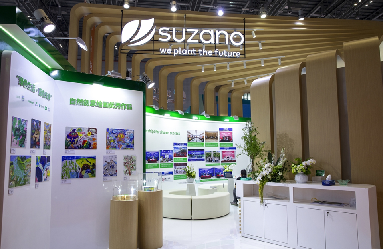
Suzano, the world’s largest producer of market pulp, vows to continuously step up its presence in China, an “essential growth engine” that is expected to provide massive opportunities for the Brazilian company, said a senior executive.

 “China’s transformation from high-speed to high-quality growth creates unprecedented opportunities for multinational corporations like Suzano,” said Pablo Machado, Suzano Asia president.

 The company plans to substantially increase its investments across China, capitalizing on the nation’s “massive consumer upgrade wave” to support the nation’s aggressive transition toward a greener economy.

 The planned investment surge in China, including research and development, logistics infrastructure and local value chains, will help provide more sophisticated, higher-quality products to Chinese consumers in packaging, hygiene, textiles, cosmetics, and other sectors, he said.

 According to Machado, China, by far the country that invests the most in the green economy and energy transition, is also becoming stronger in international finance with a sophisticated financial system.

 The investment push also underscores the increasingly robust trade and diplomatic relations between Brazil and China, said industry experts.

 As highly complementary economies, the partnership between the two countries has set a positive framework for further bilateral business expansion in the forestry and bio-based materials sector, said Lin Boqiang, head of the China Institute for Studies in Energy Policy at Xiamen University.

 The company has been stepping up investments to increase the participation of Chinese financial institutions and capital markets in its fundraising portfolio.

 Suzano issued its second Panda Bond, or renminbi-denominated debt sold in China, in October, raising 1.4 billion yuan ($165 million) in the Chinese interbank bond market.

 This follows a 1.2 billion yuan green Panda Bond issued last November, the first such bond issued by a nonfinancial corporation in South America.

 Exploring and utilizing the Chinese capital market is a core part of Suzano’s long-term financial strategy, providing the company with a diversified and competitive source of funding while supporting the solidification of the vital economic bridge between Brazil and China, said Machado.

 “This is another concrete action toward our commitment to the Chinese market, and another contributing factor to our growing presence here,” he said.

 Machado praised the pace of innovation within the Chinese market, as well as the speed and dynamism of China’s economic trajectory, which reinforces the company’s long-term conviction that “a deeper presence in this country is paramount to our future success”.

 “By aligning its business model with China’s long-term development strategy and its demand for sustainable solutions, Suzano is clearly positioned to benefit significantly from the ongoing consumption upgrade, confirming its long-term bullish stance on the Asian powerhouse,” he said.

 zhengxin@chinadaily.com.cn

Article inline ad

Guangzhou Aerial Vehicle Company Sets Out Stall In Silicon Valley

0

By Qiu Quanlin in Guangzhou | chinadaily.com.cn | Updated: 2025-11-17

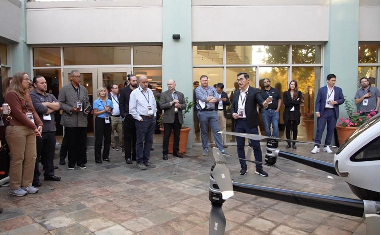
EHang Holdings Limited, one of the world’s leading urban air mobility technology enterprises, pledged to expand collaborations with overseas partners when the company showcased its flagship products at the recent eVTOL USA Conference in Silicon Valley.

 As the only Chinese technology company invited to the prestigious event in the United States, which included global players in the advanced air mobility sector, EHang showed off its flagship product, the EH216-S, for the first time in Silicon Valley.

 During the conference, the Nasdaq-listed company also hosted a roadshow, where Conor Yang, chief financial officer of EHang, introduced the EH216-S’ disruptive innovations and commercialization progress to senior managers and investors from leading US companies.

 “Through the Silicon Valley platform, we aim to share our proven practices and visionary roadmap, strengthen international collaboration and reinforce confidence in our long-term growth as a global industry leader in urban air mobility,” said Yang.

 The company’s breakthroughs in airworthiness certification and commercialization have set a replicable, referenceable success model for global advanced air mobility, according to Yang.

 Last month, EHang unveiled its next-generation VT-35 long-range autonomous passenger eVTOL, capable of serving intercity, cross-sea and mountainous transportation routes.

 The VT-35 shares compatible take-off and landing infrastructure with the EH216-S, with the aim being the formation of a seamless city-to-city product ecosystem.

 According to the company, the models build a comprehensive advanced air mobility solution that addresses diverse travel scenarios and contributes innovative value to the global eVTOL industry’s development and commercialization.

 EHang Holdings, which is based in Guangzhou, the capital of Guangdong province, has made more than 76,000 safe autonomous flight sorties worldwide, advancing its UAM operation centers and demonstration projects in markets including Japan, Saudi Arabia, Spain, Thailand and the UAE.

 qiuquanlin@chinadaily.com.cn


Article inline ad