Wednesday, November 25, 2026

Home Blog Page 142

SAMR Unveils Draft Antitrust Guideline For Internet Firms

0

By CHENG YU | China Daily | Updated: 2025-11-18

China’s top market regulator has released a draft antitrust compliance guideline for internet companies, which industry experts said offers one of the clearest roadmaps for identifying and preventing antitrust risks in the world’s largest digital market.

 The draft guideline, released by the State Administration for Market Regulation on Saturday, clarifies how platform operators should identify, assess and manage antitrust risks, and sets out examples of conduct that could raise concerns. It opens for public feedback by the end of November.

 The draft guideline outlines eight categories of potential monopoly risks, including algorithmic collusion, helping third-party vendors reach anticompetitive agreements to unfair pricing, below-cost sales and blocking or delisting rivals. It also lists behaviors such as “pick one of two” as risk scenarios.

 All these areas are closely watched by global investors and foreign companies navigating China’s increasingly algorithm-driven platform economy.

 The SAMR said that the draft aims to “promote innovation and healthy development” of the platform economy rather than impose binding obligations. It also encourages companies to carry out internal reviews, strengthen algorithm oversight, improve risk reporting mechanisms and cooperate with investigations when required.

 Hong Yong, an associate researcher at the Chinese Academy of International Trade and Economic Cooperation, said the draft gives operators clearer behavior benchmarks and helps stabilize market expectations. “It also supports a fairer competitive environment and can boost innovation,” he said.

 China has been accelerating its platform governance framework this year. The SAMR has issued multiple documents covering platform responsibilities, data reporting and fee practices, reflecting the growing scale of the industry.

 In China, tens of millions of merchants and more than 900 million consumers are now participating in the platform economy, data from the SAMR showed.

 Hong said: “Regulators’ growing focus on the platform economy reflects the sector’s shifting trajectory from an early phase driven by traffic to one centered on value co-creation.

 “It also underscores the platform economy’s current irreplaceable role in promoting high-quality growth, and the need for improved oversight to guide its orderly development.”

 chengyu@chinadaily.com.cn

Article inline ad

Tangible, Groundbreaking Progress Seen At Import Expo

0

By Wang Keju | China Daily | Updated: 2025-11-17

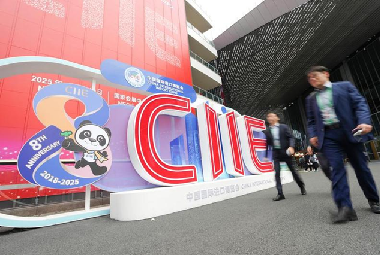
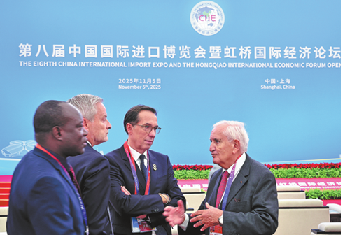
Walking through the sprawling exhibition halls of the eighth China International Import Expo in Shanghai, I feel the air is thick with more than just negotiation and dealmaking.

 It’s charged with tangible, groundbreaking progress, for instance, a photon-counting CT scanner that slashes the radiation doses by 90 percent, AI-powered hearing aids heralding a new era for auditory health, and the world’s first vertical takeoff and landing “air taxi” poised for launch.

 These aren’t mere concepts in a brochure; they are physical realities, showcased and ready for the world. For me, this is the core of CIIE’s magic — it’s where the global future of technology and trade lands, quite literally, on China’s doorstep.

 Exhibitors from around the globe now approach the CIIE not merely to sell goods, but to present their entire brand — their innovation ecosystems, their investment potential, and their vision — to a captivated Chinese and global audience.

 For many smaller businesses in particular, navigating the vast, complex Chinese market alone is a daunting challenge. The CIIE acts as a powerful aggregator, turning this challenge into a manageable pathway.

 I saw this firsthand at the Malaysia Pavilion. Instead of individual companies scattering their efforts, the Malaysia External Trade Development Corporation transplanted its own Malaysia International Halal Showcase into the CIIE.

 Nearly 200 exhibitors were present, leveraging the expo’s concentrated gathering of Chinese and global buyers, distributors, and media. Their own “mini-expo” within the CIIE is a masterstroke in efficiency, offering a high-impact, low-risk testing ground.

 The Associated Chinese Chambers of Commerce and Industry of Malaysia Deputy President Looi Hei Tyng told me about how new mechanisms like cross-border e-commerce platforms at the CIIE provide lighter and more flexible channels for small businesses.

 “These innovations are transformative,” he said. “They allow smaller businesses to step into the China market, test the waters, and explore partnerships without the traditional heavy lifting and complex Customs procedures.”

 This model of collective empowerment is equally attractive to established economic players like Singapore. The Singapore Business Federation, an eighth-time participant, brought a 500-executives-strong delegation. Soo Wei-Chieh, executive director of the federation, described the CIIE as a “fertile ground” for collaboration.

 The value, however, goes far beyond streamlined market entry. The real magic happens in the deeper, ecological linkages that the CIIE fosters. A product’s China debut here is just the beginning. Its appearance can trigger a cascade of localization efforts — from logistics and warehousing to distribution and marketing.

 The service trade zone is the nerve center for this next phase. Companies like Standard Chartered Bank, an eight-year CIIE veteran, are no longer just financial service providers; they are enablers of scale.

 The bank offers solutions designed to swiftly channel funding from a product’s showcase debut to its localized production and distribution, managing everything from trade finance to exchange rate risks. They are the vital link that helps turn an exhibit into a mainstream commodity.

 The CIIE has the capability of bringing down the barriers, not just between buyer and seller, but between a product and its potential ecosystem, and between a company’s current identity and its future brand. It’s where the world comes to connect, not just for a deal, but for a shared future.

Article inline ad

Digital Transformation Powers Upgrade Of Manufacturing Enterprises In Northeast China

0

Xinhua | Updated: 2025-11-16

SHENYANG — Digital transformation is accelerating among small and medium-sized enterprises in Northeast China’s industrial base, aided by supportive technical service system and thriving industrial ecosystem.

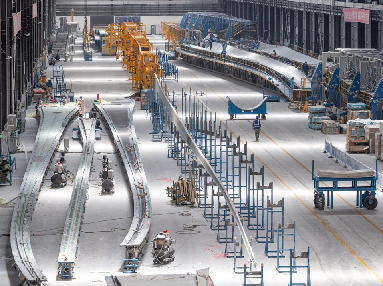
 In Wafangdian city, a major production base for bearings in Northeast China’s Liaoning province, local manufacturers are exploring digital transformation. At Jingu bearing company, where production once depended entirely on the experience of veteran workers, operations are now guided by precise data metrics.

 “Digital transformation has elevated our production capacity and efficiency to a new level,” said Zuo Tongming, owner of the company.

 Nearby, at another manufacturer, all product inspection data is stored and updated in real time, with comprehensive reports available on demand for analysis.

 “We’ve built a fully automated digital system that streamlines the entire process from order to delivery,” said Zhou Jianhong, head of the company’s information department. “It intelligently breaks down production processes and schedules equipment, allowing workers to manage required materials more efficiently. For precision tasks, they can readily access technical drawings on their phones.”

 He added that this digital transformation has increased production efficiency by 20 percent and cut operational costs by 15 percent.

 For a long time, the high sunk costs of digitalization — often running into millions of yuan — had been a major hurdle for many entrepreneurs.

 “I lay awake at night calculating the return on investment,” admitted one local business owner, acknowledging that the financial strain and unpredictable payback periods left many companies feeling hesitant.

 A supportive ecosystem developed by local authorities is helping to boost confidence in digital adoption. In addition to financial subsidies, the government has leveraged advanced industrial Internet platforms and tailored services for the local bearing cluster, offering end-to-end support from diagnosis to system deployment.

 Liaoning province has built a comprehensive digital infrastructure system, supported by a foundation of 143,000 5G base stations that ensure full coverage in all cities and key industrial parks. The core of this infrastructure also features a blockchain network and two intelligent computing centers in Shenyang city and Dalian city, providing the critical data backbone for advanced applications.

 Such infrastructure development facilitates platforms that connect manufacturers with supply and demand partners. For example, at the Shenyang service center of the national digital supply chain platform for equipment manufacturing, a small components factory uploaded a 3D model and was swiftly matched with a large manufacturer located just 20 kilometers away.

 “It’s like an online shopping application for industry. Smart algorithms optimize the matching of manufacturing resources,” said Li Chunwei, an operator of the center. Hundreds of local firms have successfully used the platform, shortening design cycles by 30 percent and saving customer acquisition costs by 40 percent.

 Breakthroughs in artificial intelligence (AI) are adding another layer of sophistication. Building on advances in domestic models like DeepSeek, Liaoning is now fostering industry-specific AI applications. For instance, researchers at the Dalian Institute of Chemical Physics recently launched a large model dedicated to the chemical industry. This model is capable of simulating complex molecular reactions, significantly reducing R&D time and optimizing production to conserve energy.

 “Comprehensive industrial system and rich application scenarios provide an ideal foundation for developing such specialized models,” said Pan Hong at digital economy research institute of Liaoning University.

 Looking ahead, the momentum is set to accelerate across the Northeast China. In Heilongjiang province, the digital foundation is already solidifying. As of the first quarter of 2025, 51.1 percent of industrial enterprises in the province have achieved comprehensive digitization of their key business processes.

 According to the plan of Jilin province for accelerating equipment upgrading in the industrial sector, the province aims to support 1,000 demonstration projects in smart manufacturing and digital transformation by 2027, cultivating 150 digital transformation service providers, establishing 120 provincial-level smart manufacturing demonstration factories and 3 leading industrial internet platforms.

 From factory floors to AI models, manufacturers across Northeast China are scripting a robust story of revitalization powered by digital transformation. This tech-driven upgrade goes beyond a mere efficiency boost, serving as the key to unlocking a new chapter of innovation.

Plump, meaty, and rich in roe, the Norwegian brown crab — often called the king crab — has received the green light to enter the Chinese market. The announcement came on Nov 7 from Hanne-Berit Brekken, state secretary of the Norwegian Ministry of Agriculture and Food, who spoke at the Norway Pavilion of the CIIE.

 “Norway has always viewed China as one of its most promising and dynamic markets,” said Sigmund Bjorgo, China director of the Norwegian Seafood Council. “After five consecutive years of participating in the CIIE, China has become Norway’s third-largest seafood export market globally and the fastest-growing in export value.”

 To capture even more of that potential, the council plans to increase its marketing budget for China by 70 percent next year, according to Bjorgo.

 In a world navigating the hidden reefs of unilateralism and a thickening fog of geopolitical rivalry, the CIIE offers a tangible counter-narrative — one where openness, not isolation, is presented as the path to shared growth, said Zhou Mi, a researcher at the Chinese Academy of International Trade and Economic Cooperation.

 By leveraging the vast scale and stability of the Chinese market, the expo provides a crucial platform for businesses worldwide to mitigate international volatility, Zhou added.

 According to the World Openness Report 2025 released earlier this month, the World Openness Index registered a marginal decline of 0.05 percent in 2024 compared to the previous year, reflecting drops of 0.34 percent from 2019 and 5.39 percent from 2008, respectively.

 “Global openness remains in a contraction phase,” said Liao Fan, director of the Chinese Academy of Social Sciences’ Institute of World Economics and Politics.

 Europe, Central Asia and North America emerged as the only regions experiencing a contraction in openness, while emerging markets and developing economies saw their openness index rise 0.42 percent year-on-year, the report noted.

 Between 1990 and 2024, China’s openness index surged from 0.59 to 0.76, marking a rise of nearly 30 percent. This robust expansion underscores China’s commitment to high-standard opening-up, injecting much-needed stability and certainty into the world economy, Liao said.

 Faced with a protectionist wall in the West, Ron Lin, founder and president of a honey product company from Canada, and many other global business leaders are walking through a door China has always held open.

 “The United States was originally our major market,” said Lin. “But since the tariff hikes, we have suspended most of our orders to the US — the uncertainty there is just too strong.”

 “China is proactively opening its door through platforms like the CIIE,” he said, highlighting not only streamlined Customs and logistics services, but also a clear and welcoming attitude he finds lacking elsewhere.

 In his company’s first appearance at the CIIE in 2024, it selected three flagship honey products for the Chinese market. For this year, it had prepared an even wider array of new items to test the waters.

 “We are full of confidence in the potential of the Chinese market,” Lin stated. “Given its population base, the Chinese market has every possibility of surpassing the US market in the long run.”

 The expo saw robust transaction activity, with intended deals reaching a record $83.49 billion on an annualized basis, a 4.4 percent increase from the previous edition, Wu Zhengping, deputy director-general of the CIIE Bureau, told a news conference after the conclusion of the event.

 The expo has long been a showcase for global brands to present their latest products. But for a growing number of multinational firms, it has become something more strategic, a launchpad for deep integration into the Chinese economy.

 This shift was crystallized on the first day of this year’s expo, when Porsche opened its China R&D Center in Shanghai’s Hongqiao International Central Business District, designed to accelerate local innovation by merging Porsche’s engineering capability with China’s fast-paced digital ecosystem.

The facility, the German automaker’s first strategic-level research hub outside its home country, spans more than 10,000 square meters and integrates development, procurement, and quality control under one roof.

 “China is leading the way in future mobility, combining electrification, digitalization, and new luxury concepts,” said Oliver Blume, chairman of the executive board of Porsche AG.

 “Solving the challenges of this transformation isn’t possible from afar — it has to happen here. The China R&D is a strategic pillar that connects German engineering with China’s digital future. This center will help us move faster, learn more, and strengthen Porsche R&D globally,” Blume said.

 The same day, pharmaceutical company AstraZeneca also announced an additional $136 million investment to expand its production and supply base in Qingdao, Shandong province, just months after unveiling a $2.5 billion plan to establish a global strategic R&D center in Beijing.

 “We really see China as a strategic hub for both R&D and manufacturing,” said Tony Pusic, senior vice-president of Supply Asia Pacific at AstraZeneca.

 China saw the registration of 48,921 new foreign-invested firms in the first three quarters of this year, marking a year-on-year increase of 16.2 percent, according to the Ministry of Commerce. From 2021 to 2025, China attracted over $700 billion in cumulative utilized foreign investment, with 25,000 more new foreign-funded enterprises than in the previous five-year period.

 The CIIE is well known for the billions of dollars in deals and investment signed on its floor. But beyond the economic handshakes, global companies arrived with tangible climate solutions.

 Carolyn Mortland, executive officer for sustainability of New Zealand-based kiwifruit marketer Zespri, said that the company used the inaugural biofuel-chartered vessel during the 2025/26 season, using fuel derived from used cooking oil, reducing carbon emissions by 18 percent.

 Zespri’s practices and explorations in carbon reduction demonstrate that agricultural enterprises can not only adapt to climate change, but also proactively lead transformation, achieving a win-win outcome of environmental benefits and commercial value, Mortland added.

 “China holds distinct strengths in new energy and logistics. We are keen to strengthen our collaboration in green transportation for the future,” Mortland said.


Article inline ad

Dow Enhances R&D With Cooling Science Studio In Shanghai

0

By WANG KEJU in Shanghai | China Daily | Updated: 2025-11-17

China’s sustained market opening, a palpable welcome for innovative enterprises, along with the sheer gravitational pull of its super-sized market, has turned it into a primary arena for global innovation and product launches, a senior executive said during the eighth China International Import Expo.

 “China remains a market of scale, fast-moving innovation and policy support. That keeps us committed to China for the long term,” Puay Koon Chia, president of US chemicals company Dow in Asia Pacific, told China Daily during the expo in Shanghai.

 Puay Koon Chia, president of US chemicals company Dow in Asia Pacific

In Dow’s global strategy, China stands as the company’s second-largest market in the world and largest international market, she said, noting that Dow has participated in the CIIE for eight consecutive years.

 “We appreciate the government’s determination to continuously open the Chinese economy and promote the innovative development of trade,” she said.

 The company has launched a total of 13 debuts — 10 global and three China debuts — spanning sectors such as intelligent manufacturing, new energy, mobility, sustainable packaging, and consumer goods.

 “The expo is a unique platform to present the latest technologies and solutions, and engage customers and partners. It is also ‘harvest’ time to sign agreements with customers or confirm strategic partnerships and purchasing intentions,” she said.

 In particular, Chia noted that the rapid advancement of artificial intelligence in China is driving a sweeping transformation across industries. While creating tremendous opportunities, it is also pushing thermal management to its limits.

 With computing demands growing exponentially, markets across the AI ecosystem require innovative cooling technologies and thermal management materials that can effectively handle heat loads while delivering long-term reliability and sustainability, she added.

 At this year’s CIIE, Dow showcased a range of thermal management materials and solutions — including thermal interface materials designed to enable efficient heat dissipation for server chips and optical modules.

 In addition to bringing new technologies and products to the Chinese market, Dow has also been enhancing its local innovation and production capabilities, and earlier this month opened its first Cooling Science Studio at the Shanghai Dow Center.

 This initiative underscores Dow’s commitment to addressing the growing industry demands across China and the Asia-Pacific region. The studio is designed to accelerate collaborative innovation and commercialization with our Chinese customers, delivering more cooling solutions to support the booming AI, IoT, robotics and automation sectors, she said.

 “As China accelerates its new quality productive forces, a green and low-carbon transition, and digital and intelligent upgrades, we will continue to strengthen long-term collaboration and capture business growth opportunities,” she said.

Article inline ad

New Solutions To Drive Country’s ‘AI+’ Initiative

0

Kingdee’s Xiao K to digitally empower, transform businesses across the board

By Han Jingyan | China Daily | Updated: 2025-11-17

Amid the country’s call to push an “AI+” initiative for improving scientific and technological strength, a key market player has showcased its latest achievements to power the current artificial intelligence drive.

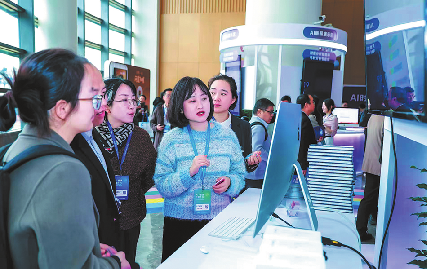
 Kingdee International Software Group Co Ltd, a Hong Kong-listed company headquartered in Shenzhen, Guangdong province, showcased the country’s first enterprise-level AI native super entrance — “Xiao K” — which works 24/7 to help businesses reduce labor costs, and upgraded its “Kingdee Cloud” to “Kingdee AI”.

 Speaking in Shanghai on Nov 4 at Kingdee’s Global Changemakers Conference 2025, Kingdee Chairman and CEO Xu Shaochun, said the Kingdee Xiao K has aggregated nearly 20 AI native intelligent agents, covering multiple fields such as marketing, supply chain, human resources, finance and environmental, social and governance, all of which can be used out of it.

 He stressed that in the wave of technological advancement, those who are brave enough to change themselves, constantly innovate and have independent thoughts are “changemakers”.

 The Fourth Plenary Session of the 20th Central Committee of the Communist Party of China issued a communique on Oct 23, with an urge to markedly boost China’s scientific and technological capabilities by the year 2035. Yin Hejun, minister of science and technology, said on Oct 24 that for this end, the “AI+” initiative will be fully implemented to empower all industries across the board.

 Experts say embracing intelligent transformation and developing new quality productive forces are the most powerful drive in the current era.

 Xu said Kingdee, a globally recognized provider of cloud-based enterprise management software as a service solution by serving over 7.4 million enterprises and government organizations worldwide, will better embrace AI — “said to be the greatest technological revolution in human history”.

 Xu said: “This AI revolution is transforming ourselves.”

 Founded in 1993 with multiple cloud service products, Kingdee emerged as the highest-scoring Chinese vendor at the Asia-Pacific Enterprise Resource Planning Marketscape, which was recently released by International Data Corp.

 Liu Zhongwen, vice-president of Kingdee China and general manager of R&D center, said AI should not only be a tool for executing commands, but also an intelligent agent that can actively understand business goals and drive the entire process until measurable business results are achieved.

 “The entire pattern has undergone a fundamental change,” he said, noting that “Previously, humans were in the driver’s seat and AI was copilot. Now, AI has become the dominant force and humans have become copilot. This is what intelligent agents are.”

 Chen Ning, chairman and CEO of Shenzhen-based Intellifusion Technologies Co Ltd — one of China’s earliest AI chip developers and listed on Shanghai’s STAR Market — said: “2025 will be a defining year for AI. Today we stand at the doorstep of the fourth industrial revolution, where algorithms, big models, chips and data have become a series of key elements.”

 He added: “It is highly likely that by 2030, humanity will fully enter the fourth industrial revolution represented by AI new quality productive forces.”

 Chen noted that in this context, Intellifusion has partnered with Kingdee to launch a deep integration plan called “Core Software Symbiosis”, with an aim to connect with 100 Kingdee ecosystem partners by next year and promote 1,000 enterprises to complete the intelligent upgrade of “software + computing power” to AI in the next three years.

 On Aug 18, Kingdee signed a strategic cooperation agreement in Kuala Lumpur with Chin Hin Group Berhad, a diversified construction industry leader in Malaysia, to deepen its global footprint.

 Chiau Haw Choon, president of Chin Hin Group Berhad, said in Shanghai that while over 95 percent of businesses in Malaysia have chosen ERP systems from the United States or Europe, his group chose Kingdee as a partner due to its AI and its ecosystem.

 “We have come to China and we have seen many implementation projects, and AI is the strategic driving force, representing the engine for enterprises to enter the era of intelligence,” he said.

 “We are eager to become a benchmark enterprise in Malaysia, making our successful example a role model for many businesses in Southeast Asia,” he said.

Article inline ad

China Must Unleash Capital Market’s Power To Fuel Growth

0

By Wu Xiaoqiu | China Daily | Updated: 2025-11-17

The Recommendations of the Central Committee of the Communist Party of China for Formulating the 15th Five-Year Plan (2026-30) for National Economic and Social Development places the capital market at a level of importance never seen before. The 2023 Central Financial Work Conference defined the capital markets as the hub of a modern economic and financial system, a precise and forward-looking statement that marked a major shift in how China understands and positions finance and the capital market in particular.

 For decades, China’s capital market was seen mainly as a channel for raising funds. Today, it is increasingly recognized as a driving force for technological innovation, institutional reform and sustainable growth.

 The logic behind this change is both simple and profound. Finance is not an end in itself, but a means of channeling resources toward innovation and productivity. The vitality of any modern economy depends on how effectively its institutions reward creativity and allocate risk. In that sense, the capital market serves not only as a reflection of economic strength, but also as a powerful engine of transformation and modernization.

 The 2025 Nobel Prize in Economics, awarded to three scholars who explored innovation-driven growth, offers valuable insights for China. Their research asks why the world economy experienced an unprecedented acceleration during and after the first industrial revolution. The answer, they argued, lies in two conditions: a culture open to diverse ideas, and an institutional system that rewards innovation. When societies embrace intellectual diversity and ensure that inventors share in the wealth they create, knowledge flourishes and technological revolutions follow.

 For China, these insights are especially relevant. Cultural openness nurtures creativity, while institutional incentives sustain it. A society that praises innovation without providing real rewards cannot maintain momentum. The capital market, therefore, should be understood not merely as a financing venue, but as a mechanism that compensates innovators for taking risks.

 Every major leap in human history has involved a cycle of creative destruction, and the capital market is the arena where such renewal occurs. When innovators gain a premium for success, their earnings are reinvested into new ventures, fueling a virtuous cycle of growth and innovation.

 China already ranks as one of the most influential economies in the world. In 2024, China’s share of global manufacturing reached 31.6 percent, nearly one-third of the total. In 2010, the figure was 18.9 percent, surpassing the United States for the first time. This achievement reflects decades of openness, diligence and technological learning. Yet sustaining that leadership over the long term requires a transition from imitation and adaptation to original breakthroughs.

 Imitation is an inevitable stage for latecomer economies. But once a country reaches the global frontier, it can no longer rely on borrowed knowledge; it must create its own. This demands a system that encourages experimentation, tolerates failure, and rewards genuine innovation. The capital market is the institutional foundation capable of enabling this transformation.

 To fulfill this role, the market’s ecosystem must be comprehensively reshaped. The task is to move beyond a narrow focus on financing and build a system that integrates innovation incentives with long-term wealth management. This process rests on reforming three interconnected areas: the structure of assets, the flow of funds and the regulatory framework that ensures fairness and transparency.

 On the asset side, the key challenge is to establish returns that correspond to risk. In policy discussions, “improving the quality of listed companies” is a frequent phrase, yet its meaning is often blurred. In capital market logic, profitability is not the sole measure of quality. Innovative and high-growth firms may appear unprofitable today, but carry enormous potential for tomorrow. Investors seek certainty amid uncertainty, and it is precisely these companies that sustain a dynamic market.

 At present, China’s risk-free rate stands near 1 to 1.5 percent, compared with about 4 percent in the United States. To make investment more attractive, reforms should aim to generate a risk premium of roughly 5 percent, resulting in total returns of about 7 percent. Achieving this requires clear institutional pathways that enable technology-oriented enterprises to become genuine market leaders.

 On the funding side, a persistent problem is the over-generalization of risk. Some institutional funds — such as university endowments — have been kept out of the equity market in the name of prudence. Yet a market cannot thrive if long-term capital is sidelined. With bond yields declining, dividend-paying equities with stable annual returns of 4 to 5 percent now match the risk appetite of many institutional investors. Allowing these funds to enter the market under transparent rules would enhance liquidity and depth.

 At the same time, communication between the capital market and the central bank should be strengthened. China’s financial system is evolving into a “five-sided framework”, in which monetary authorities play a more coordinated and supportive role.

 Regulatory reform is the third and perhaps most critical pillar. The essence of fairness lies in transparency: without it, openness and impartiality become empty slogans. Listed companies must provide accurate and timely disclosures, and all participants must operate on an informational playing field.

 Equally important is ensuring that the cost of violations outweighs their benefits. In the past, misconduct in the capital market often brought high profits but minimal penalties, fostering repeated fraud. Such behavior cannot be dismissed as minor administrative misconduct; it is a form of financial crime that undermines trust and efficiency. Therefore, the regulatory system must shift from administrative penalties toward a dual framework of criminal sanctions and civil compensation. Only when the cost of wrongdoing far exceeds potential gains can the market develop a clean, credible, and self-correcting ecosystem.

 Looking ahead, some observers predict that China’s capital market will reach a total capitalization of 200 trillion yuan ($28.16 trillion) during the 15th Five-Year Plan period, or even 400 trillion by 2030. Yet these figures, while striking, should not be viewed as policy goals. Market value will naturally rise as reforms deepen and institutions mature.

 The real priority is openness. At present, China’s market remains partly closed, with foreign access limited to specific channels. Over the next decade, a decisive step toward comprehensive openness is essential.

 When renminbi assets become widely traded and globally trusted, China will have the institutional foundation of a true financial power. The 15th Five-Year Plan period thus represents more than a stage of growth — it is an opportunity to redefine the capital market’s role in national modernization. By consolidating its position as the hub of the financial system, promoting transparency, and embracing openness, China’s capital market will not only underpin high-quality domestic growth, but also contribute to a more balanced and resilient global economy.

 The writer is former vice-president of Renmin University of China and dean of the university’s National Academy of Financial Research.

 The views do not necessarily reflect those of China Daily.


Article inline ad

Growing Call For More Monetary Diversity

0

By Zhou Xiaochuan | China Daily | Updated: 2025-11-17

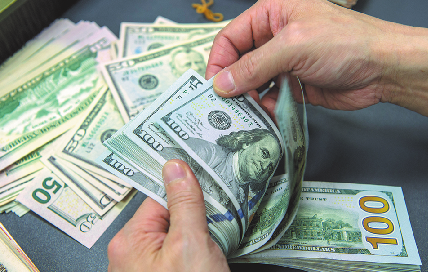
At present, the world is in the midst of an intense phase of global trade and tariff disputes. In principle, such disputes should be analyzed from a trade perspective. However, many scholars also argue that behind these trade and tariff conflicts lies a monetary dimension — and, by extension, the very nature and role of the international monetary system itself.

 The United States now faces a series of choices and dilemmas. On the one hand, it seeks a more competitive dollar exchange rate to boost the repatriation of manufacturing and improve its trade balance. It also hopes to ease the excessive burden of the dollar’s international responsibilities, while continuing to use the dollar as a geopolitical tool for sanctions. On the other hand, the US wants to maintain the dollar’s dominant role as the global reserve currency — both in international trade settlements and in global financial markets.

 This creates two inherently contradictory goals. For one, the US hopes for a weaker dollar — one with fewer obligations. It also wants to preserve low borrowing costs and maintain the greenback’s supremacy in the international monetary system, including its use as a sanctioning instrument when needed. Many analysts have pointed out that it is unrealistic to achieve both goals simultaneously.

 The dollar will inevitably have to make trade-offs — gaining in some areas while losing in others — and may be forced to cede part of its dominant position in the global monetary order. In my view, it is not entirely impossible for the US to achieve both objectives at once. The key question is whether any other currency in the international monetary system dares and is capable of challenging the current status quo.

 Such a challenge need not be explicit — gradual substitution of the dollar in certain practical applications could be enough to shape a new landscape for the international monetary system. So, who might step in to fill the gap left by the dollar? There are four main possibilities.

 The euro

 The euro is the second-largest currency in the IMF’s Special Drawing Rights basket after the US dollar, and the European Union or eurozone has the economic strength of a mature economy. However, the euro faces its own challenges. The relationship between the EU and the eurozone still needs to be clarified. The European Central Bank’s relevant functions appear constrained by certain limitations, lacking sufficient authorization. A true reserve currency must be backed by a fiscal counterpart, yet the euro lacks a unified fiscal authority and corresponding debt instruments. Furthermore, the eurozone’s capital market integration has yet to yield a clear solution. Under such circumstances, the euro will need to strengthen its internal foundations before it can meaningfully step into the dollar’s role.

 The renminbi

 Initially, the renminbi, also known as the yuan, was not intended to play a major role in the international monetary system. China, as a developing country with a relatively underdeveloped financial sector, focused for over a decade on promoting the use of the renminbi in cross-border trade and investment — always respecting the voluntary choice of market participants rather than imposing its use.

 Following the outbreak of the 2008 global financial crisis, when the US Federal Reserve primarily targeted economies such as Europe and Japan in its currency swap operations at the time, some Asian countries, such as South Korea and Malaysia, began turning to China for support after experiencing foreign exchange liquidity shortages. China responded by promoting local currency swaps, first with the Korean won and the Malaysian ringgit. Since then, the internationalization of the yuan has been propelled forward. However, the People’s Bank of China, the country’s central bank, maintained a low-key stance at the time. After all, China neither lacked US dollars nor intended to replace the dollar’s status. It was merely responding to market demand.

 By 2014, renminbi internationalization was formally placed on the policy agenda, and in 2016, the Chinese currency successfully joined the IMF’s SDR basket, becoming one of its five constituent currencies alongside the US dollar, the euro, the British pound sterling and the Japanese yen. Over the years, the renminbi has been advancing amid volatility — ranking second in global trade finance and third in trade settlement — yet its overall progress has been relatively slow. For instance, its share in global financial transactions and foreign exchange reserves still ranks only sixth.

 If the US adopts more protectionist trade and tariff policies, the yuan could gain a greater role. Currency diversification itself would help advance reform of the international monetary system. However, this also requires China to push forward with domestic reforms, especially monetary reforms, including greater capital account convertibility and freer use of the renminbi, as the IMF describes it, by reducing unnecessary controls.

 The main concern about this move is potential capital outflows. Whether China can decisively allow the yuan to assume a greater international role depends largely on the analytical framework we adopt. Different frameworks yield different conclusions. Through strengthened research and discussion, and by drawing on domestic and international experiences and lessons, we should be able to refine our analytical framework and strive to achieve greater consensus.

 SDRs

 Another potential option are SDRs, which refer to an international reserve asset created by the IMF in 1969. If none of the five currencies in the SDR basket has the capacity to individually challenge the dollar’s dominance, could a basket of currencies collectively play that role? Expanding the use of SDRs would align with China’s advocacy of multilateralism and recognition of a multipolar world. A diversified international monetary system would, in fact, be safer, more stable and more resilient — because even if one or several component currencies fluctuate, the overall volatility of the basket would remain limited.

 Some may argue that SDRs are not a true currency — merely a unit of account — since they have no issuer and the IMF does not function as a global central bank. That argument sounds quite reasonable, but success depends on human efforts. If we never attempt change, SDRs will remain a bookkeeping unit forever, and the IMF will never evolve into a central banking role. If we seize the moment and keep pace with the times, however, circumstances can change.

 If the international monetary system is to undergo change, it requires an opportunity. The 2008 global financial crisis, triggered by the US subprime mortgage crisis, presented a valuable chance for reform, but at the time, the US did not clearly define its stance, making it difficult to advance reforms. Today, as the greenback faces structural dilemmas, we must seriously consider whether this could be another window for change. Will the US continue to insist on a dollar role that exceeds its economic size and national strength, or will it allow some wiggle room?

 Even as a mere unit of account, SDRs can be significant. For example, reserve currencies should remain stable. If everything is measured against the dollar as the 100 percent reference standard, then any exchange rate fluctuation will appear solely as the fluctuation of other currencies against the greenback — even when the volatility may actually stem from the US dollar itself. When the US currency undergoes major adjustments, using it as the sole reference distorts the perception of stability of other currencies.

 Moreover, the predominance of the dollar as a benchmark affects risk management tools, such as derivatives, which are mostly dollar-denominated. Should the US dollar, as the benchmark, encounter issues or flaws, numerous aspects of risk management — from measurement to behavior — will become distorted.

 Similarly, for financial institutions engaged in international business, dollar-based balance sheets require converting all non-dollar transactions into dollars, introducing further bias and distortions.

 Thus, the international monetary system has room for SDRs to assume a greater role — but much depends on how US authorities perceive the dollar’s future, and whether the world can seize the moment to build consensus. This is a topic well worth serious discussion.

 Digital currencies

 Finally, a fourth and increasingly discussed possibility is digital currency. From a developmental perspective, cryptocurrencies and digital currencies are often categorized into two types — digital assets and stablecoins. Cryptocurrencies are widely regarded as lacking the functions of money, while stablecoins are considered equivalent to currency. Yet whether stablecoins are genuinely “stable” remains a subject for debate. Even if stability is achieved, stablecoins still lack the weight to function as a member of the international monetary system capable of partially replacing the dollar. This is because they must first establish themselves in payment facilitation, but they have not yet become independent currencies. Consequently, stablecoins must be pegged to a specific currency, such as the US dollar, thereby expanding rather than replacing the greenback’s domain. However, broad “dollarization” remains controversial and is something many countries seek to avoid.

 In sum, advancing reform of the international monetary system and enabling other currencies to partially substitute for the dollar depends in large part on reaching international consensus and finding the right timing and momentum for reform — including how the US itself weighs the costs and benefits of maintaining the dollar’s dominance.

 The writer is former governor of the People’s Bank of China. The article is based on the author’s presentations at a closed-door session of the 2025 Tsinghua PBCSF Global Finance Forum and No 459 CF40 Bi-Weekly Roundtable themed “Opportunities and Prospects for Renminbi Internationalization”.

 The views do not necessarily reflect those of China Daily.


Article inline ad

‘Flying Taxis’ Reinventing Future Of Urban Air Mobility

0

By Wang Xin | China Daily | Updated: 2025-11-13

Four leading electric vertical takeoff and landing aircraft makers have expressed their confidence in China’s low-altitude economy and demonstrated the approaching future of urban air mobility at the eighth China International Import Expo, which concluded in Shanghai on Monday.

 Joining hands with overseas partners, the companies brought their aircraft to the expo, drawing massive attention and crowds from both home and abroad.

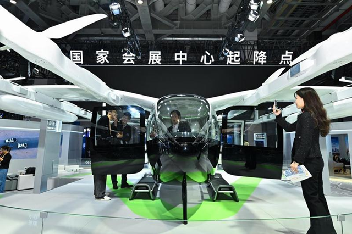
 VerTaxi, a Shanghai-based eVTOL aircraft maker, attended the CIIE for the third consecutive time this year. Showcasing its upgraded M1 eVTOL aircraft this year, the company also set up a simulated terminal at the expo, enabling visitors to experience the process of taking a “flying taxi” from ticket buying to boarding.

 Terminals are an essential infrastructure in the low-altitude economy, as they are where eVTOL aircraft take off and land with passengers. The company simulated the real UAM operation process on site, visually demonstrating its efficiency and convenience of the emerging transport, at the estimated cost equivalent to or even lower than taking a regular or typical taxi.

 With a flying taxi, visitors could hypothetically fly from the main venue of the expo to any place in Shanghai in around 10 minutes, to Pudong International Airport in 15 minutes at the price of about 100 yuan ($14.05), and to the West Lake in Hangzhou, Zhejiang province, in 45 minutes for the price of about 260 yuan, according the company.

 During the expo, VerTaxi secured intended deals from domestic and international clients, with a total value exceeding 2 billion yuan for 200 units of the M1.

 “Back in 2023, we were the only one to bring the real-size aircraft to the CIIE, and this year we saw four. The low-altitude economy in China is flourishing, and we do feel the extensive public attention these days. Each day our booth was packed with visitors asking when the UAM operation would start,” said Yue Tingting, vice-president of VerTaxi.

 Similar cases were witnessed at the other three booths. Despite the aircraft from the four makers being in different configurations, they all told visitors about the future of UAM.

 TCab Tech, at the CIIE for a second time, showcased its five-seat E20 tilt-rotor eVTOL aircraft, a configuration that the team believes will be the mainstream option for future eVTOL aircraft. Carrying its founder and CEO Yon Wui Ng, it completed its maiden manned flight on Oct 21.

Article inline ad

China Leads World In Genai Patents From 2014 To 2023: Expert

0

Xinhua | Updated: 2025-11-12

GENEVA — The United States and China are the two top global leaders in artificial intelligence (AI) development, and China has the most generative AI patents from 2014 to 2023, an AI expert said after the International Institute for Management Development (IMD) released its AI Maturity Index on Tuesday.

 According to the second edition of the AI Maturity Index, which ranks companies on how effectively they have adopted AI to transform business strategies and operations, NVIDIA ranked top, with Microsoft and Alphabet following in second and third place. Among the 300 top companies, the number of Chinese companies only followed that of the United States.

 In a virtual interview, Michael Wade, professor of Strategy and Digital at IMD and Director of the TONOMUS Global Center for Digital and AI Transformation, told Xinhua that China’s dominance in AI patent filings and its focus on practical applications in manufacturing, healthcare, and autonomous vehicles provide a strong foundation for growth and value creation.

 Although export controls have cut off China’s access to advanced computing chips critical to AI development, “China leads the world in generative AI patents with over 38,210 filed from 2014 to 2023, substantially higher than the United States’ 6,276 patents,” he emphasized.

 “China is less concerned about building the most powerful AI capabilities, and more focused on bringing AI to market with an efficiency-driven and low-cost approach,” Wade said.

 In the technology and telecommunications sectors, China Mobile, Deutsche Telekom, and NTT are investing billions of US dollars in AI-ready data centers and hyperscale computing capacity, he said, noting that “Technology and insurance sectors show the strongest AI maturity among Chinese firms, while traditional state-owned enterprises (SOEs) in energy and construction rank lowest.”

 The AI Maturity Index evaluates how the top 300 companies in the Forbes Global 2000 advance their AI strategies. It focuses on how organizations lead with AI, balancing technology with leadership, culture, and ethics.

 According to its findings, tech companies lead the index, but the financial sector occupies 32 percent of the top 100 spots. Marking diverging applications of AI across 10 industries, the index showed that more AI-mature companies demonstrate superior revenue performance, with year-on-year revenue growth averaging 6.79 percent, compared to -0.51 percent for less AI-mature companies.

 IMD, based in Switzerland, is an independent university institute with campuses in Lausanne and Singapore, and recently established an in-country team in Shenzhen, China.

Article inline ad

China’s Major Smart Agricultural Drone Maker Unveils Next-Gen Products

0

By Qiu Quanlin in Guangzhou | chinadaily.com.cn | Updated: 2025-11-11

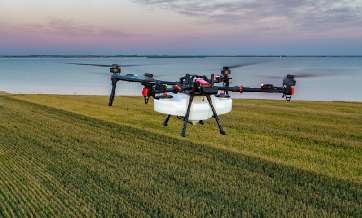
XAG Co Ltd, one of China’s largest smart agricultural drone makers, has unveiled a new generation of agricultural robot products during an annual technology conference in Guangzhou, the capital of Guangdong province, aiming to drive a comprehensive upgrade of users’ production methods.

 Among the products, the company’s P Series 2026 agricultural drones, F Series 2026 smart farm IoT products and APC 4 auto-pilot console for agricultural machinery, as well as their application scenarios were showcased during the conference held in early November.

 The conference not only showcased a new vision for intelligent, precise and sustainable agriculture but also sought to reshape the paradigm of agricultural production management through innovative technology.

 Establishing a new agricultural production model with climate resilience has become an inevitable trend for sustainable agricultural development, said Gong Jiaqin, co-founder of XAG.

 “Global climate change has brought about significant uncertainties to agricultural production, leading to a marked increase in the demand for crop protection, precision irrigation and farmland monitoring,” said Gong.

Article inline ad