Wednesday, November 25, 2026

Home Blog Page 143

Six Little Dragons: A Microcosm Of China’s Innovation Ecology

0

By Song Yi | chinadaily.com.cn | Updated: 2025-11-11

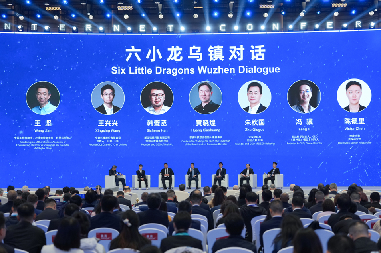
For the first time, Hangzhou’s six leading tech startups, collectively known as the “Six Little Dragons”, shared one stage in Wuzhen, Zhejiang province. As the six young tech executives took their seats, the crowd leaned forward.

 Rise: Six Little Dragons take the stage

 Before them lay more than a discussion; it was a mirror of China’s evolving innovation landscape. From humanoid robots to game, from brain-computer interfaces to large language models, the focus of these startups represent the emerging directions of China’s tech innovation.

 Ten years ago, China’s internet giants propelled the country’s digital rise. Ten years on, attention is turning to China’s tech firms.

 But this time, it’s for the startups’ frontier technology.

 Today, a different generation is emerging: smaller, faster, and born in an era when global AI competition defines national ambition.

 “Moving from the internet era to the age of artificial intelligence is not only a global technological tide, but also a reflection of China’s own digital evolution,” Huang Xiaohuang, co-founder of Manycore Tech, said.

 Root: Where innovation grows

 The “Six Little Dragons” refers to a group of rapidly-rising tech start-ups in Hangzhou — Game Science, DeepSeek, Unitree Robotics, DEEP Robotics, BrainCo, and Manycore Tech.

 Feng Ji, a former Tencent game producer, founded a small studio called Game Science to focus on creating single-player games. He noted that China already had a large potential user base for PC and single-player games on Steam, the world’s largest gaming platform in 2016.

 Beside China’s large user base, the founders also spoke about how they caught the wave of the country’s growing opportunities for innovation.

 Wang Xingxing, founder of Unitree, said China has a great business environment to support startups. Wang, whose company’s humanoid robot became a hit at this year’s Spring Festival Gala, said Hangzhou’s vibrant innovation ecosystem has given young entrepreneurs the chance to leverage their passion and potential, to realize more of their dreams and to make contributions to society.

 Han Bicheng, BrainCo’s founder, shared similar views with Wang.

 “We found that the research and development of our products in the US was progressing slowly, so in 2018 we decided to move our headquarters back to Hangzhou,” Han said. “The company has grown rapidly since then.”

 Roadmap: Next chapter of China’s innovation

 What these founders described reflects a changing environment that makes innovation possible in China.

 As Steve Hoffman, angel investor and CEO of start-up accelerator Founders Space, observed, China’s current startup and innovation environment is a high-octane, relentlessly competitive ecosystem that is transitioning from a focus on “copy-to-China” consumer models to becoming a world leader in hard-tech and deep-tech innovation.

 A similar view was echoed by PwC, which noted that China’s successful intelligent transformation of the entire industrial chain has positioned the country as a leading provider of digital solutions across all industrial sectors. With new infrastructure, from 5G and data centers to the industrial internet, the digital dividends are now shared across enterprises of all sizes, enhancing efficiency and supply resilience, according to a report released this year.

 In the recently-released recommendations on the 15th Five-Year Plan that will guide the country’s development over the next five years, policy-makers called for progressive plans to foster industries of the future, including brain-computer interfaces and embodied AI, while nurturing unicorn companies.

 Startups like the “Six Little Dragons” stand at the intersection of these priorities.

 Future: What is the positioning of AI?

 Han Bicheng said his company is bringing brain-computer interface technology out of the lab and into daily life, helping people with disabilities control limbs with their minds, and enabling the visually impaired to “see” beyond the limits of human sight.

 “Whether robotic dogs or humanoid robots, the aim is the same: to build machines that can stand in for humans where conditions are too dangerous, demanding or dull,” Zhu Qiuguo, founder and CEO of DEEP Robotics, said.

 In the long run, Chen Deli, DeepSeek senior researcher, said, tech firms should see themselves as guardians of humanity, protecting human safety and helping to reshape the social order in the age of AI.

 Ma Mengmeng contributed to this story.

Article inline ad

Massive Gold Deposit Found

0

By WEI WANGYU and WU YONG in Shenyang | China Daily | Updated: 2025-11-15

China has discovered its first super-large, low-grade gold deposit in the Dadonggou gold mine in Liaoning province, the Ministry of Natural Resources announced on Friday. Officials and experts say the find is expected to provide a steady boost to the country’s gold supply while supporting local economic development.

 The Dadonggou deposit contains an estimated 2.586 billion metric tons of ore with 1,444.49 tons of gold at an average grade of 0.56 grams per ton. Spanning Qingshiling and Tuandian towns, the 31.85-square-kilometer site has been identified as a large-scale, low-grade open-pit deposit.

 It has completed all 219 planned drill holes, marking the conclusion of its mineral geological drilling phase, according to the Yingkou city government, where the deposit sits.

 During the exploration process, nearly 1,000 employees collaborated to complete the work within just 15 months, setting a new national benchmark for short-cycle and high-quality gold deposit exploration.

 The project now advances to comprehensive data analysis and exploration report compilation, it added.

 China National Gold Group, Liaoning Mineral Geology Group, and the Yingkou Municipal Government have formed a partnership to develop the mine. From 2024 to 2027, they plan to invest over 20 billion yuan ($2.82 billion) to establish an integrated industry chain in Yingkou, covering exploration, mining, processing, smelting and gold jewelry production.

 An approximately 133-hectare industrial park will be constructed, comprising a large smelting zone, a processing zone and a storage and logistics zone.

 The Ministry of Natural Resources said the historic find will significantly bolster the country’s strategic gold reserves and could lead to a world-class gold production base, supporting the full revitalization and high-quality development of Northeast China.

 Wang Yan, a professor of the CPC Shenyang municipal Party school, said: “The mine’s more than 1,000 tons of reserves will significantly secure national gold strategic reserves. Its fully integrated industrial chain from production to sales will greatly influence the gold industry in China, enhancing its competitiveness in the global market.”

 The project embodies high-quality development by integrating green principles throughout its planning, balancing economic, social and ecological benefits.

 Contact the writers at weiwangyu@chinadaily.com.cn

Article inline ad

China’s Consumer Market Manifestsrenewed Vitality, Draws Global Brands

0

By Zhong Nan, Jiang Xueqing and ZHENG YIRAN  | chinadaily.com.cn | Updated: 2025-11-13

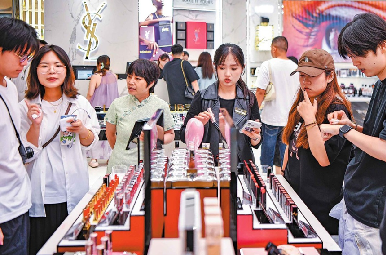
From the bustling exhibition halls of the 8th China International Import Expo in Shanghai to the busy shopping malls and thriving online platforms nationwide, China’s consumer market is showing renewed vitality as the year draws to a close.

 At the CIIE held from Nov 5 to Monday, global brands unveiled new products tailored for Chinese consumers, while in cities around the country, shoppers are embracing premium, green and intelligent goods — a vivid reflection of China’s rapidly recovering consumption power and the growing heft of its vast domestic market.

 Backing this recovery is a raft of government measures to boost domestic demand and expand consumption. Market watchers and business leaders said that the effects of the pro-consumption policies are increasingly evident, as steps to stimulate spending, improve consumer confidence and attract global brands are beginning to translate into tangible momentum across the country’s vast market.

 Further underscoring this trend, China Daily on Sunday hosted the launch ceremony of the International Communication Initiative, themed “Big Market for All: Export to China” and “Shopping in China”, which was attended by Vice-Minister of Commerce Sheng Qiuping.

 Chris Kenneally, president for Asia-Pacific at Amcor, the Zurich-headquartered packaging group with 400 plants worldwide, said that the government’s measures are not only satisfying the evolving needs of Chinese consumers but also creating new opportunities for global companies to engage with one of the world’s most promising and resilient markets.

 Driven by rising demand and growth opportunities, the Swiss company plans to build a new factory in Jiangyin, Jiangsu province, to expand production of consumer goods and medical and pharmaceutical packaging.

 Jeroen Sterel, director of the Asia-Pacific region at German heating system manufacturer Vaillant Group, said: “The ‘Shopping in China’ initiative reflects the growing global appeal of Chinese products and attractions, and the maturity of its consumer market. It highlights the greater emphasis on product value and user experience.”

 For multinational companies, this creates a more demanding but also a more rewarding environment, which values trust, quality and service. Such a direction further unlocks consumption potential and supports steady market growth, said Sterel.

 Latest data reflected this sentiment. China’s total retail sales of consumer goods rose 4.5 percent year-on-year to 36.59 trillion yuan ($5.15 trillion) between January and September, with the pace of growth 1 percentage point faster than in 2024, data from the Ministry of Commerce showed.

 Also, consumer spending contributed 53.5 percent of total economic growth during this period.

 Continuing recovery was evident in the consumer sector of China’s A-share market on Thursday. The Wind Consumer Sector Concept Index ended at 2,562.97 on Thursday, up 1.04 percent from the previous close and 9.48 percent higher so far this year.

 Such momentum has reinforced policymakers’ focus on consumption as a core driver of growth. In a meeting held earlier this week, the Ministry of Commerce stressed the need to introduce more detailed measures to vigorously boost consumption and to formulate a series of high-quality special plans for the commerce sector.

 In a report released on Tuesday, CITIC Securities noted that the combination of low valuations and a stabilization trend in resilient consumption is expected to enhance investor preference for consumer assets. Based on current industry observations, the securities company recommended that investors should focus on inflection-point opportunities that are driven by the wealth effect and supply-side optimization in 2026.

 The opportunities include higher-end consumption areas likely to benefit from the capital market’s wealth effect transmission, such as duty-free shopping and outbound tourism. Sub-sectors with relatively consolidated supply, improving demand and sound industry structures, such as hog farming and dairy products, also stand to benefit.

 Shao Ke, head of the banking and integrated operations team at BOC Research Institute — the in-house think tank of Bank of China — said that the recently announced recommendations for formulating the 15th Five-Year Plan (2026-30) emphasized the interaction and positive feedback between supply and demand.

 Efforts to promote consumption will, on the basis of traditional demand, focus more on personalized, diversified and high-quality new demands arising from people’s income growth and consumption upgrading, said Shao.

 Meanwhile, technological innovation and industrial upgrading will enhance the supply capacity of products and services, thereby guiding the transformation of potential consumer demand, he added.

 John Quelch, executive vice-chancellor and a professor of social science at Duke Kunshan University, said that China has an opportunity to redefine what modern consumption means.

 “Modernization does not necessarily mean copying the Western consumption model,” said Quelch. “It means redefining prosperity for an era of constraint, where balance, moderation and foresight become the hallmarks of progress.”

 In the area of green consumption, global companies are also seeing new opportunities. Asia Pulp and Paper, an Indonesia-based paper product manufacturer, will roll out a range of application-oriented products in China in the coming years, including biodegradable paper tableware and various types of paper food containers.

 Zhai Jingli, deputy CEO of Sinar Mas Group-APP, the parent company of APP China, said China’s fast-rising green consumption trend will open significant opportunities for global companies to advance sustainable product innovation and expand their exports to the market.

 As China cements its role as an enduring pillar of stability in an increasingly fragmented global economy, foreign-invested companies posted 10.91 trillion yuan in imports and exports in China in the first 10 months, up 2.9 percent year-on-year, statistics from the General Administration of Customs showed.

Article inline ad

China To Unveil A Five-Year Plan For Power Battery Industry

0

By CHENG YU | chinadaily.com.cn | Updated: 2025-11-13

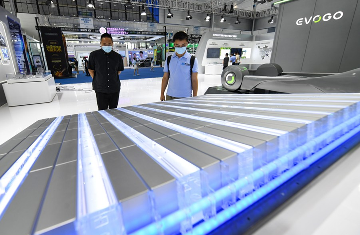
China will roll out a new five-year plan for the power battery sector to accelerate the development of next-generation battery technologies, a senior official from the Ministry of Industry and Information Technology said on Monday at a battery conference in Yibin, Sichuan province.

 According to the ministry, China’s power battery industry has maintained rapid growth, achieving major breakthroughs in core technologies. The country’s latest battery cells now reach energy densities exceeding 300 watt-hours per kilogram, enable 15-minute fast charging, and deliver an average driving range of over 500 kilometers.

 The upcoming plan will provide strategic guidance for the development of new energy vehicles and advanced battery industries during the next planning cycle. The ministry also pledged to promote innovation in battery swapping models, expand application scenarios, and advance vehicle-to-grid interaction pilot programs.

 In addition, China will study the establishment of a carbon management system for power batteries to better align the sector with national carbon reduction goals, the official said.


Article inline ad

Nation Scores Big In Nuclear Energy Tech

0

By Zheng Xin | China Daily | Updated: 2025-11-13

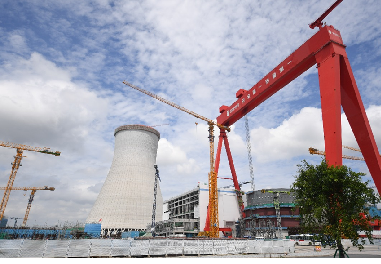
China has achieved a potentially transformative breakthrough in advanced nuclear energy, successfully converting thorium into fissionable uranium for the first time in an experimental molten salt reactor.

 Hailed as a “game-changer”, industry experts said the development could fundamentally reshape the nation’s energy security, significantly reducing reliance on imported uranium and positioning China at the forefront of a new generation of nuclear power technology.

 The Chinese Academy of Sciences announced earlier this month that its thorium-based molten salt reactor (TMSR) in Gansu province had achieved thorium-uranium conversion, proving the technical feasibility of utilizing China’s vast thorium reserves.

 This experimental reactor, a fourth-generation advanced fission nuclear energy system, is also currently the world’s sole operational molten salt reactor to integrate thorium fuel, it said.

 Widely seen as China’s “trump card” in the fourth-generation nuclear energy race, this progress signifies that Beijing has mastered a crucial technology for “overtaking on a different track”, said Lin Boqiang, head of the China Institute for Studies in Energy Policy at Xiamen University.

 Lin said he believes it could free China from its long-standing dependence on imported uranium, offering a novel solution to bolster energy independence.

 Lin said: “It offers a domestically controlled pathway to meeting future power demands, significantly de-risking China’s energy supply chain from geopolitical volatilities and commodity market fluctuations.

 “It places China at the forefront of what many consider to be the safest and most sustainable path for future nuclear energy.”

 As countries are stepping up green energy transition and striving for carbon neutrality, demand for uranium — which is used to run nuclear power plants — is intensifying.

 China’s nuclear energy ambitions have historically been constrained by limited domestic uranium resources. While a single million-kilowatt nuclear power plant consumes around 200 metric tons of natural uranium annually, over 80 percent of China’s yearly uranium consumption is imported.

 China is actively working to lessen its dependence on foreign uranium suppliers by boosting domestic production. This drive is a response to geopolitical risks that could disrupt essential resource imports, said Zhao Xiangbin, chief strategist at Beijing Gold and Forex Fortune Investment Management.

 In contrast, China holds over 1.4 million tons in proven thorium reserves, nearly three quarters of the global total. Thorium itself is not directly fissile but can be transmuted into highly fissionable uranium-233.

 Since its 2011 inception, research teams have overcome critical hurdles in materials science, instrumentation, equipment development and system integration. The TMSR now boasts over 90 percent domestic content, with all key core equipment 100 percent domestically produced, ensuring an autonomous supply chain, according to the Chinese Academy of Sciences.

 Compared to conventional uranium-based nuclear power plants, thorium-based molten salt reactors offer significant advantages in terms of safety and siting flexibility, it said.

 The TMSR employs high-temperature molten salt, stable and liquid at 600-700 C. Crucially, it requires no external water for cooling during operation. Natural circulation of the molten salt within a closed loop continuously removes heat from the reactor core, fundamentally eliminating safety risks from cooling failures.

 This inherent design means TMSRs do not need proximity to large water bodies, unlike traditional nuclear plants, enabling their construction in remote desert regions.

 Once mature, TMSRs could be deployed across China’s arid inland areas, providing stable, clean energy while unlocking vast new markets for clean power, said Lin.

 zhengxin@chinadaily.com.cn

Article inline ad

Africa’s Largest Integrated Mine Opens, Promising Raw Materials For China’s Steel Industry

0

By Zheng Xin | chinadaily.com.cn | Updated: 2025-11-12

Africa’s largest greenfield integrated mine and infrastructure project, the Simandou iron ore mine project, began operations on Tuesday.

 The Simandou iron ore mine project, with a total investment exceeding $20 billion, is an important outcome of the solidarity and coordination between China, Guinea, and relevant parties.

 Following commissioning and ramp-up, this infrastructure will support a combined total of up to 120 million metric tons of iron ore exports per year, according to Rio Tinto, project investor and developer.

 The Simandou project in Guinea is one of the world’s highest-quality and largest-scale mining projects, encompassing systems for mining, railways, and ports, Rio Tinto said.

 Collaborating with Chinese partners — including Aluminum Corp of China or Chinalco, and China Baowu Steel Group Corp — Rio Tinto believes the project unlocks an exceptional new source of high-grade iron ore that is in demand for low-carbon steel making.

 The start of the Simandou Project’s operations marks an important milestone in the history of global mining.

 Once the project reaches full production and stable operation, it will provide a solid foundation of green raw materials for the development of the Chinese and global steel industries, while also injecting lasting momentum into Guinea’s economic and social development.

 “The start of operations of the Simandou Project marks a significant milestone in the history of the global mining industry,” Hu Wangming, Chairman of China Baowu Group, said.

 “The stable supply of Simandou’s premium iron ore resources will provide a solid foundation of low-carbon raw materials for the development of China’s steel industry and the global steel sector,” he said.

 “We firmly believe that this exemplary cooperation will inject lasting momentum into the economic and social development of Guinea, the host country of the project.”


Article inline ad

Food Key As Pet Sector Sees Robust Growth

0

By ZHU WENQIAN | China Daily | Updated: 2025-11-12

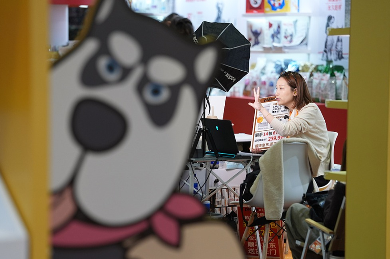
China’s pet market has indicated strong growth momentum, driven by a growing number of younger, highly educated pet owners who prioritize both cost-effectiveness and product functionality, a new report said.

 The report released by KPMG at the just-concluded eighth China International Import Expo in Shanghai shows that the market size of China’s pet-related sector is expected to exceed 811.4 billion yuan ($114 billion) this year. As a rigid-demand category, pet food holds the largest market share in the sector and acts as the core driving force behind the pet economy.

 At this year’s CIIE, a pet-themed exhibition area was established on-site for the first time, reflecting Chinese consumers’ pursuit of high-quality and diversified lifestyles.

 The evolving role of pets — from “functional companions “to “family members” — has fueled the robust growth of segmented sectors including food, medical care, services and technology.

 Chinese pet owners born in the 1990s or later account for more than 60 percent of the total. Young consumers are more inclined to purchase pet products via e-commerce platforms, particularly through livestreaming sessions, and their spending decisions have become increasingly sophisticated and rational, the report found.

 “The development of the pet economy is closely tied to residents’ consumption levels. As consumers’ material needs are satisfied, their spiritual demands grow correspondingly,” said Jiang Liqin, head of clients and markets for KPMG China.

 “Meanwhile, shifts in consumer demand and scenarios will drive deeper adjustments on the supply side,” Jiang added.

 For instance, as hotels continue to adapt to emerging consumption demands, more pet-friendly hotels and public transportation options have emerged in the market, the report said.

 Luxury hotels stand out in pet-friendly services, providing high-end amenities such as pet spas, grooming services, and private pet concierge services to deliver a comprehensive pet-friendly travel experience.

 Among the hotels featured in the 2024 “must-stay” lists of two popular e-commerce platforms, Meituan and Dazhongdianping, the number of pet-friendly hotels jumped nearly 20 percent year-on-year, reflecting the strong growth momentum of this niche market.

 Early last year, a Hilton hotel in Shanghai’s Fengxian district launched pet-friendly rooms. The hotel equips guest rooms with dedicated pet supplies and food, and also organizes pet birthday events to deliver a unique experience for travelers accompanied by their pets.

 During holidays, the occupancy rate of these pet-friendly rooms exceeds 80 percent, making them highly popular among pet owners. The Hilton hotel also launched services like outdoor dining for pets and pet-photo sessions, which cater to the emotional needs of pet owners, according to the hotel.

 Domestic hotel chain Atour launched pet-friendly services in Shanghai in 2023 and quickly expanded them nationwide.

 These rooms are equipped with multi-functional pet cabinets — integrating water bowls, cozy nests and climbing frames — as well as automatic feeders and other amenities. As of last year, Atour operated 19 pet-friendly hotels nationwide and plans to further extend the service scope this year.

Article inline ad

New Energy Storage Tops 100m Kw

0

Capacity up 30-fold since 2020, accounting for 40 percent of global total

By WANG YING in Shanghai | China Daily | Updated: 2025-11-12

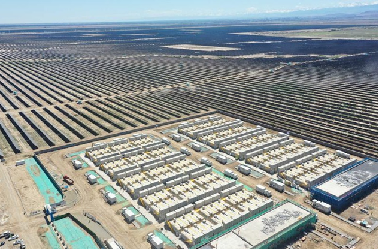
China’s new energy storage capacity has exceeded 100 million kilowatts, marking a major milestone in the nation’s transition toward a new-type energy system and consolidating its global lead in renewable energy development, said officials at an energy storage sub-forum on Nov 5.

 “By the end of September, China’s new energy storage installations had surpassed 100 million kW, becoming a vital part of the new-type power system,” said Song Hongkun, deputy director of the National Energy Administration, at a sub-forum on high-quality development of new energy storage during the eighth Hongqiao International Economic Forum in Shanghai on Nov 5.

 Song said China has built the world’s largest and fastest-growing renewable energy system and the most complete new energy industrial chain. He added that new energy storage — known for its flexible deployment, rapid response and short construction period — has become a key technology underpinning the development of new energy and power systems.

 Bian Guangqi, deputy director-general of the NEA’s department of energy conservation and technology equipment, said China’s new energy storage capacity has grown more than 30-fold since the end of the 13th Five-Year Plan period (2016-20), now accounting for over 40 percent of total global capacity.

 Bian said the sector has advanced from its early commercialization stage into large-scale development, with steady progress in technology, industrial upgrading, business models and application scenarios.

 Emerging technologies such as solid-state batteries and hydrogen storage are also advancing rapidly, offering robust support for multi-timescale and high-safety energy storage needs in future power systems, Bian added.

 “Since the start of the 14th Five-Year Plan period (2021-25), investment in new energy storage projects in China has exceeded 200 billion yuan ($28 billion), driving over 1 trillion yuan of investment along the industrial chain,” Song said, adding that China’s products are helping accelerate global energy transition by contributing Chinese strength to the world’s green transformation.

 Looking ahead, the NEA will intensify support for technological innovation in new energy storage, nurture new quality productive forces in the energy sector and work toward achieving the nation’s carbon goals on schedule.

 Laureano Ortega Murillo, presidential advisor on investments, trade and international cooperation for Nicaragua, expressed strong interest in partnering with China in renewable energy.

 He said that while 70 percent of Nicaragua’s energy already comes from renewables such as solar, wind and geothermal, its growing industrial demand calls for expanded energy supply.

 “We’ve already collaborated with Chinese energy enterprises on solar and hydropower projects. We hope to explore more opportunities for cooperation with China based on these existing partnerships,” he added.

 wang_ying@chinadaily.com.cn

Article inline ad

AI Boosts Singles Day Sales, Shopping Experience

0

By Fan Feifei | chinadaily.com.cn | Updated: 2025-11-11

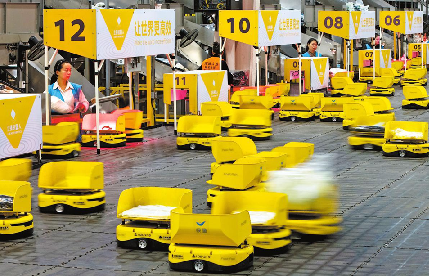
Chinese consumers exhibited robust purchasing power as they shopped for intelligent electronic products and home appliances during this year’s Singles Day carnival — an online sales event that culminated on Tuesday — with artificial intelligence technology making its presence felt in almost every aspect of the e-commerce segment.

 Experts said that as the world’s biggest online shopping event, the Double Eleven promotional gala played a vital role in unleashing domestic demand and promoting the recovery of the consumer market, given that boosting consumption is top priority to ensure China’s economic growth this year.

 They added that the large-scale adoption of AI on e-commerce platforms will continue to improve the operational efficiency of merchants, offer shoppers personalized recommendations and real-time assistance and bolster the sale of products.

 Data from e-commerce giant JD shows that sales of consumer electronic devices, such as smartphones, gaming laptops and tablets, featuring innovative AI technology, surged over 100 percent year-on-year during the shopping festival, while the turnover of home appliances and home furnishing products more than doubled from a year earlier.

 The company’s AI-powered digital humans assisted more than 40,000 merchants in their livestreaming sessions, and the number of inquiries handled by intelligent customer service chatbots surpassed 4.2 billion, JD said.

 According to Tmall, Alibaba’s business-to-customer platform, 80 brands saw their sales surpass 100 million yuan ($14 million) within the first hour of the shopping extravaganza kicking off at 8 pm on Oct 20. The transaction volume of more than 30,000 brands doubled year-on-year.

 Alibaba has accelerated steps to promote the large-scale deployment of AI on Taobao and Tmall, and integrate large language models into the platforms’ core search and recommendation engines to entice more consumers and increase sales.

 Online discounter PDD Holdings is leveraging AI to analyze market trends and consumer needs and preferences, while optimizing sales strategies to improve shopping experiences.

 Hong Yong, an associate research fellow at the Chinese Academy of International Trade and Economic Cooperation, said: “AI is deeply reshaping the decision-making process and operational efficiency in the e-commerce field. Consumers can select products using AI-enabled search tools, while AI helps merchants lower costs and improve efficiency in terms of product design, marketing and customer services.”

 He added that the large-scale use of AI during this year’s Singles Day shopping festival not only offered consumers a smarter and more convenient shopping experience, but also created immense growth opportunities for brands and merchants.

 According to him, China’s e-commerce sector is gradually shifting toward an innovation-driven growth stage fueled by the accelerated application of AI-powered intelligent recommendations, customer services and virtual shopping guides.

 Jason Yu, general manager of CTR Market Research, said e-commerce players have adopted a more pragmatic and simpler promotional method this year, with direct price cuts as a preferred strategy to attract price-conscious consumers.

 Yu noted that the meteoric rise of instant retail, a combination of online shopping and instant delivery, will be a “new battlefield” for major internet and e-commerce platforms.

 China’s retail sales, a significant indicator of consumption strength, rose 4.5 percent year-on-year in the first three quarters of this year, according to the National Bureau of Statistics. Online sales remained a bright spot, rising 9.8 percent year-on-year during the January-September period.

 Pan Helin, a member of the Ministry of Industry and Information Technology’s Expert Committee for Information and Communication Economy, said that to further vitalize the consumer market and shore up economic growth, more stimulus policies are needed to increase household incomes, stabilize and expand employment, and nurture diversified purchasing scenarios and new types of consumption.

 Mo Daiqing, a senior analyst at the Internet Economy Institute, a domestic consultancy, said: “Chinese consumers are becoming more rational and careful in reviewing their needs. They prefer to purchase premium merchandise with high cost-effectiveness.”

 Online retailers should step up investment in technological innovation, elevate the quality of products and optimize the management of supply chains to attract more young consumers, Mo added.


Article inline ad

Taxation Shift Eyes Unified National Mkt

0

Unlike past, VAT to be collected where goods, services are consumed

By WANG KEJU | China Daily | Updated: 2025-11-14

China would benefit from fine-tuning its fiscal system, moving the focus of taxation from factories to consumers, a move analysts say would help dismantle local protectionism and accelerate the development of a unified national market.

 Currently, value-added taxes — the largest source of tax revenue — are collected where goods and services are produced, said Yang Zhiyong, president of the Chinese Academy of Fiscal Sciences.

 Last year, China’s VAT revenue came in at 6.67 trillion yuan ($935.6 billion), accounting for over 38 percent of the country’s total tax collection, said the Ministry of Finance.

 To protect and nurture local factories, the lifeblood of their tax base, localities have sometimes favored homegrown champions, creating hidden hurdles for out-of-province competitors and fragmenting the national market into a collection of smaller, less efficient fiefdoms, Yang said.

 To facilitate the construction of a unified national market that is highly efficient, rules-based, fair and open, analysts suggested shifting the point of collection of VAT from where products and services are made now to where they are bought and consumed.

 “Shifting VAT collection to a consumption base would alter the calculus of local governments,” said Qiao Baoyun, professor of the China Academy of Public Finance and Policy at Central University of Finance and Economics.

 This change would encourage localities to invest in what makes an area attractive for spending — such as a vibrant retail environment, sound consumer protection, quality public services and crucially, higher household incomes, Qiao said, adding that under this scenario, increasing revenue would depend on cultivating a thriving consumer base rather than walling off markets.

 Analysts say such a shift would also help China transition toward a consumption-led growth model.

 The fiscal funds that were previously invested in attracting manufacturers could now be directed toward enhancing people’s spending power and willingness to open their wallets, said Luo Zhiheng, chief economist and president of the Research Institute at Yuekai Securities.

 To get households to spend more freely, they must feel more secure. That requires stronger government efforts to improve healthcare, pensions and public services, thereby reducing the precautionary savings that have suppressed China’s consumption potential, Luo said.

 “The basic old-age insurance for rural and nonworking urban residents, for instance, remains modest,” Luo said. While the government pledged a 20-yuan increase this March, the average monthly payment for this group still sits at just over 200 yuan.

 “This could be further elevated to align with subsistence allowance standards, which are about 600 yuan in rural areas and 800 yuan in urban areas,” he added.

 In August, China unveiled childcare subsidies, set at a standard 3,600 yuan per year for each child under the age of three, which is expected to provide financial relief for families, potentially boosting household consumption.

 wangkeju@chinadaily.com.cn


Article inline ad