Wednesday, November 25, 2026

Home Blog Page 144

Consumer Market Demonstrates Renewed Momentum

0

By ZHONG NAN, JIANG XUEQING and ZHENG YIRAN | CHINA DAILY | Updated: 2025-11-14

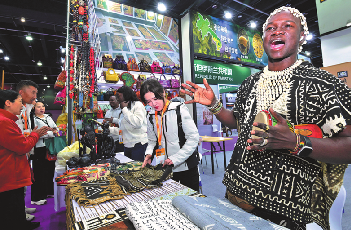
 An exhibitor from Ghana wearing traditional attire beats a drum on Thursday while promoting local craft items at the China Yiwu International Commodities Fair — Import Goods Exhibition in Yiwu, Zhejiang province. The three-day exhibition, which runs through Saturday, showcases products from Thailand, BRICS nations, and sister cities in 17 countries and regions. LYU BIN/FOR CHINA DAILY

From the bustling exhibition halls of the eighth China International Import Expo in Shanghai to the busy shopping malls and thriving online platforms nationwide, China’s consumer market is showing renewed vitality as the year draws to a close.

 At the CIIE held from Nov 5 to Monday, global brands unveiled new products tailored for Chinese consumers, while in cities around the country, shoppers are embracing premium, green and intelligent goods — a vivid reflection of China’s rapidly recovering consumption power and the growing heft of its vast domestic market.

 Backing this recovery is a raft of government measures to boost domestic demand and expand consumption. Market watchers and business leaders said that the effects of the pro-consumption policies are increasingly evident, as steps to stimulate spending, improve consumer confidence and attract global brands are beginning to translate into tangible momentum across the country’s vast market.

 Further underscoring this trend, China Daily hosted on Sunday the launch ceremony of the International Communication Initiative, themed “Big Market for All: Export to China” and “Shopping in China”, which was attended by Vice-Minister of Commerce Sheng Qiuping.

 Chris Kenneally, president for Asia-Pacific at Amcor, the Zurich-headquartered packaging group with 400 plants worldwide, said that the government’s measures are not only satisfying the evolving needs of Chinese consumers but also creating new opportunities for global companies to engage with one of the world’s most promising and resilient markets.

 Driven by rising demand and growth opportunities, the Swiss company plans to build a new factory in Jiangyin, Jiangsu province, to expand production of consumer goods and medical and pharmaceutical packaging.

 Jeroen Sterel, director of the Asia-Pacific region at German heating system manufacturer Vaillant Group, said: “The ‘Shopping in China’ initiative reflects the growing global appeal of Chinese products and attractions, and the maturity of its consumer market. It highlights the greater emphasis on product value and user experience.”

 For multinational companies, this creates a more demanding but also a more rewarding environment, which values trust, quality and service. Such a direction further unlocks consumption potential and supports steady market growth, said Sterel.

 Latest data reflected this sentiment. China’s total retail sales of consumer goods rose 4.5 percent year-on-year to 36.59 trillion yuan ($5.15 trillion) between January and September, with the pace of growth 1 percentage point faster than in 2024, data from the Ministry of Commerce showed.

 Also, consumer spending contributed 53.5 percent of total economic growth during this period.

 Continuing recovery was evident in the consumer sector of China’s A-share market on Thursday. The Wind Consumer Sector Concept Index ended at 2,562.97 on Thursday, up 1.04 percent from the previous close and 9.48 percent higher so far this year.

 Such momentum has reinforced policymakers’ focus on consumption as a core driver of growth. In a meeting held earlier this week, the Ministry of Commerce stressed the need to introduce more detailed measures to vigorously boost consumption and to formulate a series of high-quality special plans for the commerce sector.

 In a report released on Tuesday, CITIC Securities noted that the combination of low valuations and a stabilization trend in resilient consumption is expected to enhance investor preference for consumer assets. Based on industry observations, the securities company recommended that investors should focus on inflection-point opportunities that are driven by the wealth effect and supply-side optimization in 2026.

 The opportunities include higher-end consumption areas likely to benefit from the capital market’s wealth effect transmission, such as duty-free shopping and outbound tourism. Sub-sectors with relatively consolidated supply, improving demand and sound industry structures, such as hog farming and dairy products, also stand to benefit.

 Shao Ke, head of the banking and integrated operations team at BOC Research Institute — the in-house think tank of Bank of China — said that the recently announced recommendations for formulating the 15th Five-Year Plan (2026-30) emphasized the interaction and positive feedback between supply and demand.

 Efforts to promote consumption will, on the basis of traditional demand, focus more on personalized, diversified and high-quality new demands arising from people’s income growth and consumption upgrading, said Shao.

 John Quelch, executive vice-chancellor and a professor of social science at Duke Kunshan University, said that China has an opportunity to redefine what modern consumption means.

 “Modernization does not necessarily mean copying the Western consumption model,” said Quelch. “It means redefining prosperity for an era of constraint, where balance, moderation and foresight become the hallmarks of progress.”

 In the area of green consumption, global companies are also seeing new opportunities. Asia Pulp and Paper, an Indonesia-based paper product manufacturer, will roll out a range of application-oriented products in China in the coming years, including biodegradable paper tableware such as paper knives, forks and spoons.

 Zhai Jingli, deputy CEO of Sinar Mas Group-APP, the parent company of APP China, said China’s fast-rising green consumption trend will open opportunities for global companies to advance product innovation and expand their exports to the market.

 Contact the writers at zhongnan@chinadaily.com.cn

Article inline ad

Governance, Tech Key To Healthy AI

0

By LI JING in Wuzhen | China Daily | Updated: 2025-11-11

As artificial intelligence continues to reshape industries and daily life at remarkable speed, its future will depend as much on responsible governance as on technological progress, said experts and business leaders.

 “AI has become an irreversible trend of our time, profoundly changing the way we produce, live and govern,” said Wu Dong, chief engineer of the Cyberspace Administration of China, at a parallel forum on frontier AI models during the 2025 World Internet Conference in Wuzhen, Zhejiang province.

 Wu said China will continue to prioritize AI development in its 15th Five-Year Plan period (2026-30) by focusing on fundamental research and breakthroughs in key technologies, promoting industrial growth and expanding real-world application scenarios.

 Innovation, he added, must advance hand-in-hand with responsibility, supported by sound governance, reliable data quality and professional expertise.

 AI safety has become a central topic as technology moves from the virtual world into real-world applications. Lu Wei, vice-chairman of the Cyber Security Association of China, described AI security as the lifeline of development.

 “As AI expands from the digital world into the physical world, its risks are becoming more complex. We face not only technical vulnerabilities, but also ethical, privacy and systemic risks.”

 Lu cited the AI Safety Governance Framework 2.0, China’s latest policy upgrade, as a sign of a shift from reactive regulation to proactive governance. Released in September, the framework highlights transparency, data protection and a collaborative governance model that spans borders, fields and industries.

 “High-level security does not constrain innovation — it safeguards it,” Lu said. “Only by embedding safety into every layer of the AI ecosystem can we ensure sustainable, high-quality development.”

 Undoubtedly, AI is already reshaping productivity and creativity across sectors. A joint report by the Yinxiang Biji Research Institute and the WIC Think Tank found that integrating AI models into real-world applications has become a growing global consensus.

 “In manufacturing, AI-driven optimization has improved efficiency by 12 percent; in pharmaceuticals, it has halved new drug development cycles; and in education, AI large-model interaction is redefining personalized learning,” said Qiao Qian, director of Yinxiang Biji Research Institute and vice-president of Yinxiang Biji.

 As AI becomes more deeply embedded in critical systems, cybersecurity specialists warn of emerging vulnerabilities. Hu Zhenquan, president of Chinese cybersecurity company 360 Digital Security Group, said AI security represents the next frontier of the digital economy.

 “Everything can be programmed, imitated, generated and orchestrated — and that’s both AI’s power and its weakness,” Hu said. He proposed an “AI + Security “dual strategy that uses AI to safeguard AI systems.

 Beyond technology, experts emphasized the importance of shared governance and global collaboration in shaping a sustainable AI future.

 “Digital transformation is irreversible — like biological evolution,” said Gerald Vernez, founder and director of the digiVolution Foundation and former Swiss cyber defense representative. “The real issue is not the tools themselves, but how we use them.”

 Vernez stressed that “strategy must precede technology” and urged nations to strengthen “digital sovereignty built on trust, resilience and cooperation”.

 As large models proliferate, infrastructure resilience is becoming a new priority. Hou Shengli, chief technology officer of Cisco Greater China, said full-lifecycle governance — from vulnerability detection to data integrity — should form the backbone of AI infrastructure.

 “Future systems will evolve across three dimensions — within servers, within data centers and between data centers — all supported by secure, high-speed networks,” Hou said.

 lijing2009@chinadaily.com.cn

Article inline ad

Multinational Firms Unveil China Strategies And Investments At CIIE

0

By Zhou Wenting in Shanghai | chinadaily.com.cn | Updated: 2025-11-10

Recognizing the ongoing China International Import Expo (CIIE) in Shanghai as a globally prominent platform and a vital bridge connecting the China market with global resources, multinational companies are unveiling new development strategies and announcing increased investments in China during the expo.

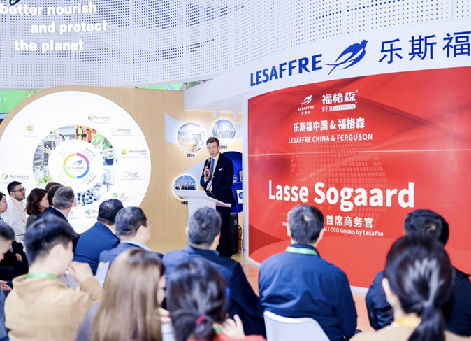
 Gnosis, the human nutrition and health division of French biotechnology leader Lesaffre Group, unveiled its new global brand image and announced its deepened global and China strategies at the CIIE, officially launching its development goals for 2030.

 The company said it views China as a key area in its global strategic layout. In response to consumption upgrading toward high-end and functional products, its efforts will include focusing on Chinese consumers’ needs and developing corresponding solutions, as well as investing in resources tailored to China and deepening key partnerships within the local industry chain.

 “The CIIE is a perfect platform due to its scale and the customer base it attracts. This event is ideal for showcasing our new brand and vision: think like nature to raise human health, which aligns with the Healthy China 2030 initiative,” said Lasse Sogaard, global head of commercial at Gnosis.

 “The China market is a crucial pillar for us over the next decade,” he said, adding that with China’s three-year weight management initiative underway, the company is developing potential dietary supplements to help individuals manage their weight effectively.

 Meanwhile, United Kingdom-headquartered pharmaceutical company AstraZeneca signed a cooperation agreement with the management committee of the Qingdao High-tech Industrial Development Zone, announcing an additional investment of about $136 million to expand the production capacity of its Qingdao supply base, enhancing the company’s production capacity for inhalation aerosols.


“Since 2023, we’ve announced investment of more than $1.8 billion in manufacturing in China, which is incredible. We now have four world-class manufacturing sites in China, which supply exports to over 70 markets around the world,” said Tony Pusic, senior vice-president of Supply Asia Pacific at AstraZeneca.

 The company also announced during the CIIE that its production base in Taizhou city, Jiangsu province, reached 10 billion yuan ($1.4 billion) in output value. In August, the company kicked off the construction of a new production line for next-generation diabetes treatment at

Since establishing its presence in Shanghai’s Pudong New Area in 1994, Roche Pharma China has been dedicated to building and continuously upgrading a comprehensive pharmaceutical value chain encompassing early-stage research, drug development, production, marketing and open collaboration.

 At the CIIE, Roche showcased its complete industry chain layout for the first time. The display included the company’s Shanghai headquarters, the Roche China accelerator, and a panoramic view of the new biopharmaceutical production facility, which represents an investment of 2.04 billion yuan ($286 million) and was announced in May.

 “This facility is the first of its kind among multinational pharmaceutical companies to achieve localized production of large-molecule antibody biologics in China, underscoring Roche’s long-term confidence in the China market. As Roche approaches its 100th anniversary in China next year, the company plans to continue increasing its investment,” said Bian Xin, CEO of Roche Pharma China.

 Aiming to export Chinese medical standards and innovation capabilities, Fosun Health announced a collaboration between Guangzhou Fosun Chancheng Hospital and the Guangzhou Belt and Road Healthcare Center to jointly establish a medical service center in Bangladesh.

 Fosun Health has been actively advancing such medical projects in countries and regions involved in the Belt and Road Initiative, including Bangladesh and Indonesia. Through the construction of overseas hospitals, joint labs and health management centers, it aspires to contribute Chinese expertise to healthcare development in those countries and regions.

Article inline ad

Massive Response To Latest Bonds Issue

0

By JIANG XUEQING | CHINA DAILY | Updated: 2025-11-11

The overwhelming response to China’s latest US dollar-denominated sovereign bond issuance underscores the confidence of investors in the country’s economic restructuring and high-quality growth trajectory, financial professionals said. The strong positive reception also reflects Beijing’s continued push to deepen its engagement with international capital markets through the Hong Kong Special Administrative Region.

 The Ministry of Finance raised $4 billion through a dual-tranche offering in Hong Kong on Wednesday — $2 billion in three-year bonds yielding 3.646 percent and another $2 billion in five-year bonds at 3.787 percent.

 The offering attracted $118.2 billion in orders, nearly 30 times the issuance amount, with the five-year tranche oversubscribed 33 times.

 According to the ministry, the diverse investor base spanned Asia, the Middle East, Europe and the United States, highlighting the broad appeal of Chinese sovereign debt. Sovereign institutions made up 42 percent of the investor pool, banks and insurers 24 percent, fund and asset managers 32 percent, and dealers 2 percent.

 David Liao, co-chief executive of Asia and Middle East at HSBC, a joint lead manager and joint bookrunner for the offering, said the Ministry of Finance’s latest issuance has received a very positive response from international investors, reflecting the international market’s strong confidence in the growth potential of China’s economy. A bookrunner is the primary underwriter or lead coordinator when new equity, debt or securities instruments are issued.

 “The recently announced recommendations for (formulating) the 15th Five-Year Plan (2026-30) emphasize promoting high-standard opening-up, the innovative development of trade, and expanding two-way investment cooperation. This demonstrates the country’s commitment to openness and collaboration, which is welcomed by the international market,” said Liao.

 The issuance also demonstrates China’s ongoing efforts to deepen interaction with global capital markets, offering more choices for global investors for their multi-currency asset allocation, he added.

 This offering of US dollar-denominated sovereign bonds by China’s Ministry of Finance in the Hong Kong SAR is the seventh such issuance since 2017. Analysts said this demonstrates China’s determination and steady progress in further opening its financial markets to the outside world.

 Citi, another joint bookrunner and joint manager for the deal, said the issuance underscores China’s commitment to further connecting with international investors, demonstrates the long-term growth potential of the Chinese economy, and provides international investors investment opportunities to access the Chinese market.

 Timothy Huang, head of Global Corporate Banking for Greater China at JP Morgan, the joint lead underwriter and bookrunner for the deal, said that China aims to attract more medium- to long-term institutions through regular issuance of US dollar-denominated sovereign bonds, thereby deepening the connectivity between China’s financial markets and international capital markets.

 Medium- to long-term institutional investors typically focus more on fundamentals and long-term value. Their sustained engagement will further enhance international recognition of China’s economic restructuring and high-quality growth, injecting confidence into global capital allocation toward high-quality Chinese assets, said Huang.

 Samuel Fischer, head of onshore debt capital markets at Deutsche Bank China, said: “The issuance of US dollar bonds by the Ministry of Finance sends a positive signal to global markets, showcasing China’s confidence and strength. Coming right after the release of recommendations for China’s 15th Five-Year Plan and the conclusion of the Asia-Pacific Economic Cooperation Economic Leaders’ Meeting, the around $120 billion in total orders and 30 times oversubscription demonstrate strong market recognition.”

 Deutsche Bank acted as joint global coordinator, billing and delivery bank, and US fiscal agent for the deal.

 The Hong Kong SAR is benefiting from China’s renewed push for high-quality opening-up and renminbi internationalization, as well as the measures to strengthen its financial markets, said Fischer. “We are also seeing positive spillover effects, including growing interest from investors across Asia and the Middle East in engaging with the China market,” he said.

 The choice of Hong Kong as the issuance venue also carries strategic weight. Analysts said it reaffirms the SAR’s role as an international financial hub and a crucial bridge between China and global capital markets, reflecting Beijing’s commitment to financial openness and stable, healthy economic development. This move expands the depth and breadth of Hong Kong’s bond market, establishes a more reliable offshore yield curve, and provides a benchmark for Chinese enterprises in issuing US dollar bonds overseas, said Liao of HSBC. He added that the issuance serves to enhance Hong Kong’s position as a leading bond market in Asia.

Article inline ad

Nation set to sharpen focus on key sectors

0

New energy, new materials, aerospace and low-altitude economy to get boost

By MA SI in Haikou | CHINA DAILY | Updated: 2025-11-11

China’s sharpened focus on cultivating strategic emerging industries during the 15th Five-Year Plan (2026-30) period will give fresh vitality to nurturing new quality productive forces and help the country better navigate external uncertainties while maintaining its edge amid global competition, said officials, experts and company executives.

 Their comments came as China plans to make more efforts to accelerate the development of emerging sectors such as new energy, new materials, aerospace and the low-altitude economy during the 15th Five-Year Plan period, according to the recently unveiled Recommendations of the Central Committee of the Communist Party of China for Formulating the 15th Five-Year Plan for National Economic and Social Development.

 President Xi Jinping said the recommendations were initiated in line with the country’s strategic development goals, recognizing the pivotal role of the next five years, and based on an in-depth analysis of both the domestic and global landscapes.

 Xi, who is also general secretary of the CPC Central Committee, said, “It is important that we seize this window of opportunity to consolidate and build on our strengths, remove development bottlenecks, shore up areas of weakness, seize the strategic initiative amid intense international competition, and secure major breakthroughs in strategic tasks of overall importance to Chinese modernization.”

 The remarks were made in Xi’s explanatory speech on the recommendations for formulating the 15th Five-Year Plan, delivered at the fourth plenary session of the 20th CPC Central Committee, which concluded in Beijing in late October.

 Yao Jun, head of the department of planning at the Ministry of Industry and Information Technology, said that “President Xi’s speech is grounded in reality and forward-looking, and it has pointed the way forward for us in all our endeavors”.

 According to Yao, the achievements during the 14th Five-Year Plan (2021-25) period have laid a solid foundation, and the strategic tasks proposed going forward are comprehensive and well-focused.

 Yao said, “We will anchor our work on developing new quality productive forces, driven by the deep integration of technological and industrial innovation.”

 He added that the focus will be on intelligent, green and integrated development, moving manufacturing from scale expansion to value creation.

 Zhu Min, former deputy managing director of the International Monetary Fund, said the distinctive strength of China’s economy lies in its strong real economy and industrial system.

 “As China’s technological capabilities continue to grow, the key challenge — and opportunity — is to effectively integrate these advancements to cultivate new industries driven by new quality productive forces. That’s central to China’s future economic trajectory,” he said.

 Zhu also said such a trend is already mirrored in China’s emphasis on strategic emerging industries such as new energy and the low-altitude economy. These sectors are poised for significant growth, built upon the robust momentum of China’s “three new” economies — new industries, new business forms and new models — which already contributed over 18 percent to the country’s GDP as of 2024, according to the National Development and Reform Commission.

 Zhu Keli, founding dean of the China Institute of New Economy, said, “China’s goal of nurturing these frontier sectors not only reflects confidence in our own industrial capabilities but, more critically, serves as a key measure to seize the initiative in global sci-tech industrial competition.”

 China has been the world’s largest manufacturing country in terms of output for 15 consecutive years, and it ranks first globally in the output of over 220 industrial products, according to the Ministry of Industry and Information Technology.

 “Boasting such a complete industrial system, China provides rich application scenarios and enormous market potential for technological innovation, as well as solid support for the development of new industries,” Zhu added.

 According to Zhu, emerging pillar industries, represented by the low-altitude economy, are now capable of driving growth momentum and are transitioning from “isolated breakthroughs” to “industrial-chain-wide expansion”.

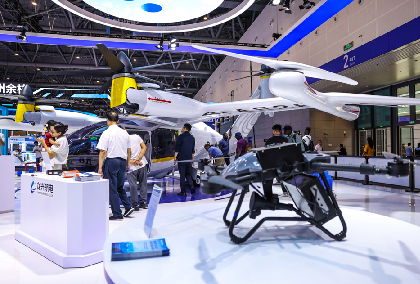
 Tian Gangyin, founder, chairman and president of the Chinese unmanned aerial vehicle developer United Aircraft, said the blueprint mapped out for the 15th Five-Year Plan period is “inspiring and motivating”.

 Industrial-level drones are finding applications in a wide range of fields, such as emergency rescue work, power line patrolling, farming, and surveillance and security operations, he added.

 Aerospace is another strategic industry that China values, and in which companies are moving fast. Hainan International Commercial Aerospace Launch Co, for instance, plans to double its number of launch pads from two to four, and push forward rocket-recovery technology, marking a major step in the country’s bid to build a globally competitive commercial space hub in Wenchang, Hainan province.

 Yang Tianliang, chairman of the company, said: “By end-2026, we will have launch pads No 3 and No 4, along with a new technical area and telemetry station. Once completed, the facility will be able to handle more than 60 launches annually, with each pad supporting launch missions every 10 days, or even weekly.”

 Meanwhile, China is making progress in the new energy industry, such as in nuclear energy.

 Wei Zhigang, chairman of Hainan Nuclear Power Co, said artificial intelligence computing fuels an exponential surge in demand for electricity, and it is increasingly difficult for the traditional energy supply to meet such a huge demand.

 “Secure, affordable and low-carbon energy has become a key factor driving the high-quality development of the intelligent computing industry,” Wei said.

Article inline ad

China Suspends Countermeasures Against Five US-Linked

0

subsidiaries of Hanwha Ocean

Xinhua | Updated: 2025-11-10

BEIJING — China’s Ministry of Commerce on Monday announced a one-year suspension of countermeasures against five US-linked subsidiaries of Hanwha Ocean, a leading shipbuilding enterprise from the Republic of Korea.

 This suspension took effect on Monday, the ministry said in a statement.

 The move came after the US decision to suspend, for one year, the implementation of Section 301 investigation measures aimed at China’s maritime, logistics and shipbuilding sectors.

 The five US-linked subsidiaries of Hanwha Ocean subject to the countermeasures, now suspended for a year, are Hanwha Shipping LLC, Hanwha Philly Shipyard Inc, Hanwha Ocean USA International LLC, Hanwha Shipping Holdings LLC and HS USA Holdings Corp, according to a previous announcement by the ministry.

Article inline ad

Innovations Gather Steam To Turbocharge Future Growth

0

Smart tech fostering emergence of new quality productive forces

China Daily | Updated: 2025-11-10

BEIJING — Shifting from the “world factory” to a tech innovation hub, China is accelerating the development of new quality productive forces to forge a new growth path amid a more complex global landscape.

 The world’s second-largest economy has recently unveiled a pivotal document outlining priorities for its 15th Five-Year Plan (2026-30), which emphasizes “achieving greater self-reliance and strength in science and technology” and “steering the development of new quality productive forces” as key objectives for the next five years.

 As a pillar of China’s high-quality development, the cultivation of new quality productive forces tailored to local conditions has made notable strides in recent years and is expected to play an even more pivotal role in supporting growth in the near future.

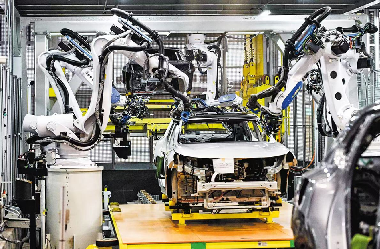
 Under bright white lights, an automated production line hums softly as robotic arms lift, pivot and place miniature components with precision. Autonomous carts glide seamlessly between workstations, transporting trays of parts without pause. In an adjacent control room, a small team of technicians monitors dashboards that integrate real-time data.

 This scene plays out daily at Dongguan Moldbao Smart Technology Co, a mold manufacturer in Dongguan, South China’s Guangdong province. Founded in 2016, the company has been an early pioneer in China’s smart-manufacturing drive, launching multiple automated mold production lines capable of running round the clock.

 “Molds are known as the ‘mother of industry’ and are used across many sectors, but producing them demands high consistency and precision,” said Wang Sheng, vice-president of the company. “To ensure that, we rely on data, which are more stable than humans.”

 Doubling down on technology upgrades, the company has digitized and automated every step of production, Wang said, from design and programming to manufacturing and logistics. With the resulting efficiency gains, the company has shortened its mold production cycle by about 30 percent.

 Across China, traditional industries are undergoing a technology-driven transformation to raise productivity and open new paths for growth.

 In Northeast China’s Liaoning province, a traditional heavy-industry base, intelligent and green upgrades are transforming legacy sectors, offering a clear path to shed its rust-belt image. For example, Ansteel, a major provincial steelmaker, has deployed an intelligent system to optimize molten steel handling, reducing production costs by 15 percent and cutting wastewater discharge by 21 percent.

 Speaking about this national trend, Lyu Peng, a researcher with the Chinese Academy of Social Sciences, said it exemplifies the development of new quality productive forces, which span both cutting-edge and traditional industries. “New quality productive forces are not limited to strategic emerging or future industries,” Lyu added. “With transformation and upgrading, traditional sectors can become them as well.”

 Numerous companies across the country are accelerating their digital transformation efforts. According to the China Internet Development Report 2024, the country now has nearly 10,000 digitalized workshops and intelligent factories. Of these, more than 400 have been recognized as national-level benchmark factories in smart manufacturing, utilizing technologies such as AI and digital twins.

 Using advanced technologies such as information technology, artificial intelligence, big data and the internet of things, new quality productive forces reorganize and optimize traditional factors of production, reshaping how manufacturing is run and managed, said Zhu Qigui, deputy director of the China Academy of Financial Research.

 Zhu noted that these forces will influence technological renewal, production efficiency and industrial structure. “Chinese manufacturers must strengthen innovation, optimize industrial structure, and improve product quality and added value to achieve high-quality development and stand out in global competition,” he said.

 According to the recommendations from the Central Committee of the Communist Party of China for the new five-year blueprint, the country will strengthen self-reliance in science and technology and guide the development of new quality productive forces. “Innovation” is a recurring theme, with priorities including raising innovation capacity across the board and advancing original innovation.

 Xinhua

Article inline ad

Cross-Border E-Commerce Key Engine Driving China’s Exports

0

By Fan Feifei | China Daily | Updated: 2025-11-10

When I attended the Fourth Global Digital Trade Expo in Hangzhou, Zhejiang province, in September, I interviewed some merchants who capitalize on emerging cross-border e-commerce platforms and digital technologies to secure new orders from international markets and boost sales.

 Li Wenfeng, a young Chinese entrepreneur, impressed me most. He has taken over his parents’ toy factory, which was founded about six years ago in Jinhua, Zhejiang.

 The factory mainly received foreign trade orders and supplied various types of toys for offline brand owners and dealers in the United States in its early stages of development.

 Looking to expand sales channels and reach more overseas consumers amid high US tariffs, Li began selling products through cross-border e-commerce platforms and registered with fast-fashion online retailer Shein.

 He told me that his company has decided to increase production in line with the latest sales and market trends from the platform, instead of manufacturing new products and stocking up goods blindly. Currently, sales from the online marketplace have accounted for about 40 percent of Li’s total revenue, with its turnover reaching nearly 8 million yuan ($1.1 million) each month.

 Cross-border e-commerce, as an emerging form of foreign trade, has become a key engine driving China’s exports against the backdrop of headwinds and mounting uncertainties. The country’s cross-border e-commerce export industry is gaining momentum with huge development potential.

 Experts said this sector is set to play a crucial role in accelerating the digital transformation and upgrading of traditional industries. The core strength of cross-border e-commerce platforms lies in their flexible supply chain model — characterized by small orders and rapid response — that allows producers to adjust manufacturing in real time based on market demand.

 This on-demand production model helps to minimize inventory and waste, boost operational efficiency and lower costs. It also increases production flexibility and strengthens the competitiveness of products in the market.

 In recent years, Chinese cross-border online retailers are accelerating steps to expand their global footprint in a bid to cultivate new customers and diversify revenue sources.

 Temu, a cross-border e-commerce platform launched by Chinese online discounter PDD Holdings, has become popular among consumers overseas as it offers a wide selection of merchandise, including apparel, consumer electronics, jewelry, shoes, bags, cosmetics, baby products and pet supplies at competitive prices.

 The platform offers comprehensive one-stop services covering cross-border logistics, operations, marketing, after-sales support and legal affairs, while sellers or manufacturers just need to focus on production and maintaining product quality.

 Chen Lei, chairman and co-CEO of PDD Holdings, said the company hopes to use the supply chain capacities it has built up in recent years to create a new channel that enables consumers from different countries and regions to buy products directly from factories, providing more flexible and personalized supply chains and more cost-effective shopping experiences.

 Li Mingtao, chief e-commerce expert at the China International Electronic Commerce Center, said Chinese cross-border e-commerce platforms can use advanced digital technologies, such as big data, cloud computing and artificial intelligence to directly link manufacturers with consumers.

 “Many traditional Chinese manufacturers excel in production and quality control, but they often lack experience and capability in sales and operations, which limits their access to overseas markets,” Li said.

 By leveraging these platforms, they can adjust production quickly and reduce inventory levels, which will be conducive to improving the global competitiveness of Chinese manufacturers, Li added.

 Data from Amazon show that in 2024, the number of units sold by Chinese vendors to customers and businesses buyers on Amazon’s global stores increased by over 20 percent year-on-year. Over the past two years, the number of Chinese sellers with annual sales surpassing $1 million on Amazon’s global stores has increased by nearly 55 percent.

 Chinese manufacturers should make full use of cross-border e-commerce platforms to quickly capture demand in overseas markets, learn more about relevant laws, regulations and quality standards in these countries, and adjust supply chains to make products that meet local requirements, said Chen Tao, an analyst at internet consultancy Analysys in Beijing.


Article inline ad

Digital Trade Set To Take Wing

0

Advancements in cutting-edge technologies represented by AI as well as innovative policy measures to make sector a transformative force in nation

By Fan Feifei | China Daily | Updated: 2025-11-10     

China’s digital trade is poised for steady growth, fueled by advancements in cutting-edge technologies represented by artificial intelligence and a series of policy measures promoting its reform and innovative development, said officials and experts.

 They highlighted that the booming digital trade has become a transformative force reshaping global trade, a strategic choice for countries around the world amid mounting uncertainties and a new engine for China’s endeavor to build itself into a stronger trading nation.

 The country’s emphasis on bolstering the development of digital trade will foster new growth drivers for foreign trade, inject fresh impetus into high-quality economic growth and make contributions to the recovery of the global economy, they added.

 Sheng Qiuping, vice-minister of commerce, said amid a new round of technological revolution and industrial transformation, digital trade — which deeply integrates digital technologies with international trade — is demonstrating strong resilience and vitality.

 “The commerce ministry will deepen reform and opening-up, ease market access in sectors such as telecommunications, internet and culture in an orderly manner, and facilitate foreign investment related to digital trade,” Sheng said.

 He made the remarks at the Fourth Global Digital Trade Expo, which concluded in Hangzhou, Zhejiang province, on Sept 29.

 Sheng stressed the need to accelerate the establishment of national digital trade demonstration zones and pilot zones for Silk Road e-commerce cooperation, nurture world-class leading enterprises in digital trade and support them to expand their footprint in international markets, while strengthening bilateral, multilateral and regional cooperation.

China has attached great importance to the development of digital trade, which is regarded as one of the three pillars supporting the development of a strong trading nation, alongside trade in goods and services.

 In the domain of digital trade, China should pursue innovative development and take well-ordered steps to expand opening-up, according to the Recommendations of the Central Committee of the Communist Party of China for Formulating the 15th Five-Year Plan for National Economic and Social Development.

 China should enhance the functions of trade promotion platforms and support the development of new forms and models of businesses such as cross-border e-commerce, said the recommendations, which were adopted at the fourth plenary session of the 20th CPC Central Committee on Oct 23.

 Data from the Ministry of Commerce show that China’s imports and exports of digitally delivered services trade rose 6.5 percent year-on-year to 2.9 trillion yuan ($406.6 billion) in 2024. Imports and exports of the country’s cross-border e-commerce sector reached 2.71 trillion yuan last year, up 14 percent year-on-year, a record high.

 The ministry said China’s exports of telecommunications, computer and information services are at the forefront globally, while the growth rate of China’s digital services trade far exceeds the global average, making it the fastest-growing economy in digital services trade worldwide.

 At present, digital technologies such as artificial intelligence, big data, and blockchain are accelerating in innovation and increasingly integrated into all aspects of economic and social development, said Kong Dejun, director-general of the department of trade in services at the Ministry of Commerce.

 “Digital trade is thriving, demonstrating strong development resilience and having a profound impact on patterns, structures, and rules of global trade. It has become the most dynamic component for bolstering global trade growth,” Kong said.

 He said China possesses abundant data resources, a vast domestic market, and diverse digital application scenarios, all of which provide a solid foundation for the development of digital trade.

 Looking ahead, China will vigorously promote the reform, innovation and development of digital trade, advance institutional opening-up and deepen international cooperation in the digital trade domain to build itself a strong trading nation, he added.

 “China has played a pivotal role in promoting global digital trade, speeding up the construction of digital infrastructure, and bolstering digital transformation and the development of cross-border e-commerce,” said Pan Helin, a member of the Expert Committee for Information and Communication Economy, which is part of the Ministry of Industry and Information Technology.

 Pan said it is vital to actively take part in the formulation of multilateral, bilateral and regional rules concerning digital trade and propel the establishment of international cooperation mechanisms in the digital field, which will further strengthen China’s voice in the global digital economy governance system.

China has issued a guideline to expand digital trade as it moves to reform and innovatively develop the sector.

 The country expects the share of digitally delivered services trade in overall services trade to exceed 45 percent by 2029 and 50 percent by 2035, according to the guideline.

 The guideline stated that by 2035, an orderly, secure and efficient digital trade governance system will be established on all fronts, with comprehensive improvements seen in institutional opening-up.

 Efforts will be made to ease market access and encourage foreign investment in the digital sector, expand the opening-up of telecommunications, internet and culture-related sectors in an orderly manner, as well as bolster and regulate the cross-border flow of data, it added.

 To improve the digital trade governance system, China will actively participate in the formulation of international rules for digital trade, and help create an open, fair, just and nondiscriminatory environment for digital development, said the guideline.

 Zhu Keli, founding director of the China Institute of New Economy, said China has become one of the most dynamic economies in digital trade around the world, which has injected new momentum into domestic economic growth and contributed significantly to global trade development.

 “The opening-up of digital trade complies with the vigorous development trend of the digital economy worldwide, while the move to ease market access in the digital sector will attract more foreign enterprises to invest in the Chinese market, thus boosting technological innovation and industrial upgrading, and enhancing the competitiveness of China’s digital trade on the global stage,” Zhu said.

 According to a report released by the International Trade Centre and the organizing committee of the Global Digital Trade Expo, the fast expansion of digital trade underscores its increasing importance in the global economy and reflects an ongoing structural shift toward digitalization in international commerce.

 The report said the total value of global digital trade rose from $4.59 trillion in 2020 to $7.23 trillion in 2024, with the average annual growth rate reaching 12.1 percent. This growth significantly outpaced that of total global trade, which grew at an average annual rate of 9.7 percent over the same period.

 Digitally delivered services, and digitally ordered goods and services have jointly driven growth in digital trade, the report said, adding that the former accounted for the larger share, rising from $3.21 trillion in 2020 to $4.64 trillion in 2024, with an average annual growth rate of 9.6 percent. The European Union, China and the United States ranked as the top three in terms of digitally ordered trade exports.

 AI has emerged as a transformative force in digital trade, reshaping infrastructure, services and applications, the report said. Advances in large model architectures, including the DeepSeek open-source ecosystem, have lowered barriers for small and medium-sized enterprises and spurred innovation across healthcare, education, finance and cross-border data markets.

 Zhang Zhouping, an independent analyst who has been tracking the cross-border e-commerce sector for more than a decade, said the shift toward digital platforms, e-commerce, AI and data-driven trade opens new frontiers for businesses, particularly small and medium-sized enterprises, which now have the tools to engage with international markets.

 AI has given rise to a wide range of emerging service formats and cross-border transaction scenarios, said Zhou Wenyu, an assistant professor of the International Business School at Zhejiang University, adding that cross-border e-commerce has greatly promoted the deep integration and efficient coordination of global industrial and supply chains.

 Chinese cross-border online marketplaces are stepping up efforts to develop digital trade and help Chinese manufacturers and brands expand their presence in overseas markets.

 For instance, fast-fashion online retailer Shein has announced plans to extend its outreach to industrial belts in 500 cities in China. It hopes to facilitate the digital upgrade of more industrial chains, thereby helping them achieve on-demand supply in terms of production.

 The company is accelerating steps to build a supply chain project in Guangzhou, Guangdong province, covering operations, warehousing, stocking, order-picking, distribution, logistics and delivery.

 Hong Yong, an associate research fellow at the Chinese Academy of International Trade and Economic Cooperation, said cross-border e-commerce has become an important driving force for bolstering the steady growth of foreign trade, as well as promoting the transformation and upgrading of the traditional manufacturing sector.

 By constantly monitoring market changes and collecting real-time feedback from consumers, these platforms can make accurate predictions, while the flexible supply chain model is conducive to upgrading an entire industrial chain, ranging from design and development to production, warehousing and logistics.

Article inline ad

Tunneling Machine Highlights Rise Of Chinese Manufacturing

0

Xinhua | Updated: 2025-11-09

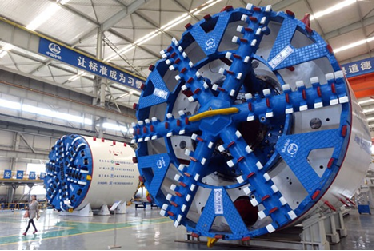
ZHENGZHOU — In Zhengzhou, Central China’s Henan province, an advanced tunneling boring machine (TBM) rolled off a production line this week, ready to be deployed for the construction of an underwater branch of Beijing Subway Line 1.

 The device, with an innovative stone handling system, can realize continuous tunneling, precise screening and mechanical transport of boulders — offering a breakthrough solution for shield construction in challenging cobble strata.

 Independently designed and produced by China Railway Engineering Equipment Group Co Ltd (CREG), the country’s largest TBM manufacturer, this TBM underscores the rapid development of China’s advanced manufacturing sector.

 As early as 1825, beneath the River Thames, French engineer Marc Isambard Brunel had constructed the world’s first tunnel to use a shield tunneling method. This pioneering technology was subsequently refined and widely adopted across Europe.

 However, more than a hundred years later, when the first phase of the Beijing Subway Project (later renamed Line 1) started construction in 1965, China’s tunnel boring industry was still in its primitive stage.

 With a weak industrial base and no core technologies, construction relied heavily on manual excavation — an inefficient and high-risk approach. “We had only read about the subway in books — none of us had ever seen it,” said Wang Xinjie, the then designer at the underground railway survey and design office in Beijing.

 In recent years, fueled by scientific and technological innovation, Chinese tunneling technology and equipment have progressed rapidly, transforming the country from a follower to a frontrunner in the global TBM industry.

 Notably, the production and sales volume of CREG have ranked first in the world for the past eight consecutive years. Its shield machines have excavated over 5,000 kilometers of tunnels in total — supporting infrastructure construction in metro, railway, highway, mining, water conservancy and municipal work, among others.

 “China’s vast territory and diverse geology have served as a natural testing ground, allowing TBM manufacturers to accumulate experience, develop technologies and enhance equipment adaptability,” said Wang Weibo, an official with CREG.

 The remarkable transformation of China’s TBM industry underlines the country’s strong determination to boost manufacturing.

 According to a pivotal document outlining priorities for the country’s next five-year plan, China should consolidate and enhance the position and competitiveness of its industries such as mining, machinery and construction in terms of the global industrial division of labor.

 It should also ensure its industrial chains become more self-supporting and risk-resilient, advance industrial foundation reengineering and research on major technologies and equipment, and develop advanced manufacturing clusters.

 So far, China has produced over 4,000 TBMs — accounting for about 70 percent of the global market share. With high quality and customized services, Chinese-made machines are attracting an increasing number of foreign clients.

 CREG has exported its shield products to more than 30 countries and regions in the world, including Denmark, France, Italy, Canada, Brazil, Singapore, Malaysia, Thailand and the United Arab Emirates.

 Whether in the freezing areas of Northern Europe or the scorching deserts of the Middle East, the Chinese company can always provide timely and professional technical support and after-sales services.

 At a CREG factory in Zhengzhou, Hacia, a TBM decorated with green aboriginal paintings, was undergoing its final tests. Named by second-grade students from Glen Waverly Primary School, it will mark the fifth shield machine CREG has supplied to Australia.

 The device will soon be sent from Zhengzhou to Melbourne for a suburban rail loop project. When finished, the project will effectively alleviate traffic congestion and shorten public transport time.

 Chris Kolodynski, an electrical superintendent from Australia, was checking the main functions of Hacia with his colleagues. “People are looking forward to the new metro line. It will be beneficial,” he said.

 To promote its core technologies, Chinese giant CREG has adhered to the principle that science and technology are the primary productive force, with its research and development (R&D) spending sustained at roughly 9 percent for years.

 In 2024, China’s total R&D spending had surpassed 3.6 trillion yuan (around $508.22 billion), according to Yin Hejun, Chinese minister of science and technology.

 From 2026 to 2030, China will develop a modern industrial system with advanced manufacturing as the backbone, said the above-mentioned pivotal document.

 Meanwhile, the country will strive to enhance the overall performance of its innovation system, achieve a leading position in scientific and technological development, and keep fostering new quality productive forces, it added.

Article inline ad