Wednesday, November 25, 2026

Home Blog Page 145

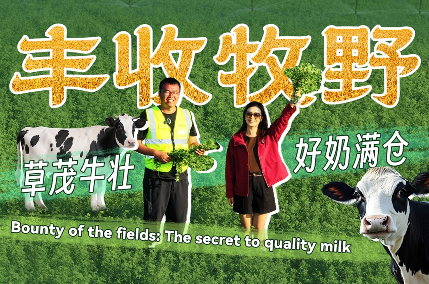
Bounty Of The Fields: China’s Secret To Top-Class Milk

0

chinadaily.com.cn | Updated: 2025-11-10    

 In the vast pastoral landscapes of China, a simple yet profound principle underpins the nation’s quest for premium milk: “Good grass feeds good cows, good cows produce good milk.”

 This age-old wisdom, now amplified by cutting-edge technology and scientific management, has propelled China’s dairy industry to new heights, turning once-degraded grasslands into thriving hubs of high-quality milk production and breeding world-class dairy cows that rival global competitors.

 The journey of a glass of premium Chinese milk begins with a blade of grass and, in Ar Horqin Banner in Inner Mongolia autonomous region, this journey is a tale of ecological revival and agricultural innovation. Back in the 1990s, 90 percent of the natural grasslands here suffered from varying degrees of desertification.

 Today, the scene is unrecognizable. Through large-scale artificial planting efforts, vegetation coverage has soared to over 95 percent, painting the land a lush green. At the heart of this transformation is the cultivation of alfalfa, known as the “king of forage”. Covering 55,000 mu (3,666 hectares) in Ar Horqin Banner, this nutrient-dense grass is a game-changer for dairy farming.

 “We harvest alfalfa before it blooms to maximize its nutritional value and digestibility,” said Wei Xiaobin, manager of the grass-planting project.

 “Our wrapped silage alfalfa has a protein content of over 25 percent and, currently, no other forage can match its quality.”

 Rich in cellulose and vitamins, alfalfa boasts a digestibility rate of over 70 percent for dairy cows, ensuring optimal nutritional balance and boosting milk production.

 Remarkably, alfalfa’s appeal isn’t limited to cows. It has also found its way onto dining tables, with dishes like alfalfa scrambled eggs gaining popularity — a delightful testament to its exceptional quality.

 Behind the success of alfalfa cultivation lies meticulous care for the soil and advanced digital management.

 “Growing good grass starts with a good seedbed, adequate fertilization, sufficient water and timely plant protection,” Wei said.

 To streamline these processes, the team has developed the HuiCaoYun smart system, which digitizes every step of the journey — from seed selection and soil surveys to planting plans, field production and harvest management.

 Once harvested, the fresh alfalfa is packed into 1.2-meter-high, 800-kilogram “grass cans” using wrapping machines. Through sealed fermentation, these cans not only preserve the grass’ original nutrients but also generate large amounts of lactic acid bacteria, creating a nutrient-rich silage that has become a favorite “feast” for dairy cows.

 Intelligent pastures: Crafting customized nutrition for happy cows

 The high-quality alfalfa from Ar Horqin Banner’s grasslands becomes the cornerstone of the dairy cow diet at the Chilechuan Ecological Intelligent Pasture — linking the hard work of grass cultivation directly to premium milk production.

 “Alfalfa is the base, but we go further with tailored nutrition,” said Wang Haibo, the pasture’s director.

 “We mix it with corn silage, flaked corn, beet pellets and soybean meal, then adjust formulas for lactating cows, pregnant cows and calves. This scientific blend boosts the protein and fat in our raw milk — key indicators in which China’s raw milk now outperforms European Union standards.

 “For hygiene, our milk’s total bacterial count stays far below the EU’s 100,000 CFU/mL limit, a vital mark of quality.”


 Beyond nutrition, technology elevates cow care. Wang pointed to a fully intelligent unmanned barn, where robots handle cleaning, feeding and milking.

 “Cows live in a human-free space,” he added.

 “When it’s time for milking, they head to the rotary system on their own — no intervention needed.”

 This seamless tech not only reduces stress on cows but also guarantees good hygiene, ensuring every drop of milk meets top-tier standards.

 Chinese dairy cows join the global elite

 Good grass and intelligent management lay the groundwork, but it’s the genetic quality of the cows that truly unlocks the potential for premium milk.

Professor Li Xihe, a leading expert in dairy cow breeding, emphasizes the critical role of genetics: “Producing good milk requires two pillars — excellent cow genetics and top-tier management. Each contributes 50 percent to the final product.

 “Only when these two are combined and nutrition is scientifically adjusted can we achieve high milk yield and superior quality.”

 China’s dairy industry has made remarkable strides in cow breeding, moving beyond traditional methods to embrace innovation. In the past, breeding bulls relied on dairy herd improvement, a time-consuming process. Today, the industry has developed its own genetic evaluation and identification chip for dairy cow pre-implantation embryos — a breakthrough that has revolutionized breeding efficiency.

 The results speak for themselves. In July, the latest genetic evaluation results for Chinese dairy bulls were released. The bull numbered 15,522,027, bred by Saikexing Research Institute, achieved a Genomic Combined Performance Index of 2905, ranking it first in China. This was a significant milestone: China’s dairy cow genetic resources and breeding quality have now reached world-class levels.

 “Globally, our new technologies in dairy cow breeding have distinctive advantages that place us on par with international leaders,” Li added.

 “Domestically, we lead in both the genetic quality of breeding cows and the size of our breeding population. This is a testament to our commitment to innovation and excellence.”

 A bright future for China’s premium dairy

 From the green pastures of Ar Horqin Banner to the Chilechuan Ecological Intelligent Pasture and the cutting-edge breeding labs, China’s dairy industry is writing its own story.

 The principle of “good grass feeds good cows, good cows produce good milk” is no longer just a saying — it’s a proven formula that synchronizes ecological responsibility, technological innovation and scientific expertise.


 As China continues to invest in grassland restoration, intelligent farming and genetic research, its premium dairy products are gaining recognition both at home and abroad.

 This journey is not just about producing better milk, it’s about building a sustainable, high-quality dairy industry that embodies China’s commitment to excellence and its ability to blend tradition with innovation.

 For consumers around the world, a glass of premium Chinese milk now tells a story of resilience, ingenuity, and a deep respect for the land and the animals that nourish us.
 

Article inline ad
0

By Zhong Nan in Shanghai | chinadaily.com.cn | Updated: 2025-11-09

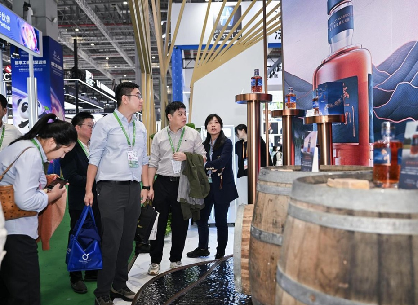
Pernod Ricard, the French spirits and champagne group, will deepen its footprint in China by capitalizing on growing demand for whisky, vodka, gin and tequila, amid a global shift toward premium and experience-driven consumption, according to a senior executive.

 The Paris-headquartered company is also considering expanding exports of its The Chuan pure malt whisky — distilled and bottled in Southwest China’s Sichuan province and already available in certain travel retail channels across Asia — to more overseas markets in the future.

 Gilles Bogaert, executive vice-president for global markets at Pernod Ricard, said China remains central to the group’s portfolio strategy because of its scale, innovation capacity and increasingly sophisticated consumers.

 “China is already one of our largest markets and will remain a key pillar of growth for many years to come,” the French executive said in an interview during the ongoing eighth China International Import Expo (CIIE) in Shanghai.

 Bogaert said the company, which is participating in the CIIE for the eighth time, sees significant potential in the globalization of tequila — a category that has historically been concentrated in Mexico and the United States.

 “At the group level, we recognized the need to strengthen our portfolio to participate in tequila’s international expansion,” he said.

 “The global appeal of the category is a relatively new phenomenon and, once we identified that opportunity, we acted on it.”

 This strategy led to Pernod Ricard’s recent acquisition of Codigo 1530, a Mexico-based premium tequila brand, which the group expects will help capture growth in emerging markets worldwide.

 Established in 1975, Pernod Ricard has a comprehensive portfolio in the industry, with over 200 spirit and champagne brands, including Martell Cognac, Chivas Regal, Ballantine’s and Perrier-Jouet distributed in 160 countries and regions.

 Bogaert said that beyond its core cognac business, the group will deploy more resources to develop Chinese whisky, expanding its portfolio of premium brands, and investing in new and emerging consumption channels and occasions to drive future growth.

 The Chuan malt whisky distillery in Sichuan province — Pernod Ricard’s first malt whisky facility in China — exemplifies this approach by combining international craftsmanship with Chinese terroir and heritage.

 “We will remain focused on markets around China at the initial stage,” said Bogaert. “But in the future, I see no reason why it couldn’t be sold in major whisky markets in Europe, such as France and the United Kingdom, through specialized channels.

 “Japanese whisky began in a similar way. It was not accessible through many channels, it was a bit scarce, and it created some buzz communities over there,” he added.

Article inline ad

Amcor Unveils Plans For China Expansion At Shanghai Expo

0

By Zhong Nan in Shanghai | chinadaily.com.cn | Updated: 2025-11-09

Amcor Plc, the Zurich-headquartered packaging group which has 400 plants worldwide, is considering building a new factory in Jiangyin, Jiangsu province, to expand production of medical, pharmaceutical and food packaging, according to senior executives.

 The investment is aimed at strengthening the company’s local manufacturing capacity and meeting rising demand for high-performance packaging materials in China’s fast-growing healthcare and consumer sectors, according to Chris Kenneally, president for Asia-Pacific at Amcor.

 With 23 manufacturing bases in China, the Australian executive said Amcor intends to further invest in automation and supply chain operations at its plant in Huizhou, Guangdong province. The company also plans to expand its facilities in Foshan and Dongguan in the same province as part of efforts to fuel future growth in China.

 Apart from showcasing nearly 300 packaging exhibits at the 8th China International Import Expo (CIIE) in Shanghai, the company signed more than 400 million yuan ($56.2 million) worth of business contracts with both Chinese and global clients during the event.

 Kenneally said Amcor’s confidence in China stems both from the market’s sustained growth and from platforms such as the CIIE, which reinforce the collaborative relationship between China and global companies.

 Kenneally said that Amcor’s exports from China are underpinned by two main pillars, the first being products. The group supplies markets including Asia-Pacific, Europe and Latin America with goods manufactured in China, where its operations have become a key source of innovation. China is increasingly regarded as a leader in packaging innovation.

 “The second pillar is talent, with China teams providing key expertise that increasingly supports Amcor’s wider global operations,” he added.

 She Xin, president of Amcor China and North Asia, said many Chinese companies — from automakers and apparel producers to food, beverage and even ice cream brands — are expanding quickly into overseas markets and establishing manufacturing facilities abroad.

 Amcor, he said, is ready to follow these customers as they globalize and will provide packaging solutions to support their growth in new markets.

Article inline ad

Haier Group Promotes AI In Healthcare At Shanghai Expo

0

By Li Jing | chinadaily.com.cn | Updated: 2025-11-09

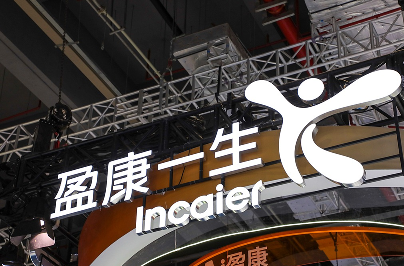
The Haier Group has used the 8th China International Import Expo in Shanghai to highlight the country’s growing capacity for homegrown medical innovation as well as making the case for the greater integration of artificial intelligence into healthcare services.

 Participating in the expo for the sixth year running, Haier’s healthcare unit Incaier presented more than 30 products and solutions, 60 percent of them for the first time.

 The company’s exhibits covered solutions for four key scenarios: future research, future hospitals, innovation ecosystems and global localization. Its AI-powered hospital management and drug preparation systems, already adopted in hundreds of Chinese hospitals, and the first domestically developed ultra-speed centrifuge that has successfully broken through the core technology of 100,000 revolutions per minute, were among the highlights.

 Incaier also showcased digital blood management and biosample tracking solutions that integrate biomedical, clinical and logistics data to improve efficiency and safety.

 The company’s approach aligns with Beijing’s drive to nurture new quality productive forces, pursuing innovation-led growth, including advanced manufacturing and medical technology.

 According to Incaier, its solutions are now being used in more than 160 countries and regions, serving more than 100 million users.

 This includes the installation of more than 20 ultra-low temperature freezers at UK Biobank, a biobank in the United Kingdom, and work on the Africa center for disease control and prevention project, which will increase disease control capacity across 54 African countries.

Article inline ad

Calls For China To Consume Better, Rather Than More

0

By John Quelch | China Daily | Updated: 2025-11-10

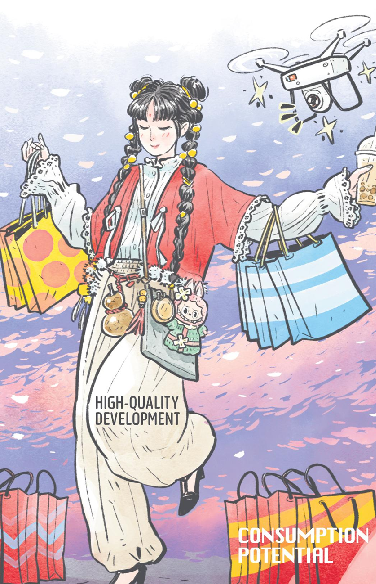
As China advances high-quality development and cultivates new quality productive forces, some Western commentators and policymakers have urged the nation to rely more on domestic consumption to sustain growth rather than over-dependence on exports. Yet the general call for more consumption is inadequate. The challenge before China is not simply to consume more, but to consume better.

 Good consumption promotes sustainability and well-being, while bad consumption leads to waste and social and environmental harm. Understanding this distinction is essential for policymakers, businesses and households alike.

 In the United States, household consumption accounts for about 68 percent of GDP. Many Western economists treat this as a benchmark of success and urge China to follow suit. Yet a lot of US consumption is financed by easy credit and driven by marketing rather than real income growth. Consumers are encouraged to “trade up”, replace what still works and equate happiness with accumulation.

 The result is wasteful overconsumption — rising debt, emissions and inequality. Total US household debt now exceeds $18 trillion, suggesting consumption without restraint breeds dependency, not prosperity. When Western officials urge China to “consume more”, they are effectively inviting it to repeat their mistakes.

 For four decades, China’s rapid growth was powered by infrastructure and manufacturing — industries led by engineers rather than marketers. As the country’s railways, roads and ports near completion, doubling down on such investment inevitably yields diminishing returns.

 China’s manufacturing sector remains among the world’s most efficient, serving increasingly diverse markets beyond the US. But sustaining growth now requires rebalancing — from heavy investment and export-reliance toward a more service-oriented, experience-driven economy.

 In fact, the tertiary (services) sector already accounts for roughly 56-57 percent of China’s GDP. Meanwhile, culture-related industries contributed 4.59 percent and tourism and related industries 4.24 percent of GDP in 2023. These figures underscore that the shift toward services is well underway.

 Most Chinese families live in apartments already equipped with enough furniture and appliances. Pushing more consumption in rural areas is not as useful as encouraging spending on travel, education, culture, entertainment and care services, which create jobs and enhance well-being. This is “better consumption”, it enriches lives without exhausting resources.

 Moreover, the government should actively support the build-out of domestic industries in tourism, entertainment, media and sports for young people to consume — rather than encouraging more resource-depleting material-goods purchases. Imagine a China where young consumers choose music festivals, sporting events, interactive media, creative content or domestic travel experiences, rather than buying a second or third car or upgrading every gadget. That is a model of consumption aligned with sustainability, emotion-rich human interaction and social vitality.

 In parallel, the government should prioritize the expansion of healthcare and eldercare services, cradle-to-grave care, retirement-community development and intergenerational well-being. For a rapidly aging society, this is the sector in which China should “sell care, not cars”. In such service areas, the empathy of human labor interactions with customers cannot be substituted by artificial intelligence alone. The human touch still matters. A vibrant domestic eldercare services sector not only meets social needs, but also offers high-quality employment and durable demand.

 Services consumption — notably hospitality, tourism, arts, media and healthcare — creates employment while leaving a lighter environmental footprint than many traditional goods-related industries. By contrast, bad consumption often includes impulse buying, over-use of cheap, low-quality products and dependence on goods that damage both people and the planet.

 Fast fashion, junk food and excessive packaging may boost short-term GDP, but they undermine long-term welfare. Policymakers should therefore evaluate goods and services not only by sales, but by their net contribution to sustainable prosperity, taking into account their carbon footprint.

 Encouraging better consumption also requires addressing why many Chinese families save rather than spend. A stronger social safety net — in healthcare, pensions, education and eldercare — would reduce precautionary savings and allow households to consume with more self-assurance.

 An important priority should be to lift consumption among rural and lower-income households, where spending is limited not by lack of aspiration, but by insecurity. Expanding social protection and improving income distribution will foster balanced, inclusive and human-centric consumption — the kind that supports stable domestic growth.

 Markets alone do not ensure good consumption. Many so-called free-market economies impose “sin taxes” on alcohol, cigarettes and other harmful products to discourage damaging behavior without eliminating choice. China could similarly use incentives and disincentives to guide healthier and more sustainable consumption patterns.

 For businesses, this transition also demands a new mindset. Engineers built China’s manufacturing strength; marketers will shape its next phase by designing experiences and services that elevate well-being rather than promote excess. Innovation should focus not just on making products faster or cheaper, but on making lives better. The government should support innovations that result in products associated with “good consumption” — ecologically friendly design, intuitive service platforms, aging-friendly care technologies, and immersive cultural and sports experiences.

 A quiet revolution in consumer values is already underway. Around the world, a growing consumer segment is seeking simplicity over abundance, authenticity over ostentation. These “simplifiers “value minimalism, sharing and sustainability.

 In China, young consumers are leading this shift — embracing second-hand goods, renting rather than owning, and supporting ecologically friendly brands. They represent the future of responsible consumption and a powerful driver of sustainable prosperity.

 Consumption will always play a role in growth, but it should serve higher goals — human development, social harmony and environmental balance. As China transitions toward high-income status, its focus must shift from quantity to quality, from products to purpose, and from material accumulation to experiential enrichment.

 China has an opportunity to redefine modernity. Modernization does not necessarily mean copying the Western consumption model. It means redefining prosperity for an era of constraint, where balance, moderation and foresight become the hallmarks of progress.

 If the 20th century belonged to economies that consumed, the 21st will belong to those that conserve. China’s path of “high-quality consumption “can yield not only stronger growth, but also a more sustainable and humane civilization — or in other words, an example the world urgently needs.

 The writer is executive vice-chancellor, American president, and distinguished professor of social science at Duke Kunshan University.

 The views do not necessarily reflect those of China Daily.

Article inline ad

AI Future Depends As Much On Responsible Governance As Technology, Experts Say

0

By Li Jing | chinadaily.com.cn | Updated: 2025-11-08

As artificial intelligence continues to reshape industries and daily life at a remarkable speed, its future will depend as much on responsible governance as on technological progress, said experts and business leaders.

 “AI has become an irreversible trend of our time, profoundly changing the way we produce, live and govern,” Wu Dong, chief engineer of the Cyberspace Administration of China, said at the Frontier AI Models Forum during the 2025 World Internet Conference in Wuzhen.

 Wu said China will continue to prioritize AI development in its 15th Five-Year Plan period (2026–30), with a focus on fundamental research, open-source ecosystems, and industrial clusters. Innovation, he added, must advance hand in hand with responsibility, supported by sound governance, reliable data quality and professional expertise.

 AI safety has become a central topic as technology moves from the virtual world into real-world applications. Lu Wei, vice-chairman of the Cyber Security Association of China, described AI security as “the lifeline of development.”

 “As AI expands from the digital world into the physical world, its risks are becoming more complex,” he said. “We face not only technical vulnerabilities but also ethical, privacy and systemic risks.”

 Lu cited the AI Safety Governance Framework 2.0, China’s latest policy upgrade, as a sign of a shift “from reactive regulation to proactive governance.” Released in September, the framework highlights transparency, data protection and a collaborative governance model that spans borders, fields and industries.

 “High-level security does not constrain innovation — it safeguards it,” Lu said. “Only by embedding safety into every layer of the AI ecosystem can we ensure sustainable, high-quality development.”

 Undoubtedly, AI is already reshaping productivity and creativity across sectors. A joint report by the Yinxiang Biji Research Institute and the WIC Think Tank found that integrating AI models into real-world applications has become a growing global consensus.

 “In manufacturing, AI-driven optimization has improved efficiency by 12 percent; in pharmaceuticals, it has halved new drug development cycles; and in education, AI large-model interaction is redefining personalized learning,” said Qiao Qian, director of Yinxiang Biji Research Institute and vice-president of Yinxiang Biji.

 As AI becomes more deeply embedded in critical systems, cybersecurity specialists warn of emerging vulnerabilities. Hu Zhenquan, president of Chinese cybersecurity company 360 Digital Security Group, said AI security represents the next frontier of the digital economy.

 “Everything can be programmed, imitated, generated and orchestrated — and that’s both AI’s power and its weakness,” Hu said. He proposed an “AI + Security” dual strategy that uses AI to safeguard AI systems.

 Beyond technology, experts emphasized the importance of shared governance and global collaboration in shaping a sustainable AI future.

 “Digital transformation is irreversible — like biological evolution,” Gerald Vernez, chairman of the Digital Evolution Foundation and former Swiss cyber defense representative, said. “The real issue is not the tools themselves, but how we use them.”

 Vernez stressed that “strategy must precede technology” and urged nations to strengthen “digital sovereignty built on trust, resilience and cooperation.”

 As large models proliferate, infrastructure resilience is becoming a new priority. Hou Shengli, chief technology officer of Cisco Greater China, said full-lifecycle governance — from vulnerability detection to data integrity — should form the backbone of AI infrastructure.

 “Future systems will evolve across three dimensions — within servers, within data centers, and between data centers — all supported by secure, high-speed networks,” Hou said.

Article inline ad

CIIE Showcasing China’s Innovative Prowess

0

Nation’s vast market potential, complete industrial ecosystem, strong policy support drawing foreign interest

By Zhong Nan in Shanghai | China Daily | Updated: 2025-11-07

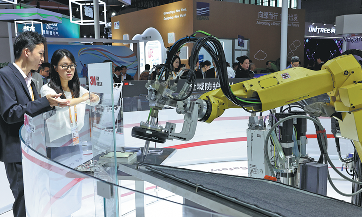
With China emerging as a key hub for industrial innovation, foreign manufacturers participating in the eighth China International Import Expo in Shanghai said they are shifting from “exhibitors” to “innovation partners”, underscoring the country’s growing weight in the international business landscape.

 Many opportunities come from China’s continued push for high-level opening-up, industrial upgrading and green transformation. These efforts, executives said, are creating a more open and resilient business environment that fosters collaboration, technological advancement and sustainable growth.

 Speaking at their booths during the ongoing CIIE, they said China’s vast market potential, complete industrial ecosystem and strong policy support are encouraging foreign corporations to deepen local partnerships, expand research and development investment, and accelerate innovation for both the Chinese and global markets.

 Ingersoll Rand Inc, a United States-based industrial products and solutions provider, unveiled several global premieres and announced plans to further expand its research, innovation and sustainability efforts in China during the CIIE this year.

 Arnold Li, the group’s senior vice-president, said that over 95 percent of Ingersoll Rand’s products sold in China are now locally produced, and the company’s research and innovation center in Shanghai is driving tailored innovation for the Chinese market.

 As an eight-time CIIE participant, Ingersoll Rand showcased products from 10 of its family brands, debuting a dry screw vacuum pump and a maglev turbo blower for wastewater treatment.

 “We will continue to expand our local footprint in China by investing where our customers are growing, particularly in new industrial clusters,” said Li.

 Highlighting that the ever-evolving CIIE has become a prominent “golden signboard” for attracting foreign investment to China, Henry Ding, president for China at 3M — another US industrial conglomerate — said the company has brought innovative solutions that range from industrial manufacturing to daily consumption to the CIIE this year.

 3M, also an eight-time CIIE participant, launched an expansion project for its tape production line at a manufacturing site in Shanghai in August, marking a significant boost to its local capacity and innovation capabilities.

 Completed within 12 months, the project has increased production capacity by 50 percent, enabling the company to better meet the surging demand for low-pollution, lightweight and high-strength materials in China’s fast-growing consumer electronics and automotive electrification industries.

 Also sharing a positive outlook on the Chinese market, Wang Jiayu, regional representative for China at Germany’s Freudenberg Group, said that China serves as both a crucial innovation hub and stable manufacturing base for Freudenberg’s global operations.

 Running 27 factories across China, Freudenberg is expanding into strategic new sectors aligned with China’s industrial upgrade, particularly in humanoid robotics. Together with local partners, the company will build a humanoid cocreation center in Shanghai.

 The center will feature testing facilities and application exploration zones where Freudenberg will collaborate with industry partners on sealing, lubrication and vibration control technologies.

 “Rather than just a production site, China represents an essential component of our global innovation network and supply chain resilience,” she added.

 In addition to showcasing over 10 industrial artificial intelligence products and solutions at its exhibition area during the ongoing CIIE, German company Siemens AG rolled out several industrial AI-related initiatives at the expo.

 Xiao Song, chairman, president and CEO of Siemens China, said that as a committed participant at the CIIE since its first edition, Siemens looks forward to leveraging this open and cooperative platform to fully harness its strengths in data and integrated hardware-software solutions.

 “We will work with Chinese companies to deeply integrate AI into industrial scenarios, and leverage industrial AI to drive China’s digitalization and decarbonization to new heights,” said Xiao.

 zhongnan@chinadaily.com.cn

Article inline ad

World Internet Conference Wuzhen Summit Hosts Forum On Digital Agriculture

0

chinadaily.com.cn | Updated: 2025-11-08

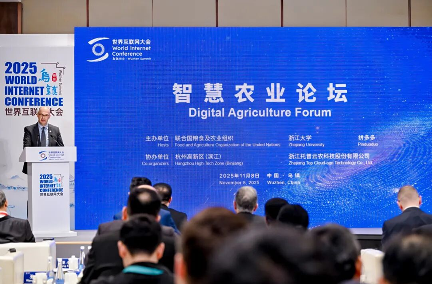
The Digital Agriculture Forum, part of the 2025 World Internet Conference Wuzhen Summit, convened Saturday in Wuzhen, East China’s Zhejiang province, centered on the theme “Digital Agriculture Solutions in the AI Era.”

 The event brought together global experts to explore pathways for technological innovation and collaborative ecosystem development aimed at advancing the digital and sustainable transformation of agriculture worldwide.

 Distinguished attendees delivering opening remarks included Dejan Jakovljevic, chief information officer of the UN Food and Agriculture Organization and director of the Digital FAO and Agroinformatics Division; Huang Xianhai, vice-president of Zhejiang University; and Fan Jiezhen, co-founder of Pinduoduo.

 The forum featured keynote speeches and a roundtable discussion focusing on topics such as “AI-driven agricultural progress,” “commercial practices in digital agriculture,” and “agriculture outlook in the AI era.” Participants included representatives from international organizations such as the FAO, the World Bank, the UN World Food Programme, and the Asian Development Bank; government agencies including the Information Center of the Ministry of Agriculture and Rural Affairs of China, the Department of Agriculture and Rural Affairs of Zhejiang Province, and the Hangzhou High-Tech Zone Management Committee; research institutions such as a key laboratory of agricultural big data, Zhejiang University, and Virginia Tech; as well as industry leaders like Zhejiang Top Cloud-Agri Technology Co and Zhongtong Information Technology (Yancheng) Co.

 A highlight of the forum was the inauguration of the Digital Agriculture Innovation (Hangzhou) Hub, supported by the FAO. The center is established to accelerate R&D and practical application of digital farming technologies.

 Co-organized by the FAO, Zhejiang University, and Pinduoduo, with support from Hangzhou High-Tech Zone (Binjiang) and Zhejiang Top Cloud-Agri Technology Co, the forum attracted about 80 participants from international organizations, government agencies, academic institutions, and the agricultural industry.

Article inline ad

Australian Brand Inner Health Unveils Probiotic Solutions At CIIE

0

By He Qi in Shanghai | chinadaily.com.cn | Updated: 2025-11-08

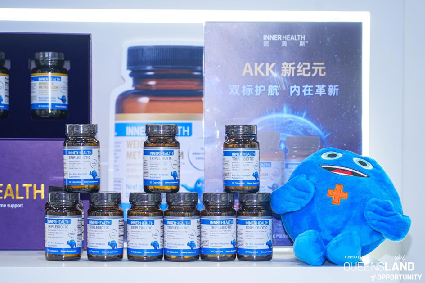
Australian health brand Inner Health globally unveiled its upgraded AKK Probiotic Gold Label and new Silver Label at the 8th China International Import Expo. Both products feature the proprietary AKK MucT strain, dual-certified by the European Food Safety Authority and Australia’s Therapeutic Goods Administration.

 Making its third CIIE appearance, Inner Health brought a fresh perspective on daily weight management for Chinese consumers. He Mei, Metagenics’ China marketing director and a certified public nutritionist by the Chinese Nutrition Society, noted China’s rising rates of overweight, obesity, diabetes, and metabolic syndrome.

 “Consumers no longer want one-size-fits-all solutions; they seek innovative, sustainable approaches through daily habits. The revitalized AKK series directly addresses this demand,” she said.

The debut Gold Label centers on 30 billion CFU of MucT, combined with chromium and EGCG green tea polyphenols, offering a new option for consumers focused on energy balance. The Silver Label combines 15 billion CFU of MucT with B420 probiotics and prebiotic blends, targeting scenarios focused on gut comfort and physique management.

 Belinda Duffy, medical education expert at Metagenics Group, emphasized the firm’s commitment to China: “China is a core global market for Metagenics. As our flagship probiotic brand since 1987, Inner Health uses cutting-edge nutritional science to develop tailored, effective solutions for China, helping consumers boost their quality of life.”

Article inline ad

New CIIE Exhibitors Highlight Strategic Commitments To China

0

By Zhou Wenting in Shanghai | chinadaily.com.cn | Updated: 2025-11-08

Japanese company Kaneka Ubiquinol, which made its debut at this year’s China International Import Expo held in Shanghai, said the event’s effects have made it interested in participating again next year.

 Kaneka Ubiquinol is a prominent supplier of raw materials for ubiquinol, which supports cellular energy production and heart health. Many ubiquinol products by the major global consumer health brands that are available on Chinese e-commerce platforms use raw materials from this company.

 “At our CIIE booth, we have been engaging with many local Chinese consumer health brands, and they have shown great interest in our products. We certainly look forward to collaborating with Chinese brands, and hope to bring our products to more consumers on the Chinese mainland,” said Kazuki Takita, assistant manager of marketing and sales at Kaneka Ubiquinol APAC.

 “By participating in the expo, the company has identified China as a core engine to drive its development in the Asia-Pacific,” he said, adding that this move also signifies the company’s strategic commitment to deepen its presence in China’s fast-growing health and wellness sector.

 The spillover effects of the CIIE also brought Lundbeck, a Danish pharmaceutical company focusing on neuroscience, to the expo again after participating for the first time last year.

 Eptinezumab, an innovative medicine for preventive migraine treatment, was highlighted at the company’s CIIE booth last year. The therapy marked a milestone earlier this year when the latest positive results of its Phase III clinical trial further demonstrated its efficacy in the Asian chronic migraine population.

 “As a crucial platform for China’s high-level opening-up and global cooperation, the CIIE creates opportunities for global companies like Lundbeck to deepen local partnerships,” said Zhang Yifan, managing director of Lundbeck China, adding that China is the company’s second-largest market.

 “We hope to leverage the CIIE’s amplifier and spillover effects to drive awareness of both rare diseases and preventive migraine care, to accelerate our global innovations into China, and to expand partnerships with stakeholders within the local brain health ecosystem,” he said.

Article inline ad