Wednesday, November 25, 2026

Home Blog Page 148

Cooperation Buzzword For 6G Forum

0

By LI JING and YANG CHENG | China Daily | Updated: 2025-11-06

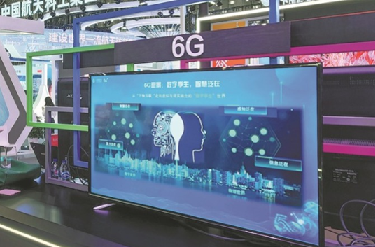
As competition over 6G development intensifies worldwide, China is stepping up efforts to deepen cooperation and push forward global standardization, as the upcoming 2025 6G Development Conference is scheduled to be held in Beijing from Nov 13 to 14.

 The two-day event, to be held in the Beijing Economic-Technological Development Area, or Beijing E-Town, will bring together leading scientists, policymakers and industry leaders from around the world to discuss 6G innovation, real-world applications and international cooperation.

 Now in its fourth edition, the annual conference has evolved into China’s most influential gathering on 6G, co-organized by the China Academy of Information and Communications Technology (CAICT) and the IMT-2030 (6G) Promotion Group, with support from the Beijing Municipal Bureau of Economy and Information Technology and Beijing E-Town’s administrative committee.

 “The year 2025 marks a pivotal point, as global 6G standardization research officially begins,” said Wang Zhiqin, head of the IMT-2030(6G) Promotion Group. “Innovation is speeding up and the direction of industrial development is becoming clearer. This is a moment that calls for collective wisdom and international cooperation.”

 The conference will feature keynote speeches from senior officials, academicians and international experts as part of seven parallel forums. The CAICT will also unveil new findings on intelligent integration, sensing/communication convergence and immersive connectivity, alongside results from the 2025 6G technology trials, added Wang, who is also vice-president of the CAICT.

 Beijing has emerged as a front-runner in China’s national 6G strategy, serving as both a policy incubator and innovation hub.

 Su Guobin, deputy director of the Beijing Municipal Bureau of Economy and Information Technology, said the capital has rolled out a comprehensive 6G innovation and industry cultivation plan, built around the concept of “one working group, one lab, two R&D bases and two industry clusters”.

 “In the north, Haidian and Changping districts have gathered leading research institutions and tech firms to form a hub for 6G breakthroughs,” Su said. “In the southeast, Beijing E-Town and Tongzhou district are shaping industrial clusters that connect innovation with real-world applications. Beijing aims to develop a trillion yuan-level industrial cluster and become a global center for 6G innovation.”

 Within the capital, Beijing E-Town is taking a leading role in turning 6G research into reality. Li Yantao, deputy director of Beijing E-Town’s administrative committee, said the area has launched China’s first city-level 6G industrial policy and is building an open innovation community dubbed “6G SPACES”. The initiative targets breakthroughs in intelligent connectivity, integrated sensing and space-ground communications.

 Led by key enterprises, Beijing E-Town has already built an early-stage industrial network covering chips, base stations, terminals and satellite communication devices. “We are working to form a complete industrial ecosystem that connects R&D, production, testing and applications,” Li said.

 Beijing E-Town also plans to expand pilot programs integrating 6G with autonomous driving, smart manufacturing and logistics. Measures such as “first-order” incentives and testing vouchers will encourage collaboration and accelerate the path from lab to market.

 China initiated 6G research as early as 2019, establishing the IMT-2030 (6G) Promotion Group to coordinate national efforts. China currently leads in 6G-related patent applications, accounting for around 40 percent, ranking top worldwide.

 Contact the writers at lijing2009@chinadaily.com.cn

Article inline ad

Global Medical Firms Showcase Innovations At CIIE

0

By Zhou Wenting in Shanghai | chinadaily.com.cn | Updated: 2025-11-07

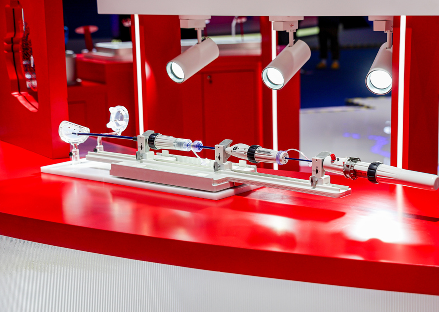
The 8th China International Import Expo, which kicked off in Shanghai on Wednesday, has proved to be a premier venue for medical companies worldwide to present their state-of-the-art technologies, highlighted by a slew of exhibits making their debuts.

 Illumina Protein Prep solution, which can measure 9,500 unique human protein targets, offering new insights into protein biology to fuel novel discovery for treatment of disease, makes its China debut at the booth of Illumina, a United States-based company specializing in DNA sequencing and array-based technologies.

 The solution can also enable researchers to add proteomics to large-scale genomics studies and fuel new insights across cancer and other diseases, with a streamlined sample-to-insights solution for discovery and clinical research, said the company, praising the expo as a bridge to introduce leading products into China and deepen cooperation with local ecosystem partners.

 Edwards Lifesciences, a US-based structural heart innovation company, highlights the debut of the Pascal precision transcatheter valve repair system, recently approved in Hong Kong. The system, enabling precise navigation and implant delivery, is a key innovative transcatheter solution in the company’s global portfolio for treating mitral and tricuspid valve diseases.

 “Given China’s aging population, this product’s value becomes more significant, as smaller surgical incisions usually mean better recovery outcomes,” said Ben Cheong, senior vice-president of Edwards Lifesciences’ China unit.

 “We’re determined to continue and expand such efforts in our R&D work, and will be committed to bringing more innovative products to China. The CIIE has been a key platform for launching new products,” he said.

 Germany-headquartered Siemens Healthineers is showcasing a range of cutting-edge achievements at its 1,000-square-meter exhibition space. Artis icono ceiling Xpand, an ultra-fast angiography system, is making its Asian debut.

 In the traditional ischemic stroke treatment process, patients need to be transferred between the radiology and interventional departments. The system makes breakthroughs in integrating preoperative assessment and intraoperative treatment in an operating room, saving 30 minutes of valuable treatment time and securing critical treatment opportunities for patients.

 “We ensure global innovations are introduced rapidly to the Chinese market. At the same time, we’ll continue to foster local innovation to better serve medical institutions across China and support their growth on the global stage,” said Jerry Wang, president of Siemens Healthineers China.

 At the booth of Gilead Sciences, Lenacapavir, to be used as the world’s only twice-yearly, long-acting injectable for HIV prevention, is making its Asia debut. The medicine recently won the best pharmaceutical product in the 2025 Prix Galien Award, often referred to as the Nobel Prize of the medical world.

 “Valuing the speed, openness, innovation, and partnership that CIIE enables, we look forward to building on this momentum together – driving access, advancing science, and delivering hopes for patients across China,” said Johanna Mercier, Gilead’s chief commercial officer.


Article inline ad

Yiwu Trade Value Hits Record In Jan-Sept

0

By Chen Ye in Hangzhou | China Daily | Updated: 2025-11-07

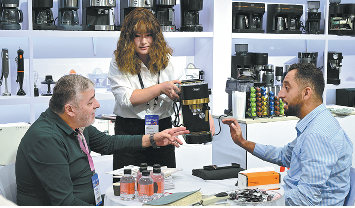
China’s bustling hub for small commodities, Yiwu in Zhejiang province, posted a record import and export value in the first three quarters of this year, driven by diversified global markets and strong export performance on the back of ongoing trade reforms.

 According to data from Yiwu Customs, the city’s total import and export value reached 631.2 billion yuan ($87.8 billion) between January and September, up 26.3 percent year-on-year. While exports grew by 25.7 percent to 553.99 billion yuan, imports saw a robust rise of 31.3 percent, reaching 77.21 billion yuan.

 These figures represent historic highs for the well-known trade hub.

 The market procurement trade method — a streamlined Customs procedure designed for small commodities — was the primary driver of this growth.

 Exports through this channel surged 29.4 percent to 458.38 billion yuan, accounting for a substantial 82.7 percent of Yiwu’s total exports and contributing 92.1 percent to the city’s overall export growth.

 Yiwu’s global trade network expanded significantly, with business conducted across 227 countries and regions. Notably, 181 of these markets saw year-on-year growth in trade volume with Yiwu, 29 more than the same period last year.

 Diversification continued to be a key strategy.

 Trade with Belt and Road partner countries stood out, climbing 28.9 percent to 429.39 billion yuan and making up 68 percent of Yiwu’s total import and export value.

 Among major trade partners, ASEAN led the growth with a 52.4 percent increase, followed by the European Union (32.1 percent), Africa (22.3 percent) and Latin America (15.2 percent).

 In terms of export commodities, labor-intensive products such as plastic goods and apparel led the way with exports of 232.17 billion yuan, up 25.7 percent. They were closely followed by mechanical and electrical products, which grew 25.2 percent to 203 billion yuan. The export of auto parts was a particular highlight, skyrocketing 63.3 percent.

 On the import side, consumer goods including cosmetics and personal care products made up more than half of all imports, with the value rising 30.5 percent to 43.89 billion yuan, which accounted for 56.9 percent of the total. Imports of mechanical and electrical products also saw a remarkable growth of 59.5 percent.

 This strong performance has been supported by Yiwu’s ongoing initiatives under a new phase of its comprehensive reform for international trade.

 The city is actively enhancing its market procurement system, promoting its “Brands Go Global” strategy, and establishing overseas marketing centers, such as new locations in Japan and Kenya.

 Efforts to integrate domestic and international trade through activities like the “Market Global Tour “and expanding multimodal “land, sea, air and digital” trade channels are injecting fresh momentum into Yiwu’s dynamic economy.

 chenye@chinadaily.com.cn

Article inline ad

Growing Health Awareness Feeds New ‘Slimming Economy’

0

Government policies promote improved lifestyles, boost sector

By YU RAN | China Daily | Updated: 2025-11-07 07:12   

China is seeing the advent of the “slimming economy”, with more consumers turning to expert nutritionists, fitness workouts and AI-driven smart devices to stay trim and healthy.

 The National Health Commission, the Chinese Center for Disease Control and Prevention and 16 other departments launched a three-year plan in June 2024 to curb the increase in body weight among the Chinese population and encourage the adoption of healthy lifestyles.

 In late 2024, the NHC released the guidelines for weight management, which predicted that if the current trends are not effectively controlled, overweight and obesity rates among Chinese adults and children are expected to reach 70.5 percent and 31.8 percent, respectively, by 2030.

 Obesity is no longer just a matter of physical appearance — it has become a pressing health concern tied to lifestyle, environment and overlooked medical conditions.

 “The government has encouraged hospitals to open weight management departments. This is to help people look at obesity scientifically, starting from the root causes, rather than just eating less or exercising more,” said Fei Jian, deputy director of the Luwan Branch of Shanghai Ruijin Hospital.

 Some patients, for instance, eat very little, but gain weight due to factors such as thyroid problems, lack of sleep, stress, and even a gut bacteria imbalance, which can all affect an individual’s metabolism.

 Fei said the first step in healthy weight management is understanding what drives weight gain. Skipping this crucial step, he warned, often leads to failed attempts at weight loss and maintenance.

 “Endocrine disorders can make weight management harder: insulin resistance increases hunger and fat storage, PCOS (polycystic ovary syndrome) promotes visceral fat, growth hormone deficiency reduces muscle and increases fat, and leptin resistance sustains obesity,” he said.

 Extreme fasting, crash diets, or weight-loss injections may yield quick results, but they can also trigger metabolic crises, electrolyte imbalances, acute pancreatitis, or heart arrhythmia problems.

 “Losing more than 1.5 kilograms per week can harm muscles, the heart, and other organs, and very low body fat in women may cause menstrual problems. Safe weight loss is 0.5 to 1 kg per week, supported by gradual, science-based lifestyle changes,” said Fei.

 He advocates tracking calorie intake, prioritizing sleep to regulate hormones, and setting realistic goals.

 “For those with obesity linked to medical conditions such as hypothyroidism or PCOS, personalized care is essential — sometimes involving medication or even surgery — alongside tailored nutrition and exercise guidance,” said Fei.

 The key to avoiding regaining weight lies in forming good habits, he said. “Long-term balancing of diet, exercise, and rest — supported by a healthy mindset — is what truly safeguards both weight and well-being,” he said.

Fit for purpose

 Fitness participation is rising, according to the 2024 China Sports and Fitness Industry Data Report.

 As of December 2024, China had 87.5 million fitness club members, with active members averaging 5.32 visits per month, and short-term passes accounting for over 60 percent of purchases.

 Wu Qingcheng’s experience with weight loss offers an insight into the national trend. At 43, the coffee shop owner and fitness coach in Tianjin has experienced the challenge of balancing career demands with his health.

 When Wu returned from Japan in 2009, his work in finance brought success, but also excess. Business banquets and irregular schedules pushed his weight from 60 kg to 80 kg. “The hardest part wasn’t controlling my diet but maintaining a regular training routine amid an irregular work schedule,” said Wu.

 Over two years, he shed 10 kg, stabilizing his weight at 70 kg, which he has maintained. As he explored exercise routines and challenged himself, Wu realized fitness was more than building muscle.

 “Physical training can bring real improvement to both me and others, and with my own experience, becoming a coach felt like a natural step,” said Wu.

 His approach reflects a shift from crash diets toward sustainable habits, and he emphasizes three basics: regular exercise, balanced meals, and rest.

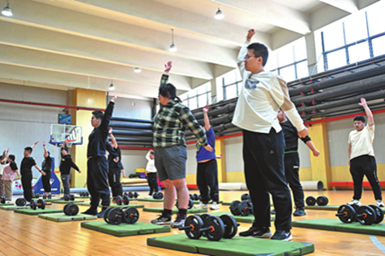
 “The first step is simply to move. For beginners, even a simple routine can work, but if you find it hard to stay motivated, try group classes — the atmosphere will push you forward,” said Wu.

 On diet, he advises weighing portions. “It gives you a real sense of what ‘a portion’ actually means and warns against blindly cutting calories,” said Wu.

 He prefers home cooking over light meals and cautions against demonizing carbohydrates. Crucially, he makes a distinction between losing weight and losing fat.

 “People want quick results, but what’s lost too fast often comes back just as fast, while gradual changes — from eating out to home-cooked meals, then tracking calories — help the body and mind adjust,” said Wu.

 Technology also plays a role. Wu uses a heart rate monitor and smartwatch, believing such tools provide “emotional encouragement” and support consistent results.

Burning money

 Nearly 80 percent of young people want to lose weight, with over 50 percent actively trying, according to the 2025 Young People’s Weight Loss Report by Just So Soul, the research arm of Chinese social app Soul.

 For 60 percent, exercise is the preferred weight-loss method, though 60 percent of those give up within three months. Despite challenges, more than 20 percent have successfully lost around 10 kg, the report said.

 Many young people are highly motivated when they start, but later burn out, discouraged by expensive programs, fad diets, and fleeting results.

 “I’ve probably spent more than 50,000 yuan ($7,000) in the past five years just trying to lose weight. Gyms, boot camps, slimming teas, apps, beauty salon treatments — you name it, I’ve tried it,” said Chen Wen, a 28-year-old brand strategist from Shanghai.

 Chen started trying to get fit in her early 20s and was convinced she would eventually find the right method. She signed up for a high-end gym in Jing’an district that charged nearly 1,000 yuan a month. For three months, she faithfully attended early morning spin classes and strength training sessions, but the results were patchy.

 “The schedule was too intense. After late-night client dinners, there was no way I could keep it up,” said Chen.

 Next came intermittent fasting, juice cleanses, and calorie-counting apps. She spent 2,000 yuan on a package of imported “detox” juices that promised rapid results. “I ended up hungry, dizzy, and bingeing on hotpot with friends the following weekend,” she said with a laugh.

 Beauty salons were another costly detour.

 Chen tried “fat-burning” treatments with AI body scans that claimed to target “stubborn” areas. Each session costs 800 yuan, and she completed nearly 10, but the changes were barely noticeable.

 “It felt more like I was burning my money more than burning fat. Despite all my efforts, the weight always came back, and what I lost most wasn’t fat — it was my confidence. Every time I failed, it wasn’t just about my body — it felt like I was failing as a person,” said Chen.

 She came to realize the problem wasn’t her willpower, but the unsustainable methods she was using. Now, instead of punishing herself with rigid diets and grueling routines, Chen takes evening walks in a small park near her apartment, cooks balanced meals with fresh produce, and meditates to ease stress.

 “While I still hope to slim down, my priorities have changed. I want to feel strong, energetic, and comfortable in my own skin; for me now, that’s the real definition of fitness,” she said.

Avoid quick fixes

 Nutritionist Zou Yu, a 39-year-old in Kunshan, Jiangsu province, has seen firsthand how many people struggle with misinformation and unrealistic expectations.

 She has spent 14 years helping over 1,000 clients navigate the challenges of weight management, guiding them toward practical, long-term strategies for healthier living.

 “In one-on-one consultations, most clients aim to improve health markers rather than appearance. Obesity often brings endocrine disorders, fatty liver, high blood lipids, and other risks,” said Zou.

 Her personalized nutrition plans help clients who previously relied on extreme diets, by meeting their individual metabolic needs and providing a variety of foods and balanced nutrition for effective weight loss.

 One client, for instance, repeatedly failed in his weight loss efforts, after following extreme and liquid-only diets. Zou created a tailored meal plan for him.

 “He followed the plan without feeling deprived. After a month, he lost 5 kg and felt energized,” she said.

 China’s meal replacement market reached 175 billion yuan in 2023 and is expected to grow to 353.49 billion yuan by 2027, with an average annual growth rate of approximately 19.5 percent, according to an iiMedia Research report released in 2023.

 Products like meal replacements can help clients achieve results, but Zou warns against long-term reliance on them.

 “They may reduce energy intake temporarily, but the weight often returns when normal eating resumes. Sustainable results come from methods suited to an individual’s body,” she said.

 Over the years, Zou has observed a shift in both the consumer mindset and professional practices. “Previously, people relied on pills, extreme diets, or laxatives, which could harm the body. Today, practitioners have medical or nutritional expertise, guiding clients safely. Consumers increasingly trust science-based approaches and seek professional guidance,” she said.

 Technology also significantly improved Zou’s work efficiency, allowing her to analyze clients’ daily nutrition and energy intake through photos and apps with AI dietary analysis. Wearable devices provide valuable data on sleep quality, activity levels, and heart rate, offering crucial insights for weight-loss progress.

High-tech help

 In 2024, China shipped 61.16 million wearable fitness devices and was also the largest market for such devices, according to a report by global market consultancy IDC.

 Supporting this trend, the April 2024 Special Action Plan for Promoting Healthy Consumption encourages technological empowerment and smart, portable fitness and outdoor equipment.

 As AI continues to be applied in fitness, companies like Speediance are betting that personalization, consistency, and community will define the next era of health management in China.

 Yang Wenhui, head of global market development at Speediance, said: “The biggest value of technology is to improve efficiency, reduce trial-and-error, and enhance the feeling of being accompanied.”

 Speediance’s flagship product, Gym Monster 2, an all-in-one home gym machine, provides intelligent resistance training, while products like VeloNix, a smart indoor cycling bike, and the Wellness+ platform expand the ecosystem into cardio, nutrition, and personalized guidance.

 “Wellness+ represents the company’s evolution. It’s not just a coach, it’s more like a health steward that understands your personal rhythm,” said Yang.

 By integrating AI algorithms with real-time health data, the platform adapts training plans, tracks progress, and connects nutrition with exercise, providing a holistic approach that goes beyond traditional dieting and workouts.

 “For example, Wellness+ allows users to snap a photo of their meal, instantly calculating calories and syncing data to adjust training plans. Instead of letting diet and exercise remain disconnected, we bring them together in one loop,” said Yang.

 Speediance also emphasizes community building, encouraging users to share experiences and celebrate milestones.

 “That kind of peer-to-peer encouragement strengthens motivation, gives users a sense of belonging, and provides the real energy that makes people go further,” she said.

 Yang envisions the slimming economy expanding into a broader health ecosystem, one that covers not only weight but also strength, endurance, mental well-being, and social connection.

 “For Speediance, the goal is to evolve from a hardware provider into a long-term health partner. We don’t want people to see us merely as a manufacturer of fitness equipment, but also as a company providing sustainable solutions for holistic health management,” said Yang.

 Contact the writer at sunnyu923@163.com

Article inline ad

CIIE Opens In Shanghai With Firms Using Expo To Debut Products, Tech

0

By CHENG YU in Shanghai | China Daily | Updated: 2025-11-06

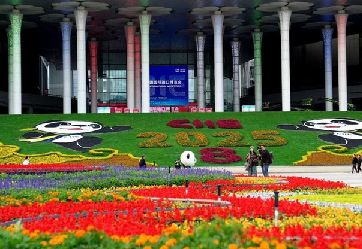
The China International Import Expo that kicked off on Wednesday has become not only a global stage for new product debuts, but also a premier arena for the world’s most advanced technologies to make their first appearance.

 United States-based firm Rockwell Automation launched new systems designed to boost communication efficiency and operational flexibility. Canada’s Clickmox made the global debut of its ClickCopilot, a home companion robot for senior citizens.

 In total, 461 new products, technologies and services are being introduced at this year’s expo, reaffirming its role as a launchpad where hard tech and innovations from around the world enter the Chinese market and begin scaling globally.

 Now in its 8th year, the CIIE has evolved from a trade showcase into a global innovation accelerator — a stage where multinational companies debut, localize and scale the technologies that will define the next industrial era.

 Swiss air-technology firm IQAir globally debuted an advanced air purification technology blended with 600-year-old Chinese craftsmanship. Inspired by Qing Dynasty (1644-1911) vases, the design integrates dragon and phoenix motifs with ancient oracle bone characters symbolizing harmony and wellbeing.

 Frank Hammes, global CEO of IQAir, said: “By enabling innovation through empowerment, China is fueling a dynamic ecosystem for new quality productive forces. For IQAir, that means bringing our most advanced solutions to China, from smart buildings to integrated health ecosystems.”

 Hammes said that China is expected to emphasize sustainability, innovation and wellbeing, with a growing focus on developing new quality productive forces, during the 15th Five-Year Plan (2026-30).

 “All these provide new opportunities for international innovators,” he said.

 China’s vast domestic market is also becoming a testbed for global innovation. Over the past five years, the country has surged into the world’s top 10 in the Global Innovation Index and now hosts the largest number of leading innovation clusters globally.

 Its complete industrial system and strong supply chain resilience have supported breakthroughs in fields from new energy to advanced manufacturing, fueling global digital and green transitions.

 As China advances its digital, intelligent and green transformation, the country’s evolution to an innovation hub is gathering pace. Multinational companies are increasingly using the CIIE as a strategic entry point to integrate with China’s innovation chain.

 Anna An, president of chemicals firm Henkel Greater China, said, “The CIIE accelerates the localization of global innovation in China, and it’s a vivid example of high-quality development and the nurturing of new quality productive forces.”

 An said professional buyers in the new materials section of the CIIE often come with specific procurement targets and collaboration goals, helping Henkel expand its business network and strengthen its innovation drive.

 chengyu@chinadaily.com.cn


Article inline ad

Green Projects Power Up China-ASEAN Ties

0

Investment in sector rises over fivefold compared to 2014 figures

By ZHENG XIN | China Daily | Updated: 2025-11-06

Clean energy cooperation between China and the Association of Southeast Asian Nations has increased dramatically over the past decade, with investment and installed capacity in joint hydropower, wind and solar projects experiencing exponential growth, said officials and industry experts.

 Cumulative investment in these collaborative clean energy projects had increased more than fivefold by the end of 2024 compared to 2014, said He Yang, deputy head of China’s National Energy Administration, during the seventh East Asia Summit Clean Energy Forum in Fuzhou, Fujian province, on Tuesday.

 Over the same period, installed capacity saw an even more impressive 15-fold rise, underscoring the deepening partnership in sustainable energy development, He said.

 “China and ASEAN have actively expanded power connectivity and promoted the development, utilization, and sharing of clean energy in recent years, paving the way for boundless future prospects,” he said.

 Since the inception of power trade between the two sides, cumulative transactions have reached approximately 75 billion kilowatt-hours, with green electricity accounting for over 90 percent of the total, data from the NEA show.

 The energy sector’s robust cooperation comes against a backdrop of strong overall trade ties. ASEAN has been China’s largest trading partner for five consecutive years, while China has maintained its position as ASEAN’s top trading partner for 16 consecutive years.

 This enduring economic relationship provides a solid foundation for continued expansion in clean energy collaboration, aiming for enhanced regional energy security and sustainability.

 According to Yi Yuechun, deputy head of the China Renewable Energy Engineering Institute, Chinese enterprises have significantly invested in ASEAN’s power infrastructure.

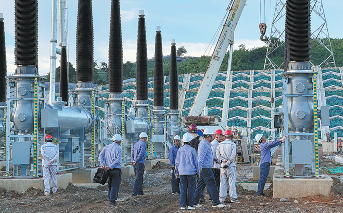
 By the end of 2024, China had established 16 cross-border transmission lines — with a voltage level of 110 kilovolts or above — with neighboring countries including Laos, Vietnam and Myanmar, facilitating over 75 billion kWh in cross-border power interchange, Yi said.

 China’s growing green investment footprint is also notable, making up 60 percent of foreign public investment in renewable energy within ASEAN between 2000 and 2020.

 Yi emphasized the strategic importance of energy as a crucial pillar for regional sustainable prosperity and core component of China-ASEAN cooperation, as China and ASEAN have emerged as primary contributors to global renewable energy capacity additions.

 He pointed out that both China and ASEAN have witnessed primary energy consumption growth rates significantly above the global average over the past five years, at 4 percent and 2.9 percent annually, respectively.

 Yi underscored the complementary nature of the partnership, acknowledging the varying stages of development, energy endowments and unique advantages between China and ASEAN.

 China’s cost-effective new energy products and equipment have been instrumental in supporting ASEAN’s energy transition efforts, he said.

 This support is reflected in the burgeoning trade of the “new three items” — electric vehicles, photovoltaic products and lithium batteries — which reached $12.15 billion in 2024, a 74 percent increase from 2019, the institute said.

 To elevate regional energy development to new heights, Yi suggested focusing on critical areas such as new energy development, energy storage technologies and smart grids, and seeking practical applications as well as technology demonstration cooperation.

 He highlighted offshore wind power as a particularly promising avenue for future collaboration, considering China’s rapid technological advancements in wind power, in addition to ASEAN’s abundant offshore wind energy resources as well as vast market potential.

 Offshore wind farms offer several inherent advantages, including high generation efficiency, proximity to major coastal load centers — where many of ASEAN’s population and industrial activities are concentrated — and their suitability for large-scale development, he said.

 Yi sought for the establishment of a practical cooperation platform to facilitate joint research, pilot projects, knowledge exchange, and potentially co-investment in this burgeoning sector.

 zhengxin@chinadaily.com.cn

Article inline ad

Hainan Readies For Role As Free Trade Flag Bearer

0

Favorable tariff policies to open up major economic opportunities, say experts and business chiefs

By Ma Si and Chen Bowen in Haikou | China Daily | Updated: 2025-11-06   

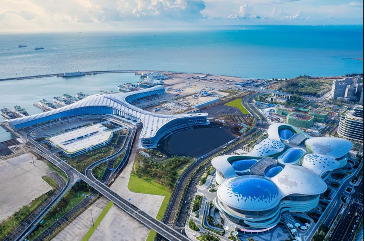
Foreign and Chinese companies are already scrambling to explore vast opportunities on Hainan, as the island province is poised to officially begin its special customs operations next month.

 Hainan Free Trade Port will implement major favorable tariff policies from Dec 18, with the proportion of products eligible for zero tariffs rising sharply from 21 percent to 74 percent.

 International organizations, company executives and experts have highlighted the importance of the changes amid rising trade protectionism, saying that it fosters free trade, reinforces economic globalization, and offers a “Chinese solution “to the world.

 Chinese business leaders, including Yu Minhong, chairman of New Oriental Education and Technology Group, Liu Yonghao, chairman of animal husbandry enterprise New Hope Group, and Li Shufu, chairman of automaker Geely, recently led delegations to Hainan to explore potential opportunities and negotiate collaborations with local companies.

 They have been joined by executives from tech giants such as Huawei and Unitree Robotics.

 In recent weeks, over 40 key agreements have been inked, covering sectors such as biopharmaceuticals, high-end manufacturing, the digital economy, tropical agriculture and aerospace technology. Each project signifies deeper industrial chain integration and upgrading, demonstrating the active participation of private enterprises in the Hainan Free Trade Port’s development.

 New Oriental’s Yu has visited Hainan four times this year and spent over 25 days on the island. He said the company’s training center for students who have studied abroad, located in Hainan’s Lingshui Li autonomous county, is expected to commence operations by the end of this year. The center will provide project services and entrepreneurial support for returning overseas students and startup founders.

 Liu of New Hope said his company is deepening cooperation with leading companies in Hainan’s breeding and green food processing sectors. They are also jointly establishing the Haiken New Hope brand with Hainan State Farms Investment Holding Group.

 Geely’s Li said, “Launching a special customs operation is a signature project of the Hainan Free Trade Port, and will provide a rare development opportunity for the growth of the private economy.

Opening-up milestone

 President Xi Jinping has made important instructions on the development of the Hainan Free Trade Port.

 In December 2024, he said that Hainan should continue to free the mind, explore new ground with innovation, overcome difficulties and make steady progress in its striving to build the Hainan Free Trade Port into an important gateway driving China’s opening-up in the new era and write the Hainan chapter of Chinese modernization.

 Mohammed Al Zarooni, chairman of the World Free Zones Organization, said: “Hainan province’s remarkable journey as China’s flagship free trade port offers a real-time case study in innovation, institutional reform, and global connectivity.”

 The organization is one of the largest global networks of free trade zones, uniting over 1,600 members from 141 countries and regions. Hainan’s pioneering role as a high-level free trade port and a dynamic hub for trade, sustainability, and innovation, highlights China’s growing leadership in global trade reform, sustainability, and digital transformation, Zarooni added.

 Wang Changlin, deputy head of the National Development and Reform Commission said the transition from preparation to full-scale special customs operations was a “milestone in China’s pursuit of opening-up”.

 Starting on Dec 18, all of Hainan island will operate as a special customs supervision zone under a two-tiered system. The operations enable free trade between Hainan and areas outside China’s customs border, while maintaining standard customs controls for the Chinese mainland.

 Eligible goods entering or leaving the island province — unless destined for the inland areas — will be subject to fewer customs checks and lower or no tariffs.

 The Hainan Free Trade Port will exempt about 6,600 product categories — 74 percent of all taxable items — from import duties, value-added tax and consumption tax, up from the current 1,900 categories. Goods imported by eligible entities from abroad, except those on a restricted list, will qualify for the exemptions, according to the policy approved by China’s finance, customs and tax authorities.

 These goods can circulate freely among eligible entities within the island. If they undergo at least 30 percent value-added processing in Hainan, they will be exempt from tariffs when entering the inland.

 The new operations will streamline cross-border trade and reinforce Hainan’s role in China’s broader strategy to deepen international economic integration, experts said.

 Fang Aiqing, president of the China Council for International Investment Promotion, said the special customs operations will see the implementation of more favorable zero-tariff policies for goods, relaxed trade management measures, convenient travel arrangements, and a more efficient and precise regulatory model.

 “This is not only a Hainan model for China’s special economic zones, but also a valuable contribution to global free trade port development,” Fang said.

 Li Daokui, dean of the Institute for Chinese Economic Practice and Thinking at Tsinghua University, said residents and tourists in Hainan will have access to international goods at lower prices, while entry for international vessels and personnel has been simplified through more open visa policies.

 “The import tariff exemption policy for products processed in Hainan is crucial, as it significantly boosts Hainan’s appeal to companies as a key manufacturing or processing hub for foreign goods to enter the Chinese mainland,” Li said.

Dynamic ecosystems

 The Hainan Free Trade Port represents the latest step in China’s exploration of special economic zones over more than four decades.

 Its origins can be traced to the establishment of the first special economic zones such as Shenzhen in Guangdong province in the 1980s, which were followed by various national-level development zones and pilot free trade zones.

 These zones have been instrumental as testing grounds for opening-up, promoting industrial agglomeration, and pioneering institutional innovation, experts said.

 “Such special economic zones continue their role as vanguards, actively advancing institutional opening-up in critical areas like foreign investment,” said Fang from the council.

 “For instance, Hainan Free Trade Port is piloting a cross-border trade services list, covering 70 special management measures across 11 categories, significantly elevating the level of openness in sectors such as finance and shipping.”

 The launch of Hainan’s special customs operations also has major relevance for the global network of free trade zones.

 “Modern free trade zones are building resilient ecosystems that extend beyond traditional tax incentives, incorporating digital single windows, market diversification strategies, and optimized logistics,” said James Zhan, chairman of the Executive Board of the World Investment Conference.

 Zarooni said free trade zones now account for nearly 20 percent of global trade and generate more than 90 million jobs in over 3,500 zones worldwide.

 “They are transforming into dynamic ecosystems that nurture small and medium-sized enterprises, foster entrepreneurship, and integrate cutting-edge technologies to enhance competitiveness,” Zarooni added.

 Chi Fulin, president of the China Institute for Reform and Development, said free trade zones should emerge as leaders in regional economic integration against the headwinds of slowing global goods trade and economic nationalism.

 “Strategic collaboration between hubs like Dubai, the Hainan Free Trade Port, and special economic zones in the Association of Southeast Asian Nations, or ASEAN, could potentially catalyze the formation of the world’s second-largest regional market,” Chi said.

Future focus

 The future strategic vision for Hainan positions it as a nexus in global trade flows.

 Chi believes Hainan should serve as a strategic conduit connecting China’s vast domestic market with the large markets of the Regional Comprehensive Economic Partnership, or RCEP, with a particular focus on ASEAN.

 By 2035, China and ASEAN are projected to be the primary engines of Asian economic growth. To realize this vision, Chi proposes the integration of Hainan’s policies with the RCEP, effectively creating a synergy that could see zero-tariff coverage expanded.

 Jochen Knecht, CEO of the International Free Zone Authority in Dubai, which runs one of the largest free trade zones in the United Arab Emirates, said the Hainan Free Trade Port is a gateway to Southeast Asian markets in two aspects.

 “It is an opportunity for Chinese companies to find other places to extend their reach, to explore new markets, but also for companies from all over the world to come to Hainan, using Hainan as a gateway into China,” Knecht said.

 “If we can be a bridge for that, and help translate between other areas of the world and China with our Chinese team, I think it’s a great opportunity,” he added.

 Pamela Mar, managing director of the Digital Standards Initiative of the International Chamber of Commerce based in Singapore, said Hainan can play an “excellent “role in demonstrating what seamless cross-border trade looks like.

 “It means that Hainan systems for cross-border trade and compliance will be able to interconnect with many other trading partners, and enterprises in Hainan will be able to treat trade seamlessly using globally interoperable trade standards for data and documents,” she said.

 Bambang Wijanarko, head of Indonesia’s Bureau for Special Economic Zone Supervision, said the Hainan Free Trade Port represented “best practice” and was achieved before his own country made the same progress.

 He said Indonesia would like to learn from Hainan’s experience and incentives, and maximize the “potency” of such a free trade zone. “I think it might be very useful for us,” he said.

Critical phase

 Building the Hainan Free Trade Port is a major step in China’s strategy to advance globalization, said Zheng Yongnian, director of the School of Public Policy at the Chinese University of Hong Kong (Shenzhen).

 “Hainan has developed rapidly in recent years, and the synergistic effects between its policies and the RCEP can be utilized more effectively and fully,” Zheng said, adding that more efforts can be made to improve its infrastructure and accelerate its alignment with high-standard international trade rules.

 A push should also be made to attract a greater number of talented people, Zheng said.

 Feng Fei, Party secretary of Hainan, said the free trade port has entered a critical phase of rapid development. It’s “a new frontier for China’s opening-up, a hot spot for regional cooperation, and a fresh engine for economic globalization”, Feng said.

 Over the past five years, Hainan has significantly expanded its global ties, with the actual utilization of foreign capital in Hainan reaching 102.5 billion yuan ($14.3 billion), averaging 14.6 percent annual growth.

 In the same period, outbound investment surged to $9.78 billion, showing an average annual increase of 97 percent. New foreign-funded enterprises jumped 43.7 percent on average every year to 8,098. Annual trade in goods grew 31.3 percent on average, and services 32.3 percent on average.

 The island now hosts investors from 176 countries and regions, with its economic openness ratio rising to 35 percent. Hainan also boasts China’s most lenient visa-free policy, allowing travelers from 85 countries to enter without a visa.

 Contact the writers at masi@chinadaily.com.cn

Article inline ad

Work Ongoing To Facilitate Nexperia’s Operations In China: Ministry

0

By ZHU WENQIAN | chinadaily.com.cn | Updated: 2025-11-06

China has made diligent efforts to help semiconductor manufacturer Nexperia’s unit in the country resume its supply, having promptly approved the relevant export license applications from Chinese exporters, and granted exemptions to eligible exports, the Ministry of Commerce said on Thursday.

 He Yadong, a spokesman for the ministry, said during a news conference in Beijing that China’s actions have been taken in a responsible manner to safeguard the stability and security of the global semiconductor supply chain.

 He said that China hopes the Netherlands will, from the perspective of safeguarding the overall interests of China-Netherlands and China-EU economic and trade relations as well as the stability and security of the global industrial and supply chains, act in a responsible manner, work with China, stop interfering in the internal affairs of enterprises and seek a constructive solution to the Nexperia issue.

 The Netherlands’ improper interference in the internal affairs of Nexperia has caused turbulence and chaos in the global semiconductor supply chain, He added. Disregarding the reasonable demands put forward by China on multiple occasions during consultations, the Dutch government has failed to demonstrate a constructive attitude, and has even escalated the global supply chain crisis.

 The Dutch side should bear full responsibility for this, the Ministry of Commerce spokesman said.

Article inline ad

Self-Driving Firm Pony.Ai In Hong Kong Stock Exchange First

0

By Fan Feifei | chinadaily.com.cn | Updated: 2025-11-06

Self-driving company Pony.ai, which is headquartered on the Chinese mainland, made its debut on the main board of the Hong Kong Stock Exchange on Thursday, issuing approximately 48.25 million shares.

 Total proceeds are expected to reach HK$7.7 billion ($990.4 million), making it the world’s largest Initial Public Offering in the autonomous driving sector in 2025, as well as representing the largest fundraising among Hong Kong’s new share offerings in the artificial intelligence industry this year.

 Following its Nasdaq listing in November 2024, Pony.ai’s Hong Kong listing marks the company’s establishment of a dual-primary listing structure across the United States and Hong Kong capital markets.

 James Peng, founder and CEO of Pony.ai, said that, after almost nine years of innovation and exploration, the company stands on the brink of large-scale commercialization in autonomous driving.

 “Our Hong Kong listing represents not only a critical step in our capital strategy, but also a significant milestone in connecting with global markets and resources,” Peng said.

 Founded in 2016, Pony.ai is dedicated to delivering autonomous driving technologies and solutions for the global mobility and logistics markets. It is the only company to hold fully driverless Level 4 commercial robotaxi service permits in Beijing, Shanghai, Guangzhou and Shenzhen.

 The company is also actively expanding its global footprint, seeking growth opportunities across key international markets in Europe, East Asia and the Middle East, and has accumulated more than 55 million kilometers of autonomous driving mileage.

 The company’s dual-primary listing marks the beginning of a new chapter for Pony.ai. Leveraging its technological capabilities and extensive experience in fully driverless operations, the company says it is accelerating the large-scale commercialization of autonomous driving and paving a clear, sustainable path to profitability for the entire industry.

Article inline ad

China-Europe Cooperation Achieves Economic Breakthroughs At Financial Street Forum

0

chinadaily.com.cn | Updated: 2025-11-06

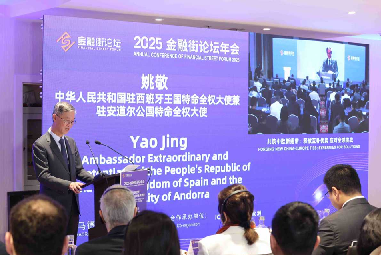
The recently concluded Annual Conference of the Financial Street Forum marked a milestone by incorporating five international sub-forums for the first time. Among them, the Madrid sub-forum emerged as a crucial platform that integrated pragmatism and foresight to enhance China-Europe financial cooperation and industrial synergy.

 Hosted by the Industrial and Commercial Bank of China’s Madrid branch, the sub-forum convened influential figures from leading Chinese and European financial institutions, tech startups, private equity firms and academic think tanks.

 Through cross-sector dialogue and complementary resources, the sub-forum became a catalyst for China-Europe collaboration, shifting from isolated projects to systematic coordination.

 Centered on financial and investment cooperation, the event represented a breakthrough from conceptual consensus to delivering actionable outcomes. Experts and institutional representatives from both regions discussed how finance can empower the real economy, advocating for accelerated two-way technology transfer and standardized co-construction through tools like industrial funds, mergers and acquisitions financing and cross-border investments.

 “China-Europe cooperation has entered a new phase of deep integration between the industrial and financial value chains,” said Yang Kaiyu, president of ICBC’s Madrid branch.

 On the green development front, representatives from institutions such as the Hungarian National Bank and the London Stock Exchange Group reached consensuses on green bonds, ESG investment, and information disclosure standards, propelling China-Europe sustainable development cooperation from policy alignment to standard coordination.

 Additionally, the sub-forum’s dialogue on artificial intelligence addressed global challenges such as algorithm transparency, data compliance, and cross-border risk management, exploring new pathways for digital collaboration.

 Reflecting on the significance of the Financial Street Forum, Yang emphasized its evolution from a platform offering Chinese solutions to one that drives international collaboration, with its overseas venues serving as bridges.

 “The overseas sub-forums offer economies at different development stages – and with diverse institutional backgrounds – an opportunity to align local needs with global perspectives,” he said.

 Looking ahead, the forum aims to strengthen its connection mechanisms between emerging markets and global resource allocation, linking multilateral development institutions, sovereign funds, and private equity to explore replicable inclusive financing solutions.

 “I believe that as its global influence continues to expand, the forum will connect more countries and regions to collectively contribute financial solutions to the world’s green, digital, and inclusive development,” Yang said.

 The forum will also enhance institutional and resource coordination among international financial centers. Building on Beijing Financial Street’s strengths in fintech innovation and capital market reform, it seeks to deepen cooperation with global financial centers, fostering an open and fair business environment for enterprises.

 “We hope the forum will further facilitate exchanges between China and Europe, governments and enterprises, and banks and enterprises, while advancing deeper institutional and resource coordination with other global international financial center cities,” Yang said.

 This initiative aims to ensure high-quality financial resources are allocated toward innovation and sustainability, he added.

 Highlighting the unique advantages of China-Spain cooperation, Yang noted that Spain’s pioneering experience in wind power development, low-carbon materials, and EU market standards complements China’s strengths in complete industry chains, technological iteration, and large-scale manufacturing.

 This synergy can unlock enormous potential in third markets such as Latin America, Africa and the Middle East, he added.

 Leveraging ICBC’s global network, spanning 69 countries and regions, the bank is poised to activate cooperation strategies. These include building a global settlement network that integrates domestic and overseas operations, renminbi and foreign currencies, and online and offline services, thereby reducing cross-border capital flow costs.

 Additionally, ICBC plans to offer customized financing solutions, such as forming syndicated loans with Chinese and European banks to provide long-term funding support for renewable energy and low-carbon infrastructure projects in third markets.

 The bank also aims to establish comprehensive risk management and capital market solutions, covering exchange rate and interest rate risk management, cross-border mergers and acquisitions, and overseas bond issuance.

 For Chinese new energy vehicle, lithium-ion batteries, and photovoltaic enterprises expanding into Europe, ICBC is developing an end-to-end financial service system.

 This system encompasses investment and factory setup, operation management, and capital repatriation, offering strong financial support for Chinese green technology enterprises seeking deeper integration into the European market, Yang said.


Article inline ad