Wednesday, November 25, 2026

Home Blog Page 149

CRRC Exemplifies Two-Way Opening-Up At CIIE

0

By Shi Jing in Shanghai | chinadaily.com.cn | Updated: 2025-11-06

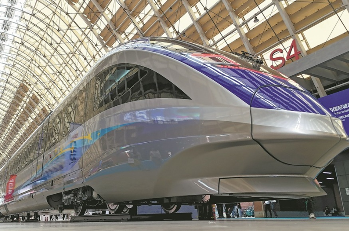
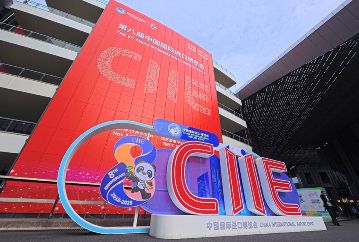
China’s major train manufacturer CRRC Corporation Limited plans to finalize agreements with 18 overseas suppliers from Germany, Spain, Switzerland and Japan at the 8th China International Import Expo, said the company’s vice-president Lin Cunzeng on Thursday.

 The agreements will be signed by CRRC’s 10 subsidiaries, with a combined value expected to top 100 million yuan ($14 million).

 The company has sent a delegation of 210 procurement experts and technology professionals to this year’s CIIE, a record high.

 As a consistent participant in the past seven editions, CRRC has sealed import contracts and agreements with international suppliers from 20 countries and regions, covering products such as wheels, bearings, metal raw materials, low-voltage electrical devices, and integrated circuits for rail transit equipment. The company has also forged long-term cooperation partnerships with well-established multinational companies such as German industrial conglomerate Siemens and Swedish bearings maker SKF.

 “While a large number of Chinese companies are making their overseas reach, many international companies are willing to enter China, as they cherish the opportunities churned out here. It is by combining independent innovation and open cooperation that development can be sustained. The CIIE has provided such a platform which is conducive to a complete, resilient and competitive industrial chain,” he said.


Article inline ad

China Launches Two National Industrial Recycling Platforms

0

By Yan Dongjie | chinadaily.com.cn | Updated: 2025-11-06

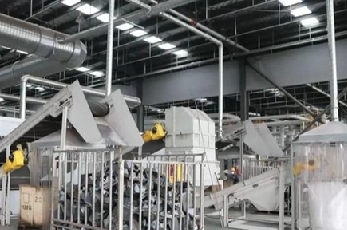
China has launched two major digital platforms to improve the recycling and reuse of industrial materials, in a move seen as key to building a more transparent and unified national system for resource recovery.

 China Resources Recycling Group (CRRG), a State-owned enterprise under China Resources (Holdings), unveiled the National Recycled Steel Trading Service Platform and the China Equipment Asset Recycling Platform on Tuesday in Tianjin.

 The initiative aims to address long-standing challenges in the recycling sector, such as fragmented regional operations and poor data transparency, by using digital technology and AI to connect information, logistics, and capital flows.

 According to Zhu Jianchun, deputy Party secretary and general manager of China Resources and Environment, a subsidiary of CRRG, the platforms will help integrate the digital and physical economies and shift resource recycling from isolated local operations to a coordinated national effort.

 Greater data transparency, Zhu added, would strengthen industry oversight, improve credit systems, and boost market confidence.

 The new steel trading platform has been opened to individual sellers, a move designed to simplify the recycling of small and scattered sources of scrap metal and increase the supply of green raw materials. Recycled steel mostly comes from old home appliances and machinery, about 90 percent of which is in the hands of consumers, small vendors, and private collectors, making it difficult to gather on a large scale, according to CRRG.

 To tackle this, the company has introduced a personal trading section with transparent pricing and quick matching between sellers and certified buyers. Every transaction is recorded and traceable.

 The platforms also extend beyond industrial materials. A nationwide green supply chain for mobile phone recycling has been rolled out across 32 cities, allowing residents to dispose of old devices safely at street-side kiosks.

 The service guarantees secure data deletion—addressing one of the public’s biggest concerns—and aims to draw more people into formal recycling channels as China ramps up efforts to build a circular, low-carbon economy.

 Liu Yuanqing contributed to this story.

Article inline ad

Nestle Sweet On Nation’s Massive Market

0

By WANG ZHUOQIONG in Shanghai | China Daily | Updated: 2025-11-06

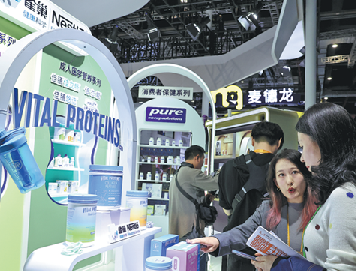
Kais Marzouki, chairman & CEO of Nestle Greater China Region, said the company remains confident in its long-term growth potential in the Chinese market, citing health, pet care and the “silver economy” as major opportunities, through creating demand and premium products while developing penetrating distribution channels.

 Nestle, a participant in the China International Import Expo since its inception, marked its eighth consecutive year at the expo with imported products across seven business units from 12 countries.

 “Although over 90 percent of what we sell in China is produced locally, the CIIE is a key moment for us to showcase our innovations and engage with all our stakeholders — from government partners to consumers,” Marzouki said.

 Marzouki said in an interview during the CIIE in Shanghai that he is confident for the Chinese market to become a growth engine for the group again.

 “China will continue to grow and develop and lead the way for many in the world in many areas,” he said. “What’s important for a company is to make the right choices and focus on where to play.”

 Marzouki mentioned several key growth areas for Nestle, such as health-focused products, pet nutrition and aging-related solutions, which have many opportunities in China.

 “Across generations, health has become a top concern. Consumers read labels carefully, try to understand ingredients and look for functional benefits,” he said. “This makes health and functional products a big opportunity for us.”

 He added that the trend toward affordable premium products also fits Nestle’s positioning as “one of the leaders in the world for health and wellness”.

 Reflecting on his return to China after more than two decades, Marzouki said the pace of transformation has been remarkable. “In many other parts of the world, you go back after 25 years and everything looks the same. Here, everything has changed,” he said, adding that Nestle is adjusting its business model to match the evolving market dynamics.

 “The tailwinds that drove growth for the past 30 or 40 years are not as strong anymore. We can’t just push products everywhere,” he said. “We need to focus more on quality, relevance and targeted propositions across our portfolio.”

 With 24 factories in China, the company has committed over 5 billion yuan ($702 million) in China since 2020 to expand its operations, with a strategic focus on high-tech and high-innovation sectors. Therefore, creating general demand is actually on the mind of the CEO.

 On Nestle’s diverse portfolio, Marzouki said: “Coffee consumption in China has developed tremendously — people are building the habit, and we see huge potential for the category.” In infant nutrition, despite a sharp decline in birth rates, Marzouki said the market still holds promise. “Even though the number of newborns has dropped, consumption per baby is rising, and international brands are gaining share.”

 Looking ahead, Nestle also sees significant potential in products designed for the silver economy.

 “By 2030, 25 percent of China’s population will be over 60. These consumers generally have more disposable income and are increasingly health-conscious,” Marzouki said. He cited the company’s Yiyang brand, which offers products supporting heart health and blood pressure management, as an example of tailoring innovation to local needs.

 He added that Chinese consumers today are balancing rational and emotional spending — managing budgets carefully while also seeking moments of indulgence.

 “Consumers think twice before every purchase, but they also want to please themselves with emotional connections — whether through food, beverages or other categories,” he said. “If we offer the right product at the right moment, the opportunity is huge.”

 wangzhuoqiong@chinadaily.com.cn


Article inline ad

Elekta Deepens Presence In China With Manufacturing And R&D Assets

0

By ZHONG NAN | China Daily Global | Updated: 2025-11-06

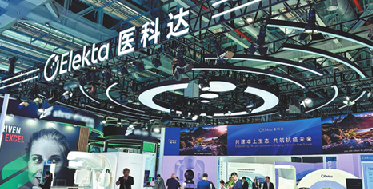
Elekta, a Swedish medical equipment producer, will deepen its presence in China to tap into the country’s vast market and expanding openness, while using locally produced innovations to deliver practical, globally scalable solutions, said its top executive.

 In a discussion prior to the eighth China International Import Expo, being held in Shanghai from Wednesday to Monday, Jakob Just-Bomholt, president and CEO of the Stockholm-headquartered company, said the grand event has evolved beyond a channel for introducing global innovations to China into a platform where Chinese innovations serve the world.

 “Elekta, also an eight-time CIIE participant, has accelerated its transition from an exhibitor to an investor, and now to a co-builder of the local ecosystem,” said Just-Bomholt, stressing the company’s participation reflects how the CIIE has evolved from a gateway for bringing global innovations into China into a platform where China-originated innovations now serve global healthcare markets.

 Eager to secure a greater market share, Elekta announced the launch of its “full-line locally-manufactured solutions” at this year’s CIIE, marking a key transition from introducing advanced global radiotherapy technologies to achieving comprehensive localization capabilities in China.

 The company also released China’s First Clinical White Paper on Highfield MR-guided Adaptive Radiotherapy, which documents the clinical progress of its Elekta Unity system — from its debut at the first edition of the CIIE to its current leading position in magnetic resonance-guided treatment in China, according to the company.

 Established in 1972, the Swedish company, which has more than 4,500 employees globally, develops and manufactures radiation therapy and radiosurgery equipment, as well as clinical management solutions for the treatment of cancer and neurological disorders.

 Under its growth plan, Elekta will deepen its “In China, For China, For the World” strategy by leveraging two key assets: its Beijing production center, the company’s most complete global manufacturing hub; and its Shanghai research and development center, Elekta’s largest software research center worldwide.

 These platforms will drive growth in high-potential fields such as intelligent radiotherapy, artificial intelligence-driven care, high-field MR-guided radiotherapy, adaptive radiotherapy and remote treatment planning, said Just-Bomholt.

 “In terms of business priorities, we will advance innovation through deeper local partnerships that support clinical research and accelerate the application of cutting-edge technologies,” he added.

 The company is also transitioning from localized production to localized R&D and ecosystem development to better serve Chinese clinicians and patients. Enhanced digital tools, remote services, and expanded professional training will strengthen service capabilities across the country, it said.

 Elekta’s Beijing manufacturing center also plays a pivotal role in the company’s global supply chain. Advanced radiotherapy systems produced there — including the Leksell Gamma Knife and linear accelerators — are exported to more than 120 countries and regions, accounting for over 60 percent of its total output.

 This, Just-Bomholt said, exemplifies how its China operations contribute to global trade and healthcare development.

 Just-Bomholt said China’s open and innovation-friendly policy environment, guided by initiatives such as Healthy China 2030 — which aims to enhance national health and generate positive global outcomes, and by strong support for the localization of high-end medical devices — continues to provide powerful momentum for sustainable growth.

 “At the same time, the country’s competitive and fast-evolving market encourages continual innovation and deeper local integration,” he said. Reflecting this confidence and commitment, Elekta is also the only radiotherapy exhibitor featured in the “Invest in China” section of the CIIE’s China Pavilion this year.

 Chen Jianwei, a researcher at the University of International Business and Economics’ Academy of China Open Economy Studies, said that as China advances consumption upgrading and technological innovation, demand for high-tech manufacturing products, medical devices, engineering materials and service solutions from multinational corporations is expected to keep rising throughout the 15th Five-Year Plan (2026-30).

 zhongnan@chinadaily.com.cn


Article inline ad

Syngenta Uses Shanghai Showcase To Sign Major Green Farming Deals

0

By Zhong Nan in Shanghai | chinadaily.com.cn | Updated: 2025-11-05

Syngenta Group, the Basel, Switzerland–headquartered agricultural technology company, signed partnership agreements worth more than $1.1 billion with several domestic and international collaborators during the eighth China International Import Expo (CIIE) in Shanghai on Wednesday.

 The agreements cover cooperation in agricultural inputs, green production, and value chain development, with the aim of jointly promoting the green transformation of agriculture and enhancing global food security.

 At its booth, Syngenta also debuted iMAP, a new smart farming model that harnesses artificial intelligence and big data to guide crop growth from planting to harvest. Tested on one million mu of farmland across 26 provinces and autonomous regions, the system supports China’s push for water-saving and efficient farming.

 Alexandra Brand, executive vice-president for sustainability and corporate affairs at Syngenta, said that the CIIE is a vital open platform for international exchange, especially for fostering innovation and cooperation.

 “We are committed to leveraging the CIIE platform to further tap into China’s innovative strengths, converge global wisdom, and deliver cutting-edge solutions to pressing food security and climate challenges facing Global South countries and humanity at large,” said Brand.

 According to the Swiss company, it has already carried out rice technology testing and promotion in over 30 countries and regions participating in the Belt and Road Initiative, delivering more than 100 high-quality rice varieties. These high-yield, high-quality and resilient crops are emerging as a “Chinese solution” that supports global food security and sustainable agricultural development.

 “As we celebrate 75 years of Swiss-Chinese cooperation, along with the 25th anniversaries of both the Swiss Center and Syngenta, we witness a remarkable partnership between two countries and cultures,” Brand added.

 “That has truly exemplified how international collaboration can address global agricultural challenges and benefit farmers in China and around the world.”


Article inline ad

Shanghai Business Forum Hears Of China’s Renewed Commitment To Opening-Up

0

By Wang Keju in Shanghai | chinadaily.com.cn | Updated: 2025-11-06

China will remain committed to high-standard opening-up during the 15th Five-Year Plan period (2026-30), and share its massive development opportunities with foreign-invested enterprises across various sectors, the Ministry of Commerce said in a news release on Thursday.

 At a time when unilateralism and protectionism are on the rise, a market that is fair, just and rules-based has become a scarce global resource, Vice-Minister of Commerce Ling Ji said at a roundtable with foreign enterprises during the ongoing China International Import Expo in Shanghai.

 The recently adopted recommendations for the next five-year plan have enhanced the predictability of China’s economic and social development for the period ahead, Ling added.

 The document’s emphasis on advancing high-quality development and expanding high-standard opening-up will provide greater stability and positive prospects for foreign businesses operating in China, he said.

 Ling added that China will further expand market access in the service sector, advance key foreign-funded projects, ensure foreign-funded firms’ equal participation in government procurement, deliver on tax incentives for reinvestment, strengthen intellectual property protection, and work to create a first-class, market-oriented, rules-based and internationalized business environment.

 Foreign business representatives at the roundtable expressed their commitment to expanding long-term investments and ramping up R&D innovation in China, enhancing localization efforts, and contributing to the country’s high-quality development with advanced technologies and high-standard products and services, according to the news release.

 wangkeju@chinadaily.com.cn

Article inline ad

Draft Rules For Funds To Protect Investors

0

By ZHOU LANXU | China Daily | Updated: 2025-11-06

China’s latest move to refine how mutual funds measure and evaluate performance marks a shift toward a more disciplined, quality-oriented capital market, experts said.

 They added that this would make fund managers more accountable and better align investment practices with investor interests.

 The comments came after the China Securities Regulatory Commission unveiled a draft guideline on Friday to enhance the role of performance benchmarks in regulating mutual fund investments by standardizing the selection and use of such benchmarks. The draft is open for public feedback until Nov 29.

 Sources said the reform will bring China’s mutual fund performance benchmark system generally in line with international standards, while featuring a regulatory requirement that links fund managers’ compensation to fund performance relative to benchmarks.

 Under the draft guideline, performance benchmarks must reflect a fund’s core strategy and investment style as defined in its contract and cannot be changed arbitrarily. Fund management companies must establish comprehensive internal controls to maintain stable investment styles. It also emphasizes the role of benchmarks in performance evaluations and calls for strengthened information disclosure and oversight by fund custodians.

 Regulators will guide the industry through a one-year transition period to ensure existing products adjust their benchmarks smoothly, avoiding market disruption.

 Analysts said that previously, a lack of systematic rules led to deviations in some actively managed equity funds, affecting investor returns. Once implemented, the new guideline will fill regulatory gaps, promote clearer investment styles, better protect investors and help attract long-term capital.

 Managers of actively managed equity funds whose long-term performance significantly lags behind benchmarks will see a marked reduction in performance-based pay, according to the draft guideline.

 This aligns with an action plan released by the CSRC in May to foster high-quality development of the mutual fund industry. According to the plan, managers whose over-three-year results fall more than 10 percentage points below the benchmark would see a notable cut in performance-based compensation, while those who outperform significantly may receive appropriate rewards.

 The Asset Management Association of China — the self-regulatory organization for the mutual fund industry — will soon issue supporting self-discipline measures to facilitate this compensation mechanism, sources said. The association has released draft operational details to implement the overall reform.

 zhoulanxv@chinadaily.com.cn

Article inline ad

Biz Seen Up With Hainan Special Customs Facility

0

Thailand’s CP Group to invest 10b yuan in island

By MA SI and CHEN BOWEN in Haikou | China Daily | Updated: 2025-11-06

As China’s Hainan province is set to officially commence its special Customs operations on Dec 18, officials and experts see more potential for economic cooperation between the tropical island and countries from the Association of Southeast Asian Nations.

 Kajtiti Wiwatwanont, consul-general of Thailand in Guangzhou, said the past 50 years have already shown how close China and Thailand are, and the next 50 years will be even more important.

 “We need to find new opportunities for economic cooperation, like Hainan which already started the Free Trade Port policy. This is a new opportunity for Thai entrepreneurs to invest and trade more in Hainan,” Wiwatwanont said.

 He said food processing, agriculture and services have big potential for more cooperation in the future.

 Thailand’s Charoen Pokphand Group plans to invest 10 billion yuan ($1.4 billion) in Qiongshan, Hainan, to establish an industrial park and a project covering primary, secondary and tertiary industries — including pig farming, tropical high-quality fruit cultivation, corn growing and food processing of agricultural products such as Hainan pork products.

 Waewdao Anusatit Diart, director of the Tourism Authority of Thailand Guangzhou Office, said the much-expected special Customs operations of Hainan will drive the upgrading and development of its tourism sector, attracting more related enterprises and investment to the province.

 This will provide more cooperation opportunities for Thai tourism businesses. The two sides can engage in deeper collaboration in areas such as tourism itinerary planning, tourism product innovation and tourism services, she said.

 Kim Jun-cheol, operations team officer of the Mureung Strategy Division of Donghae City Hall from the Republic of Korea, said: “Key policies such as tariff-free, low tax rates and tax simplification at Hainan Free Trade Port are a symbol of the Chinese government’s willingness to further open up to the outside world. In addition, low corporate income tax rates of 15 percent and the duty-free shopping limit policy of 100,000 yuan per year for each traveler will achieve significant results in tourism, services and high-tech manufacturing.”

 The comments came as The Dialogue between Haikou and Consulates-General of ASEAN Countries in Guangzhou 2025 concluded successfully on Friday. The event, now in its 17th edition, has become a flagship platform for Haikou’s international exchanges and a stable communication bridge connecting the city with ASEAN diplomatic missions in China.

 The dialogue featured in-depth discussions on the Hainan Free Trade Port’s policy advantages, development prospects, industrial planning and investment opportunities.

 Chi Fulin, president of the China Institute for Reform and Development, said China and ASEAN are projected to be the primary engines of Asian economic growth. To realize this vision, Chi proposed integrating Hainan’s policies with the Regional Comprehensive Economic Partnership, effectively creating a synergistic overlay that could see zero-tariff coverage expand.

 Contact the writers at masi@chinadaily.com.cn


Article inline ad

China, US Seek To Stabilize Trade Relations

0

Countries agree to deepen cooperation in agriculture, maintain sound momentum

By ZHONG NAN | chinadaily.com.cn | Updated: 2025-11-05

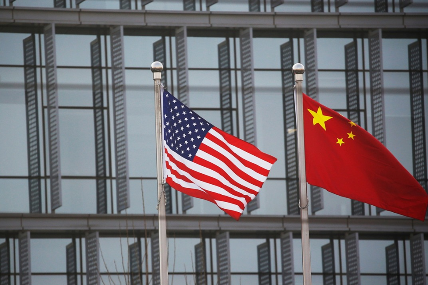
China and the United States should work together to create a favorable environment for practical cooperation in agriculture and other sectors, a statement released by the Ministry of Commerce on Wednesday said.

 Li Chenggang, China international trade representative with the Ministry of Commerce and vice-minister of commerce, said during a meeting with a US agricultural trade delegation in Beijing on Tuesday that sound China-US economic and trade relations benefit not only both countries but also the world.

 Since May, the two sides’ economic and trade teams have held five rounds of talks under the strategic guidance of the important consensus reached by the two heads of state, helping stabilize bilateral trade ties, Li said.

 This fully demonstrates that guided by the principles of equality, mutual respect and reciprocity, China and the US can find solutions through dialogue and cooperation, he added.

 Recognizing that the two countries are major trading partners in agricultural products, Li said recent fluctuations in China-US agricultural product trade stem from Washington’s unilateral tariff measures, adding that the two sides have complementary strengths in natural endowments, markets, capital and technology, and enjoy broad space for cooperation.

 He expressed the hope that the US would work with China to take a long-term view and foster a favorable atmosphere for substantive cooperation in agriculture and other fields.

 Members of the US delegation said that China is an important export market for US agricultural products, and the agricultural community in the country values its partnership with China.

 Stable China-US economic and trade relations are essential for agricultural trade, they said, expressing hope that bilateral ties would maintain a sound growth momentum.

 Jim Sutter, CEO of US Soybean Export Council, said, “We believe that enduring partnerships, built on trust and mutual benefit, are essential to navigating uncertainty.”

 To this end, the council is actively engaging with stakeholders, customers and suppliers across both China and the US to ensure soybean trade remains stable and predictable, said Sutter.

 “By combining open communication, flexible logistics and a problem-solving mindset, we strive to provide Chinese customers with stable and predictable deliveries of US soybeans, no matter what external challenges arise. We hope we can soon reengage our soybean exports to China,” he added.

 Also upbeat about the Chinese market, US agribusiness giant ADM announced on Wednesday that it would sign new cooperation agreements with major Chinese partners — including COFCO Group and China Grain Reserves Group — worth more than 20 billion yuan ($2.8 billion) during the ongoing 8th China International Import Expo in Shanghai.

 The US company will put its second animal nutrition facility into operation in Tianjin next year, further enhancing both production capacity and responsiveness to market needs.

 Fabiana Bianchi, president of ADM Asia-Pacific, said the CIIE has built an important bridge between China and the world, reflecting the power of openness, innovation and shared growth.

 “For ADM, it is not only a platform to showcase innovation, but also an opportunity to deepen collaboration and drive shared progress,” said Bianchi.

 Lifting export control

 In another development, the Ministry of Commerce announced on Wednesday that China will lift export control measures on 15 US entities and extend the suspension of such measures for another 16 entities for a year, effective Monday.

 Exporters that wish to ship dual-use items to these entities must submit an application to China’s Ministry of Commerce. The ministry will review the applications in accordance with relevant laws and regulations, and will grant approval to those that meet the required conditions.

 A separate ministry statement also released on Wednesday said that China will remove or continue to suspend for a year certain measures imposed in March and April against several US entities that were previously added to China’s unreliable entity list, also effective Monday.

 In addition, China will continue to suspend the 24-percent additional tariff on imports from the US for one year while retaining the 10-percent rate, according to an announcement released on Wednesday by the Customs Tariff Commission of the State Council.

 China will make the adjustment from 1:01 pm on Monday, the commission said, noting that the move aims to implement the outcomes and consensus reached in the China-US economic and trade talks.

 zhongnan@chinadaily.com.cn


Article inline ad

BOC Boosts Corporate Globalization With Innovative Payroll Solutions

0

By  SHI JING in Shanghai | chinadaily.com.cn | Updated: 2025-11-05

Bank of China, one of the “big four” State-owned commercial banks in the country, unveiled on Wednesday its global payroll solutions, aiming to better address the outbound reach of Chinese companies.

 The launch ceremony was part of the ongoing 8th China International Import Expo, which kicked off in Shanghai on Wednesday.

 By teaming up with MasterCard, BOC will issue a special debit card to provide payroll services globally, including a bank account accessible for the use of renminbi, 19 major currencies such as the US dollar, euro, Japanese yen, and any other currency required by the employer.

 A total of eight industry leaders, including Shenzhen Mindray Bio-Medical Electronics Co Ltd, logistics service provider YTO Express, and Baowu Resources Co Ltd, are the first batch of companies to enter into the global payroll cooperation with BOC.

 Zhang Hui, president of Bank of China, offers a keynote speech at BOC Global Payroll Solution Launch Ceremony held in Shanghai. [Photo provided to chinadaily.com.cn]

According to Zhang Hui, BOC’s president, the globalization of Chinese companies has entered a new phase under which cross-border talent cooperation and the management of global payrolls have become important pillars.

 Private companies have shown much vitality and resilience as China deepens its opening-up. To better integrate into the global industrial chain and supply chain, companies should better use various financial resources so that they can be more competitive in the international market, said Shou Ziqi, vice-chairman of All-China Federation of Industry and Commerce.

 Against that backdrop, financial institutions should continue to introduce new innovative products, which include customized and modular payroll management for private enterprises’ cross-border projects. Private enterprises can thus improve their compliance and better address the various challenges in cross-border operation, he added.

 Cross-border denomination, payment and settlement in renminbi can help to avoid foreign exchange risks effectively amid the rising uncertainties in the global market, said Chen Weidong, head of the research institute under BOC.

 With BOC’s new service, Chinese employees working overseas can avoid the trouble of providing lots of documents to open new payroll accounts at foreign banks and the high fees to remitting the payrolls back to China, which are among biggest headaches for overseas payroll management in the past, said Chen Weiquan, chairman of human resources service provider Shanghai Foreign Service Holding Group Co Ltd.

Article inline ad