Wednesday, November 25, 2026

Home Blog Page 150

AI Unlocks New Consumer Potential

0

By WANG KEJU | China Daily | Updated: 2025-11-05

China’s retailers and exporters, in an era marked by the explosive rise of artificial intelligence’s restructuring of consumer habits worldwide, need to embrace AI-powered mechanics to stay ahead of the curve and influence their presence and representation when going global, executives said.

 “Consumers are more complex than ever, and the way they shop has changed. And it’s important that marketing tactics change to accommodate the different user behaviors,” Diarmuid Gill, chief technology officer of commerce media company Criteo, told China Daily.

 According to a report on the changing consumer behaviors released by Omnicom Media Group in October, 65 percent of consumers now expect to get their ideal answers from AI overviews.

 Consumers are most likely to turn to AI in the early phases of the shopping experience to get familiar with products, discover options, or to simply look for inspiration — these being the main phases of the purchase journey as noted in the report.

 “We clearly observe this trend through monitoring clickstream, sessions and conversations on our platform,” Gill said, noting the application of AI is currently concentrated in product discovery and price comparison stages, with the final consumer decision-making phase remaining underdeveloped.

 As AI has become an important partner in the consumer shopping journey, brands need to promptly deploy AI agent-driven marketing strategies to capitalize on this critical growth opportunity, Gill added.

 In July, the State Council, China’s Cabinet, issued a set of guidelines on advancing the “AI Plus” initiative, explicitly encouraging the widespread adoption of AI agents in sectors such as commerce.

 Looking ahead, Criteo is expected to launch its agentic AI solutions in China in the next few months. Meanwhile, Criteo is open to partner with Chinese large language model service providers for win-win outcomes.

 China is Criteo’s third-largest market in the Asia-Pacific region and holds critical importance for our global strategy, said Szi-Wei Lo, executive managing director of Criteo APAC.

 “We deeply understand both the opportunities and challenges Chinese enterprises face in their overseas expansion, and clearly recognize how the retail and e-commerce ecosystem is evolving at an unprecedented pace,” Lo said.

 China’s AI user base has achieved leapfrog growth. As of June, the user scale reached 515 million, with a penetration rate of 36.5 percent, data from the China Internet Network Information Center showed in October.

 “If the last decade was defined by building the information superhighway, the next will be defined by deploying intelligent agents to operate on it,” said Zhong Xinlong, a researcher at the China Center for Information Industry Development.

 wangkeju@chinadaily.com.cn


Article inline ad

China To Unveil Plans To Integrate AI With Manufacturing

0

By Ma Si | chinadaily.com.cn | Updated: 2025-11-04

The Ministry of Industry and Information Technology, China’s top industry regulator, said it is drafting plans to deepen the implementation of its “AI plus manufacturing” initiative, as the world’s largest manufacturing powerhouse aims to fully leverage artificial intelligence to upgrade its sprawling industrial economy.

 The plan was unveiled in a signed article by MIIT Minister Li Lecheng in the Dangjian magazine published on Monday, which outlined China’s strategic direction for technological development and industrial transformation.

 Li said China will establish a comprehensive policy framework to support the application of AI, including the forthcoming issuance of implementation guidelines for the “AI + Manufacturing” plan. These policies will specifically address the intelligent transformation requirements for key industries, critical production processes, and strategic sectors, supplemented by an AI application guide tailored for manufacturing enterprises.

 The minister highlighted China’s current strong position in the global AI landscape, noting that the country’s AI industry has demonstrated vigorous developmental momentum.

 According to data from the China Academy of Information and Communications Technology, China’s core AI industry scale is projected to have exceeded 900 billion yuan ($126 billion) in 2024. Supported by more than 5,000 AI enterprises and over 400 national-level AI “little giant” companies, specialized and innovative small and medium enterprises were recognized for their technological sophistication.

 Looking forward, Li proposed a six-point strategic approach to advance AI-powered industrialization. This comprehensive framework encompasses accelerating breakthroughs in core technologies, deepening the integration of AI in manufacturing, cultivating competitive AI enterprises, optimizing the industrial development environment, strengthening security governance safeguards, and expanding international cooperation channels.

 The integration of AI large language models with advanced manufacturing equipment, including smart connected new-energy vehicles and machine tools, represents another key focus area. Additionally, the ministry will accelerate the development of AI agents across their entire life cycle — from design and development to testing and deployment — while exploring the potential of multi-agent collaborative ecosystems.

Article inline ad

Ever-Evolving Canton Fair Highlights China’s Commitment To Innovation, Global Cooperation

0

Xinhua | Updated: 2025-11-05     

GUANGZHOU — The 138th Canton Fair, known officially as the China Import and Export Fair, came to a close on Tuesday in Guangzhou, the capital city of South China’s Guangdong province, having seen a record number of overseas buyers attend.

 By Tuesday, this session has attracted over 310,000 overseas buyers from 223 countries and regions, marking a 7.5 percent increase compared to the previous session. The on-site intended export transactions at the Canton Fair reached $25.65 billion, said the organizer of the fair.

 The fair saw notable growth in buyers from the European Union, the Middle East, the United States, and Brazil, according to the organizer.

 Launched in 1957, the fair has evolved over the decades with improved quality as well as innovative ideas and services. It has become not only a gathering of global business partners, but also a platform showcasing China’s commitment to innovation and cooperation, providing certainty and confidence for the world economy.

 A platform for growth

 It has been 14 years since United Arab Emirates (UAE) businessman Anis Askerali Sajan first brought his two sons, Azhar and Sahil, to the Canton Fair. Today, the once curious visitors are seasoned buyers who represent their family company, Danube Group, which is a leading building materials and real estate firm in the UAE.

 “Experience outweighs knowledge. I brought my sons here to teach them how to connect with people. Now they are confident enough to negotiate prices and even visit factories on their own,” said Anis, who first attended the fair in 2000.

 Over the last two decades, he has witnessed the Canton Fair expand into a larger and more sophisticated platform, and his company has grown from a small importer into a regional business powerhouse.

 “The Canton Fair is a platform for growth. It’s a gold mine. It’s up to you what to identify,” he said.

 According to organizers, the 138th edition of the fair hosted more than 32,000 exhibitors, including over 1 million new products that were developed in the past year. About 800,000 items were debuted at this session.

 Shantilal Patel, an Indian buyer who attended the fair for the first time, said that the vibrant booths of artificial flowers from Dongguan Rosa Import and Export Co Ltd had been “irresistible”.

 “I’m really impressed by the quality and variety of Chinese products. There’s huge potential here, and the Canton Fair is a great window to explore the market,” he said.

 Hailed as a barometer of China’s foreign trade, the fair continues to attract global enterprises seeking orders, partnerships and market insights.

 “The fair remains closely aligned with the needs of businesses, with trade promotion at its core,” said Zhu Yong, head of the China Foreign Trade Center. According to Zhu, multiple events have been held to connect Chinese enterprises and overseas buyers more efficiently, and to explore new cooperation opportunities.

 A stage for innovation

 “The fair is held twice a year, yet China’s technology evolves so fast that every six months you can discover something different,” said Canyigit Atay, chief product officer at Turkey’s Arzum Electrical Home Appliances. “Even though I prepare in advance, I always find something new and innovative.”

 In recent years, the Canton Fair has not only expanded in scale but also in scope, launching new thematic zones and services to meet the needs of global buyers.

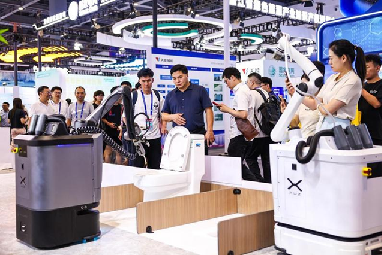
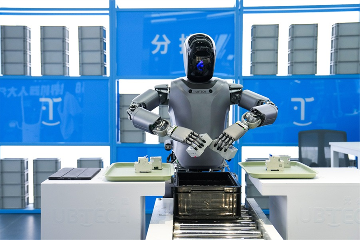
 A service-robot zone was first introduced at the session held earlier this year, and it continued to attract strong interest during its second appearance, featuring humanoid robots, robotic dogs and other advanced products from 46 leading companies.

 “Compared with last time, I can see even more new products now. There are constant innovations in China’s service-robot sector,” Atay said, adding that his company has begun cooperation with a Chinese robot supplier.

 This session also debuted an intelligent healthcare zone, featuring 47 companies specializing in surgical robots, intelligent monitoring systems and wearable devices.

 Song Ning, president of Hangzhou Diagens Biotechnology Co Ltd said that the fair offers valuable exposure for firms looking to go global.

 “We’ve been growing in the domestic market for years, and now, the Canton Fair gives us a platform to meet overseas partners,” Song said, adding that he feels more confident as so many professional buyers have shown great interest in the company’s products.

 This fair also introduced a smart navigation system pilot project integrating Bluetooth, BeiDou and 5G technologies to help visitors plan their routes around the 10 exhibition areas efficiently.

 Intellectual property protection has remained a highlight of the Canton Fair. Brian Fogarty, Nike’s vice president of global IP and global litigation, presented a plaque to the fair’s organizers to express gratitude for its constant efforts in the area of intellectual property protection.

 “Thanks to the Canton Fair’s full-chain intellectual property protection system, we have decreased from a peak of up to 1,500 infringement cases to only a few dozen complaints per session now,” said Fogarty, adding that Nike looks forward to seeing more exhibitors bring independently developed innovative products to the fair.

 A bridge for partnership

 “At the Canton Fair, you meet people from Russia, the Republic of Korea, Africa — from everywhere. This is what free trade really means,” said Amin Khoshnavaz, an Iranian businessman who has been attending the fair for over 15 years.

 Acting as an agent for Iranian buyers, Khoshnavaz has introduced hundreds of traders to Chinese suppliers. “The Canton Fair is not only a place for trade. It’s about ideas, partnership and trust. Every time I come here, I feel inspired,” he said.

 Cara Coleman, senior buying manager at Safat Home, a subsidiary of Kuwait’s Alghanim Industries, also attends the fair twice a year to meet suppliers and scout for new collaborations.

 “It’s great to meet all our partners in one place and explore new opportunities,” she said. “The connection between China and Kuwait is growing stronger, especially with ongoing infrastructure projects involving Chinese companies.”

 For Chen Liang, a manager at Guangdong Xin Yu Technology Industrial Co Ltd the fair is both a reunion and a launchpad.

 “Our company focuses on licensed toy car models. Every year, we bring dozens of new products to share with our friends from around the world,” he said.

 Francois Scoliege, a French executive of US-based brand licensing company Established Inc has been visiting the fair since 2001.

 “In China, we’re generating $300 million in turnover, and another 600 million through Chinese suppliers abroad. I believe there’s huge potential here,” he said.

 “The 32,000 exhibitors and some 300,000 overseas buyers are the Canton Fair’s most valuable assets,” said Zhu Yong from the China Foreign Trade Center, adding that organizers will continue providing high-quality services and strive to inject greater stability into global commerce.

Article inline ad

Investment Bank Urges Investors To Focus On Chinese Listed Companies That Are Growing Their Offshore Revenues

0

By REN QI | China Daily | Updated: 2025-11-05

Despite post-pandemic headwinds at home, Chinese companies have been reporting strong profits overseas, and this wave of globalization is emerging as a new growth engine that could reshape the country’s economic structure, Goldman Sachs said in a recent report.

 In an October report titled “China Strategy: Journey to the World”, Goldman Sachs urged investors to focus on Chinese listed companies that are growing their offshore revenues, arguing that a competitive renminbi, China’s entrenched position in global supply chains and the price-quality edge of Chinese products will continue to support the global expansion of leading firms. The investment bank frames this as a structural, rather than a cyclical, shift.

 Goldman Sachs said the long-held view of Chinese exporters as low-cost, low-value suppliers to consumers in developed economies is outdated. Chinese companies are exporting more to emerging markets as final destinations and have steadily gained share in higher-end manufacturing. The report added that China is now exporting services, intellectual property and culture, signaling a shift from purely price-led competition toward quality, innovation and brand-building.

 China’s export profile has moved up the value chain, Goldman Sachs analysts said. The products now range from toys and furniture to electric vehicles, lithium-ion batteries and solar panels. While quality has risen, Chinese goods typically retain a price advantage of 15 percent to 60 percent versus their global peers.

 In markets such as the United States, consumers have become increasingly familiar with newer Chinese brands including Luckin Coffee and Temu. Chinese companies are exporting not only physical products, but also digital business models built around direct-to-consumer platforms, social commerce and data-driven logistics.

 Outbound direct investment has increased in recent years, particularly in emerging markets and economies involved in the Belt and Road Initiative. Goldman Sachs said that locating capacity closer to end markets and diversifying sourcing enhance resilience to tariffs, trade frictions and policy uncertainty.

 The investment bank’s analysis shows that the share of overseas revenue among China’s listed companies has risen from 14 percent in 2018 to about 16 percent now. Though that remains far below the roughly 50 percent average for developed-market firms, Goldman Sachs expects the share to keep rising by around 0.6 percentage point a year, and added that growth momentum has persisted despite tariff regimes in some destinations.

 Visitors view a BYD vehicle at the Auto World Show in Hawalli Governorate, Kuwait, on Sept 22. The globalization of Chinese companies is emerging as a new growth engine that could reshape the country’s economic structure, a Goldman Sachs report said. ASAD/XINHUA

Goldman Sachs identified 25 leading companies across 12 industries. These companies generated an average of around 34 percent of their revenue overseas. Among them are Alibaba, BYD and PDD Holdings, whose stock prices have surged by an average of 56 percent since the start of 2024 and 39 percent year-to-date, according to the report.

 The investment bank argued that as profits from offshore subsidiaries flow back, China’s gross national product — the value of products and services produced by the citizens of a country both domestically and internationally, but not including income earned by foreign residents — could eventually outstrip gross domestic product. It likened the potential shift to Japan’s trajectory after its asset price bubble in the 1990s, suggesting that earnings for Chinese corporations may rely less on domestic demand and more on global consumption trends over time.

 Structural shifts in trade underpin the corporate push offshore. China’s share of global manufacturing value added climbed from 11 percent in 2001 to 33 percent in 2024, supporting an 11 percent compound annual GDP growth rate over the period and lifting the country to the world’s second-largest economy. Export destinations have shifted from developed markets toward emerging economies.

 Composition has also tilted toward advanced-technology goods. Over the past 15 years, the global export share of traditional labor-intensive products such as toys, textiles and furniture fell by about 10 percentage points, while machinery and electronics drove the gains from 2010 to 2020. In recent years, electrical equipment and the “new trio” — electric vehicles, lithium-ion batteries and solar cells — have accelerated as engines of export growth.

 Beyond merchandise, China has broadened its footprint by stepping up outbound investment, particularly in those economies involved in the BRI, evolving from a single-product exporter to a diversified operator offering services, technology and intellectual property. Goldman Sachs identifies several factors underpinning the globalization drive. A competitive renminbi is one such factor.

 On a trade-weighted basis, the currency remains highly competitive and is likely to be a tailwind for exporters in the coming quarters, the investment bank said. Goldman’s research suggested that the renminbi remains undervalued, providing a cost advantage for firms expanding abroad.

 Another pillar is China’s depth across supply chains. From raw materials to advanced manufacturing capacity, China is integral to any reconfiguration of global production networks. Cost advantages allow companies to price major manufactured goods 15 to 60 percent below global competitors, while scaling up quality and reliability.

 Chinese economists and industry experts said resilience and creativity are driving the outward push. Guan Qingyou, an economist and president of the Rushi Financial Research Institute, said Chinese companies have the capability, resilience and ingenuity to deliver a new round of high-quality globalization. Free trade and globalization will not end but will change, he said, adding that current trade disputes cannot halt China’s move toward institutional opening-up.

 Charles Onunaiju, director of Nigeria’s China Research Center, called the BRI an important platform for global cooperation that has delivered tangible results from infrastructure construction to improvements in public services, creating opportunities for developing countries to deepen cooperation and pursue shared development.

 In 2024, China remained the world’s largest trader in goods for the eighth consecutive year, and services trade topped $1 trillion for the first time. From coffee machines and robotic vacuum cleaners to electric vehicles and industrial robots, exports increasingly embody higher technology content. Companies such as DeepSeek have lowered barriers to technology adoption globally by offering high performance at lower cost, and advances in artificial intelligence, quantum technology and cloud computing are creating new paradigms for services trade. “Chinese intelligent manufacturing” and “Chinese innovation” are refreshing the global perception of “Made in China”.

 China has expanded platforms for opening-up, hosting the China International Import Expo, the China International Fair for Trade in Services, and the China International Supply Chain Expo, said Serik Korzhumbayev, editor-in-chief of Kazakhstan Industry Daily. He noted these events provide channels for product showcases, resource matching, deal-making and industrial linkages.

 “China is proactively sharing development opportunities with the world, and its matrix of national expos is expanding. The ‘window effect’ and ‘spillover effect’ are getting stronger,” he said. “China is committed to high-level opening-up, benefiting the world as it develops. Consolidating and strengthening industrial and supply chain cooperation is a shared expectation globally.”

 Analysts also noted that corporate globalization interacts with domestic policy priorities. On the one hand, the Chinese government has signaled support for high-quality opening-up, deeper participation in global value chains, and steady improvements in the business environment for foreign and domestic firms. On the other hand, overseas expansion can complement domestic rebalancing by diversifying earnings sources and hedging cyclicality in local demand, according to market strategists.

 Goldman Sachs expects that as overseas operations scale up, repatriated cash flow and profits will strengthen balance sheets, support investment at home and abroad, and contribute to a gradual shift in national income measures.

 For global buyers, the wider presence of Chinese companies means broader choice, faster adoption of new technologies and lower total cost of ownership. For China, the report pointed out that the shift signals a maturing industrial base, deeper integration into global value chains, and a possible reweighting toward GNP as overseas profits grow.

 renqi@chinadaily.com.cn

Article inline ad

China Unveils Plan For Breakthroughs In Water-Saving Equipment

0

By Ma Si | chinadaily.com.cn | Updated: 2025-11-04

China’s Ministry of Industry and Information Technology (MIIT) and the Ministry of Water Resources have released a joint plan to solidify and enhance the competitive edge of the water-saving equipment industry chain over the next five years.

 By 2027, breakthroughs are expected in critical water-saving equipment, supported by a more robust standard system, according to the plan, which was published on the MIIT’s website on Monday.

 According to the plan, efforts will be made to cultivate a group of leading enterprises, national manufacturing champions, and specialized, sophisticated, distinctive and innovative “little giant” enterprises within the sector.

 By 2030, the vision is to establish a comprehensive and technologically advanced water-saving equipment system, continuously strengthening the supply capacity for high-performance, high-efficiency and highly reliable products, the plan added.

 An official from the MIIT department of energy conservation told China Daily that “water-saving equipment is a vital component of the water-saving industry and serves as the foundation for ensuring national water security”.

 “Currently, China faces severe water scarcity, with per capita water resources at only a quarter of the global average,” the official added.

 Providing specifics on industrial usage, the official said that, in 2024, industrial water consumption reached 97.1 billion cubic meters, accounting for approximately 16 percent of the nation’s total water usage.

 Water consumption per 10,000 yuan ($1,404) of industrial output was 24 cubic meters, indicating a gap compared to international advanced levels. According to MIIT, the industrial sector bears the significant responsibility of supplying water-saving technologies, equipment, and products for agricultural and residential use.

 “We formulated this plan in response to the inadequate supply capacity and significant developmental pressures facing the industry,” the MIIT official said.

 “It is designed to further propel the water-saving equipment manufacturing industry towards high-end, intelligent and green development, thereby consolidating the competitive advantage of the entire industrial chain.”

Goldman Sachs sees global success driving China’s economic shift

Article inline ad

Cranial Technologies Taps China’s Growing Infant Care Market Through CIIE Debut

0

By Wang Zhuoqiong | chinadaily.com.cn | Updated: 2025-11-05

US-based medical device maker Cranial Technologies is making its debut at the China International Import Expo (CIIE) in Shanghai, aiming to tap into China’s growing demand for advanced infant care solutions and position the country as one of its most important international markets.

 “We are truly honored to participate in the CIIE for the first time — it’s one of the world’s most influential platforms for global trade and innovation,” said Debbie James, chief executive officer of Cranial Technologies.

 “CIIE provides a valuable platform for us to connect with potential partnerships that can help bring our world-class infant care solutions to more Chinese families. Our mission is closely aligned with the vision of Healthy China 2030, making this the ideal time to deepen our dialogue with this vital market.”

 The company has treated over 400,000 babies worldwide using its FDA-cleared DOC Band — the first cranial orthotic of its kind, designed to gently correct plagiocephaly, or flat head syndrome, during infancy. The product has received clearance from the National Medical Products Administration and will soon be available in the Chinese market.

 Acknowledging China’s open and high-standard business environment, James said it offers “tremendous opportunities” for international healthcare innovators like Cranial Technologies. At the CIIE, the company showcased the DOC Band, a custom-made orthotic helmet developed using proprietary 3D imaging technology and AI-driven design software.

 “Each band is designed to address each baby’s unique needs. Like snowflakes, no two are the same,” she added.

 Cranial Technologies began laying the groundwork for its entry into China in 2023. Its first clinic is located near Beijing Children’s hospital, with strong partnerships formed in Shanghai and Wuhan, Hubei province.

 The company’s expansion has been bolstered by support from Eurazeo, a leading European private equity firm, and China Investment Corp (CIC), the country’s sovereign wealth fund.

 “We’re entering China not just to offer a solution, but to share decades of clinical expertise and help more families give their babies a well-’rounded’ start,” James said.

 wangzhuoqiong@chinadaily.com.cn

Article inline ad

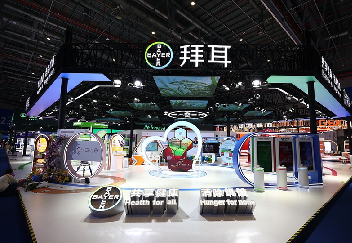
Bayer Bets Big On Mainland’s Biopharma Sector

0

By ZHENG YIRAN | China Daily | Updated: 2025-11-05 

Buoyed by China’s innovative pharmaceutical sector and favorable policies, German life sciences company Bayer is upbeat about the Chinese market and will keep investing in it, a senior executive said.

 Stefan Oelrich, member of the Board of Management of Bayer AG and head of its Pharmaceuticals Division, said: “China continues to be a great source of innovation. Especially speaking of startups in the biotech sector, China is emerging as a real powerhouse in the world, as the quality of innovations is constantly improving as we go along.”

 “China is one of our absolute top markets in the world. The potential of China keeps growing as the economy in China continues to be dynamic. The country is opening more accesses to innovation. It has also become a hotbed for innovation itself. Today in our industry, you cannot be a leader if you don’t have strong ties with China,” Oelrich said.

 He noted that in the process of China’s development, Bayer’s business position has improved. In China, the company has been able to replace some of its old products with new ones, including products in oncology, kidney disease and heart failure, and it expects to introduce more innovative products here in the future.

 Stefan Oelrich

On Nov 15, Bayer will officially open its Bayer E-Town Open Innovation Center in Beijing. Together with Bayer Co Lab in Shanghai, the two centers are expected to serve as “dual innovation engines” in China, aiming to drive innovation at every stage of the biopharmaceutical value chain, said the company.

 Specifically, the innovation center will focus on supporting transformation of scientific research achievements, co-creation of research clinical wards, digital innovation, talent and think tank development, and the incubation of local innovations.

 “We’re excited to be part of the innovation ecosystem in Beijing and look forward to codeveloping these sorts of innovation with local partner startups and universities — and taking it to the next level,” said the company.

 The recently concluded Fourth Plenary Session of the 20th Central Committee of the Communist Party of China underscored the importance of enhancing the overall performance of China’s innovation system, raising its innovation capacity across the board, striving to take a leading position in scientific and technological development, and keep fostering new quality productive forces.

 China should promote advances in original innovation and breakthroughs in core technologies in key fields, according to the communique it issued.

 “The Five-Year Plans served China well during the past 70 years. And they gave our multinational corporations a good outlook on what is probably going to happen in the coming years, and they allowed us to have stability and the ability to forecast our investments, given that we can expect a stable environment that favors innovation, and also favors the development of our industry. I believe that the biopharmaceutical sector is clearly a priority in this plan. That’s something that we very much welcome,” Oelrich said.

 Speaking of future strategic plans in China, Oelrich said Bayer will continue to work with local academies and startups to foster innovations in the pharmaceutical sector.

 “We want to clearly be part of them, and we are part of them,” he said.

 zhengyiran@chinadaily.com.cn

Article inline ad

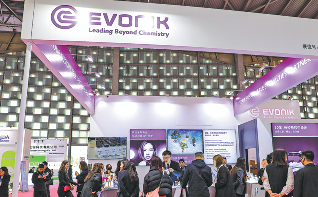
Evonik Says Nation Key To Sales, Profits

0

By ZHOU WENTING in Shanghai | China Daily | Updated: 2025-11-05 09:29

Specialty chemicals company Evonik has strong confidence in the long-term prospects of the China market, focusing not only on sales growth but also on increasing profits, a senior executive said.

 For the 2024 fiscal year, Evonik’s sales in China, a core growth engine of the global chemical industry, exceeded 1.4 billion euros ($1.62 billion), accounting for about 10 percent of its global sales.

 The company’s target for 2032 is to achieve one-third of its global sales from the Asia-Pacific region, with sales in China exceeding 2 billion euros, said Xia Fuliang, president of Evonik’s China unit.

 “Currently, sales in the United States and Europe markets are also increasing, so the Asian market needs to grow even faster to achieve this target. We are highly confident in the long-term growth prospects of the China market,” Xia said in a recent interview in Shanghai.

 “In recent years, the company has continuously increased its investment in the China market to seize the opportunities brought on by China’s economic upgrade and industrial transformation. This also helps us strengthen local innovation capabilities, improve production layouts, and serve the Asia-Pacific and global markets more efficiently,” he said.

 Evonik, which is based in Germany, has seen business grow in China over the past few years, said Xia. Despite challenges, such as US tariff policies and international geopolitical issues as well as “overcapacity” and intense competition in the country, the company has managed to realize single-digit growth in sales in the nation so far this year.

 “Moreover, we are more focused on profit growth, with marginal gains in China slightly outpacing sales revenue growth,” said Xia.

 He said the company’s goal in the China market is to achieve sustainable business growth, not just a one-year increase followed by a drop. “For many years to come, we expect all our 14 business lines to achieve continuous, sustainable and profitable growth,” Xia said.

 The company has identified sectors such as new energy vehicles, coatings and personal care as major sources of business growth in China.

 Xia said China’s automotive production exceeded 31 million units last year, a figure unimaginable for any other country. With a shift away from traditional vehicles to new energy vehicles, many of Evonik’s products are applied in this sector, allowing the company to grow alongside the expansion of China’s automotive market, he said.

 Evonik has also been enhancing local production capabilities to meet market demands more quickly and drive growth. In July, the company opened its largest medical devices technology center in Shanghai, which provides one-stop solutions from concept discussion to production, serving the entire Asian market.

 The new facility utilizes advanced processing technologies to develop and produce semifinished components with customized properties, such as bio-absorbability, low friction coefficient, anti-thrombosis, and antibacterial adhesion. These components can be further processed by medical device manufacturers into end-use devices for clinical applications in orthopedics, cardiovascular, neurosurgery, medical aesthetics, ophthalmology and dentistry, among others.

 In early 2026, Evonik plans to expand its specialty amines plant in Nanjing, Jiangsu province, to better serve the construction, automotive, and home sectors. The company also plans to establish a new joint venture plant in Leshan, Sichuan province, to help the solar, semiconductor, and food packaging industries.

 “Evonik resonates with China’s economic development, and is a deep participant and witness to the country’s high-quality development,” said Xia.

 At the eighth China International Import Expo, Evonik will show four globally premiered products, of which two have been developed in China. One is an oil stain remover, a new generation of ultra-efficient degreasing agent designed for kitchens plagued by heavy oil stains. The other is a polyurethane surfactant that helps home appliances meet new energy efficiency standards.

 zhouwenting@chinadaily.com.cn

Article inline ad

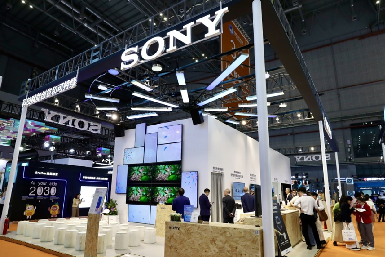
Sony Bullish On China Operations

0

Japanese tech giant sets up team to link strengths in electronics, music, film

By FAN FEIFEI | China Daily | Updated: 2025-11-05 09:06

Japan’s Sony Group Corp will continue to deepen its operations in China and expand cooperation with local partners and creators, in a bid to bolster the development of creative entertainment industry and meet Chinese consumers’ increasing demand for high-quality entertainment experiences.

 The company has always regarded China as one of its most important strategic markets worldwide, and has specifically established a cross-functional project team to integrate its strengths in electronics, music, film, gaming and animation to respond more swiftly to trends in the Chinese market, said Takeshi Yoshida, president of Sony China, in an interview with China Daily.

 “We firmly believe that China not only offers immense growth opportunities, but also serves as a key force in shaping the future of creativity and quality of life,” Yoshida said.

 He emphasized that cocreation with Chinese partners is the company’s key strategy. It has collaborated with Hunan Broadcasting System to launch a gourmet program and coproduced animation work in partnership with Chinese video-sharing platform Bilibili.

 Yoshida said Sony is revitalizing sectors such as smart mobility, sports and entertainment through cross-business collaboration, expanding the boundaries of immersive experiences through technological innovation, as well as supporting content creators and promoting cultural exchanges.

 It is leveraging its global resources and distribution platforms to help Chinese creators transform local cultural ideas into content with global influence, he said, adding that “Sony is committed to being an enabler and cocreator of China stories”.

 “We have always believed that China’s creators are a vital driving force of the global creative ecosystem,” Yoshida said, adding that the company continues to nurture creative talent, deepen the integration of industry and education, and provide sustainable innovation momentum for China’s future.

 At this year’s China International Import Expo, the Japanese company will present a series of first-time launches and a wide range of technologies, content and projects, such as see-through connected vehicle warning systems, multisensory immersive projects and anti-fall AI detection sensing devices for seniors.

 Takeshi Yoshida

“China is an important stage for Sony to display its innovative ambitions. I am delighted to see that many of the technologies and content showcased by Sony at the CIIE over the past two to three years have garnered widespread attention and are gradually becoming a reality,” Yoshida said.

 The company looks forward to using the CIIE platform to deepen collaboration with Chinese creators, industry partners and users, and will work with Chinese partners to build an integrated and symbiotic creative entertainment ecosystem to drive the high-quality development of the creativity sector.

 As for the fast-evolving artificial intelligence sector, Yoshida said: “Sony does not believe that AI will replace human creativity. Instead, we see it as a powerful tool to help creators bring their ideas into reality. Therefore, we are investing heavily in research and development, with a dedicated content creation technology department focused on exploring the application of AI in creative production.”

 AI technology is expected to significantly shorten development cycles for content such as games, liberating creators from repetitive and tedious tasks so they can focus more on core creative ideas, he said.

 The executive added that Sony will actively explore the use of AI and other cutting-edge technologies to better serve the diverse community of fans in China, and drive higher-quality, more efficient creative content production.

 The Ministry of Commerce said China saw 48,921 newly established foreign-invested firms in the first three quarters, an increase of 16.2 percent year-on-year. The actual use of foreign direct investment in September rose 11.2 percent year-on-year.

 Zhang Jianping, deputy director of the academic committee at the Chinese Academy of International Trade and Economic Cooperation, said the implementation of a new round of opening-up measures — such as a shortened negative list for market entry, the Foreign Investment Law and pilot free trade zones — has created favorable conditions for foreign businesses to invest in China.

China will hold greater appeal for foreign companies, given the nation’s unwavering efforts to expand high-standard opening-up and optimize its business environment, Zhang said.

 fanfeifei@chinadaily.com.cn

Article inline ad

Higher-Level Opening-Up To Offer New Possibilities

0

By ZHONG NAN | CHINA DAILY | Updated: 2025-11-05

China’s drive to advance reform and development through higher-level opening-up — a priority for the country’s development over the next five years — will unlock fresh momentum for multinational corporations and trading partners, business leaders and market watchers said.

 Highlighting the key roles of expanding opening-up at the institutional level, safeguarding the multilateral trading system and promoting broader international economic flows, they said these measures will help spur new growth drivers and enhance resilience against risks brought about by rising protectionism and geopolitical uncertainties.

 Their comments came as the Recommendations of the Central Committee of the Communist Party of China for Formulating the 15th Five-Year Plan for National Economic and Social Development stressed the idea to “share opportunities and achieve common development with the rest of the world”.

 A communique issued on Oct 23 after the conclusion of the fourth plenary session of the 20th CPC Central Committee, during which participants deliberated on the recommendations, stated that China should take the initiative to open wider to the world, promote the innovative development of trade, create greater space for two-way investment cooperation, and pursue high-quality Belt and Road cooperation.

 Noting that China aims to sustain long-term growth momentum and contribute to global economic stability, Mei Xinyu, a researcher at the Chinese Academy of International Trade and Economic Cooperation in Beijing, said that expanding institutional opening-up and promoting fairer, rules-based trade will not only attract quality foreign investment but also strengthen global confidence in China’s development path.

 Encouraged by China’s latest push to advance high-standard opening-up, Poh-Yian Koh, president for China at FedEx Corp, said the United States-based express transportation service provider will remain a steadfast supporter of and advocate for global trade.

 “We are confident that these policy directions will further expand market access, foster a more enabling business environment, and unlock broader opportunities for foreign businesses, all of which will continue to drive our growth in China,” Koh said.

 Operating more than 300 international flights to and from China each week, she noted that the country serves as one of the key engines of global trade and an integral part of FedEx’s global strategy.

 “Since entering the Chinese market over four decades ago, we have achieved substantial growth here, while both contributing to and benefiting from the country’s ongoing opening-up,” Koh added.

 Such optimism is echoed by other foreign business leaders who see renewed impetus for cooperation emerging from China’s latest policy blueprint.

 Jens Eskelund, president of the European Union Chamber of Commerce in China, noted that it is a positive sign that the communique outlined the need for the Chinese government to see that new demand drives new supply. “New supply helps create fresh demand, and that positive interactions are fostered between consumption and investment and between supply and demand,” said Eskelund.

 Joe Bao, executive vice-president for China at Kone Corp, the Finnish multinational elevator manufacturer with over 60,000 employees globally, said his company is encouraged to see that the recommendations of the CPC Central Committee for formulating the 15th Five-Year Plan place a strong emphasis on new urbanization, with elevator modernization playing a pivotal role in shaping smarter, more sustainable cities.

 To secure more orders, the Finnish company completed its largest elevator modernization project in Kunshan, Jiangsu province, earlier this year, and has built a presence in more than 40 Chinese cities.

 “Building on this momentum, we will increase our investments in the Guangdong-Hong Kong-Macao Greater Bay Area, one of China’s most dynamic city clusters,” said Bao. “This will strengthen local innovation, bring us closer to our customers and position us to capture the next wave of opportunities in China’s ongoing urban transformation.”

 Swiss technology company ABB Group will also deepen its footprint in China to support the country’s rapid energy transition and industrial electrification during the 15th Five-Year Plan (2026-30) period, while leveraging locally developed innovations to deliver practical technical solutions to global markets.

 Adrian Guggisberg, president of ABB’s distribution solutions division, said that as China has become ABB’s global anchor for innovation, talent and technology export, the company will expand both innovation and manufacturing capacity in China, increasing investment in flexible and digital power solutions.

 Under its long-term plan, ABB will work with Chinese partners to capture opportunities in urbanization, electrification and digitalization in both China and other parts of the world, especially from economies participating in the Belt and Road Initiative.

 Chen Jianwei, a researcher at the University of International Business and Economics’ Academy of China Open Economy Studies, said China’s new round of high-level opening-up will further integrate global trade, capital and innovation with its vast domestic market, and unite more countries to strengthen cooperation in addressing shared economic challenges.

 For example, China and the Association of Southeast Asian Nations signed the Free Trade Area 3.0 Upgrade Protocol in Kuala Lumpur, Malaysia, on Oct 28, injecting new momentum and confidence into both regional and global growth.

 “The steady inflow of investment from developed and emerging economies also shows that global businesses continue to view China as a key growth engine and a stabilizing force amid global uncertainty,” he added.

 China attracted 573.75 billion yuan ($80.68 billion) in foreign direct investment in the first three quarters of 2025, while FDI from Japan, the United Arab Emirates, the United Kingdom and Switzerland surged 55.5 percent, 48.7 percent, 21.1 percent and 19.7 percent year-on-year, respectively, during this period, data from the Ministry of Commerce showed.

 Despite mounting global economic headwinds and uncertainties over the global trade situation, FDI in China rose 11.2 percent from a year earlier in September alone.

 zhongnan@chinadaily.com.cn

Article inline ad