Wednesday, November 25, 2026

Home Blog Page 151

Hydrogen Upping Ante In Green Energy Portfolio

0

By Zheng Xin | China Daily | Updated: 2025-11-04

China is setting its sights on substantial industrial-scale breakthroughs in hydrogen energy during its 15th Five-Year Plan period (2026-30), with a strategic aim to achieve regional self-sufficiency in renewable and clean low-carbon hydrogen.

 This ambitious goal will be supported by the formation of a comprehensive technological innovation system and robust infrastructure, propelling the sector into a new phase of large-scale, market-oriented development, according to top energy officials.

 The nation cemented its preeminent global standing in hydrogen development last year, with total hydrogen production and consumption exceeding 36.5 million metric tons, securing its position as the world leader, said Liu Deshun, director-general of the National Energy Administration’s science and technology department.

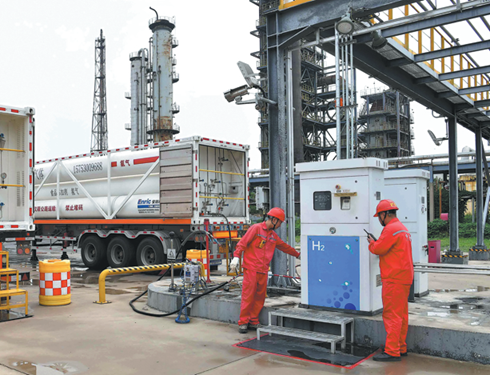
 This dominance extends to infrastructure, with China boasting over 560 hydrogen fueling stations and the world’s largest fleet of fuel cell commercial vehicles, exceeding 25,000 units, Liu said during the recently held High-quality Development of Hydrogen Industry forum, a sub-forum of the 2025 International Forum on Energy Transition organized by the NEA in Suzhou, Jiangsu province.

 Furthermore, its capacity for renewable energy-based hydrogen production now accounts for over 50 percent of the global total, underscoring its significant role in the clean hydrogen transition, he added.

 Liu also highlighted China’s vigorous push for technological innovation, with 27 “first-of-a-kind “hydrogen energy equipment items identified across five batches in recent years.

 Industry experts believe China’s hydrogen industry has entered a rapid development phase, supported by a series of policy measures.

 The Energy Law introduced last year officially included hydrogen in China’s energy management framework, representing the chemical’s huge development potential and scalable application scenarios, said Bian Guangqi, deputy director-general of the NEA’s science and technology department.

 According to industry forecasts, global hydrogen demand could reach hundreds of millions of tons by 2050, with green hydrogen accounting for the majority.

 As China intensifies efforts to achieve its carbon peaking and neutrality goals, green hydrogen and green methanol are emerging as critical solutions for deep decarbonization, said Lin Boqiang, head of the China Institute for Studies in Energy Policy at Xiamen University.

 Lin emphasized hydrogen’s role as an abundant, green, low-carbon and versatile secondary energy source that, through deep synergy with other energy varieties, can foster a diverse and integrated new energy system.

 China has cultivated the world’s most extensive hydrogen industry system, marked by rapid growth across all segments — production, storage, transport and application, he said.

 The NEA said that by the end of 2024, the nation’s annual hydrogen production capacity had surpassed 50 million tons, with total output exceeding 36.5 million tons, cementing its status as both the largest producer and consumer of hydrogen globally.

 The deployment of large-scale renewable energy-based hydrogen production projects is gaining momentum, particularly in resource-rich regions such as the northwestern, northern and northeastern parts of the country, said Bian.

 Approximately 600 renewable hydrogen production projects were planned nationwide as of September, with around 100 already operational, contributing an estimated capacity of 220,000 tons per year.

 This strategic integration is expected to significantly enhance renewable energy resource allocation and utilization, unlocking broader possibilities for development, said Bian.

 Bian added that China has also nurtured a dynamic and integrated hydrogen energy innovation ecosystem, characterized by active investment from a diverse array of enterprises, alongside research institutions, driving breakthroughs in fundamental research, critical technologies and disruptive innovations.

 This collaborative environment comprehensively covers core materials, components, manufacturing equipment and production processes, providing robust support for the industry’s layout and scaled production, he said, adding that the NEA has been actively engaged in international cooperation within the hydrogen sector, contributing to global efforts toward a clean and low-carbon energy transition by providing critical equipment and green hydrogen products to international projects.
Article inline ad

China Urges Netherlands To Responsibly Resolve Nexperia Issue

0

By Zhong Nan | chinadaily.com.cn | Updated: 2025-11-04

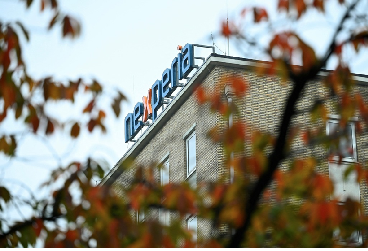
China has urged the Netherlands to act responsibly in resolving the issue concerning Nexperia, a Chinese-owned semiconductor company based in the Netherlands, emphasizing the importance of preserving both bilateral and China-EU economic ties, as well as ensuring the stability and security of global industrial and supply chains, according to China’s Ministry of Commerce.

 A ministry spokesperson said that Chinese authorities have repeatedly responded to the Netherlands’ government’s actions. These include an executive order on September 30 that interfered with Nexperia’s internal operations and a subsequent court ruling that stripped the Chinese company of its equity.

 The commerce official said these moves have “severely infringed upon Chinese companies’ legitimate rights and interests.”

 Despite repeated appeals from China during consultations, the Netherlands’ side has failed to demonstrate a constructive approach, further aggravating disruptions in the global semiconductor supply chain, according to the Ministry of Commerce.

 The situation escalated on October 26 when Nexperia’s Netherlands’ unit announced it would halt wafer supplies to its operations in China, forcing a production stoppage. Beijing holds the Netherlands “fully responsible for these consequences.”

 In response, China announced on November 1 that it would grant export exemptions for certain items in a bid to stabilize the supply chain and help Nexperia’s China operations resume production.

 However, the Netherlands’ side has yet to take “substantive actions” to resolve the issue. This inaction risks further negative impacts on the global semiconductor industry, an outcome that neither China nor the international community wants to see, the spokesperson said.

 China remains committed to safeguarding its businesses’ legitimate rights and interests and will continue to maintain the stability and smooth operation of the global semiconductor supply chain, the spokesperson added.

Article inline ad

Sinopec In Sodium-Ion Battery Deal With South Korean Firm

0

By Zheng Xin | chinadaily.com.cn | Updated: 2025-11-04

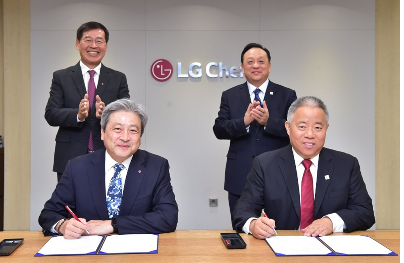
China Petroleum and Chemical Corp (Sinopec) and LG Chem, a South Korean chemical company, have signed an agreement to jointly develop key materials for sodium-ion batteries, targeting the burgeoning energy storage system and low-speed electric vehicle markets in China and around the world.

 The collaboration will focus on accelerating the commercialization of crucial components, including cathode and anode materials, for sodium-ion batteries.

 Both companies are also exploring new business models for the technology, and plan to expand their partnership into broader new energy and high-value materials sectors in the future.

 Sodium-ion batteries are gaining significant attention as a viable alternative to lithium-ion counterparts and, according to Sinopec, offer distinct advantages in terms of resource availability and cost-effectiveness.

 They have also been lauded by Sinopec and other market players for enhanced safety, faster charging capabilities, and superior performance in low-temperature environments compared to lithium iron phosphate (LFP) batteries, with less capacity decay.

 The market outlook for sodium-ion batteries is robust, particularly in China. Research institutions project the Chinese sodium-ion battery market to surge from an estimated 10 gigawatt-hours (GWh) this year to 292 GWh by 2034, representing an impressive compound annual growth rate of approximately 45 percent.

 By 2030, China is expected to account for over 90 percent of global sodium-ion battery manufacturing volume.

 “This joint development of sodium-ion battery materials will help both parties further enhance their technical strength and market competitiveness, promoting energy transition and sustainable development,” said Hou Qijun, chairman of Sinopec.

 zhengxin@chinadaily.com.cn

Article inline ad

8th CIIE To Kick Off In Shanghai With Enhanced Media Experience

0

By Zhou Wenting in Shanghai | chinadaily.com.cn | Updated: 2025-11-04

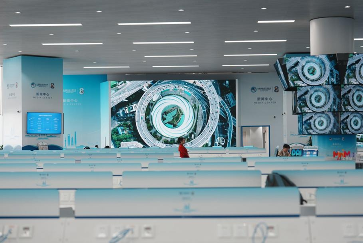
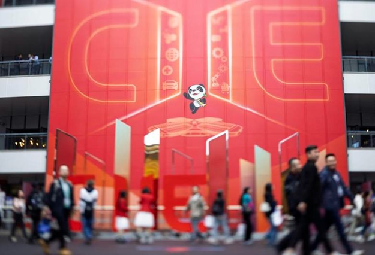
The 8th China International Import Expo is set to take place in Shanghai from Wednesday through Monday, with the media center, aiming to enhance the reporting experience for domestic and international journalists through smart technology and thoughtful services, opening its doors on Monday.

 The media center is equipped with a variety of functional areas — a comprehensive information service zone, public workspaces, private media booths, broadcast and television service areas, interview rooms, press conference halls, cultural exhibition and performance zones, and refreshment areas.

 Journalists from around the world will have access to authoritative information about the expo, live video streams of the opening and closing ceremonies, and the Hongqiao International Economic Forum. They can also attend press conferences and conduct interviews both inside and outside the expo.

 During the expo, the media center will host 15 themed press events focusing on major procurement agreements, policy interpretations, and new product launches. These events will feature exhibitors and chambers of commerce from countries and regions, such as Germany, Japan, Hungary, and Brazil. Shanghai’s key economic and business departments will also release the city’s latest initiatives on implementing national strategies, attracting foreign investment, optimizing business environments, and promoting the comprehensive benefits of the expo.

 Also, the media center will organize 16 themed interview routes to cover areas of interest to the media, showcasing the unique highlights of exhibitors and exhibits. These routes will include topics such as regular exhibitors and new participants, cutting-edge technology, global specialties, the silver economy, pet economy, and automotive legacy.

 This year, the media center continues to innovate with the introduction of embodied robots as “AI volunteers”, providing consultation, guidance, and distribution services.

 At the media center, the cultural exhibition and performance zones are upgraded this year, offering an immersive cultural space that combines technology and human warmth, creating a vibrant “CIIE living room” that allows journalists from home and abroad to explore Shanghai’s urban landscape in artworks and experience local cultural heritage projects.

Article inline ad

China Can Use Imports As A ‘Bridge Between Domestic And International Markets’, Expert Says

0

By Yin Mingyue | chinadaily.com.cn | Updated: 2025-11-04

As global trade faces rising geopolitical and technological challenges, China’s import strategy is expected to focus on strengthening supply chain resilience and promoting digital and green trade, experts said.

 Their remarks came as the 2025 China Import Development Report was released on Sunday in Beijing. By analyzing the latest trends in China’s import landscape, the report underscores the importance of expanding high-level opening-up to achieve high-quality economic growth.

 The report was jointly issued by Beijing Normal University and the China Association of International Trade, and edited by Professor Weihao, vice-dean of the School of Economics and Business Administration of Beijing Normal University and director of the National Import Research Center.

 China’s position in global and regional import networks has continued to strengthen, while the density and complexity of global import linkages have increased notably, the report said.

 According to the report, China’s import structure has shifted notably between 2010 and 2024. The share of technology-intensive products has slightly declined, and although imports of mid to high-tech goods have rebounded since 2021, there remains room for improvement compared with global averages.

 Wang Ming, vice-president of Beijing Normal University, said at the event that expanding high-level opening-up is a defining feature of Chinese modernization. “Imports serve as a vital bridge between domestic and international markets,” he said, adding that greater imports can help attract advanced global resources and empower the development of new quality productive forces.

 Jin Xu, chairman of the China Association of International Trade, said efforts should focus on promoting high-level opening-up, pooling expertise, and deepening research on import trade to advance its high-quality development and better serve China’s new development paradigm.

 The report also highlights emerging opportunities in digital trade and cross-border e-commerce imports, as well as the growing importance of education and regional differentiation in import demand.

 yinmingyue@chinadaily.com.cn

Article inline ad

Surge In China’s Electricity Market-Based Trading Volumes

0

Transactions increased from 1.1 trillion kilowatt-hours in 2016 to 6.2 trillion kWh in 2024

By Zheng Xin in Suzhou | China Daily | Updated: 2025-11-04

China’s electricity market has undergone a dramatic transformation over the past decade, with market-based trading volumes surging and new participants emerging, underpinned by the country’s rapid expansion of renewable energy, said officials and industry experts.

 Marketized electricity transactions in China drastically increased from 1.1 trillion kilowatt-hours in 2016 to 6.2 trillion kWh in 2024, representing a jump from 17 percent to 63 percent of total societal electricity consumption, said Huang Xuenong, executive director-general for regulation of the National Energy Administration.

 “After 10 years of exploration and practice, construction of China’s electricity market has achieved remarkable results,” Huang said during the International Forum on Energy Transition held recently in Suzhou, Jiangsu province.

 Figures released by the administration reveal that electricity market transactions in the first eight months of 2025 reached 4.3 trillion kWh, a 7 percent year-on-year increase, accounting for 63.2 percent of the country’s total power consumption.

 The number of registered market entities had soared to over 800,000, a 20-fold increase since 2016. Coal-fired power units and industrial and commercial users had fully entered the market, with new energy sources also set to participate fully, it said.

 Huang said the burgeoning market has also seen the proliferation of over 4,000 power sales companies, with nearly 600,000 retail users now purchasing electricity through the retail market.

 Novel business models, including independent energy storage, virtual power plants and load aggregators, are thriving, fostering dynamic interactions among diverse participants, which are crucial as China’s grid grapples with the demands of rapidly integrating intermittent renewables, he said.

 “With the rapid development of new energy, the demand for power system regulation capabilities is strong, and new business forms and models continue to emerge to ensure the safe and stable operation of the power system.”

 Yang Kun, executive vice-chairman of the China Electricity Council, added that by the end of June, the number of market operating entities nationwide reached 973,000, up 23.8 percent year-on-year.

 He emphasized that emerging entities like new energy storage, virtual power plants and load aggregators have achieved “large-scale, market-oriented breakthroughs”, injecting new vitality into the power market.

 China has set ambitious targets, aiming for nonfossil energy to account for over 30 percent of total energy consumption by 2035. The combined installed capacity of wind and solar power is projected to exceed six times its 2020 level, striving to reach 3.6 billion kilowatts.

 “Over the past decade, China’s power system reform has continued to deepen, the electricity market system has gradually improved, and resource allocation capabilities have been increasingly optimized, providing strong support for accelerating the construction of a new power system,” said Yang.

 Interprovincial and interregional transactions reached 1.03 trillion kWh in the first eight months of 2025, an increase of 9.4 percent year-on-year, demonstrating normalized cross-regional trading.

 The long-term market continues to serve as a “ballast stone” for power supply, while interprovincial spot markets and seven provincial spot electricity markets have officially commenced operations. The expanding and diversifying auxiliary services market provides critical support for high-penetration renewable energy integration, he said.

 With a shift that implies a greater reliance on market demand and pricing mechanisms, a sustained period of growth in energy storage capacity is expected, further incentivizing entities to invest in more sectors such as energy storage equipment to mitigate risk and ensure grid stability.

 According to the NEA, investment in energy storage has seen rapid growth in recent years, spurred by the expansion of renewable energy technologies.

 Zhu Gongshan, chairman of GCL Group, China’s largest private power producer, highlighted the critical importance of energy storage, alongside auxiliary services like vehicle-to-grid systems and smart microgrids, for ensuring grid stability.

 These technologies are essential for rapidly adjusting power output to meet fluctuating demand and providing reliable backup, thereby fostering a more resilient and responsive energy infrastructure, Zhu said.

 Shu Yinbiao, an academician at the Chinese Academy of Engineering, emphasized the profound significance of transforming the power sector, identifying it as a crucial element in China’s national endeavor to achieve carbon neutrality before 2060.

 “China’s power sector has undergone extensive reforms over the past two decades, culminating in a formidable infrastructure that now commands the world’s largest installed capacity,” he said.

 “This substantial growth and modernization reflect the nation’s significant investment and strategic development in its energy capabilities, establishing it as a global leader in power generation.”

 However, despite this remarkable progress, Shu cautioned that the sector faces ongoing challenges, particularly in maintaining and enhancing the reliability of such a vast and complex system, as the share of variable renewable energy continues to grow.

 These complexities are further compounded by the escalating integration of variable renewable energy sources, which necessitates sophisticated solutions to ensure grid stability and consistent power delivery, he said.

 To address these future hurdles, Shu advocated for a concentrated drive toward independent innovation within the power system. He stressed the imperative to achieve breakthroughs in core technologies, which are essential for guaranteeing the healthy and stable operation of new-generation power systems.

 Additionally, he underscored the need for intensified technological advancements to facilitate the widespread and large-scale deployment of clean energy solutions across China.

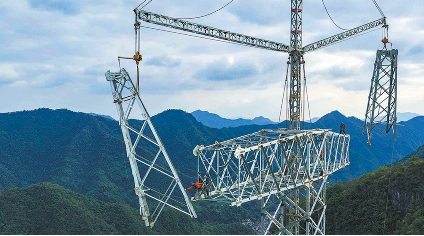
 To further boost the nation’s capacity to efficiently optimize and distribute renewable energy resources across vast geographical areas, China has been actively enhancing its power grid infrastructure through continuous advancements in grid connections and transmission projects.

 The country’s extensive ultra-high voltage grid, featuring lines operating above 800 kV DC or 1,000 kV AC, has profoundly reshaped its energy landscape, said Ye Xiaoning, a senior engineer at the new energy department of the State Grid Energy Research Institute.

 This powerful network facilitates the rapid integration of renewable power sources. By the end of last year, China had established 42 UHV transmission lines, creating a robust and resilient energy backbone, according to the institute.

 Grid operators, including State Grid Corp of China, are consistently bolstering new energy transmission initiatives, driving both intra- and inter-provincial projects.

 State Grid, the largest operator, is escalating its investment in UHV projects to enable efficient, long-distance power transfer. It plans a record investment exceeding 650 billion yuan ($91.35 billion) in the grid this year, demonstrating a strong commitment to an integrated and powerful energy future.

Article inline ad

High-Tech On Display At Smart Healthcare Zone

0

By QIU QUANLIN in Guangzhou | China Daily | Updated: 2025-11-04

At a smart healthcare exhibition booth inside the Canton Fair Complex in Guangzhou, capital of Guangdong province, a wheelchair demonstrates its ability to independently navigate the stairs, attracting the attention of many foreign visitors.

 “It is not just a wheelchair — it is a robot with the form and function of a wheelchair,” said Huang Zhou, deputy general manager of XSTO Co, which is based in Zhongshan, a manufacturing and trade hub in Guangdong.

 Based on a 360-degree automatic balance control technology, the robotic wheelchair can travel on various terrains, such as stairs, slopes, and uneven surfaces like grass and sand, according to Huang.

 “More than 10 motors and gyroscopes are present within the wheelchair to adjust balance in real-time, which, unlike traditional wheelchairs, effectively reduces the risk of tipping over on bumpy surfaces,” said Huang.

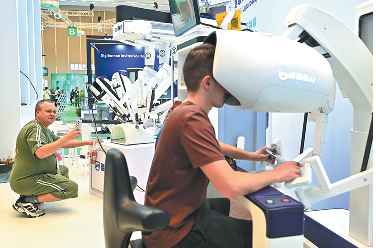
 Like the robotic wheelchair, a number of cutting-edge technological achievements in medical robotics, intelligent diagnostics, wearable devices, smart massage therapy and health monitoring are being displayed at the newly established smart healthcare zone during the third phase of the China Import and Export Fair, popularly known as the Canton Fair.

 The smart healthcare zone, with 140 exhibition booths, has attracted 47 leading domestic companies to showcase their technological achievements during the fair, also widely seen as a barometer of China’s foreign trade. The fair will conclude its 138th edition on Tuesday.

 “By introducing the smart robotic wheelchair, we hope to enable more elderly and disabled individuals with mobility challenges to enjoy the conveniences brought on by technology,” said Huang.

 The company has applied for over 300 technology patents, with its independently developed products being exported to more than 80 countries and regions. The company’s overseas sales account for over 70 percent of its total business revenue.

 China’s continuous development of smart medical technology has helped a number of companies to develop highly personalized and precise eldercare services, according to Huang.

 Besides the smart wheelchair booth, an AI embodied therapy robot, developed by Shenzhen Deyee Medical Technology Co, has also become particularly popular with overseas buyers.

 Based on human-machine voice interactive technologies, the robotic machine is capable of understanding and performing the massage, after users state their issues, such as shoulder or neck pain.

 Additionally, the robot’s therapeutic probe integrates various physical therapies, including nano red light, radio frequency and muscle electrical pulses. Users can also control the temperature, intensity and speed via voice commands.

 “We aim to make therapy more intelligent and personalized,” said Zheng Hongxia, a sales manager with Deyee, adding that the company has brought six flagship smart products to the fair.


Article inline ad

Italian Agri-Food Firms Eye CIIE As Gateway To Chinese Market

0

Xinhua | Updated: 2025-11-04

CARMAGNOLA — As the 8th China International Import Expo (CIIE) draws near, Italian agri-food companies see the upcoming event in Shanghai as a key gateway to the world’s second-largest consumer market, bringing both signature and new products to seek sales and partnerships.

 “The expo allows us to showcase ‘Italian quality’ directly to Chinese clients and distributors so that Italian flavor reaches more homes,” Ambrogio Invernizzi, president of dairy producer Inalpi S.p.A., told Xinhua.

 From northern Italy, the company will present powdered milk, butter, cheeses, and dairy ingredients for industrial use at its second appearance at the CIIE. Invernizzi described it as an opportunity to deepen cooperation with major Chinese dairy and retail groups while exploring localized product development.

 Amid complex global trade uncertainties, Italian entrepreneurs view the CIIE as a stabilizing platform for dialogue and cooperation. “China remains a market worth long-term investment,” Invernizzi said.

 Italgel S.p.A., a leading producer of gelatine and hydrolyzed collagen, will exhibit for the first time. Quality Director Andrea Martinengo, who had visited the expo twice before as a trade visitor, said the event is “not only about selling products, but also about brand building, market strategy, and finding partners.”

 He said the expo’s real value lies beyond immediate contracts. “It is a concentrated opportunity to learn and adapt to the Chinese market. Interest is growing, and more cooperation will follow,” Martinengo said.

 In the face of fluctuating tariffs and logistics costs, in-person meetings may help companies discover “practical ways to optimize export routes,” he added.

 Biotech company Sacco System, with 150 years of experience in probiotic research, will also debut at the CIIE. Board member Viola Verga said the firm aims to connect its R&D expertise with China’s expanding market for healthy and natural foods. “We hope to identify partners to develop yogurt products suited to Chinese tastes,” she said.

 China’s Ambassador to UN food agencies Zhang Lubiao underscored the CIIE’s role in deepening China-Italy agricultural cooperation through technical exchanges and joint projects. “Both sides can use the CIIE to enhance technical exchanges and joint projects,” he said.

 Italy, known as a nation of small and medium-sized enterprises, counts agriculture as a key pillar, with 56 percent of land under cultivation and 1.6 million farm-based businesses. Italian agri-food products are prized worldwide for their quality and craftsmanship. Dozens of them will showcase their offerings at CIIE Shanghai this year.


Article inline ad

Sino-German Trade Resilient

0

Long-standing ties in manufacturing, clean energy, digital sectors key growth driver

By Zhong Nan | China Daily | Updated: 2025-11-04

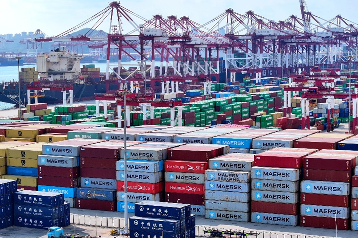
Trade ties between China and Germany will continue to strengthen, driven by advances in high-end manufacturing and green industries, as well as Germany’s efforts to cultivate stable, long-term growth partners amid intensifying trade frictions with the United States, said market watchers and business leaders on Monday.

 They made the remarks after Germany’s Federal Statistical Office reported in late October that from January to August, Germany’s exports to the US totaled 101 billion euros ($116.5 billion), down 6.5 percent year-on-year.

 Exports in August alone fell 20.1 percent year-on-year to 10.9 billion euros, the steepest decline since November 2021. Imports from the US reached 63.4 billion euros, bringing the total eight-month bilateral trade to 164.4 billion euros.

 By contrast, two-way trade between Germany and China proved more resilient, rising to 166.3 billion euros during the same period.

 Zheng Chunrong, deputy secretary-general of the Chinese Association for European Studies in Beijing, said the shift underscores how escalating US tariffs and trade barriers are curbing Germany’s export strength.

 Under a trade agreement that came into force on Aug 1, the US imposed a 15 percent tariff on most exports from the European Union. The Berlin-based Federation of German Wholesale, Foreign Trade and Services said the US tariff policy has been a major factor behind the export slump, citing a sharp decline in demand for German-made cars, machinery and chemicals.

 Zheng said that the continued expansion of China-Germany trade reflects both sides’ strong industrial complementarity and longstanding cooperation in manufacturing, clean energy and digital transformation.

 He noted that while geopolitical and tariff tensions have disrupted traditional supply chains between Europe and the US, China and Germany share deep industrial linkages — from automotive parts and machinery to chemicals and green technologies — that provide a solid foundation for stable, mutually beneficial trade.

 Wan Zhe, a professor specializing in foreign trade at Beijing Normal University, said as Germany looks to offset shrinking exports to the US, its companies are increasingly expanding investment and innovation partnerships in China.

 “Both sides can further strengthen cooperation in advanced manufacturing, electric mobility and low-carbon industries, which will inject greater resilience into their industrial and trade ties,” said Wan.

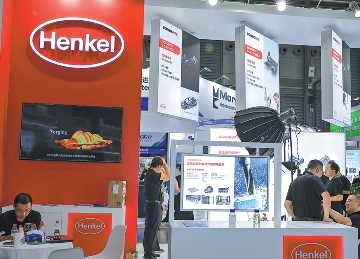
 Upbeat about the Chinese market, Anna An, president of the China unit of Henkel, a German industrial and consumer goods group, said that after acquiring a Chinese cosmetics manufacturer in Suzhou, Jiangsu province, in March, the group soon launched the second phase of its expansion and upgrading project there.

 “By adding land and introducing cutting-edge production equipment, we can further enhance our capacity and build an advanced manufacturing base geared toward the future,” said An, adding that Henkel also put a new packaging recycling assessment and testing center into operation in Shanghai in September to help promote China’s green transition toward circular packaging reuse.

 In addition to exporting its products manufactured by its plants in China to Japan, South Korea and many Southeast Asian countries, Henkel, a seven-time participant at the China International Import Expo — to be held in Shanghai from Wednesday to Monday — will showcase its adhesive technologies and personal and home care products at a 150-square-meter booth.

 Huang Feng, president of Ningbo Self Electronics Co Ltd, a manufacturer of LED lighting products in Ningbo, Zhejiang province, said that as more German households and businesses place greater emphasis on using eco-friendly products, his company plans to export more customized green lighting solutions to Germany in the coming years.

 From January to September, the Chinese company recorded a year-on-year export increase of over 30 percent, with shipments to Germany maintaining a similarly strong growth pace, according to Ningbo Customs.

 Data from China’s General Administration of Customs showed that China-Germany trade grew by 3.8 percent year-on-year to $157.07 billion between January and September, underpinned by strong industrial linkages and growing collaboration in high-end manufacturing and green technology.

Article inline ad

New Rules Aim To Tackle Growing Retired Batteries

0

By Wang Yuchen | China Daily | Updated: 2025-11-03

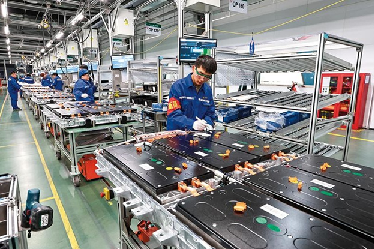
China is accelerating the recycling standardization to address the fast-growing expired batteries from new energy vehicles.

 The domestic recycling market is expected to exceed 100 billion yuan ($14.08 billion) by 2030, according to the State Administration for Market Regulation. It said the country recycled over 300,000 metric tons of power batteries in 2024, generating more than 48 billion yuan in market value.

 SAMR recently approved five national standards on the recycling and treatment of waste-battery chemicals, improving the sector’s technical framework.

 “With the rapid development of the NEV industry, China has become both a major producer and user of power batteries and is about to enter a phase of large-scale retirements,” said Liu Hongsheng, director-general of the Standards Technical Management Department of SAMR. “Advancing the recycling and utilization of power batteries is now a priority,” he added.

 However, hurdles remain. The China Electronics Energy Saving Technology Association estimates that China’s retired-battery volume will reach 820,000 tons in 2025 and exceed 4 million tons from 2028. Compliant recycling remains below 50 percent and illegal workshops persist. The industry also faces challenges related to an aging workforce and waste collection.

 To tackle these gaps, SAMR has issued a total of 22 national standards on power-battery recycling and reuse to date. They cover general requirements, management rules, dismantling, residual-energy testing, and recovery of lithium-ion waste, among other areas.

 As implementation advances, some enterprises have achieved 99.6 percent recovery for nickel-cobalt-manganese and 96.5 percent for lithium, highlighting greener and more efficient processes, according to SAMR. The regulator is also preparing foreign-language editions of key standards to enhance international adoption.

 At the company level, firms are expanding capacity along the battery-recycling value chain. Brunp Recycling, a CATL-controlled subsidiary focused on battery circularity, reported that its self-developed Directional Recycling Technology has been adopted as an advanced benchmark. In 2024, Brunp processed over 120,000 tons of spent batteries and produced 17,100 tons of regenerated lithium salts.

 BYD is establishing its own collection and second-life system for retired battery packs. According to statistics from the Ministry of Industry and Information Technology, the company has 51 NEV battery recycling service outlets nationwide.

 Local initiatives are also advancing alongside national efforts. For example, Fujian province has integrated technological innovation with standards development, introduced supportive policies and provided funding for battery-recycling projects. Three institutions there now have testing capabilities for key battery-safety items.

 Sichuan province and the Inner Mongolia autonomous region are exploring regional recycling centers and systems for e-bike lithium-battery recovery. Meanwhile, Shandong province is cultivating a lithium-battery industry chain with a 100-billion-yuan output target.

 Together with national standards, these practices sketch the future landscape of China’s power-battery recycling system.

Article inline ad