Wednesday, November 25, 2026

Home Blog Page 152

Smart Gadgets Making Life Easier For Households

0

By Qiu Quanlin | China Daily | Updated: 2025-11-03

Nine years ago, a friend of mine gifted me a robotic vacuum cleaner (certainly something unusual) when I moved into a new apartment in Guangzhou, capital of Guangdong province.

 After reading the user’s manual carefully, I managed to use the vacuum cleaner, developed by Chinese robotics and technology company Ecovacs, which is based in Nanjing, Jiangsu province.

 By downloading an app on my iPhone, I often planned the work duration for the cleaner ahead of returning home. It helped a lot in reducing housework by cleaning my house and mopping the floor.

 The robotic vacuum cleaner still works despite relentlessly cleaning my house almost every day for the past nine years, although the battery does not support it for as long as before.

 Today, using service robots like the vacuum cleaner for helping with housework is not unusual in Chinese households — they are also used in public places such as hotels, parks, hospitals, train stations and airports.

 After years of development, the influence of service robots has gone far beyond the Chinese market.

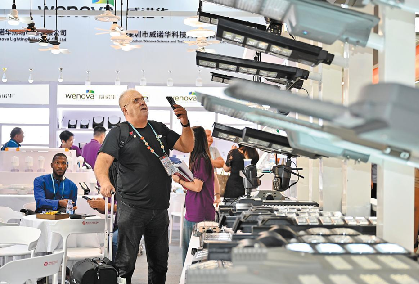
 They have, in fact, taken center stage at the China Import and Export Fair, popularly known as the Canton Fair, which kicked off its 138th edition in Guangzhou on Oct 15.

 Transactions in the service robotics industry have exceeded expectations since April after a dedicated service robotics zone was established for the first time during the fair’s 137th session, with 46 Chinese robotics companies demonstrating prowess in the sector, the fair’s organizers said.

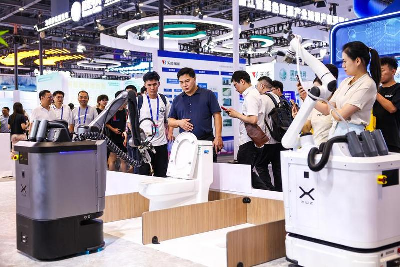
 To help more Chinese companies expand their businesses overseas, the organizers have again established a service robotics zone, where more industry-leading companies are showcasing intelligent products such as embodied robots and robotic dogs.

 In the fair’s first phase, which focused on displaying China’s advanced and intelligent manufacturing, I once again met with the sales managers of Keenon Robotics, a Shanghai-based technology company.

 “After displaying our products and services in the fair’s previous session, we have received international orders from buyers, mainly in the United States, Turkiye and Europe,” said Zhou Quan, marketing manager of Keenon Robotics.

 Since the fair’s previous session, Keenon Robotics has made a strong start in the overseas market, successfully securing orders worth nearly 1 million yuan ($140,605), according to Zhou.

 “Overseas partners are currently conducting tests of our products, which will help lay a solid foundation for subsequent large-scale market expansion,” Zhou said.

 Additionally, potential customers are also closely following up on the company’s latest products, according to Zhou.

 “The fair is undoubtedly a core bridge for us to connect with the global market, and its efficient platform has greatly facilitated the conversion of our overseas business, yielding significant results,” he said.

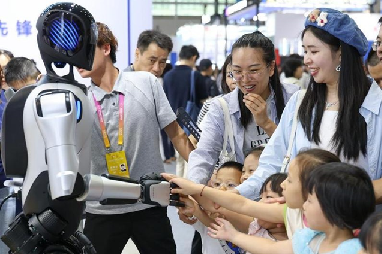
 During the fair’s 138th session, the company made a grand appearance with its lineup of general-purpose and specialized service robots, including the bipedal humanoid embodied service robot XMAN-F1, the high-end delivery robot T10, the narrow-path delivery robot T11 and cleaning robots C55 and C40.

 The service robots are widely used in hotels, airports, hospitals, and warehousing and logistics companies, Zhou said.

 The company looks forward to showcasing its technological depth and innovative capabilities to global customers through the series of comprehensive intelligent solutions that combine specialized and general-purpose applications, he said.

 “We have high expectations for international orders during the fair, partnering with more international collaborators to jointly usher in a new chapter of intelligent global business services, as there is great demand for service robots in the international market,” he said.

 According to an analysis by research firm Precedence Research, the global market size for service robots reached $54.5 billion in 2024, with an expected average annual growth rate of 15 percent over the next decade.

 I asked Zhou if the company’s new edition of robotic vacuum cleaners could help with housework at my apartment. “It can be used in every household,” he said.

 I had actually planned to buy a new one, as such robotic cleaners now have more functions, including the planning of cleaning routes, avoiding collisions with objects on the ground and automatically returning to the base station for battery charges. I must say that these new functions have impressed me quite a lot.

 

Article inline ad

China Showcases AI Innovation At Key Expo

0

Service robots combining technological foresight with mature applications, intelligent & green industrial and commercial products were displayed during 138th Canton Fair

By QIU QUANLIN in Guangzhou | CHINA DAILY | Updated: 2025-11-03    

Inside a service robotics exhibition hall at the Canton Fair complex in Guangzhou, capital of Guangdong province, an intelligent amphibious spherical robot is demonstrating its abilities, detecting obstacles on its way.

 The spherical robot, along with more service robots such as a high-altitude cleaning robot, mowing robot and orthopedic surgical robot, was among the hot items displayed by Chinese companies during the China Import and Export Fair, popularly known as the Canton Fair.

 Widely seen as a barometer of China’s foreign trade, the fair kicked off its 138th session on Oct 15, with the organizers again putting in place a service robotics zone to comprehensively display the country’s development in the service robotics sector.

 “The development speed of the robotics industry, especially in the service area, surpasses any previous industry,” said Duan Tianye, deputy general manager of Luoteng (Hangzhou) Science and Technology Co.

 After displaying its intelligent amphibious spherical robots for the first time in the previous session of the fair, the company, based in Hangzhou, capital of Zhejiang province, secured a number of orders from overseas buyers, Duan said.

 “Whether it’s the maturity of technology, the pace of evolution, the stability of products, the implementation of real-world application scenarios or the formation of a commercial closed loop, all these aspects are advancing much faster than in any other industry we have experienced before,” said Duan.

 The company’s Rotunbot intelligent amphibious spherical robots have been put into use by multiple domestic public security bureaus, armed police forces, airports and petrochemical industrial parks.

 The Rotunbot is the only amphibious intelligent robot capable of executing a variety of unmanned tasks over prolonged periods in non-friendly and critical environments such as airports, underground utility tunnels, and energy and chemical industries.

 Like Rotunbot, a wide range of robotic products that combine technological foresight with mature commercial applications were showcased during the fair’s first phase, demonstrating how AI innovation is rapidly bridging the last mile to real-world applications.

 “By displaying our latest products, we want to know better about the needs of overseas customers, thereby promoting product iteration and upgrades,” said Li Jiaxian, brand manager of Dobot Robotics, based in Shenzhen, Guangdong.

 The company has experienced explosive growth in the commercial services sector this year, with related business revenue surging by 165.5 percent year-on-year in the first half, Li said.

Dobot, best known for its collaborative robots that have been sold to over 100 countries and regions worldwide, showcased fascia massage robots, smart moxibustion robots and coffee robots.

 “The intelligent therapy robot is equipped with our self-developed robotic arm and high-precision force control technology, ensuring smooth and precise movements,” said Li.

 The therapy robot is suitable for various settings such as traditional Chinese medicine clinics, nursing homes and sports rehabilitation, Li said.

 “Additionally, our coffee robot has been successfully deployed at several transportation hubs and popular attractions.”

 China’s robotics industry has experienced explosive growth over the past few years, with the number of industrial robots in operation in the country exceeding 2 million units by 2024, according to a report released by the International Federation of Robotics.

 The development of the sector is part of the country’s drive to cultivate new quality productive forces.

 “By displaying our star products such as intelligent flexible robotic arms and commercial cleaning robots during the fair, we have developed strong confidence in the overseas market,” said Gong Ziyu, robotics division director of Guangzhou Shiyuan Electronic Technology Co Ltd.

 Citing the company’s commercial cleaning robot, which uses a self-developed algorithm to navigate through different spaces for cleaning, Gong said the company’s products have been sold to countries including Singapore, Germany, the United Kingdom and Poland.

 “On the first day of the Canton Fair, buyers from the Middle East and Europe already came to discuss orders, and many arranged to visit our factory in person,” said Gong.

 The company’s overseas sales reached 5.4 billion yuan ($760.58 million) in 2024, Gong said.

 In addition to service robotics, intelligent and green industrial and commercial products with innovative designs have become hot items for overseas buyers visiting the fair, according to the event’s organizers.

 In just a few days, the bustling throng of visitors in front of the exhibition booths have continued to effectively translate into an increase in export orders and a long-term partnership with overseas buyers during the fair’s second phase, which concluded on Oct 27.

 Each session of the fair, held twice a year in spring and autumn, respectively, includes three phases, focusing on different categories of export-oriented products.

 As of Oct 27, nearly 240,000 overseas buyers from 223 countries and regions attended the fair, marking a 6.8 percent increase compared to the same period of the previous session, according to the organizers.

 Intelligent and innovative products were still favorites with overseas buyers during the fair’s second phase, which focused on traditional industries such as ceramics, furniture and daily necessities.

 “Foreign buyers have expressed a stronger willingness to place orders,” said Guo Guiping, deputy general manager of Xingye Ceramics Co, which is based in Chaozhou, a major base of ceramics in eastern Guangdong.

 In the past sessions, some buyers were under significant inventory pressure and were not strongly motivated to place orders for new products, often adopting a wait-and-see attitude, Guo said.

 “One Turkish client, whom we’ve known for several years, showed a very clear intention to place orders this time and expressed great interest in our new products,” said Guo.

Leveraging the fair’s online and offline platform, Youngy Health Technology, a subsidiary of Youngy Group, a large investment holding group focusing on industrial operation, high-tech development and financial investment, has received several intent orders from core customers in major markets such as Europe, the United States and Australia.

 “New orders from overseas buyers have helped further solidify the market-leading position in the health consumption sector,” said Nie Xiaoyan, overseas marketing director of Youngy Health Technology.

 The company showcased a lineup of seven new products, including far-infrared therapy and phototherapy equipment at the fair’s second phase, demonstrating its strength and achievements in the healthcare technology field.

 The company’s new products presented the latest solutions in China’s health manufacturing, leading a new trend in green and intelligent manufacturing in the health sector, Nie said.

 In terms of intelligent manufacturing and the application of new technologies, the company has adopted various digital smart devices in production, which have not only improved manufacturing efficiency, but also increased wood utilization rates and reduced energy consumption.

 For example, the company’s far-infrared therapy products are equipped with an intelligent control system that allows the system to operate automatically based on user-set temperature and duration.

 The health management system, which is currently under development, will leverage advanced technologies such as big data and AI to automatically tailor the temperature and therapy duration of heat and light therapy according to individual health conditions.

 With its products passing stringent international quality tests and entering large retail chains such as Costco and Sam’s Club, the overseas market has become crucial for the company, Nie said.

 In addition to developed markets, emerging ones such as the Middle East and Southeast Asia will be key for its future business growth, Nie said.

 “New intelligent products with better after-sales service and high quality have become core competitiveness in overseas markets,” said Nie.

 In the first nine months of this year, Youngy Health achieved significant growth in both sales and profit, setting a record for the company’s performance, Nie said.

 “We are also increasing efforts to expand in the domestic market, focusing on high-end consumer groups and catering to customized needs, aiming to penetrate the domestic high-end health therapy market with high-quality products,” she said.

 qiuquanlin@chinadaily.com.cn

Article inline ad

Diversified Financing Structure Integral To Building Economic Powerhouse

0

By Guan Tao | China Daily | Updated: 2025-11-03

At present, China’s monetary policy remains supportive and relatively loose, with major interest rates hovering at historic lows. The low interest rate environment is expected to persist for some time, making the high-quality development of China’s capital market particularly important.

 From both domestic and international experience, monetary tightening can effectively curb rising prices, but monetary easing is less effective in tackling sluggish prices because the latter usually involves structural issues that must be addressed through targeted structural reforms.

 Understanding the current Chinese economy and its policy choices requires acknowledging both external uncertainty and the pressure of shifting growth drivers. These are challenges faced on the path of progress.

 Overcoming them will require accelerating the creation of a new development paradigm, fostering new quality productive forces suited to local conditions, and achieving high-quality growth, all of which depend on a robust and efficient capital market.

 China’s financing structure remains imbalanced, marked by heavy reliance on debt and a lack of equity. Increasing the share of direct financing, particularly equity financing, has long been a central goal of financial reform.

 The Central Financial Work Conference at the end of 2023 reiterated the need to optimize the financing structure and strengthen the capital market’s role as a hub of resource allocation.

 From last year, different high-level meetings all emphasize the importance of enhancing the attractiveness and inclusiveness of domestic capital markets, and policymakers have sent a clear and consistent signal of support.

 The capital market’s built-in mechanisms of risk sharing and benefit sharing help promote a virtuous cycle among industry, technology and capital. Whether nurturing emerging and future industries or upgrading traditional sectors through innovation, all rely on the capital market for support.

 Recent regulatory measures, such as rules on sci-tech innovation and mergers and acquisitions, have provided institutional safeguards for capital markets to serve the real economy’s high-quality development.

 As a super-sized economy, China must and can rely on internal circulation. Expanding domestic demand, especially boosting final consumption, is the only viable path forward.

 Consumption is a function of income, and property income is one of the four main sources of household income.

 The 14th Five-Year Plan (2021-25) called for increasing property income among urban and rural residents through multiple channels. Earlier this year, a special action plan to boost consumption further emphasized the need of broadening channels for property income.

 At present, most household wealth in China is concentrated in real estate, with relatively few movable assets. Among movable assets, deposits still dominate, while non-deposit financial assets such as stocks, funds, bonds and insurance, remain underrepresented.

 As the policy of “housing is for living, not for speculation” continues, household asset allocation is becoming more diversified, shifting from real estate to financial assets, and within financial assets, from deposits to market-based investments.

 China now has introduced a series of measures to improve listed company quality, encourage dividend payouts, attract long-term capital inflows, promote the high-quality growth of the mutual fund industry, and strengthen investor protection.

 These reforms aim to optimize the capital market ecosystem on both the financing and investment sides, enhancing its internal stability and allowing households to share in the dividends of China’s economic growth through the capital market.

 At the same time, ongoing capital market reforms are guiding institutional investors toward more rational, long-term investment behavior, striving to deliver sustainable and stable returns.

 Compared with those in Japan and Europe, the effectiveness of the United States’ zero interest rate plus quantitative easing policies lies in the structure of its financial system, where about 80 percent of financing is direct and 20 percent indirect.

 In Japan and the eurozone, the ratio is roughly half and half, while in China it is closer to 30 and 70. In the US, low interest rates transmit effectively through stock and bond markets, generating strong wealth effects that stimulate investment and consumption.

 In China, however, even if the stock market rises in response to monetary easing, the wealth effect remains limited because households hold relatively few stocks.

 Capital markets in Asia have long suffered from an imbalance between equities and bonds, with debt financing dominated by bank lending. This reliance means that any banking crisis risks paralyzing the broader credit system.

 One key lesson from the Asian financial crisis was the importance of developing vibrant bond markets. China faces a similar challenge. Although corporate bond financing costs have fallen, issuance of credit bonds remains limited, and a weaker economic environment has made bond financing even more difficult.

 As a result, firms continue to rely primarily on bank loans. Yet the transmission of low interest rates through bank credit channels is often obstructed: the real economy lacks sufficient effective demand for credit, while banks are cautious in extending loans.

 The phenomenon of “companies reluctant to borrow and banks reluctant to lend” is neither unique to China, nor new. Only by expanding direct financing through both equities and bonds, and by developing a multi-tiered, diversified financing structure, can China enhance the resilience of its financial system, ensure funds flow more efficiently into the real economy, and improve the transmission of monetary policy.

 At the end of 2023, the Central Financial Work Conference for the first time called for accelerating the building of a financial power. Finance is the lifeblood of the national economy and an essential component of national competitiveness.

 Strengthening the financial sector is therefore integral to building an economic powerhouse. Among the six key pillars of a financial power, a strong currency ranks first.

 Achieving a global status for the renminbi that matches China’s economic influence lies at the heart of building a strong currency and supports the other pillars of financial strength.

 The renminbi’s use for pricing and settlement is the foundation of its internationalization, while its investment, financing and reserve functions represent higher levels of global use. These goals depend on advancing high-level financial openness, especially institutional openness in capital markets.

 Institutional openness involves not only “border opening” through national treatment and negative lists, but also “post-border opening”, aligning domestic rules, regulations, and standards with international norms.

 China’s capital market is a product of reform and opening-up. In fact, reform is in the country’s DNA, and openness is one of its defining features.

 China must continue to combine international experience with domestic realities, balance development and security, and advance comprehensive, deep reform and opening-up of its capital markets.

 By improving fundamental systems, China can further integrate technological and industrial innovation, while better supporting and attracting overseas entities to use the renminbi for cross-border investment and financing.

 The writer is global chief economist at investment bank BOCI China.


Article inline ad

Six Moves Likely To Ensure Stable Growth

0

By Lian Ping, Liu Tao and Wang Yunjin | China Daily | Updated: 2025-11-03

In the fourth quarter, a mix of predictable and uncertain external factors is expected to interact in complex ways, potentially disrupting global capital flows, exchange rates and foreign trade patterns — posing multifaceted challenges to China’s economy.

 At present, issues such as relatively weak domestic demand, structural overcapacity, deflationary pressure and unstable expectations remain prominent. To ensure stable economic growth, prevent a temporary downturn and achieve targets set at the beginning of the year, six policy recommendations are proposed.

 First, front-load next year’s government investment and financing quotas to support growth.

 We believe that in the fourth quarter, the government should expedite the refinement and issuance of key projects and central budgetary investment project lists, as well as accelerate the issuance and utilization of local government special bonds, regular treasury bonds and ultra-long-term special treasury bonds to generate tangible expansionary effects on domestic demand.

 The new quota for local government special bonds next year is expected to rise above 4.5 trillion yuan ($632 billion). It is advisable to front-load 1.5 to 2 trillion yuan of this quota in the fourth quarter, accelerating the issuance and utilization of local government bonds to meet funding needs for major projects in key sectors and maximize fiscal stimulus effects.

 In addition, 2 trillion yuan of the 2.8 trillion yuan quota should be allocated for local debt resolution ahead of schedule in the fourth quarter to help local governments reduce hidden debt risks and improve liquidity. This would both ease fiscal stress caused by sluggish fiscal revenue growth and also address overdue payments to enterprises, thus supporting healthy business cash flow and vitality.

 With 2.8 trillion yuan in treasury bonds and 630 billion yuan in local government bonds maturing in the fourth quarter, maintaining a steady pace of government bond issuances will be key to sustaining fiscal support for investment, consumption and exports. Tax and fee reduction policies should continue, unnecessary local regulatory burdens should be reduced and private-sector tax pressure should be eased to invigorate market activity.

 Second, maintain proactive monetary policy signals and strengthen countercyclical adjustments.

 Monetary policy should align with fiscal expansion, with possible cuts of 0.5 percentage point in the reserve requirement ratio and 0.1-0.2 percentage point in policy interest rates in the fourth quarter. A 0.5 percentage point RRR cut would release about 1 trillion yuan of liquidity, helping improve market confidence.

 The central bank could also consider resuming government bond trading, with an estimated scale of 500 billion to 1 trillion yuan, to inject liquidity and support government bond issuances.

 Deposit rates should be lowered to reduce banks’ funding costs and alleviate their operational pressures. It is necessary to drive the loan prime rate down by at least another 0.2 percentage point to stimulate credit growth and domestic demand. It is also recommended to further cut interest rates for relending to support agriculture and small businesses, as well as various special relending programs, by 0.2-0.5 percentage point, and to introduce quarterly evaluations of structural policy tools to ensure effectiveness and prevent idle funds.

 Third, loosen the thresholds for monetary tools supporting the capital market and standardize stabilization operations of Central Huijin Investment Ltd, a State-owned investment company.

 Although China’s capital markets have gradually stabilized this year, utilization of the 800 billion yuan in monetary policy instruments supporting capital markets remains low. It is advisable to lower the relending rate for repurchase loans for stock buybacks from 1.75 percent to 1.5 percent or below, thus easing financing costs for listed companies and major shareholders.

 We also recommend expanding the scope of financial institutions eligible for the “Securities, Funds and Insurance Companies Swap Facility”, enabling more nonbank institutions to access highly liquid securities assets through this tool to bolster their liquidity, broaden the range of eligible collateral and increase discount rates to enhance the tool’s operational feasibility.

 To improve Central Huijin’s role as a quasistabilization fund, more scientific and comprehensive operational mechanisms and institutional arrangements should be established — covering funding sources, intervention triggers, operation scale, exit mechanisms, performance assessments and disclosure — to ensure standardized and effective operations while avoiding operational risks, moral hazards and other issues. It is further recommended to expand Central Huijin’s asset base by integrating local asset management companies, financial holding platforms, small and medium-sized banks and insurers, and policy-backed insurers with central bank liquidity support through new structural financial instruments.

 Fourth, further lower mortgage rates and enhance property-related tax incentives.

 While promoting implementation of the quota of loans for China’s “whitelist” real estate projects, commercial lenders should be encouraged to expand property development loans. In the fourth quarter, along with downside adjustment of the LPR, it is advisable to cut medium to long-term interest rates for housing provident fund loans by 25 basis points and slightly reduce the mortgage rates for second homes in major cities by about 0.2 percentage point.

 We recommend moderately reducing or exempting taxes and fees for affordable rental housing — for example, lowering tax rates by 0.25 percentage point for homes under 140 square meters and by 0.5 percentage point for larger or second homes. The stamp duty and personal income tax on properties above 140 square meters also have room for further cuts.

 To address the weak funding capacity of property developers, the roughly 8.5 trillion yuan in credit arrangements for housing projects under the “whitelist” lending program — equivalent to 60 percent of the outstanding balance of development loans — should be implemented faster to improve liquidity. Issuance of publicly issued real estate investment trusts should also be accelerated to provide alternative long-term financing and alleviate financing cost pressures associated with traditional debt financing instruments. For large developers facing financial stress, additional nonbank financing channels and bad-asset resolution mechanisms should be prepared, with support from asset management companies and local State-owned capital.

 Fifth, expand the “trade-in” subsidy program and boost consumption through credit and tax reforms.

 An additional 100 billion yuan should be allocated for consumer goods trade-in subsidies, extending coverage to sports and cultural equipment, home appliances and digital products, luxury jewelry and watches, and motorcycles, with complementary low-interest or zero-down-payment loan programs. The central government should increase fiscal transfers to localities to fund consumption vouchers and holiday promotions around major holidays.

 The relending rate for service and eldercare consumption should be reduced by 0.2 percentage point to support financial institutions’ participation. Consumption credit should be moderately expanded with lower rates and longer repayment terms to spur household spending.

 To tap into the strong consumption potential of middle to high-income groups, tax authorities could introduce targeted consumption deductions based on marginal tax rates, following international practice, to stimulate marginal consumption propensity and support growth in services consumption.

 Sixth, strengthen fiscal and financial support for foreign trade and new trade models.

 It is advisable to establish special emergency funds in major maritime export-reliant provinces to provide low-interest loans and interest subsidies for distressed exporters to cover payroll and operational expenses, extend financing coordination mechanisms to all foreign trade enterprises to ensure credit access and loan extensions, improve export credit insurance coverage and claims efficiency, and promote supply chain financing with preferential interest rates.

 We recommend continuing to implement “tax refund upon departure” policies for cross-border e-commerce exports and expand refund coverage, especially for high value-added products, and fully digitize tax refund procedures to reduce costs and waiting times. Labor-intensive industries such as textiles, toys, furniture and consumer electronics should receive higher fiscal subsidies and preferential credit support.

 We believe China should encourage technological upgrades, research and development, and equipment renewal through tax incentives or special subsidies to enhance export competitiveness, as well as establish dedicated funds to support participation in international exhibitions and the development of overseas warehouses, helping companies expand into emerging markets such as members of the Regional Comprehensive Economic Partnership, the Association of Southeast Asian Nations and Middle Eastern nations.

 It is also necessary to strengthen cross-border e-commerce pilot zones and promote shared overseas logistics infrastructure. For displaced export workers, we recommend extending unemployment benefits and raising compensation levels while expanding vocational training programs aligned with market demand to improve reemployment prospects.

 Lian Ping is director and chief economist of the Guangkai Chief Industry Research Institute. Liu Tao serves as a senior analyst, and Wang Yunjin is an analyst at the institute. The article was translated based on a piece by the China Chief Economist Forum think tank, published on the official WeChat account of Tsinghua Financial Review.

 The views do not necessarily reflect those of China Daily.

Article inline ad

Fintech Firms, AI Allied For More Progress

0

Top hubs include Beijing, Shanghai, Shenzhen, Hangzhou and Hong Kong

By Jiang Xueqing | China Daily | Updated: 2025-10-31

As artificial intelligence, big data, cloud computing and blockchain technology sweep across the globe, experts believe that financial technology (fintech) enterprises are entering a new era driven by generative AI and quantum computing, with technological transformation reshaping the financial ecosystem.

 The Beijing Frontier Institute of Regulation and Supervision Technology released its Global FinTech Hub Report 2025 on Wednesday during the Annual Conference of Financial Street Forum 2025. The report has been published for nine consecutive years.

 According to the 2025 Global Top 50 FinTech Hubs ranking, China accounts for 11 of the top 50 hubs and five of the top 10. The top 10 hubs are Beijing, New York, San Francisco (Silicon Valley), London, Shanghai, Shenzhen (Guangdong province), Hangzhou (Zhejiang province), Singapore, Hong Kong and Paris. Asia continues to lead the global fintech landscape.

 Since 2023, with the rapid development of financial technology and changes in the global economic landscape, the competitiveness of global fintech hubs has been shifting. Among the top 50 global fintech hubs, 14 have seen their rankings rise consecutively, half of which are from emerging markets — reflecting their rapid economic growth and increasing financial openness. Hong Kong, the UAE (Dubai and Abu Dhabi), and Milan have climbed the rankings for three consecutive years, demonstrating distinctive advantages amid intense market competition.

 From the perspective of the fintech sector, China and the United States remain the dominant forces. In the 2025 Top 20 FinTech Industry Hubs ranking, four Chinese mainland cities and Hong Kong are home to 121 listed fintech companies with a combined market capitalization of $375.4 billion, and 328 highly funded unlisted fintech firms that have raised a total of $108.07 billion.

 In the 2025 Global Top 20 Fin-Tech Hubs by Ecosystem ranking, those in developed countries occupy 65 percent of the seats, benefiting from more advanced financial and technological environments, abundant high-end talent and mature regulatory experience. Notably, by learning from developed countries’ experiences in regulation, research and development, and talent cultivation, four Chinese hubs — Beijing, Shanghai, Shenzhen and Hong Kong — entered the top 10 in the ecosystem ranking.

 Ben Shenglin, president of the Beijing Frontier Institute of Regulation and Supervision Technology, said that AI is restructuring various models in the financial sector — from customer service to risk management, and from deposit expansion to credit, investment, and investment banking businesses.

 AI is no longer just an assistant. In many areas, it has already become truly embedded, Ben said on the sidelines of the Annual Conference of the Global FinTech Hub Network 2025, which is part of the forum.

 “For China, which has the world’s largest banking system and sizable insurance and securities markets, integrating fintech and AI into financial transformation carries major implications for the economy, consumers and clients — and can serve as a global example,” he said.

 “Given China’s large economic scale, the country has developed world-leading fintech practices driven by its domestic market. Going forward, China should pursue higher-quality opening-up, enabling its successful experiences to reach the world, particularly to contribute to the Global South.”

 In a keynote speech at the conference, Fan Wenzhong, vice-president of the Beijing Academy of Social Sciences, said: “The era of intelligent finance has a key advantage. It not only reduces transaction costs and enables more people to participate in financial activities, but also lowers information asymmetry, making the world more transparent. We can better distinguish good companies from bad ones, honest individuals from dishonest ones, and solid underlying assets from weak ones.”

 Fan predicts that future investment decisions will increasingly be made by AI rather than human experts or investment committees, as the efficiency and accuracy of large models will far surpass human capabilities.

 “We believe that during the 15th Five-Year Plan period (2026-30), the goal of China’s financial development will shift from asset scale and institutional quantity to the efficiency of resource allocation and the transparency of the financial system,” he said.

 “The competitiveness of financial institutions will no longer depend on asset size or branch networks, but on the scale of their databases, the precision of their expert knowledge, the strength of their computing power and the efficiency of their large models.”

Article inline ad

2025 World Internet Of Things Exposition Showcases Global Industry Innovations

0

By CANG WEI in Nanjing | chinadaily.com.cn | Updated: 2025-10-31     

The 2025 World Internet of Things Exposition (WIOT) commenced in Wuxi, Jiangsu province, on Friday, bringing together experts, scholars, and industry leaders from the global IoT sector to foster industry consensus.

 The event was presided over by Jiang Feng, mayor of Wuxi, with Xin Changxing, Party secretary of Jiangsu province, attending the opening ceremony.

Shan Zhongde, vice-minister of the Ministry of Industry and Information Technology, said at the ceremony that China is home to over 20 million IoT-related enterprises, with mobile IoT connections reaching 2.88 billion. The core IoT industry has grown to exceed 2.4 trillion yuan ($337.4 billion).

 He highlighted that the rapid advancement of AI, embodied intelligence, and the industrial internet is creating vast opportunities for the expansion of IoT.

Wuxi has been known as the “model area” for IoT in China since it was designated as the National Sensor Network Innovation Demonstration Zone in 2009.

 As one of the largest, most professional, and influential events in the global IoT sector, the expo has attracted over 5,000 experts and entrepreneurs from 56 countries and regions to Wuxi since 2016. It has also drawn more than 2 million offline visitors, facilitated over 300 projects with cooperation amounts exceeding 150 billion yuan, and attracted more than 1,200 high-level talents from around the world.


Article inline ad

Technology Focused On Elder Care Debuts At Beijing International Aging Industry Expo

0

By Zheng Yiran | chinadaily.com.cn | Updated: 2025-10-31

New technology designed to empower the health and wellness industries to better care for the elderly and help them lead an easier life, is being showcased at the ongoing 11th Beijing International Aging Industry Expo, which will conclude today.

 One such device — an uninterrupted continuous blood pressure monitoring terminal, based on flexible sensors and artificial intelligence technologies — is able to continuously and accurately obtain radial artery blood pressure, and provide an AI-assisted diagnosis and management services.

 “The device is comfortable to wear, and won’t interfere with my daily life,” a 72-year-old visitor surnamed Li, said. “The data of my blood pressure can be uploaded to my phone, which is convenient.”

 An intelligent digital health terminal can generate 3D replica of a patient’s body — based on the users’ multi-dimensional health data, evaluate users’ health status, disease risks, and other indicators — and dispense personalized diet and exercise plans, and physical examination suggestions, providing precise and personalized health management.

 During the treatment process, an AI-assisted intelligence platform can quickly create professional AI medical assistants that support imaging diagnosis, health management, and other scenarios, significantly improving diagnosis and treatment efficiency.

 To ensure the overall wellness of elderly patients, technology-empowered aging friendly living spaces, professional clubs, and healing gardens are designed to meet senior citizens’ demand for a high-quality life.

 “With the collaborative innovation of service chain and research and development chain, we are using technologies to help build an aging friendly society,” Feng Xiaohua, chief operating officer of the intelligent healthcare division, vice-president of BOE, said.

 “The essence of aging adaptation is to empower human dignity with technology,” Wang Peng, an associate research fellow at the Beijing Academy of Social Sciences, said. “We need to avoid technological supremacy and always place the needs of the elderly at the core. Through flexible design, scenario-based services, and ecological collaboration, technology can become a bridge connecting generations and transmitting care, ultimately achieving a value leap from ‘elderly care’ to ‘enjoying the elderly life’.”

Article inline ad

China Hits 865m Ipv6 Users

0

By Song Yi | chinadaily.com.cn | Updated: 2025-10-31

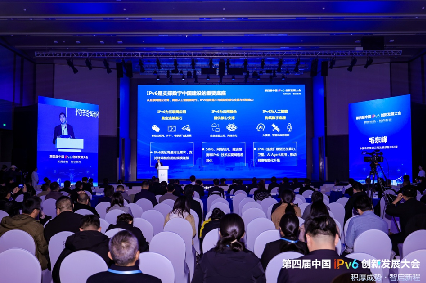
China had 865 million active users of Internet Protocol version 6 (IPv6) by Sept 2025, accounting for 77.02 percent of the total internet user base, according to a white paper released on Wednesday. This marks a leap from just 2.93 million users in 2017, positioning China at the forefront of global IPv6 adoption.

 New types of infrastructure should be built with appropriate forward planning, according to the Recommendations of the Central Committee of the Communist Party of China for Formulating the 15th Five-Year Plan for National Economic and Social Development released last Thursday.

 “The 15th Five-Year Plan period will mark a crucial stage for consolidating the foundation and achieving comprehensive progress in IPv6 development,” said Wang Jingtao, deputy director of the Cyberspace Administration of China.

 “The development of a next-generation internet based on IPv6 is a key foundation for strengthening China’s capabilities in cyberspace and addressing the urgent demands of economic and social development,” Wang added.

 China Telecom Group has fully completed its IPv6 upgrade and transformation during the 14th Five-Year Plan period, with a significant increase in traffic, according to Mao Dongfeng, deputy general manager of China Telecommunications Corporation’s Cloud-Network Development Department, noting that IPv6 traffic now accounts for 69 percent of the mobile network traffic.

 Chinese company Huawei is also committed to IPv6 industry innovation, investing steadily in both fundamental research and large-scale commercial deployment, said Xue Wu, vice-president of Huawei’s data communication product line.

 AI has become a key driving force in today’s IPv6 development.

 AI agent technology has become a focus in both research and practical applications, marking a new starting point for IPv6 innovation, said Wu Hequan, an academician at the Chinese Academy of Engineering.

 He noted that the concepts of “IPv6 for agents” and “agents for IPv6” are mutually reinforcing and will accelerate the growth of the intelligent agent internet.

 As the cornerstone of the era of intelligent interconnection of everything, IPv6 will empower the digital, networked, and intelligent transformation of various industries, providing strong support for boosting China’s strength in cyberspace, according to the white paper.


Article inline ad

Innovation, consumption key to growth

0

By Ouyang Shijia | China Daily | Updated: 2025-10-31

China is expected to pursue a dual-driven growth model powered by innovation-led supply-side upgrades and a stronger consumption demand base — a strategy economists believe will reinforce the foundations of high-quality development and keep the economy expanding steadily during the 15th Five-Year Plan (2026-30) period.

Wang Yiming, vice-chairman of the China Center for International Economic Exchanges, said China will push ahead with accelerating technological self-reliance, actively developing new quality productive forces, and making substantial breakthroughs in technological innovation and structural upgrading.

“At the same time, the government will continue to expand domestic demand, build a strong domestic market, and form an economic model driven by internal demand, consumption and endogenous growth.

“The country’s ultra-large domestic market, complete industrial chain, rich talent pool and growing advantages in digital economy and new energy are transforming into new comprehensive strengths,” Wang said at a monthly economic meeting held by the China Center for International Economic Exchanges in Beijing on Thursday.

Wang stressed that building a modern industrial system requires innovation to lead the way. “China needs to move from technology catch-up to building leading advantages in selected areas,” Wang said.

He also underscored the need to enhance enterprises’ role as drivers of innovation and speed up the commercialization of research results.

“We must strengthen the integration between scientific and industrial innovation,” he said. “More technological achievements should be transformed into real productivity.”

On the demand side, Wang said boosting consumption remains key to expanding domestic demand.

Looking ahead, Wang suggested increasing household incomes through urban-rural income growth plans, raising the share of personal income in the distribution of national income, giving more weight to work remuneration in primary distribution, and channeling more fiscal spending into public services and people’s livelihoods.

“When households spend less on essential services, they will have greater capacity for other types of consumption,” he said.

Zhu Guangyao, former vice-minister of finance, shared a similarly upbeat outlook. “I believe that

during the 15th Five-Year Plan period, China’s economy can maintain a growth rate between 4.5 percent and 5 percent. That will lay a solid foundation for basically achieving socialist modernization by 2035.”

Zhu said the next stage of growth will hinge on technological innovation in key areas, including renewable energy and artificial intelligence.

“Renewable energy represents the direction of future energy development, while AI is the fundamental condition for improving productivity. The integration of the two will provide a strong foundation for high-quality growth.”

Article inline ad

Financial ties fuel Chinese companies’ overseas expansion

0

China Daily | Updated: 2025-10-31 09:27

Financial business leaders attending a major forum in Beijing have shared their insights on facilitating the global expansion of Chinese companies, and on how the overseas presence of these companies fosters shared prosperity.

“In London, there is capital seeking innovation. In China, there is innovation seeking capital,” said Jack Perry, CEO of London Export Corp and chairman of The 48 Group, which has been promoting trade between China and the West since the 1950s.

Perry said he believes that robots, which he described as the “arms and legs of AI”, will become some of China’s most important future exports. LEC is collaborating with Chinese robotics firms on the distribution of their products in Europe, the Middle East and Latin America.

He noted that LEC assists Chinese companies with overseas data regulation compliance and in establishing research and demonstration hubs. “We aim to align Chinese ingenuity with Western investment and understanding.”

The Annual Conference of Financial Street Forum 2025, on from Oct 27 to 30, is a platform for international financial exchange and cooperation. Attendees are engaging in in-depth discussions on topics such as global economic trends, financial governance, fintech, green innovation and risk control.

In recent years, the world’s second-largest economy has excelled in exporting high-tech and environmentally friendly products, notably the “new three” — new energy vehicles, lithium-ion batteries and photovoltaic products. This trend has also created more demand for financial services in export destinations.

Beat Strebel, president of Swiss Reinsurance Co’s China unit, said that with reliable quality and an accelerating shift toward NEVs, Chinese automobile manufacturers have started to succeed in penetrating the European market. The Swiss company has worked with its Chinese partners to develop localized solutions covering over 80 countries.

Strebel suggested that European retailers and insurers should cooperate with Chinese manufacturers to improve their understanding of product features, repair technologies and after-sales services for risk assessment. He also emphasized the need for Chinese carmakers to understand local insurance regulations.

Participating in China’s green transformation, British multinational investment bank HSBC shared how it has assisted Chinese enterprises in going global and introduced expertise and capital from the global green finance sector into China.

The bank noted a cooperation case of providing long-term green financing for a Chinese battery manufacturer to build a factory in Europe. It is also helping a Brazilian pulp and paper producer to issue bonds in China’s interbank market.

On international settlement, Omar Hafeez, group head of international banking at First Abu Dhabi Bank of the United Arab Emirates, highlighted the bank’s expansion of RMB usage to meet growing customer demand. This follows a memorandum of understanding signed earlier this year between the Central Bank of the UAE and China’s Cross-Border Interbank Payment System to enhance payment cooperation.

He noted that alongside the dominant currencies, including the US dollar, demand for the use of local currencies in settlement and investment is rising, driven by the appeal of lower transaction costs, foreign exchange risk avoidance and reduced settlement uncertainties.

Xinhua – China Daily

Article inline ad