Wednesday, November 25, 2026

Home Blog Page 153

China Channels 500b Yuan Through New Policy-Based Financial Instrument To Spur Investment

0

Xinhua | Updated: 2025-10-30

BEIJING — China has allocated a total of 500 billion yuan (about $70.56 billion) through a new policy-based financial instrument, the country’s major policy banks announced on Thursday.

 The China Development Bank, the Export-Import Bank of China, and the Agricultural Development Bank of China allocated 250 billion yuan, 100 billion yuan and 150 billion yuan, respectively, to support the construction of projects in key areas and weak links.

 The move is expected to stimulate over 7 trillion yuan in investment, according to statistics from the policy banks. The financial instrument prioritizes projects in technological innovation, consumption expansion and foreign trade stabilization, while also supporting initiatives in major economic provinces and private investment projects.

 Industry experts believe the financial instrument will accelerate the construction of projects planned in the first half of the year, boost tangible output in the fourth quarter, expand effective investment, and promote the stable and healthy development of China’s economy.


Article inline ad

China Accelerates Smart Mining To Power Coal Industry Upgrade

0

chinadaily.com.cn | Updated: 2025-10-30

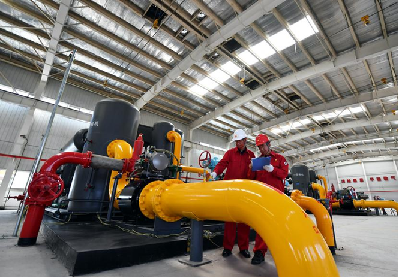
China is accelerating efforts to advance intelligent coal mining, a move that experts and executives said marks an essential step toward cultivating new quality productive forces in the coal sector, as coal continues to serve as China’s primary energy source and a crucial industrial feedstock.

 Liu Feng, vice-president of the China National Coal Association, said the number of intelligent coal mines nationwide has reached nearly 1,000 over the past five years, with 1,806 intelligent mining and tunneling workfaces in operation by the end of the first quarter of 2025. “This progress has not only improved safety standards but also boosted labor productivity by more than 20 percent,” Liu said.

 Liu made the remarks on Wednesday at a parallel session of the China Coal Industry Development Forum 2025, held during the China Coal & Mining Expo 2025, with the theme “New Quality Productive Forces Power Smart Future”.

 He highlighted that intelligent mining is essential for coal to serve as a clean and more efficient cornerstone of China’s energy system. “In my view, building smart coal mines embodies the integration of traditional industries with new quality productive forces,” Liu added.

 Echoing this trend, many mining enterprises have begun adopting digital and intelligent technologies.

 Yang Zongying, president of Huawei’s Mine Business Unit, said the company has developed the Mine Harmony intelligent operating system based on HarmonyOS. “The system enables intelligent gas inspection and introduces new modes of multi-device collaboration, ensuring efficient data processing,” Yang said.

 Huawei has also launched a new generation of network solutions that meet the requirements for safety inspection, industrial control and positioning, ensuring secure and reliable data transmission. “We are committed to bringing digital and intelligent technologies to every mine,” Yang said.

 Xin Tongshuai, deputy general manager of Zhengzhou Coal Mining Machinery Group, said the company has rolled out ZMOS 2.0, a next-generation integrated intelligent control system designed to enhance coordination and efficiency across mining operations. “The upgraded version enables unified control throughout the entire mine, significantly improving communication and decision-making efficiency,” Xin said.

 “The intelligent transformation of coal mining in the AI era calls for spatiotemporal AI-powered models to serve as the core driving engine,” said Mao Shanjun, chairman of Beijing LongRuan Technology.

 The company has introduced Loong Model 1.0, an AI foundation model and application platform designed for the mining sector. “By integrating the reasoning capabilities of advanced AI models with the coal industry’s deep domain expertise, we’ve developed an AI-powered ‘Mine Doctor’ that combines broad knowledge with industry-specific insight,” Mao said.

 Looking ahead, Liu noted that China’s coal industry is entering a pivotal stage in its intelligent transformation, shifting from isolated pilot projects to fully integrated smart-mine systems. “The next phase will hinge on building consistency, real-world application and clear industry standards,” he said.

 Zhang Chenxu contributed to this story


Article inline ad

China Has Built Complete Supply System For Lithium Products, Association Says

0

Xinhua | Updated: 2025-10-30

BEIJING — China has established a complete supply system for lithium products, the China Nonferrous Metals Industry Association said on Wednesday.

 The country’s output of key lithium products, including lithium carbonate, lithium hydroxide and cathode materials for lithium-ion batteries, has ranked first globally for years, association official Lin Ruhai said at a press conference.

 From January to September this year, the country’s output of lithium carbonate totaled approximately 588,000 metric tons, while its lithium hydroxide output came in at roughly 303,000 tons, data shows.

 Lin noted that China’s lithium-ion battery industry enjoys a complete, large-scale industrial chain that covers the full life cycle from resource development to recycling.

 He said that the country’s fast-growing new energy vehicle (NEV) and energy storage markets have created vast space for technological innovation and capacity utilization.

 In 2024, the country’s NEV output and sales each exceeded 12 million, topping global rankings for a 10th consecutive year.


Article inline ad

BMC Seeks Biz Upgrades, Bigger Global Presence

0

By Li Jing | China Daily | Updated: 2025-10-30

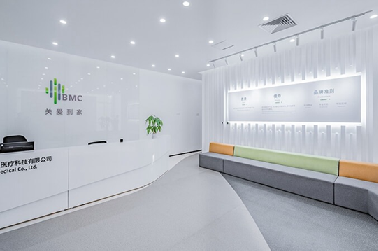
Chinese respiratory device maker BMC Medical Co Ltd is accelerating global expansion and brand development as it strives to cement its leadership in respiratory health and grow into a world-class medical technology company.

 Founded in 2001, BMC focuses on home respiratory care for patients with chronic obstructive pulmonary disease and obstructive sleep apnea. Its long-term dedication has made it the only Chinese manufacturer among the world’s top five home-use ventilator brands and the only Chinese firm certified by the US Food and Drug Administration in this segment. By 2023, BMC became the second-largest brand by market share in the United States, outpacing long-established rivals.

 Chairman and General Manager Zhuang Zhi said BMC aims to evolve into “a global platform for respiratory health management, not just a hardware manufacturer”.

 “For example, our team in France worked with local clinics last year to tailor our ventilator settings to European patients’ breathing patterns, which helped boost our market share there by 15 percent,” Zhuang said.

 BMC has established a subsidiary in France and service centers in India, while maintaining long-term partnerships with distributors in the US and Europe. It is also investing more in domestic branding and patient services to align with China’s growing home-based healthcare system.

 “We are both a Chinese company and a global brand,” Zhuang said. “As China’s healthcare industry advances, we want our innovation to serve more patients both at home and abroad.”

 China’s medical device exports rose steadily in the first half of 2025, reaching $24.1 billion, up 5 percent year-on-year, according to the China Chamber of Commerce for Import and Export of Medicines and Health Products. The rebound reflects solid global demand for affordable, high-quality Chinese medical products.

 Industry analysts said such momentum benefits Chinese companies like BMC that already hold global certifications and maintain distribution networks abroad.

 He Juying, chief healthcare analyst at China Securities, said: “After years of import substitution, going global has become the natural next step for Chinese medical equipment manufacturers. The overseas market is several times larger than the domestic one.”

 A Changjiang Securities report said 2025 marks a turning point for BMC, citing the end of its overseas inventory destocking and new domestic healthcare incentives. The company’s interim report shows a 42.3 percent year-on-year rise in first-half 2025 revenue to 544 million yuan ($76.63 million), while net profit increased 42.2 percent to 131 million yuan, its strongest first-half growth in the past five years.

 BMC has consistently strengthened its research and development capabilities and regulatory compliance, holding 932 authorized patents worldwide and more than 20 FDA-cleared products.

 Its R&D team has developed key technologies such as remote monitoring systems and intelligent pressure algorithms, which adjust air pressure in real time based on a patient’s breathing rhythm to improve comfort and treatment efficacy. Independent tests in Europe have ranked its algorithms among the world’s top performers.

 Cao Zhixin, a respiratory specialist at Beijing Chaoyang Hospital of Capital Medical University, said such innovations are increasingly important as China promotes community-based and home respiratory care.

 “Home ventilators and oxygen devices can help stabilize chronic patients and reduce hospital pressure,” Cao said. “Integrating these devices with remote monitoring systems allows doctors to track a patient’s nighttime breathing data and adjust treatment plans without in-person visits, which is especially valuable for elderly patients in rural areas.”

 BMC was among the first Chinese companies to launch a cloud-based respiratory health platform in 2015, connecting patients, doctors and devices.

 The company’s combination of manufacturing scale, certification expertise and growing service network has positioned it as a representative for China’s medical device sector on the global stage.

 Zhuang said the next five years will bring “huge opportunities” in home-use respiratory care worldwide.

 “The future of respiratory health lies in intelligent and connected care,” he said. “We hope to stand at the forefront of that transformation and showcase the strength of Chinese innovation on the global stage.”

 lijing2009@chinadaily.com.cn

Article inline ad

Nation ‘Much More Than A Market’ For Rio Tinto

0

By Zheng Xin | China Daily | Updated: 2025-10-30

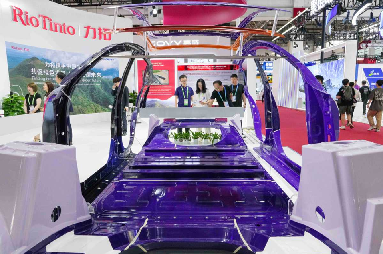
Global mining giant Rio Tinto views China as far more than just its largest market, CEO Simon Trott said, describing the nation as a “very significant strategic partner” across its worldwide operations.

 “China, the largest consumer of metals in the world as well as the largest importer of seaborne iron ore, remains a very strong market for us, and will be one of our key focus areas going forward,” Trott said.

 “China is much more than a market. We purchase significant materials that we use in our own business. We work with partners from China all around the world in our operations, as we look at ways of strengthening our business.”

 The nation accounted for a commanding 55.2 percent of the mining giant’s total revenue in the first half of this year, solidifying its position as Rio Tinto’s largest customer.

 As a crucial sourcing partner, procurement from the country exceeded $4.2 billion last year, reflecting a deepening economic interdependence, according to the Anglo-Australian firm.

 China’s upcoming 15th Five-Year Plan (2026-30), which is expected to accelerate new quality productive forces, provides massive opportunities for Rio Tinto, as the world-class Simandou iron ore project in Guinea is slated to produce its first ore this year.

 The Western Range project, a significant iron ore mine in Australia that is a joint venture between Rio Tinto (54 percent) and China Baowu Steel Group (46 percent), was recently put into operation, serving as a cornerstone of the long-standing resource partnership between Australia and China.

 According to Rio Tinto, these projects are pivotal in supplying steady and high-quality iron ore to China’s steel industry.

 Crucially, the superior-grade iron ore from Simandou is expected to offer significant advantages to Chinese steelmakers, directly aiding their accelerated efforts to reduce carbon emissions within their energy-intensive operations.

 Trott hailed the rapid progress of Simandou, where Rio Tinto is jointly developing alongside multiple Chinese companies, as “outstanding”. He noted that the speed and efficiency with which Simandou is being built offer valuable lessons for the company’s global operations.

 China’s role is deemed fundamental to global mining powerhouses such as Rio Tinto, according to industry observers.

 Collaborative initiatives like Simandou provide stability for iron ore sales and help dilute investment risks for these international miners. For their Chinese counterparts, involvement in these joint ventures secures a consistent supply of high-quality, competitively priced iron ore, ensuring raw material stability and quality, and offering protection against potential future price escalations, said Xu Xiangchun, information director and analyst at iron and steel consultancy Mysteel.

 Further underscoring this collaborative ethos, Rio Tinto has engaged in several other initiatives with Chinese partners in recent years, including a demonstration project for battery swap electric haul truck technology in partnership with State Power Investment Corp, and recently signed memorandums of understanding with three major Chinese design institutes.

 “China is a strategic partner. These are examples of the work that we want to do together to strengthen our business, to contribute to the ongoing development of China.”

 The mining executive reiterated Rio Tinto’s strong confidence in the Chinese economy’s continued resilience and growth potential. This confidence underpins significant investment decisions, including over $15 billion in Western Australia’s Pilbara region to replenish iron ore supply and investments across its copper, aluminum and lithium businesses.

 “The 15th Five-Year Plan serves as the blueprint for the Chinese economy, as well as an insight for us in terms of how we need to think about our own business, and how we should think about our engagements with China,” he said.

 “Many of the aspects of the Five-Year Plan, which will drive innovation, technology and decarbonization, are areas we want to continue to partner with Chinese stakeholders right around the world in our global operations.”

 zhengxin@chinadaily.com.cn


Article inline ad

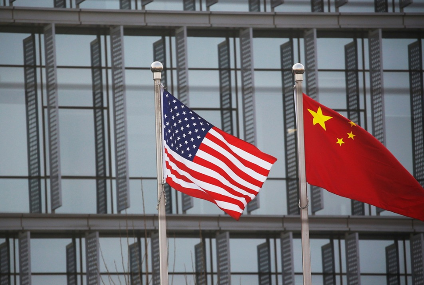
China Unveils Outcomes Of China-US Economic, Trade Talks In Kuala Lumpur

0

Xinhua | Updated: 2025-10-30

BEIJING — China’s Ministry of Commerce on Thursday unveiled the outcomes achieved by Chinese and US delegations during their recent economic and trade talks in Kuala Lumpur.

 The US side will cancel the 10-percent so-called “fentanyl tariffs” and suspend, for an additional year, the 24-percent reciprocal tariffs levied on Chinese goods, including goods from the Hong Kong Special Administrative Region and the Macao Special Administrative Region, according to a spokesperson of the ministry.

 China will make corresponding adjustments to its countermeasures against the aforementioned US tariffs, the spokesperson said, noting that both sides have agreed to continue extending certain tariff exclusion measures.

 The United States will suspend for one year the implementation of a new rule announced on Sept 29 that expands its “entity-list” export restrictions to any entity that is at least 50 percent owned by one or more entities on the list. China will suspend the implementation of relevant export control measures announced on Oct 9 for one year and will study and refine specific plans, the spokesperson said.

 The US side will suspend the implementation of measures under its Section 301 investigation targeting China’s maritime, logistics and shipbuilding industries for one year. In response, China will correspondingly suspend the implementation of its countermeasures against the US side for one year once the US suspension takes effect, according to the spokesperson.

 In addition, the two sides also reached consensus on issues including anti-drug cooperation on fentanyl, expanding agricultural product trade, and the handling of individual cases involving relevant enterprises, according to the spokesperson.

 Both sides further confirmed the outcomes of the Madrid economic and trade talks. The US side made positive commitments in areas such as investment, and China will properly resolve issues related to TikTok with the US side.

 The China-US economic and trade talks in Kuala Lumpur have yielded positive results, demonstrating that by upholding the spirit of equality, respect and mutual benefit, and through dialogue and cooperation, the two sides can find solutions to problems, the spokesperson said.

 Noting that the outcomes are hard won, the spokesperson said China looks forward to working with the US side to jointly ensure the implementation of the outcomes, and inject more certainty and stability into bilateral economic and trade cooperation as well as the world’s economy.

Article inline ad

China Unveils New Measures To Facilitate Cross-Border Trade

0

Xinhua | Updated: 2025-10-30

BEIJING — China’s foreign exchange regulator on Wednesday issued a notice introducing a package of new measures to further facilitate cross-border trade receipts and payments and enhance foreign exchange services, aiming to stabilize the development of foreign trade.

 In terms of business types, the measures broaden netting settlement varieties for loans and related services fees, lowering the frequency and cost of cross-border remittances, according to the State Administration of Foreign Exchange (SAFE).

 They also target the rapid growth of new trade models such as cross-border e-commerce, which has become a vital support for foreign trade.

 For trade in services, the measures simplify procedures for advance-payment businesses, allowing the direct handling of monetary payments for goods transportation and storage, as well as maintenance fees at banks.

 They also permit contracting engineering enterprises to manage overseas funds centrally for projects across multiple countries or regions, improving fund allocation flexibility.

 These measures build on SAFE’s continued efforts to construct a “more credible, more convenient” foreign exchange policy framework.

 The SAFE launched a pilot program for the high-standard opening-up of cross-border trade in 2022, which has been expanded to 11 regions in the country.


Article inline ad

Dubai FTZ Attracting More Firms From China

0

By Wang Xin in Shanghai | China Daily | Updated: 2025-10-30

An increasing number of Chinese companies have established offices in the Dubai Multi Commodities Center (DMCC) — the largest free trade zone in the United Arab Emirates — which has become a regional launchpad for their global expansion, said a senior executive on Thursday in Shanghai.

 The center, a leading international business district that drives the flow of global trade through Dubai, announced growth of over 16 percent in Chinese businesses joining its district in the past 12 months, bringing its total to over 1,000 Chinese companies.

 Ahmed Bin Sulayem, executive chairman and CEO of DMCC, especially highlighted the growing presence of Chinese technology firms and innovation-focused businesses in the district.

 “China is now the UAE’s largest trading partner, with bilateral trade exceeding $102 billion last year, and that figure is projected to double by 2030. This growth is underpinned by deeper cooperation across trade, investment and innovation — particularly in artificial intelligence and other frontier technologies, where China has seen rapid growth in recent years,” said Sulayem.

 Chinese companies settled in the district have seen double-digit growth for five consecutive years, which was largely driven by businesses in AI, blockchain, Web3 and digital infrastructure.

 The district is home to more than 130 Chinese technology companies, within a wider community of over 3,400 tech firms, offering Chinese businesses a purpose-built platform for international expansion through Dubai, DMCC said.

 Sulayem noted that they have seen China remaining resilient and growing amid global uncertainties, and said that he believes that Chinese companies have not been fully explored. He expects an even faster pace of settlement by Chinese firms at the center in the coming few years.

 “For the past 20 years, and I assume also for the next 20 years, China has been, and will always be, predictable with its values and direction … The security and consistency are paramount. When the Chinese leadership and people decide to do something, they do it,” said Sulayem.

 Holding solid confidence in the future prospect of China’s economy and the potential of Chinese businesses’ global expansion, the center is hoping to lure more firms from China to join its community, as its three roadshows across the Yangtze River Delta region concluded on Thursday.

 The roadshows hit Suzhou in Jiangsu province, Hangzhou in Zhejiang province and Shanghai, three of the most dynamic centers for technology and advanced manufacturing in China, and attracted over 750 Chinese business leaders seeking to expand globally.

 As UAE-China economic ties are broadening beyond trade into areas of strategic co-investment, innovation and global market integration, the center is actively translating bilateral momentum into commercial opportunities. As both countries continuously strengthen cooperation, the center is looking to play a central role in facilitating the next wave of Chinese firms’ global expansion.

 wangxin2@chinadaily.com.cn

Article inline ad

Lin-Gang’s Latest Step Set To Foster Innovation

0

By Wang Ying in Shanghai | China Daily | Updated: 2025-10-30

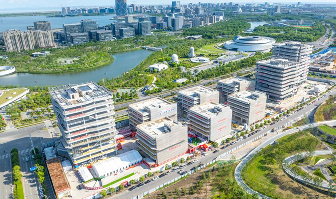
Carrying just a backpack, suitcase and laptop, Wang Xiyu moved into his new office in Shanghai’s Lin-gang Special Area on Oct 15.

 The relocation is expected to cut the operating costs of his one-stop AI legal platform by 30 percent and allow the company to focus more on technology research and development.

 “With our team continuously expanding, we could no longer afford the leasing cost of nearly 17,000 yuan ($2,380) per month for 30 square meters in Lujiazui, so we decided to move to Zero Cube in Lin-gang,” Wang, the CEO of Shanghai Lawyershome Technology Co Ltd, said.

 Wang’s company specializes in providing AI-based legal services for micro, small and medium-sized enterprises.

 Calling his 11-member team, mostly under 30, a group of “digital nomads” working from different parts of the country, Wang said they finally have a place they can call home.

 According to the 27-year-old, the move not only expanded their office space to about 100 square meters, but also provided living space for nine team members — both free of charge.

 “This greatly reduces our costs as a startup, allowing us to concentrate on our business,” Wang said.

 Wang and his team are among several young entrepreneurs benefiting from Lin-gang Special Area’s latest initiative called the “super individual 288 program”, which is designed to foster innovation and entrepreneurship.

 Launched by Lingang Group in August, the program focuses on young entrepreneurs in the era of digitalization and intelligence. It offers rent-free office and residential spaces, along with supportive measures in business development, financing, promotion, logistics and networking.

 As the first project under the program, Zero Cube has already attracted more than 110 startup projects and over 500 young talents in its first month, according to Luo Yijun, head of operations at Zero Cube’s initial project.

 “Startup teams can enjoy up to three years of rent-free office space, entrepreneurship guarantee loans of up to 800,000 yuan, nonrepayable subsidies of up to 500,000 yuan, and a range of support from computing power to financing,” said Luo.

 “In addition, young entrepreneurs can live in apartments just five minutes away by car, with free shuttle buses connecting Zero Cube to major subway stations of Shanghai,” Luo added.

 While Zero Cube serves as an early incubation base for startups, the Lingang Makers Hub supports companies in their first year of establishment.

 “By offering all-around services including entrepreneurial guidance, resource matching, and up to three years of free incubation, the hub aims to provide comprehensive aid during a company’s most fragile stage,” said Zhang Zhen, deputy manager of Shanghai Pudong Software Park Huizhi Technology Co Ltd and head of the Lingang Makers Hub.

 In its first month, Lingang Makers Hub has already attracted 14 technology innovation companies, including seven AI enterprises, with others focusing on integrated circuits, automotive electronics and the low-altitude economy, according to Zhang.

 The Lin-gang Special Area issued its innovation and entrepreneurship plan in May, aiming to ease the burden of high initial costs by offering free office space and apartments for company employees.

 In August, Lin-gang reduced the rent for apartments across the area, with 40-square-meter units costing as little as 800 yuan per month, according to Yang Wu, an official with the Lin-gang Special Area Administration.

 “The adjustment led to applications tripling in September month-on-month,” Yang said, adding that the area plans to expand eligibility for such apartments to all professionals working in Shanghai.

 “By allowing more people to experience Lin-gang’s affordable lifestyle, we hope more will come to understand, like, and ultimately choose Lin-gang as a place to work and start a business,” Yang said.

 wang_ying@chinadaily.com.cn


Article inline ad

Industrial Policy To Shift From Scale To Quality

0

By Jiang Xueqing | China Daily | Updated: 2025-10-30

Over the next five years, China’s industrial policy will undergo a major transformation, shifting its focus from scale to quality and efficiency, said Xing Ziqiang, chief China economist at Morgan Stanley.

 Xing expects China to rein in excessive local subsidies and disorderly competition while advancing a unified national market. Support measures will be transparent, open and consistent for both domestic and foreign entities, fostering a more competitive and unified market, he said.

 Xing made the remarks on the sidelines of the Forum on Financial Innovation Empowering the High-Quality Development of the Private Economy, which is part of the Annual Conference of Financial Street Forum 2025, in Beijing on Tuesday.

 He added that, combined with stronger domestic demand policies — especially through enhancing the social security system to better protect low and middle-income groups such as farmers and migrant workers — these reforms will boost consumer confidence and unlock greater consumption potential. Private enterprises, he said, will gain greater development opportunities under such coordinated financial and fiscal policies.

 Xing also noted a revival in capital activity. Since the second quarter, policy shifts in the United States have prompted global investors to diversify away from heavy reliance on the US economy and dollar assets, restoring confidence in Chinese markets and injecting new vitality into capital flows.

 Domestically, policymakers have promoted more flexible and long-term asset allocation. As a result, long-term asset allocators such as insurance companies expanded equity investments by nearly 1.5 trillion yuan ($211.3 billion) so far this year, while households have gradually redirected over 800 billion yuan from time deposits to more flexible assets such as wealth management and equity products.

 “Whether it’s the demystification of the US dollar’s dominance overseas or the domestic search for higher-yielding assets, China’s policy support has provided a solid safety net,” Xing said. “Enterprises have demonstrated renewed vitality, while the financial sector has effectively channeled returns from new quality productive forces to the general public.”

 Participants at the forum discussed how financial innovation can better empower the high-quality development of the private sector.

 Tian Xuan, dean of the National Institute of Financial Research at Tsinghua University and associate dean of Tsinghua University PBC School of Finance, said that technological innovation is the core driving force behind high-quality economic growth, and the private sector, as a key player in innovation, plays an important role in areas such as research and development and the commercialization of scientific achievements.

 “Strengthening innovation in technology finance can provide more targeted and efficient financial support for tech-oriented private enterprises, helping to address their financing difficulties and high costs, while promoting the transformation and industrialization of technological achievements,” Tian said on the sidelines of the forum.

 He stressed that financial innovation must always adhere to the fundamental goal of serving the real economy, centering on supporting enterprise growth and driving economic development.

 Financial institutions, he said, should strengthen compliance management, ensuring all innovation occurs within the bounds of laws, regulations, and supervisory policies. They should also fully assess the risks of new products and services, establish robust risk evaluation and early warning systems, and formulate appropriate response measures — while better protecting the legitimate rights and interests of financial consumers and investors.

Article inline ad