Wednesday, November 25, 2026

Home Blog Page 154

Neolix Accelerates Expansion Of Driverless Logistics

0

By LI JIAYING | China Daily | Updated: 2025-10-28

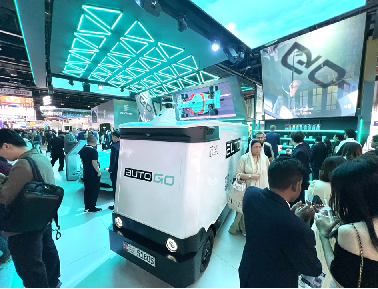
Chinese autonomous logistics service provider Neolix is accelerating the global rise of driverless logistics, as the deployment and commercialization of self-driving robovans enter a new booming stage.

 The company announced on Thursday that it had secured over $600 million in series D financing, the largest private fundraising in the country’s autonomous driving industry to date.

 Yu Enyuan, founder and CEO of Neolix, attributed investor confidence to the company’s success in achieving large-scale commercial adoption of Level-4 autonomous delivery vehicles.

 “Driverless delivery has reached a turning point — shifting from research and development and pilot trials to full-scale commercial operations worldwide,” Yu said.

 In September, Neolix’s cumulative global deliveries surpassed 10,000 units, and the company expects to reach 3,000 units per month by the end of this year.

 The global delivery robot market is forecast to expand from $520 million in 2025 to $3.99 billion by 2032, a compound annual growth rate of 33.7 percent, according to data from market intelligence platform Fortune Business Insights.

 “2025 is a remarkable year for China’s autonomous driving industry going global, as it marks a shift for industry players from simply being able to operate to achieving large-scale, accelerated commercialization, and from isolated pilot projects to platform-level global expansion,” said Bai Wenxi, vice-chairman of the China Enterprise Capital Union.

 Neolix is echoing the growth momentum with accelerated global expansion. After obtaining the United Arab Emirates’ first robovan license last month, it signed a strategic partnership this month with K2 Group, a state-owned AI technology enterprise in the UAE. The collaboration aims to co-develop robovan vehicles tailored to the Middle East’s desert climate, diverse terrain and regulatory landscape.

 “This partnership merges our deep local market expertise with Neolix’s proven global experience in scaled deployment,” said Sean Teo, managing director of K2 Group. “It’s not just a technology transfer, but a step toward building an ecosystem that empowers local talent and urban mobility innovation.”

 Yu said the Middle East will serve as Neolix’s bridgehead for overseas expansion, followed by other pilot projects in Northeast Asia, Southeast Asia, Europe and Hong Kong, starting at the end of this year.

 “We plan to deploy 5,000 autonomous vehicles in the UAE by the end of 2026, and expect annual overseas sales to reach 5,000 to 10,000 units by 2027,” he said.

 “The global expansion of Chinese autonomous vehicle firms carries significant strategic value,” Yu added. “Given the industry’s high level of integration, one sector’s overseas growth will drive entire supporting ecosystems to go global as well.”

 Yu added that China’s innovation ecosystem offers a unique foundation for high-tech startups. “From data traffic and computing power to data storage, everything in China forms a mature, cost-effective infrastructure — something rarely found overseas,” he said.

 On the technological front, Neolix just unveiled its self-developed mapless L4 solution in commercial deployment, making it among the first ones in the driverless delivery sector to deliver mapless autonomous technology.

 Mapless autonomous driving leverages real-time visual perception and large AI models to enable vehicles to navigate without preloaded high-definition maps.

 “By eliminating dependence on HD maps, the mapless system can cut related costs by over 90 percent and significantly reduce hardware expenses,” Yu said. “It thus has an edge in terms of flexible operational modes, unfamiliar or complex environments, and cross-border licensing challenges tied to HD mapping — a key advantage for international expansion.”

 lijiaying@chinadaily.com.cn


Article inline ad

Alibaba Cloud Ramps Up Global Foray On AI Boom

0

By FAN FEIFEI | China Daily | Updated: 2025-10-28

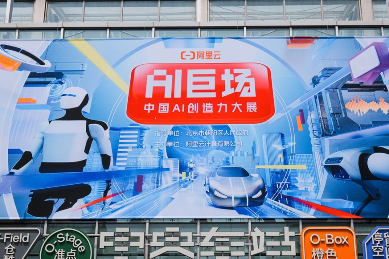
Alibaba Cloud, the cloud computing arm of Chinese tech heavyweight Alibaba Group, is accelerating efforts to expand its footprint in overseas cloud service markets as an increasing number of businesses leverage artificial intelligence technologies to bolster digital innovation.

 The company recently announced the launch of its second data center in Dubai, the United Arab Emirates, in response to the growing demand for cloud computing and AI services from local businesses.

 The launch, as part of Alibaba’s previously announced investment plan of 380 billion yuan ($53.4 billion) in AI and cloud infrastructure over the next three years, underscores the company’s commitment to supporting enterprises in the region and beyond to thrive through implementing its cloud infrastructure and AI technologies.

 The move marks a new milestone since Alibaba Cloud’s foray into the region in 2016 with its first data center in Dubai. It is also the company’s newest data center launched globally this year, following those in Thailand, South Korea, Malaysia, Mexico and several cities in China.

 With the addition of this new data center, Alibaba Cloud’s global infrastructure now spans 92 availability zones across 29 regions, the company said.

 Since the company entered the Middle East market in 2016, the region’s digitalization process has accelerated significantly and the demand for high-performance, low-latency cloud services and AI capabilities has surged in fields like finance, healthcare, gaming, and government services, said Wan Canghai, vice-president of Alibaba Cloud International and general manager of the Middle East, Turkiye and Middle Asia at Alibaba Cloud Intelligence.

 The new data center not only enhances local data compliance and service response speed, but also provides a full suite of products, including cloud-native services, large models and big data analytics, helping enterprises seize opportunities in AI transformation, Wan said.

 Wio Bank, the Middle East’s leading digital financial platform, has inked a strategic partnership with Alibaba Cloud to accelerate innovation across cloud computing, AI, and fintech. The company will build AI-powered agents for banking by leveraging Alibaba Cloud’s advanced Qwen large language model to provide intelligent customer services, risk assessment, and personalized financial advice.

 Last month, Alibaba Cloud announced at its annual flagship technology gathering, Apsara Conference 2025, that it plans to launch its first data centers in Brazil, France and the Netherlands, with additional data centers to be added in Mexico, Japan, South Korea, Malaysia and Dubai in the coming year.

 It will increase investment in research and development of AI applications and computing power, and deeply integrate AI across its businesses to capture new growth opportunities in the AI era.

 Experts said as global cloud providers are scrambling to expand in emerging markets, Alibaba Cloud is evolving into a supplier of intelligent solutions through its cloud computing infrastructure and AI technology, while the launch of its second data center in Dubai serves as a strategic move to deepen its presence in the Middle East and support the development of the local digital economy.

 Chinese companies expanding into overseas cloud service markets should not only strengthen the construction of their overseas cloud infrastructure, such as data centers, but also bolster innovation in core software applications to better serve global clients, said Pan Helin, a member of the Expert Committee for Information and Communication Economy, which is part of the Ministry of Industry and Information Technology.

 According to global market consultancy Canalys, global cloud infrastructure services spending stood at $321.3 billion in 2024, rising 20 percent year-on-year. The key driver behind this growth was the expansion of AI models, which significantly accelerated cloud adoption.

 As AI market competition intensifies, cloud computing companies plan to further expand investments in cloud and AI infrastructure this year to keep pace with rising demand. Canalys forecasts that global cloud infrastructure services spending will grow 19 percent year-on-year in 2025.

 It noted that as AI becomes more efficient and widely adopted, demand is expected to grow exponentially. In response, cloud service providers are making significant investments to grow AI model training, deployment and cloud-based applications.

 fanfeifei@chinadaily.com.cn

Article inline ad

Tech Start-Ups To Gather At WIC For AI Dialogue

0

By Song Yi | chinadaily.com.cn | Updated: 2025-10-29

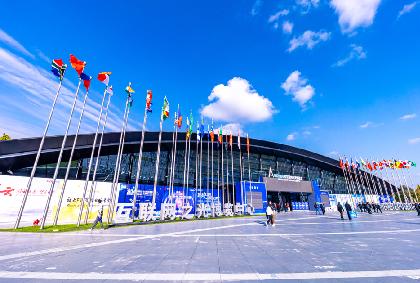
As a highlight of the 2025 World Internet Conference Wuzhen Summit, executives from the “Six Little Dragons” — a group of rapidly-rising tech start-ups in Hangzhou, including Game Science, DeepSeek, Unitree Robotics, DEEP Robotics, BrainCo and Manycore Tech — will engage in dialogues to exchange views on the latest developments in artificial intelligence and other cutting-edge technologies, and to explore cross-sector cooperation in addressing global issues.

 This year’s summit, themed “Forging an Open, Cooperative, Secure and Inclusive Digital Future — Building a Community with a Shared Future in Cyberspace”, will be held in Wuzhen, Zhejiang province, from Nov 6 to 9.

 The event will bring together senior representatives to discuss frontier issues such as AI governance and digital economy cooperation, according to Ren Xianliang, secretary-general of the WIC.

 The establishment of the “Six Little Dragons Dialogue” aims to showcase China’s frontier innovations, build a platform to foster collaborative innovation, and strengthen the connection between innovative practices and global agendas, Ren said.

 The “Six Little Dragons” represent the new driving forces in frontier technologies like artificial intelligence, robotics and brain-computer interfaces.

 “Building an open, secure and inclusive digital future calls for the active participation of these innovation-driven enterprises with global vision,” Ren said.

 Located in Zhejiang province, the ancient water town of Wuzhen has served as the permanent venue of the WIC since 2014, becoming a key platform for discussing global internet developments.

 Ren noted that the growth of Hangzhou’s “Six Little Dragons” is closely linked to the favorable innovation ecosystem that has been fostered by the Wuzhen Summit.


Article inline ad

Xiaomi’s First Smart Home Appliance Factory Starts Operation

0

Xinhua | Updated: 2025-10-29

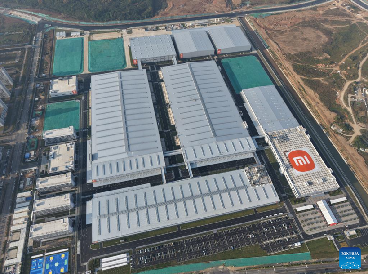
WUHAN — Chinese tech firm Xiaomi launched its first smart home appliance factory in Wuhan, Central China’s Hubei province, on Tuesday, marking a major expansion of the tech giant’s manufacturing footprint beyond smartphones and vehicles.

 This new factory, focusing on air conditioner production, is the company’s third large-scale smart factory after its auto and smartphone plants.

 Spanning over 750 mu (50 hectares) in its first phase with a total planned investment of over 2.5 billion yuan ($352.83 million), the facility integrates advanced technologies, including Digital Twin, AI visual inspection and aerial logistics systems. This enables comprehensive visualization and data-driven management across the entire production process.

 The factory can roll out a high-end air conditioner every 6.5 seconds, according to Shan Lianyu, general manager of Xiaomi’s home appliance department.

 Peak annual production capacity for air conditioners is projected to reach 7 million units, with an estimated annual output value of 14 billion yuan, Shan said.

 The factory’s launch comes amid robust growth in China’s smart home appliance sector. A recent industry report indicated that the market size of the country’s smart home appliances reached about 756 billion yuan in 2024, a year-on-year increase of 3 percent, and is expected to hit 793.8 billion yuan this year.

 Meanwhile, China’s export of home appliances saw an increase of 14.8 percent year-on-year in 2024, reaching $128.64 billion, according to China Chamber of Commerce for Import and Export of Machinery and Electronic Products.

Article inline ad

China’s Digital RMB Transactions Top 14.2 Trillion Yuan

0

Xinhua | Updated: 2025-10-29

BEIJING — China’s digital RMB ecosystem has been established in preliminary terms, with cumulative transactions reaching 14.2 trillion yuan ($2 trillion) by the end of September 2025, according to the People’s Bank of China (PBOC).

 The digital RMB pilot program, which now covers 26 localities across 17 provincial-level regions in China, has formed replicable application models in fields such as retail and public services.

 A total of 3.32 billion transactions had been processed by the end of September, with 225 million personal wallets opened on the digital RMB app.

 The central bank has so far established a digital yuan international operations center in Shanghai to oversee cross-border cooperation and usage, and a digital yuan operations and management center in Beijing, which is responsible for system development, operations and maintenance to promote the currency’s broader application, according to Pan Gongsheng, the PBOC governor, while addressing the Annual Conference of Financial Street Forum 2025 on Monday.

 The digital RMB’s “dual-center” architecture was made public for the first time after the official launch of the Shanghai international operations center in September.

Article inline ad

Solar Power Installations Slow Amid Reform Moves

0

By Zheng Xin | China Daily | Updated: 2025-10-29

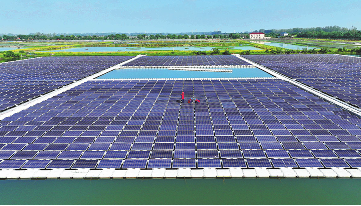
China’s new solar power installations in September, though slightly up from August’s near three-year low, remained sharply below levels from a year earlier, official data show.

 China added 9.66 gigawatts of solar capacity last month, up from 7.36 GW in August — its lowest level since November 2022, the National Energy Administration said on Sunday.

 However, the September figure represents a significant drop from the 20.89 GW installed during the same month last year.

 The slowdown in recent months follows a record 92.92 GW of installations in May, when developers accelerated projects ahead of policy adjustments, said Tan Youru, a solar analyst at BloombergNEF.

 These changes, enacted from May 1, ended full grid-parity subsidies for commercial and industrial distributed solar projects, with further reforms setting June 1 as a cut-off date for different pricing mechanisms for existing and new projects.

 The broader solar sector has been grappling with intense competition, a situation that Wang Hongzhi, head of the NEA, pledged to address in an article published late September.

 Wang said China’s new energy sector, through significant scale growth and open competition, has continuously driven technological innovation and product iteration, achieving rapid cost reductions in recent years.

 Photovoltaic power generation costs have dropped by more than 80 percent over the past few years. Currently, the average per-kilowatt-hour cost of new energy is 30 percent lower than that of coal power, he said.

 According to the NEA, the large-scale development of new energy has significantly cushioned China against shocks from volatility in the international energy market and drastic changes in the external environment.

 It has made significant contributions to enhancing the country’s national energy supply resilience, stabilizing energy and electricity costs for the entire society, and ensuring the energy demands for economic and social development, it said.

 However, as China’s new energy development enters a new stage of comprehensive marketization, the industry needs to accelerate its shift from a resource-oriented approach to one driven by efficiency and profitability, Wang said.

 Cost control, operational efficiency, bidding strategies and revenue maximization are becoming critical for differentiated competition among power plants. Cost and price will serve as the most comprehensive and intuitive benchmarks for evaluating the efficiency of industry development, he said.

 It’s necessary to address excessive internal competition in the photovoltaic industry, promote quality improvement and foster orderly competition and sound, healthy development in new energy power generation and related industries, Wang added.

 Tan from BloombergNEF said the global solar installation market is expected to enter a more stable phase, as some major installation markets might face downward pressure next year, while emerging markets in Southeast Asia, the Middle East and Africa could present development opportunities.

 BloombergNEF anticipates a slowdown in installation speed in the second half of this year, projecting China’s solar installations in 2026 could decline by 19 percent compared to this year.

 “The market situation will curb recent price fluctuations, putting greater operational pressure on manufacturers,” he said.

 “Fierce price competition will persist until at least 2026 or even 2027 as excess advanced capacity, built between 2022-2024, exceeds demand until 2030 and can only exit the market through competition.”

 Amidst these challenges, solar cell output, which had been on a downward trend earlier in the year, has seen a slight rebound. Production reached 70.9 GW in September, up from 69.9 GW in August, according to the National Bureau of Statistics.

 “In 2024, wind and PV products manufactured by China contributed to a reduction of approximately 2.65 billion metric tons of global carbon dioxide emissions, while the international community is increasingly looking to China to provide global climate leadership as the global clean energy supply chain has faced disruptions,” said Wang from the NEA.

 “New energy, including solar power, has become a crucial instrument for China to reshape the global energy governance landscape and lead the establishment of a renewable energy cooperation system,” he said.

Article inline ad

8th CIIE Showcases Opening-Up

0

Expo next week in Shanghai likely to see firms, scale hit record highs

By ZHONG NAN | China Daily | Updated: 2025-10-29

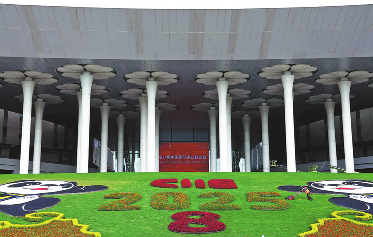
The upcoming eighth China International Import Expo will inject greater certainty and confidence into the global economy through concrete actions, showcasing China’s unwavering commitment to high-level opening-up and win-win cooperation with overseas partners, said senior government officials and business leaders on Tuesday.

 Speaking at a news conference in Beijing, Vice-Commerce Minister Sheng Qiuping said preparations for the latest CIIE, which will be held in Shanghai from Nov 5 to 10, are nearly complete.

 The grand event will feature 4,108 overseas exhibitors from 155 countries, regions and international organizations, with the total exhibition area exceeding 430,000 square meters — with both the number of participants and the exhibition scale setting record highs, said the Ministry of Commerce.

 Noting that the CIIE serves as a key platform for foreign firms to observe China’s high-standard opening-up and experience its vast market potential, Sheng said that despite mounting global economic headwinds, China’s huge market continues to provide strong stability and confidence.

 As the world’s second-largest import market for 16 consecutive years, China expects its imports of goods and services to exceed $15 trillion during the 14th Five-Year Plan (2021-25) period, he added.

 With more than 800 million middle-income consumers projected over the next decade, Sheng said that cumulative intended deals from previous expos, which have surpassed $500 billion, also underscore China’s firm commitment to sharing market opportunities with the outside world.

 According to the CIIE Bureau, one of the expo’s organizers, the trade fair this year will introduce new themes such as the silver economy, ice and snow economy, sports economy and automotive tourism, alongside new platforms for digital and health consumption.

 Wu Zhengping, deputy head of the CIIE Bureau, said these efforts aim to stimulate the consumption of goods and services while nurturing new models of consumer spending.

 The eighth CIIE itself will see the debut of 461 new products, technologies and services, said the bureau.

 Coach, a United States-based fashion brand and a seven-time participant at the CIIE, will make the global debut of new products, including bags and clothing, at the expo.

 “We have witnessed the CIIE’s growing scale and influence, as well as its positive spillover effects,” said Liliana Lucioni, president of Coach China. “We look forward to exploring new opportunities with partners and bringing even more creativity and quality products to Chinese consumers.”

 French industrial conglomerate Schneider Electric will also showcase a range of China-originated innovations at the CIIE, including solutions for street lighting systems and battery switchboards, bringing Chinese ingenuity to benefit the world.

 “Investing more in China means investing in the future,” said Yin Zheng, executive vice-president of China and East Asia operations at Schneider Electric, emphasizing that as a key engine of global growth, China is not only a vast and open market and an essential part of global supply chains, but also a hub of world-class innovation.

 Yin said that the French company’s newly upgraded air circuit breaker will also make its debut at the expo this year.

 During the CIIE, this product will officially roll off the production line at the group’s plant in Shanghai, marking a true realization of “from production line to the CIIE” and enabling faster responses to the needs of the Chinese market, he added.

 The Ministry of Commerce said that enterprises from a total of 123 countries participating in the Belt and Road Initiative have confirmed their participation in the CIIE, increasing by 23.1 percent year-on-year.

 China will expand its exhibition space for African products, with the number of African companies participating in the eighth CIIE up 80 percent on a yearly basis.

Article inline ad

Hurun Rich List Mirrors Nation’s Innovative Forte

0

By SHI JING in Shanghai | China Daily | Updated: 2025-10-29

The latest Hurun China Rich List unveiled in Shanghai on Tuesday has mirrored the nation’s improved competitiveness in innovation and the advancement of its high-quality economic growth, said Rupert Hoogewerf, Hurun Report chairman and chief researcher.

 This year’s list, the 27th edition, has seen the largest number from China’s new quality productive forces coming to the fore. Five of the top 10 on the list and 60 percent of the top 100 are from the high-quality production sector.

 Zeng Yuqun, founder of battery maker CATL, is one example. With his personal wealth up 65 percent year-on-year to 330 billion yuan ($46.5 billion), Zeng rose two places to fourth this year. CATL’s net profit surged 33 percent in the first half of this year.

 On the back of explosive growth in the automotive business and a profitability leapfrog in the premium smartphone sector, Xiaomi founder Lei Jun saw his wealth rise by 196 billion yuan, the largest increase among all listed entrepreneurs this year. This has helped him to seize the fifth position.

 Riding the AI wave that has swept the globe, Chen Tianshi, cofounder and CEO of chipmaker Cambricon Technologies, saw his wealth up fivefold to 180 billion yuan, giving him the 18th position on the list. Yang Zhilin, founder of conversational AI solution Kimi, one of China’s answers to ChatGPT, entered the list for the first time this year with a wealth of 7.3 billion yuan.

 The consumer electronics industry has been galloping, thanks to the rising demand for smart devices and short videos across the globe. Therefore, Wang Tao, founder of drone leader DJI, saw his wealth soar nearly 80 billion yuan to top 100 billion yuan for the first time, placing him at 33rd. Likewise, Liu Jingkang and Pan Yao, founders of action camera maker Insta360, debuted on the list this year with their family’s wealth standing at 38.5 billion yuan.

 Zhong Shanshan, founder of bottled water brand Nongfu Spring, secured the top position in the Hurun China Rich List for the fourth time. He is the second entrepreneur to make the record after Alibaba’s founder Jack Ma. Zhong has set a new China wealth record of 530 billion yuan. About 80 percent of his wealth is from Nongfu Spring.

 “Zhong is a representative of China’s massive domestic market size supported by the country’s 1.4 billion population. But it should also be noted that Nongfu Spring has continued its advancement in high-end products and brand upgrading in recent years, which is a snapshot of the high-quality development of Chinese companies,” said Hoogewerf.

 Wang Ning, founder of toymaker Pop Mart whose Labubu toys have taken the world by storm, is the face of the new generation of innovative consumer brands with a global market. He saw his wealth rise sixfold to 17th place at 182 billion yuan.

 Xu Gaoming broke straight into the Top 100 with 69.5 billion yuan, as his gold accessories company Laopu Gold has built itself a reputation as a luxury jewelry brand.

 A total of 1,434 individuals, holding more than 5 billion yuan each, made it to this year’s Hurun China Rich List, up 31 percent from last year. Their total wealth jumped 42 percent year-on-year to nearly 30 trillion yuan. Given this speed, China is likely to witness its first trillion-yuan entrepreneur in three to five years, according to the Hurun Research Institute.

 The bullish performance of the Chinese stock market this year has partly helped to push up the billionaires’ wealth, with the Shenzhen Component Index up 54 percent, Shanghai Composite Index up 36 percent and Hang Seng Index up 42 percent.

 More importantly, the structural changes seen in this year’s list have reflected the new quality productive forces navigating China’s high-quality economic growth, said Hoogewerf.

 About two-thirds of the entrepreneurs on this year’s list were not in the editions of 10 years ago. Most of the new faces are from sectors such as industrial products, healthcare and new types of consumer goods. At the same time, property developers, which dominated the list during 2017 and 2018, have mostly dropped out of the top 100 this year.

 The market, thus, has higher expectations of the companies’ future profit-making abilities, demonstrated in share prices. Many of these companies are strong in innovation, spending much on research and development, and have efficient management and control systems. These have helped them to become highly competitive globally, he said.

 Innovation, technological self-reliance and support for the private economy were underlined in the communique released by the fourth plenary session of the 20th Central Committee of the Communist Party of China, which has outlined China’s development blueprint for the next five years.

 shijing@chinadaily.com.cn

Article inline ad

China’s Industrial Policy To Pivot From Scale To Quality, Morgan Stanley Economist Says

0

By Jiang Xueqing | chinadaily.com.cn | Updated: 2025-10-29

Over the next five years, China’s industrial policy will undergo a major transformation, shifting its focus from scale to quality and efficiency, said Xing Ziqiang, chief China economist at Morgan Stanley.

 Xing expects China to rein in excessive local subsidies and disorderly competition while advancing a unified national market. Support measures will be transparent, open and consistent for both domestic and foreign entities, fostering a more competitive and unified market, Xing said on the sidelines of the Forum on Financial Innovation Empowering the High-Quality Development of the Private Economy in Beijing on Tuesday, part of the Annual Conference of Financial Street Forum 2025.

 Combined with stronger domestic demand policies — especially enhancing the social security system to better protect low- and middle-income groups such as farmers and migrant workers — these reforms will boost consumer confidence and unlock greater consumption potential, he added. Private enterprises, he said, will gain greater development opportunities under such coordinated financial and fiscal policies.

 Xing also noted a revival in capital activity. Since the second quarter, policy shifts in the United States have prompted global investors to diversify away from heavy reliance on the US economy and dollar assets, restoring confidence in Chinese markets and injecting new vitality into capital flows.

 Domestically, policymakers have promoted more flexible and long-term asset allocation. As a result, long-term asset allocators such as insurance companies expanded equity investments by nearly 1.5 trillion yuan ($211.3 billion) this year, while households have gradually redirected over 800 billion yuan from time deposits to more flexible assets such as wealth management and equity products.

 “Whether it’s the demystification of the US dollar’s dominance overseas or the domestic search for higher-yielding assets, China’s policy support has provided a solid safety net,” Xing said. “Enterprises have demonstrated renewed vitality, while the financial sector has effectively channeled returns from new productive forces to the general public.”

 Participants of the forum discussed how financial innovation can better empower the high-quality development of the private sector. Tian Xuan, dean of the National Institute of Financial Research at Tsinghua University and associate dean of Tsinghua University PBC School of Finance, said technological innovation is the core driving force behind high-quality economic growth, with the private sector, as a key player in innovation, playing an important role in areas such as research and development and the commercialization of scientific achievements.

 “Strengthening innovation in technology finance can provide more targeted and efficient financial support for tech-oriented private enterprises, helping to address their financing difficulties and high costs, while promoting the transformation and industrialization of technological achievements,” Tian said on the sidelines of the forum.

 He stressed that financial innovation must always adhere to the fundamental goal of serving the real economy, centering on supporting enterprise growth and driving economic development.

 Financial institutions, he said, should strengthen compliance management, ensuring all innovation occurs within the bounds of laws, regulations and supervisory policies. They should also fully assess the risks of new products and services, establish robust risk evaluation and early warning systems, and formulate appropriate response measures — all while protecting the legitimate rights and interests of financial consumers and investors.

 jiangxueqing@chinadaily.com.cn

Article inline ad

Forum Sheds Light On China’s Financial Policy Priorities For Coming Years

0

Xinhua | Updated: 2025-10-29 10:01

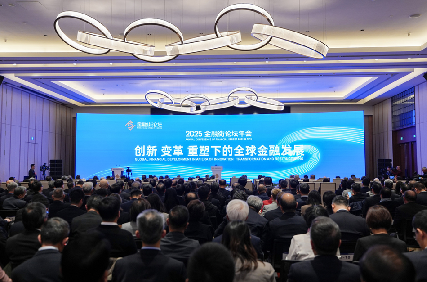
BEIJING — The Annual Conference of Financial Street Forum 2025 is taking place in downtown Beijing from Oct 27 to 30, with eminent guests participating in heated discussions on a broad range of topics, including global economic development trends, financial governance, fintech, green innovation, and risk control and supervision.

 The forum, inaugurated in 2012 as a platform for global exchange and cooperation in the field of finance, has grown into a major source of updates on China’s financial policies, providing a window into the work priorities of the financial sector in the world’s second-largest economy.

 At the opening ceremony on Monday, Chinese Vice-Premier He Lifeng said that China’s financial system needs to advance risk prevention, strengthen regulation, promote high-quality development and push for high-standard opening-up. He said the 15th Five-Year Plan period (2026-2030) will be a key period to promote high-quality financial development, and for China to accelerate its efforts to become a country with a strong financial sector.

 Following He’s remarks, leading figures of the nation’s monetary and financial authorities delivered their own speeches, unveiling the work priorities of their departments for the years to come.

 Comprehensive macro-prudential regulation system

 Pan Gongsheng, governor of the People’s Bank of China, which is China’s central bank, revealed that building a sound, stable monetary policy system and a comprehensive macro-prudential regulation system will be important tasks for the central bank over the next five years.

 On efforts to build a macro-prudential regulation system, Pan said that priorities will include in-depth efforts to monitor and assess macroeconomic operations, promote high-quality economic development, prevent and defuse systemic financial risks at their source, and strike a dynamic balance between economic growth, economic structural adjustment and financial risk prevention at the macro level.

 He said that priorities will also include the continuous expansion of the coverage of macro-prudential regulation in accordance with the development and changes of the financial market, and the enhancement of the financial system’s resilience.

 The governor noted the necessity of comprehensively assessing financial institutions — particularly systemically important banks and insurance companies — and said that additional regulatory measures that match their level of significance should be implemented on the basis of regular supervision.

 Efforts will also be made to assess and respond to the impact that the monetary policies, trade policies, sovereign debt risks and geopolitics of major economies have on the operations of China’s financial market, Pan said.

 Strong financial sector

 Li Yunze, head of the National Financial Regulatory Administration, said that toward the goal of building a strong financial sector, efforts will be made to enable the financial sector to better serve the real economy in realizing sustained, healthy economic and social development. This will involve guiding financial resources toward major strategies, key areas and weak links, and toward the growth of modern industries and the development of new quality productive forces.

 Li noted that financial resources will focus on intelligent, green and integrated directions, support the upgrading of traditional industries, and promote the growth of emerging and future industries. In an effort to expand domestic demand, greater financial resources will also be directed to programs aimed at boosting consumption.

 The official said that his department will actively promote financial services to benefit the people more equitably and extensively, and it will expand the coverage of financial services for small and micro enterprises, private enterprises, and agriculture and farmers.

 On the reform and opening-up of China’s financial sector, Li said his department will fully implement the “pre-establishment national treatment plus negative list” management system, participate actively in the reform of international financial governance, and contribute more Chinese wisdom to improving international financial regulations and industry standards.

 He said that efforts will also be made to balance financial development and security. In particular, work to dispose of non-performing assets and replenish capital to ensure the stable operations of the financial system will be intensified.

 Appeal of Chinese capital market

 Wu Qing, chairman of the China Securities Regulatory Commission (CSRC), pointed to interest from global capital in asset investment in emerging markets. “Data shows that international capital inflows into emerging markets exceeded $150 billion in the first nine months of this year. During this process, Chinese assets such as A-shares and Hong Kong stocks have been undergoing continuous valuation reassessments, allocation and reallocation.”

 Introducing his department’s work priorities for the coming years, Wu said that the comprehensive reform of investment and financing will be intensified, and the inclusiveness, adaptability, attractiveness and competitiveness of China’s capital market will be enhanced, guided by a focus on risk prevention, strengthened supervision and the promotion of high-quality development and new quality productive forces.

 The CSRC will also work to consolidate the capital market stability stemming from the improved quality of listed companies, and will introduce policies and measures aimed at facilitating the industrial mergers and acquisitions among these firms.

 In an effort to expand institutional opening-up, a plan to optimize the qualified foreign investor system was launched on Monday. Wu said the plan will provide a more transparent, convenient and efficient institutional environment for all types of foreign investors by optimizing assessment, enhancing investment operational efficiency and expanding the scope of investments.

 Wu added that the CSRC will also work to enhance the protection of investor rights, and crack down lawfully on illegal or irregular behaviors such as financial fraud, market manipulation and insider trading.

 Secure, smart forex management system

 Zhu Hexin, head of the State Administration of Foreign Exchange, said that over the years, his department has made efforts to advance the reform and high-level opening-up of the foreign exchange sector, and to facilitate cross-border trade and related investment and financing activities.

 On work priorities for the coming years, Zhu said that efforts to deepen the reform and opening-up of the foreign exchange sector will continue, as will efforts to safeguard the bottom line of preventing systemic risks. Work will also be done to build a foreign exchange management system and mechanism that is “more convenient, more open, more secure and smarter.”

 In particular, the department will work to push the reform of banks’ foreign exchange business operations with a view to improving their trade and investment facilitation services.

 Zhu said his department will seek to advance the foreign exchange sector’s high-standard institutional opening-up, coordinate the advancement of yuan internationalization with the high-quality opening-up of the capital account, and deepen the reform of foreign exchange management in key areas such as direct investment, cross-border financing and securities investment.

 The official said that his department will also leverage technologies such as AI and big data to empower supervision, strengthen monitoring and early-warning processes for cross-border capital flows, effectively prevent external risk shocks, and provide a stable, certain environment for the improvement of economic and trade resilience.


Article inline ad