Wednesday, November 25, 2026

Home Blog Page 155

Renminbi Asset Appeal Spurs Dim Sum Bond Mkt

0

By OSWALD CHAN in Hong Kong | China Daily | Updated: 2025-10-29

Strengthened market infrastructure, enhanced secondary market liquidity and increased attractiveness of renminbi-denominated financial assets for global investors are improving the supply-demand dynamics of the offshore dim sum bond market.

 Dim sum bonds are renminbi (yuan)-denominated bonds issued outside the Chinese mainland, mainly in Hong Kong. After a relatively quiet period, dim sum market activity has accelerated in recent years.

 The offshore dim sum bond market is witnessing more diversified issuers, with the central government, mainland provincial and municipal governments such as Hainan, Guangdong and Shenzhen, and even the Development Bank of Kazakhstan, having issued dim sum bonds in Hong Kong.

 Chinese mainland tech titans such as Tencent Holdings, Baidu and Alibaba Group are also raising a record amount of funds from Hong Kong’s dim sum bond market as they seek cheap financing for business expansion.

 In the first three quarters, the issuance amount had reached 574.03 billion yuan ($80.73 billion), reflecting a robust year-on-year growth of 12 percent, said mainland-based CSPI Ratings.

 Last year, total dim sum bond issuances in Hong Kong soared 37 percent annually to exceed 1 trillion yuan. Yuan-denominated bonds so far account for more than 20 percent of the total bond issuance amount of the Hong Kong Special Administrative Region.

 On the supply side, the low policy interest rates on the Chinese mainland, improved market infrastructure, enhanced secondary market liquidity and growing usage of the yuan in cross-border trade and investments support more frequent issuances of dim sum bonds.

 Growing investor appetite for yuan assets is also bolstering demand for such bonds.

 “As corporations accumulate more yuan, they need more yuan-denominated investment products to better manage their offshore renminbi holdings. By investing offshore yuan holdings in dim sum bonds — which is less risky than stocks — enterprises can earn more interest returns than traditional bank deposits,” said Billy Mak Suichoi, associate professor at Hong Kong Baptist University’s Department of Accountancy, Economics and Finance.

 The Hong Kong Monetary Authority and the Securities and Futures Commission of Hong Kong in September promulgated the Roadmap for the Development of the Fixed Income and Currency Markets (FIC Roadmap) which pledges to develop the city’s bond and currency markets through boosting primary market issuances, enhancing secondary market liquidity, expanding offshore yuan business and building bond market infrastructure.

 As an international financial center, Hong Kong does not have a strong bond market foundation, compared with other financial services segments such equities, foreign exchange, derivatives and wealth management, Mak said.

 “When Hong Kong enlarges dim sum bond issuances, this will also spur more cross-currency trading between the renminbi, Hong Kong dollar and US dollar. This can enhance Hong Kong’s foreign exchange market, putting the SAR in a position that can rival the top three global foreign exchange centers of Singapore, London and New York,” the professor added. Currently, Hong Kong is the world’s fourth-largest foreign exchange market.

 Before unveiling the bold vision of the FIC Roadmap, the SAR’s financial regulators have already ramped up various initiatives to boost the city’s fixed-income market infrastructure.

 “These initiatives will cement Hong Kong’s role as a global renminbi hub, to play a central role in channeling onshore renminbi liquidity for their offshore usage, as well as enabling offshore borrowing of renminbi funds for onshore usage,” said Becky Liu from Standard Chartered.

 “These schemes will likely lead to an increase of outbound renminbi payments from onshore to offshore, and a rise of two-way renminbi capital flows, accelerating the internationalization of the renminbi,” Liu said.
 oswald@chinadailyhk.com


Article inline ad

Shanghai Composite Index Hits Highest Mark In A Decade

0

By Zhou Lanxu | chinadaily.com.cn | Updated: 2025-10-28 11:14

China’s benchmark Shanghai Composite Index briefly surpassed the 4,000-point mark on Tuesday morning — its first climb above that threshold in a decade — hitting 4,000.86 points, before dropping slightly later in the session.

Article inline ad

从学界到业界、探索科研成果转化、跨学科合作、职业发展

0

澳大利亚中国博士沙龙成功举办2025澳中博士说论坛

2025年10月25日,澳大利亚中国博士沙龙(Chinese Association of Professionals and Scholars, Australia 简称博士沙龙)在墨尔本大学Woodward Conference Centre成功举办 2025澳中博士说论坛,主题为“Professional Horizons — Navigating Careers Between Industry and Academia”。本届论坛以“职业与发展”为核心议题,围绕青年学者的职业规划、科研成果转化及跨学科合作等热点议题展开探讨。论坛邀请六位来自不同领域和职业阶段的学术与业界专家,分享他们在科研与产业实践中的经验与职业发展心得。

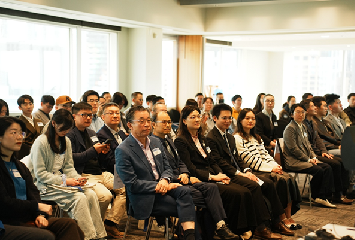
中国驻墨尔本总领馆副总领事刘东源女士,领事刘洋先生,中国国际人才交流协会驻澳大利亚总代表彭斯震先生,澳大利亚社会科学院院士、墨尔本大学当代中国研究中心主任王耀麟教授,蒙纳士大学医学、护理与健康科学学院商务拓展专员徐峥博士,维多利亚大学颜旭副教授,墨尔本大学当代中国研究中心副主任潘秋萍博士,Go Solar Group高级商务拓展经理赵飞先生,以及澳中创新孵化中心创始人唐彩焱博士等嘉宾出席活动。本次论坛吸引了来自各行各业逾120位专家、优秀青年学者和博士生参加。

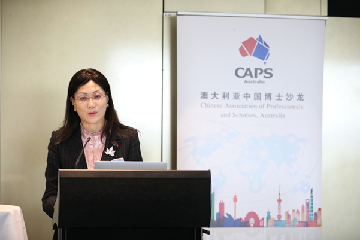
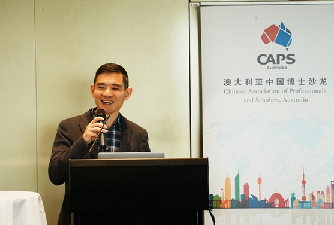
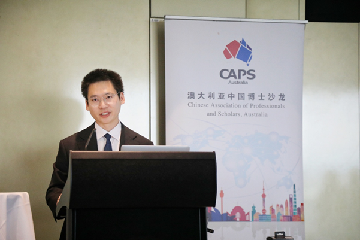
付杨主席致开幕词

04 10

 (图,榛子摄影:博士沙龙主席付杨博士致辞)

 在开幕致辞中,澳大利亚中国博士沙龙主席付杨博士代表主办方向所有莅临论坛的嘉宾、演讲嘉宾、合作机构代表及青年学者们表示热烈欢迎与衷心感谢。他介绍,博士沙龙自2006年在维州成立以来,一直致力于连接学术力量、支持青年研究者成长、推动学术与产业及社区之间的深度交流合作,现已发展成为澳大利亚最具影响力的华人博士学术交流平台之一。

付主席指出,本届论坛邀请来自学术界与业界的六位优秀代表分享他们在科研转化、职业选择以及多学科协作方面的宝贵经验,为青年学者提供启发视野和发展思路。他强调,在后疫情时代,科研工作者正面临多元职业路径和全新挑战,每一位与会者的参与和贡献都将为更具韧性、更具创新力的未来科研生态提供动力。

他鼓励与会者勇于探索和协作,并留下三个值得深思的问题以引发进一步交流:

我能如何让我的研究产生更广泛的社会价值?

我能与哪些伙伴携手合作以扩大影响力?

我如何为构建可持续的学术与产业未来贡献力量?

最后,付主席真诚感谢大家长期给予博士沙龙的支持,并希望在明年即将迎来博士沙龙20周年的重要节点,继续携手共进,为青年学者的发展与中澳交流合作贡献力量。

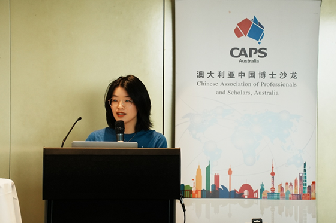
 副总领事刘东源女士致辞

05 8 

(图,榛子摄影:副总领事刘东源女士致辞)

 随后,中国驻墨尔本总领馆副总领事刘东源女士在致辞中对来自各界的专家学者及青年科技人才表示热烈欢迎,并高度肯定博士沙龙长期以来在澳华人学者群体中发挥的积极作用。她祝贺论坛成功举办,并期望博士沙龙继续拓展平台影响力,为在澳科研人员提供更多交流与合作机会。

刘副总领事指出,科研工作者应勇于走出象牙塔,将学术成果与社会发展深度结合,以专业所长积极服务社会,为中国与澳大利亚的发展贡献力量。

刘副总领事鼓励在澳专家学者与博士生心怀祖国、砥砺奋进,在扎实科研的基础上积极推动中澳科技合作与交流,成为两国协作的桥梁纽带。她勉励与会者在助力中国科技进步的同时,也为澳大利亚的创新发展贡献智慧与力量。最后,她祝愿本次论坛圆满成功。

 主旨演讲

论坛主旨演讲环节由中国国际人才交流协会驻澳大利亚总代表彭斯震博士率先开场。他指出全球科技格局正加速演变,中国科技实力迅速提升,科技强国建设已成为重要战略方向。他鼓励在澳青年学者抓住时代机遇,为国家科技创新贡献力量。

06 8

 (图,榛子摄影:演讲嘉宾彭斯震先生)

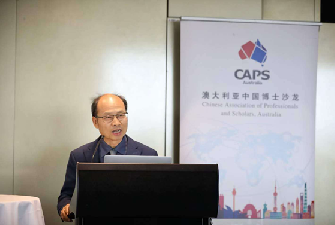
 随后,澳大利亚社会科学院院士、墨尔本大学王耀麟教授分享人文社科领域职业发展。他强调高校教职竞争激烈,博士生应拓宽职业选择范围,提升沟通能力与实践技能,积极积累人脉,为多元职业发展做好准备。

07 7

(图:演讲嘉宾王耀麟教授)

 蒙纳士大学徐峥博士介绍药物研发流程,并以自身经历鼓励生物医学和药学博士关注知识产权、技术转化与科研驱动型初创企业等产业化方向。

08 8

(图:演讲嘉宾徐峥博士)

 维多利亚大学颜旭副教授分享科研之路的挑战与坚持,倡导青年学者保持信念,并为寻找博士后机会的学生提供实用建议。

09 7

 (图:演讲嘉宾颜旭副教授)

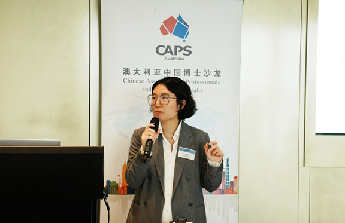
 墨尔本大学潘秋萍博士分享博士毕业后的求职经验,总结优秀高校教职候选人应具备的特质,鼓励大家从挫折中积累经验,坚持追求目标。

10 4

(图:演讲嘉宾潘秋萍博士)

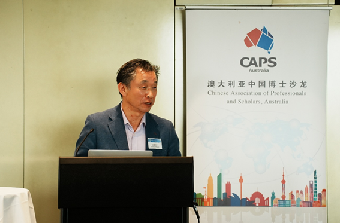
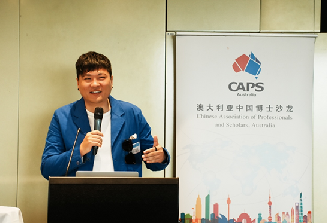
 Go Solar Group赵飞先生讲述科研与创业结合的经历,鼓励青年学者勇敢面对自身短板,通过合作与努力不断突破,为未来职业发展奠定坚实基础。

从学界到业界、探索科研成果转化、跨学科合作、职业发展-zhsailing

(图:演讲嘉宾赵飞先生)

 圆桌讨论

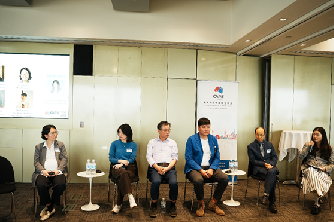
圆桌讨论由澳中创新孵化中心创始人唐彩焱博士主持,嘉宾结合自身研究与职业经验,就中国科技政策解读、跨学科协作、人文社科求职经验及科研创业路径等话题,回答了青年学者的提问。讨论呈现出“问题—路径—落地”的逻辑,观点鲜明,互动环节精彩纷呈,现场气氛热烈,为与会者提供了将理念转化为可操作行动的参考与启发。

12 3

(图:圆桌讨论)

13 4

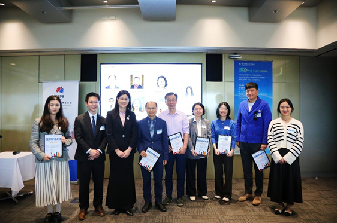
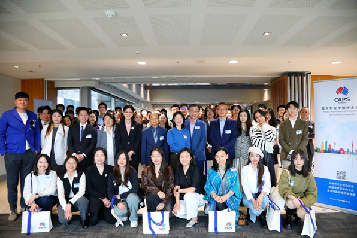
(图,榛子摄影:活动合影)

01 12

(图:活动现场)

 大会圆满闭幕

00 2

在会议尾声,中国驻墨尔本总领馆副总领事刘东源女士、博士荣誉主席李雨玺女士以及博士沙龙现任主席付杨博士为受邀嘉宾颁发证书,并合影留念。随后,驻墨尔本总领馆教育组领事刘洋先生为现场参会者抽取幸运观众奖,奖品为东方启明赞助的 FUJIFILM instax mini Evo 相机。大会在轻松欢乐的氛围中圆满落下帷幕。

本文由澳大利亚中国博士沙龙提供

zhsailing.com(郑和出海)报道

Article inline ad

Role in global nuclear power continues to grow

0

43.18% of world’s highest-rated power units in sector originate from China

By ZHENG XIN | China Daily | Updated: 2025-10-28

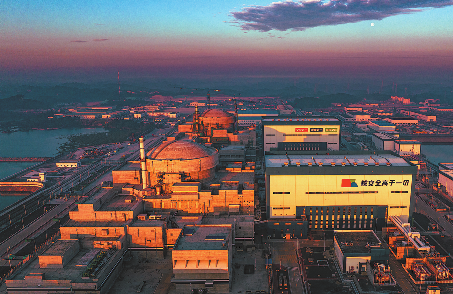
China has solidified its position as the world leader in nuclear power, with its total installed capacity surpassing 125 gigawatts, and is playing an increasingly indispensable role in the global transition toward clean energy, industry experts said.

The country’s installed nuclear power capacity now stands at an impressive 125.41 GW, combining 59 operational units with a total capacity of 62.48 GW and 53 units currently under construction, accounting for 62.93 GW, said Zeng Yachuan, director of the nuclear power department at the National Energy Administration.

This achievement firmly places China at the forefront of the global nuclear power landscape, he said during the recently held nuclear power industry development forum, a sub forum of the International Forum on Energy Transition organized by the NEA in Suzhou, Jiangsu province.

Global nuclear power generation reached a new decade-high in 2024, with robust growth expected to continue, he said.

“In the ongoing global energy transition toward clean and low-carbon sources, nuclear energy’s importance is becoming increasingly prominent. It is likely that an astounding 43.18 percent of the world’s highest-rated nuclear power units originate from China, underscoring the nation’s pivotal role.”

China, one of the few countries to possess a complete and independent nuclear power industrial system, is leveraging its comprehensive capabilities to drive both domestic expansion and international collaboration.

Gao Ligang, general manager of China General Nuclear Power Group, said China’s Hualong One, the country’s domestically designed third-generation reactor, is a key indicator of this progress, with its complete self-sufficiency in core equipment.

The widespread construction of China’s domestically designed Hualong One technology marks a critical milestone for China, he said.

“It signifies not only the mastery of core technologies in the design and manufacturing of crucial nuclear power equipment, but also the stimulation of innovation across its vast supply chain.”

This initiative has engaged over 5,400 upstream and downstream enterprises, leading to the localization of more than 400 key pieces of equipment, effectively making Hualong One entirely self-reliant for its complete set of equipment, he added.

Key players within the nuclear power supply chain have also demonstrated robust integrated supply capabilities and forward-looking strategic planning.

Li Jianhua, deputy general manager of Dongfang Electric Group, said the company has achieved a stable supply capacity of four-six sets of primary equipment for the nuclear island, such as reactor pressure vessels, and six-eight sets of primary equipment for the conventional island, including turbine generator sets, on an annual basis.

This consistent output is crucial for supporting China’s ambitious nuclear power construction program and its leadership in the global nuclear energy sector, said Li.

China’s rapid nuclear expansion aligns with its broader national energy strategy to enhance energy security, reduce reliance on fossil fuels and achieve its ambitious carbon neutrality goals, said Lin Boqiang, head of the China Institute for Studies in Energy Policy at Xiamen University.

The continuous development and deployment of advanced nuclear technologies, particularly those with high domestic content like Hualong One, are critical for sustaining this momentum and further strengthening the nation’s position as a global nuclear power leader, Lin said.

zhengxin@chinadaily.com.cn


Article inline ad

AI ties with APEC members in focus

0

By MA SI and CHEN BOWEN in Boao | China Daily | Updated: 2025-10-28

Deeper cooperation among Asia-Pacific Economic Cooperation economies in nurturing artificial intelligence talent will help the world better address regional challenges and opportunities in the digital era, government officials and multinational organizations said.

Zhang Xiaolei, deputy head of the Department of International Cooperation at the Ministry of Industry and Information Technology, said: “China will work with other APEC member economies to advance sustainable and high-quality growth in the region.”

Zhang highlighted priorities such as policy implementation, experience sharing, and deeper collaboration in talent cultivation.

She made the remarks at the Workshop on Practical AI Capacity Building in the Asia-Pacific Region held in Boao, Hainan province, on Friday.

“We welcome other APEC members to gather in China in 2026 when the country assumes the role of APEC host,” Zhang said.

The urgency of AI capacity building was echoed by Hayun Kang, co-chair of the APEC Telecommunications and Information Working Group, who said in a video speech that it is no longer merely a technical issue, but a pressing priority for economic and social development.

According to her, economies are actively working to build a more inclusive and resilient regional ecosystem through measures such as formulating national AI strategies and conducting AI literacy training.

The Asia-Pacific region should enhance cross-border collaboration and establish long-term partnerships guided by the principles of transparency, fairness, accountability and a people-centered approach, in order to achieve sustainable growth across the region, Kang said.

Hainan, where the workshop was held, exemplifies China’s efforts to integrate AI education into its development agenda.

Cui Ying, deputy head of the Education Department of Hainan province, detailed local measures, including an “AI plus education” initiative launched in September.

“We will further deepen industry-education integration to closely link education and talent with industrial and innovation chains,” Cui said. These steps aim to equip students with practical AI skills to support Hainan’s digital transformation and the broader APEC vision.

The workshop was co-organized by the China Industrial Control Systems Cyber Emergency Response Team and Hainan College of Software Technology.

Ryoji Sekido, co-CEO of Accenture Asia-Pacific, said: “China stands at the forefront of global AI innovation and deployment, serving as an unparalleled benchmark for enterprise transformation.

“There is no better place to witness AI progress than right here in China and Shanghai. The ecosystem’s rapid evolution is impressive,” Sekido said.

Beyond education, China is accelerating AI applications in industrial and green sectors. For instance, the “AI plus industrial internet” concept is revolutionizing manufacturing by improving equipment maintenance and data utilization. Simultaneously, AI powers smart grids to optimize renewable energy distribution and carbon emission monitoring. These advancements demonstrate China’s resolve to contribute to APEC’s goals of digitalization and sustainable growth.

Xie Shaofeng, chief engineer at the Ministry of Industry and Information Technology, said the ministry has also coordinated with provincial governments to develop 11 national AI innovation pilot zones.

Meanwhile, the central and local authorities have jointly built specialized manufacturing innovation centers for embodied AI robots, humanoid robots and other next-generation technologies to drive the development of industrial clusters, Xie said.

Contact the writers at masi@chinadaily.com.cn

Article inline ad

PBOC to optimize e-CNY position while monitoring overseas stablecoins

0

By Zhou Lanxu | chinadaily.com.cn | Updated: 2025-10-27

Pan Gongsheng, governor of the People’s Bank of China, said the central bank will continue to work with law enforcement authorities to crack down on onshore virtual currency trading and speculation, while closely monitoring and assessing the development of overseas stablecoins.

Speaking at the Annual Conference of Financial Street Forum 2025, Pan said that although stablecoins issued by market institutions have continued to emerge in recent years, the sector remains in its early stage of development. He noted that international financial organizations and central banks generally take a cautious attitude toward stablecoins due to potential risks.

At the same time, Pan said the central bank will research on optimizing the positioning of digital yuan, or e-CNY, within the monetary hierarchy and support more commercial banks in becoming operators of e-CNY.

Article inline ad

Shenzhen developing into high-tech hub

0

Nation’s first SEZ, set up 45 years ago, provides robotics, AI vision firms with fundamental R&D investment resources

By Li Jiaying | China Daily | Updated: 2025-08-26

As morning light sweeps across Shenzhen’s skyline, the skyscrapers that have replaced the old fishing boats gleam in the sun. At the city’s core, the “Pioneering Bull” stands as a testament to the city’s relentless innovation and drive — qualities that have shaped its evolution into a global hub since its designation as China’s first special economic zone 45 years ago.

“Technological innovation is not only a defining feature of Shenzhen, but also its flagship brand. From the government to businesses and individuals, the city attaches great importance to advancing innovation,” said Zhang Lin, head of the city’s science, technology and innovation bureau.

According to data released by the National Bureau of Statistics late last year, Shenzhen’s total research and development investment reached 223.66 billion yuan ($32.7 billion) in 2023, up 18.9 percent year-on-year — marking nine consecutive years of double-digit growth.

Notably, local enterprises contributed 93.3 percent of the total number, the highest share among all Chinese cities.

Among Shenzhen SEZ’s many innovative trailblazers is Orbbec, Asia’s first company to mass-produce 3D vision sensors.

Known as the “eyes” of robots, these sensors give machines the ability to perceive complex environments, avoid obstacles with precision, and navigate autonomously.

Like many cutting-edge technologies, advances in robotics and AI vision rely on heavy investment in fundamental research and development.

According to the company, between 2022 and the first half of this year, Orbbec invested nearly 1 billion yuan in R&D. As a result, it had secured 1,112 patents in 3D vision perception by the end of June 2025.

“From core sensor technologies to underlying chips and downstream application algorithms, we have built a full-stack layout for 3D sensing. This is the key to sustaining our competitiveness in the field,” said Chen Bin, chief financial officer of Orbbec.

Chen said Shenzhen’s innovation-driven environment, well-established industrial ecosystem and rich talent pool built over the years have all provided strong momentum for the company’s growth.

“In fact, when we chose Shenzhen at the very beginning, it was because of the city’s strong atmosphere of pioneering and innovation. We usually require talent across multiple fields such as chips, algorithms, electronics, engineering and more. Decades of accumulation in Shenzhen have created fertile ground for attracting such professionals.”

Beyond components and software technologies, the pioneering city is also making strides in the broader field of humanoid robots.

EngineAI, a Shenzhen-based robotics manufacturer, recently announced with its partners that they will hold the world’s first full-size humanoid robot combat tournament in the city in December.

The company said participating robots should be full-sized, capable of simulating human motion patterns, executing combative actions under defined rules, and responding to dynamic environments through intelligent decision-making systems.

“Robot combat demonstrates the comprehensive capabilities of humanoids — from motion control and environmental perception to computing power and algorithms,” said Yao Aiwen, co-founder of EngineAI.

“Organizing such an event can help not only accelerate technological progress, but also test how well the industry ecosystem is working on final applications,” Yao said.

Yao emphasized that supply chain support is critical in robotics manufacturing, where components require constant optimization, and Shenzhen offers precisely this foundation.

“Here, we get to optimize or upgrade component parts in just two hours. Some of our suppliers are even located in the same building, making collaboration incredibly efficient,” he said.

From precision components to end-user applications, Shenzhen now boasts a complete robotics industry chain.

In 2024, the city was home to 74,032 robotics enterprises, with the sector’s total output value surpassing 200 billion yuan for the first time, official data showed.

In terms of the embodied intelligent robotics sector, the city aims to expand related industries to over 100 billion yuan in scale, and foster more than 1,200 enterprises in the embodied robotics cluster, according to its action plan for embodied intelligent robotics (2025-27).

However, Shenzhen is not stopping there. Innovation is reshaping not only tech products, but also the ecosystem of services surrounding them.

On July 28, the world’s first “6S store” for robots opened in Shenzhen’s Longgang district. Expanding on the traditional “4S store” model in the automotive sector, the new format incorporates “lease” and “customized” modules to create a six-in-one lifecycle service system — sales, spare parts, service, surveys, lease and customized — aiming to redefine service standards for the robotics industry.

“The 6S store breaks down the ‘glass wall’ between R&D and market application. It helps companies understand what the market demands and helps users see what technology can deliver. Ultimately, this pushes robots from being laboratory products to becoming everyday essentials,” said Zhao Bingbing, head of Longgang’s artificial intelligence (robotics) administration.

As the country’s first government agency dedicated to AI, the administration represents an innovative combination of government agencies, research institutions and industry associations, Zhao said, adding that it was first established to advance the AI and robotics sectors while also meeting the evolving need of enterprises.

“Many companies come to us seeking funding or supportive policies, but don’t know which department to approach. Our role is to bridge industry needs with government resources, addressing their challenges directly,” the official explained.

The momentum is unfolding at a historic moment. Over the past 45 years, the SEZ has grown from a GDP of just 270 million yuan in 1980 to 3.68 trillion yuan in 2024, an increase of more than 10,000-fold.

As Shenzhen marks the 45th anniversary of its special economic zone and the fifth year of its comprehensive reform pilot, the city is embarking on a new journey.

In June, a set of guidelines released by the central authorities highlighted a new batch of measures for the SEZ to pioneer the development of a modernized, globally oriented and innovation-driven city.

The guidelines call for launching a new wave of reform measures, rolling out fresh innovation trials and deepening opening-up initiatives, in an effort to break institutional barriers in education, science and talent development; strengthen the integration of innovation, industry, capital and talent chains; and explore new cooperation in the Guangdong-Hong Kong-Macao Greater Bay Area.

At a news conference themed around the guidelines, Li Chunlin, deputy head of the National Development and Reform Commission, highlighted Shenzhen’s unique role as a pioneer of China’s reform and opening-up.

With its advantages in leading development, abundant reform scenarios and favorable conditions for breakthroughs, Shenzhen SEZ has launched a series of exploratory measures in institutional opening-up, scientific innovation, talent development and governance models, Li said.

“These reform initiatives carry distinct originality and pioneering value, and their outcomes will play an important role in setting an example nationwide.”


Article inline ad

Tech innovation vital to opening door to future

0

By Ouyang Shijia | China Daily | Updated: 2025-10-27

Standing amid a sea of entrepreneurs, investors and inventors at the Capital International Exhibition & Convention Center in Beijing’s Shunyi district, I could feel innovation buzzing in the air.

The HICOOL 2025 Global Entrepreneur Summit — my first — was more than a conference — it was a living ecosystem of technology, talent and ambition, all converging around one shared goal: to shape the future.

This year’s summit, held from Oct 16 to 18, brought together participants from across the world. From artificial intelligence and quantum computing to brain-computer interfaces, frontier technologies dominated the stage, reflecting not only the pulse of global innovation, but also China’s accelerating drive toward self-reliance and leadership in key tech frontiers.

HICOOL has grown rapidly into one of China’s most influential innovation platforms. Through a combination of government guidance and market mechanisms, it links global entrepreneurs, investors and industrial resources through a full-chain service system that includes talent selection contests, business incubation, industrial parks, venture funds and digital matchmaking.

Over the past few years, HICOOL has attracted more than 34,000 entrepreneurial projects and 45,000 talent from 167 countries and regions. One listed company, 16 unicorns and 197 enterprises that use special and sophisticated technologies to produce novel and unique products have emerged from this ecosystem.

The energy and ambition on display at HICOOL are closely aligned with the strategic direction of China’s next five-year plan. Earlier this month, Science and Technology Minister Yin Hejun chaired meetings on national science and technology innovation work for the 15th Five-Year Plan (2026-30) period.

Yin described the coming five years as a crucial period for building China into a science and technology powerhouse, emphasizing the need to seize the opportunities presented by a new wave of technological revolution and industrial transformation.

According to Yin, accurately understanding the stage characteristics of the 15th Five-Year Plan period and scientifically planning the strategic goals and key tasks of science and technology innovation are vital. It will be essential for accelerating high-level scientific and technological self-reliance and achieving the goal of building a strong innovation-driven nation.

Yang Yiyong, a researcher at the Chinese Academy of Macroeconomic Research, believes that technological innovation will be the “core driving force for economic and social development” in the years ahead.

“Technological innovation is the key to opening the door to the future,” Yang said. “During the 15th Five-Year Plan period, it should be placed in a more prominent position, with greater support and investment.”

Yang called for diversified funding mechanisms that encourage enterprises, universities and research institutions to increase research and development spending. The government, he said, should play a guiding role through innovation funds and tax incentives, while strengthening both basic and applied research to achieve breakthroughs in critical areas such as artificial intelligence, quantum computing and biotechnology.

“Basic research is the source of innovation,” he noted. “Only by deepening our understanding of the fundamentals — in areas like machine learning and deep learning — can we provide the theoretical foundation for the next wave of technological applications.”

Yang also stressed the importance of deep integration between academia and industry, proposing the creation of industrial technology alliances and innovation clusters to accelerate the transformation of scientific results into market-ready products.

“Colleges and research institutes have rich talent and research resources, while enterprises have market sensitivity and industrialization capability,” he said. “By combining the two, we can speed up technology transfer and build globally competitive innovation ecosystems.”

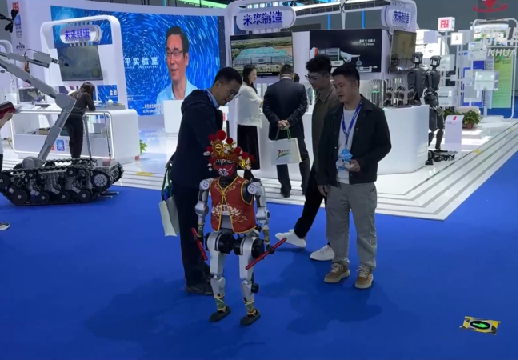
The push for science and technology innovation under the next five-year plan echoes the transformation I witnessed at HICOOL. The summit’s bustling exhibition halls offered a microcosm of China’s innovation landscape — from brain-computer interfaces to next-generation robotics and new materials.

If the energy at HICOOL 2025 is any indication, the momentum is real. The convergence of talent, technology and policy is creating fertile ground for breakthroughs that could redefine industries — and perhaps, as in the case of the brain-computer interface, even redefine what it means to see.

Leaving the convention center on the final day, I looked back at the vast exhibition hall glowing under the autumn sunlight, which showed that innovation never stops.


Article inline ad

Meitu expands global presence with AI imaging innovation

0

By Fan Feifei | chinadaily.com.cn | Updated: 2025-10-27

Meitu, a Chinese photo and video editing app, is ramping up efforts to expand its footprint in Europe and the Americas by utilizing technological advancements in artificial intelligence (AI) and bolstering AI application in the imaging sector.

The explosive growth of AI technology — particularly in the field of image generation — has brought about immense business opportunities for Meitu’s overseas expansion.

The technological recognition and global influence of Chinese AI-powered products are rising rapidly as AI technology can effectively lower cultural and language barriers, and have a greater impact on young users worldwide, according to a person in charge of Meitu’s overseas operations.

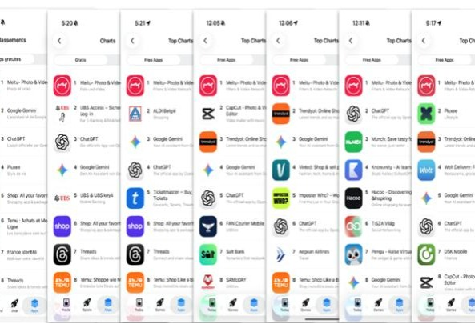
The selfie app recently took the top position on the Apple app store’s overall download charts in 17 European countries.

Its surge in popularity across Europe is largely driven by the newly launched AI-powered group photo function. Powered by advanced image generation and synthesis technology, this feature allows users to take photos across time and space with friends, family, idols or celebrities. It quickly went viral on European social networks as users had fun sharing their creations.

The innovative function is the result of Meitu’s integration of AI technology with its localized operation strategy. The popularity in overseas markets signifies that AI can transcend cultures.

During an internal meeting at Meitu’s recently concluded 17th anniversary, Wu Xinhong, founder of the company, highlighted that there are tremendous opportunities in the global imaging industry and that many of the needs of overseas users can be efficiently satisfied through AI-powered imaging tools.

fanfeifei@chinadaily.com.cn


Article inline ad