Wednesday, November 25, 2026

Home Blog Page 156

MorePCB scales PCB and PCBA industry in China

0

By Zhuang Qiange | chinadaily.com.cn | Updated: 2025-10-25 19:12

As Dongguan cements its reputation as a global electronics manufacturing hub, MorePCB is rising as a homegrown contender in the printed circuit board (PCB) and PCB assembly (PCBA) sector. With a full suite of services spanning prototyping to turnkey mass production, the company is staking its claim in the competitive global electronics supply chain.

MorePCB promotes itself as an EMS (electronics manufacturing services) provider in China, offering PCB fabrication, component sourcing, assembly, testing, and global shipping in an integrated “turnkey” model. By adopting a “no minimum order quantity” policy, MorePCB broadens access from startups and prototyping labs to established firms scaling to mass production.

MorePCB’s strategy mirrors a broader shift in China’s electronics clusters: formerly specialized firms are now adding capabilities to capture more of the value chain. The integration of PCB fabrication and assembly under one roof helps reduce transaction costs, shorten lead times, and improve synergy between board design, component procurement and process engineering.

As China’s electronics clusters continue scaling, firms like MorePCB stand to gain by bridging low-volume/high-mix orders with high-volume stable production. But they will face stiff competition from both domestic rivals and overseas EMS/PCB providers, especially in cost, speed and reliability.

MorePCB exemplifies a new generation of integrated electronics manufacturing firms in China — agile, comprehensive and globally oriented.


Article inline ad

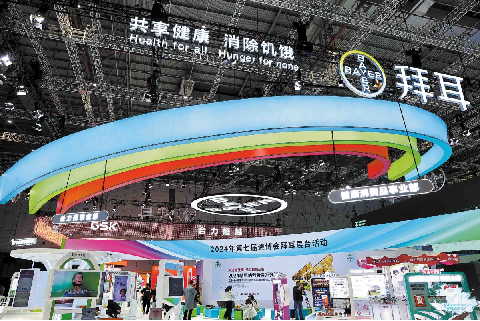
Bayer sees huge opportunities in agri, electrification, healthcare

0

German life sciences conglomerate upbeat about China’s market prospects

By Zheng Yiran | China Daily | Updated: 2025-10-27

With huge opportunities in electrification, healthcare and agriculture, German life sciences company Bayer is upbeat about China’s market prospects during the upcoming 15th Five-Year Plan (2026-30), and will keep investing in the fields, said a senior executive.

Matthias Berninger, Bayer’s EVP, head of public affairs, sustainability and safety, said: “Even if affected by the trade war, China’s market prospects are still promising. First, China is the number one export partner for the largest number of countries and has been a partner of choice for so many countries in the world. In fact, no country has more export destinations than China.”

“Second, China remains a large market with a population that still has high demand. There are developed parts of China, but there are lots of parts of China that still need to catch up, so there is a lot of domestic demand. Third, no country is more advanced in electrification than China. The growth of electricity demand in China is bigger than anywhere in the world, that’s a foundation for success.

“I’ve been following the growth and successes of renewable energy throughout my professional career and it’s really reassuring to see how electrification is advancing in China,” he said.

Data from China Electricity Council show that in 2024, China’s electrification rate reached 28.8 percent, 0.9 percent higher than the previous year, surpassing major developed economies in Europe and North America. The number was expected to grow to 35 percent by 2030.

Berninger also mentioned China’s innovation. “China is an innovation powerhouse. Those who believe that China just copies and pastes are completely wrong. China has always been innovating.”

Matthias Berninger, Bayer’s EVP, head of public affairs, sustainability and safety

“In the past two years, China has made tremendous progress. It’s now among the leading nations. It is not dominant, but really strong. We see it in the pharmaceutical space where China-led innovation is becoming very attractive for global pharmaceutical companies such as Bayer. The startup world is really amazing in that space. We created a Co. Lab, where startups can cooperate with our scientists. I believe that for Bayer, there will be huge opportunities in striking deals with Chinese innovators in the space of pharmaceuticals,” Berninger said.

Last September, Bayer opened Bayer Co. Lab Shanghai as part of its global network of life science incubators, with others situated in the United States, Japan and Germany. Co. Lab will provide exclusive space and tailored support services for Chinese startups, promote open innovation and collaboration in the biotech ecosystem, and play an important part in Bayer’s efforts to promote local research and development and innovation throughout the whole chain.

The senior executive also sees great opportunities in the agricultural sector. “We are sharing agricultural innovation with China. We offer the potential for China to become not only a leading country, for example, in corn production when it comes to hectares, but also when it comes to yield, and also output. We can innovate together with local breeders, with local companies and bring the best seeds that you can grow in the world to China.”

In 2021, Bayer launched Bayer ForwardFarming, a global sustainable agricultural project, in China. The project adopts the concept of regenerative agriculture, which, with the help of technology, raises the production efficiency of crops while restoring the ecology of the land. Currently, there are around 20 Bayer ForwardFarms in the world, among which China has three — in Jilin province, Shanghai and Beijing, planting corn, vegetables and rice, respectively.

“I am very optimistic that China will make a meaningful contribution to reducing carbon emissions on a global scale. That is true for sustainability, and it’s also true for the healthcare system.

“in China, the progress I’ve seen leads me to believe that we have the right to play and that we can add to China’s successes, and we are certainly committed to continuing to invest,” he sai

Article inline ad

Beijing unveils plan for International BioPark in E-Town to boost global pharma innovation

0

By Li Jing | chinadaily.com.cn | Updated: 2025-10-27

Beijing has unveiled a plan for its International BioPark in the Beijing Economic-Technological Development Area, also known as Beijing E-Town, aiming to build a global hub for pharmaceutical and biotechnology innovation, local authorities said.

The plan focuses on artificial intelligence, cross-disciplinary research, and regulatory innovation to accelerate the city’s life sciences sector. Released by Kong Lei, secretary of the Beijing Economic-Technological Development Area Party Working Committee, the plan was announced at the 2025 International Biomedical Industry Innovation Conference Beijing Forum on Oct 24.

Located along Beijing’s southern central axis, the BioPark will link with Fengchi and Nanhaizi parks and connect to three subway lines providing direct access to the capital’s airports and railway stations. The project is designed to leverage the city’s policy, innovation and openness advantages to strengthen international cooperation in the pharmaceutical and healthcare industries.

The park will feature four key industrial zones — a headquarters cluster, a medical-engineering integration zone, an R&D and transformation area and a smart manufacturing district. These zones will host global biopharma headquarters, research institutions, education-industry platforms, and advanced manufacturing plants.

The BioPark will also host China’s national pilot base for artificial intelligence applications, building infrastructure such as a supercomputing center, data labeling facilities, and trusted data spaces for healthcare and pharmaceuticals. It will target AI-driven drug manufacturing and precision medicine.

Beijing plans to set up a life and health industry innovation institute — in collaboration with top universities including Tsinghua, Peking, Beihang and Capital Medical universities — to establish an international clinical research hospital focused on translational medicine.

The park’s design includes three corridors — the gene gallery, smart sharing corridor, and eco-corridor — linking industrial zones with public spaces. Supporting facilities such as schools, talent apartments and lifestyle districts are under construction to attract international professionals.

Fengchi Park, the project’s ecological core, will feature themed villages promoting cultural experiences, innovation exchange, and wellness. Rooftop gardens and public leisure spaces will shape what planners are calling a new landmark skyline for the southern axis.

Since its initial announcement last year, the BioPark has begun attracting multinational pharmaceutical companies — including Eli Lilly, Pfizer, Bayer and Medtronic — covering vaccines, innovative drugs and high-end medical devices.

Kong said Beijing will accelerate the park’s construction and welcome global companies and researchers to invest and collaborate to position the BioPark as a world-class innovation hub for the pharmaceutical industry.


Article inline ad

China unveils draft rules to curb new steel capacity, tighten green standards

0

By Cheng Yu | chinadaily.com.cn | Updated: 2025-10-27

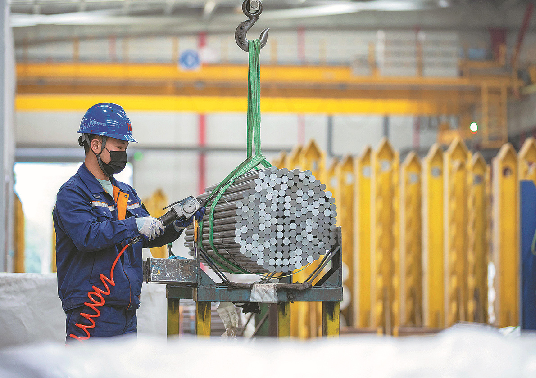
China’s top industry regulator has proposed tougher rules to rein in steel production capacity and promote cleaner manufacturing. The proposed rules would ban new steel projects outside of approved industrial parks of Yangtze River economic belt and restrict capacity transfers in key regions, according to a draft regulation recently released by the Ministry of Industry and Information Technology.

The proposed rules signal Beijing’s renewed push to prevent a resurgence of overcapacity and accelerate the sector’s green transition.

Under the proposal, key regions with strict environmental goals would not be allowed to increase total steelmaking capacity. Additionally, the transfer of capacity from non-key to key regions, or between key regions, would be strictly prohibited. Provinces and cities with national capacity control targets would also be barred from accepting capacity transferred from elsewhere.

Furthermore, only smelting equipment listed in the official de-capacity plans in 2016 could be used for capacity replacement. Six types of capacity are excluded, including outdated or subsidized capacity previously scheduled for elimination, unbuilt equipment, and unapproved auxiliary smelting facilities such as vanadium converters or induction furnaces.

The proposal rules also raised the minimum replacement ratios, requiring at least 1.5 tons of capacity to be scrapped for every ton added. For mergers and acquisitions completed after June 2021, the ratio may be no lower than 1.25 to 1.

Three project categories — on-site upgrades, high-end specialty steel using advanced smelting processes, and projects in Qinghai province and Xizang autonomous region — would qualify for equal-capacity swaps.

The draft rules propose tightening merger conditions for companies seeking favorable replacement ratios, requiring substantive integration of ownership, management, and operations.

The MIIT said it would encourage steelmakers to expand electric-arc furnace capacity, promote hydrogen metallurgy and retrofit existing plants with low-carbon technologies, which are part of China’s broader effort to green its heavy industries and maintain tighter oversight of steel output.


Article inline ad

Plan outlines opportunities for the world

0

New five-year blueprint underscores nation’s focus on shared prosperity

By LIU JIANQIAO in Beijing and XING YI in London | China Daily | Updated: 2025-10-27

In a global landscape fraught with uncertainties, China’s development commitment offers the international community stability and positive momentum, experts said.

China’s growth will create vast opportunities for the world, opening new avenues for cooperation in areas such as technology, sustainable development, the green economy and the digital economy, they said, adding that such collaboration will allow countries to tap into their shared potential and reap more benefits.

Their remarks came after the fourth plenary session of the 20th Central Committee of the Communist Party of China, which was held in Beijing last week, outlined China’s development blueprint for the next five years, signaling the nation’s readiness to share opportunities and pursue common development with the rest of the world.

According to a communique released on Thursday, the session adopted the Recommendations of the CPC Central Committee for Formulating the 15th Five-Year Plan for Economic and Social Development, which provides a road map for the nation to pursue high-quality growth.

Mark Logan, former member of Parliament of the United Kingdom, said that amid global uncertainties, one of the few certainties is that China’s government and people will devote themselves fully to fulfilling the key principles of the 15th Five-Year Plan (2026-30).

“These plenums have become essential indicators for the global economy, and the UK is watching closely to identify opportunities to work on our economic partnership over the coming years,” he said.

With China’s increased emphasis on domestic consumption and continued commitment to high-tech innovation, the UK is well positioned to contribute meaningfully to the world’s second-largest economy, Logan said. “Our strengths in services, advanced manufacturing and green technology align naturally with China’s development priorities,” he added.

Through the Belt and Road Initiative and other global frameworks, China offers valuable development pathways for countries in the Global South, as well as for developed nations, Logan said.

“Those who want to position China as an enemy are, in fact, positioning the UK as an enemy to further modernization, when there’s still much we can do bilaterally,” he said.

Shakeel Ahmad Ramay, chief executive officer of the Asian Institute of Eco-civilization Research and Development in Pakistan, said that by formulating a new five-year plan, China is continuing to deepen reforms and advance development, a move that will sustain its healthy economic growth and inject strong momentum into global economic recovery.

Under its 14th Five-Year Plan (2021-25), China delivered a series of development achievements that captured global attention, Ramay said. From economic transformation and tech breakthroughs to green development, China has taken a leading role on the world stage, while significantly improving the well-being of its people, he said.

“The 15th Five-Year Plan signals that China is entering a new stage of modernization, which prioritizes people’s welfare and shared prosperity. It outlines efforts to reshape the country’s economic and technological landscape, positioning China as a new hub of innovation and scientific progress,” Ramay said.

The security mechanism will be upgraded to meet the needs of a modernized nation, while environmental protection and climate-resilient development have also been placed high on the agenda, he added.

John Ross, former director of the UK’s London Economics and Business Policy Bureau, said that China has entered a new stage of high-quality development, powered by technology and innovation. The country now stands at the global forefront in areas such as artificial intelligence, clean energy and digital technology, he said.

“During the 15th Five-Year Plan, China needs to cultivate high-quality engineering talent and invest heavily in scientific research, while advancing innovation and cementing its position in the global leadership of new quality productive forces,” Ross said.

“For developing nations, China serves as a compelling model of advanced development. Just a decade ago, its economy was expanding rapidly, but it had yet to emerge as a technological leader. Today, China is at the forefront of innovation globally, occupying the very position that countries in the Global South aspire to reach,” he said.

Ross highlighted the effectiveness of China’s economic planning, noting that it offers a comprehensive vision for the nation’s economic trajectory, in contrast with the short-term monetary and fiscal policies typical of Western approaches.


Article inline ad

China and US reach basic consensus

0

By Wang Keju and Zhong Nan in Beijing, and Xu Wei in Kuala Lumpur | chinadaily.com.cn | Updated: 2025-10-26

China and the United States have reached “preliminary consensus” on key issues, including tariff suspension, trade in agricultural products and export controls, after two days of “constructive” trade talks in Malaysia over the weekend.

A statement released on Sunday following the conclusion of the fifth round of trade talks since May said that officials representing China and the US held “frank, in-depth and constructive” exchanges on key trade issues of mutual concern.

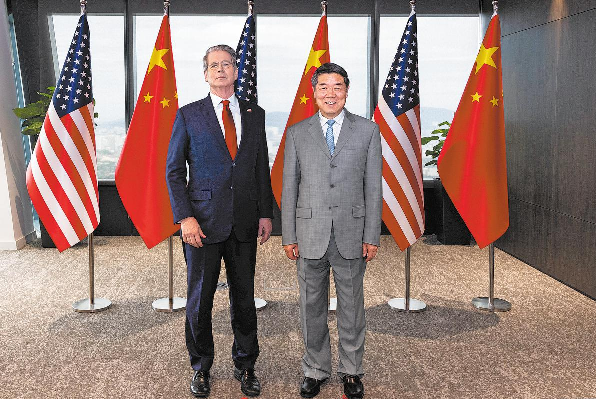
China and the US gain from cooperation and lose from confrontation, Chinese Vice-Premier He Lifeng said after meeting with US Treasury Secretary Scott Bessent and US Trade Representative Jamieson Greer in Kuala Lumpur on Saturday and Sunday.

He noted that when economic and trade frictions appear, both countries should uphold the principles of mutual respect, peaceful coexistence and win-win cooperation to properly address each other’s concerns through equal-footed dialogue and consultation.

The US should work with China toward the same direction, to further build up trust, manage differences, expand mutually beneficial cooperation, and promote bilateral economic and trade relations to a higher level, the vice-premier added.

The talks addressed various issues, including the US’ Section 301 measures targeting China’s maritime, logistics and shipbuilding sectors, extension of the reciprocal tariff suspension, fentanyl-related tariffs and law enforcement cooperation, trade in agricultural products, and export controls, the statement said.

A preliminary consensus was reached about arrangements to address each other’s concerns, with both sides agreeing to further work out the specifics and follow their respective domestic approval processes.

Li Chenggang, China’s international trade representative at the Ministry of Commerce, told a news conference on Sunday that while the US presented its position firmly, China remained resolute in safeguarding its interests.

Li said that China has strictly followed the consensus reached in multiple phone conversations between the two heads of state, earnestly implementing the outcomes of economic and trade consultations, and carefully safeguarding the “hard-won relative stability” in bilateral relations. “The recent fluctuations and disruptions are not what China wishes to see,” he added.

The latest round of trade talks took place at a tense time when Washington’s imposition of new restrictions prompted resolute countermeasures from Beijing, shattering months of relative calm.

The two countries had reached a trade truce in May, agreeing to roll back triple-digit tariffs, which was later extended to Nov 10.

However, at the end of September — mere weeks after the fourth round of trade negotiations in Spain yielded progress in stabilizing ties — the US expanded its export controls on advanced technology to China. This was followed by imposition of additional port fees on Chinese-built and Chinese-operated ships earlier this month.

The administration of US President Donald Trump, in retaliation for Beijing’s tightened restrictions on rare earth exports for military applications, also vowed to impose 100 percent additional tariffs on Chinese goods and export controls on “any and all critical software” effective next month.

Gao Lingyun, a researcher at the Chinese Academy of Social Sciences’ Institute of World Economics and Politics, said that consensus cannot last if the US continues to weaken the trust it is built upon with its unilateral and protectionist actions.

It’s crucial for the US to work with China to take concrete actions and faithfully honor their commitments made during these talks, thereby creating conditions for further dialogue and cooperation that will benefit the two countries and the world at large, Gao added.

Observers are also closely watching to see whether the two economic heavyweights extend their “tariff truce”, which is set to expire on Nov 10, while hoping to see broader cooperation between the two countries.

Sean Stein, president of the US-China Business Council, told China Daily that he hoped that both sides would agree to further extend the tariff truce. Stein cautioned that it was better not to have high expectations from the China-US dialogue in the short term. “It should set us up for a better, longer-term trade relationship,” he added.

“The US and China are the world’s two largest economies, the world’s two most technologically advanced economies, and the world’s two most dynamic economies,” he said, adding that “there are a lot of things that we need to get right on the economic front”.

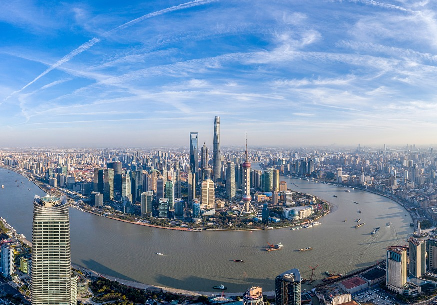
Former US treasury secretary Robert E. Rubin said that the better way would be to have “an open trading system” between the US and China, as well as involving the rest of the world. “Chinese people have a very strong history of technological innovation, and in time they’ll get where they need to be,” Rubin said on the sidelines of the 2025 Bund Summit in Shanghai earlier this week.

Rubin said that if the two countries can work together on artificial intelligence in an open trading system, the results would be “advantageous”.

Despite the recent escalation in tensions between the two countries, many US businesses remain optimistic about their future in the Chinese market. “The Chinese market remains our No 1 priority in the Asia-Pacific region,” said Steven Sare, managing director for the Asia-Pacific of US apparel and accessories retailer Abercrombie & Fitch.

Zhou Lanxu and Ouyang Shijia contributed to this story.

Article inline ad

AI Ushers In Friendlier Appliances

0

Companies using smart tech to make home gadgets better suited for seniors

By Fan Feifei | China Daily | Updated: 2025-10-23

Smart air conditioners that can automatically adjust room temperature and artificial intelligence-powered televisions capable of broadcasting health information are increasingly penetrating into people’s daily lives and becoming emotional companions for senior citizens in China.

 As China’s silver economy is witnessing robust growth, leading Chinese home appliance makers are stepping up efforts to launch products suitable for seniors — a demographic that has shown increasing demand for diversified, easy-to-use and health-oriented household appliances.

 Experts said AI technologies are increasingly integrated into senior-friendly home appliances. With features such as intelligent voice interaction and health monitoring having been introduced, it will be more convenient for seniors to use these intelligent and innovative products, creating new consumption growth drivers.

 Chinese home appliance giant Haier Group has developed AI-driven rehabilitation robots, which can provide personalized rehab plans based on the physical conditions of the elderly.

 Its AI-powered TVs featuring an eye protection function can dynamically enhance image contrast, allowing elderly to see TV programs more clearly and comfortably. These products are equipped with medical large models to provide online consultation services, and can also automatically generate monthly health reports and send them to the smartphones of users.

 Haier has rolled out toilets designed for seniors who have mobility issues, as well as showers and bathrooms with constant temperature control systems and voice recognition functionality.

 Hisense Group has launched TVs integrating medical-level vision protection technology that aligns with the viewing habits and preferences of the elderly. Seniors can play games, engage in physical exercise, make purchases online and have video chats with their friends and family members via the intelligent TVs.

 Its air conditioners combine the multiple functions of an air purifier, disinfection machine, dehumidifier, and humidity controller to provide a comprehensive solution for indoor air quality. In addition, elderly users can easily control air conditioners through simple voice commands through the advanced AI voice control system that can recognize dialects in different regions.

 The company is also collaborating with top-tier hospitals across the nation to develop healthcare management platforms to monitor the health conditions of senior citizens.

 Sichuan Changhong Electronics Holding Group Co Ltd has developed a smart eldercare system, enabling interconnections of home appliances, medical devices and security systems, and its AI-powered TV sets can understand the needs of seniors and remind them to take medications on time.

 Data from Beijing-based market consultancy All View Cloud showed that the scale of China’s senior-friendly home appliance market will exceed 100 billion yuan ($14.01 billion) in 2025 and is expected to reach 1 trillion yuan in 2030.

 According to the Ministry of Civil Affairs, China’s elderly population is projected to grow by more than 10 million annually over the next decade. By 2035, the silver economy is expected to account for 9 percent of China’s GDP.

 China’s silver economy is expected to grow from 7 trillion yuan in 2024 to 30 trillion yuan in 2035, said the China Research Center on Aging. However, the elderly care products and services currently available in the market are not practical enough for senior citizens.

 The country has released a guideline aimed at building a solid service system for the elderly by 2029, as part of a broader push to address the challenges of an aging population and improve the quality of life for seniors. The guideline said that services will be better matched with the needs of seniors by 2035.

According to the guideline, the central authorities encourage companies to develop and promote products for the elderly — either high-tech electrical appliances or tourism products — and enrich services for them, aiming for a prosperous silver economy.

 In addition, the country will channel resources and investment into technological programs for elderly care services, such as humanoid robots and AI.

 Jiang Feng, executive director of the China Household Electrical Appliances Association, said eyeing the immense business opportunities from China’s silver economy and a rapidly aging population, major home appliance makers are pouring more resources into research and development and bolstering technological innovation of senior-friendly products, so as to satisfy the diversified demands of the expanding demographic.

 Jiang said traditional home appliance products are highly homogenized, while the niche market targeting seniors is still in its initial stages, which will create immense business opportunities for home appliance companies. She highlighted that new-generation information technologies, such as 5G, AI and big data, are becoming increasingly integrated with elderly care products.

 “Currently, most home appliance products are designed for ordinary consumers, without giving sufficient consideration to the needs of special user groups such as the elderly,” said Guo Lizhen, a senior engineer of the China Household Electric Appliance Research Institute.

 She noted that as China’s aging population is rising rapidly, it is essential that product design and standards formulation should fully take into account the needs of the elderly, thus leading to the emergence of elderly friendly goods.

 Nowadays, smart home appliances boast diverse functions, such as remote app control, voice interaction and touch screens, Guo said, emphasizing that no matter how advanced technologies have been deployed, elderly friendly appliances should give top priority to safety, followed by accessibility. Other factors like reliability and convenience should also be carefully considered.

 She called for efforts to establish technical guidelines for the design, development and testing of the elderly friendly appliances and smart systems. The move will help break down barriers across different appliance brands, expand the effective supply of such products, and better meet the unique needs of elderly users, she added.

 “With the help of AI, senior-friendly home appliances are creating safer, more comfortable and smarter home environments for silver-haired residents,” said Liang Zhenpeng, an independent consumer electronics analyst.

 Liang noted that as the elderly have increasing willingness and ability to consume products and services, household appliances should cater to their fundamental needs, while home appliance makers need to further expand application scenarios, striking a balance between technological iteration and user education.

 China’s smart home industry is developing by leaps and bounds, fueled by advances in cutting-edge technologies represented by AI, Liang said, adding that the integration of AI models with terminal devices and household appliances will create new growth drivers for the global consumer electronics industry, and advance the intelligent transformation of the traditional home appliances sector.

 In order to meet the older generation’s personalized needs and rising willingness and ability to spend on high-quality goods, he stressed the need to establish standards for senior-oriented home appliances and launch more intelligent home products containing innovative technologies, such as nursing and housekeeping robots for senior citizens.

 To better cope with the aging population, the State Administration for Market Regulation has formulated and released a series of national standards for senior-friendly home appliances in recent years, including product operation methods, function settings, human-machine interaction interfaces and product safety.

 Experts said these targeted measures basically establish the foundational framework of a national standard system for elderly friendly home appliances and intelligent systems.

 “Younger consumers pay more attention to the abundant functionalities and personalized and customized products, while elderly users prefer simpler and more intuitive interfaces and function designs of household appliances, attaching great importance to the safety and convenience of such products,” said Guo Jinyong, who is in charge of the smart home experience center at China’s leading home furnishings retailer Easyhome.

 In addition, seniors have a stronger need for health management features, such as health monitoring, smart reminders and emergency assistance. They also tend to buy products that can offer tailor-made health services in accordance with their physical conditions, Guo added.

 Zhang Subing, chief expert at the China Electronics Standardization Institute, said more efforts should be made to establish comprehensive solutions covering demands, technology and application scenarios of household appliances for the elderly.

 It is of vital importance to strengthen technological innovation, improve product design and enhance after-sales support for the elderly, with a key focus on integrating more AI-powered and health-oriented functions into intelligent terminal devices, he added.

 fanfeifei@chinadaily.com.cn

Article inline ad

Cement Overcapacity High On Agenda

0

By Li Jiaying | China Daily | Updated: 2025-10-23

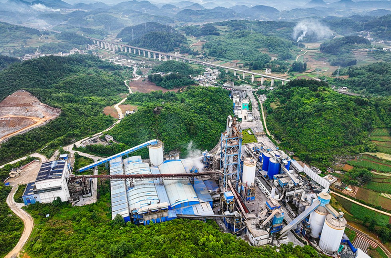
China is stepping up capacity management in the cement sector to address oversupply and stabilize sustainable growth, with moves intensified to align actual production with approved capacity levels and curb unregulated expansion.

 The Ministry of Industry and Information Technology recently convened a meeting on stabilizing growth in the cement industry, calling on suppliers to adhere to market-oriented and law-based principles while strictly prohibiting new capacity, regulating existing production and phasing out outdated facilities.

 A key emphasis was placed on major producers taking the lead in implementing capacity replacement and compliance policies.

 By the end of 2025, all suppliers are required to formulate adjustment plans to align actual production with registered capacity — a move consistent with the work plan for stabilizing growth in the building materials industry (2025-26) issued in August.

 “We will restructure existing capacity, accelerate the phaseout of inefficient production and increase the share of advanced capacity to achieve value-added growth through optimizing existing assets,” said a representative from the strategic planning department of Beijing-based BBMG Corp, a major cement producer.

 “The root cause of the cement sector’s current difficulties lies in the long-standing problem of overcapacity, which has now been amplified by weaker market demand,” said an expert from the China Building Materials Federation (CBMF). “Excessive clinker production beyond registered capacity has made it difficult to resolve this issue effectively.”

 In response, authorities have called for real-time monitoring of clinker output to ensure that daily and annual production aligns with approved capacity levels. And the CBMF said it has completed a standard for cement clinker output monitoring and accounting, and will assist regulators in applying the standard to strengthen capacity management and improve the industry’s ability to adjust supply and demand.

 Through rectifying overproduction and applying comprehensive standards in quality, environmental protection, energy efficiency and safety, China is expected to cut annual clinker capacity by more than 500 million metric tons, significantly easing the current imbalance in the sector, according to preliminary CBMF calculations.

 The federation also plans to establish an information disclosure and supervision platform for capacity management, incorporating mechanisms to combat monopolistic practices, dumping and counterfeit products.

 Cement demand has weakened sharply since 2021 due to declining property investment and a slowdown in infrastructure construction, resulting in a 23 percent drop in national cement output from 2021 to 2024, CBMF data showed.

 As one of China’s major industrial carbon emitters, the cement sector is also expected to benefit from ongoing capacity governance.

 “Improved production discipline will not only stabilize the cement market, but also accelerate carbon reduction and support China’s dual-carbon goals on schedule,” the CBMF expert said.

 lijiaying@chinadaily.com.cn

Article inline ad

Financial Sector Mobilizes To Support High-Quality Growth

0

Efficiency boosted to assist real economy, tech innovation, green initiatives and various businesses

By Jiang Xueqing | China Daily | Updated: 2025-10-23

During the 14th Five-Year Plan period (2021-25), China’s economy entered a new stage marked by structural optimization and shifting growth drivers.

 The financial system significantly improved the quality and efficiency of its support for the real economy, expanding financing for technological innovation, small and micro businesses, green initiatives, and key industries to fuel sustained high-quality growth.

 Over the past five years, China’s financial sector has strongly supported major national strategies as well as key areas and weak links of economic and social development. The banking and insurance sectors provided 170 trillion yuan ($24 trillion) in new funding for the real economy — the portion of the economy that produces goods and services for consumption — through various means, including credit, bonds and equity financing.

 Loans for science and technology R&D, medium- and long-term loans for manufacturing, and infrastructure loans grew by an annual average of 27.2 percent, 21.7 percent, and 10.1 percent, respectively.

 Inclusive loans to small and micro businesses reached a balance of 36 trillion yuan as of September, 2.3 times the level at the end of the 13th Five-Year Plan (2016-20) period, with interest rates down by 2 percentage points, Li Yunze, minister of the National Financial Regulatory Administration, said at a news conference on Sept 22.

 Regulators have fully implemented the new development philosophy and optimized the allocation of financial resources, with marked improvements in service quality and efficiency for key and weak sectors, said Li.

 Ample financing

 During the 14th Five-Year Plan period, loans to tech-based small and medium-sized enterprises, inclusive small and micro loans, and green loans all recorded average annual growth above 20 percent.

 The financial sector strengthened funding guarantees for effective investment, providing ample financing for 102 major projects under the plan. By the end of the period, the balance of infrastructure loans had reached 54.5 trillion yuan, up 62 percent from the end of the previous plan. Over 700 billion yuan in policy-based and development financial instruments helped mobilize more than 9 trillion yuan in investment.

 Taking large State-owned commercial banks as an example, Zeng Gang, chief expert and director of the Shanghai Institution for Finance & Development, said these banks have actively aligned with national policy priorities, increasing medium- and long-term credit for “specialized, sophisticated, distinctive and innovative” enterprises, high-end manufacturing, and equipment upgrading. This boosted the share and maturity structure of manufacturing loans.

 Through green credit and carbon-reduction tools, they have also supported new energy, energy-saving retrofits, and low-carbon park projects. At the same time, banks lowered lending rates and expanded inclusive credit measures for small and micro businesses to enhance access and coverage, Zeng said.

 Regulators have steered financial resources toward fostering new quality productive forces, refining China’s policy framework for sci-tech finance and strengthening financial support for innovation to better serve technology enterprises across all stages of their life cycles.

 By the end of the 14th Five-Year Plan period, outstanding loans to high-tech enterprises reached nearly 19 trillion yuan, growing at an average annual rate exceeding 20 percent, while insurance institutions provided more than 10 trillion yuan in risk protection for technology-related projects. Insurance fund investments in equities and equity funds exceeded 5.4 trillion yuan, up 85 percent from the end of the 13th Five-Year Plan period, supporting a stable and healthy capital market.

 The office of the Central Financial Commission, together with the China Securities Regulatory Commission and relevant departments, issued guidelines and implementation plans to promote medium-and long-term capital inflows into the market, addressing bottlenecks in market access for social security, insurance, and wealth management funds. As of the end of August, various long-term funds held about 21.4 trillion yuan in tradable A-share market capitalization, up 32 percent from the end of the previous plan period.

 With the rapid expansion of strategic emerging industries such as the digital economy, artificial intelligence, and new energy, technological innovation has become an increasingly powerful driver of economic growth. Experts believe that the mutual empowerment of finance and technology has not only helped stabilize China’s economic fundamentals but also driven breakthroughs in key technological advances, independent innovation, and industrial upgrading.

 Meanwhile, China has addressed a number of prominent financial risks in an orderly manner, effectively preventing external shocks from spilling over into domestic markets and safeguarding the interests of depositors and small investors. The overall financial system remains sound, with stable institutions and orderly market operations, said Pan Gongsheng, governor of the People’s Bank of China, the country’s central bank.

 During the 14th Five-Year Plan period, the volume of nonperforming assets China disposed of rose by over 40 percent compared with the previous five years. The combined capital and provisions for risk resistance in the banking and insurance sectors exceeded 50 trillion yuan.

 The National Financial Regulatory Administration made resolving risks at small and medium-sized financial institutions a top priority, adopting tailored reform and risk-mitigation plans for each provincial-level region. It used mergers, restructuring, remediation, and market exits to handle high-risk institutions in a prudent and orderly manner.

 Both the number of high-risk institutions and the size of high-risk assets have dropped sharply from their peaks. Reforms to improve governance, strengthen Party leadership, and enhance sustainability have also advanced, resulting in leaner, stronger local financial institutions and optimized regional layouts, said Li, minister of the administration.

 At the same time, regulators intensified efforts to tackle financial misconduct — cracking down on shareholder manipulation, insider control, and related-party transactions that illegally transfer benefits.

 Over 3,600 shareholders who violated laws and regulations were expelled, and a number of illegal financial groups were dealt with according to law.

 Facing multiple unexpected challenges, the China Securities Regulatory Commission coordinated with macro and financial regulators and market participants to strengthen policy, funding, and expectation management, effectively containing market volatility and systemic risks, said CSRC Chairman Wu Qing.

 During the 14th Five-Year Plan period, the A-share market showed greater resilience, with the annualized volatility of the Shanghai Composite Index at 15.9 percent, down 2.8 percentage points from the previous period, Wu said.

 As China intensified efforts to sustain high-quality development and guard against systemic risks, Pan noted that financial opening-up continued to accelerate, bolstering the global competitiveness and influence of the country’s financial sector.

 Total assets in the banking and insurance industries surpassed 500 trillion yuan, growing by an average of 9 percent annually over the past five years. Assets under management by trust, wealth management, and insurance asset management institutions approached 100 trillion yuan — double the level at the end of the 13th Five-Year Plan.

 Of the world’s top 50 banks, 43 have established operations in China, and half of the world’s 40 largest insurance companies are now in the Chinese market, said Pan.

 Dong Ximiao, chief researcher at Merchants Union Consumer Finance, said: “China will continue to attract foreign financial institutions to accelerate their entry and deepen their participation in the domestic market. We will further enhance the openness of financial markets, improve the convenience of market access, continuously expand the business scope of foreign financial institutions, and actively engage in global financial governance to strengthen our international influence and voice.”

 China has balanced openness with security, steadily and orderly advancing the two-way opening of markets, products, and institutions, while steadily expanding high-level institutional opening of the capital market, said Wu of the CSRC.

 During the 14th Five-Year Plan period, the CSRC approved 13 new foreign-controlled securities, fund, and futures companies to operate in China. Foreign investors held 3.4 trillion yuan worth of A-shares, while 269 Chinese companies were listed overseas.

 “China’s capital market has a unique environment and investor structure. For foreign institutions, success will depend on sustained efforts in compliance, localization of talent, and client development — and on how well they can integrate global experience with the realities of the Chinese market, “said Dong.

 In a recent article in Tsinghua Financial Review, Guan Tao, global chief economist at BOC International (China), and Liu Lipin, a macro analyst at the firm, stressed that promoting high-level, rules-based institutional opening is key to achieving high-quality development in China’s capital market.

 They said that China should embrace the view that once the borders are open, alignment with international regulations and standards is imperative. Guided by the principles of prioritizing domestic needs, engaging globally, grounding policies locally, staying market-oriented, pursuing integrated progress, and ensuring security, China should align its regulatory framework with high international standards.

 jiangxueqing@chinadaily.com.cn

Article inline ad

Sinopec Discovers New Shale Oil Reserve In Sichuan Basin

0

By Zheng Xin | chinadaily.com.cn | Updated: 2025-10-23

China Petroleum and Chemical Corp announced on Thursday the discovery of a new shale oil reserve estimated at 100 million metric tons in the Sichuan Basin, a move with strategic significance for the country’s energy security.

 The discovery is located in Chongqing’s Qijiang district. The well achieved high-yield test production of 38.64 cubic meters (about 243 barrels) of crude oil and 10,000 cubic meters of natural gas per day, said the State-owned energy giant, also known as Sinopec.

 An overall regional assessment following the well’s testing confirmed the substantial new shale oil reserve, underscoring the potential for shale oil exploration and development in southwest China, it said.

 Shale oil, an unconventional oil and gas resource, is considered crucial for ensuring long-term stable crude oil production in China.

 Sinopec has been increasing its efforts in shale oil exploration and development, having already identified three new large-scale shale oil fields across the nation.

 In 2024, Sinopec’s annual shale oil output reached 705,000 tons, an increase of 308,000 tons from the previous year.

Article inline ad