Wednesday, November 25, 2026

Home Blog Page 157

Dreame Technology Moves Nimbly To Expand Overseas

0

By Fan Feifei | China Daily | Updated: 2025-10-23

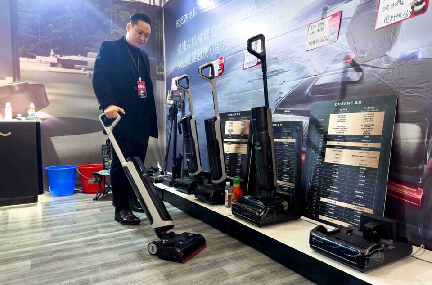
Chinese smart home appliance maker Dreame Technology is stepping up efforts to expand its global presence, pouring significant investment into research and development and driving technological innovation based on user demand.

 Yu Hao, founder and CEO of Dreame Technology, highlighted the importance of strengthening investment in supply chain infrastructure, developing independent production capabilities across the entire industrial chain and establishing a global retail network.

 He said the company’s revenue has grown at a compound annual rate surpassing 100 percent over the past few years, and it plans to further expand its presence in overseas markets and attract top talent from around the world.

 The company is intensifying its localization strategy by introducing customized products designed to suit the usage habits and application scenarios of consumers in various countries.

 Meanwhile, it has expanded both its online and offline sales channels, such as emerging e-commerce platforms, and adopted differentiated marketing strategies, Yu added.

 The company’s products are now available in more than 100 countries and regions, including Europe, North America, Southeast Asia, East Asia, the Middle East, Africa and South America, with international sales contributing 65 percent of total revenue in 2024.

 Its global sales of robotic vacuum cleaners and floor-cleaning machines increased by 178 percent and 100 percent year-on-year, respectively, from January to May, ranking first in 18 countries and regions around the world.

 In the first half of 2024, its gross merchandise value in Southeast Asia jumped by more than 150 percent year-on-year, while sales in Japan, South Korea and Australia soared 292 percent year-on-year during the same period.

 Moreover, as of end-June, Dreame had filed 6,379 patent applications worldwide, with 3,155 patents granted. Invention patents accounted for 45 percent of the total.

 “China’s cleaning appliances sector is projected to experience rapid growth driven by technological advancements, continuous product innovation, and the gradual unlocking of immense consumer demand in smaller cities,” said Zhao Meimei, assistant president of Beijing-based market consultancy All View Cloud, which specializes in home appliances.

 It is vital for Chinese household appliance makers to seek overseas expansion for new profit growth points and long-term development as the domestic market approaches saturation, Zhao said.

 Developing a robust global industrial chain and strengthening operational capabilities abroad will enable Chinese companies to better leverage international resources and enhance management efficiency, she added.

 Zhao also emphasized China’s growing influence in global manufacturing, noting that the country is now the world’s largest manufacturing hub with a fully developed industrial chain.

 “Globalization presents both opportunities and challenges for Chinese home appliance manufacturers,” she said, highlighting that it will ultimately drive the sector toward high-quality transformation and upgrading.

 A report from All View Cloud revealed that the penetration rates of robotic vacuum cleaners and floor-cleaning machines in China have reached 5.5 percent and 3.1 percent, respectively.

 Boosted by China’s consumer goods trade-in program, online sales of robotic vacuum cleaners surged 45.5 percent year-on-year in the first half, reflecting consumers’ growing interest in robotic vacuum cleaners and sweeping robots, the consultancy said.

 According to the report, Chinese-made robotic vacuum cleaners are becoming increasingly popular among overseas buyers, particularly in Germany, the United States, Japan and Australia.

 According to market consultancy IDC, global shipments of smart home cleaning robots are expected to reach 32.1 million units in 2025, representing a 28.2 percent year-on-year increase. The compound annual growth rate is projected to hit 26 percent by 2028.

 Chen Hui, general manager of AVC Revo, said since the start of trade tensions between China and the United States, Chinese home appliance manufacturers have been expanding their overseas production capacity and optimizing their global presence to offset the impact of tariff barriers and lower operational costs.

 He added that setting up global R&D centers will enable Chinese companies to strengthen their innovation capabilities, master cutting-edge technologies and gain greater influence amid intensifying international competition.

 Liang Zhenpeng, an independent consumer electronics analyst, said overseas consumers are increasingly seeking diverse, personalized and customized Chinese-made home appliances, showing strong interest in intelligent and high quality products.

 He emphasized that Chinese home appliance companies should prioritize R&D, invest more in technological innovation and enhance product features to meet the diversified demands of international buyers.
Article inline ad

Veolia Eyes AI-Driven Growth In China

0

By Zhou Lanxu | China Daily | Updated: 2025-10-23

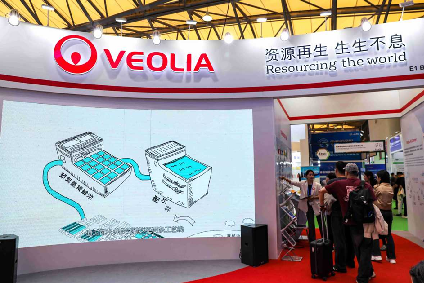
Veolia, a French transnational group focusing on the environment and resource management, is poised to leverage China’s AI boom to scale up investment in innovative projects, its chief executive said, highlighting the country’s rising global position as one of the most dynamic centers for green innovation.

 “I don’t see China only as just a market. I think China has probably become an engine for some specific innovations, which we can develop elsewhere,” Estelle Brachlianoff, CEO of Veolia, said in an exclusive interview with China Daily during her recent trip to Beijing.

 Compared with her last visit to China in 2023, Brachlianoff said she has seen an acceleration of innovation and technologies in the country, with Veolia’s operations here using artificial intelligence technology to save resources and produce green energy.

 “This country is moving so fast …I can testify to the AI takeoff in China,” Brachlianoff said.

 She gave the example of Shanghai’s Pudong New Area where Veolia has applied generative AI to optimize the city’s water distribution network and cut water leakage by about 10 percent.

 Brachlianoff said Veolia already has hundreds of use cases involving generative AI in China, and she expects to see many more when she visits the country next time.

 “The use cases need to be scaled up now,” Brachlianoff said, adding that more investment is likely to be deployed in China for AI-related applications, as the group is strongly supportive of such projects in the country.

 Such a quick adoption of innovation has made China important for Veolia, not only because of its gigantic market size but also for its rising role as an innovation engine that can drive the group’s green technology advances across the world.

 “Veolia’s business in China is leading some of our most innovative projects,” Brachlianoff said. “Everything we’re doing in carbon capture and utilization can be very much copied elsewhere in the world once we’ve developed the various pilots here in China.”

 China’s green technologies — from advanced batteries to clean energy generation — have also made remarkable progress, she said, as the country remains committed to its dual-carbon goals of peaking emissions before 2030 and achieving carbon neutrality before 2060.

 Looking ahead, Brachlianoff said she is confident that in the upcoming 15th Five-Year Plan period (2026-30), China will keep green development high on the agenda, creating more opportunities for Veolia in areas such as decarbonization and ecological restoration.

 Calling China “a very key and important market” for Veolia, Brachlianoff said the country’s green vision closely aligns with the company’s GreenUp strategy, which focuses on decarbonization, depollution and resource regeneration.

 “When I look at China’s green development strategy, I see so much more we can do — for its cities, industries and people.”

 Last year, Veolia’s solutions in China helped cut 496,160 metric tons of carbon dioxide emissions. Meanwhile, a total of 68,517 tons of plastic were recycled via Veolia’s operations in China.

 Earlier this month, Veolia China signed a strategic cooperation agreement with a subsidiary of Shanghai International Port (Group) Co Ltd and Venex to build an end-to-end green methanol supply network. The partnership supports China’s dual-carbon goals and aims to advance the port and shipping sector’s low-carbon transition.

 Brachlianoff also praised China’s ongoing efforts to attract foreign investment and further open up its economy. “For us, the keyword is stability,” she said. “We invest when the framework is clear for years. The other key factor is fair competition — letting the best win. That’s exactly what happens in this country for the various sectors we participate in. “

 “We’ve been in this country for over 30 years. We employ 8,000 people, we have over 450 projects, and will be in this country for really, really decades to come,” she added.

 Zhang Chenxu contributed to this story.

 zhoulanxv@chinadaily.com.cn

Article inline ad

UHV Grid Powers Up To Spur Nation’s Green Development

0

Advanced transmission system key to boosting use of renewable energy

By Zheng Xin | China Daily | Updated: 2025-10-23

China’s ambitious nationwide ultra-high voltage, or UHV, grid is fundamentally transforming the country’s energy system, driving a significant acceleration in its transition toward cleaner power sources and reshaping how electricity is delivered across the nation, said industry experts.

 The ambitious nationwide UHV network, capable of transmitting electricity over vast distances with minimal loss, has become a linchpin in the country’s strategy to move vast amounts of clean energy generated in its less populated western regions to the densely populated industrial hubs in the east, they say.

 “China has been continuously strengthening its grid connection and transmission projects, which have significantly enhanced the ability to optimize renewable energy resources across wide areas,” said Ye Xiaoning, a senior engineer at the new energy department of the State Grid Energy Research Institute.

 “The country’s sprawling UHV grid has fundamentally reshaped the country’s energy landscape, facilitating the rapid integration of renewable power and electrifying key sectors from high-speed rail to electric vehicles.”

 UHV transmission lines refer to power transmission cables operating at voltages exceeding 800 kilovolts of direct current or 1,000 kV of alternating current.

 Compared with traditional transmission lines, UHV lines not only increase transmission capacity and extend transmission distances, but also reduce transmission losses. This technology is crucial for connecting remote renewable energy sources in the west to demand centers in the east.

 Ye said China has invested heavily in UHV technology, establishing a global lead in its construction and operation.

 The grid not only boosts energy efficiency and reduces reliance on fossil fuels, but also enhances grid stability and reliability across the world’s second-largest economy, he said.

 This is especially crucial amid the backdrop of rapid advances in China’s vast EV fleet and its extensive high-speed rail network.

 According to the institute, China had established 42 UHV transmission lines by the end of last year, creating a comprehensive and resilient grid backbone.

 Grid operators, including State Grid Corp of China and China Southern Power Grid, have consistently bolstered projects for connecting and transmitting new energy, centralizing the rollout of numerous transmission initiatives both within and between provinces.

 The volume of power transferred across different regions and provinces across the country continues to expand, with interregional transmission increasing by 9 percent and interprovincial transmission by 7.1 percent compared to the previous year, it said.

 State Grid, the nation’s largest power grid operator, has been actively stepping up investment in the construction of UHV power transmission projects in recent years, enabling efficient long-distance transmission of massive amounts of power.

 It said earlier that it would invest a record of over 650 billion yuan ($91.26 billion) in the country’s power grid this year, up from 600 billion yuan in 2024.

 State Grid recently put into operation the plus-minus 800 kV Longdong-Shandong UHV DC line, with a total investment of 20.2 billion yuan.

 It is the first time that 1.05 million kW of energy storage capacity has been configured at the sending-end base, it said.

 The line will also drive the upgrade and innovation of electrical equipment manufacturing and related industries, advancing China’s high-end equipment manufacturing and building a modern power industry system, said Zhang Zhigang, chairman of State Grid.

 The continuous expansion and technological refinement of the grid are central to China’s long-term energy security and environmental objectives, setting a precedent for how large nations can manage a complex transition to a sustainable energy future, said industry experts.

 China, currently operating the world’s most advanced power grid following massive investments and technological advances, has dramatically transformed its power grid security and reliability in recent years, said Zhou Xia, director-general of the center of power reliability management at the China Electricity Council.

 China’s electricity system has undergone “leapfrog development”, with power supply reliability across China reaching 99.92 percent last year, up 0.013 percentage point year-on-year and a significant rise from the early 1990s, when urban residents faced an average of 96.54 hours of power outages every year, she said.

 zhengxin@chinadaily.com.cn

Article inline ad

Sustained Bull Run Set To Spur Spending

0

Higher household wealth will help pry open consumers’ wallets

By SHI JING in Shanghai | China Daily | Updated: 2025-10-24

While a structural bull run is gradually taking shape in the A-share market thanks to China’s economic resilience and continued introduction of supportive policies, the upward momentum is likely to further stabilize driven by technological advances, which will buoy investor confidence and consumption, said experts.

 Data from market tracker Wind Info showed that the benchmark Shanghai Composite Index surged over 12 percent in the third quarter, with the Shenzhen Component Index soaring nearly 30 percent. Qualified foreign institutional investors have thus stepped up their exposure to A shares, and can be found on the top-10 shareholder list for at least 37 A-share companies, holding nearly 6.3 billion yuan ($880 million) in value.

 Goldman Sachs said on Wednesday that the benchmark indexes still have room for 30 percent upside potential by the end of 2027, as China’s bourses will enter a more sustained upward phase. This will be mainly fueled by the 12 percent earnings growth and an additional 5 to 10 percent revaluation.

 Kinger Lau, chief China equity strategist at Goldman Sachs, said more policies to stimulate demand and the new five-year plan in the pipeline will help to rebalance growth and mitigate internal risks. While artificial intelligence is reshaping the profit landscape, bottom line increases driven by AI capital expenditure are also materializing.

 Chinese shares are still deeply discounted relative to global peers. Against this backdrop, there could be trillions of dollars available for reallocation to Chinese assets. As an A-share market bull run proceeds, the dominant investment style should shift to buying when short-term fluctuations occur, Lau said.

 Allen Lee, head of China business development for international asset manager AllianceBernstein, said the A-share market is likely to enter a structural upward trend, mainly driven by companies’ improving profitability. The moderately relaxed policy environment and an overall market revaluation will further fuel momentum.

 Instead of being distracted by short-term fluctuations, investors should seize the “historic opportunities” in the long-term development of the Chinese stock market and focus on quality companies capable of improving their profitability in a more sustained manner. Technology and new consumption companies will directly benefit from China’s economic restructuring and industrial upgrading, providing investors opportunities to participate in the structural bull run, he said.

 HSBC Global Investment Research said in a report in late September that over half of investors hold a most positive outlook on the A-share market.

 About 33 percent of those polled in September believe that expected capital flows out of the United States will serve as the best catalyst for bullish performance in emerging markets, according to the report.

 Zhou Zejiang, head of the School of Business at Anhui University, wrote in an op-ed recently published in Study Times that a stable stock market is crucial to boost consumption by increasing household wealth, as well as stabilizing market sentiment and expectations.

 Therefore, the bourses should further carry out information disclosure, optimize market mechanisms by enriching product supply and improving liquidity, strengthen investor protections and better coordinate policies among different economic sectors. All these efforts are conducive to a wholesome circulation between investment and consumption, Zhou said.

 Yang Delong, chief economist at First Seafront Fund, also said that a bull market run is the best driver for robust consumption. A sustained tech boom is likely to further drive up the major indexes, truly increasing household wealth and disposable incomes. This is the very foundation for boosting spending appetites, he said.

 shijing@chinadaily.com.cn

Article inline ad

Greater Sophistication New Hallmark Of Foreign Business

0

Nation moves to technology-intensive, globally integrated model amid challenges

By Zhong Nan | China Daily | Updated: 2025-10-24

During the early years of the 14th Five-Year Plan (2021-25) period, running a manufacturing business was easy for many factory owners in China.

 Orders poured in from clients in Frankfurt, Osaka, Melbourne, Detroit, Sao Paulo and Nairobi. Factories hummed day and night, turning out laptops, garments, ventilators and industrial equipment to be shipped across oceans.

 Even amid the COVID-19 pandemic, China’s foreign trade surged 21.4 percent year-on-year to 39.1 trillion yuan ($5.49 trillion) in 2021, according to the General Administration of Customs, or GAC.

 Today, that pattern has been transformed. The old processing-based trade model has been replaced by a far more sophisticated, technology-intensive and globally integrated landscape — one that reflects China’s transformation from the world’s workshop into a key driver of innovation and trade amid rising geopolitical uncertainties and shifting global supply chains.

 During the 14th Five-Year Plan period, China advanced high-level opening-up on all fronts. The country expanded its pilot free trade zones and promoted steady implementation of the Regional Comprehensive Economic Partnership, the world’s largest free trade pact in terms of GDP and population, said Commerce Minister Wang Wentao.

 Wang said China will intensify efforts to advance high-quality trade development, deepen international cooperation and bolster innovation to further boost exports during the next five-year plan period.

 As these efforts take effect, China’s export structure is also shifting toward greater sophistication.

 Lyu Daliang, director of the GAC’s department of statistics and analysis, said Chinese businesses have also moved up the value chain, creating new competitive edges in electric passenger vehicles, lithium batteries and solar cells — dubbed the “new trio” of Chinese exports.

 Together with the fast-growing artificial intelligence, semiconductor, robotics and innovative drugs sectors, these industries are symbols of China’s industrial upgrading and green transition, he added.

 Innovation transformation

 This transformation is evident on the factory floor.

 Jiangsu Tianhong Machinery Industrial Co, a Danyang, Jiangsu province-based industrial equipment manufacturer, launched a new generation of intelligent aluminum alloy melting equipment during the 14th Five-Year Plan period.

 “Our new product reduces energy consumption while improving melting speed and purity,” said Tang Jianjun, head of the company’s foreign trade unit, adding his company will continue to strengthen industrial R&D and strive for new breakthroughs in aluminum alloy casting and related fields during the next five-year plan period.

 In the first eight months of 2025, Jiangsu Tianhong’s export value exceeded 50 million yuan, up 11.1 percent year-on-year, data from Nanjing Customs showed.

 “We will expand our global footprint by establishing innovation and sales centers in Europe, Southeast Asia and Mexico, aiming to raise the share of foreign trade in our total sales to 60 percent between 2026 and 2030,” said Tang.

 About 1,400 kilometers from Danyang, workers at Guangdong Greenway Technology Co, a lithium battery manufacturer based in Dongguan, Guangdong province, are busy loading shipping containers with lithium batteries of various shapes and sizes destined for the port of Rotterdam in the Netherlands.

 “To meet different climate conditions and user needs around the world, we have developed two main battery solutions,” said Wu Jing, head of the company’s foreign trade unit.

 One is designed for cold regions, it can be charged at temperatures as low as — 10 C and still work at — 20 C, solving a major challenge for users in chilly environments.

 The other is built for hot climates, able to operate steadily even at around 40 C. This version has become the first battery choice in many tropical regions in Southeast Asia and Africa, powering electric scooters, cleaning robots and portable energy storage systems that serve both daily life and industry.

 Wu said that constant innovation is essential for Chinese manufacturers to stay competitive in the global market and avoid being left behind.

 Guangdong Greenway saw its exports jump 65 percent on a yearly basis to 576 million yuan in the first half of the year, according to Huangpu Customs in Guangdong.

Agile supply chains

 Despite global trade uncertainties and geopolitical challenges, trade experts said that China’s foreign trade, backed by well-developed supply chains and opening-up policies, will gain further momentum over the long term as manufacturers shift toward more technology-intensive exports and strengthen ties with emerging markets.

 China’s foreign trade production and supply chains have grown more complete, agile and efficient, strengthening the nation’s capacity to withstand external uncertainties and providing a solid foundation for sustained, high-quality trade growth, said Ying Pinguang, dean of Shanghai University of International Business and Economics’ School of Global Governance.

 Rising orders from Europe, economies participating in the Belt and Road Initiative and other emerging markets are fueling new growth engines for Chinese manufacturers, while accelerating the upgrade of China’s export structure and strengthening its trade ties with major global partners, said Wan Zhe, a professor specializing in regional economic development at Beijing Normal University.

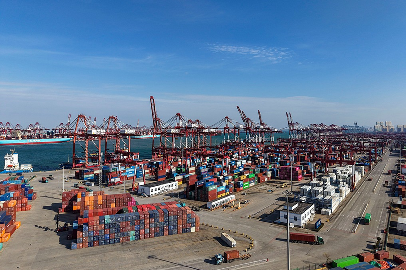
 According to the latest data released by the GAC, China’s foreign trade grew 4 percent year-on-year to 33.61 trillion yuan in the first three quarters of 2025.

 Exports rose 7.1 percent year-on-year to 19.95 trillion yuan between January and September, while imports dipped 0.2 percent to 13.66 trillion yuan during the same period.

 Meanwhile, China’s trade with the Association of Southeast Asian Nations, Latin America, Africa and Central Asia rose 9.6 percent, 3.9 percent, 19.5 percent and 16.7 percent year-on-year, respectively. Trade with economies participating in the Belt and Road Initiative also climbed 6.2 percent year-on-year, accounting for 51.7 percent of China’s total imports and exports — up 1.1 percentage points from a year earlier.

 As economic globalization faces mounting challenges and unilateralism and protectionism continue to rise, China International Trade Representative Li Chenggang said the global economic order and governance system have come under growing strain.

 In response, China has reaffirmed its commitment to the multilateral trading system and worked to expand its network of high-standard free trade agreements, advancing multilateral and regional cooperation in tandem, said Li, who is also vice-minister of commerce.

 Regional focus

 China and ASEAN are advancing their respective domestic ratification procedures to push for the formal signing of China-ASEAN Free Trade Area 3.0 by the end of this year.

 Economic ties between China and ASEAN are expected to not only expand in scale but also improve in quality, Pov Somnang, special assistant to the ASEAN secretary-general.

 He said the upgraded free trade agreement will lower tariffs on goods, widen market access for services and harmonize rules on intellectual property, environmental standards and digital trade, creating a more stable and open business environment for both sides.

 As regional trade liberalization deepens, many Chinese manufacturers are seizing new opportunities to expand their overseas presence and upgrade their production through innovation and digitalization.

 One of them is Ningbo Jingwei Systemtechnik Ltd, a manufacturer of printing, packaging and garment cutting equipment in Ningbo, Zhejiang province. The company began to accelerate the establishment of a global service network in 2021. It has set up after-sales service centers in Southeast Asia and Europe, cutting average maintenance response time by 50 percent and achieving localized operations.

 Leveraging cross-border e-commerce, Ningbo Jingwei has directly reached overseas end customers and expanded its global presence. According to Ningbo Customs, the company’s export value exceeded 110 million yuan in the first nine months of the year, growing 7 percent on a yearly basis.

 “Looking ahead to the next five-year plan period, we will focus on deeper integration between artificial intelligence and intelligent cutting equipment to enhance autonomous learning and adaptive capabilities,” said Zheng Zhaoze, the company’s vice-president.

 “We also plan to further expand our global footprint by setting up comprehensive service stations in more countries and regions, especially in emerging markets, shortening average maintenance response time even further, so that customers worldwide can enjoy faster and more personalized local services,” said Zheng.


Article inline ad

China-US Economic, Trade Talks To Be Held In Malaysia

0

By Wang Keju, Zhong Nan in Beijing and Zhou Lanxu in Shanghai | China Daily | Updated: 2025-10-24

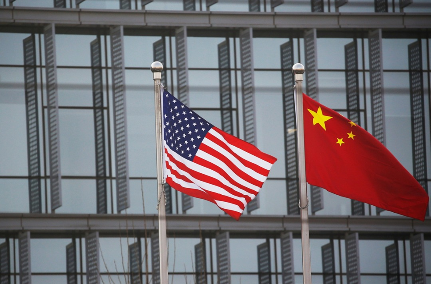
China and the United States will engage in a fresh round of trade talks later this week in Malaysia, in a bid to de-escalate tensions that have been simmering for weeks between the world’s two largest economies.

 Analysts said that Washington’s recent moves — calling for talks while exerting pressure on Beijing — do not build bridges. They called for the US to match its words with deeds and meet China halfway to seek mutually beneficial solutions.

 The Ministry of Commerce announced on Thursday that Vice-Premier He Lifeng will lead a delegation to Malaysia from Friday to Monday to hold economic and trade consultations with US representatives, as agreed to by the two countries.

 The two sides will engage in consultations on “key issues concerning China-US economic and trade relations”, in accordance with the important consensus reached by the two heads of state during their phone calls this year, the ministry added.

 The negotiations in Malaysia — the fifth of their kind since May — come at a time when an already-extended 90-day tariff truce is set to expire on Nov 10.

 China and the US had made some progress following four rounds of trade talks, which went on to steady bilateral ties and deliver a wave of positive anticipation in global markets. However, Washington’s recent moves, reneging on the previous consensus, threaten to undo that hard-won progress, experts said.

 The administration of US President Donald Trump has threatened to impose export curbs on “any and all critical software” to China in addition to additional 100 percent tariffs starting on Nov 1. Moreover, the US also started slapping additional port fees on Chinese-built and Chinese-operated ships earlier this month.

 Wang Wen, dean of Renmin University of China’s Chongyang Institute for Financial Studies, said the current friction stems from a pattern of inconsistency from Washington. “This approach erodes the very trust necessary for any lasting agreement,” he added.

 Wang said the path forward requires more than just showing up at the negotiation table. It also demands a consistent and good-faith delivery of the commitments made there, he said.

 Analysts expect the management of rare earth elements to be an important topic during the upcoming trade talks.

 Xu Hongcai, deputy director at the China Association of Policy Science’s economic policy commission, said that China has made it very clear on multiple occasions that the country does not impose rare earth export restrictions in the civilian sector. This is a balanced approach that prioritizes both supply chain stability and China’s national security.

 Chen Wenling, former chief economist at the China Center for International Economic Exchanges, said, “The Chinese position is consistent — we will never initiate a trade war, but we will never shy away from one either.”

 Experts said the value of the trade talks lies not merely in managing the economic relationship between the two giants, but in providing a predictable external environment for every nation that falls in their orbit.

 Thomas Helbling, deputy director of the International Monetary Fund’s Asia and Pacific Department, said the IMF hopes that the US and China — and the world at large — will find ways to resolve trade tensions and address underlying disagreements in areas such as non-market-based trade restrictions.

Ouyang Shijia contributed to this story.

Article inline ad

Airbus Opens New Jet Assembly Line In China

0

Move shows confidence in nation’s civil aviation market, business environment

By Zhu Wenqian in Tianjin | China Daily | Updated: 2025-10-23

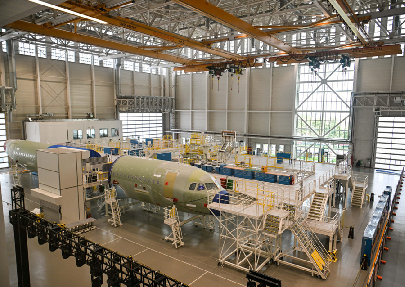
European aircraft manufacturer Airbus inaugurated on Wednesday its latest final assembly line for the A320 aircraft family in the northern Chinese city of Tianjin, the second of its kind in both China and Asia, underscoring the company’s continued commitment to the nation — its largest market.

 With preparations for assembling its first single-aisle jet underway, the new facility aims to become fully operational by early 2026.

 Amid global uncertainties, Airbus said it remains committed to its “in China, for China” strategy, a key initiative that helps strengthen the resilience of its supply chain.

 “We are committed to China, especially in the context of the deglobalization trend, and Airbus will continue to invest in China. The city of Tianjin has become an aviation powerhouse,” said Airbus CEO Guillaume Faury.

 “The second line is reinforcing our presence in the Chinese market. It provides us with the necessary flexibility and capacity to deliver on our plan to assemble 75 A320 aircraft per month in 2027,” he said.

 Faury added that Airbus is ramping up production capacity across all its product lines.

 The latest final assembly line is expected to double Airbus’ production capacity for the A320 aircraft series in Tianjin for delivery to both domestic and international carriers.

 Last year, 25 percent of the A320 aircraft series assembled on the company’s first final assembly line in Tianjin were delivered to foreign carriers.

 Noting that China’s industrial ecosystem is continuously advancing, Faury said the company plans to further develop and enhance its supply chain in China, as well as recruit more talent.

 Qi Qi, a senior independent civil aviation industry analyst, said the launch of Airbus’ second A320 series final assembly line in China demonstrates its confidence in the global market demand for the model and its optimism for the country’s market investment environment.

 “Airbus’ move to expand production capacity in China will bring more Chinese aviation players to the upstream and downstream of its industrial chain, especially to support the production capacity of the two final assembly lines in Tianjin,” Qi said.

 Airbus’ first A320 series final assembly line in China, which was inaugurated in Tianjin in 2008, was the company’s first commercial aircraft production facility outside Europe.

 To date, the Tianjin facility has assembled and delivered more than 780 aircraft of the A320 family, cementing its status as a symbol of successful Sino-European cooperation, according to Airbus.

 The new line complements Airbus’ global production network. The company now operates 10 final assembly lines for the A320 series globally. In addition to the two in Tianjin, it has four in Hamburg, Germany, two in Toulouse, France, and two in Mobile, Alabama, the United States.

 Jorge Toledo Albinana, ambassador of the European Union to China, called the opening of the second final assembly line very good news in such turbulent times.

 It is nice to celebrate in Tianjin one of the best and successful examples of China-Europe cooperation, he said, adding that Airbus’ investment in the port city is no coincidence, but the result of the city’s strong standing as a hub for free trade and innovation.

 On Tuesday, Commerce Minister Wang Wentao met with Faury in Beijing during the Airbus CEO’s visit to China.

 Wang said the Chinese market has been expanding steadily and has become the world’s second-largest consumption and import market. China will continue to promote the development of new quality productive forces, which will provide broad growth opportunities for foreign companies, including Airbus, he said.

 Emphasizing that the fragmentation of the global economy is currently intensifying, and unilateralism and protectionism are disrupting the international economic and trade order, Wang said that China will give full play to the role of the roundtable for foreign-funded enterprises and work together to safeguard the stability of global industrial and supply chains.

 Faury said that Airbus has full confidence in the development of China’s economy and its civil aviation sector. The company is committed to continuously strengthening its presence in China and contributing to advancing economic and trade cooperation between China and France, as well as between China and the European Union, he said.

 Airbus holds great respect for the achievements of Commercial Aircraft Corp of China’s C919 models, Faury added.

 zhuwenqian@chinadaily.com.cn

Article inline ad

China-EU Dialogue Aims To Manage Differences

0

By Zhong Nan | chinadaily.com.cn | Updated: 2025-10-22

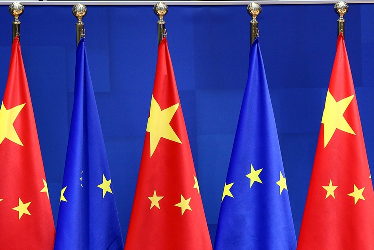
A healthy and balanced China-European Union economic and trade relationship is in the long-term interests of both sides, allowing their businesses to grow together, draw on each other’s strengths and better withstand the headwinds of rising protectionism from the United States, market watchers and business leaders said on Wednesday.

 They said the latest exchanges between senior Chinese and EU officials, including a video meeting between Commerce Minister Wang Wentao and EU Commissioner for Trade and Economic Security Maros Sefcovic, reflect a shared willingness to manage differences through dialogue and maintain the stability of global supply chains.

 During the meeting, the two sides held in-depth discussions on major China-EU economic and trade issues, including export controls on rare earths and the EU’s anti-subsidy investigation into Chinese electric vehicles.

 Both sides agreed to hold an “upgraded meeting” of the China-EU export control dialogue mechanism in Brussels soon.

 Zheng Chunrong, deputy secretary-general of the Chinese Association for European Studies in Beijing, said that in an era marked by rising protectionism and geopolitical uncertainty, particularly from the US, pragmatic China-EU engagement ensures that businesses on both sides can diversify markets, reduce risks and preserve fair competition.

 “Whether China-EU business ties can move forward steadily will depend not only on changes in the international economic and trade order, but also on how they view and engage with each other,” said Zheng.

 Grzegorz Kolodko, Poland’s former deputy prime minister and distinguished professor of the Belt and Road School of Beijing Normal University, said the US economic and trade policies have not only created difficulties for Chinese manufacturers but also posed obstacles for its allies such as the EU, Canada and Mexico, as well as major economies like India.

 The US economic policies will undoubtedly bring more challenges to China and the EU in the short and medium term, but adjustments are already underway in the longer term, said Kolodko, adding that many countries are now seeking to deepen cooperation with China as they too are experiencing varying degrees of discrimination under US economic policies.

 During a separate phone call with Dutch Minister of Economic Affairs Vincent Karremans on Tuesday, Wang, China’s commerce minister, said the measures taken by the Dutch side against Nexperia, a Chinese-owned semiconductor company based in the Netherlands, had seriously affected the stability of global industrial and supply chains.

 The Dutch government announced in mid-October that it had taken control of Nexperia, and the company said that its CEO had been suspended from his post following a court order.

 Karremans said the Netherlands attaches great importance to its economic and trade relations with China and is ready to maintain close communication with the Chinese side to seek a constructive solution to the Nexperia issue.

 Sun Xiaohong, secretary-general of the automotive branch of the China Chamber of Commerce for Import and Export of Machinery and Electronic Products, said that both China and the EU are deeply integrated industrially and commercially, with complementary strengths in technology, capital and market demand.

 That sentiment is in line with the latest foreign trade data.

 China-EU trade rose 5.2 percent year-on-year to 4.4 trillion yuan ($618 billion) in the first three quarters of 2025, according to statistics from the General Administration of Customs.

 Xiao Song, global executive vice-president of German conglomerate Siemens AG, said that strengthening cooperation allows Chinese and European companies to jointly drive innovation, enhance supply chain resilience, and achieve green and digital transitions.

 He added that during the upcoming eighth China International Import Expo in Shanghai next month, Siemens will sign numerous new deals with Chinese partners, mainly in the field of industrial artificial intelligence.

 In another development, Vollmer (Taicang) Machinery Co, a high-end numerical control machine tool manufacturer based in Taicang, Jiangsu province, and a subsidiary of Germany’s Vollmer Group, saw its exports to European markets jump 150 percent year-on-year to over 7 million yuan between January and September, according to Nanjing Customs.

 “The growth was primarily fueled by our strength in providing customized products tailored to the evolving needs of European customers,” said Min Chunrui, the company’s marketing director.


Article inline ad

AI Models Factory Boosts Efficiency

0

By Zhao Ruixue in Jinan | China Daily | Updated: 2025-10-22

In a quiet facility in Jinan, Shandong province, the soft blue glow of server clusters has replaced the roar of machinery. Here, at Inspur’s Artificial Intelligence Model Factory, data streams surge through computing networks, powering the industrial-scale production of artificial intelligence models.

 This pioneering facility, launched by Inspur Cloud, indicates a strategic shift in China’s AI development, moving from artisanal creation to standardized manufacturing.

 Xiao Xue, executive president of Inspur Group and chairman of Inspur Cloud, contrasted the old and new paradigms.

 “In the past, model development was akin to handicraft work, highly reliant on the coding skills of research and development personnel, resulting in high costs and low efficiency,” Xiao said.

 The factory has, however, overhauled this process.

 Through its nine major units, it breaks down AI production into 75 standardized procedures. This represents a leap from code craftsmen to a standardized assembly line, embodying the intensive and efficient model of modern industry.

 The operational benefits are substantial. “We have compressed the model manufacturing cycle from 90 days per model per person to around 20 days,” Xiao said. This industrial approach has boosted overall production efficiency by 75 percent while ensuring more stable and controllable quality.

 The nine major units form a complete production chain. For example, the data workshop prepares high-quality data for training, the model workshop fine-tunes models based on this data and the evaluation center verifies if models meet client requirements.

 At the heart of the operation is the self-developed Hairuo Brain in the scheduling service center.

 “It generates scheduling tasks based on client orders and the workload of each production unit, enabling efficient production planning and real-time task dispatch,” said Xiao. This system achieves the result of models manufacturing models, driving down costs and increasing efficiency.

 Security is a foundational principle, Xiao said.

 “The Inspur AI Model Factory was designed from the outset with security as a core element,” he said, adding that upon order completion, clients’ original data are destroyed, eliminating the risk of leakage.

 Looking ahead, Inspur plans to build an intelligent agent training ground by the end of this year to further deepen the integration of AI technological innovation and industrial innovation.

 “This move is set to solidify Inspur’s role in advancing China’s AI infrastructure,” Xiao said.

 zhaoruixue@chinadaily.com.cn


Article inline ad

Huitong’s Bamboo Industry Drives Local Growth

0

By Hou Liqiang in Huaihua, Hunan | chinadaily.com.cn | Updated: 2025-10-22

Yang Peiru’s WeChat Moments this year has been dominated by recruiting advertisements for his bamboo shoots processing company in Huitong county, Hunan province.

 One post said, “Emergency! Tonight. Need seven or eight temporary workers for packing. Both men and women are acceptable. Same-day payment is provided.”

 Standing in the busy production lines of his factory, which processes 10,000 metric tons of bamboo shoots into preserved food annually, Yang marveled at the growing demand that sometimes exceeds the capacity of the factory’s 60-strong team.

 His company provides a microcosm of how the local forest-based non-timber economy has been thriving as Huitong authorities strive to transform the “lucid waters and lush mountains” in the province into valuable assets.

 Since 2024, a total of 10 new bamboo shoots processing companies have been established in Huitong, spurred by local government policies that leverage the potential of rich local bamboo resources in boosting economic development.

 Before registering his company, Hunan Lyudi High-tech Agriculture and Forestry Development Co, in 2017, Yang had a decent job in Shanghai — he worked as a senior sales executive for a State-owned tobacco company.

 He never thought about investing in such a business back in his hometown. But when he was approached by local carders with an enticing proposal, he found it was something hard to refuse, as local government offered so many preferential policies.

 He received 120 yuan ($17) subsidy for every square meter of his factory, which has a floor area of 10,000 square meters, he said. Facilitated by local authorities, he managed to lease over 3,300 hectares of bamboo forest from local farmers.

 Using his forestry rights as collateral and backed by a government guarantee, he obtained a 10 million yuan bank loan.

 “Since its official sales launch in June 2021, the company has experienced steady growth in its business, with sales projected to reach 80 million yuan this year,” Yang smiled.

 He said the company now employs over 70 workers, most of whom are local residents, earning more than 4,000 yuan a month working on the production lines.

 Two additional packaging lines will soon be installed, creating demand for another 30 to 40 workers, he disclosed.

 Yang leases the bamboo forest from local farmers at a price of 1,050 yuan per hectare. In addition to working in his company’s production line, local farmers can also earn income by harvesting bamboo shoots, cutting mature bamboo and handling transportation. For this additional work, the company annually pays out approximately 15,000 yuan per hectare.

 The company maintains around 150 year-round employees but hire up to 600 to 700 workers during the bamboo shoot harvesting seasons in winter and spring to meet production demands, Yang revealed.

 Song Xiaofeng, a villager from Xuanshui village in the county, said working in the company has been such a boon for her.

 The woman in her 50s said, though her family owned 1 hectare of bamboo, they could hardly benefit from that before the company came to invest.

 The road was bumpy, and she and her husband used to carry mature bamboo and bamboo shoots on their backs, often taking them one hour to get back home from the bamboo forest.

 She said, in addition it took them more than two hours to transport bamboo shoots to local fairs to sell. But because almost every household had bamboo forests, it was not easy to sell much.

 Her family could hardly make more than 1,000 yuan from their bamboo forest annually, she said.

 Lyudi High-tech’s operations have brought transformative changes. While leasing their bamboo forest to the company, she now works in its processing lines and can make 4,000 yuan to 4,500 yuan a month.

 “The factory is quite close to my home. That allows for a convenient daily commute, and I have enough time to care for the elderly and child,” she said. “I have also been freed from the hardships I previously endured when working in the mountains.”

Article inline ad