Wednesday, November 25, 2026

Home Blog Page 158

Omdia Exec: China’s Premium Smartphone Market Thriving Amid Rising Competition

0

By Wang Keju | chinadaily.com.cn | Updated: 2025-10-22

China’s high-end smartphone market has yet to show any signs of reaching its growth ceiling, with both market share and shipment value continuing to rise, according to global technology research and advisory firm Omdia.

 However, the leading positions of certain manufacturers are being challenged, with the direction of change in this landscape likely to be influenced by the combination of AI and elite imaging features, Liu Yixuan, head of mobile phone industry research at Omdia, told China Daily.

 “In the Chinese market, Huawei and Apple are still the leading high-end brands, but we’ve also seen OPPO, Vivo, Xiaomi and Honor pursuing high-end strategies over the past three to five years,” Liu said.

 “We’ve seen the high-end smartphone market shift its focus to new areas of competition, moving beyond just camera improvements, design and brand awareness,” Liu added. “One of the more recent frontiers is the development of AI-powered smartphones.”

 Liu noted that although AI functions have not yet become a major factor for consumers to upgrade their phones in the Chinese market, more than 80 percent of consumers consider AI features to be important when they are thinking about their next smartphone.

 According to Omdia’s research, released earlier this month, the smartphone market on the Chinese mainland saw a 3 percent year-on-year decline in the third quarter of this year, indicating that the market is still in an adjustment phase.

 Although the market has seen consecutive declines, Omdia predicts that smartphone shipments on the Chinese mainland for 2025 are expected to achieve moderate growth, supported by the country’s trade-in initiatives.

Article inline ad

Emerging Markets Hot For China PV

0

Africa in particular performing well with H1 panel exports to continent up 47.5%

By ZHENG XIN | China Daily | Updated: 2025-10-22

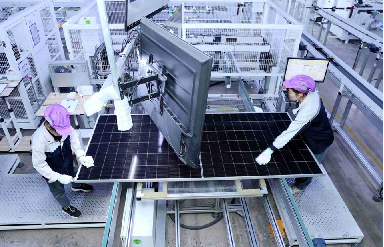
Chinese solar panel manufacturers are increasingly setting their sights on emerging markets across Africa, together with Oceania and other parts of Asia, as growth slows in traditional export destinations like Europe and Latin America, said industry experts and company executives.

 Fueled by ambitious renewable energy targets worldwide and the increasing maturity of photovoltaic technology, these new markets are becoming a crucial destination for China’s solar sector, which boasts significant advantages in technology and cost controls, they said.

 “Emerging markets have demonstrated stable growth since 2022, with export volumes hitting new highs in the second half of 2024,” said Wang Bohua, honorary chairman of the China Photovoltaic Industry Association.

 The association said that in the first six months of 2025, China’s solar panel exports to Africa surged 47.5 percent year-on-year, while exports to Oceania increased by 23.7 percent. North America and Asia saw growth rates of 15 percent and 12.2 percent, respectively.

 “Importantly, these markets exhibit less volatility compared to the European market,” said Wang.

 This shift in focus is prompting Chinese companies to invest directly in these emerging markets, with several firms having announced plans to establish manufacturing facilities and partnerships in Africa and other regions.

 The CPIA said that in the first half, the number of countries and regions experiencing year-on-year growth in solar panel imports from China reached a total of 115.

 As many as 51 of them saw import growth rates exceeding 100 percent, it said.

 Amid China’s global ascendance in the manufacture and sale of renewable energy technologies, domestic companies — making the vast majority of solar panels, cells and wafers worldwide — are displaying growing influence worldwide, allowing the developing world to produce cheap electricity from the sun.

 With the ever-decreasing prices of Chinese PV panels, domestic firms are also seeking new markets. African countries offer huge potential markets with millions of people on the continent lacking access to electricity and power outages a common phenomenon.

 Chinese solar power giant Longi Green Energy Technology Co said it has supplied over 3 gigawatts of its high-efficiency photovoltaic products to renewable energy projects across 38 African nations, further contributing to the region’s energy transition.

 These projects, including a 100-megawatt photovoltaic power station in central Tunisia’s Kairouan province — the largest PV power plant currently under construction in Tunisia — have substantially helped drive the construction of high-standard clean energy projects, said James Jin, president of Longi MEA and CA.

 “Amid Africa’s surging energy demand and fragile grid infrastructure, the combination of solar power and energy storage offers a lower level cost of energy compared to other power generation methods on the continent. The widespread availability of solar energy will be crucial to ensuring ‘energy equity’ and sustainable green development across the continent,” Jin said.

 Lin Boqiang, head of the China Institute for Studies in Energy Policy at Xiamen University, said: “Chinese companies have been proactively building overseas production networks. This not only helps them capitalize on new opportunities in traditional markets and explore emerging markets, but also enhances the resilience of the global supply chain.”

 Lin believes Chinese solar companies are playing a crucial role in Africa’s energy transition, offering both technology and investment to address the continent’s growing energy needs.

 The combination of China’s manufacturing prowess in solar technology and Africa’s abundant sunshine creates a complementary relationship, enabling the deployment of affordable and sustainable energy solutions, he said.

 According to Ember, an energy tracking group, Chinese companies shipped out solar equipment to a vast range of countries on the African continent over the course of the past year, with exports adding up to more than 15 GW of solar capacity.

 Solar imports from China rose 60 percent between July 2024 and June 2025. The volume of solar panels imported meanwhile has the potential to significantly increase power generation in many African countries, with South Africa and Nigeria, two of Africa’s largest economies, leading the pack, it said.

Sierra Leone imported the equivalent of more than half its total current electricity capacity, and Chad, nearly half. Algeria, the third-biggest importer on the continent, is using the modules in solar farms that Chinese companies are building there. Solar panels have also been sprouting on the rooftops of homes and businesses in cities and villages, it said.

 The US pulling back from supporting “green energy innovation “could lead to China increasing its influence in Africa while impacting the continent’s development and environmental sustainability, said Lin.

 However, despite the potential for solar energy, Africa’s energy investments are primarily directed toward fossil fuels like coal, oil and gas, said the International Energy Agency.

 Nearly two-thirds of energy investments in Africa favor these traditional, carbon-intensive sources, it said.

 The CPIA said the search for new markets comes as traditional export powerhouses struggle to maintain high growth rates.

 In the first half of 2025, solar panel exports to Europe, the Middle East and Latin America declined 12.3 percent, 14.9 percent and 16.8 percent, respectively, the association said.

 However, the potential of these emerging markets remains largely untapped, it said.

 In 2024, the top 10 global solar markets accounted for over 75 percent of the world’s total market share. While China’s domestic market saw a staggering 212.21 GW of new solar installations in the first half of 2025, many emerging markets are still striving to surpass the 1 GW threshold.

 BloombergNEF data show that the number of countries and regions with at least 1 GW of installed solar capacity reached 36 in 2024, up from 32 in 2023, and is projected to reach 40 in 2025.

 Wang from the CPIA cautioned that while global solar installations will continue to grow in 2025, the pace of growth is slowing.

 Some traditional overseas markets are experiencing a contraction in installations, while demand in emerging markets is growing rapidly. However, due to their smaller scale, these emerging markets will have a limited impact on overall growth, he said.

 Looking ahead, the potential of emerging markets is significant.

 Saudi Arabia has set a target of installing over 100 GW of solar capacity by 2030. India, with its abundant resources and vast market demand, also presents tremendous opportunities for solar development. The Indian government has been actively promoting renewable energy development and has set ambitious solar installation targets.

 As a result, the sustained growth in global demand for solar applications has driven further expansion of the industry’s production scale. Chinese solar companies, leveraging their significant advantages in technology and cost controls, are expected to continue to unleash competitive advanced production capacity.

 According to the CPIA, China has achieved steady growth in manufacturing and maintained a high global share in the capacity and output of all major segments of the solar industry chain, continuing to maintain its position as the center of the global solar sector.

 Increasing competition in the industry is driving Chinese companies to accelerate their global expansion, it said.

 Amid this backdrop, Chinese solar companies are actively pursuing various strategies to capitalize on emerging market opportunities and expand their global footprint, according to TrendForce’s energy trend research division.

 These strategies include production capacity cooperation, localized production, direct exports and diversified trade channels, it said.

 Some companies are adopting innovative cooperation models that combine local partnerships with technology transfers, effectively shortening the time it takes for products to reach target markets, reducing logistics costs, and better meeting the needs of regions such as Europe and the Middle East.

 zhengxin@chinadaily.com.cn

Article inline ad

A&F Expands China Footprint With Upgraded Retail Concept

0

By Zhong Nan | chinadaily.com.cn | Updated: 2025-10-22

Abercrombie & Fitch Co, or A&F, the United States-based apparel and accessories retailer, will open a new concept store in Shanghai in 2026 as part of its broader expansion strategy in China, according to a senior executive.

 The New Albany, Ohio-headquartered company will also step up its presence in key first and second-tier cities, including Guangzhou, Guangdong province, Chengdu, Sichuan province and Changsha, Hunan province, as it seeks to capture growing demand from Chinese consumers who value lifestyle-oriented fashion and in-store experiences.

 “The Chinese market remains our number one priority in Asia-Pacific,” Steven Sare, A&F’s managing director for APAC, said. “We are investing not only in new offline stores but also in enhancing store experiences to make them more appealing to consumers.”

 He said that the company’s new Shanghai outlet will feature the “getaway” concept, blending the ambiance of a boutique hotel with the brand’s American style. It will be designed to evoke a sense of travel and leisure through elements such as natural materials and open layouts.

 Alongside its offline expansion, A&F is strengthening its digital ecosystem across Douyin, Tmall, JD and WeChat mini programs. The company is also using data-driven insights to enhance customer engagement and improve personalization.

 Eager to boost its online sales, A&F has partnered with Chinese technology company, Tencent Holdings Ltd, to invest in new digital tools that enable the company to better understand where and how customers shop, as well as their specific product preferences for more personalized experiences.

 Despite the current geopolitical situation, Sare said that A&F has observed a growing preference among Chinese consumers for classic American sportswear, encouraging the company to more confidently embrace and showcase its American heritage following customer feedback.

 With a global workforce of over 25,000, A&F currently operates 21 brick-and-mortar stores across the Chinese mainland, in addition to outlets for its sub-brands Hollister and Gilly Hicks.

 Amid ongoing global economic shifts, foreign retailers continue to view China as a vital growth hub thanks to consistent policy, supply-chain efficiency and a business environment that increasingly rewards quality, sustainability and innovation, Guo Xin, a marketing professor at Beijing Technology and Business University, said.

Article inline ad

Innovent Seals Lucrative $11.4b Deal With Takeda Pharmaceutical

0

By Li Jing | chinadaily.com.cn | Updated: 2025-10-22

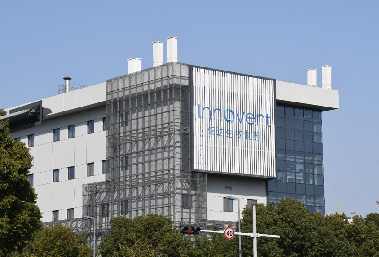
Innovent Biologics announced a sweeping partnership with Takeda Pharmaceutical, with a total potential transaction value of up to $11.4 billion, marking the largest business development deal ever recorded in China’s pharmaceutical sector.

 In a filing to the Hong Kong stock exchange early Wednesday, Innovent said the two companies have entered into a global strategic collaboration aimed at accelerating the development of Innovent’s next-generation immuno-oncology (IO) and antibody-drug conjugate (ADC) therapies.

 The partnership covers two late-stage investigational drugs, IBI363 and IBI343, as along with an early-stage program, IBI3001, for which Takeda holds an exclusive option.

 Under the agreement, the partners will jointly develop IBI363 worldwide and co-commercialize it in the United States, with Takeda leading the development plan. Innovent will grant Takeda the commercialization rights to IBI363 outside the United States and Greater China. Takeda will also receive exclusive rights to IBI343 and an exclusive option for IBI3001 in regions outside Greater China.

 The financial terms underscore the scale of the collaboration. Innovent will receive a $1.2 billion up front payment, which includes a $100 million strategic equity investment from Takeda. The Chinese biotech firm is also eligible for up to $10.2 billion in milestone payments, bringing the total potential deal value to $11.4 billion.

 Innovent will also earn sales-based royalties for each candidate in markets outside Greater China — except for IBI363 in the United States, where both companies will share profits and losses.

 In its statement, Innovent said the partnership aims to “accelerate the global development of next-generation IO and ADC therapies”, describing it as a major step in the company’s efforts to expand its international footprint.

Article inline ad

China Ready To Work With EU On Economic And Trade Ties

0

By Zhong Nan | chinadaily.com.cn | Updated: 2025-10-22

China is ready to work with the European Union to promote the sound and stable development of China-EU economic and trade relations, said the country’s top commerce official.

 At the request of EU Commissioner for Trade and Economic Security Maros Sefcovic, Chinese Commerce Minister Wang Wentao held a video meeting with him on Tuesday, according to a statement released by the Ministry of Commerce.

 During the meeting, the two sides held in-depth discussions on major China-EU economic and trade issues, including export controls and the EU’s anti-subsidy investigation into Chinese electric vehicles.

 Regarding the issue of rare-earth export controls, Wang said China’s recent measures are normal actions taken in accordance with laws and regulations to improve its export control system, demonstrating the country’s responsibility as a major power in safeguarding world peace and stability.

 China is committed to maintaining the security and stability of global industrial and supply chains and has always facilitated the approval process for EU companies, said Wang.

 On the case of Nexperia, a Chinese-owned semiconductor company based in the Netherlands, Wang emphasized China’s firm opposition to the excessive expansion of the concept of “national security”. He hopes that the EU would play a constructive role, urging the Netherlands to honor contractual obligations and uphold market principles.

 Sefcovic said the EU is willing to facilitate communication between the Netherlands and China to find a timely solution and jointly safeguard the stability of global supply chains.

 Both sides agreed to hold an “upgraded meeting” of the China-EU export control dialogue mechanism in Brussels soon.

 During another phone call with Dutch Minister of Economic Affairs Vincent Karremans on Tuesday, Wang, China’s commerce minister, said the measures taken by the Dutch side against Nexperia have seriously affected the stability of global industrial and supply chains.

 Karremans said the Netherlands attaches great importance to its economic and trade relations with China and is ready to maintain close communication with the Chinese side to seek constructive solutions to the Nexperia issue.

Article inline ad

High-Tech Farming Gear Shows Uptrend

0

Execs of agricultural machinery MNCs see opportunities in fleet replacement

By Wang Keju | China Daily | Updated: 2025-10-22

With mechanization rates for key staple crops reaching near-saturation levels, China’s agricultural machinery market is undergoing a key shift, moving from volume-driven growth to a new phase marked by the replacement of existing fleets with more sophisticated technology, senior executives said.

 According to figures from global agricultural machinery and construction equipment manufacturer Case New Holland (CNH), the mechanization rate in China for corn has hit 90.6 percent, while wheat comes in at 97.6 percent. The rates for rice and soybeans stand at 86.9 percent and 87.9 percent, respectively.

 The mature state of mechanization for China’s major crops, according to industry insiders, provides a strong foundation for the agricultural machinery industry to move beyond simply expanding mechanization and instead focus on enhancing the quality and capabilities of its equipment.

 “It is a stage of quantitative change to qualitative change, a process of replacing the old with high-end, large-scale, high-efficiency and intelligent equipment,” said Li Kang, manager for CNH China and Mongolia. “For agricultural machinery manufacturers, this means substantial market opportunity.”

 Taking the tractor market as an example, while overall sales have declined year-to-date compared to last year, the segment above 200 horsepower has seen growth. The same holds true for combine harvesters, where models with feeding capacities exceeding 10 kilograms per second have also achieved growth over the previous year, Li said.

 “We have tractors over 200 horsepower and combine harvesters with feeding capacities over 10 kg per second — these are product lines where we hold a competitive advantage,” Li added.

 Going forward, Li said that the company will continue to deepen its focus in these areas of expertise and introduce designs that are better tailored to the needs and development of Chinese agriculture.

 In April last year, the Ministry of Agriculture and Rural Affairs and the Ministry of Finance issued a guideline, making it clear to direct greater subsidy support toward high-end products, including intelligent tractors, smart combine harvesters, high-performance planters and intelligent navigation terminals.

 Concurrently, the policy mandates a gradual reduction and eventual elimination of subsidies for traditional agricultural machinery deemed high in energy consumption, low in efficiency and technologically obsolete.

 Luca Mainardi, president of CNH Asia-Pacific, said that considering the recent policy changes in China’s agricultural machinery subsidies, the government’s clear preference for supporting high-efficiency, large-scale equipment has had a positive impact on the company.

 A survey conducted by the China Agricultural Machinery Distribution Association showed in 2024 that the value of agricultural machinery that is updated and replaced nationwide each year is estimated to be around 300 billion yuan ($42.14 billion).

 China has expanded the scope of subsidies for replacing old and worn-out agricultural machinery and raised subsidy levels this year, according to an announcement by the Ministry of Agriculture and Rural Affairs in February.

 “Considering the current complex situation with tariffs and so on, as well as China’s advantages in supply chains, we believe we should keep increasing our level of localization,” said Mainardi.

 “This not only meets domestic product demand and enhances our competitiveness in China, but also leverages the advantages of China’s supply chain to allow CNH products made in China to be exported,” Mainardi added.

 wangkeju@chinadaily.com.cn


Article inline ad

CHN Energy Advancing Clean Coal Technologies

0

By Zheng Xin | China Daily | Updated: 2025-10-22

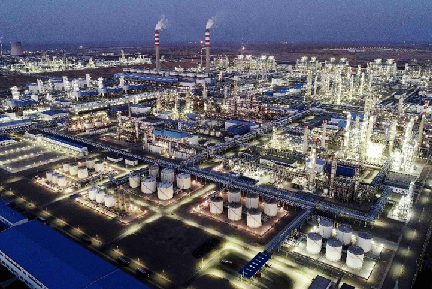
China Energy Investment Corp (CHN Energy), the country’s largest coal-fired power generator by capacity, has committed to further stepping up efforts in the clean utilization of coal, aiming to strike a crucial balance between ensuring a stable energy supply and progressing toward decarbonization goals.

 In an era where coal remains China’s primary energy source, the State-owned behemoth is championing green mining, advanced coal power with carbon capture, and sophisticated coal-to-oil and chemical conversion technologies, company deputy spokesperson Chen Jing said during a news conference held recently in Beijing.

 The company will accelerate efforts to push forward pilot projects in cleaner coal technology, including carbon capture and alternative fuel co-firing, she said.

 The State-owned energy giant reported that its self-produced coal has consistently maintained a peak level of 50 million metric tons for 48 consecutive months so far, with both commercial coal sales and electricity generation reaching new record highs for a single month.

 At the same time, the company has been pushing forward with the optimization and upgrading of its existing, newly built and next-generation coal power units to enhance efficiency and reduce emissions.

 In addition to green mining, CHN Energy has also been leading the charge in clean and efficient coal-fired power generation. Its comprehensive decarbonization efforts — from source reduction to carbon capture — have achieved “near-zero emissions” for pollutants, with 100 percent of its conventional coal-fired units meeting ultra-low emission standards, said Chen.

 Crucially, coal-to-oil and coal-to-chemical processes are central to this clean utilization strategy. These technologies enable the conversion of coal into a wide array of high-value products, from fuels to advanced materials, effectively adding value and reducing the environmental intensity compared to direct burning, she said.

 Analysts believe the clean utilization of coal is a critical component of China’s pragmatic approach to energy transition.

 For an economy of China’s scale, a rapid and complete phase-out of coal without jeopardizing energy security is currently infeasible, said Lin Boqiang, head of the China Institute for Studies in Energy Policy at Xiamen University.

 Clean coal technologies act as a vital bridge, allowing continued reliance on a readily available and established energy source while significant investments are made in scaling up renewable capacity and modernizing grid infrastructure, he said.

 Huang Qing, spokesperson of the company, said CHN Energy currently boasts an annual oil and chemical product capacity of 27 million tons.

 The company’s coal-to-oil production alone accounts for 65 percent of China’s total coal-based oil output, with coal-to-olefins and coal-to-methanol contributing 20 percent and 10 percent, respectively, to national capacities, he said.

 The company has pledged to continue its focus on green mining, clean power and advanced coal-based products, driving technological breakthroughs and forging partnerships to overcome “bottleneck” challenges and cement coal’s role in a cleaner energy future.

Article inline ad

China Accelerates Infrastructure Investment Amid Global Uncertainties

0

By Zhuang Qiange | chinadaily.com.cn | Updated: 2025-10-22

China is expected to intensify its efforts for infrastructure upgrades at a faster pace nationwide, experts said, adding that infrastructure investment will play a critical role in sustaining its economic growth amid external uncertainties and boosting domestic demand for the rest of the year.

 Wang Qing, chief macro analyst at Golden Credit Rating, told Jiemian, a news outlet, that infrastructure investment is likely to accelerate in the rest of the year. As the impact of tariff woes intensifies and external demand weakens, exports may experience a downtrend in the fourth quarter.

 This will increase reliance on infrastructure investment as a macroeconomic stabilizer. Wang highlighted that the accelerated rollout of the 500 billion yuan ($70.2 billion) new policy-based financial tool at the end of September signals a clear policy intention in this direction.

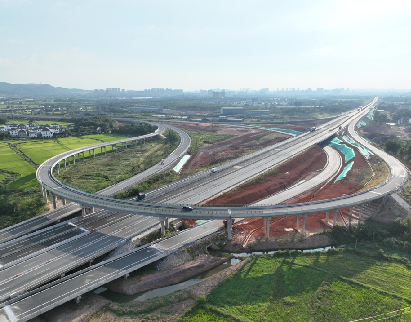
 State builders are ramping up efforts on critical infrastructure projects. For example, Fuzhou, Jiangxi province, embraced a new conduit supporting its link to the Nanchang city cluster — Dongxiang-Linchuan Ring Expressway, which its builder said is expected to inject impetus into the region’s Yangtze River economic belt.

 According to its builder China Railway 24th Bureau Group Corp, a unit of centrally administered State-owned builder China Railway Construction Corp, the expressway was fully opened on Oct 16, marking the completion of the 40.76-kilometer transportation project that connects Dongxiang district, Jinxi county and Donglin district with the national expressway network. It aims to boost regional integrated development, with a design speed of 100 kilometers per hour.

 According to the latest data released by the National Bureau of Statistics, infrastructure investment in China rose by 1.1 percent year-on-year in the first three quarters of this year. Private investment in infrastructure grew 7 percent, accounting for 20 percent of total infrastructure investment, up 1.1 percentage points from a year earlier.

Tian Xuan, president of Tsinghua University’s National Institute of Financial Research, said that the next phase of China’s capital market opening-up should focus on improving cross-border investment frameworks and expanding overseas institutions’ access to onshore derivatives trading, such as futures on treasuries and stock indexes.

 zhoulanxv@chinadaily.com.cn

Article inline ad

Global Use Of Yuan To Be Expanded

0

Efforts to safeguard financial security, boost monetary framework resilience

By Zhou Lanxu | China Daily | Updated: 2025-10-22

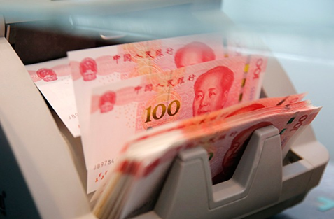
China is likely to press ahead with expanding the global use of the yuan in a gradual and prudent manner during the 15th Five-Year Plan period (2026-30), while continuing to foster a sound environment for using and holding the Chinese currency, officials and experts said.

 As the dollar-centered international monetary system appears increasingly fragile, efforts to raise the yuan’s global profile are seen as essential not only for safeguarding China’s financial security but also for enhancing the resilience of the global monetary framework, they said.

 Future reforms, they added, should focus on broadening capital market access for global investors with a more integrated framework, deepening capital account liberalization under prudent oversight, and enhancing exchange rate flexibility to support the stable, long-term internationalization of the yuan, or the renminbi.

 The People’s Bank of China, the country’s central bank, said that China will continue to improve the environment for both domestic and overseas entities holding and using the yuan, as the cross-border use of the renminbi is a natural process.

 “As the pace of diversification in the international monetary system accelerates, business entities are showing a stronger endogenous demand for using the yuan,” it said.

 Efforts will be made to integrate investment channels to attract more overseas investment in the onshore financial market, refine renminbi settlement policies for cross-border trade and investment, and encourage more qualified overseas institutions to issue panda bonds — yuan-denominated bonds sold in the onshore market by overseas entities, it added.

 China is likely to map out the path for expanding high-level opening-up during the ongoing fourth plenary session of the 20th Communist Party of China Central Committee, where draft proposals for formulating the 15th Five-Year Plan for national economic and social development are being studied.

 President Xi Jinping highlighted the Chinese currency’s heft as a core element of the country’s financial strength in early 2024. Later last year, the resolution adopted at the third plenary session of the 20th CPC Central Committee stressed that the country should steadily and prudently advance the internationalization of the yuan while promoting high-standard opening-up of the financial sector.

 Experts said the fourth plenary session may reaffirm the steady and prudent advancement of renminbi internationalization as one of the key tasks during the 15th Five-Year Plan period.

 Guan Tao, global chief economist at investment bank BOCI China, said, “China needs to advance the gradual opening of the capital account to further facilitate the cross-border circulation and use of the yuan.”

 Generally speaking, the capital account records the net flow of investment into an economy.

 Guan added that future opening steps are likely to follow a cautious and gradual approach, reflecting China’s long-standing principle of moving forward step by step to ensure both safety and progress.

 Marshall Mills, the International Monetary Fund’s senior resident representative in China, said, “As China’s role in the global economy and trade continues to grow, we expect the international use of the yuan to grow.”

 Mills emphasized that the yuan’s increasing use globally is a market-driven outcome.

 Marking renminbi internationalization as a defining hallmark of China’s financial opening-up, Wu Xiaoqiu, dean of the National Academy of Financial Research at Renmin University of China, said, “If a country’s legal tender lacked global influence, the notion of great financial strength would be untenable.”

 Wu said that further opening the capital market is a priority for enhancing the global appeal of the renminbi. He suggested expanding treasury bond issuance — including replacing local government debt — to increase the supply of risk-free renminbi assets for global investors.

Article inline ad