Wednesday, November 25, 2026

Home Blog Page 159

Low-Altitude Economy Empowers Industries Via Diverse Applications

0

China Daily | Updated: 2025-10-21

TIANJIN — As a futuristic economic model gradually integrates into daily life, China’s low-altitude economy is rapidly expanding, unlocking potential across sectors including emergency rescue, drone delivery, power line inspection and aerial tourism.

 This momentum was highlighted at the 2025 China Helicopter Development Forum, a key event during the 7th China (Tianjin) International Helicopter Expo, hosted by the Aviation Industry Corp of China (AVIC) in Tianjin in North China.

 At a photovoltaic project site in Northwest China’s Gansu province, drones have been employed for image collection — identifying defects like panel damage or heat spots with over 95-percent accuracy. Such an approach features strong adaptability to extreme weather, showcasing how unmanned systems optimize traditional industries.

 The sector’s rise aligns with national strategic priorities. In 2024, low-altitude economy was first included in the Chinese Government Work Report — emphasizing it as a new growth engine alongside biomanufacturing and the commercial space sector. The Third Plenary Session of the 20th Communist Party of China Central Committee further outlined plans to develop general aviation and low-altitude economy, setting a clear direction for expansion.

 Market projections, notably, reflect robust confidence. The Civil Aviation Administration of China estimates the industry’s value will reach 1.5 trillion yuan ($211.4 billion) in 2025 and exceed 3.5 trillion yuan by 2035.

 Most provincial governments have incorporated low-altitude economy into their development agenda — signaling widespread recognition of its potential.

 Cities like East China’s Hangzhou in Zhejiang province and Central China’s Wuhan in Hubei province are spearheading initiatives. Hangzhou identified low-altitude economy as one of its five pioneering industries in the future, focusing on low-altitude industries and traffic, while Wuhan aims to build 1,000 drone hangars and an integrated management system by 2030.

 Helicopters are an important part of the low-altitude economy. Gong Quan, general manager of China Flying Dragon General Aviation Co Ltd, which operates 43 helicopters, noted that China-made helicopters have demonstrated high reliability across various scenarios and will play an important role in advancing the low-altitude economy.

 Gong emphasized the need to develop manned-unmanned collaborative systems for complex missions like rescue operations.

 Electric vertical take-off and landing aircraft, also known as eVTOL, are also gaining traction as future urban air taxi options.

 Liu Wenqi, deputy chief designer at AVIC China Helicopter Research and Development Institute, said eVTOLs excel in terms of eco-friendliness, safety, low noise and cost-effectiveness, promising broad applications.

 Industry experts are urging cross-sector collaboration to accelerate development of infrastructure, research and development and operational ecosystems, to translate the potential of low-altitude economy into real productivity at an early date.

 Xinhua

Article inline ad

China’s AI Drive Injects Momentum To Digital Economy

0

Xinhua | Updated: 2025-10-21 13:54

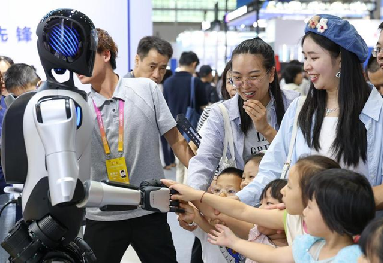
 Visitors interact with a home service robot during the World Smart Industry Expo 2025 in Chongqing, Sept 6, 2025. [Photo/Xiinhua]

BEIJING – The artificial intelligence (AI) boom in China is catalyzing growth in the country’s digital economy, as breakthroughs in key technologies and strong policy support fuel its rapid integration into industries and daily life.

 China’s rapid AI expansion, underscored by its 60-percent share of global AI patents, is marked by a surge in enterprises, industrial scaling, and innovations in homegrown large models such as DeepSeek.

 Backed by abundant data resources and a complete industrial system, the country’s digital economy has demonstrated strong momentum. By 2024, the number of data enterprises exceeded 400,000, with the data industry scale reaching 5.86 trillion yuan ($826 billion), marking a 117-percent surge from 2020.

 Meanwhile, from agriculture to manufacturing and public service, AI applications are demonstrating tangible results in boosting productivity and transforming traditional industries.

 China has made sustained efforts to promote the digital economy’s transformation into a smart economy and an intelligent society. Earlier this year, the country rolled out a nationwide “AI Plus” initiative, aiming to strengthen AI-supportive infrastructure and accelerate the integration of AI technology across economic and social domains.

Article inline ad

Singapore-Based Sliquid At Forefront Of Southeast Asia’s Data Center Transformation

0

By Li Jiaying | chinadaily.com.cn | Updated: 2025-10-20

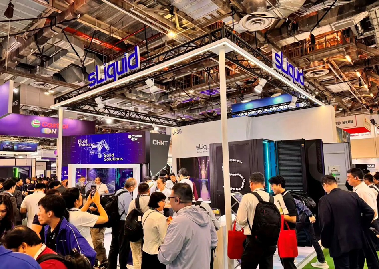
As data infrastructure emerges as a new frontier for regional collaboration, data center solution provider, SLiquid, is stepping up its presence in Southeast Asia by introducing localized liquid cooling technology to support the region’s accelerating demand for efficient and sustainable computing.

 The company unveiled its first region-specific cooling distribution unit (CDU), the CDU-22400W, earlier this month at the Data Centre World (DCW) Asia 2025 in Singapore, Asia’s largest data center industry event.

 The move comes as the Asia-Pacific region experiences a massive expansion in data center capacity, which Moody’s Ratings forecasts will more than double by 2030, requiring capital expenditure of about $800-$900 billion.

 “The Southeast Asian market presents substantial demand for liquid cooling technology, though customer understanding still lags about three years behind mature markets like China,” Teny Zhang, chief technology officer (CTO) of SLiquid, said.

 “In liquid cooling, China boasts the most mature supply chain,” Zhang said. “This allows us to leverage our proprietary technology and domestic industrial capabilities to effectively serve the global market.”

 SLiquid’s new CDU product addresses the challenges of tropical environments and rising chip densities in AI computing, with each unit supporting up to 16 high-density AI cabinets at 120 kW, according to the company.

 “By narrowing the temperature approach between cooling circuits to below 3 degrees Celsius, we help customers reduce power consumption by at least 20 percent,” Zhang said.

 As AI applications continue driving demand for efficient computing infrastructure across Southeast Asia’s growing digital economies, specialized CDU providers like SLiquid are positioning themselves at the forefront of the region’s data center transformation, according to Zhang.

 “With chip power density surging in recent years, some suppliers have even adopted liquid cooling solutions at the chip level,” Zhang said. “This has inevitably led to the transition toward liquid-cooled data centers, a shift driven fundamentally by market demand.”

 According to market consultancy Mordor Intelligence, the global data center liquid cooling market will reach $5.52 billion in 2025 and is expected to reach $15.75 billion by 2030, a 23.31 percent CAGR.

 According to Zhang, SLiquid also seeks local cooperation in its expansion strategy.

 “We are establishing comprehensive collaborations with a number of local partners specializing in delivery, services, engineering, and design capabilities,” Zhang said. “This enables us to better support our clients throughout the entire project lifecycle — from initial planning and design to final delivery and ongoing support — providing integrated, end-to-end solutions.”

 “Building a local team is crucial,” the executive emphasized. “We must use localized employees and teams to communicate effectively with customers.”

Article inline ad

Harma Sector Transforms For Growth

0

Drugmakers report rising R&D spending, revenue share from innovative products

By Li Jing | China Daily | Updated: 2025-10-21

China’s pharmaceutical sector, once driven largely by generic drug production, is now witnessing a steady rise in innovative drug development, cross-border partnerships, and record research and development spending, signaling a structural transformation toward high-quality growth, experts and industry insiders said.

 In the first half, Jiangsu Hengrui Pharmaceuticals Co Ltd reported total revenue of 15.76 billion yuan ($2.21 billion), up nearly 16 percent year-on-year, with net profit rising around 30 percent to 4.45 billion yuan, according to its interim report.

 For the first time, income from innovative drugs and licensing accounted for more than 60 percent of its total revenue. In 2018, the majority of the company’s revenue was generated from generics, while only a small fraction came from innovative products.

 The shift reflects more than just product mix. “Innovation and globalization have become the twin engines driving our growth,” the company said in a statement to China Daily. “As one of the country’s leading R&D-driven pharmaceutical enterprises, we have made continuous innovation our first development strategy.”

 Over the years, Hengrui has invested more than 48 billion yuan in research and development, with its R&D-to-revenue ratio climbing to 29.4 percent in 2024 — among the highest in the industry. The company operates 14 research centers worldwide, supported by a 5,600-strong global research team.

 To date, Hengrui has secured domestic approvals for 24 Category 1 innovative drugs and four Category 2 new drugs.

 Hengrui’s transformation reflects not just the company’s evolution, but the transformation of China’s broader pharmaceutical industry.

 Across China, a growing number of once traditional drugmakers, such as Jiangsu Hansoh Pharmaceutical Group Co Ltd, Jiangsu province-based Simcere Pharmaceutical Group Ltd and Hebei province-based CSPC Pharmaceutical Group Ltd, now are achieving similar transitions, reporting double-digit R&D growth and rising revenue shares from innovative products, according to their interim reports.

 The shift is reconfirmed by hard figures.

 China’s pharmaceutical industry, now the world’s second largest, accounts for around 30 percent of the global pipeline of innovative drugs in research, according to the National Medical Products Administration.

 Jin Chunlin, director of the Shanghai institute of medical science and technology information, said China’s pharmaceutical industry is entering a new developmental phase, underpinned by policy reform and accumulated industry expertise.

 Jin explained that the generic-drug era was an essential foundation. It allowed firms to accumulate funds, master manufacturing techniques and establish a robust drug quality evaluation system. However, he said: “Companies cannot remain forever in the comfort zone of generics. Innovation is the only way forward.”

 The industry’s transformation has been propelled by a decade of deep structural reforms. Beginning in 2015, the government overhauled drug review and approval mechanisms, accelerating the path to market for innovative therapies.

 A landmark shift came in 2018 with the introduction of the national drug centralized procurement program, designed to pool public hospital demand and negotiate lower prices directly with drugmakers. By reducing inflated generic prices, the reform freed up funds for medical insurance coverage and redirected corporate focus toward innovation.

 By 2020, a consensus had formed across the industry: the era of high-margin generics was over. China’s pharmaceutical sector needed to evolve from imitation to innovation.

 “The national drug centralized procurement reform has effectively reshaped China’s pharmaceutical landscape,” said Jiang Bin, deputy director of the Research Center of Public Policy at Peking University. “It has driven the industry away from a ‘high-marketing, high-margin’ model toward one defined by ‘low cost and high innovation’, improving efficiency and encouraging higher-quality growth.”

Jiang added that the reform’s impact “extends far beyond price reductions”, helping establish a more transparent, competitive and sustainable market order.

 The program continues to evolve. Its 11th round, currently underway, has shifted from “price suppression “to “value optimization”, with new emphasis on both affordability and quality.

 Complementing these efforts, the authorities have rolled out multiple measures to support the high-quality development of innovative drugs, providing full-chain support for R&D, clinical trials, approval, production and commercialization.

 In 2025, for the first time, commercial health insurance was formally included in national drug reimbursement negotiations, paving the way for chimeric antigen receptor T-cell and gene therapies to enter the domestic payment system.

 China’s regulatory efficiency for new drugs has also improved dramatically. Over the past decade, the average review cycle for new medicines has been shortened from several years to just months, enabling companies to bring novel therapies to patients faster.

 Since September, the National Medical Products Administration has implemented a 30-working-day fast-track review for key innovative drugs with clear clinical value. Eligible products include pediatric, oncology, and rare-disease treatments, specifically those supported by national R&D programs, or global multicenter trials led or co-led by Chinese principal investigators.

 According to the administration, more than 200 innovative drugs and 260 medical devices have been approved in the past five years. In the first half of 2025 alone, 43 new innovative drugs were approved including 40 developed domestically, with an average review time of 11 months, a 62 percent reduction compared with 2018.

 Zhao Heng, founder of consultancy Latitude Health, which specializes on the healthcare industry, said the acceleration allows Chinese patients to access global breakthroughs faster while helping domestic innovators reach commercialization sooner.

 The shift is also evident in global markets.

 Data from PharmCube, an industry intelligence firm showed that in 2024, Chinese pharmaceutical companies completed 94 out-licensing transactions with a total contract value of $51.9 billion, up 26 percent year-on-year. Upfront payments reached $4.1 billion, marking a 16 percent increase from 2023.

 The momentum has only accelerated in 2025. In the first half alone, the total value of innovative drug out-licensing deals reached nearly $66 billion, already surpassing the full-year total for 2024, said Xu Jinghe, deputy commissioner of the National Medical Products Administration.

 These collaborations show that Chinese innovation is gaining recognition from the global pharmaceutical community. Among the most prominent examples is that of Hengrui’s $12.5 billion license-out collaboration with London-based GlaxoSmithKline, including a $500 million upfront payment and potential milestones worth $12 billion, one of the largest licensing deals ever signed by a Chinese drugmaker.

 “Business development revenue has become a significant contributor to our performance,” the company said. “Through out-licensing and co-development, we share R&D risks, learn from international partners, and bring Chinese innovation to global patients.”

 Across the industry, R&D intensity is climbing steadily. Major firms such as Simcere and Hansoh are deepening investment to sustain innovation. Simcere’s R&D spending reached 28.7 percent of revenue in the first half, while Hansoh raised its R&D budget by 20.4 percent to 1.44 billion yuan.

 These surges in spending have been underpinned by capital market reforms — notably the STAR Market in Shanghai and Hong Kong stock exchange’s Chapter 18A list, which allows pre-revenue biotech firms to raise innovation funding.

 Despite strong momentum, challenges persist. Developing a single innovative drug can take more than 10 years and cost upwards of $1 billion. Many smaller firms face financial strain as they await trial results, and competition in crowded fields such as oncology and diabetes has intensified.

 Industry executives note that the hardest part of transformation lies in overcoming inertia, shifting from the predictable “recipe” of generics to the uncertainty of true innovation, which demands tolerance for failure and a culture that rewards experimentation.

 Zhou Liyun, chairman of PharmCube, said fostering trial and error and enabling market-based selection help retain the global biopharmaceutical industry dynamics and China is now beginning to cultivate a similar innovation ecosystem.

 For Hengrui, the next step lies in differentiation. “To stand out globally, innovation must address unmet clinical needs,” the company said. “From target selection to indication expansion, we’re pursuing diversified, patient-centered strategies across oncology, metabolic and cardiovascular diseases, immunological and respiratory diseases, and neuroscience.”

 From 2025 to 2027, the company expects dozens of major innovations to reach the market, including GLP-1 therapies for obesity and diabetes, and next-generation oncology drugs.

 lijing2009@chinadaily.com.cn

Article inline ad

Hydropower Playing Bigger Role In Energy Security

0

By ZHENG XIN | China Daily | Updated: 2025-10-21 09:42

China’s hydropower sector is poised to grow stronger and become a critical “cornerstone” in the nation’s energy security and green transition, said industry experts, citing its robust regulatory capabilities amid soaring demand for new renewable energy.

 Possessing abundant hydraulic resources, China has developed world-leading capabilities across the entire hydropower industrial chain, from surveying and design to engineering construction and equipment manufacturing, they added.

 Hydropower is considered a vital and high-quality supporting power source for the electricity system, serving as both a non-fossil fuel and a crucial grid stabilizer, said Xiang Haiping, chief expert of China Energy Research Society.

 Xiang said he believes that China still has potential for an additional 160 million kilowatts of hydropower development, as the country vows to peak carbon before 2030 and achieve carbon neutrality before 2060.

 Future expansion will largely shift from central and eastern regions to the upper reaches of southwestern rivers, particularly in the Xizang autonomous region, he said during the recently-held Tongzhou Global Development Forum 2025.

 Against this backdrop of increasing demand for flexible and stable power, China has, in recent years, significantly intensified its hydropower development.

 Leveraging its world-leading expertise across the entire industrial chain, Beijing has prioritized new projects and capacity expansion to bolster energy security and provide essential grid stability amidst the rapid growth of intermittent renewable sources.

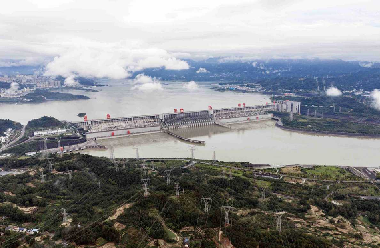
 The world’s largest clean energy corridor, consisting of six mega hydropower stations on China’s Yangtze River, has cumulatively produced over 4 trillion kilowatt-hours of power so far, according to its operator China Three Gorges Corp (CTG).

 Consisting of Wudongde, Baihetan, Xiluodu, Xiangjiaba, the Three Gorges and Gezhouba, the corridor generated 235.1 billion kWh of electricity in the first three quarters of this year, it said.

 It has significantly bolstered the safe and stable operation of the power grid during periods of high electricity demand and provided strong support for economic and social green development in China, said the company.

 Spanning 1,800 kilometers, the green corridor boasts a total installed capacity of around 71.70 million kW and generates approximately 300 billion kWh annually.

 With large power output and strong power regulation capacity, the clean energy corridor has played a key role in guaranteeing safe and stable operation of power grids and supporting implementation of the nation’s west-to-east power transmission program.

 In addition, China has announced the construction of a hydropower project in the lower reaches of the Yarlung Zangbo River, which will consist of five cascade hydropower stations with a total investment estimated at around 1.2 trillion yuan ($168.5 billion).

 The project, according to Xiang, will further ensure domestic energy security.

 Guo Bowei, associate professor at the School of Applied Economics at Renmin University of China, also warned of challenges that arise from the geographical distribution of hydropower resources in the southwestern parts of the country.

 While China’s main electricity demand centers are concentrated in the eastern coastal regions, transporting energy from the west to the east incurs high costs, underscoring the need for new pathways to ensure regional energy security, said Guo.

 China’s eastern regions should further prioritize enhancing grid flexibility and load response capabilities to meet evolving energy demands, while central and western areas need to strengthen the integrated development of new energy bases and computing centers, he said.

 Guo suggested that the government should emphasize the need to bolster advanced technologies, including energy storage, hydrogen energy, smart grids and virtual power plants to ensure a more resilient and sustainable energy system nationwide.

 By focusing on distinct regional needs and advancing key technological innovations, China should further optimize its energy distribution and consumption, particularly as demand from sectors like artificial intelligence continues to grow, he said.

 Li Sheng, director-general of the China Renewable Energy Engineering Institute, echoed these thoughts, saying that hydropower units offer rapid start-up and shutdown, flexible operation and strong load-following capabilities, making them a crucial regulatory resource for the electricity system.

 However, Li also pointed to growing complexities in hydropower development and external constraints.

 Future power stations are mainly situated in challenging regions such as in the southwestern parts of China, which present more intricate construction conditions, diverse ecological sensitivities and complex issues like population resettlement, he said.

 To address these challenges and maximize hydropower’s potential, Li recommended accelerating the construction of major hydropower bases and key reservoir power stations.

 zhengxin@chinadaily.com.cn

Article inline ad

China To Ramp Up Realizing Socialist Modernization By 2035

0

By Xu Jiayi | chinadaily.com.cn | Updated: 2025-10-20 18:24

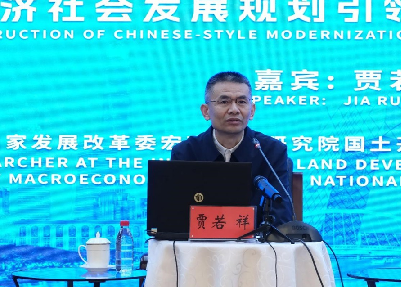
During the 15th Five-Year Plan (2026-30) period, China is expected to consolidate the foundation and make full efforts, especially focusing on high-quality development, for promoting and basically realizing socialist modernization by 2035, according to Jia Ruoxiang, a researcher at the Institute of Land Development and Regional Economy, Academy of Macroeconomic Research, National Development and Reform Commission, at a press salon on Monday.

 “As a super-large economy, China has a large territory, with huge gap among regions as well as urban and rural developments. Therefore, it is necessary for China to coordinate the development of the whole country, including different regions and fields, in Chinese-style modernization,” said Jia.

 In such a vast land, the country has regional natural resources, economic foundation and huge development potential, which determine different regions to find their advantages at the planning stage.

 Agricultural-orientated areas, mainly producing agricultural products, secure food security for the country, freeing 1.4 billion people from worries over food. Urbanized places, meanwhile, may focus on industrial distributions, cluster and intensified development.

 Being in line with the nation’s strategic plans and leveraging regions’ advantages so that it gives more solid support to high-quality development regional layout and territorial spatial planning, advancing the Chinese-style modernization.

 In addition, the analysis of the international situation is a critical consideration for every five-year plan compilation, according to Jia.

 In 2024, China’s total goods trade reached 43.85 trillion yuan, tying closely with the world economy.

 China is now enhancing high-quality development on economy and improving people’s life more solidly, providing strong stability to world’s uncertainty. In this way, China can make more contributions to international economic development, according to Jia.

Article inline ad

Leading Luxury Goods Group Sees Signs Of Recovery In China

0

By WANG ZHUOQIONG | China Daily | Updated: 2025-10-21

LVMH Moet Hennessy Louis Vuitton, the world’s largest luxury goods group, has reported revenue of 58.1 billion euros ($67.7 billion) for the first nine months of 2025, up 1 percent year-on-year, buoyed by improving demand in China.

 The modest uptick offers a positive signal for a global luxury sector struggling with a waning appetite for high-end goods.

 The company said it maintained “good resilience and powerful innovative momentum” despite ongoing geopolitical and economic uncertainty.

 Revenue in Europe and the United States remained broadly stable compared with the same period in 2024, supported by solid local demand.

 Japan posted a decline, reflecting a normalization from last year’s tourist-driven surge fueled by a weaker yen.

 Meanwhile, the rest of Asia — largely dominated by China — recorded a notable turnaround, with 2 percent growth after contractions of 6 percent and 11 percent in previous quarters this year.

 The third quarter was LVMH’s first of organic growth this year, with all groups and regions improving except Europe, where tourist spending fell due to currency shifts.

 “The Chinese mainland market turned positive in Q3,” Chief Financial Officer Cecile Cabanis told analysts during an earnings call. “We are getting very close to stabilization. Chinese local demand is now growing mid to high-single digits, and while Chinese travel purchases are still down double digits, they are improving significantly.”

 Cabanis cautioned that LVMH faces headwinds heading into the fourth quarter, including unfavorable currency movements and a challenging macroeconomic outlook. However, she expressed confidence in the group’s creative momentum, noting that financial improvement would come “gradually” over time.

 Chinese consumers have long driven luxury market growth, but recent years saw slowed spending, particularly among younger buyers, impacting brands like Gucci, whose first-half sales fell 26 percent this year.

 Despite that, Zhou Ting, head of consultancy Yaok Institute, said LVMH’s recent rebound in China was closely tied to Louis Vuitton’s marketing efforts.

 Launched in June in Shanghai, in the shape of a magnificent boat, “The Louis” is a 1,600-square-meter, three-storey experience space, measuring 114.5 meters in length and 30 meters in height, comprising retail, Le Cafe Louis Vuitton, and a Louis Vuitton Visionary Journeys exhibition.

 “‘The Louis’ concept has been a major contributor to LVMH’s performance recovery in China,” Zhou told Beijing Business Today.

 “The project has helped LV stand out amid a sluggish market, generating both attention and sales,” Zhou added.

 Zhou said that LVMH’s broader “store optimization strategy” — closing smaller locations, expanding flagship experiences, and engaging with high-end communities through exclusive events — has enhanced its brand performance in China.

 Euromonitor International projects a gradual recovery for China’s luxury market, with retail value to rise to 3.13 trillion yuan ($380 million) this year from 3.01 trillion yuan in 2024.

 wangzhuoqiong@chinadaily.com.cn

Article inline ad

Dayang Group Looks To Capitalize On Rising Demand For Customized Clothing

0

By Zhu Wenqian | chinadaily.com.cn | Updated: 2025-10-20

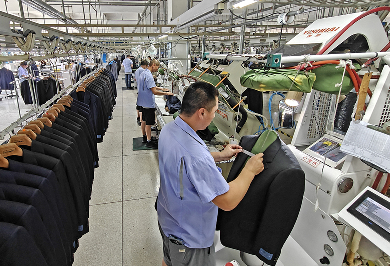
Dayang Group, a clothing manufacturing enterprise based in Dalian, Liaoning province, saw its customized clothing brand Keymen open its fourth location and the largest flagship store in Beijing last week, a move driven by the group’s optimism about the growth potential of the customized clothing sector in China.

 The store, located in Beijing’s Wangfujing area, integrates technological features such as 3D smart wardrobe virtual fitting and personalized color diagnosis, which customers can experience on-site.

 Keymen said it focuses 70 percent of its business on menswear and 30 percent on women’s wear, with a growing number of young Chinese consumers seeking customized clothing. Nationwide, the brand has stores in Dalian, Shenzhen, Guangzhou of Guangdong province; and Hangzhou, Zhejiang province.

 Meanwhile, the company has entered into a strategic partnership in Beijing with Huddersfield, a British brand boasting a 400-year history. Through this collaboration, Dayang will introduce authentic British craftsmanship to the Chinese market.

 Anthea Heffernan, counselor for regional cooperation at the British Embassy in China, said this collaboration is not only a business alliance, but also a mutual tribute to the cultures and craftsmanship of the two countries.

 Dayang said the strategic cooperation between the two companies is regarded as a crucial step in deepening China-UK business and trade collaboration in the fashion and textile sector. The two sides will jointly facilitate the upgrading and development of China’s clothing customization sector.

 By setting up a global fabric warehouse and scientific customization system, Keymen is gradually enhancing its international supply chain integration capabilities while injecting new impetus — marked by technological advancement and artistic value — into China’s garment industry.

Article inline ad

Expecting Increased Demand, Smartphone Makers Unveil New Models

0

By Fan Feifei | chinadaily.com.cn | Updated: 2025-10-20

China’s smartphone shipments are expected to rise in the fourth quarter of 2025, as domestic phone makers have ramped up efforts to roll out new products to entice consumers.

 According to a report from global market research company, International Data Corporation, China’s smartphone market shipped 68.4 million units in the third quarter, a slight decrease of 0.6 percent year-on-year.

 IDC said the market performance will to see some improvement early next quarter as various brands have begun the concentrated launch of a significant number of their flagship devices.

 Seeing the future positive growth trajectory, Chinese smartphone manufacturer Nubia Technology, recently unveiled its latest handset targeting gaming and e-sports enthusiasts, the Red Magic 11 Pro series.

 The artificial intelligence-powered phone is equipped with an advanced cooling system and a Snapdragon 8 Elite Gen 5 chipset, featuring an AI writing assistant, object recognition and voice interaction functionalities.

 It boasts a 6.85-inch display with 1.5K resolution that supports up to a 144Hz refresh rate, as well as a battery with a 8000 mAh capacity.

 According to market research company Mordor Intelligence, the revenue of the global mobile gaming market is expected to rise from $100.54 billion in 2024 to $164.81 billion in 2029, with the compound annual growth rate reaching 10.39 percent during the growth forecast period.

Article inline ad

HKEX Sees Record Surge In Listing Applications

0

By Li Jing | China Daily | Updated: 2025-10-21

The Hong Kong stock market is seeing an unprecedented surge in listing applications from A-share companies, with pharmaceutical firms at the forefront.

 According to market tracker Wind Info, as of Oct 13, a total of 83 A-share companies had sought dual listings on the Hong Kong stock exchange since the start of the year, more than the total from the past decade combined, underscoring that the “A+H” dual-listing trend has shifted into high gear.

 Among these applicants, healthcare companies stand out both in number and ambition. Kexing Biopharm, for instance, said in a recent statement that its board had approved an H-share issuance and listing in Hong Kong. The company described the move as part of its “innovation + internationalization” strategy to accelerate overseas expansion, optimize capital structure and enhance brand visibility abroad. The firm specializes in research and development, production and sales of recombinant protein drugs and microecological preparations, according to its website.

 That announcement coincided with a flurry of filings at the end of September. Over the two days of Sept 29 and 30, more than 10 pharmaceutical and biotech firms submitted IPO applications to the Hong Kong stock exchange.

 Dong Ximiao, chief researcher at Merchants Union Consumer Finance, said the momentum is “the combined result of policy, market and corporate factors”.

 “The Hong Kong stock exchange’s Chapter 18A, introduced in 2018, opened a financing channel for pre-profit biotech companies,” he said. “The Technology Enterprises Channel launched in May this year further streamlined the process, allowing confidential submissions and one-stop consultations, making listings faster and safer for biotech firms.”

 Dong added that Hong Kong’s deep pool of long-term institutional investors makes it “not just a financing platform, but a stage for biotech companies to build international credibility and partnerships”.

 Meanwhile, the Southbound Stock Connect continues to direct mainland capital into Hong Kong’s equity market. Adjustments made by the Shanghai and Shenzhen exchanges in March this year widened investor access, fueling steady inflows into biotech H-shares.

 Earnings momentum has strengthened sentiment. According to Southwest Securities, the innovative drug sector in the Hong Kong stock market saw its first turnaround from loss to gain in the first half. Analysts at Southwest Securities said the industry has “entered a new, profit-driven cycle”, with leading firms benefiting from successful commercialization and overseas licensing that are finally converting years of R&D into tangible returns.

 Some applicants remain unprofitable but qualify under the 18A framework. Yantai Lannacheng Biotechnology Co Ltd, for example, is a pre-profit company founded in 2021 with a pipeline of 13 drug candidates, including seven diagnostic and six therapeutic radiopharmaceuticals.

 Experts describe the 18A segment as a vital “innovation incubator “within China’s biotech ecosystem. Lou Feipeng, a researcher at Postal Savings Bank of China, said lighter requirements for profitability, cash flow and lock-up periods make the Hong Kong stock exchange “particularly appealing to early-stage drug innovators”.

 Still, Lou cautioned that stronger oversight is needed to ensure funds are used effectively.

 “To make sure capital truly fuels innovation, regulators should adopt milestone-based assessments, tie management incentives to R&D outcomes, and encourage commercialization and mergers that boost industry concentration,” he said. “Innovation should be judged by clinical value and market potential, not just patent counts.”

 Experts agree that the A-share companies’ dual listing boom on the Hong Kong stock exchange is reshaping China’s biotech industry.

 Dong believes it will accelerate both consolidation and innovation. “Capital will increasingly concentrate in well-funded leaders, strengthening their market position and triggering a reshuffle across the industry,” he said. “At the same time, greater access to capital will encourage firms to invest boldly in long-cycle, high-risk innovation, fueling faster development of new drugs and technologies.”

 On Oct 14, the Hong Kong stock exchange announced plans to launch Hang Seng Biotech Index Futures, which track the performance of the 30 largest Southbound Stock Connect-eligible biotech, pharmaceuticals and medical devices companies listed in Hong Kong. The futures are expected to offer investors a targeted risk management tool for one of the fastest-growing and most dynamic sectors, complementing the exchange’s existing suite of biotech-related offerings and flagship equity index derivatives.


Article inline ad