Wednesday, November 25, 2026

Home Blog Page 160

Robust, Open Capital Market Critical Asset

0

Institutional reform essential to advance toward financial powerhouse status

By Li Jing | China Daily | Updated: 2025-10-21

China’s journey to becoming a financial powerhouse must start with institutional reform and the establishment of a transparent, innovation-driven capital market, experts said.

 Wu Xiaoqiu, former vice-president of Renmin University of China and dean of the university’s National Academy of Financial Research, said the capital market plays a fundamental role in supporting the real economy and driving technological innovation.

 “Capital markets are not just financing platforms,” he said at a financial forum in Beijing. “They are mechanisms that reward innovation, efficiently distribute resources and drive technological progress.”

 Wu outlined three key priorities for capital market reform during the upcoming 15th Five-Year Plan (2026-30) period — strengthening the market’s innovation function, improving the overall market ecosystem, and enhancing institutional credibility through greater openness and transparency.

 He said a robust capital market system is essential for China to advance toward becoming a financial powerhouse, particularly as the country continues its transition to high-quality development.

 Wu also highlighted that financial modernization must be rooted in an inclusive and forward-looking culture. Citing the 2025 Nobel Prize in Economics, which recognized research on innovation-led growth, he said, “Innovation thrives in societies that tolerate risk and encourage originality, and policy design should reflect that principle.”

 He called for a comprehensive overhaul of the capital market ecology.

 On the assets side, he said listed companies must deliver genuine profitability and technological value. On the funding side, institutional investors and pension funds should play a greater role in providing stable, long-term capital. And on the rules side, regulators must build transparency and enforce accountability with real teeth.

 “China’s capital market reform is not only a domestic necessity but also a contribution to the stability and diversity of the world’s financial system.”

 Zhu Xiaoneng, Party secretary at the School of Finance at Shanghai University of Finance and Economics, said that digitalization is reshaping how markets operate and how institutions must adapt.

 “China’s capital market is entering a new stage driven by digital transformation. Just as mobile payments changed how people live, digital assets and stablecoins are beginning to redefine the logic of market operations,” Zhu said, adding that the integration of digital finance — from blockchain to tokenized assets — will require not only technological infrastructure but also forward-looking regulation and institutional flexibility.

 “Digital finance isn’t just a trend. It’s becoming the foundation for the next generation of capital markets.”

 Against this backdrop, Wu Weixing, president of Capital University of Economics and Business, highlighted the global headwinds affecting capital flows. He said that financial globalization has slowed considerably since 2008, with rising protectionism and geopolitical tensions reshaping the investment landscape.

 “For decades, integration defined the world economy. Now we’re seeing the opposite — fragmentation, regionalization and more complex capital barriers. Global capital markets are no longer converging into one system. Instead, we’re seeing multiple centers emerging, with technology, trust and transparency determining who leads the next financial cycle,” Wu said.

 Experts believe that China’s continued reform and opening-up of its financial sector — combined with efforts to enhance corporate governance and legal protections — will play a pivotal role in ensuring the country’s resilience and competitiveness in this evolving global environment.

 Zhang Chenxu contributed to this story.

 lijing2009@chinadaily.com.cn


Article inline ad

From The Palm Of Your Hand To The Stars

0

By Ma Si | China Daily | Updated: 2025-10-20 

Imagine this: you’re on a remote hiking trail, hours from the nearest town. Your phone has long shown “No Service”. Suddenly, a moment of need arises. You pull out your smartphone, not with hope, but with practical expectation.

 A few taps in the settings menu, and you enable the “satellite network” feature. Within seconds, a tiny icon confirms a connection, not to a cell tower but to a satellite orbiting high above. You send a message, make a call. The vast, silent mountains are no longer a barrier. This is the new reality for a growing number of Chinese consumers, where the sky is becoming the ultimate network.

 For people like Sun Jinyang, a university student in Shanghai, this technological leap has sparked both excitement as well as caution. “The safety net this offers is incredible, especially for road trips or adventures in the suburbs. But the price? That’s the real question.”

 His thoughts mirror a national conversation, where the promise of universal connectivity is being carefully weighed against its cost. This narrative is no longer about luxury; it’s about a fundamental shift in how we perceive connection, safety, and accessibility.

 The magic behind this capability lies in a fundamental architectural divergence. Traditional mobile networks are a terrestrial tapestry, woven from millions of earthbound cell towers. Satellite communication, however, bypasses this entirely. It uses specialized chips embedded in smartphones or modules in vehicles to create a direct line to the cosmos. This simple yet profound difference shatters geographic limitations, casting a communications net over oceans, remote deserts, and cruising altitudes — places where the ground-based network simply vanishes.

 Historically, this powerful technology was confined to the realms of maritime navigation, aviation and critical emergency response. But a quiet revolution is underway. The fusion of satellite systems with artificial intelligence, big data, and cloud computing is catapulting this capability from niche to mainstream. We see it in agriculture, where farmers use satellite data to orchestrate perfect crop yields, and in environmental monitoring, where the planet’s vital signs are checked in real-time from space.

 The market is responding with palpable momentum.

 Companies like Huawei, Xiaomi and Oppo have already launched 36 smartphone models with built-in satellite connectivity. The most remarkable part? Users can activate it seamlessly — no new SIM card, no new number. It’s just there, a dormant superpower in their pocket.

 Meanwhile, on the roads, another transformation is accelerating. In April 2024, China Telecom’s satellite unit pioneered a global first: satellite-direct automotive services. With the press of a single button, drivers can have a satellite phone reach their automaker’s call center and transmit the vehicle’s precise longitude and latitude for assistance.

 “We have established partnerships with multiple automotive companies,” the company said, “and we expect sales of satellite-direct vehicle models to exceed 100,000 units by the end of this year.”

 Yet, the path to ubiquity is paved with the challenge of affordability.

 Currently, the service commands a premium; making a satellite-direct call outside a promotional package can cost around 9 yuan ($1.26) per minute. This price point is the primary barrier standing between a revolutionary feature and its widespread, everyday use. The collective consumer whisper is clear: we see the value, now make it accessible.

 The implications of overcoming this hurdle are profound.

 For the individual, it means uninterrupted stories — the traveler sharing their journey from a remote peak or the businessperson taking a call mid-flight. For industry, it unlocks unprecedented efficiency. Power grid operators, for instance, can monitor remote transmission lines via satellite, forgoing the immense cost of building cellular infrastructure in unforgiving terrain. This “space-terrestrial integration” is more than a technical term; it’s a blueprint for a more resilient and connected society.

 The growth is unstoppable. By 2024, China Telecom’s satellite-direct services had already been embraced by over 2.4 million users. In the first half of 2025, the company reported a robust 20.5 percent surge in satellite business revenue — a clear signal of a market ready to explode.

 The journey ahead is one of perseverance and innovation. It is a shared commitment to building a future where a connection is as fundamental as the air we breathe, a future where, for ordinary people, communication is not just global but universal, reaching from the palm of your hand to the stars.


Article inline ad

Innovation, Smart Tech Take Center Stage At Canton Fair

0

China Daily | Updated: 2025-10-20 09:41

GUANGZHOU — The 138th edition of the China Import and Export Fair, also known as the Canton Fair, started on Wednesday, with the number of exhibitors exceeding 32,000, a record high.

 Taking place from Oct 15 to Nov 4 in the southern Chinese metropolis of Guangzhou in Guangdong province, this edition of the fair has also attracted a record number of buyers. As of Oct 13, over 240,000 buyers from 218 export markets had pre-registered, reflecting a 10 percent increase compared to the previous edition.

 Among them, the number of buyers from the European Union, the United States and countries participating in the Belt and Road Initiative has increased significantly. Meanwhile, more than 400 leading purchasing companies will attend the fair.

 According to surveys conducted ahead of the fair, over 1 million new products developed in the past year will be showcased at the event, while around 800,000 items will make their debuts at the fair.

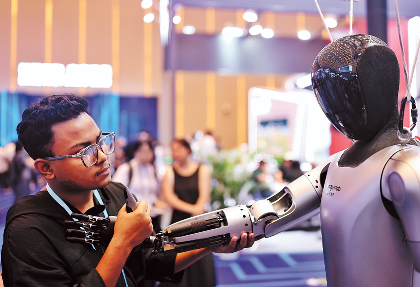
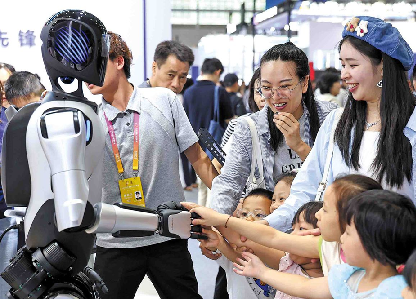
 This edition of the Canton Fair features, for the first time, a smart medical zone, which has attracted 47 companies showcasing products such as surgical robots, intelligent monitoring systems and wearable devices. The fair also features a service robot zone, which has drawn 46 leading industry players to display their humanoid robots, robotic dogs and other innovations.

 “I have been to many fairs all around the world, but the Canton Fair has something different. Even though it is held two times a year, every six months, you are able to find something different, something innovative,” said Canyigit Atay, chief product officer at Arzum Electrical Home Appliances from Turkiye.

 As one of Turkiye’s leading home appliance companies, Arzum has expanded its business to over 90 countries and regions worldwide. The company has worked closely with Chinese suppliers since 1990.

 According to Atay, the Canton Fair is not merely a trading event, but also a window to observe China’s latest innovations. This year, the company is focusing mainly on coffee machines and related products.

 “This time I’m able to see some new products, especially the service robots. I’m impressed by the robot coffee machines, and we have already started cooperation with one of these companies,” Atay said.

 The 138th Canton Fair brings together 46 leading service robot companies showcasing humanoid robots, robotic dogs and other advanced robotic technologies.

 A robotic arm precisely cutting a model under the operator’s command drew crowds of overseas buyers to Yuanhua Tech’s booth. Founded in 2018, the company holds over 100 invention patents.

 “Our surgical robots can achieve precise operations with dynamic correction technology. They have performed over 5,000 clinical surgeries in hospitals in the Chinese mainland and Hong Kong,” said Li Aili, founder and chairman of Yuanhua Robotics, Perception and AI Technologies Limited.

 The company, Li added, aims to reach more international partners and deliver safer, more precise surgical solutions worldwide by participating in the Canton Fair.

 According to the organizer, over 10,000 of the exhibiting companies hold national-level titles such as national high-tech enterprises or “little giant” enterprises, a record high number.

 Hamat Tofiq Ahmed, a buyer serving customers in the Middle East, said he was drawn to products from Gree Electric Appliances, a Chinese home appliance giant. He is looking for air conditioning products capable of withstanding high temperatures in countries across the region.

 According to Zeng Fanlong, a director of sales for East Europe area at Gree, the company will display more than 130 products at the 138th Canton Fair, including 50 new models.

 “We are deepening cooperation with clients in Europe and the US while introducing competitive products to emerging markets in Latin America and Africa,” Zeng said.

 Xinhua

Article inline ad

Satellite Communication Takes Leap Into Future

0

Strategically vital sector at forefront of China’s digital transformation, bridging digital divide, securing nation’s position as global leader in telecommunications

By MA SI and CHEN BOWEN in Haikou | China Daily | Updated: 2025-10-20

In an era where digital connectivity defines the pace of global progress, China is marking big strides in satellite communication.

 Backed by robust government policies, State-owned enterprises, and a growing number of private companies, the country is determined to carve out a significant presence in this nascent yet strategically vital industry.

 The satellite communication sector, once a niche domain, is now at the forefront of China’s digital transformation, promising to bridge the digital divide and secure its position as a global leader in telecommunications.

 To seize the critical opportunity for high-quality development of the satellite communication industry, the Ministry of Industry and Information Technology recently issued a guideline that outlines goals to achieve large-scale application of new models and formats such as direct smartphone-satellite connectivity by 2030, with satellite communication users exceeding 10 million.

 The comprehensive document also outlines 19 specific measures across six key areas, aiming to optimize the licensing process for satellite communication services, regulate the opening of these services and propel the industry toward sustained growth.

 The MIIT officially awarded China Unicom and China Mobile licenses to operate satellite mobile communication services last month, in a signal that the country is optimizing market access to promote the development of the satellite communication industry. China Telecom, the other Big Three telecom operator in the country, already has such a license.

 The MIIT document also underscores the importance of satellite communication in ensuring national space security and advancing the development of 6G technology, where the integration of space and terrestrial networks (known as “space-terrestrial fusion”) is a defining feature.

 Deng Wei, director of the space-terrestrial fusion technology research institute at the China Mobile Research Institute, said the move by the MIIT represents a forward-looking strategy to align China’s satellite communication sector with global trends. It also serves as a strategic blueprint for the future of the industry, offering clear guidance for stakeholders aiming to build integrated space-terrestrial networks.

 The document proposes several transformative measures to stimulate the growth of the satellite communication industry. These include supporting telecom operators in developing terminal devices that can directly connect to satellites, leveraging high and low Earth orbit, or LEO, satellite resources through shared infrastructure, and accelerating the transition of satellite communication applications from specialized to mass-market use. Additionally, the MIIT calls for the creation of new types of satellite communication services and further opening up opportunities for private enterprises.

 Experts have lauded these measures, noting that the “State-owned + private-owned” partnership model reflects China’s commitment to fostering a dynamic and inclusive industrial ecosystem. By encouraging collaboration between State-owned enterprises and private companies, the guideline aims to unlock innovation and drive the sector’s expansion.

 Li Xiayu, an engineer at the China Academy of Information and Communications Technology, said the document will catalyze innovation in the satellite communication industry. By supporting the development of satellite internet, satellite-connected smartphones, and satellite internet of things, the MIIT will enhance infrastructure, improve service capabilities, and ensure comprehensive coverage across the country.

 The importance of satellite communication is not limited to China; it is a global imperative.

 According to data from the International Telecommunication Union, nearly 2.6 billion people worldwide — about one-third of the global population — remained unconnected to the internet as of end-2024.

 Remote mountainous regions, oceans and deserts continue to suffer from inadequate or nonexistent connectivity, often referred to as “signal deserts”.

 Satellite communication, particularly LEO satellite internet, offers a solution to this challenge by providing low-latency, high-bandwidth connectivity that can seamlessly cover these underserved areas. It is poised to address the “last mile “problem and bridge the digital divide, serving as a critical enabler of global connectivity.

 The global satellite communication landscape is evolving rapidly, with countries and companies investing heavily in satellite constellations. In the United States, SpaceX has launched over 9,100 Starlink satellites, with approximately 8,200-8,300 satellites actively in orbit. By March 2025, Starlink had surpassed 6 million users across more than 120 countries and regions.

 The UK’s OneWeb has deployed 648 LEO satellites, establishing the world’s second-largest LEO constellation. Meanwhile, Canada’s Telesat is developing the Lightspeed constellation, comprising 198 satellites, to deliver a hybrid network that balances local coverage with global reach.

 China, though a late entrant, is rapidly catching up.

 In 2021, the country established China Satellite Network Group Co Ltd, an initiative focused on building an LEO satellite constellation. Companies like China Satellite Network Group Co Ltd and Spacesail are driving this ambitious project forward. However, the gap between China and global leaders remains significant, underscoring the need for accelerated development, experts said.

 The satellite communication market in China is experiencing rapid growth. According to a report by AskCI Consulting, the market size reached 35.3 billion yuan ($495.6 million) in 2024 and is projected to grow to 37.6 billion yuan this year.

 Li from the China Academy of Information and Communications Technology attributes this growth to the convergence of favorable policies, technological advancements and expanding applications, which are collectively propelling the sector into a phase of rapid development.

 China Satellite Network Group Co Ltd achieved a major milestone in December 2024 with the successful launch of its first batch of LEO satellites, which entered their designated orbits seamlessly. Since July, the company has accelerated its satellite deployment, launching satellites in rapid succession and setting a record for high-density satellite constellation construction in China.

 Chinese telecom operators are at the forefront of this transformation.

 China Telecom, for instance, made history in September 2023 by launching the world’s first satellite-direct smartphone service. In April 2024, it pioneered satellite-direct connectivity for vehicles. By May, China Telecom had expanded its satellite-direct smartphone service to Laos, marking its entry into the international market.

 China Mobile is also actively advancing its satellite communication initiatives, undertaking national projects and leading the development of global standards. The company has established a cutting-edge space-terrestrial network integration system and collaborated with China Satellite Network Group Co Ltd to launch the Beidou messaging service. As of now, the service has attracted over 490,000 users, with more than 16 million terminals connected.

 During severe floods in Beijing earlier this summer, China Mobile provided free Beidou messaging services, enabling users to send location-based distress calls even in areas without traditional network coverage.

 Deng from China Mobile said that the company will continue to pursue a “terrestrial empowerment, space-terrestrial fusion” development strategy. By expanding its satellite-based fixed broadband and smartphone-satellite connectivity services, the company aims to support the nation’s efforts to build an integrated “space-terrestrial” digital infrastructure.

 “This strategy will ensure China’s leadership in 6G, building on its existing advantages in 4G and 5G technologies,” Deng said.

 The MIIT document also lowers barriers for private enterprises, encouraging them to utilize existing satellite resources through leasing, value-added services, and distribution partnerships. This inclusive approach is expected to invigorate the satellite communication market by diversifying services and increasing competition.

 Li from the China Academy of Information and Communications Technology said that these measures will significantly boost the share of private enterprises in the satellite communication sector, driving high-quality development in the industry. Moreover, the entry of more private players will stimulate the commercialization of satellite internet and provide a strong impetus for the growth of the commercial space industry.

 Wang Peng, an official at the MIIT, stressed the importance of leveraging satellite communication in traditional areas such as emergency response and digital inclusion. He also highlighted the need to integrate satellite communication with next-generation information infrastructure, enabling direct satellite connectivity for devices like smartphones, vehicles and aircraft.

 Local governments in China are also moving rapidly.

 For instance, Hainan province is intensifying efforts to build a comprehensive aerospace industrial cluster at Wenchang international aerospace city, focusing on satellite launches, satellite manufacturing and data chain development, with an ambitious goal to generate 10 billion yuan in revenue from the facility by 2027.

 Cao Shuyu, mayor of Wenchang, said the city will accelerate the development of a full commercial aerospace chain.

 The satellite super factory, a key supporting project of the aerospace city, is expected to be completed by the end of October. Once operational, the facility will provide significant momentum for Hainan’s space sector and national space internet infrastructure development, experts said.

 In August, the Hainan provincial government issued a three-year plan (2025-27) to develop a modern industrial system with local characteristics and advantages. The plan highlights aerospace as a key sector, outlining measures to foster a full commercial aerospace industry chain and establish Wenchang as a major scientific innovation base for aerospace.

 To enhance launch capabilities, Hainan is upgrading its launch site for commercial aerospace and accelerating second-phase construction and supporting facilities. The second phase of the Hainan commercial aerospace launch site began construction in January of this year.

 Minsheng Securities said Launch Pads 1 and 2 at the Wenchang launch site will have a combined annual launch capacity of 32 liquid-propellant rocket missions, marking a significant improvement over traditional launch facilities. The analysis also suggests that 2025 and 2026 will be critical years for the debut and validation of new-generation reusable rockets, both from private and State-owned enterprises, potentially marking a true turning point for commercial rocket development.

 A survey by Orient Securities indicated that several big private aerospace companies currently have an average annual satellite production capacity of about 300 units, which is expected to expand to 500-600 units in the near future.

 Contact the writers at masi@chinadaily.com.cn

Article inline ad

Satellite Service Operator To Focus On Internet, Beidou

0

China Satellite Network Group also plans to expand international presence

By MA SI | China Daily | Updated: 2025-10-20

China Satellite Network Group Co Ltd is accelerating efforts to drive the coordinated development of satellite internet and the Beidou Navigation Satellite System, highlighting it as both the responsibility and strength of the company.

 Liang Baojun, general manager of China Satellite Network Group, said the company is actively advancing the development of satellite internet while focusing on long-term technological evolution.

 In May, the company achieved a global first by successfully conducting a broadband video call using a 5G non-terrestrial network standard, or 5G NTN standard, via a new technology test satellite, effectively validating the space-terrestrial integrated network system, Liang said.

 A 5G NTN standard enables the integration of satellites and other non-terrestrial platforms into the global 5G ecosystem, providing ubiquitous, high-speed wireless connectivity to underserved areas and expanding existing mobile services to the skies, seas and remote locations.

 “Looking ahead, the company plans to integrate technological innovation with industrial development, deepen the synergy between satellite internet and the Beidou system, and accelerate the emergence of new quality productive forces,” Liang said.

 In April, 2024, China Satellite Network Group, in collaboration with the China North Industries Group Corp Ltd and China Mobile, established China Time and Space Information Group.

 Over the past year, the newly formed group has focused on its core mission, integrating business resources and systematically developing Beidou short messaging and high-precision infrastructure. A unified spacetime basic data network has been established, and the company has built a national spacetime information operation service platform, enhancing end-to-end operational capabilities, Liang said.

 Additionally, China Time and Space Information Group has launched application demonstrations in collaboration with provinces and regions such as Hebei, Chongqing, and Hunan conducting commercial trials of Beidou short messaging services for the public, with significant progress in large-scale applications.

 According to Liang, innovation is a defining feature of the Beidou system and should remain a central theme in its applications. China Time and Space Information Group will strengthen its strategic core technology capabilities, enhance self-reliant innovation, and intensify research in high-precision positioning, secure spacetime information services, multi-source data fusion, and smart technologies.

 Meanwhile, the purpose and value of Beidou lie in its applications. Focusing on key industries, China Time and Space Information Group will explore emerging applications, develop innovative solutions and create landmark demonstrations. In key regions, it will leverage local advantages and co-create typical application scenarios, demonstrating Beidou’s comprehensive applications and empowering local economic and social development, Liang added.

 The company said it will also expand Beidou’s international presence, focusing on countries and regions involved in the Belt and Road Initiative to develop overseas pilot projects and explore global markets.

 From unmanned vessels to mountaineering suits, shared bikes, robots and drones, Beidou satellite navigation technology has been deeply integrated into cutting-edge fields as well as everyday life, empowering various industries and benefiting people worldwide.

 At the 4th International Summit on Beidou Navigation Satellite System Applications, held in Zhuzhou, Hunan province, in September, thousands of application scenarios were on display, showcasing solutions in sectors such as energy, transportation, agriculture, communications and emergency response.

 In Zhuzhou, the host city of the event, 5,000 shared electric bikes equipped with Beidou navigation devices were deployed this year. This initiative, the first in China to use BDS spatiotemporal intelligence on shared electric bikes, significantly enhanced the positioning accuracy of the vehicles from within 10 meters to 30 centimeters.

 The technology makes it easier to locate or accurately park a bicycle, offering an effective approach to refined urban management, said Chen Jinpei, CEO of Qianxun Spatial Intelligence Inc, the service provider.

 “We have established more than 6,000 ground-based BDS augmentation stations worldwide, offering services with precision up to millimeter and nanometer levels, uncovering new possibilities for various industries,” Chen said.

 According to a report released at the summit, the value of China’s Beidou industry reached 575.8 billion yuan ($80.74 billion) in 2024, a growth of 7.39 percent year-on-year.

 masi@chinadaily.com.cn

Article inline ad

Cutting-Edge Chip Technology On Display At Expo

0

By CHEN HONG in Shenzhen | China Daily | Updated: 2025-10-16

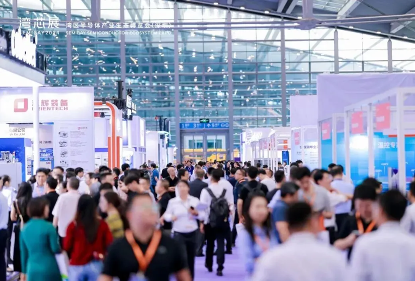
Chinese semiconductor companies are unveiling new products featuring cutting-edge technologies at the ongoing WESEMiBAY Semiconductor Ecosystem Expo, which opened in Shenzhen on Wednesday.

 The development echoes the views of industry leaders and experts, who assert that China is experiencing rapid growth and achieving breakthroughs across multiple domains of the industry.

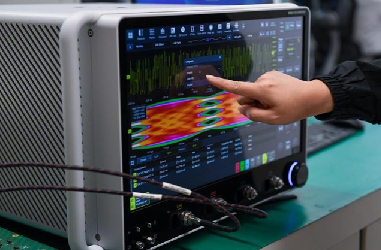
 Shenzhen LongSight Technology unveiled the global launch of its independently developed new-generation ultra-high-speed real-time oscilloscopes.

 With a bandwidth exceeding 90 GHz, it ranks second in the world and has broad industrial application prospects in the fields of semiconductors, 6G communications, optical communications and intelligent driving, said CEO Liu Sang.

 Shenzhen LongSight Technology is a subsidiary of SiCarriers, a Shenzhen-based State-owned enterprise that specializes in the research and production of semiconductor equipment and components.

 An oscilloscope is an indispensable tool in the chip manufacturing process, ensuring high performance and high reliability of chips, and LongSight’s breakthrough will benefit chips developed in the country, said industry insiders.

 Wuhan Qiyunfang Technology, another subsidiary of SiCarriers, announced the release of two domestically developed electronic design automation (EDA) tools, both featuring completely independent intellectual property rights, at the expo.

 These tools — a schematic design software and a PCB design software — address the gap in high-end electronic design industrial software technology in China.

 At the expo, the 2024 China Top 10 Chip Science Progress Awards were also announced. Several research teams from Chinese universities, including the University of Electronic Science and Technology of China, Tsinghua University, and Hunan University, were among the recipients.

 “These results, selected through online voting by over 100,000 participants and votes from more than 100 experts, reflect the level of development in China’s chip science and technology,” said Jin Xianmin, executive editor of CHIP, a comprehensive international journal focused on chip research based in Shanghai.

 “We conducted a rigorous screening of the online votes to ensure their validity. Such widespread participation demonstrates the vitality of this industry,” he added.

 Jin, who serves as dean of the Chip Hub for Integrated Photonics Xplore (CHIPX) at Shanghai Jiao Tong University and is also founder and CEO of TuringQ, said that apart from the shortage of lithography machines, China has made significant progress in various areas of chip technology.

 He suggested that breakthroughs could be achieved through architectural innovations and new chip platforms, such as photonic chips, to leapfrog rivals.

 The expo, which will run till Friday, has attracted more than 600 companies from home and abroad.

 Covering an exhibit area of 60,000 square meters, the expo focuses on four major exhibition zones, including wafer manufacturing, advanced packaging, IC design, and compound semiconductors.

 chenhong@chinadaily.com.cn

Article inline ad

China’s ‘AI Plus’ Becomes Magnet For Global Capital

0

中国日报 | 更新时间:2025-10-17

重庆——中国西南地区重要的工业制造基地重庆,近日已成为人工智能技术与传统产业深度融合的示范区。

 赛力斯集团表示,作为中国领先的新能源汽车制造商,其市值已超过 2700 亿元人民币(380 亿美元),目前正通过与科技巨头字节跳动建立新的合作伙伴关系,进军具身智能领域。

 此次合作由其重庆子公司与字节跳动签署的框架协议概述,将涵盖联合设计和其他端到端操作,以构建新的人工智能应用生态系统。

 这只是中国“人工智能+”倡议赢得全球企业和投资者青睐的一个例子。

 上月底,重庆市市长国际经济顾问委员会第十九次会议在重庆举行,多位全球投资者在会上表示,中国作为人工智能研发和应用核心基地的地位日益得到全球企业的认可。

 今年8月,中国发布了深入实施“人工智能+”战略的指导意见,系统性地提出了加强人工智能支撑基础设施建设、加快人工智能技术与经济社会领域融合发展的建议。

 奥地利制造公司 AT&S AG 首席执行官迈克尔·梅尔廷表示:“人工智能与可持续制造的结合将释放持续的需求增长,并为中国的合作开辟新的空间。”

 此次会议汇集了来自11个国家和地区的21家跨国公司的代表,共同探讨人工智能驱动的产业发展如何推动新的合作项目。他们达成了共识:如果你想扩大人工智能的规模,那就在中国做。

 跨国公司代表表示,中国巨大的市场、快速的应用迭代、完善的产业生态系统和成熟的创新环境是其主要吸引力。

 全球汽车座椅领导者安道拓总裁兼首席执行官杰罗姆·多拉克表示:“我们在中国试点很多全球技术,正是因为这里的技术应用和迭代速度是最快的。”

 多拉克表示:“我们最大的全球技术中心之一就位于重庆。例如,我们开发的用于座椅生产线缝纫流程自动化的人工智能技术,可将人工干预减少20%至30%。该中心的创新成果已在全球范围内推广。”

 意法半导体执行副总裁Bertrand Stoltz表示,中国在人工智能创新方面具有明显的成本优势,为制造业大规模部署智能应用提供了技术和经济基础。

 今年2月,意法半导体与三安光电投资230亿元在重庆合资建设的碳化硅晶圆工厂正式投产,计划年内实现量产。

 斯托尔茨表示,该工厂将为中国的新能源汽车和光伏产业提供高性能芯片。

 高通公司全球副总裁夏权表示:“我们致力于利用我们在人工智能领域的专业知识,与重庆合作构建以人工智能为核心的新生产力体系。”

 中国人工智能企业正通过“人工智能+制造业”模式向全球提供智能基础设施和商业生态系统。

 像DeepSeek这样的中国人工智能模型的开源发布,正在推动全球人工智能开发向更加开放和协作的方向转变。“没有哪家公司能够单独掌握所谓的‘万能钥匙’。实现这一点需要整个生态系统的共同努力,”多拉克说道。

 梅尔廷在会上致辞时表示:“中国已成为全球创新领袖,加强与中国企业在技术、产品和市场融合方面的合作与共同创新至关重要。”

 中国仍是奥特斯集团的核心市场,公司还计划加大在中国人工智能相关产品研发的本地化力度,优化本地供应链,协同构建产业生态系统。

 新华社

Article inline ad

Chinese Company Marks Major Breakthrough In Oscilloscope

0

By ZHENG YIRAN | chinadaily.com.cn | Updated: 2025-10-17

How small of a chip can an oscilloscope detect? How subtle of a signal can it catch? The oscilloscope developed by a Chinese company is making technical breakthrough and demonstrating “China precision”.

 An oscilloscope is an indispensable tool in the chip manufacturing process, ensuring high performance and high reliability of chips.

 On Oct 15, Shenzhen LongSight Technology launched a new-generation ultra-high-speed real-time oscilloscope. With a bandwidth of 90GHz, the oscilloscope is capable of detecting chip as small as 3 nanometers, and catch micromicrosecond-level signal. In the past, oscilloscopes in China had a bandwidth of below 90GHz, which were only capable of detecting chip as small as 7nm.

 “For a long time, Western countries have implemented strict export restrictions on high-end testing equipment through technology control protocols, while China has long relied on imports in key areas. The launch of the oscilloscope helps China fight against the Western’s technical blockage in related area, solidifies the country’s semi-conductor industrial base, and ensures industrial autonomy and controllability,” said Wang Peng, an associate research fellow at the Beijing Academy of Social Sciences.

 In the past, Chinese market has long been restricted by the United States, where oscilloscope with a bandwidth of above 60 GHz was banned to be imported to China, and some enterprises can’t even get access to equipment with a bandwidth of above 20 GHz.

 “Key technological breakthrough and high-end products are our pursuit. In the future, we will continue to dig deep in areas including material, craft, chip, system, algorithm, protocol and software, constantly invest in technological innovation, working with partners alongside the industrial chain, to boost the continuous advancement of technology and industry,” said Liu Sang, CEO of LongSight.

Article inline ad

Chinese Tech Solutions Take Center Stage At Middle East Expo

0

By Han Jingyan | chinadaily.com.cn | Updated: 2025-10-16

More Chinese tech enterprises are venturing overseas to showcase their latest breakthroughs in artificial intelligence, cloud computing and big data, in a bid to win more global clients.

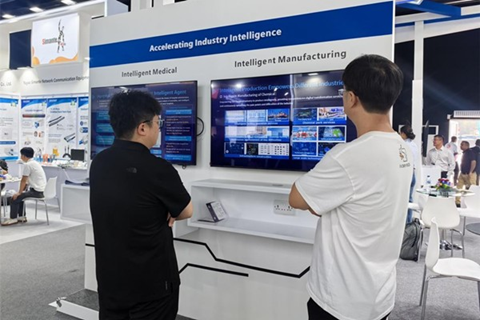
 At GITEX, the Middle East’s flagship ICT (information and communication technology) expo held from Oct 13 to 17 at the Dubai World Trade Center, renowned Chinese intelligent production technology company Inspur Intelligent Production Technology Co Ltd took center stage, unveiling its industry-specific large model and a portfolio of AI-powered production solutions that drew large crowds.

 The expo attracted government agencies and enterprises from over 200 countries and regions across the Middle East, Africa and Central Asia, spotlighting the latest breakthroughs in AI, cloud computing and big data.

 “Inspur is teaming up with local partners to meet the surging demand for smart-manufacturing upgrades in the Middle East,” said Wang Xiaofeng, deputy general manager of Overseas Sales at Shandong Inspur Intelligent Production Technology. “By combining AI, digital twins and industrial internet of things, we are reinventing production models and enterprise forms.”

 As a leading provider of end-to-end smart-factory technology, Inspur showcased its mature software-hardware bundles that digitize every stage of the shop floor process.

 Serving sectors as diverse as machinery, electronics, food and beverage, textiles, petrochemicals, mining, steel and aluminium, the company exhibited its InProd-LM — a self-developed industrial large model delivered as MaaS (Model-as-a-Service) for vertical domains —AI agents for R&D, process optimization and predictive maintenance.

 It also showcased a production-intelligence data platform that fuses generative and deterministic AI through a “large + specialized model” architecture, already deployed in printing, equipment, textile and food plants.

 Wang noted that in the next step, Inspur aims to deepen its overseas expansion — continuously advancing R&D efforts and accelerating the global adoption of AI on the factory floor to create an intelligent industrial future.

 Please contact the writer at hanjingyan@chinadaily.com.cn

Article inline ad

Display Panel Makers Expand With Edge In OLED

0

By Fan Feifei | China Daily | Updated: 2025-10-16

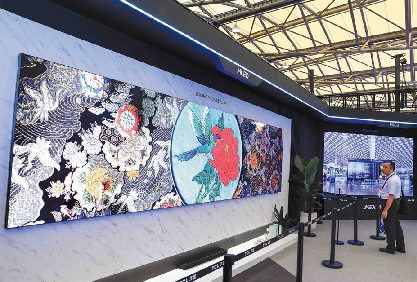
Chinese mainland display panel manufacturers captured more than half of global panel revenue for the first time during the first half of 2025, as major domestic players are doubling down on the cutting-edge semiconductor display technologies represented by organic light-emitting diodes (OLED) and mini LED.

 According to a report from CINNO Research, a flat panel display consultancy, total revenue of major global panel makers reached about $56.2 billion in the first six months, roughly flat from a year earlier. The revenue from Chinese mainland companies stood at $29.3 billion, up 7 percent year-on-year, accounting for 52.1 percent of the global total.

 By contrast, South Korean display panel makers saw their revenue decline by 9.5 percent, with their market share dropping to 30 percent, while revenue from Japanese companies fell by 16.7 percent, occupying 3.5 percent of the global total.

 Panel makers from Taiwan province reported that their revenue in the first half rose 4.4 percent year-on-year, with their global market share reaching 13.2 percent, up 0.6 percentage point from the previous year.

 In terms of operating profit, South Korea’s Samsung Display remained in the top spot, though its advantage has narrowed. TCL China Star Optoelectronics Technology Co Ltd and BOE Technology Group Co Ltd, two leading Chinese mainland display panel makers, ranked second and third globally in the first half, respectively.

 TCL CSOT posted a net profit of 4.32 billion yuan ($606.32 million) in the first half, up 74 percent year-on-year, while BOE reported 3.25 billion yuan in net profit, an increase of 42.15 percent year-on-year.

 BOE’s revenue reached 101.28 billion yuan, up 8.45 percent year-on-year, followed by TCL CSOT with 50.43 billion yuan, an increase of 14.4 percent year-on-year, narrowing the gap with Samsung Display and LG Display.

 Looking ahead, CINNO Research expects the Chinese mainland display market will witness robust growth in the second half of 2025, driven by the demand for larger screen sizes and rising shipments of high value-added products including mini LED, OLED and AI-powered panels.

 TCL CSOT recently announced that it has completed the acquisition of LG Display’s two China-based subsidiaries, which operate an 8.5-generation LCD production line in Guangzhou, Guangdong province, and a module assembly factory, for around 11.1 billion yuan.

 The deal, first announced in September 2024, marks LG Display’s formal exit from the LCD manufacturing business in the Chinese mainland. Through the acquisition, TCL CSOT will further strengthen its leadership in the global medium- to large-sized LCD panel market and expand its production capacity.

 The company said that demand for TV panels is expected to recover in the third quarter of the year and its acquisition of LG Display’s Guangzhou LCD line will be an important source of profits in the future.

 It is banking on OLED panels, which are increasingly being used in medium- and high-end smartphones, tablets, laptops and vehicle-mounted devices.

 Data from market consultancy Sigmaintell Consulting show that the penetration rate of OLED panels in smartphones across the globe will reach nearly 60 percent in 2025, as major handset manufacturers have adopted OLED panels in their devices.

 Chen Yanshun, chairman of BOE, said there is surging demand for OLED panels and the company plans to expand the application of OLED in tablets, laptops and wearable devices segments.

 BOE now owns three flexible active-matrix organic light-emitting diode (AMOLED) production lines in Chengdu and Mianyang in Sichuan province, as well as in Chongqing.

 It has announced plans to set up a new AMOLED production line in Chengdu. The products will be mainly high-end touch screens such as those used on mid-sized laptops and tablets. The project is expected to start mass production by the end of 2026.

 Li Yaqin, general manager of Sigmaintell Consulting, estimates that the sales revenue of the global display industry will reach $114.3 billion in 2025, while revenue from the OLED sector will amount to $43.3 billion, accounting for a 38 percent share in the overall display market worldwide.

 The penetration rate of OLED panels used in tablets is expected to increase from 5.7 percent in 2024 to 17.9 percent in 2028, according to the consultancy.

 Demand for flexible OLED panels used in foldable smartphones will continue to rise on the back of 5G commercial applications, Li said, adding that panel makers should further improve their yield rate capacities and reduce production costs.


Article inline ad