Wednesday, November 25, 2026

Home Blog Page 161

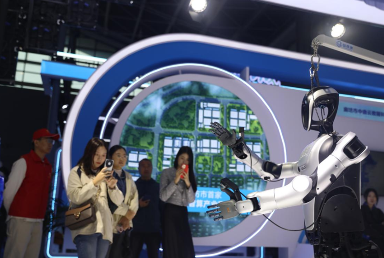
Hebei Expo Zeros In On Data-Driven Industrial Growth

0

By Zhang Yu in Shijiazhuang | chinadaily.com.cn | Updated: 2025-10-17

The 2025 China International Digital Economy Expo (CIDEE) commenced on Friday in Shijiazhuang, Hebei province, marking a significant step in fostering global cooperation and showcasing cutting-edge advancements in the digital sector.

 The three-day event centers around applying data to help drive high-quality industrial growth. It features an opening ceremony, forums, exhibitions, and investment matchmaking activities.

 According to the hosts, the event highlights practical applications of digital technologies in industry, daily life, and energy management.

 A dedicated theme hall showcases how reliable data can transform industrial operations.

 In an interview with Hebei Daily, Zhang Tianlong, director of the expo’s organizing committee, emphasized the event’s market-oriented approach, which was designed to streamline processes and enhance efficiency. “This model attracts data resources and innovative projects to Hebei, helping the province carve out a unique path in the competitive digital economy landscape.”

 Zhang also highlighted Hebei’s focus on leveraging its industrial base and proximity to Beijing and Tianjin to convert research into practical digital solutions.

 Ranked first in China’s comprehensive computing power index for two consecutive years, Hebei has emerged as a national hub for data storage and green computing.

 Langfang and Zhangjiakou are leading this transformation, using renewable energy to power advanced data centers.

 With specialized conferences, youth innovation competitions, and a digital twin platform for ongoing collaboration, the expo serves as a dynamic platform for sharing insights and accelerating the integration of digital and real economies, local authorities said.

Article inline ad

Spending On Sports-Based Activities Up

0

By Li Jiaying | China Daily | Updated: 2025-10-17

As students at Shanghai Jiao Tong University laced up their sneakers for an afternoon run with Adidas Global CEO Bjorn Gulden, the veteran sports executive spoke about something much larger than athletics — how sports can impact lives and businesses.

 “I’m observing encouraging trends in China’s fitness landscape. For example, more people are embracing running and outdoor activities, and whether for major sporting events or sports festivals, tickets are often sold out almost immediately,” Gulden said.

 The view is backed by the performance of sports-related consumption during the just concluded eight-day holiday.

 Data from the General Administration of Sport of China show that the country’s sports service consumption rose 28 percent year-on-year during the holiday, with subsectors such as event ticketing, sports training, fitness and leisure each recording growth of over 30 percent year-on-year.

 “In recent years, many major consumption trends in China have revolved around sports-related spending,” said Wang Yuxiong, a professor at the Central University of Finance and Economics.

 Wang added that several policy initiatives are expected to further boost market confidence and sustain the rapid growth of sports-related consumption.

 For Gulden, who has visited China frequently over the past three decades, the country embodies the vitality of both an open and promising market.

 “Every time I come to China, I feel the energy,” Gulden said. “The country’s economy is still growing, and its focus on health and fitness is very positive for our industry.”

 Fresh from attending this year’s International Business Leaders’ Advisory Council for the Mayor of Shanghai (IBLAC), Gulden said China is actively solidifying open discussions by promoting dialogues between global companies and local authorities.

 “It (the IBLAC) is one of the greatest platforms to learn from each other. And I actually wish we had the same with other countries and other authorities, because this is the way to actually avoid misunderstandings and also to solve problems,” he said.

 At the IBLAC meeting, Gulden proposed that the sports industry can serve as both a “shock absorber” and a “propulsion engine” for cities facing rapid development, not only bridging cultures and strengthening cohesion, but also stimulating consumption and innovation.

 That message resonates with the country’s evolving sports blueprint.

 According to a recent guideline issued by the State Council, or China’s Cabinet, on unlocking the potential of sports consumption, the nation aims to cultivate a group of globally influential sports enterprises and events, with the total scale of the sports industry exceeding 7 trillion yuan ($981 billion) by 2030.

 The move is part of China’s broader efforts to boost overall consumption. This year’s Government Work Report called for special actions to stimulate consumption and emphasized the need to unlock the potential of cultural, tourism and sports-related spending. This was followed by a policy document jointly issued by nine ministries last month, identifying sports consumption as a key component in expanding overall service consumption.

 “Boosting domestic demand is not only an effective way to withstand external shocks and sustain China’s economic recovery, but also a strategic move to advance high-quality development and foster a new development paradigm,” said Wang Yiming, vice-chairman of the China Center for International Economic Exchanges.

 “China is expected to be among the most influential markets for the sports industry in the next 10 years,” Gulden said.

 The senior executive also noted the recovery momentum of Adidas’ China business, which has seen multiple quarters of double-digit growth. “The Chinese market is extremely important to us. It currently contributes about 15 percent of our global performance, representing a highly significant role.”

 Gulden attributed the growth momentum to the booming and increasingly diverse consumer needs. The company is “doing everything possible” to stay closely connected with consumers through the convergence of three key dimensions: sports performance, fashion and comfort, he said.

 Looking ahead, Adidas is gearing up for one of the world’s most-watched sporting events — the FIFA World Cup — next year. The brand will roll out an expansive collection of national team and club jerseys, designed not only for the pitch but for the streets.

 “Football fashion is breaking out of its traditional box,” Gulden noted. “It’s no longer just for male fans. More women are embracing jerseys and football-inspired footwear as part of their everyday style.”

Article inline ad

Canton Fair Attracts Record Buyers

0

By QIU QUANLIN in Guangzhou | China Daily | Updated: 2025-10-17

Emerging markets remain a strong growth engine for Chinese export-oriented enterprises, as a record number of overseas buyers preregistered for the China Import and Export Fair, popularly known as the Canton Fair.

 The fair, held twice a year in spring and autumn, kicked off its 138th session on Wednesday in Guangzhou, capital of Guangdong province.

 More than 240,000 buyers from 218 countries and regions, representing an increase of 10 percent from the previous session, have preregistered for the fair, according to the organizers.

 There has been significant growth in the number of buyers from the European Union, the United States and emerging markets, including countries and regions involved in the Belt and Road Initiative, the organizers said.

 On the opening day of the fair alone, more than 69,000 overseas buyers were recorded, according to the organizers.

 As one of approximately 3,600 high-quality companies participating in the fair for the first time, Zhongshan Songwei Lighting Electrical Appliance Co has set high expectations to expand business in emerging markets.

 “Through digital and intelligent transformation, we have continuously enhanced our capabilities, hoping to ship our products to developed and emerging markets,” founder Xie Wei said.

 The company, based in Zhongshan, Guangdong, was primarily focused on the domestic market and only started exploring foreign trade four years ago.

 “We hope to expand into the European and emerging markets such as the Middle East,” said Xie.

 Showcasing cutting-edge minimalist style ceiling lights and fan lights during the fair, the company has already met with new customers from Germany, Italy, Saudi Arabia and Iran during the fair’s first two days.

 “We are very confident about securing orders, as customers from emerging markets have shown strong interest by scheduling their visits to our new factory after the fair,” said Xie.

 According to data from World-First, a cross-border trade payment and account service brand that is part of Ant International, emerging markets saw a 300 percent growth in transaction volume during the first half of 2025.

 To address the need for Chinese exporters to expand into emerging markets, WorldFirst has upgraded its cross-border trade safeguard plan to help companies build more robust compliance and fund management capabilities during the fair.

 In the first three quarters, China’s exports to emerging markets such as ASEAN, Africa and Central Asia increased by 14 percent, 27.3 percent and 11.8 percent, respectively, according to data from the General Administration of Customs.


Article inline ad

Event In London Facilitates China-UK Business Partnerships

0

By XING YI in London | chinadaily.com.cn | Updated: 2025-10-17

Moore Kingston Smith, a multidisciplinary advisory, tax and audit firm, hosted a business forum in London on Tuesday to promote cooperation between China and the United Kingdom.

 Held under the theme “Bridging cultures, building partnerships”, the event brought together around 100 business leaders, government representatives, and trade experts to discuss opportunities for bilateral trade and investment.

Representatives of trade and investment promotion agencies from Shanghai, Shenzhen, Qingdao, and Jiangsu province shared successful cases of foreign investment in their regions, including AstraZeneca’s new factory in Qingdao and the growing popularity of Brompton bicycles in Shanghai.

 They also outlined emerging opportunities for international investors, such as zero-carbon industrial parks in Jiangsu and new incentive policies to encourage innovation in Shenzhen.

In the panel discussion, experts from Bank of China, China UK Business Development Center, Suffolk County Council, and consulting firm Gateley Global discussed cross-border collaboration and compliance. They emphasized the huge potential for Chinese companies in fintech, clean tech, and the sustainable economy in the UK, and urged businesses to go outside London for more opportunities.

Matt Meadows, managing director of Moore Kingston Smith, said: “We are proud to act as a bridge between the UK and China, supporting inward and outward investment and helping businesses achieve their international ambitions.”

 As part of Moore Global, an accountancy and advisory network with over 30,000 professionals across more than 100 countries, Moore Kingston Smith plays a unique role in connecting businesses, cultures, and opportunities.

Article inline ad

Vivo Bets Big On AI With Latest Large Language Model

0

By Ma Si | chinadaily.com.cn | Updated: 2025-10-17

Chinese smartphone vendor Vivo has unveiled its comprehensive BlueAI intelligent strategy and the latest iterations of its operating systems, OriginOS 6, as the Chinese tech company works to beef up its research and development capabilities.

 Shi Yujian, Vivo’s senior vice-president and chief technology officer, said: “over the past eight years, our collaboration with hundreds of thousands of developers has enabled us to deliver more natural, trustworthy, and human-centric experiences to over 500 million users.”

 Facing the global AI wave, Shi emphasized the “More Local, More Global” vision. He positioned Vivo as a bridge connecting the physical and digital worlds, Chinese technology with global markets, and developers with local users. Vivo pledged to foster open standards, co-research the Blue Kernel and BlueLM AI platform with partners, and enhance its global distribution network to connect quality applications and services with more users.

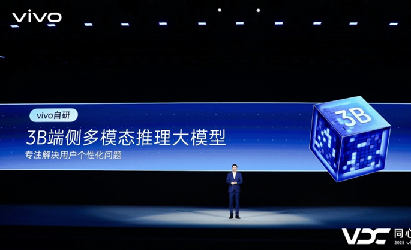
 A key highlight was the debut of a 3 billion parameter on-device multi-modal large language model within the BlueLM matrix. It is poised to serve as a core engine for developers building the next generation of intelligent applications, Vivo said.

Article inline ad

Forum Eyes World Supply Chain Reshaping

0

By LI JING, ZHANG CHENXU and ZHONG NAN | China Daily | Updated: 2025-10-18

China’s accelerating digital transformation is evolving from an internal modernization drive into a global economic force, increasingly shaping the structure and resilience of world supply chains.

 “Enterprises must adopt a ‘top-down and grounded’ vision,” said Yao Jianming, professor at Renmin University’s Business School. “‘Top-down’ means influencing entire industries and national systems, while ‘grounded’ means addressing real challenges through data, networks and computing to power high-quality development.”

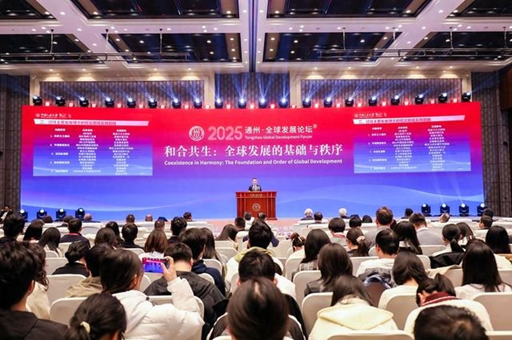
 Yao identified digital technologies, from artificial intelligence and big data to blockchain, as the core of China’s new quality productive forces. “Digital transformation isn’t about replacing people,” Yao added. “It’s about empowering them to create greater value.” He made the remarks at a parallel session of the 2025 Tongzhou Global Development Forum in Beijing on Friday.

 That vision is gaining momentum in the corporate world. Xiamen ITG Group Corp Ltd, a leading trading and supply-chain services company, recently joined forces with a Shanghai-based AI enterprise and a Xiamen supply-chain innovation firm to advance “AI + supply chain” projects.

 “Globalization is shifting from efficiency to resilience,” said Liu Zhitao, an executive at ITG. “The Belt and Road Initiative is not only cross-border trade but also an industrial collaboration platform. Under the ‘dual circulation’ strategy, we’re building supply chains that connect resources, manufacturing and markets.”

 The transformation is also visible in small businesses. In Yiwu of Zhejiang province, China’s renowned small-commodity hub, a “market procurement trade” model has enabled thousands of micro-exporters to reach global markets. Professor Gu Kejian, also from Renmin University, said that more than 80 percent of Yiwu’s exports rely on this system. “It may seem small, but it’s a major innovation,” he said.

 Yiwu’s modernization took another step forward on Tuesday, with the opening of the Global Digital Trade Center, a flagship project of the city’s sixth-generation market. Working with Tencent, the center has introduced AI navigation and robotic systems for smarter, more interactive trade services.

 Recent trade frictions between China and the United States have drawn widespread attention to the stability of global supply chains. Experts say that while China is committed to safeguarding supply chain stability and actively creating new opportunities for global trade and economic development through innovation, the US approach is undermining the multilateral trading system and disrupting global supply chain stability.

 On Friday, the Ministry of Commerce released the 2025 Report on WTO Compliance of the United States. The ministry expressed “serious concern” over US actions that it said undermine the multilateral trading system. A ministry official stressed that the WTO-centered multilateral trading system remains the cornerstone of global trade and economic globalization. The report urged the US to correct its wrong practices, withdraw illegal tariff measures such as the so-called reciprocal tariffs, and fulfill its WTO obligations, calling for cooperation among all members to build a fair and inclusive global economy.

 Separately, He Yongqian, spokeswoman for the ministry, said the measures of export control on rare earths are “a normal step to strengthen the export control framework” and “not directed at any specific country.” Export applications for legitimate civilian use, she added, will continue to be approved.

 Contact the writers at lijing2009@chinadaily.com.cn

Article inline ad

Summit To Foster Deep Ties In Digital Tech

0

Event to focus on new developments in internet, cyberspace governance

By FAN FEIFEI | China Daily | Updated: 2025-10-18

The 2025 World Internet Conference Wuzhen Summit is expected to create an open platform for international exchanges and cooperation in digital technologies, while helping the global community to seize opportunities brought on by a new round of scientific and technological revolution to benefit humanity, the event’s organizer said on Friday.

 The summit is scheduled to take place from Nov 6 to 9 in Wuzhen, Zhejiang province, with the theme “Forging an Open, Cooperative, Secure and Inclusive Digital Future — Building a Community with a Shared Future in Cyberspace.”

 It will focus on new trends in cutting-edge internet technologies and new developments in cyberspace governance, and discuss technology-driven industrial innovation and practices, as well as approaches concerning the governance of cyberspace and frontier technologies, said Ren Xianliang, secretary-general of the WIC.

 Ren made the remarks at a news conference in Beijing.

 He noted that as this year marks the 10th anniversary of a proposal to build a community with a shared future in cyberspace, the summit will comprehensively summarize the great achievements and vivid practices made over the past decade.

 This year’s summit will invite business leaders from the “Six Little Dragons” — a group of Chinese tech startups based in Hangzhou, such as DeepSeek and Unitree Robotics, to participate in a dialogue regarding global trends in artificial intelligence innovation and development, and to explore how cross-sector collaboration can help address global challenges, Ren said.

 The event will set up 24 sub-forums, while heads and senior representatives from major international organizations, renowned experts and scholars, and executives from leading internet enterprises, including Alibaba, Sohu and 360, have confirmed their attendance.

 At present, AI has made breakthroughs with new business models rapidly emerging and innovative applications expanding at an accelerated pace, bringing huge opportunities for the economic and social development of all countries, but AI technologies also bring about risks and challenges, Ren said.

 Moreover, a theoretical symposium marking the 10th anniversary of the concept of building a community with a shared future in cyberspace will be held during the event, while specialized committees on e-commerce and cultural heritage digitalization will be established.

 AI technologies and industrial development will be under the spotlight during the summit, with five AI-themed sub-forums to be held, said Zhao Cheng, head of the publicity department of the Zhejiang Provincial Committee of the Communist Party of China.

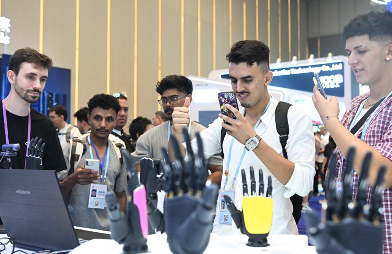
 This year’s Light of Internet Expo will showcase the remarkable achievements of AI in production and people’s daily lives, while themed exhibitions featuring the debut of products in embodied intelligence and quantum technology will be held, Zhao added.

 Meanwhile, as new problems are emerging along with the rapid development of AI, the forum on AI technology innovation and governance will bring together experts, scholars, and entrepreneurs from around the world to engage in in-depth discussions on improving AI ethical standards and enhancing collaborative governance.

 China’s AI sector will make big strides in the next 10 to 15 years, with its market size reaching 1.73 trillion yuan ($242.8 billion) by 2035, accounting for 30.6 percent of the global total, according to market research company CCID Consulting.

 The nation has solidified its position as a global leader in AI innovation, and released 1,509 AI models to date, ranking first among the 3,755 models launched globally until now, according to the China Academy of Information and Communications Technology.

 fanfeifei@chinadaily.com.cn

Article inline ad

Investors Should Look At Long-Term Opportunities In China’s Evolving Capital Market, Analysts Say

0

By Jiang Xueqing | chinadaily.com.cn | Updated: 2025-10-17

Although China’s three major stock indexes fell on Friday, analysts said investors should look beyond short-term market fluctuations and focus instead on high-quality companies with sustainable earnings growth, aiming to capture the long-term opportunities in China’s evolving capital market.

 The Shanghai Composite Index dropped 1.95 percent to 3,839.76, while the Shenzhen Component Index declined 3.04 percent to 12,688.94. The ChiNext Index, which tracks China’s Nasdaq-style board of growth enterprises, slid 3.36 percent to 2,935.37.

 Despite current market uncertainties, global investment firm AllianceBernstein said it believes A-shares possess the conditions to gradually transition into a structurally upward market driven by earnings growth. This outlook, according to Li Changfeng, head of market strategy at AllianceBernstein, is underpinned by sustained improvement in corporate profitability driven by policy measures, a moderately accommodative policy environment, and the ongoing repricing of market valuations. These factors, Li said, have significantly enhanced the long-term investment appeal of the Chinese stock market.

 Li added that the continued improvement of Chinese companies’ innovation capabilities, along with the government’s steady backing of the private sector, are key to building a long-term healthy stock market ecosystem.

 In the face of persistent external pressures, maintaining appropriate stimulus remains vital to facilitate economic transformation and strengthen corporate profits, Li noted. Encouragingly, many Chinese companies are demonstrating robust earnings growth momentum, and profit forecasts for the A-share market continue to be revised upward — a sign of improving fundamentals that could lend solid support to market performance.

 “The policy environment is expected to remain supportive while balancing external challenges with internal transformation,” Li said. “AllianceBernstein believes that as earnings improve, policy support continues, and valuations have room to expand, the A-share market is advancing toward a healthier and more sustainable development trajectory.”

 China’s stock markets have experienced a substantial turnaround since September 2024, thanks to both Beijing’s policy pivot and the impressive advancements made in artificial intelligence, automation, green technology, biopharma, chipmaking and other sectors, according to a research note released on Friday by Lu Ting, chief China economist at Nomura, and his team.

 Looking ahead to the next five years, Nomura said Beijing is set to continue advancing tech self-sufficiency through significant investment and industrial policy, particularly in semiconductors and AI, as China faces stricter global trade and investment restrictions.

 Commenting on expectations for China’s 15th Five-Year Plan (2026-30), Zhang Ning, senior China economist at UBS Investment Bank, said in a research note that fostering high-quality growth is likely to be the top priority over the next decade, driven primarily by innovation and total factor productivity growth.

 Zhang noted that China is expected to continue supporting both fundamental and frontier research, as well as addressing technological bottlenecks in key “self-sufficiency” areas. The upcoming plan may also help clarify some strategic goals and core principles of the anti-involution campaign, highlighting building a unified national market, curbing irresponsible local government investment, and boosting local consumption.

 While the plan is expected to maintain its focus on supply-side measures, Zhang stressed that boosting demand will be crucial to the campaign’s success.

 jiangxueqing@chinadaily.com.cn

Article inline ad

China To Boost Panda Bond Issuance, Integrate Investment Channels

0

By Zhou Lanxu | chinadaily.com.cn | Updated: 2025-10-17

China will encourage more overseas institutions to issue panda bonds and integrate cross-border investment channels to attract foreign participation in its onshore market, as part of the country’s ongoing efforts to foster a sound environment for using the renminbi, said the People’s Bank of China, the country’s central bank.

 “We will encourage and support more qualified overseas institutions to issue panda bonds within the country,” the central bank told China Daily, as it aims to strengthen the Chinese currency’s function of financing.

 Panda bonds are renminbi-denominated bonds issued in the onshore market by overseas institutions. The total outstanding size of offshore renminbi bonds and panda ponds has reached about 2 trillion yuan ($280.6 billion), data from the PBOC showed.

 The central bank said it will also integrate investment channels as appropriate to attract more overseas institutions to invest in the onshore market in an orderly manner, as part of broader efforts to expand high-level, two-way opening-up of financial markets.

 “Efforts will be taken to increase transparency, improve rule-based mechanisms and strengthen predictability,” the PBOC said, adding that authorities will also comprehensively clear, refine and integrate policies on renminbi settlement for cross-border trade and investment.

 During the 14th Five-Year Plan period (2021-25), the global appeal of renminbi-denominated assets have risen markedly as the country deepened financial market opening, with overseas entities holding more than 10 trillion yuan worth of onshore renminbi financial assets while yuan deposits in major offshore markets reaching 1.6 trillion yuan.

 So far, the renminbi has become China’s largest settlement currency for cross-border receipts and payments, the world’s second-most used currency for trade finance, and the third-most active currency in global payments. It also ranks third in weighting within the International Monetary Fund’s Special Drawing Rights basket.

 The PBOC added that the policies governing fund management associated with offshore listings as well as cash-pool management of multinational enterprises will be improved to facilitate cross-border trade and investment and better serve the real economy.

 Also to facilitate trade and investment, the central bank vowed to expand the coverage of currency swap arrangements with major trading partners and make effective use of swap funds for more liquidity supply.

Article inline ad

Expert: China Must Journey From Easy To Hard Money

0

By LUO WEITENG and SONG PING in Hong Kong | China Daily | Updated: 2025-10-17

As the half-century of global prosperity built on China-US complementarity is reaching its natural limits, the era of “easy but low-margin money” is drawing to a close.

 China now must learn to earn “hard money” — by rebuilding balance within, advancing technological strength, climbing up the global value chain and carving out new markets worldwide, according to Li Xiaojia, former CEO of Hong Kong Exchanges and Clearing Ltd (HKEX).

 Li said in an exclusive interview with China Daily that he sees this transition, though painful, as both inevitable and timely, aligning with the upcoming 15th Five-Year Plan’s (2026-30) focus on rebalancing growth and reinforcing self-sufficiency. He emphasized that this is not merely a response to external pressures but a necessary evolution for the Chinese economy.

 “For the next five to 10 years, we are shifting gears on an uphill road,” Li said. “It’s risky. But once the gears catch, the engine roars forward — and you accelerate faster than ever.”

 For decades, globalization rested on a delicate choreography: China, powered by its demographic dividend and cost advantages, became the “world’s factory”; the United States, anchored by technological innovation and financial prowess, remained the engine of global consumption.

According to Li, both China and the US benefited from globalization during the past 30 years. But the lion’s share of wealth was captured by US financial and corporate elites, siphoned offshore through complex tax and regulatory structures, leaving behind a hollowed-out industrial base, overleveraged lower and middle class and a deeply divided society.

 In China, years of low-margin manufacturing face a structural reckoning: a nation that produces almost everything for the world, but earns only a fraction of the value it creates at the far end of the value chain.

 “It looked like an easy game — the world’s capital came, factories thrived, exports soared,” Li noted.

 However, that model has run its course. Now comes the time for a harder, but truer, kind of growth — one built on intellectual property, core technologies and integrated solutions.

 For Li, this is what China’s pursuit of new quality productive forces truly means: a shift from the world’s factory floor to its design table.

 Li sets his sights on untapped markets under the framework of the Belt and Road Initiative, where China has a whole package of development solutions and know-how in next-generation tech to export, from infrastructures and renewables to quantum science.

 The new frontiers are taking shape.

 Despite exports to the US falling for six straight months, growth in China’s global exports hit a six-month high of 8.3 percent in September, beating economists’ estimates and markedly better than the 4.4 percent year-on-year increase in August, Customs data showed on Monday.

 “It’s hard work,” he noted. “But it blazes a new trail in claiming the bigger share of a self-determined future.”

 At home, the quest for hard money is about slicing the pie more fairly — reshaping the mechanisms of distribution and governance to ensure that the gains of growth are more evenly shared.

 Having spearheaded multiple listing reforms during his 11-year tenure at HKEX, Li founded Micro Connect in 2021. The financing platform packages revenues from China’s grassroots economy into tradable instruments and channels funds to millions of small businesses that contribute to 90 percent of nationwide economic activity.

 This June, Li’s newly launched investment firm — Micro Connect International Finance — filed for a Hong Kong listing under Chapter 21, a framework designed for investment companies to raise funds from institutional investors.

 Li said the Hong Kong debut is “expected soon” and hopes it will pave the way for more such ventures to follow, further integrating smaller enterprises into the financial ecosystem.

 As dynamics between the world’s two largest economies lose rhythm, Hong Kong’s strategic relevance is more evident than ever. “The special administrative region stands as the one and only place where two systems, two ideologies and two capital worlds can still meet,” he said.

 The city’s unique standing lies in being China’s only common-law market, a system money inherently trusts. “Common law works by exclusion — a blacklist of what’s forbidden. Civil law works by permission — a white list of what’s allowed. For global capital that depends on speed, clarity, flexibility and rule of law, common law is the natural home. That’s why all major financial hubs — New York, London, Singapore and Hong Kong — share the same legal DNA,” Li explained.

 While Hong Kong’s irreplaceability remains unchanged, what will change is the order of voices. “For the past 30 years, global capital led the tune and Chinese capital followed. The next three decades will be the reverse,” Li stressed. “Capital has its own gravity — where there is profit to be made, overseas capital always finds its way back — often stronger than before.”

 As the bigger story unfolds, Li sees the quiet awakening of a structural bull run in the Hong Kong market, volatile but fundamentally upward amid the turbulence of a changing world.

Article inline ad