Wednesday, November 25, 2026

Home Blog Page 162

Banks, Insurers Better Services For Tech Players

0

Improved financing solutions to boost emerging sectors, new business tracks

By Jiang Xueqing | China Daily | Updated: 2025-10-17

Under the guidance of financial regulators, Chinese banks and insurance companies are tailoring services to the needs of technology enterprises, offering targeted solutions such as “loans plus direct equity investment”, intellectual property pledge financing, and patent insurance. Commercial banks are accelerating their expansion into tech finance to better serve emerging industries and new business tracks.

 Banks now attach far greater importance to tech finance than they did five years ago. Beyond financial indicators, they focus more on a company’s growth potential and provide more integrated, diversified services, from traditional loans to financing packages combining equity and debt, said Wang Hua, vice-president of the Hefei branch of China CITIC Bank. Wang added that banks now better understand industrial ecosystems and are more willing to fund small-scale innovators and early-stage startups.

 In recent years, large State-owned commercial banks, national joint-stock banks and leading city commercial banks have significantly increased lending to key national strategic projects, security-related projects, large-scale equipment upgrades, consumption upgrades and the development of new quality productive forces.

 The Beijing municipal branch of Industrial and Commercial Bank of China has designed a financing product for enterprises undertaking major national science and technology projects. It features a multidimensional evaluation system that relies less on financial data or collateral, using government subsidies tied to the project as a key basis for assessment. The bank offers medium- to long-term unsecured loans that match the research and development cycle, with amounts no less than the subsidy value.

 MicroCyto, a Beijing-based biotechnology firm focusing on synthetic biology, is one of the beneficiaries. As the lead unit of a national key R&D program for disruptive innovation, the company faced long R&D cycles and sustained upfront investment without immediate revenue, making it difficult to provide traditional collateral. ICBC Beijing Municipal Branch said the approval of a national-level R&D project serves as a form of credit endorsement for such enterprises.

 To further advance tech finance, the Beijing municipal branch of the People’s Bank of China, together with municipal government agencies, has established a platform connecting capital, technology, talent and industry. The platform identifies companies seeking breakthroughs in “bottleneck” technologies, highlights key entrepreneurial talent projects, links them with funding resources and coordinates multiple financial institutions to jointly serve each enterprise.

 Prime Gene Therapeutics, a clinical-stage innovative drug developer specializing in immune-inflammatory diseases, benefited from the platform with China CITIC Bank’s learning of the company’s funding needs through it. While CITIC Securities advanced Prime-Gene’s IPO process, China CITIC Bank provided a 30 million yuan ($4.2 million) follow-up loan combining debt and investment. Insurance funds under the CITIC Group offered performance guarantees to ensure financial continuity between R&D and listing preparation.

 In 2022, the Ministry of Science and Technology launched the Innovation Credit Score System, a policy tool that uses structured indicators, data and algorithms to evaluate enterprises’ innovation capability, performance and future growth potential — helping financial institutions better identify tech-driven firms.

 The ministry, working with financial regulators, has implemented a relending facility and a special guarantee plan to support technological innovation based on this system. By the end of last year, more than 70,000 qualified technology enterprises had been recommended to 21 national banks and the National Financing Guarantee Fund. Over 7,000 companies signed financing contracts with banks, totaling over 88 billion yuan, Vice-Minister of Science and Technology Qiu Yong said at a news conference on May 22.

 The National Financial Regulatory Administration has also teamed up with the National Intellectual Property Administration and the National Copyright Administration to pilot IP finance ecosystems, addressing challenges in IP registration, valuation and disposal.

 The NFRA issued a notice in March on further expanding the pilot program for equity investment by financial asset investment companies (AICs), broadening the scope of equity investment by AICs to the provinces where the 18 pilot cities are located. The policy supports eligible commercial banks in initiating the establishment of AICs.

 On July 3, China Merchants Bank announced it had received regulatory approval to prepare for the establishment of CMB Financial Asset Investment Co, with registered capital of 15 billion yuan. CMB became the third national joint-stock commercial bank approved to set up such a company, following Industrial Bank and China CITIC Bank.

 “By leveraging financial asset investment companies, commercial banks can strengthen diversified cooperation with tech firms and further expand their business potential,” said Liu Chen, a researcher at the BOC Research Institute, the in-house think tank of Bank of China. “AICs provide key platforms for banks to deepen loan-investment and debt-equity linkages. They can design customized financial products to meet corporate financing needs and work with government-guided funds and private equity firms to achieve complementary strengths in project sourcing and investment management.”

 

Article inline ad

Apple CEO: Iphone Air To Begin Pre-Order In Chinese Mainland

0

By Ma Si | chinadaily.com.cn | Updated: 2025-10-14

Tim Cook, CEO of Apple, made a surprise appearance in the Apple Store livestream on Chinese short video platform Douyin on Monday night, announcing the China launch of its eSIM-only iPhone Air smartphones.

 The device will be available for pre-order at 9:00 am on Friday, October 17, Cook said. This official announcement confirms that the iPhone Air has cleared its final hurdle for the Chinese mainland market, paving the way for the Chinese smartphone industry to embrace the eSIM era.

 An eSIM phone is a smartphone that uses an embedded SIM (eSIM) instead of, or in addition to, a physical plastic SIM card.

 On Monday, China’s big three telecom operators, China Mobile, China Unicom, and China Telecom, announced that they have formally received regulatory approval to conduct commercial trials for eSIM smartphone services.

 Cook kicked off his second visit to China this year in Shanghai on Monday.

 The trip highlighted Apple’s emphasis on China, which is not only an important market, but also a key part of its supply chains and a major source of innovation for the company.

Article inline ad

Service Robots Set To Take Center Stage At Canton Fair

0

By QIU QUANLIN in Guangzhou | China Daily | Updated: 2025-10-14

Service robots are expected to become a new growth engine for transactions at the upcoming session of the China Import and Export Fair, underscoring China’s innovation strength and bolstering efforts to help service robot companies seize opportunities to expand into international markets, according to the event’s organizers.

 Transactions in the service robotics industry have exceeded expectations since April after a dedicated service robotics zone was established for the first time during the fair’s 137th session, with 46 Chinese robotics companies demonstrating prowess in the sector, the organizers said.

 “With continued efforts from both suppliers and buyers during and after the previous session, it is expected that the impact of the zone will be even more significant at the upcoming session,” said Zhu Yong, director-general of China Foreign Trade Center.

 As of September, 22 Chinese companies in the service robotics industry have reached orders amounting to $19.27 million after the previous session of the fair, while 37 companies have been busy in negotiations with clients for orders totaling $28.57 million, according to the fair’s organizers.

 Due to longer negotiation cycles for new products, additional orders are expected to follow in the coming months, the organizers said.

 According to an analysis by research firm Precedence Research, the global market size for service robots reached $54.5 billion in 2024, with an expected average annual growth rate of 15 percent over the next decade.

 “By leveraging its unique advantages in organizing specialized exhibitions, the fair will help service robot companies seize opportunities to expand into international markets,” said Zhu.

 The event, popularly known as the Canton Fair and widely seen as a barometer of China’s foreign trade, will kick off its 138th session on Wednesday in Guangzhou, capital of Guangdong province. The fair is held twice a year in spring and autumn.

 More than 207,000 buyers from 217 export markets have pre-registered for the fair’s upcoming session, reflecting a 14.1 percent increase from the previous session, according to the organizers.

 As more buyers recognize the vast potential of the service robot market, they have accelerated their business plans and expanded procurements for the fair’s 138th session, according to the organizers.

 For example, after the previous session, French company TOMAX ASIA and German company TGI Technology Ltd have independently established robotics departments specifically to handle the procurement of intelligent cleaning, lawn mowing and pool cleaning robots.

 After testing the market with a Chinese coffee robot, Turkish home appliance company Arzum received a positive response and now plans to establish a dedicated product line on the sales end, according to the organizers.

 Transactions registered since the previous session have helped draw more Chinese companies in the service robotics industry to participate in the fair’s upcoming session, according to the organizers.

 The service robotics zone will be established again at the fair’s 138th session, featuring 46 industry-leading companies to showcase intelligent products such as embodied robots and robotic dogs, the organizers said.

 Additionally, the fair will feature a dedicated zone for the smart healthcare industry for the first time to better showcase China’s advanced products and technologies in the medical field.

Article inline ad

China Leads In AI Research Publications For Global Medical Device Industry

0

By Qiu Quanlin in Guangzhou | chinadaily.com.cn | Updated: 2025-10-14

China leads the world in AI research publications related to the global medical device field over the past five years, according to a latest industrial white paper.

 Between 2020 and 2024, approximately 363,000 publications related to AI research in the global medical device field were published, according to the White Paper on Innovation Research in China’s Medical Devices.

 The paper, led by National Innovation Center for Advanced Medical Devices, was released in Guangzhou, the capital of Guangdong province, during a recent international medical device exhibition.

 Of the global publications, China leads the world with 81,066 publications related to AI applications, demonstrating the country’s significant research strength in the medical device field, the paper said.

 AI-related research in medical devices mainly focuses on the application of artificial intelligence technology within the industry, including intelligent transformation and innovation in various scenarios including assisted diagnosis, medical imaging analysis, disease prediction, surgical planning, personalized treatment and chronic disease management.

 “Cutting-edge technologies such as artificial intelligence are reshaping the fundamental development of medical devices, driving the industry from experiential diagnosis to data-driven decision-making and from general treatment to personalized precision medicine,” said Zheng Hairong, director of National Innovation Center for Advanced Medical Devices.

 The white paper provides forward-looking insights and decision-making references for government, industry, academia, research, healthcare and investment sectors, according to Zheng, also an academician of Chinese Academy of Sciences.

 “It helps accelerate the transformation of more scientific research achievements into products and solutions that benefit public health, contributing to the high-quality development of China’s medical device industry,” said Zheng.

 Unlike European and American countries, which generally focus on cardiovascular interventional devices, China has a distinct advantage in material innovation and new technologies for cancer treatment, according to the white paper.

 Key topics in Chinese publications include the innovative application of nanoparticles in cancer treatment, flexible sensors for enhanced human-machine interaction and the innovative application of hydrogels in wound healing.

Article inline ad

Createai Banks On Gaming And Animation

0

AI seen reshaping content landscape through reduced production times

By FAN FEIFEI | China Daily | Updated: 2025-10-11

Chinese applied artificial intelligence technology company CreateAI is doubling down on the gaming and animation industry as the rapid evolution of AI is reshaping the digital content landscape through reduced production times and enhanced efficiency, while also expanding creative possibilities.

 “In the creative digital content industries, particularly video games and anime, we see AI as a tool to be used by humans,” said Cheng Lu, president and CEO of CreateAI, in a recent exclusive interview with China Daily, highlighting that generative AI will enable people to create their own anime series or even video games in the future.

 Lu said this new technology brings two major shifts. First, it empowers users and fans to generate content that was previously impossible without AI-generated content or AIGC. Second, AI significantly enhances and streamlines existing workflows, as AIGC and other AI tools can accelerate the development of animations and games, improving efficiency by anywhere from 20 percent to 90 percent, depending on the project type.

 “As a content developer focused on video games and anime, we believe compelling storytelling and high-quality graphics are essential to creating products that appeal to a global audience. To achieve this, we integrate various technologies, including motion capture and AIGC,” Lu said.

 The company has invested heavily in new technologies like motion capture and AI to make higher quality content more efficiently, and also launched Asia’s largest motion capture center in Beijing.

 “We built this studio primarily for our flagship project, Heroes of Jin Yong, a triple-A game adapted from works of Jin Yong (Louis Cha). At the same time, the facility is also available for third-party use. We hope this initiative helps elevate the overall quality of digital content produced in China,” Lu said.

 CreateAI has also announced the launch of the studio version of Animon.ai, the world’s first anime-specific AI video generation platform. “Animon.ai is trained and tailored specifically for anime production, which means it delivers higher quality, better consistency, and motion that authentically reflects the anime style,” he said.

 The platform also focuses on building a community around user-generated content as Lu believes that anime fans will enjoy sharing their work and collaborating with each other.

 When asked about concerns over AI replacing human creators, he believes that AI could benefit humans by allowing creators to develop more content, and that it’s more about how it changes the development process rather than replacing human jobs.

 “AI expands the creativity of human beings, allowing us to create things that were previously difficult or time-consuming. It helps streamline production so creators can focus on what truly matters: storytelling and innovation.”

 Lu said he is very optimistic about the prospects of China’s gaming and animation industry as China is already the world’s largest video games market, and Chinese studios are increasingly producing content for global audiences, as demonstrated by recent world-class content like Black Myth: Wukong and Ne Zha 2. “We believe China is well-positioned to become an even bigger player on the global stage.”

 Revenue of the domestic games market reached 168 billion yuan ($23.58 billion) in the first half of the year, up 14.08 percent year-on-year, according to a report released the China Audio-Video and Digital Publishing Association.

 The report said independently developed Chinese games in the overseas markets exceeded $9.5 billion, up 11.07 percent from a year earlier. The United States, Japan and South Korea continued to be the main overseas markets for Chinese games, accounting for 55.63 percent of total sales.

 As for overseas expansion plans, Lu said the company has operations in Japan, given its importance in animation, and also has plans to work with global IP. “We are always open to collaborating with top-tier IP that has strong local domestic appeal and global potential.”

 Unlike live-action content, games and animation transcend cultural and linguistic barriers more easily, offering a unique opportunity for Chinese content to reach international audiences, he added.

 fanfeifei@chinadaily.com.cn

Article inline ad

Major Breakthroughs Set To Enhance Solid-State Lithium Battery Performance

0

By CHENG YU | CHINA DAILY | Updated: 2025-10-10

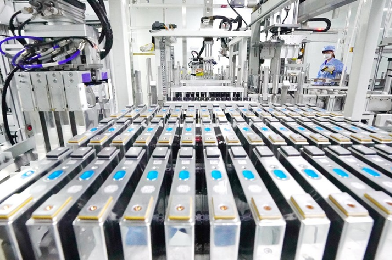
Chinese scientists have announced two major breakthroughs in solid-state lithium battery technology and resolved longstanding bottlenecks that have hindered commercial adoption of this potentially game-changing technology for the new energy vehicle sector.

 The move comes as China tightened its export controls on lithium batteries and synthetic graphite materials, underscoring the nation’s strategic efforts in the global electric vehicle supply chain.

 Researchers at the Institute of Metal Research under the Chinese Academy of Sciences said they have developed a new material that significantly reduces interfacial resistance and improves ion transport efficiency in solid-state batteries — two key challenges that have limited their practicality.

 The team said that flexible batteries made from the new material maintained excellent bending endurance, surviving over 20,000 folding cycles. When used as a polymer electrolyte in composite cathodes, the energy density increased by as much as 86 percent.

 “Such a technology could pave the way for safer and more efficient energy solutions in humanoid robots, electric aviation and electric vehicles,” it said.

 In a separate development, another CAS-led team from the Institute of Physics, in collaboration with other teams, found a new approach that allows all-solid-state batteries to maintain stable electrode contact without relying on bulky external pressure systems. The study was published on Tuesday in the journal Nature Sustainability.

 Prototype batteries built using this technique retained excellent cycling stability over hundreds of charge-discharge cycles under standard testing conditions, outperforming comparable designs, it emphasized.

 China has been accelerating the development of all-solid-state batteries and expects large-scale road tests of such products between 2025 and 2026, with small-batch installation in EVs starting as early as 2027, said a research note by China International Capital Corp (CICC).

 CICC estimates that China’s solid-state battery equipment market could reach 2.5 billion yuan ($340 million) by 2027 and grow at a compound annual rate of 122 percent to 27.3 billion yuan by 2030.

 Major Chinese EV and battery makers — including CATL, BYD and Gotion High-Tech — have already begun pilot production lines, with mass production targets ranging from hundreds of megawatts to gigawatt levels.

 Most leading automakers expect to integrate solid-state batteries into vehicles earlier than expected, as China’s technological advantages and policy support continue to accelerate the commercialization.

 Ouyang Minggao, an academician at the Chinese Academy of Sciences, said the country’s current route for all-solid-state batteries is to develop sulfide-based batteries, which, paired with high-nickel ternary positive and silicon-carbon negative materials, aim to achieve performance targets of 400 watt-hours per kilogram in energy density and life cycles of over 1,000.

 “These advances are expected to facilitate the country’s small-batch installation of all-solid-state batteries by 2027, with large-scale mass production projected by 2030,” said Ouyang, who is also a professor at Tsinghua University.

 He said his team has already collaborated with more than 30 related companies to conduct the development and optimization of large-scale models in the vertical field of all-solid-state batteries.

 All-solid-state batteries offer higher theoretical energy density and safety, and entail lower costs than lithium-ion batteries that currently dominate the EV sector. Hence, many countries consider them a potentially game-changing technology.

 In a further sign of Chinese players’ progress in the sector, Sun Huajun, chief technology officer of BYD Lithium Battery Co Ltd — the battery firm for China’s largest EV maker BYD — said earlier this year at a conference that the company plans to begin small-scale production of sulfide-based all-solid-state batteries by 2027, and these batteries are expected to be incorporated into its mainstream EV models by 2030.

 This timeline places BYD in direct competition with global automakers investing heavily in such batteries, such as Japan’s Toyota, which has been ramping up efforts to take a lead in this field.

 chengyu@chinadaily.com.cn

Article inline ad

Labubu Keeps On Striking The Right Chord

0

By WANG ZHUOQIONG in Shanghai | China Daily | Updated: 2025-10-15

Apple CEO Tim Cook’s unexpected appearance at Pop Mart’s 10th anniversary showcase in China this week sparked both social media buzz and a stock rally.

 During his visit on Monday, Cook toured the “The Monsters” exhibition in Shanghai, met Pop Mart founder Wang Ning and artist Kasing Lung, and was gifted a custom Labubu figurine — a version of the brand’s best-known character — clutching an iPhone. Videos and photos of Cook’s meeting quickly went viral on social media, sending Pop Mart intraday shares up as much as 6 percent to HK$276.8 ($35.6) before paring gains to close at HK$263, with trading volume exceeding HK$4.4 billion.

 The company has reported record sales and a surge in demand for its collectibles across the globe. On Dewu App, a trendy online shopping platform, the Labubu third-generation series, released in April, has been purchased by 580,000 users, with more than 740,000 others listing it as “wanted”. The hidden edition Labubu ID, initially priced at 99 yuan ($13.9), peaked at 4,523 yuan — a 45.7-fold increase — before falling back to around 664 yuan after restocks.

 Strong momentum was also seen in sales of its other intellectual properties such as Twinkle Twinkle and Skullpanda. Many figurines were sold out instantly upon release, driving robust resale premiums. Pop Mart’s first-half 2025 financial report highlights its continued growth. Revenue from Labubu skyrocketed 6.7 times to 4.81 billion yuan, while Skullpanda brought in about 1.2 billion yuan, more than doubling from a year earlier.

 The rise of Pop Mart mirrors a wider wave of Chinese guochao (domestic trend) brands gaining global attention. In the first three quarters, China’s exports of festive supplies, dolls and animal-shaped toys exceeded 50 billion yuan, reaching more than 200 economies, said Wang Jun, vice-minister of the General Administration of Customs.

 Travelers visiting China increasingly treat Labubu as must-buy souvenirs, and international fans have begun showcasing their collections online. China Open men’s singles finalist Learner Tien from the United States, for instance, gave a public shoutout to friends who gifted him Labubu toys during a recent trip in China.

 Labubu has demonstrated strong resilience as an IP, said Tian Lan, analyst at Euromonitor International.

 “Its evolution from picture-book art to plush formats has been a major success, showing a brand that knows how to innovate without losing its core DNA.”

 Pop Mart’s IP strategy has evolved meaningfully in recent years. The company is transitioning from a blind-box seller to a vertically integrated IP incubator, where hits like Labubu and Twinkle Twinkle serve as both growth engines and proof of concept, according to Lan. Twinkle Twinkle, in particular, demonstrates that consistent IP investment can generate sustainable creative and financial returns.

 The company’s growing ecosystem — spanning product, animation, retail experience, and licensing — suggests a scalable model, said Lan.

 “The key will be to maintain portfolio balance and cross-IP differentiation, ensuring that each property contributes to a coherent cultural universe rather than competing for short-term attention,” Lan added.

 Speaking on fast-moving consumer taste in designer toys, Lan said it follows identifiable emotional and cultural patterns rather than pure randomness.

 “Brands that continuously listen, co-create with fans, and express evolving values can capture long-term loyalty even in short-term trend cycles,” Lan said. “What matters is cultural sensitivity and agility, not just predictions. In that sense, the designer toy market remains less about chasing hype and more about building emotional equity over time.”


Article inline ad

Electric Motorbike Firms Rev Up Overseas Production

0

Wuxi’s e-motorbike producers have set up over 20 production bases overseas

China Daily | Updated: 2025-10-13

NANJING — A self-driving electric moped at Yadea’s product display center in Wuxi, East China’s Jiangsu province, showcased both the technological possibilities of autonomous two-wheelers and the company’s expertise in designing and producing green mobility solutions.

 Inside the showroom of this leading Chinese electric two-wheeler brand, a diverse range of electric motorbikes and e-bikes was on display. Among them, a portable, automatically foldable electric bike — almost the size of a handbag — caught the eye of journalists visiting the company’s Wuxi headquarters.

 As a global leader in annual sales of electric two-wheelers, Yadea offers a lineup of high-performance electric motorcycles, mopeds, bicycles and kick scooters. True to its slogan, “A wonderful journey for global users,” the company strives to bring sustainable, green travel solutions to riders around the world.

 According to Shen Yu, executive director of Yadea Technology Group Co Ltd, the company’s sales of various types of e-mobility products reached 8.79 million units in the first half of 2025, with sales revenues reaching 19.1 billion yuan ($2.68 billion), up 33 percent year-on-year.

 “Currently, expanding into overseas markets is a key corporate strategy, and I believe it’s also the consensus of the whole electric motorbike industry here in Wuxi,” Shen said, adding that the company has already invested in production bases in Vietnam, Indonesia, Thailand and Mexico. While some of these facilities have begun operations, others are still under construction.

 Yadea epitomizes the thriving electric motorbike industry cluster in Wuxi, which is also home to other well-known Chinese two-wheeler brands such as TAILG and AIMA.

 In recent years, Wuxi’s electric two-wheeler industry has intensified efforts to explore overseas markets, offering Chinese green technology solutions to benefit consumers and support the global transition to sustainability. Much of this push is reflected in the companies’ overseas investment projects.

 According to data from the local government, more than 160 enterprises in the electric motorbike industrial chain, including both motorbike and component producers, are based in Wuxi’s Xishan district. Over the years, electric motorbike producers headquartered in the district, including Yadea, have established more than 20 production bases overseas.

 Speaking at a press event in the company’s office complex, Wang Jiazhong, Yadea’s senior vice-president, said the company’s current priorities include conducting product adaptation R&D for overseas markets and establishing physical stores where international customers can experience Chinese technologies and products firsthand.

 Wang noted that the company will soon open a new production base in Vietnam, moving from its previously rented facility to a purpose-built site designed to produce two million electric motorcycles annually.

 “Once full-scale production begins, the Vietnam facility is expected to create over 2,000 local jobs. Considering the entire supply chain, along with sales and service roles, we estimate that the sector’s development could generate up to 50,000 jobs,” Wang said.

 According to him, the company’s production base in Indonesia is also planning to expand its capacity, with the project set to begin in the second half of 2026. “If all goes according to plan, we expect the Indonesian facility to generate local jobs on a scale similar to that of the Vietnam base.”

 He also noted that the company hopes to continue establishing production bases and transfer warehouses in additional overseas markets, such as Africa, Europe and Central Asia, where the potential for electric motorbike development is strong.

 According to the Xishan district government, global interest is growing in the technological innovations and intelligent, green travel solutions emerging from China. In March this year, the district hosted an electric motorbike product debut event attended by procurement teams from 21 countries.

 Going forward, the local government said it will continue supporting local electric motorbike companies in expanding international exchanges and strengthening their brand presence.

 Xinhua


Article inline ad

Dahon Carves Niche In Urban Mobility

0

Folding bike manufacturer grows quickly in China on rising consumer interest in flexible commuting solutions

By WANG ZHUOQIONG | China Daily | Updated: 2025-10-15 10:07   

Tina Bian, 31, joined China’s growing community of folding-bike riders this summer when she purchased a Dahon P10 for 4,700 yuan ($658).

 “Folding bikes can fit in the trunk of my car, which really expands my riding routes and makes it easier to go anywhere,” she said. “Dahon has good brand awareness and is more affordable than Brompton, a high-end British foldable city bike brand.”

 She added that Dahon’s wide retail network of physical stores has made the buying experience convenient — “you can visit and ride away directly”.

 Bian now rides to nearby parks after work and explores scenic routes on weekends. “I also play ‘bike delivery’, which has gone viral online — it’s really fun,” she said.

 While “Dahon’s folding mechanism isn’t as smooth as Brompton’s,” she said, “the lower price makes it a fair trade-off”.

 As cycling surges in popularity across China’s cities, domestic brand Dahon has emerged as the go-to “affordable alternative” to Britain’s high-end Brompton bikes — and now it’s taking that momentum to the capital markets.

 On Sept 9, Dahon Technology (Shenzhen) Co Ltd, the company behind the Dahon brand, debuted on the Hong Kong stock exchange, marking a key milestone for the folding bicycle maker.

 Founded in California in 1982 by physicist David Hon, Dahon pioneered the modern folding bicycle and has since evolved into a global name in urban mobility, said the company. The company restructured as Dahon Tech in 2016, and now sees the Chinese market as its main engine of growth.

 Dahon’s revenue surged from 254 million yuan in 2022 to 451 million yuan in 2024, while net profit rose from 31 million yuan to 52 million yuan over the same period. Gross margins have remained stable at around 33 percent, and net margins at about 11.6 percent. In the first four months of 2025, revenue reached 185 million yuan, up 47 percent year-on-year, while net profit climbed 73 percent to 22 million yuan.

 The company credits this rapid growth to the expanding mid-to-high-end folding bike segment in China and rising consumer interest in sustainable, flexible commuting solutions.

 Its prospectus traces the recent turbulence in global cycling demand. The year 2020-21 triggered an outdoor sports boom that sent global bicycle sales soaring. But as inventories piled up, the market entered a correction phase in 2022-23, with folding bike shipments falling from 3.1 million to 2.65 million units. Demand rebounded strongly in 2024, with global folding bike sales recovering to 3.7 million units.

 According to China Insights Consultancy, although folding bikes remain a niche compared with road or mountain bikes, accounting for only about 5.3 percent of global bicycle sales in 2024, the segment is growing fast.

Unlike road or mountain bikes, folding bicycles are designed for compactness and convenience — ideal for daily commuting and mixed transport systems. Dahon has rolled out more than 70 models spanning urban, sports, high-performance and electric folding bikes.

 The company also sees new potential beyond daily commuters.

 In July, Dahon launched its P18 Ultra racing-style model, priced at 5,798 yuan, featuring a drop-bar design and a cruising speed of 35 km/h. The company said the model “fits in the trunk, enabling seamless connection between urban and outdoor environments”, signaling an effort to merge portability with performance and appeal to more advanced riders.

 Dahon’s sales mix has shifted noticeably in recent years. Midrange models priced between 2,500 and 5,000 yuan now dominate, contributing 69.5 percent of revenue in 2024 — up from 50.6 percent in 2022. Entry-level models under 2,500 yuan have declined, while high-end models above 5,000 yuan continue to represent around 10 percent of sales.

 The company plans to open 50 directly operated stores, 80 in-store shops and 70 franchised outlets across the Chinese market this year. In addition to the expansion of offline stores, Dahon has aggressively upscaled online sales through platforms such as JD.com and Tmall. Its direct online sales jumped from just 14 million yuan in 2022 to nearly 100 million yuan in 2024 — a compound annual growth rate of over 160 percent. Online channels now account for more than 40 percent of total revenue.

 Still, challenges loom. Many bike retailers that rushed into the market during the 2020-21 cycling boom are now struggling with inventory overhang as the frenzy cools. Dahon warned that excessive dealer stock could pressure future sales and cash flow.

 CIC data show that Dahon commands a 26.3 percent share of China’s folding bike retail volume and 36.5 percent of retail sales, alongside a 5.6 percent global market share. Its bestselling P8 model has long been among China’s top folding bikes.

 The sector is among the rising segments of outdoor sports. According to Mintel China, outdoor cycling has a participation rate of 37 percent, and has been ranked No 6 among 22 sports surveyed overall.

 Outdoor sports entered a stable stage recently after explosive growth earlier, with riding and water sports seeing a slight surge last year, according to the report.

 China remains the world’s largest bicycle manufacturer and exporter, though its domestic market is still dominated by international brands in the premium segment.


Article inline ad

Sany Heavy Fire Truck Tech Heats Up Expo

0

By Zheng Yiran | China Daily | Updated: 2025-10-15

Fire trucks that can extinguish blazes as high as 159 meters and smart rescue robots that detect and fight conflagrations automatically are just some examples of China-made firefighting and protection equipment that demonstrate the prowess of domestic manufacturing.

 During the ongoing 2025 China International Fire Protection Equipment Technology Conference and Exposition in Beijing, a Guinness World Record-breaking five-axle 100-meter water tower fire truck JP100 attracts attention. Previously, fire protection equipment worldwide could only extinguish fires lower than heights of 120 meters. The JP100, launched by Chinese equipment manufacturer Sany Heavy Industry, has now raised the threshold height to 159 meters.

 A smart rescue robot is also attracting eyeballs. With an investment of 138 million yuan ($19.3 million), the robot can automatically detect flames, make decisions and carry out firefighting tasks. It is able to walk, cross obstacles over 30 centimeters tall and climb gradients of over 40 degrees.

 Moreover, the smart rescue robot can operate for more than two hours straight in environments with oxygen deficiency, high temperatures, and the presence of heavy smoke and toxic fumes. The remote command center adopts multimodal fusion communication, which can penetrate walls more than 3 meters thick and cover a range of over 1,000 meters. It is embedded with various intelligent algorithms such as resource scheduling, task grouping and multi-machine collaboration, raising rescue efficiency by 60 percent, the company said.

 Fang Jianxian, general manager of industry news outlet lmjx.net, said: “The level of fire protection equipment in China has made a quantum leap in development in the past 20 years, and is currently in a critical stage of moving from ‘following’ to ‘running parallel’, and moving toward ‘leading’ in some fields. Equipment made in China already meets the vast majority of domestic fire protection needs. We have a complete range of equipment, significant cost advantages and extremely high cost-effectiveness. The most complex application scenarios have also spawned a large number of product innovation achievements.”

 In recent years, with the acceleration of urbanization and the rise of public awareness of the importance of fire protection, demand for firefighting products and services has been growing dramatically. Beijing-based research firm huaon.com showed that in 2015, China’s fire protection market totaled 235.5 million yuan. In 2023, this had surged to 468.3 billion yuan, growing at a compound annual growth rate of 8.97 percent.

 Xiao Qiaowei, head of Sany’s emergency equipment research institute, said: “Firefighting is a special field. Chinese companies are more active in technical innovation. As an industry leader, Sany will strive to make innovations, constantly improve reliability and safety, and bring out better firefighting equipment.”

 Fang from lmjx.net said: “Improving the manufacturing level of firefighting equipment is a systematic project that requires joint efforts from the government, industry, enterprises and research institutions. The key is to continuously strengthen basic research and core technology breakthroughs, promote intelligent and digital transformation, improve the standards system, strengthen quality supervision and support enterprises going global.”


Article inline ad