Wednesday, November 25, 2026

Home Blog Page 164

Forex Reserves Hit Highest Level In Decade

0

By ZHOU LANXU | CHINA DAILY | Updated: 2025-10-08

China’s foreign exchange reserves stood at the highest level in a decade in September, underscoring the country’s growing economic resilience in the face of external shocks, official data revealed on Tuesday.

 At the same time, official gold reserves rose for the 11th consecutive month, a trend experts said is likely to continue as the country optimizes its reserve structure amid waning confidence in the US dollar.

 The country’s foreign exchange reserves increased for the second month in a row in September to $3.3387 trillion, up 0.5 percent or $16.5 billion from the previous month, the State Administration of Foreign Exchange said on Tuesday.

 The $3.3387 trillion in reserves marked the highest level since November 2015, when it stood at $3.4383 trillion, according to the foreign exchange regulator. The administration said China’s steady economic performance and high-quality development will continue to help keep its foreign exchange reserves generally stable going forward.

 Guan Tao, global chief economist at investment bank BOCI China, said that China’s foreign exchange reserves hitting their highest level since late 2015 highlights the country’s growing capacity to withstand and address external shocks.

 Guan said the latest increase was largely driven by the appreciation of global financial assets, while the US Federal Reserve’s interest rate cut in September led to slight fluctuations in the dollar. Fluctuations in the dollar change the value of non-dollar reserves in dollar terms.

 Wen Bin, chief economist at China Minsheng Bank, said the rise in foreign exchange was also the result of the country’s export resilience and the rising appeal of renminbi financial assets.

 Diversified trading partners, an optimized product structure and progress in trade talks with the United States have all helped exports remain the cornerstone for stabilizing cross-border capital flows, Wen said, adding that broader access for overseas investors to onshore securities is set to further strengthen the renminbi’s international appeal.

 Despite global trade uncertainties, the country’s exports in goods went up 7 percent year-on-year to $1.7 trillion in the first half of the year, according to the balance of payments data released by the State Administration of Foreign Exchange, leading to a trade surplus in goods of $456.7 billion.

 The data also showed that net overseas investment inflows into onshore securities reached $37.3 billion in the same period, surpassing the $26.6 billion for the whole of 2024, with equity investment accounting for three-quarters of the amount.

 The administration said the country’s official gold reserves came in at 74.06 million ounces at the end of September, up from 74.02 million ounces a month earlier, marking the 11th consecutive month of increase.

 This happened as international gold prices hit record highs amid expectations of the US Fed’s rate cuts and doubts about its policy independence. The US government shutdown further eroded confidence in the dollar and increased safe-haven demand, sending COMEX gold futures — a benchmark for international gold prices — to a record high of $4,000.1 during Tuesday’s trading.

 Wang Qing, chief macroeconomic analyst at Golden Credit Rating International, said the general trend of China’s central bank increasing gold holdings may continue in order to optimize its reserve structure as international gold prices may remain on an upward trajectory for an extended period.

 According to Wang, September saw the smallest addition to China’s gold reserves since purchases resumed in November 2024, with gold making up 7.7 percent of the country’s total international reserves — mainly foreign exchange and gold — versus a global average of 15 percent.

 Wang added that the rising holdings of gold would also facilitate renminbi internationalization, while the country’s ample foreign exchange reserves will provide crucial support for maintaining the renminbi exchange rate at a reasonable and balanced level.

 zhoulanxv@chinadaily.com.cn

Article inline ad

New Policy Targets EV Exporters

0

Mandate requiring licenses to ship abroad helps protect Chinese brands

By LI JIAYING and WANG KEJU | China Daily | Updated: 2025-10-07 

China’s move to bring exports of pure electric passenger vehicles under a licensing regulation is expected to enhance overseas user experience and protect brand reputation by ensuring stronger quality control, better after-sales services and a more orderly export environment, industry experts said.

 “By standardizing exporters and procedures, the new policy will help control the outflow of low-quality products from the source and encourage automakers to shift from a ‘volume-driven’ to a ‘quality-driven’ growth model,” said Cui Dongshu, secretary-general of the China Passenger Car Association.

 The comments followed a joint announcement by the Ministry of Commerce, the Ministry of Industry and Information Technology, the General Administration of Customs and the State Administration for Market Regulation on Sept 26, which stated that exports of pure electric passenger vehicles equipped with vehicle identification numbers will be subject to licensing requirements from Jan 1, 2026.

 “The core goal of licensing is to close loopholes by imposing strict qualification thresholds, directly restricting unauthorized entities and preventing quality risks caused by intermediaries,” Cui said.

 Cui noted that in earlier years, many exported pure EVs were low-speed cars without VINs, which partly explained the less stringent management standards at the time.

 A VIN identifies a specific vehicle, providing detailed information about its manufacturer, model year, place of assembly and specifications.

 “Today, EVs with VINs have become mainstream in the pure EV category, and Customs authorities have already begun standardized classification, laying the foundation for more regulated export management,” he said.

 According to data from the General Administration of Customs, from January to August this year, exports of pure EVs with VINs reached 1.082 million units, with a total value of 159.5 billion yuan ($22.4 billion). Over the same period, the number of all pure EV exports totaled 2.253 million units worth a combined 294.8 billion yuan.

 The new rules specify that only automakers and their authorized distributors may apply for licenses, and they may only export vehicles of their own brands.

 “At present, some unauthorized firms purchase vehicles in the domestic market and ship them to overseas destinations with no after-sales support, in order to bypass marketing and service costs. This undermines both user experience and the image of Chinese brands,” said Wu Songquan, senior chief expert at the China Automotive Technology and Research Center.

 An excessive number of exporters crowding the same overseas markets may also lead to homogeneous competition and price wars, Wu added.

 “Designating automakers as the major responsible entity will push them to build rigorous quality systems and exercise price discipline with a long-term view,” he said.

 Wu stressed that direct participation in overseas markets will also enable carmakers to adapt products locally and ensure sustained service.

 “When automakers integrate overseas markets into their value chains, they will increase research and development, tailor products for local demand and set up full-cycle service networks — from local parts depots and professional training to multilingual support and extended warranties — creating a seamless user experience and strengthening overall brand reputation,” Wu said.

 Cui Fan, a professor of international trade at the University of International Business and Economics in Beijing, said that by regulating the flow and quality of vehicles entering international markets, China is also reacting to international EV markets that are marked with growing protectionism and friction.

 It positions the country not just as a dominant manufacturer, but also as a responsible and predictable player in the global trade of tomorrow’s automobiles, Cui from UIBE said.

 “When you can demonstrate controlled, rules-based exports, it changes the narrative. It becomes harder for partners to argue against managed trade when you are already managing it yourself,” he added.

 To further protect export orders and provide higher-quality products for overseas markets, the policy also requires exporters to meet certain conditions, including being listed in the Ministry of Industry and Information Technology’s vehicle production catalog, holding valid CCC certifications and maintaining after-sales service capabilities aligned with their export scale. Automakers and their authorized partners must also share legal liability for quality assurance and after-sales service of exported vehicles.

 “By strictly reviewing qualifications, the policy will effectively limit exports by small manufacturers with weak technology and insufficient service capabilities abroad, raising the overall quality of China’s EV exports,” Wu said.

 Contact the writers at lijiaying@chinadaily.com.cn

Article inline ad

Huawei Unveils New Smartwatches And Ear-Clip Headphones

0

By Cheng Yu | chinadaily.com.cn | Updated: 2025-09-30 14:00

Huawei Technologies has launched a new line of wearable and audio products, including smartwatches and headphones, as the Chinese tech giant looks to strengthen its presence in the consumer electronics market.

 The Watch GT 6 series features a 46mm model with up to 21 days of battery life and upgraded health monitoring features.

 Huawei said the devices use a new high-silicon stacked battery and an enhanced positioning system that improves location accuracy by 20 percent compared to the previous generation.

 In addition, Huawei launched the FreeClip 2, an ear-clip style wireless headphone available in denim blue, feather white and modern black.

 The device supports voice assistant functions through Huawei’s HarmonyOS AI system, offering real-time translation, smart notifications and head-movement controls.

Article inline ad

Smart Tech Underlined For Stronger E-Commerce

0

By CHEN HONG in Shenzhen | CHINA DAILY | Updated: 2025-09-30 09:52

The cross-border e-commerce sector, which increasingly relies on artificial intelligence, must address critical challenges in the areas of governance, standards and compliance to support its robust global growth, leading experts said in Shenzhen, Guangdong province, on Friday.

 They also highlighted other issues, such as imbalances in digital infrastructure across countries and regions, policy differences and a lack of AI technology regulation, during a symposium on international cross-border e-commerce sponsored by the World Internet Conference.

 “We aim to leverage AI for better governance in cross-border e-commerce by developing a practical framework and adopting an open approach to international standards,” said Kim Kichan, chair of the Organization for Trade Development and Standards Cooperation and the International Council for Small Business.

 Kim stated that the standards could foster innovation and fairness, particularly benefiting vulnerable small and medium-sized enterprises.

 He proposed that an efficient AI governance system could ensure market fairness, data transparency and privacy protection. Additionally, he emphasized the need to establish a global standard for interaction, recognition and trust mechanisms to assist SMEs in navigating complex regulations, while also recommending developing low-cost, easily accessible AI tools to empower SMEs and create a fair competitive environment.

 Kim said Shenzhen, with its strong digital economy, numerous AI companies, supportive policies and extensive international trade network, could serve as an ideal testing ground for developing accessible AI solutions for compliant cross-border e-commerce.

 Jane Drake-Brockman, co-convenor of the Asia Pacific Services Coalition, said that the provisional outcomes of the new agreement on e-commerce by the World Trade Organization might be announced at the WTO Ministerial Conference in Cameroon early next year.

 It is expected to cover key areas such as Customs process optimization, electronic authentication, electronic payments and the prohibition of tariffs on electronic transmissions, said Drake-Brockman.

 She believes that the introduction of the new agreement will address the current situation of fragmented regulations among countries and the lack of global trade governance, which are hindering industry development.

 The current growth rate of global trade in services is about twice that of goods trade, with digital service trade accounting for over half of total global service exports, reaching 54 percent in the Asia-Pacific Economic Cooperation (APEC) region.

 Xue Hong, vice-chair of the World Internet Conference Cross-Border E-Commerce Working Group and a professor at Beijing Normal University, emphasized that compliance is the cornerstone of the healthy development of cross-border e-commerce.

 Xue pointed out that AI-automated trading systems give rise to AI contracts in code form, such as smart contracts, which present challenges to existing contract law due to their non-human-readable nature.

 Regarding the data compliance risks in training large AI models, she suggested that companies adopt a federated learning approach, deploying models across decentralized data sources.

 This approach allows for model upgrades through the sharing of insights and knowledge rather than centralizing data, thereby integrating compliance requirements into the technical design phase and balancing transactional needs with legal compliance.

 chenhong@chinadaily.com.cn

Article inline ad

AI Spurs Gene Therapy, Drug Development

0

Technological innovation in China leading to more pharma cooperation

By LI JING | CHINA DAILY | Updated: 2025-09-30 09:34

From the discovery of novel drug candidates to the delivery of advanced genetic therapies, enterprises are beginning to show how artificial intelligence can generate breakthroughs that may reshape the global pharmaceutical landscape. As AI shifts from concept to clinical testing in life sciences, China is emerging as one of the strongest drivers of this transformation.

 That momentum was reflected in MIT Technology Review’s 2025 “50 Smartest Companies” list, also known as the TR50, which highlights firms that combine technological breakthroughs with market foresight. Life sciences ranked among the top four sectors, with a notable rise of companies integrating AI and biotech in transformative ways.

 One example is Insilico Medicine, a global AI-driven company that has built its key research and development team in Shanghai. Its return to the TR50 reflects an evolution from a single milestone to a scalable model. In 2022, it gained international attention when an AI-designed drug for idiopathic pulmonary fibrosis entered clinical trials. The breakthrough, featured in Nature Biotechnology, showed that AI could compress both the time and cost of early-stage research.

 “In 2022, our recognition was for a singular, groundbreaking achievement,” said Alex Zhavoronkov, founder and CEO of Insilico Medicine. “By 2025, the recognition was no longer for a single project, but for the proven replicability of our AI platform and the sustainability of our business model.”

 The progress is clear. Insilico has nominated more than 20 pre-clinical candidates, secured 10 Investigational New Drug Application approvals, and advanced seven programs into clinical development. Its lead therapy became the first AI-discovered drug worldwide to demonstrate efficacy in a phase 2a trial, an industry milestone, even as further studies are needed to confirm long-term safety and effectiveness.

 Zhavoronkov described the company’s long-term vision as “Pharmaceutical Superintelligence”, a multimodal AI system capable of designing medicines end-to-end. “Imagine an autonomous AI system that operates as the ultimate drug hunter. When faced with any disease, it will independently engineer the optimal therapeutic solution,” he said.

 If drug discovery is one side of the equation, delivery is the other. In this space, Beijing-based biotech unicorn METiS TechBio has captured attention with its debut on the TR50. The company’s Nano-Forge platform uses AI to design lipid nanoparticles (LNPs) that deliver RNA and gene-editing therapies directly to specific organs.

 The results have been significant. METiS reports liver-targeting LNPs that exceeded clinical benchmarks and advanced into human trials, lung-targeting systems that carried mRNA into alveolar cells in primates, and first-in-class LNPs for heart and skeletal muscle tissue, which could open new treatment paths for genetic heart conditions and muscular dystrophy.

 “Delivery is the rocket of modern biotech. We’re building the rockets that will carry tomorrow’s therapeutic satellites,” said Chris Lai, co-founder and CEO of METiS TechBio. Lai said rising investor confidence is fueling closer collaboration between Chinese and foreign firms.

 The rise of such players reflects the maturing of China’s innovation ecosystem. According to Stanford University’s AI Index 2024, the country accounted for 61.1 percent of global AI patent filings in 2022, far ahead of the United States at 20.9 percent. Analysts point to a decade of sustained investment in AI talent, biomedical research and supportive policies as the foundation for this acceleration.

 “The convergence of AI and life sciences was inevitable,” Zhavoronkov said. “China’s accumulated strengths in both fields are now producing paradigm-shifting momentum.” He said China is moving beyond “model innovation” toward “foundational innovation”, a more difficult but enduring form of progress.

 Wang Hongwei, professor at the School of Life Sciences and vice-president of Tsinghua University, said: “With the rapid development of AI, we have seen an increasing number of multinational pharmaceutical corporations working with emerging biopharmaceutical companies in China, in early drug development, as well as diagnosis and treatment. This kind of collaboration has already been formed as an innovative ecosystem in China.”

 lijing2009@chinadaily.com.cn

Article inline ad

AI Making Banking More Accessible, Professional

0

By Jiang Xueqing | China Daily | Updated: 2025-09-27 09:23

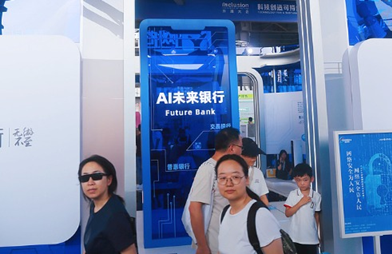
Artificial intelligence’s potential to make financial services more professional and accessible drew wide attention at the International Forum for China Financial Inclusion 2025, which closed on Thursday in Beijing.

 Ma Xiaohang, general manager of MYbank’s information technology department, told the forum that advances in large AI models — particularly in reasoning, tool use and data processing — are enabling breakthroughs. “This gives us confidence that more professional financial services can indeed become more inclusive,” he said.

 Earlier this year, MYbank, a digital bank using data-driven lending to serve small and micro enterprises, unveiled its AI banking strategy, aiming to act as “the CFO for every small business” while equipping each bank employee with an intelligent assistant.

 MYbank’s AI applications over the past year have focused on three areas: risk management in lending, customer operations and services, and wealth management. The bank is developing AI assistants for credit approval, capable of streamlining industry research, due diligence and loan assessment.

 “In the past, developing industry knowledge and building a risk framework could take experts one to two months. With AI, we can now automate data collection, build analytical frameworks and identify the key risk factors of an industry in minutes,” Ma said. He added that AI-powered due diligence tools, including video and photo verification, are helping the bank better assess client operations and risks in the absence of physical branches.

 MYbank primarily serves small and micro enterprises with loans under 2 million yuan ($280,370). Ma noted that the bank’s AI-generated credit limits now align with expert assessments in roughly 90 percent of cases. He stressed that computing power, proprietary data, and specialized models will be essential for applying large AI models in financial services.

 Bank of Jiangsu is also pushing forward with AI adoption. Since early 2023, the bank has explored building large models, and it accelerated deployment after the release of an open-source reasoning model developed by Chinese AI startup DeepSeek in January.

 Shi Cheng, general manager of Bank of Jiangsu’s inclusive finance and technology finance departments, said AI is mainly being applied in business strategy, risk control and operations. For example, AI now identifies low-risk, high-value small business clients by analyzing years of customer data.

 “We have AI analyze the characteristics and profiles of low-risk, high-value small and micro enterprise clients identified through each data run. Then, we broaden our perspective to the entire market, exploring new avenues while building upon our existing business direction,” he said.

 In risk prevention, the bank uses AI to detect potential fraud scenarios by learning from past cases. In operations, an AI-based contract review reduces processing time from minutes to seconds.

 Liu Xiaochun, affiliate professor at the Shanghai Advanced Institute of Finance at Shanghai Jiao Tong University and vice-president of the Shanghai Finance Institute, said that despite the recent surge of interest in AI, financial institutions have remained calm, unlike the more impulsive embrace of the earlier Internet Plus wave. He noted that institutions are carefully examining the specific features of different AI technologies and assessing whether they can address issues of efficiency or cost.

 Liu stressed the importance of understanding the relationship between AI and human beings, emphasizing that people must always come first, since AI is ultimately developed by humans.

 “When a bank adopts AI, it is the bank that decides how to use it and what problems AI should solve,” he said. “Technology can reduce the need for manual work, but that does not mean people are unimportant.”

 Reflecting on financial innovation, Liu said that despite evolving from internet finance to fintech, digital finance, and now AI, the problems they address are quite similar and the challenges remain largely the same — especially the “last mile”. He cautioned against exaggerating AI’s capabilities, stressing that it is people who ultimately solve problems, and only with clear understanding can AI be used effectively.

 jiangxueqing@chinadaily.com.cn

Article inline ad

Digital Employees Set To Redefine Workforce Organization

0

By FAN FEIFEI | CHINA DAILY | Updated: 2025-10-04 07:51

Chinese tech companies are banking on digital employees powered by artificial intelligence agents to enhance productivity, liberate people from repetitive work and bolster digital transformation in an era of rapid development of AI technology.

 As AI is increasingly leveraged to identify people’s needs and solve problems, digital workforces are becoming the core carriers for reconstructing the organizational forms of enterprises, and driving revolutionary changes in productivity, industry experts said.

 An AI agent refers to a system or program that is capable of autonomously performing tasks on behalf of a user or another system by designing its workflow and utilizing available tools.

 AI agents are more advanced than chatbots because they not only provide suggestions or answers, but autonomously execute complex actions across a multitude of industries, thus delivering tangible results.

 The capabilities of large language models are evolving and advancing at unprecedented speed, said Ruan Yu, vice-president of Baidu, emphasizing that the accelerated evolution of models is driving AI to shift from a human-machine collaboration model to an AI agent form.

 An increasing number of new types of workers will emerge in people’s daily work, and AI agents will participate in all aspects of enterprise operations in the form of “digital employees”, Ruan said.

 The company has launched the first batch of AI-powered digital employees, covering core business functions such as marketing managers, car salespersons, promotion specialists, product managers, course advisers and recruitment specialists.

 It will create more digital employees for various positions, while expanding the application scenarios of such employees across various fields, including education, automobiles, finance and fast-moving consumer goods.

 According to a report released by Beijing-based market research firm EO Intelligence, the market scale of AI agent marketing and sales in China stood at 44.2 billion yuan ($6.2 billion) in 2024, and this is expected to reach more than 1 trillion yuan in the next five years.

 AI agents have immense growth potential in the field of application and development, said Zhu Guangxiang, head of Baidu’s Miaoda product.

 Although they will replace some repetitive and mechanical job positions, new employment demand will be created and people can shift their focus to more creative work, Zhu said.

 He added that AI agents have different areas of expertise and complete various tasks by combining different sectors and professional fields. As the new carriers of content, information and services, AI agents are approaching a tipping point of explosive growth.

 Global consultancy Gartner said AI agents will augment or automate 50 percent of business decisions by 2027. This integration will enhance decision flows by handling complex analysis and data retrieval.

 It added that AI agents can plan and automate tasks, make informed decisions and interact with their surroundings. Tech service leaders can help clients revolutionize their operations by integrating AI agents into offerings that are configured with components designed for their primary purpose.

 “We’re entering a new era where AI agents will take on real work at scale,” said Wang Guanchun, chairman and CEO of Chinese intelligent automation platform Laiye.

 There exist huge opportunities to bolster the application of AI agents in a wide range of sectors like manufacturing, Wang said.

 Wang said that all Fortune 500 companies will have more digital workers than human employees and 90 percent of knowledge work will be executed autonomously by AI agents, while emphasizing that human society will enter an era of the AI agent economy.

 Laiye has built solutions via chatbots, robotic process automation and document automation. Its value proposition is to empower every employee with AI agents, boost productivity and creativity, and build a future-ready workforce for businesses.

 Wang said the company has been engaged in the “digital employees” landscape for several years, and with the stronger inference and planning capabilities of large language models, AI agents have become the carriers of new digital workers.

 It is ramping up efforts to accelerate the digital transformation from robotic automation to intelligent automation with AI agents.

 As customers increasingly leverage AI-powered agents to initiate, manage and negotiate service requests on their behalf, service teams must adapt to this transformative shift, embracing new roles and skills to effectively collaborate with these intelligent systems, said Daniel O’Sullivan, senior director analyst of the Gartner Customer Service & Support Practice.

Article inline ad

AI Driving Transformation Of Consumer Electronics

0

State-of-the-art digital tech reshaping competitive landscape of household appliances market, significantly improving production efficiency of manufacturing enterprises

By FAN FEIFEI | CHINA DAILY | Updated: 2025-10-04 07:47

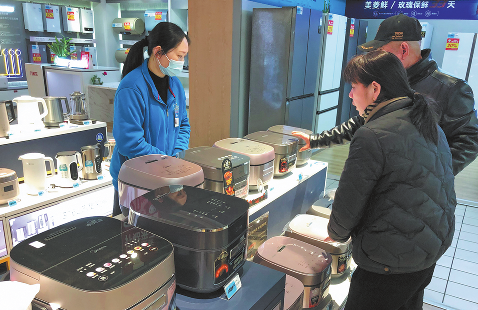
 Shoppers browse smart electric cookers at a store in Changzhou, Jiangsu province. CHINA DAILY

Air conditioners that automatically control the humidity and temperature of a room, based on artificial intelligence-powered voice interactions and machine learning ability to track consumer habits, have already become part of people’s daily lives in China.

 Nowadays, people can play games, engage in physical exercise, make purchases online and have video chats with friends and family members via intelligent televisions.

 Thanks to the rapid development of AI, an increasing number of home appliances can be controlled through voice commands and facial recognition, helping to better understand and satisfy the personalized and diversified demands of users.

 Experts said rapidly evolving artificial intelligence is expected to create new consumption growth drivers and inject strong impetus into China’s home appliance industry, as the cutting-edge digital technology spearheads a new wave of technological revolution and industrial transformation.

 AI is not only playing an increasingly pivotal role in boosting productivity and reshaping the competitive landscape in the household appliances market, but also driving the transformation and upgrade of the traditional manufacturing sector, they said.

 The State Council, China’s Cabinet, recently issued a guideline on deeply implementing the “AI Plus” initiative. According to the guideline, the country will promote the use of AI in science and technology, industrial development, consumption, people’s well-being, governance capability and global cooperation.

 By 2027, China will extensively and deeply integrate AI in six key sectors, with the penetration rate of new-generation intelligent terminals and AI agents surpassing 70 percent, and this figure will exceed 90 percent by 2030, the guideline said.

 The country has recognized AI as essential to fostering new quality productive forces and activating new growth drivers. Leading Chinese consumer electronics and home appliance makers are racing to incorporate AI technology into manufacturing, products and services.

 AI is reshaping the industrial landscape and will be the biggest technological revolution in the next 50 years, said Zhou Yunjie, chairman and CEO of Chinese home appliance giant Haier Group. “At present, the deployment of AI in enterprises is mainly concentrated on manufacturing, research and development, sales, procurement and services.”

 Highlighting that every industry will integrate with AI, and any enterprise that does not embrace AI will eventually be weeded out, Zhou noted that the integration of AI models with home service robots and terminal devices will create new growth drivers for the global consumer electronics industry.

 The company has invested heavily in developing large language models and is promoting the adoption of AI in a wide range of fields such as household appliances and industrial internet, he said.

 AI models tailored for the smart home domain represent key infrastructure supporting transformation of the traditional home appliances sector, he added.

 Li Dongsheng, founder and chairman of Chinese consumer electronics manufacturer TCL Technology Group Corp, said, “The application of AI in the high-tech manufacturing sector will bring about greater value than its use in terminal products, as this state-of-the-art digital technology will significantly improve the production efficiency and competitiveness of China’s manufacturing enterprises.”

 Li said AI is increasingly embedded into intelligent production lines, product research and development, and terminal devices, which will further bolster the development of China’s high-tech manufacturing sector.

 “We established an AI research and development center in Poland in 2018. Prior to that, we set up an R&D center in the United States in 2011. As a manufacturing enterprise, we will focus more on the application of AI,” Li said.

 He said China’s breakthroughs in LLMs, along with the meteoric rise of Chinese AI startup DeepSeek, have enabled it to rapidly catch up with the United States in the AI segment, while surpassing most other developed economies in terms of AI application.

 This year’s Government Work Report stated that under the “AI Plus” initiative, the nation will work to effectively combine digital technologies with its manufacturing and market strengths, support the extensive application of large-scale AI models, and vigorously develop new-generation intelligent terminals and smart manufacturing equipment.

 According to a report by China Merchants Securities, the market scale of the smart home devices sector in China will reach 952.3 billion yuan ($133.9 billion) in 2025, with the penetration rate of AI technology exceeding 50 percent. In the next 10 years, smart household appliances will experience explosive growth.

 “We are pushing forward the integration of AI with data and speeding up the industrial use of AI,” said Liu Jiang, chairman of Sichuan Changhong Electronics Holding Group Co Ltd.

 The company is leveraging AI to inspect the quality of machines and components to facilitate the automation and intelligent upgrade of equipment and improve the efficiency of production lines, Liu said.

 Changhong has applied AI technology into areas such as manufacturing, operations and products. It has unveiled plans to establish 66 AI-powered intelligent factories worldwide, and has rolled out AI televisions equipped with LLMs that support multimodal interaction functions including voice, gesture and expressions.

 Hisense Group said its Xinghai large language model is deeply integrated with DeepSeek, and with enhanced deep thinking and reasoning abilities, its smart TVs can better understand user demands, and provide them with a more natural interaction experience.

 Statistics from Beijing-based consultancy All View Cloud, which focuses on the home appliances sector, showed that the sales of home appliances in China reached 907.1 billion yuan last year, up 6.4 percent year-on-year, a fresh record.

 China’s AI sector will make big strides in the next 10 to 15 years, with its market size reaching 1.73 trillion yuan by 2035, accounting for 30.6 percent of the global total, said market research company CCID Consulting.

 Gree Electric Appliances, a major Chinese home appliance manufacturer based in Zhuhai, Guangdong province, has embedded its own proprietary model framework into DeepSeek R1 and plans to build an industry-specific AI model based on DeepSeek.

 Dong Mingzhu, chairwoman of Gree, said the company will bolster the integration of image and voice recognition and other AI technologies with home appliance products, and expects the application of AI in air conditioners to contribute to energy conservation.

 “The rise of AI technology will offer better human-machine interaction capacities and advance the intelligent transformation of the traditional home appliances sector, while unleashing immense consumption potential,” said Liu Fei, research director of the consumer electronics department at All View Cloud.

 Chinese consumers have shown increased demand for high-quality and smart home equipment along with the iteration and upgrade of product functions and technologies, Liu said, adding that the accelerated adoption of AI in household appliances will further stimulate consumers’ purchasing appetites, thereby expanding domestic demand and shoring up the economy.

 However, some challenges and difficulties have cropped up in the development of smart home devices, Liu said.

 AI-powered home appliance products made by different manufacturers usually cannot be connected, and they still rely on foreign suppliers for high-end smart chips, Liu said.

 Hong Yong, an associate research fellow at the Chinese Academy of International Trade and Economic Cooperation, said the adoption of AI can reduce production costs, improve the quality of products and optimize resource allocation, thus bringing about huge economic benefits.

 He added that the new type of consumption is mainly driven by technological advancements in AI, with a focus on consumers’ personalized and diversified needs.

 Midea Group is bolstering the application of AI technology in intelligent manufacturing, smart home, robotic and healthcare segments.

 Zhong Zheng, vice-president of Midea, called for stepping up R&D investment in AI, especially in core technologies in key fields, establishing a data security and privacy protection system, and strengthening the training of high-caliber AI talent.

 Liang Zhenpeng, an independent consumer electronics analyst, said that as smart air conditioners precisely adjust room temperatures and TVs recommend and broadcast programs in accordance with the preferences of consumers, household appliances have turned into people’s companions.

 China’s smart home industry is developing by leaps and bounds, fueled by advances in cutting-edge technologies represented by AI, Liang said, adding that home appliances are creating a more comfortable and smarter home environment for residents with the help of AI.

 Liang noted, “The emergence of AI technology will better facilitate the conversational interaction between human beings and home appliance products. Along with people’s increasing desire for a high-quality life, the AI-enabled smart home sector has a promising future.”

 Zhu Keli, founding director of the China Institute of New Economy, stressed on the need for Chinese home appliance enterprises to improve computing power by establishing high-performance computing centers and elevating algorithm design to boost the utilization efficiency of computing power.

 fanfeifei@chinadaily.com.cn


Article inline ad

China’s Landmark Trade Corridor Cargo Volume Jumps 70.3% In First Three Quarters

0

Xinhua | Updated: 2025-10-02 11:07

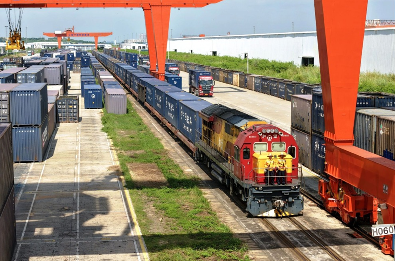
NANNING – Cargo volume on the New International Land-Sea Trade Corridor surged 70.3 percent year on year to 1.09 million twenty-foot equivalent units (TEUs) in the first three quarters of this year, according to the China Railway Nanning Group Co, Ltd.

 “This year has seen the fastest growth in cargo volume since the launch of the intermodal rail-sea service, with the one-million-TEU milestone achieved in just 247 days,” said Zhao Jian with the China Railway Nanning Group. “Given the current growth momentum, the annual volume is expected to exceed 1.3 million TEUs.”

 As of the end of August 2025, the range of goods transported via the trade corridor had expanded to 1,316 categories, encompassing dozens of major types — including electronic products, vehicles and auto parts, machinery and food — and had fostered new growth drivers for high-quality development in the western region.

 “Since the beginning of this year, new energy vehicles manufactured by companies in Chongqing and Chengdu have been frequently shipped overseas via the trade corridor,” Zhao added.

 The rail-sea intermodal trains of the New International Land-Sea Trade Corridor now reach 75 cities in 18 provinces of China, connecting to 577 ports in 127 countries and regions worldwide.


Article inline ad

China’s AI Industry Thrives With Over 5,300 Enterprises

0

Xinhua | Updated: 2025-10-02 10:40

BEIJING – China’s artificial intelligence sector has seen robust growth, with the number of enterprises exceeding 5,300 as of September, accounting for 15 percent of the global total, according to the China Academy of Information and Communications Technology.

 The industry’s scale exceeded 900 billion yuan ($126.7 billion) in 2024, a year-on-year increase of 24 percent, the data showed.

 The country’s AI sector has established a complete industrial chain spanning the foundational infrastructure, model architecture and industry applications. In 2024, the revenue of these three segments increased 54 percent, 18 percent and 13 percent year-on-year, respectively, according to the academy.

 It added that smart hardware represented by AI-powered phones, computers and cars is experiencing rapid growth.

 China has made sustained efforts to promote the digital economy’s transformation into a smart economy and an intelligent society. Earlier this year, the country published a set of guidelines on deeply implementing the “AI Plus” initiative, aiming to strengthen AI supportive infrastructure and accelerate the integration of AI technology across economic and social domains.

Article inline ad