Wednesday, November 25, 2026

Home Blog Page 165

Craftsman Turns Unique Hobby Into Best Seller

0

By LI JING in Beijing and LIU KUN in Wuhan | CHINA DAILY | Updated: 2025-09-30 10:09

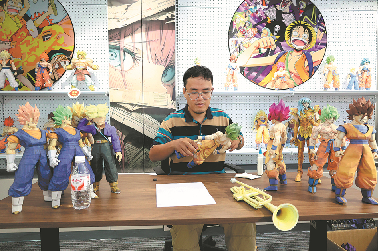
In one corner of China (Ezhou) Cross-border E-commerce Industrial Park in Hubei province, an artisan’s meticulous craft catches the eyes of international buyers. On a pedestal stands an intricately created mecha robot, seemingly crafted with the precision of a 3D printer. However, 3D-printers weren’t utilized at all. Every panel, joint and curve was hand-cut from ordinary card stock by Pi Linjun, a local artisan in Ezhou.

 Mecha robots typically offer unparalleled flexibility with several adjustable joints, allowing them to adopt a wide range of poses.

 To turn a sketch into one of these figures requires more than 300 pieces of paper and at least 20 hours of work. The most elaborate designs take an entire week. Dozens of Pi’s creations — from sci-fi automatons to anime characters — are now on display in the park’s showroom.

 For Pi, this is more than an exhibition. It is a transformation from personal hobby to export products.

 At 38, Pi lives with disabilities and a limited ability to communicate. For years, he built models only for himself. With the park’s support, his work has now reached customers overseas. His models are exhibited under bright lights and broadcast on platforms like TikTok by overseas hosts.

 Real-time viewer feedback is relayed directly to him. “One buyer asked for assembly instructions. Another wanted larger sizes. The park made sure I knew,” Pi said.

 Behind the scenes, park staff handle logistics, Customs clearance and after-sales communication — a one-stop service shielding him from the complexities of cross-border trade. Since his first exhibition in April, Pi has already delivered more than 200 models through the park.

 Financially, the changes are palpable. With free studio space and regular exhibitions, Pi saves on costs and earns more than before. His craft, once obscure, has become an overseas phenomenon. His income has stabilized, and he is now considering building up a small team of assistants.

 The models are not limited to paper art. From cosplay figurines to agricultural products, the park hopes to export more “Made-in-Ezhou” stories.

 “Cross-border e-commerce is no longer only about scale and factories. It is also about niche, creativity and differentiation,” said Huang Lingyu, general manager of the park’s livestreaming operations. “The key is brand building and avoiding homogeneity.”

 For Pi, brand building will take time. He dreams of blending Chinese intangible cultural heritage motifs into his anime-inspired designs, though he admits the path forward is still uncertain.

 What is certain is that his handiworks, once confined to adorning a small workshop in the inland city, are now flying across borders, a proof that even fragile paper creations can travel the world.

Article inline ad

China Seen As Hub For Drug Innovation

0

By ZHOU WENTING in Shanghai | CHINA DAILY | Updated: 2025-09-30 09:17

China is rapidly emerging as a powerhouse for innovative drug development, a significant shift in the global pharmaceutical landscape from once primarily being seen as a demand market and a site for clinical trials to now a source of groundbreaking scientific research and innovation, a senior executive of the United Kingdom-headquartered pharmaceutical company AstraZeneca said.

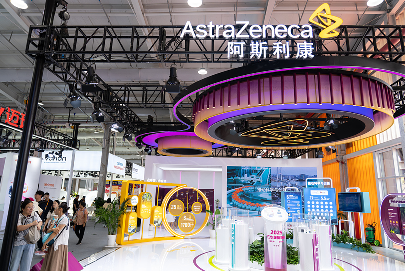
 The number of therapies developed in China has doubled in recent years, and approximately one-third of the global licensing deals last year involved Chinese biopharmaceutical enterprises. All such facts demonstrate China’s growing role in the global drug research and development ecosystem, said Sharon Barr, executive vice-president of biopharmaceuticals R&D at AstraZeneca, in an interview during the 2025 AstraZeneca R&D China Science Day event, which concluded in Shanghai on Sept 22.

 “Since 2023, the company has signed 15 licensing deals with 14 Chinese biotech firms, marking a historic high for us,” said Barr. “This is how we start at the beginning of our pipeline to create transformative new medicines. We look at promising opportunities, which also fit into our portfolio, and that will help us achieve the bold ambition of introducing 20 breakthrough innovative medicines globally by 2030.

 “We are thrilled to integrate into China’s world-class, dynamic life sciences ecosystem,” Barr said, adding that the company’s investment of $2.5 billion announced early this year, which included establishing AstraZeneca’s sixth global strategic R&D center in Beijing, forming a dual-engine with the existing strategic R&D center in Shanghai for innovation in China, highlighted the country’s scientific prowess and strategic importance.

 An example was that the company signed an agreement with Eccogene in 2023 to jointly work on an oral GLP-1 receptor agonist developed by the Shanghai-based small-sized technology enterprise, and ultimately bring the medicine to the broader patient population around the world. The drug candidate is currently in global phase 2 clinical trials, with phase 1 trials underway in China.

 China’s appeal extends beyond its large patient population and extensive data resources. The country boasts leading academic institutions and a robust research network, said the company.

 He Jing, vice-president and head of R&D China at AstraZeneca, said that the company collaborates closely with Chinese research institutions and universities, including the Chinese University of Hong Kong, the Chinese Academy of Sciences’ Shanghai Institute of Materia Medica and Peking University, to advance foundational scientific explorations.

 AstraZeneca’s China R&D pipeline has been fully aligned with its global projects, with over 160 ongoing clinical trials involving nearly 500 hospitals nationwide and 23 percent featuring early-stage projects. The company’s China R&D department currently leads nearly 20 global clinical trials in partnership with top Chinese experts and hospitals.

 The science day event brought together more than 30 AstraZeneca global R&D executives and over 60 leading medical experts in China to discuss early-stage scientific breakthroughs and ecosystem collaborations in chronic and rare diseases areas.

 “China has accumulated rich clinical research resources and scientific expertise in respiratory and other chronic diseases, establishing international-level disease cohorts and biobanks that support global new drug target discovery and translational medicine research,” said Zhong Nanshan, an academician with the Chinese Academy of Engineering and a renowned respiratory expert.

 zhouwenting@chinadaily.com.cn

Article inline ad

Nation’s Role As Steadying Global Force Highlighted

0

By ZHONG NAN | CHINA DAILY | Updated: 2025-10-04 07:46

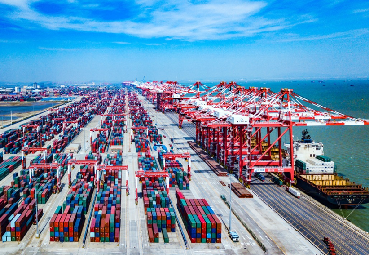
China will remain a stabilizing force in the global economy, with recent targeted financing tools and steps to bolster domestic demand and trade underscoring its proactive policy support, resilience and long-term growth potential, said market watchers and business leaders on Friday.

 They made the remarks after the Washington-based International Monetary Fund said on Thursday that global inflation presents a mixed picture. Headline inflation has shown renewed upward pressure in several economies, with stronger readings recently in the United Kingdom, Australia and India.

 Julie Kozack, director of the IMF’s communications department, said that in the United States, there is evidence that tariffs are feeding through into higher prices, particularly in core inflation.

 “And then we have countries where inflation pressures are very muted, for example in China and some countries in Asia,” she said.

 Analysts said China’s ability to maintain relatively low inflation, safeguard supply chains and sustain steady exports of green and high-tech products underlines its role as a stabilizer in the global economy, especially at a time when certain countries are grappling with divergent price pressures and policy uncertainties.

 China’s recent policy moves show a clear commitment to cushioning the economy against global headwinds, said Wang Guannan, spokeswoman for the China Council for the Promotion of International Trade.

 “By expanding financing channels for key sectors and ensuring stable demand at home and abroad, China is enhancing its role as a steadying force in the world economy,” she said.

 To meet these expectations, the National Development and Reform Commission, China’s top economic regulator, announced earlier this week that the government will introduce a new policy-based financial instrument worth 500 billion yuan ($70.2 billion), as part of the country’s efforts to improve financial services for the real economy and boost effective investment.

 “Despite external pressures, China’s economy has remained generally stable, with solid progress in high-quality development,” said Li Chao, spokesperson for the NDRC. “As the effects of policies are fully released, we are confident in maintaining steady and healthy economic development, and confident in achieving the annual growth target.”

 Chen Jianwei, a researcher at the University of International Business and Economics’ Academy of China Open Economy Studies, said that targeted measures that address domestic consumption as well as stable foreign trade growth are helping to build confidence among businesses and investors.

 Chen said this reflects not only proactive policy support, but also the resilience and long-term potential of the Chinese economy.

 Recognizing China’s market strengths, Yin Zheng, executive vice-president of China and East Asia operations at French industrial conglomerate Schneider Electric, said that with its vast market size, comprehensive industrial support and resilient supply chains, China has become a central force in the global industrial landscape.

 The rapid growth and broad application of frontier technologies such as artificial intelligence are further reinforcing this position, Yin said.

 Denis Depoux, global managing director of management consultancy Roland Berger, said that the partnership between China and many Asian countries, especially economies of the Association of Southeast Asian Nations, has achieved resounding success, built on a foundation of deep integration.

 Crucially, this deep regionalization is not just beneficial for Chinese or ASEAN companies, but is essential for Asia’s future collective competitiveness, said Depoux, adding that amid global geopolitical tensions, building resilient regional supply chains is a strategic imperative.

 “For Chinese companies, ASEAN is not merely an outlet, it is an integral part of a regional industrial ecosystem,” Depoux said.

 Furthermore, faced with rising uncertainties from the US, Asian governments are encouraging regional demand within Asia and accelerating efforts to build a more integrated and easier-to-navigate Asian market with resilient regional supply chains, he said.

 zhongnan@chinadaily.com.cn

Article inline ad

China’s First International-Sponsored Retail C-REIT Listed On Stock Exchange

0

By Ouyang Shijia | chinadaily.com.cn | Updated: 2025-10-01

CapitaLand Investment Ltd (CLI), Singapore-based real estate manager, listed CapitaLand Commercial C-REIT (CLCR), China’s first international-sponsored retail C-REIT, on the Shanghai Stock Exchange (SSE) on Monday.

 CLCR began trading under the stock code 508091 at 6.84 yuan ($0.96), 19.6 percent above its initial public offering price of 5.718 yuan per unit.

 The IPO raised 2.29 billion yuan by issuing 400 million IPO units at 5.718 yuan per unit, exceeding the initial estimate of 2.14 billion yuan by 7 percent.

 The listing strengthens CLI’s position as the Asia Pacific’s largest REIT manager by market capitalization, and expands its REIT management platform into China. With the successful listing of CLCR, CLI now holds stakes in eight listed funds in Singapore, China, Malaysia, and Japan, with a total market capitalization of about 42 billion Singapore dollars ($32.54 billion).

 “The successful listing of CLCR marks a watershed moment for both CLI and the C-REIT market,” Puah Tze Shyang, CEO of CLI China, said. “Year-to-date, we have recapitalized approximately 5 billion yuan of assets in the country. This will enable us to strengthen our balance sheet and redeploy capital into strategic opportunities aligned with China’s economic priorities.”

 “The listing of CLCR and our RMB funds also supports our domestic-for-domestic fund strategy to tap into China’s substantial capital market to grow our funds under management and recurring fee income,” he added.

 As of now, there are a total of 51 listed REIT products on the SSE, raising a total of 134.39 billion yuan. The types of underlying assets have continued to expand, while the range of participants and investor profiles has become increasingly diverse, the SSE said.

 Looking ahead, the SSE said efforts will be made to further optimize the REITs market ecosystem, ensure stable and orderly market operations, enhance the sense of gain among market participants, and better support the high-quality development of the real economy.

 ouyangshijia@chinadaily.com.cn

Article inline ad

Policies Boost Consumer Demand As Bank Steps In

0

By HAO NAN | China Daily | Updated: 2025-10-01 11:35

This year, China has rolled out targeted policies to invigorate its consumer market. These initiatives include refinancing support for elderly care services, interest subsidy programs for personal consumer loans and loans to service industry entities, as well as incentives for service consumption.

 Complementing these measures, the country has also stepped up efforts to promote large-scale equipment upgrades and the trade-in of consumer goods, injecting robust momentum into the recovery and growth of the consumer sector.

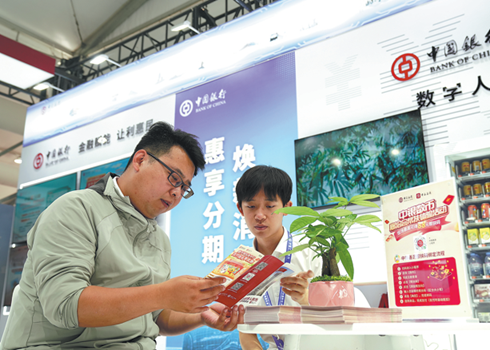
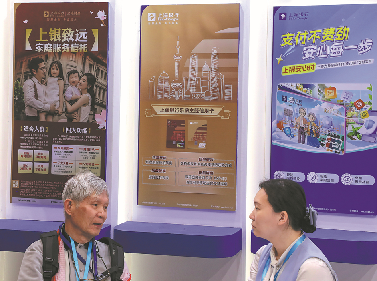
 In response to the national strategy, the Bank of China has actively supported these initiatives through policy implementation, scenario-based innovation, and product optimization, refining measures in such areas as cultural tourism consumption, daily livelihood services, and cross-border financial services to ensure that policy benefits reach market entities and individual consumers.

 On Aug 12, for example, the Chinese government unveiled two financial interest subsidy programs focusing on personal consumption and service industry entities. BOC moved swiftly to align with these policies by administering interest subsidies for eligible personal consumer loans from Sept 1.

 Also, the bank has advanced interest subsidies for loans to service industry operators, optimizing and streamlining application processes for eight sectors including catering, accommodation, elderly care, housekeeping, cultural entertainment, and sports.

 Prior to the rollout of these national subsidy policies, Sichuan province took the lead by launching interest subsidies for personal consumption loans in 2023, covering offline financing for car purchases, electronic products, home renovations, and durable goods like furniture.

 BOC’s Sichuan branch simplified the financial subsidy application procedures, integrated policy promotions into customer marketing efforts to boost participation, and guided eligible individuals through claiming benefits. By the end of July, the branch had helped customers obtain more than 2.8 million yuan ($392,532) in interest subsidies.

 “As a major State-owned bank, we are committed to ensuring national policy benefits reach consumers and service industry entities efficiently and effectively through scenario-tailored product design, dynamic risk pricing models, and ecosystem collaboration,” said a representative from the branch.

 Aligning with the national drive to promote large-scale equipment upgrades and consumer goods trade-ins, BOC has concentrated on automobiles, home appliances, and home renovations. It has developed an integrated “policy + finance + scenario “model to turn policy advantages into real consumer demand.

 For instance, in terms of new energy vehicles, the bank has established strategic partnerships with 17 leading automakers including Tesla, Li Auto, and BYD, to offer installment discounts such as reduced interest rates and flexible repayment terms.

 The impact is notable. By the end of May, BOC’s Hebei branch had issued 1.1 billion yuan in auto installment interest subsidy loans, saving consumers over 40 million yuan while advancing China’s green transportation goals.

 Leveraging nationwide cultural and tourism consumption promotion campaigns, BOC has integrated global service resources and invested over 100 million yuan in dedicated subsidies. It has built a comprehensive cultural and tourism financial service system that covers the entire industry chain, unleashing potential in the sector and supporting its high-quality development.

 In the dining category, the bank has collaborated with intangible cultural heritage food vendors, time-honored brands, and chain restaurants to launch discount activities. A standout example is BOC’s Shaanxi branch, which has run a “50 percent off Thursdays” campaign on Alipay. This initiative has driven over 30,000 transactions in key dining areas of Xi’an, the provincial capital, allowing consumers to savor local delicacies at lower costs and promoting the local food culture.

 Accommodation, a cornerstone of cultural and tourism consumption, has also received robust support. BOC has partnered with major hotel groups to offer room discounts, ranging from luxury to budget options, catering to diverse traveler needs.

 For smaller operators like homestays, BOC has tailored fast-track financing, with its Fujian branch providing loan disbursement within a maximum of three working days. To date, the branch has issued over 88 million yuan in loans to 119 homestays in Pingtan, a coastal tourist hub, supporting their facility upgrades and capacity expansion.

 Additionally, BOC has strengthened collaboration with cultural and tourism departments across China, incorporating scenic spot tickets, special cultural products, and merchant discounts into its mobile banking platform.

In Shaanxi, its branch has provided over 3 billion yuan in credit to iconic cultural and tourism projects, such as the Huaqing Palace Heritage Site, the Grand Tang Mall, and the Huashan Mountain scenic area. In Fujian, the branch has issued a 210 million yuan loan to the Longyan Honggutian Education and Training Center to boost the development of Red tourism.

 In the shopping sector, BOC has joined forces with retailers like China Duty Free Group and major outlet malls to launch attractive discount activities. During this year’s China International Consumer Products Expo, BOC’s Hainan branch introduced an “immediate tax refund upon purchase” service for overseas tourists, simplifying the tax refund process and greatly enhancing the cross-border shopping experience in the province.

 In September, at the China International Fair for Trade in Services, BOC launched a cross-regional recognition program for its “immediate tax refund upon purchase “service. This new mechanism enables overseas tourists to complete tax refund transactions in one city and exit China through a different port.

 The bank also unveiled its “Easy Tax Refund” system for departure tax refunds, integrating online applications, real-time verification, and fast disbursement to streamline the process further.

 Building on earlier cross-regional recognition efforts in the Beijing-Tianjin and Sichuan-Shaanxi regions, BOC has developed a nationwide systematic plan this year to accelerate innovation in this service.

 This plan aligns with the Ministry of Commerce’s “Shop in China” campaign, aiming to position China as a global shopping destination and unlock more cross-border consumption potential.

 BOC’s leadership in departure tax refund services dates back to 2015, when it became China’s first bank to obtain departure tax refund agency qualification and process the country’s first official tax refund transaction.

 Since then, it has expanded its network of tax refund merchants, promoted policies to both businesses and international tourists, and enhanced multilingual customer support. Today, BOC handles departure tax refund services in 16 provinces and cities, including Beijing, Shanghai, and Sichuan, covering nearly half of all regions in China with such services.

 In terms of promoting sports consumption, BOC has long been providing financial support for building a leading sports nation through comprehensive services. This commitment aligns with the State Council’s directives to accelerate the development of the sports industry and promote sports consumption.

 On Nov 2, the 2025 Bank of China Beijing Marathon will take place. To facilitate the participation of international runners, BOC has designated its official English website and BOC Compass, an innovative application designed specifically for foreigners visiting China, as the official registration platforms.

 By leveraging its extensive global network spanning 64 countries and regions, BOC actively promotes the marathon and supports international participants. This initiative not only underscores BOC’s global reach, but also highlights and shares the charm of Chinese sports culture with the world.

Article inline ad

Consumer Electronics Firms Building Ecosystem-Driven Growth Worldwide

0

Consumer Electronics Firms Building Ecosystem-Driven Growth Worldwide

By YIN MINGYUE | CHINA DAILY | Updated: 2025-09-30

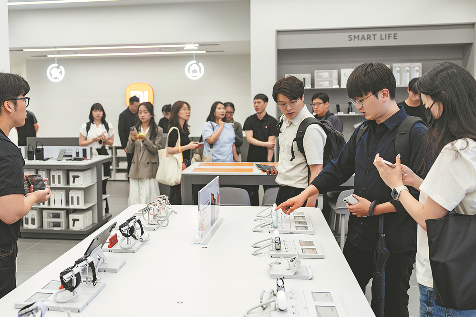
Chinese consumer electronics brands are shifting from battling for market share to building ecosystem-driven growth worldwide, with diversified product categories and emerging technologies reshaping their global expansion, according to experts.

 “Chinese consumer electronics brands are steadily increasing their market share, particularly with strong performances in emerging markets,” said Evan Kirchheimer, chief research officer of Omdia, a company specializing in data analysis and industry research.

 Omdia’s data show that the overseas market share for Chinese smartphone brands rose from 43 percent in the second quarter of 2020 to 55 percent in the same period of 2025.

 More specifically, in the second quarter of 2025, Xiaomi ranked second and third in Latin America and Africa, respectively, while Transsion secured fifth place globally and commanded more than half of the African smartphone market.

 Beyond smartphones, Chinese consumer electronics makers have expanded into a wider range of categories, from smart home devices and wearables to AI-powered hardware.

 “In the smart home sector, Chinese devices account for between 20 and 30 percent of the global market, with rapid growth. From small appliances to security systems, their high level of AI integration is supporting further overseas expansion,” Kirchheimer said in an interview with China Daily.

 He added that Chinese companies in segments such as wearables and smart homes are also able to adapt product pricing and functions flexibly to meet the varying demands of global markets.

 In May, Xiaomi launched an upgraded smart ecosystem, aimed at seamlessly integrating smartphones, tablets and smart home devices. “The wearables market itself is shifting from being hardware-driven to ecosystem-driven,” Kirchheimer noted.

 Firms such as Xiaomi and Huawei are also enhancing device collaboration through self-developed operating systems like HyperOS and platforms such as health apps.

 “In this process, AI empowerment and ecosystem-based development have become among the key trends in global expansion,” Kirchheimer said.

 Omdia data reveal that Chinese brands are showing strong performance in AI-enabled smartphones and PCs, with overseas shipments of AI smartphones surging 197 percent year-on-year in the second quarter, while Lenovo’s AI PCs accounted for 21 percent of the global market.

 Chinese brands are consistently advancing in areas such as AI, system integration and intelligent sensing, and are capable of offering a full spectrum of products from entry-level models to high-end flagships, Kirchheimer added.

 “Backed by a strong manufacturing and supply chain infrastructure, Chinese brands have been able to respond rapidly to global demand, cut production costs and improve delivery efficiency,” he said.

 Yet despite these advances, challenges remain. AI-enabled devices are still new and lack global standards, said Zhou Mi, a senior researcher at the Chinese Academy of International Trade and Economic Cooperation, urging Chinese firms to develop their own rules aligned with international norms.

 “For brand enterprises, global resources are being leveraged alongside domestic innovation,” said Zhou, adding that combining China’s strengths with other countries’ advantages could provide stronger momentum and resilience for growth.

 This would boost brand value through greater consumer recognition and support the building of more complete brand ecosystems, he added.

 However, competition in mature hardware markets is intense, with shifting US tariffs and geopolitical uncertainties adding to supply chain and investment risks.

 “The way forward lies in strengthening R&D, securing core technologies and enhancing product value,” said Zhu Keli, founding director of the China Institute of New Economy.

 He added that building a global after-sales network is also key to user loyalty.

 “Through pursuing both premiumization and service-driven growth, Chinese brands can elevate their global presence, shifting from scale-driven expansion to value-oriented growth and securing long-term competitive advantages,” Zhu said.

 Zhou said global breakthroughs will require not only a high-end focus, but also distinctive technologies that deliver unique value. This, he added, would allow companies to refine marketing strategies while deepening international cooperation.

 yinmingyue@chinadaily.com.cn

Article inline ad

Landlocked City Now Export Powerhouse

0

Thanks to airport, Ezhou in Hubei province going gangbusters on cross-border e-commerce

By LI JING in Beijing and LIU KUN in Wuhan | CHINA DAILY | Updated: 2025-09-30 

Ezhou is not a coastal trading port. It has no bustling harbor or long tradition of container terminals being sent around the world. Yet in the middle of Central China’s Hubei province, a different kind of gateway is rising. At its heart is the Ezhou Huahu International Airport, Asia’s first cargo-dedicated hub, which has quickly become the anchor for the inland city’s full embrace of cross-border e-commerce.

 The roar of a wide-body freighter’s engines reverberates across the airport. Beyond the runway, another kind of takeoff is underway. Inside sleek new office towers, livestreaming anchors check their consoles for broadcasts, young product scouts track social media feeds for the next viral items and small-scale entrepreneurs draft export strategies on laptops.

 This is China (Ezhou) Cross-border E-commerce Industrial Park. Launched only this spring, the park has already attracted 258 companies, with 62 setting up offices on site, with trade volume topping $310 million in its first three months of operations.

 At the center of this story is Bi Wei, a 29-year-old entrepreneur and one of China’s rising “post-95” business leaders — the generation born after 1995. She heads the park’s operations, leading a team with an average age of just 25. Yet they are orchestrating a platform that integrates data analytics, supply chains and international logistics.

 Bi’s own path into this field traces back to her college years. Like many of her peers, she first encountered e-commerce through imported cosmetics. “We would huddle around our phones, checking discounts on apps,” she recalled. Later, during trips abroad, she browsed shops not to buy, but to study what foreign consumers were chasing.

 By 2018, when she graduated, Chinese shoppers were already accustomed to buying overseas products online. What caught Bi’s attention, though, was the reverse flow as small factories in China quietly began listing products on Amazon, then shipping them abroad.

 “A company could put an item online today, and it would sell tomorrow. I thought this is the future,” she said.

 She watched as a wave of young entrepreneurs, some barely older than her, built export businesses worth millions. By 2022, Bi returned to Hubei to take on a bigger role. The following year she became executive secretary-general of the province’s e-commerce association, and then accepted the challenge of running the new cross-border e-commerce park.

 “Cross-border is about spotting where the demand will be, not where it is or was,” Bi said. “We rely on data from social chatter, platform trend charts, and even the wording buyers use in reviews. Once we see a sales spike coming, we act. If we wait, someone else will seize it.”

 The instinctive grasp of online culture and platform dynamics, Bi and her peers believe, is what separates the post-95 generation from traditional exporters. Instead of waiting for trade fairs or overseas distributor networks, they track memes and hashtags.

 However, none of this would matter without the Huahu airport, designed specifically for cargo and run by logistics giant SF Express, just a 10-minute drive from the park.

 “This is our secret weapon,” Bi said. “We can promise next-day delivery to global markets. On top of that, warehouse rents are lower than in coastal hubs, labor costs are cheaper. For small and medium enterprises, this lowers the threshold to ‘go global’.”

 As of Sunday, the airport had launched 106 cargo routes, including 45 international routes, with its cargo and mail throughput exceeding 1.06 million metric tons since Jan 1. According to Hu Jing, general manager of Ezhou Aviation Cargo Co Ltd, the airport’s dedicated e-commerce clearance channels shave hours off Customs time and three express security lanes dedicated to e-commerce cargo improve the efficiency of cargo checks.

But the park is not merely a logistics extension. Bi’s team believes closing the information gap is key. Many SMEs don’t know what sells abroad, or how to tailor their products for different markets. The park uses analytics to identify demand, then works backward. They encourage export firms to create country-specific versions of products like strollers customized for local safety standards or electronics for local design tastes.

 “It’s not about pushing goods we happen to have,” Bi explained. “It’s about asking what they actually want and then working backward to source or customize.”

 For industry expert Huang Lingyu, who leads the park’s livestream operations team, the next leap lies in artificial intelligence.

 “Cross-border breakthroughs could come in logistics tracking and customer service. AI will help predict shipping risks before they happen, and multilingual smart customer service will allow SMEs to talk to global buyers almost instantly,” Huang said.

 The Ministry of Commerce said China’s imports and exports of digitally deliverable services reached 1.5 trillion yuan ($210 billion) in the first half, while cross-border e-commerce trade hit 1.3 trillion yuan, both record highs.

 Still, talent is a bottleneck. Few workers can juggle digital operations, foreign languages and cultural adaptation all at once. To address this, the park has hosted training sessions with e-commerce platforms such as Alibaba and TikTok, and is planning partnerships with local universities. So far, more than 1,400 trainees have participated in, with many from outside the province. Some graduates have already opened stores while others joined existing exporters.

 “Every session, I teach myself,” Bi said. “We learn from the companies as much as they learn from us.”

 Local authorities have amplified the efforts with a package of subsidies, including platform storefronts, overseas warehouses, living stipends for employees and even meal allowances. Zhu Degao, head of the Ezhou Airport Economic Zone’s cross-border task force, said: “We use a three-dimensional evaluation system, looking at product competitiveness, market fit and supply chain resilience. The goal is to focus resources on the companies with real global potential, and grow the park into a 100-billion-yuan industry cluster.”

 Bi’s longer-term ambition reaches beyond exports. She wants Ezhou to build brands. The park is encouraging artisans to blend Chinese cultural elements like intangible heritage motifs into products for foreign buyers.

 “We don’t want to just be a shipping hub,” Bi said. “We want to nurture global names that were born in Ezhou. We want global consumers to say: ‘This is from Ezhou’, not just ‘This is from China’.”

 Bi believes the experiment is still in its early days. “Trade is pulling industry, not the other way around,” she said. “The real question isn’t what we make. It’s what the world does want and how fast we can get it there?”

 In Ezhou, with its airport as a logistical anchor, that question is being answered in real time.

 Contact the writers at lijing2009@chinadaily.com.cn

Article inline ad

Capital Mkt Institutional Opening-Up Prioritized

0

By Guan Tao/Liu Lipin | China Daily | Updated: 2025-09-29

Accelerating the institutional opening-up of China’s capital market at a high level is the only path toward achieving high-quality development of the capital market. It is necessary to establish the notion that “post-border rules are more important than border opening”, benchmark against international high-standard rules, comprehensively identify institutional weaknesses in China’s capital market and improve the capital market ecosystem.

 In the process of promoting institutional opening-up, strict precautions must be taken against risks such as institutional incompatibility, information leakage, external shocks, malicious attacks and financial sanctions.

 The term “institutional opening-up” was first proposed at the Central Economic Work Conference in 2018, which emphasized the need to adapt to new circumstances, grasp new features, and promote a transition from opening-up based on the flow of goods and factors to opening-up centered on rules and institutions. In 2019, the concept was included in the Government Work Report for the first time.

 Under the Central Committee of the Communist Party of China’s requirement to improve the institutional framework for high-level opening-up, advancing institutional opening-up of the capital market carries significant importance.

 In the past, China’s capital market opening focused mainly on channel-based and border opening. However, as foreign investors increase their participation in domestic capital markets, institutional differences between China and other markets have become an important factor influencing foreign investors’ willingness to allocate assets in renminbi.

 Research shows that emerging and developing economies generally face insufficient foreign investment, mainly due to unfavorable government policies and regulations, underdeveloped financial markets, weak regulatory enforcement, poor investor protection and low institutional quality that exacerbates information asymmetry. Therefore, to enhance China’s international competitiveness, it is necessary to shift from the traditional model of opening-up toward an institutional opening-up paradigm, improving transparency and predictability to create a favorable environment for international investors.

 Traditional opening-up based on goods and factor flows mainly targeted specific markets and entities. Institutional opening-up, in contrast, emphasizes comprehensive and systematic institutional design across major economic sectors. The report to the 20th National Congress of the CPC clearly called for steadily expanding institutional opening-up with regard to rules, regulations, management and standards.

 Traditional border opening-up focused on facilitating the cross-border movement of goods, capital, people and technologies. Institutional opening-up, however, places greater emphasis on post-border rules, raising requirements for property rights protection, industry subsidies, environmental standards, labor protections and government procurement. Thus, compared with border opening-up in specific areas — such as pre-establishment national treatment, negative list management and broader scope opening-up — post-border opening-up, which focuses on aligning domestic rules, regulations, management and standards with international norms, carries greater significance.

 At the end of October 2023, the Central Financial Work Conference stressed the need to balance “bringing in” and “going global”, steadily expanding institutional opening-up in finance. “Bringing in” means adopting international best practices domestically by aligning rules, regulations, management and standards. “Going global” means actively participating in international rule-making, taking the lead in establishing systems in emerging areas, supplementing and refining existing international rules in line with new circumstances, and providing more global public goods.

 As an important part of building China’s socialist market economy system, institutional opening-up of the capital market will strengthen the decisive role of the market in resource allocation, improve efficiency and support high-quality economic development.

 Advancing institutional opening-up will help remove explicit and implicit barriers that hinder the flow of production factors and allocation of financial resources. This will enable the capital market to better perform its functions in price signaling, risk allocation and corporate governance, thereby raising total factor productivity.

 At the same time, shifting yuan internationalization from quantitative expansion to qualitative progress will require deeper institutional opening-up of capital markets, stronger foundational systems and regulatory capabilities, and enhanced international competitiveness of capital markets.

 Against the backdrop of profound global changes, the April 2025 CPC Politburo meeting emphasized dealing with the uncertainty of drastic changes in the external environment with the certainty of the country’s high-quality development. Accelerating institutional opening-up of the capital market therefore has significant practical importance: reducing reliance on overseas financing, lowering risks of currency and maturity mismatches, enhancing the attractiveness of renminbi assets to foreign investors, mitigating risks of financial decoupling and strengthening macroeconomic governance to support expanded financial opening-up.

 Institutional opening-up should follow principles of domestic leadership, international orientation, local grounding, market orientation, integrated advancement and security prioritization.

 Globally, there are no strict standards or unified jurisdiction over capital market opening-up. Therefore, China should advance institutional opening-up proactively, progressively and controllably, in line with domestic economic development and reform needs. The Central Economic Work Conference held at the end of 2024 emphasized the need to expand both autonomous and unilateral opening-up in an orderly manner, reflecting the proactive nature of China’s opening-up strategy under new circumstances.

 Since poor institutional quality exacerbates information asymmetry — one of the main reasons for insufficient foreign investment in emerging economies — China must accelerate alignment of domestic capital market rules with high international standards to make foreign investors feel at home.

 Market economies evolve endogenously and cannot simply copy foreign systems. While some international standards may represent best practices, they may not suit all countries or periods. Developed economies, as the main providers of current international systems, may design rules to favor their own interests. Thus, institutional opening-up must take local realities into account to avoid mismatches. Even when adopting foreign practices, their logic and mechanisms should be studied, with supportive conditions created. Meanwhile, institutional arrangements with Chinese characteristics can also contribute solutions to global governance.

 Pilot programs in institutional opening-up should adhere to three principles: market demand as the prerequisite, financial institutions providing services that balance risk and return, and strict risk management with sound supervision supported by a robust policy toolkit.

 The effectiveness of institutional opening-up will be constrained by domestic structural contradictions. International experience shows that premature financial opening-up amid unresolved structural issues can trigger crises. Therefore, capital market reform and institutional opening-up must advance in tandem, with reform laying the foundation for opening-up, and opening-up setting higher requirements for reform.

 Given growing global uncertainty, safeguarding security must be the bottom line of capital market institutional opening-up. It is necessary to balance “opening-up effectively” with “maintaining clear oversight “and “exercising effective control”. The ultimate goal is to serve national development and security.

 Institutional opening-up is a complex, long-term endeavor that requires steady progress. When introducing international arrangements, their logic must be understood. Those incompatible with China’s national conditions should not be adopted. Those for which timing or conditions are not yet ripe should first be supported by domestic reform and piloted for experience before broader rollout.

 High-standard international trade and investment rules usually involve more binding provisions and mandatory obligations. With the expansion of global rules in scope and depth, China faces greater pressure in negotiations. Accepting such rules without robust domestic legal and technical systems could create security risks. Therefore, institutional opening-up must always uphold national security, strengthen information security monitoring, and address incompatibilities between domestic laws and international rules.

 As China’s financial opening-up deepens, its domestic markets have become more sensitive to external shocks. To mitigate risks, multiple measures are needed: advancing structural reforms in finance and institutions; improving macroprudential management of cross-border capital flows by strengthening monitoring and early warning systems; studying price-based tools such as financial transaction taxes; and improving fiscal and monetary governance with greater transparency and consistency.

 With the rapid growth of foreign holdings of onshore renminbi assets and stronger linkages across China’s stock, bond, foreign exchange and commodity markets, the potential for coordinated external financial attacks has increased. Speculative funds could deliberately short Chinese assets to pressure the exchange rate. Therefore, cross-market, cross-agency contingency plans must be developed, policy toolkits enriched and trading systems improved to ensure preparedness.

 As financial globalization deepens, sanctions have become a common tool for some major powers in international disputes. China should expand its anti-sanctions toolkit, accelerate the development of cross-border renminbi payment infrastructure, advance renminbi internationalization prudently, diversify reserve currencies and assets, strengthen external financial liability monitoring, and assess foreign financial exposures in China to prepare countermeasures.

 Guan Tao is global chief economist at BOC International (China) Co Ltd and council member of the China Chief Economist Forum. Liu Lipin is a macro analyst at BOC International (China) Co Ltd. The article was translated based on the one published in Tsinghua Financial Review.

 The views do not necessarily reflect those of China Daily.

Article inline ad

Consumer Credit Industry On Road To Major Transformation

0

Banks must shift from scale-driven growth to value-driven strategies, experts believe

By Jiang Xueqing | China Daily | Updated: 2025-09-29 

China’s credit card sector is facing mounting headwinds, with outstanding balances, transaction volumes and profitability trending downward in the first half of 2025, with analysts citing sluggish consumption recovery, intensifying competition from online lenders and shifting consumer demand toward simpler digital alternatives.

 According to financial disclosures from 15 A-share listed national commercial banks, their total outstanding credit card loans stood at 7.56 trillion yuan ($1.06 trillion) by the end of June, down 2.52 percent from the end of last year. Only four banks — Industrial and Commercial Bank of China, Agricultural Bank of China, Shanghai Pudong Development Bank and China Zheshang Bank — reported growth in credit card loan balances.

 The contraction is the result of multiple factors. The slow pace of consumption recovery is limiting offline card use, while online consumer finance platforms continue to siphon off demand for high-frequency, small-ticket loans, said Wu Zewei, a contract research fellow at Jiangsu Su Merchants Bank. Wu also noted that banks have been actively clearing dormant cards, optimizing account structures, and cutting back on credit card benefits, prompting some cardholders to voluntarily cancel their accounts.

 The shift follows new regulations that China implemented on credit cards in 2024, designed to promote the standardized and healthy development of the credit card industry. The first half of this year became a critical period of transition, with commercial banks increasingly prioritizing refined operations for existing customers over expanding issuance and market share, analysts said.

 Transaction data highlight the industry’s slowdown. China Merchants Bank, a leader in retail banking, recorded 2.02 trillion yuan in credit card transactions in the first half, down 8.54 percent year-on-year. The bank’s interest income from credit cards fell 4.96 percent to 30.61 billion yuan, while non-interest income slid 16.23 percent to 10.47 billion yuan. China Everbright Bank also reported shrinking results, with credit card income down 21.3 percent to 13.66 billion yuan.

 Credit cards are entering a long and difficult transformation cycle, moving from rapid growth to high-quality development. The main features of this period are industry differentiation and survival of the fittest, said Wang Ying, executive vice-president of China Merchants Bank.

 Central bank data underscore the downturn. By the end of the second quarter, the number of credit cards and combined credit-debit cards in circulation nationwide dropped to 715 million, marking the 11th consecutive quarterly decline and 11.4 percent slide from the peak of 807 million by the end of the third quarter of 2022.

 Behind the numbers lies a shift in consumer behavior. Many cardholders now view multiple cards as unnecessary. Others cite shrinking perks as a reason for cutting cards, keeping only those with meaningful benefits.

 In the past, banks attracted users with perks such as sign-up bonuses, reward point redemptions, and cashback offers. But in recent years, under the dual pressures of market-based interest rates and policies requiring financial institutions to prioritize supporting the real economy over profit-seeking, banks’ profitability has been squeezed. As a result, they have to cut back on marketing spending and customer rewards.

 Liu Siyang, an auto industry professional, said redeeming credit card points on online platforms has become less appealing, as most items require extra payment in addition to points and are often priced higher than on regular e-commerce sites.

 Li Xin, a community worker who rarely travels for business, said airport lounge access and railway perks offered by many cards were of little use to her. She recently canceled a card after her bank warned that she would be charged an annual fee for not meeting the minimum spending requirement.

 On top of a shrinking market, credit cards are losing ground to online consumer lending platforms. Many shoppers now turn to products such as Huabei on Taobao or JD Baitiao on JD.com for everyday purchases. Notably, more than 80 percent of new Huabei users in 2024 had never held a credit card before, making the platform their first exposure to consumer credit — a clear sign that online products are eroding banks’ share of the market.

 Wang Pengbo, chief financial industry analyst at market consultancy Botong Analysys, said younger consumers prefer internet-based credit tools embedded in consumption scenarios. Features such as “enjoy now, pay later”, no annual fees and small, flexible credit lines align more closely with their spending habits.

 Wang said the key shortcomings of credit cards lie in weak scenario adaptability and lagging user experience. Long-standing issues include annual fees, complex approval processes, poor repayment reminders and rigid credit limit management. He argued that banks need to improve in data operations, customer insights and agile product iteration, while also strengthening partnerships with e-commerce, travel and local lifestyle platforms to enhance the convenience of credit card usage.

 Currently, banks are increasingly linking credit card services with their broader retail operations, seeking closer coordination between credit and debit card customer bases. China Everbright Bank and China Guangfa Bank, for instance, now waive annual credit card fees for clients who maintain qualifying asset levels with the bank.

 Veteran credit card expert Dong Zheng said banks must shift from scale-driven growth to value-driven strategies, focusing on extracting value from existing customers. He expects future credit card transformation to center on two fronts: tapping the potential of high-end customers and meeting the essential needs of mass-market users.

 jiangxueqing@chinadaily.com.cn

Article inline ad
聚力双赛道 链接大湾区

0

第二十届“春晖杯”中国留学人员创新创业大赛墨尔本预选赛圆满落幕

2025年9月4日,第二十届“春晖杯”墨尔本预选赛颁奖典礼于墨尔本大学Woodward会议中心隆重举行。作为中国教育部和科技部联合主办的国家级创新创业赛事,“春晖杯”已成为海外学子学成报国与创新逐梦的重要平台。在全球化新范式下,由澳大利亚国际商学院(GBCA)连续第七年主办的第二十届“春晖杯”墨尔本预选赛,已超越赛事本身,成为链接中澳、贯通湾区、辐射全球的高能级创新舞台。本届大赛首设“学术+创业”双轨评审,深度对接粤港澳大湾区资源,既是海外学子创新成果的盛大展示,也是 GBCA 战略远见与使命担当的生动诠释。

IMG 9852 

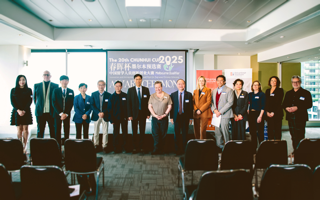
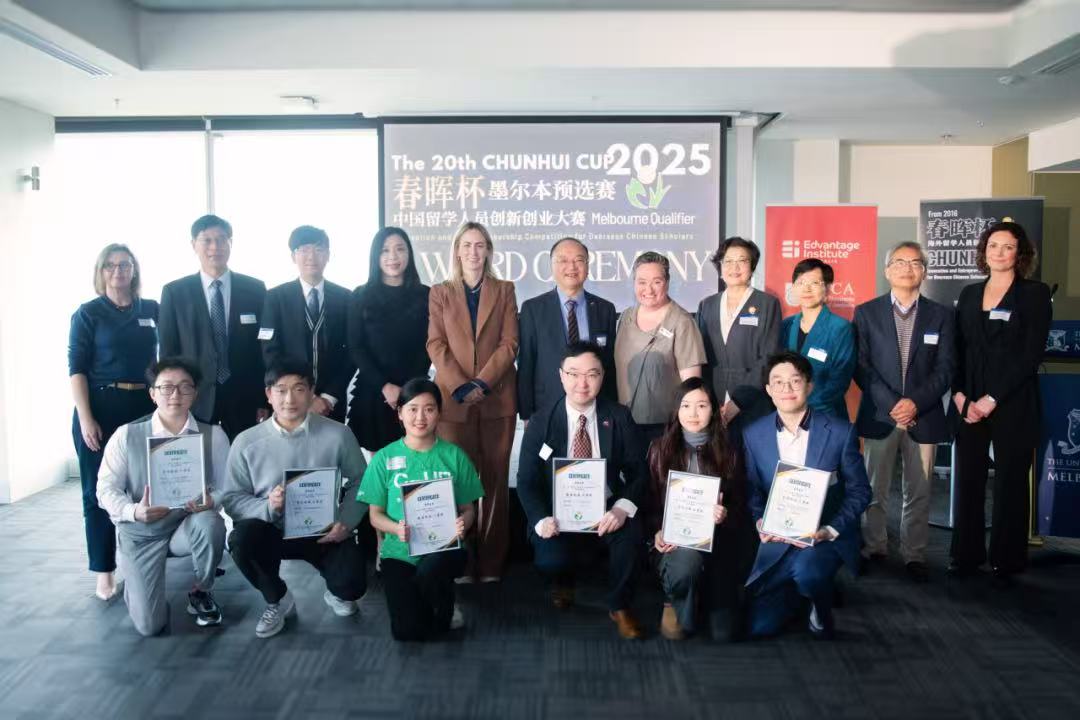
(第二十届春晖杯墨尔本预选赛嘉宾合影)

中国驻墨尔本总领事房新文、负责教育事务的参赞衔领事丁莉一行,维多利亚州政府Study Melbourne主任Caroline Hartnett女士,墨尔本市长代表Dr Olivia Ball议员,墨尔本大学副校长Michael Wesley教授,香港特别行政区政府驻悉尼经贸办事处副主任Timothy Chau先生,澳洲国际商学院/澳大利亚中汇学院总裁、华商科教集团副董事长廖伊曼博士,墨尔本创新园区运营总监Phil Callaghan先生,澳大利亚科学院院士、RMIT大学杰出教授贾宝华教授,斯威本科技大学副校长杰出教授韩清龙院士,墨尔本大学癌症信号研究实验室主任朱宏剑高级研究员,前斯威本科技大学副校长Helmut Lueckenhausen教授,Pathwize创始人Tristonne Forbes女士,ResTech与Telmy联合创始人、墨尔本大学创业加速器导师Bianca La Serra女士,国际康复学院首席执行官李罡博士,维多利亚大学名誉教授、英国皇家医学院院士张彦春教授,澳中科学家协会首席执行官Henry Yang先生,澳大利亚中国博士沙龙主席付杨博士等众多中澳政、商、学、研各界领袖齐聚,共同见证这一以创新为名、以未来为向的盛事。

IMG 9853

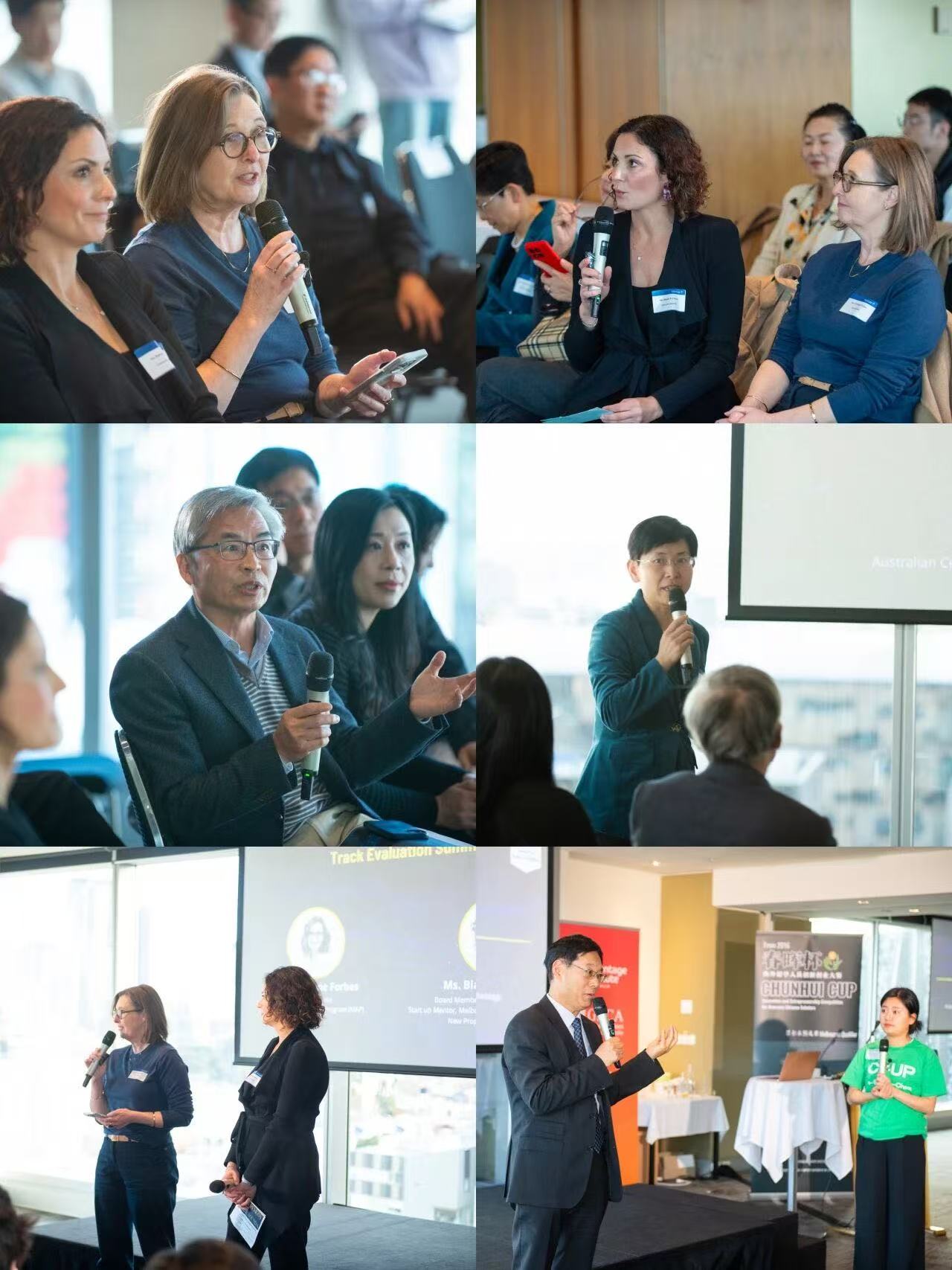
(第二十届春晖杯墨尔本预选赛现场)

 典礼由澳洲国际商学院业界委员会主席、Mighty Serious游戏公司创始人Al Gibb先生主持。活动在庄重“Acknowledgement of Country”原住民致敬仪式中拉开帷幕。

多位嘉宾在致辞中从国家战略、地方支持、高校科研与大湾区产业融合等维度,为本届赛事描绘宏伟蓝图,为青年创客注入信心与动力:

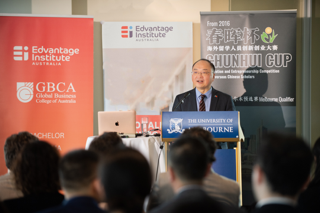
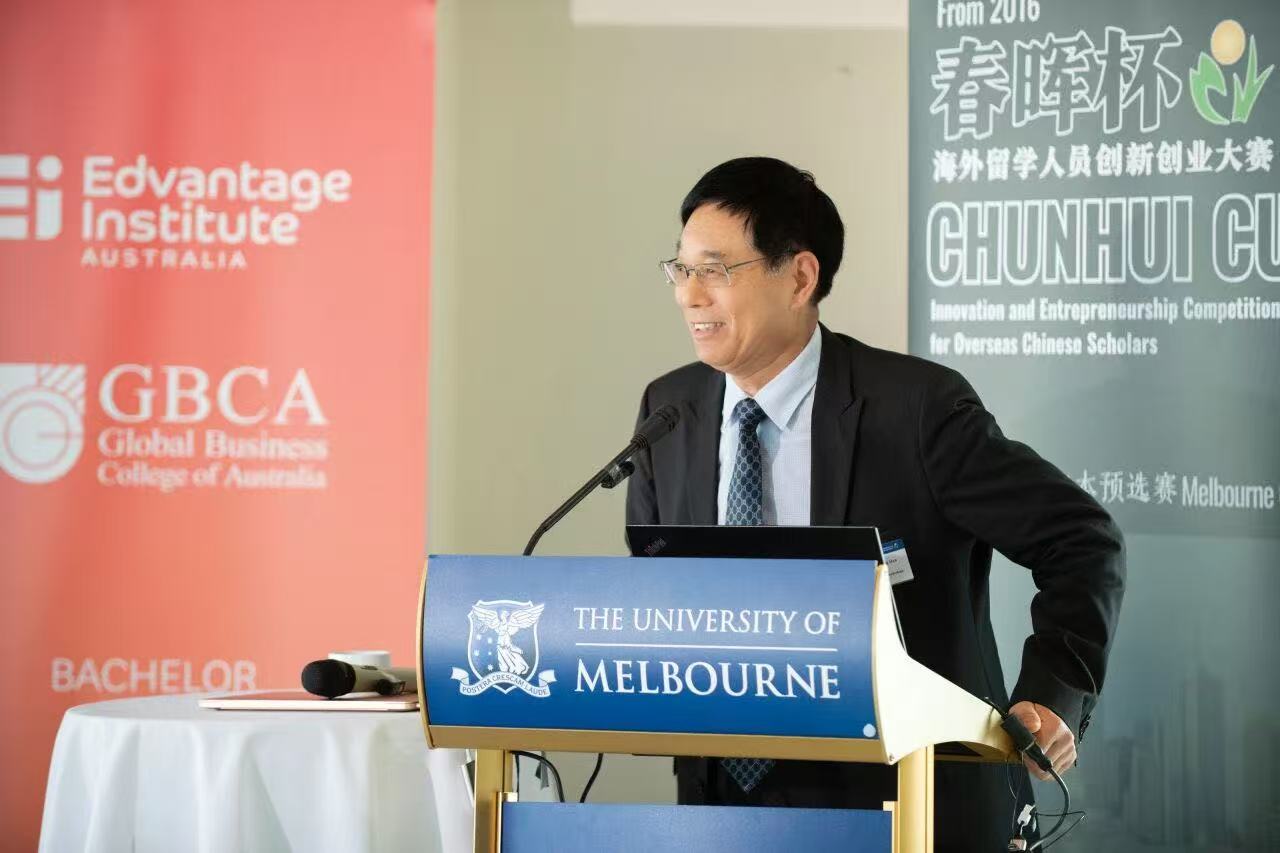
中国驻墨尔本总领事房新文在致辞中指出,春晖杯二十年来已吸引全球逾 1.48 万个项目、超过 4800 个成功落地,墨尔本赛区十年来贡献了独特力量。今年参赛数量再创新高,彰显了其作为中澳创新桥梁的重要地位。他强调,创新不仅是青年成长与国家现代化的引擎,更是推动全球治理、构建更加安全、清洁与繁荣世界的关键力量。

IMG 9854

(中国驻墨尔本总领事馆房新文总领事致开幕辞)

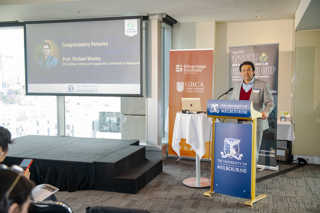
 墨尔本大学副校长 Michael Wesley 教授祝贺参赛团队成绩斐然,指出春晖杯连接科研与应用,与墨大科研转化使命高度契合。今年半数以上项目有墨大学生参与,体现了学校在创新人才培养中的优势。

IMG 9855

(墨尔本大学副校长Michael Wesley教授致辞)

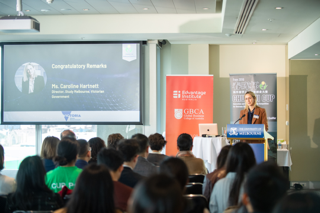
维州政府 Study Melbourne 主任 Caroline Hartnett 女士肯定春晖杯展现国际学生的创造力与多样性,强调维州将继续通过 Study Melbourne Hub 与“未来创始人计划”等支持平台,帮助国际学生提升创业与就业能力。

IMG 9856

(维州政府Study Melbourne主任Caroline Hartnett女士致辞)

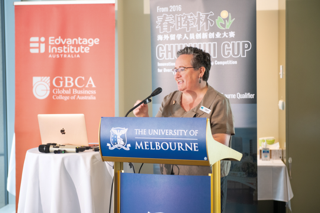
墨尔本市议员 Dr Olivia Ball欢迎参赛师生齐聚墨尔本,指出国际学生是城市的重要组成部分,墨尔本连续多年被评为最佳留学城市,市政府将继续营造安全、包容、充满机遇的环境。

IMG 9857

(墨尔本市长代表Cr Dr Olivia Ball议员)

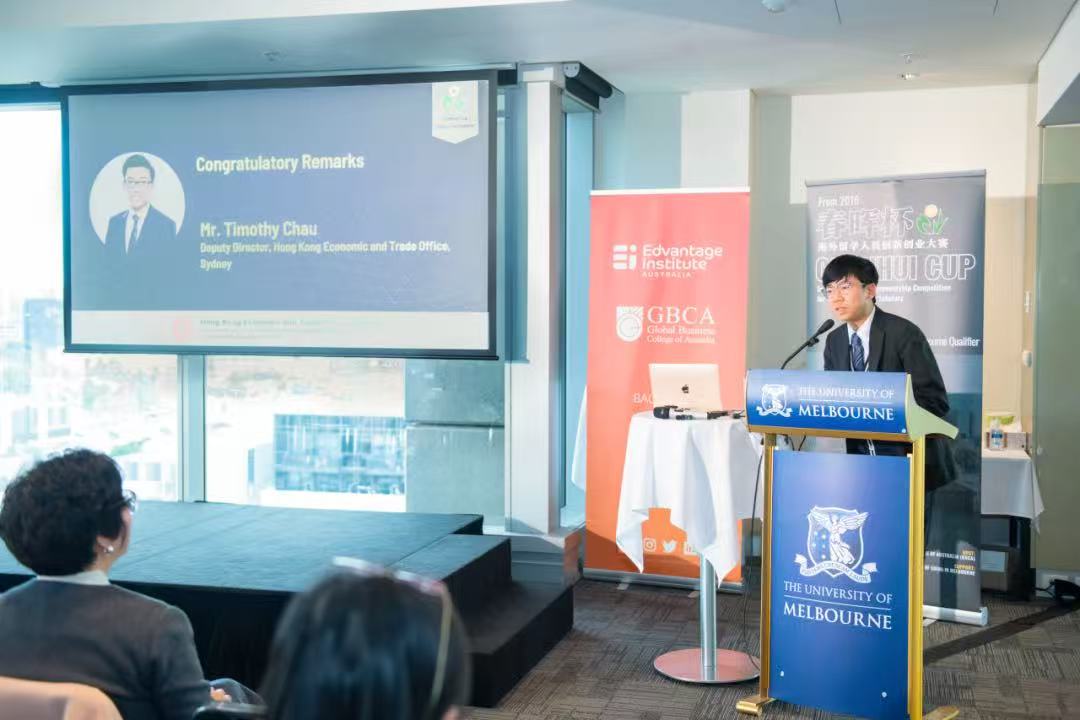
香经贸办副主任 Timothy Chau 先生指出香港作为大湾区最开放的国际城市,兼具金融与教育枢纽优势。春晖杯与大湾区的联通为青年学子提供了更广阔的发展舞台,也为中澳合作注入新动

聚力双赛道 链接大湾区-zhsailing

(香港特别行政区政府驻悉尼经贸办事处副主任Timothy Chau先生致辞)

聚力双赛道 链接大湾区-zhsailing

(重量级嘉宾为获奖团队颁授奖项并合影留念)

本届赛事共收到21份申请,18个项目进入终评,并首次设立“学术创新”与“创新创业”双赛道,评审团汇聚中澳高校教授、产业专家及大湾区代表,从学术前沿、产业化潜力与资本视角进行多维评估。

获奖名单如下:

学术创新赛道:

🥇 RefabX:致力于可持续增材制造与高分子回收,以材料科学与制造工程结合推动绿色制造。

🥈 Dexora:通过自动化设计与3D打印技术革新矫形器与假肢行业,提升个性化医疗设备的可及性与舒适度。

🥉 VitaRay智能健康监测系统:基于毫米波雷达技术,实现实时预警与长期健康分析,赋能智慧养老与居家监护。

聚力双赛道 链接大湾区-zhsailing

(房新文总领事、Cr Dr Olivia Ball议员、负责教育事务的参赞衔领事丁莉为学术创新赛道获奖项目颁奖)

创新创业赛道:

🥇 C-UP:开发经济、可扩展的电化学可再生航空燃料(e-SAF),以创新工艺实现二氧化碳转化,助力航空业净零排放。

🥈 GBA乡村振兴:响应广东省“千村万镇”战略,提供乡村咨询与规划服务,推动大湾区背景下的乡村可持续发展。

🥉 Right Way Legal AI:专注中国企业境外投资法律支持,通过AI提供双语合规审查、合同自动化与法规备案,降低跨境法律风险。

聚力双赛道 链接大湾区-zhsailing

(Caroline Hartnett女士、廖伊曼博士、Timothy Chau先生为创新创业赛道获奖项目颁奖)

 项目展示 · 专业点评

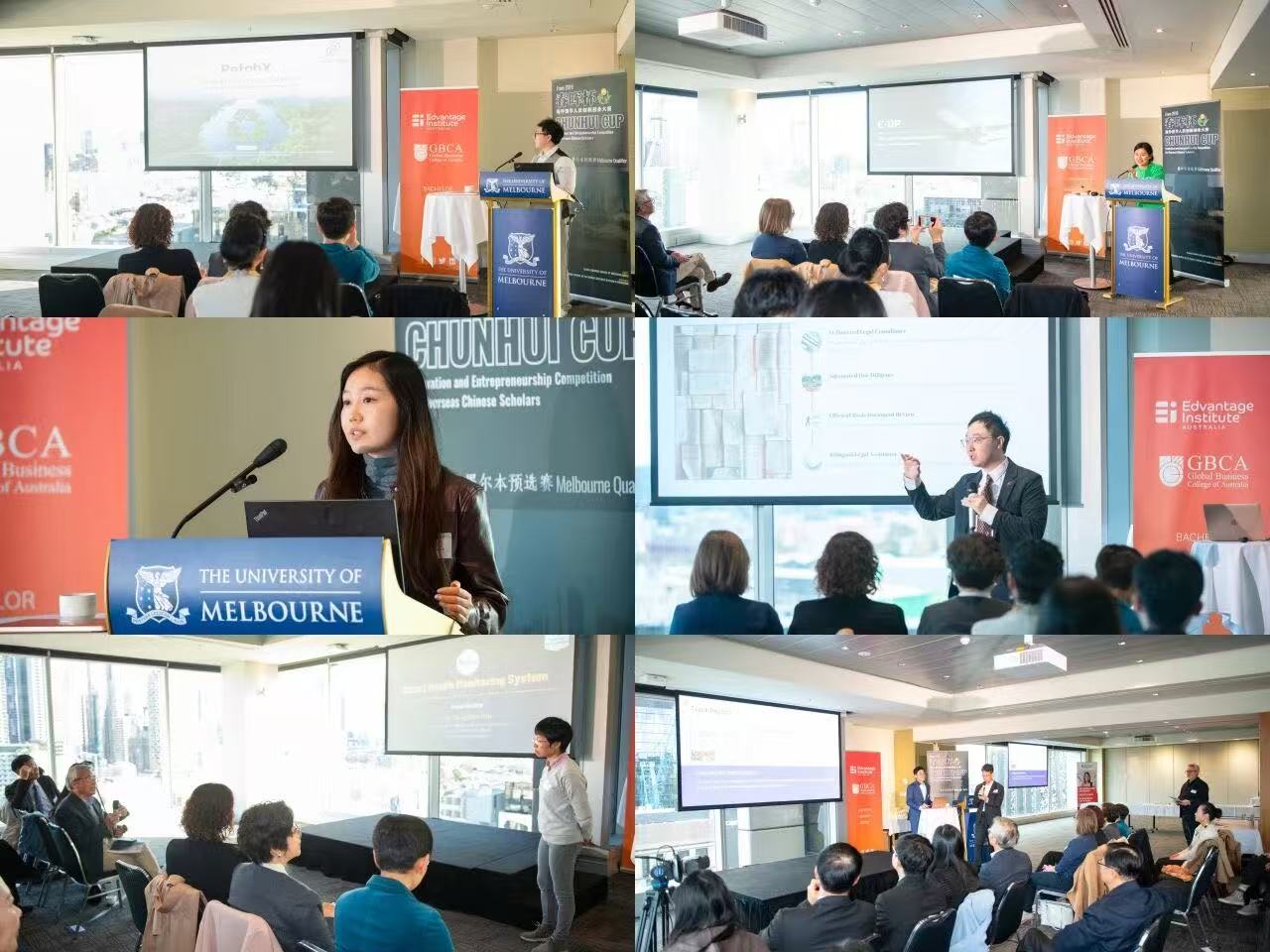
 获奖团队代表依次进行项目展示,覆盖人工智能、健康科技、绿色制造、教育创新等前沿领域,充分展现留学生的卓越创造力与全球视野。

聚力双赛道 链接大湾区-zhsailing

(获奖项目路演)

聚力双赛道 链接大湾区-zhsailing

(评审委员会点评项目)

本届评审团汇聚中澳学术、产业与投资领域专家,提供兼具国际化与实用性的深度点评。评审委员会包括斯威本科技大学副校长韩清龙院士、墨尔本皇家墨尔本理工大学贾宝华院士和马天翼杰出教授、墨尔本大学癌症信号研究实验室主任朱宏剑高级研究员、Pathwize创始人Tristonne Forbes女士、ResTech联合创始人Bianca La Serra女士、亚洲数科集团战略总监凌恒先生、人工智能研究所创始人周建新教授、恒生前海基金管理有限公司独立董事梁智维教授、国宏嘉信资本投资经理冉坤先生等。

聚力双赛道 链接大湾区-zhsailing

(评审委员会主席韩清龙副校长进行闭幕总结)

 评审委员会主席韩清龙校长在总结中强调,本届春晖杯展现了更高水平的国际化:学术创新赛道强调科研突破与社会价值,需要进一步突出差异化与成果积累;创新创业赛道创意活跃,展现市场潜力,在客户验证和商业模式上仍需打磨。韩教授强调,两大赛道互为补充,为青年学子提供了锻炼与成长的平台,并勉励大家结合国家战略与大湾区资源,把创新理念真正转化为成果。

典礼后的茶点交流环节气氛热烈。政、学、商界嘉宾与青年创客面对面畅谈,探讨项目落地与未来合作。这一高端交流平台不仅推动创新成果转化,更强化了“春晖杯”作为中澳创新合作桥梁的作用。

聚力双赛道 链接大湾区-zhsailing

澳洲国际商学院总裁廖伊曼(左一),首席运营官Sophia Wang女士(右一)欢迎各界代表出席春晖杯

 二十载春晖,十年墨城,七载主办。春晖杯墨尔本预选赛不仅记录了留学人员的创新征程,也彰显了澳大利亚国际商学院扎根澳洲、联动大湾区的战略远见。

当下,全球治理倡议的融入为赛事注入了新的高度与格局。一方面,它将吸引更多胸怀世界的留学人员投身春晖舞台,拓展大赛的国际化影响力;另一方面,也将促使参赛项目更加注重跨国合作与社会责任,在创新创业与全球治理的结合中寻找突破。因此,春晖杯不止于赛事,更是一股推动全球治理体系变革的青春力量。它让留学人员的智慧与梦想,与构建人类命运共同体的宏大愿景同频共振。

作为大赛第七年主办方,澳洲国际商学院(GBCA)及其所在华商科教集团始终以“教育联通世界、创新引领未来”为机构使命。本届大赛不仅是商学院持续推动中澳人才与技术交流的例证,更是其前瞻布局粤港澳大湾区——这一国家战略核心增长极的关键举措。通过发起“大湾区直通机制”,商学院为优秀项目搭建“墨尔本研发—大湾区转化—全球市场”的高速通道,真正实现创新要素的无国界流动,彰显其作为国际教育枢纽的深远战略定位。

本文来源于澳洲国际商学院报道(本文有删减)

Zhsailing.com 报道


Article inline ad