Wednesday, November 25, 2026

Home Blog Page 166

Digital Economy Spurs Firms’ Growth

0

By ZHOU MO in Shenzhen | China Daily | Updated: 2025-09-24 09:17

The global digital economy’s rapid growth is providing new development space for Chinese companies to expand overseas, with emerging markets gaining momentum driven by their young population, according to a recent report.

 Although the size of the digital economy in emerging markets such as Southeast Asia, Latin America and the Middle East currently is relatively smaller, these markets’ demand for digital consumption is increasing quickly and their internet penetration rate has large room for growth.

 These emerging markets offer vast development space and significant growth potential for Chinese enterprises, according to the report, jointly released by Tencent Cloud and ShineGlobal on the sidelines of the 2025 Tencent Global Digital Ecosystem Summit held in Shenzhen last week.

 The younger generation in the emerging markets embraces new technologies and demonstrates a robust demand for digital consumption. This trend is particularly evident in Southeast Asia, Latin America and the Middle East, which serve as significant sources of user growth for digital entertainment and represent key incremental markets for cross-border e-commerce, the report found.

 According to the report, the median age of the population in Southeast Asia is 30.1 years, while that in the Middle East is 28.9 years. By comparison, the figures for North America and Europe stand at 40.4 and 43.2, respectively.

 The younger population have a higher preference for online shopping, which fuels e-commerce development in those regions. The retail e-commerce market in Latin America is expected to hit $228 billion yuan by 2028, representing a compound annual growth rate of 11 percent.

 Meanwhile, the compound annual growth rate of social e-commerce in the Middle East is projected to reach 16 percent in the next five years.

 To grasp the vast opportunities of emerging markets, Tencent Cloud is ramping up its digital infrastructure globally to help Chinese enterprises with their international expansion drive. It has announced plans to invest $150 million to build a data center in Saudi Arabia, the first of its kind in the Middle East region. It is also establishing its third data center and office in Osaka and setting up nine major technical support centers in cities including Jakarta, Singapore, Tokyo, Seoul and Frankfurt.

 The primary challenge of building a data center in the Middle East lies in the complex compliance procedures associated with heavy-asset projects like data centers, said Xu Huabin, vice-president of Tencent Cloud.

 “Unlike content-related or entertainment-related overseas expansion, which involves relatively simpler processes, data center construction requires strict adherence to local filing, registration and regulatory requirements,” he noted.

 “Critical to success is recognizing that domestic application procedures cannot be directly applied. Instead, a localized approach led by professionals familiar with regional regulations is essential.”

 Tencent Cloud’s international business has maintained a high double-digit growth rate over the past three years, according to the company. This business has become its new growth engine, with overseas customers doubling year-on-year in the past year.

 When Chinese enterprises make decisions on overseas investment, the key priority should be whether their core business can be replicated, rather than first considering the input-output ratio, said Zhang Zheng, vice-president of Chinese digital and creative software company Wondershare.

 “Take Southeast Asia as an example. Despite the robust growth of many Chinese enterprises in the region, we did not invest heavily there in the early stage. The main reason is that the Southeast Asian market lacked a strong software payment habit — local users are more willing to accept ad-supported software. Therefore, we put our focus on mature markets such as North America and Europe,” he said.

 sally@chinadailyhk.com
 

Article inline ad

Emerging Tech Reshaping Manufacturing

0

By Shi Jing in Shanghai | China Daily | Updated: 2025-09-24 09:13

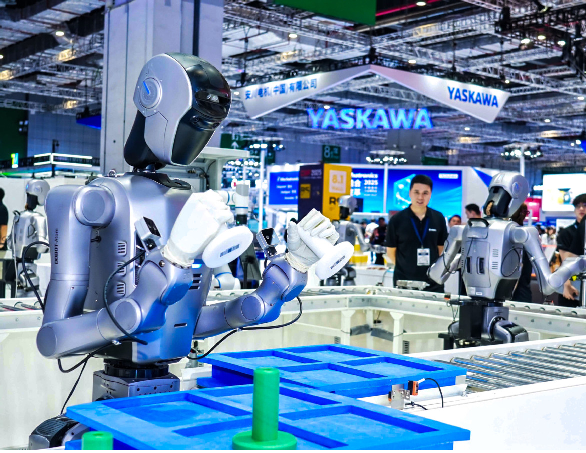
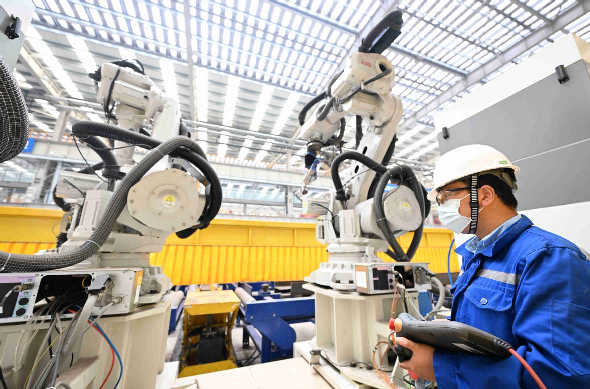
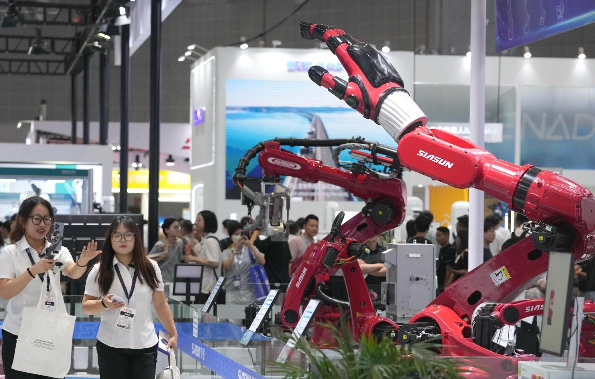
Emerging technologies such as artificial intelligence have been playing a bigger role in upgrading China’s manufacturing industry and new industrialization, officials and company executives at the 25th China International Industry Fair said.

 This year’s CIIF, which runs from Tuesday to Saturday in Shanghai, will debut more than 1,000 new technologies and products either nationally or globally, setting a new record. Covering about 300,000 square meters, another record, the CIIF has now outgrown its peer, the 78-year-old Hannover Messe, in size.

 This year’s CIIF also has more international exhibitors than in previous editions, attracting 3,000 companies from 28 countries and regions including Germany, Japan and the United States.

 Swiss manufacturing giant ABB is unveiling its Integrated Vision 2.0 version at the CIIF. By applying artificial intelligence, this latest vision-guided robotics solutions application can adapt to most cameras in the market and connect to the entire system in 30 minutes, significantly lowering costs, according to the company’s marketing promotion executive Liu Hao.

 In light of the interdisciplinary breakthroughs and collective leapfrogs being made in technology innovation, China will explore new trajectories like humanoid robots, brain-computer interfaces, metaverse and quantum information to accelerate its new industrialization process, Minister for Industry and Information Technology Li Lecheng said during the opening ceremony on Tuesday.

 Shanghai Mayor Gong Zheng said the city has been attaching greater importance to fundamental research into core technologies and building high-quality incubators, centers for proof of concept and institutions for technology transfers, in a bid to transform more research results into products and, eventually, industries.

 Leading Chinese robotics companies including Siasun Robot & Automation, Chaifu Robot and Jaka Robotics will display their latest technologies during the fair.

 Chaifu is showcasing the world’s first heavy-duty industrial robot with a rated load capacity greater than 5 metric tons at the wrist, enough to lift a car.

 According to the company’s marketing manager Cao Jiahao, the robot can be used for transporting oversized tools and handling extreme conditions in manufacturing, logistics, construction and mining.

 Shanghai SmartState Technology Co Ltd, a first-time CIIF participant, is present at the special zone demonstrating the application of AI in machine tools.

 Company executives said the smart agent they are debuting can serve as the brain for machine tools, enabling them to think and evolve on their own. Once given a task, the agent can work out plans, make decisions and optimize processing paths on its own, making its efficiency rate 40 percent higher than other industrial software.

 Haizol, a digital platform for industrial components, is showcasing AI tools that can help Chinese companies discover new business opportunities.

 In Yongkang, Zhejiang province, where nearly 70 percent of the world’s stainless drinkware is produced, Haizol helped a client to redefine itself into a stainless steel stamping factory.

 The company has thus extended its business from bottles to high-performance water storage equipment liners used in the aerospace field and insulin injection liquid storage devices with vacuum layers, of which the latter has a gross profit margin of 80 percent.

 These new products are proving popular overseas, according to Haizol’s partner and Vice-President Liu Haitao.

 shijing@chinadaily.com.cn

Article inline ad

Alibaba Partners With Nvidia To Advance Physical AI

0

By Fan Feifei | chinadaily.com.cn | Updated: 2025-09-24 17:18

Chinese tech heavyweight, Alibaba Group Holding Ltd, announced a partnership with US tech firm Nvidia on Wednesday, joining forces in the field of physical AI, as part of a broader push to bolster its technological advancements in AI.

 Physical AI refers to the integration of AI into autonomous systems, enabling them to perceive, understand, and perform complex actions in the physical world. While traditional AI primarily processes data like text or images, physical AI focuses on spatial relationships and the physical behavior of the 3D world. This is achieved by training AI models with data generated from highly accurate simulations of real-world environments.

 Alibaba Cloud’s AI platform will integrate with Nvidia’s physical AI software to provide users with data preprocessing, synthetic data generation, model training and evaluation, and robot reinforcement learning, according to Alibaba. The technology could significantly shorten the development cycle for embodied intelligence technology, assisted driving, and other applications.

 The announcement came during the Apsara Conference 2025, Alibaba Cloud’s annual flagship technology conference.


Article inline ad

Innovation Attracts Foreign Delegations To China International Industry Fair

0

By SHI JING in Shanghai | chinadaily.com.cn | Updated: 2025-09-23 14:07

Emerging technologies such as artificial intelligence have been playing a bigger role in the upgrading of China’s manufacturing industry and the process of new industrialization, according to officials and company executives at the 25th China International Industry Fair (CIIF).

 This year’s CIIF, which is running in Shanghai from Tuesday until Saturday, will see more than 1,000 new technologies and products make their national or global debut, setting a new record. Covering about 300,000 square meters, also a record high, the CIIF has now outgrown its peer, the 78-year-old Hannover Messe, in size.

 This year’s CIIF also has more international exhibitors than previous editions, attracting 3,000 companies from 28 countries and regions including Germany, Japan and the United States.

 The Saudi Arabian delegation, for example, is demonstrating progress in industrial transformation, the Industry 4.0 initiative and smart manufacturing, which are part of the country’s Vision 2030 strategy.

 Swiss manufacturing giant ABB is unveiling its Integrated Vision 2.0 version at this year’s CIIF. By applying artificial intelligence, this latest vision-guided robotics solutions application can adapt to most cameras in the market and connect to the entire system in 30 minutes, significantly lowering cost, according to the company’s marketing promotion executive Liu Hao.

 Minister for Industry and Information Technology Li Lecheng said at Tuesday’s opening ceremony that China intends to deepen global cooperation by aligning with international standards and further facilitating the construction of global industrial chains and supply chains featuring high security, efficiency, inclusiveness and mutual benefits.

 In light of the interdisciplinary breakthroughs and collective leapfrogs being made in technology innovation, China will explore new trajectories like humanoid robots, brain-computer interfaces, metaverse and quantum information to accelerate its new industrialization process, he added.

 “The CIIF is projected to create an open and coordinated smart industrial ecosystem, providing China’s solutions for global industrial transformation and upgrading,” said Tang Wenkan, deputy director of the Shanghai Commission of Economy and Informatization.

 Shanghai’s Mayor Gong Zheng said at the opening ceremony that the city has been advancing a form of industrial transformation and technology innovation that is grounded in the real economy.

 Attaching greater importance to fundamental research into core technologies, Shanghai has been dedicated to building high-quality incubators, centers for proof of concept and institutions for technology transfers in a bid to transform more research results into products and, eventually, industries, he said.

 Leading Chinese robotics companies including Siasun Robot & Automation, Chaifu Robot and Jaka Robotics will all display their latest technology during the fair.

 Chaifu is showcasing the world’s first heavy-duty industrial robot with a rated load capacity greater than five tons at the wrist, enough to lift a car. According to the company’s marketing manager Cao Jiahao, the robot can be used for transporting oversized tools and handling extreme conditions in manufacturing, logistics, construction and mining.

 As well as upgrading its home appliances, industry giant Gree has been pursuing progress in industrial equipment such as CNC machine tool and chips, as well as green energy technologies.

 “Industrial equipment is the very basis of high-quality products,” said Gree chairwoman Dong Mingzhu.

 “The core of manufacturing is technologies rather than production procedures, whether it is about compressor, motor, capacitor or enameled wire. Therefore, technology self-reliance is vital.”

A special zone demonstrating the application of AI in machine tools has been added to this year’s CIIF for the first time. Shanghai SmartState Technology Co Ltd is attending the fair for the first time, and company executives say the smart agent they are debuting can serve as the brain for machine tools, enabling them to think and evolve on their own.

 According to SmartState executives, once given a task, the agent can work out plans, make decisions and optimize processing paths on its own, making its efficiency rate 40 percent higher than other industrial software. With a micrometer-level control accuracy, the agent can program processing paths that no engineer can preset, meeting actual working condition requirements, they added.

 Haizol, a digital platform for industrial components, is showcasing AI tools that can help Chinese companies discover new business opportunities.

 In Yongkang in Zhejiang province, where nearly 70 percent of the world’s stainless drinkware is produced, Haizol helped a client to redefine itself into a stainless steel stamping factory. The company has thus extended its business from bottles into high-performance water storage equipment liners used in the aerospace field and insulin injection liquid storage devices with vacuum layers, the latter of which carries a gross profit margin of 80 percent. These new products are proving popular in the overseas market.

 According to Liu Haitao, Haizol partner and vice-president, a single AI tool can be used in the manufacture of all these products, helping companies to break through industry limitations without changing their techniques.

 A business matchmaking event was held during the Tuesday session to better link the companies along the machine tool industrial chain while integrating AI more efficiently. This is part of Shanghai’s efforts to address the Ministry of Industry and Information Technology (MIIT) action plan, released in July 2024, to cater to the development needs of machine tool companies.

 Three demonstration platforms for pilot-scale experiments which will facilitate development of high-end machinery equipment, humanoid robots and new types of energy storage were unveiled during Tuesday’s opening ceremony. Pilot-scale experiments are being conducted to validate findings from lab-scale experiments and gather data for commercialization.

 Also on Tuesday, Pudong New Area nominated Shanghai’s first batch of eight government-authorized chief manufacturing officers. Specializing in emerging technologies, including integrated circuitry, biomedicine, aviation, new-generation electronic information, the officers, who are also company executives, are tasked with providing forward-looking consultation and industry insights which are conducive to the concerted and high-quality development of various industries, according to Pudong officials.

 A guideline for the high-level development of industrial parks detailing 19 approaches was also released by the MIIT and the National Development and Reform Commission during Tuesday’s opening ceremony.


Article inline ad

AI March Heats Liquid Cooling Demand

0

By Li Jiaying | China Daily | Updated: 2025-09-24 

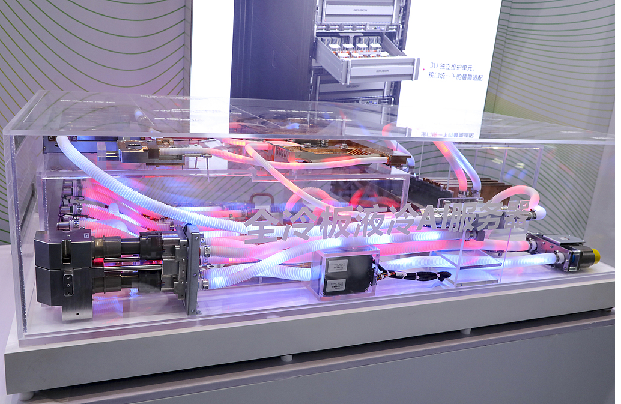
The surging demand for higher computing power is driving the growth of China’s liquid cooling sector, with global players such as Castrol seeing huge business opportunities, said a senior executive.

 “Although traditional air cooling still dominates, the rising demand for GPUs (graphics processing units) driven by AI development requires much higher thermal efficiency and the future market will undoubtedly belong to liquid cooling, which offers far greater performance,” said Peter Huang, global president of British lubricant supplier Castrol’s thermal management and data center business.

 From the chip perspective, Huang said some high-end GPUs may consume over 1,000 watts nowadays, comparable to household microwaves and ovens. When a single chip reaches this level, an entire cabinet can easily surpass 50 kilowatts, or even 100 kW, as seen in next-generation AI servers from Nvidia and Inspur.

 Liquid cooling helps manage heat generated by high-performance computing systems, servers and data centers — increasingly related to artificial intelligence — using a liquid medium.

 “Such high-density cabinets can only rely on liquid cooling technology,” Huang added.

 According to the latest data from high-tech industry consultancy TrendForce, as cloud operators accelerate AI data center upgrades, liquid cooling penetration worldwide is forecast to rise from 14 percent in 2024 to 33 percent in 2025, with further growth ahead.

 “When power reaches 70 to 80 kW, hybrid cooling is still possible, but beyond 100 kW, air cooling is ineffective and liquid solutions are the only way,” Huang explained.

 It is now widely recognized by industry players that if a data center runs AI computing, about 70 percent of resources are allocated to GPUs and 30 percent to storage or cloud services, he added.

 “With 70 percent of resources used for AI computing, at least 70 percent of equipment must adopt liquid cooling, showing great market potential for the new technology,” he said.

 In China, the liquid cooling server market is expected to grow at a compound annual rate of 46.8 percent between 2024 and 2029, reaching $16.2 billion by 2029, said global market consultancy IDC.

 Huang described China’s liquid cooling industry as being at a “critical and opportunity-rich stage”.

 “Most liquid cooling product lines start from hardware, and China is undoubtedly the best in the world in terms of design and manufacturing,” he said. “The range of supplies and application scenarios is also very complete, which is why we attach such great importance to this market.”

 For example, in places such as Dongguan, Guangdong province, many refrigeration and air-conditioning companies are shifting to liquid cooling component manufacturing, contributing to a rather complete and mature supply chain, the executive added.

 However, Huang also pointed to challenges as the industry moves from a component focus to integration and new business models.

 “Many companies are still at the stage of ‘having a good product’, but when it comes to design, deployment and meeting end-user needs, there is still room for integrated development. We see great potential in this area,” he said.

 In response, Castrol has introduced its end-to-end liquid cooling solutions first in the China market this month, covering deployment, operation, maintenance and upgrades across the full lifecycle.

 “Leveraging China’s supply chain advantages, we aim to build comprehensive solutions that directly serve end customers, where we see tremendous market opportunities,” Huang said.

 lijiaying@chinadaily.com.cn

Article inline ad

Chinese Stocks End Mixed; Chinext Gains In Late Rally

0

By Li Jing | chinadaily.com.cn | Updated: 2025-09-23

China’s A-share market closed mixed on Tuesday, with the ChiNext Index reversing losses to finish higher in late trading.

 The benchmark Shanghai Composite Index slipped 0.18 percent to 3,821.83, while the Shenzhen Component Index fell 0.29 percent to 13,119.82. In contrast, the ChiNext Index, which tracks growth-oriented companies, rose 0.21 percent to 3,114.55.

 Shipping and port stocks advanced following the launch of the China–Europe Arctic container express route, which is expected to shorten transit times. Semiconductor shares also rebounded after early weakness, while banking stocks lent further support.

 Strategists at Huatai Securities noted that sentiment remains volatile under liquidity-driven conditions, adding that capital flows will be key to determining whether indexes can break out of their recent consolidation.

 Investor activity stayed elevated, with retail participation strong and margin financing posting a net inflow of nearly 50 billion yuan ($7.03 billion) last week. However, momentum eased slightly as mutual fund allocations edged lower and foreign investors turned from three consecutive weeks of net buying to modest outflows.

 Analysts cautioned that the sustainability of capital inflows will be critical for supporting further market upside.


Article inline ad

Value Of Chinese Tech Stocks Surpasses Financials, Real Estate

0

By Zhou Lanxu | chinadaily.com.cn | Updated: 2025-09-22

Technology-related stocks now account for over one-fourth of the total market capitalization of the A-share market, far surpassing the combined weight of the financial and real estate sectors, the China Securities Regulatory Commission said on Monday.

 This is part of the achievements made by the country’s capital market in the 14th Five-Year Plan period (2021-25), Wu Qing, chairman of the CSRC, said, reflecting that the capital market is shifting into higher gear in support of innovation-driven development.

 Listed companies have also shown stronger awareness of serving investors, Wu said at a news conference on Monday. The value of dividends and share buybacks reached 10.6 trillion yuan ($1.49 trillion) in the five-year period, more than twice the combined proceeds from IPOs and refinancing, rising by more than 80 percent compared with the 13th Five-Year Plan period (2016-2020).

 Over the past five years, equity and bond financing on the exchange markets totaled 57.5 trillion yuan. The share of direct financing in the country’s total financing has steadily risen — up 2.8 percentage points from the end of the 13th Five-Year Plan period to 31.6 percent.

 Meanwhile, China has continued to expand its financial sector’s opening-up.

 According to Wu, regulators have approved 13 foreign-controlled securities, fund and futures institutions to enter the domestic market during the 14th Five-Year Plan period. Foreign investors now hold about 3.4 trillion yuan of A shares, while 269 Chinese companies are listed overseas.

Article inline ad

Hanwang Technology Launches New Blood Pressure Monitor

0

By ZHENG YIRAN | chinadaily.com.cn | Updated: 2025-09-23

Hanwang Technology Co Ltd announced the launch of a new generation electronic blood pressure monitor and donation of a batch of monitors to offer a healthcare solution with higher cost performance and contribute to the country’s Health China 2030 strategy.

 The newly launched electronic blood pressure monitor leverages medical-grade Korotkoff sound technology and integrates five health measurements – blood pressure, atrial fibrillation, pulse pressure, irregular pulses, and tachycardia – into one compact unit, effectively bringing clinical-grade accuracy into everyday households.

 The launch of the product challenges the industry’s entrenched practice of gradient pricing. Liu Qiutong, director and vice-president of Hanwang Technology, said at the launch ceremony that while basic oscillometric monitors typically retail between 100 yuan ($14) and 200 yuan, accurate devices with clinical-grade capabilities have traditionally been priced over 500 yuan, with some imported brands exceeding 1,000 yuan, creating a significant barrier to reliable home monitoring for millions of patients.

 Wang Zengwu, a physician at Beijing-based Fuwai Hospital, Chinese Academy of Medical Sciences, pointed out that China is home to an estimated 270 million hypertensive patients, with a pronounced shortage of accurate and affordable monitoring solutions for grassroots communities. Moreover, hypertension incidence among adults aged 35 to 44 has surged by 74 percent in recent years, creating demand for easy-to-use and cost-effective devices.

 Liu emphasized the company’s commitment to health equity. “Health equity should not be compromised by pricing tiers. Our goal is to deliver an all-rounder with exceptional cost-performance, enabling more people to benefit from accurate, affordable health monitoring and enjoy the health dividends brought by the technological era.”

 By incorporating an AI-driven management platform that enables users to track long-term trends, Hanwang fosters a more proactive and connected home-based chronic disease management ecosystem, providing tangible support for the nationwide Healthy China 2030 campaign, the company said.


Article inline ad

China Conducts 300b-Yuan Reverse Repo Operation

0

Xinhua | Updated: 2025-09-23

BEIJING – The People’s Bank of China (PBOC), which is the country’s central bank, on Monday conducted 300 billion yuan ($41.2 billion) of 14-day reverse repos, in the first such operation since it adjusted the tool’s bidding rules last week.

 The operation was carried out through fixed-volume, interest rate tenders with multiple bid prices, the PBOC said.

 The central bank last week changed the bidding mechanism for 14-day reverse repos from a single bid price to multiple bid prices. The move allows institutions greater flexibility in market-based pricing and better reflects their differentiated funding needs.

 The PBOC typically launches 14-day reverse repos ahead of major holidays such as the National Day holiday and the Spring Festival to inject liquidity into the banking system.

 “The launch of the 14-day reverse repo came slightly earlier than it has in previous years, helping ensure stable liquidity through to the end of the quarter and the holiday period, and reflecting a moderately loose monetary policy stance,” said Wang Qing, chief macro analyst at Golden Credit Rating.

 Wang added that the move is a further refinement of the central bank’s liquidity management toolbox and reinforces the policy role of the seven-day reverse repo rate.

 In addition to the 14-day operation, the central bank also conducted 240.5 billion yuan of seven-day reverse repos on Monday through fixed-rate, volume tenders.

 A reverse repo is a process in which the central bank purchases securities from commercial banks through a bidding process, with an agreement to sell them back in the future.


Article inline ad

SHFE Intensifies Efforts To Broaden Product Portfolio

0

By SHI JING in Shanghai | China Daily | Updated: 2025-09-23

The Shanghai Futures Exchange has marked yet another major step forward in internationalization.

 It has from Sept 10 started listing offset paper futures and options, the first such financial derivatives for the cultural paper industry.

 Apart from helping companies in the cultural paper industrial chain better manage risks, the newly introduced financial tools will help shape a China pricing benchmark, attracting participation from global investors, said Xu Xiangnan, deputy Party secretary of the China National Light Industry Council.

 According to Huang Dongdong, general manager of the pulp and paper business department at Xiamen ITG Group, China is the world’s largest producer and consumer of cultural paper. The launch of offset paper futures and options can help build an objective pricing system, providing important benchmarks for domestic and international trade, he said.

 The SHFE also listed on Sept 10 options for fuel oil, bitumen and wood pulp. Together with the bitumen futures that started trading on the SHFE in 2013, these four products were included in the qualified foreign investors program the same day, providing access to international investors.

 These are part of SHFE’s continued efforts to complete its product portfolio and advance the high-level opening-up of the Chinese futures market, said SHFE Chairman Tian Xiangyang.

 Two months before the introduction of the new products, SHFE released the international version of its business rules. Amendments have been made regarding rules on market entry, transactions, settlement, risk control and delivery.

 According to SHFE officials, such preparation is crucial for opening new futures and options contracts to overseas special participants, intermediaries and clients in the future.

 In July, SHFE and its subsidiary Shanghai International Energy Exchange, or INE, were officially approved for inclusion on Malaysia’s list of Specified Exchanges. Malaysian investors are now able to trade futures products in the Chinese market more conveniently through their local brokerages.

 Malaysia marks the first overseas jurisdiction where SHFE has completed regulatory registration. It is the third overseas jurisdiction — after Hong Kong and Singapore — where INE has successfully obtained such registration.

 The launch of yuan-denominated crude oil futures on the SHFE in 2018 served as a major milestone in the internationalization steps of the exchange.

 Currently, a total of six products are directly accessible to international investors, including copper futures, low-sulfur fuel oil futures and container freight index (Europe service) futures. A total of 28 futures and options are open to QFIs.

 In May, Shanghai natural rubber futures were officially listed on the Osaka Exchange, a Japan Exchange Group company. The contract references the settlement price of the natural rubber futures listed on the SHFE.

 According to Yokoyama Ryusuke, president and CEO of OSE, this has expanded the hedging channels for industrial clients in Japan as well as investors across the globe.

 Before the opening-up of the Chinese futures market, China’s international trade was largely determined by nonnegotiable prices and long-term orders, said Chen Canzhong, deputy general manager of Zhejiang province-based Wankai New Materials Co Ltd.

 Due to this, prices were nontransparent and imprecise.

 It was difficult for companies to avoid risks in the price fluctuations of raw materials. Sometimes, companies missed the right opportunities due to information lag. When it came to the delivery of goods, there were problems of delayed logistics or a trust crisis, he said.

 But as China advances the internationalization of the futures market, these problems are being addressed in an orderly manner. Companies can secure their profits in advance by setting up their own cost and profit management systems built on futures prices, which are more transparent now. More importantly, companies are more confident when they negotiate prices with their business partners, he said.

 Tiger Shi, cofounder and CEO of BANDS Financial, said China’s futures market has become appealing to international investors as the country is the world’s largest manufacturer.

 Shanghai has set its sights high.

 In a three-year action plan released in April to promote the city’s commodity trade between 2025 and 2027, the Shanghai municipal government said that the city’s commodity trade should exceed 10 trillion yuan in 2027. The trading of commodities based on pricing offered at the Shanghai exchanges should play a bigger role by then.

 This has echoed a guideline on the high-quality development of the Chinese futures market, which was released by the State Council, China’s Cabinet, in 2024.

 According to the circular, China’s major futures products should attract high participation from global investors by 2035. The country’s influence in commodity pricing and market competitiveness should be significantly improved by that time, it said.

Article inline ad