Wednesday, November 25, 2026

Home Blog Page 171

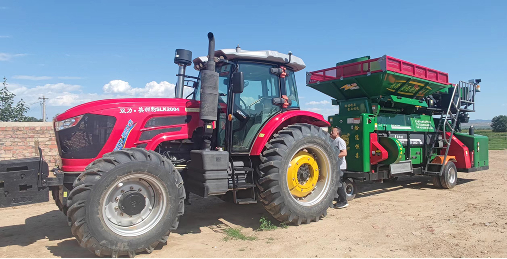
Shandong Shonly Modern Agricultural Equipment Co., LTD.

0

The company is Shandong Shonly Modern Agricultural Equipment Co., LTD., is engaged in large, medium and small tractors, grain combine harvesters, tricycles and agricultural machinery company. Our products are supplied to farmers, ranchers, agricultural cooperatives and municipal engineering companies through our authorized domestic and foreign agents.

In recent years, global population problems, climate change, environmental issues, and food security issues have led to the increasing importance of agriculture. In addition, farmers and agricultural employment population is decreasing, reducing the burden of farmers, improving the efficiency of agricultural machinery has quickly become the focus of the public and governments.

IT is foreseeable that in the near future, large-scale agriculture will become the mainstream of agricultural production, and efficient, high-performance and high-precision agricultural machinery based on IT and AI technology will also be rapidly promoted and developed.The company will conform to the trend of The Times, increase investment in product research and development, and provide farmers with high-quality, high-power and new technology agricultural machinery, so that farmers can use agricultural machinery safely, safely, conveniently and happily. As a member of the large family of agricultural machinery industry, Shonly will wholeheartedly serve the continuous progress of global agriculture and contribute to the further development of global agriculture.

Product Category

Shandong Shonly Modern Agricultural Equipment Co., LTD.-zhsailing

Tractor

Corn Harvester

Diesel Tricycle

Tractor Attachments

Grain dryer

Tags

three wheeled diesel tricycle ;mini tractor

heavy duty disc harrow

 4×4 wheel utility compact tractor

 60hp farm tractor ;tractor agriculture

farm tractor; small tractor

tractor tractor ;changchai engine tricycle

tractor farm; cargo tricycle

weichai engine tractor ;cleaning city

 corn cob harvester ;70hp farm tractor

Rotary tiller blades ;agricultural tractor

Ploughing machine agricultural ; tractor Russia

https://www.shonlygroup.com/products.html

E-mail:info@shuangligroup.cn

Mobile:+86 185 0536 7306

Tel.:+86 635 5811 111

Fax:+86 635 5812 888

WeChat:+86 185 0536 7306

Skype:danniema918@outlook.com

WhatsApp:+8618505367306

Add.:South side of Road S329, Jiazhen, Guanxian County, Shandong Province, China

Article inline ad

Better profits seen as key to boosting A-share market

0
By SHI JING in Shanghai | China Daily | Updated: 2025-09-02 09:18

Improved profits of listed companies, likely to be sustained by China’s supportive policies and economic recovery, will be an important driver of A-share market performance in the following months, experts said.

The comments came after the average net profits of A-share companies rose 9.02 percentage points year-on-year to 2.43 percent during the first six months, according to interim results reports released at the end of August.

It is the first time that A-share companies are reporting growth after seeing negative profits for a long time, said Xia Fanjie, an investment strategist at CSC Financial Co Ltd.

The annual profit increase came in at 11.56 percent during the first quarter, even as it narrowed in the following three months. But a clear turning point in the profitability cycle is being seen now, Xia said.

Price and cost pressures have been relieved and consumption confidence has recovered, helping to push up revenues. Expanded fiscal expenditure and trade-in policies have further boosted domestic demand. These have led to a significant increase in the profits of A-share companies, said Xia.

Against the backdrop of a mild economic recovery, industry leaders have managed to increase profits, thanks to their pricing power over the supply chain, strengths in cost control and higher financing accessibility. The more eye-catching profits reported by growth enterprises have reflected the structural opportunities amid industrial upgrading and favorable policies, he said.

According to market tracker Wind Info, a robust recovery was seen in the agricultural, computer and electronics industries in the first six months. A-share agricultural, forestry, livestock and fisheries companies reported a net profit spike of 165.7 percent during the first six months of the year.

The year-on-year profit increase for computer and electronics companies was 41.17 percent and 28.5 percent, respectively, reflecting the outstanding performance of the overall technology sector, said Xia.

A-share companies’ profits will significantly improve this year, partly because of the indicator’s sluggish performance over the previous year or so, Meng Lei, China equity strategist at UBS Securities, said during a news meeting on Monday.

Given the low base figures during the second half of 2024, the profit increase is likely to speed up in the following months and the whole-year growth rate is estimated at around 6 percent, he said.

Industrial companies’ profits, which are released every month, are positively related to A-share industrial companies’ profitability, which is released on a quarterly basis. Industrial companies’ profits have bottomed out since June. Therefore, a positive outlook can be inferred for A-share companies’ profitability, said Meng.

Yang Fan, chief macro and policy analyst at CITIC Securities, said that China’s efforts to create a fair competition environment have started to positively affect industrial companies’ profits.

One proof is that raw material providers have started to see prices rebound in July. Emerging industries including semiconductor, aerospace and medicine have all benefited from such efforts in terms of profits, she said.

Prices will go up mildly in the second half of this year, helping to maintain the stability of public companies’ profits. External demand is estimated to remain resilient, helping exporters and outbound companies to continue their upswing, she added.

Experts from Huajin Securities said that the A-share market will show an uptick in September as companies’ profits continue to grow.

The benchmark Shanghai Composite Index gained 0.46 percent to close at 3875.53 points on Monday, while the Shenzhen Component Index closed 1.05 percent higher.

The technology-focused ChiNext in Shenzhen jumped 2.29 percent. The combined trading value of the Shanghai and Shenzhen exchanges reached 2.75 trillion yuan ($390 billion).

Risk appetite will continue to improve amid a stronger profitability outlook, said analysts from Dongguan Securities. This will help to bolster market confidence and provide more upward momentum in a relaxed liquidity environment, they said.

Technology innovation, the core competitiveness of Chinese companies, should be the focus for investments in the country, said Fang Dongming, head of China Global Markets at UBS, at the news meeting on Monday.

Article inline ad

Alibaba Reports Growth In E-Commerce And Cloud Computing Sectors

0

By Fan Feifei | chinadaily.com.cn | Updated: 2025-09-01

Chinese tech giant Alibaba Group Holding Ltd said its revenue stood at 247.65 billion yuan ($34.6 billion) during the April-June period, an increase of 2 percent year-on-year, with its core e-commerce and cloud computing businesses reporting robust growth.

 The company’s net income stood at 42.4 billion yuan during the second quarter, up 76 percent year-on-year, primarily due to mark-to-market changes from its equity investments and gains from the disposal of the local consumer service business Trendyol, partly offset by the decrease in income from operations.

 Wu Yongming, CEO of Alibaba Group, said the company’s strategic focus on consumption and AI delivered strong growth during the quarter. “Driven by robust AI demand, Cloud Intelligence Group experienced accelerated revenue growth, and AI-related product revenue is now a significant portion of revenue from external customers,” he said.

 Wu added that Alibaba remains committed to investing in its two strategic pillars of consumption and AI plus cloud to capture historic opportunities and drive long-term growth.

 For the quarter ending June 30, revenue from its cloud business rose 26 percent year-on-year to 33.4 billion yuan. This momentum was primarily driven by public cloud revenue growth, including the increasing adoption of AI-related products.

 AI-related product revenue achieved triple-digit year-on-year growth for the eighth consecutive quarter. The company said that, as AI demand continues to grow rapidly, it is seeing increased demand for computing, storage and other public cloud services to support AI adoption.

 It will continue to invest in anticipation of customer growth and technology innovation, including AI products and services, to increase cloud adoption for AI.

 Alibaba’s significant investment in instant retail through the launching of its “Taobao Instant Commerce” service contributed to a 25 percent year-on-year increase in monthly active consumers on the Taobao app in the first three weeks of August.


Article inline ad

Sinovac Biotech Announces Initiative To Boost China’s Biopharmaceutical Supply Chain

0

By Li Jing | chinadaily.com.cn | Updated: 2025-09-01

Chinese vaccine company Sinovac Biotech Ltd has teamed up with 69 partner companies to launch the Laifu Initiative, which is aimed at strengthening innovation and resilience across China’s biopharmaceutical supply chain.

 The initiative was unveiled at Sinovac’s recent supply chain ecosystem conference in Beijing. The joint effort reflects a broader shift in China’s biopharma sector from traditional supplier-buyer relationships toward deeper, full-chain collaboration. The collaboration will integrate research, production, quality assurance and global market expansion, aligning with China’s status as the world’s second-largest pharmaceutical market.

 “China’s biopharma sector must provide a truly global solution to human health,” said Yin Weidong, chairman, president and CEO of Sinovac, in his keynote address.

 “That means delivering the top-tier science and services to meet emerging health needs, winning international trust through quality, and ensuring products remain affordable and accessible.”

 The Laifu Initiative outlines four key commitments. It calls for greater openness, encouraging global partners to participate in China’s healthcare market while urging Chinese companies to expand abroad. It promotes joint research platforms to accelerate breakthroughs and shorten innovation cycles. It emphasizes full-chain collaboration, integrating R&D, manufacturing, quality control and distribution. Finally, it underscores a balance between maintaining high standards and improving efficiency to achieve cost advantages.

 Gao Qiang, chief operating officer of Sinovac, said the company has already put these principles into practice, citing co-development projects and international market expansion achieved with partners.

 Executives from leading biotech companies, including Cytiva, Thermo Fisher Scientific and Cobetter, also talked about their cooperation with Sinovac, pointing to both tangible results and opportunities that lie ahead.

Article inline ad

CNPC’s High-Quality Development In The UAE

0

By HAO NAN | China Daily | Updated: 2025-09-01

When the United Arab Emirates became the first Gulf country to establish a strategic partnership with China in 2012, China National Petroleum Corp, or CNPC, and Abu Dhabi National Oil Co, also known as ADNOC, have continuously expanded their cooperation, jointly building a more comprehensive energy cooperation framework.

 In 2013, with the launch of the Belt and Road Initiative, China and the UAE found a high degree of alignment in energy interconnection and market integration. That year, CNPC and ADNOC signed the Al Yasat project agreement, making the Chinese company a partner of strategic energy assets in Abu Dhabi.

 In 2017, the two sides inked another cooperation deal for the onshore oil concession, with CNPC appointed as the asset leader for the North-East Bab fields, significantly enhancing their strategic collaboration.

 Following the elevation of China-UAE bilateral relations to a comprehensive strategic partnership in 2018, CNPC and ADNOC signed agreements that year to cooperate on the Umm Shaif& Nasr and Lower Zakum offshore fields. This established a cooperation framework in the UAE spanning both onshore and offshore operations and integrating the entire exploration and development industry chain.

 In May 2024, the governments of China and the UAE issued a joint statement which includes strengthened cooperation in renewable energy, oil, and natural gas. Two months later, CNPC and ADNOC signed a strategic cooperation agreement covering the entire oil and gas industry chain, including exploration, research, technology exchange, engineering services, refining and petrochemicals, market sales, international gas project cooperation, and new energy collaboration, thereby deepening their strategic alignment.

 Adhering to the principle of mutual benefit, CNPC leverages its complementary strengths with ADNOC to continuously advance practical cooperation in upstream exploration and development, engineering construction, technical services, oil and gas trade, and scientific research.

 In onshore oilfield development, CNPC utilizes its technological advantages in low-permeability carbonate reservoirs to help boost production and reduce costs in the North-East Bab fields.

 In technological innovation, the two companies have sustained collaboration in cutting-edge areas such as reservoir simulation, drilling acceleration, and smart oilfields. Among them, the “Broadband, Wide-Azimuth, High-Density” seismic exploration technology provides technical support for ADNOC’s efforts in increasing production of mature oil fields and developing new resources.

 In engineering construction, the ongoing BAB-Buhasa AiP5 off-plot project, LNG Transmission Pipeline Project, and Project Swing are helping ADNOC substantially increase capacity and operational efficiency, while promoting local project execution capabilities through the introduction of international engineering management models.

 In oilfield services, CNPC has contributed to reducing ADNOC’s development costs through its high-quality and efficient drilling services.

 In the equipment sector, hybrid drilling rigs manufactured by CNPC reduce fuel consumption and emissions, and improve drilling efficiency through intelligent remote monitoring and dispatching. In oil and gas trade, CNPC participates in the trade of crude oil, natural gas, refined oil and chemicals, and is the sole Chinese shareholder in the Abu Dhabi Futures Exchange.

 In talent development, ADNOC representatives visit China to gain insights into CNPC’s technical and management expertise, while CNPC senior managers engage with ADNOC’s core business units, facilitating business cooperation. At the same time, CNPC supports the UAE’s Emiratization policy by promoting the recruitment and cultivation of local talent.

 In social responsibility, CNPC promotes the Hundred Schools Project of Chinese language education in the UAE, continuously fostering cultural exchange and mutual understanding. Meanwhile, project teams explore green development pathways in energy exploration and development. In 2024, PetroChina joined the Oil and Gas Decarbonization Charter launched at COP28 hosted by the UAE.

 Looking ahead, CNPC will continue to uphold open cooperation and innovation-driven development, and work together with ADNOC to build a greener, more inclusive, and sustainable multidimensional China-UAE energy cooperation framework.


Article inline ad

Leading Lenders Have Standout Jan-June Run

0

Six largest State-owned banks directed funds to key sectors; tech beneficiary

By Jiang Xueqing | China Daily | Updated: 2025-09-02

China’s six largest State-owned commercial banks reported solid interim results for the first half, highlighting progress in optimizing credit structures and channeling more financing to the real economy. Loan growth in green, inclusive and tech finance outpaced overall lending expansion, underscoring their shift toward priority sectors.

 Lou Feipeng, a researcher at Postal Savings Bank of China, said the lenders made clear headway by directing funds to key industries and areas with weaker access to financing. Looking ahead, Lou expects them to sustain this focus in the second half, prioritizing manufacturing, green finance and inclusive finance.

 He added that higher-quality credit allocation will hinge on stronger policy guidance, continued optimization of credit structures, accelerated digital transformation and enhanced risk management.

 Bank of China ramped up lending to key sectors in the first half, with equipment upgrade loans surpassing 90 billion yuan ($12.62 billion) by the end of June. Loans to the manufacturing sector rose 12.99 percent from the end of last year, while lending to strategic emerging industries jumped 22.92 percent. The bank also expanded its technology financing, seizing opportunities in artificial intelligence and tech-focused mergers and acquisitions. Outstanding technology loans stood at 4.59 trillion yuan, making up more than 30 percent of its corporate loan portfolio.

 Zeng Gang, chief expert and director of the Shanghai Institution for Finance & Development, said large State-owned commercial banks have been focusing on stabilizing growth, optimizing credit structures and driving innovation. They have followed national policy guidance by channeling more medium and long-term financing to advanced manufacturing, equipment renewal, and specialized and innovative enterprises. Banks have also stepped up support for new energy, energy efficiency and low-carbon projects in industrial parks through green lending and carbon-reduction financing tools, Zeng said.

 By the end of June, Industrial and Commercial Bank of China’s tech loans climbed to 6 trillion yuan, up 20 percent from a year earlier. Green lending also surpassed 6 trillion yuan, growing 16.4 percent, while inclusive finance loans rose 17.3 percent to 3.4 trillion yuan. Loans to core digital economy sectors crossed the 1 trillion yuan mark, an increase of 19.3 percent.

 China Construction Bank posted similar results. As of end-June, its tech loans stood at 5.15 trillion yuan, up 16.81 percent from the end of last year. Lending to strategic emerging industries expanded 18.92 percent to 3.39 trillion yuan. Green loans grew 14.88 percent from the beginning of the year to 5.72 trillion yuan, while lending to digital economy industries rose 13.44 percent to 852.4 billion yuan.

 Looking ahead, Zeng said large State-owned commercial lenders will prioritize advanced manufacturing, commercialization of scientific breakthroughs, technology upgrades, green energy and power systems, as well as inclusive finance for small businesses, first-time loans for private firms, affordable housing and urban renewal.

 To ensure higher-quality credit allocation, he stressed the need to balance growth with risk control, pricing with risk and loan speed with structural optimization — aligning financing more closely with industrial policy, regional planning and capital market development.

 In the first half, large State-owned banks kept overall asset quality stable, with nonperforming loan ratios at relatively low levels, high provision coverage and sufficient buffers to absorb potential risks, said Lou.

 Looking to the second half, their asset quality is expected to remain broadly manageable but could face rising pressure and diverging risks across sectors, making stronger forward-looking risk management essential, Zeng said.

 Dong Ximiao, chief researcher at Merchants Union Consumer Finance, said effective credit demand from the real economy still needs to be bolstered.

 “Banks will continue to face considerable pressure from asset quality risks, particularly in inclusive finance for small and micro enterprises, real estate and other areas where credit and noncredit risks have yet to be fully revealed. Household credit asset quality also requires close monitoring,” said Dong.

 He stressed that accelerating the disposal of existing risks while preventing new ones remains a priority.

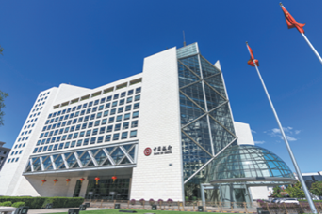
  A view of a branch of Bank of China in Chongqing. SUN KAIFANG/FOR CHINA DAILY

Article inline ad

China Leads In Large-Scale Offshore Heavy Oil Thermal Recovery

0

By Zheng Xin | chinadaily.com.cn | Updated: 2025-08-30

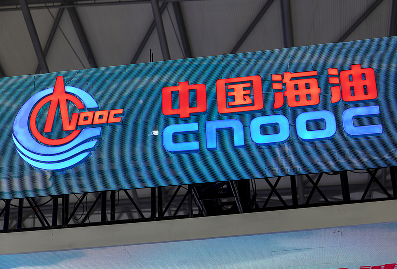
China National Offshore Oil Corporation (CNOOC) announced on Saturday that its offshore heavy oil thermal recovery technology system and core equipment have achieved significant progress in large-scale application, with cumulative offshore heavy oil thermal recovery exceeding 5 million metric tons.

 This achievement marks China as the first country in the world to achieve large-scale thermal recovery of offshore heavy oil, it said.

 Heavy oil is a type of crude oil with high viscosity, high density, poor fluidity, and a tendency to solidify, making it difficult to extract.

 Compared to onshore oilfields, offshore platform operations face limited space and high costs. The large-scale thermal recovery of heavy oil faces dual challenges in terms of technology, equipment and economic benefits, and is recognized as a world-class problem.

 Currently, heavy oil accounts for approximately 70 percent of the world’s remaining oil resources and is one of the main directions for increasing production for various oil-producing countries.

 China is one of the world’s four major heavy oil producers, with abundant heavy oil resources. The proven reserves of high-viscosity heavy oil that require thermal injection for development offshore exceed 600 million tons, accounting for approximately 20 percent of China’s proven heavy oil reserves, indicating great development potential.

 Continuously promoting the conversion of heavy oil reserves into production is of great significance for boosting domestic oil and gas exploration and development efforts, said CNOOC.

 In 2025, heavy oil thermal recovery production has exceeded 1.3 million tons, with annual production expected to reach 2 million tons, it said.


Article inline ad

Growth On Horizon As Panda Bonds Attract New Investors Around The Globe

0

By YUAN SHENGGAO | China Daily | Updated: 2025-08-30

The panda bond market, in which overseas institutions issue renminbi bonds in China’s onshore market, is poised to attract new issuers. On July 22, the Bank of China, as the lead underwriter and lead book runner, assisted Hungary in issuing 5 billion yuan ($698 million) of panda bonds in the Chinese interbank market. This issuance is the largest single sovereign panda bond in the panda bond market and the first five-year sovereign panda bond.

 The bond is divided into two tranches: a three-year tranche of 4 billion yuan with a coupon rate of 2.5 percent and a five-year tranche of 1 billion yuan with a coupon rate of 2.9 percent. The issuance marks the deepening financial cooperation between China and Hungary and is of significance for expanding the panda bond market and attracting international issuers, BOC said.

 Hungary is the first European country to sign a Belt and Road Initiative cooperation document with China and the partnership between China and Hungary in areas such as trade, finance and green energy has continued to deepen in recent years. In 2017, with the assistance of BOC, Hungary issued its first Bond Connect sovereign panda bond, becoming one of the first batch of Central and Eastern European issuers to enter the Chinese bond market. With cumulative issuance reaching 11 billion yuan, it marks the largest sovereign panda bond issuer in terms of cumulative issuance size and outstanding bond volume.

 The Panda Bond is an RMB-denominated bond from a non-Chinese issuer, which is sold on the Chinese mainland. BOC, as the lead underwriter, recently assisted Morgan Stanley in the targeted issuance of 2 billion yuan of five-year panda bonds in the Chinese interbank bond market. This issuance is the first panda bond issued by a company headquartered in the United States. It has attracted subscriptions from a diverse range of investors, becoming an example of high-quality assets for interbank market investors.

 As one of China’s largest bond underwriters, BOC has been relying on its global bond underwriting and distribution network to serve various entities in issuing multi-currency bonds in domestic and international markets.

 As of the end of June, BOC has assisted more than 70 foreign issuers in issuing nearly 300 panda bonds, with a total financing amount exceeding 570 billion yuan.

 On Nov 24, 2022, Mercedes-Benz Financial Services issued the first green panda bond in the Chinese interbank market, with an issuance size of 500 million yuan, a term of two years and a coupon rate of 2.9 percent. This is the first green bond issued by Mercedes-Benz outside the European market, and the company is also the first automotive company to issue green panda bonds in China.

 In Africa, as the lead underwriter and lead book runner, BOC assisted Egypt in issuing 3.5 billion yuan of sustainable panda bonds in 2023, achieving a breakthrough in panda bonds issuance in Africa. This is also the first sustainable sovereign panda bond and the first sovereign panda bond with a guarantee structure. Since the beginning of 2025, BOC, as the lead underwriter and lead book runner, assisted the African Export-Import Bank in issuing 2.2 billion yuan of panda bonds, achieving the first issuance breakthrough for a multilateral development institution in Africa.

 On Nov 14, 2024, Suzano International Finance B.V. issued 1.2 billion yuan of green panda bonds in the Chinese interbank bond market, with a term of three years. This bond issuance is Suzano International Finance B.V.’s first issuance of RMB panda bonds in the Chinese interbank bond market, and it is also the first panda bond issued in South America.

 To date, the cumulative issuance of panda bonds has exceeded 1 trillion yuan, becoming a key force for serving high-level opening-up of China. It has enriched the diversified financing systems related to the BRI and attracted international issuers to participate in its regular domestic issuance. As a key participant in the capital market, BOC said it will continue to leverage its global service network and cross-border business advantages to contribute to the opening-up of financial markets.

Article inline ad

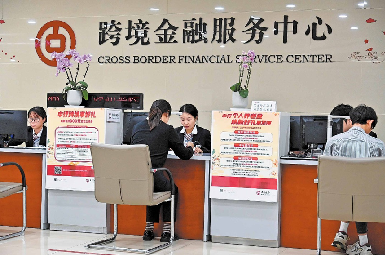
BOC Working To Boost Global Power Of Renminbi

0

Financial institution promoting transfers and digital yuan via services in key regions

By YUAN SHENGGAO | China Daily | Updated: 2025-08-30

According to the latest semi-annual report released by Bank of China on Friday, the group achieved an operating income of 329.4 billion yuan ($46.2 billion), representing a year-on-year increase of 3.61 percent. Net fee income grew by 9.17 percent year-on-year, while after-tax profit reached 126.1 billion yuan. After-tax profit attributable to the bank’s shareholders amounted to 117.6 billion yuan.

 The bank’s assets and liabilities showed steady growth. Total assets reached 36.79 trillion yuan, an increase of 4.93 percent compared to the end of the previous year. The proportion of high-yield assets, such as loans and bond investments, increased by 2.32 percentage points. Total liabilities amounted to 33.66 trillion yuan, up 4.85 percent from the end of the previous year. The data released also indicate an improvement in the competitiveness of average daily renminbi deposits in the domestic market.

 The internationalization of the RMB, as a key part of the opening-up of China’s financial industry, can also benefit the nation’s dual-cycle development pattern, which takes the domestic market as the mainstay while allowing domestic and international markets to reinforce each other. As a Chinese commercial bank with a high degree of globalization, BOC, leveraging its century of cross-border financial experience and comprehensive cross-border RMB clearing network, said it will continue to contribute to RMB internationalization and serve China’s diplomacy, economy and trade.

 Cross-border network

 Since establishing its first overseas institution, the London Office, in 1929, BOC has been developing globally. Currently, the bank’s overseas institutions cover 64 countries and regions across six continents, including 45 countries involved in the Belt and Road Initiative. Leveraging its service outlets in key global regions, BOC bridges cross-border exchanges and economic cooperation.

 RMB clearing banks are a significant institutional arrangement to assist the international use of the RMB. Since being appointed as the world’s first RMB clearing bank in 2003, BOC has been developing cross-border RMB clearing channels to expand use of the RMB in foreign trade and investment. Currently, the People’s Bank of China — the nation’s central bank — has authorized 34 RMB clearing banks in 32 countries and regions. BOC operates 16 of these, including all three clearing banks in Africa.

 As the internationalization of the RMB accelerates, the demand for its cross-border payment and settlement continues to grow. The Cross-Border Interbank Payment System, as a critical financial infrastructure, is gradually becoming the main channel.

 BOC is involved in the construction of the CIPS system. As of 2024, 44 BOC institutions have joined the CIPS as direct participants, while also acting as agents for nearly 700 banking financial institutions worldwide.

 Currently, more than 70 percent of global offshore RMB payments are settled in Hong Kong, with the majority processed through the Real Time Gross Settlement in Hong Kong. As Hong Kong’s sole RMB business clearing bank and the settlement institution for this system, BOC keeps on promoting such advantages in RMB settlement and clearing. In 2024, BOC’s RMB settlement volume in Hong Kong increased by 5.3 times year-on-year.

 By strengthening the regional headquarters functions of BOC (Hong Kong), BOC has enhanced its operations in Southeast Asian countries. To date, BOC serves as the RMB clearing bank for Malaysia, the Philippines and Cambodia, while its Vientiane branch has been approved by the Lao central bank to become the first digital RMB clearing bank. Additionally, as a key partner of the Hong Kong Special Administrative Region government, BOC is a major force in promoting the development of Hong Kong’s real economy.

 Data show that in 2024, BOC handled a total of 1,313.83 trillion yuan in cross-border RMB clearing business, a year-on-year increase of 40 percent. BOC has been repeatedly awarded the “Best RMB Clearing Bank in the Asia-Pacific Region” by The Asian Banker magazine.

Offshore RMB market

 The offshore RMB market is a key part of RMB internationalization. BOC promotes the use of RMB for commodity settlement, supports foreign trade enterprises in expanding the cross-border use of the RMB, enhances the RMB’s function as an investment and financing currency and expands cross-border RMB application scenarios.

 As the world’s third-largest copper-producing region, the copper belt spanning the Democratic Republic of the Congo and Zambia has become a gathering place for projects involved in the BRI. To aid exchanges in the region, BOC opened RMB accounts for enterprises there and reviewed processes such as customs clearance, tax reporting and international payments to address practical issues encountered in RMB-denominated settlement.

 This aided the enterprises’ RMB-denominated copper product sales transactions with Chinese importers. After receiving the RMB payment, the enterprises can use part of the funds through the BOC Zambia branch to procure equipment from China. This has effectively helped the cyclic use of RMB involving settlement, utilization and repatriation.

 In Malaysia, BOC adheres to achieving cross-border financial connectivity through the integration of technology, demand and application scenarios. In September 2024, BOC provided a clearing solution for Central Bank of Malaysia, the Bank Negara Malaysia, which has assisted the collaboration between PayNet (a clearing institution run by the Bank Negara Malaysia) and WeChat QR code payments. After that, BOC was appointed as the sole cross-border settlement bank in Malaysia. By the end of March, the average daily transaction volume had reached 12,600, representing a 5.97-fold increase since its launch.

 In supporting the BRI, BOC promotes the use of RMB in financing large-scale infrastructure projects and bilateral trade, providing RMB financing support for numerous landmark cooperative projects. Meanwhile, the bank advocates for RMB-denominated pricing and settlement in commodity trading, achieving breakthroughs in transactions involving iron ore, pulp and other bulk commodities.

 E-CNY business

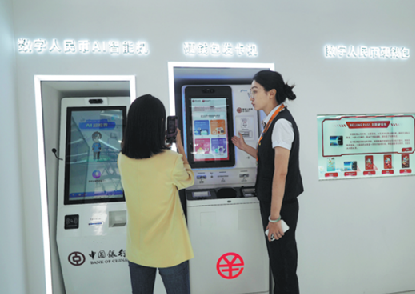
 Currently, the e-CNY, or digital yuan, is attracting global attention. Unrestricted by geographical limitations, it holds distinct advantages in the field of cross-border payments.

 Since late 2017, BOC has been involved in the research and development of the e-CNY, with various business indicators ranked among the leading level in the industry. In 2020, assigned by the People’s Bank of China and the Hong Kong Monetary Authority, BOC took the lead in launching e-CNY initiatives in Hong Kong. Currently, more than 1,000 retail outlets accept e-CNY payments.

 Initiatives like mBridge — a cross-border payment project involving the Chinese mainland, the Hong Kong SAR, Thailand and the United Arab Emirates — are testing the e-CNY for international trade. BOC has participated in the mBridge project since 2022. At present, BOC’s head office in Beijing, all domestic branches, BOC (Hong Kong), its subsidiary in Thailand and the Abu Dhabi branch are involved in the project. Since the project’s inception, BOC has led in various dimensions such as transaction volume and value, and has provided liquidity support for multiple participating banks within the mBridge system.

 “Taking the mBridge as an example, the introduction of central bank digital currency for clearing has streamlined cross-border remittance paths, reduced processing time and costs associated with intermediary banks and lowered clearing risks, thereby enhancing the efficiency of cross-border RMB payments,” said a BOC representative.

 “From our practice, digital currency has become a hot spot in cooperation between China and other countries, creating new opportunities for RMB internationalization,” said a BOC manager.

 RMB internationalization is a long-term and complex process, presenting both new challenges and rare development opportunities. As a pioneer in the global expansion of Chinese finance, BOC said it will consolidate the group’s global resources, and give full play to its globalization advantages and its role as the main channel for cross-border RMB business expansion, in a bid to promote the development of the offshore RMB market and support the dual-cycle development pattern.


Article inline ad

China Intl Trade Representative Holds Talks With US Officials, Business Representatives

0

Xinhua | Updated: 2025-08-30

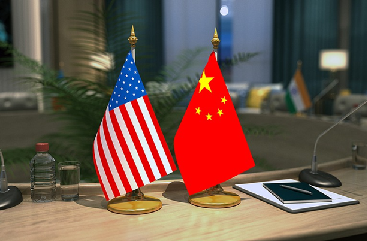
BEIJING — Li Chenggang, China international trade representative with the Ministry of Commerce and vice-minister of commerce, visited the United States and held talks with US officials and business representatives from Aug 27 to 29 local time, the ministry said on Saturday.

 He met with officials from the US Department of the Treasury, the US Department of Commerce and the Office of the United States Trade Representative.

 The two sides exchanged views on implementing the consensus reached in the phone conversation between the Chinese and US heads of state, and discussed issues including China-US economic and trade relations and the implementation of consensus from China-US economic and trade talks.

 China and the United States should adhere to the principles of mutual respect, peaceful coexistence and win-win cooperation, Li said, stressing that they should continue to make good use of the China-US economic and trade consultation mechanism, manage differences, expand cooperation through equal dialogue and consultation, and jointly promote the healthy, stable and sustainable development of China-US economic and trade relations.

 During his visit, Li also held talks and exchanges with representatives from the US-China Business Council, the US Chamber of Commerce and some US enterprises.


Article inline ad