Wednesday, November 25, 2026

Home Blog Page 170

Subsidized Loans Eye Stimulating Consumption

0

Used directly for shopping, verifiable through borrower transaction records

By JIANG XUEQING | China Daily | Updated: 2025-09-04

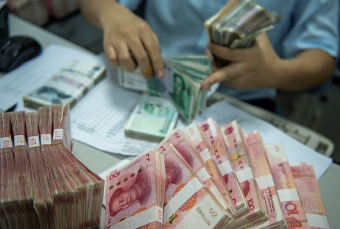
China’s subsidized personal consumption loan policy came into effect on Monday, with multiple banks racing to roll out the measures as part of the government’s broader push to spur domestic spending.

 The plan, unveiled on Aug 12, marks the first time the central government has offered interest subsidies for qualifying personal consumption loans. The program runs from Sept 1, 2025 to Aug 31, 2026, and applies to the portion of personal consumption loans — excluding credit card borrowing — used directly for consumption which is verifiable through borrowers’ transaction records via loan disbursement accounts.

 Launched in tandem was a separate interest subsidy plan targeting eligible business loans in the services sector. Together, the two measures are designed to ease financing costs for households and service-sector businesses, while encouraging financial institutions to develop more innovative and flexible credit products, said Wen Bin, chief economist at China Minsheng Bank.

 In preparation, many banks released Q&A guides to clarify details for clients. They emphasized that the application process for subsidized loans is not dissimilar to that for regular loans, with bank systems able to automatically identify eligible consumption transactions. If the system cannot match transactions, borrowers may present receipts at branches for manual review before receiving subsidies.

 At China Construction Bank’s interim results briefing on Friday, CCB President Zhang Yi said the large State-owned commercial lender had swiftly implemented the new policies across its operations. Zhang emphasized that the measures would effectively reduce borrowing costs for households and businesses, channel more funds into consumption and drive healthy loan growth.

 “Our bank will focus on precisely supporting genuine consumption needs, simplifying subsidy procedures, enhancing customer experience and deepening the integration of loans with consumption scenarios,” Zhang said. “Through high-quality financial services, we aim to expand demand, offer market participants easier access to policy benefits and unlock consumption potential.”

 In the first half, CCB launched a consumer finance initiative, with personal consumption loan balances reaching 614.19 billion yuan ($86 billion) — an increase of 86.3 billion yuan from the end of last year. Its local lifestyle services app also helped distribute 5.6 billion yuan in consumption subsidies across 172 cities, stimulating over 40 billion yuan in household spending.

 Bank of China reported a 15.42 percent increase in personal consumption loans in the first half. BOC Executive Vice-President Yang Jun said the lender would continue improving the quality and efficiency of consumer lending, supporting government initiatives such as the consumer goods trade-in program and related subsidies, while ensuring that fiscal benefits are delivered directly to consumers.

 Industrial and Commercial Bank of China also stepped up investment, service innovation and supply of consumer finance, with personal consumption loans rising more than 10 percent in the first half from the start of the year.

 At the same time, the banking industry faces challenges in retail loan asset quality, which has come under pressure from market conditions.

 “As policies to stabilize growth and boost domestic demand take effect, we expect the deterioration trend in personal consumption loans to ease,” said ICBC Senior Executive Vice-President Wang Jingwu.

 “We will expand lending without raising operating costs or disrupting the market environment, while continuously optimizing product access standards, rules and risk management. We will also strengthen end-to-end oversight of loan risks, and advance smart, data-driven risk control to better match products with customers for long-term sustainable development,” Wang said.

 CCB Executive Vice-President Li Jianjiang said that in response to evolving risks in inclusive retail finance, the lender is enhancing its risk-control framework. Measures include upgrading smart risk management systems, embedding digital tools in loan processes and refining management across key stages such as loan approval, risk checks and collections.

 These steps aim to strengthen risk management at its source and throughout the process, thereby improving risk-control effectiveness and efficiency, said Li.

 jiangxueqing@chinadaily.com.cn

Article inline ad

A-Share Trading Stays Active Despite Recent Market Volatility

0

By Jiang Xueqing | chinadaily.com.cn | Updated: 2025-09-03

China’s stock market ended mixed on Wednesday, with the benchmark Shanghai Composite Index down 1.16 percent to 3,813.56 points and the Shenzhen Component Index slipping 0.65 percent to 12,472.

 On the other hand, the ChiNext Index, which tracks growth-oriented companies on China’s Nasdaq-style board, advanced 0.95 percent to 2,899.37.

 The biggest gainers in the A-share market on Wednesday included precious metals, photovoltaic equipment, and gaming. Despite recent volatility, trading activity in A-shares has remained robust, signaling continued investor participation.

 As of Monday, margin financing and securities lending balances on the Shanghai, Shenzhen, and Beijing exchanges climbed to 2.3 trillion yuan ($322 billion), up 35.64 billion yuan from the previous trading day and topping the prior record of 2.27 trillion yuan set on June 18, 2015. Margin financing accounted for 2.28 trillion yuan of the total, also surpassing its historic high from the same date.

 According to data released by the Shanghai Stock Exchange on Tuesday, 2.65 million new A-share accounts were opened in August, up nearly 690,000 from July, representing a month-on-month rise of more than 30 percent and a year-on-year surge of about 165 percent.

 In the first eight months of this year, 17.21 million new A-share accounts were opened on the Shanghai Stock Exchange, up about 48 percent from the same period last year.

 At its morning meeting on Wednesday, CSC Financial said A-shares have entered a moderate recovery cycle with earnings confirming an inflection point. Structural divergence matters far more than aggregate trends, highlighting the accelerated shift between old and new growth drivers.

 Technology manufacturing, driven by the AI cycle and domestic substitution, is delivering rapid earnings growth and has become the core engine. Midstream manufacturing has benefited from falling costs, showing resilient profitability. In this recovery phase, price improvements are outpacing volume expansion. Within new sectors, the AI industry chain is already generating strong results, while robotics and innovative drugs face opportunities from mass production and a turnaround in challenges. New consumption requires closer attention to the transmission from revenue to profit, said CSC Financial.

 Overall, economic recovery still needs policy support, and the market is expected to remain structurally driven, requiring selective focus on high-prosperity sectors, said the Beijing-based Chinese investment bank and brokerage firm.

 Retail participation typically rises when the A-share market strengthens. With bank deposits continuing to grow strongly, a stronger stock market could attract more deposits into equities. Moreover, A-share performance is closely linked to trading volume, and valuations remain attractive compared with other markets, suggesting significant upside potential, analysts said.

 Goldman Sachs said in a recent report that only 22 percent of Chinese household financial assets are currently allocated to funds and equities. Over 10 trillion yuan is estimated to flow into the stock market. This suggests considerable upside in the Chinese equity market, particularly in small- and mid-cap stocks.

 Analysts at Goldman Sachs noted that indexes such as the CSI 1000 and CSI 500 warrant close attention, benefiting from higher retail ownership, more balanced sector allocation, and greater exposure to high-tech manufacturing.

 According to estimates by China International Capital Corp, potential inflows of household deposits into equities could reach 5 trillion to 7 trillion yuan, possibly exceeding the scale seen during the 2016-17 and 2020-21 market rallies. However, the actual amount entering the market will depend on multiple factors, including macroeconomic conditions, policy expectations, and external developments.

 Some brokerages noted that overall A-share valuations remain within a reasonable range, but cautioned that the recent sharp rise in turnover could lead to greater short-term volatility.

Article inline ad

China And Russia Can Lead Way In AI: Leading Banker

0

By Han Jingyan | chinadaily.com.cn | Updated: 2025-09-03

A leading Russian banker has insisted that, with their bilateral strength, Russia and China can expand cooperation in artificial intelligence, finance and innovation.

 Speaking in Vladivostok, Russia, Alexander Vedyakhin, first deputy chairman of the executive board at Sberbank, said that joint efforts by Russia and China in AI could become the core of a new technological architecture that offers an alternative to Western centers of power.

 He said China, as one of the leaders in the AI market, has powerful potential in this area, while Russia is trying to ensure access to computing power and technology stacks that are independent of the United States and the European Union.

 Speaking at the Eastern Economic Forum 2025, Vedyakhin described China’s priorities as the development of an open-source ecosystem and facilitating the entry of Chinese models into global markets.

 “As of 2025, China ranks first in the world in terms of the number of large AI language models — of the 3,755 large models created worldwide, 1,509 were developed in China,” he said.

 Integration into China’s developing ecosystem of open solutions is a priority for Russia, he said.

 “Among the joint initiatives, we see the development of partnership projects between Russian companies and developers of leading Chinese models (Qwen-3, DeepSeek and MiniMax),” he added.

 Last year, on the sidelines of the AI Journey international conference, which was attended by Russian President Vladimir Putin, the AI Alliance Network was created, bringing together 17 industry associations from 14 countries, including three organizations representing China.

 Citing Stanford’s Artificial Intelligence Index Report 2025, Vedyakhin noted that China ranks first in the world in terms of the number of scientific publications on AI.

 “We plan to propose to the Chinese side that joint institutes and laboratories be opened on the basis of existing Chinese organizations that are leaders in the field of AI,” he said.

 It is also necessary to expand the exchange of students, graduates and researchers between the two countries, he added, stressing that the creation of joint master’s programs in AI (dual degrees) and the opening of joint research laboratories at universities in Russia and China will help train a new generation of specialists.

 “We view our partnership as part of broader cooperation within BRICS and the SCO (Shanghai Cooperation Organization),” he said.

 Also at the forum, Vedyakhin revealed that Sberbank has signed several memoranda of understanding with Chinese partners.

 “The figures speak for themselves: in 2024-2025, the number of Chinese small and medium-sized enterprises that opened accounts with Sberbank grew by 50 percent,” he said.

 “Over the next two to three years, we plan to expand Sberbank’s presence in China in two key areas: business and science.”

 Please contact the writer at hanjingyan@chinadaily.com.cn

Article inline ad

Interests Of Retail Investors Key To A Shares

0

Expert: Ongoing bullish trend a sign of ‘hard-won’ success in reform execution

By Zhou Lanxu | China Daily | Updated: 2025-09-03

The ongoing rally in China’s A shares has underscored the importance of reform execution, and closing regulatory gaps further to safeguard market fairness and investor interest is vital to sustaining the bull run, said Liu Jipeng, a senior expert on the capital markets.

 “A slow bull trend has taken shape. The goal should be making it steady and long-lasting so that the capital market can serve as a platform for common prosperity, where the majority of investors can share returns, rather than only a few getting rich overnight,” said Liu, a professor at the Business School of China University of Political Science and Law.

 While the divergence between China’s economic slowdown pressures and its rising stock market has triggered discussions about the rally’s stamina, Liu said that reform measures to better protect investors have provided a rational basis for the market upswing and will be key to its future course.

 “The current bullish trend is hard-won and reflects valuable lessons learned from the past 18 years,” Liu said in an exclusive interview with China Daily. “The A-share market is never short of money — China’s household savings have surpassed 160 trillion yuan ($22.4 trillion) — yet has long been weighed down by institutional shortcomings that limited investor confidence.”

 Liu said that recent reforms have made a difference. Regulators, especially after Wu Qing took office as the chairman of the China Securities Regulatory Commission early last year, have been more determined to close regulatory loopholes — including tightening rules on large shareholder share sales and enhancing investor protection.

 These reforms have improved market fairness, Liu said. “Ultimately, the market will only thrive if it protects the interests of millions of retail investors while serving the financing needs of enterprises.”

 In May 2024, the CSRC issued new rules seen as the toughest yet on share reductions by major shareholders in the A-share market, prohibiting them from circumventing stake reduction regulations through means such as negotiated share transfers, short selling or other irregular practices.

 To make the rally long-lasting, Liu said more should be done to close remaining regulatory loopholes to further enhance market fairness and investor protection, including in areas such as IPO review and pricing, quantitative trading and large shareholders’ stakes.

 “Capping the stake of the largest shareholder in listed companies is key to ensuring that the current slow bull run remains sustainable,” Liu said. Otherwise, if major shareholders focus on off-loading stakes, the market will struggle to maintain momentum.

 He suggested that for new listings, the stake of the largest shareholder could be limited to around 30 percent, so that any further significant reductions would risk loss of control, thus encouraging controlling shareholders to concentrate on strengthening the company rather than pursuing quick cash-outs.

 On quantitative trading, Liu urged transitional rules to maintain fairness.

 “Just as automobiles once faced strict limits in their early days to protect horse-drawn carriages, quantitative trading also needs restrictions to safeguard traditional investors,” he said, adding that proposals could include brief pauses in high-frequency trading and higher transaction fees for algorithm-driven strategies.

 “We must avoid polarization,” Liu said, as the market should help generate wealth for the majority so that broader participation is encouraged and sustained.

 According to Liu, ensuring the rally’s steady and long-lasting momentum is of strategic importance for China’s economic transformation, as finance and technology are like two legs supporting a nation’s rise — one cannot move far without the other.

 Looking at the 15th Five-Year Plan period (2026-30), Liu stressed that China must further leverage the capital market as the strategic pivot to drive economic transformation and raise the role of capital finance — defined by him as an equity investment and financing system led by investment banking and rooted in the capital market.

 Proposals for formulating the 15th Five-Year Plan for national economic and social development are expected to be studied at the fourth plenary session of the 20th Communist Party of China Central Committee, scheduled to be held in Beijing in October.

 At present, commercial banking still dominates financing in China, while the capital market plays a minor role. Rebalancing or even reversing this structure, Liu said, will be essential to spur technological innovation and expand household wealth.

 As China’s per capita GDP surpassed $13,000, boosting property-based income has become increasingly important, underscoring the role of capital finance.

 “The A-share market will eventually shift from a retail-dominated market to one led by institutional investors, as in developed markets, allowing households to build wealth through the market via institutional investors such as corporate annuities, the social security fund and mutual funds.”


Article inline ad

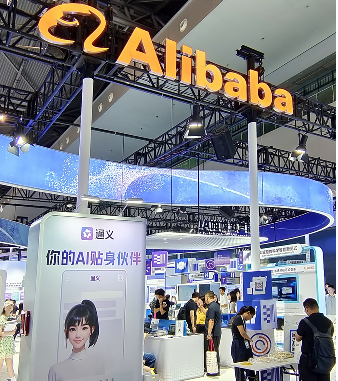
Alibaba Boosting AI Tech For Efficiency

0

By Fan Feifei | China Daily | Updated: 2025-09-03

Chinese tech heavyweight Alibaba Group Holding Ltd is ramping up efforts to leverage fast-developing artificial intelligence technology to boost the digital and intelligent transformation of enterprises and increase product sales of merchants.

 Alibaba’s business-to-business online trading platform 1688 has rolled out a series of AI-powered tools to help buyers search and select products more efficiently, improve the efficiency and intelligence level of management, and reduce operational costs.

 The platform has updated its AI digital employees, who will take charge of fundamental operational tasks, such as releasing product information and formulating marketing activities, while analyzing market trends and making business strategies.

 Currently, the company has integrated Alibaba’s Qwen large language models and Chinese AI startup DeepSeek’s open-source models into its systems, as it is committed to empowering businesses through the in-depth application of AI, and providing strong support for the digital transformation of traditional industries.

 Mo Daiqing, a senior analyst at the Internet Economy Institute, a domestic consultancy, said AI is improving all parts of e-commerce, from supply chains to how businesses interact with customers, while the shift toward digital platforms and AI-driven trade opens new frontiers for businesses, particularly small and medium-sized enterprises, which now have digital tools to engage with international markets.

 Mo noted that the use of AI has entered a new stage, with major internet companies accelerating AI applications in fields including consumption and production, injecting strong momentum for future innovation and development.

 The State Council, China’s Cabinet, recently issued a guideline on deeply implementing the “AI Plus” initiative. The country will promote the use of AI in science and technology, industrial development, consumption, people’s well-being, governance capability and global cooperation, according to the guideline.

 By 2027, China will achieve extensive and deep integration of AI in six key sectors, with the penetration rate of new-generation intelligent terminals and AI agents surpassing 70 percent, and this figure will exceed 90 percent by 2030, the guideline said.

 Pan Helin, a member of the Expert Committee for Information and Communication Economy, which is part of the Ministry of Industry and Information Technology, said more efforts should be made to give full play to platform enterprises’ advantages in AI and big data, to expand the application scenarios of AI in a wider range of sectors.

 For SMEs, AI is not only a cutting-edge technology, but also one that provides a valuable opportunity for achieving transformation and upgrading, and improving the core competitiveness of enterprises, he added.

 Alibaba is betting big on AI and has announced it will invest more than 380 billion yuan ($53.2 billion) in building cloud and AI hardware infrastructure over the next three years.

 The company said that its revenue increased 2 percent year-on-year to 247.65 billion yuan during the April-June period, with its core e-commerce and cloud computing businesses reporting robust growth.

 Revenue from its cloud business rose 26 percent year-on-year to 33.4 billion yuan during the period. This momentum was primarily driven by public cloud revenue growth, including the increasing adoption of AI-related products.

 AI-related product revenue achieved triple-digit year-on-year growth for the eighth consecutive quarter. As AI demand continues to grow rapidly, the company said it is seeing increased demand for computing, storage and other public cloud services to support AI adoption.

 It will continue to invest in anticipation of customer growth and technology innovation, including AI products and services, to increase cloud adoption for AI.

Article inline ad

Energy Cooperation Platform Within SCO Launched

0

By Zheng Xin | China Daily | Updated: 2025-09-03

China launched an energy cooperation platform within Shanghai Cooperation Organization member states in Beijing on Tuesday, signaling a major push to deepen collaboration on energy and drive green transition across the region.

 The diverse resources, markets, and technologies within SCO countries, particularly the abundance of renewable energy resources, create significant opportunities and a promising outlook for collaboration in the renewable energy sector, said Wang Hongzhi, head of the National Energy Administration.

 “Energy cooperation is a vital component of practical regional collaboration,” he said.

 “China is committed to collaborating with SCO nations on long-term, sustainable energy initiatives to expedite the transition toward a green and low-carbon energy future.”

 Ever since China assumed the rotating presidency of the SCO in July last year, Chinese companies have signed, begun or completed over 160 power and renewable energy projects and more than 60 oil and gas projects in other SCO countries, totaling around 380 billion yuan ($52.5 billion), according to data released by the administration.

 These projects are a powerful engine for regional economic and social development, it said.

 The administration will further leverage the platform to deepen practical exchanges and cooperation with other SCO countries in the energy sector, explore new avenues for clean energy collaboration, enhance regional energy governance, and create a secure, green, and shared development platform, Wang said.

 There has been a surge in renewable energy collaboration between China and other SCO partners recently, fueling a considerable expansion of green energy capacity throughout the region and playing a key role in global decarbonization initiatives, said industry experts.

 According to Li Sheng, director-general of the China Renewable Energy Engineering Institute, China is heavily focused on solar and wind power in its energy cooperation with other SCO countries.

 SCO countries already hold a significant position in the global renewable energy market, he said.

 By the end of 2024, their installed renewable energy capacity exceeded 2.3 billion kilowatts, roughly half of the world’s total, data from CREEI show.

 “SCO countries possess abundant renewable resources, while China’s leading renewable energy technologies, strong project construction capabilities, and complete industrial chain can complement the SCO’s energy resources, industrial needs and market opportunities, fostering regional renewable energy development and mutual benefit,” Li said.

 “The future of renewable energy cooperation between China and other SCO countries is promising.”


Article inline ad

Sino-Kazakh Trade Showing More Promise

0

Crude oil and natural gas constitute Central Asian nation’s main shipments

By Zhong Nan | China Daily | Updated: 2025-09-03

China-Kazakhstan trade is expected to see robust growth over the next five years, after bilateral trade hit a record high in 2024, setting the stage for further expansion in energy, agriculture, transport and emerging industries, said Kazakh President Kassym-Jomart Tokayev on Tuesday.

 Speaking at the eighth meeting of the China-Kazakhstan Entrepreneurs Committee in Beijing, Tokayev said the goal is to further expand trade over the next five years, with both countries having the capacity to achieve such an objective.

 China-Kazakhstan bilateral trade value grew 6.8 percent year-on-year to $43.82 billion last year, China’s General Administration of Customs said.

 Crude oil, natural gas, minerals and agricultural products constitute Kazakhstan’s main shipments to China. China exports mainly manufacturing equipment, trains, steel, vehicles, electronics, textiles, garments and household appliances to Kazakhstan.

 Economic and trade relations between China and Kazakhstan are expected to broaden in the coming years, underpinned by cooperation under the Belt and Road Initiative aimed at enhancing regional connectivity and advancing projects in energy, logistics and agriculture, said Ren Hongbin, chairman of the China Council for the Promotion of International Trade.

 To translate such prospects into tangible outcomes, businesses from China and Kazakhstan signed more than 70 agreements worth $15 billion across a range of industries at the committee’s eighth meeting.

 China has invested $27 billion in Kazakhstan’s economy, with over 6,000 businesses involving Chinese capital, ranging from State-owned enterprises such as China National Petroleum Corp to technology groups like Huawei, according to information released by the Kazakh government.

 Market watchers and exporters said that amid growing pressure in the global economy, cooperation between China and Kazakhstan has not only helped stabilize Eurasian industrial links and keep China-Europe freight train services running smoothly, but also contributed to global energy security.

 With improved connectivity through projects such as the Trans-Caspian International Transport Route and newly built roads, the two countries still have ample room to further align their development strategies, said Chen Jianwei, a researcher at the University of International Business and Economics’ Academy of China Open Economy Studies in Beijing.

 The TITR is a rail freight corridor linking China and the European Union through Central Asia, the Caucasus, Turkiye and Eastern Europe, said the Tokyo-based Asian Development Bank Institute.

 “They are also exploring new areas of cooperation, particularly in the trade of industrial goods, artificial intelligence, infrastructure and green energy development. They will provide fresh momentum for bilateral economic ties,” said Chen.

 After hosting a major import-export exhibition in Astana in June, Jiangsu SOHO Holdings Group Co, a State-owned enterprise based in Nanjing, Jiangsu province, said the three-day event attracted more than 5,000 business participants and generated deals worth over 800 million yuan ($111.93 million). The company plans to hold additional trade fairs in both China and Kazakhstan in the coming years, according to Nanjing Customs.

 Wei Qingwen, president of the group’s technology branch, said his unit has established a physical platform in Nanjing and is promoting foreign trade with Kazakhstan and other Central Asian countries in sectors such as agricultural products, mineral resources and automobiles.

 Ningbo Kingbird Power Tools Co, a manufacturer of power tools and small household appliances in Ningbo, Zhejiang province, saw its exports to Kazakhstan reach 23 million yuan in the first seven months, up more than 100 percent year-on-year, said Ningbo Customs.

 Hu Yongbin, a manager at the company’s foreign trade unit, said the surge was mainly driven by Kazakhstan’s rising demand for affordable and durable household products, as well as smoother logistics channels under the BRI.

 “More Kazakh distributors are turning to Chinese suppliers like us because of the combination of cost-effectiveness and quick delivery,” Hu said.

Article inline ad

Chinese Stocks Fall As Tech Shares Retreat

0

By Jiang Xueqing | chinadaily.com.cn | Updated: 2025-09-02

The Chinese mainland and Hong Kong equities fell on Tuesday, dragged down by weakness in technology shares.

 The benchmark Shanghai Composite Index edged down 0.45 percent to 3,858.13 points, while the Shenzhen Component Index dropped 2.14 percent to 12,553.84. The ChiNext Index, which tracks China’s Nasdaq-style board of growth companies, slid 2.85 percent to 2,872.22, though it remains up nearly 40 percent so far this year. In Hong Kong, the Hang Seng Index slipped 0.47 percent to 25,496.55.

 The biggest decliners in the A-share market on Tuesday included communications equipment, semiconductors, power equipment, electronic components and electronic chemicals.

 Technology stocks have been a major driver of China’s market rally in 2025. Despite their strong recent gains, valuations are still relatively contained, analysts at Dongxing Securities said.

 Meanwhile, leverage in the market has climbed to record levels. As of Monday, outstanding margin financing and securities lending balances in the A-share market stood at 2.3 trillion yuan ($322 billion), surpassing the previous high of 2.27 trillion yuan set on June 18, 2015. Margin financing alone reached 2.28 trillion yuan, also above the 2015 peak, according to the Securities Times.

Article inline ad

Hangcha Group

0

Company

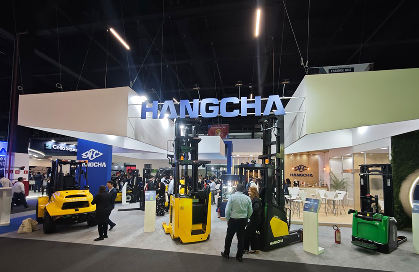
Hangcha Group is the leader in full line forklift manufacturing in China and among the top 8 in

Industrial Trucks and Services in the world, and employs over 6,000 people worldwide.

Hangcha Group was founded in 1956. 69 years later, we continue to manufacture reliable

material handling equipment. In 2016, Hangcha Group went public on Shanghai Stock

Exchange. In 2024, more than 280,000 new Hangcha units were sold worldwide. Quality and

innovation are two of the reasons that Hangcha products are distributed to more than 180

countries & regions with about 13% in global market share.

Now, we can offer a complete fleet of material handling equipment, from 1-48t internal

combustion counterbalance forklift, 0.6-48t electric forklift trucks, warehouse equipment,

3-6t side loader, empty container handler, reach stacker, AGV and much more. Our annual

production capacity is more than 400,000units thanks to the intelligent manufacturing

factory.

In recent years, Hangcha Group has launched a series of new energy products varied from

counterbalanced trucks, warehouse equipment and AGVs and we provide alternative solutions to diesel

Products

Lithium E-Trucks

E-Trucks

IC – Trucks

Pallet Trucks

Pallet Stackers

Reach Trucks

Order Pickers

Tow Tractors

Very Narrow Aisle Trucks

Rough Terrain Trucks

Aerial Platforms

Port Machinery

Explosion Proof Forklift

AGVs

Solutions

Industries

Retail/ Wholesale

Food/ Pharma

Transport/ Logistics

Manufacturing

Automotive

Ports/ Terminals

Chemical/ Energy

Forestry/ Wood

Others

https://www.hcforklift.com/product

Hangcha Headquarters

Factory: 666 Xiangfu Road, Hangzhou, Zhejiang, China(311305)

Tel: +86-571-88926755

Tel: +86-571-88926735

Fax: +86-571-88926789

sales@hcforklift.com

Article inline ad

Sichuan Ruixiang Agricultural Science and Technology Development Co., Ltd.

0

About Our Company:

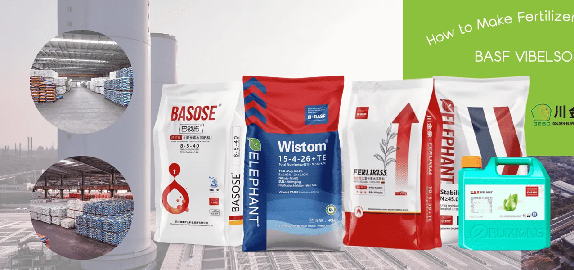
Sichuan Ruixiang Agricultural Science and Technology Development Co., Ltd. is located in West Area of High Tech Industrial Park, Meishan, Sichuan, China. It is a holding subsidiary of Sichuan Golden-Elephant Sincerity Chemical  Co., Ltd. which is a leading chemical company in China, listed in China top 50 Enterprises in Nitrogen Fertilizer.

We specialize in urea, potassium chloride, potassium sulfate, ammonium phosphate, compound fertilizer, water fertilizer and other important chemical fertilizer raw materials of international supply management services.

At present, the company’s business involves many provinces in China, Xinjiang, Inner Mongolia, Guangxi, Fujian, Jiangsu, Sichuan and other cities. At the same time involved in export business, with Africa, Southeast Asia,Europe and other places’ customers gradually establish friendly relations.

Categories

Chemical Raw Material

NPK Compound Fertilizer

Water-Soluble Fertilizer

Customized Products

WISTOM Stabilize Long-Lasting Compound Fertiliz… 

WISTOM Stabilize Long-Lasti…

https://www.goldenefertilizer.com/products/

Address

West Area of High Tech Industrial Park, Meishan, Sichuan, China

E-mail:irvingzhuo@goldenefertilizer.com;abby@goldenefertilizer.com

Phone: 8618100821377; 8613378355301

Whatsapp: 8618100821377; 8613378355301

Article inline ad