Wednesday, November 25, 2026

Home Blog Page 169

Chinese Home Appliance Manufacturer Expands Into New Markets

0

By Fan Feifei | chinadaily.com.cn | Updated: 2025-09-05

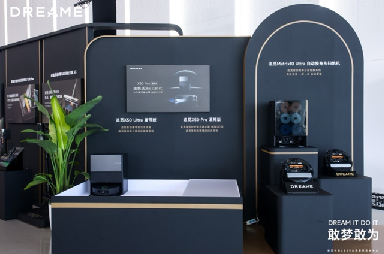
Chinese intelligent home appliance manufacturer Dreame Technology is seeking to expand its global footprint by leveraging quickly evolving artificial intelligence technology.

 As of the end of June, Dreame Technology had filed 6,379 patent applications worldwide, with 3,155 patents granted. Invention patents accounted for 45 percent of the total.

 The company’s robotic vacuum cleaners come equipped with AI-powered obstacle recognition, self-cleaning systems and a path planning function based on intelligent algorithms.

 Data from market consultancy IDC showed that the global shipment of intelligent home cleaning robots reached 15.35 million units in the first half of this year, up 33 percent year-on-year. Dreame’s 10.2 percent of the market share ranks it third globally.

 The company recently unveiled more than 30 new products, including televisions, air conditioners, refrigerators, washing machines, robotic vacuum cleaners and sweeping robots, extending its reach from the cleaning appliances field into household appliances and wearable devices segments.

 Currently, its products are sold in more than 100 countries and regions, including Europe, North America, Southeast Asia, East Asia, the Middle East, Africa and South America. Revenue from international markets accounted for 65 percent of its total revenue in 2024.

 fanfeifei@chinadaily.com.cn

Article inline ad

Ikea To Invest More In China

0

By WANG ZHUOQIONG | China Daily | Updated: 2025-09-05

Ikea China on Wednesday pledged to invest 160 million yuan ($22 million) in China during its 2026 fiscal year, as the Swedish home-furnishings giant deepens its bet on the Chinese market through price cuts, new product lines and expanded digital services.

 The retailer plans to introduce more than 1,600 new home products, 23 collections and over 50 new food offerings over the coming year, with a sharp focus on “complete sleep” and “kitchen living”.

 It has pledged 160 million yuan in price cuts covering more than 150 bestselling items.

 Over the past two fiscal years, Ikea China has already spent 673 million yuan to develop more low-priced products and launched an AI-powered digital design platform now available in 31 Ikea markets.

 The company opened new stores in Xi’an, Shaanxi province, Shanghai, and Shenzhen of Guangdong province in the ongoing fiscal year, apart from the first pickup point in the country that welcomed customers in Shenzhen.

 Tolga Oncu, retail manager and COO of Ikea Retail, Ingka Group, said: “China is not only a vital link in Ikea’s global value chain; it is also the test-bed for retail innovation. We look very much forward to continuing innovating our retail business in China and bringing some learnings to other parts of the world.”

 Ikea’s new brand promise for the 2026 fiscal year — Home Is More Than You Think — is underpinned by its latest China Life at Home Report, which found that people satisfied with their living spaces are more optimistic about the future.

 Consumers are increasingly seeking flexible, evolving homes, long-term value and products that enhance daily well-being. Ikea said it will focus on inspiration, longevity and affordability as its three guiding values.

 To deliver on those goals, the retailer plans to expand kitchen offerings with sustainable, cost-effective materials tailored to Chinese cooking, add more localized dishes to its in-store restaurants, and roll out further investments under its “Growing Plus” initiative.

 Ikea China has also been stepping up its digital and omnichannel strategy. In August, it opened a flagship store on JD.com to reach more customers in the market, following last year’s establishment of a retail development center to develop products, logistics and digital solutions designed specifically for the local market.

 Sustainability remains central to Ikea’s China strategy.

 Ingka Investments, the investment arm of Ingka Group, last month invested in Shanghai Re-Mall Environmental Protection New Material Co Ltd, a Chinese recycler of post-consumer packaging waste, marking the first Chinese investment for Ingka Investments in its Circular Investment portfolio.

 The company said it will continue to expand green operations, consumption and circular services in partnership with local players.

 Ikea China said it will stay open-minded, continuously exploring digital platforms while upgrading existing full-size stores and piloting new small-store formats.

 To date, Ingka Group operates 40 customer touchpoints in China — comprising 37 Ikea stores, two experience centers, one design studio and 10 Livat shopping centers.

 wangzhuoqiong@chinadaily.com.cn

Article inline ad

Guitar Firm Hitting All The Right Notes

0

By YIN MINGYUE and LIU KUN in Jingzhou, Hubei | China Daily | Updated: 2025-09-05

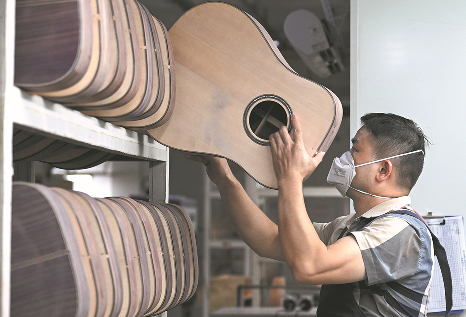
Turning out only 200 guitars a month from its custom workshop, Hubei Tongxin Musical Instrument Co Ltd, based in Songzi, Jingzhou, Hubei province, aims to take a greater overseas market share in the high-end guitar manufacturing market.

 “As a high-end production facility of the company, the workshop sells its guitars for no less than 30,000 yuan ($4,130) each,” said Wang Fenghua, CEO of the musical instrument maker.

 Based in the Songzi Cultural and Creative Park, Tongxin specializes in classical guitars, acoustic guitars and ukuleles, and is one of the few companies in China capable of producing a full range of high-end wooden guitars.

 While the workshop turns out around 200 guitars a month, in 2024, Tongxin’s other facilities enabled the company to export over 12,000 guitars annually, with the top models priced at 59,800 yuan each, generating an annual output value of 150 million yuan.

 More than 80 percent of its products are exported to Europe, the United States, Japan, Australia and Southeast Asia.

 “The market for high-end guitars is buoyed by greater demand and potential, but it requires advanced technical know-how and breakthroughs in material science,” Wang said.

 Tongxin operates China’s only full-process workshop with constant temperature and humidity control 24 hours a day.

 Also, Tongxin’s core team of more than 100 luthiers all have over 20 years of experience. Building on this expertise, the company allocates about 1 million yuan annually to train its craftsmen.

 “Maintaining consistent quality and enhancing competitiveness is vital,” Wang said, adding that the company is committed to delivering both stable supply and consistent quality.

 Its craftsmanship has drawn attention from international peers. Abraham Wechter, a master luthier, relocated his own workshop to the Songzi park after being impressed by Tongxin’s craftsmanship.

 “The company has a deep passion for making beautiful guitars and works hard to achieve true professionalism,” Wechter said.

 Between 2024 and 2025 alone, the company hosted over 80 groups of foreign buyers from more than a dozen countries, including Switzerland, Austria, the US and the United Kingdom, establishing long-term partnerships. Its output value in 2025 is expected to reach 350 million yuan.

 Tongxin’s rise is closely tied to the growth of the Songzi Cultural and Creative Park, where it serves as a leading player.

 Completed at the end of 2023, the park has already attracted 11 enterprises including Tongxin. Its output value is expected to reach 800 million to 1 billion yuan in 2025, rise to 2 billion yuan within three years and eventually grow to 5 billion yuan when fully operational, creating nearly 10,000 jobs.

 During a field trip to Songzi on June 18, Wang Zhonglin, Party secretary of Hubei province, said cultural and creative industries have become new growth drivers with enormous potential and a broad market outlook.

 Wang Zhonglin urged the park to build on its existing foundation and expand the guitar industry from manufacturing and sales to demonstration, experience and entertainment.

 The park will continue to cultivate leading enterprises such as Tongxin, foster supporting industries and promote the full-chain development of the cultural and creative sector, said Wang Wei, Party secretary of Songzi.

 Looking to the future, Tongxin’s CEO said the company will leverage its technical expertise to further expand its overseas sales channels in tandem with the development of the park.

 Contact the writers at yinmingyue@chinadaily.com.cn

Article inline ad

Chinese E-Commerce Firms Should Tap Local Payment Systems, Executives Say

0

By Wang Xin | chinadaily.com.cn | Updated: 2025-09-04

With Chinese cross-border e-commerce contentiously expanding globally, local payments are seen as of greater significance to seize opportunities and boost business growth worldwide, especially in emerging markets, said senior business executives in Shanghai on Tuesday.

 The global e-commerce market has been growing rapidly in recent years and is forecast to reach $20 trillion this year. Moreover, as technology continues to develop in mature markets and become more accessible in emerging markets, the market is expected to grow 50 percent over the next three years to $30.96 trillion by 2028, according to Tristan Chiappini, senior vice-president at PPRO APAC, a leading provider of digital payments infrastructure.

 “This global market presents a massive opportunity for Chinese businesses. But in many markets, local payment methods dominate with local preferences,” said Chiappini, adding that offering local payment methods and catering to local payment preferences is a “must” to create trust with local consumers.

Chiappini pointed out that they estimate that there are around 450 major payment methods around the world, bringing complexity of management as well as regulatory challenges and friction in different markets.

 Founded in 2006 and active in China since 2015, PPRO has been dedicated to building globalized payment platforms for businesses to expand worldwide, allowing them to offer more choices at checkout and boost cross-border sales. Seeing great opportunities in China, the company is seeking to expand partnerships with more Chinese businesses for global growth.

 “The Chinese market and e-commerce businesses represent a very exciting opportunity internationally. We see great and unique growth of Chinese businesses doing cross-border payments, and they are now dominant within European and Latin American markets in terms of e-commerce,” said Eelco Dettingmeijer, chief commercial officer at PPRO.

 Taking Latin America as an example, the company shared that about 56 percent of cross-border online purchases made by shoppers in Brazil were from Chinese merchants, and about 43 percent of online purchases made by shoppers in Mexico were from Chinese websites.

 “We find it very exciting to work with Chinese merchants. We see huge spikes in sales volume during our cooperation with Alibaba Group since 2016, and a lot of large Chinese e-commerce businesses are very sophisticated in the way of optimizing payments. They’re very fast to adopt new trends in payment methods,” said Chiappini.

Article inline ad

Fortescue Bullish On China’s Green Mining

0

By ZHENG XIN | China Daily | Updated: 2025-09-04

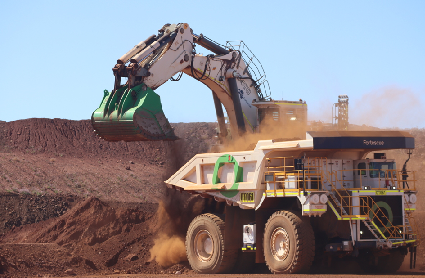
Australian mining giant Fortescue is committed to deepening ties with Chinese institutions, as it appreciates the industrial scale and innovation of the world’s second largest economy and its burgeoning green economy, said a senior company executive.

 “While iron ore remains central, opportunities are expanding collaboration across the value chain, including decarbonization technologies and the development of green iron,” said Apple Paget, Fortescue Group chief financial officer, during an exclusive interview with China Daily.

 “We’re actively exploring partnerships in supply chain decarbonization and green iron production. China’s capabilities in technology, engineering and clean energy deployment are world-leading, and we’re eager to build on those strengths. China leads the world in industrial scale and manufacturing innovation. Fortescue is tapping into that expertise and scale to bring forward the solutions we need to decarbonize heavy industry,” Paget said.

 Her comments come on the heels of Fortescue securing a yuan-denominated loan worth 14.2 billion yuan ($1.98 billion), a move that further solidifies the company’s relationship with Chinese financial institutions and provides crucial funding for its decarbonization plans.

 This marks a significant breakthrough as it’s the first time an Australian company has received a renminbi syndicated loan.

 The five-year syndicated termloan facility — with a 3.8 percent per annum fixed interest rate — is backed by leading Chinese, Australian and international lenders, including Bank of China and ICBC.

 “As the first syndicated RMB loan of this kind and scale secured by an Australian corporation, this transaction demonstrates how commercial relationships can thrive through shared ambition and mutual benefit. It also affirms the growing role of the renminbi in cross-border capital markets, particularly in sectors like commodities, where trade flows and investment strategies are becoming more diversified,” she added.

 This not only deepens the partnerships with key Chinese financial institutions, but also expands the company’s syndicated network to include high-quality RMB financing institutions, Paget said.

 “China and Fortescue are advancing the green technology needed to lead the global green industrial revolution,” founder and executive chairman of the company, Andrew Forrest, said in a statement.

 Fortescue is already working with Chinese institutions to deploy decarbonization technologies across its operations, from zero-emissions vehicles to green iron production.

 Analysts see the deal as a significant vote of confidence in China’s financial system and its commitment to green technology.

 “China’s vast market continues to be a key destination for iron ore from major mining companies, who are now prioritizing environmentally conscious partnerships,” said Zhao Xiangbin, chief strategist at Beijing Gold and Forex Fortune Investment Management.

 China’s significant iron ore consumption makes it an irresistible market for global mining powerhouses, leading them to prioritize the development of environmentally sound partnerships in the region, Zhao said.

 While iron ore remains central to the relationship, Paget indicated that Fortescue is actively exploring partnerships in supply chain decarbonization and green iron production.

 zhengxin@chinadaily.com.cn

Article inline ad

SUS Environment Helps Drive China’s Green Innovation Onto Global Stage

0

By ZHANG LINWAN | China Daily | Updated: 2025-09-04

SUS Environment, a leading Chinese environmental service provider, has become a key force in advancing the country’s green development while contributing solutions to global sustainability challenges.

 Solid waste management has emerged as a global issue amid rapid economic growth, while waste incineration has been widely adopted due to its safety and efficiency in resource utilization. Although China’s waste-to-energy industry started late, it has made great progress, transitioning from technology import to independent innovation.

 Focusing on the characteristics of waste in China, SUS Environment has conducted extensive innovation research to advance municipal solid waste incineration plants. Meanwhile, it has developed integrated waste-to-energy and thermal utilization solutions adaptable to different countries.

 Its equipment and technology have been applied in more than 300 waste-to-energy plants worldwide, with an annual processing capacity exceeding 110 million metric tons, ranking it among the largest globally.

 SUS Environment is exploring a model of “Low-carbon Eco-industrial Parks” centered around waste-to-energy power plants.

 Its waste-to-energy plants incorporate environmental, social, and governance (ESG) principles into their architectural design, and Low-carbon Eco-industrial Parks combine functions such as energy regeneration, heating services, environmental education and community services, offering new ideas for a city’s green, low-carbon development.

 The company is also refining solid waste management models to create a “Chinese model” that benefits all cities.

 The SUS Zhuhai Eco-industrial Park, for example, can process different waste streams, including household, food and medical waste.

 So far, the park has treated more than 7 million tons of waste, generated over 3 billion kilowatt-hours of green power and reduced 2 million tons of greenhouse gas emissions.

 It has not only achieved “harmless, reduced, and resourceful” treatment of waste but also provided heating for surrounding industrial parks, accelerating the low-carbon transformation of urban industrial chains, according to the company.

 Bolstered by the Belt and Road Initiative and the Global Development Initiative, Chinese enterprises have created highly localized solutions to help deal with landfill scarcity and global warming issues in many countries across Asia, Africa and Latin America.

 As a Chinese company with substantial overseas investment in this sector, SUS Environment has invested in 12 waste-to-energy plants, with a total processing capacity exceeding 5.5 million tons per year.

 It has also established 90 Low-carbon Eco-industrial Parks worldwide, providing high-quality environmental and energy services to over 100 million people. The “resource-product-recycled resource” circular model has been gradually promoted in regions such as Asia, the Middle East and Europe, fostering the development of a resource-recycling society.

 In addition to exporting equipment and investing in plants, Chinese companies like SUS Environment have participated in the establishment of international standards, advanced the alignment of Chinese technology with global norms, shared environmental management experiences with developing countries and assisted them in building solid waste management systems.

 In November 2024, the company entered into a strategic partnership with the United Nations Human Settlements Programme to jointly enhance living conditions worldwide.

 These initiatives have injected practical and inclusive “Chinese wisdom” into the global environmental governance system, demonstrating the responsibility and commitment of Chinese enterprises, said a representative from SUS Environment.

 The company is not only a contributor to green technology but also a co-builder of global sustainable development, the representative added.

 zhanglinwan@chinadaily.com.cn

Article inline ad

China-ASEAN Trade Cruising In High Gear

0

Business with 10-nation bloc rose 9.4% to 4.29 trillion yuan between January and July, accounting for 16.7% of country’s total

By ZHONG NAN | China Daily | Updated: 2025-09-05

Last month, at the loading area of Cuori Electrical Appliances (Group) Co Ltd in Ningbo, Zhejiang province, five container trucks laden with steam irons and vacuum cleaners set off for Indonesia.

 This was the company’s fourth shipment to Southeast Asia in August, signaling rising demand for Chinese household appliances across the region.

 Cuori Electrical’s exports to the Association of Southeast Asian Nations soared 46.8 percent year-on-year to 88.81 million yuan ($12.36 million) in the first seven months, data from Ningbo Customs show.

 “With the tariff policies of the United States adding pressure on global manufacturers this year, we have stepped up our overseas expansion, focusing more on Southeast Asian markets,” said Li Guangze, Cuori’s financial director.

 Li said that rising urbanization, a growing middle-income group and the increased spending power of Gen Z consumers — those born between the mid-1990s and early 2000s — together with stronger demand for affordable, reliable appliances, have lifted the company’s sales of irons as well as other small household devices in the ASEAN region, making it one of its fastest-growing export markets.

 Reflecting the trend, China’s trade with ASEAN — its largest trading partner — rose 9.4 percent on a yearly basis to 4.29 trillion yuan between January and July, accounting for 16.7 percent of the country’s total, according to the General Administration of Customs.

 Among ASEAN members, Vietnam, Malaysia and Indonesia were China’s top three trading partners during this period, the GAC said.

 Zhao Fujun, a researcher specializing in international economic cooperation at the Beijing-based Development Research Center of the State Council, said that even though big-ticket infrastructure projects have been the calling cards of Chinese companies in Southeast Asia, the region has now emerged as one of China’s most dynamic trade partners after entering a new growth stage.

 The implementation of Version 3.0 of the China-ASEAN Free Trade Area, coupled with expanding trade under the Regional Comprehensive Economic Partnership and cooperation under the Belt and Road Initiative, will provide fresh impetus for long-term trade growth, said Zhao.

 Two officers from Kunming Customs inspect Thai durians imported via the China-Laos Railway at Mohan Railway Port in Yunnan province in August. CHINA DAILY

Commerce and trade ministers from China and ASEAN jointly announced in May the official conclusion of talks for CAFTA 3.0 via an online meeting, according to information released by the Ministry of Commerce.

 China and the 10 ASEAN member states will expedite their respective domestic administrative and legislative procedures and work toward formally signing the CAFTA 3.0 upgraded protocol by the end of this year.

 CAFTA 3.0 covers nine areas, encompassing both existing fields under the China-ASEAN Free Trade Area agreement and emerging sectors with significant potential for cooperation, including the digital economy, green economy, supply chain connectivity, trade facilitation and economic and technical cooperation.

 Cai Hongbo, director of the Free Trade Zone Research Center at Beijing Normal University, said that amid mounting challenges to global trade, the conclusion of the CAFTA 3.0 negotiations signals a renewed commitment to openness and cooperation, underlining the resilience of free trade and providing greater certainty for regional and global economies.

 “ASEAN needs Chinese goods because demand is surging while affordability and supply reliability matter most,” said Cai. “China’s industrial capacity, product range and trade agreements position it as the natural supplier.”

 For instance, Southeast Asia still faces major infrastructure gaps in power supply, transportation and manufacturing. Products like power generators and construction machinery from China fill critical needs for stable electricity and urban expansion. China’s ability to supply at scale and relatively lower cost makes it the go-to partner, he added.

 In addition to agricultural products, ASEAN’s exports to China cover a wide range of goods, including rubber, palm oil, seafood, timber, coal, chemicals, raw materials for plastics, refined oil, copper, nickel and other minerals. The regional bloc also supplies China with manufactured items such as data storage devices, integrated circuits, electronics and rubber-based medical supplies.

 China ships mainly computers, telecommunications equipment, trains, bulk and container vessels, excavators, diesel fuel, steel, lighting products, medical equipment, textiles and household appliances to ASEAN. Its electric vehicles, power storage equipment and trucks have also become popular in many Asian countries in recent years.

 Agg Power Technology (Fuzhou) Co Ltd, a power equipment manufacturer based in Fuzhou, Fujian province, plans to expand in ASEAN markets by increasing investment in innovation and strengthening its local service networks in the coming years, with the aim of boosting regional supply chain cooperation.

 The company’s exports to ASEAN reached 147 million yuan during the January-July period, up 41.3 percent year-on-year, said Fuzhou Customs.

 Chen Ran, the company’s operations director, said sales of diesel generator sets had remained particularly strong in Southeast Asian markets, pushed by Agg Power’s efforts to refine its product mix and offer customized services to meet varied customer needs.

 “Our products are widely used in urban infrastructure projects across ASEAN countries, ensuring stable power supply and steadily increasing our market share,” said Chen, adding that the company had taken part in several projects in Indonesia this year — including power stations and petrol bunks — driving up its market share in the country to 19 percent.

 As ASEAN economies advance, their demand for high-tech products from China has also grown rapidly, with imports increasingly concentrated in areas such as electronics, digital and green technologies, said Zhang Junbin, founder of Yunjing Intelligence Innovation Co Ltd, a manufacturer of household robots based in Shenzhen, Guangdong province.

 “Since the beginning of this year, we have been advancing our globalization strategy with a strong focus on expanding in ASEAN,” said Zhang. “Our robotic vacuum cleaners, equipped with artificial intelligence-powered visual recognition and intelligent path-planning technologies, have performed particularly well in overseas markets.”

 From January to July, the Chinese company’s exports to ASEAN reached nearly 20 million yuan, up 194 percent year-on-year, data from Shenzhen Customs showed.

 Lyu Daliang, director of the department of statistics and analysis at the GAC, said that despite a challenging external environment, China’s foreign trade has sustained steady growth, with its trade structure becoming more optimized and high-tech products playing an increasingly vital role in driving overall expansion.

 China’s trade of high-tech products, including high-end machine tools and electric vehicles, reached 5.1 trillion yuan from January to July, up 8.4 percent year-on-year, contributing 45.4 percent to the overall growth of foreign trade during this period, data from the GAC showed.

 Alongside the trade growth, improved regional connectivity projects are also strengthening China-ASEAN economic ties. The China-Laos Railway, for example, handled more than 3 million metric tons of imports and exports in the first half, with a trade value exceeding 12.8 billion yuan, up 8.2 percent and 38.5 percent year-on-year, respectively, said Kunming Customs.

 Key exports from Laos to China include fruits, beer, cassava, rubber and minerals, with the range of products transported expanding from just over 10 to more than 3,000 varieties.

 With more regional connectivity projects coming on stream, a wider variety of Southeast Asian goods will enter the Chinese market, broadening from traditional commodities to higher value-added products, said Chen Jianwei, a researcher at the University of International Business and Economics’ Academy of China Open Economy Studies in Beijing.

 Chen said stronger trade links will further weave regional supply chains together and solidify China-ASEAN economic cooperation, providing fresh momentum for long-term growth.

 zhongnan@chinadaily.com.cn

Article inline ad

Nation To Boost Electronic Infotech Manufacturing

0

Action plan in place for faster growth in output, revenue; edge in global market

By CHENG YU | China Daily | Updated: 2025-09-05

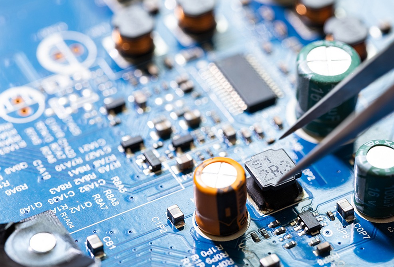
China has released a two-year action plan to stabilize growth in its vast electronic information manufacturing sector, setting targets for annual output and revenue increases through 2026, as the nation seeks to bolster consumption and secure its role in the global technology race.

 The action plan, unveiled by the Ministry of Industry and Information Technology and the State Administration for Market Regulation, aims for an average annual growth rate of about 7 percent in industrial output from large-scale computer, communications and other electronic equipment sectors.

 Total revenue in concerning fields such as lithium batteries, photovoltaics and components is expected to rise more than 5 percent per year.

 The government has also set specific product benchmarks: server sales exceeding 400 billion yuan ($56 billion), large-screen TVs with more than 40 percent domestic penetration, and further advances in high-end, intelligent personal computers and smartphones.

 In one of its strongest passages, the plan stressed the need to “promote domestic and international dual circulation and prudently address international trade barriers”.

 It urged companies to make full use of China’s vast domestic market, strengthen their ability to control entire supply chains, and build resilience against external shocks.

 According to the plan, the country will help firms stabilize trade in core products such as mobile phones, computers and televisions, even as global markets face mounting protectionism.

 It also doubled down on efforts to back domestic champions. It pledged to “unswervingly promote the use of homebuilt products”, and vowed stronger support for key firms in strategic supply chains, particularly in semiconductors, industrial control systems and BeiDou Navigation Satellite System.

 Meanwhile, the plan also called for accelerated breakthroughs in 5G and 6G components, semiconductors and intelligent computing, while fostering new markets for smart wearables, intelligent connected vehicles and digital health.

 Wang Peng, a researcher at the Beijing Academy of Social Sciences, said: “The electronic information manufacturing industry is a strategic, fundamental and pioneering sector of the national economy. It is a key pillar for stabilizing industrial growth and safeguarding the country’s political and economic security.

 “The action plan seeks to consolidate existing industrial capacity and foster and expand new growth drivers. By combining government support with market mechanisms, China aims to keep the sector on a steady growth path while positioning it to tap new demand both at home and abroad.”

 Notably, on the consumer side, the plan seeks to stimulate purchases of PCs, phones and TVs, as well as AI-related consumer equipment through credit support, online marketing, and integration with e-commerce and retail promotions. It is also promoting smart devices in healthcare, transport, education and emergency services to open new growth areas.

 Xie Cun, head of the information and communications development department at the MIIT, said: “Thanks to consumption subsidy policies and the push from AI-powered terminals, Chinese consumers’ enthusiasm for electronic products has risen. This has fueled faster production and sales of electronic devices in the first quarter of this year.”

 In the first quarter, output of computer sets reached 85.32 million units, up 9.6 percent year-on-year. Television shipments totaled 8.84 million units, a 4.7 percent increase and the second consecutive quarter of positive growth. In January-February, shipments of 5G smartphones hit 41.62 million units, up 7.6 percent, with domestic brands especially favored by consumers, accounting for 85 percent of shipments, he noted.

 chengyu@chinadaily.com.cn

Article inline ad

Stock Surge Lifts Investors’ Risk Appetite

0

Depositors moving money out of fixed deposits and into equities, related assets

By JIANG XUEQING | China Daily | Updated: 2025-09-04

Confidence in China’s A-share market has strengthened, enhancing the capital market’s appeal and drawing quicker inflows from wealth management products, insurance funds and other institutional investors.

 With bank deposit rates still trending lower — some fixed-term deposits offering barely around 1 percent — the contrast with a rallying stock market has grown sharper. Strong returns on equity-linked wealth management products and mutual funds have fueled the risk appetite of households, prompting many investors to move money out of fixed deposits and into equities and related assets.

 “With interest rates trending lower and the economy shifting toward high-quality growth, investors’ preference for bond-type assets is expected to weaken, while equities will increasingly become a key direction for household portfolios,” said Ming Ming, chief economist at CITIC Securities.

 Data from Southern Finance Omnimedia Corp’s fintech platform focusing on asset management showed that equity-linked wealth management products delivered strong returns in July, with average annualized yields since the start of this year rising to 9.9 percent, up 7.19 percentage points from June. Banks have since stepped up issuance, with at least 20 new equity-linked products launched since August, according to a Hangzhou-based financial data provider. In late August, CMB Wealth Management and PSBC Wealth Management both highlighted medium-risk hybrid and equity-linked offerings in their marketing campaigns.

 A national joint-stock bank wealth manager noted that a correction in China’s bond market has eroded returns from fixed-income products, while rebounding equities are drawing more funds into equity-linked vehicles. Allocations vary by risk profile, but equity weightings of 20-40 percent have been most popular among clients.

 Insurance funds have also raised their equity exposure. Data from the National Financial Regulatory Administration showed that by the end of the second quarter, the balance of insurance funds invested in stocks was 3.07 trillion yuan ($429.8 billion), up 640.6 billion yuan in the first half and accounting for 8.47 percent of the total — the highest in recent years.

 Interim results from A-share listed companies highlight the same trend, with insurance funds boosting their holdings by the end of the second quarter across a range of sectors, including hardware and electrical equipment, software services, pharmaceuticals and biotechnology, as well as banking.

 Since the start of this year, bank stocks and other high-dividend sectors have emerged as prime targets for insurance funds. Analysts note that with long-term interest rates falling, dividend strategies offer insurers stable cash flows that help offset shrinking interest income. The long-term value of bank shares also matches the duration of insurers’ capital, making them a natural fit for investment strategies and performance benchmarks.

 In January, China introduced a plan to channel more medium- and long-term capital into the market, proposing that large State-owned insurers allocate 30 percent of new annual premiums to A shares starting in 2025.

 The plan also established multiyear performance evaluations — spanning three years or more — for public offering funds, State-owned insurers, basic pension funds and annuity funds. The aim is to encourage long-term strategies and strengthen institutional participation in equities.

 Beyond policy drivers, insurers’ growing equity exposure in the first half also reflects business needs. Over the past three years, yields on China’s 30-year government bonds have continuously declined, while the preset interest rates of insurers’ main products were locked in earlier. This has squeezed the spread between the yields on maturing fixed-income portfolios and liability costs, pushing insurers to restructure their underlying assets and raise long-term expected returns through optimized equity allocation, analysts said.

 A survey by the Insurance Asset Management Association of China, covering 86 insurers and 36 insurance asset management companies, found that equities are the most preferred asset class for insurance institutions in the second half of 2025, followed by bonds and mutual funds. Most expect their overall allocations to remain largely unchanged from early this year, though some anticipate modest increases in equity and bond investments.

 jiangxueqing@chinadaily.com.cn

Article inline ad
Debut Economy, Tax Refunds Spur Spending

0

By ZHENG YIRAN and ZHAO JUNFENG in Chengdu | China Daily | Updated: 2025-09-04

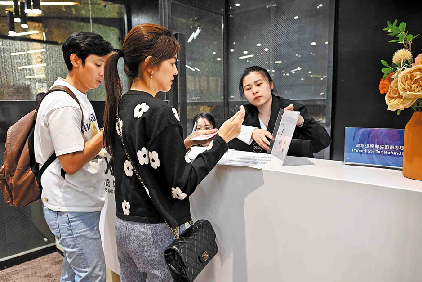
Jinjiang district in Chengdu, Southwest China’s Sichuan province, is taking consumption to another level by promoting both the debut economy and the departure tax refund policy.

 The district has so far put in place over 600 debut stores with nearly 2,000 international brands, accounting for more than 30 percent of the city’s debut economy resources.

 “In terms of mechanism innovation, we not only took the lead in establishing the first national debut economy promotion center and the first debut economy research institute, but also formed the first debut economy alliance with more than 50 leading enterprises and institutions in Chengdu and Chongqing, empowering the development of the industrial chain, achieving resource sharing, demand matching and coordinated development,” said Sun Qiu, director of the Jinjiang Debut Economy Promotion Center.

 “To provide precise services to enterprises, we have launched a gold medal membership service system. By forming a professional service team and equipping one-on-one specialists for enterprises, we provide full life cycle services from research and development design, display and sales to implementation and operation. The policy toolbox covers multiple areas such as scientific and technological innovation support and initial launch rewards. During the 12th Chengdu FISU World University Games, we cut the approval time from 7-10 days to 2-3 days,” she said.

 Data from the promotion center show that Jinjiang district launched 28 debut economy activities and 96 debut stores in the first half of this year.

 Meanwhile, the district has launched a departure tax refund plan to attract visitors and promote consumption.

 In 2016, Chengdu became the first city in Southwest China to officially launch the policy. In July 2023, the first departure tax refund district — Chunxi Road departure tax refund district — was launched in Jinjiang district.

 There are nearly 200 departure tax refund stores in Jinjiang district currently, 42 percent higher than at the beginning of this year, and accounting for 40 percent of tax refund stores in Chengdu.

 These stores cover multiple areas of consumer interest, including luggage, clothing, electronics, and specialty cultural and creative industries, creating a tax refund shopping destination with wide coverage and concentrated brands, greatly stimulating the shopping enthusiasm of overseas tourists.

 Between January and July, sales revenue of the departure tax refund stores of Jinjiang district surged 219.5 percent year-on-year, and departure tax refund services were offered to nearly 5,000 overseas tourists.

 Zeng Junxiang, staff member of the tax service of Jinjiang district, said: “This year, we further optimized service supply, combined with consumer scenarios, and new models such as in-store refunds and online refunds have been launched to meet the different needs of overseas travelers and greatly enhance their shopping experience. Such a convenient one-stop service of ‘shopping + tax refund’ allows passengers to make secondary purchases after receiving the tax refund money.”

 “I bought a Xiaomi mobile phone at the IFS shopping center in Jinjiang district, and received a tax refund of 296 yuan ($41.4). Later, my friend and I happily had a meal at the shopping center with the refund money,” said Rajan Brahmin, an Indian tourist.

 “With the departure tax refund scheme, there is a benign loop of consume-refund-consume again,” Zeng said.

 Lan Huajuan, deputy head of the Chengdu municipal bureau of commerce, said: “This year, by optimizing the overall planning mechanism, enhancing commodity supply, creating consumption scenarios, innovating the consumption mode, and optimizing the international consumption environment, Chengdu has promoted the sustained recovery of the consumer market and achieved a new level of consumption scale.”

 Data from the CMBC showed that Chengdu’s total retail sales of consumer goods reached nearly 655 billion yuan in the first seven months of this year, up 5.9 percent year-on-year.

 Contact the writers at zhengyiran@chinadaily.com.cn

Article inline ad