Wednesday, November 25, 2026

Home Blog Page 168

Huawei Unveils New High-Performance AI Supercomputing Clusters Despite US Sanctions

0

By Ma Si | China Daily | Updated: 2025-09-18 15:55

Huawei Technologies Co on Thursday announced the launch of what it calls the world’s most powerful AI computing clusters—SuperNode and SuperCluster—marking its latest breakthrough in high-performance computing despite ongoing US sanctions.

 Speaking at an event in Shanghai, Huawei’s rotating chairman, Xu Zhijun, said: “Computing power has been and will continue to be the key to artificial intelligence—especially for China’s AI development.”

 Although restrictions limit Huawei’s access to advanced chip manufacturing, the company has developed large-scale AI systems that integrate thousands of its Ascend processors into unified computing units, reaching top-tier performance through breakthroughs in interconnect technology.

 The newly released Atlas 950 SuperPoD and Atlas 960 SuperPoD support 8,192 and 15,488 Ascend cards, respectively, and lead in key performance metrics including total computing power, memory capacity, and interconnect bandwidth. Xu said these systems are designed to remain the world’s most powerful AI nodes “for many years to come.”

 Building on these super nodes, Huawei also introduced the Atlas 950 SuperCluster and Atlas 960 SuperCluster, which scale to 500,000 and 1 million cards, respectively. The company claims these represent the most powerful AI computing cluster infrastructure in existence.

 Looking ahead, Xu outlined Huawei’s three-year chip roadmap, which includes the Ascend 950PR, 950DT, 960, and 970 models. The 950PR, featuring Huawei’s self-developed high-bandwidth memory (HBM), is scheduled for release in the first quarter of 2026.

 “Because of US sanctions, we cannot manufacture at TSMC, so the computing power of a single Huawei chip still lags behind Nvidia’s,” Xu said. “However, with more than 30 years of experience in connecting people and machines, we’ve made breakthroughs in interconnect technology that allow us to build 10,000-card-scale super nodes—making ours the most powerful computing systems in the world.”

 To date, more than 300 units of the Cloud Matrix 384 SuperNode have been deployed, establishing what Huawei calls a new standard for AI infrastructure.

 Xu concluded by reaffirming Huawei’s commitment to collaborating with industry partners to build a solid computing foundation for AI development both in China and globally.

Article inline ad

Shandong Shows How To Coordinate Development And Ecological Protection

0

By Zhao Ruixue in Jinan | chinadaily.com.cn | Updated: 2025-09-20 16:20

Located in the lower reaches of the Yellow River, Shandong province has made progress in promoting coordinated progress between high-quality economic development and the ecological environment.

 Part of the province’s efforts is cultivating future industries such as artificial intelligence, life sciences, and skilled robotics.

 More than 30 reporters conducted field interviews in Jinan, the capital city of Shandong, on Wednesday and Thursday to observe the advancement of ecological protection and high-quality development in the Yellow River basin. The group included reporters from media outlets in the United States, the United Kingdom, France, Russia, South Korea, and Singapore.

 Jinan, where the Yellow River flows through, covers a total area of 10,244.45 square kilometers and is home to over 9.51 million permanent residents as of 2024.

 During the tour, journalists visited companies specializing in robotics, bio-cosmetics, and laser processing technology.

 At Shandong Yobotics Intelligent Robot Co Ltd, Konstantin Kobaidze from Russia Today TV, was lifted steadily into the air while standing on the back of a quadruped robot. He couldn’t help but applaud and said, “Beautiful, beautiful.”

 “Our independently developed robots have been applied in fields such as mining, power, nuclear energy, underwater operations, emergency rescue, and inspection,” Fan Yong, chairman of Yobotics, said.

 “They are capable of effectively adapting to complex terrains and external environmental interference.”

 Fan said that humanoid robots will be widely used in production work and daily life in the future.

 “In the first half of this year, industrial robot output in the province grew by 58.6 percent,” Chen Fei, director of the Department of Industry and Information Technology of Shandong Province, said.

 The province is now home to more than 200 companies involved in the robot sector, including design, research and development, and manufacturing.

 Chen said Shandong aims to build itself into a national growth pole for robot research and manufacturing, as well as a new hub for innovative applications.

 The province is intensifying efforts to implement the “Robot Plus” application initiative, promoting the use of robots in industrial production, smart agriculture, medical and wellness services, among other fields.

 Currently, 26 colleges and institutions in Shandong offer specialized programs in robotics engineering, providing comprehensive support in technology development, industrial incubation, smart manufacturing, and application scenarios.

 At Shandong Freda Biotechnology Co Ltd, the clean, orderly, and fully transparent facility, equipped with advanced technology, offered reporters a firsthand look at the rapid evolution of smart manufacturing.

 The plant operates 35 modern production lines that are automated, digital, and intelligent, reducing labor intensity while improving production efficiency and quality. Processes such as automatic filling, coding, quality inspection, and packaging are integrated and operate at high speed.

 “We export raw materials of hyaluronic acid to more than 70 countries and regions, including those in Europe,” Gao Chunming, chairman of Freda, said.

 “Domestic cosmetics are gaining an increasing market share, with young consumers becoming the main force driving the purchase of homegrown brands.”

 “Because our company started as a pharmaceutical manufacturer before expanding into cosmetics, all our R&D personnel adhere to the rigorous standards of drug development when creating cosmetics, with strict controls from research to production,” he said.

 The media group also visited Jinan Senfeng Laser Technology Co Ltd, which specializes in laser cutting, welding, and cladding equipment. By integrating laser technology with smart manufacturing concepts, the company has independently developed intelligent production lines such as flexible laser processing lines, intelligent sheet metal bending centers, and flexible sheet metal forming lines.

 The company’s products are being used in over 100 countries and regions.

 “Shandong will continue to boost innovation and upgrade its industries to develop a modern, high-quality economy in the Yellow River basin,” Sun Aijun, director of Shandong Development and Reform Commission, said.

Article inline ad

China’s Manufacturing Fuels Global Tech Innovation

0

Xinhua | Updated: 2025-09-20 15:51

HEFEI — A high-end passenger vehicle jointly developed by JAC Motors and Huawei has attracted many visitors at the ongoing 2025 World Manufacturing Convention, with its luxury interior, digital chassis and Huawei’s advanced intelligent driving technology gaining significant attention.

 The premium MAEXTRO S800 sedan is being showcased in the exhibition area of this year’s convention, which opened on Saturday in Hefei, the capital of East China’s Anhui province.

 Behind the S800 stands its manufacturing base, the MAEXTRO Super Factory, which uses Huawei’s digital and AI technologies to create a “digital twin” plant, enabling real-time monitoring and self-evolution across the production process, with over 1,800 intelligent robots driving fully automated stamping, welding, painting and assembly.

 The launch of the MAEXTRO S800 highlights how China’s advanced manufacturing is upgrading industries — from new energy vehicles to smart computers — and enabling them to turn innovation into market-ready products, and supporting both domestic and global industrial development.

MANUFACTURING WITH MOMENTUM

 Also in Hefei, NIO’s Second Advanced Manufacturing Base is not only a production site but also a popular industrial tourism destination thanks to its state-of-the-art workshops.

 Inside, a vehicle storage platform has upgraded traditional flat inventory into a three-dimensional system, allowing cars to be retrieved on demand and saving time spent on sorting. The plant can even operate fully automatically without on-site workers.

 According to the factory’s management, industrial AI algorithms now make 80 percent of all manufacturing decisions, while 941 robots in the facility’s body shop ensure a 100 percent automation rate across joining processes.

 “By participating in the World Manufacturing Convention for several consecutive years, NIO has witnessed the continuous upgrading of China’s manufacturing, led by new energy vehicles, bringing an increasing number of high-quality products,” said Yu Dongming, general manager of NIO (Anhui branch).

The ThinkBook Plus Gen 6 Rollable Laptop, with its expandable display growing from 14 inches to 16.7 inches at the touch of a button, has become a hot topic of conversation among overseas bloggers and tech enthusiasts, drawing praise as “future” and “spectacular” technology.

 The concept product was mass-produced at LCFC (Hefei) Electronics Technology Co., Ltd., which is Lenovo’s flagship manufacturing hub. By integrating intelligent manufacturing, technological breakthroughs, rigorous quality verification and supply chain support — as well as its digital process platform to link R&D and production data — the company has boosted the efficiency of turning innovation into market-ready products.

 With an annual output of 40 million laptops, LCFC produces one in every eight laptops sold globally. It is both a national model smart factory and one of 201 “lighthouse factories” around the world, more than 80 of which are in China.

 “Intelligent manufacturing is the core support of advanced manufacturing, and also the core competitiveness of Gotion High-Tech’s 20 production bases worldwide,” said Chen Wei, a senior manufacturing executive at leading Chinese battery maker Gotion High-Tech Co., Ltd.

 “With standards unified by Chinese headquarters and strictly implemented by bases across the world, China’s advanced manufacturing capacity is gaining international recognition,” Chen said.

 Official data shows that China has built over 35,000 basic-level and more than 230 excellence-level model smart factories.

DRIVING GLOBAL INNOVATION

 At a recent leading global automation event in Munich, Germany, Chinese industrial robot maker EFORT Intelligent Robot Co., Ltd. showcased solutions in such areas as dexterous robotic hands, and intelligent painting and welding workstations, attracting customers from around the world.

 The company has also brought four newly developed robotic products to the intelligent robot exhibition area of the convention in Hefei.

 “We can provide integrated intelligent robot solutions for international automakers’ smart manufacturing,” said You Wei, chairman and CEO of EFORT.

 He noted that in 2024, the company sold more than 16,000 industrial robots, which are widely used in the electronics, photovoltaics, lithium battery, automotive and shipbuilding industries, and have won recognition from brands such as Maserati, BMW and Volkswagen.

 As more “Made-in-China” products integrate into global industrial development, multinational companies are also partnering with Chinese players to share in the dividends of the country’s manufacturing upgrade.

At Volkswagen Anhui’s MEB plant, highly intelligent production lines have made the factory one of the group’s most advanced worldwide.

 “By 2030, we’ll launch around 50 all-electric and electrified models in this market. All intelligent. All connected. All equipped with the latest driver assistance and automation tech,” said Oliver Blume, CEO of Volkswagen Group. “Backed by close partnerships with strong local players, we can move 30 percent faster from idea to product. The result: We’re not just planning. We’re delivering.”

 For multinational auto parts supplier Marelli, China’s strong manufacturing and innovation capabilities are enabling both local and global growth.

 “China’s manufacturing and innovation capabilities allow us to provide customized and fast-to-market solutions for local customers, while also leveraging China’s innovation and manufacturing strengths to support global projects,” said Stefano Petrilli, global head of operations at Marelli Propulsion.

 Since entering China in 1999, Marelli has built eight R&D centers and 17 factories across the country, employing about 5,000 people in areas ranging from propulsion systems to lighting.

 Today, advanced manufacturing is becoming a major driver for foreign investment in China. In 2024, the country’s actual use of foreign direct investment totaled 826.25 billion yuan (about $116.16 billion), with high-tech manufacturing accounting for 96.29 billion yuan of that total, or 11.7 percent, according to the Ministry of Commerce of China.

 China’s advanced manufacturing capacity has become a key magnet for global industrial innovation and a vital engine for high-quality global industrial growth, said Zhang Xianfeng, a professor at Hefei University of Technology’s School of Economics.


Article inline ad

China Pares Down US Treasury Holdings

0

By ZHOU LANXU | China Daily | Updated: 2025-09-20 08:58

China cut its US Treasury holdings by $25.7 billion in July to $730.7 billion, marking the steepest reduction in nearly two years and pushing its holdings to the lowest since 2009, as the country’s foreign exchange reserve diversification continued, official data showed.

 Analysts said the reduction was influenced by expectations of US interest rate cuts, as investors sought to shield themselves from exchange rate risks. But experts also noted that a stable US debt market benefits China, and that compared with other assets, US Treasuries still offer advantages in liquidity and safety.

 After stepping back from being the second-largest holder of US debt to third place in March, China reduced its holdings of US Treasury securities in July, the lowest since February 2009, when the reading was $744.2 billion, according to the US Department of the Treasury.

 The cut was the fourth this year and marked the biggest holding decrease since September 2023, data from the US Treasury Department showed.

 The reduction bucked the increase of overall foreign holdings in US debt. Foreign holdings of US Treasury securities edged up from June’s $9.1268 trillion to $9.1587 trillion in July, with the biggest US debt holder Japan and the second-largest holder the United Kingdom increasing their holdings.

 Liu Chunsheng, an associate professor of international economics at the Central University of Finance and Economics, said that China’s reduction of US debt in July reflects considerations of foreign exchange reserve diversification, especially as US government debt has exceeded $34 trillion and market concerns over repayment capacity are rising.

 Moderately cutting US Treasuries while adding gold and other sovereign bonds helps reduce overreliance on dollar assets and enhances stability, Liu said.

 The country’s official gold reserves rose for the 10th consecutive month to 74.02 million ounces at the end of August, the State Administration of Foreign Exchange said.

 Liu said that the prospect of US rate cut in September and thus a weaker dollar may have also driven US debt sales to avoid loss from currency conversion, adding that, strategically, China needs reduced reliance on the US economy to strengthen its financial autonomy, in line with the pursuit of renminbi internationalization.

 Liu said the near-term outlook of China’s US debt holdings is less clear-cut.

 Falling yields from US rate cuts could push up Treasury prices, increasing the market value of existing holdings and tempering the drive to sell, as investors often “buy on the rise, not on the fall”, Liu said.

 On Wednesday, the US Federal Reserve cut its federal funds rate by 25 basis points to a range of 4 percent to 4.25 percent. Looking ahead, the Fed’s own projections and market indicators suggest two more cuts are likely by the end of 2025.

 Yang Weiyong, an associate professor at the University of International Business and Economics, said that decisions on whether to increase or reduce its holdings are primarily driven by market-based considerations — such as US Treasury yields and expectations for future price movements.

 “China is a major holder of US debt, so we too want the market to remain stable. That stability benefits the global economy, especially considering that over $9 trillion in US Treasury securities are held by foreign governments and institutions,” Yang said, adding that dollar assets still have relatively high liquidity and security among various assets.

Article inline ad

Nation To Improve Regulatory Framework In Banking Sector

0

Prioritizing ecological conservation also agreed upon at State Council meeting

By WANG KEJU | China Daily | Updated: 2025-09-20 

China will improve the regulatory framework for the banking sector in an effort to ensure the stability of the country’s financial system and better safeguard people’s assets, the State Council, China’s Cabinet, said on Friday.

 The draft revision of the bank supervision and management law was discussed and approved in principle during a State Council executive meeting chaired by Premier Li Qiang. It was decided at the meeting to submit the draft to the Standing Committee of the National People’s Congress, the country’s top legislature, for deliberation.

 The law was adopted by the NPC Standing Committee in December 2003 and took effect in February 2004. It aimed to establish a unified legal basis for bank regulation, to prevent risks and to protect depositors.

 The law was amended in 2006 by a decision of the Standing Committee of the NPC, with the amendment coming into effect in 2007, to strengthen supervisory powers such as on-site inspections and evidence preservation.

 Friday’s meeting noted that it is important to further improve management systems and to severely crack down on irregularities in the financial sector to protect consumers’ legitimate rights and interests, effectively prevent and defuse financial risks, and promote the sound development of the banking sector.

 It pointed out that formulating and introducing standards and related policies for government procurement of domestic products is an important measure to improve the government procurement system and a pragmatic action to implement national treatment for foreign-funded enterprises in the field of government procurement.

 The meeting said that a realistic approach needs to be taken to specify the specific requirements for key components and critical processes of certain products.

 China will steadily promote the implementation of relevant standards, set reasonable transition periods and support enterprises in making timely adjustments to their industrial layouts and investment plans, according to the meeting.

 Attendees at the Friday meeting also agreed to prioritize ecological conservation and pursue resource-saving and environmentally friendly development to advance the Beautiful China Initiative — a national development blueprint that has laid out specific targets for China’s green and high-quality growth.

 It is essential to balance efforts to promote high-quality development and high-level protection, the meeting said, adding that it is also imperative to intensify efforts to consolidate and expand achievements in ecological conservation.


Article inline ad

CHINA’S CENTRAL BANK TO CONDUCT 14-DAY REVERSE REPO OPERATIONS

0

Xinhua | Updated: 2025-09-19 20:18

BEIJING — The People’s Bank of China on Friday announced that it will conduct 14-day reverse repo operations with fixed volumes through interest-rate bidding, with winning bids determined at multiple price levels.

 Effective immediately, the move is aimed at maintaining abundant liquidity in the banking system and meeting the differentiated funding needs of various participating institutions in an improved manner, the central bank said in a statement.

 The timing and scale of these operations will be determined based on liquidity management requirements, per the statement.

 A reverse repo is a process in which the central bank purchases securities from commercial banks through a bidding process, with an agreement to sell them back in the future.

Article inline ad

World Manufacturing Convention To Take Place In Fast-Growing Province

0

By CHENG YU and ZHU LIXIN | China Daily | Updated: 2025-09-19 10:26

China will open the 2025 World Manufacturing Convention on Saturday in Hefei, capital of Anhui province, positioning the inland manufacturing hub as a window for global investment and industrial cooperation.

 The four-day event, running from Saturday to Tuesday, is co-hosted by the Anhui provincial government and several industry associations. It will feature opening addresses, keynote speeches, project signings and exhibitions highlighting achievements in China’s industrial upgrading.

 Since its launch in 2018, the WMC has grown into one of China’s flagship international gatherings for industry. More than 40,000 guests from dozens of countries and regions have attended seven previous editions, leading to 4,326 signed projects worth 1.2 trillion yuan ($165 billion), according to official data.

 China’s top leadership also sent a congratulatory letter to the convention in 2019, urging it to build international influence and promote higher-level openness in China’s industrial sector.

 Organizers said the 2025 edition, will welcome foreign political leaders, ministerial-level officials, diplomats, executives from world-leading companies, and representatives of international organizations and business associations.

 A packed agenda includes supply chain matchmaking, forums on the digital transformation of manufacturing, cooperation meetings for small and medium-sized enterprises, and sessions on frontier industries such as artificial intelligence, low-altitude economy and advanced photovoltaics.

 The convention will also release the 2025 China Top 500 Manufacturing Enterprises list and other industry rankings and reports, alongside the signing of major investment projects with State-owned enterprises, private firms and foreign companies.

 “The WMC has become an important bridge connecting Chinese manufacturing with the world,” said Chang Yejun, deputy secretary-general of the Anhui provincial government, adding that this year’s convention would “deepen international exchanges and expand opportunities for cooperation in emerging sectors”.

 For Anhui, hosting the WMC is also about presenting its transformation from a province once known for coal and agriculture into one of China’s fastest-rising industrial and innovation clusters.

 The province’s economy grew 5.8 percent in 2024 to 5.06 trillion yuan, with industrial output up 9 percent and exports up 7.4 percent. In the first half of 2025, exports surged another 15.2 percent year-on-year, driven by automobiles and high-tech goods.

 Hefei, the host city, is home to the University of Science and Technology of China and over a dozen national-level scientific facilities, ranging from quantum communication networks to experimental nuclear fusion reactors. The city has also become a hub for electric vehicles, semiconductors and robotics.

 The WMC’s exhibitions will showcase Chinese manufacturing under the country’s 14th Five-Year Plan (2021-25), from large-scale equipment and green manufacturing to international cooperation projects. An immersive online exhibition will run in parallel, offering a cloud-based viewing experience.

 Specialized events will also focus on topics such as digital transformation, intellectual property protection in manufacturing, and collaboration with German SMEs. A low-altitude economy forum will highlight China’s push into drones and air mobility.

Article inline ad

Anhui Boosting Leading High-Tech Bona Fides

0

East China province putting AI, automation to use in core industries

By CHENG YU and ZHU LIXIN | China Daily | Updated: 2025-09-19

Inside a sprawling plant in Hefei, Anhui province, rows of robotic arms swing in unison, sparks flash as metal panels fuse into the skeletal frame of a car. On a nearby screen, a digital twin recreates every motion in real time, generating millions of data points each minute.

 It is here, at MAEXTRO’s super factory — a brand co-developed by JAC Group and Huawei Technologies — that the East China province is making its pitch as the beating heart of the nation’s next-generation of manufacturing.

 “One second here means 300,000 pieces of data captured, analyzed and fed back to improve quality,” said Wei Dawei, head of the plant. “That’s 18 million insights every minute.”

 For Anhui, a landlocked province once better known for coal mines and farmland, a minute has become a powerful metaphor for manufacturing.

 It takes just 60 seconds for at least one vehicle to roll off an assembly line; for a robot to shuttle semiconductor wafers worth millions of yuan; and for millions of sunflower seeds to be processed and shipped to consumers around the world — demonstrating that the province’s rapid automation is not limited to manufactured products, but also agricultural commodity processing.

 In the first half, Anhui produced 1.5 million vehicles, of which 730,000 were NEVs — both ranking first in the country. Auto giants like BYD, Chery and Nio operate there, but the local government has also promoted ambitious partnerships.

 The MAEXTRO S800, co-branded by JAC and Huawei, is the flagship model produced at the factory. Within 87 days of its launch, more than 12,000 such vehicles have been sold.

 They are built entirely at the Hefei super factory, a 10 billion yuan ($1.41 billion) investment that combines over 1,800 robots with a 5G-enabled digital platform. It is also the first Anhui car to utilize Huawei’s intelligent driving system.

 Each step of its production process demonstrates Anhui’s shift toward new quality productive forces, a policy priority emphasized by the country to spur new economic growth.

 From one-piece hot stamping of ultra-strong steel to AI-powered dual-tone paintwork with sub-millimeter precision, the factory is designed not just for speed, but also for resilience in the luxury EV market long dominated by foreign firms.

 “The MAEXTRO S800 is about breaking the monopoly,” Wei said. “For decades, million-yuan luxury cars came from abroad. Now we can do it here.”

 If cars embody Anhui’s industrial muscle, robots show its technological finesse. At a cleanroom facility in Hefei, Youibot Robotics deploys autonomous mobile robots capable of handling fragile wafers just 0.2 millimeter thick.

 The same robots starred in the sci-fi blockbuster The Wandering Earth. In reality, they are entrusted with carrying semiconductor wafers between production stages in fabrication plants run by China’s largest chipmakers.

 “In one minute, our robots can safely move a wafer that would cost over a million yuan to replace,” said Wu Shaoping, Youibot’s head of technology. “It’s precision and efficiency rolled into one.”

 The firm also makes inspection robots for power plants. One model, nicknamed “Big-Small Eye”, can run 12 checks per minute in high-risk substations, sparing workers from dangerous, repetitive labor.

 These incremental minutes matter. China’s chip sector faces global headwinds, from US export controls to rising competition. By automating wafer logistics and inspections, Anhui is embedding its robotics into the global semiconductor supply chain.

 “Every safe, precise movement of a robot here is another brick in the wall of China’s semiconductor security,” Wu said.

 Founded in 2017, Youibot applies autonomous mobile robots and integrated solutions across industrial logistics and inspection operations, building what it calls “stable, continuous and efficient productivity”. Its products serve sectors from semiconductors to lithium batteries, power plants and data centers.

 The company’s footprint is expanding rapidly. Globally, it has exported to more than 30 countries and regions including Japan, Germany, Italy and Singapore.

 Youibot’s global headquarters opened in Hefei in late 2024, with a 7,000-square-meter base that integrates R&D, intelligent manufacturing and an embodied intelligence innovation hub.

 Contact the writers at chengyu@chinadaily.com.cn

Article inline ad

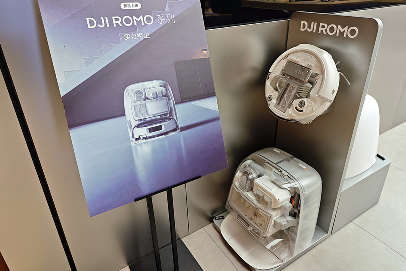
DJI Entering Robot Vacuum Sector

0

By FAN FEIFEI | China Daily | Updated: 2025-09

Competition in China’s robotic vacuum cleaners market is intensifying, with DJI, the world’s largest commercial drone manufacturer by market share, recently marking its entry into the fast-developing cleaning appliances sector.

 Industry experts said cutting-edge digital technologies, such as artificial intelligence-powered algorithms, voice control alongside intelligent mapping and navigation to avoid collisions with obstacles, have been increasingly applied in smart vacuum cleaners to meet evolving consumer needs.

 Featuring environmental perception and intelligent path planning capacities, and machine learning algorithms, DJI’s smart vacuum cleaner can detect and avoid obstacles at home, the company said.

 The Shenzhen, Guangdong province-based company has accumulated technological strengths in areas such as drones, flight control, sensors, and navigation systems, positioning the newly launched device as a premium smart cleaning solution.

 “As users increasingly pursue a higher quality of life, their expectations for robot vacuums have gone beyond basic cleaning,” said Zhang Xiaonan, DJI’s senior director of corporate strategy, adding that consumers have a greater demand for various functionalities, including reliable obstacle avoidance, smarter mapping and path planning.

 According to a report by Beijing-based market consultancy All View Cloud, the penetration rates for robotic vacuum cleaners and floor-cleaning machines in China have reached 5.5 percent and 3.1 percent, respectively.

 Driven by the country’s consumer goods trade-in program, the online retail sales of robotic vacuum cleaners increased by 45.5 percent year-on-year in the first half of the year, said the consultancy, adding that consumers have shown a rising demand for robotic vacuum cleaners and sweeping robots.

 The AVC report said Chinese-made robotic vacuum cleaners have gained in popularity among overseas consumers, especially those in Germany, the United States, Japan and Australia.

 Data from market consultancy IDC showed that global shipments of smart home cleaning robots are projected to reach 32.1 million units in 2025, marking a year-on-year increase of 28.2 percent. The compound annual growth rate is expected to reach 26 percent by 2028.

 Chinese cleaning appliance makers have invested heavily in promoting technological advances and optimizing product functions to cater to the diversified and personalized needs of shoppers overseas.

 Dreame Technology is accelerating steps to make inroads into overseas markets and is investing heavily in research and development, while making technological innovation based on user demand.

 Currently, the company’s products are sold in more than 100 countries and regions, including Europe, North America, Southeast Asia, East Asia, the Middle East, Africa and South America. Revenue from international markets accounted for 65 percent of its total revenue in 2024.

 Global sales of the company’s robotic vacuum cleaners and floor-cleaning machines increased by 178 percent and 100 percent year-on-year, respectively, from January to May, ranking first in 18 countries and regions around the world.

 Yu Hao, founder and CEO of Dreame Technology, emphasized the significance of increasing investment in supply chain systems, building independent production capacity covering the entire industrial chain and establishing global retail channels.

 It is eyeing huge growth potential from the high-end robotic vacuum market, and the compound annual growth rate of its revenue has surpassed 100 percent in the past few years. Yu said the company will take active steps to expand into overseas markets and recruit high-quality talent worldwide.

 “China’s cleaning appliances industry is expected to witness speedy growth fueled by advances in technology and product iteration, as well as the gradual release of immense consumption potential from smaller cities,” said Guo Meide, president of AVC.

 Chinese intelligent home appliance makers are improving their independent innovation capacities and applying AI-powered large language models to make the products more intelligent, said Liang Zhenpeng, an independent consumer electronics analyst.

 Liang said they are stepping up their operations in the global market to improve competitiveness and foster a new growth engine for their long-term development, which will greatly boost the transformation and upgrading of traditional manufacturing.

 fanfeifei@chinadaily.com.cn


Article inline ad

China Targets 7% Growth In Electronics Manufacturing Sector With New Action Plan

0

By Cheng Yu | chinadaily.com.cn | Updated: 2025-09-04

China on Thursday unveiled an action plan to stabilize growth in the electronic information manufacturing sector between 2025 and 2026, setting ambitious goals for output, exports, and technological upgrades.

 The plan, issued by the Ministry of Industry and Information Technology and the State Administration for Market Regulation, targets an average annual growth rate of about 7 percent in industrial output from large-scale manufacturers of computers, communications equipment, and other electronic devices.

 By 2026, China expects the sector to remain the largest among 41 major industrial categories in both revenue and export share.

 When factoring in lithium batteries, photovoltaic products, and components, overall annual revenue in the electronic information manufacturing industry is expected to grow by more than 5 percent during the period.

 Authorities also forecast that five provinces will each see their electronic information manufacturing revenues exceed 1 trillion yuan ($138 billion), while the country’s server industry is projected to surpass 400 billion yuan.

 The plan further calls for greater consumer adoption of high-end devices, with domestic market penetration of color televisions sized 75 inches and above expected to top 40 percent. Personal computers and mobile phones are set to advance toward smarter and more premium models.

Article inline ad