Wednesday, November 25, 2026

Home Blog Page 173

LEGO Sees Robust Growth, Enhances Presence In China

0

By Wang Zhuoqiong | chinadaily.com.cn | Updated: 2025-08-29

The LEGO Group posted solid growth in the first half of 2025, supported by a dynamic product portfolio and sustained investments across global markets.

 CEO Niels B. Christiansen highlighted the recovery in China, saying the company was “very happy with that development” as its performance in the market returned to growth. With 450 stores now operational in the country, LEGO has stepped up its commitment through brand building, opening new outlets and upgrading existing ones to better serve its expanding customer base. The Legoland Shanghai Resort, which opened on July 5, is seen as central to the group’s long-term strategy in the market.

 China’s rebound reflected LEGO’s overall momentum. Revenue rose 12 percent year-on-year to a record 34.6 billion Danish krone ($5.4 billion) in the first half, compared with 31.0 billion Danish krone a year earlier. Consumer sales grew 13 percent, while operating profit climbed 10 percent to 9.0 billion Danish krone, supported by both top-line growth and productivity gains. Net profit advanced 10 percent to 6.5 billion Danish krone.

Christiansen attributed LEGO’s growing global market share to its innovative and diverse product range that appeals across age groups. The company launched a record 314 new sets in the first half, including themes such as LEGO City and LEGO Technic. It also expanded partnerships, announcing a tie-up with BLUEY and a multi-year deal with The Pokémon Company International to launch LEGO Pokémon sets in 2026. The group also activated its brand at Formula 1 Grand Prix events under a new partnership.

 LEGO continued to expand its manufacturing footprint. In April, it opened a new factory in Vietnam, its sixth global facility. It is also investing more than $1.5 billion in a factory and regional distribution center in Virginia, the US, due to open in 2027, while expanding operations in Mexico and Hungary.

 The group extended its retail network by opening 24 new stores in the first half, bringing its global total to 1,079 across 54 markets, including its first store in New Delhi.

 wangzhuoqiong@chinadaily.com.cn

Article inline ad

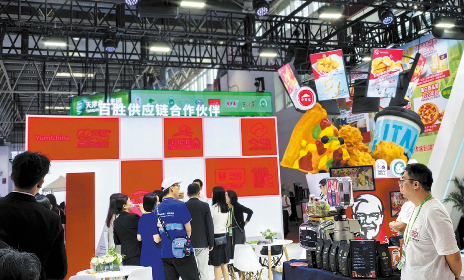
Foreign Fast-Food Brands Eye Quick Expansion

0

Within two years, Subway added nearly 500 stores in China, comparable to combined growth over previous three decades

By Wang Zhuoqiong | China Daily | Updated: 2025-08-29     

Fast-food brand Subway’s recently opened store in Shanghai marked its 1,000th outlet in China, with the restaurant chain on track to reach its target of 4,000 stores in the country in the next 20 years.

 The development marks a shift for Subway in China, spurring rapid expansion in a market that was previously dominated by global quick-service giants such as McDonald’s and KFC.

 From its debut in 1995 until mid-2023, Subway’s growth in China had been slow, reaching only 500 stores over 28 years. In contrast, competitors like McDonald’s and KFC opened thousands of locations, capitalizing on the growing middle-income group and urbanization of tier-1 and tier-2 cities in the country.

 However, Subway’s fortunes took a sharp turn for the better in June 2023, when the company signed a transformative franchise agreement with Shanghai-based Furuishi Enterprise Development Co Ltd, which accelerated its footprint, leading to an explosion of new store openings. Within just two years, Subway added nearly 500 new locations, a total comparable to its combined growth over the previous three decades.

 Subway is expected to open about 300 new stores by the end of this year. Under the new agreement, Subway stores in China have adopted the direct operating model, rather than the previously used franchising model, allowing faster expansion, better brand-building capability and higher profit margins for the brand.

 This rapid expansion reflects the broader surge in Western fast-food chains across China. According to the Hongcan Industry Research Institute’s 2025 Western Fast-Food Report, the number of Western fast-food outlets in China reached 325,000 by March 2025, growing 6.6 percent year-on-year.

 Subway’s robust performance mirrors this trend, as Subway China CEO Zhu Fuqiang said that new locations are becoming profitable within their first year, with first-half 2024 sales increasing by more than 30 percent year-on-year. Even excluding the impact of new openings, Subway’s existing restaurants posted a healthy 20 percent growth in the second half of 2023.

 The rapid pace of Subway’s expansion in China is echoed by the performance of other international quick-service chains. Yum China Holdings Inc, the parent company of KFC and Pizza Hut, reported solid results in its latest quarterly earnings release.

 Total system sales for the second quarter of 2025 grew 4 percent to $2.8 billion, with 336 net new store openings, pushing the company’s total store count to nearly 17,000 by June 30. Operating profit grew 14 percent year-on-year to $304 million, a second-quarter record high.

 Yum China CEO Joey Wat attributed much of the company’s success to its digital innovations and an expanding footprint.

 “We are continuously exploring ways to broaden our addressable market,” said Wat. She said KFC’s expansion of KCOFFEE cafes to over 1,300 locations and Pizza Hut’s upgraded menu have significantly contributed to sustained growth.

 Delivery sales grew 22 percent, contributing roughly 45 percent of total company sales, and digital sales hit $2.4 billion, accounting for an impressive 94 percent of total sales.

 Furthermore, Yum China’s membership program, which has about 560 million members across KFC and Pizza Hut, has proven instrumental in driving repeat business, with member sales accounting for 64 percent of system sales.

 McDonald’s has also seen marked success in the Chinese market, with executives reporting meaningful improvements in both market share and same-store sales. The company opened a net 407 new restaurants in the first half of 2025, maintaining a pace of at least two new locations per day.

 This expansion is part of McDonald’s long-term roadmap to reach 10,000 locations by 2028. McDonald’s Corp Global CFO Ian Borden said that chicken products have become a key traffic driver for the brand, which continues to gain share not only in chicken, but across the broader fast-food sector.

McDonald’s remains optimistic about China’s growth potential.

 In a recent statement, McDonald’s China highlighted its loyalty program as a key factor in its performance, with the company noting that the program had become a “best-practice model” for its global operations.

 By year-end, McDonald’s plans to enter the Ningxia Hui autonomous region and Qinghai province, achieving 100 percent coverage of all provincial-level administrative areas on the Chinese mainland. The chain is expected to open 1,000 new restaurants this year.

 Meanwhile, Restaurant Brands International, the parent company of quick-service chain Burger King, is also making strides in China. CEO Joshua Kobza highlighted the progress at Burger King China in the second quarter of 2025, where same store comparable sales turned positive, and unit economics improved quarter-over-quarter.

 The wider Western quick-service food chain boom in China, as evidenced by the performance of McDonald’s, Yum China and Subway, also highlights the changing consumption patterns and eating habits of Chinese consumers, according to industry research.

 Roolee Lu, director of food & drink and food services, Mintel China, said since the start of 2025, restaurant revenue has shown only modest growth, and consumer confidence has improved only slightly. However, leading brands have continued their expansion over the past 12 months.

 “Western-style quick-service chains have fared best. Their mature, standardized operating systems, sharp price-value positioning and relentlessly refreshed menus allowed them to deliver the steadiest growth in an otherwise sluggish landscape,” said Lu.

 Major chains have increasingly turned to discounting: McDonald’s 9.9 yuan ($1.38) burger-and-snack deals, Pizza Hut’s buy-one-get-one offers, and, in late 2024, McDonald’s announced its 2025 Value Year campaign, while Pizza Hut launched its value-oriented WOW sub-brand.

 “These giants leverage scale and brand power to protect margins, even as they trade margin for traffic,” she added.

 Yet, Western food faces growing competition. Against the backdrop of surging “China-chic” dining trends, 18-24 year olds are drifting away from Western fare, said Lu.

 In Mintel’s 2023 fast-food study, this group’s preference for Western food has fallen to parity with, or even below, Chinese cuisine. More worrying, this same demographic shows the highest likelihood of becoming ultra-frequent users of Chinese fast food.

 If this trend persists, Western brands risk losing market share among the demographic that once fueled their growth, said Lu.


Article inline ad

Massimo Dutti Maintains China Growth

0

By Wang Zhuoqiong | China Daily | Updated: 2025-08-29

Massimo Dutti, sister brand of Zara and the high-end unit of Spanish fashion group Inditex, is maintaining steady growth in China with two new store openings in July in Xi’an, Shaanxi province, and Tianjin.

 China remains a strategic market, with expansion driven by two main pillars: optimizing its store network through selective openings and renovations, and strengthening omnichannel capabilities to create a seamless online-offline shopping experience, said Eugenio Bregolat, president of Inditex Greater China.

 In January, the brand reopened its renovated Chongqing MixC store. The new Xi’an outlet, which opened on July 17, featured a 10-day pop-up experience in partnership with concept store Watch Whisky Coffee, designed to showcase the brand’s urban-inspired style and high-quality products.

 Massimo Dutti positions itself as a refined, urban label — distinct from sister brand Zara’s youth-oriented, trend-driven image — targeting customers who value timeless designs, quality fabrics and attention to detail.

 “With the development of China’s economy, we have observed a growing emphasis on quality, safety and sustainability among customers,” said Bregolat. “We continuously adapt our designs and products to meet the evolving needs of our customers.”

 He added that Chinese consumers have developed a deeper understanding of fashion — no longer blindly chasing trends, but engaging with fashion as a means of self-expression and self-affirmation.

 According to Euromonitor International, retail value sales in the womenswear sector in China rose 2 percent in current terms in 2024 to 1.06 trillion yuan ($150 billion).

 “The Chinese market still holds enormous untapped consumption potential — the very reason global brands refuse to look away,” said Cheng Weixiong, a fashion analyst and founder of Shanghai Liangqi Brand Co Ltd.

 However, China’s womenswear market has become so competitive in recent years that shoppers now jump to the wallet-friendly “dupes”, with an ultra-efficient supply chain collapsing the timeline from factory floor to store shelf, accelerating homogenized styles and popping every pricing bubble, Cheng said.

 Cheng added that mid-to-premium European and US fashion houses still command premiums through distinctive aesthetics, constant research and development in materials, and strong storytelling, while many domestic players lacking identity or technical depth are quickly sidelined.

 To engage more deeply with local consumers, Massimo Dutti is tailoring products for Chinese tastes while introducing global limited collections. For Spring Festival, it launched a “Year of the Snake” limited edition with a campaign by fashion photographer Leslie Zhang. In April, a global capsule collection debuted at its Shanghai Nanjing West Road store.

 Digital channels are a growing focus. The brand has launched official flagship stores on Tmall and JD.com and maintains brand accounts on RedNote and WeChat to engage directly with consumers.

 E-commerce and short-video platforms are seen as key traffic drivers for China’s apparel sector. “Recognizing that younger generations predominantly engage with brands online, we continue to expand our digital presence to offer more diversified touchpoints,” Bregolat said.

 Analyst Cheng added that the Chinese consumer base remains vast and alluring, but foreign brands must fully embrace the nation’s e-commerce boom — tapping digital ecosystems and platform efficiencies — to survive in this race.

 Massimo Dutti’s supply chain strategy combines global sourcing with proximity manufacturing in Spain, Portugal, Turkiye and Morocco, allowing close collaboration with nonexclusive suppliers, reduced carbon footprints and achieving rapid product turnaround.

 The company said this approach, supported by short production runs, offers flexibility and control, enabling it to produce a wide range of responsible fashion. Its integrated inventory management system enables services such as in-store pickups for online orders, cross-channel returns and shipping from nearby retail locations.

 The push in China comes as parent company Inditex reported modest growth in its latest quarter. During the first quarter of 2025, sales rose 1.5 percent year-on-year to 8.3 billion euros ($9.66 billion), gross profit climbed 1.5 percent to 5 billion euros, and EBITDA increased 1 percent to 2.4 billion euros.

 With Chinese consumers placing greater emphasis on quality, safety, sustainability and self-expression, the brand said it will continue adapting designs and introducing Asia-specific collections, including modernized Chinese-style pieces.

 “Fashion trends in the Chinese market inspire and inform our collections that better cater to Chinese customers,” said Bregolat.


Article inline ad

China Issues Over 3.31t Yuan In New Local Government Bonds In Jan-July

0

Xinhua | Updated: 2025-08-29

BEIJING — Local governments in China issued new bonds worth over 3.31 trillion yuan ($465.78 billion) in the first seven months of this year, data from the Ministry of Finance showed on Thursday.

 Of the total, general-purpose bond issuance came in at 538.3 billion yuan for the period and special-purpose bond issuance amounted to over 2.77 trillion yuan.

 By the end of last month, China’s outstanding local government debts stood at over 52.76 trillion yuan, the ministry said.

 China has pledged a more proactive fiscal policy this year to shore up sustained economic and social development. The country plans to issue 4.4 trillion yuan in local government special-purpose bonds in 2025, marking an increase of 500 billion yuan from last year, according to this year’s government work report.

Article inline ad

Private Firms Lean Toward Innovation For Growth

0

Development mode of nonpublic sector seen transitioning from speed to quality

By CHENG YU | China Daily | Updated: 2025-08-29

China’s top private companies are betting big on innovation for growth, as they scale up their businesses and navigate mounting global economic uncertainties, according to a new report.

The latest annual report on the top 500 private firms in China by the All-China Federation of Industry and Commerce (ACFIC) covers 6,379 Chinese private companies with annual revenue of more than 1 billion yuan ($137 million) each in 2024.

Among these, the largest 500 firms have emerged as a bellwether for the country’s private sector, according to the 27th edition of the report, which was released on Thursday.

The threshold to make the top 500 list rose to 27.02 billion yuan, with total revenue hitting a record 43.05 trillion yuan, the report showed.

Average revenue per company climbed 2.7 percent to 86.1 billion yuan. Of these, 105 firms topped the 100 billion yuan mark and 11 surpassed 500 billion yuan. Assets swelled to 51.15 trillion yuan, with 97 companies holding more than 100 billion yuan each.

Net profits totaled 1.8 trillion yuan, up 6.5 percent, with 34 firms earning more than 10 billion yuan each. Average return on equity stood at 10.6 percent. Governance has tightened, with over half introducing strategic or financial investors, including domestic and foreign capital.

Global exposure is growing for leading Chinese private firms.

Twenty-nine of these companies have made it to the latest Fortune Global 500, while combined overseas revenue jumped nearly 15 percent to 3.19 trillion yuan. Export earnings also rose 5.2 percent to 1.77 trillion yuan, and overseas assets topped 2.44 trillion yuan.

Despite a challenging environment, the companies have ramped up spending on technology and research and development. Total R&D expenditure among the top 500 reached 1.13 trillion yuan, with more than 1.15 million dedicated researchers.

Nearly three-quarters of these are manufacturing firms, with strong footprints in strategic industries including new materials, renewable energy, advanced electronics, high-end equipment, electric vehicles, and energy-saving technologies.

Investment in strategic emerging sectors is accelerating.

The survey counted 309 companies deploying capital across 627 projects in areas from green tech to AI-driven manufacturing. Digital and low-carbon transitions are also moving fast: 64 percent have formal digitalization plans, 83 percent are pursuing green upgrades, and two-thirds report improved efficiency from digital tools.

Gao Yunlong, president of the ACFIC, said: “The figures show that China’s private sector is moving from speed to quality, with innovation as the key differentiator.

“It’s not just about bigger numbers — it’s about sharper technology, smarter governance and a stronger global presence.”

The report comes as China signals stronger support for private enterprise, including a private economy promotion law.

According to the Ministry of Industry and Information Technology, as of the end of September last year, China had over 55 million registered private companies, accounting for 92.3 percent of all businesses. They contribute more than half of the country’s tax revenue, over 60 percent of GDP and over 80 percent of urban employment.

Wang Peng, a researcher at the Beijing Academy of Social Sciences, said: “A swarm of private firms — not State-run or big names — are emerging from China, pulling off unexpected technological feats and, in some areas, even outmaneuvering global titans.

“While many Western countries, including the United States, are still considering how to restrict China’s technological rise, Chinese private enterprises are rewriting the rules, pioneering innovations that redefine the entire industry,” Wang said.

Xu Guanju, chairman of Transfar Group, a leading chemicals manufacturer, said that amid intense market competition, private enterprises at this new stage of development must not only consolidate their market presence, but also prioritize technological advancements, including the development of new quality productive forces.

“China’s efforts in supporting private enterprises will help foster breakthroughs in product innovation, application innovation, foundational research and original cutting-edge technologies,” said Xu.

Article inline ad

Beijing To Build At Least 20 5G Factories By 2027

0

Xinhua | Updated: 2025-08-28

BEIJING — Beijing has unveiled a plan to accelerate the integration of 5G and industrial internet, targeting the construction of at least 20 5G factories by 2027.

 According to the Beijing 5G+ industrial internet innovation development implementation plan (2025-2027), jointly released by the Beijing Municipal Bureau of Economy and Information Technology and the Beijing Communications Administration, the city will also establish no fewer than 50 5G industry-specific networks and cultivate an equal number of suppliers of comprehensive and industry-specific 5G application solutions.

 Priority will be given to optimizing 5G network coverage in key manufacturing zones and enterprise-dense areas, with deployments of industrial 5G private networks and 5G-Advanced (5G-A).

 Leading companies in sectors such as electronics, automobiles, equipment and biopharmaceuticals will drive the construction of 5G factories, said the economy and information technology bureau.

 Beijing will also promote technological innovation by validating 5G applications in fields including industrial manufacturing, connected vehicles and healthcare. The city plans to advance the research and preliminary deployment of 6G in industrial settings.

Article inline ad
0

Expo: Scale, quality of data accelerating AI innovation

By  FAN FEIFEI and YANG JUN in Guiyang | chinadaily.com.cn | Updated: 2025-08-29 

China will intensify efforts to leverage innovative digital technologies to bolster industrial upgrade and foster strategic emerging and future-oriented industries, as part of its broader push to promote the high-quality development of the digital economy and nurture new quality productive forces, said officials and experts.

 They made the remarks at the opening ceremony of the China International Big Data Industry Expo 2025, which kicked off on Thursday in Guiyang, the capital of Guizhou province.

 The expo, which runs through Saturday, features a diverse range of exchanges and activities, with more than 16,000 guests and 375 enterprises participating.

 Hao Mingjin, vice-chairman of the Standing Committee of the 14th National People’s Congress, China’s top legislature, said that heightened efforts should be made to give full play to the role of data as a fundamental resource and an engine for innovation, promote the in-depth integration of the real and digital economies, and accelerate the development of artificial intelligence.

 There is a pressing need to further deepen reforms related to the market-oriented allocation of data elements, establish and improve basic data systems, cultivate the data industry ecosystem and expand international cooperation in the digital economy domain, Hao said.

 Noting that data serves as a new type of production factor, Zhuang Rongwen, head of the Cyberspace Administration of China, highlighted the significance of cultivating new growth drivers for industrial transformation and upgrading, deeply implementing the “AI Plus” initiative and building a modern industrial system.

 He called for efforts to raise people’s digital literacy, improve the rules and systems in the digital field, promote efficient, convenient and secure cross-border data flows, and strengthen AI security governance.

 China’s digital economy has gained strong momentum in recent years. According to the National Data Administration, the country’s total data output reached 41.06 zettabytes last year, marking a robust 25 percent year-on-year increase.

 Liu Liehong, head of the National Data Administration, said that China has rolled out nearly 30 policy measures related to the development and utilization of public data resources and urban digital transformation. It has also advanced the construction of data infrastructure, such as a national integrated computing power network, while expanding the application scenarios of data in a wide range of sectors, he said.

 The added value of China’s digital economy is expected to stand at around 49 trillion yuan ($6.9 trillion) by the end of this year, accounting for about 35 percent of GDP, according to Liu.

 He noted that the country’s total intelligent computing capacity has reached around 780,000 PFlops, ranking second globally. PFlops, or petaflops, is a unit of measurement for computational performance, representing 1 quadrillion floating-point operations per second.

 Liu also emphasized the importance of high-quality and large-scale data in advancing the “AI Plus” initiative.

 Statistics from the National Data Development Research Institute show that the number of data enterprises in China surpassed 400,000 in 2024, while the market scale of the nation’s data industry reached 5.86 trillion yuan.

 Xu Lin, Party secretary of Gui­zhou, said the province will seize the strategic opportunity brought by the explosive growth of AI to vigorously develop the computing power industry with a key focus on intelligent computing, as well as develop the data industry and AI industry centered on industry-specific large models.

 Jiang Xiaojuan, a professor at the University of Chinese Academy of Social Sciences, said the application of data across various fields “has injected new momentum into China’s industrial development”, adding that the industrialization of digital and AI technologies will significantly improve operational efficiency and lower costs.

 The digital economy has played a vital role in bolstering the transformation of manufacturing, services, consumption and international trade, and in driving overall economic growth, Jiang said.

 Yang Jie, chairman of China Mobile, the world’s largest telecom carrier in terms of mobile subscribers, said the scale and quality of data have become a driving force for accelerating AI innovation and breakthroughs.

 Yang added that China Mobile is beefing up efforts to increase the supply of high-quality data, boost the efficient circulation of data and speed up the high-level utilization of data, in order to push forward the deeper integration of data with various areas of the economy and society.

 Contact the writers at fanfeifei@chinadaily.com.cn

Article inline ad

China’s Intelligent Computing Capacity Ranks Second Globally

0

Xinhua | Updated: 2025-08-28

GUIYANG — China’s total intelligent computing capacity has reached 780,000 PFlops, which ranks second in the world, Liu Liehong, head of the National Data Administration, said on Thursday.


Liu unveiled this data during the opening ceremony of the China International Big Data Industry Expo 2025, being held in Guiyang, capital of Southwest China’s Guizhou province.


The country has continued to accelerate the construction of data infrastructure and by the end of July this year had built 25 urban business nodes nationwide, he said.


This progress stems from China’s “East Data, West Computing” initiative, which has become a strategic project in the country’s major productivity layout, Liu said. China’s eight national computing hubs currently concentrate over 60 percent of new computing capacity — with intelligent computing capacity reaching 620,000 PFlops, he added.


Pioneering the initiative, Guizhou has worked hard to construct a leading national computing hub in recent years. The province has, notably, successfully built the world’s first 400G all-optical network computing channel, as announced at the ceremony in Guiyang.


The three-day expo, running through August 30, features a diverse range of exchanges and activities — with more than 16,000 guests and 375 enterprises participating.


Article inline ad

7th China-Arab States Expo Opens With Record Participation

0

Xinhua | Updated: 2025-08-28

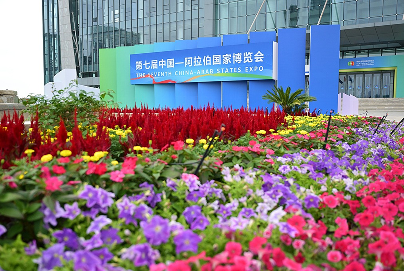
YINCHUAN — The seventh China-Arab States Expo kicked off on Thursday in Yinchuan, capital of Northwest China’s Ningxia Hui autonomous region, attracting more than 7,600 participants and over 2,200 enterprises and institutions from 75 countries and regions.

 Marking a historic first, all 22 Arab countries are taking part, alongside delegations from China’s 31 provincial-level regions, the Xinjiang Production and Construction Corps, Hong Kong, Macao and Taiwan.

 Themed “Innovation, Green Development and Prosperity,” the four-day expo will host trade fairs and forums focused on eight key sectors, including investment, technology transfer and innovation cooperation, modern agriculture, tourism, and intellectual property.

 This year’s event features the United Arab Emirates as the Guest Country of Honor. The offline exhibition is divided into six sections, showcasing Belt and Road cooperation, regional economic partnerships, central state-owned enterprises, clean energy, the digital economy, and specialty products.

 Launched in 2013, the China-Arab States Expo has held six editions, serving as a major platform to boost cooperation between China and Arab countries. A multitude of cooperation projects across various fields, including modern agriculture, high and new technology, energy, and chemical industries, have been reached.

 China has been the Arab states’ largest trading partner for years. Bilateral trade reached $407.4 billion in 2024, up 2.3 percent year-on-year.

Article inline ad

Upcoming SCO Summit To Run On Green Energy

0

By Yan Dongjie in Tianjin | chinadaily.com.cn | Updated: 2025-08-28

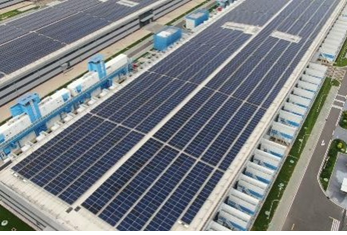
Venues for the 2025 Shanghai Cooperation Organisation Summit, to be held on Sunday and Monday in Tianjin, will have a 100 percent green electricity supply, State Grid Tianjin Electric Power Company said.

 The venue operator for the summit recently completed a green electricity transaction with local Tianjin renewable energy companies that will secure one million kilowatt-hours of electricity, ensuring green power supply for all venues during the conference. It is the equivalent to reducing the combustion of 320 tons of standard coal and cutting carbon dioxide emissions by 800 tons, according to the power company.

 This is the first time the SCO summit will have achieved a totally green power supply for all venues, the company said.

 Meanwhile, the Tianjin Green Electricity and Green Certificate Service Center facilitated the purchase of 2,250 green certificates by key service venues such as airports, high-speed rail stations, and Haihe River cruise ships equivalent to 2.25 million kilowatt-hours of green electricity.

 This initiative will further reduce standard coal consumption by 720 tons and cut carbon dioxide emissions by 1,794 tons.

 “Since 2025, we have supported the grid integration of 2.06 million kilowatts of new energy capacity from 27 renewable energy enterprises, further underpinning the high-quality development of the new power system,” said Liu Song, deputy director of the Hydropower and New Energy Division of the company’s Dispatch and Control Center.

 With the rapid development of new energy, demand for green energy continues to grow. Since the beginning of this year, Tianjin’s green electricity market transactions have exceeded 16 billion kilowatt-hours, nearly doubling the same period last year.

 “We have implemented the 15 service measures under the ‘Supporting and Assisting Enterprises’ initiative, providing a robust green energy engine for companies seeking green electricity,” said Chang Yadi, director of the marketing department of the service center. “To date, we have assisted 214 enterprises citywide in achieving a full green electricity supply, totaling 7.497 billion kWh,” he added.

 Meanwhile, to ensure an uninterrupted power supply, the power company will deploy some 4,200 support personnel and more than 1,800 support vehicles during the SCO conference.

 Three urban power grid emergency repair centers, emergency core teams, and 101 grid-based power stations across the city will remain on 24-hour standby.

 Unlike previous events, this power supply operation this year will employ a panoramic power supply command platform. This system enables real-time monitoring of the entire power supply process from the main grid to venue electrical equipment, and facilitates online coordination of personnel, vehicles and logistical resources.

 Sun Hao, a technician at the Power Supply Assurance Command Center of Chengnan Power Supply Co, said, “This operation involves over 100 substations and more than 400 power lines, relying solely on manual inspections.

 “With this platform, we can intuitively monitor the operational status of all equipment nodes, receive intelligent fault alerts, and facilitate rapid responses. We expect it to boost overall inspection efficiency by approximately 65 percent.”

 Beyond the newly launched command platform, State Grid Tianjin Electric Power said it has leveraged technological tools such as intelligent inspection systems, inspection robots and infrared detectors to ensure the security of the urban power supply.

 Wei Qianqian contributed to this story.


Article inline ad