Wednesday, November 25, 2026

Home Blog Page 174

China’s Trade With Other SCO Members Hit $512.4b In 2024

0

Xinhua | Updated: 2025-08-28

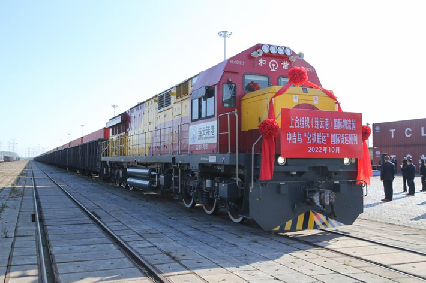
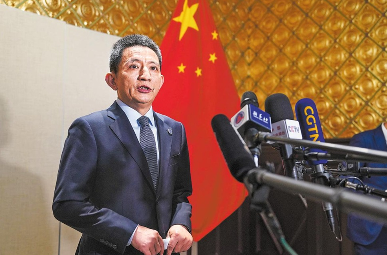
BEIJING — China’s trade with other Shanghai Cooperation Organization (SCO) member states stood at around $512.4 billion in 2024, up 2.7 percent year-on-year, a commerce official said Wednesday.

 Last year, China imported nearly $90 billion worth of crude oil, natural gas and coal from other SCO members, along with $13.66 billion worth of agricultural products, Ling Ji, vice-minister of commerce, said at a press conference.

 Energy imports from other SCO members accounted for about one-fifth of China’s total imports in 2024, according to Ling.

 “The investment and industrial cooperation between China and other SCO member states has made steady progress in recent years,” Zhang Li, another official with the Ministry of Commerce, said.

 In recent years, Chinese enterprises have set up more than 3,000 companies in other member states, creating over 200,000 jobs on average each year, Zhang added.

 The SCO Summit 2025 will be held from Aug 31 to Sept 1 in the northern Chinese port city of Tianjin. The event will bring together leaders from more than 20 countries and heads of 10 international organizations to outline the blueprint for the bloc’s development over the next decade.

 Primarily born to address security concerns, the SCO has, over its 24-year development, grown into a comprehensive regional organization representing nearly half of the world’s population.

Article inline ad

Fujian Companies Cash In On ‘Industrial Tourism’

0

China Daily | Updated: 2025-08-28

FUZHOU — When Kang Zhican, a 24-year-old primary school teacher, stepped into the ceramics cultural center in Dehua county, in Quanzhou, East China’s Fujian province, he was instantly transported into a dazzling world where vibrant ceramic figurines of Mickey Mouse, Elsa and other pop-culture icons sparkled with artistry and whimsy, capturing his imagination like a real-life Disneyland.

 “Big city trips are becoming less appealing. Young people like us would rather explore small towns to experience authentic local culture and understand how things are made,” said Kang, who traveled with his cousin and her children from a neighboring county.

 The cultural center, operated by Fujian Quanzhou Shunmei Group Co Ltd, a ceramic supplier for global brands such as Disney and Starbucks, offers more than just exhibits. Visitors can join guided factory tours and participate in hands-on DIY ceramic workshops, crafting their own souvenirs while gaining insight into industrial techniques.

 “We see tourism as a valuable new revenue stream alongside our export business,” said Zheng Pengfei, general manager of Shunmei Group, adding that the site saw a notable rise in the number of tourists this year.

 With more than 4,500 ceramic enterprises, Dehua has long been known to the world as a production and export hub rather than a tourist destination. But the rise of “industrial tourism” among young Chinese is reshaping the town, bringing fresh revenue streams while lifting brand recognition of traditional manufacturing enterprises.

 The industrial tourism wave is spreading across Fujian, where consumer goods manufacturing accounts for 42 percent of industrial revenue.

 Once known primarily for their robust manufacturing sectors — from shoes and ceramics to food processing and machinery — cities in Fujian are now opening their factory doors to visitors, offering a glimpse into the production processes while boosting local tourism and brand recognition.

 In Quanzhou’s Jinjiang, a major manufacturing base for footwear and apparel, companies are embracing the trend to turn industrial sites into tourist destinations.

 According to Yin Ruixiang, vice-president of the POP global innovation hub for sports fashion, a platform that empowers local shoemakers and apparel producers through digital tools and trend research, the firm is developing a complex that combines tourism and shopping, where visitors can customize products with AI-designed patterns and learn about manufacturing processes.

 “Industrial tourism allows manufacturers to evolve from hidden suppliers into beloved brands,” said Yin, noting that direct engagement turns casual visitors into brand ambassadors and provides valuable consumer insights for companies.

 Jinjiang is also experimenting with unconventional branding venues, such as hosting fashion events on beaches where the sound of waves replaces a traditional soundtrack. “It’s not just about selling products. It’s about integrating brands into lifestyles and cultural narratives,” Yin added.

 According to the industry and information technology bureau of Quanzhou, the municipal government is promoting industrial tourism through policy support, including designing factory tour routes and subsidizing themed consumption events, with such initiatives already delivering tangible benefits to the local economy.

 Even traditional Chinese medicine companies are joining the wave. At the Pien Tze Huang Museum in Zhangzhou, visitors can discover the history and production of one of China’s most celebrated herbal formulas.

 “The experience helps build brand trust and stimulates consumer interest by connecting people with the origins and traditions of TCM,” said Lu Xiaoying, a marketing executive at Zhangzhou Pien Tze Huang Pharmaceutical Co Ltd. The museum attracts diverse groups, including students, academics and executive learners from top business schools, she said.

 Yan Kaiyong, an official with Zhangzhou’s industry and information technology bureau, said that industrial tourism is injecting fresh economic vitality into the city with deep industrial roots.

 “This isn’t just about nostalgia, it’s a forward-looking strategy. As competition grows, companies must integrate culture into their identity, build distinctive brands and develop intellectual property,” he said. “Industrial tourism enhances both their visibility and added value.”

 Xinhua – China Daily

Article inline ad

Ezhou Goes Whole Hog To Boost Cross-Border E-Commerce Sector

0

By YIN MINGYUE and LIU KUN in Ezhou | China Daily | Updated: 2025-08-28

Ezhou in Central China’s Hubei province is fast emerging as a new hub for cross-border e-commerce, leveraging air logistics and digital trade to better integrate into global value chains.

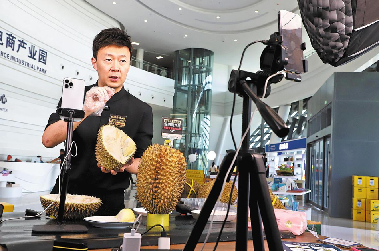
 At the livestreaming center of the China (Ezhou) Cross-border E-commerce Industrial Park, a Pakistani host was recently seen promoting Shenzhen-made drones to North American consumers via TikTok — a snapshot of how global trade is increasingly taking off in the city.

 Behind the business are two entrepreneurs from Wuhan — Qian Ling and Zhang Lei — who arrived in Ezhou in May. In less than two months, their team has grown to 15 members, with sales already exceeding $200,000.

 They have already set up overseas warehouses in the United States, while their self-owned e-commerce website under development is targeting markets in Europe, Australia and Africa.

 “The first few days after Qian and Zhang arrived, they came to see me three times in a row. From explaining policies and clarifying directions to finalizing their business plan, my colleagues and I provided them with one-stop services,” said Chen Si, a member of the coordination service team at the industrial park.

 Their story reflects the rapid rise of the industrial park. Since officially starting operations on April 30, the park has received 3,371 visits, engaged with more than 600 companies, and successfully registered and signed contracts with 258 firms. Among these, 62 enterprises have already moved in.

 The park has also hosted 12 training sessions and matchmaking events, generating trade worth over $310 million, with an initial clustering effect beginning to take shape.

 Designed to develop cross-border e-commerce, smart logistics and digital trade, the park serves as a key platform for Ezhou’s new model of integrating “cross-border e-commerce + industrial clusters + airport economy”, according to the park’s management.

 The development of the industrial park has been strongly supported by the air cargo hub at Ezhou Huahu International Airport, which has significantly lowered logistics costs and reached overseas markets more efficiently, making it increasingly attractive to businesses, said Bi Wei, head of the China (Ezhou) Cross-border E-commerce Industrial Park.

 As of Sunday, the airport had launched 104 cargo routes, including 59 domestic and 45 international and regional routes. Its total cargo throughput reached 923,900 metric tons, including 731,600 tons of airfreight and mail — with 320,800 tons from international services.

 “This morning, a batch of mud crabs from India arrived at around 8 am. From unloading to delivery, the whole process takes as little as two hours,” said Liu Chenlu, head of the cargo terminal management department at Ezhou Aviation Cargo Co Ltd.

 Liu said that the shipment was then trucked to East China, meaning the crabs could go from plane to dining table in less than half a day.

 The rapid growth of the airport has made “a world within reach “a reality, with air logistics enabling the swift delivery of goods from overseas fields to Chinese households.

 Meanwhile, the airport’s hub function is unleashing strong appeal, fueling the rise of airport-oriented industries. By July, the airport economic zone had attracted 288 projects each worth over 100 million yuan ($13.8 million), according to the airport.


Article inline ad

Gas Pipeline To Boost Energy Security

0

By Zheng Xin | China Daily | Updated: 2025-08-28

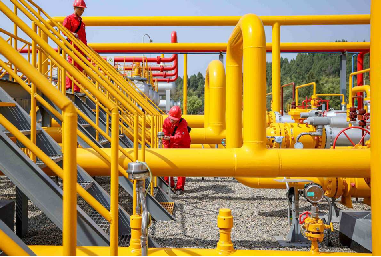
The successful launch of the first section of the second Sichuan-to-East Gas Transmission Pipeline marks a significant step in Beijing’s ongoing efforts to bolster energy security and transition toward a cleaner energy mix, said industry experts.

 The project is more than just a pipeline, it’s more of a strategic artery that underscores Beijing’s commitment to diversifying its energy sources and reducing reliance on coal, particularly in the industrialized east, they said.

 While China is investing heavily in renewables, natural gas remains a vital transition fuel. The pipeline helps ensure a stable supply to power industries and heat homes, while also contributing to improved air quality in major cities, said Lin Boqiang, head of the China Institute for Studies in Energy Policy at Xiamen University.

 “China needs to balance its reliance on imported gas with the development of its own reserves. Projects like this demonstrate the potential of domestic gas production to contribute to energy security,” Lin said.

 The pipeline will add nearly 3 billion cubic meters of natural gas transmission capacity annually, said its operator China Oil & Gas Pipeline Network Corp (PipeChina).

 The move marks an acceleration in the construction of this strategic energy structure and promotes coordinated regional economic development, it said.

 The pipeline’s launch also signals a broad trend of infrastructure development aimed at connecting resource-rich regions in the west with high-demand centers in the east. This strategy is seen as crucial for promoting balanced economic growth and reducing regional disparities, said Lin.

 It is a flagship project under the 14th Five-Year Plan (2021-25), highlighting the government’s focus on infrastructure development to support long-term energy goals.

 China is the global leader in gas pipeline construction, with thousands of kilometers of new pipelines built to enhance energy security, connect supply regions like Sichuan and Central Asia with demand centers, and support a clean energy system.

 According to Lin, the increased gas supply is expected to provide a crucial buffer against potential supply disruptions and price volatility in the global energy market.

 The project spans about 4,269 km, covering eight provincial-level regions, namely Sichuan, Chongqing, Hubei, Anhui, Jiangxi, Henan, Zhejiang and Fujian. Upon completion, the pipeline will have an annual transmission capacity of 20 billion cubic meters, enabling interconnection with the country’s major trunk pipelines.

 This will ensure the outward transmission of natural gas from the Sichuan Basin, address peak demand in central and eastern regions, and promote energy structure transformation along the route, said PipeChina.

 The pipeline is being constructed in two phases — the western section (Sichuan-Chongqing-Hubei) and the eastern section (Hubei-Henan-Jiangxi-Anhui-Zhejiang-Fujian).

 Li Wang, head of PipeChina Southwest Pipeline Co’s Chongqing branch, said the connection of natural gas into the national gas grid creates a more efficient route for transporting natural gas from the Sichuan and Chongqing area, bolstering the region’s ambition to become a 100 billion cubic meter natural gas production hub and improving access to natural gas for users along the pipeline’s path.

 China has been actively working to enhance its domestic natural gas production, including intensifying exploration and development of unconventional resources like shale gas.

 China’s shale gas production remained strong, exceeding 25 billion cubic meters, the National Energy Administration said. Natural gas production reached 246.4 billion cubic meters in 2024, with an average annual growth of over 13 billion cubic meters in the past six years, the administration said.

 The Sichuan Basin is one of China’s main natural gas production areas, with proven natural gas geological reserves of nearly 3 trillion cubic meters.

 Companies like PipeChina have also been focusing on clearing bottlenecks in the interconnection of trunk pipelines in the southwest region in recent years, continuously improving the level of pipeline interconnection.

 zhengxin@chinadaily.com.cn


Article inline ad

Evtol Sector Hits New Highs

0

By WANG XIN in Shanghai | China Daily | Updated: 2025-08-28

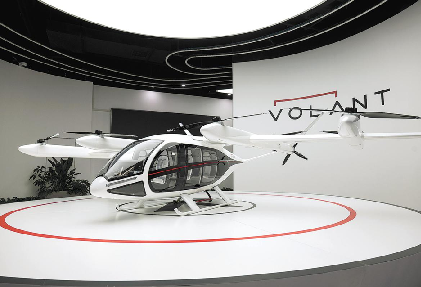
Volant Aerotech, a Shanghai-based electric air taxi maker, signed a confirmed order on Tuesday with ABC Financial Leasing Co Ltd, a wholly owned subsidiary of Agricultural Bank of China, for 10 units of its electric vertical take-off and landing (eVTOL) aircraft, including options on a further 110 units. On delivery, the eVTOL aircraft are expected to be put into commercial leasing operations.

 With a total order value of 3 billion yuan ($419 million), the signing follows the company’s previously confirmed orders with China Southern Airlines General Aviation Co Ltd and Asian Express Aviation, which are believed to be the first confirmed orders for eVTOL aircraft worldwide. The new order demonstrates the confidence of the nation’s leading financial institutions on the certainty and commercialization of China’s low-altitude economy.

 Since its establishment four years ago, Volant Aerotech has focused on the development of high-grade manned eVTOL aircraft. Its flagship product, the six-seat VE25-100 model named “Skylar”, features a composite wing configuration with a maximum take-off weight of 2,500 kilograms and a maximum payload capacity of 500 kg.

 Recognized as the world’s largest eVTOL aircraft by take-off weight with the most spacious cabin, it is currently in the process of obtaining airworthiness certification from the Civil Aviation Administration of China, and is expected to obtain its Type Certificate by the end of next year.

 “China has unique advantages of developing eVTOL aircraft and low-altitude economy. We are seeing historic opportunities brought by diverse market demand, a unified national market and a complete supply chain fostered by the aerospace and new energy vehicle industries,” said Huang Xiaofei, partner and chief strategy officer of the company.

 Dong Ming, the company’s CEO, added that the low-altitude economy can include various business forms of different sizes and levels. Among them, Volant Aerotech is eyeing the high-level commercial passenger transport sector, including freight and short-distance passenger transport, as well as emergency medical services.

 To date, Volant Aerotech has cumulatively secured orders for over 1,500 units of its eVTOL aircraft, with a total order value exceeding 37.5 billion yuan. They comprehensively cover low-altitude economic application scenarios such as commercial passenger transport, tourism and sightseeing, social governance and logistics transportation.

 China’s first professional-grade eVTOL engineering simulator was also inaugurated at the signing ceremony. Developed by Qingdao BlueSky Civil Aviation Technology Co Ltd, it is specifically dedicated to engineering test validation and test pilot training for eVTOL aircraft.

 Based on the baseline configuration of the VE25-100 model, the simulator establishes a hardware-in-the-loop simulation platform that replicates the aircraft’s cockpit environment, handling quality and onboard systems with high fidelity. It will also continuously integrate simulation models and data collected from the aircraft’s development cycle, which is expected to lay the foundational data infrastructure for future eVTOL aircraft operator training programs, according to the company.

 In addition to making breakthroughs in commercialization in China, Volant Aerotech is actively exploring overseas markets as well. Last month at the first International Advanced Air Mobility Expo, the company inked a tripartite intent deal worth $1.75 billion with Thailand’s Pan Pacific Co Ltd, marking the largest international single order to date in China’s passenger eVTOL sector. The Thai company is set to purchase 500 units of its eVTOL aircraft for scenarios including short-distance transportation in or between islands in regions including Thailand and Maldives, as well as emergency and rescue.

 “The airworthiness certification (from local administrations) is necessary for eVTOL aircraft going overseas. We have actively contacted many administrations in the Middle East and Southeast Asia, such as Saudi Arabia, the United Arab Emirates, Qatar, Thailand, the Philippines and Brunei. We will make our first step in markets involved in the Belt and Road Initiative,” said Dong.

Article inline ad

Deeproute.Ai Launches Its Latest Smart Driving Platform

0

By Fan Feifei | chinadaily.com.cn | Updated: 2025-08-28

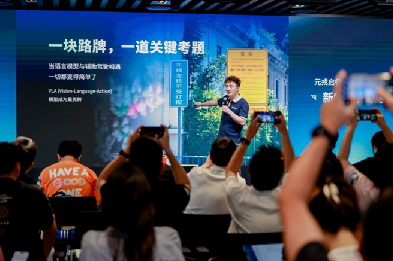
Chinese smart driving company DeepRoute.ai has launched its latest smart driving platform, DeepRoute IO 2.0.

 Powered by its vision-language-action (VLA) model, the company says DeepRoute IO 2.0 is a significant step toward delivering smarter, safer and more human-like driving experiences.

 The platform features a flexible multi-chip, multi-sensor design, supporting both LiDAR-equipped and pure vision configurations, enabling seamless integration across different vehicle models and automakers.

 The company has already secured five confirmed OEM partnerships for the deployment of DeepRoute IO 2.0, with the first production vehicles scheduled to reach the market later this year.

 Maxwell Zhou, CEO of DeepRoute.ai, said, “DeepRoute IO 2.0 adopts the VLA model integrated with the large language model, which brings two core advantages: chain-of-thought reasoning and extensive knowledge base.”

 Zhou says the chain-of-thought enables the system to analyze complex traffic scenarios through logical and human-like reasoning, enhancing the transparency and reliability of driving decisions. The extensive knowledge base allows the model to draw upon accumulated driving experience across diverse conditions, adapting to real-world situations.

 DeepRoute.ai says it has validated DeepRoute IO 2.0 and the VLA model in real-world urban environments to ensure reliable performance under diverse conditions. The company continues to collaborate with global OEM partners to accelerate the deployment of smart driving technology in mass-production vehicles worldwide.

Article inline ad

Expo Attracts All Arab Nations

0

By WANG KEJU and HU DONGMEI in Yinchuan | China Daily | Updated: 2025-08-29

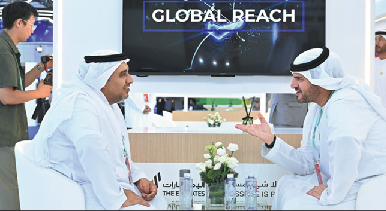
China’s economic ties with Arab nations are evolving beyond the traditional realms of fossil energy, infrastructure and agriculture, as the two sides deepen their collaboration in emerging sectors such as the digital economy, artificial intelligence and green energy, officials and executives said on Thursday in Yinchuan, Ningxia Hui autonomous region.

 As the global economy grapples with a multitude of uncertainties, the deepening cooperation between China and Arab nations, rooted in principles of win-win outcomes, is poised to provide fresh impetus for the development of both sides, while also contributing to the growth of the global economy, they said at the start of the four-day 7th China-Arab States Expo.

 The economic profiles of China and Arab nations seamlessly align, and the development trajectories between the two sides are well-suited to forge a mutually beneficial relationship, said Yuan Xiaoming, assistant minister of commerce.

 In the first seven months of the year, China’s imports of crude oil from Arab nations accounted for over 40 percent of its total crude oil imports, while its imports of natural gas, refined oil and metal ores from the Arab world also saw significant increases, providing crucial support for China’s stable energy supplies, said the General Administration of Customs.

 During the same period, China’s exports of mechanical and electronic products to Arab nations reached 557.66 billion yuan ($78.12 billion), up 22 percent year-on-year, accounting for nearly 60 percent of China’s total exports to the region.

 “In a significant shift in global economic dynamics, Arab states are increasingly orienting their strategic focus eastward, with China emerging as a primary partner for their development and stability goals,” said Li Shaoxian, director of the China-Arab Research Institute at Ningxia University.

 Li said the Arab world’s robust demand for infrastructure construction, energy structure transformation, digital economy and healthcare has provided new momentum and vast untapped markets for Sino-Arab economic and trade cooperation.

 To this end, this year’s expo has seen the introduction of dedicated exhibition areas for the digital economy and artificial intelligence, as well as a specialized green energy applications zone, attracting the participation of some of China’s most prominent technology and energy companies.

 Despite its vast oil reserves, Arab nations have remained committed to optimizing their energy structure and advancing a clean energy transition.

 “The Arab region is one of the world’s best-endowed areas for solar and wind resources, providing it with unparalleled conditions for the development of clean and renewable energy,” said Zhou Mi, a senior researcher at the Chinese Academy of International Trade and Economic Cooperation.

 At the same time, China has built a leading position in photovoltaic and wind power technologies, boasting advanced know-how and extensive experience in these sectors, creating a complementary relationship with Arab nations in the pursuit of clean and renewable energy solutions, Zhou said.

 The expo has served as a bridge, linking the distinct advantages of both sides to unlock greater collaboration potential, said Ahmed Mustafa Fahmy, head of the League of Arab States’ China Representative Office.

 Specialty agricultural products from the region, such as dates, olive oil and spices, have captivated Chinese consumers with their pure quality and cultural flair, while China’s 5G equipment, new energy vehicles and smart home appliances have precisely aligned with the Arab world’s digital transformation and consumption upgrade demands, he said.

 The combination of China’s technological capabilities and Arab nations’ policy support — as well as their significant market potential — creates the perfect recipe for success, he added.

 The expo is seeing participation from all 22 Arab nations for the first time this year. The event is scheduled to run from Thursday until Sunday in Yinchuan.

 Contact the writers at wangkeju@chinadaily.com.cn

Article inline ad

Chinese Trade Delegation To Visit US: Commerce Ministry

0

Xinhua | Updated: 2025-08-28

BEIJING – A Chinese trade delegation will visit Washington, DC to meet with US officials, the Ministry of Commerce announced Thursday.

 The delegation, led by Li Chenggang, China international trade representative with the Ministry of Commerce and vice commerce minister, will visit the United States after visiting Canada from Aug 24 to 27, said ministry spokesperson He Yongqian.

 China is willing to work with the United States to leverage the bilateral economic and trade consultation mechanism, resolve issues through equal-footed dialogue and communication, and jointly maintain the steady, healthy and sustainable development of China-US economic and trade relations, the spokesperson said.

Article inline ad

China Renews Currency Swap Agreement With New Zealand

0

Xinhua | Updated: 2025-08-28

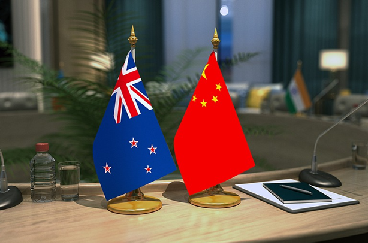
BEIJING — The People’s Bank of China (PBOC), China’s central bank, has renewed a bilateral currency swap agreement with the Reserve Bank of New Zealand.

 The value of the renewed deal is 25 billion yuan (about $3.52 billion), the PBOC said in a statement on its website on Thursday.

 The arrangement is valid for five years and can be renewed upon mutual consent, said the statement.

 The renewal of this arrangement will deepen monetary and financial cooperation between the two countries, facilitate bilateral trade and investment, and contribute to financial market stability, according to the PBOC.


Article inline ad

China Approves Biopharma Innovation Plan For Jiangsu Free Trade Zone

0

Xinhua | Updated: 2025-08-28

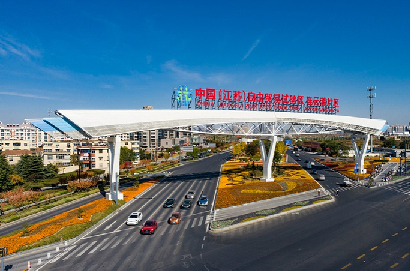
BEIJING — China’s State Council has approved a plan to accelerate the opening-up and innovation of the entire biopharmaceutical industrial chain in the Jiangsu pilot free trade zone (FTZ), according to the Ministry of Commerce on Wednesday.

 To support the integrated innovation of the full value chain in the sector, the guideline calls for prioritizing the development of R&D innovation capacity, improving product approval services, building a modern production and distribution system, and refining procurement and usage policies.

 By 2030, Jiangsu’s biopharmaceutical industry is expected to see major growth in terms of its scale, stronger innovation ecosystems, a more modernized industrial chain, and distinctive industrial clusters in key fields such as macromolecular biologics, cell and gene therapy, and innovative medical devices.

 The move is part of China’s broader effort to upgrade pilot FTZs, according to the ministry. Coordinated efforts will be made to strengthen risk prevention in key areas and ensure the timely implementation of pilot measures and innovative practices.

 Earlier this year, the country released a guideline for improving the country’s FTZs to further promote high-standard opening up and high-quality development, calling for promoting the optimization and upgrading of trade of goods, invigorating the development of services trade, and supporting innovative development in digital trade.

Article inline ad