Wednesday, November 25, 2026

Home Blog Page 178

Franchising Expo

0

Sat 30 August – Sun 31 August, 10:00am – 5:00pm

Venue address

Exhibition Centre

 2 Clarendon Street, South Wharf

 Melbourne VIC, Australia 3006

The Franchising Expo gives you a chance to learn about working for yourself. There will be free seminars, expert advice and over 100 exhibitors showing the latest franchising and business systems.

 Plus this year you can visit the Start Your Own Business Expo running right alongside. One ticket gets you into both events. Now is the time to turn your dreams into action!

Article inline ad

Start Your Own Business Expo

0

Sat 30 August – Sun 31 August, 10:00am – 5:00pm

Exhibition Centre

 2 Clarendon Street, South Wharf

 Melbourne VIC, Australia

The Start Your Own Business Expo gives you a chance turn to turn your great idea into a real live business.

 There will be free seminars, expert advice and over 100 exhibitors with business tools and ideas. It runs right alongside the Franchising Expo so you get to see two shows under one roof.

Ticketing information: Children with adults are free

Article inline ad

Vivo Launches First Mixed Reality Headset

0

By Ma Si | chinadaily.com.cn | Updated: 2025-08-25

Chinese smartphone vendor Vivo unveiled its first mixed reality headset, the Vivo Vision, positioning it as a direct competitor to Apple’s Vision Pro in both design and interaction.

 Yet the mixed reality market remains far from mature. Even Apple has struggled to move beyond a niche audience with its device, which starts at $3,500. According to the market research firm International Data Corp, global sales of Apple’s Vision Pro remained under one million units in 2023. The entire global mixed reality market is only expected to surpass 10 million units this year.

 Vivo’s entry, however, appears aimed beyond the headset itself.

 “Mixed reality could become an ideal interactive device in future robotic scenarios,” Hu Baishan, executive vice-president of Vivo, said. He suggested that while mixed reality meets short-term user needs—such as large-screen and immersive experiences—in the long run, it may serve as the “eyes and brain” of home robots.

 “We’ve already spent five years developing this technology,” Hu said.

 In March of this year, Vivo publicly shared progress in robotics R&D and announced the establishment of the Vivo Robotics Lab. The lab focuses on developing intelligent decision-making systems (the “brain”) and spatial perception systems (the “eyes”) for robots.

Article inline ad

China Builds Platform To Hone AI Edge

0

By Ma Si | China Daily | Updated: 2025-08-25

China is accelerating the construction of an integrated national computing power platform, aiming to enhance the quality and efficiency of computational resources and strengthen the country’s capabilities in core technologies such as AI chips, said officials and experts.

 As the backbone of AI development, computing power has become the battleground for global technological supremacy, and China is charging ahead with unprecedented momentum despite challenges, they said.

 The move is China’s latest plan to scale up the digital infrastructure that is key to buoying its AI economy and to hone its technological prowess in strategic industries.

 Vice-Minister of Industry and Information Technology Xiong Jijun emphasized the government’s commitment to “guiding the orderly development of computing infrastructure and improving the supply quality of computing resources” at the 2025 China Computational Power Conference, which concluded on Sunday in Datong, Shanxi province.

 He emphasized the need to accelerate breakthroughs in key technologies such as graphic processing units and algorithms for large language models, which are crucial for sharpening China’s competitive edge in AI.

 Roughly defined as the ability to process data, computing power includes technologies such as chips and data centers to support information processing, data storage and network capacity in the digital economy era.

 Wu Hequan, an academician at the Chinese Academy of Engineering, said that computing power is an invisible yet indispensable force behind any AI-driven metamorphosis, and that without enough computing power to process data, it is impossible to support large-scale AI applications.

 “Every yuan ($0.14) invested in computing power drives 3 to 4 yuan in GDP growth,” Wu said. “In the global race for AI leadership, expanding computing power supply is critical.”

 China’s total computing power has been growing at approximately 30 percent annually, driven largely by soaring demand for intelligent computing fueled by AI applications, data from the Ministry of Industry and Information Technology showed.

 Rao Shaoyang, director of the strategic development research institute of the China Telecom Research Institute, said, “AI is expected to contribute over 11 trillion yuan to China’s GDP by 2035.”

 “That will account for 4 to 5 percent of the total economy,” Rao said. “This growth could multiply computing power demand by 10 or even a hundred times.”

 To address this demand, China is building a nationwide computing power platform that integrates resources across regions and industries. The platform, described as a “unified network” for computing power scheduling, already includes subplatforms from 10 provinces and municipalities such as Shanxi, Liao­ning, Jiangsu and Shanghai, according to the ministry.

 Its intelligent scheduling capabilities allow efficient matching of supply and demand. For example, enabling businesses in eastern China to leverage idle computing resources in western China, significantly reducing costs and improving efficiency.

 In one notable case, a Beijing-based healthcare company completed an AI computing task using resources from the Ningxia Hui autonomous region at a cost of just 10,000 yuan, compared with the typical expense of over 2 million yuan for purchasing and maintaining servers.

 According to Wei Liang, vice-president of the China Academy of Information and Communications Technology, more than 100 computing service providers have joined the platform, along with over 1,000 registered enterprise users, while nearly 100 large language models have been connected, providing diverse online services to more than 1,000 developers.

 Meanwhile, Chinese AI chip companies are also working hard to beef up their prowess in graphic processing units, prompting their stocks to be favored by investors, as the US company Nvidia’s H20 chips face weak demand in China.

 On Monday, Chinese AI chip stocks continued their strong upward trajectory, with Cambricon Technologies emerging as a potential challenger to beverage giant Kweichow Moutai for the title of the highest-priced stock on the A-share market.

 Cambricon closed at 1,384.93 yuan per share on Monday, surging 11.4 percent for the day. Since mid-July, its share price has more than doubled, and it has skyrocketed by more than 562 percent since September 2024. The company now trails only Moutai, which ended the session at 1,490.33 yuan per share.

 The AI chip intellectual property products of Cambricon, which was founded in 2016, have powered smartphones and data server chips, including those made by Huawei Technologies Co and Alibaba Group.

 Chen Tianshi, co-founder and CEO of Cambricon Technologies, said in an earlier interview with China Daily that “there is rigid demand for AI chips in China. We don’t worry about orders, as long as our technologies are strong enough”.

 Pan Helin, a member of the Ministry of Industry and Information Technology’s Expert Committee for Information and Communication Economy, said, “The Nvidia incident offers a strategic window for ambitious Chinese AI chip designers to expand their market share.”

 masi@chinadaily.com.cn

Article inline ad

China Seen As Key Source Mkt For VFS Global

0

Visa application processor bullish on rising demand from mid-income group

By Fan Feifei | China Daily | Updated: 2025-08-26

Chinese tourists have exhibited growing preference for personalized and high-quality travel experiences fueled by the rapid growth of the country’s middle-income group and robust demand for international travel, said VFS Global, the world’s leading visa application outsourcing and technology services provider.

 Premium group tours with flexible itineraries are increasingly favored by Chinese tourists, while there is rising demand for long-haul trips to Europe among seniors, Kishen Singh, chief operating officer for China and Mongolia of VFS Global, said in an exclusive interview with China Daily.

 Meanwhile, family-friendly and educational tours see particularly strong demand during the summer, and personalized value-added visa application services are gaining popularity among Chinese outbound travelers, Singh said.

 “For long-distance travel, Chinese tourists have shown consistent preference for destinations such as Canada, Germany, Italy, the United Kingdom and the United States. Meanwhile, short-distance travel demand has grown steadily in Japan, South Korea and Thailand,” he said.

 Singh said Schengen visa applications continue to grow steadily.

 “Countries such as Austria, Germany, Italy and Switzerland remain popular among Chinese travelers due to their rich cultural heritage, world-class education systems and vibrant business opportunities.”

 He said Canada, the UK and the US also remain robust visa application destinations, largely driven by study abroad programs and family visits.

 Visa applications enter a peak season in April, with summer travel approaching and surging demand for outbound travel, which is driven by study abroad programs, educational tours and summer camps, further intensifying application volumes, he said.

 “China remains one of VFS Global’s largest and most important source markets, with visa applications experiencing rapid growth. The first half of this year witnessed a substantial increase in application volumes, reflecting strong performance compared to the same period in 2024,” Singh said.

 He pointed out that China’s outbound travel landscape is undergoing a transformation. While Beijing, Shanghai and Guangdong province’s Guangzhou remain the top source cities for visa applications, emerging cities such as Hangzhou, Zhejiang province; Shenzhen, Guangdong province; Wuhan, Hubei province; and Xi’an, Shaanxi province are experiencing particularly strong year-on-year growth, signaling a broadening interest in international travel beyond China’s biggest cities.

 At present, VFS Global has more than 400 visa application centers across 16 cities in China, serving visa applications for 40 countries. The company has introduced its first fully digital visa application center in Guangzhou, serving Schengen visa applicants.

 Equipped with digital signage, electronic bulletin boards, an intelligent queuing system and an optimized biometric collection process, this center has significantly improved service efficiency and security while delivering a smoother applicant experience.

 Singh said VFS Global plans to gradually expand this digital model to other Chinese cities, focusing on extending digital service coverage and continuously optimizing processes to create a better visa application experience for applicants.

 Looking forward, the company will expand visa services through initiatives such as “visa at your doorstep”, enabling applicants to apply from their preferred locations, as well as enhance existing facilities and services, he added.

 When asked about the application of fast-evolving artificial intelligence in visa application processing, Singh said the company pioneered AI and digital innovation by introducing an AI-powered chatbot for UK visa applicants across 141 countries worldwide, including China.

 It delivers real-time conversational support through both voice and text input, effectively addressing diverse user needs. “Concurrently, we’re developing additional AI and digital products to transform visa and consular services, always ensuring that responsible AI development is aligned with client governments’ policies.”

 Experts said long-distance tours have been increasingly preferred by Chinese travelers thanks to relaxed visa policies and an increase in the number of international flights. The growth of China’s outbound tourism will bolster the global tourism sector and the economic recovery of countries that depend heavily on tourism.

 Dai Bin, president of the China Tourism Academy, said China’s outbound trip segment is expected to see steady growth this year, which will inject strong impetus into the prosperity of the country’s tourism sector. He added that Chinese travelers’ enthusiasm for outbound trips has unleashed a surge in visa applications.

Article inline ad

AI Empowers Culture And Museum Sector

0

By Wang Xin | chinadaily.com.cn | Updated: 2025-08-25

The culture and museum sector is seeing accelerating application of artificial intelligence, focusing on various fields such as museum guidance, immersive exhibitions, as well as the identification, protection, and restoration of cultural relics, said industry experts on Monday at a matchmaking meeting in Shanghai.

 The city has been ramping up efforts in innovation in the sector in recent years. In 2018, the Shanghai Museum established the nation’s first comprehensive data-based digital management platform, and in 2021, the Shanghai History Museum launched the city’s first digital twin museum system, significantly improving its digital governance capabilities.

 Actually, a number of immersive exhibitions at diverse museums across Shanghai have already utilized advanced technologies, bringing ancient Chinese civilization back to life while shaping new cultural experiences for visitors.

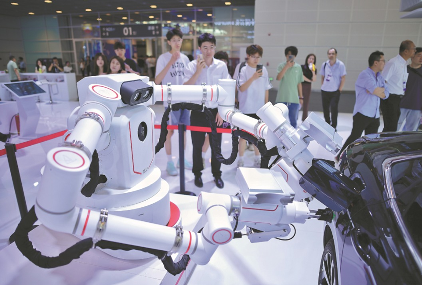
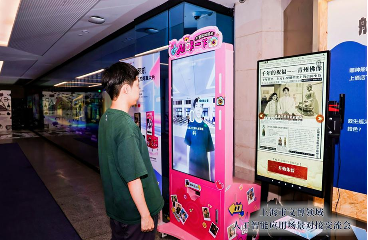
Working with Chinese artificial intelligence company SenseTime, a Fourier humanoid robot was demonstrated at the meeting to offer audiences a guided tour at the Shanghai History Museum. Xinke Animation Co Ltd set up an immersive space with virtual reality on site to take visitors on an expedition into the mysterious Xixia Imperial Tombs. BimoAI also showcased an interactive terminal named “BimoAI Camera” at the meeting, which allows visitors at museums and tourist spots to get customized AIGC photos and newspapers instantly.

 “Artificial intelligence has not only enhanced the interactivity and engagement of the audience experience, but also optimized the management of cultural institutions and cultural relic protection. Museums are also evolving from traditional exhibition spaces into vibrant interactive venues, and AI is becoming a ‘super translator’ for telling the stories of Shanghai and China,” Xiang Yihai, deputy director-general of the Shanghai Municipal Administration of Cultural Heritage, said at the meeting.

Several cooperative projects were signed during the event to further promote the application scenarios of AI in the cultural and museum sector. Among them, the Shanghai Museum will work with BesTV to develop a digital twin museum, and the Shanghai History Museum will work with four technology companies to deepen exploration on sectors such as spatial scanning, data collection and modeling, digital copyrights management, and intelligent guided tours.

 At the meeting, Shanghai Jiao Tong University also launched the construction of a research center to optimize the protection of cultural heritage architectures. With AI technologies, the center will focus on key areas such as the diagnosis of cultural heritage architecture defects, risk prediction, and protection measures.

 “We see huge potential and promising prospects of the cultural tourism market in China. For instance, the market demand for our BimoAI Camera is growing well in Shanghai, and we are in talks with about 100 museums and cultural tourism spots in China about potential collaborations. I am confident that AI application in this sector will continue to grow,” Eric Tang, founder and CEO of BimoAI, said.

Article inline ad

China Stocks Rally As Turnover Tops 3 Trillion Yuan

0

By Jiang Xueqing | chinadaily.com.cn | Updated: 2025-08-25

China’s three major stock indexes closed higher on Monday, with total trading turnover across the Shanghai, Shenzhen and Beijing stock exchanges surpassing 3 trillion yuan ($419.5 billion) — marking only the second time in A-share market history the threshold has been breached.

 The benchmark Shanghai Composite Index rose 1.51 percent to close at 3,883.56 points. The Shenzhen Component Index gained 2.26 percent to finish at 12,441.07 points, while the ChiNext Index — China’s Nasdaq-style board for growth enterprises — surged 3 percent to 2,762.99 points.

 Leading industry gainers included minor metals, precious metals and communications equipment.

 HSBC Global Research attributed the market rally to robust domestic liquidity and raised its year-end 2025 forecast for A-share indexes, citing a potential 5 to 7 percent upside. The firm noted that artificial intelligence remains a key investment theme, particularly AI infrastructure, which stands to benefit from the rising capital expenditures of cloud service providers and growing AI adoption across sectors.

 However, some experts argue that the current stock market rally is fueled by a mix of news-driven sentiment and momentum-driven capital flows. They caution investors to remain respectful of market dynamics and vigilant about the risks of a potential correction.

Article inline ad

Fiscal Policy Pivots To Demand Stimulus

0

By Wang Keju | China Daily | Updated: 2025-08-26

China’s fiscal policy is moving away from its traditional focus on enterprise and production toward new priorities — addressing household needs, strengthening the social safety net and stimulating consumer demand, said an expert.

 While the newly introduced childcare subsidy has captured public attention for its direct financial impact, the broader significance of the policy lies in what it represents — a strategic pivot toward “investing in people”, said Luo Zhiheng, chief economist at Yuekai Securities.

 The childcare subsidy, set at a standard 3,600 yuan ($501) per year for each child under the age of three, is available to all eligible children, regardless of whether they live in urban or rural areas, their ethnicity, region or whether they are the first, second or third children in the family.

 “It’s a key step forward, and we could expect further initiatives in a broader range of areas that are directly relevant to the lives of ordinary citizens, including pensions, healthcare and affordable housing,” Luo said in an interview with China Perspective.

 While chairing the ninth plenary meeting of the State Council earlier this month, Premier Li Qiang stressed that policymakers need to adapt to new social demands by investing directly in the people and channeling resources to serve pressing livelihood needs.

 Take, for instance, the highly discussed issue of pensions. The basic old-age insurance level of rural and urban nonworking residents still remains modest, Luo said.

 Though China pledged to raise the minimum basic old-age benefits for rural and nonworking urban residents by 20 yuan in the Government Work Report in March, the average monthly pension for this group is just slightly over 200 yuan.

 “This can be further increased to stay on par with the level of subsistence allowances — around 600 yuan in rural areas and 800 yuan in urban areas,” Luo said.

 The coverage of the pension system, the adequacy of its payouts and the fairness of its distribution directly affect household consumption capacity and their willingness to spend, Luo added.

 With the property sector slowdown and global uncertainty weighing on China’s economic growth, stimulating household demand has become urgent.

 In the first half of this year, key indicators such as sales area, home price and investment in the property sector have declined by around 30 to 50 percent compared to the same period in 2021, according to Luo.

 “The future of China’s real estate market has moved out of the risk of a hard landing,” Luo noted. “It has entered a new stage of development with a longer cycle, a more moderate pace, but one of continued adjustment.

 “Consumer confidence is increasingly tied to the well-being of the housing market,” Luo said. “We’re now at a point where the rental yield and the price-to-income ratio are gradually trending toward more reasonable levels, a positive sign that the market is on the path to a more sustainable equilibrium.”

 Moreover, policymakers could harness two key levers: increasing dividend payouts from listed companies and enhancing the transfer of State-owned enterprise profits to the state coffers to improve public welfare and bolster household consumption, Luo added.

 In recent years, the annual economic trajectory has basically followed a U-shaped pattern, Luo noted.

 “It is manifested in a good start in the first quarter, some downward pressure in the second quarter, a series of policies introduced around the third quarter and then an upward economic lift in the fourth quarter. This pattern is highly likely to continue this year,” Luo said.

 wangkeju@chinadaily.com.cn

Article inline ad

Loans Help Stabilize Key Mkt Sectors

0

Green lending surged to 36.6 trln yuan by end-2024, real economy big winner

By JIANG XUEQING | China Daily | Updated: 2025-08-26

Since the start of the year, China has continued to optimize its credit structure, channeling more financial resources into technology, green development, inclusive finance, eldercare and the digital economy.

 A report from the People’s Bank of China — the nation’s central bank — shows that by the end of June, loans to these five sectors rose between 11.5 and 43 percent year-on-year, all outpacing overall loan growth. Together, they accounted for about 70 percent of new lending, compared with 2016 when real estate and infrastructure dominated more than 60 percent of the increase.

 Technology has become a major focus of credit allocation. By the end of June, outstanding technology loans reached 44.1 trillion yuan ($6.16 trillion), growing 12.5 percent from a year earlier — 5.8 percentage points faster than overall loan growth. Lending to tech-driven small and medium-sized enterprises grew even faster, remaining above 20 percent so far this year.

 Green finance has also expanded rapidly, providing strong support for sustainable economic development. The balance of green loans surged from 9.9 trillion yuan at the end of 2019 to 36.6 trillion yuan by the end of 2024, with an average annual growth rate of over 20 percent.

 Inclusive finance, aimed at providing affordable and effective financial services across society, has also seen notable progress. By the end of the second quarter, inclusive loans for small and micro businesses reached 36 trillion yuan, up 12.3 percent year-on-year. Inclusive agriculture-related loans stood at 13.9 trillion yuan, 1.1 trillion yuan higher than at the beginning of the year, said the National Financial Regulatory Administration.

 Experts said the shift reflects a stronger alignment between financial resources and the real economy.

 Zeng Gang, chief expert and director of the Shanghai Institution for Finance & Development, said financial resources have been significantly tilted toward key areas of the real economy, precisely meeting the financing needs of SMEs as well as agriculture, rural areas and farmers. This demonstrates both the inclusiveness and the targeted nature of financial services.

 “Looking ahead, banks must further optimize the credit structure while maintaining stable operations. They should continue to strengthen support for the real economy, while also enhancing resilience through refined risk management, thereby promoting a virtuous cycle between finance and the economy,” said Zeng.

 Official data show that by the end of the second quarter, the balance of nonperforming loans in China’s commercial banks stood at 3.4 trillion yuan, a decrease of 2.4 billion yuan quarter-on-quarter. The NPL ratio was 1.49 percent, down 0.02 percentage point.

 “The double decline in NPLs both in balance and ratio at the end of the second quarter was mainly due to commercial banks accelerating the disposal of nonperforming assets, as well as the faster pace of loan issuance, which produced a dilution effect,” said Dong Ximiao, chief researcher at Merchants Union Consumer Finance.

 However, Dong cautioned that pressure on asset quality remains significant, particularly regarding inclusive SME loans, real estate lending and non-credit asset risks, which have not yet been fully resolved. Accelerating the disposal of existing risks and strengthening the prevention of new risks remain major challenges, he said.

 jiangxueqing@chinadaily.com.cn

Article inline ad

China’s E-Commerce Sector Posts Steady Growth In First 7 Months

0

Xinhua | Updated: 2025-08-25

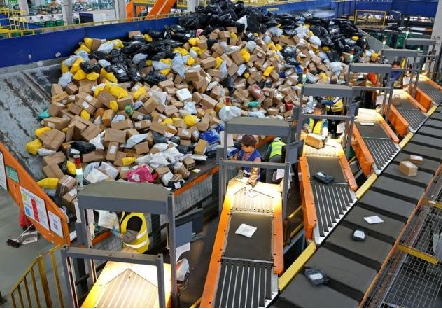
BEIJING — China’s e-commerce sector saw steady growth in the first seven months of 2025, with online sales of a variety of products showing significant growth, the Ministry of Commerce said Friday.

According to the National Bureau of Statistics, the country’s online retail sales climbed 9.2 percent year-on-year in the first seven months of this year.

Digital gadgets and trade-in programs emerged as new consumption drivers of online spending, with personal computer sales rising 29.9 percent and smart wearables increasing 28.4 percent year-on-year, the ministry said.

Meanwhile, online service consumption saw rapid expansion during the period, with online sales in travel, catering and cultural entertainment rising by 24.8 percent, 16.6 percent and 11 percent, respectively.

The ministry said that strong ties between industries and e-commerce platforms have helped expand sales channels for a variety of products. Transaction volumes for agricultural products, electronics and textiles increased by 14.5 percent, 7.9 percent, and 6.5 percent year-over-year, respectively.

The Silk Road e-commerce cooperation promoted cross-border sales and mutual benefits through thematic events, partnership initiatives and industry matchmaking, the ministry added.

Data show that online sales of Egyptian essential oils and Uzbek confectionery increased 179.2 percent and 104.7 percent, respectively, over the seven-month period, according to the ministry.

Article inline ad