Wednesday, November 25, 2026

Home Blog Page 179

Private Sector Promotion Act To Advance Quality Development

0

By Lian Ping | China Daily | Updated: 2025-08-25

The Private Sector Promotion Law aims to advance high-quality development of the private sector, but concerted efforts remain essential for further progress given persistent challenges.

The law, which came into effect on May 20, underscores the deepening of rule of law reform in the market economy and reflects the nation’s strong commitment to supporting the development of the private sector.

Accelerating the high-quality development of the private sector is an inherent demand for China’s high-quality economic development and will help the country better cope with complex and severe external challenges.

The implementation of the law will significantly improve the legal environment for private enterprises, enabling them to receive greater policy support.

By elevating policies such as the fair competition review system, the negative list for market access, and the status of statutory provisions, the law continuously enhances equal protections, encourages fair competition and explicitly stipulates the lawful rights and interests of private economic organizations and their operators, including personal rights, property rights and autonomy in management.

The law supports the establishment of smooth and effective government-enterprise communication mechanisms, enabling the government to better understand the needs of private enterprises and provide targeted services.

It will broaden financing channels and facilitate funding access, as it mandates financial institutions to develop and provide financial products and services tailored to the private sector.

Measures already underway include pilot equity investment programs by financial asset investment companies, the establishment of private equity investment funds and the roll out of merger and acquisition loans for select technology firms, all expanding financing options for private enterprises.

Simultaneously, it enhances the alignment of credit supply and loan terms with the financing needs of the private sector, improving the accessibility and convenience of financial services.

The law encourages and supports private sector organizations in actively driving technological innovation, cultivating new quality productive forces and building a modern industrial system, so the law will further unleash the technological innovation potential of private enterprises.

It supports their participation in national key research and development programs and leads the undertaking of major national technological tasks, enabling private enterprises to deeply integrate into the national innovation system and enhancing their own sci-tech innovation capabilities.

Furthermore, the law clarifies rules for the distribution of gains from innovation, ensuring that the innovation achievements of private enterprises receive effective protections and reasonable returns, thereby stimulating their innovation enthusiasm.

It will facilitate market access and fair competition for the private sector, encouraging increased investment in strategic emerging industries and future industries. The legislation actively promotes the fair participation of private enterprises in public tendering, enabling them to enter various market sectors with greater freedom.

The law will accelerate the establishment and improvement of modern enterprise systems among private firms. It guides private enterprises in refining governance structures and management systems, conducting lawful operations and sound management, strengthening risk prevention, fulfilling social responsibilities and ultimately enhancing their overall competence and reputation.

China still faces challenges in accelerating the high-quality development of its private sector, including the establishment of market competition mechanisms, regulatory system development, rule of law construction and internal governance mechanisms of private enterprises.

These factors pose constraints to progress among private firms’ tech innovation and industrial upgrading, investment, exports, enhancement of international competitiveness, employment as well as government tax revenue issues.

This requires joint efforts and coordinated cooperation from all relevant entities, including government, the judicial system, financial institutions, industry organizations and private enterprises to bolster development confidence.

Fiscal policy should enhance support for the development of the private sector. All market entities must enjoy equal rights in government tendering and centralized procurement activities.

The proportion of funding from ultra-long-term special treasury bonds and central budget allocations — directed toward advanced manufacturing, energy conservation and carbon reduction — should be appropriately raised to support competitive private enterprises.

For export-oriented private enterprises, the government can provide targeted support through tariff and cross-border logistics subsidies, while improving export tax rebate policies and simplifying tax refund procedures.

Monetary policy support for the private sector should be more precisely targeted. Comprehensive use of instruments, including interest rate cuts, reserve requirement ratio reductions, re-lending and rediscounting, should provide low-cost liquidity to small and medium-sized enterprises, alleviating their financing difficulties and high costs.

Monetary and fiscal policies should be coordinated to encourage financial institutions toward greater support for private enterprises through fiscal incentives and tax benefits.

The government should support private enterprises in expanding into more investment and consumption sectors.

Regarding investment, industrial policies should be formulated and refined. Private enterprise investment projects aligned with policy requirements shall receive funding support, loan interest subsidies, tax benefits or dedicated industrial guidance funds.

The government should guide and encourage private enterprises to participate in major national-level projects, appropriately lowering bidding thresholds for major infrastructure projects such as airport facilities, while allowing private construction firms to bid jointly with large State-owned enterprises.

In the consumption sector, the government should support private capital in actively participating in the construction and renovation of consumption venues such as shopping malls as well as investing in cultural tourism projects, in order to promote integrated development across commerce, tourism, culture and entertainment.

Private enterprises’ overseas expansion deserves comprehensive support and safeguards.

Establishing legal service centers for private enterprises can help reduce internationalization risks by providing services such as overseas legal consultation and compliance guidance.

By strengthening bilateral and multilateral economic cooperation with other countries and regions while signing investment protection agreements, the government can provide safeguards for private enterprises’ overseas investments.

The government can formulate policies to grant tax benefits and fiscal subsidies to private enterprises that establish modern enterprise systems and improve corporate governance structures, which will guide and encourage private firms to adopt modern corporate governance mechanisms, motivating them to actively enhance governance practices.

A multitiered financial services system for private enterprises should be improved to address their financing difficulties.

The establishment of risk-sharing mechanisms among financial institutions, government departments and guarantors to jointly bear private enterprise loan risks will boost lenders’ willingness to extend credit.

Additionally, the government can support banks in providing professional financial advisory and financing services for private enterprises’ merger and acquisition activities, while offering financing products such as acquisition loans.

Through periodic symposiums with businesses, the government needs to strengthen regular government-enterprise communication mechanisms, so as to deliver timely policy updates to private enterprises and promptly resolve relevant problems.

Further optimizing the rule of law environment for private sector development and strengthening judicial enforcement against monopolies and unfair competition will provide judicial guarantees for private enterprises’ fair participation in market competition.

The writer is a council member of the China Chief Economist Forum and head of the Guangkai Chief Industry Research Institute.

The views do not necessarily reflect those of China Daily.

Article inline ad

Rule Of Law-Based Pricing Mechanisms Crucial

0

By Guo Liyan | China Daily | Updated: 2025-08-25

In the operation of a socialist market economy, pricing mechanisms play an important role in optimizing resource allocation and promoting a balance between supply and demand. China’s pricing law is an important law regulating price relations and price behaviors among economic activities in the country.

To adapt to new situations and new needs, revising relevant provisions of the pricing law — especially improving the criteria for identifying unfair pricing practices such as predatory pricing and regulating price violations in accordance with the law — will help maintain a fair and competitive market environment, protect the lawful rights and interests of consumers and business operators, and promote the healthy development of the national economy.

First, it helps improve the practice using the rule of law in both pricing practice and policy. This revision of the pricing law adheres to a people-centered approach and insists that the rule of law serve the people.

In market economy activities, public demand and calls for fairness, justice, openness and transparency are growing stronger.At present, against the backdrop of oversupply in various products, some enterprises, in order to capture greater market share, are reducing costs and product prices by squeezing supplier profits, while some large enterprises squeeze small firms by delaying payments or extending payment terms.

Such “trading price for volume” behavior undermines the industrial collaboration ecosystem and the order of fair market competition.

For such acts of abusing market dominance to squeeze upstream and downstream suppliers or industry competitors, the call among enterprises for solutions has grown increasingly commonplace.

Therefore, actively responding to the needs and voices of the public and enterprises, amending and improving the criteria for determining “predatory pricing”, and strengthening the regulation of such violations embody the sense of responsibility and action of a law-based government.

Second, it represents a clear example of giving better play to the government’s role and strengthening the construction of the rule of law in pricing.

The government’s “visible hand” should function not only in areas of government pricing, but also in areas of market-regulated pricing, including the regulation of unfair pricing practices. Even in areas with market-regulated prices, market failures can occur.

For example, “predatory pricing” is an unfair practice intended to drive out competitors or monopolize the market by selling goods or providing services below cost, disrupting the normal order of production and business operations, and harming national interests or the lawful rights and interests of other operators.

In terms of harm, predatory pricing is a form of cutthroat competition, leading to declining or even widening losses in industry profits, increasing pressure on enterprises to maintain stable operations and expand jobs, and adversely affecting income growth for households, especially low and middle-income groups.

In summary, in areas involving major matters of public interest and serious market failures, it is necessary for the government to actively act, strengthen the implementation of the rule of law, enrich regulatory tools and help remedy market failures.

Third, it is an important guarantee for improving the system of price-related rule of law and enhancing the capacity to govern prices according to the law.

To steadily advance high-quality economic development and continuously optimize the economic structure, pricing mechanisms must accurately transmit supply-and-demand signals.

Revising and effectively implementing the pricing law and related laws and regulations are key to respecting the market pricing laws and fully leveraging the market’s role in price formation.

Especially against the backdrop of increased uncertainty on the international stage, legislating to strengthen and guide fair, just and lawful price competition will help enhance the appeal and influence of China’s unified national market, both domestically and internationally, thus providing a sound pricing environment for strengthening the domestic economic cycle.

Also, business operators’ right to set prices independently is a right granted by the pricing law and is a legitimate means for operators to make profits in their economic activities.

From the perspective of maintaining the value orientation of fair competition, independent pricing behavior should be consistent with market supply and demand and with the operator’s own cost structure of production and operations.

If an operator engages in unfair pricing practices that prevent prices from effectively reflecting market supply and demand dynamics — or production and operating costs — or even cause pricing mechanisms to fail in certain industries or links, then negative chain reactions will very likely occur.

Particularly given the current prominence of cutthroat competition, relevant provisions in the pricing law need to be further improved.

One of the focuses of this revision is improving the criteria for identifying predatory pricing, and removing incentives that prompt other operators to engage in price manipulation, explicitly defining it as an “unfair pricing practice”.

At the same time, it must be recognized that amending the law is only the first step in strengthening regulation, and the key is to ensure that laws are followed, and that enforcement is strict.

If relevant departments strengthen market pricing regulations in accordance with laws and regulations, they will effectively curb unfair pricing practices and genuinely maintain a fair and competitive market environment and sound pricing habits.

Third, high-quality development requires actively promoting fair competition throughout the society.

While confirming and protecting the right of operators to independently set prices and lawfully make profits, the pricing law also stipulates that independent pricing must follow the principle of honesty and good faith.

Honesty means being open and genuine in goods and pricing. Good faith means keeping promises and delivering on commitments.

In terms of price-related activities, failing to truthfully present product information, passing off substandard goods as high-quality, adulterating products, or using lawful behavior to conceal unlawful aims all violate the principle of honesty. Breaching agreements or failing to fulfill promised obligations violates the principle of good faith.

When pursuing market share, sales volume and revenue, operators must also actively shoulder certain social responsibilities, abide by public order and good customs, and jointly maintain a sound industrial ecosystem.

For example, as part of improving internal governance, enterprises should — based on their operating conditions — improve internal price management systems as well as strictly follow national financial and economic laws in terms of cost accounting and expense allocation.

At the same time, when market regulatory authorities at all levels conduct price supervision and inspection, operators must truthfully provide any materials needed for occasional investigations.

In this regard, the pricing law explicitly stipulates that refusal to provide materials required for supervision, inspection, cost monitoring or investigation in accordance with regulations shall be ordered to be corrected and those in noncompliance will be issued warnings. Failure to correct such behaviors within a designated time limit may result in fines.

This revision of the pricing law sends a clear signal of maintaining a fair and competitive market environment.

By deepening the construction of rule of law-related pricing practices, the efficiency and quality of economic operation can be further improved, playing an important role in achieving high-quality development.

The writer is deputy director of the Chinese Academy of Macroeconomic Research’s Economic Research Institute.

The views do not necessarily reflect those of China Daily.
Article inline ad
0

Meeting approves guideline calling for vigorously advancing tech’s use

By FAN FEIFEI | CHINA DAILY | Updated: 2025-08-22 0

Fast-evolving artificial intelligence is expected to foster new consumption growth drivers and inject strong impetus into China’s consumer market as this cutting-edge digital technology is spearheading a technological revolution and industrial transformation to drive economic growth, said experts and company executives.

They said that commercial use of AI in e-commerce and home appliances will not only improve the consumer shopping experience and merchants’ operational efficiency, but also create new consumption scenarios and bolster product sales.

Their comments came as a State Council executive meeting in July approved a guideline on implementing the “AI Plus” initiative, calling for vigorously advancing the large-scale commercial application of AI and boosting its accelerated popularization and deep integration across various fields of economic and social development.

Major e-commerce platforms are scrambling to leverage AI-powered virtual hosts in livestreaming sessions to introduce products and spur purchases. These virtual hosts can mimic human facial expressions and movements, and interact naturally with consumers while promptly answering their queries.

A digital human mimicking Liu Qiangdong, Chinese e-commerce giant JD’s founder, appeared in the company’s livestreaming rooms to promote a variety of merchandise, including meats, edible oils, eggs, milk, air conditioners and TV sets.

The AI anchor almost perfectly replicated Liu’s expressions, body language, gestures, voice and accent. His avatar generated over 20 million views within the first hour and raked in 50 million yuan ($6.96 million) in sales throughout the real-time broadcast session.

Tmall, Alibaba Group’s business-to-customer e-marketplace, offers consumers personalized guidance and advice with its AI-powered customer service chatbots, while online discounter PDD Holdings uses AI tools to analyze market trends and optimize sales strategies.

“The use of AI-powered virtual hosts in e-commerce livestreaming can bring a feeling of freshness to users, while brand owners can attract new consumers via this innovative method,” said Mo Daiqing, a senior analyst at the Internet Economy Institute, a domestic consultancy.

Mo said AI will change the way people purchase by providing interactive shopping experiences and promoting the digital transformation of traditional retailers.

“It is vital that Chinese retailers deepen their customer engagement. AI tools can energize customer retention efforts, enabling e-commerce players to hyperpersonalize their engagement with consumers and create bespoke shopping experiences for them,” said James Yang, head of consulting firm Bain & Company Greater China’s retail practice.

Meanwhile, leading consumer electronics and home appliance makers are racing to incorporate AI technology into manufacturing, products and services. Zhou Yunjie, chairman and CEO of Haier Group, said, “At present, the deployment of AI in enterprises mainly concentrates on manufacturing, research and development, sales, procurement and services.”

Zhou said the integration of AI models with home service robots and terminal devices will create new growth drivers for the global consumer electronics industry, adding that his company has promoted the application of AI in a wide range of fields like smart homes and industrial internet.

Hisense Group said its Xinghai large language model has a deep integration with Chinese AI startup DeepSeek, and with enhanced deep thinking and reasoning abilities, its smart TVs could better understand user demands.

The rise of AI technology will offer better human-machine interaction capacities and boost the intelligent transformation of the home appliances sector, while unleashing consumption potential, said Liu Fei, research director of the consumer electronics department at Beijing-based market consultancy All View Cloud.

Hong Yong, an associate research fellow at the Chinese Academy of International Trade and Economic Cooperation, said the new type of consumption is mainly driven by technological advancements in AI, with a focus on consumers’ personalized and diversified needs.

“Nurturing an AI-driven new consumption model is pivotal to expanding domestic demand, driving industrial upgrades and promoting high-quality economic growth,” Hong said.

Article inline ad

Surge In Dehua’s Porcelain Exports

0

By ZHU WENQIAN and HU MEIDONG in Dehua, Fujian | China Daily | Updated: 2025-08-23

Porcelain makers in Dehua, a county in Quanzhou, East China’s Fujian province, are busily shipping porcelain crafts and figurines in the shape of pumpkins, cartoon characters and Christmas trees overseas for the upcoming Halloween and Christmas holidays, as international clients place advance orders for these annual events.

Summer is the peak season for shipping, with porcelain products usually delivered to Xiamen, Fujian, first for Customs clearance before being shipped to overseas purchasers, local companies said.

Dehua is China’s largest base for the production and export of porcelain products. The products made locally have been exported to more than 190 countries and regions, according to the porcelain development center of Dehua.

In the first seven months of this year, the export value of porcelain from Dehua totaled 2.14 billion yuan ($298 million), up 5.06 percent year-on-year, the center said.

Quanzhou Shunmei Group Co, a major porcelain maker in Dehua, said that it has exported products to more than 100 countries, with exports accounting for 60 to 70 percent of its total business volume. Customers include Walmart, Universal Pictures and Starbucks.

The tariff disputes between China and the United States have had a certain impact on its export business to the US, while demand from Europe, especially the United Kingdom and Germany, remains robust, the company said.

“We have been cooperating with some major global corporations for a long time, and we make products for them on an order-based system. We have more than 100 designers at the company,” said Zheng Pengfei, general manager of Shunmei Group.

“The trade disputes are still having some impact on us. While stabilizing exports, we will continue to expand the domestic market,” Zheng said.

Looking back at history, Quanzhou was the starting point of the ancient Maritime Silk Road. In the Song and Yuan dynasties (960-1368), porcelain gradually became the main goods of export.

Now in Dehua, more than 100,000 people are engaged in work related to porcelain and the number accounts for one-third of the county’s total population. So far, the county has set up 54 porcelain promotion and exhibition centers in major cities of markets participating in the Belt and Road Initiative, according to the center.

“Dehua has over 4,500 porcelain enterprises, and they have been involved in the production of three major types of products, which are artistic porcelain for export, daily-use porcelain like tableware and tea utensils, as well as porcelain carving works by masters,” said Kou Wanqiong, deputy director of the center.

Meanwhile, the county has continued to innovate the sector with advanced technologies. It has launched a research institute that focuses on the research of new materials for making porcelain and has also built the world’s first 5G smart factory for producing daily-use porcelain.

Article inline ad

Robot Chefs Cut Costs, Boost Efficiency

0

By ZHENG YIRAN | China Daily | Updated: 2025-08-23

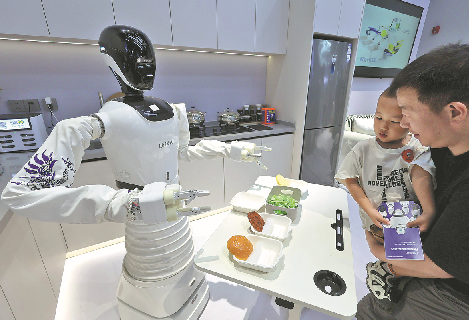
Robot chefs are gaining in popularity, on the back of significant cost-effectiveness and excellent quality control.

Robot chefs are not a new concept. For example, the Changsha-based restaurant franchise Bawan uses such robots in its outlets. So far, Bawan has opened over 500 outlets, which have all deployed self-developed robots to cook food. According to its official website, these have now been updated to the third generation.

Xiaocaiyuan, a Hong Kong-listed restaurant specializing in Anhui cuisine, deployed robotic cooks in some of its outlets as early as 2023.

According to the prospectus released by Xiaocaiyuan before its listing, a portion of the funds raised from the public flotation will be used to purchase 3,000 such robots, with a unit price of 50,000 yuan ($6,972) per robot and an estimated total cost of 150 million yuan.

The purchase quantity of 3,000 robot chefs, based on the current number of its over 600 stores, means that on average, each Xiaocaiyuan outlet will deploy about five of these robots.

Several franchise restaurants are also deploying robot chefs, including Nonggengji Hunan Native Cuisine, Jin Ding Xuan, Beijing Micun Technology Co, CSC Group, and Nanchengxiang. They are able to cook highly standardized dishes such as Yuxiang shredded pork, fried eggs with tomato, and Kung Pao Chicken.

Do these cooks really save money? Take Xunxiangdidai, a restaurant that serves Anhui cuisine, as an example. According to the Hongcan Industry Research Institute, by using intelligent devices and traditional stoves, robot chefs shoulder half of the stir-frying jobs, saving up to 60 percent in salaries. Normally, a kitchen needs two human chefs, and their salaries add up to around 18,000 yuan. Robot chefs can, however, operate five to six stoves at a time, greatly cutting down on salaries.

Wang Peng, an associate research fellow at the Beijing Academy of Social Sciences, said: “The labor cost of the catering industry continues to rise, and stir-frying robots can significantly reduce salaries and social security expenses of chefs. Long-term operation can significantly reduce overall costs. At the same time, its efficient operation can improve meal delivery speed, increase the number of customers served per unit time, and thereby increase restaurant revenue.”

In addition, robot chefs are able to accurately execute preset programs for cooking, strictly control the heat, seasoning dosage, and meal preparation time, ensuring stable and consistent taste and quality of dishes, which is conducive to shaping a unified brand image for chain catering, and enhancing consumer trust and recognition of the brand, he said.

The current fast-paced lifestyle of consumers requires high efficiency in serving meals. The fast-serving feature of stir-frying robots can meet the demand for instant dining, and has great potential in the fast food and takeaway fields.

Moreover, it conforms to the trend of digital and intelligent transformation of the catering industry, and can deeply integrate with restaurant management systems to optimize operational processes, he added.

Guo Tao, individual angel investor and an expert in the artificial intelligence sector, said: “Although the prospects of robotic cooks are bright, the road ahead is full of challenges. At present, it is difficult to accurately replicate the unique taste and personalized flavor of Chinese cooking at the technical level, and significant breakthroughs are needed in the research and development of complex dishes. In terms of economic costs, high equipment purchase and maintenance costs have deterred many small and medium-sized catering businesses. In the field of health and safety, improper cleaning and disinfection of equipment can easily lead to health hazards.”

In addition, the operational programming of the robot chefs requires high digital skills from employees, which undoubtedly increases the difficulty and cost of employee training. How to improve cooking efficiency while also optimizing the taste experience has become the key to whether it can fully replace manual labor, he said.

Article inline ad

AIGC Set To Reshape Select Industries

0

AI models to propel investments in computing infrastructure in China

By FAN FEIFEI | China Daily | Updated: 2025-08-23

Chinese tech heavyweight Baidu Inc is doubling down on artificial intelligence-powered video generation models, as fast-growing AI-generated content is reshaping the landscape of short video, film, animation and advertising industries.

Experts said image-to-video generators will improve the quality and efficiency of video generation and significantly reduce the production costs of video, while creating new business opportunities for online searches, cloud computing and the content ecosystem.

Baidu has launched its updated AI-driven video generation model MuseSteamer 2.0, which is designed to empower businesses with the ability to create high-quality and synchronized audiovisual content from simple image inputs and prompts.

Featuring computer vision and natural language processing capacities, the model is able to generate multiple voices and videos simultaneously and overlay realistic ambient sounds with dialogue from various characters, lowering the barrier to premium video production for businesses and content creators.

The company said robust application demands from various commercial scenarios are driving the speedy development of video generation models, and the emergence of AIGC has greatly bolstered multimodal content creation with broad application prospects in fields such as marketing, as well as film and television creation.

The move comes as Baidu aims to carve out a niche in China’s growing enterprise-level AI services market, where demand for multimedia content creation tools is rapidly rising.

“AIGC-related technologies will improve the productivity of content production, but the process of developing image-to-video generation models necessitates higher requirements for computing capacity, algorithms and high-quality data,” said Pan Helin, a member of the Expert Committee for Information and Communication Economy, which is under the Ministry of Industry and Information Technology.

Chinese tech companies should beef up self-developed and proprietary abilities in underlying computing power chips and programming software, as well as step up investments in basic scientific research, to catch up with foreign counterparts in the AI chatbot race, he said.

Noting that talent, data and computing power are key to image-to-video generation models, Pan added that more efforts are needed to bolster the efficient circulation of data elements, try to achieve breakthroughs in key technologies and expand application scenarios of video generation models in a wider range of segments.

Chen Duan, director of the Digital Economy Integration Innovation Development Center at the Central University of Finance and Economics, said AIGC will unleash people’s demand for tools that can help them express their creativity and drive the evolution of commercial models in content production.

Chen said the multimodal large language model, which possesses the ability to generate high-resolution video clips based on given prompts, is an undeniable future development direction for AI technology.

AIGC will lead to a new revolution in the field of digital content production and boost innovation in the digital culture industry, Chen said, adding that although AIGC is still nascent, she is bullish on its prospects.

Other Chinese tech companies are accelerating steps to launch video generators. Video-sharing platform Kuaishou Technology has updated its video generation model Kling that can mimic the physical world and create imaginative scenes from text instructions, while ByteDance has unveiled its AI model for text-to-video generation.

Experts said the text-to-video or image-to-video AI models will further propel China’s investment in computing infrastructure, such as data centers and cloud computing platforms, and boost the integration and upgrade in China’s AI industrial chain.

Global market research firm International Data Corp said the scale of China’s AI market is expected to reach $26.44 billion in 2026, with a compound annual growth rate of over 20 percent between 2021 and 2026.

While there are many positives, the use of such models raises concerns about ethics, copyright protection, personal privacy leakage and data security.

How to ensure the authenticity and transparency of the content has become an important issue, and more efforts are needed to formulate rules and regulations to ensure the healthy development of such technology, said Liu Xingliang, director of the Beijing-based Data Center of China Internet.

Article inline ad

Home Appliance Makers Tap Into Silver Economy

0

Supported by more high-tech solutions, senior-friendly products gain ground

By FAN FEIFEI | China Daily | Updated: 2025-08-22

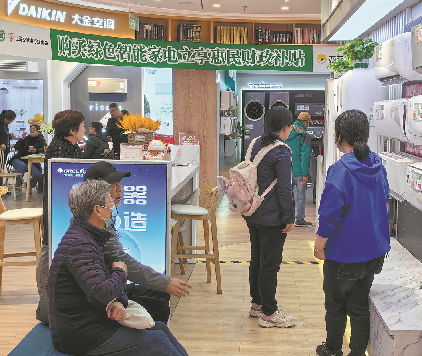
As China’s silver economy is gaining growth momentum, top Chinese home appliance makers are ramping up efforts to launch products suitable for seniors — a demographic that has shown an increasing demand for diversified, easy-to-use and health-oriented household appliances.

Experts said that with functions such as intelligent voice interaction and health monitoring powered by artificial intelligence technology being increasingly integrated into home appliances, it will be more convenient for seniors to use these intelligent and innovative products, creating new consumption growth drivers.

Chinese home appliance giant Haier Group has developed AI-driven rehabilitation robots, which can provide personalized rehab plans based on the physical conditions of the elderly. The company has rolled out toilets designed for seniors who have mobility issues, as well as showers and bathrooms with constant temperature control systems and voice recognition functionality.

Hisense Group has launched televisions equipped with medical-level vision protection technology that is in accordance with the viewing habits and preferences of the elderly. Seniors can play games, engage in physical exercise, make purchases online and have video chats with their friends and family members via the intelligent TVs.

The company is also collaborating with top-tier hospitals across the nation to develop healthcare management platforms.

Sichuan Changhong Electronic Holding Group has developed a smart eldercare system, enabling interconnections of home appliances, medical devices and security systems, and its AI-powered TV sets can understand the needs of seniors and remind them of taking medications on time.

Eyeing the immense business opportunities from China’s silver economy and a rapidly aging population, major home appliance makers are stepping up research and development and technological innovation of senior-friendly products to satisfy the diversified demands of the expanding demographic, said Jiang Feng, president of the China Household Electrical Appliances Association.

Jiang said traditional home appliance products are highly homogenized, while the niche market targeting seniors is still in its initial stages, which will create new sources of revenue for home appliance companies.

Beijing-based market consultancy All View Cloud said the scale of China’s senior-friendly home appliance market will exceed 100 billion yuan ($14 billion) in 2025 and is expected to reach 1 trillion yuan in 2030.

According to the Ministry of Civil Affairs, the nation’s elderly population is projected to grow by more than 10 million annually over the next decade. By 2035, the silver economy is expected to account for 9 percent of China’s GDP.

China has released a guideline aimed at building up a solid services system for the elderly by 2029, as part of a broader push to better cope with the aging population and improve the quality of life for seniors.

According to the guideline, the central authorities encourage companies to develop and promote products for the elderly — either high-tech electrical appliances or tourism products — and enrich services for them, aiming for a prosperous silver economy.

China’s silver economy is expected to grow from 7 trillion yuan in 2024 to 30 trillion yuan in 2035, said the China Research Center on Aging.

Liang Zhenpeng, an independent consumer electronics analyst, said that as smart air conditioners can automatically adjust room temperatures and AI TVs can broadcast personal health information, household appliances are becoming “emotional companions” for the elderly.

With the help of AI, senior-friendly home appliances are creating a safer, more comfortable and smarter home environment for silver-haired residents, Liang said, adding that these products should cater to the fundamental needs of the elderly, while home appliance makers need to further expand application scenarios, striking a balance between technological iteration and user education.

In order to meet the older generation’s personalized needs and rising willingness and ability to spend on high-quality goods, he stressed the need to establish standards for senior-oriented home appliances and launch more intelligent home products, such as nursing and housekeeping robots for senior citizens.

Zhang Subing, chief expert at the China Electronics Standardization Institute, said more efforts should be made to strengthen technological innovation, improve product design and enhance after-sales support for the elderly, with a key focus on embedding AI and health-oriented functions into intelligent terminal devices.

Article inline ad

Yiwu Factories Net Early Orders For World Cup Merchandise

0

Xinhua | Updated: 2025-08-22

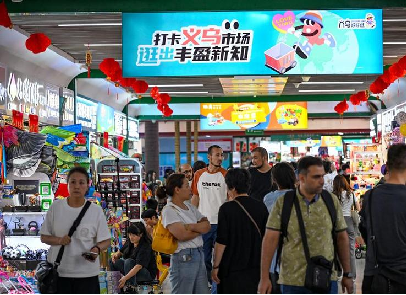
HANGZHOU – Even with nearly a year to go before the 2026 World FIFA Cup, factories in Yiwu – the eastern Chinese city known as “the world’s supermarket” – are already churning out soccer balls, team jerseys and fan scarves for the tournament.

Orders are rolling in, mostly from Mexico, Europe and the United States, transforming this hub of small-commodity manufacturing into a scoring zone for global demand ahead of one of the world’s most popular sporting events.

Wu Xiaoming, general manager of Yiwu Aokai Sports Goods Co Ltd recently sealed a deal with a Mexican buyer who visited his store at the Yiwu International Trade Market. Wu’s company produces 4,000 soccer balls a day and has sold more than 700,000 so far this year.

“We hardly keep any inventory,” said Wu, whose products are destined mainly for South America and Europe.

Located in Zhejiang province, Yiwu has built a reputation for its ability to rapidly turn around themed merchandise for global events. Its speed, flexibility and volumes have made it a go-to source for international buyers.

From January to July this year, exports of sporting goods and equipment from Yiwu jumped 16.8 percent from 2024 to reach a value of 6.78 billion yuan ($951.1 million), according to customs authorities. Shipments to the United States, Mexico and Canada increased 10 percent to total 1.88 billion yuan.

At Yiwu Danasi Import & Export Co Ltd chairman Wen Congjian showed reporters several fan jerseys designed for the 2026 World Cup, which will be co-hosted by the United States, Canada and Mexico, and said that each country has two to four designs.

His company began applying for design patents early last year and has already secured 20, with another 10 pending.

“The final teams haven’t been decided, but we have to prepare in advance,” Wen said. Jerseys for host countries and soccer powerhouses such as Argentina, France, Germany and Brazil are ready and have been sent to longtime clients for review.

Local suppliers said that different markets have distinct tastes. European clients, for example, prefer single-function products in understated colors, while those in the Middle East favor more flashy gold tones.

With the 2026 event expected to draw a massive global audience, demand for World Cup goods is especially strong. Liu Jiaqi, a sporting goods retailer whose stores mainly serve buyers from Mexico and Africa, said that orders have risen nearly 20 percent each month.

To avoid intellectual property disputes, local trade groups and customs authorities are providing vendors with guidance on trademark protections related to the World Cup. An AI-powered assistant has also been launched to help companies look up information on rights quickly.

For Yiwu’s manufacturers, the World Cup isn’t just about selling more products; It is a chance to break into new markets. “We have relatively few clients in the United States,” Wen said. “This World Cup is a great opportunity for us to expand there.”

Article inline ad

Trump Says Intel Agreed To Give US Government 10 Pct Stake

0

Xinhua | Updated: 2025-08-23

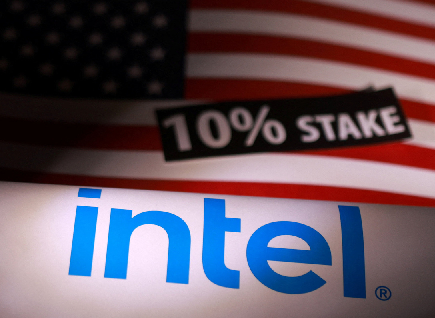
US flag, Intel logo and words “10% stake” are seen in this illustration taken August 22, 2025. [REUTERS/Dado Ruvic]

NEW YORK — US President Donald Trump said Friday Intel’s CEO has agreed to give the US government a company stake worth 10 billion US dollars, roughly equivalent to 10 percent of the chipmaker’s market capitalization, multiple US media outlets reported.

“I think you should pay us 10 percent of your company,” The Washington Post quoted Trump as saying, recounting his conversation with Intel CEO Lip-Bu Tan at an event on Friday.

The event is an extraordinary intervention of the federal government into a private tech company, according to the report.

“I think it’s a great deal for them. And I think it’s a great deal,” Trump said in the Oval Office on Friday, CNN reported.

The agreement Trump announced is part of an effort to help boost semiconductor manufacturing in the United States, although it is not immediately clear how the Trump administration aims to be involved in the company’s strategic decision-making, according to the CNN report.

Trump also said he would do more of these types of deals. His administration has been weighing opportunities to take similar stakes in various US companies in critical industries, two people familiar with the White House discussions on the matter told CNN last week.

“If the effort happens, it would be among the largest government interventions in a US company since the rescue of the auto industry after the 2008 financial crisis,” The New York Times reported Friday. “To prevent the collapse of Chrysler and General Motors, the government poured tens of billions of dollars into the companies and helped them reorganize.”

Trump cast the agreement as one that would revitalize the company, saying that “Intel has been left behind” compared to its competitors in the chipmaking industry, Bloomberg said in its report about the event.

“The US taking partial ownership would mark a stunning level of intervention in an American company, shattering norms that investors and policymakers have long considered sacrosanct except in the most extraordinary situations such as war or a systemic economic crisis,” Bloomberg reported.

Intel was the largest recipient of US funds as part of former President Joe Biden’s CHIPS Act, which sought to provide government grants and tax breaks to semiconductor companies that agreed to build new factories in the United States, Bloomberg said.

Article inline ad

Chinese Battery Maker CATL Bets On Innovation, Global Leadership

0

By Xu Jiayi | chinadaily.com.cn | Updated: 2025-08-22

With extensive research and development efforts and intelligent manufacturing processes, Contemporary Amperex Technology Co Ltd is dedicated to delivering high-quality batteries and gaining global competitiveness.

Based in Ningde, Fujian province, the company is a global battery manufacturer, boasting all three “lighthouse factories”, which are recognized by the World Economic Forum and represent the highest level of global intelligent manufacturing, in the global lithium-ion battery industry.

CATL has set up 13 production bases and six research and development centers globally. As of June 2025, the company’s batteries have been used in over 20 million vehicles and sold to 66 countries and regions worldwide.

Qilin battery, the third generation of CATL’s CTP (cell-to-pack) technology, has a volume utilization efficiency of 72 percent, with an driving range of over 1,000 kilometers, already in mass-production.

Additionally, the battery features enhanced heat management, providing a unique solution to avoid excess temperature during fast charging.

“A new generation of products is under development, with new goals anticipated in the future,” said Wu Zhenhua, chief engineer of CATL’s domestic passenger vehicles.

Focusing on automation production efficiency and quality control, CATL put forward the concept of extreme manufacturing. With over 7,000 quality control points in the production process, a battery cell can be produced every second, and a battery pack in just 2.5 minutes, according to Wu.

Artificial intelligence plays a significant role in managing the huge amount of data and ensuring quality control during the automated production process.

Last year, CATL’s research and development investment surpassed 18.6 billion yuan ($2.59 billion), and the company has attracted over 20,000 talents in the field.

Article inline ad