Tuesday, November 24, 2026

Home Blog Page 18

Evolving trends shaping future of healthcare

0

Young Chinese increasingly integrating daily exercise and wellness monitoring into their lifestyles

By YIN MINGYUE | China Daily | Updated: 2026-04-06 

Wang Xuan, a 20-year-old student at Beijing Foreign Studies University, spent her Friday morning not in class or at the library, but waiting in line on the campus sports field. She was waiting for a free traditional Chinese medicine consultation offered by students from Beijing University of Chinese Medicine.

“I’ve been curious about TCM for a while, and I want to check my health,” Wang said, glancing at the practitioners leaning over desks, taking pulses and getting advice.

Wang is among a growing number of young Chinese for whom personal wellness is no longer occasional — it has become a daily focus. Across campuses and cities, Generation Z — those born between the mid-1990s and early 2010s — is increasingly investing time, money and attention into monitoring and improving their health, helping to drive a booming youth health and wellness market.

According to the 2025 Health Consumption Trend Report for Generation Z, published in April 2025, more than 60 percent of China’s Gen Z are paying close attention to their personal health. About 37.9 percent track daily physical data such as steps taken or sleep patterns, while 28.3 percent undergo regular health checkups.

A complementary survey by Accenture, covering consumers across first — to fifth-tier cities, also highlights that younger generations, particularly those born in the 1990s and 2000s, attach heightened importance to health and wealth, integrating daily exercise and wellness monitoring into their lifestyles.

This transformation, experts say, is rooted in both structural change and personal pressure.

“The current surge in ‘light wellness’ and intelligent health consumption is largely driven by upgraded demand, though it is also intertwined with elements of herd behavior,” said Yuan Shuai, deputy head of the investment department at the China City Development Academy.

As awareness of the Healthy China Initiative spreads, younger consumers are forming health management habits earlier than previous generations. At the same time, long working hours, screen exposure and urban stress have created a sense of urgency around physical well-being.

“The demand is not abstract, it is shaped by real-life pressures,” Yuan said. “Young people are looking for solutions that fit into fast-paced lifestyles.”

Unlike their parents, who often relied on slow, experience-based approaches such as herbal soups or long-term supplementation, younger consumers are gravitating toward convenience, immediacy and measurability, he said.

“Health management is no longer confined to the home or clinic. It is embedded in fragmented moments — during commutes, in office breaks, even before sleep,” said Yuan.

Accenture’s 2025 survey describes this shift as part of a broader “rational upgrade” and “demand reconstruction”, where young consumers actively compare options, seek personalized experiences and integrate health, wealth and learning into daily life.

Portable moxibustion devices, sleep-tracking wearables and eye-care supplements designed for heavy screen users have all gained traction. The logic has shifted from “long-term conditioning” to “instant relief plus continuous monitoring”.

“Health behaviors are becoming data-driven,” said Yuan. “People want to see results — something they can track, measure and adjust.”

This trend is reinforced by Accenture’s survey, which found that 37 percent of Chinese consumers already use artificial intelligence-assisted tools in their daily decisions, viewing intelligent systems as lifestyle companions — a tendency especially pronounced among younger adults.

At Xiyuan Hospital of China Academy of Chinese Medical Sciences, efforts are underway to make traditional Chinese medicine more accessible, and more appealing, to younger consumers.

The hospital has introduced a range of lifestyle-oriented products, including herbal tea drinks, scented sachets, aroma bracelets and aesthetic calendars, blending medical knowledge with elements of design and daily use.

Beyond consumer products, technology is playing an increasingly prominent role. At the 2025 China International Fair for Trade in Services in September, visitors gathered around a compact meridian-regulating robot showcased by the hospital.

Zhang Lu, deputy director of the hospital’s acupuncture department, said the robot integrates multiple physical mechanisms — including heat, magnetism and deep vibration — and is capable of automatically identifying body markers and planning treatment paths.

69d30080a310d68600fb141b
A doctor (left) uses a device to analyze a visitor’s health at a traditional Chinese medicine wellness fair in Bozhou, Anhui province, on Sept 7. GUO CHEN/XINHUA

In another demonstration of digital integration, the hospital has developed a diagnostic system that collects data from the tongue, pulse, facial features and patient inquiries to generate personalized assessments.

The system, trained on extensive clinical data, has achieved a diagnostic consistency rate of over 80 percent and is already being used in grassroots medical institutions.

Building on innovations showcased in medical settings, companies are now translating AI capabilities into consumer products, offering practical, data-driven wellness tools for everyday use.

Xilinmen, a leading Chinese mattress brand, launched the H300 smart mattress in March, integrating AI-driven sensing, adaptive support and personalized sleep monitoring. The mattress can adjust independently to different sleep positions, provide rhythmical massage, and connect with smart home devices.

According to the company’s tests, deep sleep duration increased by 20.7 percent and restless sleep decreased by 50 percent.

“Young people’s health consumption has shifted from passive treatment to proactive prevention, and from rough supplementation to refined management,” said Wang Peng, a researcher at the Beijing Academy of Social Sciences.

The implications extend beyond individual behavior, he said. “As health consumption becomes increasingly scenario-based — spanning work, leisure and home environments — it is placing new demands on supply chains and product development.”

Wang Peng said that manufacturers are expected to respond more quickly to fragmented, real-time needs, while ensuring consistency and quality across diverse product lines. At the same time, companies are being pushed to rethink their approach to innovation.

“The focus should shift from product-centered to scenario-centered development,” he said. “It’s about understanding real user behavior, not creating artificial demand.”

However, the rapid expansion of the health and wellness market has also exposed underlying challenges.

Influenced by social media trends, some young consumers may treat wellness as a fashionable label rather than a long-term commitment. Products promising quick results — often backed more by marketing than by science — have proliferated, raising concerns over misinformation and exaggerated claims.

Experts say clearer standards are needed to guide both producers and consumers. “Health products should be supported by scientific validation, not just promotional language,” Wang Peng said, calling for standardized testing systems and third-party verification.

Regulators, meanwhile, face the task of balancing innovation with oversight, adopting flexible approaches for emerging products while cracking down on false advertising, he said.

Cross-sector collaboration is also driving transformation. In March, healthcare provider Meinian Onehealth announced a strategic partnership with Ant Group’s healthcare platform to create an integrated model combining AI-powered consultations, offline services and post-treatment management.

The value of health management should not be confined to a single checkup or consultation, but should extend across a user’s long-term health journey, said Yu Rong, chairman of Meinian Onehealth.

Zhang Junjie, vice-president of Ant Group and president of the company’s health business unit, emphasized that AI is becoming an important gateway for users to access health services.

“Our collaboration with Meinian Onehealth is helping to forge closer links between digital health platforms and professional service networks,” he said. “Through such efforts, we aim to enable users to identify potential health risks earlier in their daily lives and gain easier access to high-quality, sustainable health management services.”

Article inline ad

Hainan consumer data sees solid start for 2026

0
By ZHONG NAN and ZHANG CHENXU | CHINA DAILY | Updated: 2026-04-06 

China’s Hainan Free Trade Port is drawing global investors as surging duty-free sales fuel economic growth, cementing its role as a hub for international brands, capital and tourism, said market watchers and foreign business leaders.

Their remarks came as sales under Hainan FTP’s offshore duty-free scheme rose 25.7 percent year-on-year to 14.21 billion yuan ($2.06 billion) in the first quarter of 2026, following the full implementation of island-wide special customs operations in mid-December, statistics from Haikou Customs showed.

In the meantime, skincare products, electronics, alcoholic beverages and apparel were among the best-selling duty-free categories.

Analysts said that the strong first-quarter growth in duty-free sales has laid a solid foundation for consumption growth in Hainan FTP this year.

“The growing duty-free figures have brought encouraging changes to the FTP and boosted confidence in its efforts to build itself into an international tourism and consumption center,” said Zhou Mi, a senior researcher at the Chinese Academy of International Trade and Economic Cooperation.

While part of the growth was supported by the Spring Festival holiday and seasonal factors, Zhou said the overall trend in the FTP will remain positive in 2026.

The trend is also reflected in broader consumption data in China, with retail sales of consumer goods totaling 8.61 trillion yuan in the first two months, up 2.8 percent on a yearly basis, according to the National Bureau of Statistics.

Jack Perry, chairman of The 48 Group Club, a London-based nonprofit organization dedicated to promoting Sino-British business cooperation, said that Hainan FTP’s combination of policy support, consumption upgrading and supply chain integration is creating new opportunities for global brands, while reinforcing China’s role as a key engine of global demand and growth.

Holger Bingmann, an executive board member of the Paris-headquartered International Chamber of Commerce, shared a similar view, saying that favorable policies have brought clear benefits to businesses since the launch of island-wide special customs operations in Hainan FTP. “For multinational companies, partnering with China’s strong capacity for innovation offers meaningful upside in this area,” said Bingmann, stressing that in an era marked by uncertainty, openness is a source of strategic strength.

This momentum has also lifted inbound tourism. Hainan recorded nearly half a million inbound tourist visits between January and March, a year-on-year increase of over 53.1 percent, according to Hainan’s provincial department of tourism, culture, radio, television and sports.

Notably, while traditional source markets such as Southeast Asia and Russia continued to grow steadily, arrivals from Europe surged. Visitor numbers from the United Kingdom rose by over 81 percent, Italy by 101.3 percent, Switzerland by nearly 99 percent, and Spain by more than 84 percent, year-on-year, respectively.

Already operating a travel retail headquarters in the Hainan FTP, Tapestry Inc, a United States-based fashion group, is well placed to tap into expanding demand in the port’s duty-free and travel retail markets.

“We see Hainan as a strategic gateway to connect with global visitors, China’s younger consumers and the expanding middle-income group, leveraging duty-free policies and integrated retail channels to deliver locally tailored products, enhance customer experience and deepen our presence in Hainan’s evolving consumption landscape,” said Joanne Crevoiserat, Tapestry’s CEO. Also upbeat about the growth potential of Hainan FTP, Stephane Maquaire, president and CEO of Club Med, a Paris-based travel and lifestyle brand, said the company will further expand its customer base and product innovation in China, integrating more local cultural elements. “We will further strengthen our position in sun-and-beach offerings with new projects in Sanya, Hainan province,” he said, adding that supportive policies at the free trade port and rising tourism demand have strengthened the group’s confidence in expanding its presence and innovating its resort offerings in China.

Article inline ad

China Weekly Brief | Growth Isn’t Slowing — It’s Shifting

0

30/03-04/04/2026

China’s economy is not weakening — it is transforming.

But most global investors are still using an outdated lens to interpret what’s happening.

Over the past week (March 30 – April 4), a series of signals across macro data, industrial output, and technology policy all point to one clear conclusion:

China’s growth engine is quietly changing.


Executive Summary

  • Growth continues, but momentum is shifting
  • Services sector is cooling faster than expected
  • AI is emerging as a core economic driver
  • Manufacturing and high-tech sectors remain resilient

In short:

This is no longer a traditional recovery cycle — it is a structural transition.


A Key Signal: Services Are Losing Steam

China’s services PMI dropped sharply this month, marking the slowest expansion in nearly a year.

New orders weakened.
Export demand softened.
Employment pressures re-emerged.

At first glance, this looks like a typical slowdown.

But that interpretation misses the bigger picture.


The Real Question

What we are seeing is not just a cyclical fluctuation.

It may be the early stage of a deeper shift — one where:

  • Consumption is no longer the main recovery driver
  • Real estate continues to fade
  • A new engine is taking over

🔒 Continue Reading

In the full report, we break down:

  • Why AI is replacing real estate as China’s core growth engine
  • How China’s export model is undergoing a structural upgrade
  • What the next 3–6 months mean for global investors

👉 Unlock Full Analysis


this is pro content, viewneed get membership

Article inline ad

China’s Space Computing Push: Building the Next-Generation Compute Layer

0

April 3, 2026 | Edition


Introduction: Beyond News — Understanding the Compute Frontier

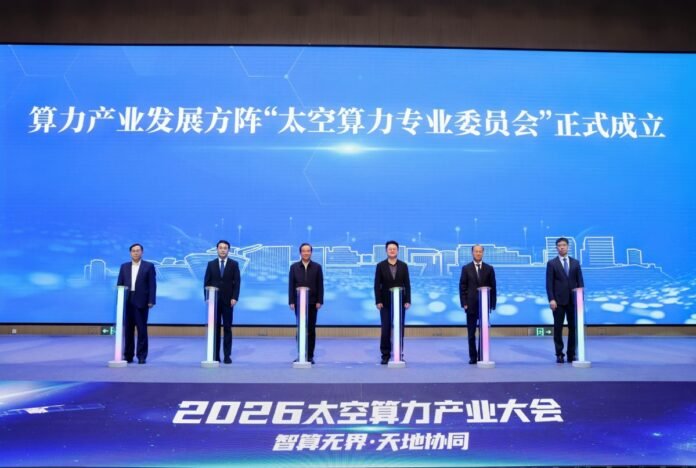
China has just taken a major step toward integrating space-based computing into its national technology stack with the creation of its first Space Computing Professional Committee. This is more than a bureaucratic milestone. It signals the country’s intent to build a fully connected, high-performance computing ecosystem spanning Earth and orbit, and it positions China to compete in both AI and aerospace on a global scale.

For international observers, the move highlights a broader trend: compute is becoming a strategic resource, not just a tool. The race is no longer just about satellites or AI alone — it is about where computation happens, who controls it, and how it can scale globally.


Key Facts: What Happened

  • The 2026 Space Computing Industry Conference in Beijing officially launched the committee.
  • The committee unites academics, research institutes, industry leaders, and financial organizations under a coordinated national framework.
  • Focus areas include:
    • Onboard AI chips
    • Inter-satellite laser communications
    • Efficient thermal control and space-based power
    • Standards for hardware, software, communications, and operations
    • Application pilots: disaster response, satellite AI agents, LEO internet, deep-space exploration

“Space computing represents an extension and integration of terrestrial industries into space,” said Li Jie, deputy director at the China Academy of Information and Communications Technology. “It will support AI development and create a fully connected compute ecosystem.”


Analysis: Why This Matters

1️⃣ Compute Moves Beyond Earth

Traditional cloud computing is constrained by terrestrial networks. Space computing adds a new layer of ubiquity and resilience:

  • Real-time in-orbit processing: Satellites can process data without relying on Earth-based servers, reducing latency.
  • Wide-area coverage: Enables global monitoring and communication, including in regions where terrestrial infrastructure is limited.
  • Energy efficiency: Space-based photovoltaics and low-cost energy solutions reduce operational constraints.

Implication: Companies and governments that integrate space compute into their systems can accelerate AI deployment, particularly for global-scale, latency-sensitive, or data-heavy applications.

this is standard content, view need get membership


Article inline ad

Global competition helps translate AI into real productivity

0
By Han Jingyan | chinadaily.com.cn | Updated: 2026-04-03 

With China at the forefront of global AI (artificial intelligence) application innovation and the overseas market ripe with opportunity in related fields, China is organizing an event to give participants a chance to present their innovative ideas on a global stage.

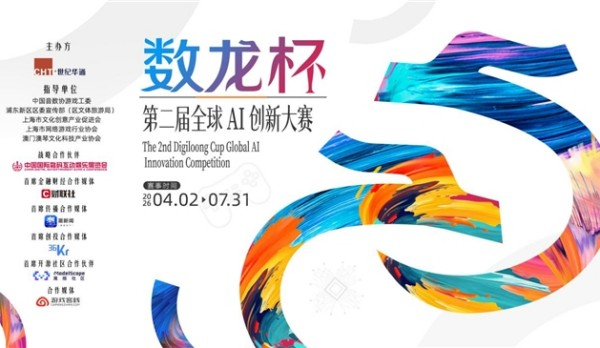
The 2nd Digiloong Cup Global AI Innovation Competition (Digiloong GAIC) — initiated by Century Huatong (parent of Century Games) — was officially launched on April 2, with an aim to help build a full-chain empowerment system focusing on AI technological innovation and industrial application, and the translation of AI into real productivity.

The investment division of Century Huatong will provide special investment connection services for high-quality projects and work with well-known venture capital institutions to build an exclusive and efficient investment matchmaking channel for participating teams — helping projects obtain financial support.

Fang Hui, CSO of Century Huatong, invited global developers and youth entrepreneurial talent to offer high-quality ideas, feasible commercialization schemes, and to closely follow the trends in AI technology.

The 1st Digiloong GAIC was successfully held last year, achieving fruitful results with over 150 high-quality innovative teams from around the world participating. After rigorous review, 11 teams stood out from the pack and won honors across six award categories.

This year’s competition has set a complete schedule — submissions are open from April 2 to May 31; preliminary selection runs between June 1 and June 15 — conducting the first round of professional screening — and the re-selection and finalist period ranges from June 16 to June 30.

Offline review of shortlisted works will be carried out in mid-to-late July for offline professional competition.

The award ceremony will be held at ChinaJoy 2026 on July 31 to announce the winners and commend outstanding AI innovation achievements.

In terms of track design, the 2nd Digiloong GAIC has expanded its tracks and set up three major tracks in AI Games, AI Applications, and AI Agents in a bid to fully cover the core application fields of current AI technology.

Meanwhile, regional empowerment has become an important highlight of this year’s event, as the organizer will cooperate with multiple partners to arrange characteristic offline activities in three cities: Hangzhou, Macao, and Shanghai.

“This new arrangement helps to build a regional innovation empowerment network, activate the AI innovation vitality of different regions, boost innovative development of the AI industry in the Guangdong-Hong Kong-Macao Greater Bay Area, the Yangtze River Delta, and other regions, and expand the global influence of the competition,” Fang said.

The 2nd Digiloong GAIC pays more attention to the post-competition incubation and long-term support of participating projects. In addition to cash rewards, it has created a diversified characteristic reward system, providing participating teams with comprehensive empowerment from exposure, resources to capital and technology, and allowing high-quality innovative projects to continue to receive development support after the competition.

The core feature of this competition is “one registration, two competitions participation,” as it has been closely linked with the 4th Cultural and Creative Shanghai Innovation and Entrepreneurship Competition. Teams shortlisted for the Digiloong GAIC can simultaneously participate in the selection of the latter’s “Intelligent Future +” track, unlocking double exposure opportunities, multiple policy supports, and rich industry resources for participating teams.

Additionally, all high-quality participating projects will be included in the competition resource pool, continuously enjoying the empowerment dividends of the competition and realizing the long-term development of the projects.

Since its inception, the Digiloong GAIC has been committed to building a platform for AI innovation and industrial application and helping cutting-edge AI technology achieve breakthroughs and commercial implementation.

The 2nd Digiloong GAIC is expected to promote the accelerated commercial implementation of cutting-edge achievements such as AI games, AI applications, and AI agents — continuously inject momentum into the high-quality development of China’s digital economy and AI industry, Fang noted.

Please contact the writer at hanjingyan@chinadaily.com.cn

Article inline ad

The Next Economy Stack

0

Currency. Infrastructure. Compute.

The global economy is not just evolving.

It is being rebuilt.


For decades, economic power followed a simple logic:

  • Money stored value
  • Financial systems moved value
  • Labor created value

That model is breaking down.


Today, three structural shifts are happening at the same time:

  • The global monetary system is fragmenting
  • Financial infrastructure is being redesigned
  • Artificial intelligence is transforming productivity

Most people see these as separate trends.

They are not.

They are three layers of the same transformation.


🧠 A New Economic Structure

A new system is emerging — one that can only be understood as a stack:


💱 Currency

The world is slowly moving away from reliance on a single dominant currency.

Not through collapse —
but through diversification.


🏗 Infrastructure

Financial systems are becoming:

  • Digital
  • Programmable
  • Strategically controlled

⚙️ Compute

For the first time, productivity is being powered by machines — not just tools, but intelligence.


🔗 The Missing Connection

Most analysis focuses on one layer.

But the real shift is happening between them.


Currency defines value
Infrastructure moves value
Compute creates value


When all three begin to change at the same time:

You are no longer in an economic cycle.
You are entering a new system.


this is pro content,view need get membership

Article inline ad

The Next Economy Stack Currency. Infrastructure. Compute.

0

The global economy is not just changing.

It is being rebuilt.


For decades, economic power was relatively simple to understand:

  • Money stored value
  • Financial systems moved value
  • Labor created value

That model is now breaking down.


Today, three separate shifts are happening:

  • Currencies are fragmenting
  • Financial systems are being redesigned
  • Artificial intelligence is transforming productivity

Most people see these as isolated trends.

They are not.

They are three layers of the same transformation.


🧠 A New Structure Is Emerging

A new economic architecture is taking shape — one that can be understood through three layers:


💱 Currency

The world is slowly moving away from reliance on a single dominant currency.

Not through collapse —
but through diversification.


🏗 Infrastructure

Financial systems are no longer static.

They are becoming:

  • Digital
  • programmable
  • state-integrated

⚙️ Compute

For the first time, productivity is being directly powered by machines.

Not just tools —
but intelligence itself.


🔗 The Missing Connection

Most analysis stops at one layer.

But the real shift is happening between them.


Currency defines value
Infrastructure moves value
Compute creates value


When all three begin to change at the same time:

You are no longer in an economic cycle.
You are entering a new system.


this is standard content, view need get membership

Article inline ad

Compute Is the New Salary

0

How AI Tokens Are Reshaping Talent, Productivity, and Power


In the traditional economy, companies paid employees in three ways:

  • Salary
  • Bonus
  • Equity

That model is starting to break.

A new component is emerging — one that didn’t exist before:

Compute.


Across both Silicon Valley and China, leading tech companies are beginning to experiment with a new idea:

Instead of only paying engineers with money and stock,
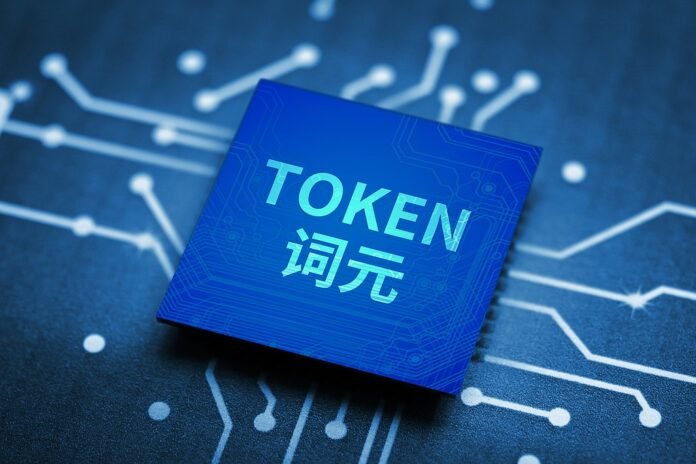
they are giving them tokens — the units of computing power used to run AI models.

These tokens allow engineers to:

  • Run AI agents
  • Generate code
  • Train and test models
  • Accelerate research and development

At first glance, this looks like a perk.

It is not.

It is a fundamental shift in how productivity is funded.


The numbers are already significant:

  • Top engineers may consume up to $250,000 worth of tokens annually
  • Some firms treat compute as 20% of total compensation
  • Companies report 50%–300% productivity gains from increased token usage

In China, major tech firms are moving in the same direction:

  • Monthly token subsidies
  • Free access to AI coding tools
  • Aggressive internal policies encouraging maximum usage

This reflects a deeper reality:

In the AI era, the limiting factor is no longer labor —
it is access to computation.


🔗 The Bigger Shift

This is not just a labor market story.

It is part of a much larger transformation.

  • Money is being redesigned
  • Financial systems are being rebuilt
  • And now, productivity itself is being redefined

From currency → to infrastructure → to computation
A new economic stack is emerging.


this is standard content, view need get membership


Article inline ad

Special Report The Future of Money: China’s Two-Layer Strategy

0

Currency Diversification Outside | Infrastructure Transformation Inside

For decades, the global financial system has rested on a simple structure:

One dominant currency.
One dominant network.
One dominant system.

That structure is now beginning to shift.

Not through collapse —
but through something far more powerful:

Slow, structural change.


Most investors are still focused on:

  • Interest rates
  • Inflation
  • Central bank policy

But these are surface-level signals.

Beneath them, a deeper transformation is underway:

The way money works is being redesigned.


China is at the center of this shift.

Not through a single move —
but through a coordinated, two-layer strategy.


🧠 Layer One: Currency Diversification (External)

Over the past few years:

  • RMB usage in global trade has steadily increased
  • Cross-border settlement is accelerating
  • Bilateral currency cooperation is expanding

More importantly:

Global capital is no longer asking whether to replace the dollar.

It is asking:

How much exposure should we have outside it?


🏗 Layer Two: Infrastructure Transformation (Internal)

At the same time, China is rebuilding the system beneath the currency:

  • The digital yuan is scaling rapidly
  • Banks are now integrated into its ecosystem
  • Financial flows are becoming more programmable

What was once a payment experiment is now evolving into:

A new form of financial infrastructure


🔗 The Critical Connection

Individually, these shifts are important.

Together, they form something much bigger.

One creates demand for an alternative currency
The other builds the system that makes it usable


⚠️ What Most Analysis Gets Wrong

Most commentary treats these developments separately:

  • RMB internationalization → geopolitics
  • Digital yuan → technology

That framing misses the point.

Currency power and financial infrastructure are inseparable.

this is pro content, view need get membership

Article inline ad

Why China’s Digital Currency Just Became a Banking Product

0

From Payment Tool to Financial Infrastructure

China’s digital yuan was never just about payments.

But until recently, it behaved like one.

That changed in January.

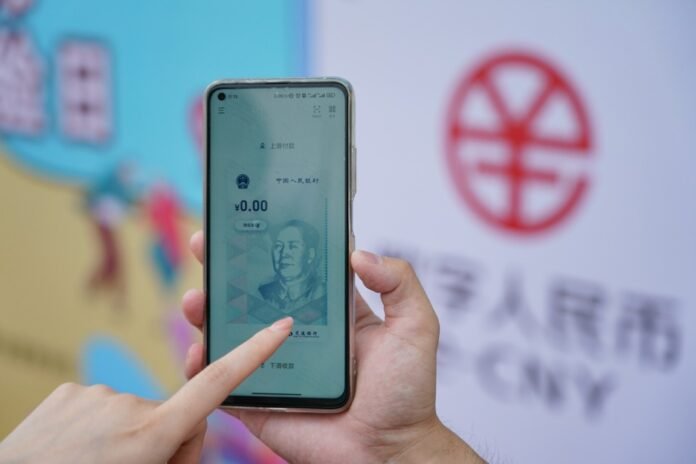
For the first time, balances held in digital yuan wallets began earning interest — at rates aligned with traditional bank deposits. On the surface, this looks like a minor technical adjustment.

It is not.

It fundamentally alters the role of the digital yuan (e-CNY) in China’s financial system.

At the same time, the central bank has expanded the number of authorized digital yuan operators from 10 to 22, bringing in a broader mix of joint-stock and city commercial banks.

Together, these two moves signal something much bigger:

China’s digital currency is no longer a payment experiment.
It is becoming part of the banking system itself.

The implications are immediate.

Banks now have real incentives to promote digital yuan adoption.
Users now have reasons to hold it — not just spend it.

And the system itself is starting to scale:

  • 230 million personal wallets
  • 19 million corporate wallets
  • 19.5 trillion yuan in cumulative transactions

Meanwhile, usage is expanding beyond retail payments into:

  • Supply chain finance
  • Public services
  • Utility payments
  • Early-stage cross-border applications

This is no longer about convenience.

This is about control, structure, and the future architecture of money.

this is standard content, view nee get membership

Article inline ad