Wednesday, November 25, 2026

Home Blog Page 186

Zhejiang Dongqiao Machinery Co.,Ltd.

0

s03

Zhejiang Dongqiao  Machinery Co., Ltd. based on the concept of ”  improving efficiency for every people”, our company’s lead products – electric pruning shears have sold well both inside and outside. Our company covers an area of 15 acres, with a construction area of 40,000 square meters, 1 office building, 2 workshops, and 300 employees, including 10 project engineers. The two workshops cover the brushless motor workshop, CNC machining center workshop, CNC lathe workshop, mold workshop, water mill workshop, injection workshop, sewing workshop, assembly and packaging workshop, including 4 assembly lines. All high-precision machining equipment is imported from Germany or Japan, which plays a decisive role in the key technology of our products. The self-made rate of our company’s product parts has reached more than 95%, thus effectively  tracking product parts. Control of product quality. Since the advent of electric scissors, all products have had design patents, and the important components have also had invention patents and utility model patents. Our company has mastered a lot of product important technologies, so that the products produced by our company can maintain differentiation, leadership and competitiveness in the market.At the same time, in order to meet the requirements of different countries for product import, our company has CE, Rohs, REACH, MSDS, UN38.3, KC, PSE, sea and air transport certification certificates. Our company has always been adhering to high-quality reputation and customer service, and win-win cooperation with customers at home and abroad, common development, and create brilliant.

s02

PRODUCTS

Wireless Electric Pruning Shear

Wired Electric Pruning Shear

Electric Tool

Electric Hedge Trimmer

Lawn Mower

Tea Harvest Machine

Portable Single Hand Saw

Peaked Cap

Others

https://www.sujineng.com/

Zhejiang Headquarter

Zhejiang Dongqiao Machinery Co., Ltd.

Address: Hunzhen Town, Jinyun County, Lishui City, Zhejiang Province

Sales Department Tel: +86-578-3551178


Article inline ad

Sustained Technology Innovation Will Spur GDP Growth

0

By Shi Jing | China Daily | Updated: 2025-08-11

Anti-involution has been a buzzword this year.

 Efforts by central regulators to eliminate outdated and excessive capacity in certain industries and to rein in cutthroat competition may be one reason.

 But more importantly, as an explanation that went viral on the internet goes: China has been long afflicted with overly intensive competition.

 Local governments may be responsible for the unhealthy competition over the past years.

 When one emerging industry showed huge growth potential thanks to its advanced technologies and brought in much needed income to the city where it was based, other governments quickly followed suit, dedicated to developing the same industry that had already been a success story elsewhere.

 Repetitive construction of similar industrial parks has led to large amounts of production and, eventually, overcapacity.

 Of course, the performance appraisal system for local governments should be altered to change the situation. But there is also a simple reason behind such a copy-paste pattern: it is always easier to be a follower.

 At a news briefing that I attended the other day, a portfolio manager was outspoken, saying China excels at achieving progress from zero to one, but is no expert in creation from zero to one. Everyone in the room chuckled, signaling consensus.

 However, that is not only the case in China.

 Although no one remembers the second-largest company in an industry, it should be noted that the second place is somehow safer, as the biggest player, usually the first one to succeed in its area, withstands more risks such as innovation, technology upgrading, change of business models, or simply, public attention.

 Legendary Japanese entrepreneur Satoru Anzaki, who served as a top executive for Japanese machinery giant Komatsu for over a decade, once said that the company, which was the world’s second largest, would no longer take Caterpillar, the industry’s No 1, as its competitor.

 His reason was simple.

 If Komatsu really rises to the top position, it would lose an example to follow. It would completely depend on itself to fumble on the way ahead. For a company that is not completely well-grounded and prepared, it cannot shoulder such a huge responsibility. The company may even go into the wrong trajectory due to the lack of management experiences and right talent.

 Anzaki’s words may somehow explain the homogeneous investments made by Chinese companies and governments. On second thought, we can see that the intention behind these investments is nothing but forward-looking: they are searching for continued growth.

 A leapfrog in technological innovation will spur GDP growth, which cannot be compared to demographic dividends and capital investment.

 We can see that some industries facing the problem of “involution” in China at present are related to emerging technologies.

 Photovoltaics is one example. When exports are held up, companies in these industries may need greater competition in the domestic market, thus pointing to the necessity of reducing capacity.

 But on the other hand, the importance of original innovation has been pointed out. However, this is an even harder mission.

 Originality, as understood by all, cannot be realized overnight. It sits on years of continued efforts, even generations. A country’s economic size and competency are the fundamental basis on which companies and individuals can enjoy the liberty of working on something of their own interest.

 Meanwhile, a mindset of allowing mistakes, setbacks and complete failures should be nurtured in society.

 Fortunately, some attempts are being made in China now. The green light given to unprofitable tech companies to go public on the STAR Market in Shanghai is one such example.

Article inline ad

Robots Take Center Stage At Beijing Expo, Pointing To Tech Revolution

0

Xinhua | Updated: 2025-08-11

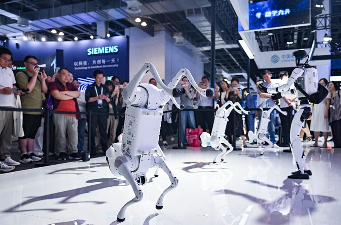
BEIJING – As I pushed my four-year-old daughter’s stroller through a robotics exhibition in Beijing’s suburbs — a sprawling showcase of over 1,500 cutting-edge machines — it struck me that she belongs to a “robot-native generation.”

 Unlike our childhoods, when we glimpsed the future through lens of science fiction, these technologies are set to be woven into the very fabric of her world from the very beginning.

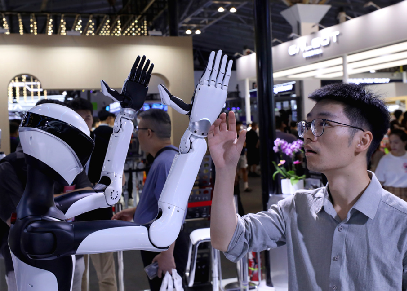
 At the ongoing World Robot Conference (WRC) in Beijing’s E-town, the city’s innovation hub, more than 200 robotics companies are showcasing over 1,500 products, including more than 100 global debuts.

 The exhibitors span the entire industry spectrum, ranging from China’s leading robotics firms and renowned international giants such as Switzerland’s ABB, to university-born startups fresh out of research labs.

 Provinces like Zhejiang, Guangdong, Sichuan and Hubei have set up exclusive booths, signaling local governments’ commitment to championing robotics and embodied intelligence as strategic growth engines.

 One of the highlights at the expo was Unitree Robotics’ robot combat competition, featuring robots famous for their remarkably smooth martial arts moves. My daughter Alice watched in awe, perched on my shoulders, as the packed crowd made it nearly impossible to move.

 Nearby, the robotic soccer penalty shootouts drew a crowd of excited children. The machine shooter, created by Beijing-based startup Booster Robotics, was fresh off its win at the 2025 RoboCup in Brazil in July.

 Humanoid-robot Tien Kung, winner of the world’s first half-marathon for robots this April in Beijing, glided on a treadmill with metronomic poise. Later this week, the Chinese capital is set to host the inaugural World Humanoid Robot Games at a Winter Olympics venue, featuring 538 events and over 500 humanoids from 16 countries.

 But the true transformative power rests in robotics’ potential to revolutionize daily life, redefining how the next generation will work and live.

 The future factory floor is poised to see a new model of human-robot collaboration. Companies like UBTECH from Shenzhen, Kepler from Shanghai and Siasun from Shenyang have demonstrated robots capable of carrying out factory tasks, such as material handling, transporting and sorting, at the ongoing expo.

 At an exhibition booth close by, a crowd gathered around the humanoid GR-3, running their hands over its warm skin. Shanghai-based Fourier Robotics was making a quiet promise that the next generation of machines could feel as alive as any family member.

 Alice was particularly captivated by the Galbot wheeled robot, which precisely picked a drink from warehouse shelving. It was the one thing she couldn’t stop talking about when she recounted that evening to her mom. This autonomous smart retail pod, developed by a Beijing startup, recently launched in the city’s Haidian District, coinciding with the district’s new status as a city-level humanoid robot pilot hub announced just last week.

 About 2.5 kilometers from the exhibition, a newly opened robot restaurant offers a fascinating lineup with robot stand-up comics, dancing quadrupedal robotic dogs, and an autonomous band.

 Adjacent to it is the world’s first robot 4S store, where UBTECH’s industrial-grade Walker S sorting robot sells for a subsidized price of 972,000 yuan ($135,300).

 Not all robotic products are so expensive. Educational and companion robots, as well as home service robots, are also available for affordable purchase at the expo, with subsidies of up to 1,500 yuan.

 Among the machines most accessible to everyday visitors, rehabilitation cyborg-like exoskeletons, brain-computer interfaces worn as headsets, and elderly-care assistants drew the most interest. Many of these models have already been tested in nursing homes, offering practical ways to ease the strain on China’s rapidly aging population.

 The subsidy on purchasing robots was a genuine WRC innovation, breaking the myth that future industries rely only on costly, unprofitable upfront investments.

 By accelerating cutting-edge tech into consumer robotics, these subsidies tend to bridge long-term industrial strategy with near-term economic growth. It’s not just about getting a new phone; it’s also about considering bringing a robot home.

 Since the launch of the “E-town Robot Consumer Festival” this month, as of Aug. 6, the event has redeemed over 2.6 million yuan in consumer vouchers, driving sales of more than 30 million yuan.

 Whether it’s just to broaden the kids’ horizons or for industry insiders seeking business opportunities, everyone can find what they are looking for.

 As casual visitors lined up for robot-brewed coffee and ice cream and enjoyed dazzling robot dance shows, insiders gathered around booth-side tables, deep in conversation about bearing tolerances, torque specs and servo precision.

 A QR code pasted on a hall pillar invited visitors to join a WeChat group for robot company leaders, reflecting the strong spirit of collaboration between upstream innovators and downstream integrators. It’s this vibrant ecosystem, built on China’s mature supply chain, that forms the foundation of its recent robotics boom.

 According to a recent Morgan Stanley report, “Humanoid Robot 100: Mapping the Humanoid Robot Value Chain,” Asian companies constitute 73 percent of the top 100 listed firms in this sector, with Chinese firms alone accounting for 56 percent.

 China’s startups are “benefiting from established supply chains, local adoption opportunities and strong degrees of national government support,” the report noted.

 Indeed, the zeal for robotics goes far beyond China’s rising entrepreneurs. A younger generation is already diving in. Upstairs at the exhibition hall, the 2025 World Robot Contest Championships in Beijing buzzed with energy as primary school students raced to build efficient power devices from LEGO bricks.

 In China’s first-tier cities, a growing number of parents are signing up their young children for robotics classes, seeing it as a new path to gain entry into competitive middle schools. Here, children’s curiosity, parental ambition and national strategy all come together around emerging technology.

 Having attended the WRC for three consecutive years, I found this year truly exceptional. The event matched the excitement of CES in Las Vegas. More importantly, the remarkable diversity of exhibits shows how far China’s robotics industry has come in just twelve months, even if many products have yet to find widespread practical use.

 The robot industry’s “ChatGPT moment” is coming within one to two years if the pace is fast, or three to five if it’s slower, said Wang Xingxing, founder and CEO of Unitree Robotics, in a speech at WRC.

 Seeing this progress firsthand, especially a majestic robot from Shenzhen-based EngineAI perched on a replica Iron Throne from Game of Thrones, surrounded by flashing cameras, I felt it was quite evident that China stands on the brink of a transformative tech revolution.

 Funny enough, the impact lingered. Before going to sleep that night, my little daughter said she wanted to become a robot.

Article inline ad

Outdoor Sports Fuel Summer Economy Amid Karst Landscapes In China

0

Xinhua | Updated: 2025-08-11

 This photo taken on July 22, 2025 shows a tourist playing a “super giant swing” in a giant sinkhole in Kaiyang county, Southwest China’s Guizhou province.

GUIYANG – Karst landscapes, typical in Southwest China’s Guizhou province, have emerged as a magnet for adventurers and outdoor sports enthusiasts this summer, drawing crowds with their unique geological wonders.

 SKY-HIGH LEAPS

 “Come here, and you’ll shoot a viral life highlight reel – guaranteed to go trending!” a travel blogger wrote on a short-video platform, describing a scenic area in Guizhou.

 The Hou’er Tiankeng scenic area in Kaiyang county, a typical karst collapse sinkhole with a diameter of 300 meters and a vertical depth of 280 meters, has been transformed into an extreme sports park.

 The Super Swing, the world’s first extreme swing installed inside a sinkhole at the tourist attraction, boasts a vertical drop of 92 meters and has drawn crowds of visitors eager to try it.

 “We release tickets in the early morning, and some people say they lose sleep over snatching them up,” said general manager Wu Canhua. Due to its unique geographical environment, the area has a limited daily capacity and has implemented a reservation system since 2024.

 While visitors walk along the mountain path, vines hang from the sinkhole’s cliffs, with winding streams below. The empty space in between is divided by ropes, resembling a spider’s web strung inside the sinkhole.

 On the jumping platform, tourists, harnessed by two cables, took turns leaping into the sinkhole’s depths. An FPV drone followed tourists closely, while a smartphone and a 360-degree panoramic camera captured moments from multiple angles.

 Videos posted on social media by tourists sparked widespread attention and discussion. On Douyin, China’s version of TikTok, related topics about Hou’er Tiankeng have exceeded 2 billion views, with some videos garnering more than 3 million likes.

 “Long time no see, my brave and passionate self!” “Youth has no price tag – take the leap into the sinkhole.” These are among the most popular comments on the trip after visitors challenged themselves.

 “It was so thrilling. I felt like I was flying!” said Zhou Muning, a tourist from Chengdu. “I’d seen these extreme sports on short videos before, and I came specifically to try this time. The experience is unforgettable.”

 “Among our visitors, Gen Z makes up the largest group. We’ve catered to current filming and aesthetic trends, satisfying their desire to express themselves,” Wu noted. “In the past, people traveled for a room or a view; now, they travel for an experience.”

 Centering on visitors’ experience, the scenic area continues to enrich its offerings. Beyond the Super Swing, it also provides options like via ferrata climbing and cave exploration.

 “We’re adopting a three-dimensional development approach, aiming to offer visitors a layered experience,” said Wu. A newly developed high-altitude pipe track project has been completed and is undergoing third-party safety assessments.

 Shang Fajun, chief of the sports section in the county’s culture and tourism bureau, said that the county fully leverages its mountain outdoor resources to promote deep integration of sports, culture and tourism.

 Data shows that from January to June this year, the site received 107,000 visitors, with total sales exceeding 67.97 million yuan ($9.47 million).

 “WATER ROLLER COASTERS”

 In midsummer, the karst heartland of Southwest China resembles a naturally carved wonderland, where visitors drift with the waves, experiencing the wonder of excitement and tranquility.

 At Luobei River in Guiding county, under a blue sky and white clouds, visitors put on life jackets and helmets, grab oars and board rafts to embark on a summer adventure amid green mountains and clear waters.

 Guizhou, with its magnificent karst landforms, dense water networks, and steep gorges, ranks among China’s top rafting destinations.

 Luobei River, hailed by netizens as the Tongtian River in the ancient classic Journey to the West – renowned for its mythic perils and iconic episodes – boasts a perfect combination of karst gorges and dynamic hydrology. A rafting journey of over ten kilometers allows visitors to savor the joy of mountains and waters in a “crack of the earth.”

 The river, with a relatively wide channel, drops some 88 meters from start to finish. Its course includes seven major rapids – one with an 8-meter drop – making it perfect for rafting.

 Huang Runcheng, general manager of the raft operator, said that to ensure visitors’ safety, the company has deployed 66 lifeguards along both sides of the river and equipped four inflatable rescue boats for rapid response to emergencies. All lifeguards have received training in rapid water and flood rescue and are stationed along the seven major rapids.

 In the heat of summer, the parking lot at the visitor service center is filled with cars from across the country. Huang noted that since the company reopened for rafting on June 20 this year, it has welcomed 35,000 visitors, a nearly 10-fold year-on-year increase.

 “The more activities we offer, the better the experience,” Huang said. Since resuming rafting in 2023, the site has focused on a “sports + adventure + outdoor” model, using rafting as a pivot to expand diverse outdoor activities and experiences, developing new projects such as water swings, deep-water diving platforms and electric paddle boards.

 As rafts reached the endpoint, many visitors, soaked to the skin, still chose to dive into the water even amid light rain.

 Xiong Peng, from Liupanshui city, has been selling local snacks, waterproof bags, sun hats and other items at the rafting starting point since late June. He said that during the summer vacation, as long as the weather is fine, visitors pour in, with weekend sales reaching 3,000 to 4,000 yuan a day.

 Ma Yun, deputy director of the county’s culture and tourism bureau, said that from a single rafting project to a composite experience of “rafting + folk customs” and “rafting + research,” the county is continuously improving tourism quality to make every visitor’s “wave-chasing journey” an unforgettable memory.

 With diverse and innovative activities ranging from sky-high adventures to underground explorations, the mountainous province’s summer economy is brimming with vitality. From January to June 2025, the total number of tourists across the province increased by 8.2 percent year-on-year, and the total tourism spending grew by 10.6 percent year-on-year.


Article inline ad

Chinese Investment Fuels Thailand’s Ambition As Global Export Gateway, Says Thai Official

0

Xinhua | Updated: 2025-08-11

BANGKOK – Chinese investment is driving a wave of high-value projects in Thailand’s Eastern Economic Corridor (EEC), focusing on advanced technology sectors and fueling the country’s ambition to become a crucial global export hub, a top EEC official has said.

 Initiated in 2017, the EEC is Thailand’s flagship area-based development project, designed to transform three eastern provinces into a leading economic zone for high-tech industries through massive infrastructure upgrades and attractive investment incentives.

 As a key foreign investor, Chinese firms have brought higher-value, more complex, and novel technologies to Thailand, marking a significant strategic shift away from traditional manufacturing, said Chula Sukmanop, secretary-general of the EEC Office.

 The emergence of “advanced Chinese technologies made in Thailand” has strengthened the kingdom’s goal to be a gateway for exporting high-tech products globally, Chula told Xinhua in a recent interview.

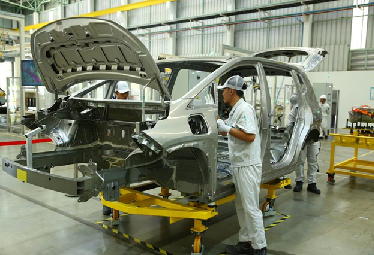
 This trend is most evident in the automotive industry, where leading Chinese brands, including BYD, Changan, GAC Aion, Great Wall Motor, and MG, have established production facilities within the EEC to serve both domestic Thai markets and export destinations.

 Beyond car manufacturing, Chinese investment has developed the entire supply chain and infrastructure for electric vehicles (EVs), encompassing batteries, charging stations, energy storage, and related components, Chula noted.

 Thailand’s Board of Investment has so far approved investments totaling 137.7 billion baht ($4.25 billion) in the EV supply chain, including 21 projects for battery EV production with a combined capacity of up to 386,000 units per year.

 For the first half of 2025, production of passenger battery EVs increased 380 percent year-on-year to 23,798 units, accounting for 3.28 percent of total auto manufacturing in Thailand, data from the Federation of Thai Industries showed.

 Under the Thai government’s investment promotion, the Southeast Asian country aims to convert 30 percent of its annual auto production to zero-emission vehicles by 2030 as part of its transition toward green mobility.

 Aside from the automotive sector, Chula said two other areas of interest for Chinese investors that also align with the government’s targeted industries are the digital technology sector and the Bio-Circular-Green (BCG) economy, which focuses on sustainable and circular manufacturing.

 Looking ahead, Chula emphasized that Thailand aims to be a strategic partner for China, filling gaps and providing a platform to showcase its advanced technology, building on the golden jubilee of Thai-Sino diplomatic relations and a strong people-to-people connection.

 The goal includes expanding cooperation in the broader environmentally friendly mode of transport, ranging from electric buses, trucks, and railways to the development of “green ports” with electric-based operations, many of which are expected to utilize technologies originating from China, he said.

 With China’s substantial investment in research and development, he expressed hope that Thailand will become an ideal ground where “research-based technology” can be transformed into commercial products for the global market.


Article inline ad

Railways Playing Greater Role In Modernization

0

By HAN JINGYAN | China Daily | Updated: 2025-08-11

China National Railway Group (CR), the nation’s railway operator, said that to better serve and support Chinese modernization, building a world-class railway enterprise in China is vital.

 In a key meeting it convened in Beijing in late July, CR said by focusing on railway passenger and freight transport services with diversified business operations, it must bolster market-oriented operations and expand its main businesses for such an aim.

 The country’s railways carried passengers on 2.24 billion trips in the first half of 2025, a year-on-year increase of 6.7 percent and a new historical high, CR said, noting that the railways also carried 1.98 billion metric tons of goods, a rise of 3 percent.

 “Passenger and freight transportation are showing a trend of prosperity, making a positive contribution to smooth domestic and international dual circulation and ensuring stable operation of the national economy,” CR said.

 Currently, China’s plan to connect the whole country with high-speed railway is gaining momentum and its high-speed rail network is playing an increasing role in the nation’s socioeconomic progress.

 CR said the country’s high-speed rail network spans about 48,000 kilometers, accounting for 70 percent of the world’s total, and linking nearly every Chinese city with a population of over 500,000.

 The two-day 12th International Union of Railways World Congress on High-Speed Rail concluded on July 10 in Beijing with over 2,000 participants from more than 60 countries, regions and international organizations, saying China has created the largest and most advanced high-speed rail system in the world in less than two decades.

 Liu Wei, minister of transport, said the country’s comprehensive three-dimensional transportation network has enabled people, logistics and capital to flow efficiently across 9.6 million square kilometers of land, offering a vivid portrayal of Chinese modernization.

 The high-speed rail express network also covers 90 percent of China’s top-rated 5A scenic spots, while high-speed rail cargo volume during the five-day May Day holiday this year jumped by 120 percent year-on-year, promoting the emergence of new economic forms.

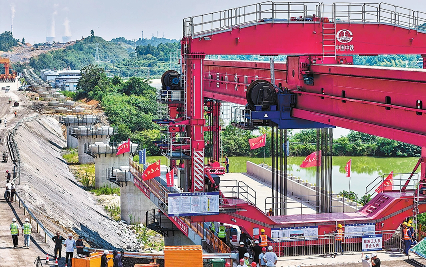
 Cao Wei, an employee from State builder China Railway No 4 Engineering Group, said to highlight the smooth progress of an HSR in Central China’s Hunan province, the first box girder of the Shaoyang section of the Shaoyang-Yongzhou HSR was erected at Yuantang Village Grand Bridge on Aug 1.

 This marked a new cornerstone of the HSR linking the last two remaining prefecture-level cities of Shaoyang and Yongzhou in Hunan province that do not have an HSR allowing trains to run 350 kilometers per hour.

 The 96-km Shaoyang-Yongzhou HSR, which began construction on Dec 26, 2023, is part of the 2,300-km Hohhot-Nanning HSR that links Hohhot, capital of Inner Mongolia autonomous region, with Nanning, capital of Guangxi Zhuang autonomous region, and is a key part of China’s HSR network with eight HSR running vertically and eight HSR running horizontally.

 Cao said CREC4 is in charge of building the No 1 bid, which extends for 34.233 kilometers, for the Shaoyang-Yongzhou HSR that will have three stations.

 She noted that upon completion, the Shaoyang-Yongzhou HSR can extend southward through the designated Guangzhou-Qingyuan-Yongzhou HSR that connects Yongzhou with Guangzhou and Qingyuan in South China’s Guangdong province, running in a north-south direction.

 The railway will then become a vital external channel in central and western regions of Hunan to join the Guangdong-Hong Kong-Macao Greater Bay Area, she said.

 To ensure the smooth installation of the first box girder, the CREC4 project team focused on the construction tasks of box-girder fabrication, transportation and erection, as well as key processes such as box girder hoisting, transportation and installation, said Cao’s colleague Bai Xingtao.


Article inline ad

Rise Of Stablecoins Reshaping Global Currency Regime

0

By Fan Yunpeng | China Daily | Updated: 2025-08-11

Against the backdrop of accelerated digital currency development and intensified monetary competition, stablecoins are a type of cryptocurrency pegged to fiat currencies or other real-world assets at a designated exchange rate to maintain a stable value. They are penetrating core areas of the financial sector, including cross-border clearing, savings and asset tokenization.

 In particular, the rise of stablecoins pegged to the US dollar is reshaping the global currency competition landscape. Systematically assessing the global impact of dollar stablecoins is a key strategic task for China’s push to help shape a new international monetary order.

 Stablecoins are rapidly becoming a crucial component of the global digital financial system. As of July 27, their global market capitalization had reached $272.9 billion, accounting for about 7 percent of the cryptocurrency market. The annual on-chain transaction volume was $36.3 trillion, exceeding the combined totals of Visa and Mastercard.

 Stablecoins are widely used in cross-border payments, investment, trading, settlements and savings. In high-inflation economies, they serve extensively as a savings tool alternative to the greenback. They have also become a key settlement vehicle for real-world assets brought on-chain, accounting for over 90 percent of the RWA market.

 RWAs are tangible or traditional financial assets, such as real estate, commodities, bonds or invoices, that are digitally represented and traded on a blockchain.

 On the regulatory front, major economies are accelerating their frameworks for stablecoin oversight and pursuing differentiated approaches to bring stablecoins into compliance.

 The United States, through the GENIUS Act, has established a dual federal-state regulatory system; the European Union’s Markets in Crypto-Assets Regulation (MiCA) institutes set regional entry thresholds and cap non-euro stablecoin daily transactions at 200 million euros ($230.9 million); and the Stablecoins Ordinance commenced operations in the Hong Kong Special Administrative Region on Aug 1, introducing a high-threshold licensing regime.

 In effect, the global stablecoin market is highly concentrated, with USDT and USDC together capturing more than 80 percent of market capitalization and trading volume. Dollar stablecoins are not only reinforcing the greenback’s status as the global currency reserve and settlement currency, but also bringing new challenges to multilateral monetary governance.

 Pegged 1:1 to the dollar and backed by equivalent reserves in cash and short-term US Treasuries, dollar stablecoins leverage blockchain technology to enable real-time cross-border clearing, enhancing the greenback’s reach and liquidity in emerging markets. This further concentrates global reserves in US dollar assets. Some central banks have even added dollar stablecoins to their reserve portfolios.

 In some high-inflation countries, households use dollar stablecoins as a store of value, eroding the role of local currencies and creating risks of “digital dollarization” that challenge monetary sovereignty and financial stability.

 Moreover, stablecoin issuance compliance extends the reach of US regulatory power. Issuers typically follow US “know your customer” and anti-money laundering regulations, which brings on-chain transactions under the supervision of US regulators.

 The US can freeze addresses or halt services, and the fact that leading stablecoin issuers are subject to US jurisdiction further strengthens its influence over the on-chain financial system.

 By strengthening the attractiveness of dollar-denominated assets in the global reserve system, dollar stablecoins may limit the space for nondollar currencies — such as the renminbi — in foreign exchange reserve allocations.

 Dollar stablecoins have gradually established alternative payment channels in some emerging markets that bypass traditional systems. This could also narrow the space for the renminbi to expand its payment role through cross-border trade.

 Last but not least, the liquidity and acceptance advantages of dollar stablecoins in emerging pricing scenarios such as on-chain commodity trading and RWA platforms could, in the near term at least, constrain the renminbi’s ability to establish pricing power.

 In response to the impact of dollar stablecoins, China should leverage Hong Kong SAR’s role to promote the integration of renminbi-pegged stablecoins with the digital renminbi. The country can in the future incorporate such stablecoins into a prudential regulatory system to manage risks, while strengthening multilateral cooperation and enhancing China’s influence in international monetary governance.

 First, efforts can be made to accelerate cross-border applications of the e-CNY. China could advance the mBridge project — a multilateral platform for testing central bank digital currencies, including the e-CNY in cross-border payments. It could also deepen technical alignment with the Association of Southeast Asian Nations and with economies participating in the Belt and Road Initiative. Priority should be given to sectors such as energy trade to develop demonstration projects for cross-border payments.

 Second, regulators can support licensed institutions in Hong Kong to issue offshore renminbi-pegged stablecoins. This can connect decentralized finance with traditional clearing scenarios and expand the yuan’s use for pricing and settlement in digital asset trading, supply chain finance and other emerging scenarios.

 Third, it is worth considering leveraging the trade networks backed by the Regional Comprehensive Economic Partnership and BRI to broaden the renminbi’s international usage.

 China can sign local currency settlement agreements with key economies, promote renminbi pricing in the fields of commodities and infrastructure, and embed renminbi stablecoins into blockchain-based trade finance.

 Meanwhile, regulators should bring stablecoin activities under macro-prudential regulation to balance innovation and risk. Major stablecoin issuers should be subject to “quasi-bank” supervision and transparent liquidity management, and be required to hold high-liquidity sovereign assets with dynamic capital buffers.

 Firewall mechanisms should be established to prevent risk contagion to the treasury bond market and manage risks of large-scale redemption. Exchange and contagion pathways between the digital renminbi, RWAs and stablecoins should be tested through regulatory sandbox mechanisms to enhance liquidity support and early-warning capabilities in extreme scenarios.

 In terms of regulatory coordination, significant differences in the intensity of stablecoin regulation across jurisdictions have created opportunities for issuers to engage in regulatory arbitrage.

 China can advocate for major economies to adopt unified and clearly defined requirements on the reserve asset audits, the legal definition of redemption rights and anti-money laundering standards, so as to effectively guard against cross-border risk transmission.

 It also should seek to shift from being a passive adaptor of global stablecoin governance to a co-creator of rules.

 Under the G20 framework, China could work with other emerging market economies to propose incorporating the “unified ledger” architecture promoted by the Bank for International Settlements into international standards. It could also integrate CBDCs and tokenized assets into programmable platforms to ensure the central role of sovereign currencies.

 By promoting the convergence of standards and policy coordination within the G20, China can strengthen its financial security boundaries. It can also enhance its institutional influence in the international monetary system that is being reshaped by the digital era.

 The writer is an associate research fellow at the Institute of Finance & Banking, which is part of the Chinese Academy of Social Sciences.

 He is also a senior researcher at the National Institution for Finance & Development. The views do not necessarily reflect those of China Daily.


Article inline ad

Mainland Insurers Increase Holdings In HK-Listed Firms

0

Nation’s insurance companies willing to expand their investment in HKSAR

By SHI JING in Shanghai | China Daily | Updated: 2025-08-11

During the first half of the year, Chinese mainland insurers have stepped up their holdings in Hong Kong-listed companies, a trend which is likely to continue thanks to the high yields and market vibrancy seen in the Hong Kong Special Administrative Region’s market, experts said.

 Public announcements showed that 13 out of the 19 major increased shareholding cases reported by Chinese mainland insurance companies so far this year have targeted companies trading on the Hong Kong stock exchange.

 According to China’s regulations, an investor should make an announcement if their holding in a listed company has reached 5 percent or above.

 According to the latest report released by the Insurance Asset Management Association of China, 63 percent of the surveyed Chinese mainland insurers will expand their investment in Hong Kong stocks this year.

 During the annual business news conference held in March, Yu Rongquan, general manager of CPIC AMC, the investment arm of China Pacific Insurance (Group) Co Ltd, said that high-dividend stocks in Hong Kong are major targets for insurance companies’ increased shareholding. This helps to improve insurers’ net investment returns.

 As the risk-free yield in the bond market has been slowly declining in recent years, high-dividend stocks can compensate and hedge against the downward trend, he said.

 Banks trading on the Hong Kong bourse, which provide higher dividends, have thus been the most sought after by these insurers. Seven out of the 13 shareholding increase cases made by insurers at the Hong Kong stock market were those targeting banks, accounting for 64 percent of the combined market cap of all 19 share increase cases.

 Companies from energy and real estate industries have also provided high dividends this year, but the stability of these sectors is lower than that of banks, Meng Lei, China equity strategist at UBS Securities, explained.

 Given that the average duration of insurance capital is longer, at around seven to 10 years, stability is prioritized, resulting in insurers’ preference over banks, telecommunication companies and utility companies, he added.

 Among the 42 constituents of the AH banking index compiled by China Securities Index Co Ltd, 14 are listed in Hong Kong, whose average dividend rate has been higher than their peers trading on Chinese mainland bourses. Meanwhile, eight of them have provided a dividend ratio higher than 5 percent, while the industry average has been around 4.14 percent so far this year.

 Guo Yiming, head of investment advisory at Jufeng Investment, said that insurers prefer Hong Kong stocks to their peers in the Chinese mainland mainly because of the former’s lower market valuation, higher liquidity and dividends.

 In a low interest rate environment, insurance capital will see their interest rate income contract. They need high-yield assets to offset such a decline. The higher yields generated in the Hong Kong stock market, combined with the favorable tax policy for dividend income generated by Hong Kong stock investment, can effectively address insurers’ pressure regarding lowering net investment returns, he said.

 Experts from Huatai Securities explained that insurance companies’ profit volatility will aggravate as the country’s new accounting standards, which took effect in July 2024, have included changes such as encouraging insurance companies to measure financial assets according to their fair value.

 The trend started to take shape last year. Data from IAMAC showed that 99 insurance companies made investments via the Stock Connect program in 2024, mainly investing in the financial, energy and telecommunications industries. The average annual return rate of these investments came to 15 percent, 10 percentage points higher than one year ago.

 According to UBS, discretionary consumption, finance, information technology, healthcare and energy have so far this year been the top five industries attracting the most capital from the southbound leg of Stock Connect, via which Chinese mainland investors buy into Hong Kong stocks.

 Hong Kong market’s bullish performance so far this year has been another attraction. During the first half of the year, the Hang Seng Index gained about 20 percent, only second to the 28 percent year-on-year increase reported by South Korea’s major stock market index KOSPI.

 The Hong Kong stock market has also been the most vibrant globally in terms of initial public offering activities.

 During the first half of the year, total IPO proceeds registered at the Hong Kong bourse came to approximately HK$107 billion ($13.63 billion), which was seven times the figure collected in the same period of 2024 and exceeded last year’s whole year amount of $11 billion.

Article inline ad

STAR Shines For Innovative Companies

0

Tech-focused market’s fifth set of listing rules will now be applicable to more frontier industries, including AI, commercial aviation and low-altitude economy

By SHI JING in Shanghai | CHINA DAILY | Updated: 2025-08-11

Three months after Shanghai Allist Pharmaceuticals Co Ltd’s successful initial public offering at the tech-focused STAR Market on the Shanghai bourse in December 2020, the biomedical company received marketing approval in China for its third-generation treatment innovation for non-small cell lung cancer.

 Allist had been reporting losses for four consecutive years, including a loss of over 300 million yuan ($42 million) in the year of its listing. However, it was a totally different story for the company after its flotation on the STAR Market.

 In 2021, Allist made a turnaround of about 18.3 million yuan, and it profits have skyrocketed ever since. In 2023, Allist announced to use a part of its 1.5 billion yuan IPO proceeds to build a new production line for one of its key products every year. One year later, the company’s net profit surged to 1.43 billion yuan.

 “The leapfrogging progress made by Allist is inseparable from the fifth (set of) listing rules of the STAR Market, which allow the IPO of unprofitable companies,” said Du Jinhao, Allist’s chairman.

 The inclusiveness of the mechanism of the STAR Market has provided a better financing environment for quality but unprofitable “hard technology” companies which are dedicated to innovation, added Du.

 In 16 years, Allist rolled out two innovative drugs. As Du understands, having a long-term vision is vital to technology advancement. This is especially true for biomedicine companies, as they encounter a lot of setbacks and difficulties, requiring much patience, the right talents, and of course, capital.

 The fifth set of listing rules on the STAR Market, which are more inclusive, provide financing to biomedical companies that usually undergo a longer research and development timeline.

 With the IPO proceeds, biomedical companies can step up on R&D and seek breakthroughs in key technologies, said Dong Zhongyun, chief economist of AVIC Securities.

 More importantly, innovative sectors can attract long-term capital, deepening integration between capital and technologies. Industries will be able to seek sustainable development and the entire economic structure can be optimized, he said.

 As of end-June, a total of 588 companies had been listed on the STAR Market. The majority — 80 percent — are from emerging industries such as new-generation information technology, biomedicine and high-end equipment.

 “Over time, the STAR Market has become the first listing choice for China’s hard technology companies. Providing more than 1 trillion yuan of IPO proceeds and refinancing, the board has supported the development of new quality productive forces and strengthened the Chinese capital market’s capabilities in serving the real economy,” said Li Zhan, chief economist at China Merchants Securities.

 With the ongoing reform at the STAR Market, research results are industrialized at a faster pace, growing into new economic drivers. The entire ecosystem in the Chinese capital market is more innovation-centered, boosting entrepreneurship and stimulating more innovative attempts, said Zhang Yidong, chief global strategist at Industrial Securities.

 According to the Health China 2030 Initiative released by the State Council, China’s Cabinet, the market value of China’s biomedical industry is expected to reach 8 trillion yuan in 2030, making it one of the most vibrant and promising sectors in the country.

 Biomedicine has been elevated as one of China’s strategic emerging industries in the 14th Five-Year Plan (2021-25).

 Wang Enduo, an academician at the Chinese Academy of Sciences, said that the development of the healthcare sector is closely related to frontier technologies, among which biotechnologies make up a big part.

 Ever since the STAR Market was launched in 2019, a total of 20 innovative biomedical companies have been listed on the board via the fifth set of listing rules, and 19 of them have introduced their core products to the market as of date.

 Though approval for companies’ IPOs based on the fifth set of rules had been suspended since 2023, Wu Qing, chairman of the China Securities Regulatory Commission, said at the Lujiazui Forum on June 18 that the rules will be restarted.

 Soon enough, Wuhan Healthgen Biotechnology Corp became the first biomedical company to seek a public listing after the resumption of the rules, and its IPO application was approved by the Listing Review Center of the Shanghai bourse in July.

 Founded in 2006, Healthgen has been specializing in plant-derived recombinant human serum albumin, which is widely used in vaccine production and supplements for cell culture media. As of 2024, the company reported combined losses of 851 million yuan. The losses between 2022 and 2024 came in at 144 million yuan, 187 million yuan and 151 million yuan, respectively.

 As the company explained in the public circular, “complicated R&D procedures, strict approval standards, huge investment in new drugs, and high risks” can best describe companies of their kind. As there is limited income before the approval of a new drug, many new drug makers face losses due to highly intensive R&D.

 Indeed, Healthgen directed 110 million yuan, 159 million yuan and 117 million yuan, respectively, toward R&D from 2022 to 2024.

 Aiming to raise 2.4 billion yuan in financing via the IPO, Healthgen plans to build a recombinant human serum albumin production base with about 1.66 billion yuan, while another 642 million yuan will be used for R&D of new drugs.

 “Financing has been a huge challenge for technology companies. Profitability usually takes place long after their inception. Opening the financing gate to unprofitable but rapidly developing companies can help them jump over the so-called ‘death valley’,” said Yang Chao, chief strategist at China Galaxy Securities.

 More STAR Market reform policies were announced by the CSRC’s Wu at the Lujiazui Forum.

 The fifth set of listing rules, which used to apply to semiconductor and biomedical companies, will be applicable to frontier industries of artificial intelligence, commercial aviation and low-altitude companies, based on the CSRC’s approval announced in mid June.

 “It has been underlined that the new reform policies can only apply to companies with major technology breakthroughs, huge business prospects and continued huge amount of R&D. This is to make sure that the resources can precisely nurture the emerging industries that are in line with China’s development strategies,” said Tian Lihui, head of the Institute of Finance and Development at Nankai University.

 Just like biomedical companies, commercial aviation companies also require huge R&D investments during their early stage. The long profitability cycle made commercial aviation companies highly reliant on the primary market in the past, said Zhao Lei, founder of Beijing-based satellite ground station service provider Emposat Co Ltd.

 The latest STAR Market reform will help commercial aviation companies access the capital market more rapidly and lower financing costs. This is of much importance to the Chinese commercial aviation industry, which is now undergoing a transition from technology accumulation to explosive growth. A closed business loop made up by rockets, satellites and applications has been formed in China, with the costs of making these equipment increasingly lower. The Chinese commercial aviation industry is set to enter a golden age in the next few years, according to Zhao.

 A similar logic can be applied to the low-altitude economy sector.

 As the Civil Aviation Administration of China has estimated, the market value of the country’s low-altitude economy will come at 1.5 trillion yuan at the end of this year, and is likely to surge to 3.5 trillion yuan in 2035.

 According to Xie Ling, founder of VerTaxi, a Shanghai-based electric vertical takeoff and landing aircraft maker, the capital market’s support for the low-altitude economy is not only about financing. An innovation ecosystem will be created amid higher resources allocation efficiency as more companies go public.

 The recent reform policies are more than about giving the stock market a green light to unprofitable technologically-advanced companies. It has also introduced a pilot program under which quality tech firms can go through a pre-review for their initial public offerings.

 According to the Shanghai bourse, this arrangement has addressed the requests raised by many tech enterprises. Premature disclosure of a company’s technologies and IPO plans may have a major impact on operations. The pre-review mechanism can minimize such effects, said the SSE.

 According to Zheng Jisha, chief nonbanking industry analyst at China Merchants Securities, similar practices have been adopted in mature markets. The United States passed the Jumpstart Our Business Startups Act in 2012 to accept confidential submissions from growth enterprises seeking to go public. This act was later expanded to all stock issuers to further lower the threshold for such public financing.

 Likewise, a new confidential filing option has been opened to special technology companies and biotechnology companies at the Hong Kong bourse since May.

 Premature disclosure of companies’ operation strategies, core technologies and financing plans may impact their competitiveness, which have been the concerns of many technology companies about stock market debuts. The new reform measures at the STAR Market, which are in line with international practices, will help to remove such concerns and provide a more amiable environment for technology companies, said Zheng.


Article inline ad

Yangzhou Chemical Co., Ltd.

0

ABOUT US

Yangzhou Chemical Co., Ltd. was founded in 1992 and was formerly the state-owned enterprise Sinochem Group Jiangsu Yangzhou Branch.After thirty years of development, we have grown from a traditional chemical trading business to a leading provider of small molecule CDMO (contract development and manufacturing organization) service, focusing on providing the global pharmaceutical industry with the end-to-end outsourcing solutions from drug discovery to commercial manufacturing. Our wholly-owned subsidiaries include Yangzhou Chemical Import and Export Co., Ltd., Shanghai Jinghe Tongtai New Materials Co., Ltd., and we are the major shareholder of Jiangsu Kuaida Agrochemical Co., Ltd. As a leading company in the field of small molecule CDMO, Yangzhou Chemical is committed to providing customers with efficient, safe and internationally compliant solutions through innovative process development and sophisticated manufacturing technology. We have strong technical R&D capabilities, covering advanced processes such as fluorination reactions, high-pressure reactions, high/low-temperature reactions, asymmetric synthesis, chiral molecule synthesis, etc., Weequipwith GMP-compliant production facilities to meet the R&D and manufacturing needs of various small molecule drugs. In addition, we have assembled a high-caliber technical team of PhDs, professors, and industry professionals in chemistry and pharmacy, providing robust technical support for the CDMO business and ensuring cutting-edge R&D and manufacturing services for clients. Yangzhou Chemical has achieved ISO9001 ,ISO14001and ISO45001 certifications, and is committed to providing outstanding R&D,  manufacturingand technical support services to pharmaceutical companies worldwide.

Product

CDMO

Rubber Antioxidant

Pharmaceutical Materials

Electronic Chemical(Electrolytes)

Food Additives

Intermediates List

UV Light Absorbers

Extractive for Healthy

Biocides

Agrochemicals

Veterinary Products

Flame Retardants Additives

HOT PRODUCT

3,5-Dibromo-4-methylpyridine

4-Methyl-6-chloro pyrimidine

2,6-Dimethyl-pyridin-4-ylamine

 https://www.yzchemical.com/product/

Add:No. 18 West Wenchang Road, Yangzhou 225002, Jiangsu, China

Tel:+86-514-87859330

Fax:+86-514-87859301

Email:inquiry@yzchem.cn

URL:https://www.yzchemical.com/


Article inline ad