Wednesday, November 25, 2026

Home Blog Page 187

Nanjing Bestgreen Chemical Co., ltd

0

SO 9001 Certified, Nanjing Bestgreen Chemical Co., ltd is an integrated agribusiness focusing on agrochemical business such as insecticide, herbicide, fungicide and plant regulator.

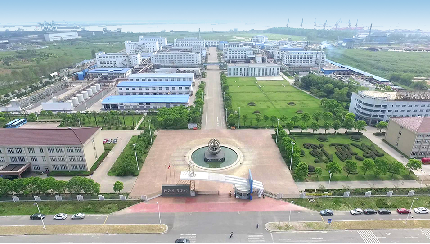
◆We have our own manufacturing base covering 50000 square meters, which is located in the developing zone of economy and technology zone of Xinyi city, Jiangsu province. With advanced equipment and production line, the capacity of the factory is becoming stronger.

◆Our hot products are insecticide such as acetamiprid, imidacloprid, bendiocarb, oxamyl, ethoprophos, methomyletc, herbicide such as2,4-D, glyphosate and paraquat. We also have strength on fungicide such as mancozeb, chlorothalonil, propineb etc.

◆With more than 10 years’ experience in agrochemical industry, we aim to be more professional than ever on registration support, OEM processing and actural application consultance.We insist on making every effort to provide our customers with quality product, competitive price and satisfactory service

Domestically, we set up strong and steady purchasing network; globally, we have long term business relationship with our customers from more than 30 countries and regions.

We also make registration on products in the name of ourselves in our target market. Our strength can be your strength, we can be your reliable partner on trade, we can be your professional assistant on crop protection.

With bestgreen, with best harvest! Don’ t hesitate to contact us for mutual development.

Mr, Wuyonggang, the CEO of Nanjing Bestgreen Chemical Co., Ltd  invites friends to have a sincerely talk on agrochemical business.

Product

http://www.bestgreenchem.com/index.html

Address: Room 2101,Overseas
Chinese Plaza,NO.1North
Daqiao Road,Nanjing
Tel:+86-25-58630277,58630266
Fax: +86-25-58630299
E-Mail:sales@bestgreenchem.com


Article inline ad

Jiangxi Rutom Biotechnology co., ltd

0

Jiangxi Rutom Biotechnology co., ltd. is a group enterprise with 13 years of expertise in R&D and production of organic fertilizers, organic-mineral fertilizers, guano phosphate fertilizers, water soluble fertilizers and liquid fertilizers with annual output of 50,000 metric tons.

Our production base covers more than 70,000 square meters with 5 world-class production lines, experienced R&D team and well-equipped laboratory. We are leading in granulation technology, micronization technology and formulation technology, meanwhile actively introduce advanced technology and scientific formulations from home and aboard.Our factory has obtained ISO 9001, ISO 14001 and NOP/EU/JAS organic certifications. Our high quality fertilizers have been exported in bulk quantity of 40,000 metric tons per year to North America, South America, Europe, South Africa, Australia, New Zealand, South Korea etc. and enjoys good reputation.

Concentrating on being the most professional eco-organic fertilizer supplier, Rutom has been feeding and nursing the crops and land with its efficient, high-quality, safe and eco-friendly fertilizer products to contribute to the sustainable development of mankind.

Why Choose Us?

  1. Professional manufacturer

Our factory is located in Jiangxi Province. Our main products include organic fertilizers, organic-mineral fertilizers, guano phosphate fertilizers, water soluble fertilizers and liquid fertilizers etc.

  1. Factory Inspection

We sincerely welcome you to come to inspect our factory. We believe our factory will impress you.

  1. Experienced exporter

For a decade, our products have been exported to North America, South America, Europe, South Africa, Australia, New Zealand, South Korea etc. and enjoys good reputation.

  1. Leading technology

We invested a lot to introduce advance technology and cooperate with many universities and research institutes.

  1. Strict quality control

We have our own well-equipped lab to test most of items. In order to make sure the final product can meet customers’ requirements, we test each batch of raw materials and final products. For those items our lab can’ t test, we send to third parties like SGS, BV, Pony for testing.

  1. OEM/ODM service

We can customize the production and package according to customers’ special requirements for formula and packages.

  1. Fast all-round service

We always responds quickly to customers’ requests, no matter pre-sales service or after-sales service. Our aim is to establishing long-term business cooperation with customers, not just one-time business.

  1. Flexible MOQ

If you can’ t buy FCL for the first order, we can also dispatch several tons by LCL to you.

Products

Mineral Micropowder Fertilizer

Seabird Guano Phosphate

Organic Fertilizer

Organo-Mineral Fertilizer

Liquid Fertilizer

Mineral Micropowder Fertilizer

 https://www.rutom.cn/e_products/

 Contact Us

Name: Mr. Philip Wu

Tel: +86-13922484972

E-mail: philip.wu@rutomfertilizer.com

WeChat: +8613922484972

Whatsapp: +8613922484972

Add: #2011, International Hall, Yangwandao, 1601-1603, Guanghzou Dadao South, Guangzhou City, Guangdong Province, China


Article inline ad

Jiangsu Changqing Agrochemical Co., Ltd.

0

About Changqing

As a large-scale agrochemical group integrating R&D, production and sales, Jiangsu Changqing Agrochemical Co., Ltd. is a nationally designated pesticide production enterprise and a national High-tech enterprise. Jiangsu Changqing was listed on the Shenzhen Stock Exchange in 2010, with Changqing Shares as securities abbreviation and 002391 as Securities code.

 At present, our company has six subsidiaries such as Jiangsu Changqing Agrochemical Nantong Co., Ltd., Jiangsu Changqing Biotechnology Co., Ltd., Jiangsu Changqing Agrochemical Trading Co., Ltd., Hunan Changqing Runkanbao Agrochemical Co., Ltd., Changqing (Hubei) Biotechnology Co., Ltd. and Jiangsu Changqing Investment Industrial Co., Ltd., etc. With an area of ​​800,000 square meters and more than 2,500 employees, our company now is a leading company in the more than 2,000 pesticide companies of China in terms of asset scale, profitability and other indicators. Now, our company is mainly engaged in agrochemical business such as production of pesticide intermediates, synthesis of Tech grade pesticides, preparation processing and trade services, with three production basess of Tech grade pesticides and two preparation production bases; Our products include 3 series (Herbicide, pesticides and Bactericide), more than 30 kinds of Tech grade pesticides and over 150 kinds of preparations, and we have an annual production capacity of 20,000 tons of Tech grade pesticides and tens of thousands of tons of preparations.

 Our “Changqing” trademark was awarded China’s Well-known Trademark. Our company has fully obtained the three-standard integrated management system certification of 1S09001 Quality, S014001 Environment, and OHSAS18001 Occupational Health and Safety. Moreover, our company has established a national-level postdoctoral scientific research workstation and an Excellent Enterprise Technology Center of Jiangsu Province, and the processes of our leading products are all developed by our company independently; Therefore, the synthesis yield and product quality have reached the level of internationally renowned pesticide companies, and occupied a leading position of China. With high-quality products, good reputation and excellent service, our products are sold well in 29 provinces, municipalities and autonomous regions across China, and are exported to more than 20 countries and regions in Southeast Asia, Africa, Europe, Oceania, North and South America; our products are well received and favored both by domestic and foreign customers.

 Adhering to the tenet of “customer first, integrity-based, excellence in innovation, and scientific development”, we look forward to carrying out information exchange, technical cooperation and trade with domestic and foreign merchants to jointly promote the development of the world’s agrochemical industry.

 Products

Insecticide

Imidacloprid  98%TC; 97%TC; 70%WDG; 600g/L FS; 350g/L SC; 200g/L SL

2     Acetamiprid   99%TC; 97%TC; 20%SL; 20%SP; 5%EC

3     Fipronil   96%TC; 80%WDG; 200g/L SC; 500g/L FS

4     Diafenthiuron       96%TC; 50%SC

5     Thiamethoxam     98%TC; 70%WDG; 25%WDG

6     Lambda-cyhalothrin    96%TC; 2.5%EC; 1.5%Lambda-cyhalothrin + 18.5%Phoxim EC

7     Bifenthrin      96%TC

8     Lufenuron     98%TC; 5%SC

9     Triazophos    85%TC; 20%EC; 40%EC

10   Pymetrozine

Herbicide

Acifluorfen     92%TC; 21.4%SL

2     Fomesafen    98%TC; 25%SL; 48%SL

3     Fluoroglycofen     97%TC; 10%EC

4     Lactofen 95%TC; 24%EC

5     Nicosulfuron  97%TC; 40g/L OF

6     Clomazone    96%TC; 480g/L EC

7     Clethodim     93%TC; 70%TK; 50%TK; 37%TK; 120g/L EC; 24%EC

8     Dicamba 98%TC; 96%TC; 480g/L SL

9     S-Metolachlor      97%TC; 960g/L EC

10   Bormoxynil Octanoate


Fungicide

Tricyclazole    95%TC; 75%WP; 75%WDG; 35%SC

2     Fenoxanil      97%TC; 25%WP; 25%SC; 1%Kasugamycin + 15%Fenoxanil SC; 5%Hexaconazole + 20%Fenoxanil SC

3     Epoxiconazole      97%TC; 12.5%SC

4     Dimethomorph     95%TC; 6%Dimethomorph + 44%Mancozeb WP

5     Difenoconazole    95%TC; 12.5%Difenoconazole + 20%Azoxystrobin SC; 15%Difenoconazole + 15%Propiconazole SC

6     Fluazinam     97%TC

7     Cyproconazole     98%TC; 40%SC

8     Propiconazole      95%TC

9     Tebuconazole       95%TC; 430g /L SC; 25%Trifloxystrobin + 50%Tebuconazole WDG

10   Azoxystrobin

http://www.jscq.com/index_en.html


Headquarters location: 1006 Wenchang East Road, Yangzhou City, Jiangsu Province

Investment Hotline: +86-514-86424918

Foreign Trade Department: +86-514-86923388

Ministry of International Trade: +86-514-86168195

Preparation sales: Zhao Shijun

Mobile phone: +86-15905255101

Human Resources Department: +86-514-86699129

Article inline ad

Nantong Chem-Base Co., Ltd

0

COMPANY

Since 1988, Nantong Chem-Base Co., Ltd has been a leading chemical trading company in China.

 Our business focuses on providing high-quality chemicals, chemical machinery, and packaging materials to clients worldwide. As an ISO2000 certified firm, you can be assured that our regulatory technical and quality information is up-to-date and accurate, giving you peace of mind with every purchase.

Our company works closely with Haiqing Pharma, a high-tech developing company.

 Haiqing has independently developed integrated technology for continuous flow tubular reactors,

which can achieve solid, liquid, and gas full phase chemical reactions, and handle various extreme exothermic and heterogeneous reactions. It has the advantages of small footprint, high degree of automation, and controllable reactions.

Our technologies are: Continuous Nitrification, Continuous Cyanide, Continuous Hydrogenation, and Continuous Oxidation.

Start with us and stay with us. We sincerely hope to cooperate with you and achieve mutual development.

PRODUCTS:

Key recommendation

Agro-chemicals

Food Additivies

Natural Herbal Extracts

Industrial Chemicals

Machine

Packaging Materials

Pharmaceutical/Pesticide Intermediates

CONTACT

Add: Room 403, Huali Bldg, 6 Gongnong Road, Nantong, China

Zip Code: 226007

Tel: +86-513-85221310, 83567255, 83567156

Fax: +86-513-83574022

E-mail: post@chem-base.com

Web: www.chem-base.com

Article inline ad

Humanoid Robots Seen As Pivotal Future Phenomenon

0

By MA SI | chinadaily.com.cn | Updated: 2025-08-08

China is sharpening its focus on humanoid robots as a pivotal industry to fuel economic growth and cement its status as a global innovation pioneer, officials, experts and company executives said on Friday.

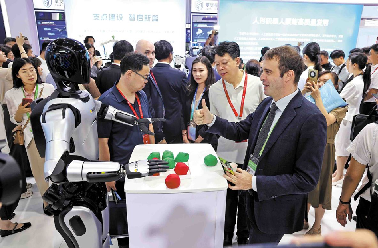
 The comments came as humanoids are taking center stage at the 2025 World Robot Conference, which opened in Beijing on Friday.

 More than 100 cutting-edge robotics products premiered at the event, at which enthusiastic crowds witnessed humanoid robots playing soccer, sparring in boxing matches, and collaborating seamlessly to tighten bolts on automobiles — all of whom showcased good coordination.

 Wan Gang, president of the China Association for Science and Technology, said China places strategic emphasis on humanoid robotics as a future-oriented industry, given its potential pivotal role across diverse scenarios, including manufacturing, logistics, security household services, education and healthcare.

 “This focused approach not only can stimulate consumption, but also spawn new industries, expand employment, advance economic reform and elevate public well-being,” Wan said.

 Xin Guobin, vice-minister of industry and information technology, said, “Innovative resources worldwide are converging on the robotics sector at an unprecedented pace.”

 Xin said industry leaders from the automotive and home appliance sectors are actively expanding into robotics research and development, and AI enterprises are scrambling to develop large language models, or “brains”, for robots to make them smarter.

 “This wave of innovation represents not merely a technological leap, but a profound transformation of productivity,” Xin added.

 China has retained its position as the world’s largest market for industrial robots for 12 consecutive years. Meanwhile, the country accounted for two-thirds of global patent applications in robotics in 2024, according to the ministry.

 Regarding industrial production, China remains the world’s largest robotics manufacturer.

 Industrial robot production surged from 33,000 units in 2015 to 556,000 units in 2024, while service robot output reached nearly 10.52 million units, representing a 34.3 percent year-on-year increase, latest data showed.

 “China’s thriving robotics industry relies on the synergy of global scientific wisdom and close collaboration across international supply chains. We are willing to work with the international community to foster an open, cooperative and innovative ecosystem for the global robotics sector,” Xin said.

 Qiao Hong, president of the World Robot Cooperation Organization and an academician at the Chinese Academy of Sciences, said the country has unique advantages in humanoid robots, as it has established a core foundation of technology for large-scale, cost-effective production of high-performance robotic systems.

 Juha Roning, vice-president of research at euRobotics and a professor of embedded system at the University of Oulu in Finland, who is attending the conference for the third time, said, “China is very advanced in the development of humanoid robots, because many investments are made here and lots of talent thrives here.”

 Roning said a prominent focus of this year’s conference is an obvious shift to the application of humanoid robots. “Previously, it was more about engineering work, like how to make controlling systems more accurate. Today, there are more products available for commercial use. That’s quite impressive,” he said.

 Zhang Zhizheng, co-founder of Beijing Galbot, a robotics startup, said its humanoid robots are already operating autonomously in over 10 pharmacies in Beijing, performing complex tasks like retrieving medicines from crowded shelves and delivering orders to night-shift couriers. “We plan to open 100 such stores nationwide by the end of this year,” Zhang said.

Article inline ad

360 Security Enhances Cybersecurity Service With AI

0

By OUYANG SHIJIA | China Daily | Updated: 2025-08-08 09:56

Chinese cybersecurity company 360 Security Group unveiled its latest AI-powered security products on Wednesday, as it looks to improve cybersecurity operations for enterprises in the age of artificial intelligence.

 At its product launch and partner conference held in Beijing, the company introduced a suite of intelligent security agents and its updated full-stack security operations platform driven by AI. The offering reflects 360’s sharpened focus on “security-as-a-service”, aiming to meet rising enterprise demands amid accelerating digital transformation and increasingly sophisticated cyber threats in the AI era.

 “AI technology is profoundly transforming all sectors. Traditional internet products and business models will be completely reshaped,” said Huang Jian, vice-president at 360 Security. “360 is going all-in on AI. We were among the first to invest in foundational large models and are deploying full-stack AI applications across consumer, business, government and small-to-medium-sized businesses.”

 Built on 360 Security’s proprietary AI large models, 360 Security brain, and over two decades of real-world security expertise, the company unveiled three categories of AI agents: security, management and enterprise services. These AI agents target core enterprise scenarios — safeguarding infrastructure, improving operational efficiency and streamlining office functions.

 The company said the security agent detects three times more threats than manual systems, with a tenfold improvement in speed and a 20 percent increase in accuracy. The management agent automates event-handling at triple the previous rate, enhances post-incident reporting efficiency by 72 times, and cuts document collation time by a factor of 13. Meanwhile, the enterprise service agent is designed for plug-and-play deployment in high-frequency business domains including HR, finance, legal and marketing.

 “These AI agents are transforming the way organizations operate, from security foundations to business efficiency,” said Huang. “They help public and private entities realize AI upgrades, significantly reduce the need for security manpower, and drive up productivity and operational effectiveness.”

 The newly launched platform is also designed to address what the company sees as key shortcomings in traditional cybersecurity approaches — high entry costs, reliance on hardware and passive, fragmented defenses that fail to fully meet the needs of the enterprise in the AI era.

 “As digital transformation continues to deepen, cybersecurity will evolve from ‘buying equipment’ to ‘buying services and value’,” said Huang.

 The company said the new platform offers an AI-driven, standardized and visualized SaaS solutions. It enables enterprise customers to access national-grade cybersecurity protection — including defense against external attacks and internal data leaks — without upfront investments in hardware or software.

 According to 360, 98 percent of security alerts can now be automatically handled by AI agents. The platform also integrates security experts who provide 24/7 remote operations, ensuring a closed-loop cloud-based security process.

 “Together with partners, we will continue to refine products around real customer needs,” said Huang. “We believe in agile, win-win and long-term collaborations — and in seizing the decade-long opportunity ahead in the digital security market.”

 The company’s product launch comes as the booming AI sector is reshaping the country’s cybersecurity landscape with both unprecedented opportunities and complex risks.

 In a resolution adopted at the third plenary session of the 20th CPC Central Committee in July last year, it was clearly stated that the country will strengthen cybersecurity and institute oversight systems to ensure the safety of AI.

 “AI is both a strategic opportunity and a disruptive challenge for cybersecurity,” said Zhao Zhiguo, executive deputy director of the Expert Advisory Committee of the Internet Society of China.

 “AI amplifies threats, accelerates attacks and further deepens the asymmetry between attackers and defenders.

 “We must build a more flexible, intelligent and collaborative security system,” Zhao said. “It’s not just about breaking through, it’s about reconstructing a new intelligent defense architecture.”

 He offered three key recommendations: system-wide deployment of AI in cybersecurity infrastructure, scenario-driven innovation led by top firms, and a focus on real-world, battle-tested applications such as advanced threat detection and vulnerability analysis. “Cybersecurity is a complex engineering effort,” Zhao emphasized. “It requires the joint efforts of government, enterprises, research institutions and all sectors of society.”

Article inline ad

Beijing’s Robot-Themed Restaurant Wows Visitors

0

By YANG CHENG | chinadaily.com.cn | Updated: 2025-08-08

A primary school student visiting Beijing’s latest attraction — a robot-themed restaurant in the capital’s E-Town technology hub — was amazed to see a humanoid robot slice a cake with perfect precision, leaving not a single crumb behind.

 “It’s incredible to watch them perform such delicate tasks with such smooth operation,” said Ma Yuqian, who eagerly visited the new venue on Friday.

 The robot-themed restaurant, alongside the world’s first humanoid smart robot 4S store, officially opened on Friday in Beijing E-Town, an economic and technological development zone in the southeast of the capital. Since opening, it has attracted thousands of visitors.

 A 4S store is a retail concept that originated in China and is a one-stop shop for a particular product. The “4S” stands for sales, service, spare parts and customer surveys.

 Billed as a “fantasy experience”, the restaurant offers visitors the chance to dine and shop in a fully automated, AI-driven environment.

 Upon entering, guests are greeted by humanoid robot bartenders, entertained by a robot band and treated to stand-up comedy performed by robots styled after the classic Chinese poets Li Bai and Su Shi.

 The restaurant serves Western-style dishes, including hamburgers and spaghetti. During meals, diners can interact with dinosaur robots, while delivery and recycling robots move efficiently throughout the space. Robots also prepare pancakes, coffee and milk tea on demand.

 Reservations are available on the Dianping and Meituan apps, with many people waiting outside to try the latest dining experience.

 “Interacting with a robot dinosaur while eating is both novel and a little creepy. Maybe as we get used to these embodied robots around us, it will feel more natural,” said a diner who declined to give her name.

 “As a cutting-edge, robot-themed restaurant, we aim to create an immersive dining experience blending taste, culture and technology,” said Sun Ling, deputy general manager of Beijing E-Town Robot Technology Industry Development and head of the restaurant. “We are collaborating with our 4S store to expedite the commercial release of advanced robot products.”

 The same day the stores opened, the 2025 World Robot Conference was launched in E-Town. As part of the event, a robot control competition for lower primary school students took place, which Ma and her mother attended.

 Wu Jie, Ma’s mother, praised the event. “The exceptional skills demonstrated by these young contestants in robot creation and operation are truly remarkable. These technological advances are opening up a whole new world for the younger generation.”

 Along with the restaurant and 4S shop, Beijing plans to enhance the robotic experience by establishing the world’s premier robot-themed theater during the conference in E-Town.

 Further competitive events are planned to showcase and advance humanoid robots. The 2025 World Humanoid Robot Games will be held from Aug 14 to 17 at the National Speed Skating Oval in Chaoyang district.

 Around 280 teams from 16 countries across five continents, featuring more than 500 humanoid robots, will compete in 26 events and 538 matches, according to Jiang Guangzhi, head of the Beijing Municipal Bureau of Economy and Information Technology, at a press conference on Friday.

 Among these, the groundbreaking 5-on-5 formation football match — entirely controlled by AI algorithms without human intervention — will make its debut at the World Humanoid Robot Games.

 Cao Ruoyan contributed to this story.

Article inline ad

Driverless Vehicles Pave Way For Smart Logistics

0

China Daily | Updated: 2025-08-08

BEIJING — In Ziyang, Sichuan province, a logistics company has hired three “employees” who never take lunch breaks and work around the clock without any complaints.

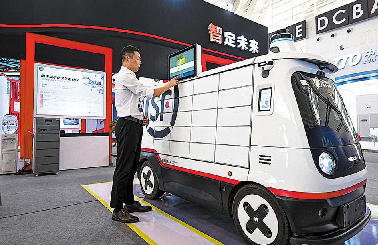
 They are autonomous delivery vans, each capable of carrying between 600 and 800 parcels. They navigate the winding roads between villages located 10 to 30 kilometers from the distribution center at a steady pace of 15-20 km/h.

 They dutifully stop at red lights, dodge obstacles with algorithmic precision, and can be remotely monitored — even overridden — via smartphone or laptop.

 When one such vehicle arrived in Zhenshu village after its 90-minute journey, site manager Luo Diwen demonstrated the unloading process with a few taps on his phone. “Open the app, select the license plate, tap to unlock — it’s that simple,” he said, as the van autonomously prepared for its next stop after scanning a confirmation QR code.

 The real payoff comes in the ledgers. According to Liu Gang, general manager of the local logistics company, the driverless fleet has slashed labor costs and reduced fuel consumption by nearly half.

 These three driverless vehicles are from Neolix, an autonomous vehicle company headquartered in the Beijing Economic-Technological Development Area.

 Founded in 2018, the company has experienced explosive growth this year, scaling its global fleet from just over 2,000 units by the end of 2024 to an impressive 7,500-plus vehicles deployed across 280 cities today — with cumulative L4 autonomous driving mileage surpassing 42 million km.

 The company made history in May 2021 when it received China’s first official permit for autonomous delivery vehicles on public roads. This milestone was complemented by the establishment of large-scale partnerships with China’s premier express logistics providers, including SF Express, YTO Express and STO Express.

 Neolix’s founder and CEO Yu Enyuan and cofounder Yang Zhe both have firsthand experience working in logistics operations, giving them deep insight into the industry’s core challenges — reducing costs while improving efficiency.

 According to Yu, since its founding in 2018, Neolix has completed five generations of product iterations, with each new version achieving two to three times performance improvement while reducing costs by 30 percent.

 The company’s fourth-generation X3 model now costs less than 100,000 yuan ($13,930). With flexible financing options, customers can purchase one with a down payment of around just 800 yuan — a cost-effective solution that has helped logistics enterprises reduce their overall operating expenses while maintaining high delivery efficiency.

 China’s autonomous driving revolution has accelerated at a remarkable clip, fueled by deliberate State support. A pivotal moment came in 2023 when the Ministry of Industry and Information Technology and three other departments issued groundbreaking guidelines for pilot programs permitting L3 and L4 autonomous vehicles on public roads.

 The regulatory framework is expanding rapidly across China’s innovation hubs. Shenzhen, Shanghai and Hangzhou have already enacted local autonomous vehicle legislation. In a significant expansion of China’s autonomous driving infrastructure, Beijing extended its high-level autonomous vehicle demonstration zone from 160 to 600 sq km in June.

 In the next phase, the MIIT will continue to revise the Road Traffic Safety Law to legally clarify issues such as the operation of autonomous vehicles on public roads, the management of traffic accidents and the sharing of responsibilities.

 Yang highlighted Neolix’s breakthrough in autonomous loading/unloading technology in an interview with Xinhua, revealing that the company is currently developing and testing systems for seamless integration between self-driving vehicles, automated warehouses and smart sorting lines.

 He fondly recalled founder Yu’s vision during their startup days: “When logistics efficiency reaches its peak, we could build distribution centers in deserts and have autonomous fleets deliver goods to cities overnight.”

 Neolix’s autonomous driving solutions are paving the way for redefining smart logistics infrastructure, exemplifying how China’s supply chain revolution continues to push the boundaries of logistical possibilities.

 Xinhua

Article inline ad

‘Made In China’ On Cusp Of High-Tech Makeover

0

Manufacturing sector undergoing shift from scale-driven expansion to value-oriented transformation

China Daily | Updated: 2025-08-08 10:00

BEIJING — As innovation and design emerge as new engines of growth, China’s manufacturing sector is undergoing a shift from scale-driven expansion to value-oriented transformation.

 In the first half, robust output in high-tech sectors, ranging from 3D printing and smart home appliances to personalized electric vehicles, highlighted the rise of smart manufacturing, where aesthetic design, intelligent production and cultural branding are reshaping global perceptions of “Made in China”.

 Chinese manufacturers, notably, are no longer just producers — they are becoming trendsetters amid growing global demand for design-led products.

 At the forefront are brands such as Laopu Gold, which fuses traditional Chinese craftsmanship with contemporary aesthetics. Its first overseas store in Singapore, inaugurated in June, drew hourslong lines with over 90 percent of visitors being first-time customers, who were drawn by the brand’s design, craftsmanship and the symbolic meaning behind its products, according to a JP Morgan report.

 Founded 16 years ago, the brand has carved out a new niche in the traditional jewelry market via innovative design and business models. In 2024, the brand’s revenue and profit surged by 166 percent and 254 percent year-on-year, respectively, a growth trajectory that has continued in 2025.

 In the realm of pop culture, Chinese brand Pop Mart has become a global sensation, with fans lining up outside stores eager to get their hands on the latest trendy Labubu figurine. “Design is our core competitiveness,” said a company representative, citing the firm’s 2,000-person design team that crafts everything from sketches to material texture.

 More design-powered consumer goods are gaining strong footholds in international markets.

 A ceramic company from Fujian province in East China, for example, secured orders worth 2 million yuan ($278,640) in overseas markets for its fruit-themed tableware, while on cross-border e-commerce platforms, sales of solar-powered fan hats from Zhejiang’s Yiwu, also located in East China, topped half a million units.

 “The popularity of traditional gold craftsmanship and domestic brands like Labubu and Laopu Gold exemplifies how cultural and design premiums are reshaping the value structure of China’s manufacturing,” said Wu Yin, a professor at Southwestern University of Finance and Economics.

 Rapid advances in digital technology are enabling culturally rich Chinese design elements to better integrate with industrial production, continuously enhancing the brand value of “Made in China”, Wu said.

 This growing emphasis on design and innovation is supported by stronger intellectual property protection efforts during the 14th Five-Year Plan period (2021-25), which are helping drive China toward global innovation leadership. Between 2020 and 2024, China’s total imports and exports of IP royalties grew at an average annual rate of 5.7 percent.

According to the Global Innovation Index released by the World Intellectual Property Organization, China climbed to 11th globally in 2024 — remaining the top performer among middle-income economies.

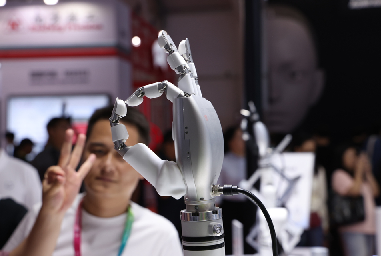
 The impact of design innovation is also extending beyond consumer markets into high-end equipment and industrial systems. At the China International Supply Chain Expo held last month in Beijing, a new wave of smart products ranging from humanoid robots to bionic hands showcased the deepening role of industrial design in advanced manufacturing.

 Industrial design has been integrated into the entire manufacturing value chain through product design, process innovation and business model development, said Guan Bing, director of an industrial economics institute at the China Center for Information Industry Development.

 “The more sophisticated and advanced the design is, the higher the demands it places on digitalization and intelligent manufacturing — in turn driving the upgrade of the entire production chain,” Wu said.

 In the electric vehicle field, carmaker Xiaomi has merged aesthetics and automation in its latest product line, with its YU7 model’s clamshell-style hood and customizable color features reflecting new consumer preferences.

 Behind the scenes, the company’s factory operates with over 700 robots, while one-piece die-casting technology has cut component counts from 72 to 1 — reducing production time by 74 percent.

 Buoyed by China’s rapid advancements in advanced technologies such as artificial intelligence, industrial design itself is undergoing a rapid transformation. At automotive design firm IAT, engineers now generate styling concepts via voice prompts and AI tools — accelerating design cycles by 50 percent.

 An industry report showed that the value of China’s AI industry exceeded 700 billion yuan in 2024, with annual growth above 20 percent for consecutive years. Homegrown AI products are increasingly integrated into sectors like industrial design, education and content creation, driving a multisector smart application ecosystem.

 As a new wave of technological revolution and industrial transformation is accelerating, deep integration of AI-assisted industrial design and manufacturing will unlock greater possibilities for intelligent manufacturing, Guan added.

 However, gaps remain. The rapid growth of its manufacturing sector, China’s innovation capabilities still lag behind, held back by a mismatch between industrial expansion and the slower pace of talent development and education reform. Limited awareness and investment in design, along with a short-term profit-driven mindset among some enterprises, have further compounded the challenges.

 “To foster design innovation, it is crucial to build incentive mechanisms and strengthen IP protection,” said Ke Bin, a researcher at an industry center under the Ministry of Industry and Information Technology.

 Ke called for a value assessment system to encourage greater investment in design by enterprises, and more cross-disciplinary training programs aligned with the needs of intelligent manufacturing.

 According to a recent McKinsey report, China’s continued policy drive for intelligent manufacturing and industrial automation, coupled with breakthroughs in innovative technologies such as industrial internet platforms and large models, is expected to propel its automation industry to account for over one-third of the global market by 2025, with further “leapfrog growth” projected over the next five years.

Article inline ad

China Likely To Continue Buying Gold

0

Expert: Yellow metal accounts for 7% of nation’s official intl reserves

By ZHOU LANXU and OUYANG SHIJIA | CHINA DAILY | Updated: 2025-08-08 07:03

China may continue increasing its official gold reserves to enhance financial security, as part of a broader trend among central banks worldwide to diversify their international reserve holdings — a development that could prop up investment demand for the precious metal, analysts said on Thursday.

 They commented as China’s official gold reserves came in at 73.96 million ounces at the end of July, up from 73.9 million ounces a month earlier, marking the ninth consecutive month of rises, the State Administration of Foreign Exchange said on Thursday.

 Wang Qing, chief macroeconomic analyst at Golden Credit Rating International, attributed the gold holdings increases by the People’s Bank of China, the country’s central bank, to the growing demand for optimizing reserve structure, given that gold prices are likely to stay on an upward trend amid a volatile global political and economic situation.

 “Looking ahead, we believe that continued gold purchases by China’s central bank are likely to remain a strategic direction,” said Wang.

 He estimates that gold accounted for about 7 percent of China’s official international reserves — mainly consisting of foreign exchange reserves and gold holdings — as of the end of July, significantly lower than the global average of around 15 percent.

 The country’s foreign exchange reserves, according to SAFE, came in at $3.2922 trillion as of the end of July, down 0.76 percent or $25.2 billion from the previous month, amid a rising US dollar index and a mixed performance of global financial markets.

 Given the need to optimize the structure of international reserves, Wang pointed to the necessity for China to keep increasing gold holdings while moderately reducing holdings of US Treasuries, as gold is widely accepted as a final means of payment.

 “Increasing gold reserves can strengthen the credibility of the country’s sovereign currency and help create favorable conditions for advancing the internationalization of the renminbi.”

 A recent survey conducted by the World Gold Council shows that 95 percent of central bank respondents expect global central bank gold reserves to increase over the next 12 months.

 The council said central bank gold demand remained healthy at about 166 tons in the second quarter, though down 21 percent year-on-year.

 Ray Jia, China research head of the WGC, said that central banks’ continued interest in boosting reserves of the yellow metal is likely to be a key factor propping up gold prices going forward, a trend that could encourage retail investors’ appetite for gold.

 “The diversification of global central banks from the US dollar, or the trend toward a multipolarization of global reserves, we believe, will continue in the coming years and will not be easily reversed or undergo significant changes,” Jia said.

 Despite the fact that central banks worldwide have slowed their gold purchase pace in the first half, WGC’s full-year projection of central banks’ gold purchases remains above the five-year average, approximately at a level of 600 to 700 tons, he said.

 Nevertheless, Jia noted that there are still many factors that may prompt investors to choose assets other than gold. “For instance, since July, China’s equity markets have generally performed well. A rise in risk appetite often weighs on investment demand for gold and for gold exchange-traded funds in particular.”

 The council said that gold investment demand in China may remain strong in the second half amid persistent global geopolitical and economic risks and uncertainties over domestic growth, adding that the two factors are expected to sustain investor appetite for safe-haven assets such as gold bars and coins.

 Contact the writers at zhoulanxv@chinadaily.com.cn

Article inline ad