Wednesday, November 25, 2026

Home Blog Page 188

China International Import Expo Exhibitors Talk Up Opportunities

0

By Wang Xin | chinadaily.com.cn | Updated: 2025-08-09 14:02

The Chinese market offers massive opportunities, and the China International Import Expo (CIIE) provides a premier platform for global companies to demonstrate innovation and technological advances that consistently drive business growth, senior executives have said.

 The remarks were made at a matchmaking event held Friday which aimed to better connect buyers with exhibitors at the eighth China International Import Expo, which will be held from Nov 5 to 10 in Shanghai.

 German cleaning equipment manufacturer Karcher, a longstanding CIIE exhibitor, will be represented at the expo for the eighth time this year. Over the past seven editions, the company has seen increasing brand influence, expanding business opportunities and growing sales revenues. This year, the company will bring six smart cleaning and healthy water products to make their debut at the CIIE.

 “We have seen rapid sales growth in China in recent years,” said Jerry Zhang, general manager of the institution solutions department at Karcher Greater China.

 “The CIIE proved an accelerator for our strategy in the Chinese market and for our new product launch. The sales of one of our exhibits at the seventh CIIE has exceeded 50,000 units in seven months.”

 One of Karcher’s exhibits at this year’s expo will be a new series of fresh mineral water machines, the first of their kind in China. With upgraded water purification technologies, the products adopt advanced mineralization filter elements to offer safe and healthy drinking water.

 “We are fully confident in the Chinese market and also expanding our investment in China. Last year, we landed our global R&D center and doubled the size of our production base in Jiangsu province. We expect the innovation in China to empower our global growth,” said Zhang, adding that the company saw sales in China expand around 42 percent year-on-year in the first half of 2025.

 French tire and mobility company Michelin has been involved in the Chinese market for the past 36 years, and will be participating in the expo for the fifth time this year.

 Jay Wu, vice-president of Michelin China, said the company sees the CIIE a network of friends, connecting it with partners, clients and consumers. Wu compared the expo to an ecosystem where national innovation as well as collaboration and the competency of the whole industrial chain consistently help them become better rooted in China.

 “We used to say ‘made in China for the world’, but I think we should change it to ‘innovation in China for the world’, as what we gain from the innovation here is likely to benefit our global business, eventually,” said Wu.

 HRC Group, a solution provider for composite materials, is another longstanding CIIE exhibitor. This year, they will be seeking to catch visitors’ attention with an LEU100 drone, which is designed for low-altitude logistics. The drone will be making its world debut at the expo.

 “Carbon fibers are essential for low-altitude aircraft and, as a global leader in carbon fiber components, we are expected to seize significant growth opportunities and contribute to the development of China’s low-altitude economy ecosystem,” said Chen Wenjin, HRC’s marketing director.

 Japanese chemical giant Toray Industries, which will be attending the expo for the third time this year, will also be showcasing its innovative materials. Having entered the Chinese market in 1994, it is paying close attention to China’s development of new quality productive forces. At this year’s expo, the company will highlight sustainable products and technological updates related to hydrogen, mobility and circular economy.

 Throughout the CIIE, visitors will be able see the latest offerings from other companies and grasp the latest market trends in real time, making it an effective platform for display and communication on a global scale, said Takahiro Yamamoto, a board director at Toray Industries (China).

 “China remains an extremely attractive market for Toray. The automobile industry centered on new energy vehicles is developing rapidly, and green energy industries such as hydrogen energy are also growing. We are striving to expand business scale in such sectors,” Yamamoto added.

 A number of new exhibitors will also be joining this year’s CIIE, among them the Sherwin-Williams Company from the United States, a global leader in the paint and coating industry. Having opened its first office in China in 1930, the company has located its Asian headquarters in Shanghai and its Asian R&D center in Shunde, Guangdong province.

 “We are confident in the Chinese market,” said Maggie Gu, the company’s head of government relations and corporate communications.

 “Over the past editions, we have learned about the expo as a premier platform from our partners and clients. We are dedicated to innovation in green and sustainable development, and expect to contribute to the nation’s dual carbon goals.”

Article inline ad

Smart Driving Gets Closer To Consumers

0

By Li Jiaying | China Daily | Updated: 2025-08-09

Chinese consumers will experience greater access to newer and more breakthrough smart driving technology as a leading local manufacturer of intelligent driving solutions accelerates innovation and the availability of novel features in mass-market vehicles.

 “As both domestic and international automakers place growing emphasis on intelligent driving systems, advanced features are increasingly making their way into mass-market models,” said Zhang Lin, chairman and CEO of domestic smart driving tech company Freetech.

 “This trend is enabling more consumers to access a richer array of smart functionalities,” Zhang said.

 The executive added that the company is leveraging economies of scale through mass production to bring products to market that strike a better balance between performance and affordability.

 “Products refined through mass production tend to bring higher levels of efficiency, flexibility, and cost-effectiveness,” he said.

 According to data from China Insights Consultancy, Freetech, based in Hangzhou, Zhejiang province, ranked second among domestic suppliers in China’s L2 and L2+ smart driving solution installation volume in 2024, holding a 17.7 percent market share.

 From Zhang’s view, it is important and rather practical for emerging driving tech companies to follow a step-by-step technological roadmap, evolving gradually from Level 2 to Level 4 autonomous driving.

 “This incremental approach allows industry players to align with real-world market demand, commercialize cutting-edge technologies, and build a sustainable business foundation for scaling into higher-level autonomous driving,” he said.

 The view is echoed by Zhang Xiang, secretary-general of the International Intelligent Vehicle Engineering Association. “Although advanced products above L2+ may offer higher prices and better margins, they also come with significant development costs and risks. If the investment fails, it could all go to waste.”

 Zhang added that this is why companies need to control the scale of investment, continuing to grow their L2 business while allocating a portion of resources each year to L2+ and higher-level development, ensuring more stable and sustainable growth.

 In the second quarter of this year, Freetech secured over 40 new projects from both Chinese and international automakers, with a focus on its newly launched urban NOA (navigate on autopilot) offering.

 According to the company, requiring only 128 TOPS (trillion operations per second), the system delivers end-to-end NOA functionality across urban roads and highways, along with memory-based automated parking in complex environments.

 The product is built upon Freetech’s recently unveiled ODIN 3.0 platform — a full-stack, in-house-developed solution that is designed around artificial intelligence and integrates hardware and software across controllers, sensors, and algorithms.

 By combining hardware and software into a unified system, the platform is expected to improve production efficiency and shorten time-to-market in a significant manner.

 “Our delivery cycle for intelligent driving solutions can be as short as eight months, well below the industry average of 15 to 30 months,” Zhang said.

 As of the end of 2024, Freetech had established partnerships with 49 OEMs and secured over 330 program nominations and more than 260 mass production projects, he added.

 lijiaying@chinadaily.com.cn


Article inline ad

Ikea Eyes Quicker Growth In China With JD Store

0

By WANG ZHUOQIONG | China Daily | Updated: 2025-08-08 09:43

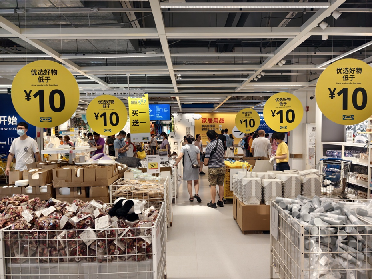
Ikea China is opening an official flagship store on JD on Friday, marking a major step in the Swedish household goods giant’s continued expansion of its omnichannel ecosystem in the Chinese market.

 The store will offer more than 6,500 products across 168 categories, including furniture and home accessories, while integrating Ikea’s logistics and membership services. It will serve as a new online touchpoint for the brand, complementing existing channels such as its official online store, Tmall flagship store, mobile app and WeChat mini programs.

 “This launch is another step forward under our ‘growth plus’ strategy,” said Pontus Erntell, president and chief sustainability officer at Ikea China.

 “It will help us reach more Chinese families who value convenience, quality and service, and further enhance Ikea’s omnichannel ecosystem.”

 Since 2018, Ikea China has steadily expanded its digital presence. In fiscal year 2024, the brand’s online platforms attracted 370 million visits, with over 70 percent initiated by consumers — underscoring strong demand for digital home shopping, said the company.

 The move to JD strengthens the Swedish firm’s collaboration with third-party platforms and aligns with its strategy to integrate online and offline services.

 JD, the country’s leading e-commerce platform, sees the partnership as a boost to its growing home category.

 “Ikea’s arrival enriches JD’s home furnishings portfolio and provides customers with more inspiring, high-quality options,” said Yao Yanzhong, senior vice-president of JD and president of JD Electronics and Home Appliances.

 “We will leverage our strengths in supply chain management and digital operations to enhance the online home shopping experience.”

 During the launch period, two new Ikea products — the Bastboll esports chair and Malomrade gaming desk — will debut across all Ikea channels. Certain product categories such as foodstuffs, knives and houseplants will not be available on JD for now.

 Ikea will use its own warehouses for inventory storage, while last-mile delivery will be handled by partners. JDLogistics will be responsible for parcel deliveries, while larger shipments will follow Ikea’s existing omnichannel logistics framework. The delivery coverage is expected to reach 301 cities nationwide.

 The collaboration comes amid intensifying competition in China’s household products and lifestyle market, with both local and foreign brands investing in digital transformation and supply chain upgrades.

 JD has been actively expanding its home category with a growing number of domestic and international brands. In the first half, the number of international home brands joining JD surged over 130 percent year-on-year. Recent additions include Muji, Natuzzi Italia and Hay, according to JD.

 The partnership with Ikea further signals the platform’s ambition to “bring global design into Chinese households”, while supporting Ikea’s efforts to deepen localization and broaden market reach in China.

Article inline ad

Dual-Track Approach To Aid Currency

0

Use of digital yuan, stablecoins urged to strengthen monetary position

By Zhou Lanxu and Yin Mingyue | China Daily | Updated: 2025-08-09

As global currency competition intensifies in the digital space, Chinese economists are urging a dual-track approach to strengthen China’s monetary position — leveraging both central bank digital currency innovation and stablecoin development, with a clear eye on the future of cross-border payments and digital asset ecosystems.

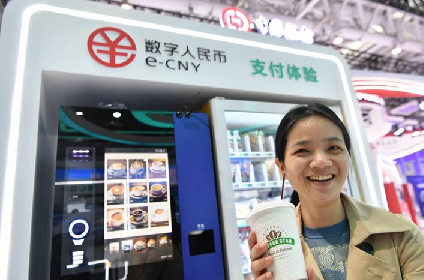
 They have pointed to the need to break a structural limitation of China’s CBDC, or the digital yuan — its monetary classification as M0 or essentially cash equivalents — to expand its usage scenarios, especially in cross-border business-to-business transactions.

 Stablecoins are a type of cryptocurrency pegged to fiat currencies or other real-world assets at a designated exchange rate to maintain a stable value.

 Zhang Ming, deputy director of the Institute of World Economics and Politics at the Chinese Academy of Social Sciences, said China could take a “two-pronged approach” in response to the potential impact of US dollar stablecoins on the international monetary system — advancing the digital yuan, also known as the e-CNY, while developing offshore renminbi-pegged stablecoins.

 According to Zhang, the biggest constraint on the digital renminbi is that it has been designed to function only as M0 to limit the impact on the banking system, meaning it can substitute cash and is mostly used in merchant-to-individual transactions, with limited application in business-to-business or interbank dealings.

 “To accelerate the development of the digital renminbi, its substitution level should be raised from replacing M0 to M1 or even M2, which would broaden its application scenarios, especially overseas,” he said.

 In general, M0 refers to currency in circulation, M1 includes M0 plus demand deposits, and M2 includes M1 plus time deposits. The higher the category, the broader the range of funds covered and the more diverse the potential use cases.

 Zhang suggested piloting offshore renminbi stablecoins in the Hong Kong Special Administrative Region and Shanghai’s Lin-gang Special Area, using them to facilitate overseas trade and investment settlements for Chinese companies and to act as a bridge connecting on-chain and off-chain financial transactions, paving the way for real-world asset development.

 To maintain the effectiveness of China’s cross-border capital movement, any move to develop the onshore renminbi stablecoin market should be considered cautiously, while the offshore market can take the lead, he added.

 Major economies are accelerating their frameworks for stablecoin oversight, with the Stablecoins Ordinance having commenced operation in the Hong Kong SAR on Aug 1, introducing a high-threshold licensing regime.

 The United States, through the GENIUS Act, has established a dual federal-state regulatory system, while the European Union’s Markets in Crypto-Assets Regulation has set regional entry thresholds.

 Echoing Zhang’s views, Li Lihui, former president of the Bank of China and a leading expert on digital finance, suggested expanding the digital yuan from mainly retail payment use to wholesale transactions serving corporate clients.

 Moving further from retail to wholesale could offer much greater market potential and would require evolving the digital yuan from M0 toward M1 and even M2, said Li, who also underscored the importance of facilitating the cross-border development of the digital yuan, highlighting the central bank’s plan to set up a digital yuan international operations center.

 At the 2025 Lujiazui Forum in June, China unveiled a raft of new opening-up measures, including setting up an international operation center for the e-CNY and the development of offshore bonds in Shanghai.

 “China’s demand for cross-border payments is growing rapidly, and many of our cross-border platforms such as JD and Ant Group have been successful. Further advancing the global application of the digital yuan will be critical to enhancing the renminbi’s international influence,” Li said.

 Contact the writers at zhoulanxv@chinadaily.com.cn


Article inline ad

Jiangsu Ramps Ups Efforts To Attract More Mncs

0

China Daily | Updated: 2025-08-07

NANJING — For Franz Decker, a senior executive at BMW Group, China’s rapid advances in artificial intelligence represent a crucial engine of the auto giant’s global digital transformation.

 In July, the German automaker inaugurated its first information technology center in China — and its largest in Asia — in Nanjing, Jiangsu province. The facility is designed to harness cutting-edge technologies, including AI, to provide digital solutions across BMW’s global production, sales and after-sales networks.

 “By joining forces with China’s innovation ecosystem, we aim to propel BMW Group’s digital transformation both in China and globally,” Decker said.

 “China obviously is at the forefront of a lot of innovations in IT and Nanjing is our gateway to this innovation here in China.”

 Foreign firms are anchoring themselves more deeply in China’s smart manufacturing landscape.

 On July 30, software giant Dassault Systemes launched its new Nanjing-based subsidiary. With 20 years of experience in the Chinese market and about 60,000 local clients, the company is expanding its footprint to offer software-as-a-service platforms for digital manufacturing.

 Initially targeting smart manufacturing and the steel industry, the new entity aims to gradually extend services to aerospace, biopharmaceuticals and other high-tech sectors, according to the French company.

 “High-end equipment manufacturing and aerospace industries in Nanjing are growing rapidly,” said Xu Feng, vice-mayor of Nanjing. “Demand for the digital transformation of Chinese manufacturing enterprises and Dassault Systemes’ technological strengths have formed a natural complementarity.”

 As one of China’s economic powerhouses, Jiangsu, located in the Yangtze River Delta region where supportive infrastructure has been upgraded at a historic pace, is ramping up transformation, attracting steady high-end foreign investment, especially in headquarters, research and development and advanced manufacturing projects.

 Among a series of plans to further improve its business environment and boost its attractiveness among corporations, the province is facilitating links among its cities and with neighboring regions with a slew of infrastructure projects, such as a major trans-river road link beneath China’s longest river, namely the Haimen-Taicang Yangtze River Tunnel, connecting Nantong’s Haimen with Suzhou’s Taicang.

 Data show that in the first half, Jiangsu attracted $11.54 billion in actual foreign investment, maintaining its lead among Chinese provincial-level regions.

 Samson Khaou, executive vice-president of Dassault Systemes, attributed the company’s growth in China to a long-standing commitment to local integration. “The reason why we have grown to this level is because we are adhering to the ‘In China, For China, With China’ policy.”

 “This helps us to really bring the best practices from around the world to enable the digital transformation of the Chinese industry and here in Jiangsu,” Khaou added.

 A recent survey by the French Chamber of Commerce in China found that 60 percent of French companies have operated in the country for over a decade, highlighting strong long-term confidence. Furthermore, 25 percent of those firms plan to boost their investment in China by 2025, focusing especially on high-end manufacturing and industrial digitization.

 New policy measures are fueling this trend. A recent circular from the National Development and Reform Commission and other ministries outlined fresh incentives to encourage foreign firms to reinvest in China.

 Strong local performance continues to drive foreign firms’ growing presence in China. At Bosch and Siemens’ smart washing machine factory in Jiangsu, supported by 5G and the internet of things, a new unit rolls off the production line every 24 seconds.

 “We have always been deeply committed to the Chinese market,” said Simon Song, president of BSH Home Appliances Greater China. “Over the next six years, we plan to invest more than 3 billion yuan ($417.3 million) here in R&D alone.”

 Xinhua

Article inline ad

Household Appliance Makers Accelerate Overseas Expansion Plans

0

By FAN FEIFEI | China Daily | Updated: 2025-08-07

Chinese small home appliance makers are ramping up efforts to expand their footprint in emerging overseas markets and pooling more resources into localized research and development as part of a broader push to bolster global sales and enhance international influence, industry experts said.

 They added that an increasing number of homegrown small appliances, such as robotic vacuum cleaners, air fryers and coffee makers, are gaining popularity among overseas consumers, thanks to their creative designs, simple-to-use features and online promotional events.

 Chinese intelligent home appliance manufacturer Dreame Technology is accelerating steps to make inroads into overseas markets and is investing heavily in research and development, while making technological innovation based on user demand.

 Currently, the company’s products have been sold in more than 100 countries and regions, including Europe, North America, Southeast Asia, East Asia, the Middle East, Africa and South America. Revenue from international markets accounted for 65 percent of its total revenue in 2024.

 Global sales of the company’s robotic vacuum cleaners and floor-cleaning machines increased by 178 percent and 100 percent year-on-year respectively from January to May, ranking first in 18 countries and regions around the world.

 Its gross merchandise value in Southeast Asia soared more than 150 percent year-on-year in the first half of 2024, while sales in Japan, South Korea and Australia increased 292 percent year-on-year during this period.

 The company is stepping up localization efforts and has launched tailor-made products in accordance with usage habits and application scenarios in different countries, expanded both online and offline channels — including emerging e-commerce channels — and formulated differentiated marketing strategies.

 Yu Hao, founder and CEO of Dreame Technology, emphasized the significance of increasing investment in supply chain systems, building independent production capacity covering the entire industrial chain and establishing global retail channels. Yu said the company will take active steps to expand into overseas markets and recruit high-quality talent worldwide.

 Bear Electric Appliance Co Ltd, a maker of small home appliances based in Foshan, Guangdong province, said its sales revenue from overseas markets reached 668 million yuan ($93.06 million) in 2024, with overseas customers mainly coming from Japan, South Korea, Southeast Asia, Europe and North America.

 Li Yifeng, chairman and general manager of Bear Electric Appliance, said the company will continue to build brand recognition overseas, intensify promotional efforts, expand retail channels and bolster global operational capacity.

 Li said the overseas business mainly focused on the original design manufacturer model, but now it is beefing up efforts to promote its self-owned brands to go global and develop the cross-border e-commerce business.

 The company, founded in 2006, has developed and produced a series of creative electrical appliances, including yogurt makers, egg boilers, crock pots and steamers to entice young consumers.

 “Expanding into overseas markets could not only relieve the pressure of high inventories in the domestic market, but also increase the brand awareness and international influence of Chinese small home appliance brands,” said Liu Jiyuan, deputy head of the research innovation department of Beijing-based market consultancy All View Cloud.

 Liu said globalization is both an opportunity and a challenge for Chinese home appliance manufacturers, adding this will promote the sector’s high-quality transformation and upgrading.

 Guangdong Xinbao Electrical Appliances Holdings Co Ltd said due to tariff increases from the United States, the company will actively explore emerging markets such as Europe and Southeast Asia, increase investment in the research and development of high value-added products, and strengthen the construction of overseas manufacturing bases.

 The Foshan, Guangdong province-based company specializes in designing and manufacturing small home appliances such as electric kettles, blenders, toasters and coffee makers.

 Overseas consumers are paying greater attention to quality of life, personal health and food safety, and showing increasing demand for Chinese-made small household appliances with high cost-effectiveness, said Liu Buchen, an independent researcher tracking the home appliance sector.

 Chinese home appliance makers should attach great importance to products’ R&D, and invest more in technological innovation in order to enhance the core competitiveness of enterprises on the global stage, he added.

Article inline ad

Landmark Mission Highlights Evtol Potential

0

By Li Bingcun in Shenzhen, Guangdong | China Daily | Updated: 2025-08-06 09:21

The world’s first cargo flight to an offshore oil platform, conducted by a domestically developed 2-metric-ton electric vertical takeoff and landing (eVTOL) aircraft, demonstrates the immense potential of integrating low-altitude aviation with ocean-based industries, as well as the value of heavy-load eVTOLs in long-distance missions, experts said.

 To accelerate the application of eVTOLs in marine scenarios, they emphasized the necessity for design adjustments tailored to marine environments, integration with diverse engineering projects, and technology upgrades for greater performance.

 In a vital leap for China’s low-altitude economy, the eVTOL craft, named CarryAll, recently transported fresh fruit and emergency medical supplies from Shenzhen, Guangdong province to the Huizhou 19-3 platform, located 150 kilometers off the coast of Shenzhen, slashing transport time from 10 hours to just 58 minutes.

 The test flight was part of a joint initiative by China National Offshore Oil Corp, Citic Offshore Helicopter Co and Autoflight. They jointly announced the breakthrough on Sunday.

 For decades, CNOOC relied on slow-moving vessels — a journey of 10 hours per trip — or costly helicopters to transport supplies and personnel. The eVTOL offers a third option: autonomous, fast, and scalable logistics even for platforms with limited landing space.

 “This successful flight breaks the traditional time constraints of offshore logistics and offers new possibilities for emergency supply and maritime engineering support,” said Yang Daqing, secretary-general of the port and shipping supply chain branch of the China Federation of Logistics and Purchasing. “It’s a major step in integrating low-altitude aviation into ocean-based industries.”

 Wang Guowen, director of the center for logistics and supply chain management at Shenzhen-based think tank, the China Development Institute, highlighted that Carry-All’s hybrid fixed-wing and rotor design enhances energy efficiency, enabling low-cost air transport and addressing traditional eVTOL limitations in range and payload.

 He added that this hybrid configuration is an important direction for the future development of low-altitude transportation, whether for cargo or passenger transport.

 Notably, CarryAll is the world’s first eVTOL over 1 ton to receive a type certificate, production license, and individual airworthiness certificate. Featuring a composite wing, it boasts a range of 200 kilometers, a top speed of 200 kilometers per hour, and a payload capacity of 400 kilograms.

 According to Xie Jia, senior vice-president at Autoflight, the aircraft passed key reliability tests, including hovering, cross-sea navigation, and vertical takeoff and landing, so as to better adapt to the South China Sea’s challenging environment, characterized by high salt spray, humidity and strong gusts.

 This landmark flight follows a strategic agreement signed in April between CITIC Offshore Helicopter, Citic Financial Leasing, and Autoflight, which includes an intent to purchase 100 large eVTOL aircraft, including the 2-ton CarryAll.

 According to estimates by the Civil Aviation Administration of China, the low-altitude economy could reach 3.5 trillion yuan ($480 billion) by 2035, and innovative applications in marine environments are expected to be an important growth driver.

 China’s 20,000-kilometer coastline and growing offshore infrastructure create strong demand for fast, flexible aerial logistics, Yang said. He believes that offshore oil and gas, marine petrochemicals, desalination and coastal mining are among the sectors that could benefit most from scaled-up eVTOL deployment.

 In his view, CarryAll has delivered strong performance in payload capacity, transportation timeliness, and range during this mission, extending the application of low-altitude transport into maritime scenarios and further expanding the potential of the low-altitude economy.

 In future maritime logistics missions, Yang said he hopes that this type of eVTOL will focus on the transportation of high-value and quickly needed items, working in synergy with unmanned vessels.

 Chen Yang and Fan Feifei contributed to this story.

 bingcun@chinadailyhk.com


Article inline ad

China Promotes ‘Tech For Good’ With Open-Source, User-Friendly AI Models

0

Xinhua | Updated: 2025-08-07

BEIJING — As an electric piano softly rippled out Pachelbel’s Canon, what captivated listeners was not the melody itself but the fact that it was performed by Moonshot AI’s K2 model, not human hands.

 The Beijing-based startup Moonshot AI unveiled its latest open-source model, K2, last month, connecting it to the electric piano they often played during lunch breaks outside the office and letting the AI perform on its own.

 “We are all music lovers, and some of our managers used to play in campus bands,” said Du Yulun, a researcher at Moonshot AI, adding that the company’s Mandarin name pays tribute to the album “The Dark Side of the Moon,” with every meeting room named after a classic band or album.

 Founded in March 2023, the company’s flagship Kimi chatbot is built for long-context mastery, first making waves in October with its ability to handle 200,000 words and scaling up to 2 million words in less than six months.

 To many, AI may come across as cold code without emotion, but the engineers’ appreciation for art drives this unicorn company to focus on user experience, shaping every reply to feel genuine and warm, polished, human and never distant.

 According to Moonshot AI, K2 writes with attention to detail, emotion and context rather than giving abstract answers, with some responses even sparking deeper reflection.

 The company even introduced a popular sci-fi AI writing exercise. “K2 created a short novel rich in detail and moments that hit readers straight in the heart,” said Du, explaining that they had given K2 only a simple prompt asking what if reality itself is an AI.

 The startup’s monthly active users surged 100-fold in 2024, reaching over 36 million by October. According to Hong Kong-based market research firm Counterpoint, Kimi became the third most widely used chatbot in China by November 2024.

 On Hugging Face, a website where the global AI community collaborates on models, datasets and applications, K2 has been downloaded over 410,000 times as of Tuesday.

 “The Moonshot AI team has been shipping a series of impressive models over the past few months. A name we will likely keep seeing in the news,” stated Thomas Wolf, the co-founder of Hugging Face, in a post on social media platform X.

 An article published in July in the prestigious scientific journal Nature regarded K2 as “another DeepSeek moment” for the global AI community.

 The article suggests that the launch of a second high-performance model following DeepSeek’s R1 launch in January indicates that China’s recent AI breakthroughs are part of a sustained trend rather than isolated successes.

 These companies embody China’s push to advance AI and diversify its applications. The country’s rapid AI development is driven by strong policy support, steady economic progress, a vast market, industrial strength, and a vibrant innovation ecosystem.

 The Chinese government work report released earlier this year called for the widespread use of large-scale AI models. It is the first time that “large-scale AI models,” represented by DeepSeek, have made it into the annual report.

 China’s gross domestic product grew 5.3 percent year-on-year in the first half of 2025, and this steady economic momentum is fueling AI’s continuous development.

 China boasts a vast AI market, with over 1.12 billion internet users as of June 2025, and the user base of generative AI products in the country totaled 230 million by June 2024.

 Facing the AI boom, experts believe that cultivating AI talents will help foster a sustainable ecosystem to power technological advancement.

 More than 500 universities now offer AI-related majors or have launched dedicated schools, while tech firms are teaming up with universities to nurture the next generation of experts.

 China has released 1,509 large AI models, the highest number globally, accounting for a substantial share of the 3,755 models launched worldwide to date. Additionally, China boasts 71 AI unicorns, representing about 26 percent of the world’s 271.

 Unlike OpenAI, which started as an open-source project before moving to a closed model, many Chinese AI firms deliberately pursue an open-source approach from the start.

 “K2’s open-source design reflects our goal to improve accessibility and empower individuals, thus promoting the democratization of technology,” Du said.

 Moonshot AI told Xinhua that China’s open-source AI models are racing against closed-source counterparts worldwide. The company expects that there will be more AI firms joining the open-source bandwagon, showcasing the enduring creative vitality in China’s AI landscape.

 “We won’t choose closed-source,” DeepSeek’s founder Liang Wenfeng said during a media interview last July, emphasizing that the company’s top priority is building a robust technological ecosystem to promote collaboration and innovation.

 China adheres to “Tech for Good” with a people-centered approach. In 2023, it launched the Global AI Governance Initiative at the 78th UN General Assembly to enhance international cooperation on AI capacity building.

 Recently, the Chinese government proposed creating a global AI cooperation organization aimed at bridging the digital divide and promoting inclusive development and positive use of AI.


Article inline ad

Huawei Open-Sources Chip Software Ecosystem

0

Xinhua | Updated: 2025-08-07

BEIJING — Chinese tech giant Huawei has announced the full open-source release of its Ascend chip software ecosystem, aiming to support users to explore its deep potential and undertake customized development independently.

 Known as CANN (Compute Architecture for Neural Networks), the software serves as a bridge between high-level AI training frameworks and Ascend chips, allowing its users to access the computing power without dealing with chip-level complexities.

 The announcement was made at an Ascend computing industry summit held in Beijing on Tuesday. Representatives of leading AI enterprises, universities, research institutions and Huawei partners launched an initiative to develop the CANN open-source ecosystem, aiming to unite industry strengths, explore the frontiers of AI and build a thriving chip ecosystem.

 Huawei’s rotating chairman Xu Zhijun said that computing power remains at the core of the company’s AI strategy.

 Almost every major computing power card company has a similar software. However, unlike CUDA, which is a closed-source ecosystem that was developed by US chipmaker Nvidia over nearly two decades, Huawei’s CANN has taken a completely different path by embracing open source.

 Huawei told Xinhua that after seven years of development, CANN has achieved key breakthroughs in computing optimization, communication efficiency and memory management. It is now capable of providing computing power support throughout the entire AI-model training and deployment process.

 The release of CANN is Huawei’s latest step in sharing its self-developed technologies with the public. The company has already open-sourced its HarmonyOS operating system and MindSpore AI framework.

Article inline ad

China’s AI, Smart Manufacturing Fuel Foreign Investment Momentum

0

Xinhua | Updated: 2025-08-06

NANJING — For Franz Decker, a senior executive at BMW Group, China’s rapid advances in artificial intelligence (AI) represent a crucial engine of the auto giant’s global digital transformation.

 In July, the German automaker inaugurated its first information technology (IT) center in China — and its largest in Asia — in Nanjing, Jiangsu province. The facility is designed to harness cutting-edge technologies, including AI, to provide digital solutions across BMW’s global production, sales and after-sales networks.

 “China not only leads the world in the application of digital technologies, but also demonstrates remarkable vitality in building a thriving ecosystem for digital innovation,” Decker said.

 “By joining forces with China’s innovation ecosystem, we aim to propel BMW Group’s digital transformation both in China and globally,” he added.

 BMW has been increasingly integrating AI into its operations in China. In 2024, the automaker’s proprietary AI tool “JoyCode” achieved a 30-percent assisted code generation rate, boosting delivery efficiency by the same margin, an accomplishment the company said reflects the global value of Chinese innovation.

 The German automaker is also deepening collaborations with China’s leading tech firms. It is co-developing advanced driver-assistance systems tailored to Chinese road conditions with autonomous driving startup Momenta, building a customized AI engine with Alibaba based on the Tongyi large language model and integrating DeepSeek into BMW’s AI-powered personal assistant.

 “We are moving into a new generation of cars and a new generation of solutions,” Decker said. “China obviously is at the forefront of a lot of innovations in IT and Nanjing is our gate to this innovation here in China.”

 Beyond the auto sector, foreign firms are also anchoring themselves more deeply in China’s smart manufacturing landscape.

 On July 30, software giant Dassault Systemes launched its new Nanjing-based subsidiary. With 20 years of experience in the Chinese market and about 60,000 local clients, the company is expanding its footprint to offer software-as-a-service (SaaS) platforms for digital manufacturing.

 Initially targeting smart manufacturing and the steel industry, the new entity aims to gradually extend services to aerospace, biopharmaceuticals and other high-tech sectors, according to the French company.

 “High-end equipment manufacturing and aerospace industries in Nanjing are growing rapidly,” said Xu Feng, vice-mayor of Nanjing. “The demand for digital transformation of Chinese manufacturing enterprises and Dassault Systemes’ technological strengths have formed a natural complementarity.”

 As one of China’s manufacturing powerhouses, Jiangsu is at a crucial point in its digital transformation, attracting steady high-end foreign investment, especially in headquarters, R&D and advanced manufacturing projects.

 Data show that in the first half of 2025, Jiangsu attracted $11.54 billion in actual foreign investment, maintaining its lead among Chinese provincial-level regions.

 Samson Khaou, executive vice-president of Dassault Systemes, attributed the company’s growth in China to a longstanding commitment to local integration. “The reason why we have grown to this level is because we are adhering to the ‘In China, For China, With China’ policy.”

 “And this helps us to really bring the best practice from around the world to enable the digital transformation of the Chinese industry and here in Jiangsu province,” Khaou added.

 A recent survey by the French Chamber of Commerce in China found that 60 percent of French companies have operated in the country for over a decade, highlighting strong long-term confidence. Furthermore, 25 percent of those firms plan to boost their investment in China by 2025, focusing especially on high-end manufacturing and industrial digitization.

 Chinese Vice-Minister of Commerce Ling Ji recently said at a press briefing that China has achieved the $700 billion investment attraction target for the 14th Five-Year Plan period (2021-2025) ahead of schedule.

 As of the end of June this year, China’s actual use of foreign direct investment during the 14th Five-Year Plan period had reached a cumulative total of $708.73 billion. A total of 229,000 new foreign-funded enterprises were established during the period in the country, an increase of 25,000 from the 13th Five-Year Plan period.

 Ling revealed that foreign investors have increased their allocations in China’s high-tech sectors compared with 2020, with many multinational companies establishing regional headquarters and global R&D centers in China.

 New policy measures are fueling this trend. A recent circular from the National Development and Reform Commission and other ministries outlined fresh incentives to encourage foreign firms to reinvest in China.

 The policy measures include initiatives to streamline project approvals, optimize land use allocation, facilitate foreign exchange use and expand financing channels, all aimed at boosting foreign companies’ willingness to continue investing in the Chinese market.

 Strong local performance continues to drive foreign firms’ growing presence in China. At Bosch and Siemens’ smart washing machine factory in Jiangsu, supported by 5G and the Internet of Things (IoT), a new unit rolls off the production line every 24 seconds.

 “We have always been deeply committed to the Chinese market,” said Simon Song, president of BSH Home Appliances Greater China.

 “Over the next six years, we plan to invest more than 3 billion yuan ($420 million) in R&D alone here,” Song added.

Article inline ad