Tuesday, November 24, 2026

Home Blog Page 39

Foreign Investment & Business Sentiment

0

Survey: 45% of Foreign Firms Rank China as Top Global Investment Priority

 By ZH Sailing Research | March 2026

 A growing share of multinational companies continue to view China as their top global investment destination, underscoring the country’s enduring role in global business strategy despite ongoing trade tensions.

 According to a new report released by the American Chamber of Commerce in South China, 45 percent of surveyed companies ranked China as their top global investment priority, up 6 percentage points from 2024.

 The findings come from the chamber’s 2026 Special Report based on its 22nd annual State of Business in South China Study, which surveyed 426 companies operating in China.

 The report highlights that multinational companies continue to deepen their engagement with China’s economy, citing the size of its domestic market, the sophistication of its industrial ecosystem and its long-term growth prospects.

 Harley Seyedin, chairman and president of the chamber, said the survey results reflect a clear message from global companies.

 “Businesses are deepening—not retreating from—their engagement in China,” he said, adding that companies continue to recognize the country’s central role in global operations.

 China remains a key revenue source

 Revenue data in the survey also underscores China’s importance for multinational firms.

 According to the report:

 37 percent of surveyed companies generate more than 60 percent of their global revenue from China, an increase of six percentage points compared with the previous survey.

 At the same time, 95 percent of participating companies confirmed they plan to maintain their operations in China, and none reported a complete withdrawal from the market.

 Among companies that have relocated a portion of their investment outside China, 79 percent moved less than 30 percent of their investment, suggesting that most firms continue to maintain substantial operations in the country.

 Reinvestment plans remain strong

 The survey also indicates continued investment momentum.

 Seventy-five percent of surveyed companies plan to reinvest in China in 2026, with companies collectively allocating about $13.79 billion from their China profits for reinvestment over the next three to five years.

 Companies said reinvestment is primarily aimed at:

 expanding market share

 strengthening localization

 increasing innovation capacity

 integrating more deeply into China’s supply chains

 These trends highlight the evolving role of China not only as a consumer market but also as a global innovation and production hub.

 Improving outlook for US–China business relations

 Business sentiment regarding bilateral relations has also improved.

 According to the survey, 39 percent of companies now express a positive outlook on US–China relations, an increase of 14 percentage points from 2024.

 Although many companies still expect potential trade frictions in 2026, most believe disruptions will likely be shorter and more manageable compared with previous years.

 Major Chinese cities remain key investment hubs

 The survey also ranked the most attractive investment destinations in China.

 For the ninth consecutive year, Guangzhou was named the top investment destination, chosen by 38 percent of respondents.

 Other leading cities include:

 Shenzhen — 29%

 Shanghai — 10%

 Beijing — 5%

 Analysts say the results highlight the continued importance of the Greater Bay Area and major economic centers in attracting multinational investment.

 Key Data

 Companies surveyed: 426

 China ranked top global investment destination: 45%

 Companies generating >60% global revenue from China: 37%

 Companies maintaining operations in China: 95%

 Companies planning reinvestment in 2026: 75%

 Estimated reinvestment: $13.79 billion

 Source: American Chamber of Commerce in South China

 Market Implications

 1. China remains a core market for multinational firms

Many global companies continue to rely heavily on China for revenue and supply chain operations.

 2. Reinvestment signals long-term commitment

Despite geopolitical uncertainty, firms are continuing to expand local operations and innovation activities.



Article inline ad

Policy & Overseas Investment

0

China Moves to Strengthen Legal Protection for Overseas Assets

 By ZH Sailing Research | March 2026

 China is accelerating efforts to establish a legal framework to safeguard its overseas assets and investments, as policymakers seek to provide stronger protection for companies expanding globally.

 Lawmakers and business leaders say drafting a law focused on protecting China’s overseas interests would help create a more systematic mechanism to support Chinese enterprises operating abroad, improve risk management and strengthen coordination among government agencies.

 The proposal comes as China’s global investment footprint continues to expand, particularly through infrastructure projects and industrial cooperation initiatives linked to the Belt and Road Initiative.

 Experts say a comprehensive legal framework could help protect Chinese investments, projects and personnel overseas while providing companies with greater certainty when operating in complex geopolitical environments.

 Zhang Shuibo, an economist at Tianjin University, said many large infrastructure projects involve significant capital investment and long development cycles, making them vulnerable to policy changes in host countries.

 “A dedicated legal framework would help establish a coordinated mechanism to safeguard overseas assets and address potential risks,” he said.

 Rising importance of outbound investment protection

 China’s overseas investment activities have expanded steadily in recent years.

 According to the Ministry of Commerce of China, China’s nonfinancial outbound direct investment (ODI) reached $145.66 billion in 2025, up 1.3 percent year-on-year.

 Investment flows to several regions grew faster than the overall pace. Nonfinancial ODI increased:

 41 percent in Africa

 20.9 percent in Europe

 1.2 percent in Asia

 These investments cover sectors such as infrastructure, manufacturing, energy and digital economy projects.

 As Chinese companies expand globally, experts say a more comprehensive system for legal protection, risk response and diplomatic coordination is becoming increasingly important.

 Aligning with global practices

 Major economies have already developed legal tools to protect overseas interests.

 The United States Government relies on legislation such as the Foreign Assistance Act, alongside mechanisms including overseas investment insurance and bilateral investment treaties.

 Similarly, the European Union has introduced measures such as the Anti-Coercion Instrument to counter economic pressure from foreign governments.

 Japan has also strengthened economic security policy through legislation including the Economic Security Promotion Act.

 Analysts say China’s proposed legislation could serve as a foundational law coordinating existing regulations and strengthening legal protection for overseas economic activities.

 Infrastructure connectivity and strategic security

 Infrastructure connectivity remains another key component in safeguarding China’s overseas interests.

 Song Hailiang, chairman of China Communications Construction Company, said improving cross-border transport networks would enhance supply chain coordination and strengthen the resilience of overseas operations.

 Projects such as the China–Kyrgyzstan–Uzbekistan Railway and the Trans-Caspian International Transport Route are expected to improve connectivity between China and Eurasian markets.

 Reliable transport corridors, Song said, also play a strategic role in ensuring the security of energy supplies, resources and overseas personnel.

 As China continues expanding its global economic presence, analysts say strengthening legal and institutional frameworks will be critical to supporting companies operating abroad and protecting national economic interests.

 Key Data

 China Nonfinancial ODI (2025): $145.66 billion

 ODI Growth: +1.3% year-on-year

 ODI Growth by Region:

 Africa: +41%

 Europe: +20.9%

 Asia: +1.2%

 Source: Ministry of Commerce of China

 Policy Implications

 1. Stronger legal protection for overseas assets

A dedicated law could provide clearer legal backing for Chinese companies operating globally.

 2. Institutional response to geopolitical risks

As Chinese investments expand, managing political and regulatory risks is becoming increasingly important.

 3. Integration of legal and infrastructure strategies

Legal frameworks combined with cross-border connectivity projects aim to strengthen long-term economic security.

 What to Watch

 Progress in drafting China’s overseas interests protection law

 Policy coordination between commerce, diplomacy and security agencies

 Expansion of cross-border infrastructure corridors

 Changes in global investment protection mechanisms


Article inline ad

Nanyang Joins China’s 500 Billion Yuan GDP Cities

0

By ZH Sailing Research | March 2026

 Nanyang, a major city in central China’s Henan province, has crossed the 500-billion-yuan ($75 billion) GDP milestone, highlighting the growing role of inland cities in China’s economic expansion and domestic market development.

 According to official data, Nanyang’s gross domestic product reached 516.8 billion yuan in 2025, marking the first time the city has surpassed the 500-billion-yuan threshold. The city recorded 6.5 percent economic growth, the second-fastest pace among Henan’s municipalities and counties.

 Local officials say the next stage of development will focus on improving infrastructure, strengthening logistics capacity and enhancing the business environment in order to attract investment and stimulate consumption.

 Wang Zhihui, Party secretary of Nanyang, said the city aims to better leverage both domestic and international markets as it deepens economic opening and encourages local companies to expand overseas.

 The strategy aligns with national policy priorities outlined in China’s 2026 Government Work Report, which calls for accelerating the development of a unified national market and reducing local protectionism to improve economic efficiency.

 Infrastructure and logistics expansion

 A key pillar of Nanyang’s growth strategy is the expansion of integrated transport and logistics infrastructure.

 Major projects include the development of the Tanghe River shipping corridor and the planned Nanyang–Xinyang–Hefei high-speed railway, which are expected to improve connectivity between central China and major economic hubs.

 Local authorities aim to build a comprehensive transportation network combining air, rail, road and water transport, transforming logistics advantages into stronger industrial clustering and commercial activity.

 Officials also plan to position Nanyang as a national logistics hub, including the development of regional logistics centers and cold-chain distribution bases to support agricultural and manufacturing supply chains.

 Improving the business environment

 In parallel, the city is pursuing reforms designed to create a more market-oriented and internationally aligned business environment.

 Local authorities are expanding administrative reforms aimed at streamlining approvals, improving regulatory transparency and strengthening support services for enterprises.

 These efforts have already led to rapid business formation. In 2025, 153,000 new market entities were registered, bringing the total number of businesses in the city to more than 1.06 million, ranking second in the province.

 Expanding trade and cross-border commerce

 Nanyang is also seeking to deepen integration with global trade networks.

 The city is part of a national cross-border e-commerce comprehensive pilot zone and participates in the China (Henan) Pilot Free Trade Zone framework, providing policy support for trade facilitation and digital commerce.

 Foreign trade activity is accelerating. The number of enterprises engaged in foreign trade increased 26 percent year-on-year, the fastest growth rate in the province.

 Meanwhile, total retail sales of consumer goods reached 259.98 billion yuan in 2025, reflecting strong domestic demand as the city develops into a regional consumption hub.

 Economists say inland provinces such as Henan have strong industrial foundations but need to continue attracting investment and improving business conditions to sustain long-term growth.

 Su Jian, a professor at the Peking University, said regional economies should place greater emphasis on attracting both domestic and foreign investment while encouraging private enterprises to expand operations.

 “Creating a highly competitive business environment that is market-oriented and aligned with international standards will be essential,” he said.

 As China enters the 15th Five-Year Plan period (2026–2030), cities like Nanyang are expected to play a larger role in driving consumption growth, logistics development and inland economic opening.

 Key Data

 GDP (2025): 516.8 billion yuan

 GDP Growth: 6.5%

 Retail Sales: 259.98 billion yuan

 New Market Entities (2025): 153,000

 Total Businesses: 1.06 million

 Foreign Trade Enterprises Growth: +26%

 Market Implications

 1. Inland cities becoming new growth engines

Central China’s large population and industrial base provide strong demand for consumption and manufacturing expansion.

 2. Logistics infrastructure is a key development driver

Improved transport connectivity could accelerate industrial clustering and supply chain efficiency.

 3. Cross-border e-commerce expanding trade channels

Pilot programs are enabling inland cities to participate more directly in global trade flows.

 What Investors Should Watch

 Development of logistics and transport infrastructure in central China

 Expansion of cross-border e-commerce platforms

 Policy support for inland economic opening

 Investment inflows into manufacturing and supply chain sectors


Article inline ad

Trade & Global Supply Chains

0

China’s Strong Trade Start Supports 2026 Growth Outlook

 By ZH Sailing Research | March 2026

 China’s foreign trade delivered a strong start to 2026, reinforcing expectations that external demand will remain an important driver of the country’s economic growth this year.

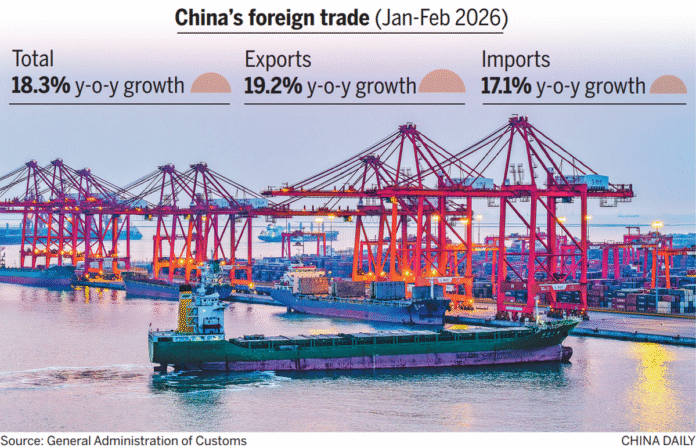
 According to data released by the General Administration of Customs of China, China’s total goods trade reached 7.73 trillion yuan ($1.12 trillion) in the first two months of 2026, representing a year-on-year increase of 18.3 percent.

 Exports climbed 19.2 percent to 4.62 trillion yuan, while imports rose 17.1 percent to 3.11 trillion yuan, highlighting the resilience of China’s manufacturing sector and signs of improving global demand.

 Economists say the strong performance underscores the continued competitiveness of China’s industrial base and its deep integration in global supply chains.

 Researchers at the University of International Business and Economics noted that China’s expanding middle-income population is likely to reshape import demand in the coming years, particularly toward consumer goods and higher-value products. Rising imports of advanced technology components and commodities are also expected to support industrial upgrading.

 Global economic conditions are also showing modest improvement. Manufacturing activity indicators in several major economies have remained above expansion thresholds, suggesting a gradual recovery in external demand.

 Sheana Yue, senior economist at Oxford Economics, said China is expected to maintain a strong manufacturing base in the near term.

 “Manufacturing investment and external demand will remain key growth drivers through 2026 and 2027,” Yue said, adding that consumption could play a larger role later in the decade as household incomes rise.

 Analysts at Morgan Stanley also expect global trade conditions to improve if the United States avoids recession and geopolitical tensions ease, which could provide additional support for China’s non-technology exports.

 Beyond trade flows, multinational companies increasingly see China not only as a consumer market but also as a critical production hub and innovation center for global operations.

 Foreign-invested enterprises recorded 2.2 trillion yuan in combined imports and exports in the first two months of the year, up 15.3 percent year-on-year.

 A recent survey by the American Chamber of Commerce in South China found that 45 percent of surveyed companies ranked China as their top global investment destination, while 75 percent plan to reinvest in the country in 2026.

 Member companies have earmarked about $13.79 billion in reinvestment over the next three to five years, reflecting continued confidence in China’s market potential and manufacturing ecosystem.

 Together, analysts say, the early-year trade momentum highlights China’s continuing role as a pillar of global supply chains and a stabilizing force in international trade.

 Key Data

 Total Trade (Jan–Feb 2026): 7.73 trillion yuan

 Exports: 4.62 trillion yuan (+19.2%)

 Imports: 3.11 trillion yuan (+17.1%)

 Foreign-invested enterprise trade: 2.2 trillion yuan (+15.3%)

 Source: General Administration of Customs of China

 Market Implications

 1. Manufacturing remains the growth anchor

China’s industrial ecosystem continues to support export competitiveness across machinery, electronics and intermediate goods.

2. External demand recovery is emerging

Improving manufacturing indicators in major economies suggest gradual stabilization in global trade flows.

 3. Multinationals continue to reinvest

Survey data shows foreign firms still view China as an essential production and innovation hub.

 What Investors Should Watch

 Global demand recovery in 2026–2027

 Trade performance of high-tech manufacturing exports

 Policy support for foreign investment and supply-chain resilience

 Shifts in China’s import demand as consumption expands


Article inline ad

China’s Strong Trade Start Supports 2026 Growth Outlook

0

According to a report by China Daily on March 11…

China’s foreign trade delivered a robust start to 2026, reinforcing expectations that external demand will remain an important driver of the country’s economic growth this year, economists and business leaders said.

 According to data released by General Administration of Customs of China, China’s total goods trade reached 7.73 trillion yuan ($1.12 trillion) in the first two months of 2026, marking a year-on-year increase of 18.3 percent.

 Exports rose 19.2 percent to 4.62 trillion yuan, while imports climbed 17.1 percent to 3.11 trillion yuan, reflecting improving global demand as well as the resilience of China’s manufacturing sector.

 Economists said the strong start indicates that China’s industrial base and supply chain advantages continue to support its position in global trade, even as the international economic environment remains uncertain.

 Researchers at Beijing-based University of International Business and Economics said China’s expanding middle-income population is expected to reshape import demand, particularly toward consumer goods and higher-value products. At the same time, rising imports of commodities and advanced technology components will support industrial upgrading and create new opportunities for exporters worldwide.

 Analysts also pointed to improving global conditions. Manufacturing indicators in several major economies have remained above expansion thresholds, suggesting a gradual recovery in external demand.

 Sheana Yue, senior economist at Oxford Economics, said China is likely to maintain a strong manufacturing base in the coming years, ensuring that exports continue to play a central role in economic growth.

 “Manufacturing investment and external demand will remain the main growth drivers through 2026 and 2027,” Yue said, adding that consumption may become a larger contributor later in the decade as household income and wealth effects strengthen.

 Global investment banks share a similar outlook. Analysts at Morgan Stanley expect a gradual improvement in global demand if the United States avoids a recession and trade tensions ease, which could support China’s non-technology exports in particular.

 Beyond trade flows, multinational companies increasingly see China as more than just a consumer market. Many view the country as a critical production hub, innovation center and export platform for global operations.

 Foreign-invested enterprises in China recorded 2.2 trillion yuan in combined imports and exports during the first two months of the year, a 15.3 percent increase year-on-year, according to customs statistics.

 Business sentiment also remains relatively positive. A recent survey by American Chamber of Commerce in South China found that 45 percent of surveyed companies ranked China as their top global investment destination, up from the previous year.

 The survey also showed that 75 percent of companies plan to reinvest in China in 2026, with member companies collectively allocating $13.79 billion from their China profits for reinvestment over the next three to five years.

 According to the chamber, many companies are expanding their presence in China to increase market share, strengthen local innovation capabilities and integrate more deeply into the country’s manufacturing ecosystem.

 Taken together, analysts say China’s strong trade performance early in the year underscores the country’s continued role as a pillar of global supply chains and a stabilizing force in international trade, even as geopolitical tensions and economic uncertainties persist.


Article inline ad

10th China-South Asia Expo Set For June 11-16 In Kunming

0

By Li Yingqing and Guo Yanqi | chinadaily.com.cn | Updated: 2026-03-11 

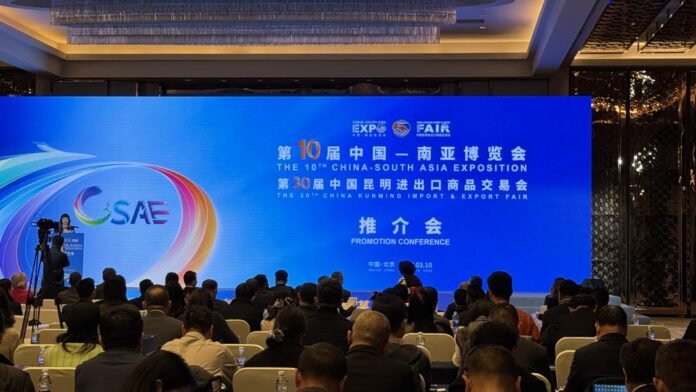
The 10th China-South Asia Expo (CSAE) and the 30th China Kunming Import and Export Commodities Fair will be held in Kunming, Yunnan province, from June 11 to 16, officials said Tuesday at a conference to promote the event in Beijing.

 The event brought together diplomatic representatives from 14 countries, officials, business associations, and company representatives, underlining the expo’s growing international reach.

 Co-hosted by the Ministry of Commerce (MOC) and the Yunnan provincial government, the CSAE has become a key platform for trade and economic cooperation between China and South Asian countries.

This year’s expo will cover 130,000 square meters and feature 13 pavilions, including those covering trade in services, green energy, manufacturing, biomedicine and healthcare, culture and tourism, sports, and agriculture, according to Liu Yong, vice-governor of Yunnan province.

 Liu said the event aims to create new drivers of cooperation and promote exchanges in openness, trade, industrial collaboration, people-to-people ties, and consumption.

 Trade and economic cooperation between China and South Asia has remained resilient and robust, according to Wang Liping, director of the Department of Asian Affairs at MOC. “Last year, the trade volume exceeded $200 billion for the first time, up 10.7 percent year-on-year,” he said.

Wang called for stronger cooperation in areas including branding, cross-border e-commerce, and the green economy.

 Diplomatic representatives at the event also highlighted the expo’s role in promoting bilateral and multilateral cooperation.

 This year’s theme country is set to be Bangladesh. Md. Nazmul Islam, Bangladesh’s ambassador to China, said the country would use the expo to showcase its economic potential, diverse culture, and export products.

Khalil Hashmi, Pakistan’s ambassador to China, noted that this year marks the 75th anniversary of diplomatic ties between the two countries. He hoped that the expo could help further upgrade bilateral trade and deepen investment cooperation.

 The expo secretariat said the expo would build on the complementary strengths of China, South Asia, and neighboring regions, while further highlighting Yunnan’s role as a gateway to South Asia, Southeast Asia, and the Indian Ocean region.


Article inline ad

China Pushes Domestic Quantum Computing Industry to Global Stage

0

According to a report by China Daily on March 9th…

China is accelerating its efforts to establish a self-reliant quantum computing industry, aiming to translate homegrown breakthroughs into global commercial influence, according to a national lawmaker and industry leader.

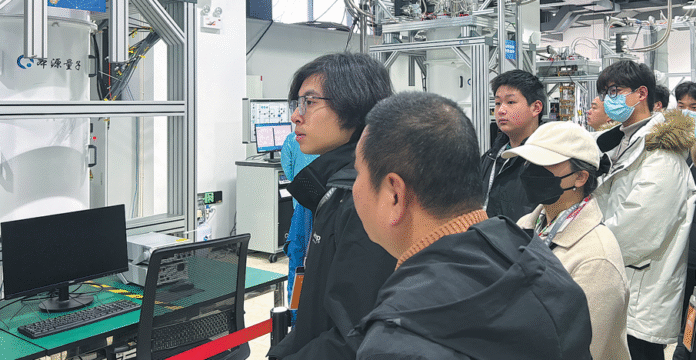
Origin Quantum, based in Anhui province, has achieved full domestic control over key quantum technologies — from chips and operating systems to complete quantum machines — and now offers cloud-based quantum computing services to users in over 160 countries and regions.

“Key technologies cannot be asked for, bought, or borrowed. We must break through ourselves,” said Guo Guoping, deputy to China’s National People’s Congress and chairman of Origin Quantum.


Milestones in Domestic Quantum Development

Over the past two decades, Origin Quantum has:

  • Developed superconducting quantum processors with 72 qubits

  • Launched the Origin Wukong quantum computer

  • Established China’s first dedicated quantum chip production line

  • Released the first domestically developed quantum computing operating system, available for global download

The Wukong platform has already processed over 810,000 quantum computing tasks and attracted 46 million visits from users worldwide, demonstrating early practical use of a technology still in its infancy.


Industrial and Global Implications

Origin Quantum is working to integrate general-purpose computing, supercomputing, intelligent computing, and quantum computing into a fully self-reliant industrial ecosystem. Early applications target key sectors such as:

  • Precision medicine

  • Low-altitude aviation

  • Autonomous driving

The company aims to cultivate and expand future industries, positioning China as a potential global leader in next-generation computing technologies.


Strategic Takeaways for International Observers

  1. Self-reliance in critical technology – China is developing domestic quantum capabilities independent of foreign suppliers.

  2. Global reach – Cloud-based services allow worldwide access to domestic quantum systems, expanding international influence.

  3. Future industrial potential – Early application in strategic sectors may accelerate adoption and create new market opportunities.

For investors and technology observers, China’s progress in quantum computing highlights the country’s focus on high-end technology innovation, industrial autonomy, and global competitiveness.

Article inline ad

Nexperia China Advances Domestic Chip Production Amid Supply Chain Tensions

0
According to a report by China Daily on March 9th…
Chinese unit of the Netherlands-based semiconductor company Nexperia has made a significant step toward localizing chip manufacturing, starting small-scale production of bipolar discrete devices on a domestically developed 12-inch wafer platform. The move underscores China’s push for self-reliance in semiconductors amid international supply chain challenges.

Breakthrough in Domestic Production

Nexperia China announced that its in-house 12-inch wafer platform successfully produced bipolar discrete devices in pilot volumes. The company also developed a new electrostatic discharge (ESD) protection device, designed to safeguard transmission lines from static discharge, surge currents, and short circuits. These components are targeted at consumer electronics, including smartphones and portable devices.


Context: Supply Chain Disruption

The development comes after Nexperia’s Dutch headquarters disabled a batch of employee accounts in China, restricting access to internal systems and temporarily affecting parts of the production process.

Industry sources suggest the move may have been triggered by China unit’s substantive progress in wafer localization, potentially undermining prior efforts to limit expansion by controlling wafer supply.

“The China team’s progress in domestic manufacturing may have prompted the parent company to restrict system access,” a person familiar with the matter told China Daily.


Strategic Significance

This initiative signals several broader trends for international observers:

  1. China’s push for semiconductor self-reliance – Domestic wafer platforms reduce dependence on overseas suppliers.

  2. Supply chain resilience – Local production helps mitigate risks arising from geopolitical tensions or external control over critical components.

  3. Consumer electronics market support – The localized components target high-demand sectors such as smartphones and portable devices, ensuring continuity of supply.


Market Implications

As global semiconductor supply chains face ongoing uncertainty, the move by Nexperia China highlights the strategic importance of domestic production in sustaining China’s electronics industry. Analysts note that such developments may accelerate the localization of critical technologies, reinforcing China’s position in next-generation electronics manufacturing and industrial security.


Outlook

For international investors and tech observers, the Nexperia China case illustrates the intersection of technology advancement and supply chain geopolitics. It emphasizes the need to monitor domestic chip production capabilities, local R&D initiatives, and how multinational companies navigate the balance between global operations and regional autonomy.

Article inline ad

Tech Innovation Underlined For Construction Soes

0

By Zhuang Qiange | CHINA DAILY | Updated: 2026-03-10 

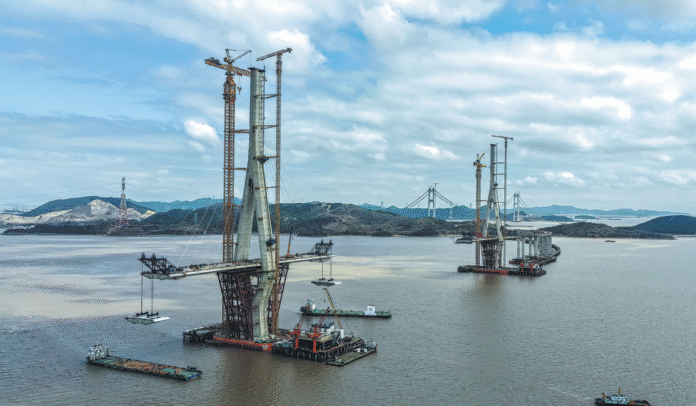
 An image captures the construction of the Qinglongmen Bridge, linking Fodu and Meishan islands in Zhejiang province, on Wednesday. Spanning 756 meters, the project — jointly built by units of China Railway Construction Corp — stands as the largest steel box girder cable-stayed bridge with three towers in the world. YAO FENG/FOR CHINA DAILY

State-owned builders should place greater focus on technological and business model innovation to accelerate the construction industry’s transition to high-quality development-driven growth and expand infrastructure cooperation in markets involved in the Belt and Road Initiative, said a member of the 14th National Committee of the Chinese People’s Political Consultative Conference.

 Dai Hegen, an attendee at the ongoing two sessions as a member of the 14th National Committee of the CPPCC, said: “The construction industry, a pillar of China’s national economy, is at a critical juncture of transitioning from scale expansion to high-quality development.

 “Accelerating the in-depth integration of scientific and technological innovation, as well as industrial innovation, has become an inevitable choice for the construction industry to achieve high-quality development and serve major national strategies.”

 Strengthened breakthroughs in core technologies — such as the nation’s self-developed software for the construction industry, high-performance green building materials and engineering control systems — will help central enterprises gain more opportunities to expand cooperation in overseas markets, where green transition is progressing at an even faster speed, said Dai, who is also chairman of China Railway Construction Corp.

 “In addition, as Chinese enterprises’ overseas development transitions from scale expansion to high-quality improvement, the nation should give fuller play to the role of building industrial clusters aligned with key BRI projects to guide enterprises to go global in clusters. This will foster a complete industrial ecosystem with robust upstream and downstream supporting linkages, and unlock greater scale effects for high-quality development.”

 Latest official data and policy proposals highlight the shift from scale expansion to high-quality development in overseas operations. Official data released by the Ministry of Commerce in January showed that in 2025, Chinese enterprises signed new engineering contracts worth $257.98 billion in Belt and Road partner countries, up 10.8 percent year-on-year, with completed turnover reaching $152.63 billion, an increase of 9.3 percent.

 These figures accounted for 89.2 percent and 85.4 percent of China’s total overseas contracting business, respectively, with central SOEs as the backbone of such cooperation.

 In October, China, Tanzania and Zambia signed agreements to revitalize the Tanzania-Zambia Railway Authority (TAZARA), one of Africa’s landmark transport corridors.

 The project, valued at some $1.4 billion, is the result of more than 18 months of negotiations. The project will include an initial $1.1 billion investment, to be followed by $238 million in additional investment. CRCC, which originally built TAZARA between 1970 and 1976, will spearhead the revitalization.

 Long Chaocan, an investment consultant with China Galaxy Securities Co Ltd, said central SOEs’ innovation capacity is critical to their global competitiveness.

 “Only by mastering core technologies and building innovation consortia can SOEs shift from being followers to leaders in the global market, and better adapt to the diversified needs of BRI markets,” Long said.

 zhuangqiange@chinadaily.com.cn

Article inline ad

China Eyes Humanoid Robots as Next Industrial Game-Changer

0

According to a report by China Daily on March 9th…

China is accelerating efforts to bring humanoid robots from experimental stages to large-scale deployment in smart manufacturing, positioning them as a potential “disruptive product” on par with computers, smartphones, and electric vehicles.

Lei Jun, founder of Xiaomi and deputy to the National People’s Congress, outlined a strategic vision for humanoid robotics, describing it as a cornerstone of China’s “new quality productive forces.”


Industrial Applications and Early Success

Pilot programs in sectors such as automotive manufacturing demonstrate the value of humanoid robots. The machines are performing repetitive, high-intensity tasks like sorting, assembly, and inspection, reducing costs and boosting efficiency.

Despite China’s first-mover advantage in humanoid robotics and general-purpose AI, Lei noted that large-scale industrial adoption faces hurdles:

  • High hardware costs

  • Limited process stability

  • Shortage of operational positions on factory floors

Currently, these robots are still in an “apprentice” phase, not yet functioning as fully autonomous industrial workers.


Strategic Roadmap for Scaling

Lei proposed a multipronged strategy to accelerate deployment:

  1. Expand operational environments – Increase the number and diversity of workstations to improve real-world usage.

  2. Enhance safety and standards – Develop regulations for human-robot collaboration, data interfaces, and key components.

  3. Integrate AI models – Standardize the integration of large AI models with humanoid robots, including unique coding for safety and traceability.

  4. Support innovation and talent – Encourage private foundations and academic institutions to invest in basic research and skill cultivation.

  5. Drive cost-effective mass production – Address engineering challenges to reduce production costs and improve reliability.


Market Potential

Market analysts forecast rapid growth for China’s humanoid robot sector:

  • Annual shipments could exceed 2.6 million units by 2035

  • Market value may surpass 140 billion yuan ($20.2 billion), with potential to reach a trillion-yuan scale

These projections reflect the technology’s promise as a key driver of industrial productivity and a strategic sector for long-term economic growth.


Outlook

For international investors and tech observers, China’s humanoid robotics push signals:

  • Integration of AI and robotics to enhance manufacturing efficiency

  • Policy-backed innovation supporting early adoption and industrial scale-up

  • Growing industrial ecosystem to bridge engineering challenges and operational deployment

With continued technological refinement and regulatory standardization, China aims to transform humanoid robots into formal industrial workers, potentially redefining the global robotics and smart manufacturing landscape.

Article inline ad