Tuesday, November 24, 2026

Home Blog Page 38

Hong Kong Positioned as Global Financing Gateway for Chinese Companies

0

According to a report by China Daily on March 12…

Hong Kong is expected to play an expanding role as a global financing platform for companies from the Chinese mainland, helping them raise capital internationally and support overseas expansion while advancing the internationalization of the renminbi.

 Speaking on the sidelines of China’s annual “two sessions” meetings, William Doo Jr, a member of the National Committee of the Chinese People’s Political Consultative Conference (CPPCC), said the city’s position as a global financial center and the world’s largest offshore renminbi hub provides unique advantages for cross-border financing.

 Doo, who is also chief executive of Fungseng Prosperity Holdings Ltd, said Hong Kong’s deep pool of international investors and mature financial ecosystem makes it an ideal location for mainland companies seeking offshore funding.

 “Hong Kong has long been an international financial center with a very extensive global investor base,” Doo said, noting that mainland companies can issue offshore renminbi bonds and access international capital through the city’s markets.

 Hong Kong’s financial infrastructure—including global investment banks, international law firms and asset managers—supports a wide range of cross-border financing activities, helping Chinese companies expand abroad while promoting wider use of the renminbi in global markets.

 The city’s stock market has also become a major gateway connecting mainland firms with international investors. In 2025, Hong Kong ranked first globally for initial public offerings, with 119 listings raising HK$285.8 billion ($36.5 billion). Companies from the Chinese mainland accounted for nearly 90 percent of the funds raised, according to exchange data.

 Doo said overseas investors increasingly rely on Hong Kong as a platform to access China’s corporate sector.

 “When mainland companies list in Hong Kong, international investors are able to participate in their growth in the Chinese mainland,” he said. “At the same time, listing in Hong Kong helps raise their global visibility.”

 Hong Kong has also developed a range of policy frameworks to facilitate cross-border investment and renminbi internationalization. Programs such as the Bond Connect scheme link the mainland and Hong Kong bond markets, allowing global investors to trade Chinese debt securities more easily.

 The city now processes roughly 75 percent of global offshore renminbi payments, reinforcing its position as the world’s leading offshore RMB center.

 Beyond finance, Doo said Hong Kong could further deepen collaboration with mainland cities in sectors such as healthcare, biotechnology and traditional Chinese medicine.

 Hong Kong’s first dedicated traditional Chinese medicine hospital began operations in December 2025, offering integrated treatment that combines Chinese and Western medical practices while serving as a teaching and research base for local universities.

 Leading institutions such as the University of Hong Kong, the Chinese University of Hong Kong and the Hong Kong University of Science and Technology are already engaged in biomedical research and joint projects with mainland partners, including precision medicine and new drug development.

 Doo said deeper integration with innovation centers such as Shenzhen within the Guangdong-Hong Kong-Macao Greater Bay Area could accelerate development of emerging health technologies and biotechnology industries.

 Policy signals from Beijing also point to a larger role for Hong Kong in the coming years. China’s 2026 Government Work Report reaffirmed support for Hong Kong’s integration into the country’s broader development strategy under the “one country, two systems” framework.

 The draft outline of the upcoming 15th Five-Year Plan (2026–2030) further highlights Hong Kong’s role in strengthening its status as a global financial center and offshore renminbi hub, while supporting its development as an international innovation and technology center.

 “The role of Hong Kong is not only to integrate into the country’s development,” Doo said. “It is also to serve the country’s development in a more proactive way.”
Article inline ad

China Calls for Stronger Policy Support for Semiconductor Materials

0

According to a report by China Daily on March 12…

China is stepping up efforts to strengthen its domestic semiconductor materials industry as policymakers and industry leaders push to reduce reliance on foreign suppliers and secure critical technology supply chains.

 Speaking during China’s annual “two sessions” meetings, Li Shaoping, a deputy to the 14th National People’s Congress and chairman of chemical materials company Sinophorus, urged the government to expand policy support for the sector, which remains heavily dependent on overseas technology despite recent breakthroughs by domestic firms.

 Semiconductor manufacturing relies on hundreds of highly specialized electronic chemicals. Among the most technically demanding are photo-initiators used in photoresists — a critical material in lithography processes used to produce integrated circuits.

 According to Li, these materials have long been dominated by suppliers from the United States, Japan and South Korea, with China historically relying on imports for more than 95 percent of its supply.

 However, Chinese researchers are beginning to close the gap.

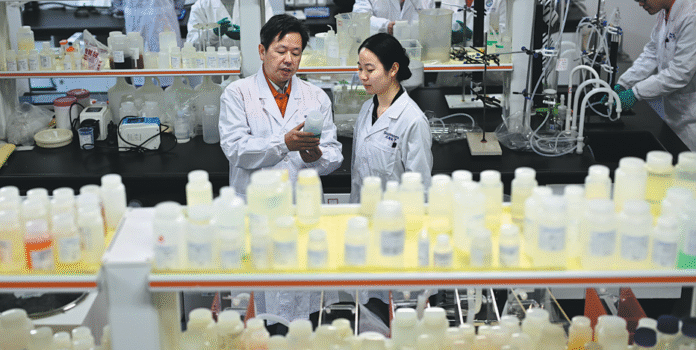
 A research laboratory associated with Li’s team recently spent three years overcoming key synthesis and purification challenges, achieving performance levels comparable to imported materials. The technology was transferred to Sinophorus late last year in a transaction valued at more than 46 million yuan ($6.4 million), allowing the company to move the innovation from laboratory research to industrial production.

 “Only when innovation moves from the lab to the production line can it truly solve industrial challenges,” Li said.

 The company said it has since addressed more than 70 supply bottlenecks in electronic chemicals. Its production capacity has reached 460,000 metric tons, making it one of China’s largest electronic chemicals producers.

 Beyond semiconductor materials, Sinophorus has also expanded across the broader phosphorus chemical value chain, aiming to move Chinese producers into higher-value segments of global specialty materials markets.

 The company has reported progress in industrial-scale production of black phosphorus — an emerging advanced material with potential applications in batteries, electronics and optoelectronics. According to the company, its manufacturing process has reduced raw material costs from around 150 yuan per kilogram to about 90 yuan.

 Sinophorus has also entered the fast-growing new energy materials sector, developing multiple generations of lithium iron phosphate battery materials.

 Li said the integration of technological innovation with industrial production is key to building what Chinese policymakers describe as “new quality productive forces”, a concept referring to innovation-led industrial upgrading.

 Looking ahead, the company plans to increase research investment and focus on materials required for advanced semiconductor manufacturing processes.

 “Our goal is to move China’s microelectronics materials industry into the global first tier,” Li said.

 At the policy level, Li called for stronger national coordination to support the semiconductor materials industry. He suggested improving industrial planning to avoid excessive duplication, expanding pilot-scale testing platforms to accelerate commercialization of research results, and strengthening recycling policies to promote greener industrial development.

 He also emphasized the importance of long-term investment in basic research and deeper collaboration between government, industry, universities and research institutes.

 “Key core technologies cannot simply be bought,” Li said. “True breakthroughs must rely on independent innovation.”


Article inline ad

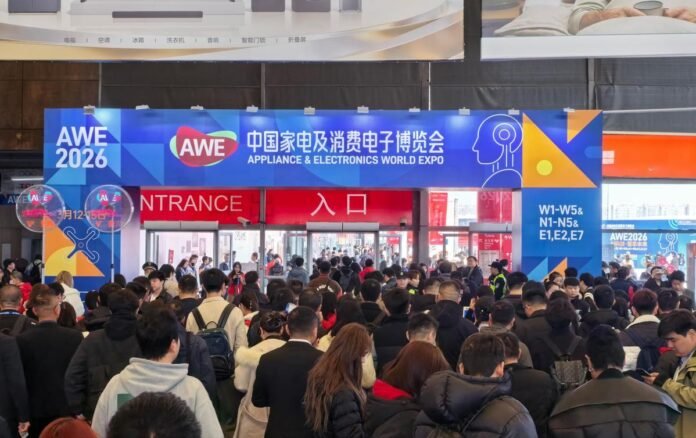
AI Tech On World Stage At AWE 2026

0

By YUAN SHENGGAO | China Daily | Updated: 2026-03-12 

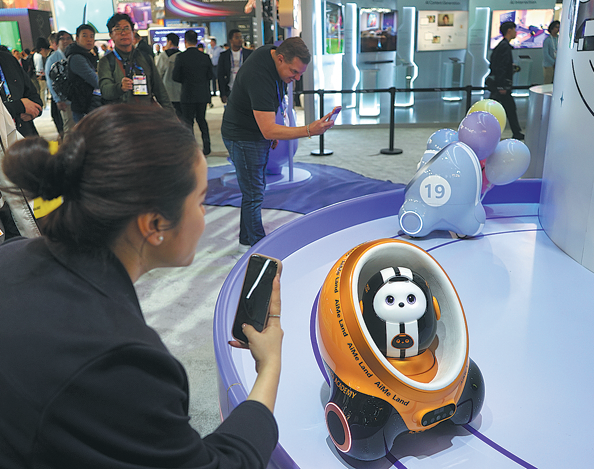
The Appliance and Electronics World Expo, a key stage for global tech giants and a beacon for future smart living, features over 1,200 leading companies worldwide this year. It is showcasing cutting-edge technologies, artificial intelligence applications and smart ecosystems while highlighting the latest digital and green advances in home appliances and consumer electronics.

 With the theme “Smart AI, Smarter Future”, this year’s expo runs from Thursday to Sunday. As the primary exhibition venue, the Shanghai New International Expo Center houses 13 pavilions, covering an exhibition area of more than 140,000 square meters.

 As China’s largest exhibition for home appliances and consumer electronics, the event hosts a group of world-leading companies including Haier, Huawei, Hisense, TCL, LG, Sony, Bosch, Siemens and Gree.

 Following the launch of AI Vision technology in 2025, which marked a step toward unmanned housework, Haier Smart Home makes an upgraded appearance this year at AWE. It brings together brands including Haier, Casarte, Leader and Fisher & Paykel to showcase its AI innovation achievements in technology, suites and scenarios.

 Huawei is presenting its full-scenario products based on the Harmony operating system in a 3,200-sq-m exhibition area, demonstrating the innovative and immersive experiences of a future smart home.

 Sony is showcasing a vibrant world with its well-known game, animation and movie characters. The Japanese company is highlighting the picture quality of its next-generation RGB LED TV to the public for the first time at the ongoing AWE.

 An increasing number of brands are choosing to upgrade their strategies at AWE. Dreame, a high-tech brand, has reserved an entire pavilion with eight booths, covering smart vehicles, smartphones, home appliances, aerospace, energy, chips and computing power, to demonstrate its all-scenario smart ecosystem and future tech layout.

 AWE 2026 also gathers a group of smart mobility companies as the sector is transforming from a transportation tool to a lifestyle experience space that integrates technology and emotional value.

 US electric vehicle maker Tesla is showcasing its humanoid robot and full lineup of EVs, including the Cybertruck. China’s largest new energy vehicle maker, BYD, is displaying models under its Denza and Fangchengbao brands, as well as its fast-charging technology, driving assistance system and car-home connectivity system.

 In addition, Skydream, Segway-Ninebot and Sky Motor are making their first appearances at AWE with smart new energy caravans, scooters and karts.

 This year’s expo has set up an innovative technology zone for the first time, bringing tech enterprises with huge potential and vision. Unitree and MagicLab are presenting the same robots shown at the 2026 CCTV Spring Festival Gala.

 Meanwhile, AI hardware enterprises including Insta360, Ugreen and Qianwen are displaying products such as panoramic cameras, storage, AI glasses and headphones, presenting the deployment and application of AI in imaging products, storage hardware and wearable devices.

 To bring the latest innovations to everyone, AWE 2026 goes beyond traditional exhibition displays, creating an immersive tech carnival where visitors can experience, enjoy and shop.

 This year, the AWE organizing committee has again partnered with JD, Tmall, Douyin, Suning and other major shopping platforms to launch the AWE Shopping Festival, offering subsidies and exclusive benefits to consumers.

 Celebrities and influencers from home and abroad are visiting the exhibition. Through livestreams, short videos and long-form videos, they are providing an immersive experience of AWE 2026, enabling viewers to understand the latest technologies and products in a more intuitive way.

 For the first time, the coffee lifestyle festival and kitchen appliance & gourmet festival are being held at AWE this year. Through interactive experiences, cutting-edge tech becomes tangible and tasteful, adding a warm touch to the tech fest.

 The highly anticipated AWE Livestream Night will be held on Thursday and Friday, with hundreds of companies going live simultaneously to boost brand visibility.

 The expo is also hosting several high-level forums, engaging in in-depth discussions on topics such as AI empowerment, channel transformation and industry collaboration. The Home Service Robot Industry Development Forum and the Inaugural Meeting of the Home Service Robot Committee, held on Thursday, are among the most strategically significant events at this year’s AWE.

Article inline ad

China Weekly Economy Brief

0

According to a compilation by China Daily on March 11

 China Economy

Industrial Transformation & Cultural Economy

Liuyang Reinvents Fireworks Industry: Tradition Meets High-Tech Innovation

 Liuyang, Hunan province, has transformed its 1,400-year-old fireworks industry into a high-tech, globally competitive cultural economy. The city now accounts for ~70% of China’s fireworks exports and supports ~300,000 jobs.

 Drone-enabled fireworks: 7,900 simultaneous launches, Guinness World Record

 Environmental innovation: sulfur-free, low-smoke formulations reduce residue by 80%

 Tourism and emotional economy: 7 million visitors since 2023, generating 20+ billion yuan in local spending

 Export shift: turnkey cultural fireworks shows now replace commodity exports

 Zhang Yang, general manager of Liuyang Intently Fireworks Display Co Ltd, highlights the combination of technology, cultural storytelling, and industrial integration as the key driver of Liuyang’s global success.

 Consumer Market & Domestic Demand

TCL Calls for Differentiated Products to Unlock Domestic Consumption

 TCL Technology Group highlights the need for differentiated products and services to stimulate China’s domestic consumption, which remains below GDP growth levels:

 Retail sales 2025: +3.7% vs GDP +5%

 TV market: 32.9M units in China (-8.5%), 49.9M units in the US

 Growth potential: audiovisual content market ~1.5T yuan vs US 4.5T yuan

 TCL emphasizes services, cultural content, and higher-quality consumption as engines to expand the domestic market.

 Investment & Global Business

AmCham: 45% of Firms Rank China as Top Global Investment Priority

 According to the American Chamber of Commerce in South China:

 45% of 426 surveyed companies name China as their top investment priority (+6 pp from 2024)

 75% plan to reinvest in China in 2026, totaling $13.79B over 3–5 years

 Guangzhou and Shenzhen dominate as top investment destinations

 US companies are deepening engagement, focusing on market share, innovation, localization, and integration within China.

 Regional Economy

Nanyang GDP Hits 500 Billion Yuan, Drives Growth Through Infrastructure & Openness

 Nanyang, Henan province, posted GDP of 516.8B yuan in 2025, second-fastest growth in the province (6.5%). Key initiatives:

 Integrated transportation: Tanghe River shipping, high-speed rail connections

 Business environment reforms: streamlined administration, market-oriented policies

 Cross-border e-commerce pilot: fostering international trade and logistics hubs

 The city is positioning itself as a national logistics hub and inland opening-up highland.

 Contact: masi@chinadaily.com.cn

 International Trade & Legal Protection

Legal Framework Strengthened for Chinese Overseas Assets

 China is drafting legislation to protect overseas investments and personnel, providing:

 Clearer legal backing for Chinese enterprises

 Coordination among agencies to manage geopolitical and regulatory risks

 Support for Belt & Road Initiative projects, including energy and transport

 Outbound direct investment in 2025: $145.66B, with strong growth in Africa (+41%) and Europe (+20.9%).

 Energy & Advanced Technology

First China-Built Offshore Fracturing Vessel Delivered

 China National Offshore Oil Corporation delivered the first self-designed offshore fracturing vessel:

 Global top-class dimensions for offshore energy operations

 Enhances development of low-permeability oil and gas resources

 Key step in advancing China’s energy security and technological independence

 China Unveils Self-Developed Ultra-High-Strength Carbon Fiber

 SYT80 (T1200-grade) carbon fiber achieves industrial-scale production (hundreds of tons/year)

 Tensile strength ~10× steel, density ~¼ steel

 Applications: aerospace, low-altitude economy, humanoid robotics

 China becomes first nation with mass production at this strength level

 Biopharmaceutical Innovation

Stronger Financing Needed to Fuel Drug Innovation

 China’s pharmaceutical sector seeks enhanced investment and financing mechanisms to accelerate innovation:

 230 innovative drugs approved during 14th Five-Year Plan (2021–25)

 Outbound licensing deals >$130B

 Proposals: industry investment funds, S funds for liquidity, broader biotech listing channels

 Goal: support commercialization of breakthroughs, strengthen global competitiveness.

 Summary

 This week’s briefing highlights China’s industrial modernization, innovation, and global integration:

 Traditional industries upgraded with high-tech and cultural innovation (Liuyang fireworks)

 Domestic consumption and service markets remain key growth drivers (TCL)

 Regional economies leverage infrastructure and cross-border trade (Nanyang)

 Chinese enterprises expand globally under stronger legal and financial frameworks

 Strategic technologies in energy, materials, and biotech are advancing


Article inline ad

China Unveils Industry-Scale Ultra-High-Strength Carbon Fiber

0

According to a report by China Daily on March 11…

 China has officially launched its self-developed SYT80 (T1200-grade) ultra-high-strength carbon fiber, marking a major milestone in advanced materials and positioning the country as a global leader in mass production of cutting-edge carbon fiber.

 Industrial-Scale Breakthrough

 Developed by a subsidiary of China National Building Material Group Co Ltd (CNBM), the new carbon fiber is already produced at industrial scale, with annual output in the hundreds of tons.

 Fiber diameter: less than one-tenth of a human hair

 Tensile strength: ~10× conventional steel

 Density: ~¼ of steel

 The combination of extreme strength and lightweight properties offers significant advantages for a wide range of high-end industrial applications.

 Strategic Applications Across Emerging Industries

 Experts say the SYT80 carbon fiber is expected to become a key material for:

 Aerospace: Lightweight structures for aircraft, satellites, and drones

 Low-altitude economy: Advanced unmanned aerial vehicles (UAVs) and delivery drones

 Humanoid robotics: High-strength, lightweight components for next-generation robotics

 By enabling next-generation equipment and advanced manufacturing, the material helps support China’s ambitions in strategic emerging industries and strengthens its competitive position in global high-tech markets.

 Global Significance

 Unlike many cutting-edge materials that remain in laboratory stages, SYT80 has already achieved mass production, making China the first country worldwide to produce ultra-high-strength carbon fiber at industrial scale. This breakthrough addresses a long-standing gap in the global market and provides a foundation for both domestic innovation and international collaboration.

 Experts say this development could accelerate the adoption of carbon fiber across multiple sectors, from defense and aerospace to robotics and energy, while reducing reliance on imports of high-grade materials.


Article inline ad

Liuyang Reinvents Fireworks Industry: Tradition Meets High-Tech Innovation

0

According to a report by China Daily on March 11…

Liuyang, a county-level city in Hunan, long celebrated as the cradle of China’s fireworks industry, is transforming a seasonal craft into a year-round global cultural and technological enterprise.

 From Family Workshops to Drone-Enabled Spectacles

 For decades, Liuyang’s fireworks sector followed a simple model: produce and export. Creativity and intellectual property were rare. That began to change when Zhang Yang took over Liuyang Intently Fireworks Display Co Ltd.

 2025 output value: 50 billion yuan ($7.26 billion)

 Share of China’s fireworks exports: ~70%

 Jobs supported: ~300,000

 Zhang has shifted the focus from industrial production to creative storytelling and performance, turning fireworks into cultural works and tourism attractions.

 Pioneering Drone Fireworks Technology

 During the COVID-19 pandemic, Zhang redirected resources to develop heavy-payload drones capable of launching fireworks, merging traditional pyrotechnics with aviation engineering:

 Drones with wingspans >1 meter, industrial-grade carbon-fiber mounts

 Remote ignition at 500 meters, resistant to signal interference

 Redesign of propellants and launch systems to balance recoil and stability

 In 2025, Intently showcased its new system at the Liuyang Fireworks Competition, winning top honors with a nine-tiered display inspired by Tang Dynasty poet Li Bai. Later, the company set a Guinness World Record, launching 7,900 drone-mounted fireworks simultaneously with minimal smoke.

 Environmental Innovation

 Sustainability is central to Liuyang’s new fireworks technology:

 Finer-milled propellant and honeycomb-shaped charges for complete combustion

 Water-based binders replace alcohol and resin

 Sulfur-free formulations reduce residue by ~80%

 “Fireworks are no longer synonymous with high risk and pollution,” Zhang says. “They are precise, controllable technology products.”

 Cultural Storytelling & Emotional Economy

 Liuyang has leveraged the emotional economy, blending fireworks with narrative and immersive experiences:

 Example: “White Moon and Brahma Star” integrates drone choreography with storytelling inspired by the legend of Liang Shanbo and Zhu Yingtai

 Audience engagement has shifted from passive viewing to co-creating cultural experiences

 Weekend shows at the Liuyang Sky Theater attract over 7 million visitors since 2023, generating 20+ billion yuan in local spending

 Global Market & Technology Export

 Liuyang is moving from exporting products to exporting experiences and Chinese culture:

 Drone fireworks now shipped to markets like Ethiopia

 International clients increasingly purchase turnkey shows rather than standalone fireworks

 Revival of Song Dynasty palace fireworks demonstrates integration of 1,400-year tradition with modern engineering

 “Liuyang’s industrial ecosystem thrives on openness and collaboration,” Zhang says. “We are exporting technology, culture, and a story, not just fireworks.”

 Key Takeaways for Investors and Observers

 Industrial modernization: Drone integration, automation, and digital safety systems transform traditional production.

 Environmental leadership: Green propellants and low-smoke displays reduce ecological impact.

 Cultural economy growth: Fireworks experiences drive tourism, emotional consumption, and related industries.

 Global competitiveness: Turnkey solutions and intellectual property strengthen international market position.

 Innovation-driven industrial ecosystem: Combines heritage, technology, and creative entrepreneurship.


Article inline ad

Liuyang Rebuilds 1,400-Year-Old Fireworks Industry for Modern Global Markets

0

By ZH Sailing Research | March 2026

 Liuyang, a county-level city in Hunan, long famed for its 1,400-year-old fireworks tradition, is transforming a seasonal, labor-intensive craft into a high-tech, environmentally friendly, and culturally immersive industry.

 From Cottage Industry to High-Tech Production

 Historically, families in Liuyang manually mixed black powder and assembled fireworks shells, combining artisanal skill with serious safety risks and pollution. Since privatization and restructuring in 1998, the city has centralized production and embraced digital and green technologies:

 200+ companies completed digital upgrades.

 20 fully automated demonstration lines now operate citywide.

 66,000 AI-enabled cameras feed a centralized risk-warning system.

 Dangerous chemical-handling processes now follow human-machine separation, reducing worker exposure.

 Fireworks now use single-base powder, plant-fiber materials, and micro-smoke technology, reducing emissions and post-combustion residues by ~80%.

 Cultural and Emotional Economy Boosts Growth

 Liuyang has integrated fireworks into cultural tourism, turning displays into a year-round attraction and leveraging China’s emotional economy:

 China’s emotional economy reached 2.7 trillion yuan ($380 billion) in 2025, projected to exceed 4.5 trillion yuan by 2029.

 Liuyang hosted 142 major weekend displays since 2023, drawing 7 million visitors annually.

 Tourists generate over 20 billion yuan in local spending on hotels, dining, and cultural products.

 Moving Up the Global Value Chain

 Firms now deliver full entertainment solutions, not just products:

 Fireworks displays combined with augmented reality and cultural workshops.

 Independent Liuyang brands now account for 40%+ of exports.

 In the US market, Chinese-owned brands contribute over 50% of sales, despite trade tensions.

 Example: China Galaxy Pyrotechnics Co Ltd organized a 62-minute New Year’s Eve display in Abu Dhabi, setting four Guinness World Records while keeping the desert sky clear with micro-smoke technology.

 Shaping Global Standards and Expanding Logistics

 Liuyang influences the global fireworks sector:

 China hosts the ISO/TC264, with Liuyang contributing 22 international standards (≈70% of the global total).

 Local authorities are exploring new logistics routes, including a China-Europe rail freight service, to overcome export bottlenecks.

 Key Takeaways

 Innovation meets heritage: Digitalization, automation, and green technology modernize ancient craftsmanship.

 Cultural and emotional economy integration: Transforms seasonal products into year-round attractions.

 Global competitiveness: Exports evolve from simple products to turnkey experiences and brands.

 Resilience: Safety, environmental measures, and diversified logistics ensure long-term sustainability.

 Key Data

 Domestic market share: ~60% of China’s fireworks market

 Export share: ~70%

 Major displays since 2023: 142

 Annual visitors: 7 million

 Related local spending: 20+ billion yuan

 International standards contributed: 22 (≈70% of global total)

 Source: Liuyang fireworks associations, iiMedia Research, Hunan Department of Commerce

 Market Implications

 Sustainable modernization: Digitalization, automation, and green innovation increase safety and efficiency.

 Revenue growth via experiences: Emotional and cultural consumption drives domestic and international demand.

 Global leadership: Turnkey solutions, independent brands, and international standards strengthen competitive position.

 What Investors Should Watch

 Expansion of automated, AI-enabled production lines

 Growth of cultural tourism-driven revenue streams

 Adoption of green pyrotechnics technologies

 Global market penetration of Liuyang turnkey fireworks solutions

 Influence on international standards via ISO/TC264


Article inline ad

China Looks to Boost Drug Innovation Through Stronger Financing

0

By ZH Sailing Research | March 2026

 China is aiming to strengthen investment and financing mechanisms for its biopharmaceutical sector to support innovation and accelerate commercialization, according to Ding Lieming, chairman of Betta Pharmaceuticals Co Ltd and member of the Chinese People’s Political Consultative Conference.

 Speaking at the ongoing two sessions, Ding said that while China has made significant strides in pharmaceutical innovation, financial support must better match the long development cycles and high risks of drug development.

 Rising global presence

 China’s pharmaceutical innovation has advanced rapidly:

 During the 14th Five-Year Plan (2021–25), 230 innovative drugs were approved in China, including 76 in 2025 alone.

 Chinese drugmakers’ outbound licensing deals exceeded $130 billion, reflecting growing global influence.

 “These achievements show that China has become a major source of global pharmaceutical innovation,” Ding said.

 However, developing a new medicine is costly and time-consuming, typically taking around 10 years, requiring roughly $1 billion in investment, and yielding a success rate of less than 10 percent.

 Financing solutions to accelerate innovation

 To address these challenges, Ding proposed several measures:

 Expand industry investment funds

 Leading pharmaceutical companies act as “chain leaders,” building collaborative ecosystems to connect research breakthroughs with commercial development.

 Increase government-private capital cooperation

 Support innovative drug development and accelerate the commercialization of new technologies.

 Broaden listing channels for biotech firms

 Allow non-profitable companies backed by industry funds to access capital markets, improving financing flexibility.

 Encourage mergers and acquisitions

 Simplified review processes and faster approval timelines can speed up the commercialization of promising research projects.

 Develop S funds (secondary private equity funds)

 Provide liquidity for investors, enabling them to sell stakes in venture capital or private equity portfolios while bringing in new capital.

 Ding emphasized that state-owned capital could play a leading role in establishing such funds, creating a win-win for investors, innovators, and funded companies.

 Key Data

 Innovative drugs approved (2021–2025): 230

 Approved in 2025: 76

 Outbound licensing deals value: $130+ billion

 Typical new drug development cycle: ~10 years

 Estimated R&D investment per new drug: ~$1 billion

 Success rate for new drugs: <10%

 Source: Betta Pharmaceuticals, CPPCC, official reports

 Market Implications

 1. Stronger financing supports global competitiveness

Enhanced investment mechanisms could help Chinese pharmaceutical firms bring more innovations to international markets.

 2. Improved commercialization pipeline

Industry funds, S funds, and broader listing channels could reduce financing bottlenecks, shortening the time from lab to market.

 3. Policy and private capital alignment

Government and private-sector collaboration is critical to sustain long-term innovation in high-risk drug development.

 What Investors Should Watch

 Growth of industry investment funds supporting biotech innovation

 Trends in M&A activity and listing opportunities for biotech startups

 Expansion of Chinese pharmaceutical innovation in global markets

 Development of financing structures tailored to long-cycle, high-risk R&D projects


Article inline ad

TCL CEO Highlights Need for Differentiated Products to Unlock China’s Consumer Potential

0

By ZH Sailing Research | March 2026

 China’s domestic consumption market still holds significant untapped potential, and companies that offer differentiated products and services tailored to diverse consumer needs could play a key role in driving economic growth, according to Li Dongsheng, founder and chairman of TCL Technology Group Corp.

 Speaking as a deputy to the National People’s Congress, Li said that while China’s market is vast, consumption advantages have not yet been fully realized, particularly in higher-quality services and innovative content offerings.

 Challenges in China’s consumer market

 Official data shows that in 2025, retail sales of consumer goods grew 3.7 percent, lagging behind China’s 5 percent GDP growth, reflecting relatively subdued consumer sentiment.

 Li cited the television industry as an illustrative example:

 China (population 1.4 billion): 32.895 million TVs sold, down 8.5%

 United States (population 330 million): 49.9 million TVs sold

 He noted that the decline in hardware sales is largely due to limited content services rather than the devices themselves. “TV programs are no longer attractive. Many consumers turn on their TVs only a few times a year,” Li said.

 According to TCL estimates, the US audiovisual sector generates roughly 4.5 trillion yuan ($620 billion) annually, compared with 1.5 trillion yuan in China, suggesting significant room for growth in high-quality service content.

 Differentiation as a driver of consumption

 Li emphasized that stimulating domestic demand requires policies and business strategies that accommodate diverse market needs. While ensuring basic equality in public services is important, differentiated products and services are needed to satisfy higher-quality consumer expectations.

 “Differentiation is an effective way to increase the overall scale of service consumption. Companies should provide products and services tailored to the varied needs of different consumer groups,” Li said.

 By offering differentiated offerings, businesses can both capture unmet demand and inject new momentum into related industries, unlocking further potential in China’s domestic market.

 Key Data

 Retail sales growth (2025): 3.7%

 China GDP growth (2025): 5%

 TV sales in China (2025): 32.895 million units, -8.5%

 TV sales in US (2025): 49.9 million units

 Estimated US AV sector output: 4.5 trillion yuan

 Estimated China AV sector output: 1.5 trillion yuan

 Source: TCL Technology Group estimates and official statistics

 Market Implications

 1. Content services are critical for hardware consumption

Hardware sales alone are insufficient; content and service ecosystems must improve to stimulate demand.

 2. Differentiated services can expand domestic consumption

Tailored products and premium offerings can meet diverse consumer needs and drive growth in emerging service sectors.

 3. Policy and market alignment needed

Policymakers and companies must coordinate to unlock higher-value consumption, ensuring that public service equality is complemented by private-sector differentiation.

 What Investors Should Watch

 Growth in high-quality audiovisual content and services

 New product launches emphasizing service integration and differentiation

 Policies aimed at stimulating domestic demand

 Emerging premium and niche consumption segments in China


Article inline ad

Energy & Industrial Technology

0

China Delivers First Self-Built Offshore Fracturing Vessel

 By ZH Sailing Research | March 2026

 China has achieved a milestone in marine engineering and offshore energy development with the delivery of its first fully domestically designed and constructed offshore fracturing vessel in Zhoushan, Zhejiang.

 The vessel, developed by China National Offshore Oil Corporation, is expected to significantly enhance China’s offshore oil and gas exploration capabilities and support the country’s broader energy security objectives.

 Advancing offshore energy technology

 Fracturing technology is a key method for developing low-permeability oil and gas reservoirs. It uses high-pressure pumping systems to inject fluids into wells, creating fractures in the reservoir once the pressure surpasses formation thresholds.

 The new vessel is notable for its size and integrated systems, ranking first among offshore fracturing ships globally, reflecting a leap forward in China’s engineering and industrial capacity.

 “This vessel fills a critical technological gap in our offshore fracturing capabilities and will support the development of previously difficult-to-access oil and gas resources,” the operator said.

 Strategic importance

 Experts say the vessel represents more than just a technological achievement. It is part of China’s strategy to:

 Strengthen domestic energy supply

 Reduce reliance on imported oil and gas

 Support industrial and national energy security

 The delivery also underscores China’s ability to independently design and manufacture high-end offshore energy equipment, signaling its rising position in global energy engineering.

 Key Data

 Type: Integrated offshore fracturing vessel

 Built by: China National Offshore Oil Corporation

 Location of delivery: Zhoushan, Zhejiang province

 Capability: Development of low-permeability oil and gas resources

 Global ranking: Largest offshore fracturing vessel in the world by size

 Market Implications

 1. Boost to domestic energy production

The vessel enhances China’s ability to exploit offshore oil and gas fields, potentially increasing domestic energy output.

 2. Strategic energy security tool

Independent offshore fracturing capabilities strengthen China’s resilience against global energy supply disruptions.

 3. Advancement in industrial technology

The successful domestic construction of such a vessel demonstrates China’s growing engineering and manufacturing sophistication in high-tech maritime equipment.

 What Investors Should Watch

 Deployment and operational performance of the vessel in offshore fields

 Potential increases in China’s domestic oil and gas production

 Impacts on global offshore energy equipment market

 Further investments in domestically built offshore energy vessels

 3. Greater Bay Area remains a major investment magnet

Cities such as Guangzhou and Shenzhen continue to attract significant foreign business activity.

 What Investors Should Watch

 Foreign company reinvestment trends in China

 Development of regional innovation hubs such as the Greater Bay Area

 Evolution of US–China business relations

 Policy measures aimed at improving the business environment


Article inline ad