Tuesday, November 24, 2026

Home Blog Page 37

AI Moves Into Home Appliances as Baidu and Bear Electric Partner on Smart Devices

0

Compiled from a report by China Daily on March 13.

China’s artificial intelligence technology is rapidly expanding beyond the digital sphere and into everyday consumer products, with home appliances emerging as one of the next major application scenarios.

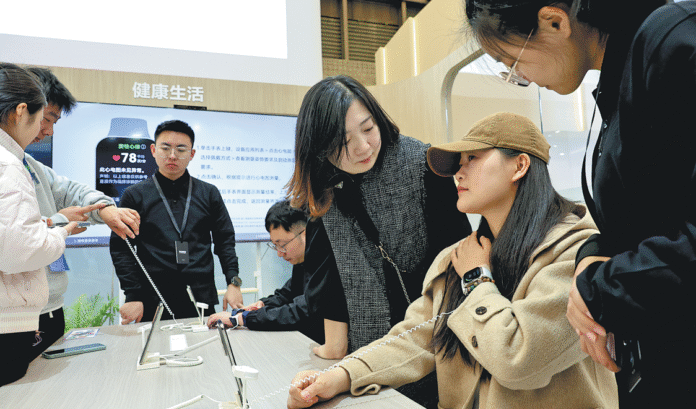
Baidu Smart Cloud has signed a strategic agreement with Bear Electric Appliance, a Guangdong-based small appliance manufacturer, to jointly develop a new generation of AI-powered home appliances. The partnership, announced during the Appliance and Electronics World Expo 2026 in Shanghai, will involve investment of 100 million yuan ($14.5 million) over the next three years.

The collaboration highlights a broader trend in China’s technology sector: the integration of large AI models into consumer hardware, transforming traditional appliances into intelligent service platforms.

Bringing Large AI Models Into the Kitchen

Under the agreement, Bear Electric will integrate Baidu’s Wenxin Yiyan large language model and AI cloud technologies into its core product categories, including air fryers, rice cookers and health kettles.

The next generation of devices is expected to feature:

  • natural voice interaction

  • real-time intelligent assistance

  • integrated content and service ecosystems

Through end-to-end voice interaction and low-latency processing, users will be able to communicate with appliances in a more conversational and intuitive way, bringing human-machine interaction closer to natural dialogue.

The companies say the goal is to move beyond traditional “smart appliances” toward AI-native household devices capable of understanding user needs, making decisions and providing proactive services.

From Smart Devices to Intelligent Home Companions

China has been one of the world’s largest markets for small home appliances, but the sector is increasingly shifting toward AI-driven product differentiation.

In this new model, appliances are no longer seen purely as functional hardware but as part of a broader intelligent living ecosystem.

By embedding large AI models into devices, companies aim to enable appliances to:

  • learn user habits

  • recommend cooking methods and recipes

  • provide personalized health and lifestyle guidance

  • connect seamlessly with other smart home systems

Industry observers say this transformation could redefine how consumers interact with everyday household devices.

AI Consumerization Accelerates in China

The Baidu–Bear Electric partnership reflects a wider push across China’s technology industry to accelerate the consumerization of artificial intelligence.

Large AI models are increasingly being integrated into a wide range of consumer electronics, from smartphones and personal computers to smart home devices.

Cloud providers and AI developers are also expanding partnerships with hardware manufacturers to bring AI capabilities directly into physical products.

For Baidu Smart Cloud, the collaboration represents another step in commercializing its large-model ecosystem beyond traditional software applications.

For appliance makers such as Bear Electric, AI offers a pathway to move up the value chain in an increasingly competitive consumer electronics market.

Toward an AI-Native Appliance Industry

The two companies said they plan to build a long-term strategic partnership centered on the concept of “AI + Home Appliances + Intelligent Life.”

Beyond product development, the cooperation will also extend to enterprise operations, with AI technologies expected to support manufacturing, product design and service systems.

If successful, the initiative could accelerate the emergence of a new generation of AI-native home appliances, marking a shift in the evolution of the smart home industry.

As artificial intelligence continues to reshape consumer technology, China’s appliance sector may become one of the most important testing grounds for how large AI models move from the cloud into everyday life.
Article inline ad

China Emerging as Global Hub of Supply Chain Innovation

0

Compiled from a report by China Daily on March 13.

As China enters the early stage of its 15th Five-Year Plan (2026–2030), multinational corporations are signaling strong confidence in the country’s economic resilience and its expanding role in global supply chains.

 Executives from global companies say China’s combination of policy stability, manufacturing depth, innovation capacity and market scale is reinforcing its position not only as a major market but also as a critical node in global production, technology development and supply chain coordination.

 Growth Target Signals Stability

China’s economy grew 5 percent in 2025, reaching 140.19 trillion yuan ($20.4 trillion). For 2026, policymakers have set a growth target of between 4.5 percent and 5 percent, supported by a planned fiscal deficit ratio of around 4 percent.

Global business leaders say the target reflects both realism and policy confidence.

Pablo Machado, Asia president of Brazilian pulp producer Suzano, said the clarity of China’s economic policy framework provides a strong signal of stability at a time when global demand remains uncertain.

For Suzano, China has long been its largest market and will remain central to its global strategy. The country’s push toward consumption upgrading and a green, low-carbon economy also creates new opportunities for bio-based materials and sustainable industrial products.

Similarly, Xie Xue, CEO of Vale China, described the growth target as both achievable and aligned with China’s long-term modernization goals.

China remains Vale’s largest market, accounting for 63 percent of iron ore sales and more than half of operating revenue last year. Stable growth and policy continuity therefore serve as an important anchor for the company’s global strategy amid geopolitical and economic uncertainty.

From “World’s Factory” to Supply Chain Innovation Hub

Executives increasingly describe China’s role in the global economy as evolving beyond its traditional identity as the world’s factory.

With exports rising 6.1 percent in 2025, foreign-invested enterprises increasing by 19.1 percent, and R&D intensity reaching 2.8 percent of GDP, the country is becoming a more integrated hub for manufacturing, innovation and supply chain management.

Wu Dongming, CEO of DHL Express China, said China is transitioning into a global supply chain innovation center, supported by its unmatched manufacturing ecosystem and rapidly expanding technology base.

For logistics companies, this transformation is reflected in the rising share of high-value and time-sensitive goods moving across borders, including advanced electronics, high-tech components and precision manufacturing products.

Suzano is also increasingly sourcing industrial equipment, production lines and key materials from China, not only for domestic operations but for deployment across its global network.

At the same time, collaboration with Chinese research institutions is expanding. Vale, for example, launched a joint laboratory for low-carbon and hydrogen metallurgy with Central South University to support decarbonization in the steel sector.

These partnerships highlight China’s growing role as a technology and innovation partner in global industrial transformation.

China as Market, Production Base and Innovation Center

For many multinational companies, China is no longer just a market or manufacturing base — it is increasingly all three at once.

Cheng Dandan, senior vice-president of global payments platform Payoneer, said more than one-third of the company’s revenue now comes from China, largely driven by the country’s vast ecosystem of small and medium-sized exporters.

China’s digital commerce infrastructure and manufacturing capabilities allow businesses to scale internationally without building a physical presence in every market.

“China has become simultaneously a market, a production base and an innovation hub,” Cheng said, reflecting the increasingly interconnected nature of global business operations.

Unified National Market Unlocks Domestic Demand

China’s domestic market is also becoming more integrated and powerful as structural reforms advance.

The country’s urbanization rate reached 67.9 percent in 2025, while total retail sales exceeded 50 trillion yuan, highlighting the scale of consumer demand.

Efforts to build a unified national market are helping reduce regional barriers, streamline logistics and lower compliance costs for companies operating across multiple provinces.

For multinational corporations, this integration simplifies nationwide operations while opening new growth opportunities in lower-tier cities and county-level markets, where consumption upgrading is accelerating.

DHL Express has expanded logistics service centers in multiple emerging cities to support growing import and export activities, as local manufacturers and consumers become more connected to global trade.

Linking Domestic Consumption and Global Trade

China is also strengthening the link between its domestic market and global trade networks.

Programs such as the consumer trade-in initiative, which generated over 2.6 trillion yuan in sales in 2025, and initiatives like “Shopping in China” and “Export to China” aim to boost both domestic consumption and international trade flows.

Logistics providers are responding by expanding aviation networks and infrastructure to facilitate faster cross-border delivery.

For global payments platforms, the rise of Chinese brands expanding overseas is creating demand for more sophisticated cross-border financial infrastructure, including multi-currency settlement and compliance-focused payment systems.

Green Transition and AI Drive New Partnerships

China’s push toward green development and advanced technologies is also opening new areas of collaboration between multinational companies and Chinese partners.

In 2025, China reduced energy intensity by 5.1 percent, increased the share of non-fossil energy to 21.7 percent, and expanded new energy storage capacity beyond 130 gigawatts.

Multinational companies are increasingly aligning their sustainability strategies with China’s green transformation.

Suzano has partnered with Chinese universities and research institutions to promote decarbonization in the pulp and paper industry, while also exploring AI applications for biodiversity monitoring.

DHL Express is accelerating the electrification of its delivery fleet in China. By 2025, more than 30 percent of its vehicles in the country were electric, with a target of 60 percent by 2030.

The company is also expanding green logistics services that allow customers to reduce supply chain emissions through the use of sustainable aviation fuel.

A Strategic Anchor in an Uncertain Global Economy

For multinational corporations navigating an uncertain global landscape, China continues to provide a rare combination of scale, stability and long-term growth potential.

Executives say the country’s evolving role — as a major market, innovation center and supply chain hub — is making it increasingly central to global corporate strategies.

As global supply chains continue to adapt, China’s economic transformation is positioning it not only as a manufacturing powerhouse, but as a key driver of the next phase of global industrial and technological development.

Article inline ad

China’s 2026 Growth Target Seen Achievable on Strong Economic Fundamentals

0

This information was compiled based on a report from China Daily on March 13.

China’s economic growth target of around 4.5–5 percent for 2026 is widely viewed by policy advisers as both realistic and necessary, supported by emerging industries, domestic consumption and continued policy support aimed at strengthening internal demand.

Economists say the target aligns with the country’s long-term development strategy while allowing room for structural reforms and higher-quality economic expansion.

Sun Xuegong, director-general of the Department of Policy Study and Consultation at the Chinese Academy of Macroeconomic Research, said the growth target reflects a balanced approach between maintaining stable expansion and promoting structural transformation.

“The growth goal is reasonable and achievable,” Sun said, noting that it provides the necessary momentum for China’s long-term modernization plans.

Growth Target Linked to Long-Term Development Goals

China has set a strategic objective of doubling per-capita GDP from 2020 levels by 2035, a milestone tied to the country’s broader goal of achieving basic modernization.

According to Sun, reaching that objective would require average annual economic growth of roughly 4.2 percent over the coming decade, making the current growth target consistent with the nation’s long-term economic trajectory.

The upcoming 15th Five-Year Plan (2026–2030) is expected to provide further clarity on development priorities and reinforce market confidence in China’s economic outlook.

Emerging Industries and Structural Upgrading

On the supply side, economists point to the rapid development of new quality productive forces—a policy term describing advanced technologies and innovation-driven industries—as an increasingly important source of growth.

China’s economic structure is also undergoing transformation as traditional industries upgrade and the services sector expands more rapidly, potentially playing a larger role in driving economic activity in the coming years.

These shifts are expected to strengthen productivity and support sustainable growth.

Consumption and Investment as Key Demand Drivers

Domestic demand remains central to China’s economic strategy.

Authorities are expected to continue implementing measures to boost household consumption, which policymakers see as a key pillar of long-term economic stability.

Sun said consumption growth could remain steady as supportive policies take effect, while investment may rebound as infrastructure and development projects linked to the new five-year plan begin to roll out.

Policies designed to encourage private-sector investment may also help stabilize capital spending and reinforce business confidence.

Exports, which faced headwinds in the past year, could also benefit from a more stable international economic environment, offering additional support to growth.

China’s Role in the Global Economy

If China maintains stable expansion in 2026, economists estimate the country could continue contributing around 30 percent of global economic growth, reinforcing its position as a major stabilizing force in the world economy.

Zheng Shanjie, head of the National Development and Reform Commission, said China’s economic outlook remains underpinned by the country’s large market size, growing innovation capacity and strong institutional ability to manage risks.

Strengthening the domestic market will remain a top priority as policymakers work to ensure a strong start to the new five-year development cycle.

Boosting Consumer Confidence

Despite steady income growth, policymakers acknowledge that stimulating consumption will require a broader policy framework.

China’s per-capita disposable income increased 5 percent year-on-year last year, while per-capita consumption expenditure rose 4.4 percent, suggesting room to further unlock household spending potential.

For lower-income households, stronger income growth remains critical, particularly as structural changes in certain industries may limit wage gains.

For middle-income groups, economists say the key challenge is consumer confidence, as global uncertainties and domestic economic adjustments influence spending decisions.

Policy recommendations include strengthening social security systems, supporting small and medium-sized enterprises that generate employment, and expanding the supply of higher-quality goods and services to meet evolving consumer demand.

Outlook: Stability with Structural Transformation

With policy support, industrial upgrading and steady domestic demand, economists believe China’s economy is positioned to maintain stable and sustainable growth in the coming years.

As the country enters the next phase of its development cycle, the combination of innovation-driven industries, expanding services and stronger consumption is expected to reshape the growth model of the world’s second-largest economy.

For global businesses and investors, China’s economic trajectory will remain a key factor shaping global trade, investment flows and economic stability.

Article inline ad

Global Investors See Steady “Slow Bull” in China’s A-Share Market

0

This information was compiled based on a report from China Daily on March 13.

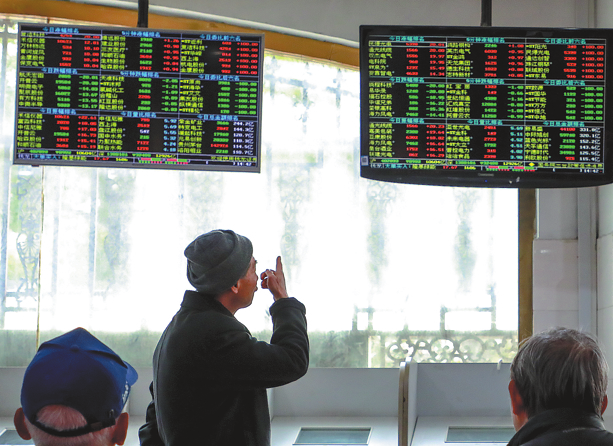
Despite geopolitical tensions and volatility in global energy markets, international investors are maintaining a constructive outlook on China’s equity markets, citing the country’s continued technological upgrading, policy support and improving corporate profitability.

 Analysts say the mainland’s A-share market may continue to follow a “slow bull” trajectory, supported by structural economic transformation and growing investor interest in emerging industries.

A-Shares Show Stability Amid Global Volatility

Global markets have faced renewed uncertainty amid tensions in the Middle East and disruptions to global supply chains. Yet China’s domestic stock market has demonstrated relative stability.

According to analysts at Goldman Sachs, the MSCI China Index has declined about 12 percent from its late-January peak, largely due to weakness in software and internet stocks. In contrast, the CSI 300 Index—which tracks 300 major mainland-listed companies—has remained broadly stable so far this year.

The investment bank maintains an “overweight” stance on both A-shares and Hong Kong equities. Its strategists project the MSCI China Index could rise about 20 percent in 2026, while the CSI 300 may gain around 12 percent, supported by stronger corporate earnings.

Earnings Growth Supports Market Outlook

Strategists at UBS also expect continued improvement in Chinese corporate profitability. Meng Lei, China equity strategist at the firm, forecasts that the average earnings growth of A-share companies may reach roughly 8 percent in 2026, reinforcing the slow-but-steady upward trend of the market.

Several factors are expected to support this trajectory:

Incremental macroeconomic stimulus measures

Lower risk-free interest rates

Continued inflows of long-term capital

Household savings gradually shifting into equities

Improving valuations among listed companies

These trends suggest the A-share market may benefit from both structural reforms and capital market development.

China Assets Becoming Strategic for Global Portfolios

For many international investors, China is evolving from a portfolio diversification option into a strategic allocation.

Janice Hu, China country head at UBS, said global investors are reassessing Chinese assets as the country demonstrates increasing innovation in areas such as artificial intelligence, advanced manufacturing, semiconductors and new energy.

Analysts at BlackRock echoed this sentiment following the release of China’s Government Work Report. The country’s economic growth target of around 4.5 to 5 percent for 2026 signals continued recovery and provides a supportive backdrop for equities, they said.

The government’s emphasis on coordinating existing and incremental policy tools is also expected to strengthen market confidence and investment visibility.

Future Industries Attract Investor Attention

Global asset managers say investors should pay particular attention to future-oriented sectors highlighted in China’s economic strategy.

These include:

Embodied intelligence and humanoid robotics

Brain-computer interfaces

6G communication technology

New energy systems and green fuels

The government’s target of reducing carbon emissions per unit of GDP by 3.8 percent this year is also expected to accelerate growth across the clean-energy value chain, including hydrogen, advanced power systems and low-carbon technologies.

Economic Transformation Enhancing Corporate Resilience

Executives at Fidelity International believe China’s ongoing economic transformation is strengthening the resilience of listed companies.

James Sun, the firm’s China head, noted that Chinese companies are increasingly moving up the global value chain, exporting not only manufactured goods but also technologies, cultural products and business models.

At the same time, many global investors still have relatively limited exposure to Chinese assets, partly because they have yet to fully understand the country’s evolving corporate structures and innovation-driven growth model.

However, as China deepens capital-market reforms and continues its economic upgrading, analysts believe global portfolio allocations may gradually shift—potentially reshaping valuation frameworks and investment strategies worldwide.


Article inline ad

China’s Growth Target Signals Shift Toward Structural Reform

0

Lower GDP target reflects policymakers’ focus on sustainable expansion, economic quality and long-term stability.

ZH Sailing | China Economy

China’s latest government policy signals suggest that policymakers are placing greater emphasis on sustainable growth and structural reform, as the country moderates its headline economic expansion target while maintaining policy flexibility.

 In the annual Government Work Report, China set its 2026 GDP growth target at 4.5 to 5 percent, marking the first downward adjustment since 2023. Economists say the move reflects a pragmatic recalibration aimed at strengthening the foundations of long-term development rather than pursuing aggressive short-term stimulus.

Focus Shifts Toward High-Quality Growth

According to economists, the adjustment indicates a policy shift toward improving the quality and resilience of economic growth.

Yu Xiangrong said the revised target suggests policymakers are seeking a more balanced approach between stabilizing short-term growth and advancing structural reforms.

Scaling back the growth target at the beginning of the 15th Five-Year Plan period (2026–2030) creates policy space for deeper reforms, financial risk management and long-term economic restructuring, Yu noted.

He added that employment stability remains the government’s core priority. While the GDP target has been slightly lowered, the employment target remains unchanged, highlighting the importance policymakers place on labor market stability.

During periods of economic transition, economic growth and job creation may temporarily diverge, especially as new technologies reshape labor markets.

For example, advances in artificial intelligence could alter employment dynamics in service industries, making employment stability a key policy focus.

Greater Policy Flexibility

Ding Shuang said the new growth target range reflects a stronger emphasis on sustainable development and provides room for structural adjustments.

The report’s language that China will “strive for better outcomes” suggests that 4.5 percent may serve as the baseline rather than the ceiling, leaving room for stronger growth if economic conditions improve.

Other key economic targets remain broadly consistent with previous years, though policymakers are paying closer attention to price stability. The government has signaled a desire for a moderate increase in consumer prices as part of efforts to address deflationary pressures.

Economists at Standard Chartered forecast China’s average consumer inflation could reach around 0.6 percent in 2026, supported by a recovery in commodity prices and ongoing policy measures to address industrial overcapacity.

Structural Reform and Industrial Upgrading

Cheng Shi said the adoption of a growth target range demonstrates a more flexible and forward-looking approach to macroeconomic management.

Such flexibility helps policymakers navigate external uncertainties while continuing to advance structural reform and financial risk management, he said.

Meanwhile, policymakers are expected to maintain a proactive mix of fiscal and monetary policies to support economic stability.

Zhang Wenlang said the 2026 growth target reflects a balance between long-term sustainability and short-term economic stabilization.

Policy support is expected to focus on strengthening domestic consumption while accelerating the development of new growth drivers.

The government has identified innovation, industrial upgrading and technological self-reliance as key priorities for the year, highlighting the strategic importance of advanced manufacturing and emerging industries in China’s next phase of economic development.

Key Takeaways

China set its 2026 GDP growth target at 4.5–5 percent.

The adjustment reflects a shift toward high-quality and sustainable growth.

Policymakers are prioritizing employment stability and structural reform.

Innovation and advanced industries are expected to play a larger role in future growth.


Article inline ad

China Pushes to Optimize National Computing Power Network

0

According to a report by China Daily on March 12…

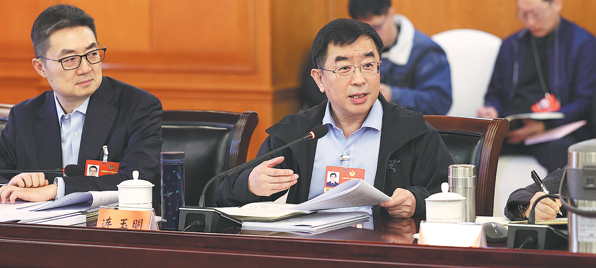
 China is accelerating efforts to strengthen its national integrated computing power network, positioning advanced computing infrastructure as a critical driver of its digital economy. Lian Yuming, a member of the 14th National Committee of the Chinese People’s Political Consultative Conference (CPPCC) and founding president of the Beijing International Institute for Urban Development, emphasized that computing power has become an invisible yet indispensable productive force for the nation’s industrial and economic growth.

 Strategic Computing Hubs and the “East Data, West Computing” Plan

 During the 14th Five-Year Plan (2021–25), China established eight national computing hubs covering regions including:

 Beijing-Tianjin-Hebei

 Yangtze River Delta

 Guangdong-Hong Kong-Macao Greater Bay Area

 Chengdu-Chongqing

 Inner Mongolia, Guizhou, Gansu, Ningxia

 As of June 2025, the total scale of data center racks nationwide reached 10.85 million standard racks, with intelligent computing capacity at 788 EFLOPS, according to the National Data Bureau.

 The government has also fostered wide applications of intelligent computing in generative large models, embodied AI, smart cities, and industrial manufacturing. More than 23,000 innovative computing projects have emerged through national competitions, achieving scaled adoption across industry, finance, healthcare, and energy sectors.

 Bridging the Supply-Demand Gap

 Lian Yuming highlighted structural challenges that could limit the network’s effectiveness:

 Supply-demand mismatch – Western regions have excess low-end computing resources, while eastern industrial hubs face shortages of high-end intelligent computing power.

 Computing islands – Inconsistent technical standards and fragmented market mechanisms hinder efficient resource allocation.

 Network constraints – High latency and transmission costs reduce the effectiveness of western hubs.

 Green transformation gap – Data centers remain poorly integrated with renewable energy, limiting sustainability.

 These challenges create both operational bottlenecks and investment opportunities for companies offering high-end computing solutions, cloud infrastructure, and green energy integration.

 A Four-Pronged Optimization Approach

 To overcome these hurdles, Lian proposed a strategic, tiered framework for national computing:

 Three-tier architecture: National, regional, and edge computing levels with precise functional layouts.

 Unified scheduling mechanism: Efficient resource allocation across regions and hubs.

 Technological breakthroughs: Reducing network costs and improving cross-regional connectivity.

 Computing-electricity synergy: Integrating green energy to promote sustainable, inclusive growth.

 He noted that by 2035, AI’s contribution to China’s GDP could exceed $1.53 trillion, driving a potentially tenfold increase in demand for computing power. These measures aim to ensure balanced, high-quality growth in computing supply, while supporting AI-driven industries nationwide.

 Implications for Global Investors and Industry

 The ongoing expansion of China’s national computing network signals massive opportunities for technology providers, cloud service companies, and AI infrastructure investors. As the country’s digital economy matures, firms positioned to supply high-end computing, edge computing, and green-powered data centers are likely to benefit from both policy support and market demand.

 For foreign investors, this represents a chance to participate in China’s AI ecosystem, from supporting high-performance computing deployment to integrating intelligent infrastructure with real-world applications across manufacturing, smart cities, healthcare, and finance.

 Lian Yuming concluded that a strategically optimized computing power network will not only underpin China’s domestic AI ambitions but also enhance the country’s global technological competitiveness, laying the groundwork for sustainable and scalable digital economic growth.

Article inline ad

China’s Smart Economy: AI as the Backbone of Industrial Growth

0

According to a report by China Daily on March 12…

 For years, artificial intelligence in China was largely discussed in terms of algorithms, benchmarks, and limited commercial applications. But the 2026 Government Work Report marked a new milestone: for the first time, it introduced the goal of creating new forms of smart economy.

 Industry leaders and global investors view this linguistic shift as a signal that AI is moving beyond laboratories and isolated applications to become the foundational architecture for industrial growth and systemic economic development.

 AI as a Driver of Industrial Transformation

 Chen Changsheng, deputy director of the Research Office of the State Council, said the smart economy initiative aims to expand the breadth and depth of AI empowerment across industries, unlocking large-scale commercial opportunities and fostering new business models.

 Liu Qingfeng, chairman of iFlytek, emphasized the need for practical applications. “AI must address real-world production and daily life needs,” Liu said. “It should bring tangible benefits to people and concrete improvements to industrial processes.”

 A clear example is the surge in humanoid robotics. Chinese companies have introduced over 300 types of humanoid robots, more than half of the global total, according to the Ministry of Industry and Information Technology.

 Lei Jun, founder of Xiaomi, described humanoid robots as the next potential disruptive technology, following computers, smartphones, and new energy vehicles. Morgan Stanley forecasts that China’s humanoid robot shipments could exceed 2.6 million units by 2035, generating a market surpassing 140 billion yuan ($20.2 billion), eventually reaching the trillion-yuan scale.

 From Labs to Factories

 Despite the first-mover advantage, challenges remain. High hardware costs, limited process stability, and insufficient factory deployment have slowed large-scale adoption. Lei Jun stressed that expanding applications in smart manufacturing is essential to move robots from experimental demonstrations to fully integrated production lines.

 Qi Xiangdong, chairman of Qi-Anxin Technology Group, described the smart economy as a gateway to immense potential, creating demand for AI application scenarios and accelerating economic and social development.

 AI Agents and Intelligent Terminals

 The 2026 report distinguished between intelligent terminals—physical AI carriers like robots, smart phones, and connected vehicles—and AI agents, software capable of understanding complex tasks and executing them autonomously.

 Li Lecheng, Minister of Industry and Information Technology, emphasized investment in next-generation AI products, including brain-computer interfaces, autonomous vehicles, and robotics, as part of integrating AI with the manufacturing sector.

 China’s phased roadmap links AI deployment to economic milestones: by 2027, core smart economy industries will grow rapidly; by 2030, the smart economy becomes a significant growth pole; and by 2035, China enters a new stage characterized by a fully developed smart economy and smart society.

 Industrial and Policy Support

 Policy support underpins these ambitions. The government is promoting:

 Large-scale AI adoption across industries

 Open access to AI technologies

 Development of AI-specific infrastructure

 Risk-sharing and investment incentive mechanisms for high-risk, high-reward technologies

 Zhu Keli, founding director of the China Institute of New Economy, explained that these measures provide a clear roadmap for investors while preventing fragmented resource allocation.

 Nancy Wang, country manager at LinkedIn China, highlighted China’s role as both a critical market and global innovation reference point. Data shows a 19.1 percent increase in newly established foreign-invested enterprises in 2025, while outbound recruitment from Chinese firms has grown more than 30 percent, spanning smart hardware, industrial robotics, healthcare, and new energy sectors.

 AI’s Broader Economic Impact

 The smart economy encompasses:

 AI Plus: empowering traditional industries with AI

 AI-native business models: entirely new industries, products, and services built from AI foundations

 Huang Qunhui, former head of the Institute of Economics at the Chinese Academy of Social Sciences, said this dual approach demonstrates how AI creates both incremental improvements and fundamentally new economic structures.

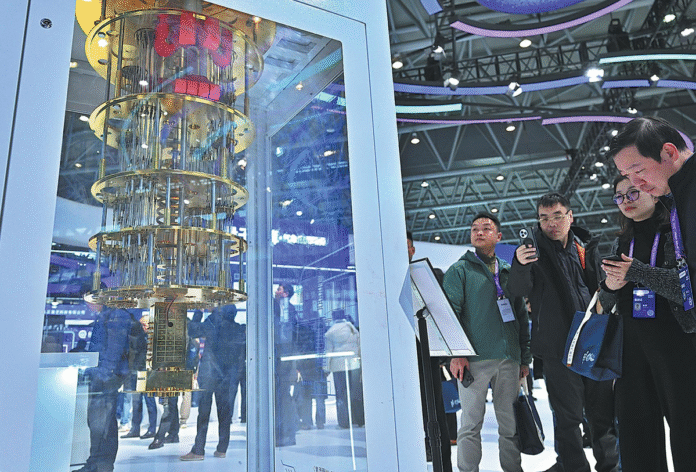
 China’s commitment to research is evident: R&D spending reached 2.8 percent of GDP in 2025, and the digital economy’s core output now accounts for over 10.5 percent of GDP. Strategic emerging industries such as integrated circuits, aerospace, biomedicine, and low-altitude economy are prioritized alongside future-focused sectors like green energy, quantum technology, embodied intelligence, brain-computer interfaces, and 6G.

 A Global Opportunity

 Experts say the smart economy represents one of the largest opportunity spaces for innovators and investors in the world’s second-largest economy. With technology breakthroughs, government support, and expanding real-world applications, China is positioning AI not only as a tool, but as a central pillar of economic transformation, offering vast potential for both domestic and foreign enterprises.


Article inline ad

AI Milk Tea Signals China’s Rise in Smart Economy

0


In Hangzhou, Zhejiang province, a line of customers waited outside a bustling milk tea shop on a chilly winter day. But unlike traditional orders through smartphone apps or QR codes, patrons were interacting with artificial intelligence. Using voice commands, customers customized their drinks, located the nearest store, and completed payment—all within seconds.

 “It was my first ‘AI milk tea’. I’ve used food delivery apps for years, but this was the first time AI picked my drink,” said Qin Xiaomeng, a 25-year-old product manager from Hangzhou.

 This seemingly small moment illustrates a broader trend: China is embedding AI into everyday life at scale. Major tech companies—including Alibaba Group, Tencent Holdings, and Baidu Inc—have invested tens of billions of yuan in AI-powered services ranging from personalized drinks to travel bookings.

 Scaling AI Across Daily Life

 China’s “AI Plus Initiative,” highlighted in the 2026 Government Work Report, seeks to create a new form of smart economy by integrating AI into both consumer and industrial applications. Chen Changsheng, part of the report’s drafting team, said the initiative aims to expand AI’s reach across industries, unlock new growth spaces, and cultivate novel business models.

 Bai Chong-En, dean of Tsinghua University’s School of Economics and Management, emphasized that applying AI at scale requires real-world scenarios where these technologies can deliver tangible value. “Creating a new intelligent economy is about integrating AI with societal and industrial needs,” he said.

 From Apps to Physical Devices

 Beyond apps, AI is increasingly embedded in physical products—from smart appliances and wearables to vehicles. Hangzhou-based startup Rokid has developed AI-powered glasses that translate speech in real time. During a recent demonstration with German Chancellor Friedrich Merz, subtitles appeared instantly in German as he spoke with local staff.

 The glasses’ overseas version integrates four major large language models simultaneously—Google Gemini, ChatGPT, DeepSeek, and Alibaba Qwen—allowing users to toggle between models for translation, navigation, messaging, or purchasing.

 Global shipments of AI glasses reached 8.7 million units in 2025, up 322 percent year-on-year, with Rokid and Xiaomi ranking second and third globally, according to market research firm Omdia.

 Expanding AI Consumption

 Analysts note that AI-powered products are reshaping consumer behavior. Economist Lu Ming said AI simplifies digital interactions, lowering the barrier for older users and residents in smaller cities to access online services. During the 2026 Spring Festival, over 4 million users aged 60 and above placed orders via AI systems, according to Alibaba Group.

 AI’s ability to execute real-world tasks—rather than merely provide information—has expanded its role from digital assistant to personal productivity tool, driving adoption and stimulating consumption across China.

 Enterprise AI and Workplace Integration

 AI applications are also transforming workplaces. OpenClaw, nicknamed the “AI lobster,” integrates with major Chinese enterprise platforms such as ByteDance Feishu and Tencent WeCom. Tech founder Zhou Hongyi said it turns cloud software into a personal digital assistant that is easy to operate, bringing AI capabilities previously restricted to tech giants to everyday office users.

 Efficient and lightweight models like AI lobster demonstrate China’s approach differs from the U.S., where AI development often prioritizes extremely large, resource-intensive models.

 Global Reach of Chinese AI

 China is also exporting AI expertise. Open-source models developed domestically accounted for 17.1 percent of global downloads last year, surpassing the U.S. for the first time, according to a joint report by MIT and Hugging Face. Models like DeepSeek V3 and Moonshot AI’s Kimi K2 now make up nearly 30 percent of global open-source LLM usage.

 Chinese firms are deploying AI solutions internationally, from Africa to the Middle East and Southeast Asia. Companies such as Huawei and ZTE provide AI-enabled infrastructure, industrial inspection, and predictive maintenance solutions, while startups and industrial hubs in Africa leverage open-source models to create AI-driven services without high licensing costs.

 Consultancy PwC estimates AI could contribute $7 trillion to China’s GDP by 2030, while CCID Consulting projects the AI industry will grow from 398.5 billion yuan in 2025 to more than 1.7 trillion yuan by 2035.

 From Daily Life to Industry

 Chinese experts emphasize that the broader goal is systemic integration: embedding AI into consumer products, workplaces, and industrial chains to improve efficiency, create commercial value, and enhance social resilience. “AI is not just about technology breakthroughs; it’s about scaling real-world applications and raising living standards globally,” said Wei Kai of the China Academy of Information and Communications Technology.

 Whether it is a cup of AI milk tea, smart glasses, or industrial inspection tools, China’s AI ecosystem demonstrates how the country is pioneering a smart economy that spans daily life, industry, and global markets.


Article inline ad

China’s Strategic Oil Reserves Provide Buffer Against Global Supply Shocks

0


China’s long-term efforts to strengthen energy security have built a significant strategic buffer, allowing the world’s largest crude oil importer to withstand potential supply disruptions from the Middle East.

 Analysts say China’s strategic petroleum reserves and diversified energy supply routes could sustain the country’s oil demand for months even in a worst-case scenario involving a complete disruption of Middle Eastern crude shipments.

 Rising geopolitical tensions involving the United States, Israel and Iran have raised concerns over the stability of the Strait of Hormuz, a key maritime chokepoint through which roughly 20 percent of global oil supplies pass.

 Despite these risks, China has accumulated substantial reserves over the past two decades. According to estimates cited by the Center on Global Energy Policy at Columbia University, China’s strategic petroleum reserve is estimated at around 1.4 billion barrels, or roughly 190 million metric tons.

 Energy researcher Erica Downs said such reserves could support China’s oil needs for about six months if supplies from the Middle East were completely interrupted.

 “China has spent the past 20 years steadily building and filling these reserves precisely to prepare for moments like this,” Downs said.

 China has also continued increasing crude purchases in recent months. Data from the General Administration of Customs of China shows that crude imports in January and February rose 16 percent year-on-year to 96.9 million metric tons, further strengthening stockpiles during a period of heightened global volatility.

 The country imported a total of 578 million metric tons of crude oil in 2025, with its main suppliers including Russia, Saudi Arabia and Iraq.

 Beyond stockpiles, analysts note that China’s broader energy transition is gradually reducing structural dependence on oil.

 A report by OCBC Bank said the Chinese economy has become more resilient to oil price volatility due to rapid adoption of electric vehicles, expanded coal-to-chemicals production and a power generation system that relies relatively little on oil.

 Although China still imports more than 70 percent of its crude oil, petroleum accounted for only about 18 percent of the country’s total energy consumption in 2024.

 Energy experts also point to the importance of diversified supply routes. In addition to maritime shipments, China has developed extensive pipeline networks linking it with neighboring energy producers.

 Pipelines from Russia and Kazakhstan provide land-based crude supplies that are not exposed to maritime chokepoints or naval tensions in the Middle East.

 Lu Ruquan, president of the Economics and Technology Research Institute at China National Petroleum Corporation, said this combination of strategic reserves, diversified supply sources and alternative transport routes forms a strong “resilience shield” for China’s energy system.

 While a prolonged disruption in Middle Eastern shipping lanes could still affect global markets and prices, Lu said China’s oil supply stability would likely remain intact.

 “Even under extreme scenarios, China’s energy framework provides a strong buffer against major supply shocks,” he said.


Article inline ad

Chongqing’s Fuling District Accelerates Shift to Smart Manufacturing

0


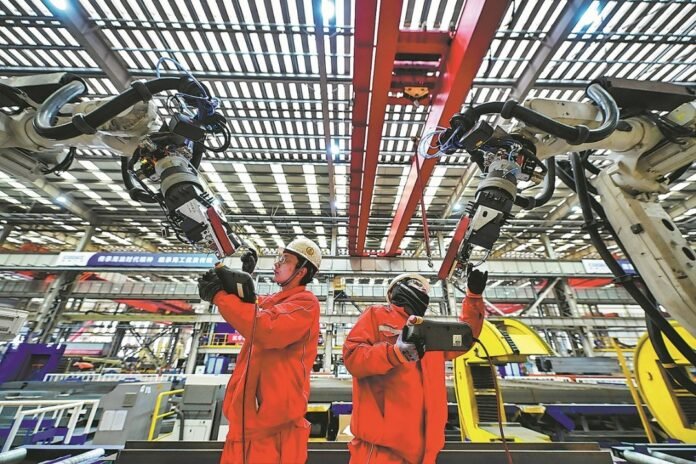
A major industrial district in southwest China is moving rapidly to upgrade its manufacturing base through digitalization, advanced materials and new energy vehicle production, highlighting how regional economies are aligning with the country’s push for innovation-driven growth.

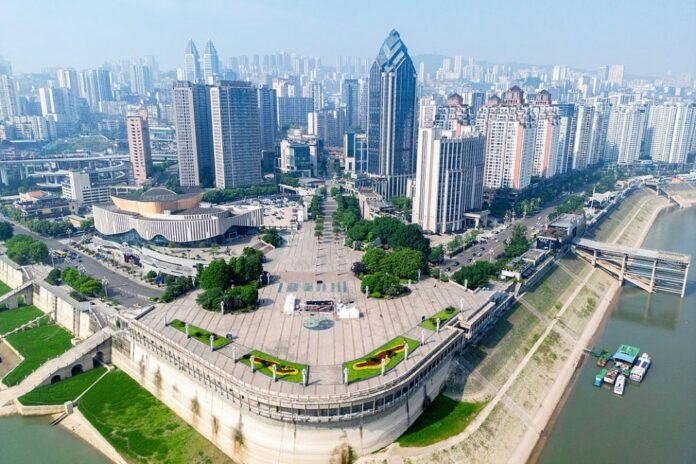
 Li Yong, Party secretary of Fuling District in Chongqing and a member of the National Committee of the Chinese People’s Political Consultative Conference, said the district is transforming its traditional industrial base into a smart manufacturing hub while building on existing strengths.

 Speaking during China’s annual “two sessions” meetings, Li said the transition toward what policymakers call “new quality productive forces” does not mean abandoning existing industries but upgrading them through technology and innovation.

 “Our confidence in moving toward the new comes from our strong industrial foundation,” Li said.

 Fuling has long been a major manufacturing center, hosting the world’s largest production bases for several industrial materials, including adipic acid, spandex and food-grade PET used in packaging and textiles.

 To drive the next stage of growth, the district has prioritized technological innovation and industrial upgrading. Fuling now hosts more than 300 high-tech enterprises and has established a comprehensive industrial science and technology development system designed to integrate research platforms with its key manufacturing sectors.

 The district has also built specialized innovation platforms such as a synthetic chemical materials research complex led by Huafon Group and a pilot platform for advanced materials based on metal-organic frameworks.

 These efforts are supporting the development of Fuling’s core industries, including materials manufacturing and food processing. Combined output from these sectors was expected to exceed 190 billion yuan ($26 billion) last year.

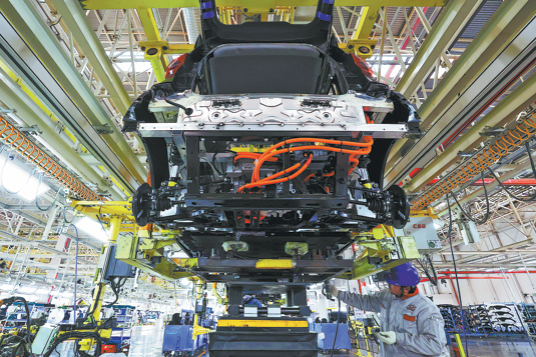
 A major priority for the coming years is the automotive sector. Under China’s upcoming national development strategy outlined in the 15th Five-Year Plan (2026–2030), Fuling aims to build a 100-billion-yuan ($14 billion) industrial cluster focused on intelligent and connected new energy vehicles.

 The district is developing a “1+2” industrial structure, centered on one major vehicle manufacturer supported by battery production and lightweight automotive components.

 Local automaker Shineray Group anchors the cluster, while major battery investments from companies such as CATL and Geely are strengthening the supply chain. Another battery project from Rept Battero has also been introduced.

 Last year, Shineray invested 5.2 billion yuan to build an intelligent production line for lightweight vehicle bodies and components, a project expected to generate more than 10 billion yuan in annual output.

 Local authorities are supporting industrial development through targeted policies. Under a “one enterprise, one policy” system, district officials are assigned to coordinate investment resources and help companies resolve operational challenges.

 Fuling is also encouraging companies to expand overseas. Shineray has already gained strong market traction in Vietnam, where its products captured more than 30 percent of a niche vehicle segment last year, surpassing long-time market leader Suzuki.

 To facilitate global expansion, the district has introduced logistics and trade policies designed to lower export costs and support the establishment of overseas research and development centers.

 At the same time, digital infrastructure is becoming a key driver of industrial upgrading. Fuling Industrial Park has been selected as a national pilot zone for a 10-gigabit optical network, enabling ultra-low latency industrial connectivity.

 The high-speed network supports real-time quality monitoring, automated production lines and remote industrial collaboration across factories.

 As a result, the district has already built more than 100 smart factories and dozens of green manufacturing facilities.

 Even traditional industries are being transformed. Fuling’s famous mustard tuber industry, a long-standing local specialty, now operates with a digital management platform that tracks nationwide sales data and helps farmers and processors adjust production in real time.

 Local officials say such integration of digital technology with traditional sectors demonstrates how China’s regional manufacturing bases are evolving toward more intelligent and sustainable industrial systems.


Article inline ad