Tuesday, November 24, 2026

Home Blog Page 48

Bamboo Plays Big Role In Curbing Pollution

0

China Daily | Updated: 2026-03-03 

GUIYANG — In a bustling factory in the city of Chishui, Southwest China’s Guizhou province, bamboo poles are transformed into eco-friendly tableware and medical swabs.

 “Our bamboo products, free of chemicals and fully biodegradable, are highly recognized by the market,” said Wu Qiuhui, manager of the company.

 With vast bamboo forests, Chishui is home to over 200 bamboo enterprises producing a wide range of items. The local bamboo industry surpassed 10 billion yuan ($1.44 billion) in output in 2025, boosting incomes for 165,000 bamboo growers.

 With the world’s richest bamboo resources, China is promoting the plant as a prime alternative to curb plastic pollution. The country launched an initiative in 2022 to use bamboo as a substitute for plastic, followed by a three-year action plan to accelerate its adoption.

 “Bamboo matures in three to five years, is highly durable, biodegradable and its carbon sequestration rate is impressive,” said Wang Ge, a researcher at the National Forestry and Grassland Administration.

 From daily items to industrial materials, China has developed tens of thousands of bamboo-based products.

 “International demand for these items is even higher than we expected,” noted Wang Jianzhong, a manufacturer whose bamboo tableware is exported globally.

 Innovation is key to this green shift. Lenovo, for instance, has adopted bamboo-fiber packaging for its laptops since 2008. “This material is eco-friendly, meets global standards, and reduces shipping emissions,” said Bai Yan, the company’s packaging research and development director.

 It has been revealed that since 2016, the company has introduced lightweight, renewable bamboo fiber packaging, resulting in a reduction of 4,537 metric tons in packaging material usage.

 Research projects are expanding bamboo’s use into high-tech fields like automotive interiors. One firm in East China’s Jiangxi province has successfully created bamboo keyboards and speakers, selling millions of units.

 The bamboo sector is now a significant economic force, supporting millions of jobs across China. At present, China has nearly 8 million hectares of bamboo forests, with an average annual bamboo production of 150 million tons. There are over 10,000 bamboo processing enterprises, and the entire industry chain employs more than 29 million people.

 The bamboo industry output exceeded 520 billion yuan in 2025, official figures showed.

 Experts view bamboo not only as a solution to plastic waste but also as a driver for rural vitalization, adding that with advancing technology and growing demand, China’s bamboo industry is poised for a greener future.

 Xinhua – China Daily

Article inline ad

China Maintains Strong Energy Security Amid Middle East Tensions

0

According to a report by China Daily on March 4

China’s energy framework is structurally resilient, allowing the nation to withstand potential disruptions from geopolitical events such as the recent US–Israel attack on Iran, which has heightened concerns over the Strait of Hormuz, a critical route for global oil and LNG shipments.


Diversified Supply Channels

  • China imports 11 million barrels of crude per day, with about 43.5% passing through the Strait of Hormuz.

  • To reduce maritime dependency, China leverages:

    • Alternative sea routes via the Red Sea and Mediterranean

    • Land-based pipelines from Russia and Kazakhstan

    • Oil supply partnerships with Brazil, Nigeria, and Angola

These measures collectively provide a geographical buffer, mitigating risks from Middle East volatility.


Strategic Reserves

  • China maintains strategic and commercial stockpiles covering at least 90 days of crude imports, designed to absorb short-term shocks and prevent domestic price volatility.

  • Strategic reserves act as an insurance layer, complementing supply diversification.


Domestic Energy Production

  • Domestic energy production is projected to reach 5.37 billion tons of standard coal equivalent in 2026, supporting an energy self-sufficiency rate of 84.6%.

  • Efforts include scaling up conventional oil and gas production and exploration of shale oil and gas.

  • In 2025, domestic output reached approximately 5.2 billion tons, underscoring steady growth.


Investor Implications

  1. Supply Chain Stability: Diversified import channels and domestic production reduce exposure to global disruptions.

  2. Energy Investment Opportunities: Expansion in unconventional energy sources (shale oil/gas) and pipeline infrastructure offers potential investment avenues.

  3. Macro Resilience: Robust energy security underpins China’s industrial and economic stability, supporting growth in manufacturing, logistics, and strategic sectors.

  4. Geopolitical Hedging: Strategic stockpiles and overseas partnerships provide a model for mitigating geopolitical energy risks.


Summary:
China’s energy strategy — combining diverse imports, strategic reserves, domestic production, and international partnerships — ensures that even amid global conflicts, its energy security and economic stability remain robust. For global investors, this demonstrates both risk resilience and opportunity in energy infrastructure and resource development.

Article inline ad

Australian Businesses See Opportunities For Growth At 9th CIIE

0

China Daily | Updated: 2026-03-04

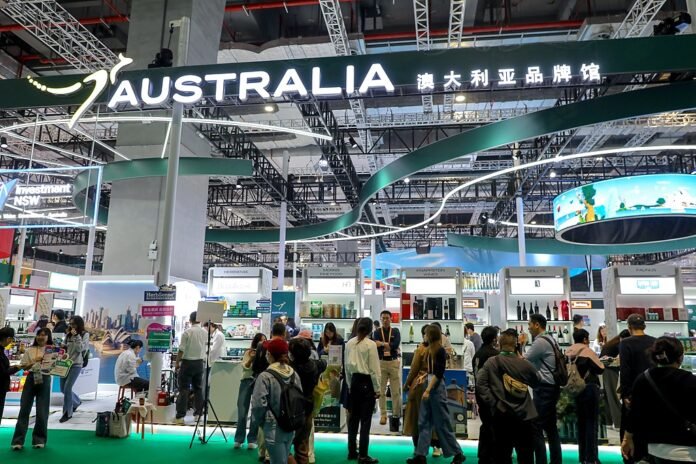
SYDNEY — Representatives from Australian enterprises, organizations, and industry bodies have voiced their enthusiasm for participating in the ninth China International Import Expo in Shanghai in November, highlighting the expo as a vital platform to deepen trade ties with China.

 The CIIE promotion activities held last week in Sydney attracted nearly 100 businesses and organizations from New South Wales, Queensland, Victoria, and Tasmania, spanning sectors including agriculture, health and resources.

 “We believe the CIIE is a premier platform for our engagement with the Chinese business community and will help us develop our trade,” said Susan Kahwati, head of Green Economy and Agrifood at Australian Trade and Investment Commission (Austrade), adding that the Australian government is fully committed to supporting an even stronger presence at the event.

 “The CIIE is our largest investment in an event or an exhibition anywhere in the world, not just in dollars, but also in the effort that we put into going to this and making it worthwhile for our clients that are attending,” said Anna Fedeles, general manager of International Operations at Trade and Investment Queensland.

 While a record number of 256 Australian businesses were represented at the eighth CIIE, Fedeles revealed that Queensland has also sent its largest ever delegation anywhere in the world, with over 110 representatives of more than 50 companies from the Australian state.

 “We took up about one-third of Australia’s national pavilion, and the results were really excellent,” she said, adding that Queensland secured nearly half of the national total in deals during the six-day event.

 She attributed the success to their targeted strategy of leveraging e-commerce platforms, livestreaming, and key opinion leaders, citing the example of the Australian firefighters who went viral online and drew huge crowds to their booth at CIIE 2025.

 Fedeles said that this year, she hopes to have more companies that have never been to China because it’s a really good way to test China’s consumer interest.

 Launched in 2018 as the world’s first national-level expo dedicated to imports, the CIIE was designed to expand China’s opening-up and turn its vast market into a shared opportunity for the world. Preparations for the ninth CIIE in Shanghai are now in full swing, with over 80,000 square meters of its designated business exhibition space already booked.

 “We are very much looking forward to such a huge trade opportunity to share our products,” said Dale Williams, founder and chief distiller of Tasmanian Spirits Pty Ltd, which will debut at the upcoming CIIE.

 A baijiu lover himself, Williams noted that China has a long history of spirits but is still relatively new to whisky — an opportunity he sees to introduce something new as part of a cultural exchange.

 “The Chinese market is very attractive. China has a growing middle-income group. There is a lot of potential, which is very exciting.”

 Loris H Hassall, a Sydney-based hides and skins supplier, also hopes to find new customers and explore the Chinese market in its first CIIE journey.

 “Now we participate in many other trade shows in China, and the CIIE seems to be the biggest one,” said Andrew Hassall, director of Loris H Hassall Trading Pty Ltd.

 Xinhua – China Daily

Article inline ad

Trip.Com Group Sees Strong Q4 Results On Inbound Tourism Surge

0
oplus_1048578

By Li Jing | China Daily | Updated: 2026-03-04 

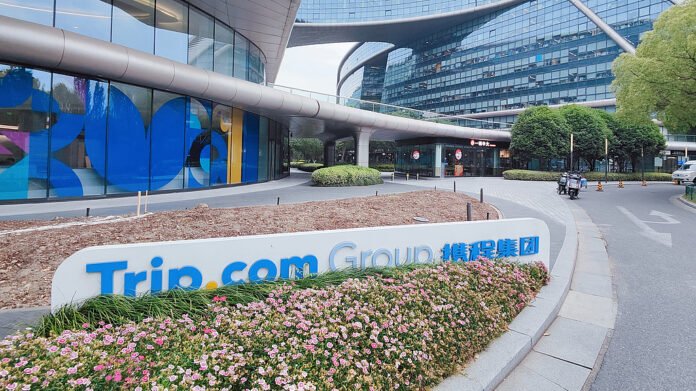
Trip.com Group Ltd delivered a stronger-than-expected finish to 2025, buoyed by a surge in inbound tourism and rapid overseas expansion, but the upbeat numbers were overshadowed by an ongoing antitrust investigation and a surprise reshuffle at the top.

 The Shanghai-based company said on Thursday that fourth-quarter net revenue rose 21 percent year-on-year to 15.4 billion yuan ($2.23 billion), exceeding market expectations. Full-year revenue increased 17 percent to 62.4 billion yuan, capping another year of steady recovery for China’s largest online travel platform.

 The results show that the standout was overseas expansion. In 2025, total bookings on the company’s international online travel agency platform jumped about 60 percent year-on-year. The company said it served approximately 20 million inbound travelers during the year, benefiting from China’s further opening-up and easier cross-border travel.

 Data from the National Immigration Administration show that in 2025, international visitors made more than 82 million border crossings, a 26.4 percent year-on-year increase. Last year, China expanded its unilateral visa-free access to 48 countries and extended mutual visa exemption agreements to 29 countries.

 Sun Jie, CEO of Trip.com Group, described inbound tourism as a “key growth driver”, noting that overseas revenue, including inbound travel, accounted for around 40 percent of total revenue in 2025.

 Analysts at China International Capital Corp noted that in the fourth quarter, hotel revenue on the company’s international platform jumped nearly 70 percent year-on-year, with transportation bookings and revenue up more than 50 percent. They expect international growth of around 60 percent to continue in the near term, with hotels expanding faster than air tickets.

 More significantly, the company has positioned inbound travel as a strategic export of China’s digital service capabilities. In 2025, it invested 1 billion yuan to help more than 40 Chinese cities improve inbound reception capacity. Nearly 70,000 hotels, scenic spots and travel agencies received their first inbound orders through its overseas platforms.

 The company’s self-developed AI translation engine processed 6 billion words annually across 25 languages, lowering operating barriers for international visitors. The number of inbound tour routes powered by its proprietary AI model rose 400 percent year-on-year.

 Accommodation and transportation ticketing remained the company’s core revenue engines, contributing 78 percent of total revenue. Full-year accommodation revenue rose 21 percent to 26.1 billion yuan, while transportation ticketing revenue grew 11 percent to 22.5 billion yuan.

 While revenue growth was broad-based, a closer look at profitability showed that non-recurring gains played a significant role.

 Full-year net income nearly doubled to 33.4 billion yuan. However, 19.9 billion yuan came from investment gains recorded under “other (expense)/income”, compared with 1.1 billion yuan in 2024.

 Operating profit, a clearer reflection of core business performance, rose 11.2 percent to 15.77 billion yuan, indicating a steady but more moderate improvement.

 The bulk of the investment gain was recorded in the third quarter, following a partial disposal of its stake in MakeMyTrip Ltd.

 The company ended the year with a strong balance sheet, holding 105.8 billion yuan in cash, cash equivalents and short-term investments.

 The earnings release was the company’s first since the State Administration for Market Regulation opened an investigation into the company for suspected abuse of market dominance under the Anti-Monopoly Law in January.

 The company said it was fully cooperating and that business operations remained normal, but added it could not predict the outcome or timing of the investigation.

 Compounding the regulatory overhang, the company also announced that co-founders Fan Min and Ji Qi had resigned from their board roles, with Fan stepping down as president.

 Trip.com Group appointed Wu Yihong and Xiao Yang as new independent directors, strengthening financial and governance expertise at the board level.


Article inline ad

Adora Flora City Cruise Ship To Be Undocked In March

0

By WANG YING in Shanghai | chinadaily.com.cn | Updated: 2026-03-03 

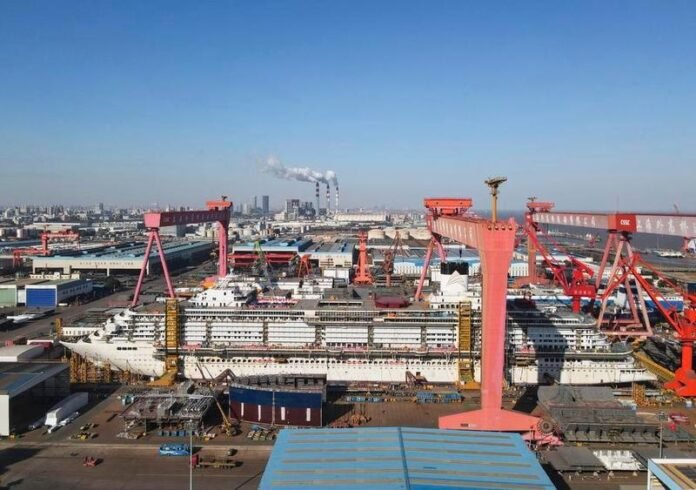
China’s second domestically-made cruise ship, Adora Flora City, is scheduled to be undocked in March, paving the way for its delivery by the end of the year, according to Shanghai Waigaoqiao Shipbuilding Co Ltd, a subsidiary of the China State Shipbuilding Corporation (CSSC).

 As of Friday (Feb 27), its construction workload has reached approximately 92 percent. The vessel is scheduled for undocking in mid-March, followed by sea trials planned for late May, the Shanghai-based shipyard said.

 The 141,900-gross-tonnage ship will be 341-meters-long, 17.4 meters longer than Adora Magic City, the nation’s first domestically built cruise ship. In the meantime, the vessel will add 19 guest rooms, bringing the total to 2,144 rooms, which can accommodate up to 5,232 passengers.

 Given the moniker Adora Flora City in October 2024, the cruise vessel takes Guangzhou of Guangdong province as its home port. It is expected to be delivered by the end of 2026.


Article inline ad

Honor Unveils Robot Phone Ahead Of MWC Barcelona

0

By Ma Si | chinadaily.com.cn | Updated: 2026-03-02 

Chinese technology company Honor set the stage for the Mobile World Congress 2026 on Sunday by unveiling what it describes as the industry’s first “Robot Phone”, alongside the introduction of its proprietary “Augmented Human Intelligence” philosophy.

 At a global launch event held ahead of the official start of MWC Barcelona, Honor CEO Li Jian detailed the company’s latest innovation, positioning it as a paradigm shift in mobile technology. The device, which the company categorizes as a new species of smartphone, is distinguished by the integration of a three-axis gimbal camera system — a first for the industry.

 According to the company, the new product synergizes two core AI capabilities: embodied intelligent interaction and flagship-level imaging. This convergence aims to deliver what Honor terms an “embodied AI experience”, enabling functionalities such as full-angle AI video calls, expressive body-language interaction, and rhythmic motion coordination. On the imaging front, the device incorporates cinema-level performance features, including advanced anti-shake video stabilization and AI-driven object tracking.

 Concurrent with the hardware launch, Honor formally proposed its AHI framework.

 “The essence of artificial intelligence is people-centered,” Li said.

 “It should combine intelligence quotient with emotional intelligence, enhancing humanity’s ability to adapt, evolve and enjoy the present in a rapidly changing world. That is the AHI philosophy Honor believes in.”

 Further elaborating on the company’s strategic direction, Fang Fei, president of Honor’s product line, contextualized the launch within a broader industry evolution.

 “For the past two decades, the phone has been a passive screen. But AI changes everything. We believe we are on the cusp of a hardware revolution,” Fang said.

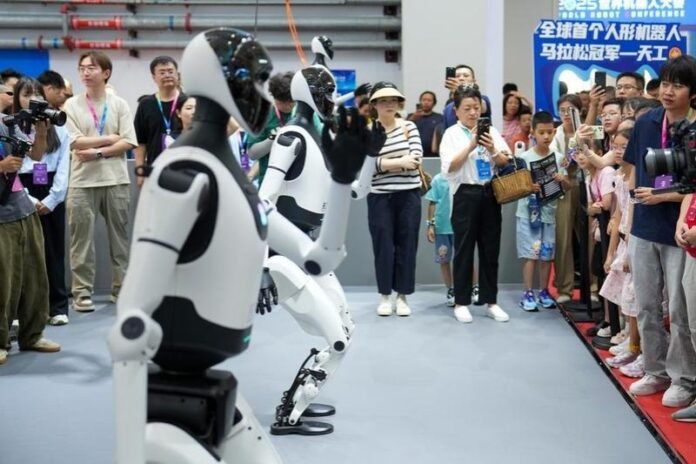
 In addition to the conceptual Robot Phone, Honor also launched its latest flagship foldable device, the Magic V6, to the global market. The company highlighted its ultra-slim profile, with a folded thickness of just 8.75 mm. The event also featured the debut of Honor’s first humanoid robot, signaling the company’s expanding ambitions beyond traditional mobile form factors.

 MWC Barcelona 2026 is scheduled to run from March 2 to 5, hosting over 100 pavilions representing a global cross-section of countries, regions, and cutting-edge technologies.

Article inline ad

Moderate Uptick Seen In Home Buys

0

By Wang Keju | China Daily | Updated: 2026-03-04 

China’s major cities are likely to see a moderate pickup in home purchases during the traditional high season in March and April, building on momentum generated during the recently concluded Spring Festival holiday, industry insiders and analysts said.

 Analysts also expect policymakers to roll out more supportive measures to buoy the confidence of homebuyers and developers during the upcoming two sessions, the annual meetings of China’s top legislature and the top political advisory body, set to start in Beijing this week.

 Throughout the record-long holiday, various developers across the country adopted “business as usual” operations, launching promotional campaigns to attract potential buyers and build a pipeline for the post-festival season.

 In Guangzhou, Guangdong province, more than 200 property projects kept their sales offices open during the holiday, rolling out incentives like home appliances and property management fee waivers, according to real estate agency Centaline Property.

 The incentives appear to have paid dividends. Poly Developments and Holdings Group’s project in Guangzhou’s Pazhou district received 28 groups of visitors during the holiday period, according to the property developer.

 The project secured five sales during the holiday period, with total transaction value exceeding 55 million yuan ($8 million), and purchasers typically moved from initial viewing to down payment within 10 days — a compression from the usual monthlong deliberation cycle, the firm said.

 A new “reverse” Spring Festival trend, where young people bring their parents to their workplace like Beijing and Shanghai for the reunion rather than traveling back to their hometowns, has accelerated home-purchase decisions as families conduct joint viewings and reach consensus during the extended break, said Xiao Xiaoping, director of the Beike Research Institute.

 According to data from the China Index Academy, 21 key cities recorded 100,000 square meters of new home sales during the Feb 15-23 holiday period, with average daily transaction volumes essentially flat compared with last year’s Spring Festival.

 Shanghai led the pack with 13,600 square meters in new home sales, benefiting from preholiday policy support and sustained developer promotions. Beijing’s core districts maintained steady activity, with quality projects attracting continued interest.

 In second-tier cities, Chengdu in Sichuan province, Suzhou in Jiangsu province, and Ningbo in Zhejiang province intensified promotional efforts during the holiday, driving increased visits to upgrade-oriented projects.

 In face of the two sessions, market attention is sharpening on how the government will outline its strategy to stabilize the real estate sector, with expectations building for clarity on fiscal support, financing mechanisms for unsold commercial housing acquisitions and reform of the housing provident fund system.

 A commentary published in the first 2026 issue of Qiushi Journal, the flagship magazine of the Communist Party of China Central Committee, has underscored the urgency of the moment, stressing that real estate policies must be introduced in “a decisive and comprehensive manner”, rather than employing a piecemeal “drip drip” rollout.

 “Currently, homebuyers’ wait-and-see sentiment persists,” said Li Yujia, chief researcher at the residential policy research center of the Guangdong Planning Institute. “Their core requirements are price security and delivery certainty, with particular attention to the attributes of asset preservation.”

 For the property market, where expectations play an outsize role in determining outcomes, clear and coordinated signaling carries particular weight. The two sessions offer an opportunity to reset expectations and demonstrate that authorities possess both the tools and the will to guide the sector toward stability, Li added.

 Last week, Shanghai eased its homebuying rules further, allowing nonresident individuals who have paid social security or individual tax for a year to purchase homes in urban areas. Previous rules required non-local residents to pay taxes for at least three years.

 Meanwhile, nonresident individuals who have paid taxes for three years or more can buy one extra home in urban areas, in addition to the existing housing purchase restriction policy.

 “Shanghai’s property market is at a critical inflection point, moving toward bottoming out and stabilization,” said Yan Yuejin, deputy head of the Shanghai-based E-House China R&D Institute.

 This would likely create a positive ripple effect, helping to anchor expectations and guide sentiment in smaller cities facing greater market pressure, Yan added.

 The combination of sustained policy support, developer marketing efforts and accumulated household demand appears positioned to support a gradual uptick in transaction activity across China’s major urban housing market during the traditional peak season, Yan said.

 month on month to 48.8, revealing an improvement in the business climate. By contrast, the PMIs for equipment manufacturing and energy-intensive industries edged down 0.3 percentage points and 0.1 percentage points to 49.8 and 47.8, respectively, pointing to a slight cooling in activity.

 The sub-index for production and business expectations climbed 0.6 percentage points from a month earlier to 53.2 in February, suggesting that manufacturing enterprises have grown more upbeat about market prospects after the Spring Festival holiday.

Article inline ad

Liuzhou’s Robotics Bet: How Embodied AI Is Moving Into China’s Industrial Heartland

0

ZH by Compiled from reports by China Daily on February 28.

A new robotics institute has opened in Liuzhou, an industrial city in southwest China’s Guangxi region. On the surface, it is a partnership between a vocational college and a robotics company. At a deeper level, it signals how embodied artificial intelligence is shifting from research labs into the core of China’s manufacturing ecosystem.

The Unitree School of Embodied Artificial Intelligence and Robotics — jointly launched by Unitree Robotics, Liuzhou City Vocational College and Guangxi Weiss Shield Technology Co Ltd — represents more than an education initiative. It reflects a new model of AI-industrial integration taking shape beyond China’s coastal tech hubs.


From Humanoid Hype to Factory Floor Reality

Embodied intelligence — AI systems integrated into physical robots capable of perception and action — has become one of the most closely watched frontiers in artificial intelligence.

Yet much of the global conversation remains centered on humanoid prototypes and demonstration videos. Liuzhou’s approach is different. Instead of positioning robotics as a futuristic showcase, the city is anchoring it to practical manufacturing demand.

As Guangxi’s largest industrial base, Liuzhou has long specialized in automotive and machinery production. These sectors face rising labor costs, efficiency pressures and the need for flexible automation. Embodied robotics offers adaptive solutions in assembly assistance, inspection, logistics and maintenance — areas where rigid automation systems struggle.

The institute’s focus on three pillars — operational training, scenario adaptation and operations & maintenance services — suggests an emphasis on applied deployment rather than theoretical research.


Vocational Colleges as AI Infrastructure

One of the most significant signals lies in the institutional choice.

Rather than partnering with a top-tier research university, Unitree established its first embodied robotics institute in Guangxi within a higher vocational college. This is a strategic decision.

Vocational institutions sit closer to the workforce pipeline. They train technicians, operators and maintenance specialists — the human layer necessary for scaling robotics adoption in mid-sized factories.

By aligning training programs with Unitree’s technical standards, certification systems and maintenance protocols, the institute effectively embeds industrial norms directly into local talent development.

In doing so, the partnership shortens the gap between product innovation and workforce readiness — a bottleneck that has slowed robotics adoption globally.


A Regional Diversification of China’s AI Map

China’s AI narrative is often dominated by cities like Beijing, Shenzhen and Hangzhou. Liuzhou signals geographic diffusion.

This matters for two reasons:

  1. It indicates that embodied AI is no longer confined to elite R&D clusters.

  2. It aligns AI deployment with regional industrial specialization.

Guangxi’s positioning as a gateway to the Association of Southeast Asian Nations (ASEAN) adds another layer. For Unitree Robotics, the region provides not just a domestic manufacturing testbed, but a potential export springboard into Southeast Asia’s developing industrial markets.

While still early-stage, the strategy hints at how Chinese robotics firms may internationalize: first embedding into domestic industrial ecosystems, then leveraging regional trade corridors.


Standardization as Competitive Strategy

Another critical dimension is standard-setting.

The institute’s alignment with Unitree’s technical and certification frameworks suggests an effort to build a standardized ecosystem around embodied robotics. In emerging industries, early standards often translate into long-term competitive advantages.

If local factories adopt training, maintenance and application protocols tied to a specific robotics platform, switching costs rise over time. This creates stickier industrial relationships — not unlike how enterprise software ecosystems evolve.

For global observers, this is a familiar pattern. But its application to embodied AI within manufacturing clusters signals the next phase of robotics commercialization.


Beyond a Campus Opening

The launch of a robotics institute in Liuzhou may appear incremental. Yet structurally, it reflects three converging trends:

  • The migration of AI from software into physical systems

  • The integration of education directly into industrial deployment

  • The expansion of advanced robotics beyond China’s coastal innovation centers

Embodied AI’s commercial viability will depend less on headline-grabbing prototypes and more on training pipelines, maintenance ecosystems and real-world scenario integration.

Liuzhou’s experiment suggests that China’s robotics push is entering this operational phase.

If replicated across other industrial regions, the long-term effect could be the normalization of embodied AI as standard manufacturing infrastructure — not a technological novelty, but a baseline capability.

Article inline ad

When AI Classrooms Become Strategic Terrain

0

Co-Branded Tech Education and the Quiet Reordering of Global Digital Power

ZHCompiled from reports by China Daily on February 28.

The global shortage of cybersecurity professionals reached 4.8 million in 2025, according to the annual workforce study by the International Information Systems Security Certification Consortium. The deficit is widening, not narrowing.

On the surface, the response appears straightforward: corporations and universities are joining forces to train the next generation of AI and cybersecurity specialists. Yet beneath this cooperative momentum lies a deeper strategic realignment — one that signals how artificial intelligence education is becoming a new frontier of geopolitical competition.


The Corporate-Academic Convergence

In recent years, technology giants have expanded aggressively into higher education partnerships.

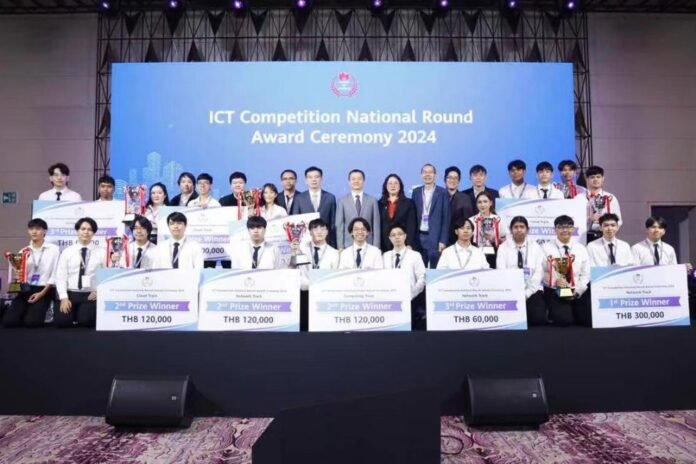
Microsoft has pledged to train millions of AI workers globally through university collaborations. Huawei has built an Information and Communications Technology (ICT) Academy network spanning more than 2,000 institutions across over 150 countries.

These initiatives are not merely philanthropic or commercial. They embed corporate standards, technical frameworks and ecosystems directly into academic curricula. Students trained under such programs often graduate already aligned with a specific technology stack.

The signal here is subtle but powerful: whoever shapes AI education today shapes platform dependence tomorrow.


The Time-Horizon Mismatch

However, history offers a cautionary precedent.

The Cisco School of Informatics, launched at Guangdong University of Foreign Studies in 2010 as Cisco’s first corporate-named university school globally, operated for seven years before being renamed and restructured in 2017.

The episode underscores a structural asymmetry. Companies operate on product cycles, quarterly earnings and strategic pivots. Universities operate on generational timelines. When corporate identity becomes deeply embedded in an academic institution, volatility enters a system designed for continuity.

The current AI cycle intensifies this risk. Unlike previous technology waves that evolved over decades, AI architectures and business models now shift within years. A curriculum built around one dominant framework today may face obsolescence tomorrow.

The deeper signal: universities are being pulled into innovation cycles that move far faster than academia’s institutional rhythm.


From Talent Shortage to Strategic Leverage

The Asia-Pacific region alone faces a cybersecurity workforce gap of roughly 3.4 million positions. Talent scarcity is no longer a purely economic problem — it is a strategic constraint.

Governments are increasingly aware that reliance on foreign corporate training models may create long-term technological dependencies. At the same time, companies view education partnerships as a means to expand ecosystem influence amid tightening export controls and digital sovereignty policies.

The geopolitical dimension is impossible to ignore:

  • US export restrictions affecting advanced chips and AI tools

  • EU regulatory frameworks on data and digital services

  • Accelerating fragmentation of the global internet

In this environment, AI classrooms are no longer neutral spaces. They are nodes within a broader contest over standards, infrastructure and digital governance.


A Different Model: Institutional Independence

Some partnerships suggest a more durable architecture.

The Massachusetts Institute of Technology–IBM Watson AI Lab operates without full co-branding of academic programs. Corporate funding and infrastructure support research, but curricular authority remains firmly with the university.

This separation preserves academic continuity while leveraging corporate resources. It reflects an understanding that while companies may rotate strategies, universities must anchor institutional credibility over decades.

Increasingly across Asia — in Singapore, South Korea and China — cybersecurity education programs are shifting toward national certification standards and government-backed funding mechanisms. The emphasis is on resilience beyond any single company’s lifecycle.

The signal here is unmistakable: states are recalibrating how deeply corporations can embed themselves into sovereign education systems.


The Strategic Implication

What appears to be a pragmatic response to labor shortages is, in fact, a reordering of digital power structures.

AI and cybersecurity education now sit at the intersection of:

  • Workforce competitiveness

  • Technological sovereignty

  • Geopolitical alignment

  • Platform ecosystem expansion

For global observers, the key takeaway is this:

The contest over artificial intelligence is no longer confined to research labs or semiconductor supply chains. It has extended into lecture halls and certification programs.

Who designs the curriculum may ultimately matter as much as who designs the algorithm.

Article inline ad

Zhejiang’s AI Factory Revolution: A Blueprint for China’s Next Industrial Leap

0

Compiled from reports by China Daily on February 28.

When Chinese speed skater Sun Long stepped onto the Milano-Cortina Winter Olympics podium wearing a vividly colored national team outfit, few would have imagined that artificial intelligence played a role in that precise shade of red.

Yet inside a textile plant in Shaoxing, Zhejiang province, AI-powered digital printing systems are now calibrating fabric colors with near-laboratory precision — replacing decades of manual experience with algorithmic accuracy.

This is not an isolated upgrade. It reflects a deeper structural shift underway in one of China’s most important manufacturing provinces.


From Pilot Projects to System-Level Integration

Unlike earlier waves of automation focused on robotics and mechanization, Zhejiang’s current push centers on embedding AI across the entire industrial value chain — from design and R&D to production, quality inspection and energy management.

At Zhongce Rubber Group, engineers no longer rely on large design teams to input data manually. AI-driven modeling systems can now generate dozens of 3D tire structures within minutes. The company has deployed 18 AI agents spanning R&D, production scheduling and testing optimization.

The result is not simply faster design. It represents a collapse of intermediate labor layers — compressing time, reducing coordination costs and fundamentally altering workflow structures.

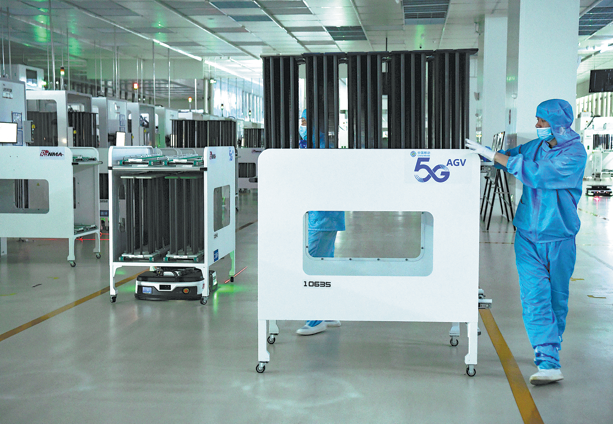
Similarly, at Zeekr’s 5G-enabled smart factory in Ningbo, AI visual inspection systems verify tire specifications in one second, achieving a reported 100 percent error interception rate. What was once one of the most error-prone assembly stages has become a near-zero-defect process.

For industrial observers, the pattern is clear: Zhejiang is moving from “automation enhancement” to “AI-native manufacturing architecture.”


Productivity, Energy and Environmental Recalibration

One of the most striking claims from factory operators is not just labor efficiency gains — reportedly up to fivefold in certain cases — but the dramatic reduction in resource consumption.

At Zhongce’s facilities, AI-assisted systems reportedly cut pollution and energy use at the source by roughly 80 percent per day. While such figures warrant independent verification, they point to a crucial emerging theme: AI as a dual lever for both productivity and decarbonization.

In an era where carbon intensity and ESG metrics increasingly influence global supply chains, Zhejiang’s model suggests that digital transformation may become not just a competitiveness strategy, but an environmental compliance strategy.


The Scale Factor: Why Zhejiang Matters

Zhejiang is not a small experimental zone. It is one of China’s core private-sector manufacturing provinces, home to dense clusters in textiles, automotive components, chemicals and machinery.

By the end of 2025, local authorities report full digital-transformation coverage among industrial enterprises above designated size. The province has established:

  • 608 digital workshops

  • 381 smart factories

  • 93 “future factories” integrating AI, 5G and industrial internet systems

This density matters. AI transformation is often discussed in isolated corporate case studies. Zhejiang represents something different — a regional systems-level push where infrastructure, policy incentives and industrial ecosystems evolve together.

For global investors and supply chain partners, this raises an important question: is Zhejiang building a replicable model for AI-driven industrialization?


Human Capital: Replacement or Augmentation?

A recurring theme among factory executives is that AI is not positioned as a labor replacement tool, but as an augmentation system.

Engineers once dependent on teams of 20 for data input can now operate independently with AI assistance. Workers shift from repetitive manual processes toward oversight, calibration and system supervision roles.

This transition, however, implies a significant workforce retraining requirement. Zhejiang’s success will depend not only on deploying AI agents, but on scaling technical literacy across its industrial labor base.

The long-term competitiveness of the model will hinge on whether productivity gains are matched by sustainable employment transformation.


Beyond Zhejiang: Implications for China’s Industrial Strategy

The integration of AI into traditional sectors signals a broader national ambition. China’s industrial policy increasingly emphasizes “new-type industrialization” — blending advanced digital systems with established manufacturing strengths.

Zhejiang’s experiment demonstrates several structural advantages:

  1. Deep supply-chain clustering

  2. Rapid adoption capacity among private firms

  3. Government-backed digital infrastructure

  4. 5G deployment at industrial scale

If replicated in other manufacturing provinces such as Guangdong or Jiangsu, the cumulative productivity impact could reshape China’s export competitiveness over the next decade.


A Structural Shift, Not a Technological Upgrade

What is unfolding in Zhejiang is not simply factory automation 2.0. It is a structural recalibration of how manufacturing intelligence is embedded into daily operations.

For overseas observers, the key takeaway is this:

China’s AI story is no longer confined to consumer apps or cloud platforms. It is moving decisively onto the factory floor — into textiles, tires and electric vehicles — sectors that underpin global supply chains.

If Zhejiang’s trajectory continues, AI may become the invisible operating system of China’s next industrial phase.

Article inline ad