Tuesday, November 24, 2026

Home Blog Page 47

German Firms Strengthen Supply Chain Presence in Taicang, China

0

According to a report by ZH based on a March 2nd news report from China Daily.

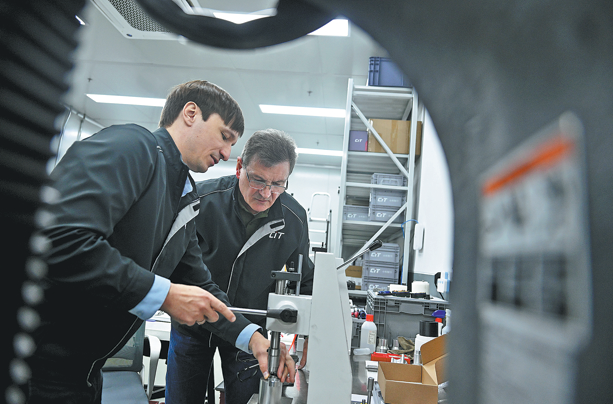
Germany’s industrial footprint in China has reached a new milestone in Taicang, Jiangsu province, where more than 560 German companies operate after over three decades of strategic development. The city is now widely recognized as a hub for German enterprises in China, showcasing successful integration into local supply chains and advanced manufacturing ecosystems.

 Driving Industrial Upgrading Through Foreign Investment

 Taicang’s success is attributed to a “German-style” focus on precision, quality, and long-term engagement, supported by a business environment that enables foreign firms to “enter, stay, and thrive.”

 Key enablers include:

 Dual-system vocational education linking industry and skills

 German-standard living and work environment

 Strong local government facilitation and investment services

 Officials emphasize that integrating domestic and foreign industrial chains transforms foreign capital into a driver for local industrial upgrading, creating a virtuous cycle of economic growth and technology transfer.

 Green and High-Tech Initiatives

 A central pillar of cooperation is green development:

 The Taicang High-Tech Industrial Development Zone has partnered with Germany’s GIZ to build China’s first Sino-German dual-certified zero-carbon park.

 Past energy-efficiency programs in Taicang have saved over 25,000 MWh annually and reduced carbon emissions by 38,000 metric tons.

 The new park will implement digital energy management and a carbon footprint accounting system, enabling export-oriented companies to secure ISO 14067 certification and carry a “green passport” for trade.

 These initiatives aim to establish a “Taicang Model” for nationwide green industrial transformation.

 Operational Outlook

 Local companies are performing strongly:

 Brose Taicang Automotive Systems reports full-capacity smart production lines

 German firms are planning further investments, focusing on the growing Chinese market

 Strategic alignment with local policies ensures long-term operational stability and supply chain resilience

 Thomas Herrmann, general manager of Brose Taicang, noted:

 “We want to focus more on the Chinese market this year and expand local production, bringing more production lines here.”

 Implications for Global Investors

 Supply Chain Integration: Taicang demonstrates effective foreign–domestic industrial cooperation

 High-Tech Manufacturing: Smart production and robotics sectors show robust growth potential

 Green Investment Opportunities: Zero-carbon initiatives offer avenues for sustainable investment

 Long-Term Stability: Strong policy support and international-standard operations reduce operational risk

 For investors, Taicang serves as a model for successful bilateral industrial collaboration, blending German operational standards with China’s growth and innovation ecosystem.


Article inline ad

China Economic Trends: Outlook for 2026

0

According to a report by ZH based on a March 2nd news report from China Daily.

Overview:

As China navigates a complex global environment marked by geopolitical uncertainties and shifting supply chains, domestic reforms and industrial resilience are shaping the country’s economic trajectory. This special report highlights key trends in manufacturing, outbound investment, and domestic-demand-led growth.

 1️⃣ Manufacturing Momentum: PMI Signals Resilience

 Key Insight: China’s manufacturing PMI fell to 49 in February due to seasonal holiday effects, but high-tech sectors and large enterprises continue to show growth momentum.

 High-tech manufacturing PMI: 51.5

 Large enterprise PMI: 51.5 (expansion)

 SME PMI: 44.8–47.5 (seasonal weakness)

 Positive expectations sub-index: 53.2

 Implication: While overall manufacturing activity temporarily cooled, large and technology-driven firms maintain steady expansion, highlighting selective opportunities in industrial and technology-linked sectors.

 2️⃣ Outbound Direct Investment: Steady Global Expansion

 Key Insight: China’s non-financial ODI reached $145.66 billion in 2025, with robust growth in Africa (41%) and Europe (20.9%), reflecting diversified overseas deployment.

 Investment focus: high-end manufacturing, green energy, digital connectivity, infrastructure

 Trend: from opportunistic expansion to long-term, capability-driven globalization

 Strategy: localization, R&D centers abroad, employment creation

 Implication: Chinese companies are building resilience and competitive advantages overseas, while strategically managing risks in a volatile global environment.

 3️⃣ Domestic Demand: Driving the Next Five-Year Plan

 Key Insight: China aims to rebalance growth toward domestic consumption and circulation in its 15th Five-Year Plan (2026–2030).

 Private consumption share of GDP: 40.1% (2025), vs. OECD median >50%

 Policy focus: expand household spending, strengthen social security, raise rural incomes, support entrepreneurship

 Macro tools: fiscal and monetary measures to stimulate private sector demand

 Implication: Investors should monitor consumer-driven sectors, services, and domestic innovation as key engines for sustainable growth.

 4️⃣ Strategic Takeaways

 High-Tech & Large Manufacturing: Key areas of growth, resilient despite short-term fluctuations

 Global Footprint: ODI trends signal strategic international expansion with risk management emphasis

 Domestic Rebalancing: Strong policy push toward consumption-led growth underpins long-term stability

 Investment Lens: Opportunities lie in high-tech, consumer, infrastructure, and green energy sectors

 Conclusion:

China’s economic outlook for 2026 reflects a dual approach: sustaining global engagement through strategic overseas investment while strengthening the domestic economy via consumption-driven growth. Selective, sector-specific opportunities exist for investors aligned with high-tech, consumer, and infrastructure trends.


Article inline ad

China Moves to Rebalance Growth Toward Domestic Demand in Next Five-Year Plan

0

According to a report by ZH based on a March 2nd news report from China Daily.

China is preparing to place stronger emphasis on domestic demand as the primary growth engine in its upcoming 15th Five-Year Plan (2026–2030), signaling a structural shift in development strategy amid rising external uncertainty.

 Ahead of the annual meetings of the National People’s Congress, policymakers and economists indicated that boosting household consumption, strengthening social protection and reinforcing countercyclical macro policies will form the core of the next phase of economic reform.

 From Export-Led to Demand-Driven Growth

 China’s leadership has increasingly framed economic rebalancing as necessary to address a structural mismatch between maturing industrial capacity and comparatively weak domestic demand.

 Officials have described the transition toward a model “more dominated by domestic demand, stimulated by consumption and characterized by endogenous growth.” In practical terms, this implies:

 Greater fiscal support for households

 Expanded social safety nets

 Measures to raise rural incomes

 Policies aimed at increasing private sector confidence

 The objective is to create a more self-sustaining domestic economic cycle, reducing reliance on volatile external demand.

 Why Consumption Remains the Key Variable

 Private consumption accounted for an estimated 40.1 percent of China’s GDP last year, according to the latest assessment by the International Monetary Fund. By comparison, the median consumption share among advanced economies in the Organisation for Economic Co-operation and Development exceeds 50 percent.

 This gap underscores the structural room for expansion — but also highlights the challenge.

 Economists argue that precautionary savings remain elevated due to uncertainties surrounding healthcare, pensions and education costs. Strengthening social security coverage and integrating State-owned assets more effectively into livelihood support mechanisms are seen as potential levers to unlock household spending power.

 Policy Tools: Fiscal and Monetary Coordination

 In the near term, analysts expect stronger countercyclical adjustments, potentially including additional policy rate cuts to reduce financing costs for private enterprises and support asset valuations.

 Lower borrowing costs could help repair balance sheets for firms and households, while fiscal measures targeting income growth — particularly for rural residents and migrant workers — may play a crucial role in sustaining demand momentum.

 International observers have suggested more ambitious structural reforms, including pension enhancement and expanded urban residency rights for migrant workers, as potential long-term catalysts for consumption growth.

 Implications for Global Investors

 For global markets, China’s shift toward domestic demand carries several implications:

 Reduced vulnerability to external trade shocks

 Greater emphasis on services and consumer sectors

 Potential re-rating of consumption-driven industries

 A more balanced and resilient growth profile

 If successfully implemented, the strategy could mark a gradual evolution from investment-heavy expansion toward a consumption-supported development model — one that may generate steadier, though potentially less explosive, growth.

 The Strategic Signal

 China’s next growth phase appears less about headline stimulus and more about structural recalibration.

 The emphasis on domestic demand suggests policymakers are seeking to anchor long-term stability in internal economic dynamics rather than external cycles. For investors, the key question will be execution: whether reforms can meaningfully shift household behavior and narrow the consumption gap relative to advanced economies.

 If the pivot succeeds, it would represent one of the most consequential adjustments in China’s development model in decades.


Article inline ad

China’s Outbound Investment Set for Steady Expansion in 2026

0

According to a report by ZH based on a March 2nd news report from China Daily.

China’s outbound direct investment (ODI) is expected to maintain steady growth in 2026, driven by industrial upgrading at home and sustained demand abroad for cost-efficient manufacturing, infrastructure and green technology solutions.

 Despite persistent geopolitical tensions and global trade frictions, Chinese companies are continuing to expand overseas, with Asia, Latin America and parts of Europe emerging as key destinations due to complementary industrial structures, infrastructure needs and expanding consumer markets.

 Structural Shift in Investment Composition

 China’s non-financial ODI rose 1.3 percent year-on-year to $145.66 billion in 2025, according to official data. Notably, investment flows to Africa, Europe and Asia increased by 41 percent, 20.9 percent and 1.2 percent, respectively — highlighting differentiated regional dynamics.

 Analysts note that the composition of ODI is evolving. Rather than focusing primarily on resource acquisition or low-cost manufacturing relocation, Chinese investment is increasingly directed toward:

 High-end manufacturing

 Green energy and energy storage

 Digital connectivity infrastructure

 Engineering and urban development

 Localized service operations

 This shift reflects China’s broader industrial restructuring and the global push toward decarbonization and digital transformation.

 From Opportunistic Expansion to Strategic Globalization

 Consultants and industry observers emphasize that Chinese firms are moving beyond opportunistic market entry toward longer-term global operating models.

 As global supply chains undergo reconfiguration, companies are seeking to diversify production bases and mitigate geopolitical risk exposure. Overseas expansion is increasingly viewed as a resilience strategy rather than simply a growth play.

 Multinationals and policymakers alike have noted that energy transition projects, smart manufacturing and infrastructure modernization across emerging markets are generating sustained demand for competitively priced engineering and technology solutions — areas where Chinese firms have built scale advantages.

 Building Local Integration

 Chinese companies are also shifting toward deeper localization strategies.

 Rather than exporting finished goods alone, firms are:

 Establishing overseas design and R&D centers

 Building local manufacturing facilities

 Creating employment in host economies

 Developing region-specific product customization

 For example, Chinese firms in renewable energy and residential storage have strengthened their presence in Europe, particularly in Germany, where demand for decentralized energy systems continues to grow amid the country’s energy transition push.

 Consultants argue that future success will depend less on cost competitiveness alone and more on integrated capability building — including brand development, regulatory compliance, supply chain coordination and proactive risk governance.

 Risk Management as a Core Capability

 As overseas footprints expand, risk management is becoming central to corporate strategy. Companies are increasingly embedding structured frameworks to monitor currency exposure, regulatory shifts and geopolitical volatility.

 This transition marks a maturation phase in China’s globalization process: from scale-driven expansion to quality-oriented, risk-adjusted growth.

 What It Means for Global Markets

 For host economies, sustained Chinese ODI may support:

 Infrastructure modernization

 Green energy deployment

 Job creation

 Supply chain diversification

 For global investors, the trend signals that China’s corporate sector is gradually repositioning itself as a long-term participant in international industrial ecosystems rather than a short-term capital exporter.

 While geopolitical uncertainty remains a constraint, the direction of travel suggests a more strategic and capability-driven phase of global expansion in 2026.


Article inline ad
0

China Strengthens Financial Infrastructure as CIPS Expands Global Footprint

According to a report by ZH based on a March 2nd news report from China Daily.

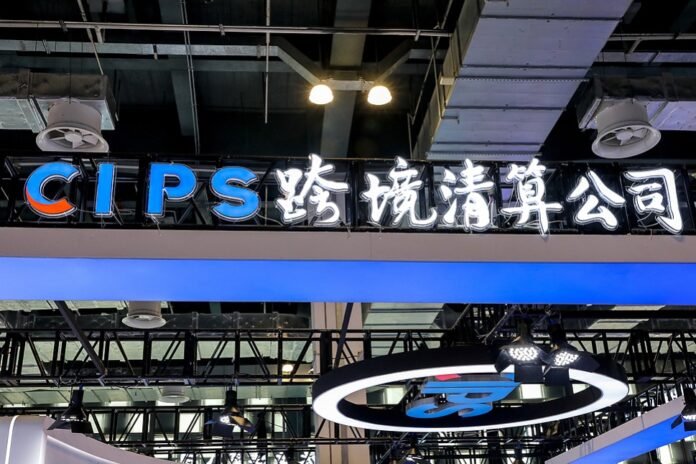
China is accelerating the buildout of its cross-border financial infrastructure, as growing demand from multinational corporations drives the expansion of the country’s Cross-Border Interbank Payment System (CIPS).

 Originally launched to facilitate cross-border renminbi clearing and settlement, Cross-Border Interbank Payment System has evolved into a broader financial infrastructure platform, increasingly positioned as a stabilizing component in global payment architecture amid heightened geopolitical and economic uncertainty.

 Rapid Expansion Across Jurisdictions

 By the end of 2025, CIPS had 193 direct participants and 1,573 indirect participants spanning 124 countries and regions — a sharp rise from just 19 and 176, respectively, at its launch a decade ago. The system now provides services to more than 5,000 banking institutions across 190 countries.

 While still smaller than the global messaging network operated by Society for Worldwide Interbank Financial Telecommunication, which connects over 11,500 institutions worldwide, CIPS’ steady growth is seen by analysts as strategically significant rather than merely incremental.

 The expansion reflects a broader global trend: economies and corporations are increasingly seeking diversified cross-border payment channels to enhance resilience and reduce dependency risks.

 Commercial Logic Behind RMB Adoption

 Bank executives note that multinational corporations are turning to renminbi settlement for clear commercial reasons:

 Optimizing treasury and liquidity management

 Reducing foreign exchange conversion costs

 Mitigating currency volatility exposure

 Improving settlement efficiency

 The rise of CIPS has coincided with greater two-way RMB usage in trade and financial transactions. As questions around dollar stability periodically resurface, diversification of settlement currencies has become part of corporate risk management strategy.

 From Trade Settlement to Financial Infrastructure

 CIPS handled 180.2 trillion yuan ($26.4 trillion) in transactions in 2025, expanding beyond traditional trade settlement into broader financial market and liquidity management functions.

 Recent regulatory revisions that took effect in February introduced support for RMB-versus-foreign-currency payment-versus-payment (PVP) services — enabling simultaneous settlement of two currencies in cross-border transactions. The updated framework also lowers participation barriers for overseas institutions by allowing greater flexibility in custodian arrangements.

 These adjustments signal a structural upgrade: CIPS is being positioned not only as an RMB clearing channel, but as a multi-currency settlement platform capable of supporting more complex cross-border transactions.

 Strategic Context: Financial Resilience and Global Integration

 Chinese policymakers have repeatedly emphasized the importance of building an “independent, controllable, safe and efficient” financial infrastructure system. In this context, CIPS plays a dual role:

 Enhancing cross-border settlement efficiency for global firms

 Strengthening systemic resilience in an era of fragmented financial networks

 For foreign companies managing onshore RMB assets, a more developed CIPS ecosystem improves liquidity mobility. For Chinese firms expanding overseas, it provides a trusted settlement backbone.

 What It Signals

 CIPS’ expansion does not imply displacement of existing global networks in the near term. Rather, it reflects:

 Diversification of global payment channels

 Growing international usage of the renminbi

 Institutional upgrading of China’s financial architecture

 A gradual shift toward a more multipolar monetary system

 As geopolitical uncertainties persist, infrastructure — not just policy — is becoming a central pillar of financial strategy. In that regard, CIPS represents more than a payment system; it is an evolving component of the global financial landscape.


Article inline ad

China’s A-Share Market Shows Resilience as Geopolitical Risks Escalate

0

According to a report by ZH based on a March 2nd news report from China Daily.

China’s onshore equity market demonstrated notable resilience this week, even as global investors reacted nervously to escalating tensions in the Middle East.

 On the first trading day after reported US and Israeli strikes on Iran, the Shanghai Composite Index rose 0.47 percent, diverging from regional peers. Japan’s Nikkei 225 fell 1.35 percent, while South Korea’s KOSPI dropped 1 percent from its recent 52-week high.

 The blue-chip CSI 300 Index gained 0.38 percent, supported by strength in energy and precious metals shares. Oil and gas extraction companies surged nearly 11 percent on average, while precious metal producers climbed over 10 percent, reflecting classic defensive positioning amid geopolitical stress.

 Energy Risk and Market Spillovers

 Strategists noted that the Strait of Hormuz, which handles roughly 30 percent of global seaborne oil trade and 20 percent of LNG shipments, remains a key transmission channel for geopolitical risk. Any disruption would likely amplify energy price volatility and fuel inflation concerns worldwide.

 However, China’s domestic equity market appeared relatively insulated in the initial reaction phase.

 Structural Support From Earnings and Policy Expectations

 Market participants attribute the resilience to improving corporate earnings and expectations of stronger policy coordination in 2026.

 Analysts expect profit growth among A-share listed companies to accelerate this year, supported by:

 Improved pricing power among Chinese manufacturers

 Competitive positioning in global supply chains

 Continued technology upgrading

 Gradual recovery in domestic demand

 Investors are also closely watching the upcoming 15th Five-Year Plan (2026–2030), which could provide medium-term clarity on industrial priorities, technology investment, and domestic demand expansion.

 A Diversification Play in Asia?

 Historically, global equity markets tend to face downward pressure in the early stages of geopolitical conflict. While China’s market is not immune to risk-off sentiment, analysts argue that such shocks are unlikely to derail its broader structural trajectory.

 As the world’s second-largest economy and a key stabilizer in global manufacturing supply chains, China may increasingly serve as a diversification component in Asia-Pacific portfolios, particularly if volatility persists in Western markets.

 Strategists at UBS Global Asset Management’s Chief Investment Office advised investors to rebalance portfolios amid heightened uncertainty. Defensive allocations such as gold and high-quality bonds remain relevant, but China could also represent a selective growth opportunity within emerging markets.

 Bottom Line for Global Investors

 While geopolitical shocks may generate short-term volatility, China’s A-share market appears supported by:

 Domestic policy visibility

 Industrial depth and supply-chain resilience

 Earnings recovery momentum

 Increasing relevance in global asset allocation frameworks

 In periods of global fragmentation, structural differentiation matters — and China’s market is increasingly being assessed through that lens.

Article inline ad

Innovation Transforming China’s Bicycle Heartland

0

By Yang Ran in Xingtai, Hebei | China Daily | Updated: 2026-03-04 

Whenever Wang Zhanying talks about his experiences at the 138th Canton Fair last November, his voice exudes excitement and pride. Wang says he tasted sweet success at the fair, a reward for embracing innovation.

 Wang launched the M9 portable baby stroller at the Canton Fair, winning the design award of the event, officially known as the China Import and Export Fair.

 “Thanks to the support of the Pingxiang County Bicycle Industry Research Institute, we successfully designed the M9 portable baby stroller, which boasts seven patents,”Wang said. “This stroller can fold into a compact size that meets airline carry-on standards, while its innovative design allows the baby to both sit and lie down.”

 The M9 stroller has already racked up over 10,000 orders following its debut at the fair, propelling Wang’s brand, “Xiao Kabu”, into markets like the Netherlands, Belgium and Brazil.

 “This was unimaginable in the past,” said Wang, who has nearly 20 years’ experience in the local bicycle industry.

 Wang took over the family’s bicycle parts business and transitioned that into complete bicycle manufacturing and further on into children’s vehicles.

 “We used to mainly do original equipment manufacturing, or OEM, which meant products were very similar and profits were slim,” Wang recalled. “In the past, when we attended large exhibitions and mentioned that our products were from Hebei, customers would often question their quality. But now, thanks to our innovative designs, our products can represent ‘Hebei Manufacturing’ on the grand stage of the Canton Fair. When we go out to negotiate collaborations, we can hold our heads high with confidence.”

 “We’ve now tasted the fruit of innovation,”Wang said. “We’ve experienced that when you innovate, the market, including major brands and international clients, will be more likely to trust you. So, we’ve also hired our own research and development team.”

 He emphasized: “Only by boldly innovating and designing products that are unique and superior can we win in the future.”

 Wang’s story mirrors the industrial transformation in Pingxiang county of Xingtai, a city in Hebei, a longtime hub of China’s bicycle and children’s vehicle industry.

 Wang Ruiguo, deputy director of Pingxiang’s Science, Industry and Information Technology Bureau, said Pingxiang’s bicycle and children’s vehicle industry evolved over decades from processing parts and OEM manufacturing to a national-level industrial cluster with annual revenues exceeding 34 billion yuan ($4.92 billion), capturing half of the domestic market.

 Official data show that Pingxiang currently hosts over 5,000 bicycle-related businesses, producing 155 million units of bicycles, children’s vehicles, and toys annually, accounting for 50 percent of the domestic and 40 percent of the international market.

 Wang said the local government has steered this giant industry from pure manufacturing toward higher-value, self-branded products, and that this push is bearing fruit.

 According to Wang, Pingxiang’s bicycle companies are now much more willing to invest in design, with annual design service fees exceeding 80 million yuan.

 “Pingxiang is now planning its own industrial joint design center, which is expected to serve over 100 large-scale enterprises and shorten the product development cycle by an average of 30 percent,” Wang said.

 Xingtai Tianda Bicycle Co has been a dedicated player in the children’s vehicle industry for nearly three decades. According to Dai Yifei, general manager of the company, the key to the industry’s future lies in personalization and customization.

 To this end, the company began investing in R&D in 2012. Dai said, the company invests about 5 percent of its annual revenue in R&D, focusing on upgrading existing models and exploring the application of new technologies.

 In 2024, Tianda launched a 5-in-1 model, combining functionalities including stroller, scooter and electric vehicles, making it suitable for children of different ages. It sold nearly 30,000 units in a year, said Dai.

 In 2025, Tianda introduced an innovative, dust-free, built-in reduction gearbox for children’s electric vehicles, solving the problems of noise and dust of previous models.

 This invention increased the profit margin of related products by 5 percent and orders by over 20 percent, said Dai. After years of dedication to R&D, Tianda now owns about 150 patents, with 3-5 new patents added annually.

 Wang Shiqi, deputy secretary-general of the Pingxiang Bicycle and Electric Vehicle Association, said that by the end of 2025, the county held 58 valid invention patents and 2,285 utility model patents.

 “The number of enterprise R&D centers in Pingxiang has grown from 21 in 2021 to 68. Over 200 enterprises are collaborating with professional design companies, research institutes and universities to develop and innovate products,” Wang Shiqi said.

 For Yao Xihua, general manager of Xingtai Jianli Bicycle Co, increasing investment in design innovation and manufacturing upgrades has not only enhanced his company’s competitiveness, but also expanded its market.

 Yao took over the company founded by his father in 1999 and established his own bicycle brand, GENT, around four years ago, focusing on innovative design of model types to create his own unique style.

 “A customer from Bangladesh saw one of our bikes with a uniquely designed wheel spoke in Yiwu, Zhejiang province, and spent six months searching for our factory,” Yao shared proudly. Currently, Yao’s own brand is exported to countries like Nepal and Syria.

 To enhance his company’s competitiveness, Yao established a dedicated R&D team in 2021, developing over 60 new products annually. He also introduced automated equipment to further improve production accuracy, stability, and efficiency. These investments in manufacturing have allowed Yao’s products to enter high-end markets, increasing the profit margin from less than 5 percent to over 10 percent.

 Yao’s company is also actively exploring cross-border e-commerce to expand its market.

 In 2025, Yao’s company began to work with platforms such as Amazon and Alibaba.com, and opened an account on TikTok, which has already attracted inquiries from buyers in the United Kingdom, Algeria, and Azerbaijan.

 According to Wang Shiqi, cross-border e-commerce has helped local enterprises expand their sales channels in recent years.”Many enterprises are using Alibaba.com, Amazon, DHgate to attract buyers.”

 Zhao Shujun, general manager of Hebei Haolaixi Children’s Products Co, said that, through Alibaba.com, her company secured around 10 million yuan worth of orders in 2025 with just a six-person foreign trade team.

 As a foreign trade service provider based in Pingxiang, Jieming Company has been dedicated to supporting the exports of the local bicycle and children’s vehicle industry since its establishment in 2020.

 Shi Nan, assistant to the general manager of the company, said: “Cross-border e-commerce and brand globalization present a significant opportunity for local enterprises to expand overseas. Products sold through cross-border e-commerce can directly build brand influence among consumers and increase corporate profits.”

 “However, we must also recognize that factors such as product selection, cost estimation and intellectual property protection in cross-border e-commerce will pose significant challenges for local enterprises,” Shi said.

 “Over the next three years, our company plans to establish a specialized overseas foreign trade service platform. This platform will integrate key areas of foreign trade services, including overseas digital marketing, intellectual property protection and overseas warehousing. By linking domestic and international platforms, we aim to provide comprehensive support for local enterprises in their long-term global journey.”

 Zhang Yu contributed to this story.

Article inline ad

Medical AI Growth Leads To Standardization In Epilepsy Surgery

0

By Han Jingyan | chinadaily.com.cn | Updated: 2026-03-03 

As artificial intelligence (AI) becomes increasingly common in healthcare research, a Chinese medical doctor working on machine learning applications is pioneering research to benefit epilepsy sufferers, which number over 50 million people worldwide.

 “Infrastructure determines whether innovation can translate,” said Dr Yipeng Zhang, a researcher working on machine learning applications in epilepsy — a neurological condition characterized by abnormal or excessive brain activity that results in seizures. “If we want AI to assist in surgical decisions, we need frameworks that allow results to be compared across hospitals.”

 About one-third of epilepsy sufferers worldwide experience seizures that cannot be controlled by medication. For many of these patients, surgical removal of seizure-generating brain tissue provides the best chance of long-term relief. Identifying that tissue relies heavily on intracranial electroencephalography (iEEG), a high-resolution recording of brain activity from implanted electrodes.

 Over the past decade, researchers have developed AI systems to assist in analyzing iEEG recordings — particularly in detecting high-frequency oscillations (HFOs) — and signal patterns associated with seizure-generating regions. Many studies report promising performance.

 However, most AI systems in this space are trained on data from a single hospital or research center. Differences in recording protocols, labeling conventions, and clinical definitions make it difficult to compare results across institutions or determine whether findings generalize.

 “The field has focused heavily on improving AI accuracy,” Zhang said, noting that “without shared evaluation standards, it’s hard to know whether systems will perform reliably outside the original study setting.”

 Zhang’s earlier work focused on refining pathological HFO detection and contributed to the development of PyHFO, a research tool used by independent groups studying seizure-related brain activity. He said improving individual systems is only part of the challenge.

 A recent effort, known as Omni-iEEG, brings together pre-surgical brain recordings from eight epilepsy centers, covering 302 patients and 178 hours of data. The dataset aligns clinical metadata under common standards and defines benchmark tasks that link AI system outputs to post-operative seizure outcomes.

 Rather than evaluating whether an algorithm can detect abnormal signals alone, the framework assesses whether the brain regions identified by AI correspond to better surgical results.

 Regulatory agencies have increasingly emphasized reproducibility and cross-site validation in medical AI. Experts say multi-center benchmarks may become essential before such systems can be integrated into routine surgical planning.

 As AI intelligence continues to expand in clinical research, some experts suggest the next phase of progress may depend less on new algorithms and more on shared standards that enable reliable validation.

 For epilepsy surgery, where decisions are irreversible and precision is measured in millimeters, that shift could have significant implications.

Article inline ad

East China Fair Opens In Shanghai With Over 3,325 Enterprise Exhibitors

0

By WANG YING in Shanghai | chinadaily.com.cn | Updated: 2026-03-03 

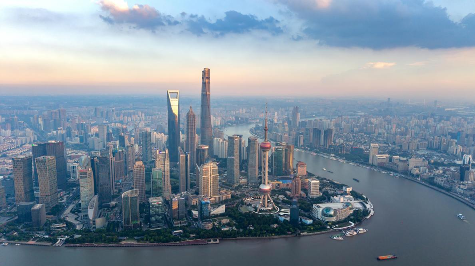
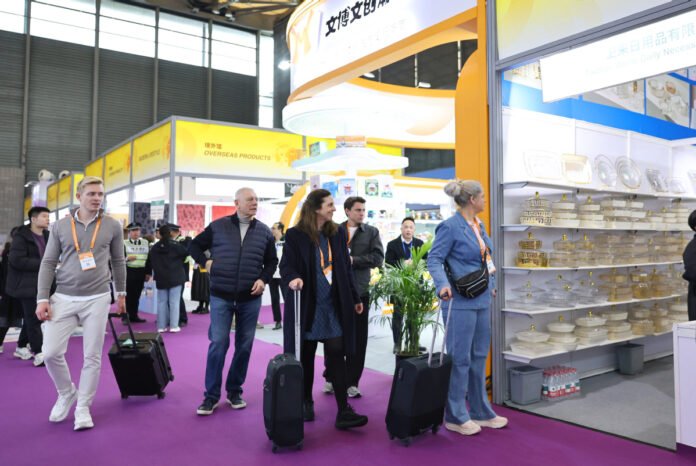
As a miniature of China’s resilient trade and economic development, the East China Fair (ECF) opened its four-day exhibition on Sunday in Shanghai at a record scale, according to official sources.

 “After more than three decades of development, the ECF has grown into an internationally influential exhibition, an important window for enterprises to showcase quality products and expand trade, as well as a professional platform for gaining insights into industry trends and leading industrial upgrades,” Zhu Min, deputy secretary-general of the Shanghai Municipal Government, said during a speech made at the opening ceremony of the event in Shanghai on Sunday.

 “As a vivid reflection of China’s vigorous trade development, ECF is expecting nearly 50,000 professional buyers from home and abroad this year,” Zhu said.

 Ye Jun, a commissioner of the Ministry of Commerce’s Shanghai representative office, said despite ongoing adjustments in global trade and rising uncertainties, China’s foreign trade has delivered a solid performance.

 The country’s total goods imported and exported reached 45.47 trillion yuan ($6.61 trillion), up 3.8 percent year-on-year, marking the ninth consecutive year of positive growth in foreign trade, according to Ye.

 “In the meantime, the ECF has developed into a major trade event in the light industry and textiles with international influence,” Ye said. “Over more than 30 years, it has witnessed China’s foreign trade’s development from small to its current scale, as well as accompanied East China’s foreign trade enterprises from initial exploration to full integration into the global market.”

 So far, 86 companies have participated in all 34 editions of the exhibition, while 544 companies have taken part in more than 10 editions, underscoring the event’s strong appeal as one of the largest regional trade fairs in the textile, clothing, and light industries, according to Zhu.

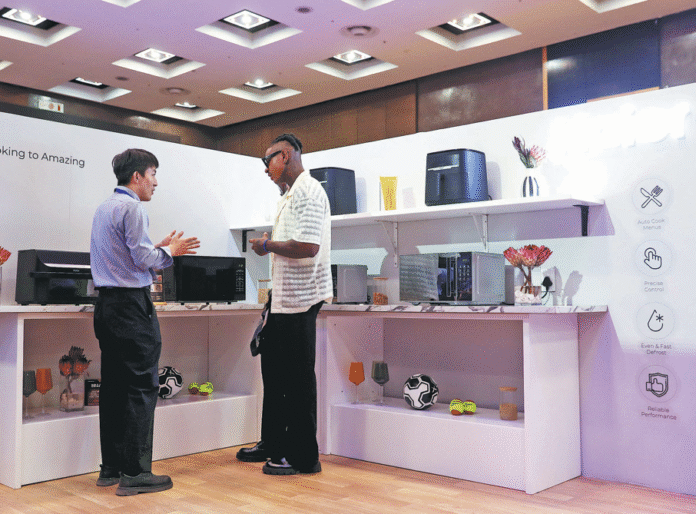
 Initiated in 1991, this year ECF has set up an exhibition area of 115,000 square meters and 5,291 standard booths, nearly 200 more than that of last year. The event attracts more than 3,325 enterprise exhibitors, including 375 participants from 14 countries and regions, according to the Shanghai Municipal Commission of Commerce.

Article inline ad

Chinese Concept Artist Demonstrates How Vision Can Travel

0

By Yin Mingyue | chinadaily.com.cn | Updated: 2026-03-03 

A United States-based Chinese concept artist is emerging as a creative partner on a series of globally prominent projects that bridge entertainment art, illustration and visual communication.

 For Chinese readers, Bella Liu’s track record is that of a creative professional whose work travels fluently between East and West, contributing to titles that are widely played and discussed in China while being produced to the highest international standards.

 Her work is now embedded in some of the most commercially successful and critically visible titles in contemporary interactive entertainment.

 For readers in China following the fast evolving intersection of games, art and technology, Liu’s story illustrates how a concept artist’s vision can travel worldwide — through screens, headsets and competitive arenas — while quietly defining how entire generations imagine fantasy worlds.

 From AAA mobile action RPGs published by Blizzard Entertainment to award-winning competitive games backed by Apple and major esports platforms, Liu’s portfolio reflects not only artistic excellence but sustained international recognition and professional trust from top studios.

 For millions of players across Asia, North America and Europe, their first encounter with the worlds of Diablo Immortal and Vainglory is visual: the atmosphere, characters, weapons and environments that define the experience are shaped long before any line of code is written, by artists working at the very highest level of the global games industry.

 Among those artists, Liu served as a core art and visual design contributor on Diablo Immortal, Blizzard Entertainment’s global action RPG that rapidly surpassed 30 million downloads soon after launch and went on to generate more than $500 million in worldwide revenue.

 In that role, she carried senior-level responsibilities, and the game’s sustained visibility on both the Apple App Store and Google Play Store, as well as its presence in industry rankings and awards coverage, underscores the global platform on which her work now circulates.

 Long before Diablo Immortal, Liu was already contributing to the visual identity of Vainglory, a pioneering mobile MOBA that helped define competitive mobile gaming and won an Apple Design Award in 2015.

 Liu’s portfolio extends beyond large publishers to collaborations with innovative independent studios, demonstrating her versatility and authority as an established creative partner.

 For Scraggy Rascal Studios, a United Kingdom based VR developer known for atmospheric SteamVR Home environments and projects produced in collaboration with Valve, Liu served as a visual environment concept designer on horror themed VR experiences.

 In addition to her commercial work, Liu has earned honors in the international illustration community, reinforcing her standing as a recognized professional rather than a newcomer. At the 2024 iJungle Illustration Awards, a juried global competition that highlights outstanding contemporary illustration through curated exhibitions and international visibility, she received a Self Promotion Merit Award.

 The award signals peer recognition and positions her work within a global context that bridges entertainment art, illustration and visual communication.

 Behind these achievements lies a foundation of advanced training that aligns closely with the expectations placed on senior level visual developers in AAA and mobile game production.

 Liu has engaged deeply with specialized curricula and sophisticated training, leading her to a broader role within the industry ecosystem, where she functions not only as an artist but as a mentor-like figure inside production teams.

 Her collaborations read like a who’s who of contemporary game and technology companies, encompassing projects associated with Tencent, NetEase, Blizzard, Super Evil Megacorp, HTC Vive, Machine Zone and Scraggy Rascal.

 Beyond studios and awards, Liu’s reach extends into public facing platforms and media, where her work engages audiences directly. Her illustrations and concepts have appeared on professional and popular channels such as Bold Journey, ArtStation, Pinterest, ImagineFX magazine, and official accounts connected to Diablo Immortal on social media.

 Taken together, Liu’s career to date reflects the profile of an established concept artist whose work already shapes the visual language of globally successful interactive experiences.

Article inline ad