Tuesday, November 24, 2026

Home Blog Page 46

Xiaomi Deploys Humanoid Robots in Factory “Internship” Program

0

According to a report by ZH based on a March 2nd news report from China Daily.

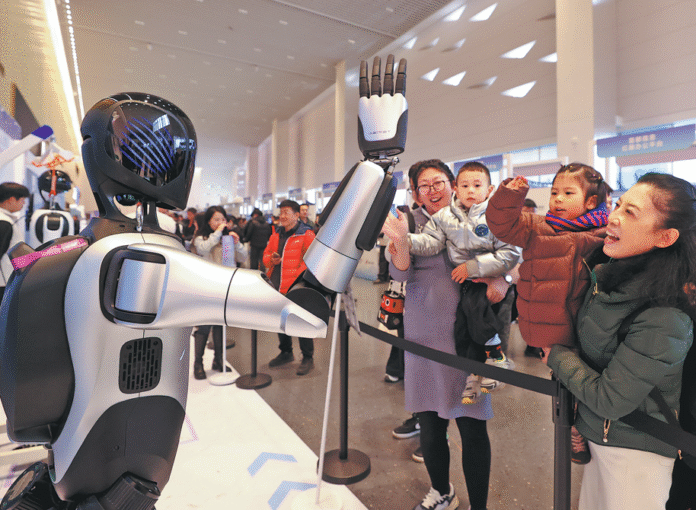
Chinese tech giant Xiaomi has taken a significant step in integrating humanoid robotics into industrial manufacturing, sending its robots to “intern” at its electric vehicle plant, according to the company’s founder.

 CEO Lei Jun revealed that Xiaomi’s humanoid robots are now performing autonomous tasks on the factory floor. Built on Xiaomi’s general-purpose VLA (Vision-Language-Action) foundation model, Xiaomi-Robotics-0, the robots combine multi-modal perception with reinforcement learning technologies to operate independently in real-world production scenarios.

 Transitioning from lab experimentation to industrial deployment poses major challenges. “In the lab, 10,000 failures can lead to one success,” Lei said. “On the factory floor, we must achieve 10,000 consecutive successes to meet production requirements. Our robots may appear clumsy at first, but this is an important milestone.”

 Lei projects that large numbers of humanoid robots will be fully integrated into Xiaomi factories within the next five years, signaling a broader push toward intelligent, general-purpose robotics in China’s manufacturing sector.

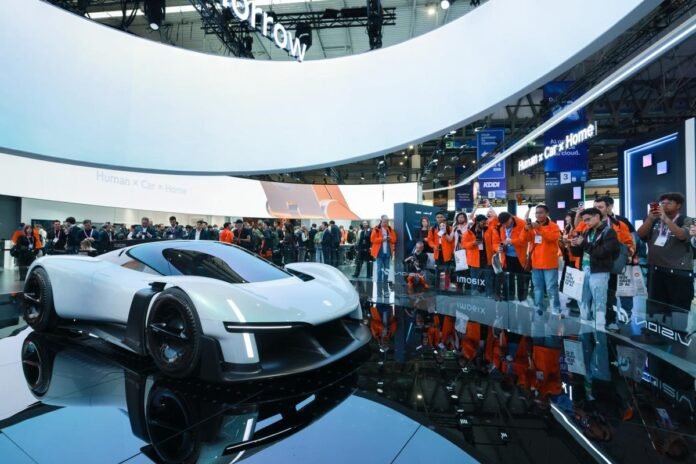
 In parallel, Xiaomi unveiled its first Vision Gran Turismo concept vehicle at the Mobile World Congress in Barcelona, marking the company as the first Chinese automaker to join the iconic racing game’s concept car program in its 28-year history. The electric supercar concept sits on Xiaomi’s proprietary 900V Silicon Carbide (SiC) platform, featuring a low-slung design with scissor doors, a massive carbon-fiber rear wing, and center-lock wheels concealing carbon-ceramic brakes.

 The dual focus on humanoid robotics and advanced EV platforms highlights Xiaomi’s strategic commitment to combining AI, robotics, and automotive technology—underscoring China’s growing capabilities in intelligent manufacturing and high-tech innovation.
Article inline ad

China Constructs World-Leading Smart Hybrid Grid to Power Economic and Tech Ambitions

0

According to a report by ZH based on a March 3 2026 news report from China Daily.

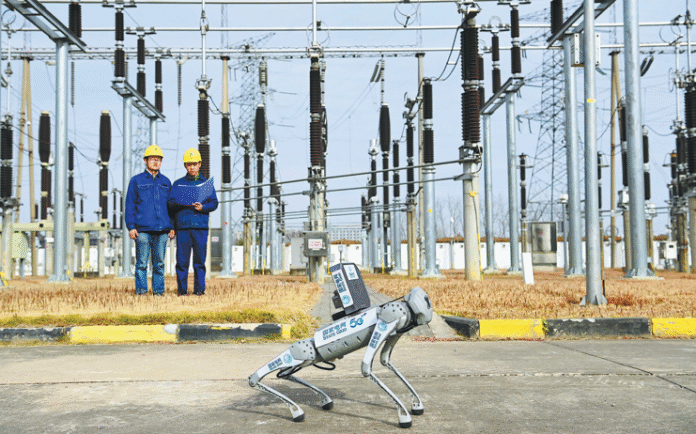
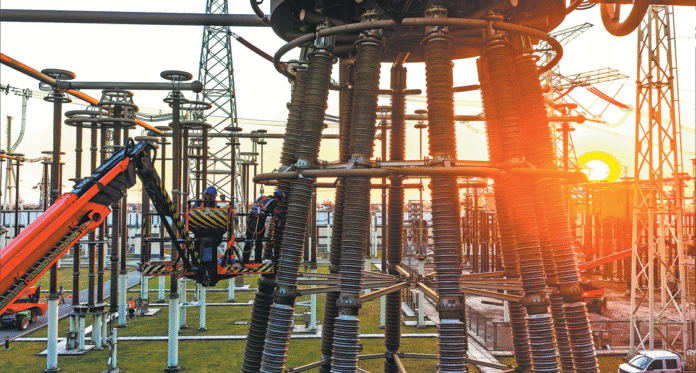
 China has completed the world’s largest and most technologically advanced alternating current/direct current (AC/DC) hybrid power grid, establishing a robust infrastructure backbone that anchors the country’s energy security and supports its rapid expansion in renewable energy and high-tech industries.

 The grid now integrates more than 1.8 billion kilowatts of wind and solar capacity, according to Liu Mingyang, deputy director-general of the electricity department at the National Energy Administration (NEA). This unprecedented scale allows Beijing to optimize electricity allocation across the country’s vast geography while maintaining reliability in the face of a high-renewable energy mix.

 “China’s grid is not just a utility—it is a strategic infrastructure enabling industrial upgrading and the expansion of advanced manufacturing,” Liu said.

 A Three-Tiered, Technology-Driven Network

 China’s grid architecture is structured as a three-tier system: major arteries (“aortas”) for long-distance high-voltage transmission, distribution networks (“capillaries”) for two-way interaction with end-users, and smart microgrids (“microcirculation”) that enable local renewable consumption and reliability in remote areas.

 The country operates 45 ultrahigh-voltage “power highways,” boosting west-to-east transmission capacity to 340 million kW. This connects energy-rich western provinces to industrial hubs along the eastern coast, effectively balancing regional power demand.

 Ye Xiaoning, senior engineer at the State Grid Energy Research Institute, said, “The ultrahigh-voltage network has been central to making China a global leader in renewable energy utilization, with efficiency rates above 97 percent—far exceeding global standards.”

 Strategic and Economic Implications

 China’s annual electricity consumption now exceeds that of the United States and the combined consumption of the EU, Russia, India, and Japan. The grid’s expansion supports large-scale deployment of renewables while ensuring a stable supply for industrial, AI, and digital infrastructure growth.

 “By integrating a massive renewable capacity with smart distribution and microgrid systems, China has created an energy platform that underpins its economic modernization and tech ambitions,” Ye said.

 The NEA plans “moderately advanced” grid construction, signaling continued investment across all levels to sustain the country’s energy security and support high-value industries. Analysts note that the combination of scale, smart infrastructure, and renewable integration makes China’s grid a model for energy-intensive industrial and digital economies globally.

 Investment Opportunities

 For overseas investors, the hybrid grid represents a strategic entry point: opportunities exist in renewable energy integration, smart grid technologies, energy storage, and industrial digitalization. The expansion of China’s energy infrastructure also underpins growth in AI, semiconductor fabrication, electric vehicle production, and advanced manufacturing sectors, all of which rely on stable, low-cost, high-capacity electricity.

Article inline ad

China’s Low-Cost Power Surge Could Shift the Global AI Race

0

According to a report by ZH based on a March 2nd news report from China Daily.

 China is rapidly expanding its power generation capacity, positioning itself to leverage abundant, low-cost electricity as a strategic advantage in the global artificial intelligence (AI) competition. Experts say this “electron advantage” could help Beijing counteract U.S. export restrictions on advanced semiconductors, which have long shaped the global AI landscape.

 While high-performance chips have traditionally dominated the AI race, China’s massive energy infrastructure may provide a unique edge. The country’s electricity consumption already exceeds that of the United States, fueled by a rapid expansion of renewable energy, nuclear power, and other clean energy sources. Industrial and data center electricity prices in China are roughly three times lower than in the U.S., offering a significant cost advantage for compute-intensive AI research.

 “China’s low-cost, reliable electricity has become a strategic asset in its AI ambitions,” said Lin Boqiang, head of the China Institute for Studies in Energy Policy at Xiamen University. “By combining abundant power with a state-led infrastructure strategy, the country can scale AI computing in ways other nations cannot easily match.”

 China’s power system now features the world’s most comprehensive supply chain for electrical equipment, including transformers, with domestic manufacturers accounting for about 60% of global production. High-quality, specialized transformers designed for AI supercomputing clusters are helping to stabilize massive compute workloads, minimizing voltage fluctuations that could otherwise disrupt operations.

 State-led investment is central to this advantage. Over the past five years, the country has poured trillions of yuan into grid modernization, renewable integration, and transmission capacity. The State Grid Corporation of China alone invested 650 billion yuan in 2025, while China Southern Power Grid plans a 180 billion yuan investment for 2026. By 2030, cross-country power transmission capacity is expected to reach 420 gigawatts, supporting the country’s ambitious carbon peak and AI growth targets.

 Experts suggest this approach gives China a distinct edge over the U.S., where energy infrastructure decisions are decentralized and constrained by federal and state regulations. “The AI race is increasingly a competition of energy-intensive compute,” Lin said. “China’s ability to deploy massive, low-cost electricity at scale may effectively offset chip restrictions.”

 For global investors, the development underscores two key opportunities: the strategic role of energy in AI and the potential for China’s data center and high-performance computing sectors to expand rapidly. As Beijing continues to align its energy, technology, and industrial policies, overseas companies and investors may find new pathways to participate in China’s growing AI ecosystem.


Article inline ad

China Advances Humanoid Robotics Industry Amid Standardization Push

0

According to a report by ZH based on a March 2nd news report from China Daily.


 China is stepping up efforts to standardize its rapidly growing humanoid robotics sector, as the government, companies, and researchers aim to overcome technical fragmentation and prepare for mass production.

 At the annual meeting of the Humanoid Robots and Embodied Intelligence Standardization Technical Committee in Beijing, China released the 2026 edition of its humanoid robotics standard system — the country’s first top-level framework covering the entire industry chain and product life cycle.

 The sector is expanding quickly. According to the Ministry of Industry and Information Technology, China hosts more than 140 humanoid robot manufacturers and over 330 product models. Industry executives view 2026 as a transitional year, signaling the move toward large-scale production.

 Consumer interest is also rising. E-commerce giant JD.com reported a surge in robotics-related sales after humanoid robots featured in high-profile Spring Festival performances, reflecting growing public awareness and market demand.

 However, scaling production remains complex. Executives highlighted challenges in manufacturing consistency, as subtle mechanical differences between units can become amplified when integrated with AI foundation models. Key components such as high-torque joints and dexterous hands have yet to reach economies of scale, keeping costs high and limiting predictable expansion.

 Data quality is another bottleneck. Many firms operate in isolated silos, with inconsistent formats and labeling methods, forcing duplication of effort in software and AI development.

 The newly released framework addresses these issues across six areas: foundational standards, brain-inspired computing, body structures and components, complete systems, applications, and safety and ethics. By setting unified technical and safety standards, the system aims to enable humanoid robots to operate reliably in real-world scenarios.

 Industry experts note that no global standards dominate yet, giving China an opportunity to influence the emerging international framework. “China’s progress in embodied intelligence is gaining worldwide attention,” said Xu Jincheng, CEO of tactile-sensing firm PaXini Tech. “Continued advancement could position the country as a leader in shaping global robotics standards.”

 With this structured approach, China’s humanoid robotics sector is poised to move from high-profile demonstrations toward predictable, scalable production, presenting opportunities for international collaboration, investment, and technology adoption.


Article inline ad

AI-Driven Solo Entrepreneurs Reshape China’s Startup Scene

0

According to a report by ZH based on a March 2nd news report from China Daily.

 Across China’s leading tech hubs, a new business model is rapidly taking shape: one-person companies (OPCs) powered by artificial intelligence. These nimble enterprises leverage AI as a virtual team, allowing individual entrepreneurs to launch, manage, and scale businesses with unprecedented efficiency.

 According to the Zhongguancun Talent Association in Beijing, cities like Beijing, Shanghai, and Shenzhen have become the preferred destinations for OPCs, thanks to a combination of government support, abundant talent, and AI-friendly ecosystems. Local science and technology parks are emerging as incubators for this trend, offering access to mentorship, resources, and advanced AI tools.

 At the ZGC AI North Latitude Hub in Beijing’s Haidian district, entrepreneurs can tap into a cluster of services for AI-driven ventures. Dong Bo, president of the incubator operator Kr Star Innovation, describes the hub as an “integrated ecosystem” where AI companies, developers, and media platforms collaborate to accelerate innovation. The hub currently hosts 20 OPCs, most founded by graduates from domestic and international universities or technology firms.

 One notable example is Wu Zhen, 44, who launched an intelligent virtual performance platform. Initially developed as a digital stage solution during the pandemic, the platform now supports a wide array of applications, from educational courses and motion capture to AI-generated films and virtual idols.

 Wu relies on AI to handle tasks ranging from copywriting and content creation to software development and video production. “In the AI era, the scarce assets are judgment, aesthetic sensibility, and long-term narrative vision,” he said. “OPCs aren’t just a temporary phenomenon—they could remain a key organizational model for years to come.”

 The scale of this movement is striking. As of June 2025, China had more than 16 million one-person limited liability companies, primarily in the digital economy and service sectors. Newly registered OPCs surged 47 percent year-on-year in the first half of 2025 alone, reaching 2.86 million. Many of these ventures are using AI “digital humans” to cut labor costs by up to 70 percent and boost sales by as much as 300 percent.

 However, challenges remain. Many OPCs, including Wu’s, struggle with building consistent revenue streams and stable client pipelines. Experts suggest government measures such as open competitions for targeted projects, shared data access, and subsidized computing resources could help address these constraints.

 Cities like Shenzhen are already taking steps to support OPCs. In January, the local government issued vouchers to reduce startup costs and provided support for office space and accommodation, making it easier for solo entrepreneurs to thrive.

 With AI reducing operational barriers and enabling rapid innovation, China’s one-person companies are proving that small teams—or even a single entrepreneur—can compete on a global scale, signaling a shift in the future of work and entrepreneurship.


Article inline ad

China’s Glove Industry Evolves Into High-Tech Export Powerhouse

0

According to a report by ZH based on a March 2nd news report from China Daily.

Zhongcun, a town in Shandong province, is emerging as a global hub for labor protection gloves, combining decades of manufacturing experience with advanced automation to drive efficiency, quality, and international reach.

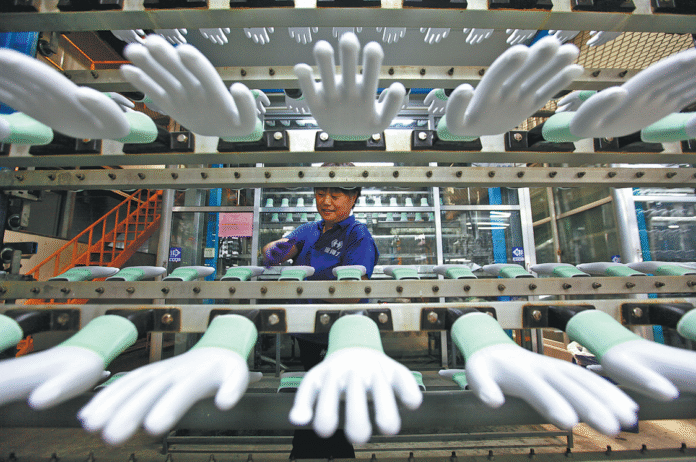
 Once a cluster of small household workshops in the late 1970s, Zhongcun now hosts over 660 glove-related enterprises, producing approximately 6 billion pairs annually, accounting for 60 percent of China’s total output. The sector’s yearly industrial output exceeds $730 million, making it a key node in the global supply chain for protective and specialty gloves.

 Technology-Driven Transformation

 Local companies have invested heavily in smart manufacturing. Automated knitting, coating, and packaging lines allow one operator to oversee dozens of machines simultaneously, significantly increasing output while maintaining high quality standards. For instance, Shandong Deely Gloves Co Ltd operates 25 production lines capable of producing 365 million pairs annually, exporting to more than 150 countries, including Brazil, Japan, Poland, South Korea, Thailand, and Vietnam.

 The adoption of innovative safety technology, such as breakaway gloves that release the hand under dangerous tension, exemplifies Zhongcun’s emphasis on R&D and worker protection—enhancing product value and market competitiveness.

 Integrated Supply Chain and Export Advantage

 Zhongcun’s tightly integrated industrial ecosystem, spanning from spinning and dipping to packaging, allows companies to maintain low costs and high control over quality. Advanced logistics, including automated stereo warehouses and inventory management, further streamline operations, making local enterprises attractive partners for global buyers.

 Foreign investment has been drawn by the region’s efficient administration and proactive governance. South Korean-backed Shandong Yuhan Security Technology Co Ltd, established in 2021, benefited from streamlined approval processes and infrastructure support, enabling rapid ramp-up of operations.

 Driving Local Employment and Rural Vitalization

 The glove sector also fuels socio-economic development. Over 32,000 residents find year-round employment, and more than 700 rural households are integrated into the supply chain. Female workers aged 30-45, who form the bulk of the workforce, benefit from proximity to home, balancing professional opportunities with family responsibilities.

 Strategic Outlook for Overseas Partners

 Local authorities are committed to fostering high value-added glove production, including medical, specialty, and smart gloves, signaling potential for new investment and collaboration opportunities. International companies seeking a reliable, tech-enabled manufacturing base will find Zhongcun an attractive hub, combining efficiency, innovation, and a supportive policy environment.

 “From industrial automation to global distribution, Zhongcun provides a complete ecosystem for investors and partners,” said Lin Cunjun, director of Zhongcun’s economic and trade office. “We aim to expand into higher-value markets while maintaining our leadership in global protective glove production.”


Article inline ad

China’s Energy Mix Enters Major Structural Transition

0

According to a report by ZH based on a March 2nd news report from China Daily.

China’s energy sector is entering a critical structural shift in 2026, marking a pivotal phase in its journey toward the 2030 carbon peak target. The transition spans renewable energy expansion, coal’s evolving role, and the rise of energy storage, all under a push toward market-driven pricing and efficiency.

 Key Trends in 2026

 Power Demand & Capacity Growth

 Total electricity generation is set to exceed 10,000 TWh, with a year-on-year increase of 5.6%.

 Renewable energy will account for 39% of total generation, with overall installed capacity growing 14%.

 Renewable Energy Deployment

 Combined solar and onshore wind additions projected at 318 GW, moderating from the record-breaking 2025 pace.

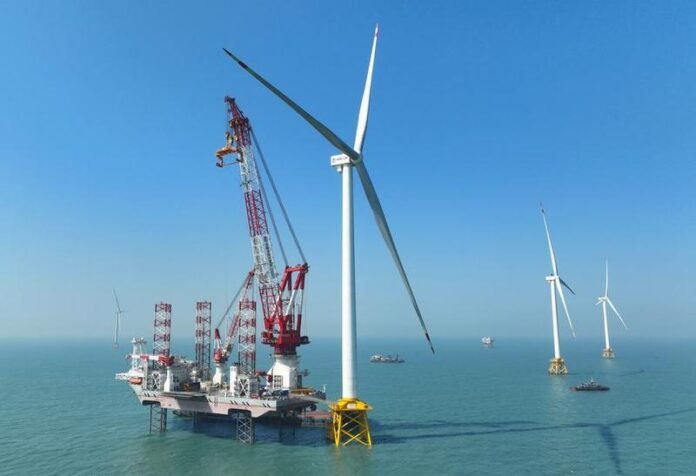
 Offshore wind capacity expected to double, fueled by approved and under-construction projects.

 China maintains a project reserve of over 1,200 GW in wind and solar, sufficient for the next three years.

 Coal’s Evolving Role

 Net new coal capacity likely to hit a record high in 2026 as prior approvals come online.

 Coal is shifting from a primary power source to a flexible, peak-shaving, balancing role for a grid dominated by variable renewables.

 From 2027–2030, coal capacity growth expected to shrink at a negative CAGR of 38%.

 Energy Storage Expansion

 Installed capacity surged 84% in 2025, reaching 136 million kW, a 40-fold increase since the 13th Five-Year Plan.

 Projected growth of 30% in 2026, though profitability remains a challenge.

 Investment & Market Implications

 Renewables & Storage: Significant opportunities in solar, offshore wind, and grid-scale storage projects. Market entry will favor technology-leading and scale-optimized companies.

 Coal Transition Assets: Flexible coal capacity and grid balancing technologies offer niche investment potential amid declining new-build expansion.

 Policy & Market Alignment: Market-driven pricing and quality-oriented growth create a more sustainable business environment, encouraging private and foreign capital participation.

 Integrated Energy Solutions: Grid constraints and environmental approvals are driving hybrid projects, such as industrial solar plus storage, creating opportunities for innovative solutions and system integrators.

 Summary:

China’s energy landscape in 2026 reflects a deliberate structural transition, balancing rapid renewable expansion, coal’s new supporting role, and energy storage deployment. For global investors, this represents a window into sustainable energy investment opportunities, market-oriented reforms, and the evolution of one of the world’s largest electricity systems.

Article inline ad

China Maintains Strong Energy Security Amid Middle East Tensions

0

According to a report by ZH based on a March 2nd news report from China Daily.

China’s energy framework is structurally resilient, allowing the nation to withstand potential disruptions from geopolitical events such as the recent US–Israel attack on Iran, which has heightened concerns over the Strait of Hormuz, a critical route for global oil and LNG shipments.

 Diversified Supply Channels

 China imports 11 million barrels of crude per day, with about 43.5% passing through the Strait of Hormuz.

 To reduce maritime dependency, China leverages:

 Alternative sea routes via the Red Sea and Mediterranean

 Land-based pipelines from Russia and Kazakhstan

 Oil supply partnerships with Brazil, Nigeria, and Angola

 These measures collectively provide a geographical buffer, mitigating risks from Middle East volatility.

 Strategic Reserves

 China maintains strategic and commercial stockpiles covering at least 90 days of crude imports, designed to absorb short-term shocks and prevent domestic price volatility.

 Strategic reserves act as an insurance layer, complementing supply diversification.

 Domestic Energy Production

 Domestic energy production is projected to reach 5.37 billion tons of standard coal equivalent in 2026, supporting an energy self-sufficiency rate of 84.6%.

 Efforts include scaling up conventional oil and gas production and exploration of shale oil and gas.

 In 2025, domestic output reached approximately 5.2 billion tons, underscoring steady growth.

 Investor Implications

 Supply Chain Stability: Diversified import channels and domestic production reduce exposure to global disruptions.

 Energy Investment Opportunities: Expansion in unconventional energy sources (shale oil/gas) and pipeline infrastructure offers potential investment avenues.

 Macro Resilience: Robust energy security underpins China’s industrial and economic stability, supporting growth in manufacturing, logistics, and strategic sectors.

 Geopolitical Hedging: Strategic stockpiles and overseas partnerships provide a model for mitigating geopolitical energy risks.

 Summary:

China’s energy strategy — combining diverse imports, strategic reserves, domestic production, and international partnerships — ensures that even amid global conflicts, its energy security and economic stability remain robust. For global investors, this demonstrates both risk resilience and opportunity in energy infrastructure and resource development.

Article inline ad

Pop Mart Expands IP Portfolio Amid Growing Global Demand

0

According to a report by ZH based on a March 2nd news report from China Daily.

Beijing-based collectibles giant Pop Mart International Group continues to drive growth through aggressive expansion of its intellectual property (IP) portfolio and diversified product offerings.

 New IP Launches

 Merodi After School Series Figures: 12 figures plus a secret edition, I Am Fierce, priced at $10 per blind box. Full set costs 828 yuan (~$120).

 Market Response: Secondary market price for the secret edition surged to 374 yuan (~$55), over 4.4x the retail price, though demand was more muted compared to established IPs like Labubu, Twinkle Twinkle, and Crybaby.

 Other concurrent releases include the Angry Molly Plush Series, selling out in one minute on WeChat and Tmall, with secret edition prices jumping from 89 yuan to 566 yuan (~$85). Another new IP, Key A, is scheduled for March 13.

 Scale and Revenue Impact

 Pop Mart sold over 400 million IP units globally in 2025.

 Flagship IP The Monsters (Labubu) generated 4.81 billion yuan (~$700 million) in H1 2025, accounting for 34.7% of total IP revenue.

 Heavy reliance on a single IP presents concentration risk, while only Twinkle Twinkle has emerged as a breakout success among newer IPs.

 Diversification Beyond Collectibles

 Pop Mart is expanding its IP ecosystem into lifestyle and consumer products:

 Pop Bakery: Exclusive items such as Skullpanda ice cream

 Technology Collaboration: Limited-edition smartphone with Honor

 Home Products: Twinkle Twinkle x Beast Family Valentine’s Day collection

 These initiatives showcase the company’s strategy to leverage IP across multiple categories, increasing consumer touchpoints and brand engagement.

 Investor Takeaways

 Market Growth Potential: Expanding IP portfolio and global sales demonstrate strong consumer appetite for collectibles and themed products.

 Revenue Diversification: Cross-category IP extensions mitigate reliance on a single IP, enhancing long-term sustainability.

 Secondary Market Dynamics: High resale values indicate brand strength and collector demand.

 Global Expansion Opportunities: Potential for scaling IP products and partnerships overseas, especially in lifestyle, tech, and e-commerce channels.

 Summary:

Pop Mart exemplifies China’s evolving consumer-driven economy, where IP innovation, brand strategy, and multi-category expansion are key drivers of growth. For investors, the company offers a case study in monetizing pop culture through collectibles, lifestyle products, and global licensing opportunities.

Article inline ad

China’s Commercial Aerospace Set to Surge in 2026

0

According to a report by ZH based on a March 2nd news report from China Daily.

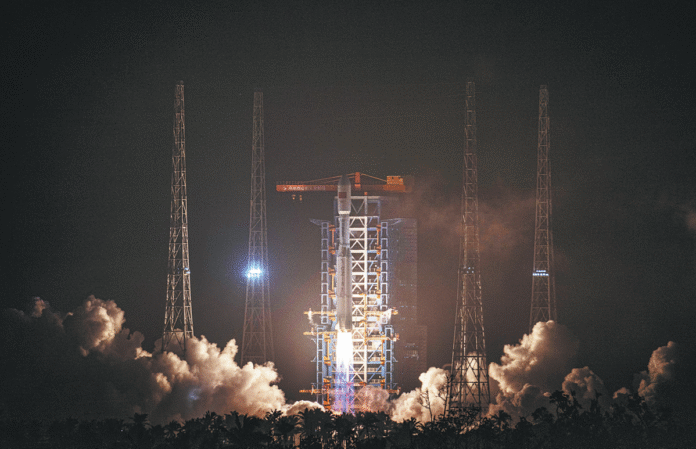
China’s commercial aerospace sector is entering a fast-track growth phase in 2026, driven by breakthroughs in reusable rocket technology, rapid satellite network expansion, and accelerated infrastructure development under the 15th Five-Year Plan (2026–2030).

 Experts say the combination of domestic capacity-building and international partnerships positions China as a rising hub for commercial space services.

 Key Developments

 Spacesail Constellation: China’s low-earth orbit (LEO) satellite network, operated by Shanghai Spacesail Technologies, now has 108 satellites in orbit and plans to deploy over 15,000 satellites.

 Brazilian Market Entry: Anatel approval allows Spacesail to provide broadband services to underserved regions in Brazil, making it the first Latin American nation to open to China’s commercial LEO satellites.

 Airline Connectivity Partnership: Spacesail and Airbus are integrating the constellation into Airbus’ HBCplus in-flight broadband solution, improving global in-flight connectivity.

 Infrastructure and Launch Capabilities

 Wenchang International Aerospace City: Already home to over 3,300 aerospace enterprises, including rocket assembly, satellite production, and R&D labs.

 Launch Pad Expansion: Two new pads under construction, supporting up to 60 launches annually, with a potential cadence of weekly missions.

 Rocket Recovery Technology: Sea-based recovery vessels and “launch-recover-reuse” models aim to cut first-stage launch costs by more than 70%.

 Yang Tianliang, chairman of Hainan International Commercial Aerospace Launch Co, said:

 “By the end of 2026, our upgraded facilities will enable higher launch frequency and cost-efficient operations, supporting both private and State-owned enterprises.”

 Strategic Implications

 Global Commercial Opportunity: Expanding LEO networks offer broadband and connectivity solutions for emerging markets.

 Cost Efficiency: Reusable rockets reduce launch expenses, enabling more frequent and economically viable missions.

 Policy Support: National Five-Year Plan investments accelerate infrastructure, R&D, and international partnerships.

 Private and State Collaboration: Combined ecosystem strengthens technological capabilities and market reach.

 Investor Perspective

 2026 is expected to be a turning point for commercial aerospace in China. Key sectors for potential investment include:

 LEO satellite operators and network services

 Reusable rocket technologies and launch service providers

 Ground-based aerospace infrastructure and recovery systems

 International commercial partnerships with airlines and telecoms

 For global investors, China’s commercial space trajectory signals rapid commercialization, technological advancement, and strategic positioning in the growing satellite and space infrastructure market.


Article inline ad