Tuesday, November 24, 2026

Home Blog Page 45

Nation’s AI Policy Pulse Sets Tone For The World

0

By Ma Si | China Daily | Updated: 2026-03-05 

The children’s eyes were wide, fixed on the screen. Their teacher had just asked a simple question:”What do you want to be when you grow up?” The answers came in a cheerful chorus — teacher, scientist, firefighter, astronaut. Then, with a few clicks and the quiet hum of an algorithm, the magic happened.

 The screen flickered to life, displaying images of each child, aged by 25 years, dressed in the uniform of their dreams. A handsome astronaut saluted the audience. A kind-faced teacher stood before a holographic blackboard. The classroom in Xiangtan, Hunan province, erupted in a collective “Wow!” that seemed to shake the very walls. The story happened when I was reporting a feature on technology in education last year.

 That “wow” has stayed with me, echoing in my mind as I walk the bustling corridors of this year’s annual two sessions. The Great Hall of the People has itself become a living laboratory for innovation. Artificial intelligence-powered transcription tools hum quietly in the background, real-time translation earbuds dissolve language barriers, and algorithms help journalists navigate a sea of data.

 It’s a powerful showcase of China’s embrace of the latest technology. Yet, beneath the surface of this high-tech pageant, that classroom memory keeps resurfacing, pushing me to consider a deeper question: amid all this innovation, what kind of AI does the future of China truly need?


 The answer, I believe, lies in the collective “wow” from that classroom. China’s relationship with technology is unlike anything I’ve seen elsewhere. Foreign technology executives and scholars I have interviewed consistently express astonishment at one thing: the Chinese consumers’ insatiable appetite for the new. They are eager to try, willing to pay, and quick to integrate novel experiences into daily life. This is not a top-down phenomenon but a vibrant, symbiotic cycle.

 The data backs it up. In a striking week from Feb 9 to 15, Chinese AI models processed 4.12 trillion tokens, surpassing the 2.94 trillion tokens processed by their US counterparts for the first time, according to data from the US company OpenRouter. The very next week, China’s lead widened to 5.16 trillion tokens against the US’ 2.7 trillion.

 This immense, real-world validation from hundreds of millions of users is the jet fuel powering China’s AI engine, emboldening companies to innovate alongside their users. This grassroots energy finds its perfect partner in the steady guidance of policy.

 The 2025 Government Work Report unveiled efforts to implement the “AI plus” plan, weaving AI into the fabric of the economy and society. It envisions a future built on human-machine collaboration — and that brings me back to the classroom.

 That teacher’s simple act of using AI to visualize a child’s dream is a perfect microcosm of the “AI plus” spirit.

 It is not about replacing the teacher, but amplifying her magic. It is about using an abstract but powerful tool to deliver a moment of pure, intimate human connection. Every dream deserves to be nurtured, and AI is becoming one of the most powerful watering cans we have.

 As I watch foreign diplomats and reporters observing this week’s proceedings with keen interest, I’m reminded that the two sessions have never been just for China. The direction set here for a technology as transformative as AI will ripple across the globe.

 What kind of AI do we want for the future? The ultimate goal, many scientists argue, is to create a general intelligence capable of navigating the world’s infinite complexities.

 But the path to that goal requires us to first understand what it means to be human. We can give this new intelligence a “heart” — a core of values drawn from the profound wisdom of Chinese civilization.

 The ultimate ambition, then, is not just to create world-changing technology, but to create it with Chinese thought, for the benefit of the world. It is to build an AI that, like that dedicated teacher, can look at a room full of dreams and help make them real.

 Contact the writer at masi@chinadaily.com.cn


Article inline ad

China’s LNG Resilience Hedges Hormuz Risks

0

Healthy inventories, diversified imports underpin nation’s energy security

By ZHENG XIN | China Daily | Updated: 2026-03-05 

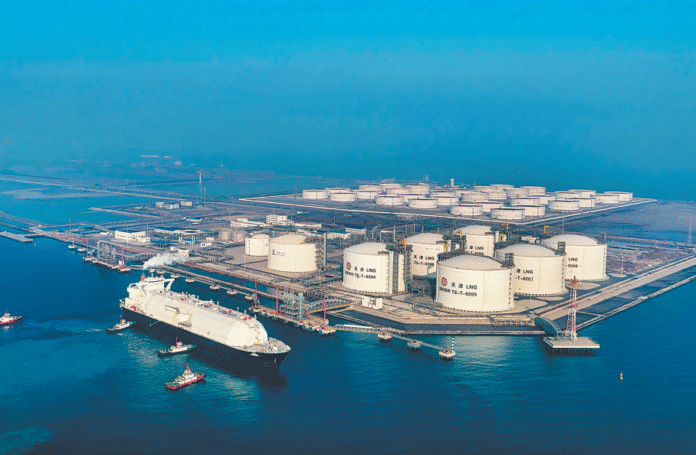
China is well-positioned to navigate potential short-term supply shocks to liquefied natural gas imports despite escalating tensions in the Strait of Hormuz, said a recently released industry report from BloombergNEF.

 As the world’s largest importer of LNG transiting this critical maritime artery, China has bolstered its energy security through healthy domestic stockpiles and a period of relatively low seasonal demand, it said.

 According to the research and advisory firm, China’s LNG imports through the strait averaged 400,000 metric tons per week last March, all sourced from Qatar. This volume represents approximately 24 percent of the total weekly LNG exports through the channel, underscoring China’s role as a primary stakeholder in the waterway’s stability.

 However, China’s current inventory levels provide a substantial cushion against immediate disruptions, it said.

 By the end of February, China’s LNG inventories stood at approximately 6.8 million tons — roughly 200,000 tons higher than the already elevated levels seen during the same period last year.

 This surplus is attributed to an increase in effective gas volumes at the start of the heating season and a winter that was warmer than historical averages, which effectively capped consumption. Furthermore, inventory levels in underground gas storage facilities are also expected to exceed last year’s figures, it said.

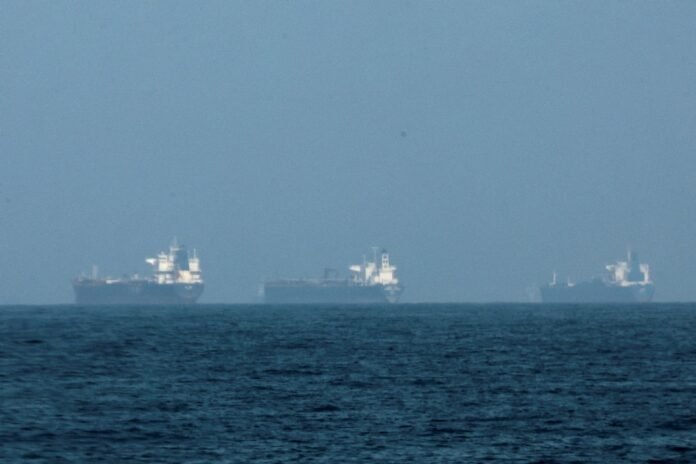
 Current LNG stocks are significantly higher than the seasonal low of 5.4 million tons recorded last summer, offering a supply buffer of approximately three to four weeks. This preparedness comes at a vital time as the intensifying conflict in the Middle East forces some LNG carriers to bypass the Strait of Hormuz entirely, sparking fears of a global supply crunch.

 These concerns were exacerbated by potential supply shocks following weekend military strikes in the region, which reignited anxiety over energy flows.

 The Strait of Hormuz serves as a global lifeline for the supply of oil and LNG. Major Middle Eastern producers rely on this passage to serve Asian markets, according to data from Kpler.

 Industry experts contend that a sturdy energy architecture anchored in strategic variety — combined with substantial emergency reserves — has forged a protective barrier capable of withstanding most maritime shocks.

 Lu Ruquan, president of the China National Petroleum Corp Economics and Technology Research Institute, said that while an extended closure of the waterway would undoubtedly trigger global market turbulence, it is improbable that it would significantly undermine China’s overall supply chain or import consistency.

 The confidence of the world’s largest energy consumer is rooted in a multifaceted strategy that prioritizes emergency stockpiles and a diverse array of import channels, he said, adding: “China’s energy supply resilience continues to strengthen. While the nation’s energy security is sensitive to global shifts, it is fundamentally not fragile.”

 While BloombergNEF believes a disruption lasting several months remains a low-probability scenario, China has already mapped out a “Plan B”.

 To bridge any potential gaps without overrelying on high-priced spot market LNG, Beijing should be prepared to pivot toward alternative sources, including ramping up domestic production, increasing pipeline gas imports and sourcing LNG from other global regions, it said.

 The institute said China’s energy autonomy is set to reach a milestone. With a national self-sufficiency target of 84.6 percent for 2026, the country is poised to produce 5.37 billion tons of standard coal equivalent this year.

 This follows a high-performance 2025, where domestic output reached approximately 5.2 billion tons, said the National Energy Administration.

 Lu said these collective measures — ranging from unconventional resource extraction to deepening land-based cooperation — ensure China’s energy standing remains stable, even amid heightened geopolitical frictions in the Middle East.

 While the nation’s energy resilience is undergoing a rigorous stress test, this period is expected to ultimately result in a more robust security framework, he said.

 zhengxin@chinadaily.com.cn

Article inline ad

Exporters Fret As Mideast Tensions Cast Shadow On Shipping Operations

0

By ZHONG NAN | China Daily | Updated: 2026-03-05 

The military strikes by Israel and the United States against Iran, which have intensified tensions in the Middle East, particularly near the Strait of Hormuz, have disrupted shipping operations, creating uncertainty for Chinese exporters and pushing up freight rates as some carriers introduce extra charges on cargo bound for the region.

 The Strait of Hormuz connects major energy producers and consumer markets across the Middle East, Asia and Europe. For Chinese exporters, it is a vital corridor linking China with Gulf markets while also serving global trade routes to Europe and beyond.

 In Ningbo, East China’s Zhejiang province, a shipment of washing machines bound for the Middle East was abruptly halted earlier this week after shipping schedules changed at short notice, forcing a local exporter to suspend loading and await further instructions.

 Zheng Renfan, head of production at Ningbo Xinle Household Appliances Co, said three containers had already been loaded when the company received a notice that the vessel schedule had been altered.

 The cargo was subsequently unloaded and sent back to the warehouse. About 95 percent of the company’s products are exported, with roughly 30 percent destined for the Middle East, Zheng said.

 As several major shipping lines, including Denmark’s Maersk, Switzerland’s Mediterranean Shipping Company and France’s CMA CGM, have suspended bookings or restricted certain cargo shipments to the Middle East since Sunday, carriers that continue to operate in the region have begun levying emergency conflict surcharges and war risk premiums.

 According to a report released by Ningbo Customs on Monday, some insurance companies have also informed shipowners that coverage for vessels transiting the Strait of Hormuz will be withdrawn, while premiums could rise by as much as 50 percent.

 For a vessel valued at $100 million, the insurance cost per voyage could increase from $250,000 to $375,000, the report showed.

 Xu Qi, manager of Middle East routes at Ningbo Port Southeast Logistics Group Co, a Ningbo-based international freight forwarding company, said the sharpest increases are on Middle East and Red Sea routes, where rates could rise by about $2,000 per twenty-foot equivalent unit (TEU) and around $3,000 per forty-foot equivalent unit (FEU).

 Xu said that India routes have also seen gains, while Europe and US routes are likely to feel a ripple effect, with increases of roughly $500 to $1,000 per container.

 Qian Hanglu, an analyst at Ningbo Shipping Exchange, said restrictions in parts of the Middle East have limited the release of shipping capacity, which could tighten global vessel and container supply. Under current circumstances, shipping lines are likely to maintain the detour arrangements.

 “Compared with previous routes, the detour around the Cape of Good Hope in South Africa could add about 20 days to a round-trip voyage from Ningbo or Shanghai to Europe, increasing transportation costs and extending liner shipping cycles by several hundred US dollars per container,” said Qian.

 Hu Jiacheng, president of Shenzhen Baiancheng International Logistics Co, said the situation has already affected the company’s operations, with some air cargo routes to the Middle East currently suspended and major shipping lines issuing notices of service suspensions.

 Shenzhen Baiancheng is a freight forwarding company, based in Shenzhen, South China’s Guangdong province, that specializes in logistics services on Saudi Arabia-dedicated routes.

 “Fortunately, thanks to early preparations, most of the company’s large shipments had already been dispatched before the Spring Festival holiday. Inquiries from clients have surged over the past few days, prompting the firm to issue an official notice addressing the situation,” said Hu. “Our priority now is to activate contingency plans.”

 As maritime transport faces disruptions, he said the company’s backup plan is to first ship cargo to ports in neighboring countries before arranging relay transshipment.

 “We can route shipments to Pakistan’s Gwadar Port by land transport first, and then move the cargo onward via feeder vessels or other transport options,” Hu added.

 zhongnan@chinadaily.com.cn


Article inline ad

China To Accelerate Hualong One’s Mass Construction

0

By Zheng Xin | chinadaily.com.cn | Updated: 2026-03-05 

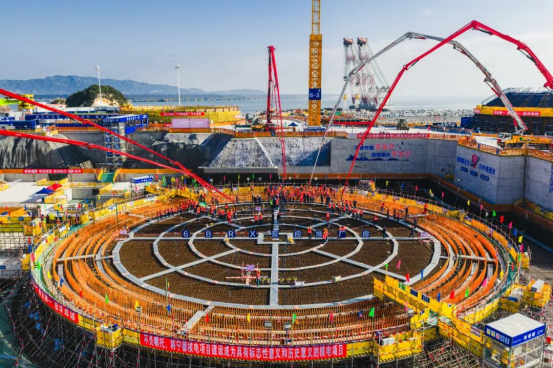
China is accelerating the mass construction of its self-developed, third-generation nuclear power technology, Hualong One, with several key engineering milestones reached in early March.

 Hualong One is China’s third-generation nuclear power technology with full intellectual property rights. It is also one of the most widely accepted series of third-generation nuclear power reactors in the world.

 According to a government work report submitted on Thursday to China’s top legislature for deliberation, China — guided by the goals of achieving peak carbon emissions and carbon neutrality — will make coordinated efforts to cut carbon emissions, reduce pollution, pursue green development, and boost economic growth, while strengthening green development drivers.

 Nuclear power, recognized as a clean, stable, and large-scale baseload energy source capable of replacing fossil fuels, has emerged as a critical pillar for these environmental goals. It serves as a fundamental support for building a new power system and fostering green production and lifestyles nationwide, China General Nuclear Power Group said.

 Yang Changli, chairman of CGN, emphasized that nuclear energy remains the core advantage and that CGN will further accelerate the pace of Hualong One’s mass construction.

 zhengxin@chinadaily.com.cn

Article inline ad
0

State Grid Jingmen Tests Spacer Installation Robot

By Zhang Chenxu | chinadaily.com.cn | Updated: 2026-03-05 

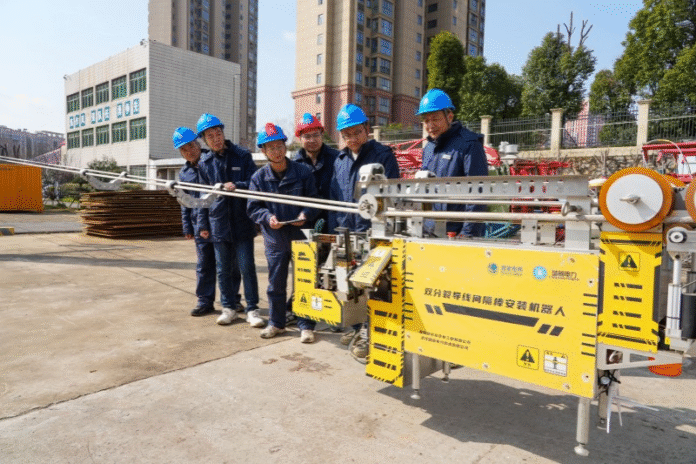
State Grid Jingmen Power Supply Company recently tested an automated robot for installing double-bundle conductor spacers, designed to enhance both operational efficiency and on-site safety.

 During the test, the robot moved steadily along the simulated double-bundle conductors, quickly clamping, calibrating, and installing the spacer in just five minutes.

 Compared to manual high-altitude installation, the overall operation time was reduced by 50 percent. “Previously, manual installation took over 10 minutes and was limited by weather conditions,” said Li Qiang, the on-site chief engineer.

 The robot can now adapt to complex terrain and withstand rainy or snowy weather, offering significantly improved safety and accuracy, Li added.

 The double-bundle spacer installation robot, jointly developed by Wuhan Chuqian Electric Power and two other companies, has undergone two product upgrades and was successfully trialed in 20 projects across Hubei province and other regions last year.

Article inline ad

Sino Biopharma And Sanofi Reach Over $1.5 Billion BD Transaction

0

By Zhang Chenxu | chinadaily.com.cn | Updated: 2026-03-05 

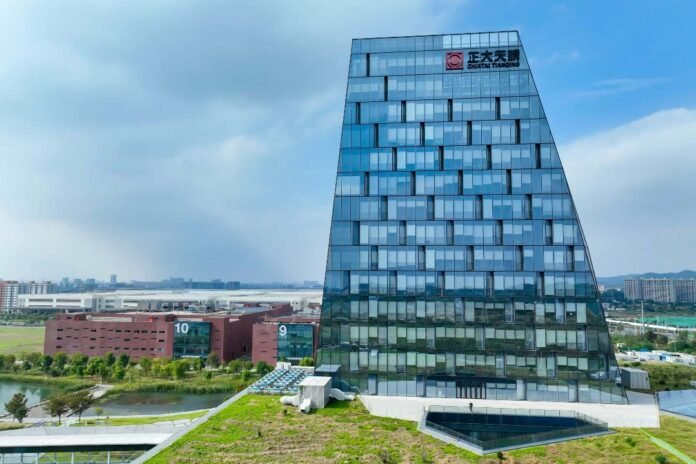
Sino Biopharmaceutical Limited, a China-based pharmaceutical company, and global drugmaker Sanofi on Wednesday announced an exclusive global licensing agreement for Rovaciditinib, a JAK/ROCK dual-target inhibitor.

 Under the agreement, Sino Biopharma and its subsidiary Chia Tai Tianqing Pharmaceutical will grant Sanofi exclusive global rights to develop, manufacture and commercialize the product, in return for total payments of up to $1.53 billion.

 The deal focuses on Rovaciditinib, a first-in-class drug developed by Chia Tai Tianqing. The therapy is the first approved JAK/ROCK dual-target small molecule inhibitor worldwide.

 The innovative therapy currently targets two major indications: myelofibrosis (MF) and chronic graft-versus-host disease (cGVHD).

 MF was included in China’s list of rare diseases in 2023, with an estimated annual incidence of over 60,000 and a prevalent patient population exceeding 200,000 in China.

 With its dual-target mechanism, Rovaciditinib balances efficacy and safety in clinical applications. Phase III clinical data show significant improvements in spleen volume reduction and symptom improvement rates, along with a notable decrease in the incidence of adverse events.

 Moreover, Rovaciditinib received marketing approval from China’s National Medical Products Administration in February for the first-line treatment of adult patients with intermediate-2 or high-risk primary myelofibrosis (PMF), post-polycythemia vera myelofibrosis (PPV-MF), and post-essential thrombocythemia myelofibrosis (PET-MF).

 Through this partnership, Sanofi — a global leader in vaccines, immunology, and rare diseases — will leverage its global clinical and commercial infrastructure to unlock Rovaciditinib’s international potential and maximize its long-term value.

Article inline ad

Central Soes Make Strides In AI And Quantum Tech

0

By REN QI | chinadaily.com.cn | Updated: 2026-03-05 

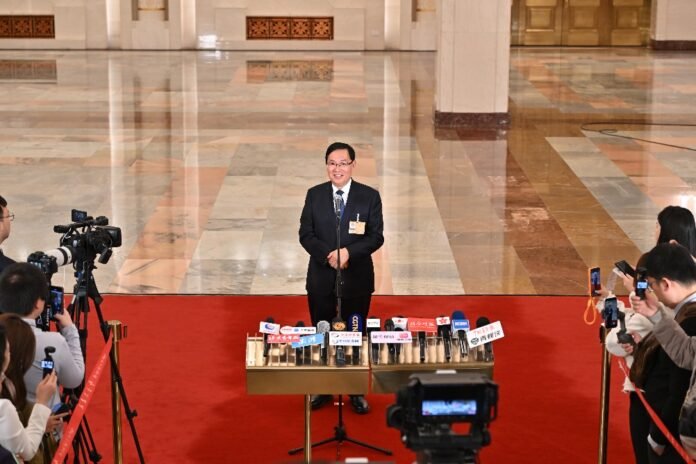
Centrally administered State-owned enterprises (SOEs) have achieved significant breakthroughs in frontier technologies like artificial intelligence and quantum computing, said Zhang Yuzhuo, chairman of the State-owned Assets Supervision and Administration Commission of the State Council, on Thursday.

 Speaking on the sidelines of the ongoing annual session of the 14th National People’s Congress, China’s top legislature, Zhang highlighted the “Tianyan 504” quantum computer, developed in collaboration with national laboratories, which has reached an internationally advanced level and is now open for public use through a quantum cloud platform.

 Zhang also pointed to progress in the low-altitude economy, introducing the “Jiutian” drone, which he described as an “airborne carrier”. The drone can release hundreds of smaller drones, fly continuously for up to 12 hours, and has a range of 7,000 kilometers. Additionally, the computing scale for AI built by central SOEs has expanded 17 times over the past two years.

 Over the past three years, central SOEs have invested 7.4 trillion yuan ($1.03 trillion) in strategic emerging industries, accounting for 42 percent of their total investment, Zhang noted. In the new energy vehicle sector, the market share of SOE self-owned brands has risen from 10 percent to 16.5 percent.

 Moving forward, SASAC aims to concentrate state capital in three key areas: national security and the lifeline of the economy, public services and emergency capabilities, and forward-looking strategic emerging industries. The goal is for over 88 percent of central SOEs’ sales revenue to be derived from 20 key industry categories.

 To foster innovation, central SOEs invested 102.4 billion yuan in basic research last year, accounting for 9.4 percent of their total R&D spending. Zhang added that a “one enterprise, one policy” assessment mechanism has been implemented, with 76 percent of annual performance indicators personalized to individual enterprises to stimulate vitality and avoid a “one-size-fits-all” approach.

Article inline ad

Holiday Spending Signals Shifting Priorities

0

Green, smart and health-related products emerge as standout categories, replacing traditional trio of tobacco, alcohol and tea

By LI JING | China Daily | Updated: 2026-03-05 

The Spring Festival holiday has concluded, but one of the clearest consumption signals is likely to endure: the holiday spending surge was defined less by lavish feasts and luxury gifts and more by a decisive pivot toward health and well-being.

 Economists say the shift reflects deeper structural changes in household priorities and the evolution of China’s consumption landscape.

 During the holiday period, nutritional supplements, home medical devices and health-oriented services emerged as standout categories. Replacing the traditional holiday trio of tobacco, alcohol and tea, a “new three items” — green, smart, and health products — have taken center stage, signaling that wellness is moving from an optional lifestyle choice to a perceived necessity.

 Retail shelves and e-commerce platforms alike have reflected the change.

 At a Yonghui Superstores outlet in Beijing, organic grains, eco-raised pork and low-glycemic snacks occupied prime display space, as consumers increasingly chose health-oriented foods as holiday gifts.

 The retailer expanded seasonal offerings to include organic produce, premium fresh foods and nourishment gift sets such as bird’s nest porridge and fish maw products, prized in traditional Chinese dietary therapy and often chosen as practical gifts for elders.

 Online platforms reported robust growth.

 Meituan data showed orders for ejiao — a donkey-hide gelatin product used in traditional Chinese medicine — surged nearly fourfold month-on-month in February. Protein powder orders rose 118 percent and glucosamine supplements nearly 80 percent, while compound ejiao syrup and calcium-vitamin D tablets grew more than 50 percent, reflecting rising demand for physical strengthening and preventive care.

 Gift-giving priorities are also evolving.

 A survey by JD.com’s Consumption and Industry Development Research Institute found 65.6 percent of consumers prioritized buying New Year goods for parents, with 77.2 percent choosing nutritional supplements. Meanwhile, 83.6 percent selected food gift boxes, with demand shifting toward low-sugar, low-fat and natural-ingredient options.

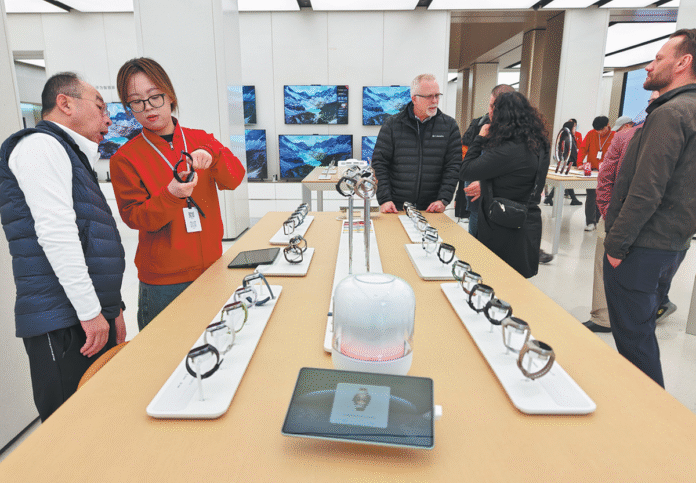
 Health-focused technology has become another major holiday purchase. Many consumers are buying wearable health monitors, smart pill dispensers and continuous glucose monitoring devices from both domestic innovators as well as foreign medical tech giants such as Omron and Abbott, for aging parents.

 “My parents are getting older, so this year I bought them a ‘smart health kit’ instead of traditional gifts,” said Zhou Dan, a young professional working in Beijing. Her gift included a smart pill dispenser, a wristband with fall-alert and blood-oxygen monitoring capabilities, and a 24-hour continuous glucose monitor. “These devices sync data to my phone in real-time, giving me peace of mind while I work far from home,” she added.

 The survey by JD.com’s institute showed 45.2 percent of shoppers looking for electronic gifts for elders chose health monitoring and chronic disease management devices.

Article inline ad

China 2026 Sector Insights – Trends, Technology, and Market Opportunities

0

From Energy & AI to Consumer Innovation and Industrial Modernization

Compiled by ZH based on a March 2nd 2026 report from China Daily Edition

Table of Contents

Executive Summary – China’s Economic and Industrial Panorama

Energy & Power

2.1 Energy Security Amid Geopolitical Risks

2.2 Transitioning Energy Mix and Renewable Expansion

2.3 Power Infrastructure as a Strategic Asset for AI and Industrial Growth

Capital Markets & Investment Trends

3.1 A-Share Market Outlook

3.2 Outbound Direct Investment (ODI) and Global Connectivity

3.3 China International Payment System (CIPS) and Trade Infrastructure

Consumer & Technology-Driven Innovation

4.1 Pop Mart and the Global Collectibles Market

4.2 AI-Powered One-Person Companies – Redefining Entrepreneurship

Industrial Technology & Automation

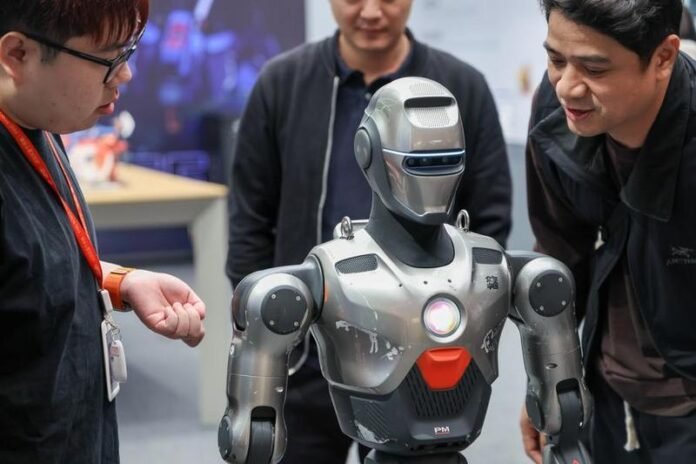
5.1 Humanoid Robotics: Standardization and Commercial Deployment

5.2 Xiaomi Humanoid Robots in Manufacturing

5.3 Industrial Modernization in Shandong Glove Sector

Space & High-Tech Infrastructure

6.1 Commercial Space Developments

6.2 Technology Investment Guidelines and Long-Term Capital Support

Key Insights & Takeaways

7.1 Major Trends Across Sectors

7.2 Strategic Considerations for Investors and Stakeholders

7.3 Risks and Regulatory Factors

  1. Executive Summary

In 2026, China’s industrial landscape is undergoing profound structural transformation across energy, technology, consumer products, and high-tech manufacturing. Government policy, strategic infrastructure investment, and adoption of advanced technologies, particularly AI, humanoid robotics, and renewable energy, are collectively reshaping sectoral dynamics.

Key trends for overseas investors:

Energy and electricity supply are becoming strategic assets, supporting AI, manufacturing, and industrial modernization.

One-person companies (OPCs) powered by AI are proliferating in urban innovation hubs, redefining entrepreneurship.

Industrial automation, exemplified in glove manufacturing and humanoid robotics, is enhancing productivity and global competitiveness.

Commercial space and digital payment infrastructure expansion positions China for long-term high-tech and financial integration.

Consumer sectors, including collectibles and lifestyle brands, are scaling internationally, fueled by IP and AI-driven engagement.

  1. Energy & Power

2.1 Energy Security Amid Geopolitical Risks

China’s energy security remains robust despite disruptions in the Strait of Hormuz, a critical channel for crude and LNG shipments. With diversified supply sources—including Brazil, Nigeria, Angola, Russia, and Kazakhstan—combined with strategic reserves and alternative land routes, the nation mitigates vulnerability to maritime disruptions.

Strategic and commercial crude reserves provide at least 90 days of import coverage.

Land-based pipelines from Russia and Kazakhstan reduce dependency on Middle East routes.

Domestic energy self-sufficiency is projected to reach 84.6% in 2026, with total energy production estimated at 5.37 billion tons of standard coal equivalent.

2.2 Transitioning Energy Mix and Renewable Expansion

The 15th Five-Year Plan (2026–2030) marks a pivotal period for China’s low-carbon transition:

Total power generation in 2026 is projected to exceed 10,000 TWh.

Renewables will account for 39% of total generation; combined wind and solar capacity additions are expected to reach 318 GW.

Offshore wind capacity is set to double, while coal is transitioning to a flexible balancing role, supporting grid stability.

Energy storage capacity is expanding rapidly, with a focus on stabilizing increasingly volatile renewable generation.

2.3 Power Infrastructure as a Strategic Asset for AI and Industrial Growth

China’s electricity abundance is a strategic enabler for AI and compute-intensive research:

Low-cost electricity (~3 US cents/kWh) fuels data centers, supporting AI development at scale.

Ultra-high voltage AC/DC hybrid grids, totaling 45 “power highways,” connect resource-rich western provinces with eastern industrial hubs.

Grid modernization includes main arteries, distribution networks, and smart microgrids to optimize renewable consumption.

Power equipment manufacturing dominates globally, with 60% of transformers produced in China, ensuring energy security and industrial reliability.

  1. Capital Markets & Investment Trends

3.1 A-Share Market Outlook

The domestic stock market continues to reflect robust domestic demand, technology growth, and policy support. Investment themes include emerging tech, renewable energy, and advanced manufacturing. Market volatility is moderated by strong institutional participation and structural reforms.

3.2 Outbound Direct Investment (ODI) and Global Connectivity

Chinese firms are expanding globally via ODI, particularly in technology, manufacturing, and infrastructure sectors. Investments are often aligned with Belt and Road initiatives and strategic resource acquisition.

3.3 China International Payment System (CIPS) and Trade Infrastructure

CIPS supports international RMB settlement, facilitating global trade finance and cross-border transactions. Enhanced interoperability with SWIFT and local payment systems positions China as a hub for trade finance in Asia and beyond.

  1. Consumer & Technology-Driven Innovation

4.1 Pop Mart and the Global Collectibles Market

Pop Mart exemplifies China’s IP-driven consumer market expansion:

International licensing and brand partnerships drive cross-border sales.

The collectibles segment benefits from strong digital marketing, mobile commerce, and AI-driven personalization.

4.2 AI-Powered One-Person Companies – Redefining Entrepreneurship

One-person companies (OPCs) are proliferating in major cities, enabled by AI tools and ecosystem support:

Over 16 million OPCs existed nationwide as of June 2025; 2.86 million newly registered in first half of 2025.

AI assists with content creation, software development, and virtual operations.

OPCs reduce costs and accelerate market iteration, highlighting a shift toward agile, tech-enabled entrepreneurship.

  1. Industrial Technology & Automation

5.1 Humanoid Robotics: Standardization and Commercial Deployment

China has released the first top-level standard framework for humanoid robots, covering the entire lifecycle and industry chain:

Over 140 manufacturers and 330 product models operate in a rapidly scaling market.

Standardization focuses on hardware, AI integration, safety, and ethical frameworks.

The initiative positions China as a potential global leader in humanoid robotics standards.

5.2 Xiaomi Humanoid Robots in Manufacturing

Xiaomi’s humanoid robots are undergoing “industrial internships” in EV factories:

Built on VLA (Vision-Language-Action) foundation models, robots perform autonomous operations.

Real-world deployment highlights challenges transitioning from lab to factory floor.

Expansion over five years is expected to integrate robots broadly across production lines.

5.3 Industrial Modernization in Shandong Glove Sector

Shandong’s glove industry demonstrates industrial automation and regional economic development:

Integration of R&D, automated knitting, glove dipping, and packaging lines has increased output efficiency.

Local governance and infrastructure investment support 32,000+ jobs and 700+ rural households.

Export markets span 150 countries, highlighting the global reach of Chinese industrial clusters.

  1. Space & High-Tech Infrastructure

6.1 Commercial Space Developments

China’s commercial space sector is growing rapidly, combining state support and private enterprise investment. Key trends include:

Satellite launches, launch vehicle development, and space infrastructure commercialization.

Integration with AI, data analytics, and industrial applications.

6.2 Technology Investment Guidelines and Long-Term Capital Support

Policy initiatives support financing of innovation:

Technology insurance and targeted funding mechanisms for early-stage and long-cycle projects.

Encouragement for long-term bonds and equity investment to match the R&D cycle.

Capital allocation guided to support domestic innovation ecosystems in AI, robotics, and clean energy.

  1. Key Insights & Takeaways

7.1 Major Trends Across Sectors

Energy abundance and infrastructure investment are strategic assets for AI and manufacturing.

Low-carbon energy transition is accelerating, with renewables integrated into a sophisticated grid system.

AI and robotics are reshaping entrepreneurship and industrial operations.

Consumer innovation, IP commercialization, and digital platforms support international market expansion.

Policy-driven financial mechanisms enhance funding for innovation and industrial modernization.

7.2 Strategic Considerations for Investors

Focus on sectors with structural policy support: energy, AI, robotics, and industrial automation.

Monitor OPC and tech-enabled entrepreneurship trends in urban innovation hubs.

Assess renewable infrastructure investments and energy-intensive industrial clusters.

Evaluate global expansion potential of consumer IP and high-tech manufacturing.

7.3 Risks and Regulatory Factors

Geopolitical tensions and supply chain disruptions.

Market volatility in A-share and tech sectors.

Regulatory shifts in finance, energy, and technology standards.

Technical challenges in scaling AI, robotics, and renewable integration.

Investment Hint: Investors should prioritize sectors where China exhibits policy-backed capacity growth, technological innovation, and global market integration, while maintaining awareness of structural and regulatory risks.

Article inline ad

China Pushes to Channel More Capital into High-Tech Industries

0

According to a report by ZH based on a March 2nd news report from China Daily.

 China is stepping up efforts to funnel long-term capital into its high-tech sector, introducing new measures to support homegrown innovation and ease financing for technology enterprises.

 On Monday, Chinese authorities released guidelines aimed at accelerating the development of technology-focused insurance. The initiative is designed to create a financial safety net for the entire innovation chain — from early-stage research to commercialization — helping tech companies access more stable, long-term funding.

 The guidelines call for a comprehensive suite of insurance products covering the full life cycle of technological innovation. They also prioritize backing major national science and technology projects, small and medium-sized technology enterprises, and critical areas of innovation.

 Experts say the move underscores the growing role of financial capital in strengthening China’s technological self-reliance. “Insurance funds have significant untapped potential to support innovation,” said Long Ge, an expert on innovation and risk management at the University of International Business and Economics in Beijing.

 By the end of 2025, China’s insurance industry had a total fund utilization balance of 38.48 trillion yuan ($5.57 trillion). Of this, property and life insurers had invested 8.54 trillion yuan in equities, funds, and long-term equity investments — roughly 22 percent of the total.

 The new guidelines are expected to improve the efficiency of these investments, reduce insurers’ concerns about backing tech firms, and provide a more predictable financial foundation for long-term research and development.

 In addition, the National Association of Financial Market Institutional Investors encouraged financial institutions to direct more capital toward “early-stage, small-scale, long-term, and hard-tech” projects. The guidance also proposed linking research intensity and overall R&D spending to the flexibility of funding deployment, ensuring capital flows more directly into core innovation activities.

 The measures further suggest issuing medium- and long-term technology innovation bonds. Tech companies are encouraged to set bond maturities of at least 270 days, while equity investment institutions are expected to offer bonds of three years or longer — aligning financing with the long-term nature of research and innovation.

 These steps are part of Beijing’s broader strategy to build a financial ecosystem that better supports high-tech development, reinforcing the country’s push toward self-reliant innovation amid global competition.


Article inline ad