Tuesday, November 24, 2026

Home Blog Page 44

China’s A-Share Market Volatility Reflects Short-Term Sentiment, Analysts Say

0

According to a report by China Daily on March 5…

Recent swings in Chinese equities are largely driven by policy and market sentiment, while the medium- to long-term outlook remains positive.

 China’s A-share market has experienced heightened volatility in recent days, as investors reacted to geopolitical uncertainties, structural divergences within the market, and shifts in capital positioning. Analysts say these fluctuations reflect short-term sentiment adjustments rather than a reversal of the broader upward trajectory.

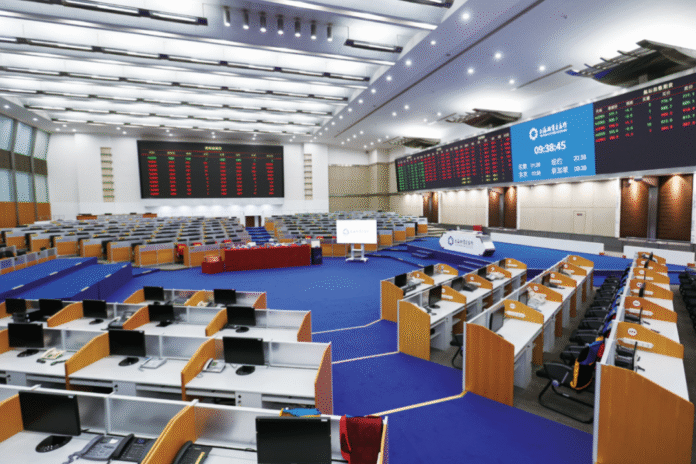
 On Wednesday, the Shanghai Composite Index closed at 4,082.47, down 0.98 percent, while the Shenzhen Component Index fell 0.75 percent to 13,917.75. The ChiNext Index, tracking China’s Nasdaq-style board for growth enterprises, dropped 1.41 percent to 3,164.37.

 From Sentiment-Driven Swings to Fundamentals

 According to China Galaxy Securities, the market is expected to gradually transition from sentiment-driven movements back to fundamentals-driven performance.

 Analysts Yang Chao and Wang Xueying noted that during China’s annual legislative and political advisory sessions (the “two sessions”), policymakers are likely to release targeted economic and fiscal measures. These policy dividends could provide the A-share market with clear thematic directions.

 Corporate earnings are expected to improve steadily as the domestic economic recovery strengthens, offering solid fundamental support for equities. With long-term capital gradually entering the market, analysts maintain a positive medium- to long-term outlook.

 Rising Appeal to Global Investors

 In the context of a shifting global order, international investors are increasingly seeking “safe-haven anchors.” Coupled with the relative stability of the renminbi, Chinese equity assets are becoming more attractive to foreign investors, analysts said.

 Huaxi Securities highlighted that March coincides with the typical two sessions trading window, a period historically associated with market stability. Policy priorities revealed during this period — such as expanding domestic demand and fostering new quality productive forces — often translate into repeated market outperformance across targeted sectors throughout the year.

 Historical trends suggest that after the conclusion of the two sessions, broader indices tend to post gains, offering potential opportunities for long-term investors.

 Implications for Overseas Investors

 For global portfolio managers, the recent volatility in China’s A-shares should be seen as a short-term sentiment adjustment, rather than a signal to retreat from the market. Analysts suggest focusing on sectors highlighted in government policy, monitoring corporate earnings trends, and considering the stabilizing effects of long-term capital inflows.

 By aligning investments with policy-driven market themes, overseas investors can position themselves to capture medium- to long-term growth opportunities in China’s evolving equity landscape.
Article inline ad

Nuclear Power Positioned as Key to China’s AI-Driven Energy Surge

0

According to a report by China Daily on March 5…

China eyes nuclear energy as a stable, zero-carbon backbone to meet the surging electricity demands of artificial intelligence and high-performance computing.

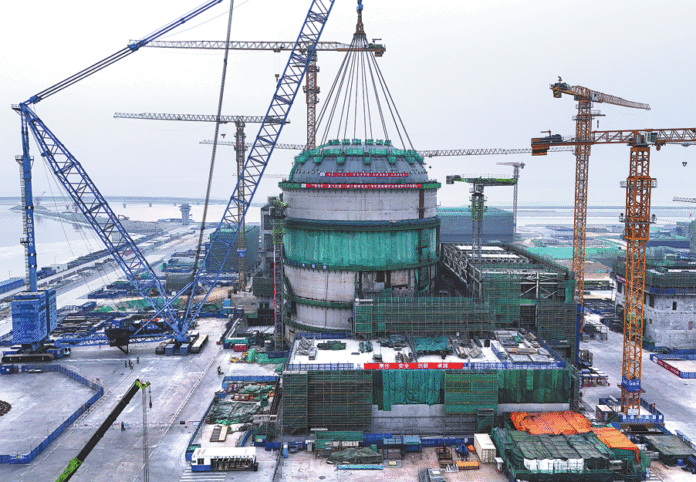
 As artificial intelligence and data-driven industries expand rapidly, China is turning to nuclear power to ensure a stable and reliable energy supply for its burgeoning digital economy. Executives and analysts say nuclear energy is poised to become a cornerstone of the country’s low-carbon energy infrastructure while supporting high-tech industrial growth.

 Nuclear Energy Meets AI Demand

 Lu Tiezhong, chairman of China National Nuclear Power Co (CNNP), emphasized in proposals to the Chinese People’s Political Consultative Conference that nuclear power is uniquely suited to supply the continuous, high-fidelity electricity required by AI data centers and other computationally intensive facilities.

 “AI data centers demand nonstop, high-load electricity,” Lu said. “Nuclear power provides a stable, zero-carbon baseload, creating a win-win synergy between energy producers and digital infrastructure operators.”

 The International Energy Agency forecasts that global IT loads will increase by 106 gigawatts between 2025 and 2030, driven largely by generative AI and large-scale model training — trends that underscore the critical role of reliable power.

 Scaling Nuclear Infrastructure

 China has been steadily expanding its nuclear capacity and aims to become a global leader in operational nuclear power by 2030. According to the China Nuclear Energy Association, the nation’s nuclear capacity is projected to reach 110 GW by 2030 and 150 GW by 2035, serving as a key substitute for high-carbon energy sources.

 Domestic production of critical nuclear components is also being scaled up, enhancing technology self-reliance and reinforcing the country’s strategic control over the nuclear supply chain.

 Integrating with Renewable Energy

 Looking ahead to the 15th Five-Year Plan, China plans to integrate nuclear with renewable energy sources such as wind, solar, and hydro, creating a more stable, low-carbon energy system for industrial and digital growth.

 CNNP is already piloting this approach. For example, the 2 GW Tianwan tidal flat solar demonstration project — China’s largest offshore solar farm — leverages idle land near nuclear facilities in Jiangsu province, blending nuclear and solar power generation.

 AI-Driven Nuclear Operations

 AI is also enhancing nuclear operations themselves. CNNP has deployed big data and AI platforms to improve production efficiency, safety monitoring, and operational analytics, creating smarter, safer plants capable of meeting growing demand from the digital economy.

 “Integrating AI into nuclear operations boosts efficiency and strengthens safety feedback loops,” Lu said. “This is essential for supporting China’s rapidly expanding computing infrastructure while maintaining carbon neutrality.”

 Strategic Implications

 Analysts and investors say the synergy between AI and nuclear power represents a strategic growth opportunity. With China committed to achieving carbon neutrality by 2060, nuclear energy is expected to play an increasingly central role in the country’s energy transition while ensuring reliable power for high-tech industries.

 Investment in nuclear energy and associated supply chains offers potential returns not only from electricity generation but also from high-value industrial and technology integration, making China a critical market for global energy and tech investors.


Article inline ad

China’s Lower Growth Target Signals Shift Toward Domestic Demand

0

According to a report by China Daily on March 5…

Economists say Beijing is pairing a more moderate growth target with stronger policy support to boost consumption and innovation-driven expansion.

 China’s decision to set a GDP growth target of 4.5 to 5 percent for 2026 is widely viewed by economists as a pragmatic adjustment that reflects the country’s evolving growth model, with policymakers placing greater emphasis on domestic demand and technological innovation.

 The target was outlined in the government work report submitted to the annual session of the National People’s Congress, China’s top legislature.

 Analysts say the new target signals Beijing’s intention to balance stable economic growth with structural reforms aimed at strengthening consumption and building new growth drivers.

 Policy Support to Remain Strong

 Despite the lower target, policymakers are expected to maintain robust fiscal and monetary support.

 According to Liu Jing at HSBC, China will maintain a proactive fiscal policy stance, with the fiscal deficit set at about 4 percent of GDP, similar to last year.

 Monetary policy will remain “appropriately accommodative,” with authorities considering potential reductions in banks’ reserve requirement ratios and interest rates if needed.

 In addition, Beijing increased the quota for new policy-backed financial instruments to 800 billion yuan ($116 billion), up from 500 billion yuan last year.

 Economists say these tools are designed to channel funding toward strategic sectors and stabilize economic activity.

 Lu Ting at Nomura noted that structural monetary policy instruments are likely to play a growing role in China’s macro policy framework.

 “We think Beijing could increase the quota of existing instruments or introduce new ones in 2026,” Lu said in a research note.

 Domestic Consumption Takes Center Stage

 One of the central priorities in this year’s policy agenda is building a stronger domestic market.

 The government work report identified expanding domestic demand — particularly consumption — as the top economic task for 2026.

 In addition to consumer subsidies, authorities are introducing new fiscal-financial tools to support consumption-related lending, financing guarantees and risk-sharing mechanisms.

 Economists say these measures suggest policymakers are broadening support beyond goods consumption to include services and consumption-related industries.

 Liu said boosting consumption will require deeper structural reforms, including improved social welfare coverage, pension system reforms and progress in urbanization.

 Such measures are seen as critical to increasing the share of consumption in China’s GDP during the 15th Five-Year Plan period.

 Innovation as a Core Growth Driver

 At the same time, policymakers are doubling down on technology and innovation as the foundation for long-term growth.

 The government work report highlighted accelerating the development of emerging industries and strengthening technological self-reliance in key sectors.

 China’s rapid progress in fields such as artificial intelligence, semiconductors, advanced manufacturing and new energy is increasingly shaping global investor perceptions of Chinese assets.

 Janice Hu, China country head of UBS, said the innovation momentum among Chinese companies is changing the way global investors view the country’s financial markets.

 “Chinese assets are gradually shifting from being an allocation option to a strategic necessity,” Hu said, noting that the transformation toward high-quality growth presents new opportunities for international financial institutions.

 Continued Opening-Up

 The government work report also reaffirmed China’s commitment to expanding high-standard opening-up.

 Authorities pledged to further improve the institutional framework for foreign investment and ensure equal treatment for foreign-funded enterprises operating in the country.

 Analysts say these steps could help strengthen long-term investor confidence while reducing regulatory and institutional barriers to foreign participation in China’s markets.

 As capital market reforms deepen and cross-border investment channels improve, global financial institutions are expected to find broader opportunities to expand operations in the world’s second-largest economy.

 Why It Matters

 For global investors, China’s latest policy signals suggest a strategic shift rather than a slowdown: growth is likely to rely less on property and infrastructure and more on consumption, technological innovation and structural reform.

 While the growth target appears modest compared with past decades, economists say it reflects a more sustainable economic trajectory as China transitions toward a consumption-driven and innovation-led development model.

Article inline ad

China’s Opening-Up Push Reinforces Appeal for Global Investors

0

According to a report by China Daily on March 5…

Multinationals see China as both a critical market and an emerging innovation hub as Beijing signals continued policy stability.

 China’s renewed commitment to expanding economic opening-up is strengthening confidence among multinational companies, as executives and analysts say the country remains central to global supply chains and technological innovation despite rising geopolitical tensions.

 The message was reinforced in the government work report delivered at the annual session of the National People’s Congress, which outlined plans to deepen reforms aimed at attracting foreign investment and improving the business environment for global firms.

 Under the plan, China will expand two-way investment cooperation, ensure national treatment for foreign-funded enterprises and introduce an updated Catalog of Encouraged Industries for Foreign Investment, guiding overseas capital toward strategic sectors.

 Key Takeaways

 Policy continuity: Beijing is signaling long-term commitment to opening its market to global capital.

 Supply chain centrality: China remains a critical manufacturing and logistics hub in global production networks.

 Innovation shift: Multinationals increasingly view China not only as a consumer market but as a center for technological development.

 Stability Amid Global Uncertainty

 For multinational companies navigating an increasingly fragmented global economy, China’s policy direction provides an important anchor for long-term planning.

 Denis Depoux, global managing director of the consulting firm Roland Berger, said global companies are increasingly compelled to maintain operations across multiple economic blocs.

 “As the world fragments into competing economic spheres, multinational companies must maintain a presence in both markets,” Depoux said. “China can act as a bridge connecting Asia and the Global South.”

 While competition with Chinese companies has intensified, remaining active in the Chinese market remains essential for firms seeking to stay competitive globally, he added.

 A Strategic Hub in Global Supply Chains

 Economists also note that China’s deep integration into global production networks continues to influence investment decisions.

 Zhang Shuibo, professor of economics at Tianjin University, said advancing high-quality reform and opening-up will help China mitigate external risks while reinforcing its global supply chain role.

 “China’s position in global manufacturing and logistics networks continues to shape multinational companies’ strategies,” Zhang said.

 From Consumer Market to Innovation Center

 For many multinational corporations, China’s strategic value has evolved significantly over the past decade.

 Rather than serving only as a massive consumer market, the country is increasingly seen as an innovation hub that influences global industrial competition.

 Xia Fuliang, head of the China unit of German specialty chemicals group Evonik Industries, said China’s rapid progress in sectors such as green technology, shipbuilding, artificial intelligence and high-end services is reshaping the global competitive landscape.

 Executives say technological momentum in these industries is also generating new opportunities for international collaboration.

 Similarly, Yin Zheng of Schneider Electric said China has become a key pillar in the company’s global strategy.

 As artificial intelligence accelerates energy transition and industrial upgrading, China has emerged as a major global center for AI development, Yin said.

 “We believe China has become a major center of global industry and a powerful engine of growth,” he said. “Investing in China means investing in the future.”

 Investor View

 For global investors and multinational corporations, China’s continued opening-up sends a clear signal: the country intends to remain deeply integrated with the global economy while upgrading its industrial base.

 Despite geopolitical headwinds and shifting supply chains, China’s combination of market scale, manufacturing capability and technological advancement continues to make it one of the world’s most influential investment destinations.


Article inline ad

China Sets 2026 GDP Growth Target of 4.5–5%

0

According to a report by China Daily on March 5…

China has set its economic growth target for 2026 at around 4.5 to 5 percent, signaling a pragmatic approach to sustaining expansion while continuing structural reforms.

 The target was announced by Premier Li Qiang in the government work report delivered at the opening of the annual session of the National People’s Congress in Beijing on Thursday.

 According to the report, the growth objective is aligned with the country’s long-term development strategy through 2035 and reflects China’s underlying economic potential amid a complex global environment.

 Balancing Growth and Structural Reform

 Li said the target allows room for economic restructuring, risk prevention and reform as China enters the first year of the 15th Five-Year Plan period.

 Local governments are expected to pursue growth in line with their own economic conditions while ensuring stability and sustainable development, he said.

 Economists say the target reflects a balanced policy approach as China navigates both cyclical pressures and longer-term structural changes.

 Sun Xuegong, director-general of the department of policy study and consultation at the Chinese Academy of Macroeconomic Research, said the growth range is both “reasonable and necessary”.

 To achieve China’s goal of doubling per capita GDP from its 2020 level by 2035, the economy would need to expand at roughly 4.2 percent annually in the coming years, he said.

 New Growth Drivers Emerging

 Analysts noted that the modest adjustment of the growth target does not signal weakening economic momentum. Instead, it reflects a transition in China’s growth model.

 Traditional drivers such as the property sector and demographic expansion are gradually fading, while new engines are gaining importance. These include rising household consumption, innovation-led productivity gains and the continued expansion of the services sector.

 Macro policy support is expected to remain in place to stabilize growth, with economists anticipating stronger consumption and a potential rebound in investment.

 Reform and Consumption Seen as Key

 International observers also see significant room for expansion as China deepens structural reforms.

 Marshall Mills, senior resident representative in China for the International Monetary Fund, said the country still has considerable growth potential.

 According to Mills, China’s high household savings rate suggests strong room for consumption to become a more powerful driver of economic growth. At the same time, reforms aimed at improving resource allocation could help translate technological innovation into productivity gains across a broader range of industries.

 As China embarks on the new five-year planning cycle, policymakers are expected to focus on balancing steady growth with structural transformation — a shift that could reshape the world’s second-largest economy in the years ahead.

Article inline ad

China Tightens Tax Compliance to Support Fair Competition

0

According to a report by China Daily on March 5…

China is stepping up fiscal governance efforts as part of a broader push to build a unified national market and foster higher-quality economic growth, according to new data released by the State Taxation Administration.

 Authorities said that in 2025 they intensified enforcement against irregular tax practices linked to local investment incentives, an issue long associated with regional competition to attract businesses. A total of 389 suspected violations were investigated during the year, with confirmed cases swiftly corrected.

 Analysts say the campaign reflects Beijing’s determination to curb what policymakers often describe as “involution-style competition” among regions — a practice in which local governments offer preferential tax arrangements or overlook irregularities in order to draw investment.

 Xu Sheng, a researcher at the economic research institute of the National Development and Reform Commission, said the effort aims to restore a level playing field for businesses.

 “Such practices distort market order and undermine fair competition,” Xu noted, adding that stricter enforcement helps protect compliant enterprises and improve the overall business environment.

 Bridging the Online–Offline Tax Gap

 Regulators also moved to close loopholes associated with the rapid growth of the digital economy. New rules introduced last year require internet platforms to strengthen tax information reporting.

 More than 8,000 online platforms are now complying with the new reporting requirements, authorities said. The system is designed to overcome the long-standing gap between companies’ registered business locations and their actual operational bases — a mismatch that had previously enabled some fraudulent transactions and tax evasion.

 Faster Cross-Regional Tax Services

 China also made progress in simplifying tax administration for companies operating across provinces.

 According to the tax authority, the average processing time for cross-regional tax services has been reduced by five to 10 days. Cross-provincial electronic tax payments reached more than 130 billion yuan ($18.8 billion) in 2025, marking a 39 percent year-on-year increase.

 The improvements are expected to reduce administrative costs for businesses and facilitate the smoother movement of capital and labor across regions — a key objective in China’s effort to build a unified national market.

 For investors and multinational companies operating in China, the strengthened compliance framework signals a broader policy trend: tighter regulation of local protectionism alongside continued efforts to standardize market rules nationwide.

Article inline ad

Nurturing New Growth Drivers Seen As Major Economic Development Priority

0

By Li Jiaying | China Daily | Updated: 2026-03-06 

As one of the major tasks outlined in this year’s government work report, China will foster new growth drivers at a faster pace by intensified efforts to cultivate emerging and future industries, Premier Li Qiang said on Thursday in Beijing.

 Delivering the report at the opening of the fourth session of the 14th National People’s Congress, Li said China has continued to pursue innovation-driven development over the past year, with the intensity of the country’s research and development spending reaching 2.8 percent of GDP, and the added value of core industries in the digital economy rising to account for more than 10.5 percent of GDP.

 “We should stay focused on the real economy, develop new quality productive forces in light of local conditions and modernize the industrial system,” the premier said.

 As a key driver for fostering new growth momentum, China will continue to develop emerging industries such as integrated circuits, aerospace, biomedicine and the low-altitude economy, while also advancing future industries including green energy, quantum technology, embodied intelligence, brain-computer interfaces and 6G, Li said.

 Zhu Keli, founding director of the China Institute of New Economy, said this year’s report explicitly lists five key directions for future industries, indicating that the country has completed its strategic prioritization of these sectors at the national level.

 “This not only provides market players with a clear roadmap for investment, but also helps avoid fragmented resource allocation and redundant construction, ensuring that innovation resources are concentrated in areas of genuine strategic value,” Zhu said.

 To support these sectors, the country will implement industrial innovation initiatives and encourage central State-owned enterprises to take the lead in making application scenarios more accessible, and mechanisms are expected to be put in place to increase funding and share risks, the government work report showed.

 “The report proposes to establish mechanisms to increase investment and share risks in future industries, which is a crucial institutional design that complements the targeted deployment of the listed sectors,” Zhu said, adding that future industries are usually characterized by high investment, long development cycles and significant risks, making it difficult for market players alone to achieve rapid breakthroughs.

 “By creating mechanisms for risk-sharing and benefit-sharing, it can effectively guide social capital to invest with greater confidence, willingness and long-term commitment, helping to ease funding bottlenecks in tackling key technologies.”

 According to the report, the country will also strengthen support for specialized and sophisticated small and medium-sized enterprises and foster more unicorn companies, while developing venture capital and angel investment, with government-backed funds playing a leading role as patient capital to help startups grow into leading technology firms.

 lijiaying@chinadaily.com.cn

Article inline ad

Leading Executives Call For Chinese Tech Self-Sufficiency Plan

0

By Ma Si | chinadaily.com.cn | Updated: 2026-03-06 

Leading figures in China’s semiconductor industry are urging the central government to launch a coordinated national initiative to develop homegrown advanced lithography systems, intensifying Beijing’s push for technological self-sufficiency amid ongoing export restrictions.

 In a signed article published online late Wednesday, top executives from major Chinese chip equipment and design companies, alongside prominent research institutes, called for the pooling of national resources to overcome critical bottlenecks during the country’s 15th Five-Year Plan period (2026-30).

 The authors of the piece – which was published in Science and Technology Review, a journal affiliated with the China Association for Science and Technology – include Zhao Jinrong, chairman of Naura Technology Group; Chen Nanxiang, chairman of Yangtze Memory Technologies Corp; and Liu Weiping, chairman of Empyrean Technology.

 The executives urged the government to integrate resources across relevant institutions to work towards breakthroughs in three key areas: electronic design automation (EDA software), extreme ultraviolet (EUV) lithography, and advanced silicon wafers during the 15th Five-Year Plan period (2026-30).

 Drawing a parallel with industry leader ASML Holding, the authors highlighted the complex ecosystem required for the development of advanced chip-making tools.

 “Taking lithography machines as an example, ASML’s extreme ultraviolet (EUV) equipment has 100,000 components supplied by 5,000 suppliers, with ASML merely serving as the integrator,” they wrote.

 The Dutch firm is the world’s sole supplier of EUV lithography machines, which are essential for producing the most advanced semiconductor chips used in smartphones, AI and high-performance computing.

 The article posed a critical question for Chinese policymakers: “How to establish China’s ASML, so that the ‘integrator’ can rise above institutional barriers and uniformly allocate funds and human resources is an urgent issue that relevant departments should immediately formulate implementation plans for.”

 While acknowledging that Chinese institutions have made “breakthrough progress” in individual components such as EUV laser light sources, wafer stages and optical systems, the authors noted that integrating these parts into a functional, stable system remains a formidable challenge for the 2026-2030 period.

 Beyond lithography, the article identified bottlenecks in EDA software — crucial for chip design — and advanced materials like silicon wafers and electronic gases as areas requiring national-level coordination to secure China’s semiconductor supply chain.


Article inline ad

Alibaba Committed To AI Advancement Amid Leadership Shake Up

0

By Li Jiaying | chinadaily.com.cn | Updated: 2026-03-05 

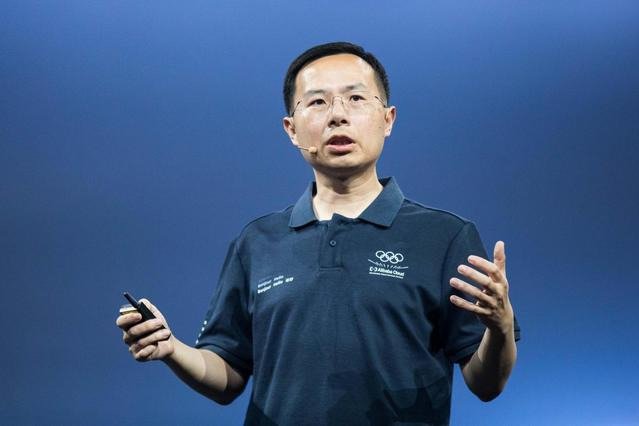
Alibaba Cloud’s chief technology officer, Zhou Jingren, will take a leading role in advancing the development of Alibaba’s signature Qwen large language model, following the departure of a key technical leader as the group reshuffles responsibilities around its foundational AI strategy.

 In an internal email to employees on Thursday, Alibaba CEO Eddie Wu responded on to the resignation of Lin Junyang, a core leader of the company’s Qwen large language model.

 According to the email, Zhou will continue to lead the Tongyi Lab in advancing subsequent work. Meanwhile, the group will establish a foundation model support group, jointly coordinated by Wu, Zhou, and Fan Yu, to mobilize group-wide resources in support of large model development.

 Wu stressed that building foundational large models is a key long-term strategy for the company and Alibaba will continue to adhere to its open-source model strategy, while further increasing investment in artificial intelligence research and development, and stepping up efforts to attract top talent.

 Alibaba’s response came after Lin announced his departure on social media on Wednesday, writing: “me stepping down. bye my beloved qwen”. Shortly afterward, Yu Bowen, head of post-training for the Qwen model, also announced his departure from the company.

 Born in 1993, Lin was one of Alibaba’s youngest P10-level technical leaders. He led the development of the Qwen3-Max model — which features more than 1 trillion parameters — and later guided the release of the Qwen3.5 series of smaller models.

 According to an Alibaba insider, Lin’s departure stemmed from adjustments to his responsibilities as the Qwen model evolved from a foundational model project into a group-level strategic initiative.

 As the group plans to recruit more leading AI researchers to strengthen the talent pool of its base model team, the restructuring of roles ultimately led to Lin’s resignation, the insider said.

Article inline ad

Emerging Industries Will Drive China’s Growth

0

By Li Jiaying | chinadaily.com.cn | Updated: 2026-03-05 

China intends to drive growth by cultivating its emerging and future industries, Premier Li Qiang said at the country’s annual two sessions gathering in Beijing on Thursday.

 Delivering this year’s government work report at the opening of the fourth session of the 14th National People’s Congress, Li said China will continue to develop emerging industries such as integrated circuits, aerospace, biomedicine and the low-altitude economy, while also advancing future industries including future energy, quantum technology, embodied intelligence, brain-computer interfaces and 6G.

 To support these sectors, the country will implement industrial innovation initiatives and encourage central State-owned enterprises to take the lead in making application scenarios more accessible, Li said, adding that mechanisms are expected to be put in place to increase funding and share risks.

 According to the report, China will expand support for specialized and sophisticated SMEs and foster more unicorn companies, while developing venture capital and angel investment, with government-backed funds playing a leading role as patient capital to help startups grow into leading technology firms.

 The report detailed how China has continued to pursue innovation-driven development over the past year, with the intensity of the country’s research and development spending reaching 2.8 percent of GDP.

 “We should stay focused on the real economy, develop new quality productive forces in light of local conditions, and modernize the industrial system,” Li said.

 lijiaying@chinadaily.com.cn


Article inline ad