Tuesday, November 24, 2026

Home Blog Page 43

China’s Growth Target Signals Stable Expansion and Shift Toward Consumption

0

According to a report by China Daily on March 6…

China’s decision to set a GDP growth target of around 4.5–5 percent for 2026 reflects a balancing act between maintaining stable economic expansion and accelerating the transition toward a more consumption-driven growth model, according to international economists.

The target was announced in the annual Government Work Report delivered by Premier Li Qiang at the opening of the session of the National People’s Congress in Beijing on Thursday. The report outlines the country’s economic priorities for the year and signals the policy direction as China enters the next stage of its long-term development strategy.

A Target Aligned With Long-Term Development Goals

Analysts say the growth target reflects both the scale of China’s economy and its broader development ambitions.

Radhika Desai, a professor at the University of Manitoba in Canada, described the target as “reasonable both quantitatively and qualitatively”.

She noted that growth of around 4.5–5 percent is consistent with China’s long-term objective of doubling its 2020 per capita GDP by 2035, a milestone aimed at reaching the income level of a moderately developed economy.

Given the combination of geopolitical tensions and domestic economic adjustments, Desai added that the target could even be considered relatively ambitious.

Beyond the headline figure, she said the policy documents emphasize high-quality growth, including stronger support for domestic consumption, the green transition and the development of new productive forces driven by advanced technologies.

Slower Growth Reflects Economic Scale

Some international observers have characterized the target as modest compared with the double-digit growth rates that China achieved in earlier decades.

But economists note that such comparisons overlook the dramatic expansion of the country’s economic base.

Marc Ostwald, chief economist and global strategist at ADM Investor Services International in London, said lower percentage growth rates are natural for a much larger economy.

“If an economy grows at 10 percent when it is worth $1 trillion, that is far smaller in absolute terms than growing at 5 percent when it is worth $10 trillion,” he said.

From that perspective, China’s current growth target still implies a substantial increase in economic output each year.

Consumption Takes a Larger Role

Another key message from the Government Work Report is the continued shift toward domestic consumption as a primary driver of growth.

According to the report, China plans to expand policies aimed at boosting household spending, including efforts to raise household property income and expand programs that encourage consumers to trade in older appliances and vehicles for newer products.

Economists say such policies reflect Beijing’s longer-term goal of rebalancing the economy away from investment-heavy growth toward consumption and services.

Innovation and Technology Remain Central

At the same time, the government continues to emphasize technological self-reliance and innovation-driven development.

China has identified scientific and technological advancement as a strategic priority, with investment expected to continue flowing into emerging industries such as advanced manufacturing, digital technologies and green energy.

Desai said the push for technological innovation and the expansion of consumption should be seen as mutually reinforcing.

Investment in new industries, she noted, can generate higher productivity, create jobs and ultimately support rising household incomes—thereby strengthening the foundation for consumer demand.

Room for Structural Adjustment

Allan von Mehren, chief analyst and China economist at Danske Bank, said a moderately flexible growth target also gives policymakers greater room to pursue structural reforms and address financial risks.

Rather than focusing solely on headline growth, he said the strategy allows China to prioritize economic restructuring, risk management and long-term sustainability.

Taken together, the policy signals suggest that Beijing’s approach is shifting from maximizing growth speed to ensuring steady expansion while upgrading the quality and resilience of the economy.
Article inline ad

Policy Push Signals Stronger Drive for Growth in China

0

According to a report by China Daily on March 6…

China is preparing a fresh round of policy support to strengthen domestic demand and stabilize economic growth, as policymakers aim to meet this year’s growth target and lay the groundwork for the country’s next five-year development cycle.

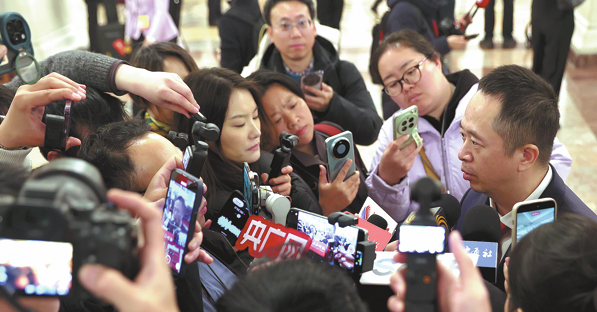
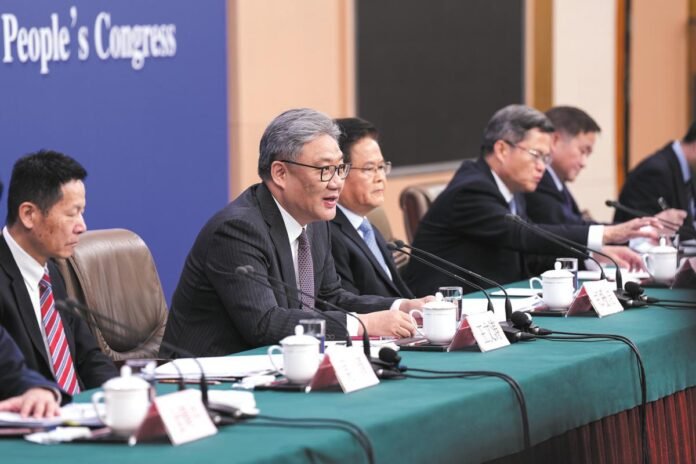
At a press conference held during the annual parliamentary session in Beijing, senior economic officials signaled a coordinated mix of fiscal, monetary and industrial policies designed to sustain economic momentum in 2026.

Growth Target Anchored Around 5%

Zheng Shanjie, head of the National Development and Reform Commission, said China has the economic capacity to achieve its 2026 growth target of around 4.5–5 percent, supported by the country’s large economic base, technological innovation and policy flexibility.

According to Zheng, even growth at that level would add more than 6 trillion yuan ($869 billion) to the economy this year—roughly equivalent to the annual output of a mid-sized developed economy.

Such expansion, he noted, would help stabilize employment, support household incomes and contain financial risks.

Monetary Easing Likely to Continue

China’s central bank signaled that further monetary easing could be on the table.

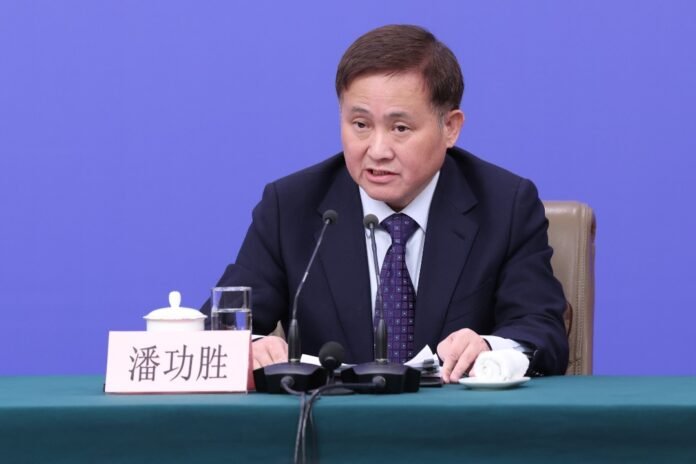
Pan Gongsheng, governor of the People’s Bank of China, said authorities are prepared to reduce banks’ reserve requirement ratio (RRR) and lower interest rates if needed, following earlier targeted adjustments to policy tools at the start of the year.

The move suggests policymakers remain cautious about economic headwinds while keeping liquidity conditions supportive.

Record Fiscal Expansion

Fiscal policy will also play a prominent role in supporting growth.

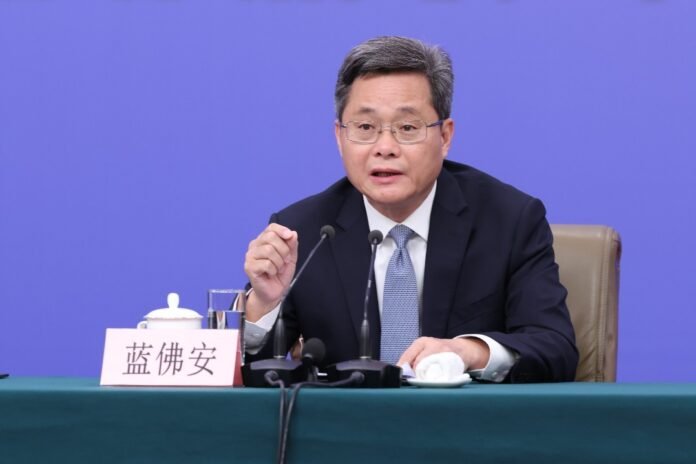
Finance Minister Lan Fo’an said total government bond issuance—including central and local government debt—will reach 11.89 trillion yuan this year, marking one of the most expansionary fiscal stances in recent years.

Part of the stimulus will be directed toward boosting domestic demand. The central government has allocated 100 billion yuan for a coordinated policy package combining fiscal subsidies and financial support tools.

These measures aim to encourage private investment and household consumption, including interest subsidies, financing guarantees and risk-sharing mechanisms designed to amplify the impact of public spending.

Consumption Support and Retail Upgrade

China is also expanding programs aimed at encouraging consumer spending.

The government has set aside 250 billion yuan for trade-in subsidies covering consumer goods such as home appliances and electronics—an expansion of last year’s program.

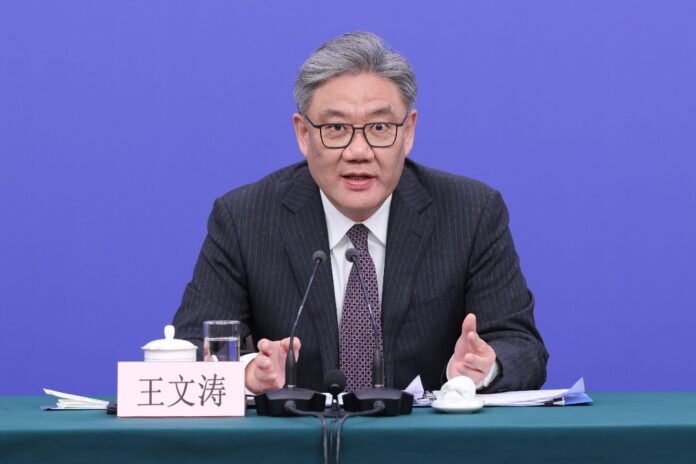
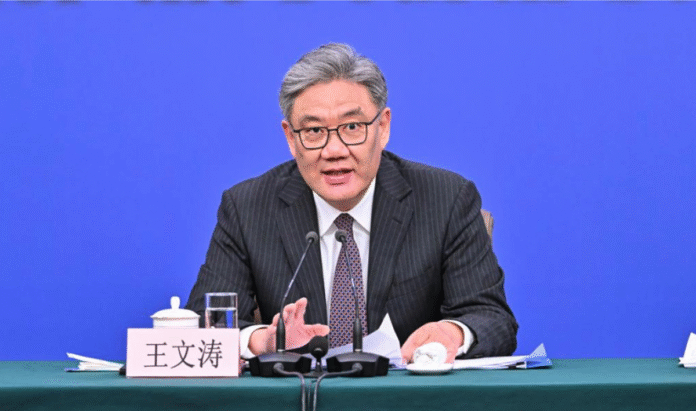
Wang Wentao, minister of commerce and head of the Ministry of Commerce of the People’s Republic of China, said the program will focus on green and smart products, while also providing stronger support to traditional brick-and-mortar retailers.

In addition, authorities are experimenting with new consumption models in 50 pilot cities and expanding market access for foreign investors in sectors including telecommunications, biotechnology and healthcare.

Investment Focus Shifts to Strategic Infrastructure

Public investment will remain a major pillar of economic policy.

Authorities plan to push forward 109 major projects outlined in the draft 2026–2030 development blueprint, covering infrastructure such as water systems, energy networks, computing capacity, next-generation communications, urban underground pipelines and logistics networks.

Total investment in these areas is expected to exceed 7 trillion yuan this year, according to Zheng.

The program also includes projects in emerging sectors such as artificial intelligence, low-altitude aviation, transportation integration, education and healthcare.

Strategic Industries Take Center Stage

Officials emphasized that strengthening China’s modern industrial system remains a central policy objective.

The country’s AI sector is expected to exceed 10 trillion yuan in size by the end of the next five-year plan, while industries built around the BeiDou Navigation Satellite System are projected to surpass 1 trillion yuan.

Meanwhile, China’s services sector could expand to more than 100 trillion yuan over the next five years, reflecting the economy’s ongoing structural shift toward services and consumption.

Policy Coordination Intensifying

Economists say the policy messaging suggests authorities are determined to prevent a sharper economic slowdown.

Song Yu, chief China economist at UBS Securities, noted that policymakers appear to be showing less tolerance for weaker growth and may aim to keep actual expansion closer to 5 percent this year.

Greater coordination between fiscal, monetary and industrial policies, he added, should help stabilize economic expectations as China enters a new development cycle.

Article inline ad

China Looks To Increase Imports To Achieve Trade Balance

0

By Zhong Nan | chinadaily.com.cn | Updated: 2026-03-06 

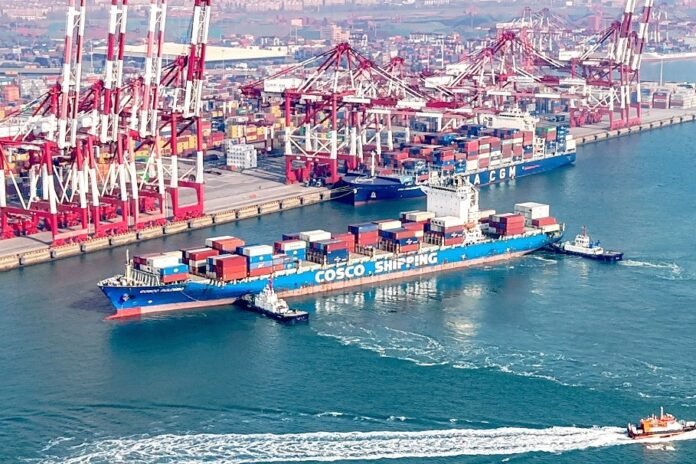
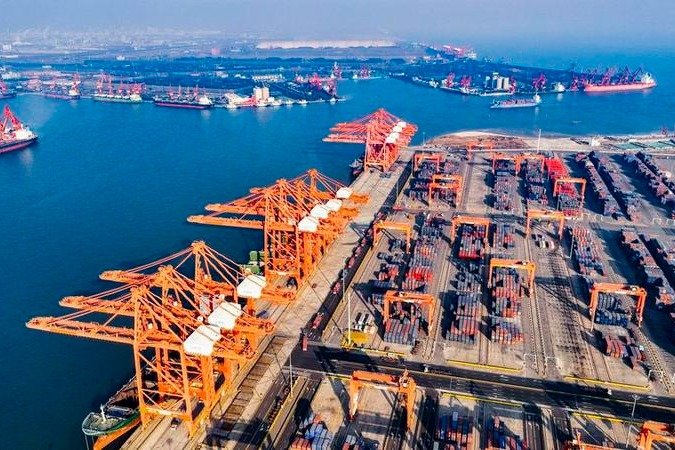
China will expand imports of agricultural products, high-quality consumer goods, advanced technological equipment, and key components, as part of efforts to promote a more balanced development of imports and exports, the country’s top commerce official said on Friday.

 Speaking at a news conference on the economy on the sidelines of the fourth session of the 14th National People’s Congress in Beijing, Commerce Minister Wang Wentao said that while stabilizing exports, China will place greater emphasis on expanding imports, combining the two to better leverage the advantages of its vast domestic market.

 At the same time, the government will continue to make full use of major platforms to facilitate imports. These include the China International Import Expo — the world’s only national-level exhibition dedicated to imports, Wang said.

 Last year, China launched the “Big Market for All: Export to China” series of events — designed from the perspective of its trading partners — to encourage them to expand exports to China, broaden import channels, and promote the entry of more high-quality products and services into the Chinese market, he added.

 Wang said that while China’s exports to the United States declined 19.5 percent year-on-year in 2025, its total exports still rose 6.1 percent — in renminbi terms — on a yearly basis, highlighting the results of the country’s diversified foreign trade strategy.

Article inline ad

China To Further Open Up Its Markets Through 3 Key Initiaives

0

By Wang Keju | chinadaily.com.cn | Updated: 2026-03-06    

 China will take the initiative to share the opportunities presented by its vast domestic market with the rest of the world through such initiatives as “Shopping in China”, “Export to China”, and “Invest in China”, Commerce Minister Wang Wentao said on Friday.

 For the “Shopping in China” campaign, the country will optimize the instant tax refund service, Wang said at a news conference on the sidelines of the fourth session of the 14th National People’s Congress, China’s top legislature, adding that the government will work to deepen the development of international consumption hub cities.

 The “Export to China” Initiative, will see China strengthen the alignment between what other countries have to offer and what China needs, better positioning China as the optimal export destination for an expanding number of trading partners, Wang said.

 Meanwhile, China continues to welcome foreign businesses to invest in China and compete with domestic enterprises on an equal footing, Wang said.

 China will transform the “demand lists” submitted by foreign-invested enterprises into actionable “service lists” of government commitments, Wang added.

Article inline ad

China To Allocate 100b Yuan To Expand Domestic Demand

0

By Zhang Chenxu | chinadaily.com.cn | Updated: 2026-03-06   

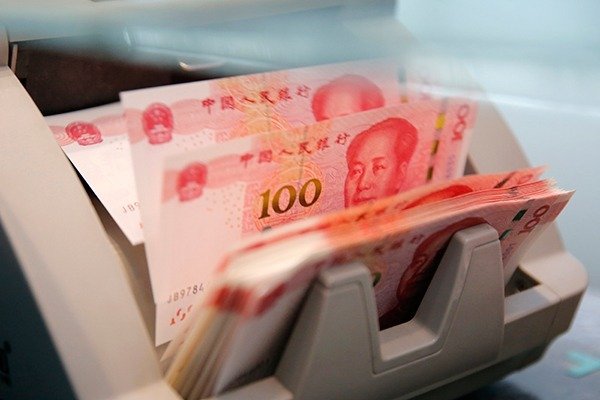
 China will allocate 100 billion yuan ($15.4 billion) this year under a package of coordinated fiscal-financial policies to facilitate domestic demand expansion, Minister of Finance Lan Fo’an said on Friday in Beijing.

 Under the package, four targeted measures are designed for supporting private investment, while two are for boosting household consumption, Lan said, adding that the authorities will integrate policy instruments, such as loan interest subsidies, financing guarantees, and risk compensation mechanisms, to fully leverage the effects of the policies.

 Lan made the remarks at a news conference on the economy during the ongoing fourth session of the 14th National People’s Congress, the country’s top legislature.

Specifically, the fiscal authorities will establish operational frameworks and allocate capital, the financial sector will ensure liquidity provision, while relevant government departments — including the Ministry of Industry and Information Technology — will curate and recommend project lists, he said.

 The aim is to effectively mobilize broader social capital toward key sectors critical to expanding domestic demand, he added.

 Preliminary estimates indicate that the fiscal inputs can catalyze credit flows reaching the trillion-yuan level, Lan said.


Article inline ad

PBOC Governor: China To Expand Financial Opening

0

By Zhou Lanxu | chinadaily.com.cn | Updated: 2026-03-06 

China will continue to steadily expand high-level financial opening and help build a more equitable, inclusive, and resilient global financial governance system, Pan Gongsheng, governor of the People’s Bank of China, the country’s central bank, said on Friday.

 Pan made the remarks at a news conference of the fourth session of the 14th National People’s Congress, saying that changes in the geopolitical landscape have created new momentum for reforming global financial governance.

 Pan said China will improve connectivity between domestic and overseas financial markets and strengthen cross-border payment system linkages, while advancing the internationalization of the renminbi and developing offshore yuan markets.

 He also called for a more diversified international monetary system, a safer, more efficient cross-border payment network, and enhancing the voice and representation of emerging markets and developing economies in the governance of international financial organizations.

 By the end of last year, overseas institutions and individuals held more than 10 trillion yuan ($1.45 trillion) in onshore renminbi financial assets, including stocks, bonds, deposits, and loans, he added.

 In 2025, panda bond issuance by foreign governments, international development agencies, financial institutions, and corporations exceeded 170 billion yuan, with outstanding balances rising 34 percent year-on-year.

Article inline ad

China Economic & Tech Outlook 2026 – Overseas Investor Edition

0

Compiled and edited based on a China Daily report from March 5.

GDP Target: China aims for 4.5–5% growth in 2026, signaling a shift toward domestic demand while maintaining policy support for structural reforms and high-quality development.

 Consumption Trends: Health, wellness, and smart products are emerging as primary drivers of retail growth, replacing traditional consumption items.

 Investment Climate: Continued opening-up policies, foreign investment incentives, and sector-specific reforms enhance long-term stability.

 Key Sectors: AI, nuclear power, banking transformation, and green tech are highlighted as high-potential areas for global investors.

 Market Outlook: A-shares volatility reflects short-term sentiment; long-term fundamentals remain positive.

 China Economy – Macro & Sector Trends

GDP Growth Target and Policy Support

 China’s government has set a GDP growth target of 4.5–5% for 2026. Analysts interpret this as a pragmatic approach, balancing structural adjustments, risk management, and high-quality development objectives for the 15th Five-Year Plan (2026–2030). Fiscal policy will remain proactive, with a deficit-to-GDP ratio around 4%. Monetary policy is set to stay accommodative, with potential reserve requirement and interest rate adjustments.

 Consumption & Wellness Trends

 The Spring Festival highlighted a shift in consumer behavior: wellness, green products, and smart technologies are replacing traditional tobacco, alcohol, and tea. Nutrition supplements, wearable health devices, and health-oriented services now dominate retail and e-commerce sales, signaling a structural move toward preventative healthcare and human capital investment.

 A-Share Market Outlook

 Recent market volatility in Shanghai, Shenzhen, and ChiNext indices primarily reflects short-term sentiment amid geopolitical pressures, not a reversal of the medium- to long-term upward trend. Analysts note that policy guidance during the Two Sessions is expected to provide clear thematic direction and support corporate earnings growth.

 Banking Sector Transformation

 Chinese banks are shifting from interest-dependent models to asset-light, diversified revenue streams, focusing on wealth management, investment banking, and digital finance. Digital intelligence initiatives, including AI-driven services and operational integration, are accelerating revenue diversification and risk management capabilities.

 2.China AI – Industry, Policy & Investment

Six Forces Model & Coordinated Development

 China’s AI industry strategy, proposed by Zhou Hongyi, emphasizes six forces: electricity, computing power, intelligence, talent, security, and productivity. The model ensures sustainable AI adoption and guides industrial and SME integration.

 AI Applications Across Sectors

 The Ministry of Industry and Information Technology, led by Li Lecheng, is driving AI integration into manufacturing, consumer electronics, autonomous vehicles, and smart devices. AI agents, brain-computer interfaces, and industrial automation are key focus areas for next-generation AI commercial applications.

 AI Security & Talent Development

 China is prioritizing cybersecurity transformation, addressing high technical barriers, talent shortages, and emerging AI-related threats. Policy and industry efforts support dual empowerment of technology and workforce, promoting secure, scalable AI deployment.

 Investment Implications

 Global investors can tap opportunities in AI infrastructure, industrial applications, cybersecurity solutions, and consumer AI products. Coordinated development and policy support reduce uncertainty and enhance long-term market confidence.

3.Strategic Sectors & Infrastructure

Nuclear Power for Digital Economy

 Nuclear energy is positioned as a stable, zero-carbon backbone for AI and data centers. By 2030, China expects 110 GW of nuclear capacity, with strategic integration with renewable energy to support digital infrastructure and high-load computing.

 Green Tech & Industrial Upgrades

 Advances in green manufacturing, shipbuilding, high-value services, and AI-powered production are reshaping competition and investment opportunities. Innovation-driven productivity is becoming a core growth driver.

 Foreign Investment & Opening-Up

 New regulations and the Catalog of Encouraged Industries promote two-way investment, ensure national treatment for foreign enterprises, and reduce institutional transaction costs. Global companies view China as a stable hub for long-term industrial and financial engagement.

4.Investment Insights & Recommendations

 Asset-Light Banking: Wealth management and digital finance offer high-margin, countercyclical opportunities.

 AI & Tech: High-potential sectors include AI infrastructure, industrial applications, cybersecurity, and consumer smart devices.

 Energy & Infrastructure: Nuclear power and renewable integration are key for sustainable growth.

 Health & Wellness: Long-term consumer trends favor health-focused products and services, driving human capital productivity.

 Market Timing: Leverage short-term volatility in A-shares, focus on policy-driven thematic investments.

5. Data Appendix & Key Indicators

 GDP 2026 Target: 4.5–5%

 Per Capita Health Spending 2024: 2,547 yuan (~$368)

 Cross-Provincial Electronic Tax Payments 2025: 130 billion yuan ($18.78B)

 Nuclear Capacity Forecast: 110 GW by 2030, 150 GW by 2035

 Key Market Indices: Shanghai Composite 4,082.47; Shenzhen Component 13,917.75; ChiNext 3,164.37

 Report Prepared for International Investors: Offers strategic insights into China’s 2026 economic and technological landscape, integrating policy, market, and sector-specific opportunities for informed investment decisions.

Article inline ad

China Pushes Coordinated AI Expansion Amid Rapid Industry Growth

0

According to a report by China Daily on March 5…

China is laying the groundwork for high-quality AI growth, with a coordinated strategy addressing computing power, security, talent, and industrial adoption.

 As China’s artificial intelligence industry enters a new developmental phase, national advisers and industry leaders are proposing a comprehensive framework to accelerate adoption and innovation, targeting sectors ranging from inference computing to AI-powered security solutions.

 Six Forces Model for AI Development

 Zhou Hongyi outlined a “six forces model” to drive AI growth. The model emphasizes coordination across electricity, computing power, intelligence, talent, security, and productivity, aiming to create a robust ecosystem for AI applications.

 “AI agents that consume inference computing power can convert general-purpose models into specialized intelligence,” Zhou said. Security capabilities and professional oversight ensure that these applications remain productive, safe, and sustainable.

 Expanding AI Applications Across Sectors

 China’s Ministry of Industry and Information Technology, led by Li Lecheng, is advancing the integration of AI across manufacturing, consumer electronics, and daily life. Key areas include:

 Smart consumer devices: AI-powered personal computers, mobile phones, and home appliances

 Industrial AI: Autonomous vehicles, robotics, and brain-computer interfaces

 SME adoption: Public service platforms for AI agents that reduce technical and cost barriers

 The 2026 Government Work Report highlighted the acceleration of AI Plus initiatives, large-scale commercial applications, and the creation of AI-native business models.

 Security and Talent Challenges

 While adoption expands, challenges remain:

 High technical barriers and interdisciplinary talent shortages

 Rising cyber threats, including “hacker agents” that transform cybersecurity dynamics

 The need for AI-driven security solutions in critical infrastructure and industrial internet sectors

 Zhou advocates a dual empowerment approach, combining technology and talent development, and building inclusive platforms that help small and medium-sized enterprises deploy AI agents efficiently and securely.

 Industrial and Investment Implications

 The coordinated AI strategy is creating new investment opportunities in:

 AI infrastructure: Data centers, inference computing, and cloud services

 AI security solutions: Vulnerability detection, threat analysis, and scenario-based security applications

 Consumer and industrial AI products: Smart devices, robotics, and AI-driven automation

 For international investors, China’s AI expansion signals a high-growth, strategically supported sector, combining policy backing, technological innovation, and market demand across multiple industries.

 Looking Ahead

 China’s AI industry has entered a phase of systematic coordination, integrating computing resources, talent, security, and application ecosystems. By fostering innovation while ensuring security and operational sustainability, China aims to cement its global leadership in AI and create a foundation for high-quality industrial transformation.


Article inline ad

China’s Banks Pivot to Asset-Light Businesses Amid Margin Pressure

0

According to a report by China Daily on March 5…

Chinese lenders are shifting from traditional lending toward wealth management, investment banking, and digital services, as declining interest margins drive the need for diversified revenue streams.

 Amid narrowing net interest margins, Chinese banks are increasingly embracing asset-light business models to boost profitability and reduce dependence on traditional lending. Analysts say this strategic pivot is likely to reshape the revenue structure of the banking sector over the 15th Five-Year Plan period (2026–2030).

 Wealth Management and Non-Interest Income Growth

 Several major banks have highlighted wealth management, transaction banking, investment banking, and custody services as core pillars of intermediary business income. For instance:

 China Everbright Bank plans to professionalize financial market operations and expand wealth management and investment banking to stabilize revenue growth.

 Industrial Bank will prioritize asset and wealth management, integrating industrial financing and retail wealth services to generate non-interest income.

 Shanghai Pudong Development Bank recently split its wealth management and private banking departments, enabling more customer-centric service and improved product coordination.

 Lin Yingqi notes that this shift allows banks to move from product-centric sales toward client-focused models, improving service quality and loyalty.

 Zeng Gang emphasizes that banks will increasingly prioritize quality over scale, focusing on diversified revenue sources including wealth management and investment banking.

 Policy and Market Tailwinds

 China’s ongoing capital market reforms and improvements in market entry mechanisms for medium- and long-term capital are providing a favorable backdrop for asset-light businesses. The gradual recovery of capital markets is fueling demand for mutual fund distribution and wealth management products, supporting non-interest income growth.

 Analysts highlight that wealth management is no longer a peripheral activity but a central driver of bank profitability, as persistent margin pressures encourage the transition to diversified revenue models.

 Digital Intelligence as a Growth Lever

 Digitalization is emerging as a key strategic theme:

 Bank of Communications is advancing its “AI Plus” initiative, applying AI to streamline business processes and innovate service models.

 Shanghai Pudong Development Bank is deepening its digital intelligence strategy, integrating products, platforms, and institutional frameworks to enhance efficiency and value.

 Zeng notes that in the era of large language models and AI-driven financial technology, banks can leverage these tools to strengthen risk management and optimize operations, creating new competitive advantages.

 Implications for Investors

 For global investors, these developments signal that Chinese banks are actively modernizing revenue models, creating long-term opportunities in wealth management, digital finance, and non-interest income streams. The combination of policy support, capital market reform, and technology adoption positions the sector for sustainable growth, even as traditional lending margins remain under pressure.

 As China’s banking sector evolves, asset-light strategies and digital-enabled financial services are likely to become key levers for profitability, offering international investors exposure to a transforming financial landscape.


Article inline ad

China’s Health Consumption Shift Signals New Growth Engine

0

According to a report by China Daily on March 5…

China is moving from reactive healthcare toward preventative wellness, creating opportunities for investors and shaping the country’s domestic demand and industrial landscape.

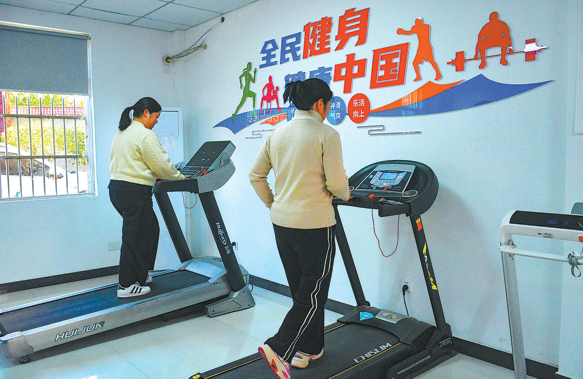
 China’s post-holiday retail trends point to a structural transformation in consumption. Rather than the traditional spikes in discretionary spending, the recent surge in smart wearables, nutritional supplements, and organic food reflects a broader shift toward preventative health and wellness — a trend economists say could reshape both the nation’s human capital and urban productivity.

 From Treatment to Prevention

 Analysts note that health-related consumption is no longer niche but mainstream and high-frequency, integrating products and services into continuous wellness management.

 Jiang Zhao highlights the transition: “People are investing not just in devices but in integrated, personalized health solutions. This represents the maturation of quality-driven consumption in China.”

 Shi Mingming adds that health consumption is a form of human capital investment. By prioritizing quality of life over reactive treatment, workers maintain better physical and mental health, boosting economic productivity.

 Industrial and Urban Impact

 The rise in health-focused demand is driving supply-side innovation:

 Agriculture: Growth in organic and additive-free foods is pushing smart and ecological farming.

 Manufacturing: Demand for advanced health devices encourages adoption of new materials and production processes, upgrading industrial chains.

 Urban development: Cities are designing “scene-based innovations” to integrate health into urban life. For example, Guangzhou and Shenzhen have leveraged indoor ski facilities to turn seasonal and regional resources into commercial opportunities, creating new urban economic poles.

 Li Dong emphasizes that preventative health investment reduces societal disease burden while enhancing urban human capital, making it a strategic economic lever.

 Technology and Digital Health

 Digitalization is bridging gaps in healthcare access:

 AI-assisted diagnostics and wearable monitoring devices are enabling top-tier medical services to reach remote regions.

 Remote health platforms democratize access while fostering new productivity in healthcare services.

 These innovations allow preventive care to scale beyond urban centers, creating nationwide market opportunities.

 Policy Support and Market Outlook

 China’s Healthy China 2030 strategy, alongside targeted action plans, is reinforcing the supply of high-quality health products and services. Per capita health spending reached 2,547 yuan ($368) in 2024, accounting for 9% of total per capita consumption, reflecting the sector’s growing economic weight.

 Analysts note that this trend is not a temporary retail spike but a strategic pillar of domestic demand. Preventative health consumption is driving industrial modernization, urban productivity, and high-quality economic development, while offering long-term investment opportunities in wellness, healthcare technology, and lifestyle sectors.

 As prevention, nutrition, and digital health become deeply embedded in daily life, China’s health economy is emerging as a sustainable engine for economic growth and industrial innovation, making it a key area for international investors seeking exposure to China’s evolving consumer market.

Article inline ad