Tuesday, November 24, 2026

Home Blog Page 42

Northeast China’s Jilin Targets Industrial Upgrade and Green Energy Growth

0

According to a report in China Daily on March 8th…

China’s northeastern province of Jilin Province is stepping up efforts to modernize its industrial base and expand renewable energy capacity as part of its strategy for economic revitalization during the 2026–2030 development period.

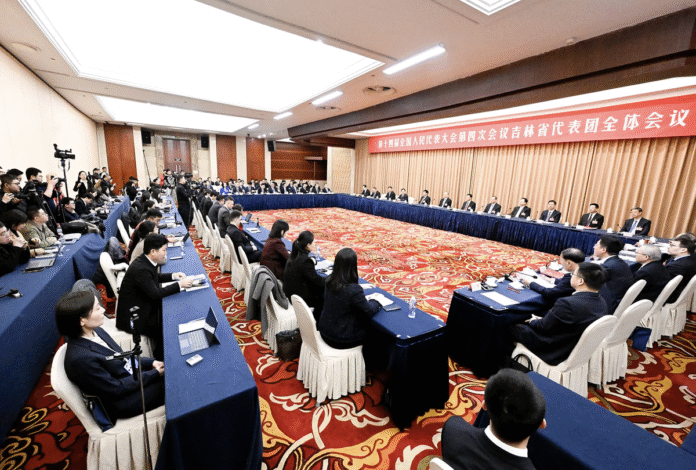
Provincial leaders outlined the plan during discussions at the annual session of the National People’s Congress in Beijing, highlighting industrial upgrading, infrastructure expansion and the development of new growth sectors as key priorities.

Huang Qiang, Party secretary of Jilin and a deputy to the NPC, said the province aims to build a modern industrial system tailored to its regional strengths. The strategy includes upgrading traditional sectors such as automotive manufacturing and petrochemicals while expanding emerging industries including new energy, advanced equipment, new materials and pharmaceuticals.

Authorities are also planning large-scale industrial clusters in future sectors such as artificial intelligence and bio-manufacturing.

Changchun Metropolitan Area as Growth Engine

A central component of Jilin’s development strategy is the expansion of the metropolitan area centered on Changchun.

The metropolitan region currently accounts for more than half of the province’s population and nearly 70 percent of its economic output. Officials view it as a strategic engine for Jilin’s economic transformation and a key driver of broader revitalization in Northeast China.

More than 700 infrastructure and development projects have been planned to strengthen transportation links, industrial cooperation and urban services across the metropolitan area. By 2030, local authorities aim to increase the region’s economic output to about 1.35 trillion yuan ($195 billion).

Infrastructure Expansion to Support Growth

To support long-term economic development, Jilin is investing heavily in transportation and logistics infrastructure.

Several high-speed rail projects are scheduled for completion in the coming years, including routes linking Changchun with nearby cities such as Siping and Liaoyuan. New highways and upgrades to regional airports are also planned to improve mobility and connectivity across the province.

The expansion of Changchun Longjia International Airport and the relocation of Yanji Chaoyangchuan International Airport are expected to enhance aviation capacity as travel demand continues to grow.

Renewable Energy and Ice-Snow Economy

Jilin is also leveraging its natural resources to accelerate growth in renewable energy and winter tourism.

According to provincial governor Hu Yuting, the province has substantial wind and solar resources with potential capacity reaching 400 million kilowatts. During China’s 14th Five-Year Plan period (2021–2025), newly installed wind and solar power capacity in Jilin more than doubled the total built over the previous decades.

By the end of 2025, renewable energy accounted for more than 65 percent of the province’s total installed power capacity and over half of electricity generation.

Winter tourism is another fast-growing sector. Jilin has 68 large-scale ski resorts, with several recognized as national ski tourism destinations. The province has ranked first nationwide for ski visitors for two consecutive years.

Officials are also promoting the development of a winter sports equipment industry, with domestically developed products including the Hongqi bobsled and carbon-fiber skis.

The region is preparing to host the 33rd Winter Universiade in 2027 in the cities of Changchun and Jilin, which authorities hope will further boost tourism and the local winter sports economy.

Agriculture Remains a Strategic Strength

In addition to industrial development, Jilin continues to play a critical role in China’s agricultural production.

The province is one of the country’s major grain-producing regions. During the 2021–2025 period, the government built more than 1.7 million hectares of high-standard farmland, significantly improving agricultural productivity.

In 2025, Jilin’s total grain output reached 43.58 billion kilograms, ranking fourth nationwide and reinforcing its position as a key pillar of China’s food security.

Article inline ad

China’s Ningxia Targets Advanced Manufacturing and Computing Power in Industrial Upgrade Drive

0

According to a report in China Daily on March 8th…

China’s Ningxia Hui Autonomous Region is accelerating efforts to develop competitive industries centered on advanced manufacturing, digital infrastructure and clean energy, as the northwestern region seeks to strengthen its role in the country’s modern industrial system.

Speaking during the annual sessions of the National People’s Congress in Beijing, Chen Chunping, vice-chairman of the regional government, said Ningxia plans to deepen industrial upgrading by focusing on six major industrial clusters and four strategic sectors.

The strategy aims to transform traditional industries through digitalization, environmental upgrades and technological innovation, while simultaneously expanding emerging sectors such as computing infrastructure, new materials and renewable energy.

Industrial Upgrading Remains Central

Although Ningxia’s economy has historically relied on energy and resource-based industries, local authorities are seeking to reposition these sectors through advanced technology and greener production methods.

According to Chen, the region’s economic growth and household income expansion have ranked among the top six nationwide for four consecutive years, driven largely by industrial restructuring.

One pillar of Ningxia’s economy is its modern chemicals sector, which has already exceeded 200 billion yuan ($27.8 billion) in output value. The region is also China’s largest producer of coal-to-liquids fuel and a major supplier of industrial materials such as spandex and aramid fiber.

Officials argue that traditional industries still have strong growth potential if they incorporate advanced technologies and meet higher environmental standards.

Wine Industry Expands Global Profile

Beyond heavy industry, Ningxia has also developed a rapidly growing wine sector.

The eastern foothills of the Helan Mountains are widely regarded as one of China’s most promising wine-growing regions, producing roughly half of the country’s domestically made wine.

Local authorities aim to integrate wine production with tourism and digital technologies, including artificial intelligence-based traceability systems designed to enhance product quality monitoring and brand recognition in global markets.

Emerging Sectors and Computing Infrastructure

Ningxia is also positioning itself as a strategic node in China’s expanding digital infrastructure network.

The region has been designated both a national internet exchange center and a computing-power hub, part of Beijing’s broader strategy to expand national data infrastructure and support artificial intelligence development.

According to regional officials, Ningxia currently hosts about 250,000 standard server racks and approximately 190,000 computing accelerator cards. Total computing capacity has already exceeded 130,000 petaflops, supported by 22 large and ultra-large data centers.

Under newly approved national plans, the region’s computing capacity could expand to 600,000 petaflops, supported by about 770,000 racks.

Clean Energy and Future Industries

Alongside digital infrastructure, Ningxia plans to accelerate development of clean energy, new materials and the digital economy.

Local policymakers are also exploring forward-looking sectors including bio-manufacturing and embodied artificial intelligence, which officials say could play a role in the region’s next phase of industrial development.

For China, regions such as Ningxia illustrate how inland provinces are attempting to reposition themselves in the country’s evolving industrial landscape — combining traditional energy and manufacturing strengths with emerging technologies and data infrastructure.

Article inline ad

China Signals: What Spring Festival Spending Reveals About China’s Consumer Economy

0

According to a report in China Daily on March 8th…

China’s record-long Spring Festival holiday has offered fresh insight into the evolving dynamics of the country’s consumer economy, with travel, experiential spending and technology-driven consumption emerging as key drivers of growth.

The nine-day Lunar New Year holiday — the longest on record — generated a surge in travel and retail activity across the country. According to China’s Ministry of Transport, cross-regional passenger trips reached more than 2.8 billion, an 8.2 percent increase year-on-year, highlighting the continued strength of domestic mobility and tourism demand.

For investors and market observers, the holiday spending data provides an important real-time indicator of China’s consumption momentum in 2026.

Tourism and Mobility Drive Service Consumption

One of the most notable trends during the holiday was the rapid expansion of service-sector spending.

China’s domestic tourism sector saw strong demand, with ski resorts in northern provinces attracting large numbers of visitors, reflecting the lasting influence of the 2022 Winter Olympics on winter sports participation.

Meanwhile, the southern island province of Hainan — a key pillar of China’s free trade port strategy — reported offshore duty-free sales of 2.72 billion yuan ($392 million), up 30.8 percent year-on-year.

The strong performance of duty-free retail suggests continued growth potential for China’s travel retail market, which policymakers hope will increasingly capture spending previously directed toward overseas luxury shopping.

Cross-Border Travel and Inbound Tourism Recover

Cross-border travel also accelerated during the holiday.

China’s National Immigration Administration reported average daily border crossings of 1.98 million during the holiday period, up 10.1 percent from a year earlier.

At the same time, the government expanded visa-free access to additional countries including Canada and the United Kingdom, bringing the total number of countries eligible for unilateral visa-free entry to 50.

China has also broadened its tax-refund retail network and improved digital payment access for foreign travelers, enabling overseas visitors to use mobile payment platforms such as WeChat Pay more easily.

These measures are part of Beijing’s broader effort to revive inbound tourism and strengthen China’s position as a global travel destination.

Technology-Driven Consumption Gains Momentum

Another key signal from the holiday spending data is the growing role of technology in shaping consumer demand.

AI-enabled household appliances — including robot vacuum cleaners with obstacle-recognition systems and smart climate-control air conditioners — ranked among the most popular consumer electronics purchases during the holiday period.

Retailer Suning.com reported that products featuring AI-based smart scenarios accounted for more than 50 percent of new-product sales during the holiday shopping season.

The trend reflects a broader shift in China’s consumer economy toward technology-integrated lifestyle products.

Consumption Upgrading Becomes Structural Trend

Economists note that China’s consumption model is undergoing a structural transition.

With the country’s per capita GDP approaching $14,000, spending patterns are increasingly shifting from basic goods toward higher-quality products, services and experiences.

Researchers at the State Information Center say emerging technologies, new retail formats and digital platforms are accelerating this transformation and unlocking further domestic demand.

For global investors, the Spring Festival data reinforces a key theme in China’s economic outlook: while export cycles and industrial production remain important, the country’s long-term growth trajectory is increasingly tied to the expansion and upgrading of its domestic consumer market.

Article inline ad

Spring Festival Consumption Boom Highlights Strength of China’s Domestic Demand

0

According to a report by China Daily on March 8…

China’s record-long Spring Festival holiday delivered a strong boost to travel, retail and technology-driven consumption, offering fresh evidence of the resilience of the country’s consumer economy.

From packed ski resorts in the northeast to booming duty-free shopping in the southern island province of Hainan, the nine-day Lunar New Year holiday — the longest on record — triggered a surge in travel and spending across the country.

According to data from China’s Ministry of Transport, cross-regional passenger traffic during the holiday climbed 8.2 percent year-on-year to exceed 2.8 billion trips, highlighting the vast scale of the country’s annual holiday migration.

Cross-border travel also gained momentum. During the first six days of the holiday, outbound travel spending rose sharply in several Asian destinations. Offline transactions via WeChat Pay in Malaysia and the Maldives increased by 131 percent and 186 percent respectively compared with the same period last year, according to platform data.

China has also stepped up efforts to attract foreign visitors. Beginning Feb 17, authorities expanded unilateral visa-free access to citizens from Canada and the United Kingdom, bringing the total number of eligible countries to 50. Officials have also expanded the network of tax-refund stores nationwide and improved digital payment services to make it easier for overseas travelers to shop in China.

These measures, combined with growing exposure on global social media platforms, have helped fuel rising interest among international tourists in experiencing China’s Lunar New Year celebrations.

At the Universal Beijing Resort, Dutch visitor Finn Grunbauer purchased holiday-themed souvenirs, describing the festive atmosphere as “something you want to bring home.”

China’s National Immigration Administration reported that average daily border crossings during the holiday reached 1.98 million, up 10.1 percent year-on-year.

Domestic tourism also showed strong momentum. Ski resorts in northern China saw a surge in visitors, reflecting the continued popularity of winter sports following the legacy of the 2022 Winter Olympics.

Meanwhile, China’s duty-free market recorded robust growth. The island province of Hainan — which is being developed as a free trade port — reported offshore duty-free sales of 2.72 billion yuan ($392 million) during the holiday period, representing a 30.8 percent year-on-year increase.

Beyond tourism and retail, the holiday also highlighted emerging consumption trends tied to technology and lifestyle upgrades. Transactions related to travel and lifestyle entertainment via WeChat Pay rose more than 20 percent compared with the same period last year.

Smart home appliances equipped with artificial intelligence features — including robotic vacuum cleaners and intelligent climate-control air conditioners — were among the most popular consumer electronics purchases during the holiday shopping season.

Retailer Suning.com said that products incorporating AI-driven features accounted for more than half of its new-product sales during the holiday period.

Economists say these trends reflect a broader structural shift in China’s consumption model. With the country’s per capita GDP approaching $14,000, consumer demand is increasingly shifting from volume expansion toward higher-quality and experience-based spending.

According to analysts at China’s State Information Center, new technologies, innovative retail formats and evolving lifestyle preferences are accelerating the transformation of China’s consumer economy and unlocking further growth potential in the domestic market.

Article inline ad

CIFTIS 2026 To Be Held Sept 9-13 At Beijing’s Shougang Park

0

By YANG CHENG | chinadaily.com.cn | Updated: 2026-03-06 

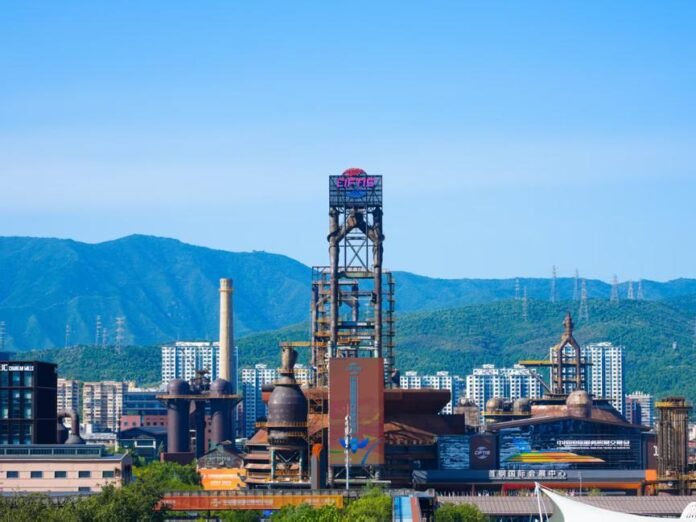
The 2026 China International Fair for Trade in Services (CIFTIS) will be held from Sept 9 to 13 at its permanent venue in western Beijing’s Shougang Park, which is developing into an integrated exhibition and cultural complex, according to Zhao Minge, chairman and Party secretary of Shougang Group and a deputy to the 14th National People’s Congress.

 The venue will feature a stronger integration of the surrounding mountain landscapes, waterways, and industrial heritage to create a distinctive setting for the global services trade event, Zhao said.

 Shougang Park, once a major steel production base in Beijing, has gradually transformed into a hub for culture, sports, and international exhibitions. The former ironworks site is emerging as a Shougang exhibition town, he said.

 Zhao Minge, chairman and Party secretary of Shougang Group and a deputy to the 14th National People’s Congress.

The town will be the home of CIFTIS and will incorporate a central axis structure with plazas and streets. The design connects the main axis nodes into a loop, forming distinctive industrial sectors within the town.

 By establishing a view linking the town with the waterway and combining a multi-tiered sightseeing system with service facilities, “we aim to achieve seamless connectivity and mutual enhancement between the waterfront space of the Yongding River and the urban environment,” he said.

 The revamped project will integrate modern conference and exhibition buildings with industrial relics, such as four blast furnaces, a coke oven, and a Shougang Group milling workshop. “This creates dynamic outdoor spaces for meetings and exchanges, emphasizing a human-centered approach. The unique industrial character is highlighted, focusing on the revitalization and adaptive reuse of industrial heritage to seamlessly blend with the fair’s venues, thereby enhancing the overall quality of the park,” Zhao said.

 In recent years, CIFTIS has helped boost international trade, deepen collaboration, and herald innovations in China.

 The number of participating countries and international organizations has remained consistently high in recent years, with 85 countries and international organizations setting up exhibitions and hosting events in 2024 and 2025. The number of those entities hosting on-site exhibits has steadily increased.

 During the 2025 session, the United Nations Conference on Trade and Development co-hosted a global services trade summit with the Ministry of Commerce and the Beijing Municipal Government.

 This year, nearly 20 forums and meetings will be organized by international organizations such as the World Trade Organization, reflecting increasing engagement.

Article inline ad

Deutsche Bank Launches Record Panda Bond in China’s Onshore Market

0

According to a China Daily report on March 6

Deutsche Bank AG has priced a 5.5 billion yuan ($796 million) multi-tranche panda bond in the China Interbank Bond Market (CIBM), marking the first panda bond issuance by a European financial institution in 2026 and the largest single issuance by a foreign bank to date.

The deal comes amid heightened volatility in global markets, with China’s onshore renminbi-denominated bond market providing a relatively stable financing environment. The transaction drew 8.66 billion yuan in total orders, with the three-year and five-year tranches oversubscribed by 1.55 times and 1.63 times, respectively.

Fiona Ip, APAC treasurer at Deutsche Bank, said investor enthusiasm reflects the growing sophistication of China’s onshore bond market, which the bank sees as an important component of its global funding and capital management strategy.

The investor base included commercial banks, asset managers, and overseas institutional investors, highlighting the increasing international appetite for RMB-denominated assets. Final coupon rates were set at 1.95 percent for the three-year tranche and 2.13 percent for the five-year tranche.

Rose Zhu, Deutsche Bank China chief country officer, added that the successful issuance underscores investor confidence in Deutsche Bank’s credit profile and long-term strategy, while also reflecting the attractiveness of the RMB bond market to a diversified set of global investors.

As a bridge between China and international markets, Deutsche Bank said it intends to leverage its global network to support clients and enhance Sino-European and Sino-German economic cooperation, taking advantage of China’s ongoing financial market liberalization.

Article inline ad

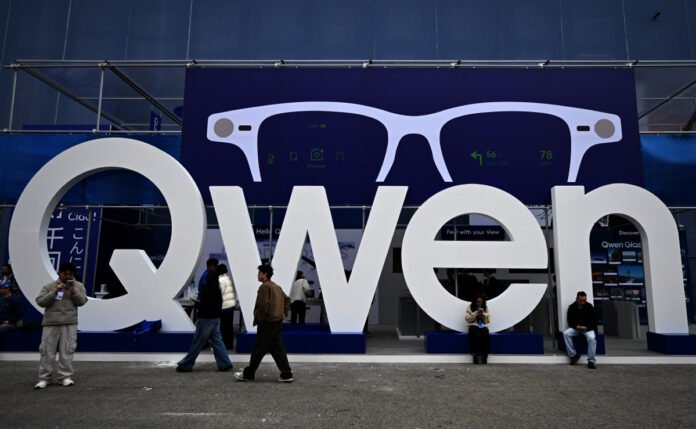
Alibaba Reorganizes Qwen LLM Team Amid Intensifying AI Competition

0

According to a report by China Daily on March 6…

Chinese tech giant Alibaba Group is stepping up investment and leadership focus on its Qwen large language model (LLM) following the departure of a key technical leader, as competition in China’s AI application market intensifies.

In an internal memo, CEO Eddie Wu confirmed that Alibaba Cloud CTO Zhou Jingren will continue leading the company’s Tongyi Lab, while a new foundation model support group will coordinate company-wide resources to advance large-model development.

“The Qwen model is a cornerstone of Alibaba’s long-term AI strategy,” the company said, emphasizing adherence to its open-source approach and continued investment in research and talent acquisition. Alibaba dismissed speculation that the recent departures were linked to commercialization pressure, noting that its foundation model team is not evaluated on metrics such as daily active users.

The personnel changes follow the resignation of Lin Junyang, a core developer of the Qwen3-Max model with more than 1 trillion parameters, and Yu Bowen, who led post-training work. Lin, one of Alibaba’s youngest P10-level technical leaders, has been instrumental in developing both large and smaller-scale Qwen3.5 models.

Intensifying Market Competition

Qwen faces stiff competition from other Chinese tech companies. Data from analytics firm QuestMobile show that during this year’s Spring Festival holiday, daily active users peaked at 145 million for ByteDance’s Doubao, 73.5 million for Qwen, and 40.5 million for Tencent’s Yuanbao.

To capture user attention, major players have launched aggressive campaigns: Tencent offered 1 billion yuan ($145 million) in digital red packets, Baidu invested 500 million yuan in AI-enhanced search applications, and Doubao partnered with the national Spring Festival Gala. Alibaba similarly rolled out a 3 billion yuan “Spring Festival Treat” program to integrate Qwen’s AI applications with consumer transactions.

Cao Lei, a member of the China Advertising Association, noted that the AI “red packet war” could mark a turning point in China’s digital ecosystem. “Much like mobile internet-era red packets reshaped payments, AI-era incentives could influence digital traffic distribution for the next decade,” Cao said.

Leadership Signals Commitment

Founder Jack Ma has made rare public appearances in recent weeks, visiting the Qwen project team and local schools in Hangzhou to underline the company’s strategic focus on AI and its societal implications.

“Education needs to respond swiftly to help children coexist with AI and adapt to this enormous transformation,” Ma told students during a school visit.

Article inline ad

China Unicom Highlights AI and 5G Capabilities at MWC 2026

0

According to a report by China Daily on March 6…

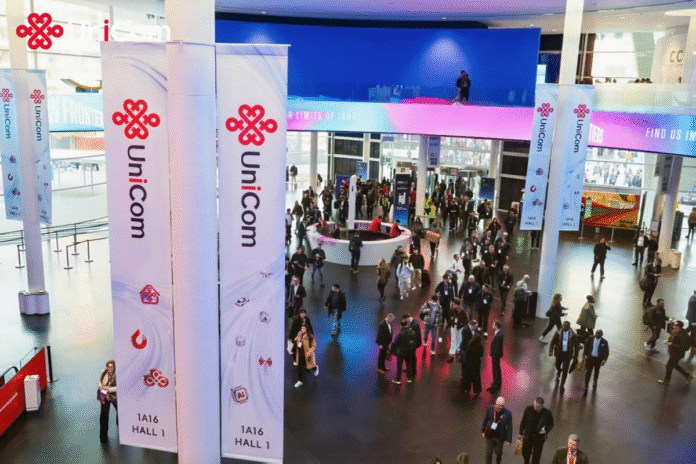
Chinese telecom operator China Unicom showcased a range of digital infrastructure and artificial intelligence solutions at the Mobile World Congress 2026 in Barcelona, highlighting how next-generation networks and computing platforms are being integrated to support industrial digitalization worldwide.

Under the theme “Co-creating an Intelligent Digital Ecosystem”, the company presented developments in computing-network integration, AI-driven applications and industry-specific digital solutions.

Building Global Digital Infrastructure

A central focus of the exhibition was the development of computing-network integrated infrastructure, which combines telecommunications networks with cloud and computing resources.

China Unicom said it has built an extensive international connectivity network, including participation in more than 60 submarine cable systems. The company noted that the combined length of these cables would be enough to circle the Earth 17 times, forming a key digital backbone linking Asia-Pacific, Europe and Africa.

On land, the company operates high-capacity data transmission networks that complement its undersea cables. Through partnerships with more than 200 global telecom operators, China Unicom has also established 16 overseas service nodes, providing global connectivity and digital services such as cloud communications and intelligent customer support.

The company is also integrating artificial intelligence into network operations to improve efficiency, reliability and security across its global infrastructure.

Expanding Industrial Applications of 5G

Another key theme was the integration of digital technologies with real-world industrial scenarios.

China Unicom demonstrated several 5G-powered industry applications, including smart manufacturing, intelligent logistics, smart mining, smart ports and digital healthcare systems.

One example presented at the exhibition involved global automotive production networks. The company said it is helping manufacturers build 5G-connected factories in Southeast Asia, enabling automated guided vehicles and AI-powered quality inspection systems to operate in highly flexible production environments.

At overseas ports such as Valencia in Spain, cloud-network platforms are used to support smart logistics and real-time inventory management.

Vehicles equipped with China Unicom’s connected-car SIM cards can maintain global connectivity after delivery, allowing for remote software updates and smart vehicle services.

AI Ecosystem and Digital Platforms

The telecom operator also introduced an ecosystem combining network infrastructure, cloud computing, artificial intelligence and smart terminals.

Among the technologies showcased were AI-powered digital assistants for marketing and sales, as well as an online platform that uses AI-based systems to generate product recommendations and manage order processing.

The company also presented its broader device ecosystem, including AI-enabled cloud phones, smart cameras and connected home solutions.

China Unicom said its technology supply chain platform currently supports over 150,000 enterprise customers and more than 30,000 distribution partners, with annual sales exceeding 40 billion yuan.

Digital Transformation and Global Collaboration

Executives at the event emphasized the importance of international cooperation in digital infrastructure and industrial transformation.

Feng Lanxiao, chairman and CEO of China Unicom Global Limited, said the company has been expanding its Internet-of-Vehicles services for global automakers.

The platform supports eSIM connectivity and international regulatory compliance, allowing car manufacturers to deploy connected vehicle services more quickly across overseas markets.

AI and Data Infrastructure for the Future

China Unicom also highlighted several initiatives aimed at building a global digital ecosystem, including the development of an international trusted data space designed to facilitate secure cross-border data flows.

The company said it will continue investing in cloud computing, AI infrastructure and integrated communications networks while expanding cooperation with global telecom operators and technology partners.

As telecom providers increasingly position themselves as providers of digital platforms and computing services, companies such as China Unicom are seeking a larger role in the global digital economy.

Article inline ad

China Plans Faster Capital Market Reforms to Support Innovation and Long-Term Investment

0

According to a report by China Daily on March 6…

China is set to accelerate reforms to its capital markets over the next five years as regulators seek to expand financing channels, attract long-term investment and better support emerging industries.

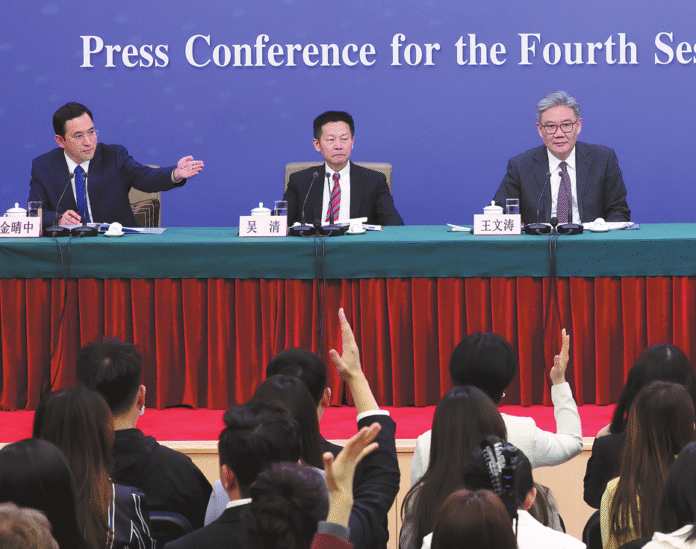
Speaking on the sidelines of the annual session of the National People’s Congress, Wu Qing, chairman of the China Securities Regulatory Commission, said the country will deepen and refine financial regulation while continuing to broaden the scale and quality of its capital markets during the 2026–2030 development cycle.

The reforms are designed to channel more capital toward what policymakers call “new quality productive forces”, including advanced manufacturing, high-technology industries and innovation-driven companies.

New Listing Rules to Support Emerging Industries

A key focus will be improving equity financing for innovative firms.

Regulators plan to introduce a new set of listing standards on ChiNext in Shenzhen, a Nasdaq-style board that focuses on growth companies. The changes are expected to make it easier for businesses in emerging sectors, new consumer industries and modern services to access capital markets.

Some regulatory innovations already implemented on Shanghai’s STAR Market — China’s technology-focused stock board — may also be replicated on ChiNext.

These include a pre-review mechanism for initial public offerings and allowing companies undergoing IPO reviews to raise funds from existing shareholders.

Broader Financing Channels

Beyond equity markets, China also plans to further develop bond markets, real estate investment trusts and asset securitization products, creating a wider range of financing tools for companies.

Authorities say the goal is to strengthen direct financing and reduce reliance on traditional bank lending, while providing investors with more diversified financial products.

During the past five years, equity and bond financing across China’s major exchanges totaled 64 trillion yuan ($9.3 trillion), reflecting the rapid expansion of the country’s capital markets.

Stronger Oversight and Market Stability

At the same time, regulators are seeking to strengthen oversight of new trading activities and financial products.

Wu said supervision of high-frequency quantitative trading will be further refined, while new regulatory frameworks for derivatives trading are also under development.

The authorities also plan to encourage greater participation from long-term institutional investors, including mutual funds, pension funds and insurance companies, in order to enhance market stability.

Global Investors Show Growing Interest

China’s capital markets have grown significantly over the past decade.

The total market capitalization of the country’s A-share market now exceeds 110 trillion yuan, while more than 5,400 listed companies together generate annual revenues equivalent to more than half of China’s GDP.

Strategic emerging industries now account for about 45 percent of the companies in the benchmark CSI 300 Index, highlighting the growing role of technology-driven sectors.

Against this backdrop, Chinese regulators say they will continue to facilitate cross-border investment and financing, allowing both domestic and international investors to participate more fully in the country’s financial markets.

For global investors seeking diversification, the expanding scale and evolving structure of China’s capital markets are increasingly becoming an important part of global asset allocation.

Article inline ad

China Seeks More Balanced Trade to Strengthen Economic Resilience

0

According to a report in China Daily on March 6

China is aiming to rebalance its foreign trade this year by expanding imports while maintaining stable exports, a strategy that officials say will help strengthen economic resilience and deepen integration with global markets.

Speaking on the sidelines of the annual session of the National People’s Congress in Beijing, Commerce Minister Wang Wentao said China plans to make greater use of its vast domestic market by increasing imports of agricultural goods, premium consumer products, advanced technology equipment and key industrial components.

The approach reflects Beijing’s broader effort to position its domestic market as a driver of global demand while supporting its own economic transition toward consumption-led growth.

China’s Market Becoming a Global Demand Center

As the world’s second-largest import market, China continues to offer significant growth opportunities for global exporters, supported by the rapid expansion of its middle-income population.

According to official data, China’s imports reached 18.48 trillion yuan ($2.68 trillion) in 2025, accounting for roughly 10 percent of global imports.

Robert Koopman, former chief economist of the World Trade Organization, said China’s role in the global economy may gradually evolve over the coming decade.

“One important shift will be China becoming a major center of demand for the rest of the world,” he noted.

To facilitate that shift, China launched the “Big Market for All: Export to China” campaign last year, an initiative designed to help international suppliers expand their presence in the Chinese market and bring more high-quality goods and services to Chinese consumers.

Consumption Growth Drives Import Expansion

Economists say the strategy aligns closely with China’s broader push to strengthen domestic consumption as a key engine of economic growth.

As Chinese households seek more diverse products and services, foreign companies are increasingly well positioned to benefit from rising demand.

Marshall Mills, senior resident representative of the International Monetary Fund in China, said the country’s shift toward consumption-led growth could also have wider global implications.

A stronger consumer-driven economy would likely reduce China’s large trade and current-account surpluses over time, helping narrow global trade imbalances and support more sustainable global growth.

Foreign Companies See Expanding Opportunities

Multinational firms continue to view China’s large and evolving market as a major opportunity.

Zhang Ying, managing director of Dassault Systemes Greater China, said the country’s innovation ecosystem and market scale offer significant potential for global businesses.

The French technology company plans to deepen its presence in sectors such as new energy vehicles, smart manufacturing and the emerging low-altitude economy, areas where China is investing heavily.

Stabilizing Exports Amid Global Uncertainty

While expanding imports, Chinese policymakers also emphasize the need to maintain stable export growth amid a challenging global environment.

Wang said China will promote the development of digital trade and green trade, while encouraging exports of artificial intelligence products and renewable energy equipment to create new drivers of foreign trade.

At the same time, China plans to accelerate negotiations on additional free trade agreements in order to expand its network of trading partners.

Despite geopolitical tensions and declining shipments to the United States, China’s exports still grew 6.1 percent year-on-year in 2025, underscoring the resilience of its manufacturing sector and diversified export markets.

Article inline ad