Saturday, November 28, 2026

Home Blog Page 496

China Conducts Remote Sensing Experiments In Luanhe River Basin

0

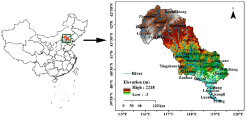
BEIJING, Aug. 2 (Xinhua) — Chinese research teams have carried out multi-scale remote sensing joint experiments in north China’s Luanhe River basin to achieve three-dimensional quantitative inversion of key ecological parameters such as soil and vegetation, according to the National Space Science Center (NSSC) under the Chinese Academy of Sciences. Lei Yang, head of the joint experiments and a researcher at the NSSC, explained that soil and vegetation are essential components of terrestrial ecosystems, and that the physical and chemical properties of soil vary significantly with depths while the three-dimensional structure of vegetation is particularly intricate. “The three-dimensional distribution features of soil and vegetation are crucial for ecological processes such as water and carbon cycles,” Lei added. Shi Jiancheng, a researcher at the NSSC, said the goal of the joint experiments is to overcome the limitations of traditional remote sensing, which typically operates in two dimensions. Shi added that the experiments will offer new methods and data support for observing and understanding the material and energy cycling processes in complex ecosystems. “These joint experiments will provide essential research data for three-dimensional remote sensing modeling of layered soils and complex vegetation, precise inversion of soil physical and chemical properties, and coordinated inversion of soil temperature and moisture,” said Lei. Lei also noted that it will offer practical examples for developing advanced three-dimensional ecological sensing satellite monitoring products.


Article inline ad

China Focus: Green Transformation Of Resource-Dependent City In East China

0

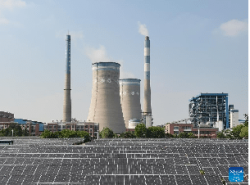
NANJING, Aug. 2 (Xinhua) — The city of Xuzhou in east China’s Jiangsu Province has historically been an industrial city, serving as a prominent supplier of coal to the Yangtze River Delta region. However, the coal mining activities in Xuzhou caused severe air pollution due to coal ash and dust. Locals even joked that if a sparrow flew through Xuzhou, it would turn into a crow. Coal resources later became depleted, resulting in Xuzhou’s economy losing much of its vitality. Many young people left the city to seek employment opportunities elsewhere, while those who stayed had to face the consequences of a damaged environment. Mining activities caused land subsidence in Xuzhou, rendering approximately 423,300 mu (about 28,220 hectares) of land unsuitable for farming. During the rainy season, people once used trenches caused by land subsidence to raise fish and shrimp. In recent years, Xuzhou has focused on green development and made significant progress in transforming and upgrading its traditional industries. This includes reducing energy consumption and eliminating polluting chemical enterprises, resulting in a cumulative decrease of 34.5 percent in energy consumption per unit of its GDP. Jiawang District, in particular, has implemented more than 80 projects to address land subsidence. The most severely affected area has now been transformed into Pan’an Lake National Wetland Park. This park boasts about 160,000 plants of various species. The improved ecological environment has attracted numerous bird species, including the endangered reed parrotbill, to the wetland. Industrial waste disposal, especially hazardous waste, when not properly managed, can further damage the ecological environment. Therefore, Xuzhou has been developing the circular economy and other green industries to meet its environmental protection needs, while also fostering new economic growth drivers. At the Xuzhou Lyu’yuan Zhongtian solid waste disposal company, a high-temperature rotary kiln can effectively treat and remove hazardous waste, with certain components being reused. The company is also exploring opportunities in the recycling business within the new energy vehicle industry. The technologies used in processing waste lithium battery electrolyte help prevent equipment corrosion caused by fluorine electrolyte burning, said Chen Nian, a senior technician of the company. Currently, Xuzhou is constructing a key project — the circular economy industrial park, with the aim of becoming a “zero-waste city” and having an annual waste treatment capacity of 1 million tonnes. The park is equipped with garbage sorting machines that can quickly identify recyclable plastic bottles, while converting food waste into feed within minutes. Meanwhile, the city is also actively exploring green energy solutions, venturing into new sectors such as the big data industry. Jiangsu Huamei thermoelectricity company, a subsidiary of Xuzhou Coal Mining Group, has built a demonstration zone for the photovoltaic industry on the former site of a coal mine. This demonstration zone showcases various applications of photovoltaic products, such as using tempered glass to create a protective glass wall for the water corridor and embedding photovoltaic panels in floor tiles to generate electricity for nighttime lighting. The photovoltaic roof in its parking lot allows employees to charge their vehicles during one working day, which is enough to meet their commuting needs for an entire week. “We utilize combined heat and power technology to capture waste heat from power generation and convert it into hot water or steam. This energy is then transported to residential areas during winter through a heat pipe network, providing heating services to approximately 1.5 million residents,” said Zheng Hong, the company’s general manager. Furthermore, the company converts high-temperature steam from the power plant into energy through a refrigerating unit, which is used to cool the server room. This has persuaded numerous science and technology companies as well as local government departments to establish data centers in the area. The determination and success of Xuzhou combine to provide valuable experience and serve as an example for China as a whole, with the country committed to the dual carbon goals of peaking carbon emissions by 2030 and achieving carbon neutrality by 2060.

Article inline ad

Ship Export Revenue Growth In China’s Jiangsu Robust In H1

0

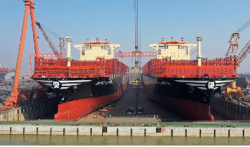
NANJING, Aug. 2 (Xinhua) — Ship export revenue in east China’s Jiangsu Province totaled 50.02 billion yuan (6.9 billion U.S. dollars) in the first half (H1) of 2024, an increase of 72.1 percent year on year and ranking top in China, according to local customs authorities on Thursday. The value of the province’s ship exports accounted for 34.1 percent of the country’s total in the same period, according to Nanjing Customs. Jiangsu has established a ship-building industry cluster, manufacturing a wide range of vessels, such as high-end cruise liners, cargo ships, “ro-ro” (roll-on/roll-off) ships, liquefied natural gas (LNG) transporting vessels, and self-elevating wind turbine installation vessels. Customs data shows that in the first half of the year, the province’s exports of container ships, liquified cargo ships and bulk carriers had increased by 153 percent, 77 percent and 32.3 percent, respectively. Song Shuming, general manager of Jiangsu Yangzi-Mitsui Shipbuilding Co., Ltd., said the company will build and deliver 15 ships this year, a record high in the company’s history. The Jiangsu New Yangzi Shipbuilding Co., Ltd., a subsidiary of Yangzijiang Shipbuilding Group, delivered 20 new ships in the first half of 2024 — resulting in export value doubling year on year. Wang Yi, the company’s director of customs affairs, said that the company has nearly 100 orders in hand, with production plans scheduled through the year 2028. Nanjing Customs has vowed to continue to improve customs clearing efficiency to help boost ship exports.

Article inline ad

Economic Watch: Clear-Cut Policy Toolkit To Steer Chinese Economy Ahead

0

BEIJING, Aug. 2 (Xinhua) — The Chinese economy maintained stable expansion in the first half (H1) of 2024 and the country is ramping up efforts to sustain steady growth in the second half (H2) with a targeted policy mix. Macroeconomic policies should be more effective. Counter-cyclical adjustments should be strengthened, multiple monetary policy tools should be fully utilized, and financial support for the real economy should be reinforced, according to Tuesday’s tone-setting meeting of the Political Bureau of the Communist Party of China Central Committee on priorities for H2. The meeting has sent a clear signal of increasing macro-control efforts, said Zeng Gang, deputy director of the National Institution for Finance & Development, adding that it will help stabilize market expectations, strengthen social confidence and ensure the goals for this year’s economic and social development are accomplished. CONSUMPTION A PRIORITY Policymakers underlined the role of consumption in the meeting, as fully tapping China’s supersized market and boosting domestic demand remain key to propping up growth. The meeting said domestic demand should be expanded with a focus on boosting consumption, and economic policies should center on improving people’s livelihoods and promoting consumption. It highlighted service consumption in the expansion and upgrading of consumption. China’s GDP grew 5 percent year on year in H1. Driven by policy incentives, consumption played a major role in promoting growth in H1, with final consumption contributing 60.5 percent of the economic expansion, or 3 percentage points to GDP growth. However, Guo Liyan, a researcher with the Chinese Academy of Macroeconomic Research, said the foundation for the full recovery of the consumer market still needs to be consolidated, and people’s spending power needs to be further improved. Guo noted that the consumption measures highlighted in the meeting are very targeted at helping residents increase their income and further tap the potential of consumption. PROACTIVE FISCAL POLICY On the fiscal front, China has adopted a slew of proactive fiscal policies in H1, including the issuance of ultra-long special treasury bonds, to strengthen counter-cyclical adjustments and bolster the real economy. For H2, the meeting emphasized the need to accelerate the issuance and usage of special bonds and promote large-scale equipment upgrades and trade-ins of bulk durable consumer goods. Yao Dongmin, a professor at the Central University of Finance and Economics, believes that the meeting signaled a more proactive fiscal policy. Yao said policy tools such as special bonds and ultra-long special treasury bonds are conducive to better solving the problem of insufficient effective demand at present. The Ministry of Finance announced Wednesday that China would enhance fiscal support for sectors related to people’s well-being and ensure the implementation of fiscal and tax policies in areas such as employment, education, elderly care and health care. PRUDENT MONETARY POLICY Chinese authorities stepped up monetary support in H1 to shore up the economy, leveraging interest rates, re-financing, and other monetary tools to ensure sufficient liquidity, reduce social financing costs and stabilize market expectations. The meeting on Tuesday reiterated that China should fully use multiple monetary policy tools in H2, strengthen financial support for the real economy, and enhance the consistency of its macro policy orientation. “While directing more financial resources to major strategies, key areas and weak links, interest rate and exchange rate tools will further play a key role in allocating resources and create a sound monetary and financial environment for sustained economic recovery,” said Zeng Gang. FOSTERING EMERGING INDUSTRIES Tuesday’s meeting called for efforts to foster new quality productive forces in light of local conditions and strong, effective support for gazelle companies and unicorn firms. “Currently, the comparative advantage of China’s manufacturing industry has changed from a cost-competitive advantage to an innovation advantage,” said Deng Zhou, a researcher with the Chinese Academy of Social Sciences. Deng noted that cultivating and expanding emerging and future industries will help build new advantages in China’s industrial development and improve the international competitiveness of domestic industry. Deng explained that gazelle enterprises and unicorn firms have become important driving forces for the transformation and upgrading of China’s manufacturing industry and the development of new high-quality productive forces. Deng suggested more efforts to create a fairer and more dynamic market environment and promote more small and medium-sized enterprises to grow into gazelle enterprises and unicorn firms. UNWAVERING OPENING-UP Prioritized measures aimed at opening the Chinese market wider to the outside world were also stressed in the meeting as opening up is a defining feature of Chinese modernization. The meeting urged work to expand China’s institutional opening up. A new round of trial measures was rolled out to further open up the country’s service industry. Trade in intermediate goods and green trade should also be expanded. Chen Hongna, an associate researcher at the Development Research Center of the State Council, said it is necessary to accelerate the negotiation process of multilateral trade agreements, encourage the innovation and development of new business models such as cross-border e-commerce and market purchase trade, and accelerate the cultivation of new momentum and new advantages in foreign trade. The Ministry of Commerce has recently pledged steps to increase new growth drivers for foreign trade, including trade in intermediate goods and green trade, fully apply the negative list for cross-border trade in services, and promote the development of integrated pilot zones for cross-border e-commerce. In the sphere of foreign investment, China will appropriately shorten the negative list for foreign investment and promote wider opening with regard to telecommunications, the internet, education, culture, medical services and other sectors in a well-conceived way, according to the ministry.

Article inline ad

Interview: Xinjiang’s Development Testifies To China’s Success Story, Says Veteran Turkish Journalist

0

ANKARA, Aug. 1 (Xinhua) — Northwestern China’s Xinjiang Uygur Autonomous Region has witnessed “impressive” development with the eradication of poverty for all of its inhabitants, a veteran Turkish journalist has said. “Xinjiang is a success story of Chinese socialism. Poverty there has been eradicated,” Hasan Bogun, who visited the region in 2023, told Xinhua in a recent interview. “It was once one of the poorest regions of China maybe a couple of decades before, but now there is no poverty anymore, it does not exist anymore,” said Bogun, who has been working as a journalist since 1983. As a member of a journalist delegation, Bogun visited several cities in Xinjiang, including Urumqi, Turpan and Kashgar. He said the media delegation visited various facilities in Urumqi, capital of Xinjiang, a very modern and developed city. “The infrastructure is very developed, the health system is also very developed and reaches all villages,” Bogun said. “This is not as it is presented by some Western media outlets, with people allegedly being oppressed there. There are no tensions in Xinjiang. I was expecting a more remote and underdeveloped region, it is certainly not like that,” Bogun added. When noting that the Chinese government pays great attention to delivering the benefits of development to the local residents, Bogun said that all-inclusive projects in health, social security and infrastructure have transformed Xinjiang into a modern, bustling region. In multi-ethnic communities around the world, ethnic issues have often arisen, and this is also true in some Western countries, the journalist observed. “Development is seen as the solution to ethnic issues” by China in Xinjiang, and the Uygur people of Xinjiang are enjoying their lives freely while preserving their own unique culture, Bogun said. There are many different ethnic groups in Xinjiang and “cultural differences are a good thing,” he said, adding that “China is promoting these differences and does not try to eradicate them.”

Article inline ad

Chinese Vehicle Tops Car Sales In Spain In July

0

MADRID, Aug. 1 (Xinhua) — The petrol-powered MG ZS, manufactured by MG Motor, a brand of China’s automaker SAIC Motor, topped car sales in Spain in July, according to data published by Spanish automotive industry on Thursday. Throughout the month, a total of 2,619 units of the MG ZS were sold, representing a market share of 8.69 percent, according to the Spanish Association of Car Manufacturers (ANFAC), the Association of Dealers of the Automotive sector (FACONAUTO) and the Association of Car Dealers (GANVAM). The electric model of the same Chinese brand, the MG4, was the second best-selling of its kind in Spain, with 303 units sold, representing a market share of 7.92 percent, with sales growing almost six percent since last year. The increase comes despite a 4-percent decline in Spain’s electrified car market last month, according to the data. In the petrol vehicle sector, the Chinese Chery Automobile model Omoda 5 has become the seventh best-selling car of its kind in less than a year since its debut in the Spanish market. The model accounted for 1,015 sales and “once again, the vast majority of them (81 percent) have been destined for the private channel,” the company said in a statement sent to Xinhua. In July, the Spanish passenger car market increased by 3.4 percent, with a total of 83,979 units sold, confirming the upward trend of recent months. But sales are still below the 100,000 units, a figure last reached in July 2019, before the start of the COVID-19 pandemic. The industry suffered a four-percent decline in the market for electrified cars in July, with 8,242 units sold. The market share of electric and plug-in hybrids equally fell to 9.8 percent of the overall market. Electrified and plug-in electric vehicles are still not taking off in Spain, with their share stagnating at around 10 percent of registrations, said FACONAUTO’s director of communications, Raul Morales. Jose Lopez-Tafall, director general of ANFAC, pointed out that “we are still at a lower figure than we should be registering and that puts us a long way from the 20 percent average that is registered in Europe.” He said that the development of Spain’s public access charging network and fiscal incentives for purchasing electric cars, both for companies and individuals, are still necessary to encourage the growth of the electric vehicle sector.

Article inline ad

Across China: China’s AS700 Manned Airship Completes Low-Altitude Demo Flight

0

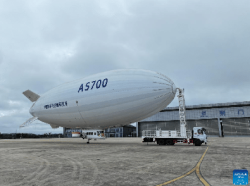
WUHAN, Aug. 2 (Xinhua) — Low-altitude tourism in China is embracing a new mode as the country’s homegrown AS700 civil manned airship on Thursday successfully made its first demonstration flight. On Thursday morning, the AS700 airship took off from Zhanghe Airport in Jingmen, central China’s Hubei Province, to show its performance and capabilities in serving low-altitude tourism, according to the Aviation Industry Corporation of China (AVIC). This demonstration flight lasted nearly two hours, simulating low-altitude tourism application scenarios via a planned route. The airship flew over local parks, an island in the river and other popular scenic spots across the city and then safely returned. It flew at a cruising speed of 60 kilometers per hour and an altitude of 500 meters during the flight, said the AVIC. In the low-altitude skies, passengers aboard the AS700 can enjoy aerial views through the large panoramic side windows. With its moderate speed and an ideal altitude for low-altitude sightseeing, the airship will provide tourists with an experience similar to “floating on clouds” during the stable and safe flight journey, the developer said. Developed by AVIC Special Vehicle Research Institute, AS700 is a type of single-capsule manned airship, which has a maximum capacity carrying 10 people, including a pilot. It has a maximum take-off weight of 4,150 kg, a maximum flight range of 700 km, and a maximum endurance of 10 hours, according to the AVIC. AS700 is a type of non-rigid near-equilibrium airship. It can conduct vertical take-off and landing in a narrow field, and it is more mobile and flexible than other types of airships, said the AVIC. The airship is capable of various applications, such as aerial tours, emergency rescue, urban security, and aerial geophysical surveys. Last December, the AS700 obtained the type certificate from the Civil Aviation Administration of China (CAAC). China has a huge market and dense city clusters. The size of the country’s low-altitude economy is estimated to have exceeded 500 billion yuan (70.1 billion U.S. dollars) in 2023, with its scale expected to rise to 2 trillion yuan by 2030, according to the CAAC. The AVIC Special Vehicle Research Institute has already signed the delivery contract for the first AS700 airship, and signed multiple contracts of intent. The AVIC disclosed that the institute is joining efforts with local governments to explore pilot applications of low-altitude scenarios of airships, and plans to build the country’s first low-altitude airship tourism demonstration route. The AVIC said AS700 manned airships could also be used in the fields of logistics and intelligent surveying and mapping.

Article inline ad

Economic Watch: Chinese Brands, Products Shine At Paris Olympics

0

BEIJING, Aug. 2 (Xinhua) — While absent from the arenas of the ongoing Paris Olympics, Chinese merchants are flexing their muscles on other stages, contributing to the event’s sporty, joyful and inclusive ambiance. Made-in-China products, renowned for their superior quality at reasonable prices, have once again made their mark during the Games. According to data released by the Paris 2024 Organizing Committee, 80 percent of the Phryges, the mascots of the Games, are manufactured in China. Chinese manufacturers are also dominating the market for sports derivatives such as binoculars, cheering sticks and fan scarves. “Many of my friends selling cheering sticks have received bulk orders for the Paris Olympics. Most of the orders were delivered to overseas markets last month,” said Chen Shaomei, a merchant from the eastern Chinese city of Yiwu, also dubbed “the world’s supermarket.” The high quality of made-in-China products also received an unexpected endorsement from a veteran Western reporter covering the Games. The reporter, who still uses a backpack for media professionals from the 2008 Beijing Olympics, praised the durability and functionality of the product. His remarks have led to soaring e-commerce sales for the Chinese producer’s related products. The Summer Olympics also saw fresh attempts by several Chinese brands and cities to offer the world a taste of the diverse and profound Chinese culture. Last month, HEYTEA, a leading brand of Chinese new-style tea, made its Paris debut with a pop-up store designed as a traditional tea house. The store worked to promote Chinese tea culture through innovative tea beverages. China’s trendy toy maker Pop Mart opened an outlet by the iconic Louvre Museum to share a creative blend of art and fun. “The Olympics is a good platform to show ourselves to the world,” said Gu Yujia, vice president of strategy with HEYTEA. “The sales are good and the consumers really like us.” Chinese local governments are also intensifying their city-branding efforts this year, which marks the 60th anniversary of the establishment of diplomatic relations between China and France, as well as the China-France Year of Culture and Tourism. Guizhou, a scenic province in southwest China that gained attention in the sports world with thrilling football games played by villagers, launched a captivating photo exhibition at some metro stations in Paris. “Walking in Paris, one can run into China countless times,” the country’s tourism office in Paris said on its WeChat account.

Article inline ad

Roundup: Experts See Potential For Growth In Italy-China Trade

0

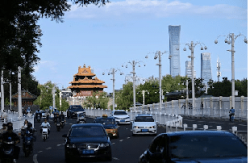
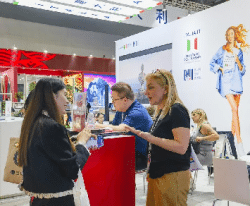
ROME, Aug. 1 (Xinhua) — Italy’s relations with China are of high priority for the country and their trade ties have the potential to grow, several experts told Xinhua after Prime Minister Giorgia Meloni’s recent visit to China. During her official visit to Beijing from July 27 to 31, Meloni said Italy hopes to strengthen dialogue with China, tap the potential and deepen bilateral cooperation in such fields as trade, investment, electric vehicles, and artificial intelligence, strengthen people-to-people exchanges, and encourage more Italian products to enter the Chinese market. Alberto Antonucci, an independent consultant and professor of business strategy at Italy’s H-Farm College, told Xinhua that the two countries can complement each other in the green economy. “Italy wants to make a green transition and China undoubtedly has a great advantage on electric vehicles and batteries,” he said. “If Italy really wants to lead in this area, it either has to strike a partnership with an existing industrial infrastructure in China, or it needs to postpone its plans for the next five or six years,” he added. Mario Boselli, chairman of the Italy China Council Foundation, noted that Italy and China remain important trade partners and there is potential for their trade ties to grow even more. “There is no doubt that strengthening ties with China is a high priority for the Italian government,” he said. According to the expert, the future could witness future deals in the electric and hybrid vehicle markets. “Meloni is seeking an electric carmaker to build a facility in Italy, that would boost the country’s industrial base while giving the Chinese company easy access to the European Union markets,” Boselli said. Noting that Italy and China have “a unique connection,” Silvia Menegazzi, a professor for international relations at the Department of Political Science at Rome’s LUISS University, said Italy has had its ties with China over many years, as this visit has shown. Meloni’s visit coincides with the 700th anniversary of Marco Polo’s death and the 20th anniversary of the comprehensive strategic partnership between Italy and China. During her stay in Beijing, she attended the inauguration of an exhibition featuring the Venetian merchant’s journeys between the East and the West. During her first visit to China since taking office, Italy signed multiple agreements with China. The two sides also issued a 2024-2027 action plan to strengthen their comprehensive strategic partnership. Menegazzi, also a founding partner of the Center for Studies of Contemporary China, told Xinhua that the latest trip would lay the foundation for some important initiatives between the two countries in the future.

Article inline ad

China Vows Zero Restrictions On Foreign Investment In Manufacturing

0

BEIJING, Aug. 2 (Xinhua) — A Chinese official said on Friday that there will be no restrictions on foreign investment in the manufacturing sector, as part of efforts to further expand the country’s opening up. Zhu Bing, an official of the Ministry of Commerce, told a press conference that China will take additional steps to relax market access and enhance the business environment for foreign enterprises. Specifically, the country will expand the catalog of industries that encourage foreign investment, and promote orderly opening up in the fields of telecom, internet, education, culture, and medical care. Revised rules will be published to further support long-term foreign investment in the capital market, according to the official. Zhu noted that the country remains attractive to foreign investment, highlighting the unchanged advantages of the Chinese economy, including its strong fundamentals, vast market, high-quality industrial supplies, and a pool of exceptional talent. Foreign investment in China, in actual use, reached nearly 500 billion yuan (about 70 billion U.S. dollars) in the first half of the year, a relatively high level over the past decade. Meanwhile, the number of newly registered foreign-funded companies in the country increased by 14.2 percent year on year to nearly 27,000.

Article inline ad