


BEIJING, Aug. 2 (Xinhua) — China will strive to ensure its network of free trade areas (FTAs) can contribute about 40 percent of the total foreign trade by 2030, an official said Friday. Li Yongjie, deputy international trade representative of the Ministry of Commerce, told a press conference that China will further expand its globally-oriented network of high-standard FTAs to cover more countries and regions while fostering broader opening up and deeper reforms. China has so far signed 22 free trade agreements with 29 countries and regions, accounting for a third of its foreign trade. Li pledged to work toward joining the Comprehensive and Progressive Agreement for Trans-Pacific Partnership (CPTPP), conclude negotiations on Version 3.0 of the China-ASEAN FTA at the earliest, and promote the FTA among China, Japan, the Republic of Korea, and others. When establishing new FTAs, China will expand the tariff-free product list, further open the telecom, medical care and tourism sectors, and include rules involving the digital economy, the green economy, intellectual property rights, and mutual recognition of standards, Li said. To align with high-standard international economic and trade rules, the country will advance reforms in property rights protection, industrial subsidies, environmental protection, labor protection, government procurement, e-commerce, the financial sector, and other areas, she added.
Across China: World’s Largest Guitar Production Hub Strikes The Right Chord

GUIYANG, Aug. 2 (Xinhua) — If you own a guitar, there’s a good chance it was crafted in Zheng’an, a small county tucked away in the mountains of southwest China. Located in Guizhou Province, Zheng’an is the world’s largest guitar producer, creating over 2.25 million instruments annually. One out of every seven guitars worldwide is made here. But this was not the case over a decade ago. At one point, a third of all locals had left home to seek employment opportunities elsewhere as they struggled with poor transportation infrastructure and barren land. STRIKING THE RIGHT CHORD In 1997, Zheng Chuanjiu from Zheng’an became a migrant worker at a guitar factory in Guangzhou, south China’s Guangdong Province. “I worked my way up from ordinary worker to manager,” Zheng said. With his savings, he founded a guitar company in Guangzhou in 2007. Zheng’an’s guitar manufacturing journey began in 2012, following a directive from China’s State Council that encouraged Guizhou Province to develop its industries. A survey by the county revealed that up to 54,000 Zheng’an natives were already employed in the guitar manufacturing industry in places like Guangzhou. The county government decided to leverage the skills and experience of these workers to build a guitar industry where none had existed before. Zheng became the first Zheng’an guitar maker to return home and relocate his factory to the Zheng’an guitar cultural industrial park. Today, the park is home to over 130 guitar companies and supporting enterprises. “The local government offered a comprehensive support package for returning guitar artisans starting new businesses,” Zheng said. “The thriving local guitar industry can be credited to the hard work of our artisans,” said Huang Dong, the county chief. “Their skills and capital have ignited the clustered development of the entire sector.” Experts view the industrial cluster as an important means to enhance China’s micro-economic competitiveness and the growth of the private sector. Indeed, a growing number of small cities and towns in China are well-positioned to benefit from characteristic industries ranging from guitars to wigs and cakes. The mountainous town of Shuijiang in east China’s Jiangxi Province is home to 93 wig enterprises that sell their products to dozens of countries across the globe. In Jiangxi’s Zixi County, nearly half of the 100,000 permanent residents are engaged in the baking industry, giving rise to over 60 bakery brands that collectively have stores in more than 1,000 cities and towns across China. NEW TUNES Statistics indicate that the annual global demand for guitars ranges between 20 million and 30 million instruments. And as guitar cultural industrial parks emerge across the country, market competition is becoming increasingly fierce. This presents a significant challenge for Zheng’an, which must find ways to maintain its competitive edge while navigating a saturated market. Initially, local guitar makers and their companies engaged primarily in original equipment manufacturer (OEM) production, which, as Zheng put it, “lacks independent technologies and would prevent us from building advantages and competitiveness in sales.” It was not long before Zheng’an’s guitar industry began making changes. As traditional guitar manufacturing relies heavily on imported wood, including cedar and rosewood, local company Natasha invented an intelligent guitar made of bamboo, which provides a richer playing experience through innovative technologies such as embedded sound cards and chips. Master guitar craftsman Zhang Weiyi has experimented with incorporating silver ornaments from the Miao ethnic group into his guitar designs. His handcrafted, customized guitars have attracted buyers from countries like the United States, Germany and Spain, with his most expensive creation selling for 380,000 yuan (about 53,000 U.S. dollars). “What is national is international,” Zhang said. “To me, guitars are not just musical instruments but cultural carriers.” To date, Zheng’an has secured 168 guitar-related patents and registered 77 independent guitar brands. “It is essential to move beyond a development model solely reliant on guitar manufacturing,” said Huang, the county chief. “Additionally, Zheng’an is integrating culture and tourism with its guitar industry.” The Zheng’an guitar cultural industrial park has developed a complete industrial chain, with its products being exported to over 40 countries and regions around the world. Zheng’an has already trained over 100 guitar teachers and established guitar classes in all of its primary and secondary schools, providing instrument and singing lessons to nearly 60,000 people. “Over the past 10-plus years, we have built an industry from scratch,” Huang said. “Our next goal is to establish global standards for guitar production and ensure that more people will benefit.”
Xinhua Headlines: China’s Central Regions Look To Reform, Innovation For High-Quality Development

BEIJING, Aug. 2 (Xinhua) — Inside a 300-seat restaurant in Xiaogang Village in Anhui Province, Yan Jinchang, over 80 years old, gives informal lectures to guests about the momentous events that took place 46 years ago. In 1978, 18 farmers in the village took risks in secretly signing an agreement to contract collective land to individual households. Yan was one of the signatories. Over the next few years, the household contract responsibility system that derived from Xiaogang’s experiment spread nationwide, fueling farmers’ enthusiasm for agricultural production. For this reason, the village was dubbed “the cradle of China’s rural reform.” The 20th Communist Party of China Central Committee held its third plenary session last month, with the adoption of a resolution on further deepening reform comprehensively to advance Chinese modernization. The reforming spirit of the pioneers in Xiaogang has been inherited and carried forward across China in the face of various challenges, and now plays a pivotal role in further energizing the country’s central regions in the new era. While its origins are in agriculture, the broader implications of this emphasis on reform can be seen in other areas, including finance, business, trade, innovation and green technology, with a wealth of success stories on offer. REFORM FOR A ROBUST ECONOMY Chengya Trading, a company dealing in spectacles in Nanchang, capital city of east China’s Jiangxi Province, once encountered financing difficulties due to a lack of funds, said the company’s head Yi Xuewen. However, the problem was solved later thanks to Nanchang’s administrative reform. The staff of the city’s Xihu District, where the company is located, visited the company and helped secure over 3 million yuan (420,309 U.S. dollars) of government-guaranteed loans with a lower interest rate. “This injected vitality into the development of the company, and our business is getting better,” Yi said. This intervention is an example of local efforts to optimize the business environment and support the private economy. In the first half of 2024, district authorities of Xihu implemented policy loans of 65.2 million yuan, and as of July this year, they had solved 97.6 percent of the problems of more than 7,670 business entities. A major land port for international trade in Nanchang is bustling with rail freight. The customs authorities have implemented reform measures for faster declaration and clearance, further opening up the domestic market and connecting it to the world. As of 2024, the port has launched 23 international freight-train routes, connecting Nanchang with over 50 countries and regions. Some 56 logistics companies from all over the country such as JD.com, Cainiao and Sinotrans have started businesses at the port. The city of Zhuzhou in Hunan Province has also gained vigorous momentum through reform. By establishing a modern enterprise system, the state-owned CRRC Zhuzhou Locomotive Co., Ltd. has exported rail-transit products, including new-energy locomotives and dual-energy subway engineering maintenance cars, to 52 countries and regions. INNOVATION FOR BETTER GROWTH Efforts will be made to improve the institutions and mechanisms for fostering new quality productive forces in line with local conditions, according to the resolution. Innovation is at the core of new quality productive forces, and institutions and enterprises in China’s central regions often stress the notion that “without innovation, we will fall behind.” The Central-China Agricultural Valley is an agricultural innovation platform developed by Henan, China’s major wheat-producing province, accounting for a quarter of the national output. The agricultural valley covers a planned area of 1,612 square km and is home to 82 seed enterprises and 58 innovative platforms. Centered on breeding, it also focuses on the development of smart agriculture and the construction of high-standard farmland. Its digital brain processes information related to weather, soil moisture, soil fertility and crop conditions through various data models, and then sends it to farmers to assist with agricultural production. On an islet of less than 3 square km in Hefei, Anhui Province, one can find the Hefei Institutes of Physical Science, Chinese Academy of Sciences, which features several impressive devices that employ cutting-edge technologies. These include the Experimental Advanced Superconducting Tokamak, known as the “Chinese artificial sun,” and the Steady High Magnetic Field Facility. A large number of products have been derived from these facilities, such as special power supplies, superconducting magnets, low-temperature refrigeration, proton therapy and innovative drugs. Deng Guoqing, director of the scientific development department there, said that a special effort has been made to transform scientific and technological achievements by large advanced scientific devices. SUSTAINABLE DEVELOPMENT The third plenum also urged efforts to improve ecological conservation systems and make concerted efforts to cut carbon emissions, reduce pollution, pursue green development and boost economic growth. Based in Henan, Yutong Group has become the world’s biggest bus manufacturer after decades of expansion. Its subsidiary Yutong Bus Co., Ltd. sold over 36,000 vehicles in 2023, up 20.93 percent year on year while the number of exported vehicles soared by 78.87 percent to 10,165. Aiming at green and sustainable development, the group has never stopped investing in new-energy technologies since 1997, and produced its first electric bus in 1999. So far, over 180,000 electric buses produced by Yutong have been sold around the globe. The city of Yangquan, Shanxi Province, is covered by green trees, with rows of solar panels and wind blades set up on its undulating ridges, continuously generating and sending clean power to factories and families. As one of China’s largest anthracite-producing areas, the city has abandoned its path of dependence on coal and pursued innovation-driven, eco-friendly development, especially the photovoltaic industry and sodium-ion batteries for new-energy vehicles and emergency lighting. Among those at the forefront of such efforts is Wang Kechen, head of the research institute of industrial technology under the Huayang New Material Technology Group. “It is only by pursuing innovation and industrial transformation that we can realize sustainable development in cities like Yangquan,” said Wang.
Uber, BYD Announces Strategic Partnership On EV

SAN FRANCISCO, Aug. 1 (Xinhua) — U.S. Uber Technologies and Chinese automaker BYD have announced a multi-year strategic partnership to bring 100,000 new BYD electric vehicles onto the Uber platform. The partnership is expected to offer Uber drivers access to affordable pricing and financing for BYD vehicles on the ride-hailing platform, starting with the European and Latin American markets with plans to expand further to the markets across the Middle East, Canada, Australia and New Zealand, according to a joint statement on Wednesday. According to the Chinese manufacturer, BYD vehicles are well suited to rideshare thanks to the wide range of models, superior battery performance, lower maintenance and repair costs, and excellent build quality. The firms’ joint efforts to bring down the total cost of EV ownership for Uber drivers could include discounts on charging, vehicle maintenance, or insurance, as well as financing and lease offers. “Uber and BYD share a commitment to innovate towards a cleaner, greener world, and I am excited to work together towards that future,” said Wang Chuanfu, chairman and president of BYD. “As the largest global agreement of its kind, we’re thrilled about the benefits this partnership will deliver for drivers, riders, and cities,” said Dara Khosrowshahi, CEO of Uber. “We’re excited to help demonstrate the benefits of EVs to more people around the world.” Both companies have also vowed to collaborate on future BYD autonomous-capable vehicles to be deployed on the Uber platform.
China To Put Consumption Promotion At More Prominent Position: Top Economic Planner

BEIJING, Aug. 1 (Xinhua) — China will actively expand domestic demand and put consumption promotion at a more prominent position in the next step, Yuan Da, a senior official with the National Development and Reform Commission (NDRC) told a press conference Thursday. The NDRC will launch efforts to boost consumption of major commodities such as automobiles and home appliances, and to improve and expand the quality and capacity of service consumption in education, elderly care, child care, and domestic services, Yuan said. Support will be given to the high-quality development of cultural and sports tourism, Yuan said, adding that continuous optimization of convenience measures for personnel exchanges will be made to make travel in China more convenient and comfortable for foreign visitors.
China to improve market access system: top economic planner
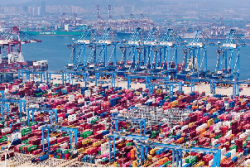
BEIJING, Aug. 1 (Xinhua) — China will promote the introduction of guidelines on improving the market access system and publish a new version of the market access negative list in the future, Zhao Chenxin, deputy head of the National Development and Reform Commission (NDRC) told a press conference Thursday. The NDRC will introduce a batch of special measures to relax market access, Zhao said, adding that it will explore further relaxation of market access nationwide and provide a broader development space for various business entities. In the meantime, it will formulate guidelines for the construction of a unified national market, with greater efforts to break down barriers and constraints such as local protectionism and market segmentation. Through these measures, “we will continuously stimulate the intrinsic momentum and innovative vitality of the entire society, and inject a steady stream of momentum” into the advancement of modernization with Chinese characteristics, Zhao said. The country has the conditions, capabilities, confidence and determination to effectively achieve the growth targets for this year, Zhao added.
China’s Steel Industry Speeds Up Optimization Of Steel Variety Structure
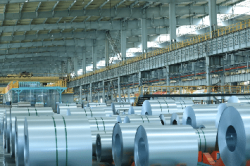
BEIJING, Aug. 1 (Xinhua) — China’s steel industry has been accelerating the optimization of steel variety structure in pace with the adjustment and optimization of national industrial structures, the China Iron and Steel Industry Association (CISA) said Wednesday. Data showed that in the first half of this year, the output of steel mostly used in construction, bridges and machinery dropped year on year, while that in areas including auto and ship manufacturing continued to grow. Yao Lin, head of the association, said at a CISA council meeting that since the beginning of the year, China’s steel sector has been coping with challenges, including an imbalance between market supply and demand, falling steel prices, high raw material prices and low economic efficiency. The overall production and operation of the industry have remained generally stable, Yao said, adding that with the transformation and upgrading continuing to advance and the constantly optimized variety structure, the higher demand for steel products in the downstream industry was effectively met. The steel industry’s pace of green transformation has accelerated significantly, and intelligent manufacturing has been upgraded, he said. Currently, the number of enterprises that use industrial internet technology to achieve smart production process control accounted for 79.6 percent of the total. Yao said that the manufacturing industry will be the main driving force to support the steel sector. The rapid development of new energy vehicles, the increase in orders for new energy-powered ships, and the accelerated renewal of old ships will support the demand for steel, and large-scale equipment renewal will also bring development opportunities for the equipment manufacturing industry, according to Yao.
Economic Watch: China’s Sci-Tech, Advanced-Manufacturing Hub Shenzhen Sees Booming Trade
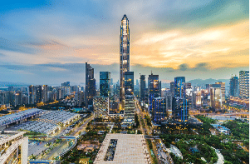
SHENZHEN, Aug. 1 (Xinhua) — Shenzhen, a vibrant sci-tech and advanced-manufacturing hub in south China’s Guangdong Province, has seen trade volume reaching 2.2 trillion yuan (about 308 billion U.S. dollars) in the first half of this year, marking a year-on-year increase of 31.7 percent and accounting for 10.4 percent of China’s total, according to Shenzhen Customs. Products made in Shenzhen have been capturing global attention of late, including some that featured in a series of events at the 2024 Paris Olympics Games. Before the opening of the games, more than a thousand drones manufactured by Shenzhen HighGreat Innovation Technology Development Co., Ltd. lit up the night sky in Paris with cold fireworks, displaying symbols such as the Olympic rings and a torchbearer. Over 180 passenger-boarding passages produced by Shenzhen-based airport-support company CIMC Tianda have been ensuring the smooth and safe transportation of delegations from around the globe during the games. “The Olympics present a new opportunity for our company to further expand its global market presence,” said Zheng Zuhua, general manager of CIMC Tianda, which has delivered nearly 10,000 passenger-boarding passages in 89 countries and regions across the globe. Shenzhen’s robust manufacturing sector is the backbone of its trade advantage. In the first six months of this year, Shenzhen’s export volume of electrical and mechanical products reached 948.9 billion yuan, up 21.4 percent year on year. While Shenzhen also saw trade growth in the burgeoning new-energy products. The city’s export volume of new-energy vehicles increased 51.7 percent to 12.87 billion yuan, and that of photovoltaic (PV) products surged 81.6 percent to 2.48 billion yuan. “In the automobile industry, the electrification transformation continues to drive in the fast lane, and the intelligent transformation has begun to speed up.” said He Long, vice president of BYD, China’s leading EV manufacturer. “The development of new-energy vehicles will run even faster.” Skyworth Group, a home appliance manufacturer headquartered in Shenzhen, reported a turnover of 69 billion yuan in 2023, one-third of which was sourced from new-energy products. “Expanding overseas is a key direction for our new-energy business in 2024,” said Fan Ruiwu, head of Shenzhen Skyworth Photovoltaic Technology, a subsidiary of Skyworth Group. “In the European market, we are mainly engaging in overall residential PV engineering business, providing local people with comprehensive solutions, and in other markets, we mainly focus on exporting PV modules, inverters and energy-storage products,” he said. The volume and variety of goods transported via the China-Europe freight train passing through Shenzhen have increased steadily in recent years. According to Xu Zhenkang, an official with Shenzhen Customs, through supporting operators, the freight-train route from Shenzhen to Budapest, the capital of Hungary, was resumed this year, and enterprises have been expanding their market reach further. “With the implementation of the Belt and Road Initiative, freight trains have become a crucial bridge linking the Guangdong-Hong Kong-Macao Greater Bay Area with Europe,” said Xu.
China’s Carbon Trading Market Sees Stronger Vitality: Ministry

BEIJING, July 30 (Xinhua) — China’s national carbon market has seen stronger vitality over the past three years, the Ministry of Ecology and Environment said Monday. As of the end of June, the market reported a trading volume of 465 million tonnes of carbon emissions and a total turnover of 27 billion yuan (about 3.79 billion U.S. dollars), said Pei Xiaofei, a ministry spokesperson. The carbon price has posted a steady upward trend, with the closing price rising from 48 yuan per tonne on the launch day to 91.6 yuan on July 26 this year, representing a surge of 90.8 percent, according to the spokesperson. Carbon trading, which allows the buying and selling of permits to emit carbon dioxide or other greenhouse gases, is regarded as one of the critical tools to help reduce carbon footprints and meet emissions targets. Covering 5.1 billion tonnes of carbon emissions per year, China’s national carbon trading market is the world’s largest, as measured by the amount of greenhouse gas emissions traded. The market currently includes 2,257 emitters from the power generation sector, official data shows. Pei said that China’s trading market has reported progress in multiple aspects over the past three years, with a relatively complete institutional framework established and its carbon emissions accounting and management capabilities visibly improved. For the next step, the ministry will continue to position the market as a tool to curb emissions, include emitters from other sectors, deepen international exchanges and cooperation, and strive to build a carbon market that is more effective, dynamic and internationally influential, the spokesperson said. In a key document unveiled recently, China has pledged to improve the mechanisms for green and low-carbon development, saying that it will enhance the cap-and-trade system for carbon emissions, and move toward reaching peak carbon emissions and carbon neutrality.
Huawei Emphasizes On Cloud-First Strategy For South Asia’s Digital Development

DHAKA, July 29 (Xinhua) — Huawei South Asia has emphasized on a cloud-first strategy to bolster the region’s digital development. The Huawei Cloud Summit South Asia 2024, held recently in Dhaka, featured business leaders, leading innovators, cloud service customers, and partners who engaged with the attendees by sharing their views on global and regional cloud technology trends and success stories. The event offered an opportunity to gain insights into the headway of new technologies like Cloud, AI, and Big Data in the Industry 4.0 era and their digital benefits for Bangladesh and the South Asian region. It also focused on cultivating a smarter cloud ecosystem and explored gateways for new strategies and plans to capitalize on intelligence-driven economic opportunities. “The summit highlighted the immense potential and opportunities that cloud technology brings to the region,” said Pan Junfeng, president of Huawei South Asia Region and CEO of Huawei Bangladesh. “We intend to create a robust cloud ecosystem that supports businesses, enhances efficiency, and fosters innovation.” He said that with the government’s support, adopting a cloud-first strategy is essential to accelerate Bangladesh’s growth and innovation. Zeng Xingyun, president of Huawei Cloud APAC, said Huawei cloud provides customers with more than 240 cloud services, 210 solutions, and 12,000 partner applications, and continues to release new popular cloud services. As Huawei intends to provide Technology as a Service, Infrastructure as a Service, and Expertise as a Service, local support played a key role, he added. “Smart Bangladesh is not only a vision of Bangladesh to develop digital economy, but also the key driving force for the country’s modernization,” Song Yang, counsellor of the Chinese Embassy in Bangladesh, said in a video message at the event.