Tuesday, November 24, 2026

Home Blog Page 53

China Signals Consumer Finance as Policy Instrument: Balance Sheet Shifts, Risk Metrics and the Sustainability Question

0

ZH compiled and reported this information from China Daily on February 25.

China’s Spring Festival consumption surge reveals more than seasonal demand strength. It marks a strategic deployment of the banking system as a calibrated domestic-demand stabilizer.

 Unlike broad fiscal stimulus cycles of the past, 2026’s approach is more balance-sheet driven, structurally targeted and operationally embedded.

 The key investor question is no longer whether banks are promoting consumption —

but whether the expansion of consumer finance is sustainable, profitable and systemically manageable.

Balance Sheet Implications for the Banking Sector

1️⃣ Asset Structure Rebalancing

 Chinese banks have historically been:

 Property-exposure heavy

 Corporate-loan dominant

 Infrastructure-financing oriented

 The acceleration of consumer lending — especially auto finance, appliance installment credit and renovation loans — gradually alters asset composition.

 Implications:

 Lower concentration in property-linked assets

 Higher granularity of retail loans

 Potentially improved interest spreads in unsecured segments

 Shorter loan duration relative to infrastructure projects

 Consumer credit, if diversified and digitized properly, improves asset turnover velocity and capital efficiency.

 However, it also introduces higher default sensitivity to income shocks.

 2️⃣ Net Interest Margin (NIM) Dynamics

 Consumer loans typically offer higher yields than large corporate lending.

 Yet current policies include:

 Interest subsidies

 Extended tenors

 Promotional discounting

 This suggests:

 Margins may compress at the front end

 Volume growth must compensate for pricing moderation

 Profitability depends on credit quality stability

 Banks with stronger digital risk-control infrastructure will be structurally advantaged.

 Non-Performing Loan (NPL) Risk Assessment

1️⃣ Credit Risk Factors

 Consumer finance expansion increases exposure to:

 Income volatility

 Employment cycles

 Household confidence shifts

 However, several mitigating factors exist:

 Most loans are tied to durable goods or autos (asset-linked behavior)

 Loan sizes are relatively small and diversified

 Repayment structures are increasingly automated via digital platforms

 China’s current household NPL ratio in consumer finance remains manageable relative to international benchmarks, but rising volume bears monitoring.

 2️⃣ Early Warning Indicators to Watch

 Investors should monitor:

 Delinquency rates in auto loans

 Growth of unsecured personal credit

 Household disposable income growth

 Youth employment trends

 Regional divergence in repayment performance

 If income growth stabilizes and employment conditions improve, consumer finance risk remains contained.

 If growth softens meaningfully, unsecured segments become pressure points.

 III. Household Leverage: Is There Room to Expand?

 China’s household debt-to-GDP ratio is significantly lower than that of advanced economies.

 Approximate comparative ranges:

 United States: ~70–80%

 South Korea: above 100%

 Japan (peak era): near 85%

 China: materially below those levels

 This suggests room for controlled expansion.

 However, composition matters.

 China’s household leverage is heavily mortgage-centered.

Consumer credit remains a smaller share of total household liabilities.

 That means incremental consumer lending increases diversification rather than simply adding systemic stress — provided underwriting standards remain disciplined.

 The sustainable expansion zone likely depends on:

 Wage growth trajectory

 Property market stabilization

 Household confidence recovery

 If income expectations stabilize, moderate leverage expansion is supportable.

 Historical Comparison: Japan and South Korea

Japan (Late 1980s – Early 1990s)

 Credit expansion heavily asset-price driven

 Property and equity bubbles intertwined

 Consumer leverage expansion accompanied speculative excess

 Outcome: asset collapse and long balance-sheet repair cycle.

 China’s current environment differs materially:

 Property is undergoing controlled deleveraging

 Consumer finance is policy-guided, not speculative-led

 Regulatory oversight remains active

 South Korea (2000s Credit Card Boom)

 Rapid unsecured consumer credit expansion

 Lax risk control

 Surge in delinquency rates

 Resulted in a consumer credit crisis requiring regulatory tightening.

 China’s approach appears more incremental and digital-risk monitored, but the lesson remains clear:

 Unsecured credit acceleration must remain controlled.

 Macro Sustainability Framework

 For consumer finance to become a durable growth stabilizer, three conditions must hold:

 Household income growth remains positive

 Labor market conditions do not deteriorate sharply

 Banks maintain disciplined underwriting standards

 If these align, consumer finance can:

 Offset property slowdown

 Support service-sector expansion

 Stabilize domestic demand

 Improve asset-liability diversification

 If misaligned, risks concentrate quickly in unsecured retail credit.

 Investment Implications

Banking Sector

 Large state-owned banks: balance sheet stability, moderate yield

 Joint-stock banks: higher growth sensitivity

 Consumer finance subsidiaries: structural beneficiaries

 Auto & Durable Goods

 Extended loan tenors directly support affordability.

Demand elasticity increases.

 Digital Financial Platforms

 Transaction integration enhances ecosystem stickiness and cross-selling capacity.

 Risk Premium Impact

 If NPL remains stable and household leverage expands moderately, equity risk premium for banks could compress.

 If delinquency rises sharply, sector volatility increases.

 Strategic Interpretation

 China is using consumer finance not as stimulus excess — but as calibrated macro transmission.

 The distinction is critical.

 Unlike Japan’s bubble cycle or Korea’s unsecured credit surge, current expansion appears guided, scenario-based and regulator-aligned.

 The long-term viability depends not on volume growth alone —

but on credit discipline.

 Bottom Line

 China’s banking system is gradually shifting from property-dependent credit expansion to diversified consumer finance support.

 This transition has:

 Balance sheet implications

 Margin implications

 Risk management implications

 Valuation implications

 The sustainability test lies in income growth and credit quality.

 In China Signals terms:

 Domestic demand is being engineered through finance —

but structural stability will depend on discipline as much as ambitio



Article inline ad

AI as the Anchor: A Structural Repricing of Chinese Equities Is Underway

0

ZH compiled and reported this information from China Daily on February 25.

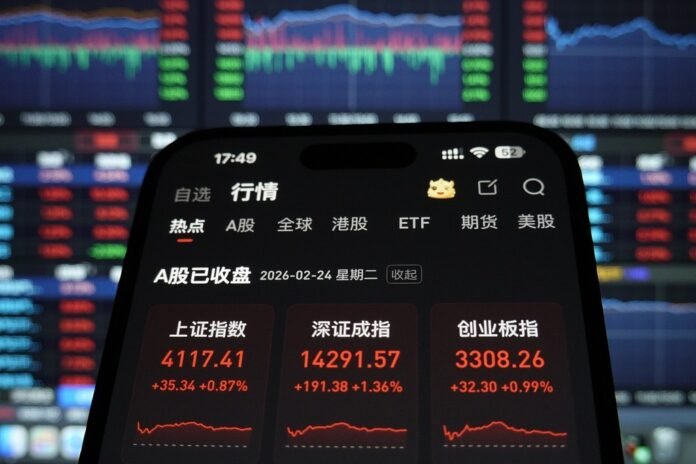
China’s A-share market opened the Year of the Horse with solid gains. On the surface, it looked like a seasonal rebound following the Spring Festival break. Beneath it, however, lies something more consequential.

 A structural repricing process may have begun — and artificial intelligence is emerging as its anchor.

 This is not simply about technology stocks outperforming. It is about the gradual repositioning of China’s equity risk premium.

 Signal One: Risk Appetite Is Returning — But Not Randomly

 Market rallies driven purely by liquidity tend to be broad and undisciplined. What we are seeing instead is selective concentration.

 Capital is clustering around:

 AI computing infrastructure

 Optical modules and storage leaders

 Power grid and energy systems tied to data center expansion

 Automation, robotics and autonomous driving

 This pattern suggests institutional allocation rather than retail speculation.

 The market is not chasing narratives. It is positioning around capacity buildout.

 That distinction matters.

 Signal Two: AI Is Migrating From Theme to Macro Variable.

In previous cycles, Chinese equity rebounds were largely policy-driven or valuation-recovery driven. This time, AI is functioning as a macroeconomic variable.

 Three structural shifts are visible:

 Capex acceleration among major technology platforms

 Commercialization expectations surrounding multimodal AI models

 Integration into the real economy, especially advanced manufacturing and industrial automation

 AI is increasingly embedded in productivity enhancement — not just digital consumption.

 For a country transitioning away from property-led growth, productivity multipliers carry valuation significance.

 Markets reprice when growth drivers become measurable.

 Signal Three: Global Capital Rebalancing Is Creating a Window

 The global investment cycle has been dominated by AI-led US technology valuations. However, divergent monetary policy paths and evolving rate expectations are reshaping capital allocation.

 If US rate normalization proceeds smoothly while global manufacturing stabilizes, capital flows may diversify beyond US megacaps.

 China, trading at discounted valuations relative to historical averages and global peers, becomes a re-evaluation candidate — provided a credible structural growth narrative exists.

 AI may be that narrative.

 The repricing of Chinese equities is therefore not only domestically driven. It is occurring within a broader global rebalancing context.

 Signal Four: Policy and Liquidity Are Aligned — For Now

 A sustainable equity cycle requires:

 Policy continuity

 Ample liquidity

 Earnings validation

 The first two conditions appear supportive:

 Stabilizing macro expectations

 Targeted industrial policies

 Relatively accommodative liquidity conditions

 This creates a favorable backdrop for thematic capital rotation.

 However, the third condition — earnings delivery — will determine whether this shift becomes structural or remains cyclical.

 What Could Confirm the Structural Thesis?

 Investors should monitor:

 Earnings growth from AI infrastructure supply chains

 Corporate margin improvement linked to automation

 Sustained capital expenditure from major tech firms

 Foreign capital inflow trends into China-linked ETFs

 Manufacturing cycle recovery indicators

 If these metrics align, equity risk premiums could compress meaningfully.

 That is how structural repricing unfolds — gradually, then suddenly.

 The Strategic Interpretation

 China’s equity market has spent the past few years navigating deleveraging, property adjustment, and external uncertainty.

 AI introduces a different vector.

 It links:

 Industrial upgrading

 Productivity enhancement

 Capital market reform

 Global competitiveness

 In valuation terms, AI shifts China’s narrative from cyclical stabilization to structural modernization.

 And markets reward structural stories differently.

 Bottom Line

 The recent rally should not be mistaken for post-holiday optimism.

 It may represent the early phase of a capital reallocation cycle in which AI becomes the organizing principle of Chinese equity valuation.

 If earnings begin to validate the thesis, the repricing could extend well beyond a single quarter.

 In China Signals terms:

 The market is no longer reacting.

It is positioning.


Article inline ad

AI Is Becoming the Structural Driver of China’s Equity Repricing

0

— Why the Post-Holiday Rally May Be More Than Seasonal Optimism

ZH compiled and reported this information from China Daily on February 25.

China’s A-share market began the Year of the Horse with a solid rally, but the significance of the move extends beyond festive sentiment. What is unfolding may represent the early phase of a structural repricing of Chinese equities — increasingly driven by artificial intelligence.

 While headline indices such as the Shanghai Composite and ChiNext posted moderate gains, capital concentration tells a deeper story: risk appetite is rotating toward technology infrastructure, computing capacity, and AI commercialization themes.

 This is not a short-term speculative bounce. It is part of a broader reallocation of capital.

 From Liquidity-Driven to AI-Driven

 Over the past few years, Chinese equity rallies were often liquidity-driven, policy-driven, or valuation-recovery driven. The emerging shift now is different.

 Three structural factors are converging:

 Rising Capex from tech giants

Leading Chinese technology firms are significantly increasing capital expenditures, particularly in AI computing infrastructure, cloud services, and advanced chips.

 Acceleration of multimodal AI models

The market anticipates a potential “Deep-Seek moment” — a breakthrough in domestic multimodal large models that could accelerate commercialization.

 Expansion from infrastructure to applications

Investment focus is broadening beyond upstream computing power toward:

 Optical modules

 Energy storage systems

 Power grid upgrades

 AI-enabled consumer electronics

 Autonomous driving

 Humanoid robotics

 This represents a shift from thematic speculation to ecosystem-level buildout.

 Global Capital Rebalancing and China’s Revaluation Window

 The global asset rebalancing currently underway is closely tied to AI’s transformative potential.

 In the United States, AI-driven capital expenditure has already supported technology-heavy equity valuations. However, divergent monetary policies among major economies are reshaping liquidity flows.

 If the path of US rate cuts becomes smoother while global manufacturing stabilizes, emerging markets — particularly China — may benefit from renewed capital allocation.

 Chinese assets are trading at valuation discounts relative to historical averages and global peers.

 If AI becomes a credible structural growth engine rather than a policy narrative, equity risk premiums could compress meaningfully.

 This is where repricing happens.

 Why AI Matters More for China Than Before

 AI’s role in China is not purely technological. It is macroeconomic.

 China is navigating:

 A transition from property-driven growth

 A push toward advanced manufacturing

 A strategic emphasis on technological self-reliance

 A need to upgrade productivity

 AI sits at the intersection of all four.

 Unlike previous innovation cycles that were consumer internet-centric, this wave is deeply linked to:

 Industrial automation

 Intelligent manufacturing

 Supply chain optimization

 Energy efficiency

 Smart mobility

 That makes it more embedded in the real economy.

 And markets tend to reward embedded productivity shifts more sustainably than narrative-driven growth.

 4. Risk Appetite Is Returning — But Selectively

 Higher risk appetite does not mean indiscriminate speculation.

 The market’s current structure suggests:

 Institutional capital is rotating into computing infrastructure and hardware supply chains

 Select AI commercialization plays are gaining traction

 Commodity and precious metal sectors are hedging geopolitical risks

 Short-term volatility remains likely, especially given global uncertainties. But the leadership pattern within the rally indicates a thematic concentration around AI-linked assets.

 That concentration matters.

5.The Bigger Question: Is This the Start of an AI-Led Bull Cycle?

 For a sustainable bull market to form, three conditions must align:

 Policy support remains consistent

 Liquidity stays ample

 Earnings growth validates the AI thesis

 The first two are increasingly visible. The third will determine whether this repricing becomes structural.

 If corporate earnings begin reflecting productivity gains and AI-driven revenue expansion, China’s equity market could shift from cyclical rebound to structural bull phase.

 Conclusion

 The post-holiday rally may look modest on the surface. But underneath, a deeper narrative is forming.

 AI is no longer just a sector story in China.

It is becoming a valuation anchor.

 As capital reallocates globally and investors reassess growth drivers, China’s AI ecosystem — from infrastructure to applications — could become the structural catalyst for equity repricing in 2026 and beyond.

 The market is not just reacting to seasonal optimism.

It may be repositioning for a technological cycle.


Article inline ad

Human-Centered Design Remains Key in AI-Driven Creative Industries

0

According to a report by China Daily on February 24

SHANGHAI / NORTH AMERICA — As generative artificial intelligence reshapes creative industries worldwide, international design experts emphasize that meaningful innovation still relies on human judgment, social awareness, and cross-cultural understanding.

AI as a Tool, Not a Replacement

  • Ziwei Song, a U.S.-based Chinese designer with over 20 international honors, highlighted that AI accelerates ideation and workflow but cannot replace empathy, intent, or societal insight in design.

  • In her role as an International Jury Member of the 2026 A’ Design Award & Competition, Song stresses that authenticity, responsibility, and human-centered values remain decisive criteria for award-winning work.

“AI has expanded creative possibilities, but expectations around depth, sustainability, and intent have also risen,” Song noted.


Cross-Cultural Expertise Drives Global Influence

  • Based in North America while maintaining strong ties to China, Song bridges Eastern philosophical thinking with Western design logic, translating both into universally resonant design languages.

  • Her international jury experience spans evaluating digital interactions, brand narratives, and strategic design frameworks, reflecting the growing global recognition of Chinese designers as contributors to international design standards.


Design Shifts: From Aesthetics to Systems Thinking

  • Song observes a clear trend: designers are evolving from producers of aesthetics to coordinators of complex social systems.

  • Future design education and practice increasingly require interdisciplinary approaches, integrating data, technology, ethics, and cultural context.

  • Real-world challenges such as climate change, aging populations, and cultural fragmentation now demand design solutions that are both innovative and socially responsible.


Implications for Investors and Industry Stakeholders

  1. AI Adoption in Creative Industries – Presents opportunities for efficiency gains, prototyping, and scaling creative output, but requires strategic integration with human-led processes.

  2. Cross-Cultural Talent as a Differentiator – Designers with global perspective, like Song, offer competitive advantage in international collaborations and market entry strategies.

  3. Sustainable and Human-Centered Design – Increasingly valued by brands, governments, and investors, signaling areas for premium design services and innovation-driven startups.

  4. China as a Creative Hub – Chinese designers are gaining recognition on global platforms, making the market attractive for venture capital, creative tech partnerships, and cross-border collaborations.


Bottom Line:

AI is rapidly expanding the creative toolkit, but human-centered design remains irreplaceable. Investors and industry leaders should focus on opportunities that combine technological augmentation with originality, societal impact, and cross-cultural expertise, positioning China’s creative sector as a strategic growth area in the global innovation ecosystem.

Article inline ad

FMCG Sales Enjoy Satisfying 2025

0

Final consumption expenditure contributed 52% of country’s economic growth last year

By Wang Zhuoqiong | China Daily | Updated: 2026-02-24 

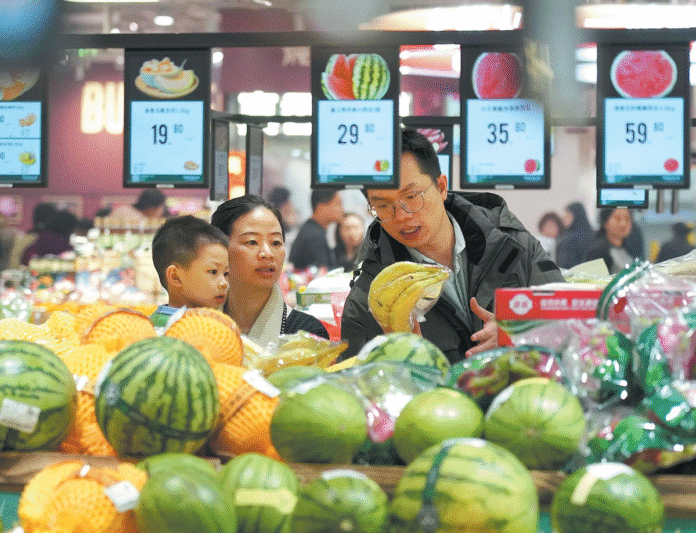
Fast-moving consumer goods sales in urban China grew 1.5 percent year-on-year in 2025, said Kantar Worldpanel China, a marketing research institute, signaling steady growth in the retail sector where consumption patterns are evolving.

 The National Bureau of Statistics said final consumption expenditure accounted for 52 percent of the country’s economic growth in 2025, up 5 percentage points from the previous year.

 Retail giant Walmart China consolidated its position as a leader in the Chinese retail market last year. The company posted strong performance in the Chinese market in its latest quarterly earnings, with net sales reaching $6.1 billion in the fourth quarter of 2025, a 19.3 percent increase from the same period in 2024.

 Despite a delayed Spring Festival season in February, which typically boosts retail activity, Walmart recorded a 10.7 percent growth in comparable sales, driven by strong momentum from its Sam’s Club membership business and e-commerce.

 Sam’s Club continues to post double-digit growth in transactions. The warehouse chain, which focuses on high-end, bulk-selling products for middle-income urban families, opened 10 new stores in the past 12 months, including six in the most recent quarter. The company was operating 63 clubs as of January.

 Its e-commerce business saw a 28 percent year-on-year increase in the fourth quarter, now accounting for over 50 percent of the retailer’s total sales.

 For fiscal year ended Jan 31, 2026, Walmart’s total global revenue reached $713.2 billion, up 4.7 percent year-on-year, with adjusted operating profit increasing 5.4 percent to $31.1 billion.

 It continues to focus on innovation and growth in China, and recently partnered with RedNote, a leading social media platform in the country.

 The collaboration aims to co-create new products and customer shopping experiences. The two sides recently launched a co-branded product line and opened a new retail space at Walmart’s Shekou location in Shenzhen, Guangdong province. This partnership signifies the company’s commitment to integrating social commerce and digital engagement into its physical retail strategy.

 Additionally, Walmart is accelerating the rollout of its community stores model by opening four new stores in Shenzhen in February. The move is aimed at urban middle-income consumers with fast access to high-quality products and convenience.

 Meanwhile, the retailer’s expansion of its private label, Marketside, also aligns with changing consumer preferences for fresh and high-quality products at competitive prices. The private label — which emphasizes simplicity, collaboration with top suppliers and a price-to-quality ratio — now includes nearly 1,000 new products in categories like fresh produce, food and beverages, Walmart said.

Retailers in China are increasingly focused on differentiation through developing private brands. In 2025, the penetration rate of private labels reached 56.8 percent, an increase of more than 11 percentage points compared to the previous year, said Worldpanel. This trend is particularly evident in smaller cities, where demand for private labels has surged, outpacing growth in larger urban markets.

 Freshippo, owned by Alibaba, has been expanding aggressively with a dual-format strategy combining traditional supermarkets with the innovative Freshippo NB model. In 2025, Freshippo achieved a penetration rate of 12.9 percent, Worldpanel said.

 Meanwhile, JD.com’s 7Fresh supermarket chain continues to expand its footprint in North China through a hybrid model, which combines physical retail locations with the convenience of local warehouse centers. This model enabled the retailer to extend its reach and increase its market penetration by 0.7 percentage point in 2025.

 Discount formats also remain a favored choice for consumers. The latest Worldpanel report said that penetration rates for bulk snack stores and discount shops increased by 4.8 and 2.9 percentage points, respectively, in 2025.

 Aldi, for instance, has ramped up its expansion efforts in the Yangtze River Delta, with its penetration rate in East China increasing by 2.2 percentage points. The German retailer plans to open 100 stores in China by the end of the first quarter of 2026.

 Looking ahead, it is expected that the expansion of the consumer base will serve as a critical engine for growth. Moreover, the focus on “products” has shifted from large-scale displays to demand adaptation. Retailers are building exclusive advantages by developing their private labels. On the other hand, brands need to create product portfolios tailored to specific scenarios.

 “Channels are no longer merely carriers for shelf display, but have become key hubs connecting consumers and products,” said Worldpanel, adding that food and beverage categories led the growth, with annual sales increasing by 3.6 percent and 3.1 percent, respectively. In 2025, the household cleaning and personal care categories both achieved growth, while dairy products faced dual pressures in terms of both sales and volume growth.

 French food and beverage producer Danone posted strong momentum in China, North Asia and Oceania in the fourth quarter, with sales up 10.4 percent like-for-like. Specialized nutrition continued to grow strongly, equally driven by infant milk formula and medical nutrition. The company also had a solid performance in its water business in China last year.

Article inline ad

Holiday Delivers Broad Biz Boost Nationwide

0

China Daily | Updated: 2026-02-24 

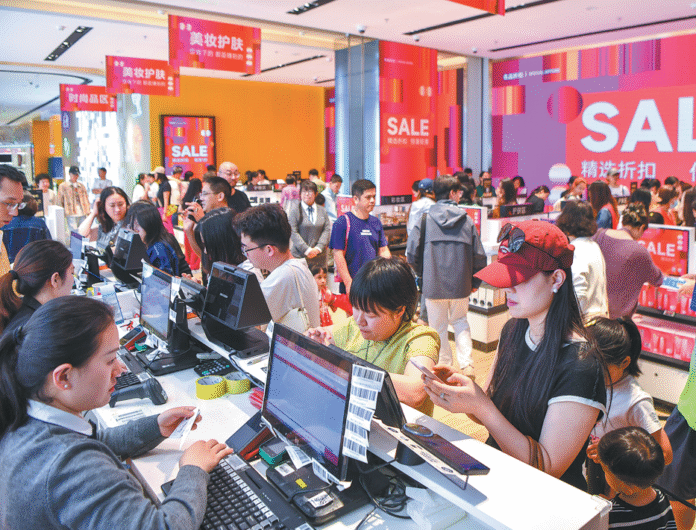
BEIJING — Chinese consumers ushered in the Spring Festival holiday with a burst of spending, filling restaurants and malls and traveling across the country, which offered a boost to the consumption sector.

 In the first four days of the holiday break, average daily sales at major retail and catering businesses rose 8.6 percent from the corresponding period a year earlier, according to the Ministry of Commerce. Traffic and revenue at 78 key shopping streets and districts in the first three days climbed 4.5 percent and 4.8 percent, respectively.

 Spring Festival, which is also known as Chinese New Year, fell on Feb 17 this year, and the holiday, which starts two days earlier, lasts nine days in total.

 The spending wave blended tradition with new habits, with online platforms reporting brisk demand for smart devices. Sales of wearable gadgets on major platforms surged 19.7 percent year-on-year in the first three days of the holiday, with smart glasses more than doubling and smart blood glucose monitors up by nearly 50 percent.

 Services spending added to the momentum. Domestic tourism consumption on major platforms rose 4.5 percent year-on-year in the first three days of the holiday, including a 26 percent jump in car-rental bookings.

 In the southern island province of Hainan, duty-free sales reached 970 million yuan ($140 million) in the first four days of the holiday, up 15.8 percent from a year ago.

 A nationwide consumer goods trade-in program also continued to unleash consumption demand. By Feb 18, nearly 28.44 million consumers had received subsidies to replace old products with new ones this year, generating nearly 196.39 billion yuan in sales. Auto trade-ins accounted for a sizable share, with sales reaching 100.23 billion yuan.

 The government introduced a slate of supportive measures ahead of the nine-day break, encouraging local authorities and businesses to pair promotional events with policy incentives, including shopping vouchers and improved payment services for visitors.

 Xinhua – China Daily

Article inline ad

China’s Quick-Service Restaurant Market Shows Strong Growth and Delivery-Driven Transformation

0

According to a report by China Daily on February 24…

SHANGHAI — China’s fast-food sector is undergoing rapid expansion, driven by international chains like McDonald’s and Yum China, offering compelling insights for investors monitoring consumption trends and consumer-driven growth.

Market Expansion and Store Growth

  • McDonald’s China currently operates over 7,740 restaurants, covering all provinces, with plans to reach 10,000 outlets by 2028. The company added 1,000 new restaurants in 2025 and aims for another 1,000 this year.

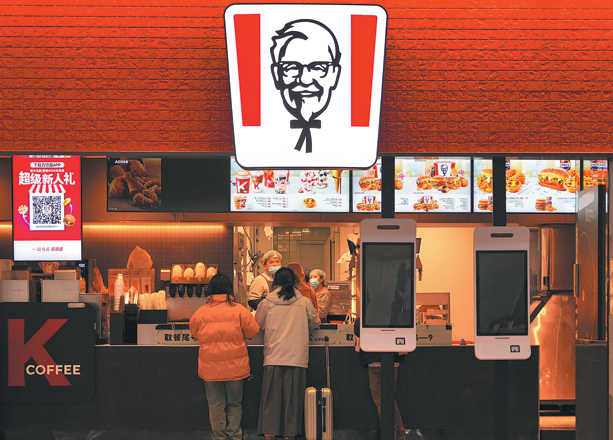
  • Yum China, operating KFC, Pizza Hut, Kpro, and Lavazza coffee chains, had 18,101 stores by the end of 2025, with multibrand and diversified formats supporting long-term expansion to over 30,000 stores by 2030.

Both companies are leveraging aggressive same-store sales growth and new restaurant openings to capture market share. McDonald’s reported a 4.6% comparable sales increase in China for 2025, while Yum China’s system-wide sales grew 7%, with operating profit up 25% in Q4.


Delivery as a Growth Driver

A key structural change in the market is the rapid expansion of delivery services:

  • Yum China’s delivery business grew 25% year-on-year, now accounting for 48% of restaurant revenue, up from 39% in 2024.

  • KFC and Pizza Hut brands both posted double-digit delivery growth, reflecting heightened consumer reliance on digital ordering platforms.

Surveys by the China Chain Store and Franchise Association indicate that nearly half of chain catering enterprises rely heavily on delivery, with 17% seeing over 50% of orders delivered, highlighting both growth opportunity and potential operational risk if dine-in services are displaced.


Innovation in Store Formats and Branding

Yum China’s strategic expansion into healthier and specialized formats is delivering results:

  • Kpro (fast-casual, healthier offerings) reached 200 stores in 2025, aiming to double in 2026

  • Kcoffee expanded to 2,200 stores

  • Lavazza coffee grew to 146 locations, up from 112 the previous year

These multi-format approaches enhance consumer engagement, diversify revenue streams, and strengthen resilience amid evolving consumer preferences.


Investment Takeaways

For global investors evaluating China’s consumption sector:

  1. Structural Growth Opportunity – China’s urban middle class continues to drive fast-food consumption, with delivery and new formats accelerating expansion.

  2. International Brand Leverage – McDonald’s and Yum China demonstrate that global operators can capture scale and brand recognition in a growing market.

  3. Digital Adoption – Delivery platforms represent both revenue growth and efficiency gains, providing insight into broader consumption digitization trends.

  4. Long-Term Portfolio Potential – With over 30,000 stores projected by 2030, chains with diversified brands and digital capabilities offer exposure to sustainable consumption growth.


Bottom Line:

China’s quick-service restaurant sector illustrates how consumer demand, digital transformation, and foreign brand expansion intersect to create long-term growth opportunities. International investors can leverage these trends to gain exposure to China’s evolving consumption landscape, where delivery innovation and multi-format strategies are shaping the next phase of market expansion.

Article inline ad

Chinese Brands In Spotlight At Winter Olympics

0

By HU MEIDONG and ZHANG YI in Fuzhou | China Daily | Updated: 2026-02-24 

As the Milano-Cortina 2026 Winter Olympics concluded on Sunday, the increasing visibility of Chinese brands on the global stage highlighted a transition toward proprietary innovation and wider international endorsement within the high-performance sports industry.

 A prime example of this trend unfolded during the freestyle skiing events. Chinese skier Eileen Gu Ailing, who secured a gold medal in halfpipe and a silver medal in both slopestyle and big air, captured global attention for her distinctive competition suit. The apparel, which she helped design, featured a dragon motif that appeared to “swim” along the seams and over the shoulders.

 Gu explained on her social media account that the blue-and-white aesthetic drew inspiration from traditional Chinese porcelain. “I hope to bring Chinese culture to the world stage,” she said.

 Following the slopestyle qualifiers on Feb 7, she also detailed the suit’s intricate features in interviews, saying that the design seamlessly integrated cultural elements with functional tools, including a thermometer and a compass on the sleeve.

 The performance apparel was developed by sportswear giant Anta Group, which provided professional gear for 13 Chinese national teams during the Games. The brand’s technological capacity has increasingly earned international recognition, with the delegations of Greece and Singapore also entering the stadium outfitted with Anta equipment.

 Petros Synadinos, chairman of the Marketing Commission of the Hellenic Olympic Committee, said the partnership was a win-win, benefiting athletes who appear in world-class events wearing performance-leading sports equipment.

 Backing this global footprint is a steadfast commitment to research and development. Over the past decade, Anta Group has funneled 20 billion yuan ($2.89 billion) into innovation, with another 20 billion yuan earmarked for independent research and development over the next five years.

 To date, the group has established a global innovation network comprising seven design and R&D centers across China, the United States, Japan, South Korea, Italy, the Netherlands and Germany.

 Ding Shizhong, chairman of Anta Group and Amer Sports, who served as an Olympic torchbearer for the fifth time on Feb 6, said: “It is an honor to provide equipment for national teams. We are here to cheer for the athletes.”

 Other Chinese brands also integrated their solutions into the Milano-Cortina 2026 ecosystem. Panpan Food Group provided 15 snack products at China House, earning praise from international guests. The brand also launched a tasting activity on the streets in Milan, Italy, to engage global tourists.

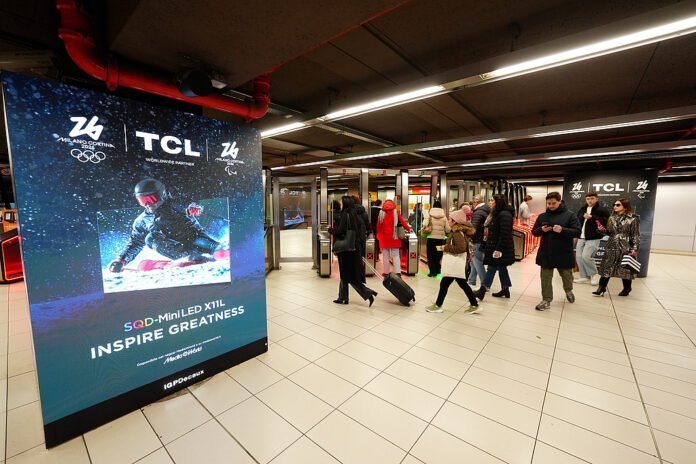
 Fitness equipment maker Shuhua Sports provided professional gear for the athletes’ villages, while tech giants like Alibaba and display provider TCL ensured seamless technical support throughout the event.

 Huang Haiyan, a professor at Beijing Sport University, said that when Chinese gear becomes an athlete’s preferred choice, a connection of professional trust is built. “Mastering core technology is a compulsory question for global survival and dignity,” Huang told Fujian Daily.

 These brands are building a global partnership network driven by technical excellence and respectful cultural dialogue, he said, adding that globalization no longer represents a one-way export, but a two-way flow of mutual empowerment and value co-creation.

 Yang Jie contributed to this story.

Article inline ad

Arlanxeo Eyes China as Core Growth Market Amid NEV Boom

0

According to a report by China Daily on February 24…

SHANGHAI — Netherlands-based high-performance elastomers producer Arlanxeo is positioning China as one of its strongest growth engines, aligning its investment strategy with the country’s rapid expansion in new energy vehicles (NEVs) and industrial upgrading initiatives.

Since 2012, Arlanxeo has invested nearly $1 billion in China, reflecting the market’s scale, value, and long-term potential, said CEO Stephan van Santbrink. “China is a key part of our global portfolio, and its importance continues to grow,” he told China Daily.


Strategic Expansion in High-Performance Materials

Under Santbrink’s leadership, Arlanxeo has opened two major facilities in Jiangsu province:

  • Nantong: Nitrile Butadiene Rubber (NBR) plant

  • Changzhou: Hydrogenated Nitrile Butadiene Rubber (HNBR) plant, with first-phase production commencing Feb 4

The Changzhou plant, with an annual capacity of 2,500 metric tons, can support roughly 12.5 million EV batteries per year, representing 25% of Arlanxeo’s global HNBR capacity. As the only HNBR producer with facilities across the Americas, Europe, and Asia, the company is strategically positioned to serve a global NEV supply chain.


Capitalizing on China’s NEV Market

China produced 16.63 million new energy vehicles in 2025, accounting for over 50% of domestic new auto sales — a global leadership position maintained for 11 consecutive years.

Arlanxeo’s high-performance elastomers, widely used in EV batteries and related components, are directly aligned with this structural market growth, creating both short- and medium-term demand opportunities for the company.


Alignment with Industrial Upgrading

China’s 15th Five-Year Plan (2026–30) emphasizes:

  • Developing high-end manufacturing and quality productive forces

  • Advancing industrial upgrading

  • Building a high-end rubber and materials sector

Santbrink highlighted that these priorities align closely with Arlanxeo’s product portfolio, particularly in performance-critical applications for new mobility and energy sectors. “The 15th Five-Year Plan period provides positive momentum for deepening the value chain and upgrading industry,” he said.


Implications for Global Investors

For international investors and industrial analysts, Arlanxeo’s China strategy illustrates:

  1. Strategic Market Entry – Leveraging China’s scale in EVs and industrial materials for long-term growth

  2. Supply Chain Integration – Domestic production supports global EV supply chains

  3. High-Value Segment Focus – HNBR and NBR products are critical inputs for high-growth, high-margin applications

  4. Policy-Enabled Tailwinds – Government industrial upgrading plans provide structural demand support

Santbrink concluded: “China is not only an important part of our portfolio but one whose importance will continue to increase. We are expanding into new products and increasing capacity in line with the ongoing development of the Chinese market.”

Article inline ad

Hong Kong Aims to Become Global Gold Hub with Digital Trading Upgrade

0

According to a report by China Daily on February 24…

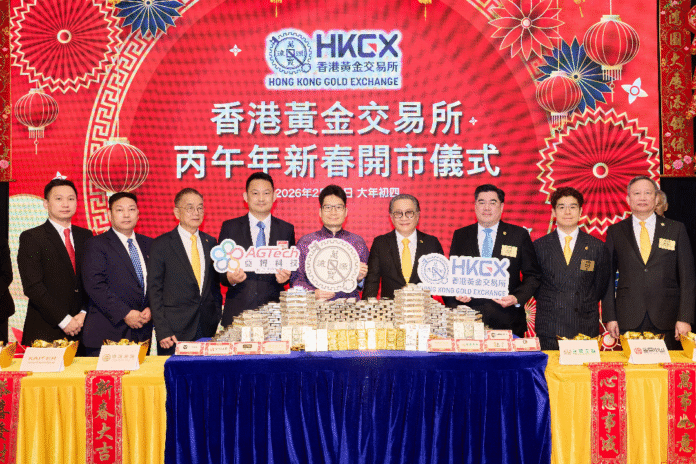
HONG KONG — Hong Kong Gold Exchange (HKGX) has partnered with AGTech, an Alibaba Group fintech affiliate, to develop a one-stop digital platform for gold trading, signaling Hong Kong’s push to strengthen its role as an international precious metals hub.

The collaboration was announced at HKGX’s Lunar New Year market opening ceremony and underscores a broader strategy: combining digital finance, blockchain-enabled clearing, and cross-border settlement to enhance market efficiency and transparency.


Integrated Digital Platform

The platform aims to consolidate:

  • Spot and futures trading

  • Digital gold and B2C transactions

  • Clearing and settlement infrastructure

  • Over-the-counter trading

  • Membership and risk management systems

It will support offshore and onshore RMB, multi-currency pricing and settlement, multi-language interfaces, and an open, modular architecture suitable for international participants.

Gavin Zhao, AGTech’s chief product and technology officer, highlighted the group’s experience in digital finance, platform governance, risk control, and internationalization as key enablers for the project.


Strategic Implications for Investors

For global asset allocators and commodity traders, the initiative has several potential implications:

  1. Market Accessibility – A standardized, digital, and regulated platform reduces friction for international investors entering the Hong Kong gold market.

  2. Operational Efficiency – Blockchain-enabled clearing and unified risk control may lower transaction costs and settlement risk.

  3. Cross-Border Allocation – Offshore and onshore RMB support, along with multi-currency settlement, positions Hong Kong as a bridge between Eastern and Western gold markets.

  4. Portfolio Diversification – Improved transparency and oversight in both exchange-traded and OTC markets may make gold exposure via Hong Kong a more attractive diversification sleeve.


Policy and Market Signaling

Joseph Chan, Hong Kong SAR under secretary for Financial Services and the Treasury, emphasized that the government is committed to promoting Hong Kong as an international gold trading centre, attracting storage, clearing, and settlement activities while supporting the broader financial services ecosystem.

The partnership signals policy-aligned market innovation, suggesting that regulators are prioritizing digital infrastructure and international participation — key factors for long-term market growth and global investor confidence.


Bottom Line

For international investors, HKGX’s collaboration with AGTech represents more than a technology upgrade. It signals:

  • A push for Hong Kong as a leading gold hub

  • Opportunities for cross-border allocation of precious metals

  • Enhanced risk management and operational transparency

  • Alignment with broader digital finance and fintech trends in Asia

As the platform becomes operational, global portfolio managers may consider increasing strategic allocation to Hong Kong-based gold instruments, leveraging improved market structure and settlement capabilities.

Article inline ad