Tuesday, November 24, 2026

Home Blog Page 52

Sixth Round Of Sino-US Trade Talks Expected

0

Forecast follows Supreme Court ruling striking down broad-based tariffs

By WANG KEJU | CHINA DAILY | Updated: 2026-02-26 

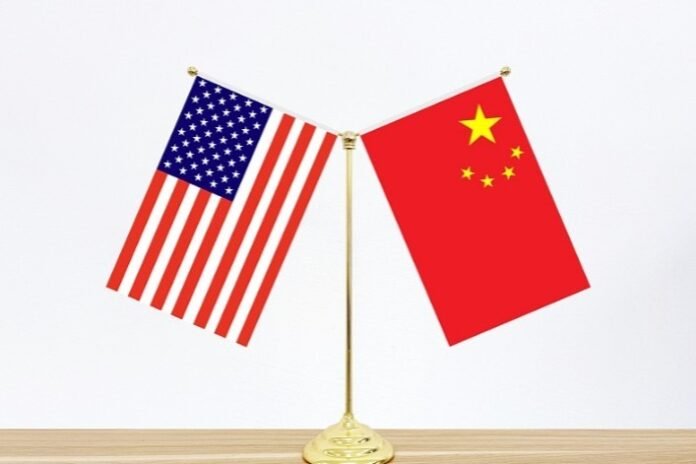
China and the United States are scheduled to hold their sixth round of trade talks in the near future, during which top negotiators from Beijing and Washington are expected to engage in candid discussions on the rapidly evolving tariff environment and explore new avenues for cooperation, analysts said.

 The expectations follow a US Supreme Court ruling on Friday that struck down broad-based tariffs imposed under the International Emergency Economic Powers Act, invalidating the 10 percent “fentanyl tariff” and the 34 percent “reciprocal tariff” on Chinese goods.

 Following the decision, the US swiftly pivoted to Section 122 of the Trade Act of 1974, imposing a 10 percent import surcharge on all trading partners. The new duties, which took effect on Tuesday, are due to expire after 150 days.

 The White House has indicated on multiple occasions that it would resort to statutory authorities — such as Section 301 and Section 232 investigations to levy new tariffs — as the temporary nature of the recently invoked Section 122 import surcharge limits its long-term utility.

 China called on the US to revoke existing unilateral tariffs and refrain from imposing new ones, and China stands ready to hold candid consultations with the US during the upcoming round of Sino-US economic and trade consultations, the Ministry of Commerce said on Tuesday.

 “China is closely monitoring and will conduct a comprehensive assessment of the measures taken by the US,” a spokesperson with the ministry said. “Any adjustments to China’s countermeasures targeting the US ‘fentanyl tariff’ and ‘reciprocal tariff’, will be made at an appropriate time in light of any developments.”

 The spokesperson added that the two countries should address each other’s concerns on the basis of mutual respect and equal consultation, manage their differences properly, and maintain the sound, stable and sustainable development of China-US economic and trade relations.

 Last year, China and the US conducted five rounds of trade talks, with the latest round taking place in Malaysia in late October which helped the world’s two largest economies step back from the brink and achieve an “overall dynamic stability”, as described by Foreign Minister Wang Yi.

 Bai Ming, a researcher at the Chinese Academy of International Trade and Economic Cooperation, said that the upcoming sixth round of trade talks is likely to seek the extension or adjustment of short-term consensus measures previously reached, and explore new cooperation pathways.

 The fifth round produced a number of agreements only valid for one year, Bai said, citing measures including tariff policies and relaxation of rare earth export controls. Now that these are approaching expiration, how to adjust them requires both sides to negotiate follow-up arrangements in advance.

 “Washington hopes Beijing will further relax restrictions in areas such as rare earths, while China demands that the US change its wrong practices of strangling China in high-tech industries. These will all become negotiation priorities,” Bai added.

 While China remains committed to working with the US for mutual benefit and the stability of the global economy, experts stressed that Beijing will take firm countermeasures should Washington take any action that infringes upon its interests.

 As the US Section 122 import surcharge clock ticks toward its July expiration and new tariffs under Section 301 and 232 investigations proceed, trade talks between China and the US will still be characterized by their protracted, arduous and recurrent nature, said Luo Zhiheng, chief economist and head of the research institute at Yuekai Securities.

 “At the end of the day, the upper hand in trade negotiations between China and the US depends on each side’s core leverage points — their respective economic resilience and technological strength,” Luo said.

 Looking ahead to full-year 2026, the impact of recent US tariff policy changes on China’s exports is expected to be relatively limited, said Ming Ming, chief economist at CITIC Securities, citing improved trading structure and market diversification that have buffered the world’s largest trader in goods against external shocks.

 wangkeju@chinadaily.com.cn

Article inline ad

China’s Smart Manufacturing & Emerging Tech Investment Outlook

0

ZH compiled and reported this information from China Daily on February 25.

China’s advanced manufacturing ecosystem is entering a structural growth phase, driven by humanoid robotics and 3D printing. Early 2026 signals — from humanoid robot retail and Spring Festival Gala demonstrations to mass-scale 3D printing for Chinese New Year gifts — illustrate technology maturation, market validation, and policy alignment.

 Technology Breakthroughs

Humanoid Robotics

 Autonomous Cluster Control: Unitree Robotics’ G1/H2 humanoids perform high-speed coordinated movements at 4 m/s, a five- to ten-fold improvement over prior models.

 Embodied AI Integration: Combines perception, decision-making, and motion control; 27 nationwide data collection sites support model training.

 Commercial-Ready Capabilities: Robots can now perform complex routines for entertainment, education, and industrial applications.

 3D Printing

 Rapid Customization: Shenzhen Huafast operates 5,000 printers for high-volume personalized products; complex designs printed in single-piece construction.

 Industrial Integration: Applications include 3D-printed molds for artisanal food, AI-modeled ceramics, and custom industrial components.

 Material & Process Innovation: Supports plastics, composites, and advanced manufacturing materials, enabling faster time-to-market.

 Investor Signal: Both sectors demonstrate high technological differentiation, reducing execution risk and creating scalable business opportunities.

 Market Validation & Commercialization

Sector    Market Signal       Key Metrics

Humanoid Robotics    Spring Festival Gala exposure    Rental orders >1,000; GMV +80% YoY

Humanoid Robotics    Wuhan 7S Store   18,000 visits in <2 months; revenue ~615,000 yuan; 17 robot models in 10+ scenarios

3D Printing    Holiday demand  40,000 desktop ornaments printed in one week

3D Printing    Industrial adoption      Shenzhen workshop: 500 → 5,000 printers; post-festival expansion to 10,000

Talent Pipeline     Youth & professional training   >1,000 participants; 65% youth, 35% professionals

 Signal: Consumer exposure, enterprise adoption, and early monetization validate commercial scalability.

 III. Industrial & Supply Chain Opportunities

Component   Opportunity

Hardware      Actuators, sensors, electronic skins, AI chips, printer hardware

Software Embodied AI platforms, cluster-control systems, 3D design & slicing software

Services  Robot rental platforms, event engagement, training & certification

Materials       Filaments, composites, high-precision industrial materials

Talent     Youth coding & robotics programs, professional operator certification

 Investor Signal: Multi-layered ecosystem reduces concentration risk; diversified exposure across hardware, software, services, and talent enhances resilience.

 Policy & Strategic Signals

 Government Support: Humanoid robotics and 3D printing included in provincial work reports; aligned with 15th Five-Year Plan (2026–2030).

 Regional Innovation Clusters: Wuhan (Optics Valley), Shenzhen, Beijing support robot retail (7S/6S/4S stores) and additive manufacturing hubs.

 Scenario Development: Policies foster industrial, public service, and consumer applications for both sectors.

 Signal: Policy backing and industrial clusters de-risk long-term structural growth.

 Investment Interpretation

Horizon  Focus     Key Takeaway

Short-term    Consumer adoption & event exposure   Monitor humanoid rentals, 7S store metrics, holiday 3D printing orders

Medium-term      Industrial & service applications       Scaling in manufacturing, public services, scenario-based deployments

Long-term    Structural technology adoption Embodied AI, additive manufacturing platforms, integrated supply chains, workforce development

 China Signals Insight:

China’s smart manufacturing sector — combining humanoid robotics and 3D printing — offers multi-layered investment exposure across hardware, software, industrial services, and consumer applications. Technological breakthroughs, early commercial traction, and government policy convergence signal sustained structural growth, positioning these sectors as key engines for China’s next economic expansion.


Article inline ad

3D Printing Fuels Holiday & Industrial Growth: China’s Emerging Additive Manufacturing Opportunit

0

ZH compiled and reported this information from China Daily on February 25.

China’s 3D printing industry is demonstrating a dual-track growth trajectory, combining consumer-driven applications with advanced industrial manufacturing. Early 2026 Spring Festival production highlights the sector’s speed, flexibility, and scalability, signaling new investment opportunities.

 Market & Demand Signals

 Consumer Holiday Surge

 Shenzhen Huafast Industry Co Ltd operated 5,000 printers to produce personalized Chinese New Year gifts, including horse ornaments, zodiac decorations, and complex fidget toys.

 A recent order: 40,000 desktop ornaments in one week, feasible only through 3D printing.

 Consumer-grade printers (e.g., Bambu Lab) allow individuals to create holiday gifts, expanding the retail-adjacent market.

 Industrial Adoption

 Traditional industries are integrating 3D printing:

 Laixi, Shandong: flower-shaped steamed buns via 3D-printed molds

 Jingdezhen, Jiangxi: ceramics combining AI modeling, 3D printing, and glazing techniques

 Clients increasingly demand custom industrial components, from prototypes to functional parts.

 Investor Signal: The sector is demonstrating market validation on both consumer and industrial fronts, with clear revenue and adoption growth.

 Industry Scale & Growth Trajectory

Metric    Value / Trend

Equipment Output 2025     +52.5% YoY (National Bureau of Statistics)

Industry Scale 2021–2025   20.8 → 70 billion yuan ($3.01B)

Workforce / Machines Shenzhen workshop: 500 → 5,000 machines in 2 years; expansion to 10,000 post-festival

 Signal: Rapid capacity scaling reflects high investment readiness and strong growth momentum in additive manufacturing.

 III. Technology & Supply Chain Insights

 Material Flexibility: Capable of printing plastics, composites, and advanced industrial materials.

 Complex Designs: Single-piece production for multi-component items reduces assembly costs.

 Innovation Pipeline: Experimental categories include shoes, sports equipment, and customized industrial parts.

 Talent & R&D: Skilled technicians and AI-driven design models are central to continuous innovation.

 Investment Takeaway: High versatility and low lead time create barriers to entry for competitors and position 3D printing as a scalable production enabler.

 Policy & Strategic Signals

 National and local governments continue supporting advanced manufacturing and AI-driven technologies, aligning with the 15th Five-Year Plan (2026–2030).

 Integration with tech hubs (Shenzhen, Jiangxi, Shandong) strengthens regional supply chains and innovation clusters.

 Signal: Government backing reduces adoption risk and encourages capital inflows into high-growth manufacturing tech.

 Investment Interpretation

 Short-term: Track seasonal production peaks and consumer adoption, including holiday-oriented products and retail demonstrations.

 Medium-term: Evaluate industrial applications in custom tooling, prototype manufacturing, and small-batch production.

 Long-term: Exposure to platform providers, printer manufacturers, and materials suppliers, with potential spillover into AI-enabled design software.

 China Signals Insight:

China’s 3D printing sector exemplifies a technology-driven, high-growth ecosystem, offering investors exposure across hardware, software, industrial services, and consumer applications. The fusion of speed, customization, and industrial adoption positions the sector as a structural driver of manufacturing and consumer innovation in China.


Article inline ad

China Signals: China’s Humanoid Robotics – From Breakthroughs to Commercialization

0

ZH reports, based on a February 25 report from China Daily.

China’s humanoid robotics sector is entering a structural growth phase, as technological breakthroughs, market experiments, and government-backed initiatives converge. Key events in early 2026 — including the Spring Festival Gala demonstrations, stock market reactions, and the launch of the first 7S store in Wuhan — provide a clear signal for investors about the sector’s trajectory.

 Technology Breakthroughs

 Unitree Robotics Cluster-Control Innovation

 G1 and H2 humanoids achieved autonomous group coordination with 4 m/s repositioning, a five- to ten-fold improvement from previous models.

 Demonstrated in high-profile public events like the Spring Festival Gala, including martial arts routines and synchronized motion sequences.

 Highlights embodied AI maturation, integrating perception, decision-making, and motion control.

 Industrial Training & AI Data Pipeline

 27 nationwide data collection sites support real-world embodied AI training.

 Hundreds of robots trained simultaneously, generating >1 million real-machine data points annually, feeding continuous AI model updates.

 Policy-aligned training ensures rapid iteration and operational reliability.

 Investor Signal: Technological advances reduce execution risk and create early differentiation in the humanoid robotics ecosystem.

 Market Validation & Commercialization

Event      Market Signal       Metrics

Spring Festival Gala     Consumer exposure and engagement    Robots rentals >1,000 orders; GMV +80% YoY

Unitree A-Share Opening  Investor sentiment      Initial spike, then retracement reflecting early-stage commercialization risk

Wuhan 7S Store   Commercial model and scenario adoption    18,000 visits in <2 months; revenue ~615,000 yuan; 17 robot models deployed in 10+ scenarios

Youth & Professional Training   Talent pipeline and operational ecosystem    >1,000 participants; 65% youth, 35% professionals

 Signal: Consumer and enterprise demand validates commercial applications; early revenue generation indicates scalable business models.

 III. Industrial & Supply Chain Opportunities

 Hardware & Components:

 High-precision actuators, sensors, electronic skins, AI chips.

 Local supply chains enable rapid production; e.g., Wuhan’s Yuan You robot uses >80% local hardware.

 Software & AI Platforms:

 Embodied AI, cluster control, scenario simulation.

 Data from high-fidelity simulations drives continuous improvement.

 Services & Training:

 Youth coding, logic and programming courses, operator and maintenance certification.

 Supports ecosystem development and talent pipeline, critical for scaling operations.

 Rental & Entertainment:

 Event rentals, interactive experiences, museum/entertainment showcases.

 Early monetization channel with strong growth potential.

 Investor Signal: Multi-layered exposure across hardware, software, services, and training reduces concentration risk and enhances portfolio resilience.

 Policy & Strategic Signals

 Government Support: Humanoid robotics included in over half of provincial work reports, aligning with the 15th Five-Year Plan (2026–2030).

 Regional Innovation Clusters: Wuhan (Optics Valley), Shenzhen, Beijing hosting 4S/6S/7S stores and data centers.

 Scenario Development: Policies encourage deployment in industrial manufacturing, elderly care, education, and hazardous operations, accelerating real-world adoption.

 Investor Signal: Strong public policy support and industrial cluster formation de-risk long-term structural growth.

 Investment Interpretation

Horizon  Key Focus      Signal

Short-term    Market validation & consumer adoption Track 7S/6S stores, rental GMV, Spring Festival Gala exposure

Medium-term      Industrial & service applications       Scaling in manufacturing, public services, and scenario-based deployments

Long-term    Structural AI & robotics growth Embodied AI maturation, government policy backing, integrated supply chains, workforce development

 China Signals Insight:

China’s humanoid robotics industry is transitioning from technical showcase to commercial ecosystem. Investors can gain exposure across:

 Hardware manufacturers (actuators, sensors, chassis)

 Software & AI platforms (embodied AI, cluster coordination)

 Service platforms & rentals (event-based and scenario-based applications)

 Training & talent pipeline (youth courses, professional certification)

 The convergence of technological breakthroughs, early commercial traction, and supportive policy provides a multi-layered investment opportunity, with risk mitigated by diversified exposure across the ecosystem.


Article inline ad

Wuhan’s 7S Humanoid Robot Store: From Showcase to Commercial Signals

0

ZH compiled and reported this information from China Daily on February 25.

China’s humanoid robotics industry is entering a commercialization and ecosystem validation phase, exemplified by the launch of the country’s first 7S humanoid robot store in Wuhan’s East Lake High-Tech Development Zone — “Optics Valley of China.” The store offers a one-stop model integrating sales, service, spare parts, solutions, showcases, and educational functions, signaling emerging investment and market opportunities.

 Technology & Commercialization Signal

 7S Model Innovation: Building on the automotive 4S concept, the Wuhan store adds solutions, showcase, and school functions, covering the full industry chain from hardware to scenario-based applications.

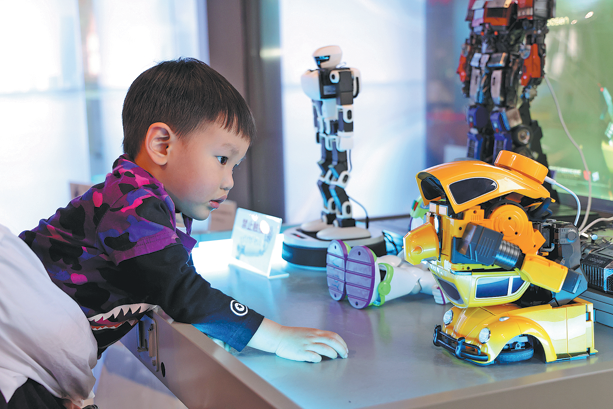
 Product Range & Capabilities: 17 humanoid models priced from 149 yuan to 700,000 yuan, deployed in over 10 application scenarios including industrial manufacturing, tourism guidance, elderly care, and special operations.

 Flagship Robot: “Yuan You” robot integrates >80% local supply chain hardware, stands 158 cm, weighs 72 kg, and operates at 1.5 m/s. Mass production via four automated lines targets 1,500 units annually.

 Investor Takeaway: The 7S model demonstrates early-stage commercial viability and potential for scaling humanoid robotics beyond showcases into real-world applications.

 Market & Demand Signals

 Foot Traffic & Revenue: ~18,000 visits and cumulative revenue of ~615,000 yuan ($88,600) in under two months.

 Early Commercialization: Humanoid robot rentals for events and interactive experiences driving revenue growth.

 Training & Education:

 1,000 participants across youth courses (65%) and professional training (35%)

 Programs include robot operation, maintenance certification, and AI/logic skill development

 Signal: Consumer and enterprise engagement provides market validation for humanoid robotics and the 7S commercial model.

 III. Industrial & Supply Chain Implications

Segment       Opportunity  Notes

Robotics Hardware      Actuators, sensors, electronic skins, AI chips  Local supply chains support rapid R&D and mass production

Software & AI      Embodied AI, scenario simulation, cluster coordination      Data from 23 high-fidelity simulation scenarios and >1M real-machine points/year feeds AI training

Training & Services     Youth coding programs, operator training    Builds talent pipeline and supports wider adoption

Rental & Entertainment      Event rentals, interactive experiences      Early monetization channel, proof-of-concept for commercial viability

 Signal: Wuhan’s integrated ecosystem shows how hardware, software, services, and training interconnect to de-risk commercialization.

 Policy & Strategic Signals

 Wuhan released a three-year action plan promoting humanoid robotics in hazardous operations, manufacturing, public services, and education.

 Local and national government support has positioned humanoid robots as a strategic emerging sector, aligned with the 15th Five-Year Plan (2026–2030).

 Integration with research institutes and local industry clusters enhances R&D efficiency and supply chain robustness.

 Investment Interpretation

 Short-term: Monitor commercial traction via 7S stores, rentals, and interactive programs as market validation signals.

 Medium-term: Evaluate scaling opportunities for industrial and service applications, leveraging local supply chains.

 Long-term: Structural growth expected as embodied AI matures, workforce training expands, and government policy incentivizes adoption.

 China Signals Insight: Wuhan’s 7S humanoid robot store represents a strategic inflection point — from showcase and technical demonstration to early commercial ecosystem, offering multi-layered investment exposure across hardware, AI, services, and human capital development.


Article inline ad

China’s Humanoid Robot Leap: From Stage Showcase to Market Signals

0

ZH compiled and reported this information from China Daily on February 25.

China’s humanoid robotics sector is entering a critical phase of industrialization, as recent breakthroughs in motion control and cluster coordination highlight both technological maturity and emerging commercial opportunities. The 2026 Spring Festival Gala offered a vivid demonstration: robots sprinting, flipping, and performing synchronized martial arts, capturing public and investor attention alike.

 Technology & Strategic Signal

 Cluster-Control Innovation: Unitree Robotics’ G1 and H2 humanoids demonstrated fully autonomous group coordination, achieving 4 meters/second repositioning — a five- to ten-fold improvement over last year’s models.

 Embodied AI Advancement: Integration of perception, decision-making, and motion control is accelerating. Hierarchical and end-to-end AI models are being trained across 27 nationwide data collection sites, industrializing the learning pipeline.

 Policy Signal: Over half of China’s provinces and cities have included humanoid robotics and embodied intelligence in 2026 government work reports, signaling national-level prioritization of this sector.

 Investor Takeaway: Rapid iteration and government support suggest structural growth potential, but early-stage commercial bottlenecks remain.

 Market & Commercialization Signals

 1️⃣ Holiday Rental Surge

 Botshare reported >1,000 orders during the Spring Festival and expects GMV growth of 80%, with total orders potentially exceeding 5,000.

 Post-holiday growth is projected at ~50%, indicating sustained demand for humanoid rental services.

 2️⃣ A-Share Market Response

 Humanoid robotics-related stocks initially opened higher, reflecting enthusiasm, but later retraced as investors assessed the timeline for translating breakthroughs into earnings.

 3️⃣ Early Commercial Implications

 Industrial applications (factories, logistics) and consumer scenarios (holiday rentals, entertainment) are now emerging as proof-of-concept markets.

 III. Industrial and Supply Chain Opportunities

Segment       Opportunity  Notes

Robotics Hardware      High-precision actuators, sensors, AI chips    Demand tied to motion control breakthroughs

AI Platforms & Software     Embodied AI, cluster control, simulation Long-term recurring revenue potential

Rental & Service Platforms Entertainment, tourism, commercial applications  Early monetization, high GMV growth potential

Manufacturing Ecosystem  Robot assembly, materials, electronics    Scale-up requires stable industrial supply chains

 Signal: Every hardware innovation triggers cascading demand across chips, sensors, software, and platform services, offering multi-layered investment exposure.

 Policy & Strategic Signals

 Government support is explicit: 140+ humanoid robotics manufacturers, 330+ product models by 2025, and widespread inclusion in provincial work plans.

 MIIT emphasizes applications beyond stage and competition, targeting homes, factories, and industrial automation.

 National-level strategy positions humanoid robotics as a pillar of high-tech manufacturing and AI ecosystem development.

 Investment Interpretation

 Short-term: Capitalize on growing commercial applications (holiday rentals, entertainment) and monitor A-share sentiment.

 Medium-term: Track adoption in industrial automation and services; anticipate recurring revenue streams.

 Long-term: Embodied AI maturation, policy prioritization, and scale-up of hardware/software ecosystems point to structural growth in China’s humanoid robotics sector.

 China Signals Insight: Humanoid robotics has moved from technical showcase to emerging market, offering investors a multi-dimensional play on technology, commercialization, and policy-driven growth. Strategic allocation should balance early-stage adoption risks with long-term exposure to structural innovation in AI-enabled robotics.


Article inline ad

Hong Kong Housing Rally Signals Capital Flow and Luxury Asset Opportunities

0

ZH compiled and reported this information from China Daily on February 25.

Hong Kong’s property market has extended its upward momentum, posting strong gains even during the typically quiet Spring Festival period. For investors, the rally reflects not just cyclical recovery but structural signals tied to population inflows, stock market performance, and cross-border capital movements.

 1. Market and Investment Signal

 Price Trends: Midland Realty’s property price index has risen for 13 consecutive weeks, marking the longest streak since June 2019.

 Luxury Segment: Developers sold 33 new homes priced above HK$100 million ($12.8 million) in the first quarter, doubling last year’s volume.

 Transaction Activity: 35 major housing estates recorded 32 deals during the holiday week, more than double last year’s Chinese New Year period.

 Signal: Strong demand persists even in traditionally slow periods, indicating structural momentum in both luxury and mainstream segments.

 Key Drivers

 Population Inflows

 Mainland and international buyers continue to fuel demand, particularly for high-end properties.

 Stock Market Performance

 A buoyant Hong Kong equities market releases wealth effects, supporting housing purchases and pent-up demand.

 Monetary Policy Expectations

 Anticipated US Federal Reserve interest rate cuts may channel additional capital into Hong Kong real estate.

 Government Policy

 The 2026–27 HKSAR budget is expected to reinforce supportive measures for property demand.

 III. Investment Bank Forecasts

Bank       2026 Home Price Forecast Rationale

JPMorgan      10–15%   Population inflows + equity market momentum

Goldman Sachs    12%  Lower mortgage rates + pent-up demand

Morgan Stanley    ≥10%     Strong stock market + office rent pickup

 Signal: Multiple global banks now anticipate double-digit gains, reflecting both domestic buying power and international capital inflows.

 1. Sector-Level Investment Implications

 1️⃣ Luxury Housing

 High-end properties (>HK$100 million) are leading the recovery.

 Scarcity and FOMO (“fear of missing out”) drive strong pricing power.

 2️⃣ Office Market

 Central district office rents expected to rise ~3% as financial institutions resume leasing.

 Stock market growth indirectly supports office demand via wealth effect and corporate expansion.

 3️⃣ Cross-Border Capital Flows

 Mainland and international buyers increasingly active.

 Currency and interest rate dynamics will influence the pace of inflows and pricing trends.

 1. Comparative Insights

 Compared with major mainland cities, Hong Kong offers liquidity, legal transparency, and capital mobility, attracting both domestic and foreign high-net-worth investors.

 Structural advantage: luxury assets are less constrained by local supply, creating asymmetric upside potential relative to first-tier mainland markets.

 1. Strategic Investor Takeaways

 Luxury Real Estate: High-end housing remains a key target for investors seeking capital appreciation.

 Commercial Office Assets: Select Central district offices can capture rising rental demand as financial activity rebounds.

 Timing Signal: Holiday-period resilience suggests strong post-CNY momentum; early positioning may capture initial waves of capital inflow.

 Macro & Policy Awareness: Monitor Fed interest rate decisions and HKSAR fiscal policies, as these will shape liquidity and market sentiment.

 China Signals Interpretation: The Hong Kong property market rally is not just seasonal; it is a structural capital flow signal, highlighting opportunities in luxury housing and commercial offices for investors with a medium- to long-term horizon.


Article inline ad

FCC Import Ban on DJI Drones: Supply Chain Disruption and Investment Risk

0

ZH compiled and reported this information from China Daily on February 25.

Chinese drone maker DJI has filed a lawsuit challenging the United States Federal Communications Commission (FCC) decision to block imports of all new DJI models and critical components.

 For investors and global supply chain watchers, the move is more than a corporate dispute — it represents a policy signal with far-reaching implications for high-tech manufacturing, cross-border trade, and commercial operations in sensitive technology sectors.

 Policy Signal and Strategic Context

 FCC added DJI to its “Covered List” citing national security concerns, without providing substantive evidence of a threat.

 The ban affects all new DJI models and key components, including those widely used by U.S. commercial drone operators.

 DJI’s legal challenge highlights growing friction in U.S.-China technology relations.

 Signal for investors: Regulatory and geopolitical risk can abruptly reshape market access, impacting revenue, cash flow, and global supply chains for strategic tech companies.

 Market and Supply Chain Implications

 1️⃣ Commercial Drone Sector Exposure

 Nearly 500,000 certified U.S. commercial drone pilots rely on DJI products.

 Lack of domestic or Western substitutes creates immediate market disruption.

 Pilots are reportedly hoarding DJI equipment and appealing to Congress and the White House.

 2️⃣ Supply Chain Vulnerabilities

 Critical components sourced from China are now restricted, putting U.S. commercial operators at risk of operational downtime.

 DJI’s U.S. revenue could face near-term decline, while global suppliers may experience order delays or cancellations.

 Companies in AI, mapping, logistics, and surveying sectors could see workflow disruptions.

 3️⃣ Industrial and Investment Signals

 High-tech export control measures may extend to adjacent sectors (semiconductors, robotics, IoT devices).

 Policy volatility increases the risk premium for Chinese high-tech equities with U.S. exposure.

 Investors should monitor both legal outcomes and policy rhetoric as leading indicators of market access risk.

 III. Sector-Level Risk Assessment

Sector    Exposure to Ban   Potential Impact

Consumer & Commercial Drones     High       Revenue loss, operational disruption, inventory hoarding

Robotics / AI Devices  Medium Supply chain dependence on Chinese components; alternative sourcing challenges

Mapping / Surveying Services   Medium Workflow disruption if drones unavailable

Semiconductor / Components  Medium Potential indirect demand shock from DJI production slowdown

 Investor Takeaway: Even if DJI overcomes the ban legally, ongoing regulatory uncertainty elevates volatility and potential risk premiums in the sector.

 Strategic Interpretation

 Short-term: U.S. commercial drone market faces operational disruption; DJI revenue and supply chains under pressure.

 Medium-term: Policy uncertainty may accelerate diversification of supply chains away from China or encourage domestic alternatives.

 Long-term: Regulatory risk is likely to become a structural factor in cross-border tech investment, particularly for dual-use technologies.

 China Signals Lens: This is a classic policy risk signal — sudden regulatory actions in the U.S. can rapidly reprice revenue, supply chains, and equity valuations for strategic technology companies.

 Investor Guidance

 Evaluate U.S. revenue exposure for DJI and peer Chinese tech companies.

 Monitor supply chain dependency, particularly critical components and software.

 Track legal developments and FCC communications as leading indicators of risk trajectory.

 Assess sector-wide implications for investors in commercial drones, robotics, AI infrastructure, and related semiconductors.

 Bottom Line: The FCC import ban is not just a corporate dispute; it is a market signal that underscores the growing intersection of geopolitics, technology, and supply chain risk. Investors should treat policy uncertainty as a structural variable in strategic allocation decisions.

Article inline ad

China’s Grid Overhaul: Strategic Infrastructure as a Pillar of the AI and Green Economy

0

ZH compiled and reported this information from China Daily on February 25.

China is entering a decisive phase in energy infrastructure investment under its 15th Five-Year Plan (2026–2030), positioning the electrical power industry as a central pillar for both the green transition and the burgeoning artificial intelligence (AI) economy.

 For investors, the ongoing grid upgrade is more than a utility story — it is a multi-trillion-yuan capital allocation opportunity with direct implications for industrial supply chains, high-tech deployment, and strategic policy alignment.

 Policy and Strategic Signal

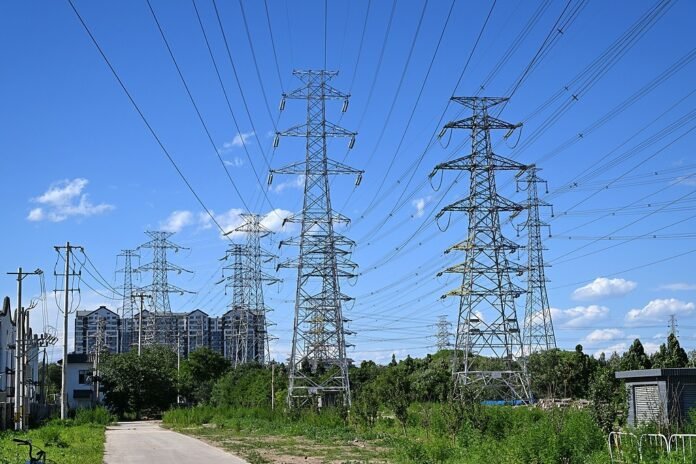
 State Grid Corp of China plans roughly 4 trillion yuan ($554 billion) in fixed-asset investment during 2026–2030, a 40% increase from the previous five-year cycle.

 China Southern Power Grid announced a 180 billion yuan budget for 2026 alone.

 Investment priorities include:

 Ultra-high voltage (UHV) direct current lines

 Cross-regional transmission capacity

 Digital-intelligent transformation of distribution networks

 Signal: China is elevating the grid from traditional infrastructure to strategic backbone, linking energy security, carbon neutrality, and AI-driven economic modernization.

 Supply Chain and Capital Implications

 The grid upgrade is creating ripple effects across multiple industrial sectors:

 Sector    Investment Link    Opportunity / Impact

Copper & Steel    Transmission lines, substations, UHV equipment   Surge in demand; potential upward price pressure; strategic sourcing advantage

Power Semiconductors       Smart grid, digital control, AI-driven sensors Accelerated R&D and procurement; early-mover advantage for suppliers

High-End Software & AI Systems     Grid monitoring, predictive maintenance, active distribution networks  Commercialization and recurring revenue streams for tech providers

Renewable Energy Equipment  Solar inverters, wind turbine integration Demand growth tied to grid absorption of intermittent generation

EV Charging & New Infrastructure   Integration with distribution networks     Opportunity for cross-industry partnerships and urban deployment projects

 Investor Signal: Each 1 billion yuan spent on UHV lines or smart substations corresponds to multiple points of industrial chain uplift — from metals to software to AI-enabled grid technologies.

 III. AI and Energy Demand Convergence

 AI data centers require constant, high-volume, stable power.

 Domestic power demand is expected to grow at 8–9% CAGR through 2030, driven by AI infrastructure and digital economy expansion.

 Intermittent renewable energy (wind/solar) often located far from eastern industrial hubs creates a grid-balancing challenge, emphasizing the need for “smart” distribution networks.

 Signal: Grid operators, renewable providers, and large-scale AI users are now strategic partners in economic policy execution, not just service customers.

 Investment-Grade Insights

 Energy & Grid Companies

 State Grid and China Southern Power Grid will see continued capex growth, likely boosting long-term revenue visibility.

 Digital transformation initiatives offer recurring software and AI service streams.

 Industrial Suppliers

 Copper, steel, and power semiconductor suppliers benefit from sustained demand.

 Early alignment with grid projects may secure multi-year contracts.

 AI & Data Center Developers

 Investment certainty in grid infrastructure de-risks large-scale AI deployments.

 Companies in hyperscale computing and cloud infrastructure are direct beneficiaries.

 Renewables & EV Ecosystem

 Better grid integration reduces curtailment risk for solar/wind and accelerates EV charging rollout.

 Supports domestic energy transition and carbon neutrality targets.

 Medium- to Long-Term Policy Signals

 Grid investment aligns carbon neutrality targets with digital economy expansion.

 Focus is shifting from “backbone” (UHV lines) to “nervous system” (smart distribution networks) — enabling decentralized energy and fair market access.

 Digital-intelligent transformation provides policy certainty for AI-heavy industries and renewable deployment.

 Investor Takeaway: Policy-driven infrastructure investment reduces execution risk for industrial and high-tech supply chains, while creating multiple linked sectors with growth visibility.

 Strategic Bottom Line

 China’s grid upgrade is more than an energy initiative. It represents a policy-backed industrial acceleration that links:

 Energy security

 Carbon neutrality

 AI and digital economy growth

 Industrial supply chain expansion

 For investors, the critical lens is interconnected opportunity: where policy certainty meets industrial demand.

 China Signals Interpretation: The grid is no longer a passive utility — it is a strategic enabler of China’s high-tech and green economy. Capital allocation along this axis is likely to reward patient, forward-looking investors over the next five years.


Article inline ad

Phase-One Trade Dispute Reignites: Implications for China’s Supply Chains and External Trade

0

ZH compiled and reported this information from China Daily on February 25.

China firmly rejected the recent U.S. remarks questioning Beijing’s fulfillment of commitments under the Phase-One economic and trade agreement. Beyond diplomatic rhetoric, these developments carry tangible implications for global supply chains, trade flows, and sector-specific risks.

 For investors, the key question is: how could renewed Section 301 scrutiny affect export-dependent industries and cross-border investment in the coming months?

 Background: The Policy Signal

 The U.S. Trade Representative has indicated continuation of a Section 301 investigation into China’s Phase-One commitments.

 China maintains it has fully met obligations in intellectual property protection, financial and agricultural market opening, and trade expansion.

 Past rounds of consultation have yielded consensus on tariff suspensions, agricultural trade, and investment, but U.S. export controls and investment restrictions have escalated.

 Signal: U.S. policy actions remain a potential wildcard for trade-dependent sectors, even amid ongoing dialogue.

 Supply Chain Implications

 1️⃣ Export Industries at Immediate Risk

 Electronics, semiconductors, machinery, and automotive parts may face elevated scrutiny if Section 301 tariffs are reinstated or tightened.

 Firms with complex U.S. supply chain exposure could see increased cost and compliance burdens.

 2️⃣ Two-Way Investment and Sourcing Risks

 U.S. restrictions on outbound and inbound investments may delay joint ventures, technology transfer, and offshore manufacturing expansion.

 Companies with dual-location supply chains could experience delays, higher hedging costs, or forced inventory adjustments.

 3️⃣ Tier-2 and Tier-3 Supplier Vulnerabilities

 Smaller suppliers integrated into China-U.S. value chains may face cash flow pressure if end-market orders are disrupted.

 Contingency planning, inventory management, and diversification of customer base will be crucial.

 III. Sector-Level Assessment

Sector    Potential Impact   Investor Consideration

Electronics / Semiconductors    Medium-High      Monitor export volumes, reliance on U.S. components, and inventory levels

Automotive / EV  Medium Focus on joint ventures, U.S. market exposure, and financing stability

Agriculture & Food     Low-Medium       Tariff continuation unlikely but vigilance on export certification

Industrial Machinery    Medium Look for supply chain shifts, partial onshoring or alternative markets

  1. Strategic Investor Signals

 Export Diversification Matters

Firms increasingly relying on Southeast Asia, Europe, or domestic markets may hedge exposure to U.S. policy risk.

 Digital & Domestic-Oriented Businesses

Companies less dependent on U.S. end markets may benefit from capital rotation away from highly exposed export sectors.

 Inventory & Cash Management

Firms with strong liquidity buffers and agile inventory strategies are better positioned to weather potential tariff shocks.

 Policy Engagement

Participation in government-supported trade facilitation initiatives and compliance frameworks can mitigate disruption risk.

 Scenario Analysis (Illustrative)

Scenario Supply Chain Implication    Market Implication

Base Case      Continued consultations, no new tariffs  Export volumes stable, minor compliance adjustments

Moderate Risk      Section 301 investigation advances; limited tariff reinstatement       Selective disruption in electronics, automotive; investor risk premium rises

High Risk       Broad tariffs imposed; investment restrictions expand Significant supply chain reconfiguration; short-term equity volatility; possible capital outflow

  1. Bottom Line

 While China maintains its compliance record and advocates constructive dialogue, the U.S. Section 301 signal is a clear early warning for supply chain risk.

 For investors:

 Export-intensive sectors need proactive hedging and supply chain monitoring.

 Domestic-oriented and diversified firms may capture reallocated capital flows.

 Ongoing consultations provide windows to anticipate policy shifts and operational adjustments.

 China Signals Interpretation: This is not just a diplomatic statement — it is a market signal that could reshape supply chain allocations, risk premiums, and investment priorities over the medium term.

Article inline ad